Tag: Election

  • Turkey in a momentous vote after 20 years of Erdogan

    Turkey in a momentous vote after 20 years of Erdogan

    Turks are voting in a historic presidential run-off election to determine if Recep Tayyip Erdogan should continue in power after 20 years.

    His challenger Kemal Kilicdaroglu, backed by a broad opposition alliance, has billed the vote as a referendum on Turkey’s future direction.

    The president, who is favourite to win, promises a new era uniting the country around a “Turkish century”.

    But the more pressing issue is rampant inflation and a cost-of-living crisis.

    Voters have nine hours to cast their ballots before 17:00 (14:00 GMT) and many were already waiting outside a polling station in central Ankara before the doors opened. One woman of 80 had set her alarm for 05:00 to be sure of arriving on time.

    Turnout in the first round was an impressive 88.8%, and Mr Erdogan’s lead was 2.5 million votes. That is why both candidates have their eye on the eight million who did not vote – but could this time.

    Ahead of the run-off Mr Kilicdaroglu accused his rival of foul play, by blocking his text messages to voters while the president’s messages went through.

    Opposition parties are deploying an army of some 400,000 volunteers in a bid to ensure no vote-rigging takes place, both at polling stations and later at the election authority. But among the volunteers, they need lawyers such as Sena to accompany the ballot boxes.

    International observers spoke of an uneven playing field after the first round. But there was no suggestion that any irregularities in voting would have changed the result.

    Mr Kilicdaroglu promised a very different style of presidency on his final day of campaigning: “I have no interest in living in palaces. I will live like you, modestly… and solve your problems.”

    It was a swipe at Mr Erdogan’s enormous palatial complex on the edge of Ankara which he moved to when he switched from prime minister to president in 2014. After surviving a failed coup in 2016 he took on extensive powers, detained tens of thousands of people and took control of the media.

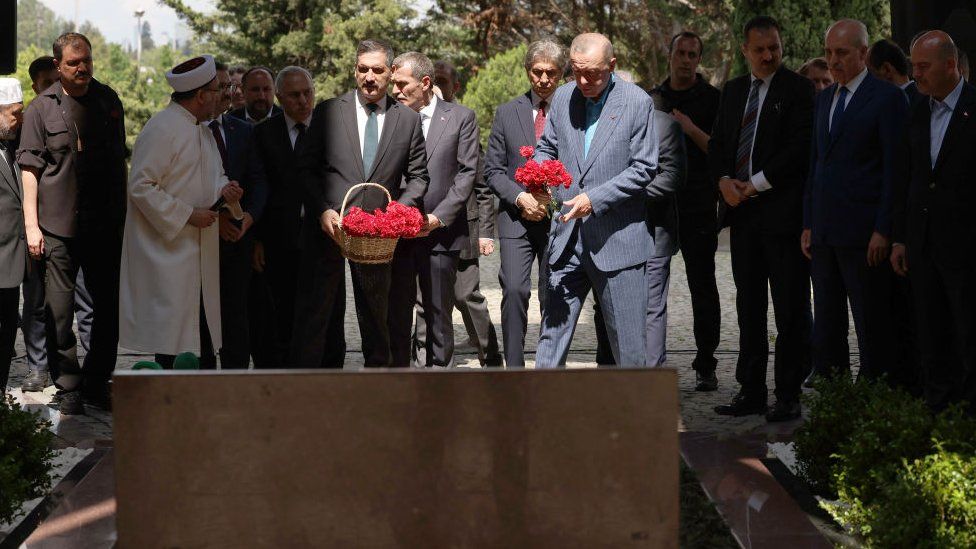
    So it was laden with symbolism when he paid a campaign visit on Saturday to the mausoleum of a prime minister executed by the military after a coup in 1960.

    President Recep Tayyip Erdogan lays carnations on the mausoleum of the 8th President of Turkiye, Turgut Ozal, at Topkapi Cemetery in Istanbul, Turkiye on May 27, 2023
    Image caption,One of President Erdogan’s final acts before the vote was to lay carnations at a mausoleum

    “The era of coups and juntas is over,” he declared, linking Turkey’s current stability to his own authoritarian rule.

    Turkey, however, is deeply polarised, with the president reliant on a support base of religious conservatives and nationalists, while his opposite number’s supporters are mainly secular – but many of them are nationalist too.

    For days the two men traded insults. Mr Kilicdaroglu accused the president of cowardice and hiding from a fair election; Mr Erdogan said his rival was on the side of “terrorists”, referring to Kurdish militants.

    But after days of inflammatory rhetoric about sending millions of Syrian refugees home, the opposition candidate returned to Turkey’s number-one issue – the economic crisis, and in particular its effect on poorer households.

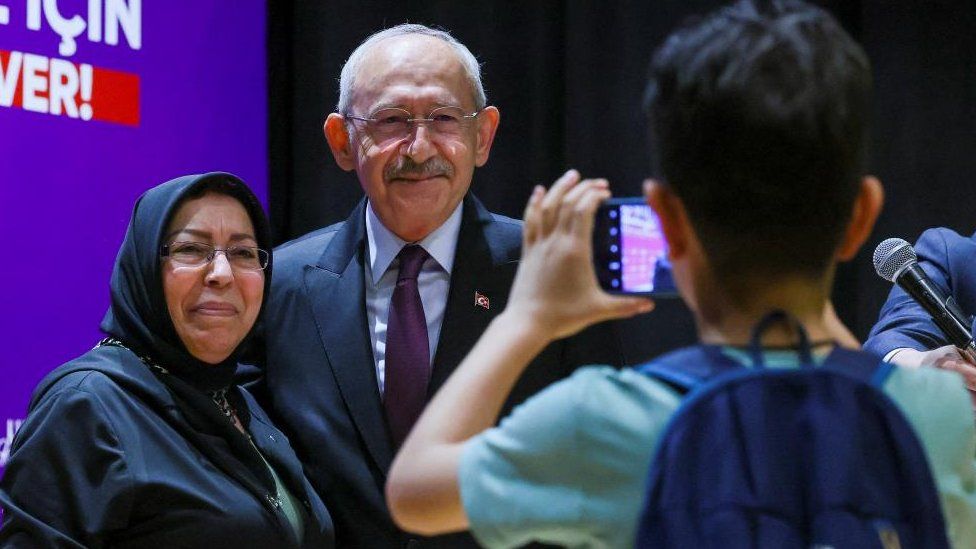
    A 59-year-old woman and her grandson joined him on stage to explain how her monthly salary of 5,000 lira (£200; $250) was now impossible to live on as her rent had shot up to 4,000 lira (£160; $200).

    Kemal Kilicdaroglu, presidential candidate of Turkey's main opposition alliance, poses for a photograph, as he attends the indoor campaign event 'Family Support Insurance Meeting', ahead of the May 28 presidential runoff vote, in Ankara, Turkey, May 27, 2023
    Image caption,A boy takes a picture of his grandmother, 59, with Kemal Kilicdaroglu

    It may have been staged, but this is the story across Turkey, with inflation at almost 44% and salaries and state help failing to keep pace.

    Economists say the Erdogan policy of cutting interest rates rather than raising them has only made matters worse.

    The Turkish lira has hit record lows, demand for foreign currency has surged and the central bank’s net foreign currency reserves are in negative territory for the first time since 2002.

    “The central bank has no foreign currency to sell,” says Selva Demiralp, professor of economics at Koc University. “There are already some sort of capital controls – we all know it’s hard to buy dollars. If they continue with low interest rates, as Erdogan has signalled, the only other option is stricter controls.”

    East of Ankara, gleaming tower blocks have been springing up in Kirikkale. It looks like boom-time for this city, run by the president’s party.

    But many people here are struggling.

    Fatma has run a hairdresser’s for 13 years but for the past two, work has dried up, and the cost of rent and hair products has soared.

    She voted for an ultranationalist candidate who came third, and does not trust the two men left in the race.

    A few doors up the street, Binnaz is working a sewing machine at a shop for mending clothes.

    People cannot afford new dresses so she is earning much more, even if her monthly rent has trebled to to 4,000 lira. Despite Turkey’s stricken economy, she is putting her faith in the president.

    Binnaz, seamstres

    BBC

    I believe [Erdogan] can fix it because he’s been in power for 21 years and he has all the power. It’s his last term [in office] so he’ll do all he can for usBinnaz
    Seamstress in Kirikkale

    Outside a supermarket, Emrah Turgut says he is also sticking with Mr Erdogan because he has no faith in the other option, and believes the president’s unfounded allegations that the biggest opposition party co-operates with terrorists.

    Turkey’s second-biggest opposition party, the HDP, denies any link to the militant PKK, but President Erdogan has used their backing for the rival candidate to suggest a link to terrorists.

    Whoever wins on Sunday, Turkey’s parliament is already firmly in the grip of Mr Erdogan’s Islamist-rooted AK Party and its far-right nationalist ally, the MHP.

    The AKP also has the youngest MP, who arrived in parliament on the eve of the presidential vote.

    Zehranur Aydemir, 24, believes if Mr Erdogan wins then he will lay the foundations for a century in which Turkey will become a global power: “Now Turkey has a bigger vision it can dream bigger.”

    It is another grandiose Erdogan project, but Turkey’s economy is likely to prove a more pressing task, whoever wins the run-off.

  • Otokunor ‘escapes’ threat of assault at Kumawu by-election – Report

    The Kumawu by-election saw an increase in tensions as Peter Boama Otokunor, a former deputy general secretary of the National Democratic Congress (NDC), nearly averted a violent conflict with three NPP women.

    The media explained that Otokunor suggested at the polling center that NDC agents should position themselves closely behind the Election Commission officials to prevent any potential electoral fraud.

    She further added that Otokunor’s statement provoked the ire of the NPP women present.

    According to Yiadom, one of the women named Salomey, who formerly served as the NPP Deputy Women’s Organizer for Bantama, displayed immense courage and came close to physically engaging Otokunor and even threatening him.

    This drew the attention of another woman, identified as Vivian Ofosua, a national representative for the NPP, who nearly engaged Otokunor in a confrontation as well as an additional party woman.

    As tensions escalated, individuals at the scene intervened to prevent the situation from getting out of control and ensured peace was restored.

    “Three women in the NPP have really done well today, they nearly beat Otokunor today, three women, they nearly beat him, the women, one is called Salomey who is the former NPP deputy women’s organizer for Bantama, she is very brave, herself and Otokunor it wasn’t easy, she nearly put her hands into his eyes.

    “And another one Vivian Ofosua, a national rep for NPP, and another person, they nearly beat Otokunor, so people had to intervene to calm them down before there was peace….so, we asked him why was he causing confusion and he explained that per the election rules, the NDC agents are supposed to sit close behind the EC officials because they could steal the election, so, it is because of stealing that is why he did that by allowing his party agents to sit close behind the EC.

    “…so, most of the electorates got angry and accused him of bringing chaos at the poling center…so he had to go back to his car and later on Madam Salomey followed up warning him that if he ever comes there again, she will deal with him…which made him laugh and he moved his car away,” she narrated.

  • Nigeria: Peter Obi petitions court to overturn election result

    Nigeria: Peter Obi petitions court to overturn election result

      The third-place finisher in Febuary’s presidential election in Nigeria, Peter Obi, has officially petitioned the court to annul the decision in favor of the candidate of the ruling party.

      The suit filed on Monday is probably just the beginning of a protracted court struggle over the election scheduled for February 25, as it has with previous presidential contests in the most populous country in Africa.

      Obi of the Labour Party was a surprising third candidate who challenged the dominance of the All Progressive Congress (APC) and the main opposition Peoples Democratic Party by appealing to younger people (PDP).

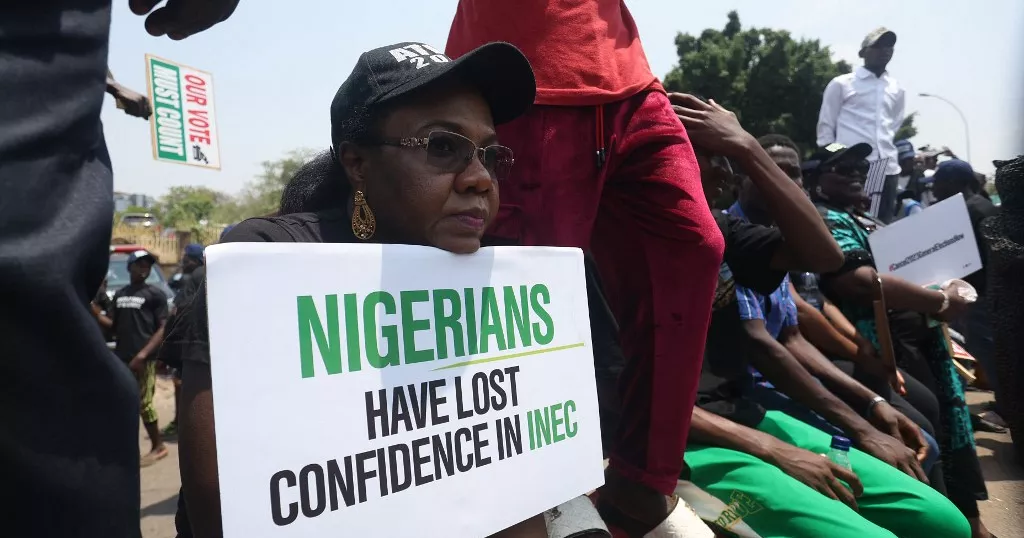
      Former Lagos governor and APC stalwart Bola Tinubu won the election with around 37 percent of vote, but opposition parties say delays in electronic uploading of results aided massive ballot rigging.

      In the petition filed in an Abuja appeals court, Obi alleges that the Independent National Electoral Commission or INEC broke electoral law.

      INEC has denied any illegal activity, though acknowledged technical problems.

      Among other claims, the petition says Tinubu was not qualified to be a candidate because of a 1990s drug-related forfeiture of nearly $500,000 from one of his accounts in a US bank. Tinubu denies any wrongdoing.

      Nigeria’s ruling APC won most of the states in the local elections, but on the back of a low turnout.

      “The election… was invalid by reason of corrupt practices and non-compliance with the provisions of the electoral act,” the petition says.

      It claims “based on the valid votes cast”, Obi won the largest number and “ought to be declared and returned the winner of the presidential election”.

      The main opposition presidential candidate PDP’s Atiku Abubakar has also said he will challenge the results, calling the election a “rape of democracy”.

      Analysts expect those legal challenges to end up the country’s Supreme Court, as they did after the 2019 election.

      President Muhammadu Buhari steps down in May after two terms, leaving Nigeria grappling with widespread insecurity, economic woes and growing poverty.

      Nigerians had hoped the presidential ballot would give them a chance to be heard, but many were disappointed by the way the election was conducted.

      Voters and opposition parties complained last month that technical mishaps with voting machines caused delays and allowed for vote rigging, which the electoral commission has denied.

      International observers, including from the European Union, noted major logistical problems, disenfranchised voters and a lack of transparency.

      “The process of reclaiming the people´s mandate has started,” Labour spokesman Yunusa Tanko said in a statement on Tuesday.

      Earlier on Tuesday, president-elect Tinubu appealed for unity, saying “the time for politicking is gone”.

      – Violent intimidation –

      Nigeria’s ruling party also won the majority of governorships contested in last weekend’s local elections, results showed Tuesday, following a ballot marred by voter suppression and violent intimidation which the US government called deeply troubling.

      Elections were held to choose governors in 28 of Nigeria’s 36 states and state assembly lawmakers. Governors in the remaining eight states had earlier been chosen in by-elections.

      According to the results from Saturday’s vote declared by INEC, APC won the governorship in 15 states — Lagos, Sokoto, Katsina, Jigawa, Gombe, Kwara, Niger, Yobe, Nasarawa, Cross River, Ebonyi, Ogun, Benue, Kaduna and Borno.

      PDP won seven — Plateau, Bauchi, Oyo, Delta, Rivers, Akwa Ibom and Zamfara states.

      Governors are powerful figures in Nigeria and some control state budgets that are larger than those of several African nations.

      In a major upset in the presidential election, outsider Obi won the most votes in Lagos, considered the fiefdom of president-elect Tinubu.

      A big question on Saturday was whether Obi’s popularity, especially among younger voters, would translate into success at the local polls.

      But the APC’s Babajide Sanwo-Olu scored a landslide re-election as Lagos governor.

      Local and international observers said the latest poll was impacted by disappointments in the presidential election but also by tactics to scare voters, buy ballots and threats of violence.

      “The United States is deeply troubled by the disturbing acts of violent voter intimidation and suppression that took place during the March 18 polls in Lagos, Kano, and other states,” the US embassy said in a statement on Tuesday.

      EU mission Chief Observer Barry Andrews on Monday said Nigerians’ expectations for Saturday’s election were not met in many parts of the country.

      “Many were disappointed and we witnessed voter apathy that is a clear consequence of failures by political elites and, unfortunately, also by INEC,” he said.

      His mission also said polling was disrupted by “thuggery and intimidation of voters, polling officials, observers, and journalists.”

      “Unfortunately, there were many casualties and fatalities,” it said. “Vote-buying, also directly observed by EU (election) observers, further detracted from an appropriate conduct of the elections.”

    •  Kogi women go spiritual, over disgruntled election result

       Kogi women go spiritual, over disgruntled election result

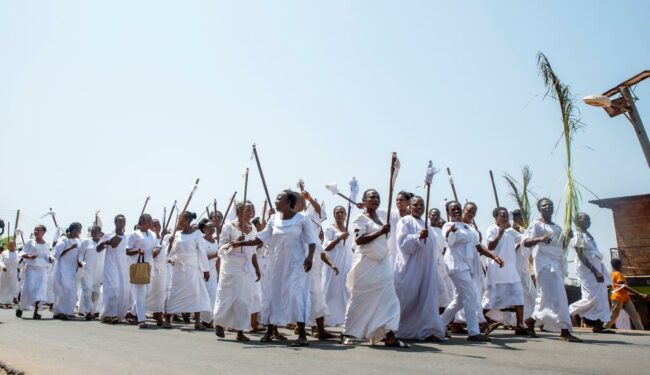
      Several ladies in Kogi Central have flocked to the streets to protest what they characterized as “injustice” following the conclusion of the senatorial election in the constituency.

      The women in a white ritual rally encouraged the Independent National Electoral Commission (INEC) to declare Natasha Akpoti Uduaghan as the senator-elect in video recordings that the media was able to get.

      The media learned the white ritual is done at sacred times to invoke the ancestral spirits of war against those who cheat or cause pain to the land.

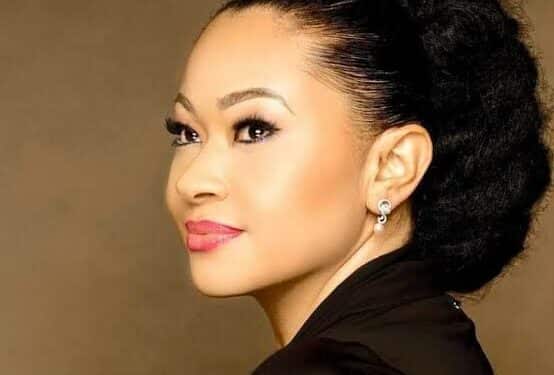
      Recall the Natasha had rejected the declaration of Abubakar Sadiku-Ohere of the All Progressive Congress (APC) as winner of the February 25 election for Kogi Central Senatorial District following the irregularities that marred the process.

      Sadiku-Ohere beat Mrs Natasha Akpoti-Uduaghan, the candidate of the Peoples Democratic Party, PDP, to emerge winner of the keenly contested election.

      Prof. Rotimi Ajayi, the INEC Returning Officer for Kogi Central Senatorial District, announced the result on Tuesday in Okene.

    • Nigeria’s APC retains majority in senate with 51 seats

      Nigeria’s APC retains majority in senate with 51 seats

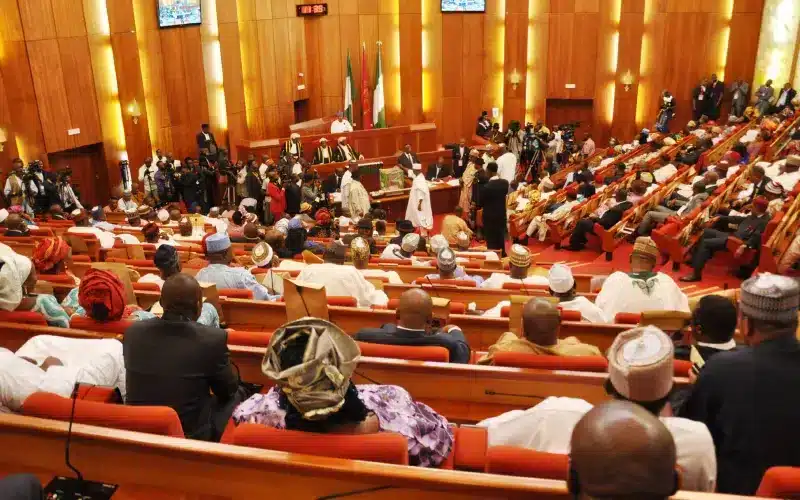
      The ruling All Progressives Congress (APC) has maintained its control of the Senate with 51 seats, according to the results of the parliamentary elections so far reported by the Independent National Electoral Commission (INEC).

      Of the 89 seats that have been formally declared, the Peoples Democratic Party (PDP) has gained 28, the Labour Party has won six, and the New Nigeria Peoples Party (NNPP) and Social Democratic Party (SDP) have each gained two.

      One senator has been elected so far from each of the All Progressives Grand Alliance (APGA) and Young Progressive Party (YPP).

      It is anticipated that the dominant party in the 10th Senate will continue to hold sway with 51 senators. With three members for each state and one for the FCT, the Red Chamber has 109 seats. A party with a simple majority elects the President of the Senate and the Deputy Senate President to serve as the chamber’s presiding officers.

      The results of last Saturday’s parliamentary elections have continued to surprise and outrage voters as more in-office officials lost in the election.

      The governors of Abia, Kebbi, Darius Ishaku, Benue, Ifeanyi Ugwuanyi, Enugu, Plateau, Simon Lalong, and Cross River failed in their bids to represent their senatorial districts in the legislature. The sole winners were Governors Dave Umahi of Ebonyi and Abubakar Sani Bello of Niger.

      Governor Aminu Tambuwal disputed the results of the Sokoto South senatorial race, but they were declared inconclusive due to anomalies like overvoting.

    • Natasha of PDP defeated as APC wins Kogi Central Senatorial seat

      Natasha of PDP defeated as APC wins Kogi Central Senatorial seat

      A senate candidate for the People’s Democratic Party (PDP), Natasha Akpoti Uduaghan, has been defeated by Abubakar Sadiku-Ohere of the All Progressive Congress (APC).

      The Independent National Electoral Commission (INEC) subsequently proclaimed Ohiare the victor of the Kogi Central Senatorial district election on February 25.

      In a hotly contested race, Sadiku-Ohere triumphed over Peoples Democratic Party (PDP) candidate Ms. Natasha Akpoti-Uduaghan.

      Prof. Rotimi Ajayi, the INEC Returning Officer for Kogi central senatorial district, announced the result on Tuesday in Okene.

      He said Sadiku-Ohere garnered 52,132 votes against Natasha’s 51,763 votes to clinch the seat, a difference of 369 votes between them.

      “Engineer Abubakar Sadiku-Ohere of the APC having scored the highest votes in the election for the Kogi Central Senatorial seat is hereby declared winner, and is therefore returned elected,” Ajayi said.

    • Nigeria election 2023: Voting ends successful in Nyanya

      Nigeria election 2023: Voting ends successful in Nyanya

      Voting in most polling units in Nyanya, Abuja, has ended officially at 2.30 pm, as voters in the area expressed happiness describing the process as peaceful.

      The News Agency of Nigeria (NAN) reports that the voters conducted themselves in an orderly manner, while INEC officials and security agencies performed their duties.

      Mr Emeka Nwaobodo, a voter at polling unit 24, Redeemed Christian Church, Nyanya, told NAN that the voting atmosphere was
      peace and calm.

      He described the peaceful atmosphere as a departure from previous elections, calling for consolidation of same in future elections.

      Nwaobodo commended the security agents and INEC officials that ensured voters remained orderly during accreditation and the voting process.

      Mrs Vera Ochai, a voter, who described the exercise at her polling unit 39 as “great”, said she was fulfilled, given the orderly and peaceful nature of the voting process.

      This, she attributed to the activities of INEC and the security officials stationed at the polling units.

      She commended voters for their support through their orderly conduct all through the voting.

      Miss Chioma Amuta, a voter at Nyanya polling unit 005, who also commended INEC and security agencies for the orderly conduct of the election, said “this is an indication that my vote will count.”

      She said that going forward, efforts should be made to sustain the success recorded, especially the deployment of the Bimodal Voter Accreditation System
      (BVAS) and called for introduction of other advanced technological equipment, in line with global best practices in subsequent elections.

      NAN reports that some of the units where voting officially ended in Nyanya and sorting and counting of ballot papers are in progress include polling units 063, 064, 030, 038, 039, 005, 024 023, and 022, among many others.

      Source: tribuneonline

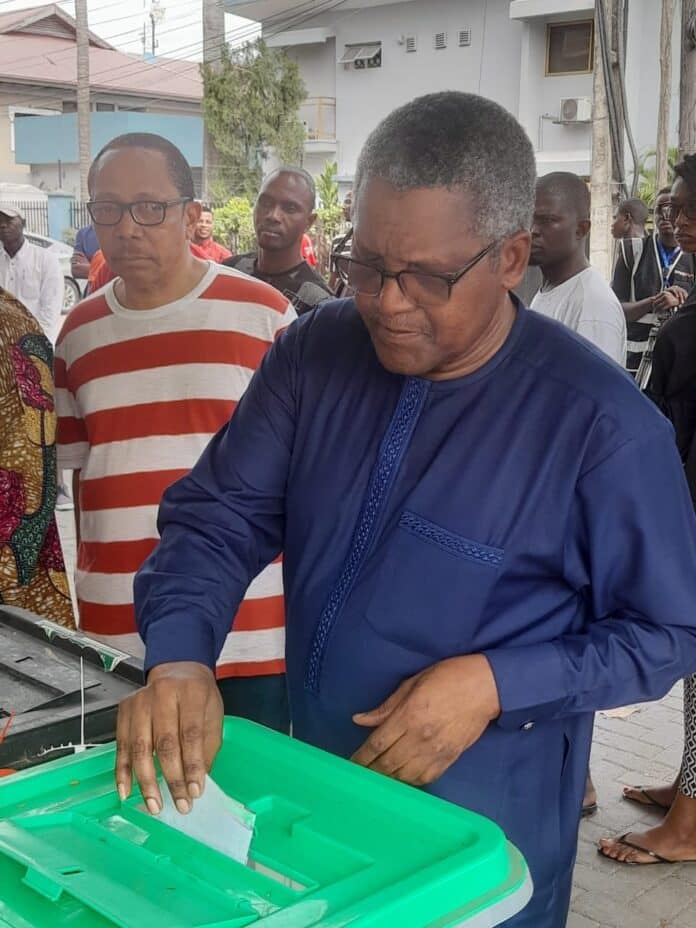
    • Nigeria election 2023: Africa’s richest man Aliko Dangote casts his vote in Lagos

      Nigeria election 2023: Africa’s richest man Aliko Dangote casts his vote in Lagos

      On Saturday, February 25, 2023, Aliko Dangote, the richest man in Africa and chairman of the Dangote Group, cast his ballot in Lagos.

      Kano State native Dangote was spotted exercising his right to vote at a voting location in Victoria Island, Lagos.

      More soon…

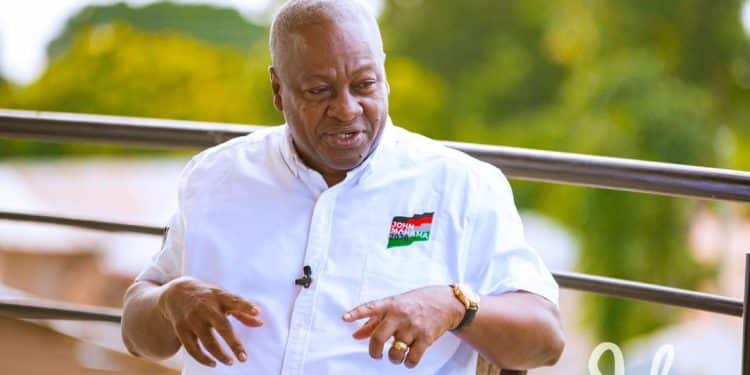
    • Mahama formally declares presidential ambition

      Mahama formally declares presidential ambition

      Former President, John Dramani Mahama has officially announced his plans to run for President in the 2024 general election.

      Mr. Mahama made the formal announcement when he met with the Minority caucus at his Cantonment office on Tuesday.

      All NDC MPs in Parliament have unanimously endorsed John Dramani as flagbearer.

      Present at the meeting were former Chief of Staff, Julius Debrah, former NDC Campaign Manager for the 2020 general elections, Professor Joshua Alabi and former Information Minister, Kofi Totobi Quakyi.

      It is expected that the former President will make a public declaration in the coming days.

      On Monday, leadership of four unions – Motor Riders Union, True Drivers Union, Concerned Drivers Union and Abossey Okai Spare-part Dealers Association – petitioned John Dramani Mahama, urging him to contest for the Presidency.

      If elected President, John Dramani Mahama will, in the opinion of the unions, be the finest person to address the nation’s current economic problems.

      Presenting the petition to the office of the former President, the Public Relations Officer of the Motor Riders Association, Setsofia Quashie said Ghanaians are desirous of a change in administration that will result in the transformation of the economy.

      NDC Greater Accra Chairmen endorse Mahama; promise to pay his GH¢500K filing fee

      Constituency Chairmen of the National Democratic Congress (NDC) in the Greater Accra Region had earlier declared their support and endorsement for former President John Dramani Mahama, should he decide to contest the party’s presidential primaries.

      The Greater Accra Chairmen Caucus during a courtesy call on Mr. Mahama asked him to lead the party to the 2024 election.

      According to the 33 chairmen, it is only President John Mahama who can lead and win the elections for the NDC in 2024.

      The caucus, led by Dome Kwabenya Chairman, Isaac Lamptey, also promised that they will raise and pay the filing fee of GH¢500,000 for Mr. Mahama to contest the NDC primaries.

      NDC youth in the Volta Region also want John Dramani Mahama to run unopposed for the flagbearership race of the party ahead of the polls.

      The group believes that there “is no need for flagbearer elections, but instead the party should directly endorse the former president as flagbearer of the party for the 2024 presidential elections.”

    • Donald Trump calls for end of US Constitution

      Donald Trump has proposed the “termination” of the United States Constitution, spurring a sharp rebuke from the White House as the former president revisits debunked conspiracy theories about the 2020 election, which he lost.

      Mr Trump took to his social media platform two years ago to declare himself “the rightful winner” after steering largely clear of his election defeat in a speech on November 15 when announcing his intention to run for president again in 2024.

      He stated that it was time to “throw out” the results of the 2020 presidential election or hold a “new election.”

      “A Massive Fraud of this type and magnitude allows for the termination of all rules, regulations, and articles, even those found in the Constitution,” Mr Trump wrote in a post on Truth Social.

      “Our great ‘Founders’ did not want, and would not condone False & Fraudulent Elections!”

      Later on Saturday, White House spokesman Andrew Bates slammed Mr Trump’s statement, calling the US Constitution a “sacrosanct document”.

      A man in a suit waves his right hand as he stands before a large banner that says: "Make America Great Again".
      Mr Trump announced on November 15 that he’d be running for president for a third time, almost two years ahead of the 2024 election.(AP: Andrew Harnik)

      “Attacking the constitution and all it stands for is anathema to the soul of our nation and should be universally condemned,” Mr Bates said.

      “You cannot only love America when you win.”

      In a subsequent post on Truth Social, Mr Trump doubled down on his comments and distanced himself further from leadership within his own Republican Party, baiting Senate Minority Leader Mitch McConnell to weigh in.

      “I wonder what Mitch McConnell, the RINOS (Republicans in name only), and all of the weak Republicans who couldn’t get the Presidential Election of 2020 approved and out of the way fast enough, are thinking now?” Mr Trump wrote.

      A pinkish Mediterranean-style villa sits on a manicured green lawn surrounded by palm trees under a bright blue sky.
      Mr Trump dined with rapper Kanye West and White supremacist Nick Fuentes at Mar-a-Lago on November 22. (AP Photo: Pablo Martinez Monsivais)

      Mr McConnell has infuriated the former president by indirectly criticising him after hosting a dinner on November 22 at his Mar-a-Lago resort with rapper Kanye West — who had made a series of anti-Semitic remarks — and Holocaust-denying White nationalist Nick Fuentes.

      Mr Trump has since denied inviting Mr Fuentes or being aware of his background, saying that Mr Fuentes just followed Mr West — now known by the name of Ye —  into the resort as an extra guest.

      At the dinner, Mr West reportedly berated Mr Trump for not doing enough to help the January 6 rioters who wanted to stop then vice-president Mike Pence from certifying the 2020 election results that would confirm Joe Biden as the 46th US president.

      Nine days later — last Thursday — Mr Trump came out vigorously in support of those convicted in the attacks on the US Capitol in a message to a right-wing political group.

      In a video played at a fundraiser held by the Patriot Freedom Project, Mr Trump said the January 6 rioters were being dealt with “very unfairly” by the courts.

      “People have been treated unconstitutionally in my opinion and very, very unfairly, and we’re going to get to the bottom of it,” he said in the video, shot in his office in front of a framed photo of him and North Korean leader Kim Jong Un.

      In a September interview, Mr Trump said that he would consider issuing pardons and providing an official apology to January 6 defendants if re-elected president and was “financially supporting” those involved.

      Rapper Kanye West shows President Donald Trump a photograph on his phone of a hydrogen plane in the Oval Office.
      Kanye West, seen here at the White House in 2018, reportedly urged Mr Trump to do more for the January 6 defendants.(AP: Evan Vucci)

      According to this year’s January 6 hearings held by Congress, Trump supporters acted violently after believing “the big lie” that the 2020 election was “stolen”, despite a lack of evidence and a multitude of failed legal challenges.

      Mr Trump’s posts came after Twitter’s new owner, Elon Musk, announced that he would show how the social media platform had suppressed “free speech” in the run-up to the 2020 election by favouring the Democratic Party in blocking explosive content.

      That included reports of damaging material found on the laptop of Hunter Biden, the once-wayward son of the current US president, as first reported by the Rupert Murdoch-owned New York Post.

      Republicans hope that fresh revelations about Hunter Biden’s possible former links to Ukraine and his other salacious activities could give them a political edge when they retake the House of Representatives in early 2023, possibly leading to congressional hearings.

      But the Republican Party’s underwhelming performance in last month’s midterm elections — it narrowly won the House but was unable to retake control of the Senate because of the flop of so-called MAGA candidates — has weakened Mr Trump’s once unchallenged position as conservative kingmaker.

      Some of the losing candidates — including former TV anchor Kari Lake who was beaten by Democrat Katie Hobbs in the Arizona Governor race — have followed the Trump playbook by refusing to concede defeat while claiming widespread election fraud without evidence.

      Mr Trump is also fighting multiple legal challenges on state and federal levels, including an investigation into why he took classified government documents to his Florida property after leaving the White House in January 2021.

      He also saw the US Supreme Court last week reject his request to block a congressional committee from obtaining his federal income tax returns, which promise to inflict more political damage in the final days of the Democrat-held House.

      Even so, an Emerson College poll released on November 22 gave Mr Trump a 30-percentage-point lead over his potential challenger Ron DeSantis — the Florida governor — in a hypothetical 2024 Republican primary.

      But he trailed Mr Biden by 4 points in a possible presidential election rematch in 2024 when Mr Trump would be 78 years old and Mr Biden would be turning 82.

    • Libya: Top official urges UN special envoy to prompt election talks

      An influential Libyan official said that the United Nations’ special envoy should meet with the joint electoral committee made up of rival Libyan factions, to start constitutional arrangements for elections.

      Aguila Saleh, the influential speaker of Libya’s east-based parliament, was speaking to reporters in Cairo after meeting Arab League Secretary-General, Ahmed Aboul Gheit.

      Saleh said the joint committee could send their recommendations to the High National Election Commission, which would then be responsible for holding elections.

      Earlier this month, Abdoulaye Bathily, the new UN special envoy for Libya warned that the first anniversary of Libya’s postponed elections is quickly approaching and that further delaying a vote could lead the troubled north African nation to even greater instability, putting it “at risk of partition.”

      “The Libyan executive body’s term is over,” said Saleh, calling for a peaceful transfer of power and a return to previous electoral procedures.


      Source: African News

    • As Malaysia readies for an election, refugees keep a wary eye on the situation

      Refugees are concerned that the incoming administration will continue to close UNHCR offices and expand an official tracking system.

      Millions of Malaysians will go to the polls on November 19 to decide the direction of their country for the next five years.

      While Malaysians vote in the hope of creating the country they want, the 183,000 refugees who live there are wary of what appears to be a recent hardening of rhetoric toward asylum seekers and refugees.

      Refugees, who are classified as “illegal immigrants” under Malaysian law, are one of the country’s most marginalised and vulnerable communities, with no right to work or access to formal education.

      Like most of its neighbours in Southeast Asia, Malaysia is not a signatory to the UN’s 1951 refugee convention or the 1967 protocol, but in recent months the government of incumbent Prime Minister Ismail Sabri Yaakob has returned asylum seekers to Myanmar, launched a new tracking system for refugees and announced its commitment to closing down the offices of the United Nations High Commissioner for Refugees (UNHCR), which currently handles protection needs for asylum seekers and refugees.

      “The presence of UNHCR offices is seen to be the biggest pulling factor towards the increased arrival of foreign migrants,” a cabinet minister, Abd Latiff Ahmad, said in a parliamentary reply to then-opposition member of parliament Charles Santiago on October 7 shortly before the house was dissolved.

      Ismail Sabri, who is a vice president of the United Malays National Organisation, is campaigning for re-election as part of the Barisan Nasional (BN) coalition against two other broad coalitions, including BN’s current partner in government Perikatan Nasional (PN) and Pakatan Harapan, which won the last election in May 2018 but collapsed amid political manoeuvring.

      Malaysian Prime Minister Ismail Sabri Yaakob sitting at a long table opposite a voter and surrounded by media during a campaign stop at a restaurant.
      Malaysia’s Prime Minister Ismail Sabri Yaakob (second left) is campaigning hard to form the next government. His administration has said it wants to close the offices of the UN refugee agency in Malaysia [Mohd Rasfan/AFP]

      Human Rights Watch’s Asia deputy director, Phil Robertson, told Al Jazeera that some see the moves as an election ploy.

      “Many observers believe that the Home Affairs Minister is pushing this issue hard for political reasons, to try and scapegoat UNHCR as the problem, which plays well with parts of the conservative electorate who are more xenophobic and anti-refugee,” he said.

      “That’s a real shame because refugees should not be demonised for any reason because it puts people’s lives at risk.”

      ‘Terrible and sad’

      Many refugees are alarmed at the potential closure of the UNHCR offices.

      The agency not only assesses protection needs but also helps verify the identity of those caught up in the immigration detention system, although the government has not allowed access to the centres since 2019 during Pakatan Harapan’s brief period in power.

      James Bawi Thang Bik, a representative for The Alliance of Chin Refugees in Malaysia, described the move as “terrible and sad news for the refugee community”.

      People from Myanmar account for 85 per cent of the refugees in Malaysia, and ethnic Chins who come from the country’s west are the second-largest group after the mostly Muslim Rohingya.

      “If there is no UNHCR, they [refugees] will have no hope, no security, and they can be exploited at any time. Suicide cases might be increased among refugees,” he told Al Jazeera.

      A smiling child in a yellow shirt sits on top of a white cow as other Rohingya children looking happy gather around to feed it.
      Rohingya refugee children feed a sacrificial cow on the eve of Eid al-Adha in Batu Caves, Kuala Lumpur, Malaysia, July 9, 2022 [REUTERS/Hasnoor Hussain]

      The UNHCR is usually the first point of call for new arrivals, who go through a series of interviews and checks with agency staff to assess whether they are in genuine need of protection. Those assessed as refugees are given identity cards from the agency, with the lucky few eventually securing resettlement elsewhere.

      But the process of getting a card can take months and resettlement years.

      “We are afraid the registration process will take longer than the UNHCR registration process,” said Zafar Ahmad Abdul Ghani, the president of the Myanmar Ethnic Rohingya Human Rights Organization in Malaysia (MEHROM). “Usually, it will take between three to six years for the Rohingya asylum seekers to be recognised as refugees. In some cases, more than six years.”

      Zafar himself was the target of a disinformation campaign that forced him into hiding in 2020 after a false Facebook post claimed that he had demanded Malaysian citizenship for Rohingya refugees. Two years later, he and his family are still receiving death threats and harassment.

      ‘Establishing a national framework’

      The UN refugee agency first began working in Malaysia during the Vietnam refugee crisis in the 1970s and has expanded rapidly as a result of conflicts in countries from Myanmar to Afghanistan, Sri Lanka and Syria.

      Its colonial-era bungalow in Kuala Lumpur has been extended multiple times, and the once-lush garden is covered over with portacabins, parking and a vast covered building where asylum seekers wait for interviews and for claims to be processed.

      When asked about the government’s plan to close the offices, Yante Ismail, the Kuala Lumpur-based UNHCR spokesperson, told Al Jazeera that it “welcomes the continued engagement of the Government of Malaysia and ongoing efforts to explore closer cooperation on a variety of issues related to refugee protection”.

      She added that the organisation has been in close discussions on a framework of cooperation on managing refugees in the country for years through a government-initiated Joint Task Force,  cochaired by the Malaysian Ministry of Foreign Affairs and the UN refugee agency.

      “UNHCR welcomes the Malaysian Government’s continued interest in establishing a national framework to manage the refugee situation in the country that may eventually result in the Government assuming greater responsibility for refugee management and protection,” she said.

      Rohingya refugee and activist Zafar Ahmad Abdul Ghani and his wife look out from behind a metal grille at their home in Kuala Lumpur, Malaysia.
      Rohingya refugee and activist Zafar Ahmad Abdul Ghani and his wife were forced into hiding in 2020 after disinformation was spread about him on social media. He continues to receive death threats [File: Lim Huey Teng/Reuters]

      But others are sceptical about the government’s ability to handle the work.

      “The bottom line is the government doesn’t really have the capacity to manage the refugee situation in the country,” Human Rights Watch’s Robertson said.

      “With more than 180,000 UNHCR-recognised refugees, there is a major human rights protection challenge to keep those people safe, and nothing the Malaysian government has done to date indicates that they are up for that challenge.”

      Questions over resettlement

      The plan to take control of asylum seekers and refugees in Malaysia has also raised questions about the resettlement process under which people are able to start new lives in third countries. The UNHCR is central to the process and works with accepting countries to submit refugees for resettlement. In Malaysia, most refugees are resettled in the United States.

      “What I can say is that there will be no more resettlement for refugees in the absence of UNHCR,” said James Bawi Thang Bik. “I think resettlement for refugees is beyond the capacity of a government without UNHCR.”

      Robertson notes that most governments require a UNHCR interview to determine the status of a refugee.

      “The fact that Malaysia is not a state party of the UN Refugee Convention means that UNHCR’s role is even more important and that closing down the office would be like Malaysia shooting itself in the foot,” he said.

      While UNHCR identifies refugees in need of resettlement, it is up to resettlement countries to decide how many refugees they will accept with a quota decided each financial year. The US, which takes in the most people, has said it will accept 125,000 refugees under resettlement after reaching an all-time low during the administration of former President Donald Trump when the quota was cut to 15,000.

      Muhyuddin Yassin, a former Malaysian prime minister, raises his arm as he speaks at a nighttime rally in Kuala Lumpur, Malaysia.
      Former Prime Minister Muhyiddin Yassin is campaigning as leader of Perikatan Nasional (PN). As prime minister, he had said Malaysia could not cope with any more Rohingya refugees [Hasnoor Hussain/Reuters]

      Despite the challenging situation in Malaysia, many refugees are hoping that whoever wins power this week will not only reconsider the plan to close the offices of the UN refugee agency but also develop a more comprehensive policy for refugees and asylum seekers, even though the competing coalitions’ manifestos barely touch on the issue.

      Officials have periodically talked of giving refugees the right to work, while outgoing Foreign Minister Saifuddin Abdullah has often visited community schools for Rohingya refugees while in office.

      Back in 2016, as he faced growing questions over his role in the multibillion-dollar corruption scandal, now-jailed Prime Minister Najib Razak held a mass rally condemning Myanmar’s “genocide” against the Rohingya.

      It was not possible for the world to “sit by and watch genocide taking place” he told thousands of people at a Kuala Lumpur stadium, adding that the persecution of the Rohingya was an “insult” to Islam.

      The next year, hundreds of thousands more Rohingya were forced to flee as the Myanmar army launched a brutal crackdown in the country’s northwest that is now the subject of a genocide trial at the International Court of Justice.

      “We hope the new government will allow the UNHCR to resume their work to assist refugees and asylum seekers and find a durable solution for them,” said MEHROM’s Zafar.

    • My mother doesn’t know the difference between corner kick and penalty – Afriyie Ankrah on wild Brazil World Cup allegations

      Former Minister for Youth and Sports, Elvis Afriyie Ankrah, has noted how several false allegations were made against him following Ghana’s participation in the 2014 FIFA World Cup held in Brazil.

      Mr Afriyie Ankrah shared some of the outrageous allegations leveled against him with GhanaWeb’s Edward Smith Anamale on the Election Desk program.

      According to him, he was alleged to have put his mother in charge of the sale of replica jerseys, but stated that his mother had absolutely no knowledge of football.

      “There were all manner of wild stories. I’d give you just a few. There’s this story that my wife was a caterer… I mean, my wife has absolutely nothing to do with cooking. The only reason she went was because we had buried her mother three weeks earlier. So, I took my wife and my two kids because the other one was in boarding school, and I bought the tickets myself – Air Portugal, and took them. It was not at government expense, but there was the story out there. They said my mother was in charge of replica jerseys. What they didn’t know is that my mother doesn’t live in Ghana; my mother has never lived in Ghana since I was six months old. She doesn’t know the difference between a corner kick and a penalty. She has no idea, so when I told her, ‘Mummy, they said you are in charge of replica jerseys, she said, what is that?’ “She has no idea,” he said.

      He shared other allegations made against him but expressed happiness about the report of the Dzamefe Commission, which, according to him, vindicated him.

      “I woke up one day and there was one of the papers with me sitting with some ministers, with coconut in front of us. They said coconut was $200, $2000. There was nothing about coconut. I always drink coconut because I’m a health-conscious person, and at the camp, coconut was virtually free. And even if you buy it, it’s less than $1. Nothing; it was all manufactured.”

      “It was later that I found out that there were some unseen hands behind it, but I keep saying that if those things hadn’t happened, and especially if the commission hadn’t been put in place and a report officially there, which clearly shows that I was audited by Ernst and Young,… by the time I was leaving office, the World Cup money itself, which the government gave to us, was still in the account,” Afriyie Ankrah, who is vying for

      The 2014 World Cup in Brazil saw Ghana get eliminated at the group stage of the competition, but it also came with several camp-related stories, among other stories of corruption allegations.

    • Millions of Americans to vote with Congress at stake

      Millions of Americans are voting in the midterm elections today, Tuesday, with the balance of power in Congress at stake.

      The entire US House of Representatives, about a third of the Senate and key state governorships are up for grabs.

      President Joe Biden, a Democrat, and ex-President Donald Trump, a Republican, made their closing arguments in competing rallies.

      Mr Biden’s ability to pass laws will be stymied if Republicans take the House, as most projections expect.

      Democrats currently control the White House and – by razor-thin margins – both chambers of Congress.

      The party in power typically sheds an average of two dozen or so seats in the midterms, which fall midway through a president’s four years in office.

      A political thumping for Democrats on Tuesday could embolden murmurs within the party about whether Mr Biden, who turns 80 this month, should run for re-election in 2024.

      He went to Maryland on Monday night to campaign for Wes Moore, who is expected to make history as the third black governor ever elected in the US.

      Wes Moore (centre) would become only the third black governor in the US if electedIMAGE SOURCE,GETTY IMAGES
      Image caption, Wes Moore (centre) looks set to become the third black governor ever elected in the US

      “Today we face an inflection point,” Mr Biden told a cheering crowd at a historically black university outside Washington.

      “We know in our bones that our democracy’s at risk and we know that this is your moment to defend it.”

      According to a tally by the BBC’s US partner, CBS News, more than half of Republican midterms candidates have raised doubts about the integrity of the 2020 White House election, echoing Mr Trump’s false claims of widespread fraud.

      While Mr Biden himself is not up for re-election on Tuesday, midterms are often seen as a referendum on a president’s leadership.

      Despite delivering on promises to lower prescription drug prices, expand clean energy and revamp US infrastructure, Mr Biden has seen his popularity suffer following the worst inflation in four decades, record illegal crossings at the US-Mexico border, and voter concerns about crime.

      Mr Trump spent the eve of election day holding a final rally in Ohio alongside Republican Senate candidate JD Vance.

      The former president, who has been teasing a 2024 White House comeback bid, said he would make a “very big announcement” at his Florida estate Mar-a-Lago on 15 November.

      He told the crowd: “If you support the decline and fall of America, then you must, you absolutely must vote for the radical left, crazy people.

      “If you want to stop the destruction of our country, then tomorrow you must vote Republican in a giant red wave.”

      Mr Trump’s party needs to net only five seats to flip the House and a single seat to take over the evenly divided Senate.

      Non-partisan election observers project the Republicans will pick up roughly 15-25 seats in the 435-seat House.

      Supporters of Donald Trump await his arrival for a rally in Vandalia, OhioIMAGE SOURCE,GETTY IMAGES
      Image caption, Supporters of Donald Trump await his arrival for Monday’s rally in Vandalia, Ohio

      But the battle for the upper chamber of Congress could go either way, according to most political forecasts, and is expected to come down to hotly fought races in Pennsylvania, Georgia, Nevada and Arizona.

      Should Republicans win the House, they have vowed to shut down the Democratic-led inquiry into last year’s Capitol riot and launch investigations into the Biden administration.

      Kevin McCarthy, who would probably become Republican speaker of the House – placing him second in line to the presidency – has refused to rule out impeachment proceedings.

      Mr Biden’s power to appoint judges or administrative posts for the next two years would be severely curtailed if Republicans win the Senate.

      More than 43.5m early votes have already been cast, according to the US Elections Project.

      But it might be days or weeks before the outcome of the midterms is clear if races are close, as some states allow ballots to be posted on election day, and there could be recounts.

      Source: BBC

    • My re-election was so clean because it is an ‘election of truth’ – Ablekuma South NDC Organiser

      The re-elected Organiser of the opposition National Democratic Congress (NDC) in the Ablekuma South constituency, Alfred Addotey Allotey, has termed the just-ended elections as an ‘election of truth.’

      The party executive, who polled 1013 votes against his contender, Albert Pangbot, who polled 510 votes, said his victory in this election feels so clean although he never underestimated his contender.

      “I have never underestimated my competitor but this victory looks resounding, this victory looks so pure, so clean. My efforts [to] my people have really paid off and I anticipated this. I saw this victory coming and I’ve said to so many people that I knew this victory was coming.

      “Throughout my campaign, I have said to everybody that Ablekuma South has been lured for many years, and these elections that we’re going to run is going to be the election that I term the ‘election of truth,’” Addotey Allotey stated.

      Speaking to GhanaWeb immediately after he was declared winner in the constituency elections on Saturday, October 22, 2022, Alfred Addotey Allotey, popularly known as Alute, emphasised the need for the new crop of executives to continually support the work of their Member of Parliament, Alfred Oko Vanderpuije.

      “We have a Member of Parliament – I just want to be so emphatic, who today stands as one of the best Members of Parliament in Ghana. There are many constituencies surrounding us who are just pleading within their hearts, and they are overjoyed to have Dr. Alfred Oko Vanderpuije as their Member of Parliament.

      “This man is doing a yeoman’s job,” he stressed.

      Watch him speak below:

      Ablekuma South Organiser calls out regional executives working against party interest

      Ablekuma South Organiser calls out regional executives working against party interest.

    • 466 aspirants vying for positions in Bono NDC constituency elections

      A total of 13, 209 delegates are expected to vote to decide the fate of some 466 aspirants in the Bono Regional National Democratic Congress (NDC) Party’s constituency election this weekend.

      In all, that region has 12 constituencies.

      Mr Richard Blay, the Party’s Bono Regional Director of Elections, told the Ghana News Agency in an interview in Sunyani that Banda was the only constituency among the 12 that had all its aspirants going unopposed and therefore, would settle for acclamation on Saturday.

      He said that aside, the Berekum East constituency would hold the election on Sunday, but the rest would have theirs on Saturday.

      Giving the constituency breakdown, Mr Blay explained that in Sunyani East Constituency, 43 aspirants were seeking to be elected with 2,295 delegates expected to vote, whereas in Sunyani West, 1,700 delegates would be voting for 40 aspirants.

      At the Berekum East constituency, 1,204 delegates would be voting for 47 aspirants, whereas Berekum West has 46 candidates with 561 expected delegates.

      The Dormaa West constituency has 39 contenders and 540 delegates, Dormaa East, 36 candidates and 807 delegates and the Dormaa Central, 42 aspirants but 1,247 delegates.

      The Jaman North and Jaman South constituencies have 41 and 47 aspirants, with 1,014 and 1,211 expected delegates, respectively.

      The Wenchi constituency has 50 aspirants and 1,256 delegates with the Tain constituency having 35 aspirants and 1,372 delegates.

      Mr Blay expressed satisfaction with the election process in all the 12 constituencies, saying everything was on course for a successful, free, and fair election, indicating security on the day was well-assured for the safety of everyone.

      The 466 candidates are contesting Chairman, Vice- Chairman, Secretary, Deputy Secretary, Organiser, Deputy Organiser, Treasurer, Deputy Treasurer, Communication Officer, and Deputy Communication Officer positions.

      The other positions are Women Organiser, Deputy Women Organiser, Youth Organiser, Deputy Youth Organiser, One Youth Representative, Zongo Caucus Coordinator and eight other Executive members.

    • Mahama explains why NDC could not submit pink sheets in the 2020 election petition

      For the first time, former President John Dramani Mahama has opened up about why he and the National Democratic Congress (NDC) could not provide the needed evidence to make their case in the 2020 election petition.

      On December 30, 2022, the former president dragged the Electoral Commission led by Jean Mensa (1st Respondent) and Akufo-Addo (2nd Respondent) to the apex court over the 2020 presidential elections on an allegation that the results announced by the EC were not the accurate results.

      The petition details “serious violations of the 1992 Constitution by the Electoral Commission and its Chairperson and Returning Officer for the Presidential Election, Mrs. Jean Adukwei Mensa in the conduct of their constitutional and legal responsibility.”

      The petitioner sought, among others, a declaration from the Supreme Court to the effect that “the purported declaration of the results of the 2020 Presidential Election on December 9 2020, is unconstitutional, null and void and of no effect whatsoever.”

      But the seven-member panel of the Supreme Court on March 4, 2021, held that the petition filed by former President John Dramani Mahama was unmeritorious and unanimously dismissed all other applications moved by the petitioner, including two reviews.

      Speaking in a VOA interview monitored by GhanaWeb, John Dramani Mahama intimated that NDC could not make its case because the pink sheets used by the EC to record the election results did not make room for the people to be verified before they could vote.

      “In the last elections, a lot of things went wrong. On the pink sheets that we record the results, they did not make allowance for the number of people biometrically registered.

      “And that is why when we went to court, and they said, why don’t you bring your pink sheet? It would have been useless because you bring the pink sheet, and there is no recording of the number of people verified.

      “It is only when you have that recording which must match up with the number of ballots in the box (that you can make a case). And so, if the Electoral Commission gives you a form that does not make provision for the people verified then what is the need for us to put our figures in the verification machine,” he said.

      The former president further stated that most of the challenges in the 2020 elections have still not been resolved.

      He added that the NDC has taken a cue from what happened in the 2020 election and has decided to go into the next election with its “own referrer”.


    • In the midst of a persistent political turmoil, Lesotho elects a new parliament

      Despite the deadlock in parliament, the election has been held, and observers believe this will harm the incumbent party.

      Lesotho citizens have voted in a parliamentary election that political analysts said could see the ruling party lose power after years of political instability that the Southern African mountain kingdom’s legislators have failed to resolve.

      Friday’s election has gone ahead despite a deadlock in parliament on a gamut of constitutional reforms that were meant to be enacted ahead of the vote to bring order to Lesotho’s fractious politics.

      The All Basotho Convention (ABC) has run the country of 2.14 million people since 2017, but divisions within the party have seen two prime ministers installed over five years.

      Defections, meanwhile, have left the party vulnerable to its opposition rivals, the Democratic Congress (DC) and the new Revolution for Prosperity (RFP), which is led by businessman Sam Matekane.

      “These elections will be highly contested and by the look of things, the DC and RFP will be neck and neck,” said Lesotho political analyst Lefu Thaela, who saw the ABC trailing in third place.

      Speaking to Reuters before polls opened, Thaela said the DC was likely to get the most votes but if it did not win an outright majority, the outgoing ABC could emerge as the kingmaker.

      Some voters who turned up early at the polling stations said they hoped to bring a change of government.

      “Truth be told, no government has ever fulfilled my aspirations and I am very disappointed,” said Semoko Monare, who has been voting since 1993.

      Surrounded on all sides by South Africa’s mountains, Lesotho’s high-altitude springs provide vital freshwater to its parched neighbour, supplying its commercial hub, Johannesburg.

      In 2020, ABC leader Thomas Thabane stepped down as prime minister after being charged with the murder of his ex-wife. He denied any wrongdoing, and the charges were later dropped.

      His successor, Moeketsi Majoro, declared a state of emergency in August after politicians failed to pass constitutional reforms to amend everything from the role of political parties and rules on floor-crossing in parliament to the appointment of senior officials and the prime minister’s role.

      The reforms were supposed to make Lesotho less prone to political logjams but got stuck in one themselves.

      Last month, Lesotho’s highest court ruled the state of emergency unconstitutional. The ABC has selected another leader, former health minister Nkaku Kabi, to contest its ticket.


    • Saying I will put my presidency on the line against galamsey was not out of recklessness – Akufo-Addo

      President Akufo-Addo has emphasised that he spoke the absolute truth when he announced his commitment to fighting illegal mining in Ghana.

      According to the president, the evidence of truth in his statement was apparent when his government’s fight against galamsey cost himself and the New Patriotic Party during his quest for re-election in 2020.

      “Since I took office on January 7th, 2017, nearly six years ago, I have made it a central feature of my presidency to lead in the fight to rid our country of this menace, which we all now call galamsey. Indeed, it was an important aspect of my inaugural address that day. It has not been easy; it has not been popular and we have not gotten the immediate results that I was looking for.

      “Indeed, in the last election of 2020, my stance on the issue cost my party and I significant losses in the mining communities. It turned out that my statement that I was putting my presidency on the line in the fight against galamsey was neither bumbazed nor reckless. It was the simple truth,” the president said when he met with members of the National House of Chiefs in Kumasi on Wednesday, October 5, 2022.

      The meeting with the traditional leaders was convened at the request of the president to discuss ways to fight illegal mining, which has escalated in magnitude over the past years.

      This is despite the promise made by the president at his inauguration in 2017 and the various campaigns launched by his government over the period.

      The growing impact of galamsey is proving a threat to several water and forest bodies across the country.

      This has led to calls on the government to adopt more radical efforts in the galamsey fight.

    • Chad extends transition for elections, agrees for Deby to stay

      Officials in Chad have extended the transition period towards democratic elections and say they will keep Mahamat Idriss Deby Itno on as head of state in the interim.

      Delegates also agreed for the military leader to be eligible to run for the presidency when elections are held.

      The decisions were made by a national reconciliation dialogue forum.

      In announcing the move Ahmat Barchire, Rapporteur of the National Sovereign Inclusive Dialogue (DNIS) said: “On the transition, the commission noted that there was a broad consensus to set it at a maximum of 24 months.”

      “The second point concerns ineligibility or eligibility. A consensus was reached that any Chadian who fulfils the conditions set by the law should be eligible to vote and be elected.”

      The national reconciliation dialogue forum has been boycotted by most opposition members, two out of three key armed rebel groups and civil society organisations.

      These decisions will face “resistance from political parties, civil society and the African Union,” said Chadian political scientist Evariste Ngarlem.

      “Neither the European Union nor the United States would accept Deby’s eligibility to run or the extended transition period,” he added.

      “These partners will take sanctions against Chad and the Transitional Military Council’s back will be up against a wall.”

      Chad, one of the world’s poorest countries, has endured repeated uprisings and unrest since gaining independence from France in 1960.

      Source: Africanews

    • Angolan election draws low voter turnout as ruling party on course to win

      Fewer than half of Angola‘s registered voters cast ballots in this week’s election that looks set to extend the MPLA’s almost five decades in power, electoral commission data showed on Friday.

      Despite the MPLA’s expected success, Wednesday’s vote was Angola’s most closely fought yet with unprecedented gains for the opposition, who have complained about the counting process.

      With more than 97% of the vote counted, the election commission said on Thursday the formerly Marxist People’s Movement for the Liberation of Angola, or MPLA, was ahead with a 51% majority and its longtime opponent, the National Union for the Total Independence of Angola, or UNITA, had 44.5%.

      If that breakdown holds, MPLA President Joao Lourenço will secure a second five-year term, extending his party’s uninterrupted rule since independence from Portugal in 1975.

      But UNITA, for the first time, will have deprived the MPLA of the two-thirds majority needed to pass major reforms and the ruling party will instead need the backing of other lawmakers.

      Election data released on Friday also showed that turnout was just 45.65% of eligible voters.

      UNITA has challenged provisional results, saying its initial count of 40% of polling stations showed it only a whisker behind the MPLA, saying it was a small enough margin for it to overhaul the MPLA once all ballots in the capital Luanda were counted..

      UNITA posted an image of its leader, Costa Junior on its official Instagram account with the caption: “The President”.

      The ruling party has not yet commented on the results, but it posted a video of Lourenço thanking Angolans on social media.

      Analysts fear any dispute could ignite violence among a poor and frustrated youth who voted for Junior. The MPLA and UNITA, formerly both anti-colonial guerrilla groups, were on opposing sides of an on-off civil war that lasted 27 years from 1975.

      As she watched the news on her phone, 47-year-old Antonia Neto, who works at a coffee shop at Luanda airport, said she was not happy with the results but said there was a glimpse of hope.

      “There is a lot of discontentment,” she said. “Maybe things will be better in the next election.”

      The MPLA’s Lourenço, 68, has pledged to extend reforms in his second term, including privatising poorly-run state assets. But many Angolans still live in poverty despite his promises of a fairer distribution of wealth in Africa’s second biggest oil producer.

      Source: Reuters

    • Brazil: Bolsonaro, Lula trade blows ahead of election

      Bolsonaro once again criticized the country’s electoral system without evidence, while Lula called the far-right president “a cheap copy of Trump

      Brazilian President Jair Bolsonaro and his main rival, former president Luiz Inacio Lula da Silva, traded blows on Monday ahead of the upcoming presidential election in October.

      Although they didn’t debate face-to-face, the two politicians each gave landmark interviews where Bolsonaro’s unfounded claims of electoral fraud were a key point of contention.

      Bolsonaro continues to sow doubt

      During a 40-minute interview on Journal Nacional, an evening news program that has the highest ratings in the country, Bolsonaro once again made claims about electoral fraud in Brazil. He did not provide any evidence.

      Bolsonaro, a former army captain, also said he believes the military should have a role in deciding the transparency of the vote.

      “The results of the vote will be respected, as long as the election is clean and transparent,” he said.

      As the president’s speech went to air on Monday night, residents in Brazil’s largest cities could be heard banging their pots and pans outside their windows, shouting “out with Bolsonaro.”

      Brazilian President Jair Bolsonaro and his main rival, former president Luiz Inacio Lula da Silva, traded blows on Monday ahead of the upcoming presidential election in October.

      Although they didn’t debate face-to-face, the two politicians each gave landmark interviews where Bolsonaro’s unfounded claims of electoral fraud were a key point of contention.

      Bolsonaro continues to sow doubt

      During a 40-minute interview on Journal Nacional, an evening news program that has the highest ratings in the country, Bolsonaro once again made claims about electoral fraud in Brazil. He did not provide any evidence.

      Bolsonaro, a former army captain, also said he believes the military should have a role in deciding the transparency of the vote.

      “The results of the vote will be respected, as long as the election is clean and transparent,” he said.

      As the president’s speech went to air on Monday night, residents in Brazil’s largest cities could be heard banging their pots and pans outside their windows, shouting “out with Bolsonaro.”

      Source; DW

    • Kenya’s Odinga mounts court challenge to presidential poll result

      Kenya‘s defeated presidential candidate Raila Odinga filed a petition to the country’s top court Monday, challenging the outcome of the August 9 election in what he called a fight for “democracy and good governance”.

      Odinga, a veteran opposition leader who ran with the backing of President Uhuru Kenyatta and the ruling party, has rejected the outcome of the poll that delivered victory to his rival William Ruto, branding it a “travesty”.

      The 77-year-old politician lost his fifth bid for the presidency by a narrow margin of around 230,000 votes — less than two percentage points.

      Hundreds of supporters cheered as dozens of boxes of evidence were unloaded from a truck outside the Supreme Court.

      “We have enough evidence that it is us who won the election. We didn’t have an election we can be proud of,” Odinga told a press conference after filing the case.

      The outcome of the poll represented a “continuing struggle pitting the forces for democracy and good governance against the corruption cartels that… will stop at nothing to take control of government,” he said, without giving specific details.

      “The action we have taken… affirms our deep belief in constitutionalism, the rule of law and a peaceful resolution of disputes.”

      Although polling day passed off peacefully, the announcement of the results a week ago sparked angry protests in some Odinga strongholds and there are fears a drawn-out dispute may lead to violence in a country with a history of post-poll unrest.

      Since 2002, no presidential election in Kenya has gone uncontested, with this year’s outcome also causing a rift within the Independent Electoral and Boundaries Commission (IEBC) which oversaw the poll.

      According to a copy of the 72-page petition, Odinga’s team alleges that IEBC chairman Wafula Chebukati failed to tally around 140,000 votes.

      As a result, Ruto “did not meet the constitutional threshold of 50% plus 1 of the valid votes cast” — a requirement for him to be declared the winner.

      Judges now have 14 days to issue a ruling. If they order an annulment, a new vote must be held within 60 days.

      – ‘We want justice’ –

      Odinga supporters began gathering outside the court hours before his arrival, blowing whistles and waving placards reading “Electoral Justice Now!” and “We want justice now”.

      “Odinga must win so that we get the 6,000 shillings ($50) promised in his manifesto,” said one man, wearing a crown made with plants who was referring to a monthly cash handout for vulnerable households.

      Another man — armed with a Bible and wearing huge green glasses — knelt down in prayer as police guarded the court premises.

      A court clerk said the tribunal had also received another eight petitions over the results filed by voters, politicians and non-profit organisations.

      The IEBC was under heavy pressure to deliver a clean vote after facing sharp criticism over its handling of the August 2017 election, which was also challenged by Odinga.

      The court annulled that election in a first for Africa and ordered a re-run which was boycotted by Odinga. Dozens of people died during a police crackdown on protests.

      In a shock development shortly before the results of this year’s poll were announced, four of the IEBC’s seven commissioners accused chairman Chebukati of running an “opaque” operation and later said the numbers did not add up.

      Chebukati dismissed the claims, insisting he had carried out his duties according to the law of the land despite “intimidation and harassment”.

      – Divided opinion –

      Legal experts are divided on whether Chebukati needed the commissioners’ backing to announce the results, with constitutional lawyer Charles Kanjama said there was “some ambiguity” surrounding the issue.

      Odinga has previously said he was cheated of victory in the 2007, 2013 and 2017 elections, and the poll’s aftermath is being keenly watched as a test of democratic maturity in the East African powerhouse.

      On the campaign trail, both frontrunners pledged to resolve any disputes in court rather than on the streets.

      Since the results were declared, Odinga has commended his supporters for “remaining calm” while Ruto has taken a conciliatory tone and promised to “work with all leaders”.

      Kenya’s worst electoral violence occurred after the 2007 vote, when more than 1,100 people died in politically motivated clashes involving rival tribes.

      If the Supreme Court upholds the results, Ruto will become Kenya’s fifth president since independence from Britain in 1963, taking the reins of a country battling inflation, high unemployment and a crippling drought.

      Source: Africa News

    • Unequal and divided, Angola braces for tense election

      Angolans head to the polls next week in what is likely to be a tense standoff between a ruling party in power for nearly five decades and an opposition with growing appeal to a frustrated, impoverished youth.

      The MPLA, led by João Lourenço since 2017, has governed Africa’s second-biggest oil producer since independence from Portugal in 1975. But longtime opposition party UNITA is stronger than ever, as anger grows at government failures to convert vast oil wealth into better living conditions for all.

      Angola, one of the world’s most unequal nations, will on Aug. 24 elect a new president and lawmakers in its fifth multi-party election since the first in 1992.

      Half of Angolans live in poverty and more than half of those under 25 are unemployed, facts which UNITA hopes to capitalize on in promising a change of regime. Half of voters are under 35.

      An Afro barometer survey in May showed Angolans favoring UNITA, led by the charismatic Adalberto Costa Júnior, had increased to 22% from 13% in 2019, still seven points behind the MPLA. Nearly half of voters were undecided.

      “Without a doubt, this election is the tensest since 1992,” said Oxford University researcher Ricardo Soares de Oliveira. “There’s a huge amount of volatility and unpredictability – and the party in power has a lot of fear.”

      Handpicked by his predecessor José Eduardo dos Santos when he stepped down in 2017 after ruling Angola for 38 years, Lourenço pledged to fight corruption and boost the economy at a time of crisis due to the 2014 oil price crash.

      He investigated corruption during the dos Santos era, targeting the former leader’s children in seeking to recover billions of dollars of siphoned-off revenue, a moved aimed at trying to “gain some popular legitimacy,” said Justin Pearce, senior lecturer in history at South Africa’s Stellenbosch University.

      Lourenço also signed a deal with the IMF and improved ties with the West to reposition Angola as a trustworthy investment destination, but was confronted with COVID-19 and a fall in oil prices, then the impact of Russia’s invasion of Ukraine.

      “Issues that affect people very directly … haven’t been solved,” Jon Schubert, an anthropology professor at the University of Basel. “The cost of living is very high and salaries are worth a third of what they were six years ago.”

      Angola emerged from a 27-year civil war between the MPLA and UNITA in 2002, but Soares de Oliveira said the youth had little concern for this history, and worried more about economic ills.

      That raises the risk of violent protest, if they feel their voices were not heard. A report by the Institute for Security Studies said that if an MPLA win is perceived as fraudulent, unrest could follow.

      Source: Reuters

    • CPP to hold local level elections

      The Convention People’s Party (CPP) will hold its polling station, electoral area and constituency elections from June to July 2022 to position the party ahead of the 2024 general election.

      The party has also slated the months of August, October and December 31, 2022, for the elections of its regional, national officers and flag bearer of the party respectively.

      The timetable for the local elections of the party was made known by the Central Committee of the party at a press conference held at its headquarters in Accra last Monday.

      The party could not give the time for which nominations for the elections would be opened and the cost of the nomination forms but said it would be made known in due course.

      Membership drive

      The National Chairperson of the CPP, Nana Frimpomaa Sarpong-Kumankumah, who addressed the press conference also announced that the party had began its membership drive across the country to woo the youth into its fold to rejuvenate the party to enable it to capture political power in the 2024 general election.

      In line with that the party said it was going to come out with electronic membership forms to enable all who were interested in joining the party to have access to the forms wherever they were.

      She, therefore, called on the Ghanaian youth to take over their country by vying for positions in the CPP.

      “The membership drive is aimed at bringing every Ghanaian on board to own and manage the party from the polling station, constituency, regional and national levels,” she stated.

      She said the party had also opened its offices across the country for the registration of new members to woo the youth into the party with a membership form sold at GH¢5 to make everyone interested in charting a new course for the country and be part of the governance system of the country.

      Nana Sarpong-Kumankumah, therefore called on Ghanaians, especially the youth to join the ranks of the party to help restore Ghana to its past glory.

      She noted that it was the CPP that gave birth to the nation Ghana and laid a solid foundation for its socio-economic transformation until the 1966 coup that truncated the forward march of the country.

      She said the reorganisation was, therefore, to let Ghanaians join the party to effect the kind of changes they wanted to see in the country per the constitution of the party.

      Nana Sarpong-Kumankumah said the 2024 general election was for the CPP and the party was poised through its reorganisation to capture political power to bring about the ” true changes” that Ghanaians wanted to see.

      Policies

      The CPP national chairperson said the party when voted into government would put in place comprehensive policies and programmes that would turn the economic fortunes of the country around and empower the youth to earn decent incomes and to live dignifying lives.

      ” We would rule Ghana based on the principles and vision of our founder, Dr Kwame Nkrumah, who is the first President of this country who said the black man and woman was capable of running his or her own affairs”, she stated.

      The 2020 running mate of the party, Prof. Emmanuel Yaovi Bobobee, who also spoke to the media, said the CPP was the only party that did not have any region or constituency as its stronghold but was open to all Ghanaians no matter their social, economic, religious and ethnic backgrounds.

      Source: graphic.com.gh

    • Massive ammunitions found in the cars of party thugs at Ajumako constituency

      As the election is fast approaching the security agencies are wild and watching every corner of the country to ensure absolute calmness during the election.

      The security officials at Ajumako have impounded massive ammunition in two vehicles belonging to a party thugs in Ajumako constituency. One of the vehicles the ammunitions were found inside was a silver Luxus SUV and the other was a pick up

      The security officials conducted a swoop on the vehicles said to belong to both NPP and NDC in the the constituency in the ongoing voter registration exercise after complaint of intimation

      The police after their search found several guns and ammunition in the two vehicles and arrested the occupants and seized the guns and ammunition

      The suspects are being held up temporarily at Ajumako police station for further investigations into the source of the ammunitions

      The security officials promised to do anything to bring out anyone behind the guns to book

      Source: opera.com
    • Protesters padlock offices of Malawi election body

      Protesters in Malawi have padlocked the offices of the electoral commission in an effort to force its head to quit after the Constitutional Court annulled last year’s presidential election.

      Hundreds of demonstrators marched 5km (3.1 miles) to the commission’s offices in the commercial capital, Blantyre, and locked its entrance gates with large, rusty chains.

      Thousands of people did the same in the capital, Lilongwe, handing over the padlock’s key to an army officer.

      The court found serious irregularities in the poll, including the use of correction fluid on tally sheets.

      The head of the electoral commission insists there was no wrongdoing.

      Source: bbc.com

    • Para-powerlifting: Uboh-Idris silent on resignation

      Queen Uboh-Idris has failed to give reasons for her resignation as the President, Nigerian Para-Powerlifting Federation.

      Speaking with our correspondent on Sunday, Uboh-Idris, who announced her resignation at the end of the 2020 Para-Powerlifting World championship, which took place in Abuja, said she would address the press on Monday (today).

      “I will be addressing the press tomorrow (Monday) by 4pm to state my reason, for now, I cannot say anything,” she told The PUNCH.

      The NPPF had been enmeshed in crisis, with athletes staging a protest in Lagos last month over the exclusion of junior lifters from the competition.

      The Minister of Youth and Sport Development, Sunday Dare, waded into the crisis, calling all warring factions to remain calms, as all issues would be resolved.

      Uboh-Idris had also in an interview on Channels TV, accused of wanting her to share funds raked from sponsors.

      Source: punchng.com

    • Court in Malawi orders new vote after May 2019 result annulled

      Malawi’s constitutional court has annulled last year’s controversial election, which saw President Peter Mutharika re-elected.

      The judge found there had been widespread irregularities in the May 21 vote.

      This is the first election to be legally challenged since Malawi’s independence. A new vote will take place within 151 days.

      There have been regular anti-government protests since the election.

      Source: bbc