Experts have cautioned that despite a price decrease in July, energy bills are likely to remain high.
A typical household will pay £2,074 a year for gas and electricity from July, £426 a year less than currently, after the regulator cut the energy price cap for England, Scotland and Wales.
Government help in recent months has limited bills to £2,500.
However, prices are not expected to fall much further over the rest of the year, and could edge up in winter.
MoneySavingExpert’s Martin Lewis said that later on in 2023 bills would be similar to last winter because, although prices are cheaper, households will not get the same £400 discount from the government they previously received.
“People will still be paying double what they used to pay before the energy crisis hit,” he added.
Kate Mulvany, from energy analysis firm Cornwall Insight, also said further substantial falls in bills would be unlikely particularly if there was a cold winter across Europe with the UK competing to buy energy with other countries.
“Our forecasts suggest until the end of this decade, higher and more volatile prices are going to be seen, and that includes the impact they’re going to have on domestic bills unfortunately,” she told the BBC’s Today programme.
Earlier this week, Qatar’s energy minister warned the “worst is yet to come” for gas shortages in Europe, suggesting prices could rise again.
In an interview with Sky News, Chancellor Jeremy Hunt was asked if he would take action to support households if energy bills started to rise again.
He said the government’s actions over the past few months demonstrated that it was “willing to do what it takes”.
“We are very aware of the pressures that families are facing, and we want to do what we can to support them”, he said.
There are hopes that the fall of the price cap below the government’s guaranteed level could lead to the return of competition in the market, with people able to shop around for the best deal.
But Mr Lewis said that he did not expect to see firms publicising new offers immediately, with energy firms instead offering existing customers bespoke offers, with no new deals across the market.
The boss of energy regulator Ofgem Jonathan Brearley urged people to contact their supplier if they were struggling to pay their bill.
“In the medium term, we’re unlikely to see prices return to the levels we saw before the energy crisis,” he added.
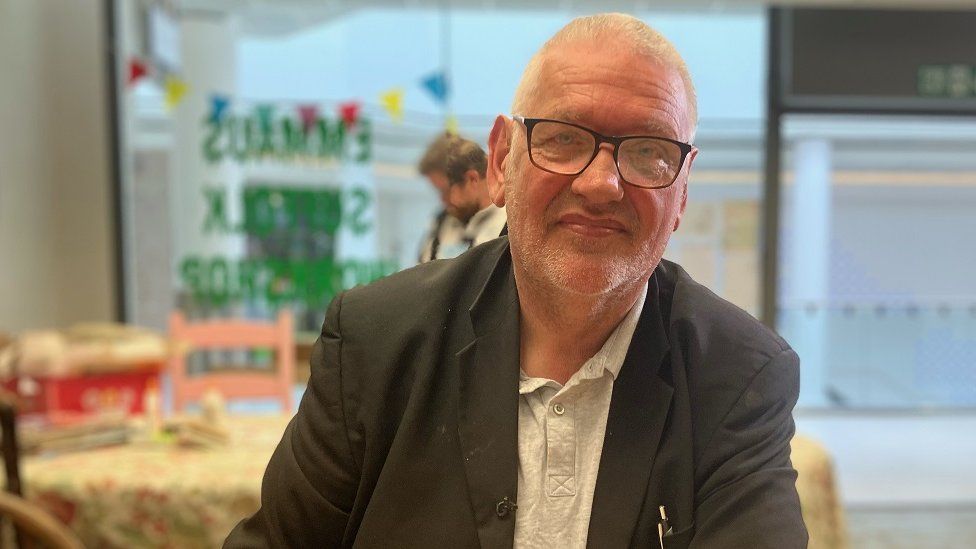
Image caption,Michael Houghton is worried he will struggle again with bills this winter
Michael Houghton says the Emmaus charity in Ipswich helped him apply for grants to pay his soaring energy bill last winter.
He says his gas bill rose to almost £30 per week, forcing him to cut down on food shopping and entertainment.
But Mr Houghton says that prices remaining high is a concern in the long term. Without more support he worries he will not be able to afford to pay his energy bills if they remain at a similar price this coming winter.
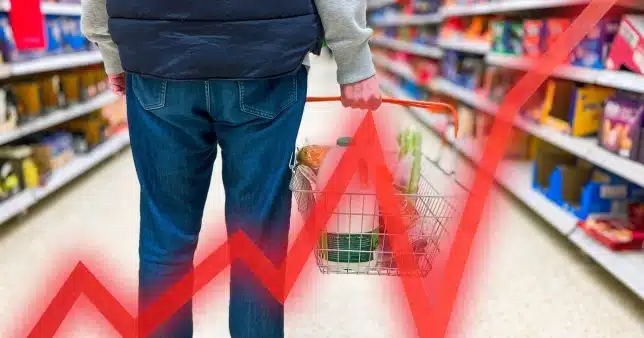
In the next weeks, experts predict that it will be harder to put food on the table than to keep the lights on.
The cost of living issue has upended the lives of many Brits as the price of food has more than doubled amid persistent double-digit inflation.
Food inflation is alarmingly high at 15.7%, with some fresh food price tags rising 18.8% from one year to the next in April.
The tales have been eerie. People enter food banks “crying,” and single parents miss meals or consume cat food because they cannot afford to buy groceries.
Statistics released by the Resolution Foundation yesterday show how the average grocery bill will overtake the increase in the average fuel bill by next month.
‘While energy prices have risen faster, food makes up a far larger share of the typical household’s consumption (13% versus 5% in 2019-20),’ the report from the think-tank says.
The government doesn’t realise the financial toll the price hikes are taking on people, the think-tank said (Picture: PA)
‘This, combined with food prices continuing to rise even as energy bills fall back, means that by this summer the average increase in food costs since 2019-20 (£1,000) will be larger than that for energy bills (around £900).’
The price jump will hit low-income households the hardest as food costs gobble up more of people’s paychecks than energy bills.
One in five people is already eating less or skipping meals, with low-income and larger families or people on benefits being more likely to do so.
People of colour were also more likely to say the same, according to the Resolution Foundation’s analysis of a YouGov survey of 10,122 UK adults aged 18 or over, as well as say they have used a food or warm bank in the last four weeks.
In the year since April 2022, record numbers of food parcels were handed out by the Trussel Trust, which operates food pantries across the nation, with 750,000 people using the charity network’s food banks.
‘Taken together, high food and energy inflation mean low-income households are experiencing effective inflation rates more than 3ppts higher than high-income households,’ the Resolution Foundation adds.
‘We also know that poorer households buying the cheapest food are less able to change what they buy to save money. Instead, they cut down on eating.’
Six in 10 (61%) of the poorest fifth of households have cut back on essentials compared to 35% of richer households, per data from the Office of National Statistics (ONS).
Rent, water, mobile and broadband bills, council tax, interest rates and soon energy bills (the current price cap will end in July) have all risen in recent months.
Rishi Sunak, thought to be the wealthiest prime minister in history, and his wife Akshata Murty (Picture: Stefan Rousseau/WPA Pool/Getty Images)
The Resolution Foundation says that it’s not sure whether the government has quite clocked how difficult these price increases are for families.
‘Everyone realises food prices are rising,’ it says, ‘but it’s less clear that the scale of the increase has been fully understood in Westminster.
‘This summer the food price shock to family finances is on course to overtake that from energy bills.
‘The cost of living crisis isn’t ending, it’s just entering a new phase.’
For more than six decades, some of the UK’s most devastating economic events have happened under an autumn cloud. Is history repeating itself?
The poet and banker T S Eliot got it wrong – April is not the cruelest month, at least when it comes to financial crises. Autumn is crueller.
The months of September, Octobe,r and November are when gestating economic turbulence tends to burst into full-blown economic storms.
The precedent of the calendar should give the prime minister and chancellor something additional to worry about as the government insists the present shocks to sterling, inflation and mortgages are nothing to worry about in spite of the Bank of England having to intervene with £65bn worth of reserves.
The big daddy of them all, the Wall Street Crash in the United States, is dated to September and October 1929. In the UK, the economic crises of the post-Second World War period have had an autumnal flavour.
Timeline of tumbles
November 1967: The Wilson government’s “pound in your pocket” devaluation took the value of a pound sterling down to $2.47.
October 1974: At the second general election of that year, Labour consolidated its victory over Ted Heath’s Conservative government. Heath’s chancellor, Sir Anthony Barber, quit politics after his disastrous “dash for growth”.
October 1976: The “Crisis What Crisis” crisis when the UK needed a $3.9bn bailout loan from the IMF. Free-floating exchange rates pushed the pound to a then-record low of $1.57.
26 October 1989: Nigel Lawson, at the time the longest-serving Chancellor, resigned from Margaret Thatcher’s government over economic policy differences, precipitating the year-long Tory turmoil that resulted in her resignation as prime minister.
October 1990: John Major, the Conservative prime minister, took the pound into the European Exchange Rate (ERM) mechanism, having failed to announce the decision at the Conservative Party conference days before.
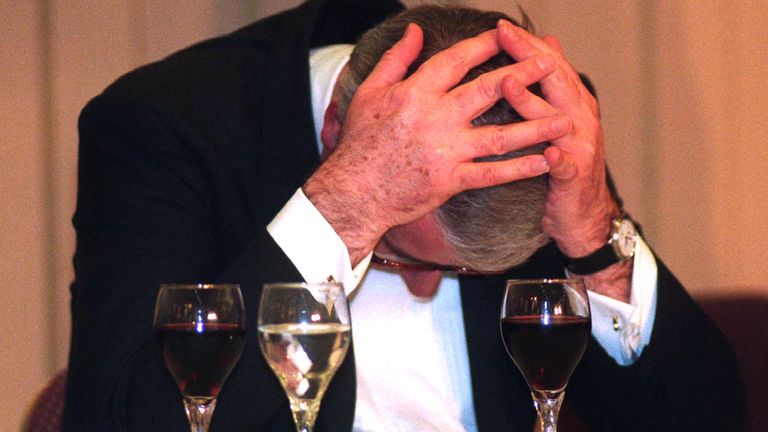
Image:The pound crashed out of the ERM after John Major’s decision to take it in
16 September 1992: Black Wednesday. The pound crashed out of the ERM after the failure of the Major government’s panic measures, which briefly lifted interest rates as high as 15%. Although it had only been re-elected that summer and although the new chancellor, Kenneth Clarke, adopted a new economic strategy, the government’s fortunes never recovered. Labour and Tony Blair won the election in May 1997 by a landslide.
September 2007. The building society Northern Rock closed its doors to savers. To continue trading, it had to seek support from the Bank of England as lender of last resort. By February 2008 the mortgage lender had to be nationalised. It was an early harbinger of:
September 2008 banking crisis: Overextension and insecure loans resulted in the bankruptcy of Lehman Brothers and the need for taxpayer bailouts of lending institutions on both sides of the Atlantic.
Gordon Brown “saves the world [banking system]” by marshaling an emergency meeting of the G20. In the UK, the public stakes taken to support major banks resulted in a squeeze on public spending and the “austerity” policies followed by subsequent governments.
October 2016: The pound dropped 28% after the vote to leave the EU, hitting a then-record low of US$1.14.
September 2022: Markets lose confidence in UK economic managementafter an uncosted “fiscal event” announcement by the new chancellor, Kwasi Kwarteng, on 23 September. The pound dips to a new record low of $1.03 before recovering to around $1.08.
Gilt yields, the driver of domestic inflation, surged – even as pension funds obliged to sell them courted bankruptcy until the Bank of England made its intervention. Hundreds of mortgage products were withdrawn, paralysing the housing market. The International Monetary Fund publicly rebuked the government for proposing huge tax cuts without the funds to pay for them.
That is where the UK finds itself today, on top of the cost of living crisis it already faced, in large part because of Russia’s attack on Ukraine and the consequent rises in energy prices.
It is too soon to tell where the economy is going to end up. Each of the autumnal plunges listed above had different causes resulting from the same mix of political and financial ambitions, and human hubris, greed, ambition, and overconfidence.
But why in autumn?
The reasons economic crises come to a head in the autumn are speculative. It is certainly a time of year for stocktaking in Western market economies after a break or slowdown over the summer holiday period.
Autumn, mid-October this year, is when the International Monetary Fund and the World Bank hold their annual joint meeting. With the year’s three-quarters done, it is natural to look back and assess whether things have gone well or badly. If there are problems, governing politicians and markets are likely to take steps to correct them, which sometimes only leads to bigger mistakes.
Autumn crunch points are stronger in this country because of the long summer parliamentary recess and the ritual of the annual party conference season.
If they had to change leader, and Tory MPs decided Boris Johnson had to go, they were determined to have a new leader in place in time for a relaunch at the Conservative Party conference next week in Birmingham.
No need for an ethics watchdog
Ms Truss, in turn, was so anxious to hit the ground running that she launched her new economic strategy without running it through the usual channels of the Office of Budget Responsibility (OBR) and having sacked Sir Tom Scholar, the long-standing permanent secretary at the Treasury.
The OBR is not the only regulatory institution treated with contempt by Ms Truss. She has also closed down the National Security Council and the Independent Office of Tax Simplification and suggested she will not need a No 10 ethics watchdog.
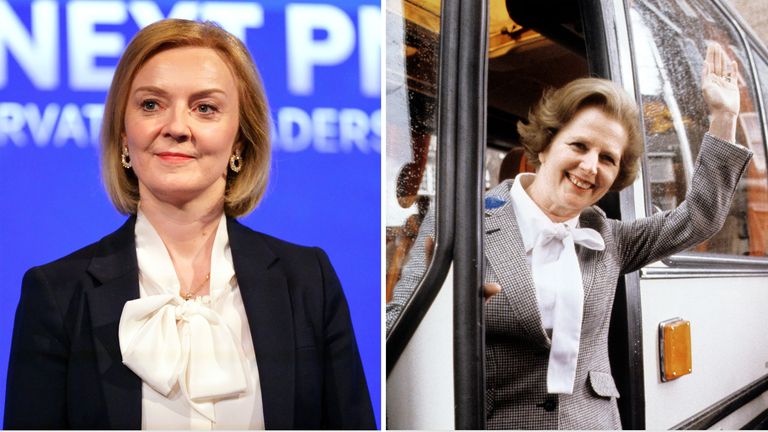
Her role model Margaret Thatcher – who like Sir Tony Blair avoided economic smashes while in office – played by the rules and conventions. She believed in balancing the books and famously observed, “You can’t buck the markets.”
The new prime minister thinks she and her chancellor know better, commenting: “We have had a consensus of the Treasury, of economists, with the Financial Times, with other outlets, peddling a particular type of economic policy for 20 years. It hasn’t delivered growth.”
Gamble
One can quibble with the accuracy of this statement, noting the early decade of this century was mostly characterized by on or above-trend growth and that since 2010, a Conservative government has been in charge, of which Ms Truss has been a supporter and member.
What matters is that Ms Truss has decided to gamble the economy on a new policy of pursuing growth at all costs even when her proposals seem contradictory, such as simultaneous borrowing, tax cuts, and huge government spending, to stabilize energy markets only temporarily.
Her opponent for the leadership, Rishi Sunak, warned of the consequences of her plans but was rejected by the party membership.
DISCLAIMER: Independentghana.com will not be liable for any inaccuracies contained in this article. The views expressed in the article are solely those of the author’s and do not reflect those of The Independent Ghana
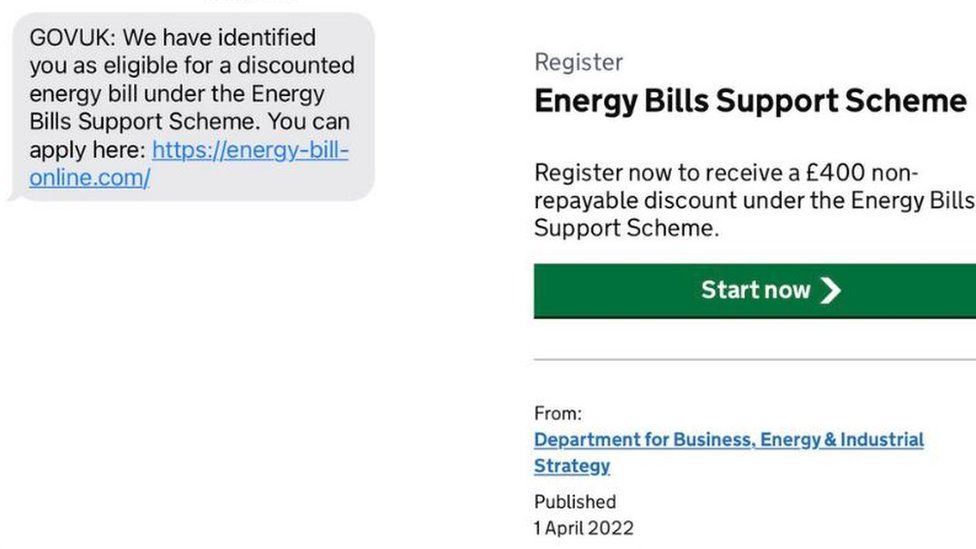
Ofgem has asked energy suppliers to be clearer on potential customer fraud on their websites.
The messages invite people to apply for the £400 “non-repayable discount” and instruct the recipient to follow a link to a fake Ofgem website to then provide personal details.
It then encourages people to set up a direct debit to receive the money.
An Ofgem spokesperson said protecting consumers is their top priority: “It is alarming that vulnerable customers are being preyed upon in this way when people are already struggling so much.
“On top of issuing our own warnings and advice, we have asked all energy suppliers to ensure clear and up-to-date information on scams is easily accessible on their websites.
“We take these attempts to exploit consumers very seriously.”
Sites sending out scam messages that have been identified by the BBC include:
energy-bill-online.com
myenergybillonline.com
rebate-ogem.com
totalsolutions24-7.co.uk
More than 1,500 reports have been made to the National Fraud Intelligence Bureau about scam emails purporting to be from Ofgem about energy rebates.
Detective Chief Inspector Hayley King, from the City of London Police, said: “If an email is genuine, the company will never push you into handing over your details.
“All of the reported emails display the email subject header ‘Claim your bill rebate now’ and the criminals behind the scam are using the Ofgem logo and colours to make the email appear authentic.”
How to protect yourself
The fraud protection service, Cifas, is also warning the public to stay vigilant, and has identified several scams specifically targeting consumers as a result of the cost-of-living crisis.
Amber Burridge, Head of Intelligence for Cifas, said: “Criminals are using a variety of ways to target unsuspecting victims in order to steal money and personal information that can be used to commit fraud.
“Remember that no matter how an offer comes to your attention, there are very few occasions where there is a legitimate need to hand over your bank details.”
If you have any doubts about a message, contact the organisation directly
Don’t use the numbers or address in the message, use the details from their official website
Your bank or any other official source will never ask you to supply personal information via email
If you have received an email which you’re not quite sure about, forward it to report@phishing.gov.uk
Britons on £45,000 salaries will need government help to pay their energy bills – not only people on benefits, the chancellor has warned.
Nadhim Zahawi also told The Daily Telegraph that households must try and reduce their energy consumption, and that he fears gas prices could remain elevated for another two years.
Energy bills will soar for millions of families in the autumn after the price cap was increased to £3,549 a year – a record rise of 80%.
Every household in the UKis being given a £400 rebate on their energy bills, but Conservative leadership candidates Liz Truss and Rishi Sunak are being urged to take further action.
There has been debate over whether additional support should be distributed widely or concentrated on those with the lowest incomes.
Mr Zahawi told the newspaper: “My concern is there are those who aren’t on benefits. If you’re a senior nurse or a senior teacher on £45,000 a year, you’re having your energy bills go up 80% and will probably rise even higher in the new year – it’s really hard.”
Although Universal Credit is a “really effective way of targeting”, he said, other ideas are being explored “to make sure we help those who really need the help”.
More on Cost Of Living
Cost of living: Spiralling energy bill burden will send UK into catastrophic territory
How are people coping with the cost of living crisis?
Cost of living: Who is proposing what to tackle soaring energy bills faced by struggling households?
Mr Zahawi is understood to have drawn up a series of options for the next prime minister to consider – and despite calls for urgent action from the energy regulator Ofgem, Ms Truss has said it would not be “right” to announce her full plans for tackling the cost of living crisis until a new Tory leader is named on 5 September.
The chancellor went on to warn that the UK is “in a national economic emergency”, adding: “This could go on for 18 months, two years, if Putin continues to use energy as a weapon.”



 Cost of living: Spiralling energy bill burden will send UK into catastrophic territory
 How are people coping with the cost of living crisis?
 Cost of living: Who is proposing what to tackle soaring energy bills faced by struggling households?