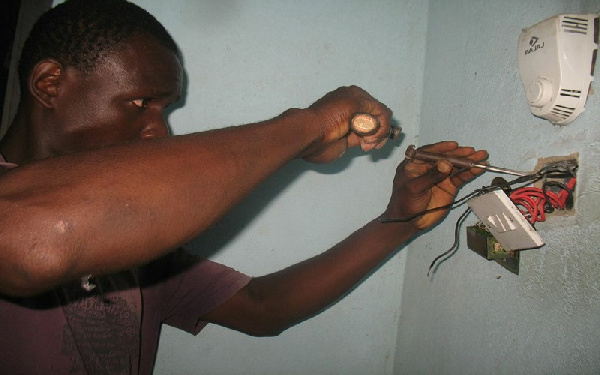
The Electricity Company of Ghana (ECG) has advised customers affected by power disruptions caused by the Akosombo Dam spillage to have their premises assessed and certified by Certified Electrical Wiring Personnel (CEWP) and Energy Commission of Ghana-accredited inspectors.
Despite the general restoration of power, some communities have reported ongoing outages due to internal wiring issues caused by floodwater damage. To address this, ECG emphasizes the need for affected customers to engage qualified inspectors to assess and certify their premises, as the extent of damage remains uncertain.
Reports from these inspectors will be used as the basis for restoring power supply to affected customers.
“It has come to our notice that some customers in areas that were affected by the Akosombo Dam spillage are complaining of receiving bills from the Electricity Company of Ghana even though they were not in their residences at the time. It is worth noting that ECG bills come with levies and service charges even when the actual consumption of electricity is not happening.
“However, the management of ECG is yet to take a decision on this and in due course, it will be communicated to all affected customers. But it is worthy to note that if a customer was owing ECG before the incidence of the flood, that debt should be paid.”
She added, “We have restored power to the areas affected however there are some individual homes that still do not have supply. Now this is because the water went into some of their pipes affecting their wiring so we are not sure of the integrity of these installations.
“Now we are advising the customers to please contact Energy Certified Electricians to check on the integrity of these installations in their homes.”
Additionally, concerns have been raised about customers receiving electricity bills covering the flood period, even when they were not occupying their homes. ECG advises affected customers to focus on bills for power consumed before and after the flooding period.
Sakyiwaa Mensah, the spokesperson for the Tema region, revealed ongoing collaboration with community leaders to compile a list of flooded homes and assess the impact. However, management is yet to decide on bills generated during the flooding period for affected customers.
Ms. Sakyiwaa clarified that current bills may still include the flooding period due to the cyclical nature of bill production. If customers had outstanding balances before the flood, it is considered legitimate consumption for which payment is required.
The Energy Commission in Ghana is taking steps to collaborate with the Ghana Police Service to apprehend and address the issue of defiant, uncertified electricians.
These unregulated electricians are providing services that pose significant risks to the safety of their clients.
The Manager of Electricity and Natural Gas at the Energy Commission, Adolf Nii Ashong,has explained that the services offered by uncertified electricians can lead to various electrical hazards, such as electrocution, severe burns, and the outbreak of fires.
The partnership with the police service aims to curb this problem and ensure that electrical work is carried out by certified and qualified professionals, reducing the associated risks to the public.
“We believe this measure will be effective in bringing these uncertified electricians under control,” Adolf Nii Ashong stated. Nii Ashong announced that the Energy Commission will persist in its community engagement efforts to educate the public about the importance of hiring certified electricians to address the risks associated with the work of uncertified electricians.
This announcement was made during the graduation ceremony of 226 certified electricians in Tamale who had successfully completed the electrical wiring program organized by the Energy Commission.
Manager Nii Ashong encouraged the graduates to maintain the legacy of the electrical wiring program and continue to drive innovation in the field of electrical wiring installations. He also stressed that practitioners found in violation of licensing conditions would face sanctions. The senior officer in charge of the Northern Sector at the Energy Commission, Bukari John Nilimor, added his voice and urged the graduating class to embrace their profession with the utmost commitment to electrical safety and professionalism.
This collective effort aims to enhance the quality and safety of electrical work in the country. “Let us work hand in hand to ensure that every electrical installation in Ghana is not only legally compliant but also safe.” This year marks the ten-year milestone for the Energy Commission’s certified electrical wiring program, with over 16,000 professionals accredited under its mandate.
The Energy Commission has launched an outreach program aimed at raising awareness among schools about the importance of achieving the same results with less energy usage.
This initiative has a dual purpose of addressing climate change issues and promoting energy efficiency throughout the country.
During the first forum held at Accra Academy last Thursday, Kofi Agyarko, the Director of Renewable Energy and Energy Efficiency at the Energy Commission, expressed that the outreach program is a nationwide effort to encourage the public, particularly young people, to become advocates for energy efficiency and conservation.
Accra Academy was specifically identified as a high-energy consumption school, making it an ideal starting point for this endeavor. By focusing on schools, the Energy Commission is taking proactive steps to instill a sense of responsibility for energy efficiency from an early age.
This educational approach will help students understand how their everyday actions and technology usage can significantly impact energy consumption and contribute to climate change. The Energy Commission’s commitment to conducting outreach programs is commendable, as they play a crucial role in promoting sustainable practices and cultivating a culture of energy conservation among the younger generation.
“So we will use the opportunity to equip students and staff of the school with the necessary skills and knowledge about the benefits of saving energy and identify ways to reduce energy consumption,” Mr Agyarko said.
Mr. Agyarko emphasized that energy efficiency and conservation should be a matter of national concern, not limited to those in control of the budget, but for everyone, especially students who represent the future leaders.
He highlighted that although energy is a precious resource, its cost has become increasingly expensive. Therefore, it is imperative for all individuals to be more mindful of their energy usage in order to foster the country’s economic development.
Furthermore, Mr. Agyarko emphasized the significance of students being conscious of their power usage to help the school reduce expenditure while achieving better results with the energy resources they have.
He expressed the belief that by reducing energy consumption, both the environment and the economy can be preserved and improved, ultimately benefiting the school’s economic circumstances.
In light of these goals, Mr. Agyarko encouraged students to take responsibility and actively contribute to improving the conditions of the Earth.
He further mentioned that the Energy Commission intends to extend its outreach efforts to schools throughout the country, indicating a broader commitment to promoting energy efficiency and conservation at a national level.
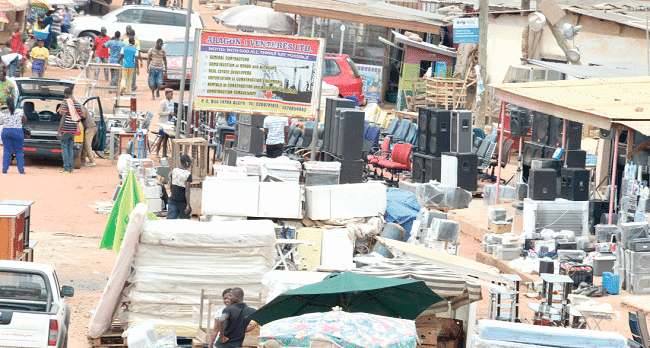
Groups of secondhand dealers that rely on the importation of goods into the nation for their livelihood have largely opposed the proposal. They also claim that the choice will have an effect on the livelihoods of around 20,000 persons involved in the value chain of used electrical appliances.
However, according to a statement from the Energy Commission, the prohibition is necessary to save Ghana from turning into a landfill for old and subpar equipment.
“The ban is to protect the environment and safeguard the health of citizens from air pollution caused by increased power generation and to protect the consumer from purchasing unsuitable appliances and the payment of unnecessarily high electricity bills,” a statement issued by the Commission said.
Meanwhile, some of the products banned from importation and sale by the Energy Commission include Television sets, Rice cookers, and washing machines among others.
See the full list of items prohibited from importation and sale below:
The initiative, according to the head of the Energy Commission, was started in 2020 and has a 50-year target of 200 metric tonnes of carbon dioxide.
“Considering the sum of money required, the creation of the carbon market will help to ease some of the financial pressures to hasten reaching the target. “Most African countries have similar laws,” he said.
He however explained that fossil fuels, especially natural gas, will continue to be part of Ghana’s energy mix in the short term, adding: “Energy transition could come with challenges, including lower demand in the downstream petroleum sector.
“It is important for the African continent to focus on innovation and diversification to thrive and mitigate the impact of transition,” he added.
Dr Muntaqa Umar-Sadiq, Head-Nigeria Energy Transition Office, explained that his country is pitching for an initial US$ 10 billion from international funders to kick-start an energy transition plan.
According to him, Nigeria aims to put itself on a path to achieve net zero emissions by 2060 with an array of strategies including reliance on gas as a transitional fuel.
Dr Mutanga said a price tag of US$ 410 billion has been estimated for key strategies to enable Nigeria – a far bigger economy than Ghana – to reach net zero by 2060.
Net zero refers to the balance between the amount of greenhouse gas produced and that removed from the atmosphere. Net zero is reached when the amount of carbon added is no more than the amount taken away.
Background
At the 27th Conference of Parties (COP27), which was held in November 2022 in Egypt, several commitments were made to accelerate corporate and country actions for climate change. The PwC webinar, therefore, brought stakeholders from Nigeria and Ghana to engage around the key takeaways from COP27.
These included implications of COP27’s commitments and expectations from the public and private sectors in achieving the climate change agenda, especially over the next 12 months.
Other key speakers at the webinar included Dr Daniel Tutu Benefoh, Ag. Director-Climate Change Unit, Environmental Protection Agency, Ghana; Dr Ndidi Nnoli-Edozien, Member-International Sustainability Standards Board (ISSB); Dr Salisu Mohammed Dahiru, Director-General/Chief Executive Officer, Nigeria’s National Council on Climate Change (NCCC); and Muhammad Wakil, CFA, Country Representative-Global Energy Alliance for People and Planet (GEAPP), Nigeria.
The Energy Commission Chief said the programme was initiated in 2020 and is a long-term framework with an estimated 200 metric tonnes of carbon dioxide target throughout the 50-year period.
“Looking at the amount of money needed, the carbon market implementation will help to alleviate some of the financial burdens to accelerate getting to the goal. This is the same in most African countries,” he said.
He however explained that fossil fuels, especially natural gas, will continue to be part of Ghana’s energy mix in the short-term, adding: “Energy transition could come with challenges, including lower demand in the downstream petroleum sector.
“It is important for the African continent to focus on innovation and diversification to thrive and mitigate the impact of transition,” he added.
Dr. Muntaqa Umar-Sadiq, Head-Nigeria Energy Transition Office, explained that his country is pitching for an initial US$10billion from international funders to kick-start an energy transition plan.
According to him, Nigeria aims to put itself on a path to achieve net zero emissions by 2060 with an array of strategies including reliance on gas as transitional fuel.
Dr. Mutanga said a price-tag of US$410billion has been estimated for key strategies to enable Nigeria – a far bigger economy than Ghana – reach net zero by 2060.
Net zero refers to the balance between amount of greenhouse gas produced and that removed from the atmosphere. Net zero is reached when the amount of carbon added is no more than the amount taken away.
Background
At the 27th Conference of Parties (COP27), which was held in November 2022 in Egypt, several commitments were made to accelerate corporate and country actions for climate change. The PwC webinar, therefore, brought stakeholders from Nigeria and Ghana to engage around the key takeaways from COP27.
These included implications of COP27’s commitments and expectations from the public and private sectors in achieving the climate change agenda, especially over the next 12 months.
Other key speakers at the webinar included Dr. Daniel Tutu Benefoh, Ag. Director-Climate Change Unit, Environmental Protection Agency, Ghana; Dr. Ndidi Nnoli-Edozien, Member-International Sustainability Standards Board (ISSB); Dr. Salisu Mohammed Dahiru, Director-General/Chief Executive Officer, Nigeria’s National Council on Climate Change (NCCC); and Muhammad Wakil, CFA, Country Representative-Global Energy Alliance for People and Planet (GEAPP), Nigeria.
The Concerned Second Hand Dealer Association wants government to stay all plans to ban the importation of used appliance into the country as it risk affecting their livelihood, particularly under current economic situation.
Talks about Ghana at risk of being turned into a dumping ground for electronic waste have been rife over the period with the Energy Commission pushing the agenda to ban the importation of such products in the interest of the country.
“Now that there is economic hardship all over the world, why would one say they are taking away jobs that feed millions of people in this country forgetting our contribution to Ghana’s GDP”, says President of the Association, Asare Daniel.
Speaking at a press conference, Mr. Asare insisted that the goods imported are standard and go through various checks at the ports before being allowed into the country.
“If the sitting government is seeking assistance from the IMF which will prevent them from employing workers, where would they find jobs for us and the graduates in our homes due to government’s inability to get jobs for them? We are very much convinced of hearing something good from the Energy Commission and the government.”
Meanwhile, the Ghana Union of Traders Association (GUTA) sides with the dealers.
President of GUTA, Dr. Joseph Obeng appealed for stakeholder engagement on the issue to bring a resolution to the concerns raised.
“Our total engagements with Energy Commission are inconclusive. So we will not accept any ban on used clothes. The fact that the clothes are second-hand does not make them unwholesome. We call on government to as a matter of urgency hold a meeting with the Commission and also on parliament not to consider any ban because it employs a lot of people”, he said.
Second Lady, Samira Bawumia, says Ghana is developing a clean cooking strategy and an investment prospectus to open the industry for more business opportunities.
She said the strategy would also set up the framework for the promotion and development of effective clean cooking solutions.
The Second Lady said this during the Post-Conference Ghana Day of the Clean Cooking Forum 2022 dubbed: “Increasing Access to Clean Cooking Solutions.”
The forum sought to allow stakeholders and see whether Ghana was achieving the global target with regard to SDG 7, which calls for affordable and clean cooking.
Ghana is said to have made some significant progress in promoting clean cooking where about 37 per cent of the population uses Liquefied Petroleum Gas (LPG) and in the area of biomass cookstoves, Government through the Energy Commission had been distributing three million stoves.
Mrs Bawumia said: “Clean cooking is an urgent development issue which has significant benefits for public health, policy generation, local environment and climate.”
“Achieving clean cooking solution solutions require a behavioural change to build the current and next generation. We need to challenge ourselves to break attitudinal and social barriers to achieve them,” she added.
The Second Lady called not only for the adoption of technology in preparing indigenous Ghanaian dishes but the need to input energy technologies and solutions into the school curriculum.
She said the Sustainable Development Goal 7 and Universal Access to Clean Cooking were imperative for Ghana’s success stories of energy transmission.
She said it took Ghana 30 years to get 37 per cent of its population to use LPG and called for the collaboration of stakeholders to bring the needed strategy that would help achieve universal access to clean energy by 2030.
A statement from Mr Sameer Shukla, a Representative from the World Bank, said, several billions of dollars had been lost in terms of health, vegetation and forest due to people not having clean cooking.
He said Ghana had seen a significant reduction of 75 per cent of the population to 50 per cent, using biomass energy largely due to LPG usage.
He urged that prices and subsidies of LPG and other clean technologies be critically looked at as to get the entire population moving towards clean cooking solutions.
Mr Oscar Amonoo-Neiser, Executive Secretary, Energy Commission, said the indiscriminate cutting of trees for wood fuel, firewood and charcoal had led to air pollution, causing some deaths.
He said standards and regulations on biomass cookstoves had been developed and the regulations were in Parliament and would be passed when the lawmakers were back from recess.
Mr Amonoo-Neiser said the Commission was also developing regulations for the wood fuel sector to formalise the sector and maximise value along its value chain; notably production, transportation, packaging, sales and marketing.
That, he said, was all part of efforts geared towards achieving Universal Access to Clean Cooking by 2030.
But 17 days before the interview, the Tema Police CID had been given a letter. It was from the Energy Commission. It said the commission “has decided to withdraw the case.”
The letter was signed by the same Kofi Agyarko. The case was officially dead.
Why charcoal is big business
The global market for charcoal was worth US$6.86bn in 2018. Homes in the US and Europe are turning to barbecued foods, basically, food grilled or prepared with charcoal. Mining industries also use it for gold recovery. And for many in the industry, charcoal is also a cheaper agent for purifying water and air. Charcoal, when burnt in the absence of oxygen, produces activated carbon that can be used for various industrial purification processes. During wastewater treatment, activated charcoal is highly utilised for filtration purposes.
These high demands and the economic returns are part of the reasons Ghana is Africa’s fifth largest exporter of charcoal. According to worldtopexports.com, in 2021, Ghana exported $1million worth of charcoal to destinations such as China, Turkey, Germany, and Lebanon.
Ghana is, however, paying a heavy price for being the world’s ninth-largest producer of charcoal.
A list of the world’s top charcoal producing countries
Concerns about environmental degradation are getting drowned out by the piercingly noisy sound of chainsaw operators in Ghana’s forests.
This is why, in May 2021, the Savannah Regional House of Chiefs banned commercial charcoal burning activities in the region.
The Ministry of Lands and Natural Resources is also considering a charcoal export ban if the charcoal production, trade and export space is not sanitised quickly. The minister, Samuel Abu Jinapor, complained in November 2021: “There is an upsurge in the export of charcoal out of our country, and that is a driver of forest degradation.”
Tackling this problem on the ground falls on the Energy Commission. The law says the Commission should “regulate and manage the development and utilisation of energy resources in Ghana.”
Seizure of illegal charcoal containers
In April 2022, there was a tip-off at the Tema port when 40-footer containers–about 21 of them–made their way into the GPHA and Overseas terminals.
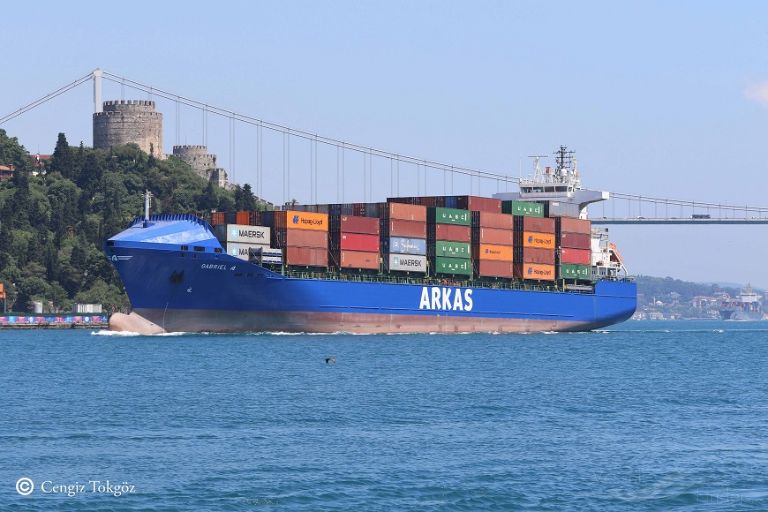
Facing the beckoning sea, the containers were to be loaded onto a ship named, GABRIAL A WAS12N 22, according to the information provided by the shipping company, Arkars Shipping Line, based in Turkey. The goods were bound for the United Arab Emirates.
Information gathered by The Fourth Estate during a police inspection was that the ship was to arrive in Ghana on April 14, 2022, and depart in the early morning of April 15, 2022.
But 24 hours before the ship’s arrival, there was suspicion that all the 21 containers were full of charcoal, a fuel resource that could not be exported without a licence. According to the Renewable Energy Act, 2011 (Act 832), “a person shall not engage in a commercial activity in the renewable energy industry without a licence granted under this Act.”
The Fourth Estate reporter contacted the Tema Police CID over the detention of the charcoal containers. The exporter had indicated that he was exporting some foods. The police therefore needed confirmation that, indeed, the containers carried food, not charcoal.
The police had already detained a suspect and on June 14, 2022, the police revealed to The Fourth Estate that they were scheduled to inspect the containers.
A Custom Officer and Energy Commission official stand before an open container at the GPHA terminal
The Fourth Estate reporter obtained permission from the Tema police CID to join in the physical inspection of the containers.
The inspection team opened 15 containers at the GPHA Terminal. It was supervised by Inspector Felicia Boatemaa of the Tema Police CID. It was carried out in the presence of customs officials, the GHPA export terminal officials, an official of the shipping line, Arkas and this reporter.
However, the exporter of the containers was missing in action.
When giant scissors clasped open the locks of all 15 containers at the GHPA terminal. Every single one of them was fully stashed with charcoal. The six others at Overseas terminal were not inspected that day. But they were also later confirmed to be charcoal.
Containers at GPHA Terminal
ARKU8533331
ARKU8338150
ARKU8378256
ARKU8484725
TCLU5865643
ARKU8380567
ARKU8507142
ARKU8517639
ARKU8395865
ARKU8341302
TGHU6417534
TCNU8122398
ARKU8543561
ARKU8502686
TCNU6171496
Table 1 showing the 15 container numbers obtained by The Fourth Estate during the inspection.
The average export price for a ton of charcoal is $463 according to the Global Charcoal Market Report 2022. The Energy Commission has confirmed the 21 containers contained 400 tonnes of charcoal. This puts the value of the export at about $185,200. Using an exchange rate of GH¢10 to a dollar, the entire value of the attempted shipment is GH¢1.85million.
According to the Energy Commission, the 21 containers are the biggest consignment of illegal charcoal it has ever seized.
Who is the exporter?
One Friday in June 2022, a man showed up at the Police CID at Tema port. He gave his name as Dela Gershon Zuttah, the governing New Patriotic Party (NPP) constituency chairman for Afadzato South constituency in the Volta Region. He is popularly called ‘Chairman Dela’. When he claimed ownership of the containers, he was quickly detained to assist in criminal investigations.
Chairman Zuttah is an NPP politician. Photo Credit: Facebook
Before goods are shipped out of the country, every exporter electronically fills what is known as an Export Declaration Form with the Customs Division of the Ghana Revenue Authority. This document states the goods to be shipped, and the details of the exporter.
The Fourth Estate has obtained a copy of the document covering some of the containers of charcoal. The exporter is Jallins Global Business Ltd. It does not have a licence to export charcoal.
Photo: An extract from the Customs Declaration Form reveals the exporter of the goods
Our findings from sources at Arkas Ghana Limited, the shipping company that was going to transport the charcoal, also confirm that Jallins Global Business Ltd is the forwarding agent of the 21 containers.
The company’s representative for the 21 containers is also named in the export document. He is Collins Antwi.
The Energy Commission orders police to stop investigations
It was while the police were making headway in its investigations that the Energy Commission suddenly told the police it was disinterested in continuing with the case.
The commission’s Director of Renewable Energy, Kofi Agyarko, claimed that the commission had already “investigated the matter and has decided to withdraw the case.” The letter claimed the Energy Commission would be “applying different sanctions against the exporter.”
As it stands, the shipping line says Jallins Global represented by Collins Antwi is the forwarding agent. Customs says Jallins is the exporter. The Energy Commission has stopped the police from making a conclusion and denied political interference. But the Commission claims it is Azzam Brothers Ltd.
The Commission has not been able to produce any evidence to back this claim except a claim that Azzam Brothers Ltd came forward to take ownership of the charcoal.
The Fourth Estate has given a copy of the export documentation to the Energy Commission, showing that the exporter is Jallins Global Ltd.
However, the Commission maintains the owner is Azzam Brothers Ltd. The Commission further claims that the NPP Constituency chairman, “Chairman Dela”, detained briefly by the police is a representative of Azzam Brothers. It said he produced a charcoal production licence to “substantiate their claim of ownership.”
When The Fourth Estate reporter contacted Dela, pleaded and admitted ownership but claimed he was misled by the agent, Collins Antwi.
Is there a cover-up at the Energy Commission?
The offence that was being investigated by the police was not about the ownership of the charcoal. It was the export.
Azzam Brothers is a licensed charcoal producer, and by claiming ownership of the charcoal alone, it has not committed any crime. The only offence it has committed, according to the Energy Commission, is producing more charcoal (400 tonnes) than the limit of its licence (240tonnes). It breaches the conditions of Azzam Brothers Production Licence under Section 16(1) of the Renewable Energy Act.
The Commission by law may only suspend or cancel the licence. This is a far lesser offence compared to the attempt by Jallins Global Business to export without a licence which is a criminal offence that carries “a fine not exceeding two thousand penalty units or to a term of imprisonment not exceeding five years or to both.”
The appears the Energy Commission is more interested in going after a lesser offender while leaving the much greater suspected criminal off the hook.
The Fourth Estate has checked with previous prosecutions on illegal charcoal exports. It found that the Energy Commission has a history of causing the prosecution of persons involved in illegal charcoal export.
The Commission, during a press briefing in the presence of the deputy minister for Lands and Natural Resources revealed the history of prosecutions since 2017.
“The Commission, a couple of years ago, prosecuted some three individuals for attempting to export some seven containers of charcoal illegally. The same individuals were also prosecuted for a successful export of some four containers of charcoal. They were also made to bring the charcoal back to Ghana, and all the eleven containers of charcoal were auctioned by the Commission to the public through a court order,” an official of the Commission, Prosper Ahmed Amunquandoh said.
Energy Commission inspector in charge of renewables, Prosper Amunquandoh, addressed the press in June 2021, cataloguing the Commission’s history of prosecutions
The same individuals were also prosecuted for exporting four containers of charcoal. They were also made to bring the charcoal back to Ghana, and all eleven containers of charcoal were auctioned by the Commission to the public through a court order.
The case before the Energy Commission is 21 containers of charcoal meant for export without a licence.
It is the case of the largest seizure of illegal charcoal, but the Energy Commission is not interested in the prosecution of the exporter. The main suspect is the exporter, Jallins Global Business Ltd, represented by Collins Antwi. He also represented himself as the forwarding agent when he dealt with the shipping line. But Dela now confirms he was working with Collins Antwi to export the illegal goods. Despite mounting evidence suggesting collusion, the Energy Commission has stopped police investigations.
From the happenings so far, the Energy Commission does not appear interested in going after them.
Photo: Collins Antwi is a director and shareholder of Jallins Global Business Ltd. Credit: Facebook
The Energy Commission will take legal action against any shipping line that accepts inefficient refrigerators and electrical appliances from next year.
This is when the revised law on the importation of refrigerators and electrical appliances gets parliamentary approval.
The move by the Commission is to ensure that the quest to eliminate such products that have higher consumption volumes are achieved.
In a meeting with some shipping lines and importers of such products, Director of Energy Efficiency and Climate change at the Energy Commission, Kofi Adjarko told Joy Business that the revised act is placing a responsibility on shipping lines and owners to reject sub Standard electric appliances.
Director of Energy Efficiency and Climate change at the Energy Commission, Kofi Adjarko
The Energy Commission is seeking to review the law prohibiting the importation of second hand and substandard electrical equipment especially refrigerators into the country.
The new law is aimed at making the country move from the current five-star being the most efficient standard to seven stars.
At a stakeholders engagement with some traders as well as ports and shipping line owners, Head of Energy Efficiency and Climate Change at the Energy Commission, Kofi Adjarko said shipping lines are part of the process to ensure that such products do not enter the country.
“It behoves on every stakeholder at the port that none of these substandard equipment enters the country, the reason why we go round to seize them as part of the enforcement but I must assure you that we shall be taking it a step further.
“The revised law will now give us the power to take legal action against any trader or importer that brings in the materials but especially the carrier of these items which is the shipping lines,†he said.
Executive Secretary of the Ghana Ship Owners and Agents Association, Perpetual Osei Bunso on her part asked for more engagements on the law to ensure smooth enforcement.
“We are always ready to welcome any new law that will ensure that our businesses are not threatened but we demand more stakeholder engagements so that everyone will understand the purpose and move along,†she said.
Sub standard washing machines
Ghana could be making another huge savings in power when the law takes effect.
According to the Commission, the country could be moving towards the production of these products if the necessary support is given to the private sector.
The law, which was passed by parliament, Act 1932 some ten years ago prohibits the importation of certain electrical appliances into Ghana, one of the measures by government to curb the influx of inefficient refrigerators and lightning systems in the country.