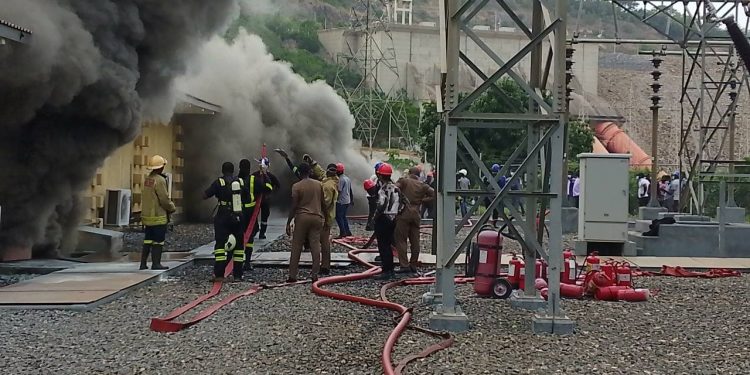
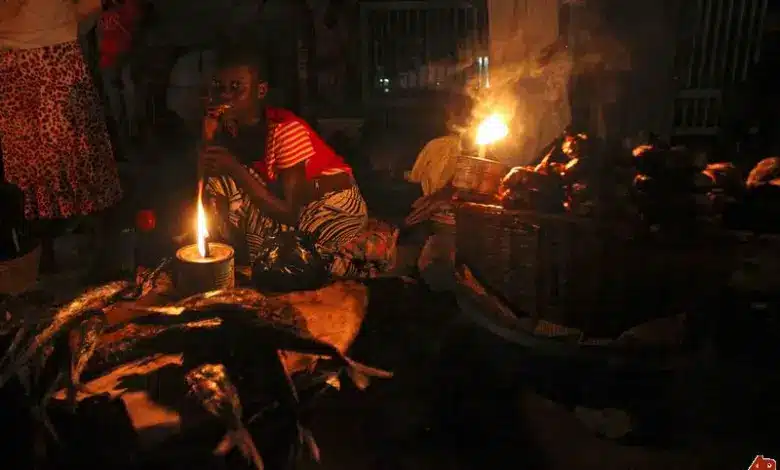
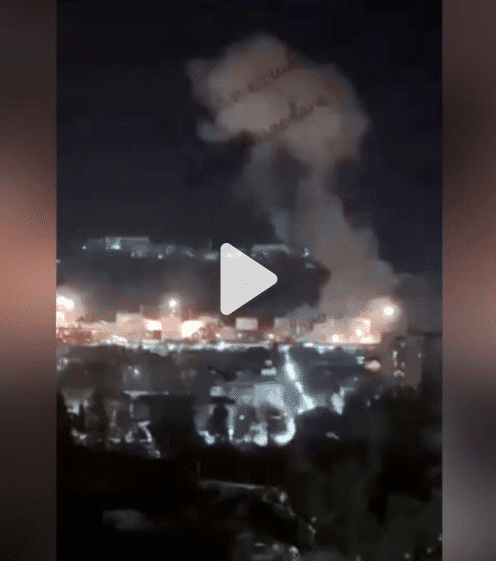
Ghana faces possible intermittent power outages due to a fire incident at Ghana Grid Company Limited’s (GRIDCo) substation within the Akosombo Hydroelectric Dam complex in the Eastern Region.
Speaking to the media on Friday, the Spokesperson and Head of Communications at the Ministry of Energy and Green Transition Ghana, Richmond Rockson, disclosed that the blaze which occurred on Thursday, April 23, damaged a transmission system with a capacity of about 720 megawatts.
He described the development as “a significant hit,” explaining that the affected system supplies electricity to major parts of the country.
He added, “The system that got affected was about 720 megawatts. That system transmits power to major parts of the country, so this is a significant hit. The Akosombo Dam generates a little over 1,000 megawatts.”
Meanwhile, the cause of the fire is yet to be determined by authorities. Recently, the country has been experiencing temporary power outages, locally known as ‘dumsor’, but President John Dramani Mahama insists they are part of ongoing system upgrades.
While inspecting new transformers acquired for the Northern Electricity Distribution Company Limited (NEDCo), President Mahama noted that “The outages you are facing are not dumsor, it is to enable you to get better quality and stable power.”
As part of efforts to enhance revenue mobilisation in the energy sector and stabilise power supply, the Ministry of Energy and Green Transition says it will introduce standardised, accurate electricity meters from next month to boost revenue mobilisation and stabilise power supply.
The Minister disclosed this while answering questions on the floor of Parliament on Monday, March 16. According to him, all households will benefit from upgraded electricity infrastructure.
“Next month, we will start the large-scale rollout of transformers. Within that same month, we should see a much more massive injection of new, standardised, and accurate meters. That is how we can make sure that there is guaranteed revenue for investment. All meters procured are tested. I can assure you that these meters are of high quality; they meet the standards, and they do the job they are supposed to do,” he said.
His comments come amid growing concerns from sections of the public, who claim they are being overcharged and that their prepaid credit no longer lasts as long as before.
Meanwhile, the Communications Director of the Electricity Company of Ghana (ECG), William Boateng, has asserted that heat conditions, wiring, and earthing are most likely contributing factors to excessive electricity consumption affecting its customers.
This was in response to concerns from sections of the public who have made claims of being overcharged and that their prepaid credit no longer lasts as long as before.
In an interview on Adom FM’s morning show Dwaso Nsem, Mr. Boateng advised customers to frequently check for possible electrical faults in their homes.
“When the heat increases, someone can even double the use of cooling appliances. That alone can affect your consumption. Sometimes the issue may be with wiring or earthing. That is why we have certified electrical contractors who can check whether there is leakage or any fault affecting consumption,” he said.”
Mr. Boateng urged customers who notice irregularities in their billing to report them directly to ECG for investigation, so that engineers can inspect the meter, review consumption patterns, and identify the cause of the problem.
“We work with machines; it is not about defending anything. There could be a margin of error. If your bill exceeds what you expected or your credit finishes unusually fast, report it to ECG,” he urged, adding that, “When customers report, we can properly investigate, analyse the situation, and resolve it if there is a genuine problem,” he assured.
Last year, the Director-General of the Ghana Standards Authority (GSA), Professor Alex Dodoo, warned of the dangers associated with uncalibrated electricity meters, which were in use nationwide.
These uncalibrated metres, being utilised by the Electricity Company of Ghana (ECG), he said, did not guarantee the protection of consumers and also are not able to hold industry accountable for fair charges.
Calibration of meters ensures that energy usage is measured accurately, preventing overbilling or underbilling for consumers.His comments came amid growing public concerns of overbilling, inconsistent power supply, and inefficiencies in the power-producing company’s services.
Speaking at a stakeholder conference organized by the International Electrotechnical Commission yesterday, May 20, 2025, in Accra, Prof. Dodoo revealed that many ECG meters in circulation had not been calibrated or verified by the Ghana Standards Authority, as has been mandated by the National Instrumentation Regulation NI2413.
“Very few of our meters have been calibrated and verified by the GSA. If the meter you are using has not been calibrated or verified by the Ghana Standards Authority, as required by NI2413, its accuracy is questionable. We simply cannot vouch for it,” he said.Prof. Dodoo said meters not being calibrated put consumers at risk of under- and overbilling.
The NI2413 law mandates that all electricity meters in circulation must be calibrated and verified by the GSA to ensure accuracy, fair billing, and energy efficiency.
Additionally, the Weights and Measures Decree, NRCD 326 of 1975, empowers the GSA to oversee legal metrology, ensuring that measuring instruments used in trade and industry meet standardized accuracy requirements.
However, to resolve this, he mentioned that his outfit is currently working with the ECG and Public Utility and Regulatory Commission (PURC) to configure the millions of meters currently in circulation in the country.
“The law states it must be verified and calibrated. Thankfully, we are working with ECG and PURC to ensure that all the millions of meters in Ghana are properly calibrated and verified by the GSA,” he noted.
He also linked the issue to national development, emphasizing its importance in the government’s ambition to implement a 24-hour economy.
“And I know it’s a very troubling issue. But as we support the President in rolling out a 24-hour economy, it’s important that we provide the quality infrastructure that will make the 24-hour economy succeed,” he concluded.
Prof. Dodoo revealed that many ECG meters in circulation had not been calibrated or verified by the Ghana Standards Authority, asIn the same year, the government, through the Ministry of Energy and Green Transition, approved the procurement of 200 new transformers for the Electricity Company of Ghana (ECG) to strengthen power transmission and distribution to major cities across the country.
The sector minister, John Abdulai Jinapor, made information public on May 28, 2025, during the opening session of the 18th West Africa Mining and Power Exhibition (WAMPEX) at the Grand Arena and Accra International Convention Centre (AICC) in Accra.The Electricity Company of Ghana (ECG) made a formal request for 200 new transformers in April 2025, and after barely a month, the government gave the green light for the deployment of the transformers.
“Despite the challenges we inherited, recent reports show that power generation has been very stable” What we need to do is improve the transmission and distribution network. In this regard, I have granted approval to ECG as a matter of urgency to inject about 200 transformers in our major capital cities in order to ensure that we not only generate power but we can distribute power to (sic) consumers effectively and efficiently,” Mr Jinapor said.
Minister Jinapor noted that initial challenges with power generation have been stabilized, and Ghana is now exporting electricity to neighboring countries.
The current focus is on improving power transmission and distribution systems.WAMPEX, the largest forum for mining and power industries in West Africa, attracted over 240 exhibitors from 30 countries and more than 5,000 visitors this year.
The event, however, provided a platform for industry professionals, policymakers, and stakeholders to discuss challenges, innovations, and future opportunities.
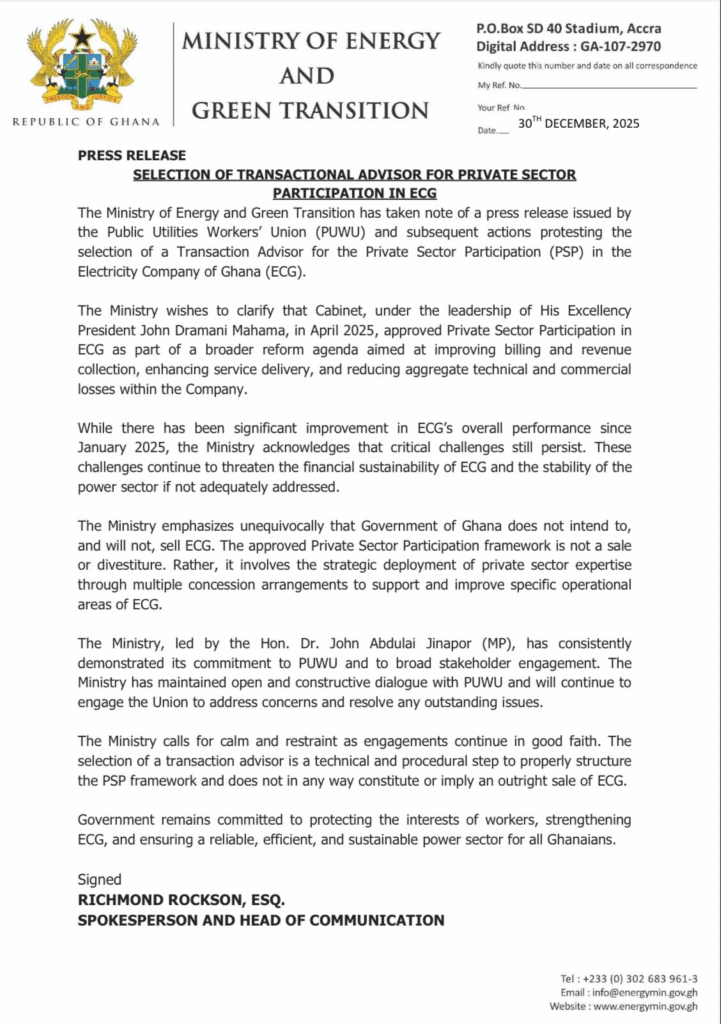
The Ministry of Energy and Green Transition has clarified that the selection of a Transaction Advisor for Private Sector Participation (PSP) does not imply the sale of Electricity Company of Ghana (ECG).
According to a statement signed by its Spokesperson and Head of Communication, Richmond Rockson, Esq. Cabinet, Cabinet, under the leadership of His Excellency President John Dramani Mahama, in April 2025, approved Private Sector Participation in ECG as part of a broader reform agenda aimed at improving billing and revenue collection, enhancing service delivery, and reducing aggregate technical and commercial losses within the Company.
It indicated that, while there has been significant improvement in ECG’s overall performance since January 2025, the Ministry acknowledges that critical challenges still persist, and these challenges continue to threaten the financial sustainability of ECG and the stability of the power sector if not adequately addressed.
Thus, “The selection of a transaction advisor is a technical and procedural step to properly structure the PSP framework and does not in any way constitute or imply an outright sale of ECG. The Ministry emphasizes unequivocally that Government of Ghana does not intend to, and will not, sell ECG.”
The Ministry has therefore called for calm and restraint as engagements continue in good faith as government remains committed to protecting the interests of workers, strengthening ECG, and ensuring a reliable, efficient, and sustainable power sector for all Ghanaians.
This follows a press release issued by the Public Utilities Workers’ Union (PUWU) saying, “What transaction is there to advise on, which has not already been tackled by ECG Management?” PUWU-TUC asked. “We see the move for this appointment as a rushed decision influenced by external interests seeking to privatise a strategic national asset,
This, the Ministry of Energy clarified the government’s position on Private Sector Participation in ECG, stating:
“The Ministry wishes to clarify that Cabinet, under the leadership of His Excellency President John Dramani Mahama, in April 2025, approved Private Sector Participation in ECG as part of a broader reform agenda aimed at improving billing and revenue collection, enhancing service delivery, and reducing aggregate technical and commercial losses within the Company, “the Ministry of Energy said in a statement signed by its Spokesperson and Head of Communication, Richmond Rockson, Esq.
Concerns raised by PUWU-TUC
The Public Utility Workers’ Union’s opposition to the selection of a transaction advisor for the transition of the Electricity Company of Ghana (ECG) into Private Sector Participation (PSP) stems from an ongoing turnaround programme agreed upon with the Ministry of Energy.
The union argues that “over the past five months, ECG workers have demonstrated an exceptional level of commitment, discipline, and dedication to this turnaround agenda.
The gains we have achieved such as improved revenue collection, reduced system losses, and stabilized power supply prove that ECG can be revived and sustained through local expertise, worker commitment, and non-political interference.”
PUWU-TUC believes the government’s move to appoint a transaction advisor at this stage is premature and risks undermining the success of the current programme, which was designed to revitalise ECG through internal reforms rather than privatisation.
In September, ECG launched “Operation All Must Pay” initiative to facilitate the retrieval of outstanding debts owed by customers across the nation, as well as prosecute offenders involved in illegal connections.
The exercise, which came to a close on September 30 after its begun on September 9 targeted residential, commercial, industrial and government institutions such as Ministries, Departments and Agencies (MDAs)
A statement released by the Electricity Company of Ghana states, “The exercise will include Bill distribution, Streetlight & SHEP meter capturing & reporting. This exercise will be monitored by special teams who will apprehend and prosecute customers who have connected electricity illegally, or attempt to interfere with the exercise, or undertake illegal self-reconnection after disconnection.”
ECG further advised customers with arrears at the time to pay their bills immediately to avoid disconnection and payment of reconnection fees.
It added that customers who are unable to access their bills should visit the nearest ECG Office for assistance.
Customers were entreated to use their regular channels, including the ECG Mobile App, to pay their bills.
Persons with no access to the ECG App were directed to download it from Google Play Store, or call the ECG contact centre on 0302611611/Social Media handles, for assistance.
Net-zero energy transition by 2070 will require an investment of more than $500 billion. To raise the needed funds, the Ministry of Energy and Green Transition says it will introduce tax incentives for renewable energy projects and streamline regulations to attract private sector investment.
Speaking at the West Africa Green Economy Roundtable 2025, the acting chief director of the ministry, Solomon Ajetti, reaffirmed the government’s commitment to implementing resilient measures to drive the transition agenda.
“If you look at Ghana’s green transition, the cost to get to net zero as per the document is over 500 billion US dollars. It is not going to come from the government alone, and therefore it’s going to be private-sector-led. That is why there has to be collaboration between the public and private sectors. That collaboration is always needed,” he explained.
Chairman of the Prison Service Council, Apostle Alexander Nanakum Labi, highlighted the importance of faith-based organizations, including the church, in promoting advocacy for the energy transition and supporting the fight against illegal mining.
“The church has a lot to do. We have to really engage, work very hard, and speak to the conscience of the people, especially those who come to church and those who go to the mosque. We consider about 98%. So if we all believe in the God who created the universe, we can’t sit alone and see the environment destroyed each generation. The church has a major role to play,” he emphasized.
Director of Pent Media Center, Pastor Dr. Phelix Deakluche, also stressed the need for strong multi-stakeholder collaboration to design practical solutions towards building a green economy.
“As a Pent Media Center, it’s imperative that we organize what we call the West African Green Economy Roundtable discussion so that we can bring together academia, captains of industry, the clergy, and other stakeholders and environmental advocates to sit at the same table and decide how best this issue of green economy will become a reality,” he stated.
Meanwhile in February this year, the Energy and Green Transition Minister, John Abdulai Jinapor, held a crucial meeting with Independent Power Producers (IPPs) and other key stakeholders to strategize on ensuring a stable and reliable electricity supply.
This came on the back of threats against power suppliers and ballooning debts that continue to plague the sector.
Discussions held at the Ministry of Energy on Monday, February 24, focused on identifying long-term solutions to Ghana’s power sector challenges. Representatives from the Electricity Company of Ghana (ECG), Ghana Grid Company (GRIDCo), and other power-generating entities participated in the engagement, to assess the sector’s pressing issues.
Key concerns raised included fuel supply limitations, financial constraints affecting power producers, and the need for improved infrastructure maintenance. Participants also explored measures to enhance efficiency and prevent extended power disruptions.
Minister Jinapor reaffirmed the government’s commitment to working closely with industry players to stabilize electricity supply, emphasizing that collective action is crucial for strengthening power generation and distribution across the country.
“Ensuring a stable and reliable power supply remains a priority, and we will continue to engage all relevant stakeholders to address the challenges affecting the sector,” he stated.
The meeting concluded with an agreement to implement immediate measures to mitigate power disruptions while working on long-term reforms.
The minister assured the public that regular updates would be provided as efforts to resolve the power supply challenges progress.
Moreover Ghana’s energy sector is burdened with significant debt, which has escalated to over $3 billion as of January 2025. This debt includes financial obligations to Independent Power Producers (IPPs), which stood at $1.2 billion as of October 2024.
The country has been experiencing frequent power outages and load shedding, commonly referred to as “dumsor.” This has been a major issue, affecting both residential and industrial sectors.
Ghana’s electricity is generated from a mix of hydro, thermal, and renewable energy sources. However, the country has lost 10% of its total electricity generation capacity. The current peak demand has surged to 3,618 MW, significantly exceeding the available capacity of 3,251 MW.
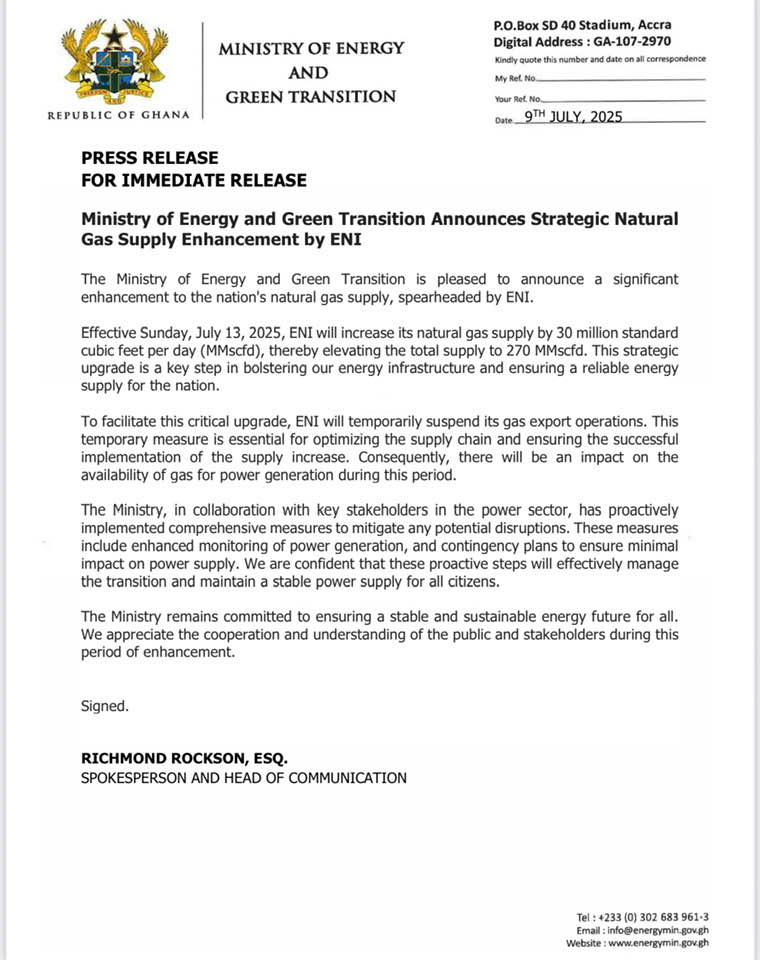
The Minister of Energy and Green Transition, John Abdullai Jinapor, has indicated that the country’s collaboration with the gas supplier, ENI, has yielded significant results.
According to the minister, an agreement has been reached with ENI to increase Ghana’s natural gas output by 30 million standard cubic feet per day (MMscfd).
As such, Ghanaians will experience a temporary power disruption on Sunday, July 13, to allow the gas supplier, ENI, to undergo a rehabilitation session.
“This temporary measure is essential for optimising the supply chain and ensuring the successful implementation of the supply increase,” the statement said.
The exercise is expected to increase gas production to 270 mm per day, which is of importance to the energy sector and the country as a whole.
“This Sunday, ENI will turn off their valves temporarily to increase gas production to about 270 MM Scarf. It means that we are stabilizing the energy sector. Because the plant will be turned off for a short period within the day for maintenance works, we are likely to experience some interruption of power. It is for a good purpose,” Mr Jinapor said.
The power outage is expected to last for about six hours. According to the sector minister, advice from experts has prevented the running of the plants to be worked on on liquid fuel to ensure the provision of power supply for a brief period.
“It involves changing nozzles, it involves a lot of work and so if we are going off for about for to six hours you don’t risk it transitioning to liquid fuel only to come back to gas,” he added.
Members of the general public and businesses are expected to prepare ahead to avert a significant disruption in their day-to-day activities.
The 161kV Anwomaso to Kumasi transmission line co-funded by the European Union and the government of France to assist in stabilizing the low voltage in Kumasi and Dukwaw mining areas will be constructed by the Ghana Grid Company (GRIDCO).
The €8.7 million project is expected to be completed within 12 months. This will facilitate Ghana’s export of power to Burkina Faso.
The reconstruction of the transmission line will enable the provision of double-circuit, twin-bundled transmission line of rated capacity to improve power transfer between the Ahodwo (K1BSP) and the Anwomaso (K2BSP) substations.
On his part, EU Ambassador to Ghana, Mr Irchard Razaly, noted that the project serves as its commitment to providing greener and more efficient energy for Ghanaians.
Energy Minister Abdulai Jinapor is optimistic about Kumasi boasting of more than 1,000 megawatts of electricity generation capacity due to the presence of Ameri, Cenit Energy Limited, AKSA Energy and Pipeline.
Meanwhile, Finance Minister, Dr. Cassiel Ato Forson, has cautioned that without immediate reforms, the energy sector risks collapsing under the weight of growing debt.
According to Dr. Forson, ECG successfully collects only 62% of the electricity it supplies, leaving nearly 40% unaccounted for—either lost due to technical faults or unpaid.
This shortfall has forced the government to provide continuous financial support, with budgetary transfers reaching $2.1 billion over the past two years.
Dr. Forson emphasized that these inefficiencies are severely impacting the economy, as government support for the energy sector has reached unsustainable levels while ECG continues to struggle with operational and revenue challenges.
ECG managed to raise GH¢1.6 billion in revenue in the first half of 2025, against a projected target of GH¢2.5 billion.
Minister for Energy and Green Transition, John Abdulai Jinapor, on Thursday, June 26, held a stakeholder meeting with key players in the petroleum industry to address concerns over laycan management and push forward with critical downstream reforms.
Central to the discussion was the need to optimize the management of laycan to enhance the efficiency of the petroleum supply chain.
The minister stressed the importance of stricter coordination and adherence to laycan schedules while acknowledging the operational difficulties industry players face.
“As Minister, I take full responsibility for the challenges associated with laycan management. I am not here to pass blame. I’ve listened to your concerns, and you have my assurance that we will soon release a comprehensive roadmap to tackle the issues,” he said.
Earlier, the Chamber of Bulk Oil Distributors (CBOD) expressed deep concern and disappointment over the persistent disruption of the Laycan import programme and called on the Ministry of Energy and Green Transition to act swiftly to safeguard the integrity of Ghana’s fuel import system.
The Laycan schedule, developed through multi-stakeholder consultations and published by the National Petroleum Authority (NPA), provides a framework for the efficient and orderly importation of petroleum products.
However, in 2025 alone, the schedule was revised more than four times in the first quarter and amended seven times in the second quarter, arbitrarily and without consultation with the industry.
According to CBOD, these “frequent and unilateral changes have severely undermined operational predictability and imposed significant financial burdens on Bulk Import, Distribution, and Export Companies (BIDECs).”
“It is important to note that each revision affects up to ten cargoes, causing cumulative delays of approximately thirty days per incident. Between January and June 2025, BIDECs incurred over forty million United States dollars (USD 40 mn) in demurrage and other associated costs. These unnecessary costs were unfortunately filtered into fuel prices at the pump, further burdening Ghanaian consumers,” CBOD added in its statement dated June 24.
CBOD cautioned that the increasing violation and repeated breach of the Laycan protocol, where BIDECs without assigned slots, often citing vaguely defined “emergency” needs, are being permitted to berth outside the established schedule.
“This practice has severely compromised transparency and fairness in the sector. Alarmingly, for the first time, a second-quarter (Q2) Laycan schedule has been extended into the third quarter, up to September 2025, further escalating uncertainty within the industry,” it added.
CBOD estimates that Laycan-related inefficiencies contributed between GHS 0.47 and GHS 0.60 per litre to the rise in fuel prices between January and May 2025.
“These are unfair and avoidable costs borne by Ghanaian consumers,” it added.
CBOD wants BIDECs without officially assigned Laycans to be restricted, as well as entities responsible for disruptions to bear all associated financial penalties. Also, it recommends that any changes to the Laycan schedule must follow prior consultation with the Laycan Review Committee.
Thursday’s meeting brought together representatives from major institutions, including the National Petroleum Authority (NPA), Chamber of Bulk Oil Distributors (CBOD), Tema Oil Refinery (TOR), Bulk Oil Storage and Transportation Company (BOST), Chamber of Oil Marketing Companies (COMAC), the Chamber of Petroleum Consumers (COPEC), Africa Centrer for Energy Policy (ACEP) and other industry stakeholders.
Beyond laycan-related concerns, the engagement also focused on accelerating downstream reforms aimed at modernizing the sector, boosting efficiency, and ensuring the consistent availability of petroleum products across the country.
To support these efforts, the sector minister announced government plans to expand and upgrade infrastructure, including the construction of an additional mooring system to ease existing bottlenecks at the discharge point.
Port authorities are now in possession of 2,583 containers out of the 2,637 containers belonging to the Electricity Company of Ghana that went missing, Head of Communications at the Ministry of Energy and Green Transition, Richmond Rockson, has revealed.
Mr Richmond Rockson while speaking on the Citibreakfast show today revealed that an investigation was sanctioned by Energy and Green Transition Minister, John Abdulai Jinapor, to determine the number of missing containers after receiving contradictory reports.
“The minister was receiving conflicting figures, so he ordered an investigation to determine the actual number of missing containers,” Rockson stated.
“The investigation revealed that, in total, 2,637 containers were involved. Out of this, 2,583 are now confirmed to be in the possession of port authorities,” he further revealed.
Three months ago, a committee commissioned on January 30 to examine procurement irregularities and the prolonged detention of ECG’s equipment at the Tema Port revealed detailed severe procurement violations and found that approximately 1,328 containers remain unaccounted for.
In March, Energy and Green Transition Minister, John Abdulai Jinapor, disclosed that 40 of the 1,328 missing containers belonging to the Electricity Company of Ghana (ECG) have been located in a warehouse at Kpone, near Tema. The facility is reportedly owned by an Indian national.
The minister further revealed that the warehouse owner claimed to have legally purchased the containers last year. However, he emphasized that the matter remains under active investigation, with authorities determined to hold those responsible accountable.
Mr. Jinapor commended the collaborative efforts of national security and law enforcement agencies in recovering the containers.
Former Managing Director of the Electricity Company of Ghana (ECG), Samuel Dubik Mahama, earlier pledged his full cooperation with any investigative body seeking to uncover the circumstances surrounding the disappearance of the ECG containers at the Tema Port.
Addressing the matter on the Citi Breakfast Show on Thursday, April 3, Dubik Mahama expressed shock and disappointment over the controversy but affirmed his readiness to engage with any official probe into the missing shipments.
“The containers were never in the custody of the ECG. If they were in ECG’s custody, then you can hold ECG responsible but this is the case that they were still under the port authorities and so I am all for whatever investigations there will be and I am ready to sit with whoever to give my side of the story,” he stated.
Key findings from the investigative report by the committee include:
Prior to 2022, ECG maintained a dedicated fund that received weekly allocations to facilitate the clearance of shipments. However, this funding mechanism was discontinued due to financial constraints cited by the ECG board.
Despite limited resources, ECG awarded contracts to two firms to clear the shipments, one of which was pre-financed by ECG.
One of these companies reportedly lacked the necessary licensing to handle the contract, raising concerns over procurement violations.
ECG’s procurement directorate was merged with its Housing and Estate unit, further complicating oversight mechanisms.
The Director of Procurement had no prior experience in procurement and was not a registered member of any professional procurement body.
The Ministry of Energy officially handed over a cutting-edge Supervisory Control and Data Acquisition (SCADA) Centre to the Eastern Regional Office of the Electricity Company of Ghana Limited (ECG) on Wednesday.
This GH¢6.3 million facility is set to greatly enhance the operational efficiency of the ECG in the region. The SCADA Centre will facilitate improved fault detection, streamline switching processes, and expedite fault resolution, which are crucial for ensuring a reliable power supply.
In a speech delivered by the Director of Power, Mr. Solomon Adjetey, on behalf of the Minister of State at the Ministry of Energy, Herbert Krapah, the government reaffirmed its commitment to enhancing power reliability nationwide.
According to Mr. Krapah, the project, which began in 2020, is part of a larger initiative that also includes similar developments in ECG’s Western and Tema operational areas. He highlighted that the completion and handover of the SCADA project’s first phase in the Eastern Region represent a significant milestone and encouraged ECG to leverage the new facility to reduce power outages.
John Gemegah, ECG’s General Manager of Supervisory Systems, shared that four primary substations in Koforidua, Mpraeso, Nkawkaw, and Akim Oda have already been integrated into the SCADA system.
He noted that the Eastern Region is currently leading in system reliability and expressed confidence that the new SCADA Centre would further enhance their performance.
Sariel Adobea Etwire, ECG’s General Manager for the Eastern Region, provided additional insights into the region’s power infrastructure, noting that the Eastern Region has 66 distribution and express feeders, along with nine primary substations. She expressed optimism that the new SCADA Centre would elevate power reliability in the region to new levels.
Mrs. Etwire also extended her gratitude to the government and the Ministry of Energy for their support. She assured the public of ECG’s commitment to maintaining a stable power supply and urged customers to pay their bills promptly so the company can continue to improve its services.
The project contractor, Prince John Abakah, expressed his appreciation to the Ministry and ECG staff for their cooperation throughout the project’s implementation.
The event was attended by key officials, including ECG’s General Manager of Sub-Transmission, Francis Atsyatsya; Eastern Regional Engineer, Mr. Emmanuel Appoe, and other managers and staff from both the Head Office and the Eastern Region.
The Ministry of Energy has provided clarification over recent remarks made by the sector minister, Dr. Matthew Opoku Prempeh, regarding the release of a timetable for ongoing power outages.
Dr. Prempeh challenged those advocating for the Electricity Company of Ghana (ECG) to issue a load-shedding timetable to present their own proposed schedules. During the inauguration of the NPP campaign team in the Ashanti Region, he encouraged critics to develop their own timetables if they deemed it necessary.
He questioned the rationale behind creating a timetable when the ECG has confirmed that no such plan is in place.
His comments during an interview with a JoyNews journalist have received criticism from scores of Ghanaians.
In a press release issued on Tuesday, March 26, and signed by the Minister’s spokesperson, Kofi Abrefa Afena, the Energy Ministry noted that “the rather innocuous statements of the Minister as captured by the interview have been distorted to portray him as being insensitive to the plight of Ghanaians.”
The statement clarified that the Minister holds respect for Ghanaians, as has been his attitude, and did not intend to disrespect citizens.
According to the statement, Dr Opoku Prempeh asserted that there was no need for the release of a timetable for the recent power outages due to the fact that work was being done to ensure the consistent supply of power.
“The Minister dismissed the need for a load management time table because in his view and as indicated by the Electricity Company of Ghana, the causes of the temporary power chalenges are being addressed.”
“The Honourable Minister has always been sensitive to the plight of the Ghanaian people and continues to ask for their forbearance, as has always been the case when challenges relative ot power stability emerge.”
“The Ministry wishes to assure the general public that the Ministry as the policy maker and mother agency of the various power sector actors is working assiduously with these agencies to ensure that the temporary challenges are resolved,” the statement concluded.
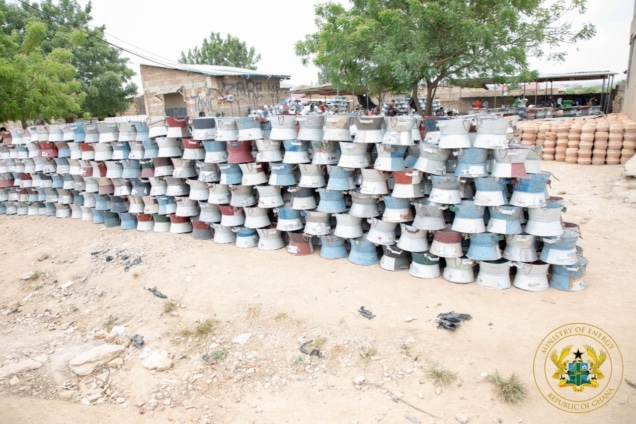
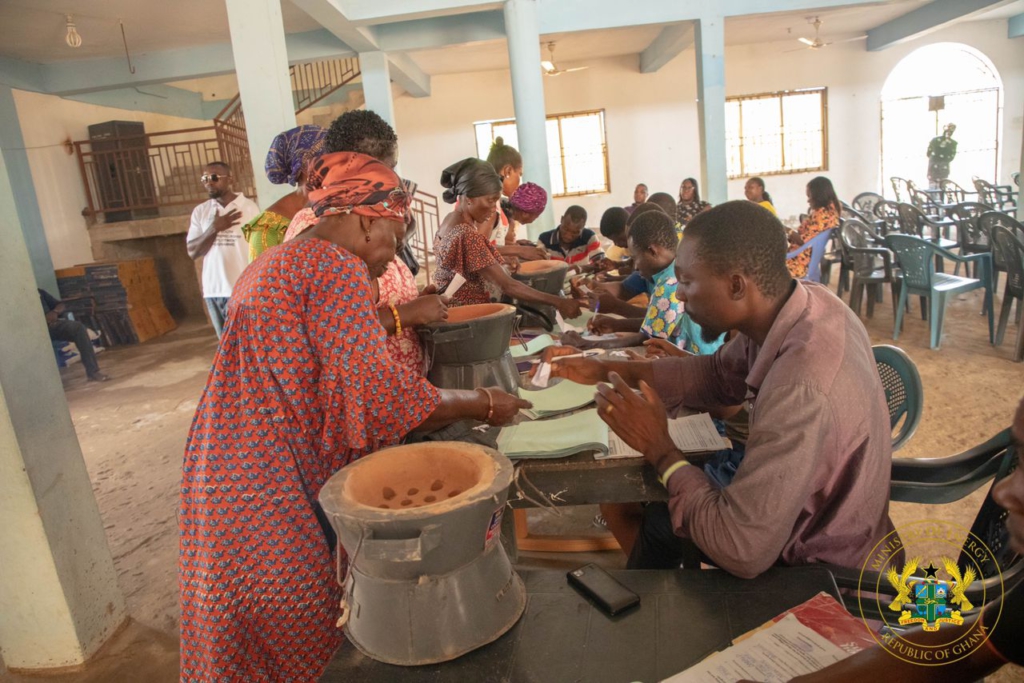
The Energy Ministry has successfully supplied 420,000 clean cookstoves to rural communities throughout Ghana.
Deputy Minister of Energy, Herbert Krappa, emphasized that the government remains dedicated to providing clean and cost-effective energy solutions for the citizens of Ghana.
Addressing attendees at the 12th Sustainable Education and Development Conference held at the University of Environment and Sustainable Development, Deputy Minister Herbert Krappa highlighted the nation’s commitment to achieving a 10% modern renewable energy capacity within the national energy blend by 2030.
In addition to this, the Energy Ministry has reported the discovery of significant quantities of vital “green” minerals, such as lithium and graphite, within Ghana.
“Two-thirds of indoor air pollution has been linked to wood fuels for cooking and domestic use. And we know the health implications of this for our women and girls…And that is why the Ministry of Energy is distributing free Clean Cookstoves to rural communities across Ghana,” he said.
The extraction of these minerals will be carried out in an environmentally sustainable manner, with a focus on maximizing their utility through value-added processes. This strategic approach aims to position Ghana as a central hub for electric vehicles and battery technology production.
Mr. Krappa has announced the establishment of a National Energy Transition Implementation Committee, along with the creation of the National Energy Transition Coordinating Office within the Office of the President. These entities will be responsible for spearheading the execution of the framework.
He clarifies that both the National Energy Transition Framework and the Energy Transition Investment Plan will function as guiding documents for the transformation of Ghana into a climate-resilient, low-carbon energy nation. This transition aims to expedite development and enhance the welfare of our citizens.
He stated, “And on Energy Efficiency, we will continue to promote the use of best-in-class energy appliances, energy efficiency in SMEs, and the use of clean cookstoves. Our target is to ensure 50% LPG penetration by 2030, and our Cylinder Recirculation Model, with which everyone can exchange an empty cylinder with a filled new one, will ensure affordability and safety.”
He stated, “And on Energy Efficiency, we will continue to promote the use of best-in-class energy appliances, energy efficiency in SMEs, and the use of clean cookstoves. Our target is to ensure 50% LPG penetration by 2030, and our Cylinder Recirculation Model, with which everyone can exchange an empty cylinder with a filled new one, will ensure affordability and safety.”
Herbert Krappa emphasizes that the ministry will fast-track Oil and Gas Exploration and Production efforts to secure funding for the advancement of Clean Energy Technologies. Additionally, there will be ongoing efforts to advocate for and incentivize the use of LPG (liquefied petroleum gas) as a means to reduce reliance on wood fuels.
“We believe in responsible exploration of our resources, and we believe in low-carbon oil and gas production. We will explore carbon capture technologies, low carbon auctions, and carbon offsetting while we produce our oil and gas reserves.”
He highlighted that the Ministry of Energy necessitates over $500 billion to realize the nation’s Energy Transition Plan. This plan is slated for launch by the president during the sidelines of the UN General Assembly at COP 28 in November this year.
He committed to fostering stronger partnerships between the ministry and higher education institutions for collaborative research. He emphasized that without such collaboration, achieving net-zero carbon emissions would be as uncertain as today’s unpredictable weather patterns.
Ghana’s oilfields is set to produce an additional 120,000 barrels per day to offset recent production decline, aiding the economy.
The Tweneboa, Enyenra, Ntomme (TEN) Oil Field, Greater Jubilee Southeast (JSE), and Pecan Development Project contribute to the increase.
Chief Director of the Ministry of Energy, Wihelmina Asamoah, reveald the JSE project to add 30,000 bopd, the TEN enhancement project to add 10,000 bopd, and Pecan development estimated to add 80,000 bopd.
Recent reports show declining crude oil production since 2020, but the new projects aim to reverse the trend and boost daily production.
The Ministry and its agencies support exploration contractors to accelerate well drilling.
Challenges arise from unfavorable market conditions and insufficient data on some basins, affecting investments in hydrocarbon exploration and production.
However, efforts to address data gaps are underway. The energy transition to green energies has also impacted oil and gas investments globally.
Public Relations Officer (PRO) for the Ministry of Energy, Mr. Kwasi Obeng Fosu, has taken a significant step in his political aspirations by obtaining nomination forms to contest for the Adentan parliamentary seat in the New Patriotic Party (NPP) primaries.
His nomination forms were collected by a group of his supporters on his behalf on Tuesday, July 11, 2023.
The event garnered substantial attention from the residents of the Adentan constituency, who flocked to Mr. Kwasi Obeng Fosu’s campaign office. Known affectionately as “Baba Tauffic the Homeboy”, he received the nomination forms in a ceremony witnessed by a large crowd of enthusiastic supporters.
They were led by a former Electoral Area Coordinator for Amrahia-Malejor, Mrs. Baaba Maison, and the current Coordinator for New Adentan East Electoral Area, Mr. Kelly Steve Oppong Nyinah who picked the form from the constituency party office earlier on Tuesday afternoon when the NPP opened its nominations for the upcoming primaries.
The procession to Mr. Obeng Fosu’s campaign office in the constituency, was marked with singing and dancing in what could be described as a carnival atmosphere.
Present at the presentation were several Constituency Executives, Electoral Area Coordinators, Members of the Council of Elders, Members of the Council of Patrons, Polling Station Executives and party faithfuls in general, who came to lend their support.
Presenting the forms, Mrs. Maison said she was delighted that such a hardworking and very popular grassroots politician in Adentan has offered himself to lead the party to reclaim it lost seat in 2024.
She recalled that Obeng-Fosu as the constituency Youth Organiser led the youth wing to secure its first ever twin victory for the party in 2016 together with his colleague constituency executives at the time, when the then candidate Yaw Buaben Asamoa won the seat and President Akufo-Addo won the presidential race in the constituency.
“My success as Electoral Area Coordinator would not have been possible without the support, hard work and loyalty of our Homeboy Baba Tauffic when he was the Constituency Youth Organizer. Today, he has risen to become the youngest Member of the Council of Patrons and it is time to reward his hard work by rallying behind him for victory,” she urged, to a thunderous applause.
In his acceptance speech, Mr. Obeng-Fosu said he was both overwhelmed and surprised by the love shown by his fellow patriots that thronged his office for the presentation.
“I sincerely thank you all for your massive grassroot support. Today, I assure you that the confidence you have reposed in me will not be taken for granted.”
“With your support and prayers, and through Christ who strengthens us all, I believe that victory shall be ours in 2024”, he declared to loud cheers from the excited crowd.
Dedicating his forms to God and to the party’s footsoldiers, he urged all party members to continue supporting him, the party and government through thick and thin so that together the NPP will break the eight with a seat from Adentan and a commanding majority in Parliament.
The National Democratic Congress’ Mohammed Adamu Ramadan currently represents the people of Adentan Constituency.
The Ministry of Energy has raised concerns over a US$1.7 billion bill for a Floating Oil Production Storage Offloading (FPSO) vessel purchased by the Norwegian company Aker Energy Ghana Limited for US$35 million as part of a Plan of Development (PoD) to the government.
“Even though Aker has sold their interest in Ghana, they are scheming to stay on the Pecan development through surrogates and Ghanaian collaborators across segments of our society to amass ridiculous benefits from the Pecan field development.
“Aker Energy purchased an FPSO for $35 million. In their Plan of Development submitted to the Government, Aker’s previous owners intend to bill Ghana $1.7 billion for the FPSO. We admit that the energy ministry has raised a preliminary objection to the cost of the FPSO. But there is no proposal on how much the Ministry considers fair value for the FPSO.
The revelation was made at last week’s press conference by some 29 Civil Society Organizations (CSOs) during which they revealed how Aker’s oilfield in Ghana, is shockingly been sold as scrap at a symbolic price of US$1 to AFC Equity Investment, a subsidiary of Africa Finance Corporation (AFC) although two years ago, 37percent of that field was price at US$1.6 billion.
According to the CSOs, their campaign is a reminder of the importance of holding governments accountable and ensuring that the interests of the people are protected. It is also a reminder that value for money should always be a key consideration when making decisions about public resources.
They had argued that “newly constructed FPSOs, which are normally converted oil tankers with a few years of operational history, typically cost between $700-1.2 billion to build over a 2–3-year timespan, so why are the developers opting to charge Ghana a hefty sum of $1.7bn for more or less ‘scrap metal’ when the book value of the FPSO is significantly less than that? For example, the FPSO project for Guyana’s Yellowtail project costs US$1.75 billion, according to SBM Offshore (the EPC company).
“The FPSO will be designed to produce approximately 250,000 barrels of oil per day, will have an associated gas treatment capacity of 450 million cubic feet per day and water injection capacity of 300,000 barrels per day. The FPSO will be spread-moored in a water depth of about 1,800 meters and will be able to store around 2 million barrels of crude oil. Ghana’s Aker FPSO is nowhere near these technical specifications.
“Originally, a tanker called S.T. Polar Alaska, manufactured 36 years ago, was converted into an FPSO 14 years ago. Typically, FPSOs have an average payback period of 5-7 years, varying based on size and configuration. The lease period for rented options is commonly ten years. Technocrats have expressed concerns about the FPSO’s age and have recommended caution, but there is political pressure to proceed with the deal. We are monitoring this keenly and demand transparency on the judgment of the Ministry before the approval is granted.
On the sale of the Aker Energy oilfield, which was offered that Ghana National Petroleum Corporation (GNPC) under Dr. Kofi Kodua Sarpong, for US$1.6 billion two years ago, the US$1 dollar became possible because Aker Norway, had defaulted on a loan of US$200 million they were given by AFC to invest in Pecan, hence had to hand over the asset in a face-saving “sale” at the ridiculous amount. Pertinent
The Herald’s investigations have established that the oilfield was later appraised by Bank of America to be US$300 million and not US$1.6 billion as submitted to Parliament by the Energy Minister, Dr. Matthew Opoku Prempeh, and Dr K.K Sarpong then CEO of GNPC in between July and August 2021. The appraisal was done on the directives of Finance Minister, Ken Ofori-Atta, and report submitted to President Akufo-Addo.
Details about the ridiculous transaction, came to light at last Tuesday’s press conference by some 29 CSOs during which the President, Nana Akufo-Addo, was asked to sack the GNPC Board Chairman, Freddie Blay, for attempting to sell a 50 percent stake in the offshore Jubilee Holdings Limited (JOHL) to PetroSA.
Interestingly, it has been discovered that, despite Aker’s sale of its interest to AFC, it is using the backdoor scheming to still hang around the Pecan oilfield through surrogates and Ghanaian collaborators across segments in society to amass ridiculous benefits from the Pecan field development.
Civil Society Organisations (CSOs) in Ghana, committed to accountability in the energy sector, formed a coalition to block the transaction.
The Government and the GNPC, adamantly insisted that this was a good deal for the country. Various analysts, consultants, and professors at home and abroad were lined up to circumvent the glaring evidence that, based on available data, the two oil blocks had been ridiculously overpriced.
Parliament was swayed to grant authorisation to GNPC to spend a maximum of $1.1 billion, money to be borrowed in the name of Ghana, on the blocks. CSOs were, to put it mildly, outraged.
Fast-forward two years later, SWDT has been returned to Ghana for free. The so-called massive find (“Nyankom”) that the GNPC swore it was getting for a bargain is no longer the tantalising prospect it was sold to Parliament.
The main block, DWT/CTP, the more viable field, Pecan, is now effectively controlled by AFC Equity Investment, a subsidiary of Africa Finance Corporation (AFC), Aker’s main creditor.
Aker Norway, has more or less defaulted on the loan of $200 million they were given to invest in Pecan and handed over the asset in a face-saving “sale” for $1.
Aker will only recoup some of its earlier investment, if AFC, succeeds in developing the field to the point where it can produce and sell oil to recoup its investment and make some money.
So, in short, the same blocks that barely two years ago, were worth more than half the IMF money this country has sweated blood for nearly a year to secure, have either been abandoned or pawned for scraps.
The question likely to be on the minds of the public is: what happened to the $1.1 billion that GNPC was authorised by Parliament to borrow to buy stakes in Nyankom and Pecan? The answer is simple: the energy minister, GNPC and the bevy of bureaucrats at the various state agencies feel that they don’t have to answer to anyone. And nobody can make them talk.
So after nearly throwing away $1.6 billion for stuff that Ghana could simply have waited and gotten back for free, the people responsible for such reckless decision-making are still taking strategic decisions for the country and refusing to account for any aspect of their stewardship. Sadly, the controversies around Aker are far from over.
But there is no proposal on how much the Ministry considers fair value for the FPSO. Newly constructed FPSOs, which are normally converted oil tankers with a few years of operational history, typically cost between $700-1.2 billion to build over a 2–3-year time span.
The CSOs questioned “why are the developers opting to charge Ghana a hefty sum of $1.7bn for more or less ‘scrap metal’ when the book value of the FPSO is significantly less than that?
They argued that “the FPSO project for Guyana’s Yellowtail project costs US$1.75 billion, according to SBM Offshore (the EPC Company). The FPSO will be designed to produce approximately 250,000 barrels of oil per day, will have associated gas treatment capacity of 450 million cubic feet per day and water injection capacity of 300,000 barrels per day”.
“The FPSO will be spread moored in water depth of about 1,800 meters and will be able to store around 2 million barrels of crude oil. Ghana’s Aker FPSO is nowhere near these technical specifications 2. Originally, a tanker called S.T. Polar Alaska, manufactured 36 years ago, was converted into an FPSO 14 years ago. Typically, FPSOs have an average payback period of 5-7 years, varying based on size and configuration.
“The lease period for rented options is commonly ten years. Technocrats have expressed concerns about the FPSO’s age and have recommended caution, but there is political pressure to proceed with the deal. We are monitoring this keenly and demand transparency on the judgment of the Ministry before the approval is granted”.
The CSOs explained that their “campaign is a reminder of the importance of holding governments accountable and ensuring that the interests of the people are protected. It is also a reminder that value for money should always be a key consideration when making decisions about public resources.”
“Even though Aker has sold their interest in Ghana, they are scheming to stay on the Pecan development through surrogates and Ghanaian collaborators across segments of our society to amass ridiculous benefits from the Pecan field development.
“Aker Energy purchased an FPSO for $35 million. In their Plan of Development submitted to the Government, Aker’s previous owners intend to bill Ghana $1.7 billion for the FPSO. We admit that the energy ministry has raised a preliminary objection to the cost of the FPSO. But there is no proposal on how much the Ministry considers fair value for the FPSO.
The revelation was made at last week’s press conference by some 29 Civil Society Organizations (CSOs) during which they revealed how Aker’s oilfield in Ghana, is shockingly been sold as scrap at a symbolic price of US$1 to AFC Equity Investment, a subsidiary of Africa Finance Corporation (AFC) although two years ago, 37percent of that field was price at US$1.6 billion.
According to the CSOs, their campaign is a reminder of the importance of holding governments accountable and ensuring that the interests of the people are protected. It is also a reminder that value for money should always be a key consideration when making decisions about public resources.
They had argued that “newly constructed FPSOs, which are normally converted oil tankers with a few years of operational history, typically cost between $700-1.2 billion to build over a 2–3-year timespan, so why are the developers opting to charge Ghana a hefty sum of $1.7bn for more or less ‘scrap metal’ when the book value of the FPSO is significantly less than that? For example, the FPSO project for Guyana’s Yellowtail project costs US$1.75 billion, according to SBM Offshore (the EPC company).
“The FPSO will be designed to produce approximately 250,000 barrels of oil per day, will have an associated gas treatment capacity of 450 million cubic feet per day and water injection capacity of 300,000 barrels per day. The FPSO will be spread-moored in a water depth of about 1,800 meters and will be able to store around 2 million barrels of crude oil. Ghana’s Aker FPSO is nowhere near these technical specifications.
“Originally, a tanker called S.T. Polar Alaska, manufactured 36 years ago, was converted into an FPSO 14 years ago. Typically, FPSOs have an average payback period of 5-7 years, varying based on size and configuration. The lease period for rented options is commonly ten years. Technocrats have expressed concerns about the FPSO’s age and have recommended caution, but there is political pressure to proceed with the deal. We are monitoring this keenly and demand transparency on the judgment of the Ministry before the approval is granted.
On the sale of the Aker Energy oilfield, which was offered that Ghana National Petroleum Corporation (GNPC) under Dr. Kofi Kodua Sarpong, for US$1.6 billion two years ago, the US$1 dollar became possible because Aker Norway, had defaulted on a loan of US$200 million they were given by AFC to invest in Pecan, hence had to hand over the asset in a face-saving “sale” at the ridiculous amount. Pertinent
The Herald’s investigations have established that the oilfield was later appraised by Bank of America to be US$300 million and not US$1.6 billion as submitted to Parliament by the Energy Minister, Dr. Matthew Opoku Prempeh, and Dr K.K Sarpong then CEO of GNPC in between July and August 2021. The appraisal was done on the directives of Finance Minister, Ken Ofori-Atta, and report submitted to President Akufo-Addo.
Details about the ridiculous transaction, came to light at last Tuesday’s press conference by some 29 CSOs during which the President, Nana Akufo-Addo, was asked to sack the GNPC Board Chairman, Freddie Blay, for attempting to sell a 50 percent stake in the offshore Jubilee Holdings Limited (JOHL) to PetroSA.
Interestingly, it has been discovered that, despite Aker’s sale of its interest to AFC, it is using the backdoor scheming to still hang around the Pecan oilfield through surrogates and Ghanaian collaborators across segments in society to amass ridiculous benefits from the Pecan field development.
Civil Society Organisations (CSOs) in Ghana, committed to accountability in the energy sector, formed a coalition to block the transaction.
The Government and the GNPC, adamantly insisted that this was a good deal for the country. Various analysts, consultants, and professors at home and abroad were lined up to circumvent the glaring evidence that, based on available data, the two oil blocks had been ridiculously overpriced.
Parliament was swayed to grant authorisation to GNPC to spend a maximum of $1.1 billion, money to be borrowed in the name of Ghana, on the blocks. CSOs were, to put it mildly, outraged.
Fast-forward two years later, SWDT has been returned to Ghana for free. The so-called massive find (“Nyankom”) that the GNPC swore it was getting for a bargain is no longer the tantalising prospect it was sold to Parliament.
The main block, DWT/CTP, the more viable field, Pecan, is now effectively controlled by AFC Equity Investment, a subsidiary of Africa Finance Corporation (AFC), Aker’s main creditor.
Aker Norway, has more or less defaulted on the loan of $200 million they were given to invest in Pecan and handed over the asset in a face-saving “sale” for $1.
Aker will only recoup some of its earlier investment, if AFC, succeeds in developing the field to the point where it can produce and sell oil to recoup its investment and make some money.
So, in short, the same blocks that barely two years ago, were worth more than half the IMF money this country has sweated blood for nearly a year to secure, have either been abandoned or pawned for scraps.
The question likely to be on the minds of the public is: what happened to the $1.1 billion that GNPC was authorised by Parliament to borrow to buy stakes in Nyankom and Pecan? The answer is simple: the energy minister, GNPC and the bevy of bureaucrats at the various state agencies feel that they don’t have to answer to anyone. And nobody can make them talk.
So after nearly throwing away $1.6 billion for stuff that Ghana could simply have waited and gotten back for free, the people responsible for such reckless decision-making are still taking strategic decisions for the country and refusing to account for any aspect of their stewardship. Sadly, the controversies around Aker are far from over.
But there is no proposal on how much the Ministry considers fair value for the FPSO. Newly constructed FPSOs, which are normally converted oil tankers with a few years of operational history, typically cost between $700-1.2 billion to build over a 2–3-year time span.
The CSOs questioned “why are the developers opting to charge Ghana a hefty sum of $1.7bn for more or less ‘scrap metal’ when the book value of the FPSO is significantly less than that?
They argued that “the FPSO project for Guyana’s Yellowtail project costs US$1.75 billion, according to SBM Offshore (the EPC Company). The FPSO will be designed to produce approximately 250,000 barrels of oil per day, will have associated gas treatment capacity of 450 million cubic feet per day and water injection capacity of 300,000 barrels per day”.
“The FPSO will be spread moored in water depth of about 1,800 meters and will be able to store around 2 million barrels of crude oil. Ghana’s Aker FPSO is nowhere near these technical specifications 2. Originally, a tanker called S.T. Polar Alaska, manufactured 36 years ago, was converted into an FPSO 14 years ago. Typically, FPSOs have an average payback period of 5-7 years, varying based on size and configuration.
“The lease period for rented options is commonly ten years. Technocrats have expressed concerns about the FPSO’s age and have recommended caution, but there is political pressure to proceed with the deal. We are monitoring this keenly and demand transparency on the judgment of the Ministry before the approval is granted”.
The CSOs explained that their “campaign is a reminder of the importance of holding governments accountable and ensuring that the interests of the people are protected. It is also a reminder that value for money should always be a key consideration when making decisions about public resources.”
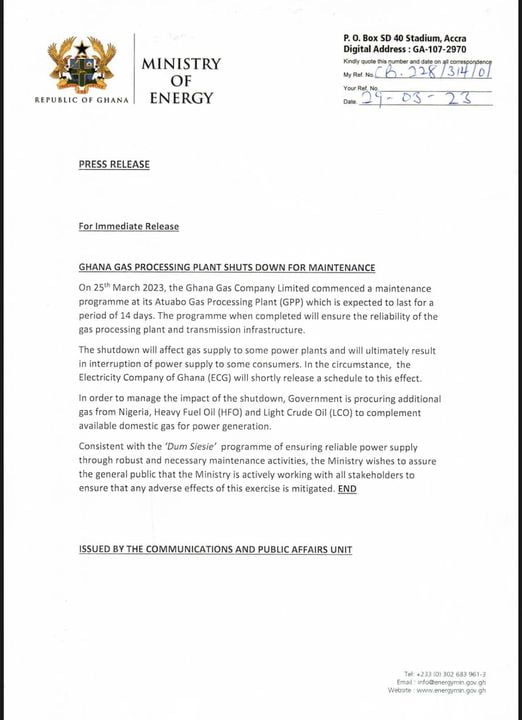
The Electricity Company of Ghana (ECG) is expected to release a schedule to guide citizens in parts of the country for a 14-day power cut period.
There will be erratic power supply as a result of a shutdown of the Atuabo Gas Processing Plant in the Western Region.
The Ghana Gas Company Limited commenced a maintenance programme at the Atuabo Gas Processing Plant on March 25, 2023, according to a press statement released by the Ministry of Energy.
According to the statement dated March 29, “the shutdown will affect gas supply to some power plants and will ultimately result in interruption of power supply to some consumers”, thus warranting a schedule from the ECG.
On the matter, Director of communications with Ghana Gas, Ernest Owusu Bempah, stated that “the engineers thought it wise that we need to do some major maintenance hence the shutdown.”
As the Ghana Gas Company Limited works to address the situation at the Atuabo Gas Processing Plant, the Energy Ministry has pledged to procure additional gas, which will include Heavy Fuel Oil (HFO) and Light Crude Oil (LCO) “to complement available domestic gas for power generation.”
According to the Ministry, it is working assiduously with all stakeholders “to ensure that any adverse effects of this exercise are mitigated.”
The Ministry of Energy has refuted claims that it had its power cut off due to unpaid electrical bills.
Speaking on the matter, Communications Specialist at the Ministry, Kofi Abrefa Afena “the Ministry only had prepaid payment challenges and therefore called the ECG to intervene”.
He added that “The Ministry of Energy as the supervising agency of the ECG will support ECG in recovering all its money accruing from energy sold to consumers. The Ministry will lead by example in paying for its energy consumed”.
In order for ECG and NEDCo to be able to offer consumers necessary services, the Ministry, according to Mr. Afena, urges everyone to pay for the energy they use.
Meanwhile, the Electricity Company of Ghana says it will from today, Monday, March 20, embark on a massive disconnection exercise in a bid to mobilise revenue.
The exercise is using almost all ECG staff, from top management to junior officers to retrieve all the monies owed it.
According to the Managing Director, Mr Samuel Dubik Mahama Esq., the company is owed over GH¢5 billion from the month of September 2022 to February 2023. Most of this debt resides with the SOEs and MDAs.
Last Tuesday March 14, 2023, the Electricity Company of Ghana paid a visit to the Ministry of Energy, cutting off electricity to the entire building for over half a day. Power was only restored after the mother ministry of the Electricity Company of Ghana (ECG) paid their debt due in full.
This will be the fate of many other Ministries, Departments and Agencies (MDAs) and State Owned Enterprises (SOEs) who owe ECG huge amounts of money, forcing the power retailer to embark on a massive revenue mobilization exercise beginning on Monday, March 20, 2023, to Thursday, April 20, 2023.
The exercise is using almost all ECG staff from top management to junior officers to retrieve all the monies owed them.
According to the Managing Director, Mr Samuel Dubik Mahama Esq, the company is owed over GHS 5 billion from the month of September 2022 to February 2023.
Most of this debt resides with the SOEs and MDAs.
The strategy, therefore, is to take these agencies by storm, from March 20, 2023, and those who refuse to settle their bill immediately will be meted the same punishment as the Ministry of Energy.
Ahead of this exercise, Mr Dubik Mahama toured all the operational regions of ECG to sensitize the staff on how to go about the mobilization of the revenue, to respect the customer at all times.
He also reminded the staff that ECG is a business and not a charity and everyone must start to behave as such.
It is expected that at the end of the exercise, 100% of the debt would be recovered.
Five hundred thousand effective biomass cookstoves will be distributed to more than 350,000 homes in the nation by 2024, according to the Renewable Directorate of the Ministry of Energy.
When representatives from the Ministry of Energy took some media personnel on a tour of the Rekoff Company at Joma Ablekuma in the Ga West District of the Greater Accra Region, which has been contracted by the Ministry to produce the cookstoves, Doris Duodu, the directorate’s senior programs officer, revealed this.
“The project targets low-income households in urban and peri-urban communities nationwide”, she said.
According to a Senior Official of Rekoff Co Ltd, Mr. Francis Kugblenu, who conducted the team around the premises to observe and explain the manufacturing process, the company produces about 500 units of the cookstoves per day, with a work force of 100, majority of whom are women.
He further stated that the company’s activities have helped create several jobs in the catchment area, thereby boosting the local economy.
Mr. Kugblenu explained that sand is hardened into a mould in the shape of a stove which is normally obtained from either the Volta Region or Central Region.
With the aid of some mortar, the mould is then set in a cookstove manufactured with metal sheets that have been hammered into shape, resembling a traditional coal pot.
Ms. Duodu explained that there are several other production outlets engaged by the Ministry for the production of cookstoves, and that each of these cookstoves is accorded a serial number to enable easier tracking from production to warehouse as part of the accountability process.
Ms. Duodu further revealed that under the 5-year project (2019 to 2024), 413,792 improved cookstoves have been produced so far, with 374,130 distributed so far, whilst stolen and damaged ones amount to about 3,002.
The team further visited households in the vicinity, where some people, particularly women, have been beneficiaries of the improved cookstoves, in order to ascertain their benefits.
Unanimously, the view among those interviewed was that these cookstoves had brought theme enormous benefits as they no longer have to deal with harmful smoke emissions and that financially, the cookstoves had enabled them save considerable amount of money as they now use far less charcoal for the same amount of fuel.
Ms. Duodu expressed the optimism that the Ministry will be able to meet its targets and help create further awareness of the immense environmental and other benefits of the improved cookstoves.
Following an oil depot fire and a sudden closure of the airspace over the second-largest city in the nation, Russia’s Defense Ministry on Tuesday accused Ukraine of conducting a series of attempted drone strikes against infrastructure located throughout much of Russia, including close to the capital.
Apparently, a Ukrainian drone crashed close to the village of Gubastovo, southeast of the capital, according to governor Andrey Vorobyov. It was later determined that the drone was directed at a gas facility run by state-owned enterprise Gazprom, which he had earlier described as “civil infrastructure.”
State media cited the local Energy Ministry as saying that the facility was unharmed.
State media later posted a photograph of what it said was the crashed device, which appeared to resemble a Ukrainian-made UJ-22 attack drone.
The UJ-22 is relatively small and versatile, able to fly through poor weather and to travel up to 500 miles (800 kilometers). It’s unclear where or when the photo of the crashed drone was taken.
The crash was allegedly one of several attempted strikes, with state media reporting a drone was shot down near the Belarus border and the defense ministry claiming two more strikes were thwarted through the use of drone-jamming technology in the Krasnodar and Adygea regions.
“Both drones lost control and deviated from their flight path,” the defense ministry said in a statement. “One UAV (unmanned aerial vehicle) fell in a field, and another UAV, deviating from the trajectory, did not harm the attacked civilian infrastructure facility.”
At least one drone appeared to have evaded Russian defenses, with footage posted on social media overnight and geolocated by CNN showing a fire at energy firm Rosneft’s oil depot in Tuapse, on Krasnodar’s Black Sea coast.
It’s unclear if the facility was the intended target, but Ukraine has previously targeted oil depots within Russian-controlled territory.
CNN is unable to independently confirm the claims for each alleged attack, and Ukraine did not immediately comment on the incident. Ukraine has previously declined to comment on attacks inside Russia.
Following the alleged attacks, Russia’s second-largest city of St. Petersburg closed its airspace Tuesday within a 200-kilometer (124-mile) radius, briefly banning incoming flights, according to state media.
Russian President Vladimir Putin had been briefed about the closures – but Kremlin spokesperson Dmitry Peskov had declined to discuss whether it was related to the “incidents in St. Petersburg and Tuapse,” state media reported.
Attacks targeting Russian infrastructure have focused attention on Ukraine’s efforts to develop longer-range combat drones.
In early December, Russia reported multiple attacks by Ukrainian drones targeting military infrastructure, including air bases that lie hundreds of miles inside Russian territory and beyond the reach of Ukraine’s declared arsenal of drones.
Around the same time, Ukraine’s state-owned weapons manufacturer Ukroboronprom indicated that it is close to finishing work on a new long-range drone – though there is no public indication that such a device has been readied for deployment or was involved in explosions inside Russia.
At the time, Ukraine’s Defense Ministry offered no comment on the strikes – though a presidential adviser tweeted a cryptic message hinting at the possibility Kyiv was indeed behind the December attacks.
“The Earth is round – discovery made by Galileo. Astronomy was not studied in Kremlin, giving preference to court astrologers. If it was, they would know: If something is launched into other countries’ airspace, sooner or later unknown flying objects will return to departure point,” he said at the time.
According to Dr Opoku Prempeh, the Energy Ministryis “determined to ensure that the lights stay on” since he believes “Ghanaians deserve no less.”
Dr Opoku Prempeh, who also doubles as the Manhyia South Constituency Member of Parliament, gave his word after President Akufo-Addo commissioned the 330KV Kumasi-Bolgatanga Transmission Line Project at Anwomaso, near Kumasi in the Ashanti Region.
The project, which covers a distance of approximately 550km, has increased transmission capacity to meet growing demand in Ashanti Region, the northern part of Ghana and beyond.
There has also been a reduction in transmission line overloads and associated high transmission losses in the Ashanti, Bono, and Bono East Regions, according to the Energy Minister.
Since the beginning of 2022, several parts of the country have witnessed power interruptions, mostly due to maintenance work being executed by the Ghana Grid Company (GRIDCo) on faulty transmission lines.
In September this year, some homes were plunged into darkness as they could not purchase prepaid credits from outlets belonging to the Electricity Company of Ghana (ECG).
The challenge has, however, been addressed and consumers can now access electricity.
Following the incidents, Dr Matthew Opoku Prempeh reiterated that “power remains a critical aspect of our daily lives” thus “President Akufo-Addo is focused on ensuring that the sector is fit for purpose.”
He further added that the government will continue to make the necessary investments in power generation, transmission, and distribution.
The Energy ministry says it is working assiduously in scaling up its renewable energy avenues as it continues to ensure that there is enough energy capacity to support commercial and domestic consumption.
The ministry maintains that it has consolidated strategic measures to ensure that the country does not revisit the era of erratic power supply, which interfered with business activities in the past.
These comments were made by Deputy Minister of Energy, Andrew Kofi Egyapa Mercer at the 2022 Africa Energy Conference Organized by the Business and Financial Times in Accra under the theme: Africa’s energy future, achieving an all-round competitiveness and sustainability to support the continent’s development ambitions.
“In the area of power, Ghana has sought to enhance its generation, transmission and distribution of electricity nationwide, ensuring that it never goes back to the grim days of frequent power cuts; an era which left many industries crippled.”
“With resources available to her, Ghana now has an installed capacity of 5367.17 MW with access rate of 87%. Ghana has also seen the present opportunity to scale up its contribution of renewable energy in its generation mix to 10% by 2030 and is working to achieve this.”
“Ghana has passed an amendment to its local content and local participation regulations to include channel partnerships and strategic alliances in the petroleum upstream sector; a novelty which is projected to enhance indigenous participation in upstream related activities.”
The Deputy Minister mentioned that the government has passed an amendment to local content participation to include competitive partners in the petroleum upstream sector.
In his welcome reflections, the Chief Executive Officer of Business and Financial Times, Dr. Godwin Acquaye pontificated some limitations of the Africa Energy sector and called on stakeholders to rally feasible ideas to achieve sustainable outcomes.
“African countries still suffer from huge deficits in energy generation and distribution, resulting in small businesses languishing for lack of power. Our agricultural fresh produce rot on the streets, because of lack of refrigeration. Children underperforming for lack of electricity. Lives are at risk in our hospitals for lack of electricity, as lifesaving hospital equipment and services lie unused because of lack of electricity”, He said.
“With these immense resources, Africa should accelerate investments in technology, innovations, policies and regulations to speed up a renewables revolution. Africa cannot power its homes or businesses with potential. Africa must utilize its huge renewable energy potential and combine this with conventional energy to light up and power Africa.”
“The B&FT will increase and strengthen its policy dialogue platforms and engagements on energy for Africa. This is why we are working with you, our partners in the sector today to unlock all of Africa’s potential, conventional and renewables, and develop energy mixes that will not only light up Africa but also power industries,” he added.
The government is to revitalise  the Tema Oil Refinery to meet domestic demand for petroleum products, Dr Mathew Opoku Prempeh, the Minister of Energy, said on Tuesday.
This would greatly position the nation well, reduce her imported petroleum products and guarantee fuel security too.
Dr Prempeh said the Ghana National Petroleum Corporation was also developing the petrochemical industry to produce the required materials to manufacture solar panels, wind blades and battery cells that would contribute to Ghana’s net-zero carbon emission agenda.
As a signatory to the Paris Agreement and other international protocols, all these are measures being introduced by the government to enable the nation to achieve net-zero carbon emission by 2050.
The Sector Minister said this in a speech read on his behalf at a public sensitization forum on the National Energy Transition Plan organised by the Ministry at Goaso in the Ahafo Region.
It was attended by traditional rulers, municipal and district assemblies, as well as heads of departments and agencies, civil society organisations and actors.
Dr Prempeh said the government needed to plan and strategise to push the country towards a low carbon economy while ensuring economic growth as well.
The Ministry, in collaboration with the Energy Transition Committee, is collecting and incorporating public views for the successful implementation of the Plan.
Mr Frederick Obeng Addo, a Deputy Minister of Transport, said data from the Driver Vehicle and Licensing Authority (DVLA) showed that 72 per cent of the 2.8 million vehicles registered in the country in 2021 used petrol, 27 per cent diesel and about one per cent gas and other sources of energy.