Tag: EPA

  • EPA shuts unlicensed mining shops, seizes excavators in Eastern Region

    EPA shuts unlicensed mining shops, seizes excavators in Eastern Region

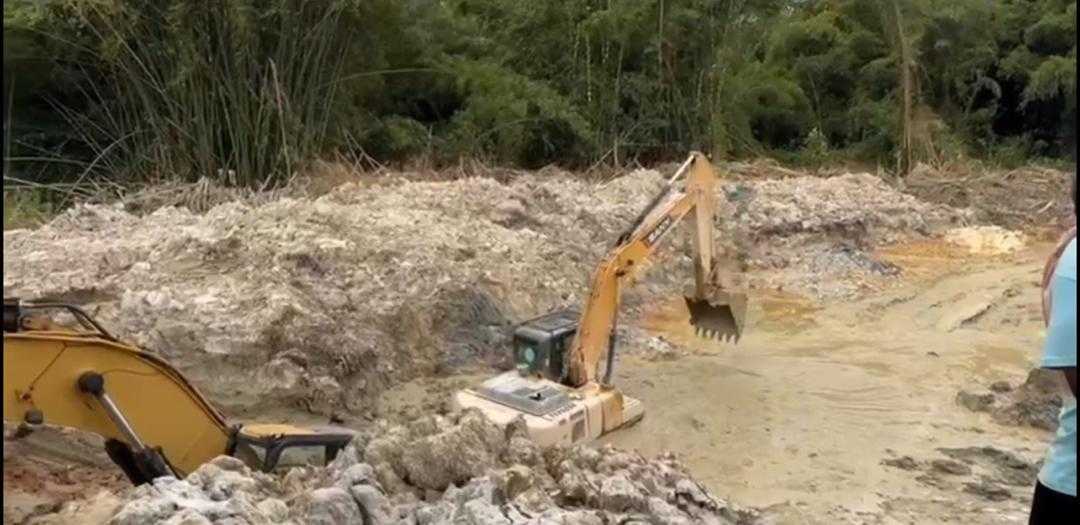
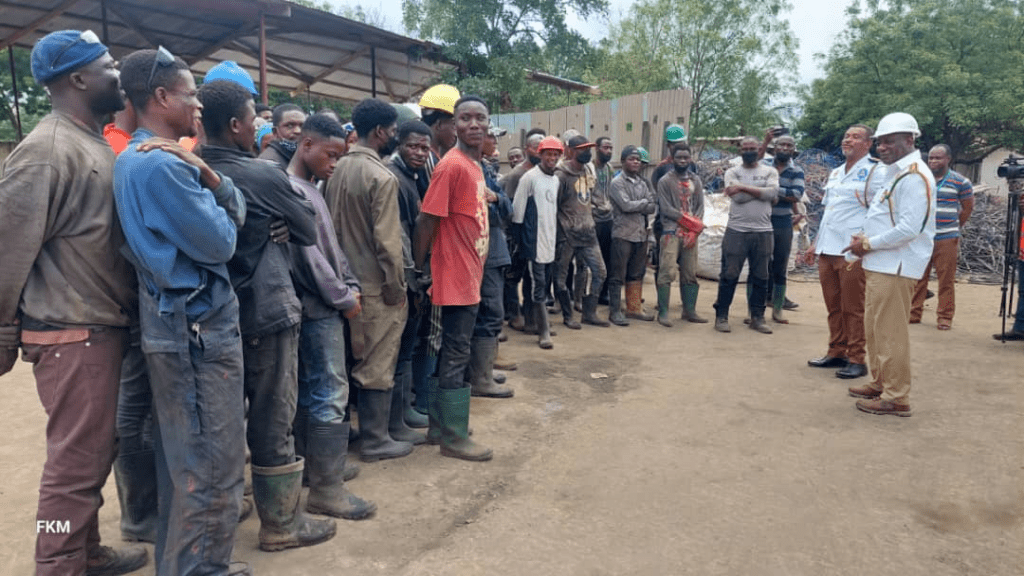
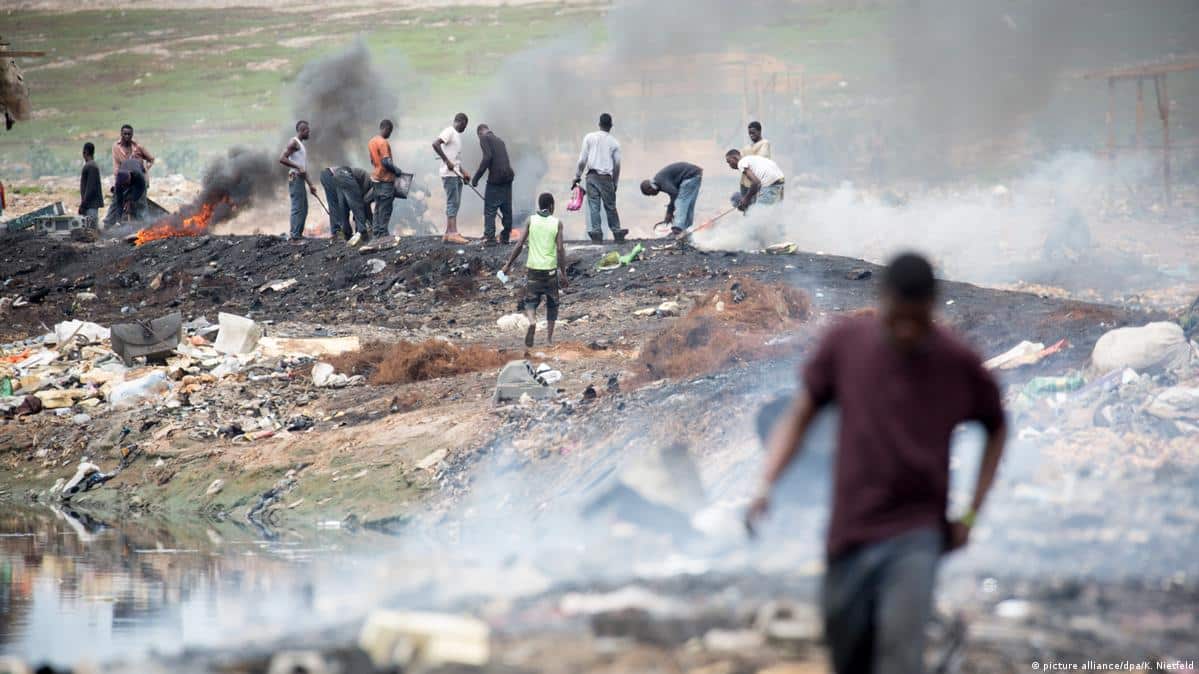
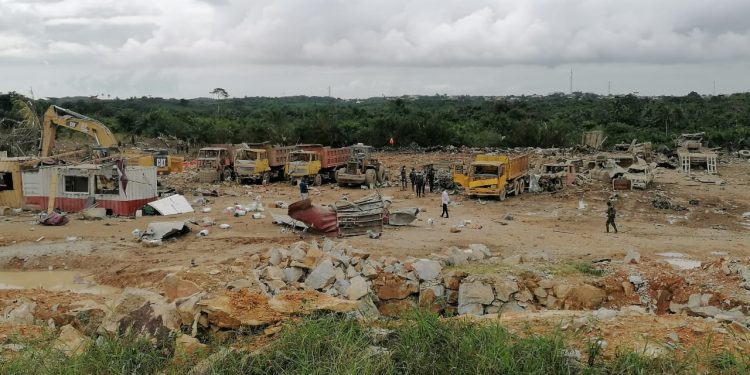
    A major enforcement operation has been conducted in Osino Fanteakwa South District,in the Eastern Region by the Environmental Protection Authority (EPA).

    It targeted illegal mining activities and unlicensed businesses during the exercise, where the EPA impounded several excavators and wheel loaders suspected to be linked to unlawful operations

    Both Chinese-owned and locally owned shops dealing in mining equipment and Changfan machine parts without valid permits were shut down. Welding and fabrication centres producing Changfan components were also locked.

    Heavy-duty machines found at illegal mining sites were seized and transported to the EPA regional office for documentation.

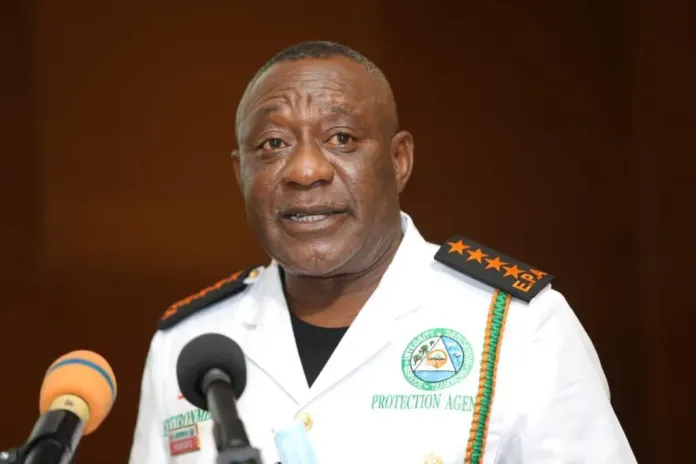
    Mr Danso urged individuals and businesses to comply with EPA regulations to protect their operations and safeguard the environment.

    He added that more communities in the Eastern Region are expected to be targeted in the coming days as the enforcement drive continues.

    Days ago, the  National Anti-Illegal Mining Operations Secretariat (NAIMOS) task force seized illegal mining equipment in a major swoop in Obuasi, in the Amansie Central District of the Ashanti Region. Equipment seized during the operation conducted on Monday, November 17, included motorbikes, vehicles, water pumps, and other tools used for illegal mining activities. Makeshift shelters and assorted equipment at the site were also destroyed.

    The taskforce also stormed a concession at Anyankyireml, a site that had been taken over by groups of illegal miners. Although the concession is legally owned by Asante Gold Corporation, it had been occupied by these illegal miners, forcing the rightful owners to flee. However, the intervention of the NAIMOS team drove out the miners and secured the land for its rightful owners.

    Illegal mining continues to pose a major challenge to the country, with several foreign nationals implicated and multiple arrests made. In June, NAIMOS warned criminal groups to vacate galamsey areas.

    The John Dramani Mahama-led government established the National Anti-Illegal Mining Operations Secretariat in July as part of efforts to curb illegal mining activities in the country. Speaking during an update on Wednesday, July 23, the Minister for Lands and Natural Resources, Emmanuel Armah-Kofi Buah, disclosed that the newly established Secretariat would act as the brain of Ghana’s anti-illegal mining operations.

    “To coordinate the efforts of the military, police, and other security agencies, the ministry has established the National Anti-Illegal Mining Operations Secretariat (NAIMOS) as the operational nerve-centre for Ghana’s fight against illegal small-scale mining,” he stated.

    The Secretariat’s responsibility is to collaborate with other key institutions, such as the Ministry of Transport, the Ministry of Finance (GRA–Customs Division), and the Ghana Ports and Harbours Authority, as part of its mandate. This collaboration is expected to ensure that excavators and other earth-moving equipment entering the country are not diverted for illegal mining activities.

    “In collaboration with the Ministry of Transport, the Ministry of Finance (GRA–Customs Division), and the Ports and Harbours Authority, we have initiated a proactive tracking of all imports of excavators and earth-moving equipment from the point of entry,” he added.

    Illegal mining activities continue to pose a major challenge to the country. Several Chinese nationals have been involved in such operations, leading to multiple arrests.

    Meanwhile, President John Dramani Mahama has disclosed that scientific tests are being carried out on new chemicals that could help restore polluted water bodies and rivers affected by illegal mining, popularly known as galamsey. Speaking at a high-level stakeholder engagement on galamsey in Accra on Friday, October 3, with members of Civil Society Organisations (CSOs), President Mahama said, “There are new chemicals that have come that allow you to treat water and take out the toxins and the heavy metals. One of them is called dowtine. The people came, and we sent them there. They took samples, tested. We are waiting for them to bring the results back.”

    He has asked Ghanaians to exercise patience regarding the longstanding battle against illegal mining activities. During a meeting with CSOs, President Mahama said declaring a state of emergency will not end the menace. According to him, government advisors believe the country can overcome galamsey by adopting best practices in small-scale mining, including technologies that help neutralize or remove harmful chemicals from water bodies.

    Additionally, the President pledged to honor the calls of many Ghanaians by declaring a state of emergency when his advisors give him the nod to do so. President Mahama believes that the country can eradicate the long-term problem if it deploys more troops and invests additional resources in the fight. He concluded that the battle seems to be a long one, but his administration is committed to ending it.

    “While we are fighting the menace, I am also saying we should uptake technology in order to protect the environment. So yes, let’s fight the illegal mining but at the same time, let’s bring the new technology that will help us protect our environment.

    “Now with the elephant in the room, state of emergency, yes, I have the power to do it, but the president acts on the advice of the National Security Authority, and as at now, this moment, the National Security Authority believes that we can win the fight against galamsey without declaring a state of emergency. I want to assure you that the day they advise me otherwise, that boss, now we need a state of emergency, I won’t hesitate,” he added.

  • Galamseyers attack EPA team at Obuasi, two journalists sustain injuries

    Galamseyers attack EPA team at Obuasi, two journalists sustain injuries

    Two journalists have sustained severe injuries following an alleged violent attack by a group of miners at Dadwene, a community near Obuasi in the Ashanti Region.


    The victims were among a team of journalists who had accompanied the Environmental Protection Agency (EPA) on an anti-illegal mining operation at Dadwene.

    The operation resulted in the closure of many shops at Anhwia Nkwanta. Speaking to the media, the EPA’s Chief Executive Officer (CEO), Professor Nana Ama Klutse, noted that as a result of the violent incident, the EPA officers and journalists were forced to retreat for safety, heading toward their vehicles.

    However, one of the vehicles was involved in a collision after the team made their way through Afari. Giving further details, the EPA’s CEO disclosed that they were unable to retreat despite being accompanied by a military escort. She explained that the army officers could not retaliate due to the intensity of the situation.


    According to her, the military escort advised them to flee the scene because their opponents were heavily armed illegal miners.


    She added, “So we closed down many shops at Anhwia Nkwanta, and today (Thursday, November 6) we were on another route to close down some other shops. On our way near Obuasi, we saw galamsey happening on the ground, so we decided to have a look at what they were doing. When we stopped and walked into the area, as we were getting closer, they were running away, and all of them had left by the time we got there.


    “So we looked around for what we could pick, and we did pick. While leaving, we saw that there were actually more of the excavators—three—that were inside a river body; they had mined in the river and blocked it in such a way that it had taken different tributaries around the area and flooded some places. It was messy. It was really a bad situation. So we had actually gone to the car and used another route to the place, and while we were there, the people also ran. We called them to come, and just before we could have a conversation, they sent news around, and soon we saw built men; a number of them came with guns.


    “We had the military with us, and the national security was also with us, but then we saw that we couldn’t exchange fire or fight them, so we had to run for our lives. In the course of running and speeding on the road, we encountered this accident.


    “One of the cars, which had some EPA staff and some of the journalists, had a head-on collision with a truck that was actually carrying some pipes for galamsey operations. Some of the heavily built men were dressed in black with ‘CID’ written at the back. The soldiers and the national security men asked them for their ID cards, but it became confrontational, and so we had to leave because they said they could not overpower them, so we had to leave.


    “While they were having the confrontation, we got intel from Accra that we should leave immediately—where we were—and that even the route we planned to take, we should not use it again, and we should not return on the same route we came from Kumasi to Obuasi. So we had to use another route altogether, much longer, through the Western Region and the Central Region to Kumasi. But just before we reached Kumasi, that’s when we had the head-on collision.”

    The Ashanti Regional Correspondent for Media General, Ibrahim Abubakar, reportedly escaped the incident. Adom News reporter and Channel One TV’s Ashanti Regional Correspondent, Doris Lonta, were also part of the team.

    On Saturday, November 1, the Director of Operations at NAIMOS and his team narrowly escaped death in a mob assault at Hwidiem in the Ahafo Region. The officials came under violent attack while carrying out their day-to-day activities as part of efforts to crack down on illegal mining in the region.

    Exhibits retrieved from the scene included a side-hand bag containing one (1) Smith & Wesson pistol, two (2) pistol magazines, twenty-one (21) rounds of 9mm ammunition, an unregistered Range Rover vehicle, an unregistered Toyota RAV4 vehicle, and several mobile phones. The operation also resulted in the arrest of several miners, including a Burkinabe national.

    However, locals were seen in a video that has since gone viral, confronting the anti-mining task force and calling for the release of those arrested during the operation. Speaking to the media, NAIMOS spokesperson Paa Kwesi Schandorf described the attack as “extremely and profoundly disappointing,” adding, “It was a huge surprise that the locals became agitated, demanding the release of those arrested, and then began attacking the NAIMOS team.”
    On Monday, November 3, the Inspector-General of Police (IGP), Mr. Christian Tetteh Yohuno, ordered an investigation into the incident.“The Inspector-General of Police (IGP), Mr. Christian Tetteh Yohuno, has directed the Criminal Investigations Department (CID) Headquarters to take over investigations into the attack on the Director of Operations of the National Anti-Illegal Mining Operations Secretariat (NAIMOS) and his team by thugs at Hwidiem in the Ahafo Region. The Member of Parliament for Asutifi North, Hon. Ebenezer Kwaku Addo, who is alleged to have incited the mob and obstructed the NAIMOS team, has been invited to assist in the ongoing investigation into the incident,” part of the statement read.

    The John Dramani Mahama-led government established the National Anti-Illegal Mining Operations Secretariat in July as part of efforts to curb illegal mining activities in the country.

    Speaking during an update on Wednesday, July 23, the Minister for Lands and Natural Resources, Emmanuel Armah-Kofi Buah, disclosed that the newly established Secretariat would act as the brain of Ghana’s anti-illegal mining operations.

    “To coordinate the efforts of the military, police, and other security agencies, the ministry has established the National Anti-Illegal Mining Operations Secretariat (NAIMOS) as the operational nerve-centre for Ghana’s fight against illegal small-scale mining,” he stated.

    The Secretariat’s responsibility is to collaborate with other key institutions such as the Ministry of Transport, the Ministry of Finance (GRA–Customs Division), and the Ghana Ports and Harbours Authority as part of its mandate.

    This collaboration is expected to ensure that excavators and other earth-moving equipment entering the country are not diverted for illegal mining activities.

    “In collaboration with the Ministry of Transport and the Ministry of Finance (GRA–Customs Division), and the Ports and Harbours Authority, we have initiated a proactive tracking of all imports of excavators and earth-moving equipment from the point of entry,” he added.

    Illegal mining activities continue to pose a major challenge to the country. Several Chinese nationals have been involved in such illegal operations, leading to multiple arrests.

    Meanwhile, President John Dramani Mahama has disclosed that scientific tests are being carried out on new chemicals that could help restore polluted water bodies and rivers affected by illegal mining, popularly known as galamsey.

    Speaking at a high-level stakeholder engagement on galamsey in Accra on Friday, October 3, with members of Civil Society Organisations (CSOs), President Mahama said, “There are new chemicals that have come that allow you to treat water and take out the toxins and the heavy metals. One of them is called dowtine. The people came, and we sent them there. They took samples, tested. We are waiting for them to bring the results back.”

    He has asked Ghanaians to exercise patience in the ongoing battle against illegal mining (galamsey). During a meeting with Civil Society Organisations (CSOs), President Mahama said declaring a state of emergency would not end the menace.

    According to him, government advisors believe the country can overcome galamsey by adopting best practices in small-scale mining, including technologies that help neutralize or remove harmful chemicals from water bodies.

    Additionally, the President pledged to honour the calls of many Ghanaians by declaring a state of emergency when his advisors give him the nod to do so.

    President Mahama believes that the country can eradicate the long-term canker if it deploys more troops and invests additional resources in the fight. He concluded that the battle seems to be a long one, but his administration is committed to ending it.

    “While we are fighting the menace, I am also saying we should uptake technology in order to protect the environment. So yes, let’s fight the illegal mining but at the same time, let’s bring the new technology that will help us protect our environment.

    “Now with the elephant in the room, state of emergency, yes, I have the power to do it, but the president acts on the advice of the National Security Authority, and as at now, this moment, the National Security Authority believes that we can win the fight against galamsey without declaring a state of emergency. I want to assure you that the day they advise me otherwise, that boss, now we need a state of emergency, I won’t hesitate,” he added.

  • PAC charges EPA, Environment Ministry to crack down on increasing siting of fuel and gas stations in residential areas

    PAC charges EPA, Environment Ministry to crack down on increasing siting of fuel and gas stations in residential areas

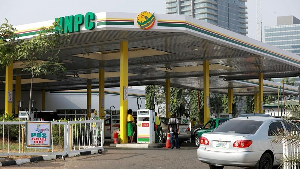
    The growing establishment of fuel and gas stations in residential areas has sparked concerns, particularly from the Public Accounts Committee (PAC) of Parliament.

    Consequently, PAC has charged the authorities in charge, the Ministry of Environment, Science, Technology, and Innovation, as well as the Environmental Protection Agency (EPA), to take and enforce stringent measures against individuals and companies that establish petrol and gas stations within densely populated residential areas.

    Speaking during a committee sitting, the Acting Chair of PAC, Samuel Atta Mills, highlighted the dangers associated with the act siting the devastation and risk it poses to both lives and property.

    He emphasised the need for the EPA to step up enforcement to safeguard lives and property.

    “The dangers in siting petrol and gas stations within residential communities are real and deadly in times of emergencies. Such actions must not be entertained,” Mr Atta Mills cautioned.

    He further urged the EPA to review its licensing procedures to prevent operators from exploiting loopholes in the system, noting that some individuals were using falsified or questionable documents allegedly issued by the agency.

    Committee Member and MP for Atwima Nwabiagya North, Frank Yeboah, also called on state institutions to strengthen oversight and address recurring regulatory breaches among both public and private entities.

    “State agencies must work harder to stop the ritual of infractions we continue to see. We cannot afford to compromise public safety,” he said.

    Ghana has faced longstanding challenges with the illegal siting of fuel and gas stations, especially in residential and environmentally sensitive areas, due to weak enforcement, political influence, and outdated regulations.

    One of the officials from the Environmental Protection Agency (EPA) appearing before the Public Accounts Committee (PAC) has urged the public to serve as watchdogs by promptly reporting individuals or companies constructing fuel stations in unauthorised locations.

    The Chairperson of PAC, Hon. Abena Osei-Asare, questioned how the EPA continued to grant permits to firms and individuals to build fuel stations in restricted areas despite knowing the risks involved.

    In response, the EPA official admitted that, in recent years, there had been an upsurge in the issuance of such permits, often due to undue political influence. He revealed that some officials were pressured by powerful individuals or politicians to approve licenses that contravene environmental and safety regulations.

    The official, therefore, cautioned the public and those involved in such illegal acts to be mindful of the grave dangers these practices pose to lives and property.

    About PAC

    The Public Accounts Committee (PAC) of Ghana was established under Article 103 of the 1992 Constitution and formally constituted as part of Parliament’s Standing Committees. It has existed since the First Parliament of the Fourth Republic, which began in January 1993.

    Its mandate is to review reports presented by the Auditor-General on public accounts of Ghana, to summon ministries, departments, agencies (MDAs), and state-owned enterprises (SOEs) to explain financial infractions and irregularities, and sometimes suggest sanctions, recoveries, and referrals for prosecution.

    However, since its establishment, PAC has reportedly had no documented record of ensuring the prosecution, and in other cases, the imprisonment of culprits, though its recommendations can trigger EOCO investigations or Attorney-General action.

    Over the years, the Committee has engaged several public institutions and heads of these institutions over reported financial irregularities, but little to no penalties have been documented, particularly to serve as a deterrent. It will be recalled that in 2017, PAC recommended the prosecution of officials at the National Sports Authority for misappropriating funds, but no confirmed convictions followed.

    In a separate incident in 2021, the committee traced non-existent staff under GETFund and MASLOC, yet again, no jail terms were recorded.

    In 2023, PAC recovered GH₵12.9 million, but this was through repayments, not criminal penalties.

    Meanwhile, more than GH¢12.9 billion in misappropriated public funds has been retrieved following a collaboration between PAC and the Auditor-General’s Department.

    Addressing the media on Wednesday, October 1, Chairperson of PAC, Abena Osei-Asare, attributed the development to the collective efforts between the Auditor-General’s Department and PAC.

    “One thing I am clear about is that what we are doing is yielding positive results. We have a report we will look at. Per the work of the Public Accounts Committee, and with the support of the Auditor-General, we have been able to retrieve GH¢12.9 billion. There is a whole report on that which we will be sharing with the public at the right time,” she said.

    According to her, the Committee will make the report’s details public at the appropriate time. The Committee is scheduled to resume its sittings on Monday, October 27. Various ministries, departments, and agencies have been interrogated by PAC in recent weeks to address infractions highlighted in the 2024 Auditor-General’s Report.

    Recently, the Director of Administration at Tamale Teaching Hospital (TTH), Dr Emmanuel Sena Kwasi Donkor, appeared before PAC after the AG’s report suggested that the hospital paid salaries amounting to GHS 1,449,000 to a deceased staff member over a period of 26 months.

    Dr Donkor affirmed the report, adding that the hospital has so far recovered GHS303,558.68 of the total amount. He explained that the banks previously handling the transactions had indicated through letters that they had ceased processing them.

    “We were able to recover some amounts. Before we got here, we had received letters from some banks stating that they had stopped transferring the funds to the government chest,” Dr Donkor told the Committee.

    He further urged Parliament to intervene and help the hospital recover the remaining funds. “Maybe at the end of this session, we will make a prayer to this House for the House to make an order directing those banks to transfer,” he said.

    Dr Donkor revealed that his outfit has submitted the names of the individuals implicated in the act to the Economic and Organised Crime Office (EOCO) for recovery. “EOCO has written back requesting the files of the people involved, and we have submitted them,” he added.

    Meanwhile, Ranking Member Samuel Atta-Mills raised serious concerns regarding the issue. “Habib Napare – date of separation was 2022. This guy had died. Didn’t you go to the funeral? And you validated this dead person for 26 months? And now you are coming to tell Parliament to do what?” Atta-Mills asked sharply.

    In the meantime, the Office of the Special Prosecutor (OSP) has released a fifty-page report covering investigations and prosecutions carried out between January 1 and July 31 this year.

  • Fabrication, importation, use of Changfan machines without permit prohibited – EPA

    Fabrication, importation, use of Changfan machines without permit prohibited – EPA

    The fabrication, importation, sale, and use of ‘Changfan’ machines in Ghana, has been ban with immediate effect the Environmental Protection Authority (EPA).

    The move is a response to severe environmental destruction caused by the usage of the machines for illegal mining activities.

    According to a statement issued by the authority on October 29, 2025, the EPA addressed users of the machine without necessary authorization.
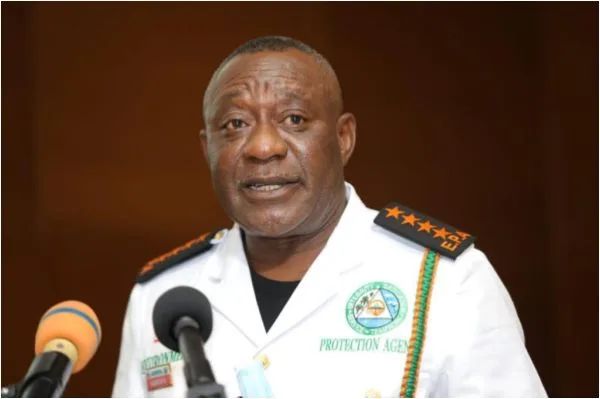
    “The fabrication, importation, and use of Changfan machines without EPA permit are prohibited. Any workshops or shops found producing or selling these machines will be shut down, and all existing equipment will be seized and dismantled,” the EPA stated.

    It warned all those engaged in illegal mining activities, otherwise known as galamsey, to desist from the practice.

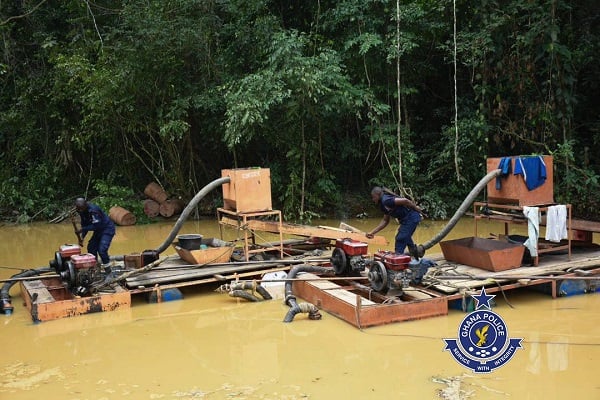
    “The Authority also issues a final warning to individuals, groups, and companies engaged in mining within water bodies to stop such illegal activities immediately as these actions are serious violations of national environmental and mining regulations,” it noted.

    The EPA stated that it would carry out enforcement operations in collaboration with security agencies to ensure full compliance through monitoring, seizure, and prosecution where necessary.

    Read the full statement below:

    Ghana’s annual food import bill which amounts to $3.5 billion could rise further if the government fails to act against illegal mining.

    This is as a result of a new study by Pure Earth and Environmental Protection Agency (EPA), exposing the extensive contamination of mercury, arsenic, lead and other heavy metals across artisanal and small-scale gold mining areas. 

    Thus, the Executive Director of the Peasant Farmers Association of Ghana, Bismark Nortey, warned that the cost for food import may exacerbate if farmlands and water resources are not protected.

    “I urge all ministries and government agencies responsible to use this report as a benchmark to protect our farmers. If the situation continues and farmers are forced to abandon production, the impact on our nation will be catastrophic. The current amount we spend on food imports, which we have already complained about, could escalate even more if nothing is done, especially as Ghanaian consumers become increasingly cautious about the safety of locally produced food,” he told Citi Business News.

    The year-long study titled, Mercury and Other Heavy Metals Impact Assessment, conducted from August 2024 to September 2025 by Pure Earth in collaboration with the Ghana Environmental Protection Agency (EPA), examined soil, water, air, fish, and food crops in six regions: Ashanti, Eastern, Central, Western, Western North, and Savannah.

    Earlier this year, when Ghana’s annual food import stood at about $2 billion, the Peasant Farmers Association of Ghana (PFAG) called on the government to make strategic investments in the agricultural sector to reduce the country’s growing dependence on import.

    The association insisted that Ghana has the capacity to produce a significant portion of its imported food items locally if the right policies and support systems are put in place.

    Acting Executive Director of PFAG, Bismark Nortey, emphasized the need for urgent policy interventions to boost productivity and lower the cost of food production.
    Speaking to Citi Business News, he noted that the high cost of agricultural inputs and services were major contributors to food price inflation in the country.

    “Currently, one of the major causes of high cost of food is the fact that we are spending so much on production. We are spending so much on cost of input and agricultural services. These are because these things are so high. If the government can find a mechanism to either subsidize or reduce the prices of these inputs, then we can produce at low cost and that will translate into high productivity,” he said.
    Mr Nortey further highlighted the pressing need for improved access to mechanized farming to replace the outdated reliance on manual labor.

    “If you go to a lot of farming districts, they have no access to mechanization, so we are still using the hoe and cutlass which is not helping,” he stated.

    He stressed that with targeted investments in smallholder farming, infrastructure, and all-year-round agricultural production, Ghana could significantly cut down on its food imports and strengthen its food security.

    “If we are able to invest in agriculture, we are able to invest in smallholder farming and infrastructure, I am sure the kind of monies that we spend on importing the food we have the capacity to produce…we are one step away from reducing our dependence on that food import,” he added.

    The PFAG believed that prioritizing agriculture through policy reforms and financial support would not only ease Ghana’s reliance on imported food but also create jobs, enhance food security, and strengthen the local economy.

    In 2024, the Peasant Farmers Association of Ghana (PFAG) issued a grave warning about a potential generational food and nutrition crisis if immediate action was not taken against illegal mining.

    The Association called on the government to impose a ban on these activities to safeguard the environment, protect farmers’ livelihoods, and ensure food security.

    In a statement released on Tuesday, September 10, PFAG highlighted the severe impacts of illegal mining on Ghana’s agriculture. Over 1.2 million hectares of farmland has been lost to these activities, while vital water bodies and irrigation facilities have been polluted, complicating efforts to maintain sustainable agricultural production.
    The Association noted that the cocoa sector and food crop production have been particularly hard hit, with farmers struggling to access clean water and fertile soil. PFAG warned that if these issues are not addressed, they could lead to a catastrophic generational food crisis.

    “Failure to act now will have devastating consequences for future generations,” PFAG stressed, adding that they support an immediate ban on illegal mining. They also encouraged farmers to back efforts to end these harmful practices.

    Major rivers, including the Bonsa and Pra, have suffered severe pollution from toxic chemicals used in mining operations. Additionally, forest reserves such as Tano Nimiri have been irreversibly damaged. Health unions, concerned about the widespread environmental degradation, have echoed the call for a ban as a critical measure to prevent further harm.

    Under the Minerals and Mining Act, 2006 (Act 703), the Inspections and Compliance Division of the Minerals Commission is responsible for conducting mine inspections and ensuring adherence to mining laws. The Act also mandates that licensed miners operate within legal parameters.

    However, PFAG pointed out that regulatory institutions have struggled to enforce these laws effectively, with some mining companies continuing operations in violation of regulations. The Environmental Protection Agency (EPA) is tasked with integrating environmental policy and planning to ensure long-term maintenance of environmental quality, but its efforts have not been sufficient to curb illegal mining.

    In a related event, some unions, led by the Ghana Medical Association (GMA) and supported by groups like the Ghana Registered Nurses and Midwives Association (GRNMA) and the Health Services Workers Union of Ghana (TUC), are calling for a ban on small-scale mining, citing serious environmental and public health concerns tied to illegal mining.

  • Govt will spend $200k to decontaminate metal-polluted rivers – EPA

    Govt will spend $200k to decontaminate metal-polluted rivers – EPA

    Discussions regarding the government’s response to the rise in illegal mining, commonly referred to as ‘galamsey’, have increased significantly due to the severe environmental damage it is causing in the country, particularly the pollution of our water bodies. 

    Recent researches report that 60% of Ghana’s major rivers have been destroyed by galamsey, with heavy presence of metals which have found their way into our food chain, claiming lives and causing deformities, particularly among babies.

    As part of measures to deal with this deadly destruction, the Environmental Protection Agency (EPA) has proposed a modern science-backed technological solution to reverse the devastation caused by illegal mining (galamsey).

    With what they describe as the ‘nano technology, ‘ the EPA is confident that the dechemicalization solution, featuring a copper-based ‘nano liquid,’ has been laboratory-tested and proven effective in purifying heavily contaminated rivers.

    Speaking on The Probe on Joy News on Sunday, October 5, Prof. Nana Ama Browne Klutse, Executive Director of the EPA, dismissed public despondency, insisting that the crisis is solvable through advanced science, provided the government secures the immediate funding for a large-scale demonstration, which will cost over 200,000 dollars for the piloting phase.

    According to her, “I want to tell my fellow Ghanaians that there is still hope, because we are in a technology age. To do pilots to show to Ghanaians and even the president that this is doable. We need 200,000 USD; if I get it today, we will do the pilot for every Ghanaian to see that with the flowing river, this particular technology can be used.” Prof. Klutse declared, shifting the focus from failed military operations to chemical innovation.
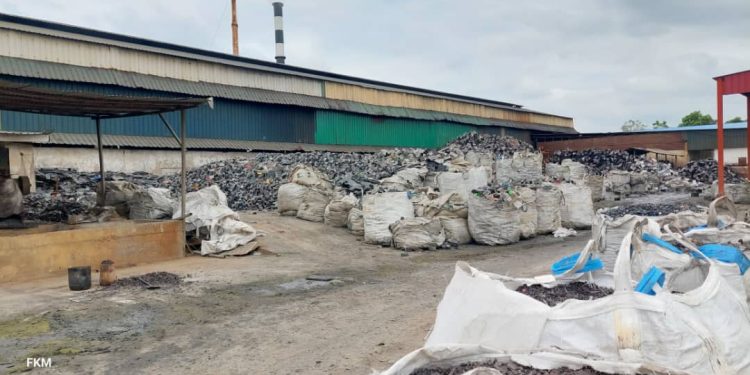
    Prof. Klutse revealed that the EPA has identified and tested at least two viable technologies, including one that has been successfully deployed in other international contexts, specifically citing success in Greece.
    She also admitted that these technologies she is advocating for to strip pollutants from our rivers are something she has witnessed for herself, their efficacy and effectiveness in restoring Ghana’s rivers. According to her, nanotechnology is just one among the many technological tests they are exploring to heal Ghana’s galamsey-polluted water bodies.

    “Yes, there’s a nano liquid that is copper-based that can be used. That’s just one. We have tried this, which has been tested in Greece. I have seen for myself. We have done the test in the lab for the EPA and advised the government on this; we have tested it, and it works, and it’s doable,” the University of Ghana Professor said.

    She said that even though the new technology has worked well in tests, Ghana will only use it after checking whether it is worth the money, i.e., to check whether it will work efficiently, not just something cheap.

    “We are looking at all of the options, and we will have to decide on the one that is more affordable, not just cheap affordable, because it’s effective and also cost-effective.”

    Contamination from galamsey has introduced highly dangerous levels of arsenic and mercury, genotoxic agents that pose a direct, non-threshold cancer risk, forcing the frequent shutdown of water treatment plants serving major cities.

    The EPA boss’s remarks come just two days after President John Mahama spoke at a high-level stakeholder engagement on Galamsey in Accra on Friday, October 3, with members of the Civil Society Organisations (CSOs). President Mahama said, “There are new chemicals that have come that allow you to treat water and take out the toxins and the heavy metals. One of them is called dowtine. The people came, and we sent them there. They took samples, tested. We are waiting for them to bring the results back.”

    He has asked Ghanaians to exercise patience regarding the longstanding battle against illegal mining (galamsey) activities. During a meeting with Civil Society Organisations (CSOs), President Mahama said declaring a state of emergency would not end the menace.

    According to him, government advisors believe the country can overcome galamsey by adopting best practices in small-scale mining, including technologies that help neutralise or remove harmful chemicals from water bodies. Additionally, the President pledged to honour scores of Ghanaians’ calls by declaring a state of emergency when his advisors give him the nod to do so.

    President Mahama believes that the country can eradicate the long-term canker if it deploys more troops as well as invests more resources in the fight. He concluded that the battle seems to be a long one, but his administration is committed to fighting it.

    “While we are fighting the menace, I am also saying we should adopt technology to protect the environment. So yes, let’s fight the illegal mining, but at the same time, let’s bring the new technology that will help us protect our environment.

    “Now with the elephant in the room, state of emergency, yes, I have the power to do it, but the president acts on the advice of the National Security Authority, and as at now, this moment, the National Security Authority believes that we can win the fight against galamsey, declaring a state of emergency. I want to assure you that the day they advise me otherwise, that boss, now we need a state of emergency, I won’t hesitate,” he added.

    In addition, an ongoing research by a forensic histopathologist and former Head of Pathology at KNUST and Komfo Anokye Teaching Hospital (KATH), Prof. Dr Paul Poku Sampene Ossei, has revealed alarming trends in the rising cases of spontaneous abortions among pregnant women in Ghana.

    Approximately five hundred cases of spontaneous abortions (miscarriages) have been recorded in research that links these cases to severe contamination of placentas and the presence of heavy metals, such as lead and mercury, resulting from galamsey activities.

    A spontaneous abortion is the unintentional expulsion of an embryo or fetus from the uterus before it is viable. Speaking on JoyNews’ Newsfile on Saturday, September 27, Prof. Sampene warned that galamsey is poisoning unborn babies and endangering the lives of mothers.

    “I have about 500 cases where women go to the hospital and abort their babies because of the concentration of these heavy metals in their placenta,” he disclosed.

    According to him, his research involved over 4,000 placentas examined from different regions across Ghana. The results showed dangerous levels of heavy metal contamination on both the maternal and foetal sides. “The placentas are all contaminated, polluted with heavy metals,” he said.

    The dangers of these metals extend beyond pregnancy losses. Another effect of galamsey is the excessive use of alum to address the increasing turbidity of water. Ghana Water Company Limited, the nation’s largest water supplier, has resorted to using higher concentrations of alum. Prof. Sampene cautioned that high levels of aluminium hydroxide pose serious health risks.

    According to him, one of the consequences of excessive alum use is kidney disease, which is already on the rise. He warned that if left unchecked, “Ghana will be in big trouble.”

    “Of course, people are talking about turbidity, and then the Water Company is saying that they are using more alum. Alum is aluminium hydroxide, that is the full name, aluminium hydroxide, and this aluminium hydroxide, when taken for a long period, in fact at higher concentration, has a lot of what you call health effects. One of them is kidney problems.

  • We have not found any politicians involved in galamsey – EPA boss

    We have not found any politicians involved in galamsey – EPA boss

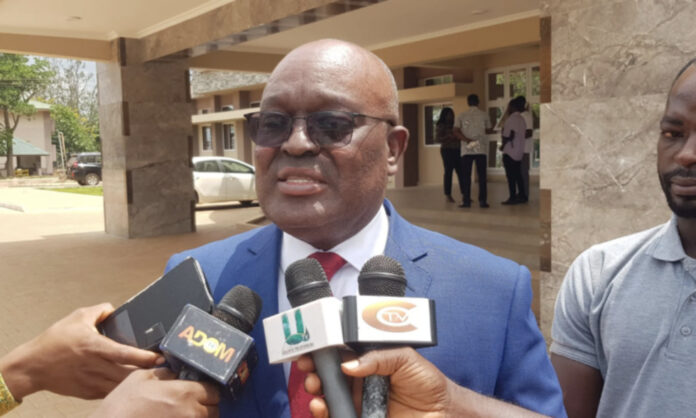
    The Acting Chief Executive Officer (CEO) of the Environmental Protection Agency (EPA), Prof. Nana Ama Klutse, has addressed concerns about political involvement in illegal mining, stating that the Agency has not received any reports on the matter.

    Speaking on Accra-based Channel One TV, she remarked, “So far, we have not received any complaints about politicians being involved in illegal mining.”

    Prof. Klutse also emphasized that if a politician is found engaging in illegal mining, the EPA would treat the case just like any other, applying the law accordingly.

    “If any politician is involved in illegal mining, and we get hold of the person, we will still apply the law as we would to any other Ghanaian,” she confirmed.

    As the country seeks solutions to the widespread environmental damage caused by illegal mining, Prof. Klutse reaffirmed the EPA’s commitment to its mission.

    “We will focus on our mandate to protect the environment and coordinate all activities that affect it. We need to protect the environment no matter who is involved, whether legally or illegally. So for us, we are focused on our mandate,” she stated.

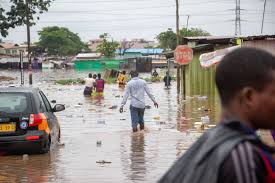
  • EPA issues alert on imminent flooding as rainy season nears

    EPA issues alert on imminent flooding as rainy season nears

    Environmental Protection Authority (EPA) has raised concerns about the risk of severe flooding in multiple regions as the rainy season approaches.

    Acting CEO Prof. Nana Ama Browne Klutse has called for an immediate stop to the encroachment of wetlands, emphasizing that such actions are crucial in mitigating the potential devastation caused by floods.

    Addressing the media following her inaugural lecture at the University of Ghana on Thursday, March 27, 2025, Prof. Klutse underscored the urgent need to halt construction on Ramsar sites to safeguard flood-prone areas.

    Her warning follows a heavy downpour and storm on Tuesday, March 26, which triggered flooding in parts of the Greater Accra Region. The storm also brought down trees and billboards, causing damage to vehicles.


    A case in point is the collapse of solar panels at the A&C mall’s car port which caused severe damages to customers cars.

    “We see flooding happening, and this year, we are going to have a lot of flooding happening. Two days ago or even yesterday [Wednesday, March 26], we had heavy rain for a short period, but heavy and stormy,” she said.

    “These are some of the extreme events we are going to be having this year, and we need to prepare our adaptation plan so that we can survive the impacts when they happen.

    “There are a few things we do that actually cause us the flooding. We have to stop building on waterways. So no matter how heavy it rains, water should find its way running into wetlands or areas that are supposed to store water,” Prof. Klutse added.

    Prof. Klutse, former Head of the Department of Physics at the University of Ghana, delivered the lecture titled “Physics, Policy, and Politics of Climate Change: The Foundation of Human Survival.”

    The event attracted several distinguished figures, including the Vice President of the Republic, H.E. Prof. Jane Naana Opoku-Agyemang.

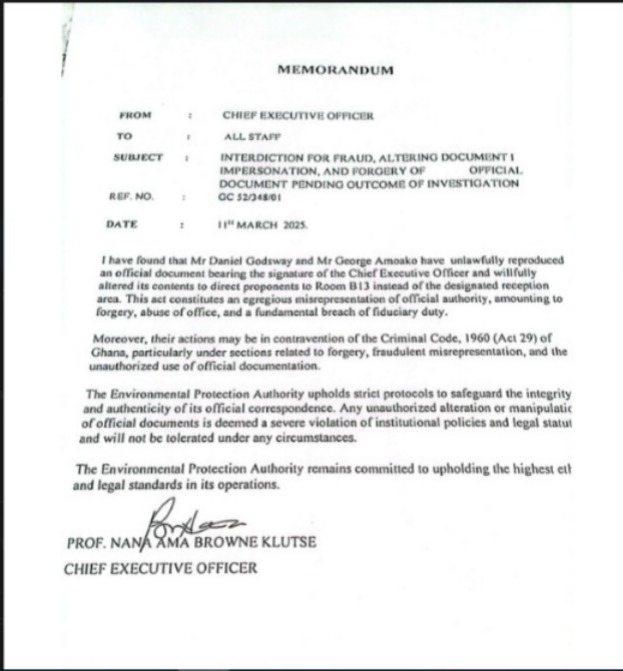
  • EPA interdicts two staff members for forging CEO’s signature

    EPA interdicts two staff members for forging CEO’s signature

    The Environmental Protection Authority (EPA) has taken disciplinary action against two officers, Daniel Godsway and George Amoako, following accusations of fraud, impersonation, document falsification, and forgery.

    An internal investigation uncovered that the officers had allegedly altered official documents and forged the signature of the Chief Executive Officer (CEO), Prof. Nana Ama Browne Klutse.

    In a memo signed by Prof. Klutse, the act was strongly condemned as a serious abuse of authority, a violation of fiduciary duty, and an outright case of forgery.

    The memo also highlighted that their actions could potentially breach provisions of Ghana’s Criminal Code 1960 (Act 29), particularly regarding fraudulent misrepresentation, forgery, and unauthorised use of official records.

    Consequently, the officers have been interdicted while a full investigation is conducted.

    The EPA has reaffirmed its dedication to upholding transparency and protecting the integrity of its official documents. It further warned that any tampering with official records is a grave offense that will not be tolerated under any circumstances.

  • Illegal sale of mining explosives ends now – Ashanti Minister

    Illegal sale of mining explosives ends now – Ashanti Minister

    The Ashanti Regional Minister, Dr. Frank Amoakohene, has instructed the Minerals Commission, Environmental Protection Agency (EPA), and other authorities to crack down on the unauthorized sale of mining explosives.

    This directive follows a devastating explosion at shops dealing in mining explosives in Odumase, near Konongo, which resulted in three fatalities and multiple injuries.

    Addressing the media, Dr. Amoakohene underscored the need to curb such illegal activities to avert similar tragedies in the future.

    “I have instructed the security agencies, the BNI, national security, the police, the CID, to conduct a thorough investigation, especially across the mining communities to find out if there are any other people who are selling these explosives right in in town.

    “The main company, the EPA, and all the assisted agencies are expected to issue license to people who operate or who sell these explosives.

    “So it is out of, I mean, lawlessness that someone would host such explosives and be selling in the household. It’s a sorry situation, but I can assure you that the security agencies would do all the investigation to make sure that we correct same and also, bring to books those who perpetrated this act.”

  • Dust levels are currently hazardous; protect yourself by wearing a mask – EPA cautions

    Dust levels are currently hazardous; protect yourself by wearing a mask – EPA cautions

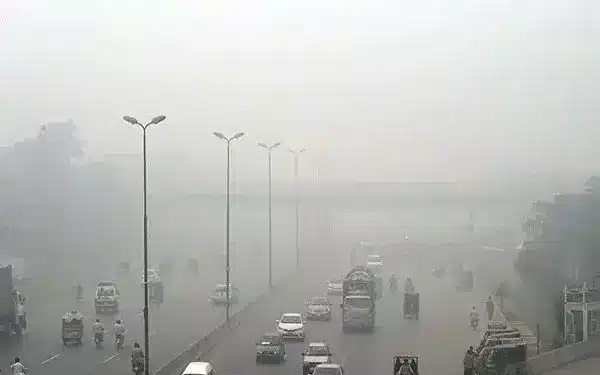
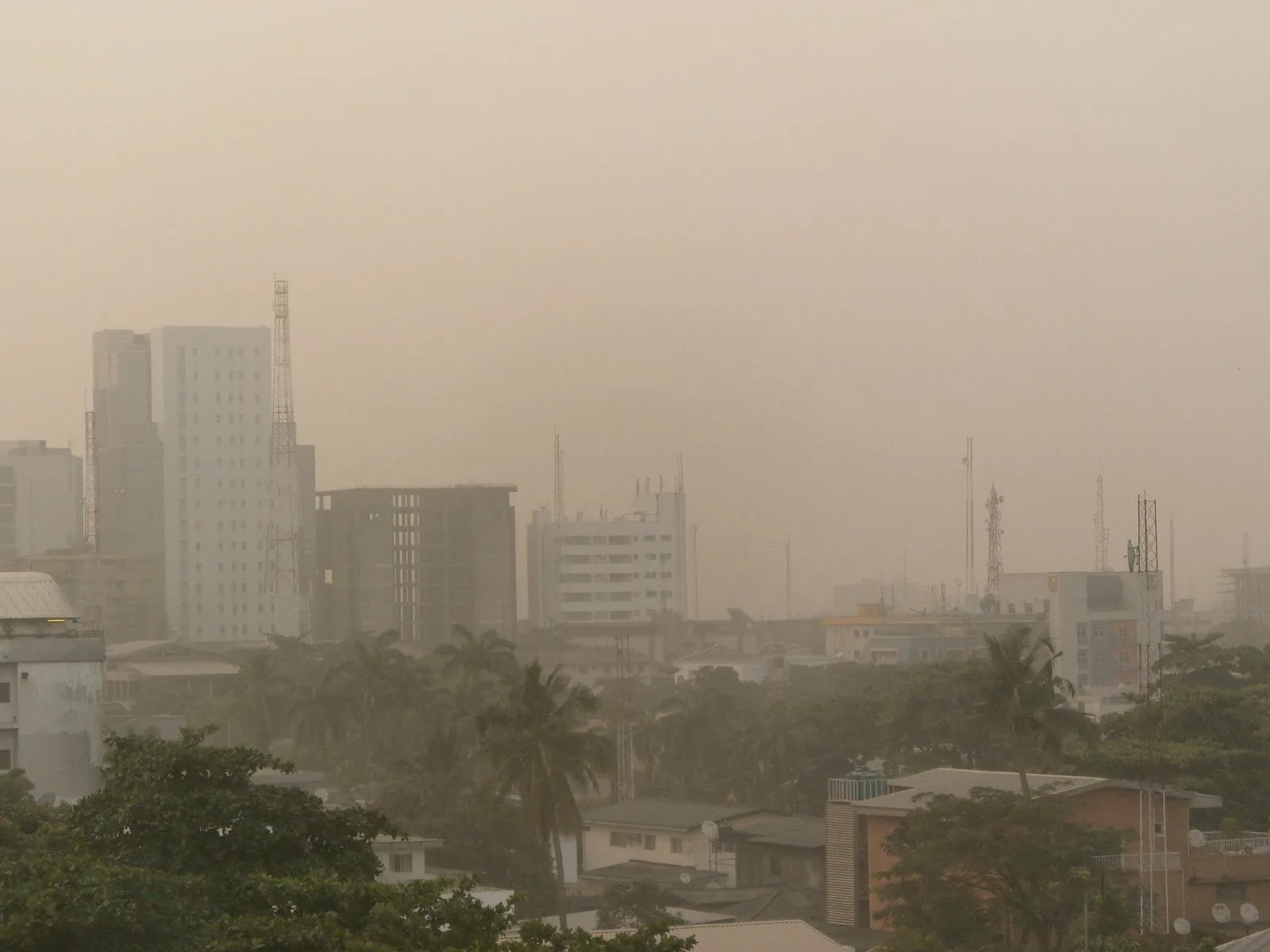
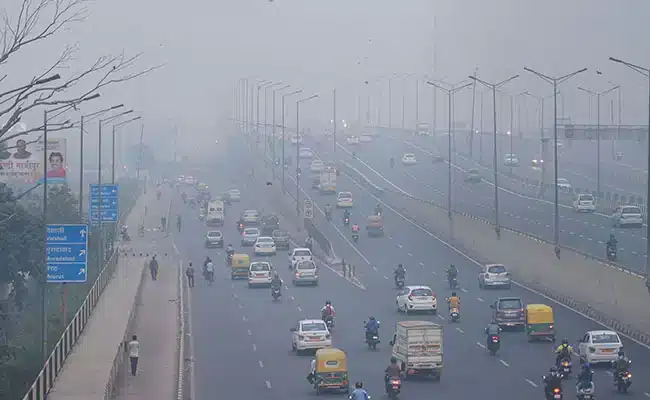
    The Environmental Protection Agency (EPA) has issued an advisory urging the public to take precautions against the current dusty conditions.

    The EPA has recommended that vulnerable groups, including children, pregnant women, the elderly, and individuals with heart or lung conditions, wear face masks to protect themselves from the harmful effects of Particulate Matter 2.5 (PM2.5).

    The Agency has also recommended that at-risk individuals limit their outdoor activities, as the elevated pollution levels could trigger allergies and worsen conditions like asthma.

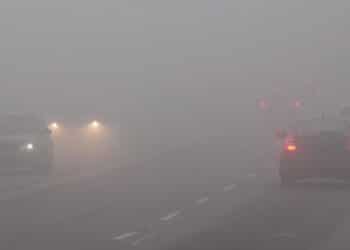
    The dust primarily consists of Particulate Matter (PM) 2.5 – tiny particles that can penetrate deep into the respiratory and cardiovascular systems, impairing organ function and posing serious health risks.

    These particles, which include dust, dirt, soot, and smoke, are present in the air both visible and invisible.

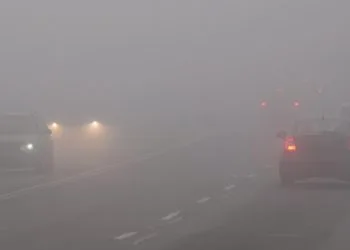
    An EPA source informed the Ghana News Agency (GNA) that air quality monitoring stations at the University of Ghana and Adabraka have recorded high dust levels due to the onset of harmattan. Since December 13, the Air Quality Index has ranged between “unhealthy for sensitive groups” and “very unhealthy.”

    The EPA’s findings align with the Ghana Meteorological Agency’s daily forecast, which predicts significant dust in the air from the Sahel region, reducing visibility. These conditions are expected to continue into late December.

    Early December 2024 data from the Breathe Accra Project’s monitoring stations also showed high pollution levels across the country.

    Dr. Allison Felix Hughes, Facility Manager of Afri-SET, a sensor evaluation center, confirmed the unhealthy air quality, urging the public to limit outdoor exposure to minimize health risks.

    “If by any way you have to be out then try to protect yourself by either wearing a face mask or limiting the number of hours outdoors to reduce exposure. This is a natural phenomenon. We have no control over it,” he said.

    “It is during this period that you see the hospital admissions growing with cases of asthma, bronchitis, and other respiratory diseases.”

    He recommended that the public wear pollution masks when necessary and avoid burning waste or materials openly to protect their health.

    People are also encouraged to dampen dusty surfaces with water before sweeping to help reduce dust in the air. Drivers should slow down on unpaved roads to minimize dust pollution.

    “Vehicles and other fuel-burning installations/machines, including generator sets should be serviced regularly to optimise their functioning, idling of their engines should be avoided,” he urged.

  • EPA directed to lay L.I. in Parliament to ban mining in forest reserves

    EPA directed to lay L.I. in Parliament to ban mining in forest reserves

    The Attorney General (AG) has directed the Environmental Protection Agency (EPA) to submit Legislative Instrument (L.I.) 2462, which permits mining in forest reserves, to Parliament for revocation.

    This directive follows demands from organised labour, which urged the government to repeal the law as part of efforts to mitigate the environmental damage caused by illegal mining, commonly referred to as galamsey.

    In response, the government affirmed its commitment to addressing concerns raised by stakeholders regarding the detrimental impact of mining activities in ecologically sensitive areas like forest reserves.

    Consequently, the government specifically agreed to repeal L.I. 2462, which regulates mining operations in these critical zones.

    The move to revoke the Legislative Instrument represents a key step in the government’s broader initiative to combat the environmental degradation associated with galamsey.

    Mining in forest reserves has caused severe destruction to ecosystems, polluted water bodies, and inflicted long-term harm on natural resources.

    The AG’s directive to the EPA, communicated on Thursday, October 10, reinforces the government’s commitment to prioritize environmental protection amidst growing public pressure.

    The revocation of the L.I. is viewed as a response to both the concerns raised by labour groups and the broader public outcry against galamsey activities.

    Once the EPA submits the Instrument to Parliament, the legislative body will have the final say in repealing the law, effectively banning all mining activities in forest reserves and aligning with the government’s broader goals for environmental conservation.

  • EPA calls for collaboration to combat air pollution in Greater Accra

    EPA calls for collaboration to combat air pollution in Greater Accra

    The Environmental Protection Agency (EPA) has called for a collaborative effort to curb rising air pollution and protect public health in the Greater Accra Region.

    According to the Director of the Environmental Quality Unit at the EPA, Ms. Selina Amoah, air pollution continues to contribute to health challenges in the country, making urgent intervention necessary.

    “Collaboration is essential to manage air quality effectively and achieve the desired outcomes,” she said at a workshop organized for some Metropolitan, Municipal, and District Assemblies (MMDAs) in Accra on September 25, 2024.

    Ms. Amoah pointed out that pollution sources are diverse and come from different sectors, but emphasized that measures must be implemented to manage and improve air quality.

    The workshop, featuring Ms. Amoah, was organized by PSS Urbania Consult Limited, an environmental and research firm engaged by the Clean Air Fund (CAF) in Ghana, under the Breathe Accra initiative. This initiative aims to support 15 MMDAs in Accra to develop Air Quality Action Plans (AQAPs).

    The Breathe Accra initiative is a project designed to equip communities in the Greater Accra Region with the tools to tackle air pollution and reduce climate emissions.

    According to Ms. Amoah, air quality management efforts would help the MMDAs raise awareness, deepen knowledge, and improve understanding of air quality issues among decision-makers, stakeholders, and the public in Accra.

    She also warned the public against practices such as open burning, labeling it illegal and a contributing factor to the worsening air pollution problem.

    “Many people, in one way or another, contribute to this menace. We all need to be responsible enough to make sure we are contributing to solutions to curb this issue, rather than making the situation more unbearable,” she added.

    Another representative of PSS Urbania Consult Limited, Dr. Fred Out-Larbi, highlighted that Ghana faces significant air quality challenges, exceeding the World Health Organization’s (WHO) interim targets.

    The WHO Air Quality Guidelines provide recommended levels and interim targets for common air pollutants such as particulate matter (PM), ozone (O3), nitrogen dioxide (NO2), and sulfur dioxide (SO2), which are crucial for Ghana as the country grapples with rising pollution levels, particularly in urban areas like Accra.

    The Clean Air Fund’s mission is to support the government’s objective to improve air quality in Ghana and meet WHO guidelines by 2040.

    Touching on the main goals of the Greater Accra Air Quality Management Plan, Dr. Out-Larbi mentioned that it aims to ensure collaborative governance to promote the effective implementation of the plans, which include conducting a preliminary scan of generic air pollution hotspots in the respective assemblies.

  • EPA reports high levels of mercury contamination in fish, water bodies

    EPA reports high levels of mercury contamination in fish, water bodies

    Research conducted by the Environmental Protection Agency (EPA) indicates that a significant number of fish and water bodies in the country have been contaminated with mercury due to its use in gold refining by illegal miners.

    Dr. Jackson Adiyiah Nyantakyi, the Ashanti Regional Director of the EPA and a researcher, stated, “Mercury has infiltrated a considerable number of fish in our water bodies,” emphasizing that this poses a serious public health risk.

    He urged everyone to support the government in curbing illegal mining practices before the situation escalates.

    In addition to its environmental implications, Dr. Nyantakyi highlighted in an interview with the Ghana News Agency (GNA) in Sunyani that mercury remains a poisonous chemical harmful to human health and well-being.

    He pointed out that abnormal skin rashes, body discoloration, rough skin, and other physical defects in infants could be linked to the effects of mercury absorption in the body.

    Dr. Nyantakyi warned that research has indicated widespread mercury contamination in many water bodies, leading to the poisoning of numerous fish, and expressed concerns that the situation could deteriorate further if illegal mining activities (galamsey) are not effectively controlled in the country.

    “My fears are that many Ghanaians eat lot of kenkey and fishes and who might tell if the fish you are eating is contaminated and so it is imperative for everybody to contribute his or her quota towards fighting illegal mining in the country”, he explained.

    In Ghana, Dr. Nyantakyi explained that gold refiners primarily use either Cyanidation (cyanide) or Amalgamation (mercury). Since the use of cyanide is illegal, illegal miners predominantly use large quantities of mercury for gold refining purposes.

    He said because their activities were illegal, the miners “use mercury anyhow and thereby pollute our environment and water bodies which is a serious public health concern that threatens human existence.”

    He emphasized that combating illegal mining was not solely the government’s responsibility, urging everyone, particularly those in mining communities—assembly members, traditional authorities, youth groups, and associations—to stay vigilant and assist in combating the problem.

    Dr. Nyantakyi explained that mercury, being a toxic chemical, can enter the human bloodstream through skin absorption, inhalation into the lungs and digestive system, and uptake by fish and microorganisms.

    He noted that sources of mercury emissions include volcanic activity, rock weathering, movement of water bodies, forest fires, biological processes, and deliberate use of the chemical.

    “Mercury easily infiltrates water bodies, the sediment and fishes and that is why we must all contribute to the national fight against illegal mining”, Dr Nyantakyi stated.

  • EPA advises Ghanaians against excessive tiling of their houses to check flooding

    EPA advises Ghanaians against excessive tiling of their houses to check flooding

    Environmental Protection Agency (EPA) has issued a warning to Ghanaians, urging them to limit the use of tiles and cement in their compounds to prevent flooding. 

    The agency points out that the common practice of tiling or cementing outdoor spaces is a key contributor to flash floods and lower groundwater levels, as it hinders the natural absorption of rainwater.

    At a climate change adaptation event, Mr. Kwadwo Opoku Mensah, speaking with the media, stressed the importance of a balanced approach to home landscaping. 

    He recommended combining permeable materials like green grass and paving with harder surfaces to promote rainwater absorption, which would help replenish groundwater reserves and mitigate flooding.

    Despite existing regulations by the Land Use and Spatial Planning Authority to curb excessive tiling and cementing, compliance remains low among property owners.

  • Environmental degradation costs Ghana US$54bn annually – EPA

    Environmental degradation costs Ghana US$54bn annually – EPA

    Executive Director of the Environmental Protection Agency, Dr. Kingsley Krugu, has revealed that an economic evaluation of environmental degradation in Ghana amounts to US$54 billion annually.

    The degradation activities encompass illegal mining, pollution of water bodies with chemicals such as mercury, degradation of coastal habitats, and climate change-induced phenomena like erosion and displacement of coastal communities.

    Speaking at a ceremony marking this year’s World Biodiversity Day (WBD) in Accra, Dr. Krugu suggested that the assessed value might even be higher.

    World Biodiversity Day (WBD) is designated by the United Nations to enhance awareness and understanding of biological diversity.

    The theme for this year, “Be Part of the Plan,” serves as a reminder of human responsibility toward the environment, as enshrined in Article 41 (k) of the 1992 Constitution of the Republic of Ghana.

    It urges action from all stakeholders and the public to halt and reverse the loss of biodiversity by supporting the implementation of the Kunming-Montreal Global Biodiversity Framework (KMGBF).

    Dr. Kurugu highlighted that in the 20th Century, Ghana could boast approximately 145,000 square kilometers of closed forest reserves, but presently, it has less than 15,000 square kilometers remaining.

    “We have lost and still losing this important biodiversity due to uncontrolled anthropogenic activities coupled with over exploitation of resources for economic gains without recourse to the regeneration capacity of the forest,” he said, and urged the public to contribute to protection of nature.

    He observed that despite numerous ongoing programs and initiatives in the country aimed at ensuring the sustainable management of biodiversity for national development, the anticipated outcomes have not yet been achieved.

    Ophelia Mensah Hayford, the Minister of Environment, Science, Technology, and Innovation, emphasized that the natural heritage supports unique species of plants and animals, many of which are exclusive to Ghana.

    “As custodians of this invaluable biodiversity, we are responsible for ensuring its protection, conservation, and sustainable utilisation for the benefit of present and future generations,” she said.

    She stated that the Ministry was dedicated to creating plans that combine the preservation of biodiversity with sustainable use in all areas, such as urban planning, forestry, agriculture, and fisheries.

    “We will continue to sstrengthen capacity-building initiatives, environmental education, and public awareness campaigns to empower individuals, communities, and stakeholders to actively participate in biodiversity conservation efforts at all levels to foster a culture of environmental stewardship,” she stated.

    MESTI, she added, would collaborate with government agencies, civil society organisations, academia, private sector entities, and development partners to mobilise resources, share knowledge, and implement coordinated actions for biodiversity conservation.

  • Oppong Nkrumah to hand EPA bungalow to Henry Quartey; organisation staff reacts with strike

    Oppong Nkrumah to hand EPA bungalow to Henry Quartey; organisation staff reacts with strike

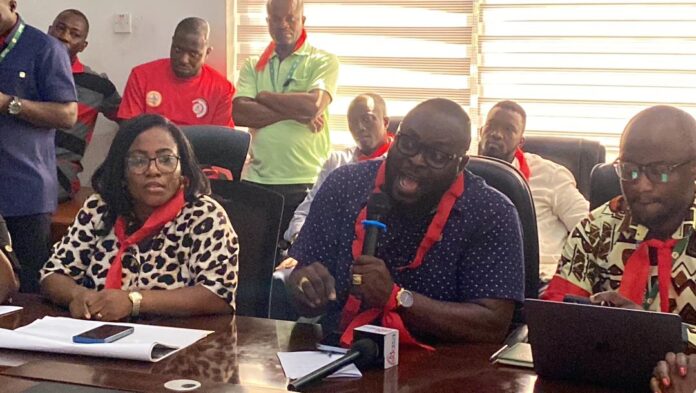
    The leadership of the Public Services Workers Union of the Environmental Protection Agency (EPA) has announced an indefinite strike starting Friday, May 3, 2024.

    This action comes as a protest against what they perceive as an attempt to evict the executive director of the EPA, Dr. Kingsly Krugu, from his official residence by the new Interior Minister, Henry Quartey.

    Chairman of the union, Godsway Daniels, addressed union members and directed all staff to cease work on Friday.

    Daniels stated that the workers will march to the Ministry of Environment, Science, and Innovation to deliver a petition. They plan to subsequently occupy the disputed bungalow to prevent the interior ministry from ejecting their boss.

    He cautioned the Minister of Works and Housing, Kojo Oppong Nkrumah, to refrain from involvement with the bungalow, as the EPA lacks the financial means to renovate a new residence for their director.

    Daniels also raised questions about the status of the bungalow traditionally occupied by interior ministers, querying whether it has been sold and to whom.

  • Our cocoa beans will soon be cited for contamination due to illegal mining – Former EPA boss

    Our cocoa beans will soon be cited for contamination due to illegal mining – Former EPA boss


    Former Chief Executive Officer of the Environmental Protection Agency (EPA), Henry Kokofu, expressed concern over the detrimental effects of illegal mining, commonly referred to as ‘galamsey,’ on cocoa production in the nation.

    He highlighted that aside from encroaching on the lands of local farmers, the illicit activities of illegal miners are also contaminating the vital commodity – cocoa.

    Kokofu warned that Ghana’s cocoa could potentially face a ban from the global market due to the contamination of cocoa beans.

    During a public lecture at Kumasi Technical University, Mr. Kokofu conveyed these sentiments.

    “It is important to note that the cocoa industry which has been the backbone of our economy is in dire straits because of illegal mining. Apart from depriving the farmlands and making it unavailable for farming, cocoa is being contaminated and very soon, the world market will come after us and cite contamination in our cocoa beans and that will be a very bad story for us as a people.”

    Consequently, he urged the government to promptly investigate and resolve this issue.

    Meanwhile, the price of cocoa beans has been increased from GH¢20,928 per tonne to GH¢33,120.00 for the remainder of the 2023/2024 cocoa season.

    According to COCOBOD, this adjustment aims to boost the income of cocoa farmers and deter the smuggling of cocoa beans to neighboring countries.

  • Bright Simons slams EPA for holding pageant-like lithium mining consultation

    Bright Simons slams EPA for holding pageant-like lithium mining consultation

    Bright Simons, the Vice President of IMANI Africa, has criticized Ghana’s Environmental Protection Agency (EPA) for organizing a consultation that resembled a pageant for the country’s prospective lithium mine.

    Mr Simons shared images showing chiefs in traditional regalia exchanging pleasantries with staff of Atlantic Lithium company at the event.

    He expressed disappointment in the consultation process, stating that it lacked in-depth discussions on critical issues such as water tables, tailings, and leaching. He also noted the absence of probing questions from local journalists.

    Simons questioned the EPA’s decision to organize the consultation as a colorful event, likening it to a jamboree. He argued that such an approach does not encourage informed participation in designing mitigation measures for the impact of mining on the environment and social life.

    “Ghana’s EPA is organising what is meant to be a community consultation on Ghana’s prospective lithium mine. But it seems more like a colourful pageant with long, droning, speeches. No hard questions about watertables, tailings, leaching etc. And no pestering local journalists.

    “But why must a consultative process to engage a community about an impending mining activity & its likely impact on the environment & social life be organised as a durbar? Like a jamboree? Is that how to secure informed participation in designing mitigation measures?” he wrote in a post on X.

  • Limit outdoor activities; harmattan has intensified – EPA to public

    Limit outdoor activities; harmattan has intensified – EPA to public

    The Environmental Protection Agency (EPA) has issued a public advisory urging caution amidst the ongoing harmattan season.

    In light of increased dust levels observed at the University of Ghana’s monitoring station, the EPA advises limiting outdoor activities to the barest minimum.

    Especially vulnerable groups, such as the elderly, children, pregnant women, individuals with asthma or allergies, and those with underlying health conditions, are strongly encouraged to minimize outdoor exposure where possible.

    Additionally, the EPA recommends taking precautionary measures, including the use of pollution masks when necessary, refraining from open burning, and sprinkling water on dusty surfaces before sweeping to reduce dust emissions.

    “Monitoring results from January 26 to date indicates an Air Quality Index (AQI) between unhealthy (Red) and very unhealthy (purple). This corroborates the Ghana Meteorological Agency’s Harmattan Advisory Update III 2023/2024 which indicates that the harmattan season has intensified,” the statement said. 

    Furthermore, all vehicle users are urged to reduce speeding on untarred roads to mitigate dust emissions and ensure public safety. The EPA emphasizes the importance of collective efforts in safeguarding health and well-being during the harmattan period.

  • Govt’s efforts in fighting galamsey not getting the needed results – EPA

    Govt’s efforts in fighting galamsey not getting the needed results – EPA

    Chief Executive Officer of the Environmental Protection Agency (EPA), Henry Kwabena Kokofu, has acknowledged that the military-led approach by government to combating illegal mining has not been entirely successful.

    Mr Henry Kwabena Kokofu made this information known in response to the National House of Chiefs’ call for comprehensive measures against illegal mining.

    He expressed the view that collaborating with traditional authorities would be a pivotal game-changer in the fight against illegal mining.

    “We do know that governments upon governments have taken steps over the years to initiate several policies and programs in an attempt to curb illegal mining including the use of the military and other security agencies, but it seems not to be getting results, so this encounter is to solicit the wisdom of nananom to help us deliver on what we are targeting in the fight against illegal mining.”

    The National House of Chiefs has restated its call for the government to implement comprehensive measures to effectively combat the problem of illegal mining in the country.

    Emphasizing the importance of a collective effort, the House underscored the need for all stakeholders to be actively involved in the fight against illegal mining, urging that it should be free from political considerations.

    During a meeting in Kumasi, officials from the Environmental Protection Agency (EPA) were invited to engage in discussions aimed at finding lasting solutions to the issue.

    President of the National House of Chiefs, Ogyeahoho Yaw Gyebi II, used the occasion to highlight the significant role that chiefs can play in addressing the challenge of illegal mining in Ghana.

    “This meeting is long overdue, but it is better now than later because I strongly believe that if Nananom are included and empowered in the fight against galamsey, we can be assured of more effective results. Illegal mining has resulted in environmental degradation, including deforestation, pollution of water bodies and rivers, and soil erosion. Illegal miners also use toxic chemicals and heavy metals including cyanide, mercury, sulphuric acid, and lead, which have negative effects on individuals and must therefore be stopped,” he said.

  • Harmattan: EPA urges public to limit outdoor activities

    Harmattan: EPA urges public to limit outdoor activities


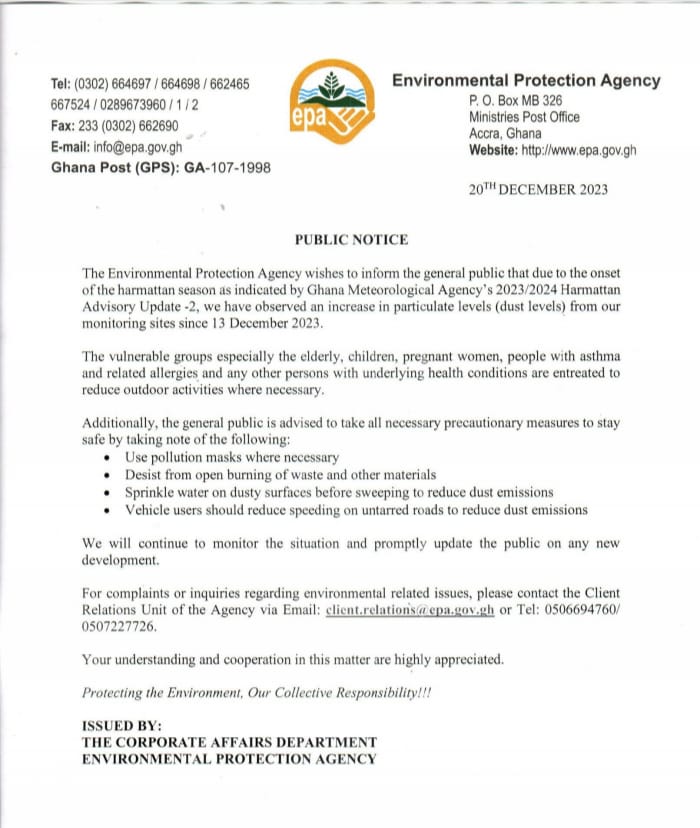
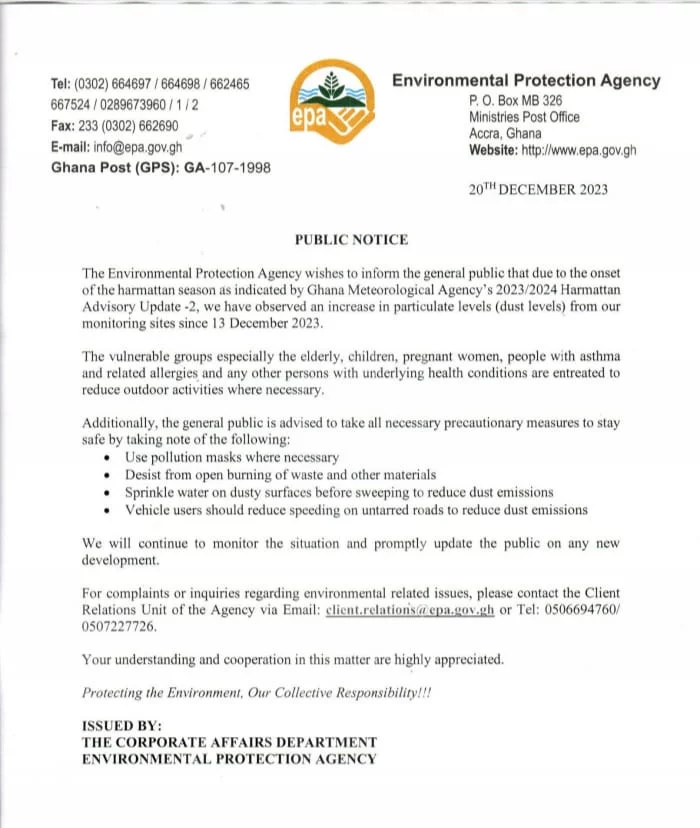
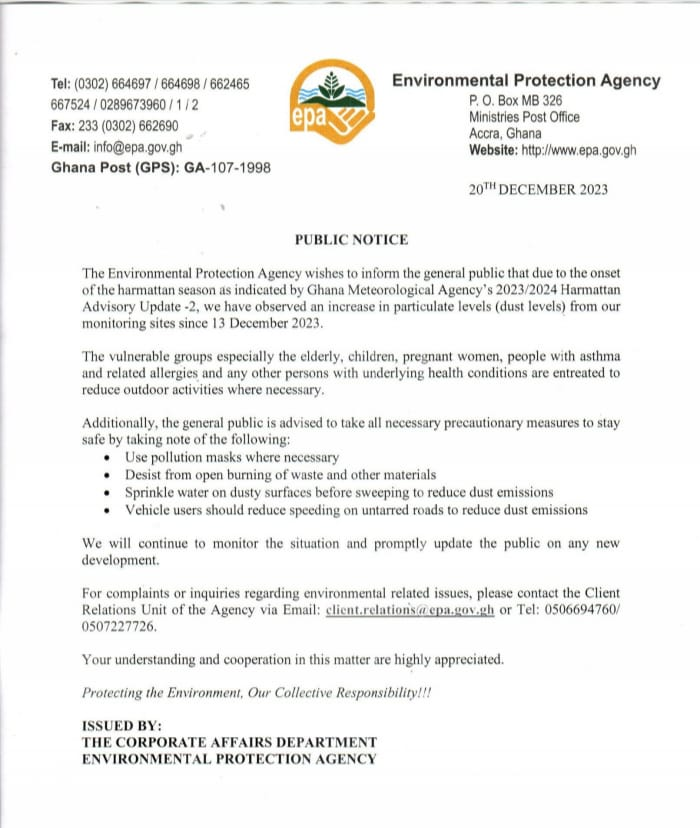
    The Environmental Protection Agency (EPA) has issued a warning in response to an escalation in particulate levels (dust levels) observed at monitoring sites since December 13, 2023.

    The statement, released on Wednesday, emphasizes the need for specific groups, including the elderly, children, pregnant women, individuals with asthma, and those with underlying health conditions, to curtail outdoor activities as deemed necessary.

    To ensure public safety, the advisory recommends several precautionary measures, such as using pollution masks when required, refraining from open burning of waste and materials, applying water on dusty surfaces before sweeping to minimize dust emissions, and urging vehicle users to reduce speeding on untarred roads to mitigate dust emissions.

    The EPA is committed to ongoing monitoring of the situation and pledges to promptly update the public on any new developments.

    Individuals with complaints or inquiries related to environmental matters are encouraged to contact the Client Relations Unit of the Agency through email at client.relationsw.epa.gov.gh or by phone at 0506694760/0507227726.

    This advisory reflects the EPA’s proactive stance in addressing environmental concerns and underscores its dedication to preserving public health and sustaining a healthy environment through timely communications and recommended community measures.

    “Additionally, the general public is advised to take all necessary precautionary measures to stay safe by taking note of the following: Use pollution masks where necessary; Desist from open burning of waste and other materials; Sprinkle water on dusty surfaces before sweeping to reduce dust emissions; Vehicle users should reduce speeding on untarred roads to reduce dust emissions.”

    “For complaints or inquiries regarding environmental related issues, please contact the Client Relations Unit of the Agency via Email: client.relationsw.epa.gov.gh or Tel: 0506694760/ 0507227726,” it added.

  • Harmattan: Dust levels on the rise due to increased outdoor activities – EPA

    Harmattan: Dust levels on the rise due to increased outdoor activities – EPA

    The Environmental Protection Agency (EPA) says it has observed an increase in particulate levels (dust levels) at its monitoring sites since December 13, 2023.

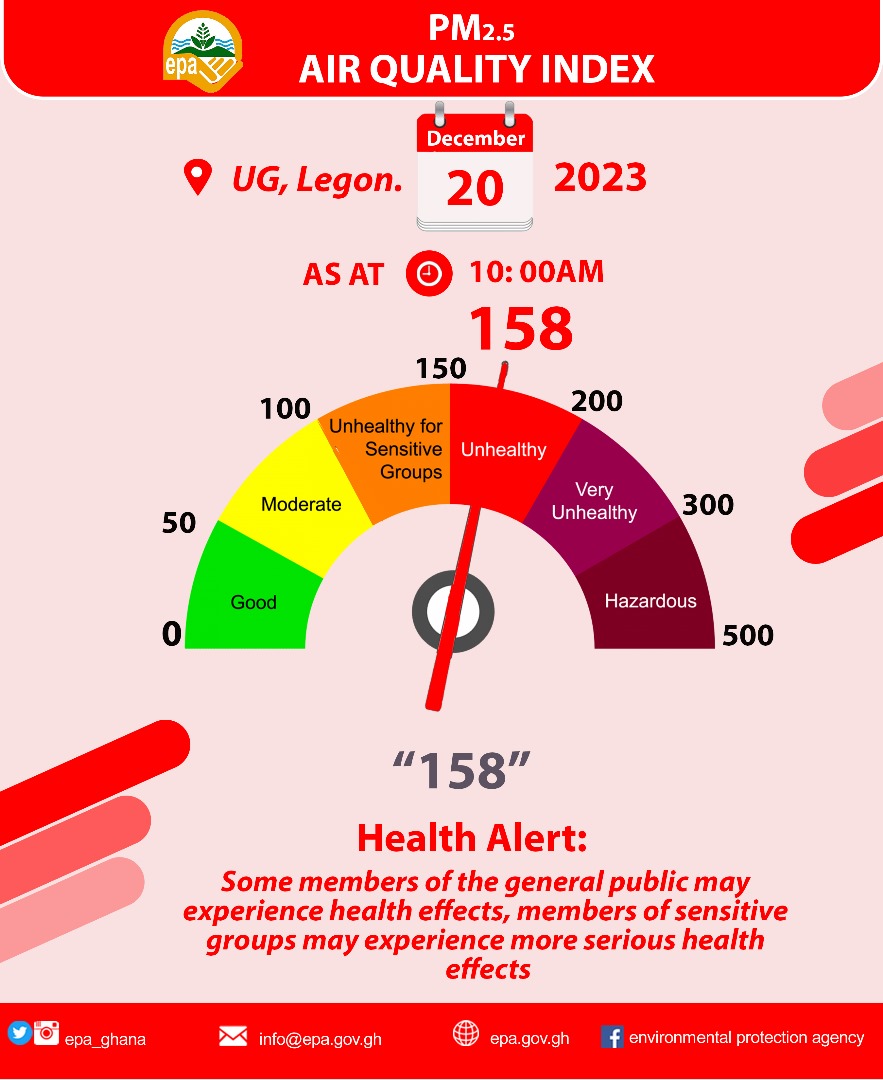
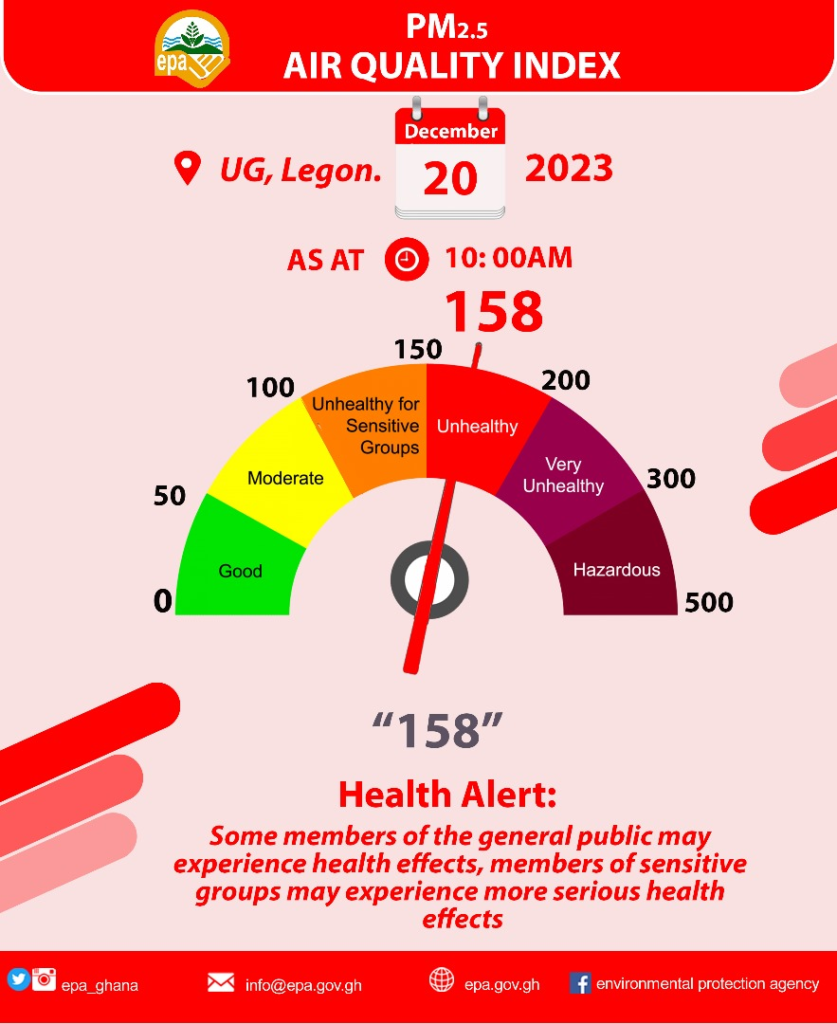
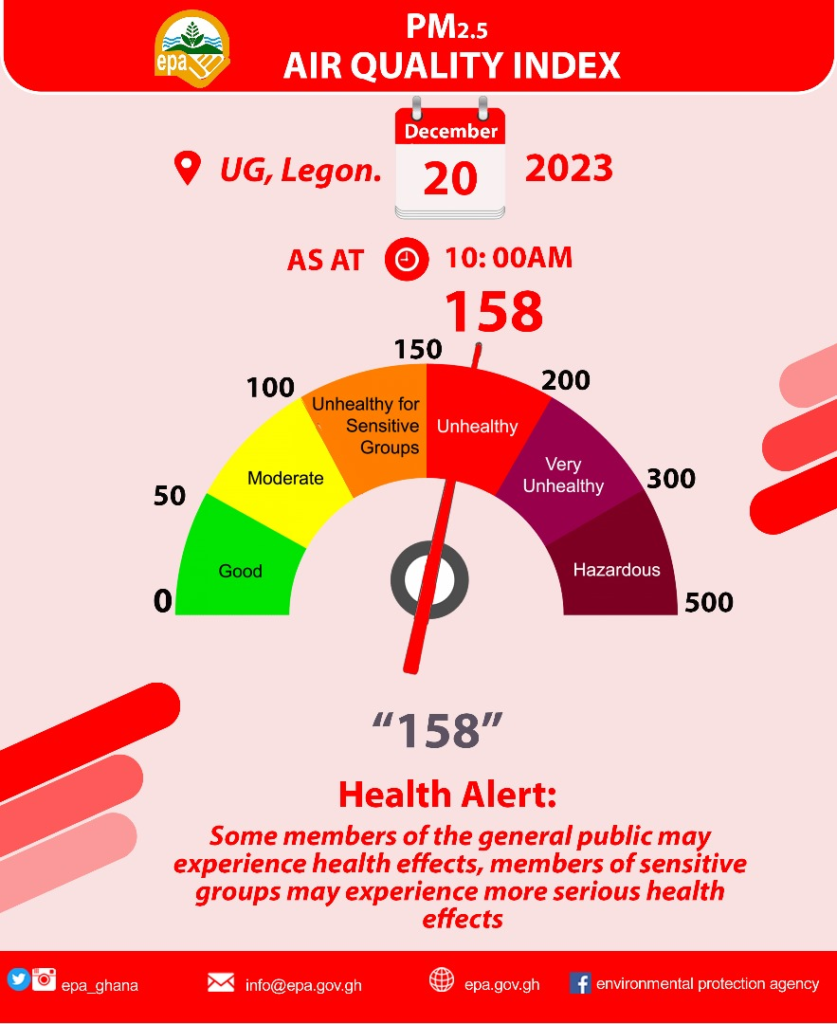
    As of December 20, EPA’s Air Quality Index had hit 158, which signified “unhealthy” on the agency’s chart.

    The EPA has therefore issued a caution to the public, advising a reduction in outdoor activities where necessary and the adoption of all precautionary measures to stay safe.

    In a statement issued on Wednesday, December 20, said, “the vulnerable groups especially the elderly, children, pregnant women, people with asthma and related allergies and any other persons with underlying health conditions, are entreated to reduce outdoor activities where necessary.”

    Additionally, the general public has been advised to take all necessary precautionary measures to stay safe.

    This includes using pollution masks where necessary, desisting from open burning of waste and other materials, and sprinkling water on dusty surfaces before sweeping to reduce dust emissions.

    Also, motorists have been entreated to reduce speeding on untarred roads to reduce dust emissions.

    The EPA has stated that it will continue to monitor the situation and provide prompt updates to the public on any new developments.

  • Reduce outdoor activities, stop speeding on untarred roads this Harmattan – EPA warns

    Reduce outdoor activities, stop speeding on untarred roads this Harmattan – EPA warns

    The Environmental Protection Agency (EPA) has issued a caution to the public, advising a reduction in outdoor activities where necessary and the adoption of all precautionary measures to stay safe.

    This advisory comes in response to the observed increase in particulate levels (dust levels) at EPA monitoring sites since December 13, 2023, according to a statement issued on Wednesday.

    As of December 20, EPA’s Air Quality Index had hit 158, which signified “unhealthy” on the agency’s chart.

    “The vulnerable groups especially the elderly, children, pregnant women, people with asthma and related allergies and any other persons with underlying health conditions are entreated to reduce outdoor activities where necessary,” a part of the statement from the EPA advised.

    Additionally, the general public has been advised to take all necessary precautionary measures to stay safe.

    This includes using pollution masks where necessary, desisting from open burning of waste and other materials, and sprinkling water on dusty surfaces before sweeping to reduce dust emissions.

    Also, motorists have been entreated to reduce speeding on untarred roads to reduce dust emissions.

    The EPA has stated that it will continue to monitor the situation and provide prompt updates to the public on any new developments.

  • Govt did not fund all 618 COP28 delegates – EPA

    Govt did not fund all 618 COP28 delegates – EPA

    Ghana’s Deputy Head of Party of COP 28 and Executive Director of Environmental Protection Agency (EPA), Dr. Henry Kwabena Kokofu, has clarified that the government did not fund all 618 delegates currently attending the United Nations Framework Convention on Climate Change (COP 28) in Dubai, United Arab Emirates (UAE).

    He explained that those funded by the government include representatives of the country, such as government officials and negotiators.

    Dr. Kokofu, who also serves as the Special Envoy of CVF and Executive Director of EPA, expressed enthusiasm about the high number of delegates, noting that it provides an opportunity for more people to learn about climate change.

    “The government does not have any hand in the number of delegates who came for the conference. We explained this even before we left Ghana. We made sure to make announcements and people who showed interest registered for the conference,” he said in an audio interview.

    Data from the United Nations Framework Convention on Climate Change (COP 28) reveals that Ghana has registered 618 delegates for the 28th Conference of Parties.

    This number represents a significant increase, with almost a 100% rise compared to the number of delegates sent in 2022 and 2021.

    At COP 27 in Egypt, Ghana had a delegation of 350, and at COP 26, there were 337 delegates comprising state and non-state actors. It has been observed that some delegates were funded by development partners.

    The list includes 95 individuals on the official “parties” list and 523 on the “party overflow” list. The high number of delegates has sparked discussions on social media, with some expressing surprise given the country’s current financial situation.

  • Ghana targets 64m tonnes emission reduction by 2030 – EPA

    Ghana targets 64m tonnes emission reduction by 2030 – EPA

    Ghana is actively addressing the global climate crisis through the implementation of 34 mitigation actions across key sectors such as energy, transport, forestry, waste, and industry.

    According to Madam Audrey Quarcoo, the Director of Corporate Affairs at the Environmental Protection Agency (EPA), these actions are projected to result in a significant reduction of 64 million tonnes in emissions by the year 2030.

    Currently emitting approximately 60 million tonnes (1.9 per capita), Ghana surpasses the global average of 4.6 per capita. Without intervention, the country could face a projection of 100 million tonnes by 2030 under the “do nothing scenario.”

    Madam Quarcoo shared these insights at the National Pre-COP meeting for Ghana, a crucial event leading up to COP 28 in Dubai.

    The meeting brought together experts, policymakers, negotiators, and representatives to contribute their insights and shape Ghana’s stance on the global stage.

    “Additionally, the country aspires to create over one million green jobs by 2030 and prevent 2,900 premature deaths through improved air quality,” she added. 

    The commitment to addressing climate change has been evident in various initiatives, such as the development of the Article 6 framework on the carbon market, the ongoing National Adaptation Planning Readiness Project, and the Sustainable Cocoa-Forest Programme.

    However, the recent report from the Intergovernmental Panel on Climate Change (IPCC) emphasizes the inadequacy of current global mitigation pledges.

    “These pledges projected a 45 per cent reduction necessary to limit the rise in Earth’s temperature to below1.5 degree goal”.  

    Madam Quarcoo highlighted that despite Africa contributing only 3.6% to global emissions, the continent remains susceptible to severe impacts of climate change.

    Mr Kwaku Afriyie, Minister of Environment, Science, Technology, and Innovation, noted in his address that several crucial measures were implemented before the PRECOP meeting.

    These measures included the establishment of a Central Planning Committee chaired by MESTI to plan and coordinate Ghana’s preparations for COP, participation during COP, and reporting after COP.

    Additionally, two high-level Inter-Ministerial meetings on COP28 among Sector Ministers were conducted to deliberate and offer guidance to the planning Committee.

  • EPA boss assures of no mining activity to take place in Kakum National Park

    EPA boss assures of no mining activity to take place in Kakum National Park

    Executive Director for Environmental Protection Agency’s (EPA), Dr. Henry Kwabena Kokofu, has denied reports of potential mining activity in the nation’s protected areas, including Kakum National Park.

    During an interview on UTV on November 13, 2023, Dr. Kokofu shared his apprehensions, saying, “I have directed my Chief Executive Director, responsible for the operation, to visit the Minerals Commission and our office in the Central Region and furnish me with feedback.”

    “The Minerals Commission didn’t even agree to that, and for us at the Environmental Protection Agency, we won’t sit aloof. If we don’t take care, people can illegally go and mine there without any license. We are calling for security coordination and beefing up security in all the national parks, including Kakum,” he said.

    Recent reports have indicated that High Street Ghana Limited, a mining company, is in the process of seeking leasing rights for portions of Kakum National Park to conduct mining activities. This has sparked criticism from various civil society organizations (CSOs) in Ghana, who assert that such a move is unacceptable.

    High Street Ghana Limited’s application for a mining license within Kakum National Park is currently undergoing validation by the Minerals Commission. Information gleaned from a stakeholder engagement on November 9, focusing on the new Regulation on Mining in Ghana’s Forest Reserves (LI 2462), revealed that the company’s proposal encompasses around 24% of the park.

    Mustapha Seidu, the Director of the Nature and Development Foundation, sounded the alarm during the engagement, cautioning that the failure to reconsider and potentially revoke the legislative instrument (LI 2462) could result in extensive destruction of the country’s forests.

    “As we speak, there are 14 more applications under different stages of consideration by the Minerals Commission, including an application by High Street Ghana Limited to mine in the Kakum National Park,” Seidu stated.

    “If, in less than one year of coming into force of LI 2462, we are seeing this massive legal destruction of our forest, we can imagine what will happen in the next five years or decade.”

    In a press release on Sunday, November 12, 2023, the Minerals Commission revealed that it had rejected an application for mining in Kakum National Park submitted by High Street Ghana Limited. Emphasizing the significance of the park, the commission made it clear that it will not authorize any mining activities within the forest.

    The report further detailed that the Minerals Commission has removed the company’s application from its online mining cadaster. The commission responded to social media posts highlighting objections from Civil Society Organizations (CSOs) against the mining firm’s attempt to operate in Kakum National Park in the Central Region.

    Addressing these concerns, the Minerals Commission affirmed that the application by High Street Ghana Limited had been officially rejected, and as a result, it would not be processed or considered.

    The commission assured the public that no mineral rights, whether for prospecting or mining, would be granted in Kakum National Park.

  • Monitoring and enforcement from now on will be tighter – EPA after Anto-Aboso explosion

    Monitoring and enforcement from now on will be tighter – EPA after Anto-Aboso explosion

    The Executive Director of the Environmental Protection Agency (EPA), Dr. Henry Kokofu, has emphasized that there will be a significant strengthening of monitoring and enforcement measures moving forward.

    This is in response to the tragic explosion at a quarry site in Anto-Aboso, Western Region, which claimed the lives of five individuals and caused multiple injuries on September 10, 2023.

    Currently, the Environmental Protection Agency (EPA) has established a three-member committee whose primary task is to assess and revamp the agency’s monitoring and enforcement strategy.

    Additionally, it has come to light that the quarry in question was operating without the necessary authorization, as confirmed by the Minerals Commission.

    The Commission’s mine inspectors had observed that the company was conducting nighttime operations, seemingly to evade detection by Commission inspectors and the local task force, which included police and members of the Sand Winners and Quarry Association.

    Following the tragic quarry explosion in Kobina-Andokrom, which claimed the lives of five individuals on Saturday night, the Western Regional Security Council (WSRC) established a 9-member committee on September 11 to investigate the incident’s cause.

  • Shama District Assembly lacks an EPA officer – Parliament’s Committee on Environment

    Shama District Assembly lacks an EPA officer – Parliament’s Committee on Environment

    The Shama District Assembly, home to numerous quarry sites and ceramics manufacturing companies, lacks an Environmental Protection Agency (EPA) officer responsible for effective monitoring and enforcement of environmental regulations.

    The district, which recently faced issues related to clay mining, also hosts a thermal power generation facility within the Western Region.

    This issue came to light during a visit by Dr. Emmanuel Marfo, Chairman of the Parliamentary Select Committee on Environment, along with some committee members, to the site of the Anto Aboso quarry explosion that occurred a week ago. The explosion resulted in the loss of five lives, with three individuals still missing and four hospitalized.

    “It is surprising that such a district with all these industries lack an EPA officer, then who monitors to promote compliance?” Mr Marfo asked.

    He expressed concern about the non-functioning of other regulatory bodies with similar mandates, such as the Environmental Health Department of the Assembly.

    “One key deficiency in public sector management is the lack of coordination and collaborations between state agencies mandated to execute policies, programmes and laws for the welfare of society,” he said. 

    Since the incident, a team of 15 policemen has been assigned to oversee the site to prevent unauthorized access by community members and ensure security.

    He pointed out that the non-compliance with environmental laws was leading to significant environmental damage, which in turn posed health and economic challenges to the nation and its citizens.

    During their visit, the Committee members engaged in discussions with Mr. Erickson Abakah, the MP for Shama, Mr. Ebenezer Dadzie, the Shama District Chief Executive, and Mr. Owu-Ewie, the Assemblymember of the Anto Aboso Electoral Area.

  • EPA to address high levels of lead in cooking utensils with new policy

    EPA to address high levels of lead in cooking utensils with new policy

    The Environmental Protection Agency (EPA) is collaborating with various ministries to formulate a comprehensive Lead Prevention Policy in a concerted endeavor to address lead exposure.

    Simultaneously, the agency is intensifying its educational efforts to enhance public awareness regarding the hazards associated with lead.

    The Executive Director of the EPA, Dr. Henry Kwabena Kokofu, made these announcements during a press conference held in Accra.

    “The EPA will then move ahead and recommend that a high-level multi-sector ministerial sector committee comprising of the Ministry of Science, Ministry of Heath, Ministry of Local Government and Rural Development may consider the establishment with the support of Pure Earth and UNICEF to develop a lead prevention and reduction policy for Ghana,” he said.

    The need for action has arisen following a recent extensive study encompassing nearly 200 consumer products and food samples across four regions in Ghana.

    The study’s findings raised significant concerns regarding elevated levels of lead contamination in the widely used metal cookware known as ‘dades3n.’

    This comprehensive research, known as the Global Rapid Market screening study, represents the largest of its kind and underscores the distressing presence of lead in consumer goods and food originating from low and middle-income countries, including Ghana. The implications of this issue extend globally.

    Conducted by the environmental NGO Pure Earth’s Blacksmith Initiative, the study unveiled distressing levels of lead contamination in various categories: Metal cookware (Dades3n) exhibited 55% contamination, ceramic cookware recorded 18%, children’s toys contained 14% lead, and locally-produced mascara contained 7% lead.

    A recent report released by the World Bank also emphasized the exceptionally high levels of lead exposure, which have been linked to a decline in IQ.

    “Children under 5 years old worldwide lost 765 million IQ points, those living in low and middle-income countries lost 729 million IQ points.”

    “There is an average loss of 5.9 IQ points per child and this IQ points loss is 80% greater than the previous estimate,” the report stated.

    Esmond Wisdom Quansah, the Country Director for Pure Earth, emphasized that consuming food prepared in these metallic cookwares significantly elevates the risk of lead poisoning for individuals.

    He further explained that the experiment was rigorously conducted on six separate occasions, consistently yielding the same results. Consequently, the institution is striving to raise public awareness to encourage the exploration of alternative options in order to prevent further harm.

    “What this points to is that we are not safe, if you happen to be eating from any of these metallic or ‘dades3n’ cookware we are at risk of lead poisoning.”

    “We’ve grown a step further, our scientists have conducted what we call the leach test to determine the percentage of leach of this lead concentration in this metallic or aluminium cooking pot into the food and we were surprised by the findings of the scientists.”

    “52% of the pots tested leached lead in concentrations greater than our reference level of 10 ug/L. The repeated leaching “boils” in pots in general resulted in lower lead in leachate, although lead remained above the 10 ug/L reference level in most cases, so that is a cause for concern for everyone and that is why we are putting this information in the public,” he explained.

  • Non-Ferus Metal company shut down over environmental breaches

    Non-Ferus Metal company shut down over environmental breaches

    On Friday, August 11, 2023, the Environmental Protection Agency (EPA) took a decisive action by revoking the permit of Non-Ferus Metal company in Tema East and subsequently shutting down its operations due to a series of severe environmental violations.

    The enforcement was led by Dr. Henry Kokofu, the Executive Director of the EPA, who directed a taskforce to ensure compliance with EPA regulations pertaining to environmental hazards.

    Dr. Kokofu revealed that the Non-Ferus Metal company had been engaging in nighttime pollution of the environment and demonstrated a lack of proper safety measures for its workers, thus subjecting them to exposure to hazardous acidic substances and lead.

    During interactions with the company’s staff, Dr. Kokofu reassured them that the intervention was intended for their well-being and aimed to facilitate comprehensive investigations into the company’s practices.

    “All that we are saying is that we are here to ensure the safety of the environment and the health of the people including your officers and employers. We are not here to mar anybody’s business, but we cannot allow this magnitude of pollution to go on. You the workers are being subjected to and exposed to hazards… You are so precious to the country Ghana, you are sons of Ghana. You deserve to work in a very congenial environment. We are afraid that you might have been exposed to substances like lead, so we are going to bring in the public health to test each one of you at the expense of the company to ensure that none of you is having any health issues.”

    “Again we will temporarily close down the factory and summon the owners to the head office in Accra to come and explain why they are working under these conditions, and then we will prescribe what needs to be done. Once they are able to do it, we allow them to do it. We are not going to allow operations in this situation. It is dangerous for your health and the environment so kindly cooperate with us in this direction,” he stated.

  • Halt encroachers from hindering our operations – Maso Quarry to govt

    Halt encroachers from hindering our operations – Maso Quarry to govt

    Management of Maso Quarry Limited has called on a number of government institutions to address the ongoing illegal activities of encroachers on their lands and buffer zones.

    The Environmental Protection Agency (EPA), Minerals Commission, Ministry of Lands and Natural Resources, and the Nsawam Adoagyiri Municipal Assembly are being entreated to address the matter.

    Per report, theft is being perpetrated by certain residents of Okobeyeyie, the community where Maso Quarry is located.

    Approximately 60 indigenous workers of Maso Quarry Limited express deep concern about the potential collapse of the company due to unlawful encroachments on their lands by residents of the Okobeyeyie community.

    Despite the EPA and Minerals Commission designating these areas as buffer zones after granting a permit to Maso Quarry Limited in 2007, when the entire area was a dense forest without any structures, encroachment continues.

    The quarry company obtained permits from the EPA and Minerals Commission to operate on 140-acre land, which included a buffer zone specifically aimed at preventing any adverse effects of their activities on the community, particularly regarding stone blasting.

    However, individuals who have forcibly and unlawfully encroached on the buffer zones and lands belonging to the company are falsely accusing Maso Quarry of negatively impacting their buildings, demanding the closure of the company.

    These encroachers have failed to produce any permits, instead, claiming that the lands were sold to them by certain traditional leaders in the community, including the Chief of Okobeyeyie, Nana Opare Odei, and one Nana Asaase, Micheal Akrofi of UTV reported.

    The constant threats and attacks on the company have instilled fear among its indigenous workers, who worry about losing their jobs if the company collapses. They call upon the EPA, the Minerals Commission, and the government to intervene and protect their livelihoods.

    Responding to the allegations, Kingsley Agyemang, the Safety Officer of Maso Quarry Limited, refutes such claims. He states that after obtaining the quarry permit, the company duly compensated all farmers whose farmlands were affected, providing a total sum of GHC 2,254.25 each. Until recently, there had been no encroachment on the buffer zones.

    Agyemang emphasizes that the company has renewed all permits since its operations began and fulfilled over 50 of its corporate social responsibilities within the first six months of this year alone. The company is committed to responding to proposals from outside the Nsawam Adoagyiri Municipality, prioritizing the development of the Okobeyeyie community and the entire municipality.

    Furthermore, Agyemang highlights that the company has met all tax obligations to the Assembly and Ghana Revenue Authority (GRA), maintaining a clean record of compliance.

    He clarifies, “The company has been in existence since 2007 and has employed about 60 indigenous people directly. Before conducting any blasts, we announce it in the community a day prior. The blasting process is always supervised by officers from the Minerals Commission, who use their machines to detect sound and vibration, ensuring we adhere to their prescribed standards.”

    He adds, “They have encroached on our lands to engage in farming activities because some members of their community rent the land to them. We did not give them permission to occupy the lands.”

  • Man snubs EPA to bury deceased father in a Toyota Corolla

    Man snubs EPA to bury deceased father in a Toyota Corolla

    Despite being cautioned by the Environmental Protection Agency (EPA), a businessman Dr. Norbert has buried his late father in a white Toyota Corolla over the weekend.

    Dr. Norbert had sought permission from the EPA prior to the burial, but his request was denied as it violated environmental regulations.

    However, he decided to proceed with the unconventional burial as a tribute to the close bond he shared with his father.

    A video shared on UTV Ghana’s official Twitter page showed the deceased laid in a reclined front passenger seat, with the car being driven into the grave located on the outskirts of town.

    According to Alhassan Abdul Washeed, the Upper East Correspondent for UTV, Dr. Norbert, who is a medical practitioner in Navrongo, was summoned by the EPA, Kassena Nankana Municipal Assembly, and the National Security to discuss the disregard for regulations displayed through his actions. However, Dr. Norbert refused to comply with their pleas.

    There are suspicions that Dr. Norbert may face repercussions, including potentially being directed to exhume his father’s grave due to the violation of rules and the authorities’ concerns.

  • Unlicenced churches to be closed down by EPA

    Unlicenced churches to be closed down by EPA

    The Environmental Protection Agency (EPA) has announced that it will close churches in the Volta Region that operate without a permit.

    In an interview with the media, the Director of EPA in the Volta Region, Hope Smith Lomotey, said the move by EPA was necessitated after some churches in the region failed to comply with the required standards of operating a church under the EPA’s regulations.

    Mr. Lomotey also noted that, although some churches have acquired permits to operate in authorized areas, they are yet to renew their permits and may also be affected by the Agency’s enforcement.

    According to him, churches must apply for a permit before establishing their churches.

    He added that the move is also to address complaints of excessive noise caused by churches in unauthorized locations causing nuisance to residents, especially at night.

    “Some [Churches] have applied for permits, others have not, so we are regularising those who have not. The challenge we have is that most of these churches, they establish before they apply for regularisation.

    “But you are supposed to apply, after the application, we check and see if the place is conducive enough for such a facility.”

  • EPA Launches Strategic Environmental Assessment on Development of Petroleum Hub in Ghana

    EPA Launches Strategic Environmental Assessment on Development of Petroleum Hub in Ghana

    A Strategic Environmental Assessment(SEA), on the creation of a petroleum hub in Ghana has been released by the Environmental Protection Agency (EPA).

    The findings and recommendations in the report will be incorporated into the strategic decision-making process and guide the establishment of the hub.

    To ensure that the establishment of the Petroleum Hub does not destroy the Fauna and Flora of the area which is close to the Ankasa forest reserve the Environmental Protection Agency, EPA launched a Strategic Environmental Assessment report to sensitize decision-makers about the environmental impacts of the facility.

    Speaking at the SEA Report Launch the Chief Executive of EPA Mr. Henry Kwabena Kokofu explains the need for the report saying that this will serve as a roadmap to ensure that PHDC’s activities do not affect the environment.

    Deputy Executive Director of EPA, Dr. Christine Asare said the Petroleum Hub will be a high monitoring and evaluation area to ensure that the necessary steps are taken to secure the environment.

    Chief Executive of PHDC Charles Owusu said the Report is timely as the PHDC is engaging stakeholders and the community in decision-making during the plan preparation process.

    PETROLEUM HUB

    The Petroleum Hub Development Corporation, PHDC is a megaproject in the Jomoro Municipality of the Western Nzema Traditional Council in the Western Region.

    The hub is expected to be a leading integrated petroleum complex that will add value to the upstream and downstream oil and gas value chain in Africa.

    The petrochemical facility will cover 20, thousand acres of land and will house a complex web of onshore, offshore and ancillary assets. It will comprise three refineries, five Petrochemical Plants, Shared Storage Interconnected and Jetties with Port infrastructure.

    The development of the Petroleum Hub in Jomoro will accelerate the growth of the petroleum downstream sub-sector and make it a major player in the economy.

    The Petroleum Hub development will increase the presence of major international oil trading and storage companies, create regional trading champions, and encourage joint ventures between local and international companies for knowledge transfer and wealth creation.

    It will also provide the country with Liquefied Natural Gas (LNG) facilities for power production and drive the growth of various industries including petrochemicals.

    The development of the Petroleum Hub is expected to transform Ghana’s economy and is projected to create more than 780,000 direct and indirect jobs by 2030.

    RECOMMENDATIONS

    PHDC must develop and implement an Integrated Biodiversity Management Plan, IBMP with consideration for Gender, the Vulnerable and Excluded/Marginalised.

    The Riparian Buffer Zone Policy for the management of water bodies and wetlands within the Petroleum Hub must be implemented.

    Compliance with industrial pollution control limits must be ensured by the necessary collaborators.

    Operations of the Hub are likely to negatively impact the health and safety of the workers and the people living in the nearby communities, including climate change impacts. The Factories Offices and Shops Act, 1970 (Act 328) enjoins factories, offices, and shops to indicate welfare facilities provided, notification of operational accidents and illnesses, health and welfare standards, safety measures, complaints related to dangerous conditions and practices and related matters in Ghana.

    The Monitoring and evaluating emission levels. Resettlement and compensation which must be adequate and timely including land ownership, acquisition and conflicts.

    Alternative Livelihood and Support Schemes such as the Livelihood Empowerment Against Poverty (LEAP) must be extended to cover affected groups and individuals who cannot be trained in alternative livelihood schemes especially the aged, women, the vulnerable and the excluded/marginalized.

    Inadequate capacity of locals to participate in the development and implementation of the Petroleum Hub activities. The establishment of the Petroleum Hub will have significant economic benefits for Ghana. The key issues identified under the economic pillar include the inadequate capacity of locals to participate in the development of the Petroleum Hub and the creation of jobs and the prevention of job losses.

    Develop and implement capacity-building programmes including relevant technical and vocational skills for the locals, CSOs, academia, Traditional Authorities (TAs), and Association of Ghana Industries (AGI), among others with consideration for women, the vulnerable and the excluded/marginalized.

    Establish an integrated waste management system within the JMA and the Petroleum Hub under a framework for zero impact philosophy and maximizing local content.

    Ensure continuous transboundary dialogue to prevent any potential security threats and conflicts.

    Cultural heritage issues are held in high esteem within the communities and could lead to conflicts if not properly managed. It is advised that the PHDC should work with TAs and local communities to develop unambiguous guidelines on cultural heritage issues to inform potential investors.

  • What will happen if you breathe in contaminated air

    What will happen if you breathe in contaminated air

    The Environmental Protection Agency (EPA) has issued a warning that the air quality in Accra, Ghana’s capital city, has reached hazardous levels due to pollution.

    The agency reports that the air has been contaminated by dust from the nearby Sahara region, which has made it unsafe for inhalation.

    Breathing in the contaminated air can cause various health issues, including eye, nose, and throat irritation, according to the EPA.

    http://backend.theindependentghana.com/why-the-air-in-ghana-is-unsafe/

    Eye irritation can lead to blurred or double vision, headache, sore neck, shoulders, or back, increased sensitivity to light, called photophobia, and difficulty concentrating, as reported by the Mayo Clinic.

    Individuals with an irritated nose may experience continuous sneezing, a runny or blocked nose, as well as itchy, red, and watery eyes, per the UK’s National Health Service.

    A woman blowing her nose| Photo by Andrea Piacquadio from Pexels

    Throat irritation can make it difficult to swallow, cause swelling of glands in the neck or jaw, and produce a hoarse or muffled voice, according to the Mayo Clinic.

    Those at greatest risk are people with asthma, lung disease, older adults, children, and pregnant women, according to the EPA.

    To protect themselves, the agency advises people to use nose masks, goggles for eye protection, or air purifiers. Additionally, it is recommended to reduce outdoor activities, including physical exercise, and avoid open burning of waste and other materials.

    The EPA’s warning emphasizes the importance of taking action to protect public health and preserve lives. It is crucial that individuals take these precautions seriously to avoid potentially serious health consequences.

    Source: The Independent Ghana

  • Why the air in Ghana is unsafe

    Why the air in Ghana is unsafe

    Ghana’s Environmental Protection Agency (EPA) has revealed that the quality of air in the country’s capital, Accra is harmful.

    The country is currently experiencing the harmattan season and as such Ghanaians are observing blurred visions due to the presence of fog.

    Accra’s air is presently polluted, thus unsafe for respiration, and according to the EPA, this is because there is a lot of dust in the atmosphere raised from the Sahara region.

    The EPA arrived at this conclusion based on satellite images from the Ghana Meteorological Agency (GMET).

    According to the Agency, “this dust is being transported by low level strong winds into the country” thus the very dry and dusty weather being experienced over the northern, transition zones and part of the south.

    The Agency noted that this is not a peculiar situation since it is a natural phenomenon that occurs in the harmattan season and can be corroborated by data on particulate level gathered over the period by its team.

    Data on the quality of air

    Between February 1-19, 2023, Accra’s air quality was largely moderate except for February 15-16 when it increased to unhealthy for sensitive groups.

    Between February 17 and 19, 2023, the pollutant levels worsened to “ very unhealthy” status (PM2.5) exceeding the national limit and World Health Organisation (WHO) interim target 3 values of 35 and 25μg/m3 respectively.

    The air quality index was recorded at the EPA’s Monitoring Site located at the University of Ghana, Legon.

    Meanwhile, GMET has noted that the  entire country will remain hazy during the start of the week. From midweek into the weekend, improved visibility and moist conditions are expected especially within southern Ghana.

    Source: The Independent Ghana

  • EPA revokes licences of some small miners

    The quest to clamp down on small mining, popularly known as galamsey, and its associated activities in the country is on course, as the Environmental Protection Agency (EPA) has indicated that it has initiated stringent measures to deal with companies engaging in galamsey. 

    According to the EPA, it has revoked the licences of a lot of companies engaged in some small mining in an effort to curtail the activity.

    “We have sanctioned a lot and we have been able to revoke their licences,” Executive Director of the Environmental Protection Agency, (EPA) Dr. Henry Kokofu, told JoyNews on Monday, October 16, 2022. 

    Illegal mining has been a prolonged subject of discussion in the country, following its adverse impact on the environment. 

    Despite numerous initiatives put forth by succeeding administrations, such as the creation of task forces to crack down on illegal miners, the canker still exists in the nation. 

    There have also been calls for the reclamation bond to be implemented.

    A reclamation bond is a surety bond that checks the performance of a mining activity or operation after the activity is completed. It ensures that the mined area is returned to its pre-mined state or condition.

    Regulation 23 of the Environmental Assessment Regulations, 1999 (L.I 1652) mandates the EPA to ensure that prospective small-scale miners post reclamation bonds in the form of cash into an escrow account based on approved reclamation plans before they are issued permits to mine.

    In other jurisdictions, reclamation bonds have been deployed in the large-scale mining sector to promote sustainability in operations. In Ghana, however, the regulation has been left unimplemented. 

    In 2021, the Auditor-General surcharged EPA a total amount of GH¢524,300 for failing to ensure 12 small-scale miners pay for reclamation bonds before being issued with permits.

    Fast-forward, in July 2022, the Environmental Protection Agency (EPA) served notice that effective September this year, it will enforce the law that requires small-scale mining companies operating in the country to post reclamation bonds for reclaiming mined lands.

    During the interview with JoyNews on Monday, Mr Kokofu noted that further actions are being taken by his outfit in collaboration with the Minerals Commission to activate the implementation of the reclamation bond by small-scale miners.

    Source: The Independent Ghana

  • Ghana is prepared for any oil spill emergency – EPA

    Ghana has no issue presently with spillage, but equipment, personnel and inter-operability mechanisms among sector players place Ghana on a high pedestal for future crisis management.

    The Environmental Protection Agency says the many simulation exercises and observation of best practices around the globe give Ghana a proper stand to manage any oil spill issues.

    The EPA was also developing an environmental Management Policy to guide some new development in the oil and gas sector.

    Mr Kwadwo Opoku-Mensah, Deputy Director of the Western Regional EPA at a roundtable on Environmental Governance in the Oil Sector organised by the Friends of the Nation, said the policy was currently at a draft stage.

    The EPA, he added, was working on identifying more Marine protected areas and other conservation plans underway to save the Marine space.

    The Deputy Director of the Western EPA said social and cultural protection of the environment must also begin to be a major concern to all stakeholders.

    In the meantime, stakeholders during the meeting called for more education on existing laws, a more harmonised legislation system and some attention on the gas sector.

    Issues discussed included the legal regime, institutional arrangement for improved management, liability regime, challenges and opportunities for civil societies to engage to promote compliance.

    Source: GNA

  • Stop buying, selling under high tension lines EPA warns Ghanaians

    The Environmental Protection Agency (EPA) has appealed to Ghanaians and the general public to stop buying and selling under GRIDCo high tensions lines.

    Mr Ebenezer Appah-Sampong, Deputy Executive Director (EPA) in charge of Technical offered this advice when Angel News after visiting Kwame Nkrumah Circle, Tema Motorway, Alajo, Avernor and other parts of Accra where people are doing business and are also staying under GRIDCo high tensions.

    Mr. Appah-Sampong said that the danger of trading under such high tension cables far outweigh the profits of any business transaction.

    He further explained that, due to the weight of the cables and fire outbreaks, the wires could snap or sag, thereby causing electrical shock.

    According to him, this could lead to disabilities, life-threatening injuries or even death.

    He said the safest distance to the wires should be 5.5 meters or 11 steps away.

    Mr Appah-Sampong further advised the public to observe the safety rules to avoid electrocution or any kind of electrical accident.

    “People should always stay clear of electrical installations, overhead wires, snapped/cut wires and pole…it is never advisable…,” he said.

    Source: angelonline.com.gh

  • EPA orders stop work on Ashaley Botwe storey building

    The Environmental Protection Agency (EPA) has ordered for construction work to stop on the storey building at Ashaley Botwe School junction, which has attracted public discussion over safety concerns.

    Construction work is still ongoing on the storey building project located around School Junction at Ashaley Botwe in Accra in the Adentan Municipality.

    The contractor has reached the 6th-floor and indications are that it would go further up.

    It has attracted public attention on social media and some have started talking about safety and structure integrity.

    Whilst some are arguing that there is nothing wrong with it, others think there was a problem with the structural integrity of the building.

    The project has reached the 6th floor and indications are that it will go further up.

    On social media, those arguing that there was nothing wrong with the project concludes that you cannot determine a structural integrity of a project by a mere look at a video or a picture.

    They have therefore called for structural engineers to examine it and conclude whether it was safe or not.

    Others however have argued that, there was everything wrong with a mere look of the project.

    The Executive Director of the EPA, Mr Henry Kwabena Kokofu, who visited the project site Monday morning, [November 16, 2020] ordered that construction work should immediately cease.

    He said the EPA had not given a permit for the project  and was not sure whether other agencies with such responsibilities have also given permit for it.

    He consequently asked that the owner of the building to visit the office of the EPA with the necessary documentation covering the project.

    Graphic Online visited the site on Monday morning at 10:30am.

    Whist there, personnel form the National Disaster Management Organisation (NADMO), led by the Director of Inspectorate, Mr Richard Amo Yartey also visited the site.

    Mr Yartey told Graphic Online that the Director General of NADMO had sent them there to assess the project.

    He said NADMO was going to consult with other agencies and take a decision on the project.

    The owner of the building and the contractor as well as workers were not available at the site at the time of the visit.

    Graphic Online observed that the project itself was standing on the fence wall of the adjacent land on its right side.

    There is a shop next to the fence wall.

    Some residents told Graphic Online that the shop owner had closed the shop and stopped operating it after a metal from the project site fell on the shop.

    Another resident told Graphic Online that some government officials have been frequenting the project site since it commenced but the construction work is still ongoing.

    more to follow….

    Source: Graphic.com.gh

  • EPA scale up efforts to license LPG Pump Attendants

    The Environmental Protection Agency (EPA) has scaled up efforts to license Liquefied Petroleum Gas (LPG) Pump Attendants as part of a broader process to inject professionalism into the sector to reduce accidents connected with gas usage.

    The EPA has, therefore, rolled-out the second phases of the training process fixed for August 18th to 20th, which forms part of the general requirements for the licensing regime to start.

    Mr John Alexis Pwamang, the EPA Acting Executive Director, told the Ghana News Agency in an interview, that LPG Attendants must go through “Environmental Safety and Best Practices Training (ESBPT)”.

    The ESBPT syllabus is divided into phases, which involves theoretical classroom and practical field training, leading to the award of an initial certificate of participation, after which the attendants would be monitored for adherence to best practices.

    He said the Attendants would again go through another theoretical classroom and practical field training at the end of which he or she would be licensed to operate as a Certified Professional LPG Pump Attendants.

    Mr Pwamang appealed to LPG Owners and Dealers as well as Pump Attendants to enrol in the on-going EPA Environmental Safety and Best Practices Training, which seeks to raise awareness about the hazards of LPG and the preventive mechanism available.

    He said the training would also target Owners, Dealers, and Station Supervisors to ensure that “we adhere to international best practices in our operations in the country.”

    Mr Pwamang explained that the certification emanated from the background that the series of gas explosions and gas-related fire outbreaks in the country, which had resulted in the loss of lives and property was attributed to lack of understanding and failure to observe simple safety protocols.

    He said investigations into these incidents and accidents revealed several causes, the most critical and common one being that most of the workers along the supply chain did not have the requisite knowledge and skills required to work.

    “It is as a result of these revelations that the regulatory institutions decided to organsise a training programme to Train and Certify all the operators to ensure that LPG risk is reduced to the minimum in the country,” the EPA Executive Director stated.

    Mr Pwamang said all actors including regulators, investors, dealers, attendants, and consumers needed to work together to reduce the hazards associated with the usage of LPG.

    “We have LPG around us in our homes, cars, workplaces, and restaurants among others. We, therefore, need to understand its proper usage”.

    “As a major player in charge of environmental protection we have identified education as a missing link, therefore we want to build the capacity of station attendants who play a critical interface in the whole operations of selling LPG to end-users.”

    He said EPA was collaborating with other technical partners such as the Ghana National Fire Service, Ghana LPG Operators Association (GLiPGOA), Department of Factories Inspectorate, National Petroleum Authority among others.

    He called on the LPG Marketing Companies Association and other stakeholders to ensure their attendants participated in the training as well as dealers and owners to help protect their investments.

    Source: GNA

  • EPA boss warns of severe water crisis in Northern Region

    The Northern Regional Director of the Environmental Protection Agency (EPA) Abu Iddrisu has warned that the region could soon be hit with severe water crisis if urgent measures are not taken to protect the environment from further degradation.

    According to him, a research conducted in 1947 revealed that the region was resourced with 6050 dams and streams, but cross-checking research conducted in 2017 indicates these water bodies have reduced significantly to 2011 due to bad environmental practices.

    “Some research was done on water bodies such as streams and dams and it was realized that we have 6050 total dams and rivers so that means there was no water challenge in Northern Region, but in 2017 a cross-checking research was done and it was found that we now have 2011 dams and streams” he stated

    He indicated that the huge loss of water bodies in the region was due to the rampant destruction of the environment through acts such as bush burning, deforestation, siltation among others, stating that “because of the huge gaps in the region that is why we are struggling with water shortage, most of our water bodies are either killed through siltation or deliberately through farming practices such people farming close to water bodies or blocking such water bodies to make sure they die naturally”.

    Protecting the environment

    Mr Iddrisu stressed that “this is a very serious thing and we need to be very careful and if we do not take the responsibility of ensuring that our community leaders play a key role in environmental management we would have ourselves to be blamed”.

    “The environment belongs to the people, those who are dead use some part of the benefits and have bequeathed some value to us who are living, so we must make some effort in investing in the environment,“ he added.

    He indicated that bush burning, illegal hunting and sand wining were the major activities hurting the environment and therefore admonished all the district assemblies to prioritise tree planting to help safeguard the environment.

    Soil infertility

    Mr Iddrisu observed that soil fertility was declining in the region and attributed the trend to the abuse of the environment through bad farming practices including bush burning and the use of weedicides.

    While stressing on the need for traditional authorities to show keen interest in the protection of the environment, he advised farmers and hunters to desist from those practices.

    Source: Starr FM

  • Coronavirus: Four out of five people’s jobs hit by pandemic

    Image copyright EPA A total of 81% of the global workforce of 3.3 billion people have had their workplace fully or partly closed.

    Restrictions on daily life have led to the closure of many companies and the laying off of staff – either permanently or temporarily.

    The International Labour Organization (ILO), an agency of the United Nations, has been looking at the global impact with a series of charts.

    Their work shows the global scale of the impact of the coronavirus outbreak.

    “Workers and businesses are facing catastrophe, in both developed and developing economies,” said ILO director general Guy Ryder.

    “We have to move fast, decisively, and together. The right, urgent, measures, could make the difference between survival and collapse.”

    Source:bbc.com

  • EPA to license LPG Station Attendants

    Liquefied Petroleum Gas (LPG) Pump Attendants will soon be licensed by the Environmental Protection Agency (EPA) as part of the broader procedures to inject professionalism into the sector to reduce accidents concomitant with gas usage.

    The EPA has, therefore, rolled-out initial processes towards the licensing regime which requires that every LPG Attendants must go through “Environmental Safety and Best Practices Training (ESBPT),” under the tutelage of the agency.

    Read: 67 LPG outlets in three regions explosion prone

    The ESBPT syllabus has been divided into phases for the next one year which involves theoretical classroom and practical field training leading to the award of the initial certificate of participation, after which the attendants would be monitored for adherence to best practices.

    The Attendants would again go through another theoretical classroom and practical field training at the end of which he or she would be licensed to operate as a Certified Professional LPG Pump Attendants.

    Mr John Alexis Pwamang, EPA Acting Executive Director explained that enrolling into the first phase, which is classified as the Transitional Period is voluntary, but after the period it would become mandatory for every attendant to acquire the Certified Professional LPG Pump Attendant license before employment.

    He, therefore, appealed to LPG Owners and Dealers as well as Pump Attendants to enroll in the on-going EPA Environmental Safety and Best Practices Training, which seeks to raise awareness about the hazards of LPG and the preventive mechanism available.

    Mr Pwamang noted that the training also targeted Owners, Dealers, and Station Supervisors to ensure that “we adhere to international best practices in our operations in the country”.

    He said EPA was collaborating with other technical partners such as the Ghana National Fire Service, Ghana LPG Operators Association (GLiPGOA), Department of Factories Inspectorate, National Petroleum Authority among others.

    Mr Pwamang explained that the certification emanated from the background that the series of gas explosions and gas-related fire outbreaks in the country, which had resulted in the loss of lives and property was attributed to lack of understanding and failure to observe simple safety protocols.

    He said investigations into these incidents and accidents revealed a number of causes, the most critical and common one being that most of the workers along the supply chain do not have the requisite knowledge and skills required to work.

    “It is as a result of these revelations that the regulatory institutions decided to organsise a training programme to Train and Certify all the operators to ensure that LPG risk is reduced to the minimal level in the country,” The EPA Executive Director stated.

    The EPA Acting Executive Director, therefore, called on the LPG Marketing Companies and other stakeholders to enroll their attendants to participate in the training; “Dealers and Owners must also participate in the training as it will help you protect your investment through the best-administered practices”.

    The current series are targeted at the pump attendants across the country. It will, therefore, be organised in all the 16 regions.

    Togbe Adaku V, President of GLiPGOA commended the EPA for the effort to support and introduce professionalism in the operations of LPG sector; “We consider this as efforts to help us investors, owners, dealers and attendants to protect our lives, customers, investors, and others who patronise our products”.

    He, therefore, appealed to LPG Operators to take advantage of the transitional period to train their attendants, “Get knowledge and understanding for dealing with LPG for knowledge is power, EPA is offering us the power to operate in a safe environment”.

    Read: Northern region LPG consumption is 2% NPA CEO

    Mr Andrew Owusu Baafi, LPG Safety Expert who was a resource person at the training explained that like all forms of energy, LP gas was potentially hazardous if mishandled or misused.

    He, therefore, advised owners and dealers to take advantage of the expertise within the LP gas industry to ensure an informed and uniform approach to good safety practice.

    Mr Baafi noted that controlling risks guarantee the health and safety of people and safeguards property and environment, “the danger is always present. Only the risk is reduced by behaviour.

    “LPG is potentially hazardous from production until it has been used. So every uncontrolled release is a hazardous activity and should receive urgent attention. Thus, even the smallest gas leak can be detected and should receive appropriate and immediate attention”.

    He said the hazards associated with LPG could occur during transportation, delivery or consumption of the gas and to manage the hazard attendants needed to understand everything.


    Source: ghananewsagency.org