Ethiopia is testing a new approach to policing with the introduction of unmanned “smart” police stations designed to allow citizens report crimes digitally.
Unlike traditional police stations filled with officers handling paperwork and suspects, the new system relies mainly on touchscreens where visitors can file reports.
At these stations, individuals enter a room equipped with tablets, select the type of issue they want to report — such as a crime, traffic incident, or general concern — and then type in the details of their complaint.
The report is then sent to a police officer at a different location who appears on the screen to continue the conversation and record the statement.
If necessary, patrol officers are dispatched to the location mentioned in the report.
The initiative forms part of the government’s broader digital transformation programme known as Digital Ethiopia 2030, which aims to modernise public services by moving many systems from physical offices to digital platforms.
For now, the smart police station project is still in its early stages. Staff are stationed at the facility to assist first-time users, resolve technical issues, and guide people through the reporting process.
In its first week of operation, the station recorded three cases, including a lost passport, a financial fraud report, and a routine complaint.
However, challenges remain. According to UNESCO, nearly 79 percent of people in Ethiopia still lack internet access, particularly older citizens, low-income communities, and residents in rural areas.
Although traditional police stations remain fully operational, authorities are using the project as a pilot to test whether digital reporting could become a practical option for the future.
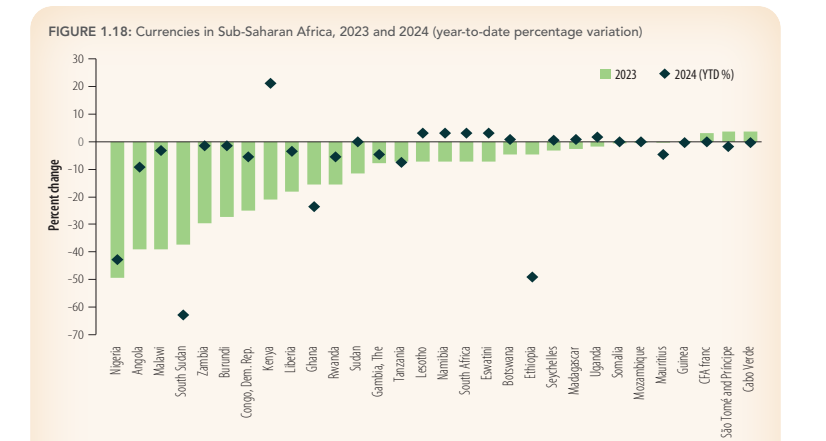
The Ghana cedi, along with three other currencies, ranks among the poorest performers in Sub-Saharan Africa (SSA) for 2024, according to the World Bank’s October 2024 Africa Pulse Report.
The report highlights that the cedi has depreciated approximately 24% against the US dollar, making it the fourth weakest currency in the region.
The most poorly performing currencies in SSA this year include South Sudan’s pound (over 60% decline), Ethiopia’s birr (51%), and Nigeria’s naira (over 40%).
In contrast, the Kenyan shilling has emerged as the top-performing currency in Africa, boasting a year-to-date increase of around 21% as of August 2024.
“Ethiopia, Ghana, and Nigeria are among the worst performing in Africa this year, and their currencies continue weakening while demand for foreign exchange remains pressing”, the report said.
It added “By end-August 2024, the Ethiopian birr, Nigerian naira, and South Sudanese pound were among the worst performers in the region. The Nigerian naira continued losing value, with a year-to-date depreciation of about 43% as of the end of August. Surges in demand for US dollars in the parallel market, driven by financial institutions, money managers, and non-financial end-users, combined with limited dollar inflows and slow foreign exchange disbursements to currency exchange bureaus by the central bank explain the weakening of the naira”.
In contrast, the report said some currencies that weakened in 2023 have stabilised or strengthened this year.
“The Kenyan shilling is the best-performing currency in Sub-Saharan Africa this year: it appreciated by 21 per cent year-to-date by end-August 2024. The South African rand and currencies pegged to it have strengthened by 3.1% so far this year, after losing value in the past year”.
While many currencies are stabilizing, the October 2024 Africa Pulse Report highlighted that African policymakers still face challenges with exchange rate pressures and foreign currency shortages.
“From a sample of 30 countries and two currency unions (the Economic and Monetary Community of Central Africa and WAEMU), more than one-third of the countries in the region are set to have less than three months of imports in international reserves by end-2024”.
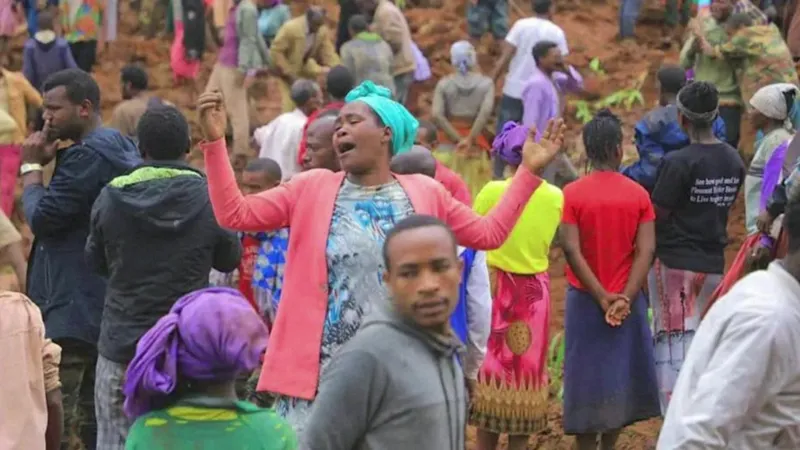
Rescue teams have recovered the bodies of 157 individuals from two landslides in southern Ethiopia, according to a local official who spoke to the BBC.
The landslides took place on Sunday evening and Monday morning following intense rainfall in a remote mountainous region of the Gofa zone.
The local authorities have reported that the search for survivors is ongoing and expressed concern that the death toll might rise.
Videos from the scene show hundreds of people gathered and others digging through the earth in an attempt to find those trapped.
In the footage, a hillside appears partially collapsed, exposing a large area of red soil.
Dagmawi Ayele, the chief administrator of Goza zone, informed the BBC that both adults and children were among the deceased, and ten survivors are currently receiving medical care in a hospital.
Mr. Dagmawi explained that the initial landslide occurred on Sunday, and while police, teachers, and local villagers were engaged in rescue efforts on Monday, a second landslide struck, burying them as well.
“We are still digging,” he told the BBC.
Gofa is situated in Southern Ethiopia, approximately 320km (199 miles) southwest of the capital, Addis Ababa.
According to the UN’s Office for the Coordination of Humanitarian Affairs (OCHA), Southern Ethiopia has recently experienced particularly severe rainfall and flooding.
However, landslides and floods have been recurring issues for some time. In May 2016, severe rains caused floods and landslides that resulted in the deaths of at least 50 people in the southern region of the country.
Various factors contribute to flooding, but climate change-induced warming increases the likelihood of extreme rainfall.
Since the onset of the industrial era, global temperatures have risen by about 1.2°C, and they are expected to continue increasing unless substantial reductions in emissions are achieved globally.
Iran’s Revolutionary Guard Corps (IRGC) Navy conducted a helicopter operation to seize a container ship near the Strait of Hormuz, as reported by the state news agency IRNA on Saturday.
The IRGC, as per IRNA, took control of the Portuguese-flagged MSC Aries and is currently directing it back into Iranian territorial waters.
According to IRNA, Zodiac Maritime, a company associated with Israeli businessman Eyal Ofer, manages the vessel.
CNN has contacted Zodiac Maritime and Eyal Ofer for their statements on the matter.
Earlier, the United Kingdom Maritime Trade Operations (UKMTO) reported a seizure near the Strait of Hormuz, a crucial passage for global maritime trade, attributing responsibility to “regional authorities.” However, UKMTO did not furnish additional specifics about the interception.
The region is on high alert following Iran’s pledge of retaliation for a suspected Israeli attack on its consulate in Damascus, Syria. Additionally, Iran-backed Houthi rebels in Yemen have been targeting shipping in the Red Sea region.
Ethiopia’s state-run power company has reported a widespread electricity blackout affecting large portions of the country due to unspecified “issues in our system”.
Ethiopian Electric Power did not provide details regarding the nature of the issues but stated on its Facebook page that an investigation is underway to determine the cause of the outage.
The power problem has impacted all regions of the country, with the exception of Bahir Dar, situated in the north-west, and its surrounding area. The blackout began around 15:40 local time (12:40 GMT).
In a separate announcement, the company confirmed that restoration efforts have commenced in the capital city, Addis Ababa, and some other areas of the country several hours after the initial outage occurred.
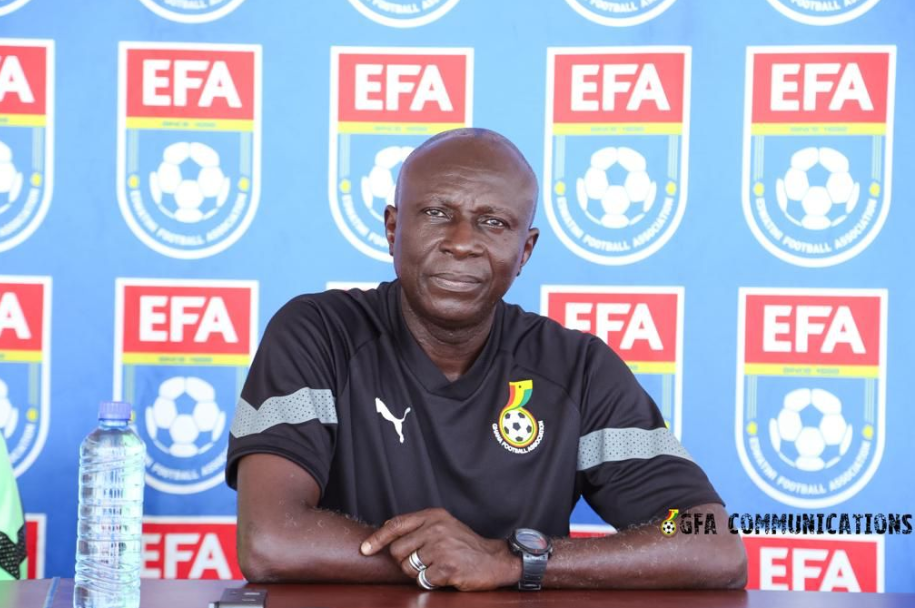
Ghana’s Black Princesses faced a formidable challenge in their opening match of the 2023 African Games against Ethiopia, acknowledged head coach Yussif Basigi.
Despite securing a narrow 1-0 victory, Basigi admitted in a post-game interview that his team had encountered significant difficulties during the match. The solitary goal came in the second half when Comfort Owusu capitalized on a rebound from Mukarama Abdulai’s shot to secure the win.
The match at the Cape Coast Stadium was not without its share of drama, as a blackout caused a 30-minute delay, highlighting Ghana’s ongoing power issues.
Coach Basigi praised Ethiopia’s resilience, acknowledging their quality as tough opponents.
He stated, “Ethiopia that I know, they are not a bad side so I anticipated that we will have a tough match and I’m not surprised we struggled to beat them.”
Despite securing the victory, Ghana encountered their own challenges, finishing the game with 10 players after Abiba Issah’s dismissal in the 89th minute.
Looking forward, Basigi stressed the importance of adapting for future matches, with Tanzania next on their schedule at the Cape Coast Stadium on Tuesday, March 12.
A French journalist, Antoine Galindo has been apprehended in Ethiopia following his arrest last week, as confirmed by his employer.
Antoine, who had arrived in Ethiopia on February 13 to cover the African Union summit, was detained on suspicion of “conspiracy to create chaos” in the country, according to Indigo Publications Group, the publisher of the Africa Intelligence website.
Galindo appeared in court on Saturday, with his detention extended until March 1 for the next hearing, the publisher stated.
Indigo Publications Group condemned what it deemed an “unjustified arrest,” asserting that the accusations lacked tangible evidence to justify prolonged detention.
The company emphasized that the arrest represented a grave infringement on press freedom.
The Committee to Protect Journalists (CPJ) echoed these sentiments, demanding Galindo’s release and expressing outrage over the targeting of a journalist on a legitimate reporting assignment.
Ethiopian authorities have yet to comment on the situation.
Almost 10 million people live in Tigray and Amhara.
Fighting and lack of rain made it hard for farmers to grow crops, so millions of people had to find extreme ways to stay alive, according to the charity.
A government report said almost 400 people have died from hunger in two areas.
Oxfam is saying that northern Ethiopia could have a very bad humanitarian crisis if we don’t increase our help.
There is a shortage of money and fighting in Amhara, which is making it hard to help people in need.
The World Food Programme and USAid found out that some people were stealing food aid in Ethiopia last Spring. Because of this, they stopped giving aid to Ethiopia for several months before starting again more carefully in December.
Last year, the UN only got one third of the $4 billion it asked for Ethiopia.
Leaders in Tigray say there could be a big hunger problem, but the central government doesn’t believe that.
Ethiopian Prime Minister Abiy Ahmed said that people are not starving in the conflict-affected areas of Tigray and Amhara, even though there is a food crisis.
“Mr Abiy said on Tuesday that no one in Ethiopia is dying from hunger. ”
He said that some people may have died because they were sick from not having enough food to eat.
The Federal Ombudsman Institute, which is appointed by the state, said last month that almost 400 people have died of hunger in the northern areas of Tigray and Amhara. The leader of the institute, Endale Haile, told the media that the deaths happened in the last six months.
The EHRC says the government did not give enough help to the people who needed it the most.
The UN says that about 20 million people in Ethiopia need help getting food because of fighting, lack of rain, and floods.
Africa is currently undergoing remarkable population growth, with projections from the United Nations indicating a doubling of the continent’s population to over 2.5 billion by 2050.
This surge is fueled by factors such as high fertility rates, declining mortality rates, and a growing number of young individuals entering reproductive age.
Boasting one of the world’s youngest populations, with a significant portion under the age of 25, Africa stands at a crucial juncture where this demographic structure presents both opportunities and obstacles.
While the youthful demographic holds promise for a vibrant workforce driving innovation and economic growth, it also poses challenges in terms of education, employment, and the necessity for robust social and economic policies to harness the potential of the youth bulge.
The burgeoning population becomes a focal point for economic development, offering avenues for entrepreneurship and innovation.
However, this growth intersects with environmental considerations, necessitating a delicate balance between economic progress and sustainable practices to prevent over-exploitation of natural resources and mitigate impacts on ecosystems.
In light of these dynamics, WorldPopulationReview, an independent for-profit company specializing in world population data and demographics, has compiled a list of the 10 African countries with the highest population at the outset of 2024.
Here are children who are suffering because there is not enough food in northern Ethiopia. Mostly babies are very sick because they don’t have enough food to eat.
Their mothers are sitting quietly next to their beds, looking off into the distance, holding their babies close to them, and hoping that the little milk they have can save their babies.
The government says 16 million people in the country don’t have enough food to eat. Almost half of them have very little or no food at all. This means that a lot of people are not just a little hungry, they are very, very hungry.
This is the reason why Tsega Tsigabu, who is 23 years old, and her four-month-old son, Kidisty, are staying in Ayder hospital without improvement.
However, their plants did not grow and they went to Mekelle to try to stay alive. Just like many others, they were sent to a camp because they were kicked out of their homes.
Mrs Tsega’s husband was in the army, but he hurt his hand and can’t work now. She brought her baby to get a shot and the nurses quickly noticed that the baby was not getting enough food.
Mrs Tsega says that even when she was pregnant, she did not eat a healthy diet. “I wasn’t making enough breast milk, so the baby didn’t get enough to eat and became malnourished. ” I was hungry because there wasn’t enough food at my house.
The hospital doctors say that the number of very hungry and sick children coming in has doubled since 2020 when the fighting started between Tigrayan forces and Ethiopian and Eritrean armies.
In 2022, the fighting stopped, but many people, about one million, still can’t go back home and are still in the area affected by the conflict.
We went with the British Africa minister, Andrew Mitchell, to Agulae, which is an hour’s drive north into the hills. There, a clinic was checking on children from nearby villages.
He saw worried moms waiting to measure their kids’ arm size. If the arm is very skinny, the child may be malnourished. The nurses shared their charts with him and they all showed that the numbers were getting worse.
Mr Mitchell told the media that if we don’t do something now, there is a big chance of not having enough food.
“There are clear signs that a famine may happen soon. ” In my opinion, there is no famine happening in Ethiopia right now. We have the ability to prevent it. But if we don’t do something now, there is a high risk that a famine will happen in this country that has already suffered a lot because of the war.
He said that Britain will give an extra ã100m to help up to three million mothers and babies in Ethiopia get better healthcare. This money will be used to provide medicine and vaccines to stop deaths that could have been prevented.
Is it probable that there will be hunger in Ethiopia.
International organizations are careful about using a word that some consider to be inappropriate.
It means that 20% of families don’t have enough food, 30% of young children are very malnourished, and two out of every 10,000 people die every day. Only a few people think that Ethiopia has officially met those standards.
But for Getachew Reda, who is the president of the Tigray temporary regional government, those definitions are not important.
He told the BBC that there is a growing famine in Tigray. He said more and more people were facing death, and criticized the international community for not doing enough to help.
Getachew Reda, president of the Tigray interim regional administration, says there is a very bad famine happening in Tigray.
“Many people who could have been able to feed themselves are not able to and are dying from hunger,” said Mr Getachew.
“I don’t care if you call it famine, or a risk of famine, or a potential famine. What happened in 1985 will seem small if we don’t deal with the famine that’s happening now. ”
He was talking about the terrible problems in the mid-1980s when a lot of people died from hunger in Tigray and other places.
The government in Addis Ababa is mad because it disagrees that there is famine.
Shiferaw Teklemariam, who is in charge of helping Ethiopia during disasters, said that Ethiopia is being harmed by climate change. He told local governments not to make the issue political and asked them and the international community to do more.
“There is not enough rain, no enough food,” Mr Shiferaw told the media.
“The government is taking the situation very seriously, and we also ask everyone else to help too. ”
Previous times when people in Ethiopia did not have enough to eat were sometimes connected to when the leaders of the country lost power. Experts believe that the current government, led by Prime Minister Abiy Ahmed, is worried about the protests.
The government is working with the UN to help with the food crisis, but the economy is not doing well and there is less money to spend.
Nobody knows exactly how bad the crisis is because it’s hard to get accurate information.
Access to media is restricted. Many places in the north are too dangerous for aid groups to go because there is still fighting, especially in Amhara.
In Tigray and the nearby Afar region, people are worried that the food shortage could be even more serious. Repeated stories from different places in northern Ethiopia show that things are getting worse.
Most people agree that the world should do more to help each other.
Last year, USAID (American development agency) and the United Nations’ World Food Programme stopped giving help for five months because a lot of the aid was being stolen, mostly to feed different armed groups.
This has made the situation worse. The world is paying more attention to problems in the Middle East and Ukraine, so Ethiopia is not getting as much focus and support.
The leader of the UN, Ramiz Alakbarov, said that this crisis has been forgotten. “He said the world is not paying attention. ”
“We feel sad for all the problems happening in other places, but we also need to remember the people living here. ” We have to get things in order and donors need to give more money.
In Mekelle, we saw the World Food Programme giving out wheat, lentils, and oil to people in need.
Hungry people wait in line with special codes that show who they are, where they live, and what they need. But they only get a little food and don’t have much money left.
Claire Nevill, who works for the WFP in Ethiopia, said that people need more than just food. They also need help to go back to their farms and grow their own food.
There are still militias and Eritrean forces in some parts of the country.
“In Ethiopia, there are many problems happening at the same time,” she said.
“We have a lack of water, people getting better from a two-year fight, prices going up, more sickness happening, and all these things are making people even more hungry and malnourished. ” If we don’t help people get food now, things will get worse.
We met Tsige Degef, 28, at Ayder hospital. Her 15-month old daughter, Bereket, was not getting enough food and was not healthy.
Her story was common. During the war, Ms Tsige’s large family had to sell their oxen to buy costly grains. When there was peace, the crops didn’t grow and there was no other options for food.
Ms Tsige was already having a hard time when Bereket got sick. She said her feet and legs were very puffy. “I was really anxious. ” She was throwing up every day. A mom is really scared when her child is sick because she does not want her child to die.
Bereket is improving and Ms Tsige thinks she might be able to leave the hospital soon. She said she hopes that she will get better soon.
“I want to start a tea store and sell things to make sure I can take care of my child better. ” I promise to try my best to make sure she doesn’t feel bad in the future.
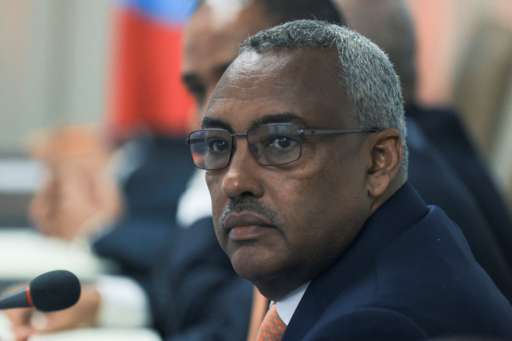
Ethiopia’s longstanding Deputy Prime Minister, Demeke Mekonnen, has announced his resignation from his prominent position within the governing Prosperity Party (PP).
The announcement took place during the ongoing convention of the PP’s central committee.
Mr. Demeke, who also serves as the country’s foreign minister, will step down from both his roles, according to reports from local media.
Hailing from the conflict-affected Amhara region, Mr. Demeke has been a key figure amid Ethiopia’s recent political challenges, serving as deputy prime minister since 2012 and taking on the role of foreign minister in 2020.
Temesgen Tiruneh, the head of the intelligence service, has been promoted to deputy chair of the PP, and there are speculations that he may assume Mr. Demeke’s ministerial positions.
Further changes within the party’s leadership are anticipated as the convention progresses.
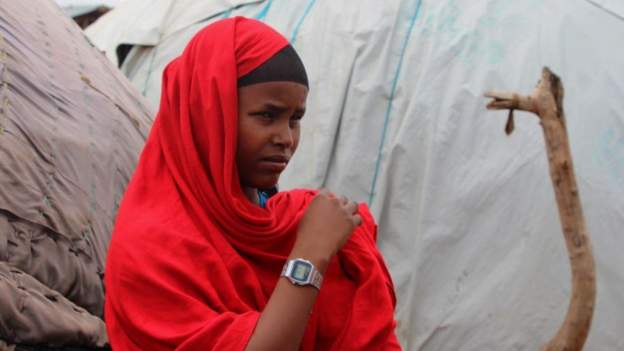
They said they live in a temporary prison enclosed by a prickly fence made of acacia branches, which doesn’t keep them safe from the weather.
The group was traveling to ask for safety in Kenya, they said.
One person, who doesn’t want to be known, said they had to go through really tough situations.
At first, we bought water from the police and used it to wash ourselves. But when we didn’t have money, a lot of us got sick because we didn’t have enough food and clean water,” they said.
Even though the police took them to the clinic, they have to pay for their own treatment.
“People who don’t have money are hungry and sick. ”
Somalia’s government-owned media has been playing a song that some people say encourages bad behavior. The song was performed by the Somali police band.
It brings back old feelings of dislike towards Ethiopia because of the agreement they made with Somaliland on January 1st.
The song talks about a war that happened between Ethiopia and Somalia in 1977, almost 50 years ago.
The song says, “If you don’t want peace, we will give you a chance to remember what we did to you in 1977. ”
The song titled Remember What We Did to You in 1977, along with two other songs about Ethiopia, have been shared a lot on social media by Somalis.
Somaliland became its own country in 1991, but other countries do not officially accept this.
Somaliland might lease some of its coastline to Ethiopia. Somalia is upset about this because it feels like Ethiopia is trying to take its land.
Lately, the President of Somalia, Hassan Sheikh Mohamud, and the prime minister said that their families have fought against Ethiopia for a long time to protect their country. They feel they have to continue the fight.
President Mohamud said that the person causing division among our people is like an enemy. We have been fighting with them for a long time, but we are all still the same people. We should resist them.
The leaders of the country say that Ethiopia is a danger to its security.
Somalia said no to a plane carrying Ethiopian officials to Somaliland, making the ongoing disagreement between the countries even worse.
The person in charge of giving out information in Somalia said to the BBC that the plane was not allowed to be in the country’s sky.
The Ethiopian leaders were in Somaliland to talk about an agreement, and this has caused a big argument.
Somalia thinks that Somaliland belongs to it.
The deal, signed on 1 January, would let Somaliland rent out one of its ports to Ethiopia. In return, Somaliland would get a share in Ethiopian Airlines and might be recognized as its own independent country.
Somalia is really mad about the deal and says it’s an aggressive act.
On Wednesday, the Somali Civil Aviation Authority (SCAA) said that flight ETH8273 did not follow the international rules. Flights should get permission from the countries they fly over, but this flight did not.
It tried to land at the airport in Hargeisa, which is in Somaliland.
The SCAA said that normal flights between the two countries are still happening, even after the incident.
The Ethiopian government has not said anything yet, but the leader of Ethiopian Airlines said the plane had come back to the capital city of Ethiopia, Addis Ababa.
Somaliland used to be protected by Britain. It separated from Somalia in 1991 and now it looks like a country. They have elections, police, and their own money.
No country has accepted or approved this.
Somalia told the Ethiopian plane to leave its airspace, to show that Somaliland is not its own country.
During the argument between Somalia and Ethiopia, the US and the African Union supported Somalia’s land and asked everyone to calm down.
Around 225 people, including children, have died from hunger in Ethiopia’s Tigray region due to drought and war since last July, according to local officials.
Health officials told regional TV that most of the 209 deaths have occurred in the rural area of Edga Arbi.
In a different place, 16 people died because they didn’t have enough food. They had to leave their homes because of a war that lasted for two years and ended in 2022.
Officials from Tigray had warned that a famine like the one in Ethiopia in the 1980s may happen again, and many people could die.
The government says there isn’t going to be a famine soon and they are giving help to stop it.
The UN says over 20 million people in Ethiopia need food help because of fighting, lack of rain, and too much water.
Somalia’s president says the president of Eritrea has promised to support Somalia’s control of its own land, as there is disagreement with Ethiopia about a deal for access to the sea.
Eritrean leader Isaias Afwerki expressed his position in a meeting with Somali President Hassan Sheikh Mohamud yesterday, according to the state-run Somali National News Agency.
The story was told.
The leader of Somalia said similar things to the Eritrean media, but there was no official statement from Mr.
Mr Mohamud visited Asmara for two days. He talked to Mr Afwerki about the sea access problem.
Trouble started last week when Ethiopia made an agreement with Somaliland, a place that says it’s its own country.
The deal would let Ethiopia use a port in the breakaway region for trade and military purposes.
Somalia said the deal is aggressive. It thinks Somaliland is a part of its land and promised to protect its own control.
No other country or big group in the world thinks Somaliland is its own country.
President Mohamud said his government will ask for help from any friend who is willing to help us before going to Asmara.
The media in Somalia said that Mr. Mohamud will go to Cairo shortly because he was invited by the Egyptian leader, Abddul Fattah al-Sisi.
The leaders of the Ethiopian army and the self-declared Republic of Somaliland are talking about working together militarily. People are worried about a deal that could let Ethiopia have a naval base on the Gulf of Aden.
On January 1st, both sides agreed to let Ethiopia use the sea for trade and military purposes.
Somalia said it was a mean thing to do.
It thinks that Somaliland belongs to it and promised to protect its control.
Somaliland used to be controlled by Britain. In 1991, it broke away from Somalia. But other countries do not officially recognize it as its own country.
Ethiopia’s military leader Birhanu Jula met with Somaliland’s military leader Nuh Ismael Tani to talk about working together. The meeting took place on Monday in Addis Ababa, Ethiopia.
Somaliland and Ethiopia signed an agreement to let Ethiopia use part of Somaliland’s coast for a naval base.
Somaliland has agreed that in return, Ethiopia will acknowledge it as an independent country in the future.
Ethiopia has not said yes or no about this. Instead, they are thinking about it and will decide later about whether to support Somaliland’s effort to be recognized.
Somalia thinks the MoU is an attack on its land. On Sunday, President Hassan Sheikh Mohamud told people to get ready to defend the country.
The African Union and the US are trying to reduce tensions.
Somalia’s friends, such as Egypt and Turkey, have promised to help Somalia.
Ethiopian and Somaliland soldiers met in Addis Ababa. At the same time, Mr Mohamud was in Eritrea talking with Isaias Afwerki in Asmara.
The official statements did not directly talk about Ethiopia’s agreement with Somaliland, but it is probably that they discussed the matter.
Eritrea said the two leaders agreed to work together with patience and a positive attitude, while not reacting to provocative things.
On Monday, President Mohamud’s office said the two leaders will talk about things that will help both of them.
Ethiopia has now joined the ranks of African nations facing default, as it failed to meet interest payments following the expiration of a grace period on Monday.
Finance Minister Ahmed Shide revealed that Ethiopia was obligated to pay a $33 million coupon on December 11, but the government opted not to make the payment, citing its desire to treat all creditors equally.
This decision places Ethiopia in the company of other developing countries such as Zambia, Ghana, and Sri Lanka that have struggled with Eurobond defaults in recent times.
Senior Reforms Adviser at the Finance Ministry, Hinjat Shamil, confirmed on Monday that the payment had not been made and would not be fulfilled.
Ethiopia had previously reached an agreement with bilateral creditors to temporarily suspend debt payments, reflecting the economic challenges exacerbated by the civil war in the northern Tigray region.
In its restructuring proposal, Ethiopia has called on bondholders to extend the amortization maturity period from July 2028 to January 2032 and reduce the coupon rate from the current 6.625% to 5.5%.
Notably, the face value of the debt will remain at $1 billion, implying that creditors will not face reductions on their holdings, a move designed to avoid what is commonly known as a “haircut.”
Earlier this month, an ad hoc committee of bondholders expressed disappointment, deeming Ethiopia’s decision not to pay as both unnecessary and unfortunate.
The country has expressed its intention to renegotiate its financial obligations through the Group of 20’s Common Framework, a mechanism gaining traction following successful debt restructuring efforts by Zambia and Ghana.
The Common Framework allows for coordinated debt relief from both public and private lenders, establishing standards for debt treatment.
As Ethiopia grapples with the economic fallout of the civil conflict in Tigray, which has adversely affected investor sentiment and economic growth, its approach to debt restructuring is being closely monitored.
In the Bodi Tribe in Ethiopia, having a larger belly is considered more desirable, making men with bigger bellies more sought after.
The community engages in the annual Ka-el ceremony where men aim to grow the largest belly to increase their chances of attracting more wives.
The Bodi people hold the cow in high regard, considering it a sacred animal.
The cow’s blood, combined with fresh milk, is a significant source of sustenance for them.
The Bodi attribute various benefits to the cow and believe that consuming the blood mixed with honey and cow milk helps them almost double their weight.
Participants in the belly-growing competition go naked as a requirement for eligibility in the event.
The fattest man with the biggest stomach wins the competition with most wives.
This is the Bodi tribe from Ethiopia's Omo Valley.
Five ordinary people have died in Ethiopia’s Amhara region when a drone attack hit an ambulance, according to people who saw it happen and told the media.
Three more people, including a hospital leader, got hurt in the event in Wogel Tena town in north-eastern Amhara.
The attack happened last week, but the local authorities didn’t confirm it until Wednesday because of communication restrictions.
According to witnesses, the person driving the ambulance, a pharmacist, and some construction workers nearby were killed.
The government’s soldiers are using drones to attack local groups, as the fighting that started in April gets worse.
The UN was worried about drones hitting innocent people in Amhara last month.
Many people died in an attack at a school and bus station.
The UK relief agency said that over 770 people have gotten cholera in the Somali region within the last two weeks. This area has been hit the hardest by the recent flooding and heavy rains.
The heavy rain has affected 1. 5 million people in the country. 600,000 people have had to leave their homes because of the rain, according to the UN.
However, only 10% of the people who need help are getting it because Ethiopia doesn’t have enough money to help everyone.
Save the Children said that more than 90 districts in Ethiopia have cholera. They think that the situation could get worse because more rain is coming in at least three regions.
The big rains in Ethiopia, Somalia, and Kenya happened because of two weather patterns called El Niño and Indian Ocean Dipole.
The government says that the conflict between Ethiopia’s Amhara and Tigray regions will be resolved by holding a vote where people can decide on the result.
The group has promised to disturb the delicate calm after the war in Tigray ended a year ago.
Before the conflict in 2020, Tigray had control over the rich and fertile lands. However, the Amhara forces took over and gained control of these lands.
Rights organizations have accused the forces of clearing out particular ethnic groups in the areas that they are arguing over.
The disputed areas, that are close to the border between Ethiopia and Sudan, caused a lot of problems during the two-year conflict between the Tigray People’s Liberation Front (TPLF) and the government of Ethiopia.
The fighting stopped after a peace deal was signed in South Africa last November.
Many of the one million people who are forced to live in temporary camps in Tigray have left the areas where there is fighting.
The Amhara government says that Tigray took control of the territory in the 1990s without permission when the TPLF was the main political group in Ethiopia.
Last year, Amnesty International and Human Rights Watch wrote a long report. In the report, they said that after talking to people, they found proof that the fighting in the disputed places caused some of the worst crimes. These areas were mostly not paid attention to.
Former Nigerian President Olusegun Obasanjo, who is representing the African Union, stated that approximately 600,000 individuals lost their lives throughout the conflict. Scientists believe that the large number of civilian deaths can be attributed to conflict, hunger, and limited access to medical treatment.
In Monday’s statement evaluating the year since the peace deal, the government said that the people who were forced to leave their homes would be able to go back, and the national military would be in charge of keeping the local area safe.
The government says they have made a decision on how to solve the problem of the disputed areas that will benefit everyone involved.
The government’s communication service said that they have set up a plan for a referendum to take place, following the rules of the constitution.
We don’t know when the referendum will take place.
The message, which was published in both Amharic and English, also praised the advancements made in the past year. These advancements include the establishment of a temporary administration in Tigray. However, it claimed that the government has been moving slowly in fully implementing the peace agreement.
It also indicated that the government was still keeping fighters even though they agreed to give up their weapons.
The Tigrayan forces have given up their big weapons, but they still have small and light guns. The TPLF said last week that the ceasefire was not fully followed because many people were still forced to leave their homes.
This is happening while there is a lot of fighting between soldiers from Ethiopia and local groups in many areas of the Amhara region.
The fighting started in April when the national government told regional forces and armed groups to give up their weapons.
Soldiers from the Fano militia claim that they have taken control of a number of towns in Ethiopia’s second largest region. The government has not said anything about the claims yet.
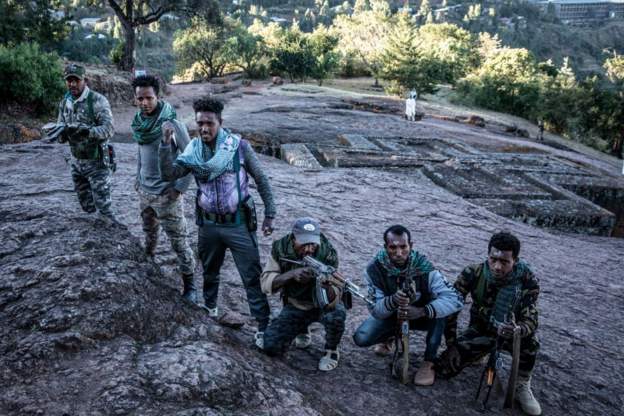
In August, armed groups took over some of the region’s big cities for a short time. They even managed to capture an airport in the old town of Lalibela, but the military forced them to leave.
The Ethiopian Human Rights Commission (EHRC) says that the government forces have done bad things to people’s rights when fighting with Fano rebels.
The Ethiopian government disagreed with the EHRC report and said it was not fair.
Western countries like Britain and the US have asked for a conversation to happen.
A recent research report has revealed that private wealth in Ghana has experienced remarkable growth over the past decade, outpacing the continental average by 30%.
This places Ghana as the second-highest in private wealth growth, following Ethiopia, which recorded an astonishing 81% increase.
This notable disparity underscores a growing wealth gap within the nation. Private wealth in Ghana has been advancing at a faster pace than per capita income growth, which saw a 27.5% increase.
This sets Ghana apart from the wider African continent, where wealth levels have been on a general decline. Capital flight, often used as an indicator for private wealth, has been identified as a concerning factor in this trend.
A recent discussion at the Research Dissemination on Capital Flight and Natural Resources in Ghana, organized by the National Development Planning Commission (NDPC), featured insights from Professor Leonce Ndikumana of the Department of Economics at the University of Massachusetts. Professor Ndikumana explored the remarkable surge in private wealth within the country.
Research findings indicate that individual private wealth in Ghana now stands at an impressive US$56 billion. However, this wealth is significantly unequally distributed, with 110 Ghanaians possessing over US$10 million in liquid assets, not including other assets like real estate.
The findings raise questions about income inequality and wealth distribution in Ghana, emphasizing the need for policies and strategies to address this growing gap and ensure a more equitable distribution of wealth.
“This wealth concentration vividly underscores the alarming income disparity within the country,” he said. “Where the wealthiest individuals perceive Ghana as well-developed, others – such as cocoa farmers – struggle to make ends meet despite the overall growth of wealth.”
Professor Ndikumana however expressed optimism regarding the concentration of wealth, suggesting it could potentially fuel domestic investors to engage in mineral resource exploration and sectors like cocoa production.
He advocated incentives for domestic investors similar to those offered to foreign investors, as this could facilitate the emergence of Ghanaian enterprises which harness the nation’s natural resources.
Notably, Professor Ndikumana highlighted that this wealth disparity is not unique to Ghana as it is a recurring trend across many African countries, which often focus on attracting foreign investors while underestimating the potential of their domestic counterparts.
“Contrary to misconceptions, data clearly show there are sufficient local individuals with the means to invest, ” Professor Ndikumana said.
Capital flight: a pervasive issue in Ghana and beyond
Professor Ndikumana shed light on the significant issue of capital flight, emphasising that it is not unique to Ghana but affects many African nations.
Ghana, over the past five decades, has experienced an estimated loss of US$50billion through capital flight. This capital flight primarily benefits private asset holders abroad, and a portion of it occurs through trade mis-invoicing, whereby traders manipulate the value of imports and exports.
Focusing on the gold sector, Professor Ndikumana noted that Ghana is not receiving its equitable share of the value generated from its gold resources. As natural resources belong to the nation, he stressed the need to revise agreements in order to ensure Ghana benefits more from its exploitation.
A concerning discrepancy was also identified in Ghana’s reported gold exports compared to statistics from its trading partners. In some cases, countries report receiving less gold from Ghana than Ghana reports exporting, raising concerns of potential capital misreporting or mis-invoicing in gold trade. Furthermore, Professor Ndikumana highlighted mining laws that allow foreign mining firms to retain most foreign exchange earned from gold exports in their home countries.
The professor provided an example that raised suspicions, saying Ghana reports South Africa as the primary destination for its gold exports – but South Africa records almost no gold imports from Ghana. Ghana exported US$15million worth of gold to South Africa, while South Africa reported only US$6.8million of gold imports from Ghana – raising questions about the whereabouts of Ghana’s exported gold.
Additionally, the under-invoicing of gold exports to the United Arab Emirates was discussed, with evidence suggesting it serves as a channel for capital flight. The opacity of gold trade statistics, along with large statistical gaps in gold exports, is a significant concern and a sign of export mis-invoicing. The overall conclusion is that Ghana’s benefits from its gold exploitation fall well below expectations.
Cocoa Sector and Value Distribution
Turning to the cocoa sector, Professor Ndikumana noted that the likelihood of capital flight through trade mis-invoicing is minimal due to the sector’s regulation and government oversight. However, the issue lies in the distribution of value. While cocoa generates substantial value, it primarily benefits foreign companies – with cocoa farmers receiving a meagre 4 percent of the market value for chocolate sold internationally.
To improve the well-being of cocoa farmers, the professor recommended processing more cocoa within the country to create jobs and increase value. He suggested that Ghana reconsider its agreements with mining companies, potentially adopting production-sharing models and encouraging national companies’ involvement in resource exploitation.
US President Joe Biden gave Mr Ejeta a medal because of his excellent work in studying plant genetics.
Mr Ejeta is known as one of the best plant scientists in the world.
He focuses on studying sorghum, which is a common food source in Africa.
In 2009, Mr. Ejeta received a special award called the World Food Prize for creating a type of sorghum plant that is able to survive when there isn’t much water and can also fight off a harmful weed called Striga that often causes problems for farmers in Africa.
Sorghum is the fifth most important type of grain crop in the world, ranked after maize, wheat, rice, and barley.
It is also the second most important grain in Africa and many countries in Africa consider it a staple food, especially in areas where there is often not enough water.
Mr Ejeta grew up in a small house made of thatched materials in a village in central Ethiopia, which was not too far from the capital city of Addis Ababa.
But, he could only go to school sometimes because it was far away. He had to travel 20km (12 miles) to another town to go to class and he would come back home on weekends.
His difficult childhood, where he often went hungry and didn’t have enough food, has greatly impacted his scientific research throughout the years. This has motivated him to work towards improving the availability of food for everyone.
He talked about feeling hungry when he was a kid during an interview with the BBC.
When I went to a school far from my home, I always felt hungry. Actually, when I think back to elementary school, there were only a few days where I actually ate breakfast.
He said that going to school in the morning without eating breakfast is difficult. So I often feel hungry.
The president of Purdue University in Indiana, where Mr. Ejeta works as a professor and leads global food security programs, praised Mr. Ejeta for his determination and called him an influential geneticist.
“Our university is very proud and happy to receive another important and well-deserved award,” said Mung Chiang, the president of Purdue University.
Mr Ejeta, who is a citizen of the United States, was one of nine top scientists from the US who received an award at the White House from President Biden on Tuesday.
President Biden stated at the award ceremony that he has improved food security for millions by creating types of sorghum that can survive droughts and fight off pests.
“He believes that science, policy, and institutions are important for economic growth. He has helped farmers and strengthened nations through his support. ”
US presidents have been giving the National Medal of Science since 1959 to people who have made important contributions to different fields of science and deserve special recognition.
Mr Ejeta was given the National Hero Award by the Ethiopian government right after he won the World Food Prize in 2009. This award is the highest honor that the Ethiopian government gives to its citizens.
In 2011, Barack Obama, the former US President, chose him to be part of the Board for International Food and Agricultural Development.
Following contentious remarks from Addis Ababa, authorities in Eritrea declared they would not “enter” discussions concerning Ethiopia’s access to the Red Sea.
The Red Sea is “a matter of existence” for Ethiopia, according to Prime Minister Abiy Ahmed, who was speaking to MPs.
“The Red Sea and the Nile River define Ethiopia; They are the foundations for Ethiopia’s development or its demise,” Mr Abiy said, in remarks some commentators said could cause friction with Eritrea.
Eritrea’s independence from Ethiopia in 1993 resulted in Ethiopia becoming Africa’s largest landlocked nation. Since then, more over 85% of its imports and exports have been dependent upon its little neighbor Djibouti.
A few years ago, Ethiopia had plans to reestablish its navy public. Ports in Eritrea, Djbouti, and Somaliland were mentioned by Mr. Abiy as facilities that could be acquired peacefully.
A brief statement by Eritrea’s Ministry of Information on Monday said “discourses” about access to sea and related topics “floated in recent times” were “excessive” . It said the matter “has perplexed all concerned observers”.
During a recent bloody war in the Ethiopian state of Tigray, Eritrea supported the Addis Ababa administration.
In 2018, Prime Minister Abiy also collaborated with Isias Afeworki, the leader of Eritrea, to put an end to their violent, two-decade-long war.
The Ethiopian government called the statement by the UN’s special adviser on the prevention of genocide “irresponsible and reckless” and does not agree with it.
Alice Wairimu Nderitu said on Tuesday that there is a greater chance of a genocide happening in Ethiopia.
The Ethiopian government is sorry that a UN adviser made a statement about the situation in Ethiopia that was not responsible or careful. Ethiopia’s Ministry of Foreign Affairs shared this on Facebook as a response.
“It said that the special adviser used the International Commission of Human Rights Experts on Ethiopia [I CHREE] to make harmful comments about Ethiopia. “
I CHREE was created by the United Nations Human Rights Council in 2021 to look in to claims of wrongdoing in the Tigray region of Ethiopia. In September, a report was published that detailed crimes committed by every one involved in the two-year conflict, which ended in November.
Another report said that there were still ongoing serious violations happening in Tigray and other parts of Ethiopia.
Global human rights groups wanted I CHREE to keep investigating and expand its work, but the time to extend its authority ran out last week.
The United States has declared the resumption of food aid deliveries for refugees in Ethiopia, ending a five-month suspension. This decision followed the agreement of Ethiopian authorities in Addis Ababa to withdraw from the distribution of these supplies.
In May, Washington halted aid distribution, following a similar action by the UN, citing evidence of “widespread and coordinated” food aid theft.
The Ethiopian government introduced reforms, leading to the reinstatement of aid, which included strengthening monitoring, oversight, and enhancing commodity tracking, according to a statement by USAid. Ethiopia has also “transferred responsibility” for the dispatch and warehousing of food aid.
The resumption of aid will benefit hundreds of thousands of refugees currently residing in Ethiopia, primarily from neighboring countries such as Sudan, South Sudan, Somalia, and Eritrea.
However, the pause on food aid for around 20 million Ethiopians in dire need of humanitarian assistance remains in effect.
Officials in the conflict-affected Tigray region had previously reported to the BBC that at least 1,400 people had died of starvation in the region since the aid suspension, while in the neighboring Amhara region, where recent conflicts are compounded by drought, many have perished due to the lack of food aid.
A young man from Ethiopia is being praised as an “angel” after he saved a 10-year-old boy from drowning. He jumped off a moving bus and went through a flooded river to rescue the boy.
Abdi Tufa, the person who came to rescue,mentioned that he was hit by rocks and logs that came with the flood waters from the mountains. However, he didn’t give up and continued until he reached Riyad Nesru.
My leg is hurt badly and won’t work properly. I have a really bad injury on my back and waist. “I am currently receiving medical care,” he said to the BBC in Oromoo language.
Abdi was on a bus going to Ethiopia’s capital city, Addis Ababa. Suddenly, he woke up because he heard villagers screaming for help. They were worried that Riyad was in danger of drowning or being carried away by strong flood waters.
The boy got stuck in a flood while looking after his family’s goats in a small town called Hirna, which is 350km (220 miles) east of Addis Ababa.
Abdi suddenly decided to jump out of the bus window,surprising everyone else on the bus. He then went into the river.
I saw the kid from the window. He was almost drowning, but nobody was coming to help him,” he told BBC Afaan Oromoo about the moment he decided to save the boy who couldn’t help himself.
Abdi is getting better while being taken care of by the boy’s family. He said he was too hurt to walk by himself, but he was glad he saved the boy’s life.
Riyad’s uncle believed that the family saw Abdi as a special person sent by God to rescue their child.
We would have lost someone dear [by now]. Abdi is someone special who has done something brave or extraordinary. Now we think of him as our oldest child,” Nasir Ibroshe said, and the family will take care of Abdi until he improves.
The United States has said that it will start giving food aid again to refugees in Ethiopia. This comes after a break of five months.
This happens after the government in Addis Ababa agreed to stop giving out the supplies.
Washington stopped giving aid in May because they discovered that a lot of food aid was being stolen. The United Nations had also stopped giving aid for the same reason.
Changes made by the Ethiopian government that allowed them to start receiving aid again include improving their supervision and tracking of goods, according to a statement from USAid.
Moreover, Ethiopia has given the duty to send and store food aid to someone else.
Many refugees in Ethiopia, who come from nearby countries like Sudan, South Sudan, Somalia, and Eritrea, will receive help because aid is starting again.
But help with food for about 20 million Ethiopians who urgently need it is still on hold.
Government representatives in the war-ravaged area of Tigray had informed the BBC that around 1,400 people have died from starvation since aid was stopped. In the nearby region of Amhara, where conflicts and drought have worsened the situation, many people have also died due to lack of food assistance.
The World Bank has cautioned the Central Banks of Nigeria, Ethiopia, and Uganda on Wednesday to avoid using unusual actions that could weaken their monetary policies.
According to the Washington Bank, these measures include “monetizing the fiscal deficit, direct lending interventions, untargeted subsidy programs, and foreign exchange controls.”
The lender emphasised the critical challenge of inflation faced by monetary authorities in the region, particularly in countries struggling with “underdeveloped financial systems, a substantial informal sector, and a lack of coordination between monetary and fiscal policies.”
The organization highlighted the potential consequences, stating, “If monetary and fiscal actions are not adequately coordinated to bring down inflation, the risk of de-anchoring inflation expectations would fuel further inflation, accelerate interest rate increases, and exacerbate the deceleration of economic activity.”
The World Bank, in its Africa’s Pulse report, emphasized the ongoing inflationary difficulties experienced by many countries in the region.
Africa’s Pulse is a semi-annual publication from the Office of the Chief Economist in the World Bank Africa Region. It assesses the continent’s near-term economic outlook, prevailing development obstacles, and explores a specific development-related subject.
The 2023 edition of the report attributed the inflationary challenges to several factors, including “a global demand slowdown, eased supply chain disruptions, lower commodity prices, and stricter monetary policies.”
Despite a projected decrease from 9.3 percent in 2022 to 7.3 percent in 2023, double-digit inflation remains a challenge for 18 countries.
The report highlighted the adverse impact on households, especially those with lower incomes who allocate a significant portion of their earnings to food, due to escalating food and fuel prices and the depreciation of domestic currencies.
In terms of fiscal matters, the report expressed concern about the slow progress in fiscal consolidation efforts in some countries. In 2023, fiscal deficits continue to exceed pre-pandemic levels in nearly two-thirds of the region’s nations.
The World Bank emphasized the urgency of addressing these issues, stressing the importance of “domestic resource mobilization and efficient spending” to mitigate fiscal and debt sustainability risks, control inflation, and create room for development spending.
The World Bank also acknowledged the efforts of certain countries, such as Kenya and Ghana, in implementing revenue reforms, as well as Angola and Nigeria in subsidy reforms, demonstrating the region’s commitment to fiscal consolidation.
Furthermore, the adoption of digital tools for tax administration and compliance has emerged as a recent trend in the region.
A recent report from the United Nations cautions that there is a high possibility of worsening security and human rights abuses in Ethiopia. This is concerning because violence is still happening despite a peace agreement agreed upon by the government and Tigrayan forces almost a year ago.
A new report says that war crimes have been happening in Ethiopia since the start of the conflict in Tigray in 2020. This comes after another report released last month by the commission also said the same thing.
Ongoing serious violations, widespread violence, and strong impunity indicate that there is a high chance of more terrible crimes happening, as stated in the commission’s most recent assessment.
On Tuesday, a report mentioned that there are still “serious violations” happening in Tigray. The commission found evidence of human rights violations and international crimes in Oromia, Amhara, and Afar. They are also worried about recent reports of unlawful killings and large-scale arrests in Amhara.
The UN commission is set to finish its work by the end of this month.
Rights groups want it to continue, but the authorities in Addis Ababa want it to end and say the country can handle its own investigations into allegations of abuse.
Presently, the residents of Mekelle are acquiring information about their deceased family members who lost their lives in the conflict with Ethiopian forces and their supporters. The fighting started in November 2020 when the national government claimed that militias who were supporters of the regional party, the Tigray People’s Liberation Front (TPLF), attacked the military base in the north.
Shortly after, soldiers from Eritrea and local militias supported the Ethiopian government and battled against the Tigrayan forces. Eventually, a peace agreement was made in Pretoria last year.
A lot of people in Mekelle have been informed that their family members have died. I went to a funeral ceremony and a religious service at a church. “It made me really sad,” said one person who liveshere.
The person who lives there said they were concerned about the young people from the neighborhood who had joined the army and haven’t returned yet. They mentioned that they will find out what happened to them next week.
Another person living in Tigray visited different parts of the region. They saw villagers grieving over the loss of their family members in various locations.
Last week, Getachew Reda, who is the president of the temporary Tigray government, told journalists that soon the families of soldiers who have passed away will receive details about their loved ones.
However, people are saying that the authorities are at fault because they did not officially inform families that their loved ones have died.
According to reports, families are being made to look for soldiers,but then army commanders eventually tell them that the soldiers have passed away.
Neither the federal government nor TPLF said how many fighters they lost in the two-year war. All the parties were blamed for doing terrible things during that time.
Even though there is no fighting in the area anymore, officials are saying that some people are hungry because aid organizations have stopped giving out food. This happened because they found out that some people have been stealing the aid supplies.
A lock of hair from a deceased Ethiopian prince, who passed away more than 140 years ago, has been presented in the UK to delegates from his native country.
In 1868, Prince Alemayehu was taken by British soldiers following their invasion of his father, Emperor Tewodros II’s fortress, after the emperor’s death by suicide.
The crown prince, who had an unhappy upbringing in Britain, died at the age of 18 in 1879. He was laid to rest at Windsor Castle, near London, and recent appeals to repatriate his remains have been denied.
Fasil Minas, one of the prince’s descendants, expressed optimism that the return of the prince’s hair might open the door for his body to be returned to Ethiopia.
UK rejects calls to return Ethiopian prince’s body
At a London ceremony on Thursday evening, Ethiopia’s Ambassador to the UK, Teferi Melesse, officially received the lock of hair along with several other artifacts that had been looted from Emperor Tewodros’s Maqdala fortress.
Ambassador Melesse expressed his appreciation for their return, stating that they would be returned to their rightful place where they can serve as sources of inspiration and education for future generations. He also indicated that Ethiopia would continue to advocate for the return of more items taken from the fortress.
Prince Alemayehu was taken to London at the age of seven, where his orphan status elicited Queen Victoria’s sympathy.
She agreed to provide financial support and placed him under the guardianship of Captain Tristram Charles Sawyer Speedy, the man who had accompanied the prince from Ethiopia.
The Scheherazade Foundation, which facilitated the return of the lock of hair, mentioned that it had originally been in Captain Speedy’s possession. Leonie Turner, a descendant of Speedy, discovered the artifact among her family’s heirlooms and decided to return it.
Alula Pankhurst, a member of Ethiopia’s Heritages Restitution National Committee, welcomed the return of the hair but emphasized that this should be just the beginning.
He stated that the restitution of Ethiopian artifacts looted during the 1868 British expedition to Magdala is crucial for restorative justice and for fostering better relations and collaborations between British and Ethiopian institutions.
Despite calls for the return of the prince’s body, Buckingham Palace rejected the request, citing concerns that exhuming his remains would disturb the remains of others buried in the catacombs of St George’s Chapel in Windsor Castle.
An Ethiopian-born contractor, Abraham Teklu Lemma, who had worked for the State and Justice departments in the United States, has been apprehended and charged with transmitting classified information to Ethiopia.
The Justice Department alleges that Abraham Teklu Lemma, aged 50, had been sharing classified information with an individual linked to Ethiopia’s intelligence service since August of the previous year.
While the department did not explicitly mention the African nation he was accused of spying for, it has been reported by various US media outlets, including the New York Times, as Ethiopia.
Lemma is facing three charges, including collecting or conveying defense information to support a foreign government, unauthorized possession of national defense information, and willfully retaining it.
A naturalized US citizen of Ethiopian descent residing in Silver Spring, Maryland, Lemma worked as an IT administrator for the Department of State and as a management analyst for the Department of Justice.
He had been granted top-secret security clearance and access to classified US systems.
If convicted of espionage, he could potentially face the death penalty.
Many people living in Ethiopian towns in the Amhara region shared with the BBC that a lot of innocent people were killed by drone attacks on Sunday.
An anonymous resident from Quarit said that there were two different drone attacks in the area. In one of the attacks, the person living there said that “around 30 people died”.
One more person who visited the places where the drone attacks happened said that the strikes occurred in areas far away from where a lot of fighting was happening. There also didn’t seem to be any signs of militants in those areas at that time. He said another drone attack happened in a forest and no one got hurt.
There was another drone attack in Dembecha town that reportedly killed around 18 people. Someone who lives there told the BBC that the attack happened near Michael’s Church and that they helped find and bring back the bodies.
The government has not replied about the supposed drone attacks, even though the BBC tried to talk to them.
The previous month, the BBC shared news about drone attacks in Fnote Salam where over 30 people died and 50 were injured.
The long-lasting fight between Fano forces and federal troops, which started because the government told the militia to join the official security team, reached its highest point in early August.
A new report from the United Nations has recorded over 180 people who have died because of this conflict since July. This shows that over 1,000 people have been arrested in Amhara since the state of emergency was announced.
The Ethiopian Human Rights Commission (EHRC) recently said that government security forces have killed people in the Amhara region without going through the legal process.
Ten months after the government of Ethiopia and the regional forces from Tigray signed a peace agreement, UN human rights experts claim that war crimes and crimes against humanity are still being committed in several regions of Ethiopia.
According to their report, the situation in Ethiopia is really critical. It details crimes perpetrated during the Tigray War by all parties, including Eritrean forces.
Government authorities are allegedly arresting, holding, and torturing residents in Oromia, according to the International Commission of Human Rights Experts on Ethiopia.
It further states that since the declaration of an emergency there last month, it has received multiple credible reports of breaches against Amhara people.
“If he is invited and the trip is paid for or he can meet the cost of his own trip and that of his entourage, he doesn’t need to inform governments,” argued Emmanuel Mwamba, the PF’s spokesperson.
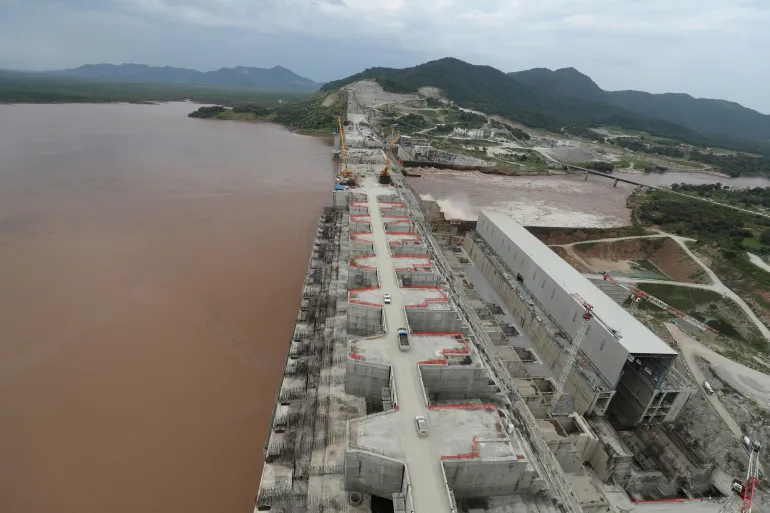
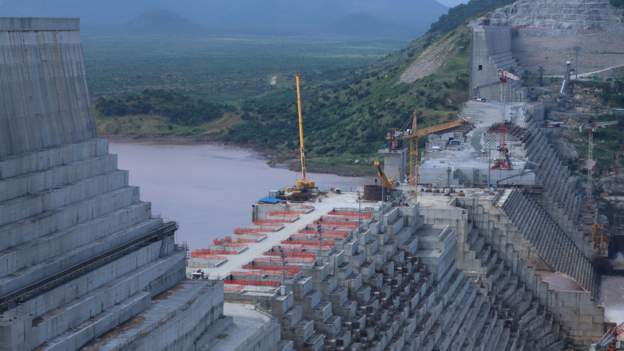
Ethiopia has declared that it has initiated the filling of the Grand Ethiopian Renaissance Dam (GERD) on the Nile, a development that has sparked a prolonged water dispute with downstream nations Egypt and Sudan.
This announcement, made on Sunday, follows a two-week hiatus in negotiations among the three countries, aimed at forging an agreement that considers the water requirements of all parties involved.
Egypt and Sudan have expressed concerns that the colossal $4.2 billion GERD project could substantially diminish their allocation of Nile water. They have consistently urged Addis Ababa to halt the filling process until a mutually acceptable agreement is reached concerning the dam’s operations.
“It is with great pleasure that I announce the successful completion of the fourth and final filling of the Renaissance Dam,” Ethiopia’s Prime Minister Abiy Ahmed said on X, formerly known as Twitter.
“There was a lot of challenge. We were many times dragged to go backwards. We had an internal challenge and external pressure. We’ve reached [this stage] by coping together with God,” Abiy said.
The Ethiopian government’s communications service said on X that GERD, arguably the largest dam in Africa, was “a gift to generations”.
“Today’s heroic generation will build tomorrow’s strong Ethiopia on a solid foundation,” it continued.
At full capacity, the huge hydroelectric dam – 1.8 kilometres (1.1 miles) long and 145 metres (476 feet) high – could generate more than 5,000 megawatts.
That would double Ethiopia’s production of electricity, to which only half the country’s population of 120 million currently has access.
‘Illegal announcement’
The Egyptian foreign ministry condemned as “illegal” Ethiopia’s announcement that it had filled the dam on the Nile.
The “unilateral” measure by Addis Ababa to complete the mega-dam’s filling would “weigh on” negotiations with downstream Egypt and Sudan, which were suspended in 2021 but resumed last month, the foreign ministry said in a statement.
The government of Sudan has yet to comment.
The dam has been at the centre of a regional dispute ever since Ethiopia launched the project in 2011.
Negotiations between the three governments, which resumed in Cairo on August 27 after nearly two and a half years of stalemate, aim to reach an agreement that “takes into account the interests and concerns of the three countries”, Egyptian Water Resources and Irrigation Minister Hani Sewilam said at the time.
He called for “an end to unilateral measures”.
Egypt, which is already suffering from severe water scarcity, sees the dam as an existential threat because it relies on the Nile for 97 percent of its water needs.
The position of fragile Sudan, which is currently mired in a civil war, has fluctuated in recent years.
Ethiopia has said the GERD, which is in the northwest of the country around 30km (19 miles) from the border with Sudan, will not reduce the volume of water flowing downstream.
The United Nations says Egypt could “run out of water by 2025” and parts of Sudan, where the Darfur conflict was essentially a war over access to water, are increasingly vulnerable to drought as a result of climate change.
Ethiopia has been arguing with Egypt and Sudan about the mega project since it started in 2011. Egypt gets almost all of its water from the Nile River.
Egypt’s foreign ministry stated that Ethiopia was not considering the concerns of the countries downstream.
Ethiopia claims that the $4. 2 billion (£34 billion) dam won’t reduce their portion of Nile water.
Ethiopian Prime Minister Abiy Ahmed said on X, which is formerly known as Twitter, that he is very happy to announce that the fourth and final filling of the Renaissance Dam has been successfully completed.
He said the project had problems from inside and outside, but “we managed to handle everything. ” The dam started making electricity in February 2022.
Ethiopia thinks that the Grand Ethiopian Renaissance Dam (GERD) will make twice the amount of electricity that the country currently produces. This will help the country develop and improve as almost half of its 127 million people do not have access to electricity.
The goal is to produce over 6,000 MW of electricity at the dam, which is located about 30km (19 miles) away from Ethiopia’s border with Sudan.
Egypt and Sudan are having a disagreement about the rules for how Gerd should work. They are worried that Ethiopia, who needs a lot of energy, could make their water shortages even worse.
Talks about the project started again last month. They had been stopped in 2021.
The country of Sudan, which is currently facing conflict between two armies, did not respond immediately to the announcement made by Prime Minister Abiy Ahmed on Sunday.
The Egyptian foreign ministry wrote on Facebook that Ethiopia filling the reservoir on its own is against the agreement signed by the three countries in 2015. They also said that Ethiopia’s action is illegal.
“The statement said that the three countries must agree on the rules for filling and operating the Gerd before they can start filling it. ”
“Ethiopia’s actions ignore the concerns and rights of the countries downstream. This goes against international law, which promises them water security. ”
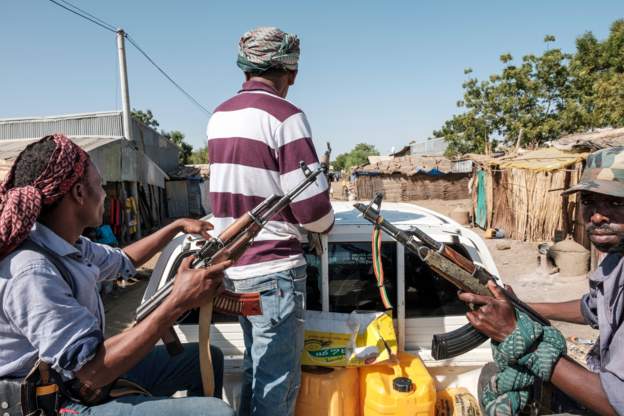
An Ethiopian opposition group has leveled accusations against government forces, alleging that they have been responsible for the deaths of numerous civilians in the tumultuous Amhara region, where ongoing clashes between local militias and the military persist.
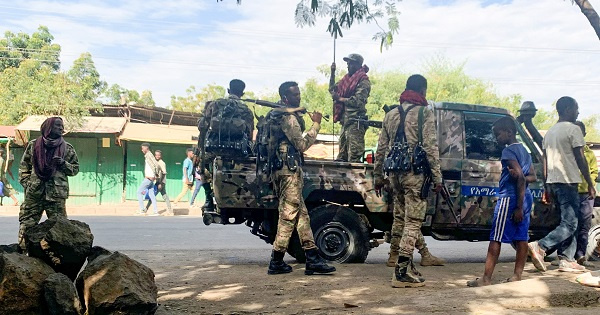
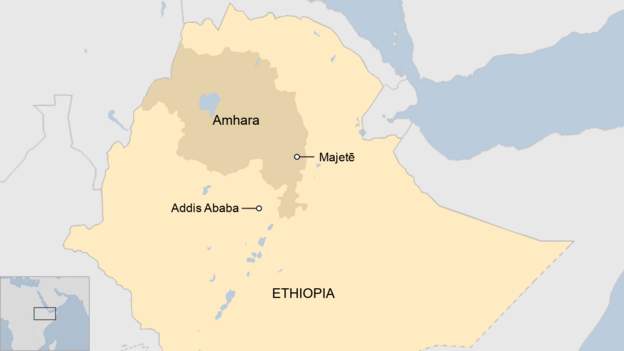
According to a statement released by the Enat party, government troops allegedly killed 29 civilians, including children and the elderly, in the vicinity of their homes in the small town of Majete. The party further claimed that drone strikes resulted in the deaths of at least 20 civilians in two other areas within the region.
It’s important to note that the BBC has been unable to independently verify these claims, and there has been no response from the government regarding these allegations.
The conflict in Amhara erupted following simmering tensions that had built up over months, primarily triggered by controversial decisions to disband a paramilitary regional force. Critics argue that this move left the region vulnerable to attacks.
In early August, local militias entered most of the region’s major cities and briefly took control of an airport. Urban combat resulted in casualties, and a significant number of prisoners were freed.
While a semblance of normalcy has returned to the cities after government forces pushed the militias out, reports of ongoing fighting in or around several small towns and villages continue to emerge.
The situation is further compounded by an ongoing internet shutdown, making it challenging to obtain precise information regarding the scale of the conflict.
A group in Ethiopia that is against the government says that government forces have killed many innocent people in a troubled region called Amhara. The region has been seeing ongoing fighting between local militias and the army.
The Enat party said that government troops killed 29 regular people, like kids and old people, near their houses in a little town called Majete.
The party said that drone attacks in two different places in the region caused the deaths of at least 20 innocent people.
The BBC cannot verify the claims on its own, and the government has not replied to the accusations.
There was a lot of fighting in Amhara after many people got angry over a decision to get rid of a regional military group. Some people thought this would make the region easier to attack.
In the beginning of August, groups of local fighters went into many big cities in the area and took over an airport for a short time.
Fighting in the city caused many people to die, and a lot of prisoners were able to escape.
Cities seem to have returned to a somewhat normal state after the government troops forced the militias to leave.
Last week, the leader of the army, Field Martial Berhanu Jula, said that the armed groups in the area were not dangerous anymore. However, there are still ongoing fights happening this week in a few small towns and villages.
The ongoing internet shutdown has made it hard to find out how severe the fighting is.
Ethiopia’s ambassador to Tanzania, Shibru Mamo Kedida, has said that the country’s membership in Brics will likely result in stronger business ties with the East African Community (EAC) region.
In sub-Saharan Africa, the country in the Horn of Africa has the second-highest population, and its economy is currently one of the continent’s fastest-growing.
According to Mr. Shibru East Africa’s and the Horn of Africa’s economies would benefit from Ethiopia’s membership in Brics.
“It would serve as a catalyst for increased business relations. Ours is the continent’s fastest growing economy which can have a trickle effect on the neighbours,” he told The Citizen in an interview.
Mr. Shibru emphasized that Ethiopia retains its significance as a crucial market for the EAC bloc, boasting a population of 120 million, with 70 percent being youth.
During a recent summit held in South Africa, Ethiopia, Egypt, Saudi Arabia, Iran, United Arab Emirates, and Argentina were introduced as new members of Brics.
These six nations joined the five original Brics members – Brazil, Russia, India, China, and South Africa – who founded the group in 2001 to counterbalance the dominance of western economies in the global economic landscape.
Brics nations also emerge as geopolitical competitors to the G7 of advanced economies, including the US, UK, Japan, Germany, France, Canada, and Italy.
Prior to these new additions, Brics encompassed 27 percent of the world’s land area and population.
The initial five founding members of the bloc also constituted members of the wealthy G20, which boasts a combined nominal GDP of $28 trillion or 27 percent of the world’s gross product.
These founding members had a combined GDP (PPP) of around $56.6 trillion (32.5 percent) of global GDP (PPP), along with an estimated $4.46 trillion in collective foreign reserves.
Full membership for Ethiopia and the other five new entrants into the bloc is set to commence on January 1st of the coming year.
With three African countries onboard – South Africa as a founding member, Ethiopia, and Egypt as the second-strongest economy on the continent – the African continent’s representation is solidified.
Mr. Shibru expressed his country’s pride in joining Brics, as it enhances Ethiopia’s role in Africa’s economic progress and geopolitical landscape.
He highlighted Ethiopia’s status as an uncolonized nation, the origin of humanity, the birthplace of coffee, and the headquarters of the African Union.
In light of the recent inauguration of the Grand Hydropower Dam on Ethiopia’s Blue Nile, he noted that the country would export power to other nations within the EAC and the Horn of Africa.
Mr. Shibru acknowledged that trade and investment ties between his country and Tanzania were currently limited, but he expressed optimism for their future enhancement.
He mentioned that the joint ministerial commissions on various sectors would be revitalized soon to bolster their partnership.
Mr. Shibru also shared that the Ethiopian Chamber of Commerce and Industry would be initiating communication with its Tanzanian counterparts to explore strategies for promoting bilateral trade and investments.
Bekele Gerba, a politician from Ethiopia’s opposition party, said to the BBC that he has asked the US government for political asylum because of the worsening conditions in his country.
He said he quit his job as vice-chair of the main opposition party in Ethiopia‘s Oromia region, which is the home state of Prime Minister Abiy Ahmed.
“I have informed the United States that my life is not safe in Ethiopia,” he said in an interview with the BBC.
“He said that most political party offices have been shut down. ”
The person who was once held in prison accused the government of killing prisoners without a trial, killing large numbers of people, and making many arrests.
The people in charge said before that these accusations are not true.
Ethiopian politicians who disagree with the government have been talking about how the political situation is getting worse, but the government disagrees with them.
Mr Bekele was in prison for a year and a half because he was accused of serious crimes like terrorism and encouraging violence after the death of singer Hachalu Hundessa.
The politician, whose party refused to participate in Ethiopia’s nationwide election, has been in the United States since June of last year.
Last month, Human Rights Watch said that seven important leaders from the opposition group called Oromo Liberation Front are being held in prison without a fair reason. They have been there for almost three years. The organization wants them to be set free right away.
Following a period of peace, conflict has once again erupted in specific areas of Ethiopia’s Amhara region. At least 10 civilians have been killed.
People in Debre Tabor, a city in Amhara, said that there was a fight between local armed groups and the government army starting on the weekend and lasting until Monday morning.
Witnesses say the main hospital in the city got damaged because it was hit with big guns. A hospital doctor told the BBC that five people who were visiting patients and over 20 civilians who were nearby got hurt.
The BBC has been unsuccessful in getting responses from regional authorities and a command post set up to oversee a six-month state of emergency.
Fighting has also happened in and near Debre Markos and Fenote Selam towns, as well as other small towns and villages in the area.
Unrest in Amhara started in April when a decision to disband a local paramilitary force caused disagreement and conflict.
Last week, the regional council of Amhara chose a new president because the previous one, Yilkal Kefale, who had been in charge for almost two years, stepped down.
Cairo, the capital of Egypt, has reopened talks over the contentious megadam that Ethiopia is constructing on the Blue Nile river.
The resumption of negotiations was confirmed by a statement from Ethiopia’s communications office.
For more than ten years, Ethiopia and the two nations that it shares a border with, Egypt and Sudan, have been embroiled in a diplomatic dispute over the $5 billion (£3.9 billion) hydropower dam.
The crucial water resources of Egypt and Sudan are feared to be in danger due to the dam.
There have been several rounds of negotiations, but efforts to sign a legally binding agreement have failed.
The leaders of Egypt and Ethiopia met in July and decided to resume their negotiations.
According to Ethiopia, the dam is a component of its plans to electrify millions of homes, primarily in rural areas.
The United Nations migration agency reports that over four million people in Ethiopia have been forced to leave their homes due to conflict or drought.
The National Displacement Report looked at what happened from November to June 2023. It found that out of all the people who had to leave their homes, two-thirds of them had to do so because of fights and wars.
This is the first time since 2021 that the report includes the Tigray region, where a lot of people in Ethiopia have been forced to leave their homes because of the war. Over a million people have been affected.
The eastern part of Ethiopia, known as the Somali region, has the most people who have been forced to leave their homes because of a lack of rain.
Earlier, the United Nations stated that over 20 million people in Ethiopia needed help with food, and they needed $4 billion to provide that assistance.
Ethiopia has announced that it will look into the claims that Saudi guards have been using guns and explosives to kill over 650 individuals who are trying to enter the kingdom from Yemen.
It said they would investigate together with the Saudi authorities.
The statement from the foreign ministry asked people not to make guesses and said that Ethiopia and Saudi Arabia have had a good relationship for a long time, even though something tragic happened.
It didn’t show any pity to the supposed victims.
Human Rights Watch (HRW) gathered statements from people who survived. The United Nations has said similar things as HRW before.
A Saudi government official, who did not want to be named, said that the HRW report, which relied on interviews with survivors, is not trustworthy because it is based on information from sources that cannot be relied upon.
The US government is telling Saudi Arabia to investigate the killings very carefully and openly. They have also talked to Saudi Arabia about their worries regarding these accusations.
In the midst of the army’s ongoing conflict with militias in another province, Amhara, residents and opposition organisations in Ethiopia‘s largest region, Oromia, have accused government troops of killing numerous people.
At least 10 civilians, including four family members, were slain by government forces in West Shoa, according to family members of victims who spoke to the BBC’s Afaan Oromoo service.
The regional government has not responded to the BBC’s attempts to contact them for comment.
Ararsa Yadesa, a local, claimed that two farm labourers and four members of his family perished in a single occurrence.
The Oromo Liberation Army (OLA), a large armed organisation, is active there. However, Mr. Ararsa asserted that prior to the incident, there had not been any combat between OLA and government soldiers.
A university student stated that in a different incident, only he was able to survive after being shot at by security personnel while being hauled out of his hamlet together with three other young people.
Both the Oromo Federalist Congress (OFC) and the Oromo Liberation Front (OLF), two opposition organisations, have charged the West Shoa government with extrajudicial murders, mass arrests, and human rights violations.
According to the groups, 11 people died.
The administration is currently facing fierce resistance from armed groups in the nation’s second-largest Amhara region.
The main cities in Amhara have managed to operate in a somewhat regular manner following last week’s intense urban fighting, while militias have continued to hold sway over the area’s smaller towns.
In the aftermath of an extension of his stay in prison, Kenyan cult leader Paul Mackenzie has been given the longest pre-charge court-approved detention in the nation’s history, according to a judge.
More than three months have passed since Mr. Mackenzie was taken into custody. The court gave the state permission to hold him and his alleged collaborators for a further 47 days on Thursday.
Magistrate Yusuf Shikanda gave his judgement in court in Mombasa, a seaside city, and noted that the case’s complexity and rarity made the severe conclusion necessary.
“This has to be the longest pre-charge detention sanctioned by the court in the history of Kenya,” he said.
He added: “The Shakahola saga is one of a kind. It has caused great social panic both nationally and internationally”.
Mr. Mackenzie has been under arrest under suspicion of leading a starvation cult that resulted in the deaths of 427 members of his church.
Nonetheless, the death toll is anticipated to increase due to ongoing efforts by the Kenyan government to unearth bodies from the coastal Shakahola Forest, which served as the cult’s concealed base.
The prosecution has asserted the necessity of extending the detention, as formal charges cannot be filed until the government completes the process of exhuming bodies and carrying out DNA tests to confirm their identities.
Additionally, the prosecution argued that keeping the suspects in custody would prevent them from communicating with the 65 individuals rescued from the cult. Furthermore, this measure is intended to safeguard the suspects from the potential threat of mob violence.
While in detention, Mr. Mackenzie has continuously proclaimed his innocence in relation to the deaths, maintaining that his sole wrongdoing is eating during his time in custody.
Israel has initiated an evacuation effort, using a dedicated flight, to bring more than 200 of its citizens and Ethiopian Jews from two cities within the Amhara region, which has been affected by recent violent incidents. These evacuees have been relocated to the country’s capital, Addis Ababa.
It’s important to note that Amhara is home to a significant population of the Jewish community.
Prime Minister Benjamin Netanyahu has released a statement outlining his decision to move the evacuees away from areas of conflict, with their ultimate destination being Israel.
Presently, major cities in the Amhara region have reported a relative state of calm following recent intense clashes between the army and local militias. While the military claims to have regained control in key regions, residents in smaller towns and rural areas have reported that local militias still maintain authority.
In another development, the United States and the United Kingdom have collaborated with three other nations – Japan, Australia, and New Zealand – to express collective concerns over the deteriorating security situation in Ethiopia.
A joint statement released on Friday says recent violence in the country’s Amhara and Oromia regions “have resulted in civilian deaths and instability”.
The UN’s Commission of Human Rights Experts on Ethiopia earlier said it was “deeply concerned” by the recent insecurity and called on the government to adhere to “the principles of necessity, proportionality, and non-discrimination” in implementing a state of emergency declared in connection with the violence.