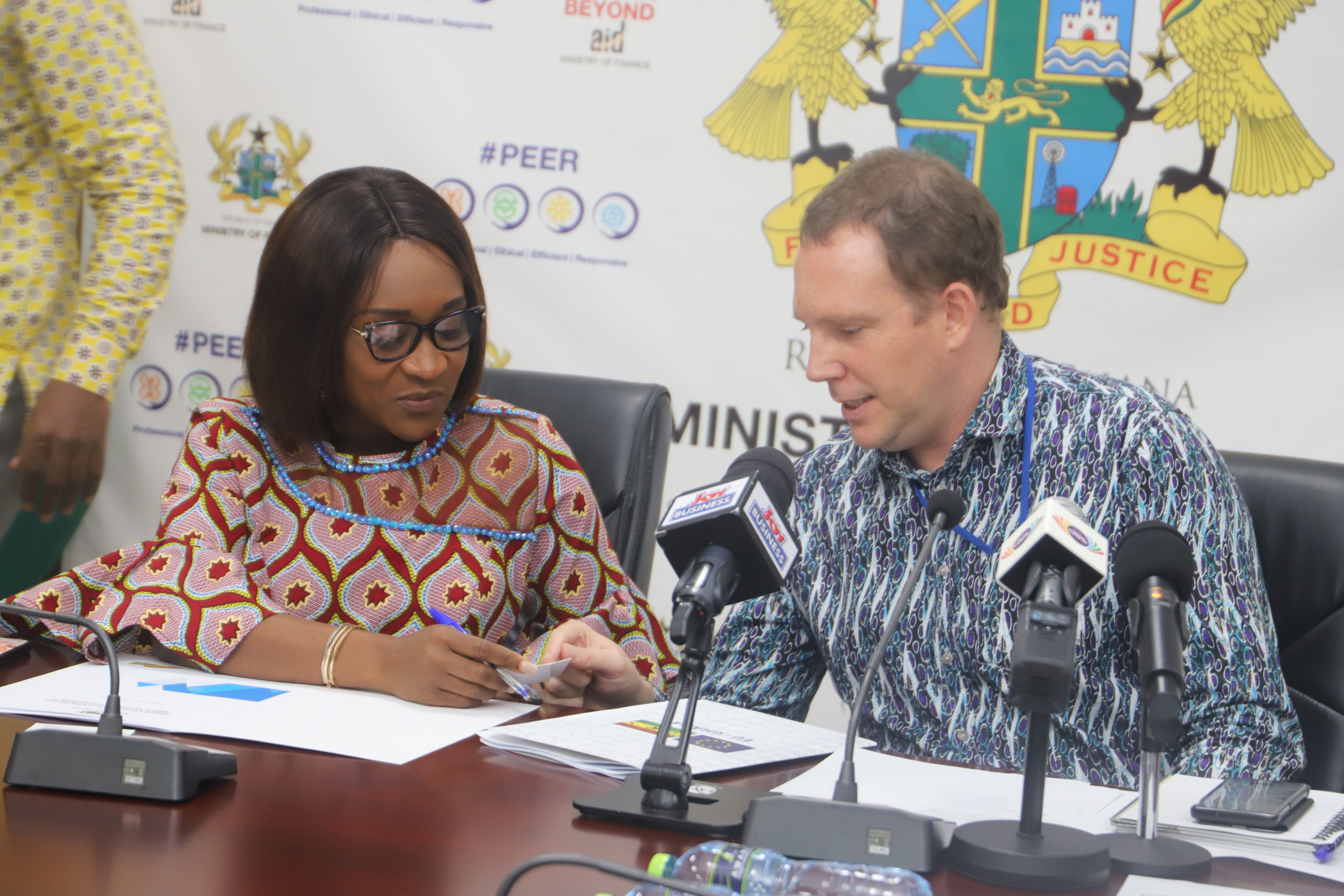
Ghana Cocoa Board (COCOBOD) has drawn the attention of the European Union to its unfavorable cocoa pricing legislation.
Chief Executive Officer of the Board, Mr Boahen Aidoo, while engaging a four-member delegation from the European Union in Accra this week, stated that the right price must be paid for Africa’s cocoa.
For him, a revision is imperative since “cocoa is the only crop which has preserved Ghana’s forest and supported global effort.”
Ghana is the second largest supplier of cocoa in the world. The Anglophone country is ranked after Côte d’Ivoire.
A review of the cocoa pricing legislation by the EU is key since it is the largest importer of cocoa, accounting for 60% of world imports.
The National Buffer Stock Company in 2022 revealed that of the $130 billion global chocolate industry, cocoa exported from Africa rakes in only a small slice.
On his part, Head of Cooperation, EU delegation to Ghana, Massimo Nina, who led the delegation, admitted that the present current pricing framework does not ensure the wellbeing of cocoa farmers as they are not able to rake in enough profit.
He gave the assurance that the European Union would take the necessary steps to improve the livelihoods of farmers it receives cocoa from.
In November 2022, the EU contributed €25 million to enhance the economic, social and environmental sustainability of cocoa production in Côte d’Ivoire, Ghana and Cameroon.
With regards to pricing, COCOBOD has introduced the Living Income Differential (LID) policy to mitigate poverty among cocoa farmers in Côte d’Ivoire and Ghana.
Again, the Board has put in place the Cocoa Management System (CMS) to ensure cocoa traceability and sustainability, an initiative that has received commendation from the European Union.
“I must say your processes towards ensuring sustainability, traceability and elimination of child labour within the sector are on a good track,” Massimo Nina said.
Meanwhile, COCOBOD has assured its commitment to maintaining its status as the best producer of premium quality cocoa in the world, while ensuring that cocoa cultivation is devoid of deforestation and use of services of children in cocoa farms.
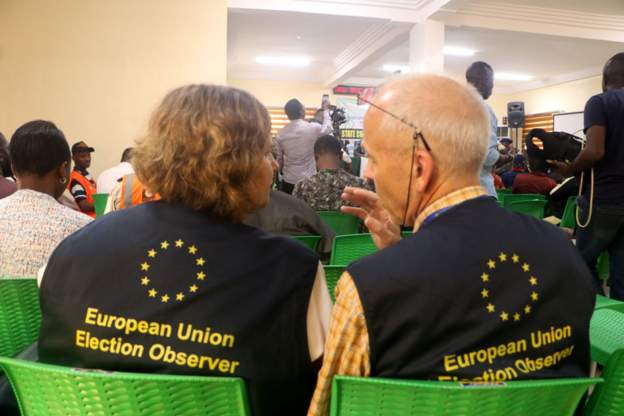
An EU observation team has criticized the lack of openness and operational mistakes in the Nigerian election.
Throughout the election’s planning, it was stated that there was faith in the electoral body’s independence and expertise.
However the observers noted that a lack of good preparation and communication throughout the process, especially on election day, contributed to a decline in public confidence.
The observers observed that some polling places opened their doors late and that voting procedures weren’t always followed.
They said the uploading of the results using an electronic system did not work, raising concerns as transmission of presidential election results forms was delayed.
The observer team has urged stakeholders in the election to uphold peace until the process is completed and called for any disputes arising to be addressed through legal channels.
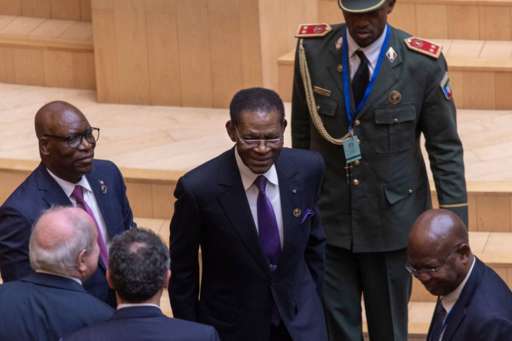
Vice president of Equatorial Guinea,Teodoro Nguema Obiang Mangue, has rejected a European Parliament resolution that blames Equatorial Guinean authorities for the death of opposition leader Julio Obama Mefuman.
“The government of Equatorial Guinea vehemently rejects and dismisses the unfounded accusations made by the European Parliament regarding the alleged human rights violations in our country, through its unfortunate resolution,” said Obiang Mangue, in a post on his Twitter account.
In a series of posts, Obiang Mangue, who is also the son of President Teodoro Obiang Nguema Mbasogo, accused the European Parliament of resorting to a “colonial and paternalistic discourse” and of disparaging Equatoguinean institutions and its representatives.
Mr Mefuman, a Spanish national and member of the opposition Movement for the Liberation of the Third Republic of Equatorial Guinea (MLGE3R), was accused by the authorities of plotting to overthrow the government.
According to the MLGE3R, Mr Mefuman and three other dissidents were lured to South Sudan under false pretences and then forcibly flown to Equatorial Guinea where they were tortured over an alleged coup plot.
On 16 January, Equatorial Guinea’s Foreign Minister, Simeon Oyono, stated that Mr Mefuman had died in a hospital in the eastern town of Mongomo in Wele-Nzas province, as a result of an illness he had been suffering from.
Marc Tarabella and Andrea Cozzolino are in custody. It is related to an inquiry into allegations of bribery and corruption involving the Gulf nation of Qatar and several members of the European Parliament.
In relation to the “Qatargate” corruption scandal that shook the European Parliament in December, authorities detained two EU lawmakers on Friday.
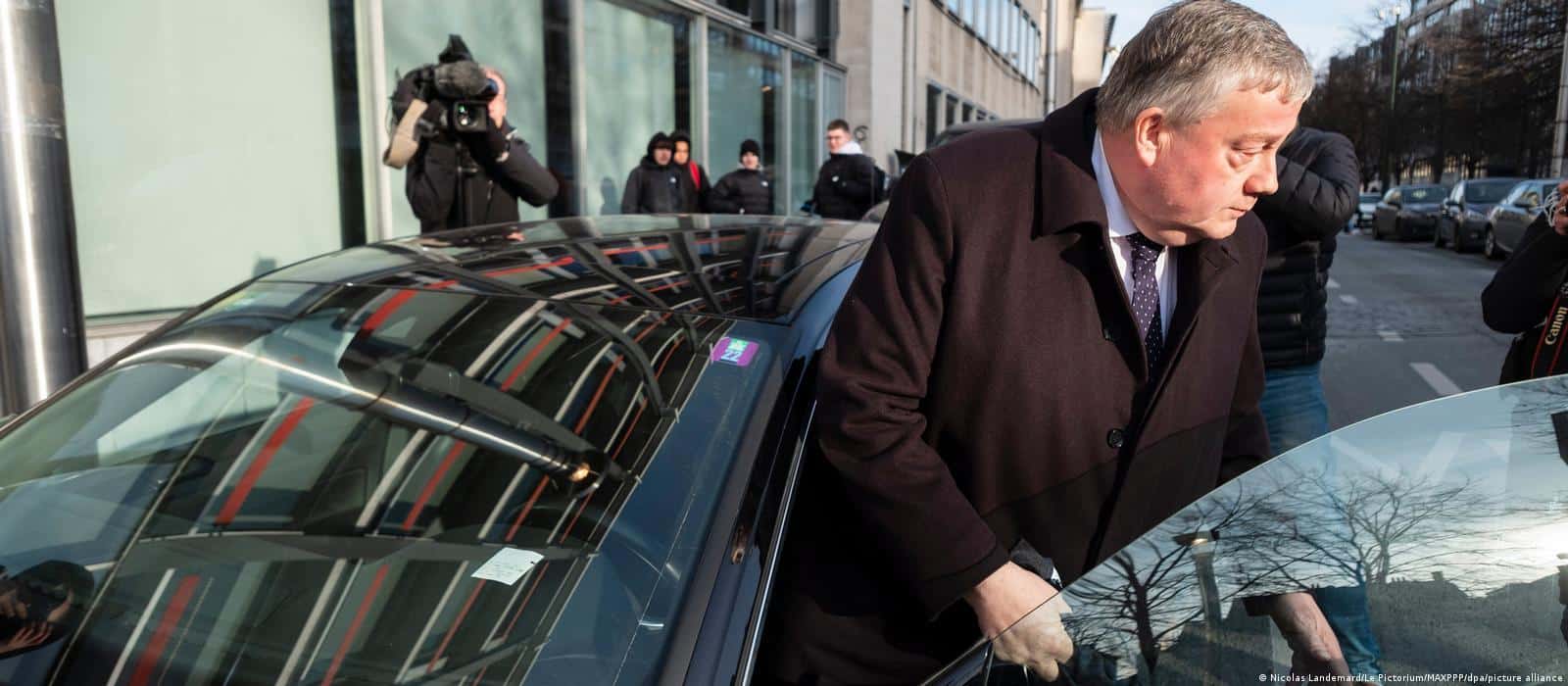
Marc Tarabella, a member of the European Parliament, was questioned by Belgian prosecutors on Friday afternoon. Police had previously carried out “several raids” at his Anthisnes residence, the town hall, and a bank safe deposit box.
On behalf of Belgian prosecutors, Italian finance police detained Andrea Cozzolino on Friday at a clinic in Naples.
The two Members of the European Parliament are accused of accepting bribes, a charge they both deny.
European Parliament waives suspects’ immunity
The arrests come after the European Parliament voted to waive the immunity of Tarabella and Cozzolino last week.
Before the vote, a parliamentary report compiled on Tarabella alleged that he “may have been involved in acts of corruption connected with the interference by one or more states aimed at influencing debates and decisions taken by the European Parliament.”
Both men have also been expelled from the center-left Socialists and Democrats group.
Italian member of the European Parliamentt Andrea Cozzolino was arrested at a clinic in Naples
What is the ‘Qatargate’ corruption scandal?
In December 2022, police raided a number of homes, offices and hotels in Brussels and Italy and found roughly €1.5 million ($1.6 million) in cash.
Four people were charged with corruption, money laundering and membership in a criminal organization after the arrests: Greek then-Parliamentary Vice President Eva Kaili; her partner, Italian Francesco Giorgi; Italian former European Parliament legislator Pier Antonio Panzeri; and Niccolo Figa-Talamanca, the former head of an NGO.
In January, Panzeri struck a deal with prosecutors to share information in exchange for a lighter sentence.
Belgian media reported that he admitted to giving Tarabella “between €120,000 and €140,000 ($128,000 and $150,000)” for handling matters linked to Qatar.
Tarabella’s lawyer confirmed that the member of the European Parliament had visited Qatar twice.
The attorney however added that he had been fully transparent about trips to construction sites and work camps, and was focused on addressing human rights issues and freedom of expression.
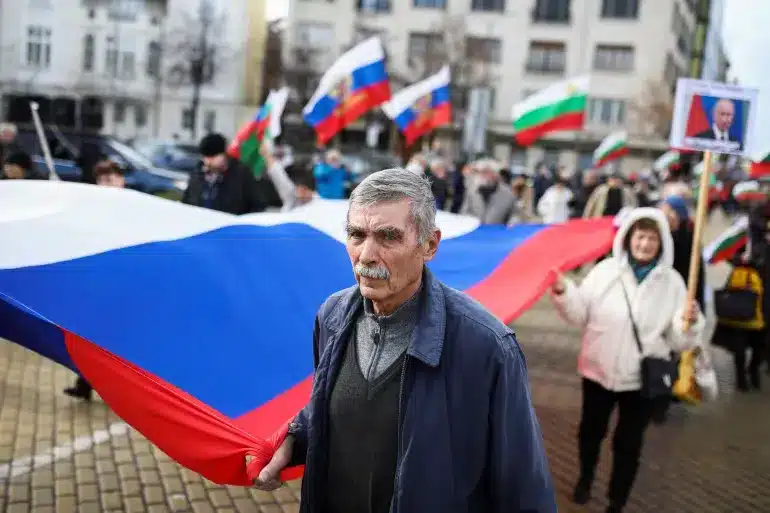
Despite recent memories of Russian aggression and occupation, some Eastern European countries still fall for Russian disinformation.
Russia’s large-scale invasion of Ukraine, launched a year ago, changed Europe overnight. It has set in motion tectonic shifts in political and economic relations, disrupting energy markets and upending existing supply chains. It has challenged the very core of the post-World War II European project: peace.
The brutal attack on Ukraine has been particularly unsettling for Eastern Europe, which has relatively recent memories of Russian hostility and occupation. This explains why there was such significant support in the region for severe sanctions on Russia, financial, military, and humanitarian aid forUkraine, reinforcement of NATO’s eastern flank and a warmwelcome for millions of Ukrainian refugees.
Yet, there are some countries in Eastern Europe that still harbour baffling sympathies for Russia, despite having faced Russian aggression in the past. Slovakia, Bulgaria and Hungary have stood out over the past year as particularly pro-Russia in their attitudes.
A September poll conducted in Slovakia shows that the majority of Slovaks would welcome a Russian military victory over Ukraine. In another survey conducted in May, only 33 percent of Bulgarians and 45 percent of Hungarians perceived Russia as a threat. Hungary, Slovakia, and Bulgaria also tend to show the weakest support in the region for European Union sanctions against Russia, according to a Eurobarometer survey conducted in the fall of 2022.
These attitudes have been reflected in government policies and rhetoric. Bulgaria and Hungary are the only NATO and EU members to have officially refused to deliver arms to Ukraine, echoing the popular belief that doing so would drag these countries into the conflict. Bulgaria’s previous government had to secretly provide Kyiv with ammunition and fuel, concealing the fact from the public.
While the Slovak government has extended bold and open help to Ukraine, including supplies of heavy weaponry, and is among its top backers internationally in terms of aid given as a percentage of gross domestic product (GDP), it has sided with Hungary when it comes to economically uncomfortable decisions, such as last year’s EU oil ban, for which it negotiated an exemption.
Both Bratislava and Budapest have also threatened to pay for Russian gas in roubles, if push came to shove, following Moscow’s decision to receive gas payments only in its currency. The Hungarian administration has repeatedly blocked sanctions against Russia in Brussels, while ramping up domestic anti-EU propaganda.
The persistent pro-Russian sentiments in these three countries have a lot to do with recent history and Russian opportunism.
The transition from communism in Eastern Europe came with high expectations for freedom, democracy and prosperity that have not always been met. The pursuit of the Western model of development not only failed to deliver in the eyes of some Eastern Europeans, but produced feelings of inadequacy and disillusionment.
This disappointment created a space for foreign malignant interference, buttressed by the growth of social media and other unregulated digital spaces in the past 15 years. Moscow, using its Cold War propaganda toolkit, cleverly tapped into these anxieties and irrational nostalgia for the “comfort” of communism, exploiting the ideas of pan-Slavic unity, and similarities across languages, history, and culture.
Of course, these strategies succeed better where weak democratic fundamentals enable them to. Surging energy prices, the cost-of-living crisis, poverty, and high inflation have also fed popular frustration and further fuelled pro-Russia sentiments.
This is not just Slovakia, Bulgaria and Hungary’s problem, but the EU’s at large and it must be addressed. Clinging to such attitudes perpetuates the long-standing east-west rift within the EU, weakens the EU resolve on backing Ukraine, and opens the door to Russia’s “divide and conquer” tactics.
Tackling the economic crisis and intergenerational change in institutions can help mitigate some factors that feed Euroscepticism and pro-Russia sentiments. But they are in no way a comprehensive solution.
Pro-Russian propaganda across Eastern (and Western) Europe should be tackled head-on.
The average share of Eastern European households withinternet access has risen markedly compared to a decade ago, to 93 percent in 2022, providing malignant actors with an excellent opportunity to reach the masses. Social media platforms have been, indeed, shaping the ways in which events – such as the COVID-19 pandemic or the war in Ukraine – are understood, narrated, and remembered.
That is why Moscow has ramped up its disinformation campaign after the full-scale invasion of Ukraine. Restrictions imposed by the EU on its propaganda channels, such as RT and Sputnik, have not limited the reach of its fake news.
The Kremlin has not only looked for new online channels to reach targeted audiences, but also weaponised its diplomats and expanded a network of paid commentators in various European countries, who push its propaganda on traditional media channels. In Bulgaria, for example, a senior member of the previous government revealed that public figures are paid 2,000 euros ($2,150) to spread pro-Kremlin propaganda in the public space.
There are several things that can be done to take the narrative back. In Europe, the war has highlighted the benefits of information space regulation, personal data protection, policies that increase the transparency of online platforms, and understanding of algorithms and content moderation.
Awareness campaigns that caution users about online spaces’ misuse and risks should be instituted to shield the general public, especially vulnerable groups, such as the elderly, as social media platforms are now a dominant source of information, as well as a space for social interaction.
Brussels is also late to adopt policies on digital literacy for children and young adults. In a 2021 study, only about half of 15-year-olds in the EU reported being instructed on how to detect fake or biased information, despite the pandemic having hastened the trend towards internet use and online learning. The displacement of traditional, more carefully curated information sources, such as encyclopedias and journals, demands new skills, including fact-checking and critical thinking, for students and teachers to be able to navigate this new complexity.
Indeed, information resilience may look like an uphill battle, but it is crucial for the EU to pursue it. The unhindered spread of falsehoods can threaten the integrity and security of entire nations and undercut an effective EU response to the war in Ukraine.
DISCLAIMER: Independentghana.com will not be liable for any inaccuracies contained in this article. The views expressed in the article are solely those of the author’s, and do not reflect those of The Independent Ghana
In light of the conflict in the Ukraine and China’s challenges, Brussels is the spot for the leaders of Southeast Asian nations.
In Southeast Asia, the EU has pledged to invest billions of dollars as leaders sought to strengthen ties at a summit in the face of the conflict in the Ukraine and challenges from China.
In Brussels on Wednesday, the European Union and the Association of Southeast Asian Nations (ASEAN) held their first formal summit.
“There might be many, many miles that divide us, but there are much more values that unite us,” European Commission President Ursula von der Leyen told the gathered leaders.
But different opinions about Russia’s war in Ukraine and concerns about tensions with China over a key shipping route for global trade loomed over the meeting.
The EU has been on a diplomatic push to galvanise a global front against Moscow as its invasion has sent economic and political shock waves around the world.
ASEAN’s 10 nations – nine of which were represented, after Myanmar’s military leadership was not invited – have been divided in their response to the Kremlin’s war on Ukraine.
Singapore has gone along with the West on Russia, while Vietnam and Laos, which have close military ties to Moscow, have remained more neutral.
Along with Thailand, they abstained from a United Nations vote in October condemning Russia’s attempted annexation of regions of Ukraine seized since February.
Final declaration
The diverging views led to intense wrangling over a final declaration from the summit as the EU pushed for stronger language to condemn Moscow.
A draught of the final statement said “most members” decried Russia’s war, but conceded there were also “other views and different assessments”.
While Europe pressed for a tougher response to Russia, another global giant figured prominently at the summit.
Chinese claims over the South China Sea have set it against some neighbours and sparked fears in Europe over trade flows through the key global thoroughfare.
But China remains the biggest trade partner for ASEAN and many in the region are wary of distancing themselves from their giant neighbour.
The EU is eager to pitch itself as a reliable partner for southeast Asia’s dynamic economies amid the growing rivalry between Beijing and Washington.
The EU and ASEAN are each other’s third-largest trading partner and Europe sees the region as a key source of raw materials and wants to increase access to its booming markets.
Europe’s vulnerabilities
EU nations are pushing to diversify key supply chains away from China as the war in Ukraine has highlighted Europe’s vulnerabilities.
Von der Leyen offered an investment package over the next five years worth 10 billion euros ($10.6bn) under the EU’s Global Gateway strategy designed as a counterweight to China’s largesse.
“There is a battle of offers today in the geopolitical arena, not only a battle of narrative,” said EU foreign policy chief Josep Borrell. “We have to offer more.”
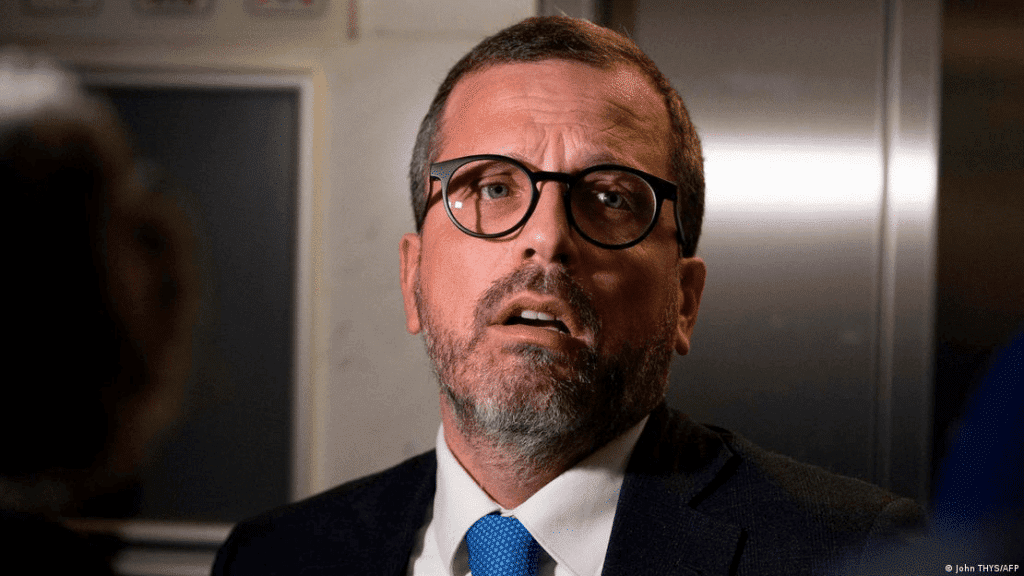
Heads of state pose for a family picture at the EU-ASEAN summit [John Thys/AFP]
ASEAN and the EU suspended their push for a joint trade deal more than 10 years ago, but the bloc’s top officials said they hoped to relaunch efforts for a broad agreement.
So far, deals with Vietnam and Singapore are in place, and the EU is looking now to make progress with ASEAN’s largest economy Indonesia and to resume talks with Malaysia, the Philippines and Thailand.
One issue that risked clouding discussions was a new law in Indonesia criminalising sex outside marriage that has sparked fears for foreign visitors to the country.
Indonesia’s President Joko Widodo insisted though that the EU-ASEAN relationship needed to be based more on “equality”.
“There must be no imposition of views,” he said. “There must not be one who dictates over the other and thinks that my standard is better than yours.”
Balkan nation’s candidacy for EU membershipgets support from bloc’s member states.
Bosnia has been given candidate status to join the EU by member states, beginning a protracted process to become a member.
The European Union’s willingness to consider letting in more of its eastern neighbours has been at a standstill for years, but Russia’s war on Ukraine has given it new life.
The EU is worried that if countries hoping to join the bloc are denied entry, other powers, like Russia or China, may expand their influence into the Balkans.
During a meeting in Brussels on Tuesday, European affairs ministers from the 27 member states gave the green light to Bosnia becoming a candidate after the European Commission, the bloc’s executive arm, in October recommended they launch the membership process.
The step is expected to be signed off formally by EU leaders at a summit in Brussels on Thursday.
Czech Minister for European Affairs Mikulas Bek, whose country holds the bloc’s rotating presidency, said member states were “sending a strong message of its commitment to EU enlargement”.
‘Chance for progress’
Bisera Turkovic, Bosnia’s foreign minister, said becoming an EU candidate will help the country access new funds and investments.
“Economically, investors from around the world will see in Bosnia … a clear positive side and chance for progress,” she said.
The move comes despite long-standing concerns over the political situation in Bosnia, a country of three million people burdened with ethnic divisions since its devastating war three decades ago.
It remains partitioned between a Serb entity and a Muslim-Croat federation connected by a weak central government.
It has an administrative system created by the 1995 Dayton Peace Agreement that succeeded in ending the conflict in the 1990s but largely failed in providing a framework for the country’s political development.
EU Enlargement Commissioner Oliver Varhelyi said in October that Bosnia needs reforms on issues that include the judiciary, battling corruption, and constitutional and electoral changes.
Bosnian politicians say it is high time the country be granted candidate status.
“It is time for the people of Bosnia and Herzegovina to receive a positive message from the European Union,” Denis Becirovic, the Bosnian member of the country’s tripartite presidency, said last week. “But of course, that will only be the beginning of the real work.”
A stand-off has seen Bosnia’s Serb entity, the Republika Srpska, block state institutions and cause “virtual paralysis” in the reform process, the EU has said.
There are also concerns over calls by Serb leaders for closer ties with Russia, and the entity’s nationalist President Milorad Dodik has vowed to stall the push towards the EU if it means more centralisation of power in Bosnia.
Others in the queue
Bosnia will join seven other nations with candidate status: Turkey, North Macedonia, Montenegro, Serbia, Albania, Moldova and Ukraine.
The process to join the European Union can take many years as candidates implement reforms that have to be rigorously evaluated by Brussels.
It can also grind to a halt, which is the case with Turkey’s bid.
Ukraine and Moldova were the most recent countries to be made candidates when they were given the status in June, four months after Russia unleashed its war on Kyiv.
Kosovo has announced its intention to apply for membership before the end of the year.
To combat climate change, EU members have agreed to impose a carbon dioxide emissions tariff on imports of polluting goods.
The member states of the European Union have decided to implement a system that will impose a tariff on imports of goods that cause pollution, including iron, steel, cement, fertilisers, aluminium, and electricity.
The Carbon Border Adjustment Mechanism (CBAM), a first-of-its-kind programme aimed at assisting European industries in their decarbonization, will cover industrial imports from the 27 member states of the regional bloc, prioritising the most polluting goods.
“CBAM will be a crucial pillar of European climate policies,” said Mohammed Chahim, a member of the European Parliament from the Netherlands, in a statement released by the parliament.
“It is one of the only mechanisms we have to incentivise our trading partners to decarbonise their manufacturing industry,” he said.
Chahim added that it would allow the EU to “apply the ‘polluter pays’ principle to our industry”.
The goal of the policy is that European companies are not undercut by cheaper goods produced in countries with weaker environmental rules.
The deal includes imported hydrogen which was initially not proposed by the EU, but the politicians pushed for in the negotiations.
Some details on the law, including its start date, will be determined later this week in related negotiations on a reform of the EU carbon market.
The test period for the agreement will begin in October 2023, during which importing companies will have to report their carbon emission obligations.
Compliant with WTO rules
“The new bill will be the first of its kind,” the European Parliament said in a statement, adding that it was designed to comply with World Trade Organization rules in order to push back on accusations of protectionism.
“This mechanism promotes the import of goods by non-EU businesses into the EU which fulfil the high climate standards applicable in the 27 EU member states,” said Jozef Sikela, the Czech Republic’s minister of industry and trade.
“This will ensure a balanced treatment of such imports and is designed to encourage our partners in the world to join the EU’s climate efforts.”
Currently, the EU gives domestic industry free CO2 permits to shield them from foreign competition, but plans to phase out those free permits when the carbon border tariff is phased in, to comply with WTO rules.
How quickly that phase-in happens will be decided in the carbon market talks.
The tariff is part of a package of EU policies designed to help the world avoid disastrous climate changeby cutting EU emissions 55 percent by 2030 from 1990 levels.
In an investigation into alleged bribes from the World Cup host Qatar, Belgian investigators searched offices at the European Parliament in Brussels on Monday.
Since Friday, there have been 20 searches conducted in Belgium, and parliament president Roberta Metsola warned MEPs that “democracy is under attack.”
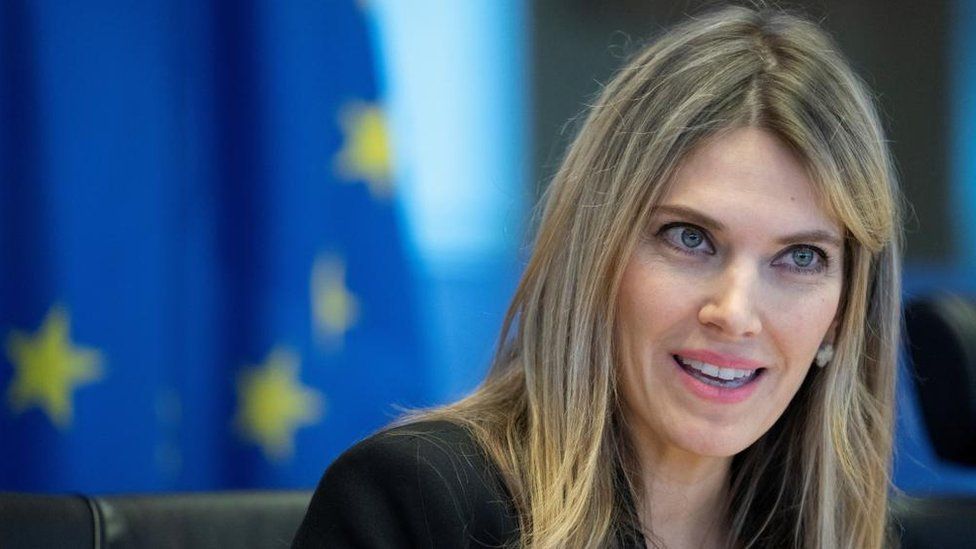
Four people have been taken into custody by Belgian police, including Greek MEP and vice-president of the European Parliament Eva Kaili.
Any wrongdoing has been refuted by Qatar. On Tuesday, MEPs will discuss the scandal.
Since Friday, the IT resources of 10 parliamentary employees have been “frozen” to prevent the disappearance of data necessary for the investigation.
The four suspects arrested by Belgian police have been charged with “participation in a criminal organisation, money laundering and corruption”, prosecutors said in a statement on Sunday.
Ms Kaili – an MEP for eight years – was suspended from her duties as one of 14 vice-presidents by parliament president Metsola.
She has also been suspended from the parliament’s Socialists and Democrats Group and expelled from the Greek centre-left Pasok party.
IMAGE SOURCE,REUTERS Image caption, Eva Kaili was arrested on Saturday and has reportedly had her assets frozen
Prosecutors in Greece have reportedly frozen all of Ms Kaili’s assets.
Six people were detained on Friday as part of the investigation into allegations that Qatar bribed EU officials to win influence. Two were later released.
No suspects have been publicly named, but Ms Kaili is understood to be among those who have been indicted.
The three other accused are all Italian citizens and her partner Francesco Giorgi, who is a parliamentary assistant, is among those reportedly charged.
The BBC’s Brussels correspondent, Jessica Parker, says details released by Belgian authorities in the last few days left many people’s jaws on the floor in EU circles.
MEPs who spoke to our correspondent say they are shocked by both the scale and blatancy of the accusations.
‘European democracy under attack’
European Commission President Ursula von der Leyen said the accusations were “very serious” and called for the creation of a new ethics body to oversee the bloc.
Ms Metsola vowed to MEPs that the parliament’s integrity would be restored.
“European democracy is under attack and our free and democratic societies are under attack,” she said.
Watchdogs and MEPs said the bribery investigation could represent one of the biggest corruption scandals in the parliament’s history.
Prosecutors said they suspected a Gulf state had been influencing economic and political decisions of the parliament for several months, especially by targeting aides.
Local media has named the state as Qatar, although the Qatari government said any claims of misconduct were “gravely misinformed”.
Ms Kaili’s responsibilities as vice-president include the Middle East. She has been a defender of Qatar in the past.
The European Parliament is the EU’s only directly elected institution. Some 705 members of parliament, elected by voters in the 27 nations which make up the EU, meet to scrutinise proposed legislation and vote through European law.
MEPs generally enjoy immunity from prosecution, but not in cases where “a member is found in the act of committing an offence”, the parliament says.
A Belgian judge has charged four people with receiving money and gifts from a Gulf state in order to influence decisions in the European Parliament, putting the European Union’s credibility at risk.
Prosecutors searched 16 homes in Brussels on Friday and seized 600,000 euros ($631,800) as part of an investigation into money laundering and corruption.
Initially, six people were detained. Prosecutors said in a statement on Sunday that four people had been charged and two had been released. They did not name any of the individuals involved.
Prosecutors said they had suspected for months that a Gulf state was trying to influence decisions in Brussels.
As various media outlets reported that Qatar was the Gulf state at the centre of the allegations, a Qatari official said the country “categorically rejects any attempts to associate it with accusations of misconduct”.
“Any association of the Qatari government with the reported claims is baseless and gravely misinformed,” the official said in a statement sent to Al Jazeera on Sunday.
“The State of Qatar works through institution-to-institution engagement and operates in full compliance with international laws and regulations,” the official added.
‘Very worrisome’
European Union Foreign Affairs chief Josep Borrell said on Monday that the news is “very worrisome”.
Borrell said the investigation did not involve anyone from the EU’s diplomatic service.
“There is nothing and no one being referred to neither from the External Action Service nor from the delegations,” he said.
The European Parliament said on the weekend it had suspended the powers and duties of one of its vice presidents, Greek socialist Eva Kaili, in light of the Belgian investigation.
The Greek socialist PASOK party said in a statement that it was expelling Kaili from its ranks.
It was not immediately clear if she had been charged in the case. Her office did not answer telephone calls or respond to an email requesting comment.
Prosecutors said they had also searched the home of a second EU politician on Saturday, without detaining anyone.
Belgian Socialist party member Marc Tarabella confirmed it was his home and that a computer and mobile phone had been taken.
“The justice system is doing its work of gathering information and investigating, which I find totally normal. I have absolutely nothing to hide and I will respond to all questions of the investigators,” he said in a statement.
Credibility at stake
European Economics Commissioner Paolo Gentiloni told Italy’s Rai 3 television that the case appeared to be “very serious”.
“If it were confirmed that someone took money to try to influence the opinion of the European Parliament, it will really be one of the most dramatic stories of corruption in recent years,” he added.
Irish Foreign Minister Simon Coveney said on Monday that the news is “damaging”.
“This is a scandal that we need to expose the truth around so we can ensure it doesn’t happen again,” Coveney told reporters in Brussels.
The credibility of the European Union is at stake, German Foreign Minister Annalena Baerbock warned on Monday.
“This is an unbelievable incident which has to be cleared up completely with the full force of law,” she told reporters as she arrived for a meeting with her EU counterparts in Brussels.
“This is about the credibility of Europe, so this has to trigger consequences in various areas.”
The European Parliament is due to vote this week on a proposal to extend visa-free travel to the EU for Kuwait, Qatar, Oman and Ecuador.
The number of UKexporters has decreased by 15%, which means the government will fall short of its goal of negotiating post-Brexit trade agreements.
By the end of this year, the Conservatives will have agreements covering 80% of UK trade, as pledged during the 2019 election.
Recent data indicates that it will only be 63%.
A government source claimed that while a trade agreement with the US had been essential to achieving the goal, the Biden administration was not giving it a top priority.
The government also set a target this year to agree to a free trade deal with India by Diwali, on 12 November, which was missed.
Deals have been signed with the EU and 71 countries including Australia, New Zealand and Japan.
The Japanese deal was criticised earlier this year after government figures showed exports in UK goods and services had fallen to that country in the past year.
Former Environment Secretary George Eustice also criticised the Australia deal, arguing it was “not actually a very good deal for the UK”.
A Department for International Trade source said: “We’ve set our sights high but recognise to meet this ambition we need a deal with the US, and it is clear the Biden Administration are not prioritising negotiating trade deals with other countries.
“We’re ready to progress talks when the US are, and in the meantimeare working hard to secure trade wins for British firms such as removing barriers to American markets worth millions of dollars, resolving disputes like the steel and whisky tariff issues, and pursuing agreements with individual US states.”
Separately, HM Revenue and Customs data shows the number of UK firms classed as exporters fell from 149,443 in 2020 to 126,812 in 2021.
‘Ceased all trade with Germany’
IMAGE SOURCE, DAVID OVERTON
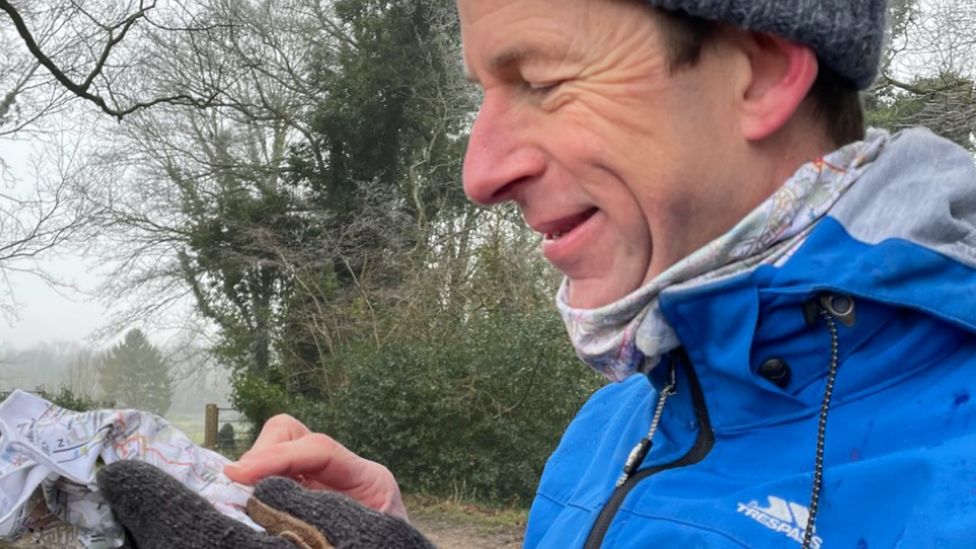
David Overton runs SplashMaps, which produces fabric maps including OS and Michelin maps that are waterproof.
They sell to consumers, but also to the military.
Mr Overton said they have always sold to other countries – predominantly the US, but also to Europe.
Their third biggest export destination was Germany, but Mr Overton says the company has ceased all trade with Germany now because of changes since Brexit, resulting in a 2-5% drop in turnover.
He told the BBC he noticed all his exports to Germany were being “bounced back” to the UK.
He realised this was due to an EU directive on plastics and waste in packaging, which Germany requires exporters to sign up for through a register called LUCID.
“We didn’t know there was a registration process,” he said.
“I think what the government could really do is pay for the expertise to get these messages out.”
Exporters fell in every nation and region of the UK, but the decline was steepest in the South East of England (23%) and the North West of England (15%), with the lowest decline being in Northern Ireland (4%), the figures show.
Northern Ireland is the only part of the UK that has remained in the EU’s single market, which was agreed to prevent a hard border on the island of Ireland but has led to checks on some goods travelling from Great Britain to Northern Ireland.
Tina McKenzie, of the Federation of Small Businesses, said firms were seeing a “sustained suppression of exports” since the UK’s trade deal with the EU came into force.
Labour’s shadow international trade secretary Nick Thomas-Symonds said the data highlighted a “worrying future trend” and showed the government had “failed to provide the support necessary for exporters”.
He said Labour would remove barriers to trade with the EU, but ruled out seeking to re-join the single market or customs union – or return to freedom of movement.
Instead, the party would seek a veterinary agreement to reduce barriers to agricultural exports, and “sort out” the Northern Ireland protocol that has increased checks between Great Britain and Northern Ireland, he told the BBC.
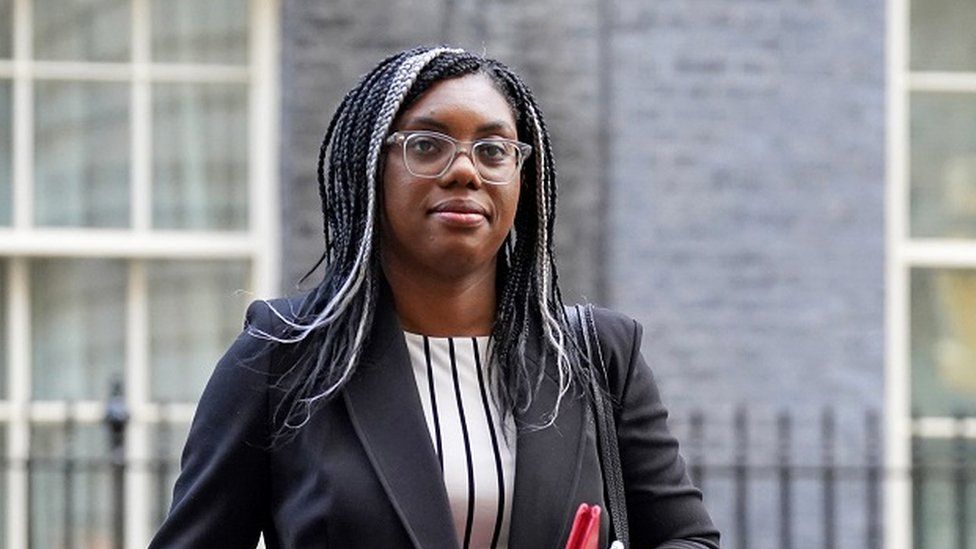
IMAGE SOURCE, STEFAN ROUSSEAU Image caption, Kemi Badenoch says the full impact of Brexit has yet to be seen
Labour would also seek mutual recognition of professional qualifications to allow more service industries to trade with the EU, seek “equivalent” data protection rules to enable digital services to compete, and find “flexible labour mobility arrangements” for musicians and artists seeking short-term visas to tour in the EU.
On Wednesday, International Trade Secretary Kemi Badenoch said the UK “should be doing better” on trade, but was recovering from global factors such as Covid and the war in Ukraine.
She told a Commons committee the UK had fully left the EU only at the beginning of 2020, and that “the full impact of what we’re going to see post-Brexit and all of the free trade agreements is yet to be seen”.
Ms Badenoch’s department said exports were “bouncing back” after the pandemic and had reached £748bn in the last 12 months, an increase of £132bn.
The European Union (EU) says its Interim Economic Partnership Agreement (iEPA) with Ghana can be instrumental in furthering Ghana’s ambition of becoming a regional and continental trade hub.
The iEPA is a free trade agreement between Ghana and the European Union.
On the EU’s side, it has been implemented since 2016 with the removal of all import duties applied on products exported from Ghana to the EU. From Ghana’s side, it is being implemented since 2021 with a progressive removal of tariff barriers over a 10-year period.
Speaking at the opening ceremony of a conference on “opportunities and challenges for businesses under the EU-Ghana Interim Economic Partnership Agreement”, the Head of the European Union Delegation in Ghana, Irchad Razaaly said the iEPA presents enormous opportunities for Ghanaian exporters as the EU import market is estimated to be worth over €2 trillion.
He said recent statistics pegged Ghana’s export to the EU to the tune of €2 billion.
“Data also suggests that in the last decade, trade flows have increased and are gradually diversifying for Ghana from raw materials to increasingly processed products”.
Mr. Irchad Razaaly said Ghana has enjoyed increasingly preferential access to the EU market. “More recently, with the entry into force of the landmark Economic Partnership Agreement (EPA) between the EU and Ghana in 2016, Ghana’s duty-free and quota-free access to EU markets was legally cemented”.
He added that the Agreement ensures stability, predictability and legal certainty for economic operators trading between the EU and Ghana, adding that “the Agreement also ensures that Ghana is able to protect its most sensitive domestic products (including poultry) from perceived import competition”.
The Head of the EU Delegation to Ghana explained how the Agreement also lowers the cost of importing machinery, technology and more, stating that this is paramount to enable value addition, support economic transformation and industrialisation, and make Ghana Beyond Aid a reality.
He noted, “Indeed, the Economic Partnership Agreement places Ghana in an ideal situation to take advantage of the market opportunities on the African continent. It enables Ghanaian businesses to import quality machinery at a cheaper price from Europe to be used for processing Made in Ghana products destined for the African market.”
In his speech, Deputy Trades and Industry Minister, Henry Krapa said Government remains committed to ensuring a constantly improved trading relation with the EU.
“That means we have to intensify our collaborative efforts, our stakeholder engagements and market sensitisation”.
He praised the Technical Assistance Team, the Compete Ghana Secretariat, the Ministry of Trade and Industry, the Ministry of Finance, Customs, and all other stakeholders for being excellent so far, and said it remains government’s expectation that the collaboration will be deepened even more.
The EU’s chief says the bloc must address “distortions” caused by a $430 billion (£349 billion) US plan to incentivize climate-friendly technologies.
The US Inflation Reduction Act (IRA) has been criticised by some EU members, raising concerns about a trade war.
There are fears that tax breaks will entice EUfirms to leave, putting European firms at a disadvantage.
President of the European Commission Ursula von der Leyen stated that the EU should “adjust our own rules.”
“Competition is good … but this competition must respect a level playing field,” she said during a speech in Belgium.
Under the IRA, American consumers will get incentives to purchase new and second-hand electric cars, to warm their homes with heat pumps and even to cook their food using electric induction.
US President Joe Biden has called it the most “aggressive action” his country has taken to tackle the climate crisis.
But European allies perceive it as anti-competitive and a threat to European jobs, especially in the energy and auto sectors.
Ms von der Leyen said the EU had to work with the US “to address some of the most concerning aspects of the law”.
She added that the EU must also “adjust” its own rules on state aid to spur public investment in the environmental transition.
The new legislation was raised during French President Emmanuel Macron’s trip to Washington to meet Mr Biden this week.
The US president said there could be “tweaks” made to make it easier for European firms to benefit from the subsidies package.
“I never intended to exclude folks who were cooperating with us. That was not the intention,” Mr Biden said.
“We’re back in business, Europe is back in business. And we are going to continue to create manufacturing jobs in America, but not at the expense of Europe.”
In an interview with the BBC’s US partner CBS News released on Sunday, Mr Macron said the issue was “fixable”, and his discussion with Mr Biden was “frank and fruitful”.
He said weakening Europe’s industry was “not the interest of the U.S. administration and even the U.S. society”.
European Union (EU) has donated five motorbikes with helmets and 50 document verification devices to the Ghana Immigration Service (GIS).
The donation, according to the EU, is to augment efforts by GIS to strengthen border security in Ghana. The donation is estimated at EUR 1Million.
Speaking at the handing-over ceremony, the Ambassador of the EU to Ghana, Irchad Razaaly, stated that “It will also be supporting Ghanaian law enforcement
agencies to acquire knowledge, skills, and tools to reinforce their efforts against international organised crime and insecurity on land.”
Receiving the donation on behalf of GIS, the Deputy Minister for the Interior, Naana Eyiah, commended the EU for their kind gesture. Expressing her appreciation, Madam Eyiah said, “we treasure the continuous support the EU continues to give the Ghana Immigration Service, as the Services strives to secure and protect Ghana’s borders, which in the long run strengthens regional security.”
This is not the first time the EU has donated to GIS. In August 2020, the EU provided COVID-19 emergency assistance to the GIS, by donating 15 laptops, five vehicles (three pick-ups and two minibuses), five motorbikes and personal protective equipment worth over €280,000.
The European Parliament bases its work on emotions, the Kremlin spokesperson Dmitry Peskov told Russian media as reported by TASS news agency, adding that Moscow takes its resolve into little consideration.
His remarks came after the EU institution labelled Russia a state sponsor of terrorism, a move that is not legally binding but rather symbolic.
“It’s no secret to us that in the recent years the European Parliament has had little love for us. In return, we have had little desire to take into account what’s going on there,” Peskov was quoted as saying.
“And emotions is such a changeable thing. Today they are Russophobic, tomorrow there will be something else. And then, maybe a moment of clarity will come,” he said, adding that Russia belived the European parliament lacked a professional approach.
Many on the far right and some on the left were outraged by the symbolic declaration of Moscow as a terrorist regime.
The European Parliament voted on Wednesday to label Russia a “state sponsor of terrorism” for its involvement in the Ukraine conflict.
“The deliberate attacks and atrocities carried out by Russian forces and their proxies against civilians in Ukraine, as well as the destruction of civilian infrastructure and other serious violations of international and humanitarian law, amount to acts of terror and constitute war crimes,” the European Parliament stated.
In total, 494 European Parliament (MEPS) voted in favour of the resolution, 58 opposed it, and 44 abstained.
The largely symbolic move is unlikely to make an impact, because the European Union – unlike the United States – does not have the legal framework to designate countries. Across the Atlantic, on the US list are North Korea, Syria, Cuba and Iran.
The EU established its terror list in 2001, following the September 11 attacks in New York.
It includes people, groups and entities and is reviewed at least every six months.
ISIL (ISIS) and al-Qaeda armed groups are among those currently on the list.
Which members voted against the resolution?
Russia is the first country to be declared a state sponsor of terrorism by the European Parliament.
However, members were not unanimous in their voting, with a larger proportion of the right-wing bloc of the Parliament against the association of Russia with terrorism.
Twenty-six members of the far-right political group Identity and Democracy voted against designating Russia as a sponsor of terrorism.
Here is a breakdown of votes by country, home country party, and member:
These French politicians who voted against the resolution are all members of the National Rally or Rassemblement National, which is led by Marine Le Pen.
Mathilde Androuët
Jordan Bardella
Aurélia Beigneux
Dominique Bilde
Annika Bruna
Patricia Chagnon
Marie Dauchy
Jean-Paul Garraud
Catherine Griset
Jean-François Jalkh
France Jamet
Virginie Joron
Jean-Lin Lacapelle
Gilles Lebreton
Thierry Mariani
Philippe Olivier
André Rougé
The following German politicians who voted against the resolution are all members of the far-right Alternative for Germany or Alternative für Deutschland party (AfD).
Christine Anderson
Gunnar Beck
Nicolaus Fest
Maximilian Krah
Joachim Kuhs
Guido Reil
Bernhard Zimniok
Czech MEPs, who are members of the populist Freedom and Direct Democracy party, or Svoboda a přímá demokracie:
Hynek Blaško
Ivan David
One member of the centre-right European Conservatives and Reformist Group voted against the resolution:
Emmanouil Fragkos, whose party in Greece is Greek Solution, or Elliniki Lusi-Greek Solution
Twelve members from the centre-left Progressive Alliance of the Socialists and Democrats voted against the resolution.
From Bulgaria – all with the centre-left Bulgarian Socialist Party:
Ivo Hristov
Tsvetelina Penkova
Sergei Stanishev
Petar Vitanov
Elena Yoncheva
From Germany – all with the Social Democratic Party of Germany or Sozialdemokratische Partei Deutschlands (SPD), which is the party of Chancellor Olaf Scholz:
Joachim Schuster
Dietmar Köster
From Italy – these three politicians belong to Partito Democratico or the Democratic Party:
Pietro Bartolo
Andrea Cozzolino
Massimiliano Smeriglio
From Slovakia:
Monika Beňová (SMER-Sociálna demokracia, or Direction – Slovak Social Democracy)
Robert Hajšel (Independent)
Ten members of the Left group in the European Parliament voted against the resolution:
From Belgium:
Marc Botenga (Parti du Travail de Belgique or Workers’ Party of Belgium – which is a Marxist party)
From Cyprus:
Niyazi Kizilyürek (Progressive Party of Working People – Left – New Forces)
From Czech Republic:
Kateřina Konečná (Komunistická strana Čech a Moravy, or Communist Party of Bohemia and Moravia)
From Germany (DIE LINKE. party, or The Left party):
Özlem Demirel
Martin Schirdewan
From Portugal (Partido Comunista Português, or Portuguese Communist Party – a Marxist-Leninist group)
Nicolas Bay (France – Reconquête!, or Reconquest – a nationalist party)
Francesca Donato (Italy – now an independent but formerly with the far-right Lega Nord, or Northern league headed by Matteo Salvini)
Marcel De Graaff (Netherlands – Forum voor Democratie, or Forum for Democracy, a right-wing populist party)
Lefteris Nikolaou-Alavanos (Greece – Communist Party of Greece)
Kostas Papadakis (Greece – Communist Party of Greece)
Miroslav Radačovský (Slovakia – Slovak PATRIOT, which is a right-wing party)
Milan Uhrík (Slovakia – Hnutie Republika or Republic – a far-right party)
Martin Sonneborn (Germany – Die Partei or The Party, which is a satirical party)
Tatjana Ždanoka (Latvia – Latvijas Krievu savienība or the Latvian Russian Union, which is backed by ethnic Russians and other Russian-speaking minorities)
Prime Minister Rishi Sunakhas stated that the UK will not consider pursuing any post-Brexit relationship with the EU “that relies on alignment with EU laws.”
It comes after reports that some government officials want to move toward a Swiss-style agreement with less trade friction and more migration.
Switzerland can easily trade with the EU, but it must follow some EU rules.
Mr Sunak told business leaders that one of the immediate benefits of Brexit was greater control over migration.
Speaking at the CBI conference in Birmingham he said: “I voted for Brexit, I believe in Brexit.
“I know that Brexit can deliver, and is already delivering, enormous benefits and opportunities for the country.”
He argued that the UK was now able to “have proper control of our borders”.
He also said the UK was free to pursue trade deals with “the world’s fastest-growing economies”.
Over the weekend, The Sunday Times reported that senior government figures were considering pursuing a Swiss-style deal.
Government ministers as well as Downing Street have denied the story, but it still prompted concern from some Brexit-supporting Conservatives.
Former minister Simon Clarke tweeted: “I very much hope and believe this isn’t something under consideration. We settled the question of leaving the European Union, definitively, in 2019.”
And Lord David Frost, who negotiated the existing deal, said: “I hope the government thinks better of these plans, fast.”
Switzerland is not a member of the EU, but does have a several agreements with the trading bloc, and has access to the single market for most of its industries. It also pays into the EU budget and has freedom of movement, meaning EU citizens can live and work in the country.
Last week, Chancellor Jeremy Hunt said he hoped the UK would be able to remove trade barriers with the EU but added that it would “take time”.
“Having unfettered trade with our neighbours and countries all over the world is very beneficial to growth,” he said.
He was speaking after delivering his Autumn Statement in which he confirmed the UK was in recession and that the economy was due to shrink further.
The chancellor’s statement was accompanied by an economic forecast from the Office for Budget Responsibility which said Brexit had had a “significant adverse impact” on UK trade.
Asked if Brexit had damaged UK trade, Home Office Minister Robert Jenricktold the BBC it was hard to separate the disruption caused by leaving the EU, the coronavirus pandemic and the war in Ukraine.
“There will be challenges and disruption as a result of fundamentally altering our relationship with the EU,” he said but added that it was too soon to say whether or not that is going to be to the UK’s long-term economic disadvantage.
He said the government was determined to take advantage of the opportunities provided by Brexit, pointing to plans for the regulatory regime of the financial services, life sciences and the green economy.
He also insisted the government did not want to make any fundamental changes to the UK’s relationship with the EU, arguing that the country had settled on the right approach.
The Minister of National Security, Albert Kan-Dapaah, has revealed that 346 terrorist attacks were recorded in Africa in the first quarter of 2022, with 49 per cent of them occurring in West Africa alone.
Also, he indicated that between July and September this year, 246 terrorist attacks resulting in 745 fatalities and 239 injuries were recorded in West Africa.
The minister was speaking at the opening of the two-day international conference on the Accra Initiative (AI), held in Accra on the theme ‘Accra Initiative: Towards a credible, preventive and coordinated response to challenges facing the Coastal and Sahelian States’.
The AI aims at preventing spillover of terrorism from the Sahel and to address transnational organised crime and violent extremism in member countries’ border areas.
Participants at the technical conference included representatives of relevant international governmental agencies, civil society organisations (CSOs), academia, think tanks, practitioners in the security sector and other multinational initiatives.
The conference, supported by the European Union (EU), would afford them the opportunity to reflect on measures and strategies deployed towards addressing the threat of terrorism and violent extremism and to come up with innovative approaches toward enhancing regional security.
According to Kan-Dapaah, enhanced collaboration was a key to countering terrorism in the region, adding that the heads of states of West African states in 2017 took pragmatic steps to address their common threats, hence the AI.
Describing the AI conference as timely, he said the deteriorating security situation in the Sahel and West Africa required the active collaboration and participation of all stakeholders including the media, CSOs, political leaders and academics among others, both at the national and regional levels.
The threat landscape he said had consistently changed, resulting in the frequent changes in security requirements among the citizenry.
“The geo-strategic dynamics, with direct influence on state survival keep undergoing mutations without warning. The threat posed by COVID-19 has also taught us that consolidating our efforts at the regional level is the best approach to secure our States.”
“This underscores the relevance of dialogue and multi-stakeholder engagement, not only at the national levels but also at regional levels, towards finding lasting solutions to the common security threats of West African States,” he added.
He mentioned that the prominence given to the threat of terrorism and violent extremism in recent times must not be interpreted as the trivialisation of other prevailing security threats such as cross-border crimes.
Executive secretary of the AI, Benedict Dere, on his part stated that it had become necessary to strengthen collaboration and cooperation between security and intelligent services through exchange of information and operational intelligence.
Throwing more light on the objectives of the AI, he said preventing terrorists and extremists from seeking refuge in a member State, dismantling terrorists networks and preventing the expansion of their cell and combating transnational organised crime were among its top priorities.
To achieve this, the AI he said relied on information and intelligence sharing, capacity building and the conducting of joint multinational operations.
Dere mentioned that the AI currently comprised of seven-member States which are Benin, Togo, Ghana, Burkina Faso, Côte d’Ivoire, Mali and Niger, adding that Nigeria was an observer State waiting to be fully incorporated as a full member of the AI.
The sun has come up again here, ending long two nights in Sharm el-Sheikh.
There have been exhausted negotiators, high peaks of drama and low moments of confusion.
Talks were deadlocked until Thursday when the EU put forward a proposal that rich nations would pay for climate damage in poor countries.
But progress was slow on Friday, and the 1800 deadline slowly ticked by – cue the start of bets on how late this COP would go.
Saturday
Suddenly on Saturday, the EU, quickly followed by other nations, dramatically revealed they were willing to walk away from COP without a deal. I spent the morning lurking around country offices trying to find out what was happening. The New Zealand delegation office kindly supplied me with an excellent coffee – but the important questions was – is COP collapsing?
The EU’s energy policy chief told Reuters that the EU expects its regulations to be completed before introducing a G7 plan on December 5 to cap the price of Russian crude oil.
In addition, the EU will prohibit the import of Russian crude oil and Russian oil products beginning on February 5.
“Our sanctions will cover crude for EU member states, so we will not buy Russian crude oil starting December 5, and we covered the possible oil price gap for international buyers with our eighth package of sanctions,” EU energy commissioner Kadri Simson said.
“If the G7 will decide the exact price cap level, we also will need a council mandate for that,” she said on the sidelines of the COP 27 climate summitin Egypt this week.”
In addition, a G7 plan, intended as an add-on to the EU embargo, will allow shipping services providers to help to export Russian oil, but only at enforced low prices.
The European Union on Monday granted 100 million euros to Tunisia, a country in the midst of a political and financial crisis.
The EU support program “aims to support economic recovery efforts and to consolidate the progress already made in the distribution of social aid to needy citizens and businesses,” said the EU delegation in Tunisia in a statement.
The first immediate disbursement of 40 million euros is granted to Tunisia under this program signed by the EU Ambassador to Tunisia, Marcus Cornaro, and the Minister of Economy and Planning, Samir Said.
The disbursement of the rest of the sum will be made “on the basis of effective progress in the implementation of structural reforms initiated by Tunisia,” according to the statement.
“We want to support as best we can the economic recovery following the pandemic of COVID-19, and help Tunisian households that suffer the consequences of Russian aggression against Ukraine on energy and food prices,” said Cornaro.
According to the statement, this gift “is part of the reforms agreed by Tunisia with the International Monetary Fund (IMF) for a future program.
Since the revolution of 2011, Tunisia has sunk into economic difficulties, aggravated by the Covid-19 pandemic, with growth at half-mast and very high unemployment.
Russia’s invasion of Ukraine in February deepened the crisis in a country highly dependent on grain and fuel imports, two sectors where prices are soaring.
Suffocating from a debt exceeding 100% of GDP, Tunisia obtained in mid-October an agreement in principle from the IMF for a new loan of some two billion dollars to be disbursed in installments starting in December.
In return, the government has committed to reforms including a gradual lifting of state subsidies for basic products (food and energy) and a restructuring of state-owned companies that have a monopoly in many sectors.
Prime Minister Justin Trudeau of Canada has accused China of attempting tomeddle in the country’s elections.
Mr. Trudeau accused China of engaging in “aggressive games” with democracies and targeting Canadian institutions.
It comes as local media reports that Canadian intelligence discovered a “secret network” of Beijing-backed candidates in recent elections.
China reportedly supported at least 11 candidates in the 2019 federal elections, according to officials who spoke with Mr Trudeau.
A Chinese foreign ministry spokesman said it has “no interest” in Canada’s internal affairs.
Citing unnamed intelligence officials, local broadcaster Global News reported that Beijing had directed funds to the candidates and that Chinese operatives had acted as campaign advisers to many candidates.
In one case, funding of C$250,000 (£160,000) was directed through the office of an Ontario-based provincial MP.
The operation, which was reportedly directed from China’s consulate in Toronto, also sought to place operatives within the offices of serving MPs in an attempt to influence policy, the outlet alleged.
And efforts were also made to “co-opt and corrupt” former Canadian officials in a bid to gain influence within political circles.
The attempted interference is believed to have targeted both major political parties – Mr Trudeau’s Liberal party and the opposition Conservative party. However, it is unclear whether the operation was successful.
“We have taken significant measures to strengthen the integrity of our elections processes and our systems, and will continue to invest in the fight against election interference, against foreign interference of our democracies and institutions,” Mr Trudeau told reporters on Monday.
“Unfortunately, we’re seeing countries, state actors from around the world, whether it’s China or others, are continuing to play aggressive games with our institutions, with our democracies,” he added.
Chinese foreign ministry spokesman Zhao Lijian said China has no interest in meddling in Canadian elections.
“State-to-state relations can only be built on mutual respect, equality and mutual benefit,” he told a press briefing.
“Canada should stop making remarks that hurt China-Canada relations,” he added.
The reports come after authorities said they were investigating accusations that China had opened unofficial “police” stations on Canadian soil.
Last month, Royal Canadian Mounted Police said they were investigating reports of “criminal activity in relation to so-called ‘police’ stations”, which have also been reported in a number of European countries.
Several EU states, including Ireland and the Netherlands, have already ordered China to close the police posts, which have reportedly been used to pressure opponents of the government to return to China and face criminal charges.
Dutch media found evidence that the so-called overseas service stations, which promise to provide diplomatic services, were being used to try to silence Chinese dissidents in Europe.
The European Union is looking into ways to help Ukraine’s energy sector, which has been harmed by Russian attacks for weeks.
During a visit to the Ukrainian capital of Kyiv on Tuesday, Energy Commissioner Kadri Simson confirmed the move.
“I am in Kyiv today to help scale up support to the Ukraine energy sector,” she said.
“I have witnessed the scale of destruction in Ukraine first hand and am making all efforts to increase financial, technical, and practical help.”
Ms Simson called Russia’s attacks “a cruel and inhumane tactic to cause human suffering as the winter is approaching”.
The European Union is looking into ways to help Ukraine’s energy sector, which has been harmed by Russian attacks for weeks.
During a visit to the Ukrainian capital of Kyiv on Tuesday, Energy Commissioner Kadri Simson confirmed the move.
The additional help will have to come from EU institutions, member states, international partners, and private donors, she said.
The commissioner travelled to Kyiv following weeks of Russian attacks that focused on Ukrainian civilian infrastructure, in particular power stations.
Ms Simson plans to meet Ukrainian energy companies to talk about how the EU, international partners, and the private sector can help.
She will also discuss the situation at the Russian-occupied Zaporizhzhianuclear power plant, the security of supply, and the future reconstruction of the energy system.
The European Union will send Kyiv 1.5 billion euros each month in 2023 to assist Ukraine in its struggle against Russia’s invading soldiers, according to the bloc’s leader.
European Commission President Ursula von der Leyen said that the EU had given Ukraine 19 billion euros this year. “It is very important for Ukraine to have a predictable and stable flow of income,” she said, adding that Kyiv estimated its monthly needs at 3-4 billion euros “for the basics.”
The EU chief told a news conference the EU would finance 1.5 billion euros per month of that, with the rest expected to come from the United States and international institutions.
“That will give a total of 18 billion for the next year – an amount Ukraine can count on and where there is a stable and reliable, predictable flow of income.”
When EU foreign ministers gather in Luxembourg next month, they are expected to agree on a mission to train 15,000 Ukrainian soldiers as well as an additional 500 million euros ($48.7 million) in funding for military transfers to Kyiv.
Two senior EU officials said the military training would start in mid-Novemberand take place on EU territory at one hub in Poland and another in Germany.
Previously, several EU countries have already been instructing Ukrainian troops on how to use specific weapons, which will continue.
The ministers are also expected to add a further 500 million euros to a fund that reimburses EU member states for arms delivered to Ukraine, bringing the total amount earmarked for arms for Kyiv to more than 3 billion euros.
The European Union (EU) on Friday signed an agreement to provide €10 million support Ghana’s food security and agribusiness value chain sectors.
The support is part of the € 600 million the EU has allocated to finance humanitarian food aid and food production in Africa.
The funds will specifically support families in the country to grow crops so that they can generate income and make food readily available and affordable on the local market.
It is also expected to help promote climate smart (adapting agricultural methods to climate change) and ecological initiatives in a number of agribusiness value chains including soybean, beekeeping and vegetable production in the country particularly in Northern Ghana.
The funds comes in the wake of global food shortages, hunger and economic shocks being experienced by people across the World due to the negative impacts of the COVID-19 pandemic and the ongoing Russia-Ukraine war.
The EU Charge d’ Affaires, Pieter Smidt Van Gelder accompanied by a six-member EU delegation presented a dummy cheque of €10 million to a Deputy Minister of Finance, Abena Osei-Asare who received it on behalf of government at a short ceremony at the Ministry of Finance in Accra.
The EU delegation were Ambassadors Daniela D’Orlandi of Italy, Jean Claude Galea Mallia of Malta and Jeroen Verheul of the Netherlands.
The rest were Jose Javier Blanco-Navarette of Spain, Tamas Endre Feher of Hungary and Franziska Jebens, Head of Cooperation of Germany.
Prior to the presentation, Mr Gelder said the emergency measure was adopted “in record time directly following the outbreak of the war and its negative consequences on global food security”.
He explained that the EU mobilised its member states to “join forces and fight together against the global food security crisis”.
He indicated that the new funds comes on top of “our 203 million Euro joint programming support already dedicated to Ghana for 2021-2024″.
Mr Gelder stated that the intervention will complement government’s efforts to reduce poverty, hunger and malnutrition especially in vulnerable areas most affected by high prices of food, fertiliser and fuel.
He said the funds would also strengthen the ongoing €132 million EU-Ghana Agricultural Programme (EU-GAP) which aims at increasing agricultural productivity, protection of natural resources, access to markets, infrastructure and capital for smallholder farmers.
Mrs Osei-Asare in her response, expressed gratitude to the EU for the support saying “we are grateful to the EU for its continuous support to Ghana’s development agenda since the beginning of our relationship in 1975”.
She noted that the EU had been a strategic partner of Ghana over the years with support to the country in sectors such as infrastructure development, good governance, agriculture and public financial management among others.
She recalled vividly the “flexibility” exhibited by the EU in the provision of €86.5 million to the country as Emergency Budget Support during the peak of the COVID-19 pandemic.
According to Amnesty International, Latvia “violently” forced migrants back into Belarusand even tortured some of them.
They say a recent complaint by the rights group, border guards beat and humiliated individuals trying to enter from Belarus into neighbouring Latvia.
Latvia’s government denied officials used undue force, and said the measures were due to “illegal crossings”.
Last year it declared a state of emergency, which suspended the right to seek asylum in four border areas.
Latvia says that means so-called pushbacks are allowed, even though they contravene EU law.
The state of emergency, which is still in place, was introduced after a surge in people trying to cross over the border from Belarus.
Amnesty International’s report details alleged abuses of power, arbitrary detention, ill-treatment, unsafe and unsanitary conditions, and even torture.
It quotes an Iraqi man named Zaki, who said he was pushed back and forth at the border more than 150 times in three months, including sometimes as many as eight times per day.
Another Iraqi man, Adil, said he and fellow migrants slept in the forest on the snow.
“We used to light a fire to get warm, there were wolves, bears but because we had a fire… they [were] afraid,” he is quoted as saying in the report.
“That is how we survived it, but they [Latvian authorities] did not provide us with special clothes for the weather,” he added.
Amnesty reports that migrants, including children, were held arbitrarily in undisclosed sites in the Latvian forest, and then returned to Belarus.
Many faced beatings and electric shocks with tasers, including on their genitals. Some were returned “voluntarily” to their home countries.
“The Latvian authorities have left men, women and children to fend for themselves in freezing temperatures, often stranded in forests or held in tents,” said Eve Geddie, Amnesty’s Director of the European Institutions Office.
“They have violently pushed them back to Belarus, where they have no chance of seeking protection. These actions have nothing to do with border protection and are brazen violations of international and EU law.”
Amnesty added that Latvia’s treatment of migrants from Belarus stood in stark contrast to its “swift mobilisation” to provide refuge for more than 35,000 Ukraine migrants.
Kristaps Eklons, Latvia’s Minister of the Interior, defended the government’s measure on the border in a written response included in the report.
“The [state of emergency] order was adopted to ensure the internal security of the state,” he said.
Mr Eklons added that authorities had found no evidence of officials using “physical force of special means” against those crossing the border.
Last year Latvia, Poland and Lithuania all saw a huge surge in the number of people trying to enter their countries from Belarus.
The European Union accused the country’s leader Alexander Lukashenko of orchestrating the problem in retaliation against sanctions, which were introduced in response to a crackdown on mass protests.
The BBC uses the term migrant to refer to all people on the move who have yet to complete the legal process of claiming asylum. This group includes people fleeing war-torn countries, who are likely to be granted refugee status, as well as people who are seeking jobs and better lives, who governments are likely to rule are economic migrants.
From October 25, Russian tourists holding Schengen-zone visas issued by any country will no longer be allowed to enter the Czech Republic.
In recent months, countries bordering Russia, like the Baltic states, along with Finland and Poland, have barred Russian tourists.
Meanwhile, the Czech Republic immediately stopped visas for Russians, except on humanitarian grounds, after Moscow’s invasion of Ukraine but allowed in visitors at airports who had visas issued by other countries in the EU’s Schengen travel zone.
Now, the tightening of rules, approved by the government today, means even those with EU visas from other states will not be allowed to enter.
“While Russian rockets fall on a children’s playground and on people in Ukraine, up to 200 Russian Federation citizens travel to the Czech Republic via international airports every day,” the Czech Republic’s foreign minister Jan Lipavsky said.
The ban will be for Russians holding visas for tourism, sport, or culture, Mr Lipavsky added.
Algeria has been hailed for its “long-term strategic partnership” with the european union EU, as the bloc turns to Africa’s biggest gas exporter to fill a gap left by Russian supplies.
EU’s energy commissioner Kadri Simson is the latest in a string of top European officials to visit Algeria in search of more natural gas , since Russia cut gas supplies to Europe in suspected retaliation against Western sanctions after Moscow’s invasion of Ukraine.
“As the relationship with Russia, so far EU’s biggest gas supplier, is irreversibly broken, we are turning to the EU’s reliable suppliers to fill in the gap,” said Simson. “In this respect we are offering Algeria a long-term strategic partnership.” she added.
Algeria has helped Europe diversify its energy supplies by pumping more gas to Italy, which in July signed a deal to import billions more cubic metres via an undersea pipeline from the North African coast.
Europe’s hunt for gas has become ever more urgent as winter approaches, but expertshave cast doubt over Algeria’s ability to boost output in the short term.
Algerian Prime Minister Aimene Benabderrahmane however said state hydrocarbons firm Sonatrach had put in place an “accelerated programme” to bump up output.
Energy Minister Mohamed Arkab, speaking at an energy summit in the capital Algiers attended by Simson, said his country was “a trusted supplier” that always honours its contractual obligations.
He added that Algeria was examining the possibility of laying high-voltage cables under the Mediterranean to export electricity to Europe, and that the country hopes to produce as much as 50 percent of its electricity from renewable sources by 2035.
Simson said she wanted the EU to help Algeria reduce its methane emissions and boost its electricity output from renewables.
“Algeria has one of the highest solar based energy potential in the world,” she said in a tweet. “The EU is ready to help Algeria unlock this potential.”
Throughout her leadership campaign, Ms. Truss had refrained from stating whether the French President was a “friend or foe.”
The French President said he hoped for a “new phase” in post-Brexit relations.
The pair agreed to step up cooperation on “ending” small boat crossings in the Channel and announced a summit in 2023.
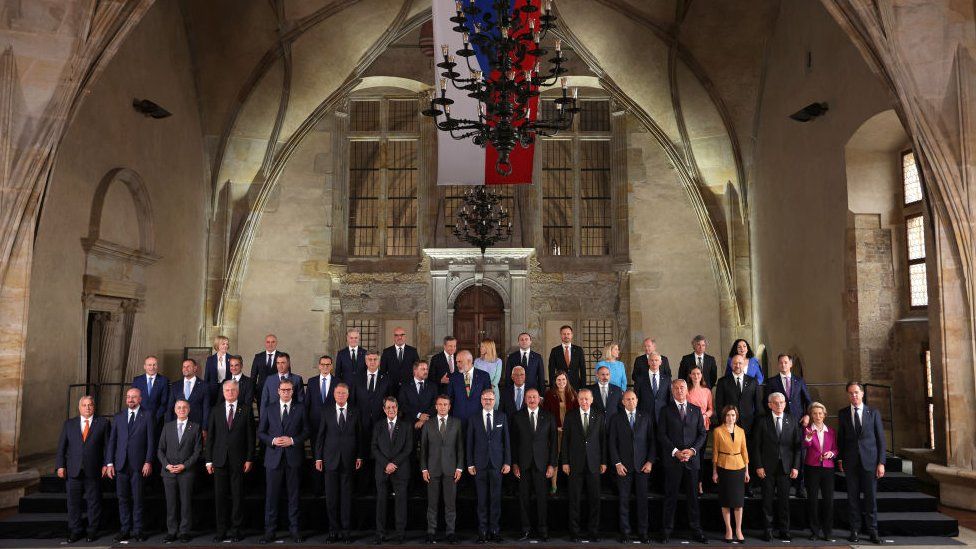
Leaders from the EU, the UK, Turkey, Norway, and the Balkans met at the first European Political Community in Prague on Thursday.
They discussed energy, migration, and security, with a particular focus on the war in Ukraine. Ukrainian President Volodymyr Zelensky spoke via video link.
The summit billed as a European Political Community beyond the EU has been championed by Mr Macron, who told reporters on Thursday it sent a “message of unity”.
IMAGE SOURCE, SEAN GALLUP/GETTY IMAGES Image caption, Among the European leaders taking part were Liz Truss (top left) and Turkey’s Recep Tayyip Erdogan (bottom row, 7th from the right)
The prime minister and Mr Macron released a joint statement promising an “ambitious” package of measures aimed at “ending” small boat crossings on the Channel.
Mr Macron said: “We have values and history so I’m happy that we meet again.
“This is an island, but this island didn’t move from the rest of the continent so we do have so many things in common.”
Ukraine’s president told the summit: “You and I are now in a strong position to direct all the possible might of Europe to end the war and guarantee long-term peace for Ukraine, for Europe, for the world.”
Following the meetings, Ms Truss said: “Leaders leave this summit with a greater collective resolve to stand up to Russian aggression.
“What we have seen in Prague is a forceful show of solidarity with Ukraine, and for the principles of freedom and democracy.”
As well as the UK, non-EU members Switzerland, Turkey, Norway, Iceland, Georgia, Azerbaijan, and western Balkan countries took part in the first gathering of the EPC.
Britain is now expected to host the fourth EPC meeting in 2024, with Moldova and Spain to hold the second and third respectively.
When he proposed the plan this year, Mr Macron said it would “offer a platform for political co-ordination” for countries, both those in the EU and those not.
Russia’s invasion of Ukraine gave new impetus for cooperation among nations beyond the EU’s 27 member states.
But the EPC has no institutions or dedicated staff. That has led to questions about how any decisions would be implemented.
If it proves to be a success, it may continue to take place up to twice a year. If it’s a failure, it could fizzle out.
Centre for European Reform Director, Charles Grant said one of the measures of success will be “does it persuade Serbia, Azerbaijan, and Turkey to lean a bit more to the West and less towards Russia”.
Following Moscow’s illegitimate annexation of four areas of Ukraine during its months-long conflict, EU member states agreed Wednesday to impose a price cap on Russian oil as well as further sanctions, according to EU officials.
Diplomats struck the deal in Brussels that also includes curbs on EU exports of aircraft components to Russia and limits on steel imports from the country, according to an official statement from the Czech rotating EU presidency.
The 27-nation bloc will impose a ban on transporting Russian oil by sea to other countries above the price cap, which the Group of Seven wealthy democracies wants in place by Dec. 5, when an EU embargo on most Russian oil takes effect. A specific price for the future cap has yet to be defined.
A deal on the price cap was not easy to reach because several EU countries were worried it would damage their shipping industries. More details about the sanctions will be published as soon as Thursday.
“We have moved quickly and decisively,” von der Leyen said as she welcomed the deal. “We will never accept Putin’s sham referenda nor any kind of annexation in Ukraine. We are determined to continue making the Kremlin pay.”
The new sanctions also include an “extended import ban” on goods such as steel products, wood pulp, paper, machinery and appliances, chemicals, plastic, and cigarettes, the Czech presidency said.
A ban on providing IT, engineering, and legal services to Russian entities will also take effect.
The package, which will also include new criteria for sanctions circumvention, builds on already-unprecedented European sanctions against Russia as a result of its invasion of Ukraine in February.
EU measures to date include restrictions on energy from Russia, bans on financial transactions with Russian entities, including the central bank, and asset freezes against more than 1,000 people and 100 organizations.
European Union Ambassadorto Ghana, Irchad Razaarly,has assuaged the fears of Ghana over being banned from exporting cocoa beans on the international markets.
Earlier, the Minister for Information, Kojo Oppong-Nkrumah, in a Facebook post, contended that the European Union, through a legislative instrument, intends on banning cocoa from Ghana and some other African countries.
The EU’s legislative proposal aims at curbing deforestation and forest degradation driven by the expansion of agricultural land used to produce specific commodities, namely cattle, cocoa, coffee, palm oil, soya and wood, as part of its efforts to reduce the emission of greenhouse gases.
With the current land degradation through illegal mining and the use of chemical residue that leaches into cocoa, state officials fear Ghana may not meet the requirement of exporting cocoa if the EU’s proposed regulation is implemented.
Contrary to reports of a possible ban on the export of Ghana’s cocoa to the international market, the EU Ambassador to Ghana, Irchad Razaarly, stated that the move must not be seen as a threat to Ghana’s cocoa sector.
Speaking at the second edition of Orange Cocoa Day 2022 in Accra, he said Ghana’s cocoa beans are a much preferred commodity amongst other cocoa producers in Africa.
Mr Razaarly disclosed that the call for more sustainable cocoa production is to “ensure that cocoa and other commodities are produced in a socially environmental sustainable way. This explains EU’s legislation on afforestation and forest degradation and must not be seen as a threat to Ghana’s cocoa.”
“There is no ban on Ghana’s cocoa. On the contrary, we want more of Ghana’s cocoa, and we are insupport of Ghana and Côte d’Ivoire amongst all of the producers who meet these requirements,” he stated.
On his part, the Minister for Lands and Natural Resources, Samuel Abu Jinapor, mentioned that the government, together with the Ghana Cocoa Board, is working to implement feasible policies to combat the degradation of Ghana’s forest reserves.
“We are also implementing the joint frame for action. Which was signed in 2017 with 36 cocoa and chocolate producing companies under the cocoa and forest initiative to halt deforestation and forest degradation in the cocoa value chain.”
He said that under this programme, the “signatory cocoa and chocolate producing companies have committed to sorting cocoa from forest reserves. To support this, the Ghana cocoa board has developed a data management and operational platform consisting of socio-economic data of all cocoa farmers and other key stakeholders in the value chain for the entire cocoa landscape in Ghana.”
Olaf Scholz, the chancellor of Germany, has defended a costly package designed to shield individuals and businesses from rising energy costs. The strategy, which critics claim will distort competition, is being discussed with Germany, according to the EU.
The German chancellor on Tuesday said a €200 billion ($198 billion) energy support package was justified and that similar steps were being taken elsewhere.
The “defensive shield” includes a gas price brake and a cut in fuel sales tax. It is aimed at protecting businesses and households from the impact of rising energy prices.
“The measures we are taking are not unique but are also being taken elsewhere and rightly so,” Chancellor Olaf Scholz told a press conference in Berlin during the visit of his Dutch colleague Mark Rutte.
Overall, it’s a “very balanced, a very smart, a very decisive package that serves to keep prices down and bearable for as long as these challenges exist,” Scholz added.
German Finance Minister Christian Lindner, from the neoliberal Free Democrats, also sought to reassure his EU counterparts at talks in Luxembourg on Tuesday.
“There had been a misunderstanding. … Our package … is proportionate if you compare the size and the vulnerability of the German economy,” Lindner said.
‘Supporting those who need it most’
Later on Tuesday, Scholz met with Germany’s state premiers. At a press conference following the talks, the chancellor again defended the government’s decision, saying it was their job to “protect jobs” and “support those who need it most.”
Scholz said that the most recent rescue package would have “dramatic effects” on the people and businesses watching their financial situation suffer.
He acknowledged that the federal and state governments “were not exactly on the same page,” as struggles continued over who would pay for what. However, he said “I am certain we will come to an agreement.”
Why is the package controversial?
Opponents of the package say it will distort competition inside the single market by giving an advantage to German businesses.
The European Union’s internal market commissioner, Thierry Breton, and economy commissioner, Paolo Gentiloni, from France and Italy, respectively, say the German plan “raised questions” on fairness. They called for an EU-wide measure to be used to help countries.
The European Commission, which supervises antitrust policy across the EU, said on Monday that it was talking to Berlin about the package.
EU member countries have agreed on another round of sanctions against Russia over its aggression against Ukraine, the Czech EU presidency said on Wednesday.
We have just reached a political agreement on new sanctions against Russia – a strong EU response to Putin’s illegal annexation of 🇺🇦 territories. Written procedure follows, sanctions enter into force on publication in the Off. Journal. #EU2022CZ#COREPERII
Edita Hrda, permanent representative of the Czech Republic to the EU, said the sanctions were in response to Russia’s annexation of four regions in Ukraine, which the West has deemed illegitimate.
This morning we reported that Vladimir Putin had signed laws absorbing four Ukrainian regions into Russia.
Climate experts have called for stricter regulations to prevent companies from buying ineffectual offsets in the future.
Nearly half of the carbon offsets held by energy company Centrica on behalf of its UK business and residential customers have such a poor reputation that the EU banned them from its own emissions trading system in 2013.
Centrica, which owns British Gas, says it is committed to a cleaner and greener future.
Like lots of companies involved in fossil fuels, Centrica compensates for its own pollution and boosts its climate credentials by purchasing credits from projects around the world that reduce or avoid greenhouse gas emissions.
This is called offsetting, and typically involves things like tree planting or nature restoration projects.
But it is an industry that has long been criticized for a lack of transparency and consistent standards.
Now records provided by Centrica to the Open Democracy news website and shared exclusively with Sky News, reveal that 44% of Centrica’s credits purchased between July 2020 and June 2022 come from a Chinese chemical company called Shandong Dongyue Chemical Company.
This company has sold carbon offsets in return for the safe disposal of a dangerous greenhouse gas called HFC-23.
HFC-23 is a by-product of a chemical commonly used in refrigerators and air-conditioners and it is thousands of times more potent than carbon dioxide.
Over a decade ago, EU and UN officials became concerned that HFC-23 credits weren’t actually benefiting the environment at all, and that companies like Shandong Dongyue were producing extra gas simply to sell more offsets and maximize profits.
Shandong Dongyue and other manufacturers denied this, but the offsets were widely discredited and eventually banned by a number of tightly regulated Emissions Trading systems in the EU and elsewhere.
There is no suggestion that Centrica has done anything illegal.
Shandong Dongyue, which has not responded to Sky’s request for comment, was able to continue to sell old credits to those who would accept them, in what’s known as the voluntary carbon market.
Still, to some, it is surprising that Centrica bought them in the first place.
Policy director at Carbon Market Watch Sam Van den plas told Sky News: “This is not a small company. “We’re talking about a large company that should do their due diligence.
“I believe they take their corporate image and their environmental objectives seriously, therefore, you don’t need to look very far in order to find out that those types of credits are highly unreliable and they have been widely critiqued in the past.
“We’re not doing anything meaningful to solve the climate crisis if you rely on these credits.
“On the contrary, you give your consumers the impressionthey do something good for the environment, whereas in reality it just contributes to increasing greenhouse gas emissions.”
Centrica would not explain why it purchased the credits in November 2021, or disclose the price it paid for them.
But in a statement, a company spokesperson told Sky News: “These carbon offsets were initially brought to back a tariff which has not been sold since 2019.
“We subsequently made the decision not to use them again as they were not aligned with our high environmental standards.
“The current Green Future tariff has achieved Gold Standard accreditation from USwitch since the scheme was launched two years ago.
“Any future offset purchases for British Gas will be of the same high standard associated with the Green Future tariff.”
But this is about much more than Centrica and one particular type of carbon offset.
The voluntary carbon market is essentially unregulated and it is growing at an extraordinary pace.
In fact, one estimate suggests that if demand continues to grow, by 2030 it could be worth nearly £50bn.
As more and more companies make serious net zero commitments and turn to the voluntary carbon market to help deliver on those promises, experts are calling for better transparency and consistency.
Rob Macqaurie, policy analyst and researcher and the London School of Economics Grantham Research Institute on Climate Change, told Sky News: “There are quite a lot of dodgy claims being made.
“Policymakers should be looking at potential rules and even watchdogs to govern the kind of information that companies are putting out about their use of carbon credits.
“There are rules emerging to help us understand what high quality looks like, the trick now is to take those rules and ensure that they’re really widely adhered to.”
One of the organizations working to put an agreed set of global standards in place for businesses purchasing carbon credits is the UN-backed Voluntary Carbon Markets Integrity Initiative (VCMI).
The group’s executive director Mark Kenber told Sky News: “Carbon credits can be a powerful tool for decarbonisation – but only if we can make sure they’re used correctly, above and beyond action companies are taking to cut their own emissions.
“Equally, companies must be clear with consumers about the action they’re taking to reach net zero, which is why we’re spearheading a more transparent and accountable way to make this the norm.
“VCMI’s Code of Practice – which is currently being trialed by leading climate-conscious businesses – will create a commonly agreed set of standards to allow companies who are genuinely making progress to demonstrate this.”3:36
William McDonnell, Chief Operating Officer of the Integrity Council for Voluntary Carbon Markets, which is attempting to build a globally accepted standard for the quality of carbon credits, told Sky News: “You need an independent body to clearly mark which credits are high quality, which is what we’re doing with the Core Carbon Principles.
“Once this is in place, it will be completely transparent which companies are choosing to buy junk credits, and that transparency will disincentivise companies from doing so.”
He continued: “The principles will underpin confidence, reduce confusion and fragmentation, and pave the way for scaled finance and investment so high-quality carbon credits can unlock additional urgently-needed private capital and channel it efficiently towards the most impactful, cost-effective climate mitigation activities globally, particularly in developing economies.”
Two weeks ago, EU legislators approved a resolution alerting the public to the project’s potential for social and environmental harm as well as violations of human rights.
President Yoweri Museveni of Uganda has criticized the EU parliament for urging his administration to cancel a crucial oil pipeline project with Tanzania’s neighbour.
Two weeks ago EU lawmakers passed a resolution warning of human rights abuses and the social and environmental risk posed by the project.
“Some of these EU MPs are insufferable and so wrong that they think they know everything but should calm down,” Museveni said at the annual Uganda International oil & gas summit on Tuesday.
President @KagutaMuseveni: I encourage the oil companies to move on the two, the refinery and the pipeline.
He added: “This is the wrong battleground for them. I hope our partners join us firmly and advise them. For us, we’re moving forward with our programme.”
Mr Museveni has touted the oil pipeline project as one that would boost the country’s economic development.
Rights groups say some 100,000 people risk being displaced and have urged the contractors, France’s Total Energies and the China National Offshore Oil Corporation, to pause the US $10 billion (£8bn) project until they find an alternative route.
The East African Crude Oil Pipeline project will stretch 1,443km (896 miles) from Lake Albert in western Uganda to the Tanzanian port of Tanga on the Indian Ocean.
The EU condemned the “illegal” annexation elections that Russia held interritories of occupied Ukraine. Canada announced it would enact further sanctions in response to Russia’s “fake” referendums.
The European Union on Wednesday criticized the “illegal” annexation votes Russia held in four occupied regions of Ukraine and their “falsified” results, the bloc’s foreign policy chief Josep Borrell said.
“EU denounces holding of illegal ‘referenda’ and their falsified outcome,” Borrell wrote on Twitter.
“This is another violation of Ukraine’s sovereignty and territorial integrity, amidst systematic abuses of human rights,” he said.
Meanwhile, European Council President Charles Michel also tweeted: “Sham referenda. Sham results. We recognize neither.”
On Tuesday, the EU spokesman Peter Stano announced the bloc would slap sanctions on organizers of the “illegal” vote.
Since Russia’s invasion of Ukraine in February, the EU has implemented six rounds of sanctions targeting Russian individuals, entities, good exports, and technology and banking as well as an embargo on most Russian oil and coal exports.
The US Secretary of State Antony Blinken said he thought the leaks would “not have a significant impact on Europe’s energy resilience”. Neither pipeline is transporting gas at the moment, although they both contain gas.
Mr Blinken did not directly accuse Russia – but said it would be in “no-one’s interest” if they were caused deliberately.
The president of the European Council, Charles Michel, echoed Ms von der Leyen’s message.
“Nord Stream sabotage acts appears to be an attempt to further destabilise energy supply to [the] EU,” he said on Twitter.
The Danish energy minister, Dan Jorgensen, said the leaks were likely to last for at least a week, until the gas escaping from the pipes runs out. The investigation would begin after that.
The operators of Nord Stream 2 warned of a loss of pressure in the pipeline on Monday afternoon. That led to Danish authorities saying ships should avoid the area near the island of Bornholm.
Then on Tuesday, the operator of Nord Stream 1 said the undersea lines had simultaneously sustained “unprecedented” damage in one day.
The Nord Stream 1 pipeline – which consists of two parallel branches – has not transported any gas since August when Russia closed it down. It blamed the closure on maintenance – the EU said it was trying to weaponise Europe’s gas supply.
Nord Stream 1 stretches 745 miles (1,200km) under the Baltic Sea from the Russian coast near St Petersburg to north-eastern Germany. Its twin pipeline, Nord Stream 2, was halted after Russian invaded Ukraine.
A Kremlin spokesperson, Dmitry Peskov, said he was “extremely concerned” about the leaks, adding that the possibility of a deliberate attack could not be ruled out.
Seismologists reported underwater blasts before the leaks emerged. Denmark’s Defence Command has released footage of the leaks which shows bubbles – the largest is 1km (0.6 miles) in diameter – at the surface of the Baltic Sea.
“There is no doubt that these were explosions,” said Bjorn Lund of Sweden’s National Seismology Centre.
On Tuesday, Ukraine’s presidential adviser Mikhaylo Podolyak said the leak was “nothing more than a terrorist attack planned by Russia and an act of aggression towards the EU”.
66,000 Russiansentered the EU in the previous week, a 30% rise, according to the border control organization for the Bloc. In the meanwhile, despite Moscow’s warnings, the US will not change its nuclear stance.
The European Union’s Frontex border control agency said 66,000 the EU in the past week.
This represents a 30% increase compared with the previous week, according to the agency. It said that most of the crossings were occurring at the Finnish and Estonian sections of the border.
According to Frontex, most arrivals had visas, residence permits, or dual citizenship.
Frontex predicted that illegal border crossings could increase if the Kremlin decides to close Russia’s borders for potential conscripts.
Thousands of military-age men have been leaving Russia since President Vladimir Putin announced a “partial” mobilization last week.
The nationalist Alternative for Germany party hopes to capitalise on economic unease to achieve similar electoral success as far-right groups do so across the EU. The results of the polls imply that the plan is effective.
Earlier this month, during a Bundestag debate on the potentially devastating situation for businesses and families amid soaring inflation and an energy crunch, AfD lawmaker Harald Weyel was caught on a hot mic saying he hoped that the situation would continue to deteriorate.
This harks back to 2015 when the far-right populist Alternative for Germany (AfD) utilized fears of a massive refugee influx to stage protests, especially in the east of the country. It went on to become the most successful far-right party in the country since World War II.
Since then, however, the AfD has struggled to find a rallying cry that connected with as many voters. They took to the streets in protest against COVID-19 restrictions but failed to stop a decline in support, especially in the West of the country.
The AfD was founded in 2013 as a euroskeptic party. And still, their position is that Germany should leave the EU, even as other nationalist parties, like the Sweden Democrats and the Brothers of Italy, have quietly abandoned such stances.
“Now, they are focusing on the government’s sanctions against Russia,” Wolfgang Schroeder, a political science professor at the University of Kassel, told DW. “They are saying that corrupt lawmakers are ignoring the needs of the people. They’re arguing that elites in Moscow aren’t the victims of these sanctions policies, but the German people are.”
The message that the AfD is trying to send to the governing coalition of the center-left Social Democrats (SPD), the Green Party and the neoliberal Free Democrats (FDP) is clear: “You are not in charge of Russia — you’re in charge of this country.”
Indeed, AfD co-chair Tino Chrupalla has repeatedly accused Chancellor Olaf Scholz’s government of fighting an “economic war” against Germans as inflation has risen to over 10%. The sanctions “are not in Germany’s interest,” Chrupalla has insisted, predicting that “throughout the fall, support for the government’s policies will continue to sink.”
Chrupalla’s projections are echoed in opinion polls. According to figures published by research firm INSA, national support for Scholz’s party has fallen from 25.7% in last year’s federal election to 18% on Monday, the FDP has been reduced by half to 7% and even the Green Party is now experiencing a backlash against their plans to mitigate the gas shortage.
As households across Germany are shocked to receive their heating bills, the right-wing populists see golden opportunities ahead. The situation calls to mind another hot mic moment. In 2020, former spokesman Christian Lüth was caught by a documentary team saying “the worse things are for Germany, the better things are for the AfD.”
Chrupalla has accused the government of being responsible for soaring energy costs
Scholz’s communication problem
Schroeder said the biggest mistake Scholz’s coalition had made was its lack of coherent communication.
“They have not offered clear answers about what people are actually gaining from domestic relief packages,” Schroeder said, nor exactly how sanctions affect Russian President Vladimir Putin and his war machine. “The government has left communication gaps for right-wing populists like the AfD to jump into.”
Schroeder feels that the SPD, Green Party, and FDP should put some of the principles aside that were enshrined in the 2021 coalition agreement.
Last year’s plans have “become outdated since February 24, 2022,” the day Russia invaded Ukraine, the political analyst said. “The invasion has changed everything: It is now what is steering our policy” — and the parties need to recognize that priorities have shifted significantly.
Thousands have taken to the streets over the past few weeks, protesting against price hikes
Deep divisions likely to stymie success
Schroeder does not expect the AfD’s popularity to soar. He does not see the current situation panning out like the xenophobic sentiment in 2015, “when opposing a refugee influx was something that spoke to people across the entire country.”
“The AfD is deeply divided between those who are pro-Russia and those who aren’t,” Schroeder said, “and this is creating a rift between their supporters in the west of Germany and the east, where they are more friendly to Moscow.”
The party has indeed been hemorrhaging membership since 2020.
For now, however, AfD leaders have seized the opportunity offered by Germany’s edging closer to a recession to foment discontent by encouraging protests throughout the fall.
Under the slogan “a hot autumn against cold feet,” the AfD has announced plans to hold weekly anti-government marches in the coming months, alluding to mass protests that helped bring down the communist regime in East Germany at the end of the Cold War. Across eastern Germany, tens of thousands have taken to the streets to protest government policy.
The AfD leader announced a concerted protest movement against the government’s energy and Russian policies. From October, the AfD wants to take to the streets with the rallying cry “Our country first!” Chrupalla declined to confirm that this was modeled on Donald Trump’s “America first” campaign.
“Demonstrations are already taking place in many places. In this respect, Monday is a good time to stretch your legs after the weekend,” he said.
Now that Meloni is expected to win,there has been a greater reaction, with Moscow declaring its openness to forging “constructive” ties with Rome.
“We are ready to welcome any political forces that are able to go beyond the established mainstream, which is filled with hate for our country,” Kremlin spokesman Dmitry Peskov told reporters.
Meloni’s political allies in Italy have both made controversial remarks about Russia.
Silvio Berlusconi claimed last week that Russian President Vladimir Putin was “pushed” into invading Ukraine, though he later made clear Russia’s aggression against Ukraine was “unjustifiable and unacceptable”.
Meanwhile, Hungary’s nationalist leader Prime Minister Viktor Orban has congratulated Meloni – whose rhetoric on the EU is close to that of the Hungarian nationalist leader – and her allies on the election results.
He added he looked forward to future cooperation over peace, the European economy, and the energy crisis.
🇭🇺🤝🇮🇹 PM Orbán has sent letters to @GiorgiaMeloni, @matteosalvinimi, @berlusconi congratulating them on the election results. “I look forward to our future cooperation to preserve peace in our countries & in Europe, to restart the European economy and to ease the energy crisis.” pic.twitter.com/XPAL9kMT49
Two of the first congratulatory messages to Giorgia Meloni, within the EU, have come from Hungary and Poland.
That’s no coincidence. Warsaw and Budapest both have conservative nationalist governments who rail against EU overreach and have been at odds with Brussels on issues including LGBT rights.
But it’s a little more complicated than saying the three nations might sit as some kind of united trio around the European Council table.
Poland and Hungary are deeply split on Russia’s invasion of Ukraine. Warsaw has been hard-line on sanctions against the Kremlin whereas Budapest has been seen, increasingly, as a barrier.
Giorgia Meloni has stressed her support for Ukraine but it’s an approach that, it’s feared, won’t be fully backed by her right-wing allies.
What is certain is that a new Meloni government could mean more EU division given its predecessor was the Brussels-favoured technocrat, Mario Draghi.
DISCLAIMER: Independentghana.com will not be liable for any inaccuracies contained in this article. The views expressed in the article are solely those of the author’s, and do not reflect those of The Independent Ghana
The EU must take Vladimir Putin’s threats he could use nuclear weapons in the conflict in Ukraine seriously, the bloc’s foreign policy chief has said.
Josep Borrell told the BBC’s Lyse Doucet that the war had reached a “dangerous moment”.
His remarks come as Russia begins a partial mobilisation and moves to annex four regions of Ukraine.
Mr Putin has faced setbacks on the battlefield, with his forces pushed back by a Ukrainian counter-offensive.
“Certainly it’s a dangerous moment because the Russian army has been pushed into a corner, and Putin’s reaction – threatening using nuclear arms – it’s very bad,” Mr Borrell said.
Seven months since Russia’s invasion of Ukraine began, analysts agree that President Putin’s forces are on the back foot, but he said a “diplomatic solution” must be reached, one that “preserves the sovereignty and territorial integrity of Ukraine”.
“Otherwise, we can finish the war, but we will not have peace, and we will have another war,” he said.
In a rare address to the nation earlier this week, Mr Putin said his country had “various weapons of destruction” and would “use all the means available to us”, adding: “I’m not bluffing”.
“When people say it is not a bluff, you have to take them seriously,” Mr Borrell said.
In the same speech President Putin announced the call-up of 300,000 Russians who have done compulsory military service, sparking protests and reports of people fleeing the country to avoid being sent to the front line.
It comes after a rapid counter-offensive in which Ukraine says it took more than 8,000 sq km (3,088 sq miles) back from Russian forces.
Now self-styled referendums on joining Russia are being held in four occupied regions. Ukraine has denounced these as annexation attempts, and reported that armed Russian soldiers are going door-to-door collecting votes.
Uganda’s parliament has condemned a resolution by the European Union parliament entreating the country and Tanzania to halt the work of their oil and gas projects in the East African region.
Uganda’s Deputy Speaker Thomas Tayebwa in a session on Thursday, said the resolution was based on misinformation and deliberate misrepresentation of key facts on environment and human rights protection.
According to him, it represents the highest level of neo-colonialism and imperialism against Uganda and Tanzania’s sovereignty.
It comes as Uganda and Tanzania are building the East African Crude Oil Pipeline (Eacop) project, stretching 1,443km (896 miles) from Lake Albert in western Uganda to the Tanzanian port of Tanga on the Indian Ocean.
Once completed, it will be the longest heated oil pipeline in the world.
The EU parliamentresolution passed on Thursday warned of human rights abuses and the social and environmental risk posed by the Eacop project.
The EU parliament advises its member states not to provide any diplomatic or financial support to Uganda’s oil and gas projects.
Environmentalists have opposed the project as it straddles protected areas and sensitive ecosystems.
European Union countries are expected to face five to 10 terrible winters should not be done to reduce natural gas prices, Belgium’s Energy Minister has said.
Minister Tinne Van der Straeten in a Twitter post wrote “The next five to 10 winters will be terrible if we don’t do anything.”
She therefore added that “We must act at source, at European level, and work to freeze gas prices.”
EU states have been struggling with huge energy price hikes since key gas supplier Russia invaded Ukraine in February, triggering sanctions.
Russia, which supplied the EU with 40% of its gas last year, has in turn restricted supplies.
Electricity prices have also been soaring and have reached record highs this week.
“We have to stop this madness that is happening right now on energy markets,” Austria’s Chancellor Karl Nehammer said.
Electricity prices must go down, he said, calling on the EU to decouple electricity and gas prices.
“We cannot let [Russian President Vladimir] Putin determine the European electricity price every day,” he added.
Natural gas is still widely used to generate electricity. Because gas prices have risen, this costs more.
Significantly, this price is used when buying electricity wholesale even when it comes from much cheaper renewable resources.
Germany – the largest importer of Russian gas in 2020 – has been racing to bolster its gas reserves before winter despite Russia cutting deliveries.
Its aim is to fill its gas capacity to 85% by October. It has implemented energy-saving measures to do so.
Economy Minister Robert Habeck said such measures – along with buying gas from alternative suppliers – had enabled Germany to fulfil its goal sooner than anticipated.
He estimated that the 85% target could be reached by the start of September.
Russia’s UN ambassador has stormed out of a UN Security Council meeting after the European Council president blamed Russia’s invasion of Ukraine for causing a global food crisis.
Charles Michel said Russia was using food supplies as a “stealth missile” against the developing world, forcing people into poverty.
The Russian envoy Vassily Nebenzia accused Mr Michel of spreading lies.
Ukraine is a large exporter of cooking oil as well as cereals such as maize and wheat. Russia also exports vast amounts of grains as well as fertiliser. The lack of these exports has caused the price of alternatives to soar.
“Mr Ambassador of the Russian Federation, let’s be honest, the Kremlin is using food supplies as a stealth missile against developing countries,” Mr Michel said during the Security Council meeting in New York.
“The dramatic consequences of Russia’s war are spilling over across the globe, and this is driving up food prices, pushing people into poverty, and destabilising entire regions.
“Russia is solely responsible for this food crisis.”
He added that he had seen for himself the millions of tons of grain stuck in the Ukrainian port of Odesa because of a naval blockade enforced by Russia.
Mr Michel also accused Russia of stealing grain and preventing crop planting and harvesting in Ukraine because of its military activities there.
His comments led to Mr Nebenzia storming out. As he left, Mr Michel addressed him directly: “You may leave the room, maybe it’s easier not to listen to the truth”.
Mr Nebenzia told Reuters he couldn’t stay because of “the lies that Charles Michel came here to distribute”.
In a separate meeting, US Secretary of State Antony Blinken also said Russia was preventing Ukrainian grain exports from leaving the country and accused Russian forces of destroying Ukrainian agricultural infrastructure.
Speaking during a virtual roundtable with philanthropists, non-governmental organisations and private sector entities, Mr Blinken said: “There’s somewhere around 20 million tons of wheat that’s trapped in silos near Odesa, and in ships literally filled with grain that are stuck in the Odesa port because of this Russian blockade.”
Like Mr Michel, he said there were credible reports that Russia was “pilfering” Ukraine’s grain to sell for its own profit.
Zimbabwe on Monday sought the support of the European Union to sell off US$600 million worth of ivory it has accumulated due to the global ban on the sale of tusks.
International trade in ivory has been banned since 1989 under the Convention on International Trade in Endangered Species of Wild Fauna and Flora (CITES).
Zimbabwe Parks and Wildlife Management Authority director-general Fulton Mangwanya told EU ambassadors to Harare that the country has 163,000 tonnes of ivory and 67 tonnes of rhino horns in vaults.
He estimated the value of the ivory at around $600 million.
“The burden of managing a stockpile that we cannot derive economic value, or plough back into the communities and conservation of the same species is quite a great pain to us,” he said.
“We kindly request the support of the EU for Zimbabwe to be allowed a once off sale of our national ivory stock,” said Mangwanya.
Mangwanya said if allowed, the funds would be used to benefit local communities living around animal conservancies.
The country can support up to 55,000 elephants but the population has more than doubled to 100,000, according to officials.
Elephants have so far this year killed 60 people, in a conservation success story that has led to increased conflict with humans.
But the plea did not immediately garner support.
“Conservation and prevention of illegal wildlife trade is an international issue because of the involvement of criminal syndicates in illegal wildlife trade hence there is need to strengthen international cooperation,” the Swiss ambassador Niculin Jager responded on behalf of his colleagues.
Three years ago, Botswana, Namibia and Zimbabwe — home to the world’s largest elephant population — asked for the right to sell ivory acquired through natural deaths, confiscations and culling.
But that demand was rejected by a CITES meeting in Geneva in 2019.
The EU called Friday on the United States to lift tariffs imposed in a long-running dispute over aircraft subsidies after Airbus said it had brought itself into compliance with World Trade Organization rulings.
The billions of dollars in tariffs, which apply to a wide range of food and agricultural goods in addition to planes, have been even more burdensome due to the economic disruption caused by the coronavirus pandemic.
Airbus said Friday it had reached agreement with the French and Spanish governments that raises the interest rates on funds provided to help develop its long-haul A350 jet to levels the WTO considers appropriate.
The European Commission said this removes any grounds for the US to maintain tariffs imposed on EU exports under WTO rulings as well as making a strong case for a rapid settlement of the dispute.
“Unjustified tariffs on European products are not acceptable and, arising from the compliance in the Airbus case, we insist that the United States lifts these unjustified tariffs immediately,” EU trade commissioner Phil Hogan said in a statement.
Epic legal battle –
An epic legal battle between Airbus and Boeing at the WTO began in 2004 when Washington accused Britain, France, Germany and Spain of providing illegal subsidies and grants to support the production of a range of Airbus products.
A year later, the EU alleged that Boeing had received $19.1 billion worth of prohibited subsidies from 1989 to 2006 from various branches of the US government.
The two cases were then tangled up in a legal quagmire, with each side being given partial vindication after a long series of appeals and counter appeals.
In 2019 the WTO authorized the US to impose up to 100 percent in taxes on $7.5 billion of European goods, its biggest ever penalty.
Washington then slapped 25 percent tariffs on a number of EU goods including wine, cheese and olives.
A 10 percent tariff on Airbus planes was increased to 15 percent in March, which also affects US airlines which buy Airbus aircraft, as the manufacturer points out.
In June the US threatened to levy tariffs on another $3.1 billion in EU goods as it has been authorized to do under a WTO ruling.
– Resolution in ‘mutual interest’ –
Airbus said the impact of those tariffs plus the coronavirus pandemic were the reason it was making the effort to resolve the dispute.
“The tariffs imposed by the United States Trade Representative (USTR) are currently harming all targeted industry sectors, including US airlines, and are adding to a very difficult environment as a consequence of the COVID-19 crisis,” the firm said.
Airbus said Friday that it “considers itself in complete compliance with all WTO rulings” after increasing the interest rate paid on the government funds it received.
The low interest rates on these funds were one of the arguments the US made that the EU was improperly subsidizing Airbus.
“After 16 years of litigation at the World Trade Organization, this is the final step to stop the long-standing dispute and removes any justification for US tariffs,” said Airbus.
In addition to there no longer being a justification for the tariffs, the EU believes that in light of the global recession triggered by the coronavirus pandemic it makes sense to resolve the dispute.
“Especially under the current economic circumstances, the EU believes that it is in the mutual interest of the EU and the US to discontinue damaging tariffs that unnecessarily burden our industries and agricultural sectors,” the Commission statement said.
Hogan noted a WTO decision is expected soon that could give the EU the right to impose tariffs against the United States.
“In the absence of a settlement, the EU will be ready to fully avail itself of its own sanction rights,” he warned.
The EU leaders agreed to the historic recovery package following marathon talks, and it is now up to the European Parliament to vote on the deal. While discussing the package, EU lawmakers signaled their displeasure.
Lawmakers from all major groups in the European Parliament criticized the proposed EU budget deal during the special session on Thursday, which is key to implementing the €1.8 trillion ($2 trillion) coronavirus aid and budget package.
The deal, aimed at helping hard-hit bloc nations recover from the economic fallout of the novel coronavirus pandemic, was agreed on Tuesday by EU leaders following four days of heated debates. The marathon talks were close to breaking down on several occasions, and France’s Emmanuel Macron and Germany’s Angela Merkel walked out together in protest at one point.
Addressing the parliament on Thursday, European Commission President Ursula von der Leyen said the deal was a “a bitter pill to swallow.” While urging lawmakers to vote for the deal, she also recognized “painful and regrettable decisions” on the future funding of planned EU health and research programs.
In response, the head of the center-right bloc Manfred Weber said it was “unbelievable” that dramatic cuts to the health sector were being discussed in the times of the pandemic.
“We are for the moment not ready to swallow the bitter pill you were referring to,” Manfred said.
A clause linking EU money to the rule of law that could jeopardize funds for Poland and Hungary is also coming under scrutiny.
European Parliament to make the deal ‘better’
Talking to DW, European Parliament Vice-President Katharina Barley described the recovery deal as a “compromise between the leaders of member states.”
“But the European Parliament is the voice of the people, the only directly elected body. So we are here to add a more European perspective,” said the German Social Democrat politician.
The assembly “has a chance to make it better,” said Barley, who also has UK citizenship.
When asked about the clause linking the money to the rule of law, Barley said she would be happy about if it would be clear “how it is going to turn out.”
She warned that there were various interpretations of the clause.
“Have there been some kind of deals behind closed doors? We do not know. This is why we want a much clearer formula,” Barley said, warning that the rule of law was “deteriorating in a lot of member states.”
A ‘pivotal’ moment of EU history
Lawmakers will list their proposed alterations to the budget then start talks with the bloc’s executive arm, the European Commission, and the EU presidency, which rotates between countries and is currently held by Germany. Parliament is expected to revisit proposed cuts in the areas of research, environment and migration.
The European lawmakers, who have the final say in approving the budget, are expected to vote later Thursday on a resolution that strongly criticizes the conclusions of the summit.
Von der Leyen also emphasized that the EU budget and protecting the rule of law go hand-in-hand.
European Council President Charles Michel urged EU lawmakers to back the deal, reiterating comments he made on Tuesday that it was “pivotal” in European history.
“This response is massive compared to the size of the economy. Europe’s response is greater than that of the United States or China,” added the Council president.
What is in the recovery package?
The package includes a €750-billion ($869-billion) fund that will be given to countries in the form of loans and grants, as well as a seven-year €1 trillion EU budget.
Italy, which was initially the European epicenter of the virus, is set to receive 28% of the total funds, or €209 billion. That figure includes €81 billion in grants and €127 billion in loans.
Greece will receive €72 billion under the plan, in a move that Prime Minister Kyriakos Mitsotakis called a “national success.”
The EU has decided that from Wednesday EU borders will be reopened to citizens from 15 non-EU countries, including Canada, Morocco and Australia, but not the US, Brazil and Russia.
China is on the list, but subject to a reciprocal agreement, still pending.
The unanimous decision by the European Council is not legally binding, so states can choose not to open up to all those countries.
Diplomats spent five days debating the list, amid varying pandemic concerns.
The so-called “safe travel destinations” are, besides China: Algeria, Australia, Canada, Georgia, Japan, Montenegro, Morocco, New Zealand, Rwanda, Serbia, South Korea, Thailand, Tunisia and Uruguay.
The UK and four other non-EU states – Switzerland, Iceland, Liechtenstein and Norway – are automatically included as “safe”.
The BBC’s Gavin Lee in Brussels says there was intense lobbying by representatives of the US, Russia and Turkey to get included on the list.
EU officials say the decision was based on a number of scientific factors:
-Ensuring that the Covid-19 infection rate in the country was low enough (where nations had fewer than 16 in every 100,000 infected)
-That there was a downward trend of cases
-That social distancing measures were at “a sufficient level”
One diplomat from a north European member state told the BBC that a “certain amount of geopolitics influenced the decision too” and that “Balkan and Eastern European states had recommended” that Georgia, a former Soviet state, be included.
The Hungarian government is understood to have lobbied for Serbia’s inclusion. Spanish officials say they requested that Morocco be on the list, provided there was an agreement of reciprocity.
Denmark and Austria were among several member states arguing for the number of countries to be fewer than 15.
But in the end, it was adopted unanimously by member states.
Each state will have to announce when it intends to start readmitting citizens from some or all of those countries.
French officials say they expect to implement the decision in the “coming days”.
The Czech Republic has published a list of eight countries that it considers safe for travel.
The EU list will be updated every two weeks.
UK covered by Brexit transition phase
Many border controls have been lifted for EU citizens travelling inside the bloc. Future rules for UK travellers are part of the current Brexit negotiations.
But UK nationals are still to be treated in the same way as EU citizens until the end of the Brexit transition period on 31 December, the EU Commission says.
So during this period UK nationals and their family members are exempt from the EU’s temporary travel restriction.
EU nations in the 26-member Schengen zone normally allow passport-free border crossings for EU citizens, but national authorities have reimposed restrictions in this crisis.
The UK is currently negotiating temporary “air bridges” with several EU member states, so that the coronavirus pandemic does not totally block summer holidays – the busiest season in Europe for tourism, which employs millions of people.
In the EU discussions there were splits between those such as Spain – wanting the boost of tourism, but preferring to play safe because they have been hit so hard by Covid-19 – and others like Greece and Portugal, which depend on tourism but are less scarred by the virus.