
Tag: European Court of Human Rights

  • Judges set to hear the Semenya case before a verdict

    Judges set to hear the Semenya case before a verdict

    Grand Chamber of the European Court of Human Rights is set to hear the case involving middle-distance runner Caster Semenya on Wednesday, before issuing a final ruling.

    Semenya, aged 32, was born with differences of sexual development (DSD) and is unable to compete in female track events without undergoing testosterone-reducing treatment.

    She contends that World Athletics discriminates against athletes with her condition.

    In a related case last July, the ECHR ruled in Semenya’s favor regarding testosterone levels in female athletes.

    However, this case does not directly challenge sporting regulations or DSD rules but rather the Swiss government’s failure to safeguard Semenya’s rights, stemming from a Swiss Supreme Court ruling three years ago.

    The Swiss government has requested that the matter be referred to the court’s Grand Chamber.

    The ECHR Grand Chamber, comprising 17 judges and convened in exceptional cases, issues verdicts that cannot be appealed.

    Since this case involves the Swiss government rather than athletic governing bodies, any decision is unlikely to immediately impact current restrictions on DSD athletes.

    World Athletics regulations impose limits on testosterone levels for female runners competing in track events ranging from 400m up to the mile.

    Semenya, along with other DSD athletes exceeding the approved testosterone levels, is barred from competing in female track events unless she undergoes testosterone-reducing treatment.

    Semenya said in October last year she was turning her attention to “winning battles against the authorities” rather than collecting medals.

    Semenya lodged an appeal against World Athletics’ rules at the Switzerland-based Court of Arbitration for Sport (CAS) in 2019, which resulted in her losing a significant case.

    Following this, Semenya’s team sought to challenge the CAS ruling with another appeal, but Switzerland’s highest court dismissed it in September 2020.

    This final decision by the Swiss court served as the foundation for an application filed by Semenya at the ECHR in 2021.

    World Athletics has said its DSD regulations “are a necessary, reasonable and proportionate means of protecting fair competition in the female category”.
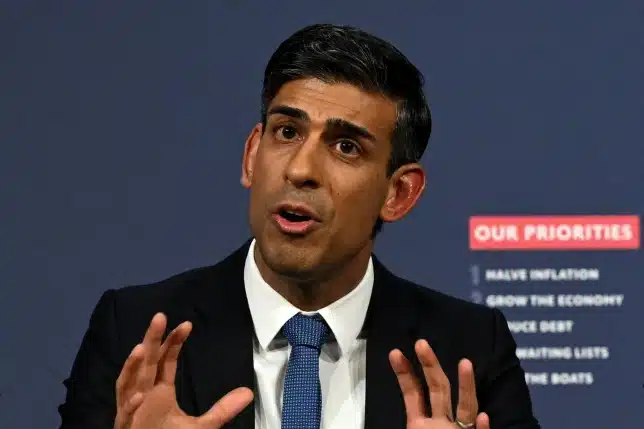
  • Rishi Sunak might encounter the worst Tory uprising over illegal migration bill

    Rishi Sunak might encounter the worst Tory uprising over illegal migration bill

    The prime minister is preparing for what may be the largest Tory uprising of his leadership thus far as his Illegal Immigration Bill takes center stage in the Commons.

    Human rights organizations are extremely worried about the contentious law intended to crack down on asylum seekers arriving in the UK in small boats, but many Conservative MPs think it doesn’t go far enough.

    The European Court of Human Rights (ECHR) won’t be able to stop removals, according to an amendment that is expected to receive support from about 60 Conservatives.

    Meanwhile, others have called for Rishi Sunak to commit to establishing safe routes which people in desperate situations can use to come to Britain.

    ‘You can’t stay’: PM Rishi Sunak promises to detain and deport small boats migrants

    Downing Street officials will meet with a gang of rebels on Monday in an attempt to calm the revolt.

    Two days of debate are expected as the Bill reaches its committee stage today, with more than 50 pages of amendments tabled.

    Under the legislation’s current proposals, it would see asylum seekers arriving through unauthorised means being detained without bail or judicial review for 28 days.

    They will then be ‘swiftly removed’ to their home country or a ‘safe third country’ such as Rwanda.

    Tory Devizes MP Danny Kruger has sponsored an amendment that seeks provisions in the Bill to ‘operate notwithstanding any orders of the Strasbourg court or any other international body’.

    Former minister Andrea Jenkyns tweeted that she had signed amendments with the intention of ‘strengthening the Bill and stopping the European Court of Human Rights’ laws superseding British law’.

    It comes after the ECHR last year granted an injunction, via its Rule 39, that effectively grounded a flight sending asylum seekers from the UK to Rwanda.

    Since then, Home Secretary Suella Braverman has held what she called ‘constructive’ negotiations with the Strasbourg court to secure a higher legal threshold for any injunction under Rule 39 to be imposed on any future deportation flights.

    Levelling-Up Secretary Michael Gove has signalled Home Office ministers are open to further talks about the strength of the Bill, as MPs prepare to go through the legislation line by line.

    A Home Office source said the legislation contains a ‘marker clause’ relating to ECHR deportation orders.

    It is understood the clause allows for initial negotiations with Strasbourg to conclude before ministers consider setting out further legal measures.

    Mr Sunak and Ms Braverman have both stressed that they think the draft law complies with international obligations and that Britain would not need to exit the European Convention on Human Rights to introduce the plans.

    But in a letter to MPs following publication of the Bill earlier this month, the Home Secretary admitted there is a ‘more (than) 50% chance’ her legislation may not be compatible with the convention.

    While some Tories look to ‘toughen up’ the already highly divisive legalisation, others have backed an amendment that would force the Home Secretary to declare ‘safe and legal routes by which asylum seekers can enter’ the UK.

    Tory MP Tim Loughton’s proposed modification has been signed by former Brexit secretary David Davis and Dame Diana Johnson, the Labour chairwoman of the Home Affairs Select Committee.

    The government’s approach has been slammed by groups including the United Nations High Commissioner for Refugees, which has accused ministers of ‘extinguishing the right to seek refugee protection in the UK’.

    The charity Refugee Action warned it would ’cause misery, cost millions to the taxpayer and drive desperate people to take ever more dangerous journeys’, while the Archbishop of York described the bill as ‘cruelty without purpose’.

    Hundreds of protestors gathered outside Parliament to demonstrate against the Bill earlier in March.

    Downing Street said last night that Mr Sunak is continuing to engage with backbenchers over the legislation’s proposals.