European Union (EU)has condemned Russia’s removal of buoys demarcating the border with Estonia along the Narva River.
According to Estonian officials, 24 out of 50 buoys installed to delineate sailing routes were removed in the early hours of Thursday.
Tensions over the border have escalated since Russia’s full-scale invasion of Ukraine in 2022. EU foreign policy chief Josep Borrell has denounced these actions as unacceptable.
“This border incident is part of a broader pattern of provocative behaviour and hybrid actions by Russia, including on its maritime and land borders in the Baltic Sea region,” he said in a statement.
Moscow has raised objections to the positioning of floating markers, which are employed to prevent boats from entering foreign waters, disputing the planned locations of approximately half of the 250 buoys, as reported by Estonia’s border guard service.
Estonian Prime Minister Kaja Kallas stated that she is working to clarify the situation with Russia.
She said it appeared to be part of a “broader pattern” of action by Moscow to use “tools related to the border to create fear and anxiety”.
Estonia’s foreign ministry said it had summoned Russia’s chargé d’affaires and said it was treating the move as a “provocative border incident”.
In a statement, it said it had demanded the “immediate return” of the buoys.
Following the Russian defense ministry’s brief publication of a proposal to alter its maritime border in the Baltic Sea this week, the plan sparked concern among NATO members, notably Estonia.
However, the proposal was swiftly deleted. As of now, Moscow has notissued any comment on the matter.
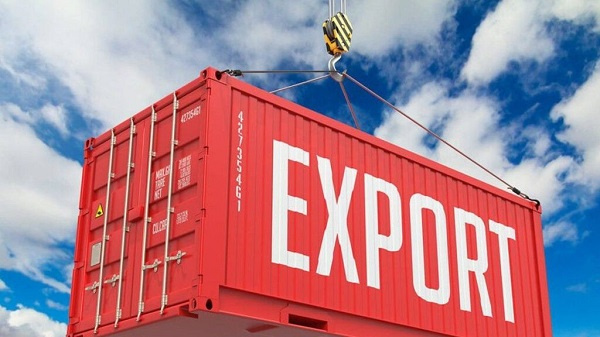
Forty exporters from Ghana have communicated their willingness to export their goods to the markets of the European Union (EU), ensuring compliance with the stringent regulations necessary for conducting international trade.
Exporters, originating from small and medium-sized enterprises, underwent training by specialists regarding the Economic Partnership Agreement (EPA) and its associated prerequisites.
The series of trainings were organised by Compete Ghana, with funding from the EU and in partnership with the Ministry of Trade and Industry under its Enterprise Export Enhancement Programme (EEEP).
The exporters who were doing business through other markets, could now enjoy direct business with the EU, through mentoring by their assigned coaches on the EPA’s requirements.
At a validation workshop for assessment and action plans for proposed interventions of the EEEP in Accra, the exporters were excited for the opportunity and commended the EU, Ministry of Trade and Industry (MOTI), and Compete Ghana for the initiative.
They raised issues with challenges associated with shipping and the difficulty in acquiring certifications that met the EU standards, as key areas that needed to be looked at.
Mr Nicholas Gebara, the Team Lead, Compete Ghana, said they were happy to facilitate the training to help the exporters to compete in the EU market effectively.
He indicated that the structuring of the EPA for Ghana would end in November and to ensure sustainability, Compete Ghana would be engaging GEPA and MOTI after building the capacity of the enterprises, to ensure the stability and capacity of companies to export.
“We strongly hope that GEPA and MOTI will take over as an institution to ensure sustainability and continuity of the programme,” he said.
Mr Raffaele Quarto, the Trade Counselor of the EU Delegation, said the Union’s market was a developed one, hence the need for exporters to know the requirements at such a level.
“You cannot simply export, because for packaging for instance, you cannot do simple packaging and send it to Europe, you need proper packaging, labelling and more importantly the quality of the products,” he added.
“The good thing is that once you have fulfilled the standards at the European level, then you can go anywhere in the world.”
Mr Gerald Nyarko-Mensah, an Expert on exports and marketing, Compete Ghana, said previous programmes dealt with groups and the sector levels, but this EEEP was centered on the individual enterprise level.
He said the emphasis was on understanding the characteristics of the individual enterprise, particularly their gaps as far as exporting to the EU was concerned.
Compete Ghana would be setting up a virtual Ghana Trade Centre (GTC), driven by an e-commerce platform and backed by a physical outsourced fulfilment centre, based on the targeted market, to create a closer relationship between exporters and their buyers, he said.
The platform would facilitate the transactions and supply process through aggregation and bulk shipment of products.
Mr Nyarko-Mensah noted that the GTC would provide information and intelligence on opportunities in the foreign markets, promote ‘Made-in- Ghana products, foster business-to-business linkages and follow up on shipments, to address post clearance issues.
He noted that market access through virtual means had become one of the fastest growing modes of entry and cost saving to enterprises, adding that variants of those had also been undertaken in areas such as Group Marketing and Group Shipment Schemes.
Forty exporters from Ghana have communicated their willingness to export their goods to the markets of the European Union (EU), ensuring compliance with the stringent regulations necessary for conducting international trade.
Exporters, originating from small and medium-sized enterprises, underwent training by specialists regarding the Economic Partnership Agreement (EPA) and its associated prerequisites.
The series of trainings were organised by Compete Ghana, with funding from the EU and in partnership with the Ministry of Trade and Industry under its Enterprise Export Enhancement Programme (EEEP).
The exporters who were doing business through other markets, could now enjoy direct business with the EU, through mentoring by their assigned coaches on the EPA’s requirements.
At a validation workshop for assessment and action plans for proposed interventions of the EEEP in Accra, the exporters were excited for the opportunity and commended the EU, Ministry of Trade and Industry (MOTI), and Compete Ghana for the initiative.
They raised issues with challenges associated with shipping and the difficulty in acquiring certifications that met the EU standards, as key areas that needed to be looked at.
Mr Nicholas Gebara, the Team Lead, Compete Ghana, said they were happy to facilitate the training to help the exporters to compete in the EU market effectively.
He indicated that the structuring of the EPA for Ghana would end in November and to ensure sustainability, Compete Ghana would be engaging GEPA and MOTI after building the capacity of the enterprises, to ensure the stability and capacity of companies to export.
“We strongly hope that GEPA and MOTI will take over as an institution to ensure sustainability and continuity of the programme,” he said.
Mr Raffaele Quarto, the Trade Counselor of the EU Delegation, said the Union’s market was a developed one, hence the need for exporters to know the requirements at such a level.
“You cannot simply export, because for packaging for instance, you cannot do simple packaging and send it to Europe, you need proper packaging, labelling and more importantly the quality of the products,” he added.
“The good thing is that once you have fulfilled the standards at the European level, then you can go anywhere in the world.”
Mr Gerald Nyarko-Mensah, an Expert on exports and marketing, Compete Ghana, said previous programmes dealt with groups and the sector levels, but this EEEP was centered on the individual enterprise level.
He said the emphasis was on understanding the characteristics of the individual enterprise, particularly their gaps as far as exporting to the EU was concerned.
Compete Ghana would be setting up a virtual Ghana Trade Centre (GTC), driven by an e-commerce platform and backed by a physical outsourced fulfilment centre, based on the targeted market, to create a closer relationship between exporters and their buyers, he said.
The platform would facilitate the transactions and supply process through aggregation and bulk shipment of products.
Mr Nyarko-Mensah noted that the GTC would provide information and intelligence on opportunities in the foreign markets, promote ‘Made-in- Ghana products, foster business-to-business linkages and follow up on shipments, to address post clearance issues.
He noted that market access through virtual means had become one of the fastest growing modes of entry and cost saving to enterprises, adding that variants of those had also been undertaken in areas such as Group Marketing and Group Shipment Schemes.
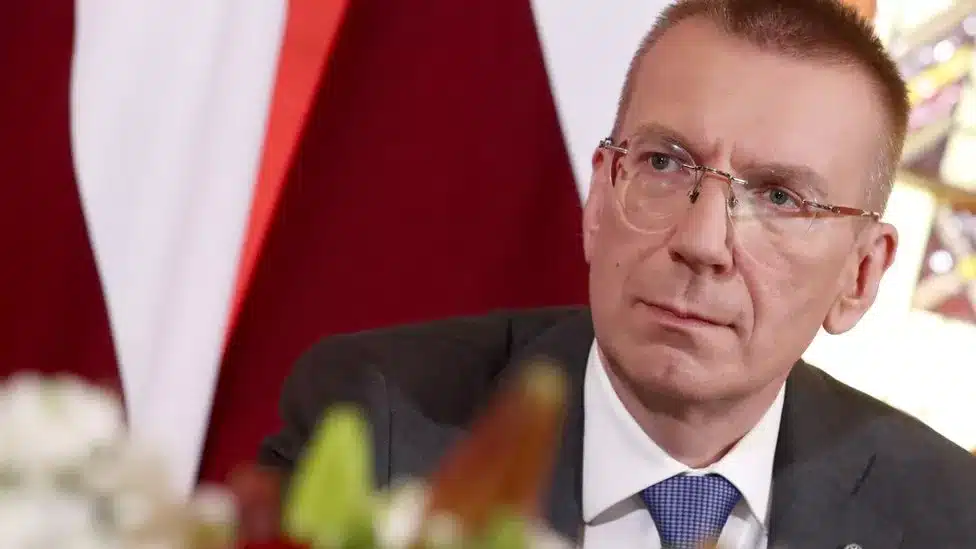
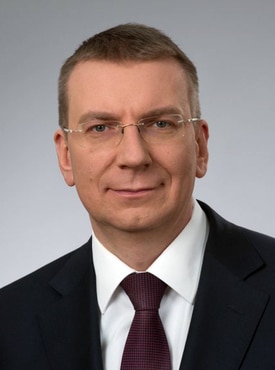
A seasoned diplomat, Edgars Rinkevics, who had served as Latvia’s foreign minister since 2011, has made history as the first openly gay head of state of a European Union nation.
On Saturday, Mr Rinkevics was sworn in as Latvia’s president in Riga, assuming a role that, while largely ceremonial, grants him powers such as vetoing legislation and calling referendums.
While the European Union has seen openly gay heads of government in the past, it had not yet witnessed a gay head of state.
It’s important to note that in some countries, the roles of head of state and head of government are distinct, with separate positions such as president and prime minister.
The distinction of being the EU’s first openly gay head of government goes to former Belgian Prime Minister Elio di Rupo.
Coming out in 2014, Mr Rinkevics, 49, has been a vocal advocate for LGBT rights ever since. Despite same-sex marriage being illegal in Latvia, the country’s constitutional court recognized same-sex unions in the previous year.
In May, Latvia’s parliament elected Mr Rinkevics as the nation’s president after the third round of voting. During his inaugural speech on Saturday, he affirmed his commitment to supporting Ukraine’s ongoing conflict against Russia.
Assuming the role of Latvia’s president, Edgars Rinkevics emphasized the importance of a diligent foreign policy, stating that there is no room for mistakes. He pledged to act swiftly, decisively, and wisely in his new position.
In his inaugural speech, Mr Rinkevics also addressed the issue of inequality, encouraging young Latvians to shatter the glass ceiling.
He acknowledged the significant problem of social division within society and vowed to advocate for the creation of a modern and robust Latvia, characterized by legality, justice, well-being, inclusivity, and respect.
He emphasized the importance of collaborative efforts in achieving these goals. Mr Rinkevics succeeds Egils Levits, who served as president for four years.
The new president will represent Latvia at the upcoming NATO summit in Vilnius, Lithuania.
Latvia, along with Lithuania and Estonia, joined the European Union in 2004 after gaining independence from the crumbling Soviet Union in the early 1990s.
These Baltic states have since played an active role within the EU.
Instead of addressing the concerns of NHS workers and teachers, Britain is plundering talent from Zimbabwe.
The United Kingdom, which is buckling under a deepening shortage of nurses and teachers after exiting the European Union, is raiding, among other countries, its former colony Zimbabwe for key public sector workers: nurses, doctors and teachers.
This is cruel. It appears unstoppable. Yet it also captures a vicious cycle in which foreign aid meant to help countries like Zimbabwe strengthen their education and health systems is undermined by migration of trained talent to those very same donor nations.
More than 4,000 nurses and doctors have left Zimbabwe since February 2021. The UK is by far the destination of choice: data from the British Home Office in 2022 reveals that Zimbabwe is now in the top five skilled worker visa recipient countries.
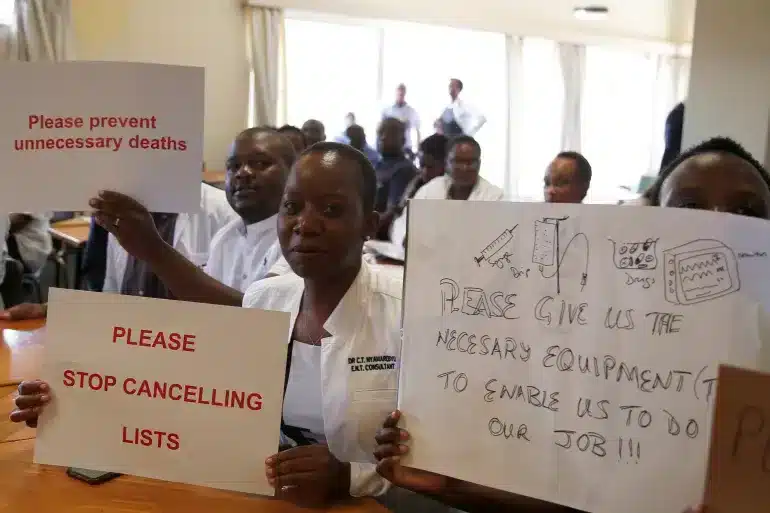
This is a big drain. According to the Zimbabwe Medical Association, the country has a paltry 3,500 doctors for a population of 15 million people. Access to nurses is poor, too — just 2.6 per 1,000 people as of 2017, reveals the World Bank. In a key 1,000-bed public hospital, managers told reporters that services were crippled when dozens of nurses and doctors left for the UK in 2021.
Of course, the UK — like any other country — must look after its interests first. But the imbalance between a $3.2 trillion economy (the UK) and a $28bn economy (Zimbabwe) is such that the scramble for medical personnel isn’t a fair contest.
Consider this: despite the woes of the National Health Service (NHS), the UK still has 8.5 nurses per 1,000 people — more than three times the number in Zimbabwe. And poaching talent from a country like Zimbabwe comes cheap. The UK spends £230,000 ($281,000) in training each doctor — much of which it saves when it imports trained and skilled medical professionals.
Simply put, at a time when healthcare workers are leaving the NHS in droves because of poor pay and conditions, the British government — instead of addressing their concerns — is plundering doctors and nurses from former colonies like Zimbabwe.
A classroom raid
If that’s not alarming enough, the UK is now wooing Zimbabwean teachers, too. From February 2023, Zimbabwe will join a select group of nations and territories whose educators will be eligible to get Qualified Teacher Status (QTS) which would allow them to work long-term as teachers in the UK.
Nigeria, Ghana and South Africa are the only other African nations on the list. Teacher unions fear that many of the country’s 135,000 public school teachers might be tempted to take up posts in the UK. For the last four decades, Zimbabwe has boasted one of Africa’s most impressive post-colonial educational outcomes with the World Economic Forum ranking it fourth-best on the continent in 2016.
Yet it is futile to blame the UK when Zimbabwe bears the lion’s share of responsibility for the crisis it now stares at. The country’s inability to pay doctors, nurses and teachers living wages is a key reason why they’re seeking greener pastures.
According to the Zimbabwe Statistics Agency, a state body, a quarterly survey in April 2022 showed that most workers in the country were earning an equivalent of $120 a month. Wages have fallen far behind skyrocketing inflation.
Zimbabwe’s government has demanded “compensation” from the UK for luring the nation’s healthcare workers. Zimbabwe reportedly spends $70,000 to train each doctor. But if the government was paying its doctors, teachers and nurses better in the first place, the temptation for them to move abroad would have been much lower.
In addition to unsatisfactory salaries, medical professionals and teachers complain that the basic tools they need to do their jobs are in shortage – the result of the underfunding of schools and hospitals, and costly corruption and leakages highlighted by Zimbabwe’s auditor general.
Give and take
Still, this outflow of skilled professionals from a struggling nation like Zimbabwe to the UK sets up an ironic dynamic. Last November, the UK was winning applause from the Global Fund, which is dedicated to fighting HIV, tuberculosis and malaria, for doling out a £1bn ($1.23bn) tranche of support to the initiative. The UK has set aside £35m ($45m) in aid specifically for “a resilient health system in Zimbabwe” from 2021 to 2025.
Yet, how can lavishing aid money on a poor country’s healthcare while raiding its most precious assets — nurses, paramedics, social workers and doctors — make it resilient? In June last year, peers in the UK’s own House of Lords described this practice as “immoral and wrong”.
Admittedly, morality hasn’t ever been a priority for the UK in its relations with African nations. And there’s little that’s right about the way Zimbabwe’s governments treat its healthcare workers, teachers or indeed, citizens in general.
Nevertheless, the results of the brain drain from Zimbabwe are clear: A sick system is getting even sicker.
DISCLAIMER: Independentghana.com will not be liable for any inaccuracies contained in this article. The views expressed in the article are solely those of the author’s, and do not reflect those of The Independent Ghana
The European Union has condemned Russia’s plans to hold referenda in parts of Ukraine and has said the outcomes will not be recognized.
In a statement, EU foreign affairs chief Josep Borrell said: “The European Union strongly condemns these planned illegal “referenda” which go against the legal and democratically elected Ukrainian authorities, are in violation of Ukraine’s independence, sovereignty, and territorial integrity, and in blatant breach of international law.”
Mr Borrell said those involved with these “referenda” will be held accountable and additional restrictive measures against Russia would be considered.
Moscow-controlled regions in eastern and southern Ukraine are set to hold referenda on becoming parts of Russia, which could give the Kremlin the pretext for a wider war because Vladimir Putin would be able to claim parts of his state were being attacked.
Gas prices have soared after Russia cut gas supplies to Germany and other central European countries after threatening to earlier this week. Further
European gas prices rose 9%, trading close to their earlier all-time high after Russia invaded Ukraine.
Critics accuse the Russian government of using gas as a political weapon.
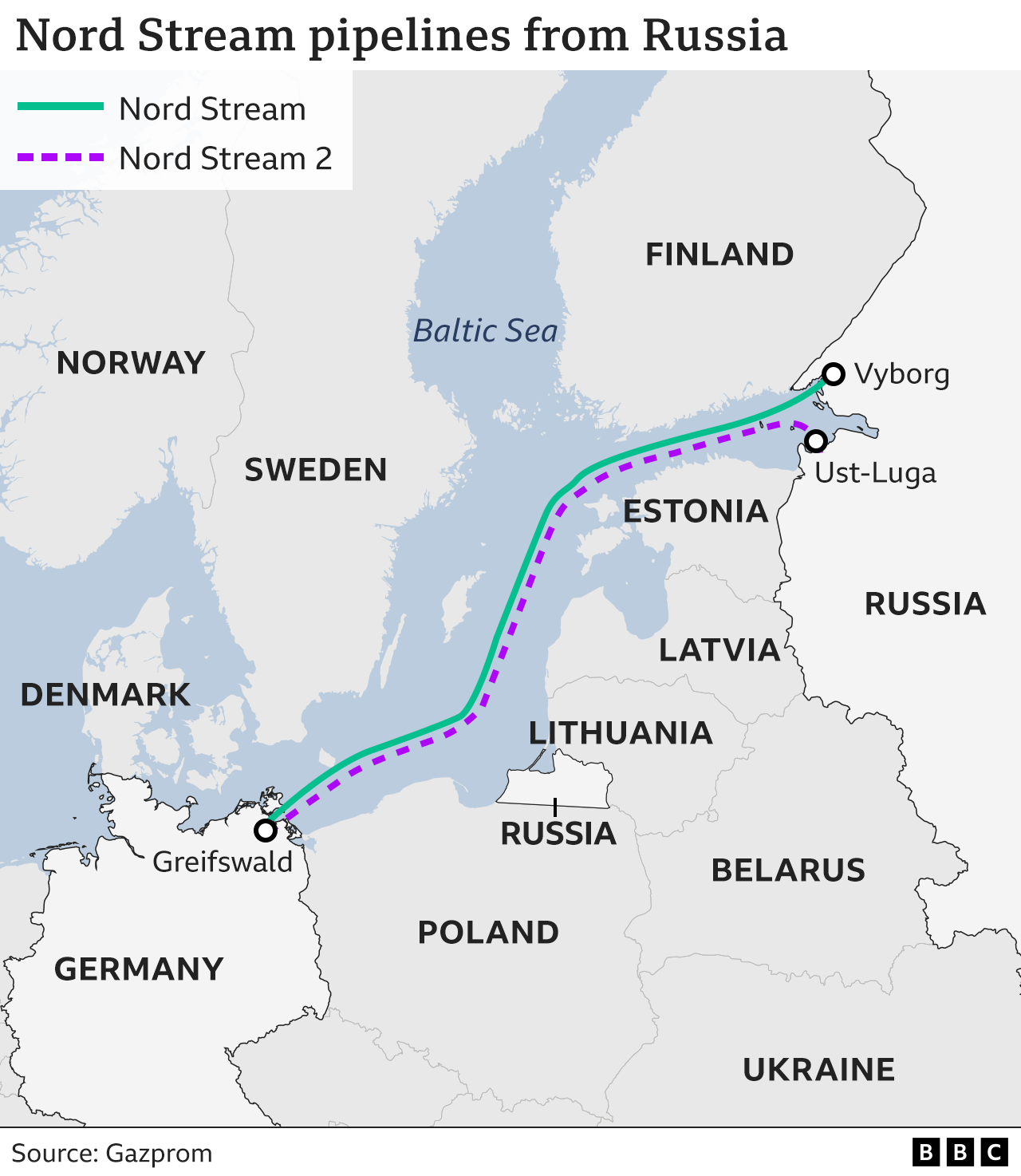
Russia has been cutting flows through the Nord Stream 1 pipeline to Germany, with it now operating at less than a fifth of its normal capacity.
Germany imports 55% of its gas from Russia and most of it comes through Nord Stream 1 – with the rest coming from land-based pipelines.
Russian energy firm Gazprom has sought to justify the latest cut by saying it was needed to allow maintenance work on a turbine.
The German government, however, said there was no technical reason for it to limit the supply.
Ukraine has accused Moscow of waging a “gas war” against Europe and cutting supplies to inflict “terror” on people.
The latest reduction in flows puts pressure on EU countries to reduce their dependence on Russian gaseven further, and will likely make it more difficult for them to replenish their gas supplies ahead of winter.
Since the invasion of Ukraine European leaders has held talks over how to reduce its dependence on Russian fossil fuels.
On Tuesday, theEuropean Unionagreed to cut gas use in case Russia halts supplies but some countries will have exemptions to avoid rationing.
EU members have now agreed to voluntarily reduce 15% of gas use between August and March.
However, the deal was watered down after previously not having exemptions.
The EU has said its aim of the deal is to make savings and store gas ahead of winter, warning that Russia is “continuously using energy supplies as a weapon”.
The voluntary agreement would become mandatory if supplies reach crisis levels.
The EU agreed in May to ban all Russian oil imports which come in by sea by the end of this year, but a deal over gas bans has taken longer.
Since Russia invaded Ukraine in February the price of wholesale gas has already soared, with a knock-on impact on consumer energy bills across the globe.
The Kremlin blames the price hike on Western sanctions, insisting it is a reliable energy partner and not responsible for the recent disruption to gas supplies.
While the UK would not be directly impacted by gas supply disruption, as it imports less than 5% of its gas from Russia, it would be affected by prices rising in the global markets as demand in Europe increases.
UK gas prices rose 7% on Wednesday, almost six times higher than a year ago, but still 20% below the peak seen in the aftermath of Russia’s invasion of Ukraine.
UK energy bills increased by an unprecedented £700 in April, and are expected to rise again to £3,244 a year for a typical household in October.
Gas prices have soared after Russia further cut gas supplies to Germany and other central European countries after threatening to earlier this week.
European gas prices rose 9%, trading close to their earlier all-time high after Russia invaded Ukraine.
Critics accuse the Russian government of using gas as a political weapon.
Russia has been cutting flows through the Nord Stream 1 pipeline to Germany, with it now operating at less than a fifth of its normal capacity.
Germany imports 55% of its gas from Russia and most of it comes through Nord Stream 1Â – with the rest coming from land-based pipelines.
Russian energy firm Gazprom has sought to justify the latest cut by saying it was needed to allow maintenance work on a turbine.
The German government, however, said there was no technical reason for it to limit the supply.
Ukraine has accused Moscow of waging a “gas war” against Europe and cutting supplies to inflict “terror” on people.
The latest reduction in flows puts pressure on EU countries to reduce their dependence on Russian gas even further, and will likely make it more difficult for them to replenish their gas supplies ahead of winter.
Since the invasion of Ukraine European leaders has held talks over how to reduce its dependence on Russian fossil fuels
On Tuesday, the European Union agreed to cut gas use in case Russia halts supplies but some countries will have exemptions to avoid rationing.
EU members have now agreed to voluntarily reduce 15% of gas use between August and March.
However, the deal was watered down after previously not having exemptions.
The EU has said its aim of the deal is to make savings and store gas ahead of winter, warning that Russia is “continuously using energy supplies as a weapon”.
The voluntary agreement would become mandatory if supplies reach crisis levels.
The EU agreed in May to ban all Russian oil imports which come in by sea by the end of this year, but a deal over gas bans has taken longer.
Since Russia invaded Ukraine in February the price of wholesale gas has already soared, with a knock-on impact on consumer energy bills across the globe.
The Kremlin blames the price hike on Western sanctions, insisting it is a reliable energy partner and not responsible for the recent disruption to gas supplies.
While the UK would not be directly impacted by gas supply disruption, as it imports less than 5% of its gas from Russia, it would be affected by prices rising in the global markets as demand in Europe increases.
UK gas prices rose 7% on Wednesday, almost six times higher than a year ago, but still 20% below the peak seen in the aftermath of Russia’s invasion of Ukraine.
UK energy bills increased by an unprecedented £700 in April, and are expected to rise again to £3,244 a year for a typical household in October.