Tag: Evacuation

  • 1k Ghanaians to be evacuated from South Africa today following Xenophobic attacks

    1k Ghanaians to be evacuated from South Africa today following Xenophobic attacks

    1,000 Ghanaians are expected in Ghana again,following renewed xenophobic attacks targeting migrants in South Africa.

    The first group is scheduled to arrive in Accra on Sunday, July 26, and Monday, July 27.

    According to the Ministry of Foreign Affairs the evacuation exercise will only target Ghanaians who have already registered with the Ghana High Commission in Pretoria and have voluntarily expressed their willingness to return home.

    According to him, women, children, the elderly, persons with underlying medical conditions and students are the groups of people who will be given priority.

    He added, “Government assures that we shall leave no Ghanaian behind in harm’s way”.

    Meanwhile, South Africa’s (SA) Foreign Minister, Ronald Lamola, has stated that the current migration-related challenges will not stand in the way of South Africa-Ghana bilateral relations.

    During a meeting with President John Dramani Mahama, SA’s Foreign Minister acknowledged concerns raised by Ghana over reports involving harsh treatment against migrants.

    However, he noted that the two countries go way back, thus, parting ways now is not the answer.

    “There was an agreement between ourselves and Ghana that the current migration-related challenges will not stand in the way of South Africa-Ghana bilateral relations. It does not impact the Ghana-South Africa bilateral relations because South Africa and Ghana have got long enduring challenges, good friendship and relations.

    “All countries have got the right to enforce, it’s within the sovereign state to enforce immigration laws but immigration must be regular, must be orderly, in line with the protocols of the AU, of our own SADC. It should not be a disorder immigration,” he said.

    Ronald Lamola is a part of the delegation sent by South African President Cyril Ramaphosa to Ghana to engage President John Dramani Mahama on measures to address the recurring xenophobic attacks against foreign nationals in South Africa.

    During the meeting, President Mahama expressed concern over the recent attacks and called for a permanent end to such incidents. President Mahama stressed the need to protect the rights and safety of all foreign nationals living in South Africa. This information was made public by President Mahama when meeting with the Chairperson of the African Union Commission (AUC), H.E. Mahamoud Ali Youssou, at the Jubilee House in Accra on Wednesday, July 22.

    He added, “On, July 21, President Cyril Ramaphosa sent a delegation to me, and I explained the reason why we need to discuss it. Sometimes these things happen, and we want to sweep them under the carpet, but when we do that, we do not cure what the problem is,” he said.

    “I told them that Ghana does not harbour any malice against South Africa, but we are raising it so it gives them the platform to explain what they are doing to the world.”

    Weeks ago, the Ghanaian government declined a planned state visit by South African President. According to reports, the decision was influenced by xenophobic attacks targeting Ghanaians in South Africa, with the government fearing possible reactions from some citizens to President Ramaphosa’s presence in Ghana.

    The recent anti-immigration protests across parts of South Africa have claimed the life of a Ghanaian national. The incident was confirmed by Ghana’s High Commissioner to South Africa, H.E. Benjamin Quashie, while addressing the media on Wednesday, June 1.

    Meanwhile, authorities are yet to disclose victim’s identity and details on the circumstances surrounding the shooting. South African citizens intensified protests against foreign nationals residing in the country on Tuesday, June 30.

    Earlier this month the xenophobic attack in South Africa has left a Ghanaian woman battling for her life. Addressing the media on Wednesday, June 3, the High Commissioner said the victim is in intensive medical care after she was assaulted for refusing to pay a group that demanded money from her.

    According to him, the group had earlier requested documents from the woman, which she provided. However, the situation escalated after they ordered her to give them money.

    “There’s a Ghanaian who has been in the ICU until now, beaten to a pulp by these South Africans.When they went to her shop and asked for her documentation, she gave them the documentation. Then they said, ‘Give us money.’ She said, ‘No, but you asked for documentation, and I’ve shown you the documentation,” he added.

    Meanwhile, Ghanaians repatriated from South Africa could face severe legal consequences if they attempt to return to the country. More than 900 Ghanaians have so far been evacuated from South Africa.

    Days ago, the government announced voluntary evacuation programme in response to the rising violent xenophobic attacks on foreign nationals in South Africa.

    Prior to the exercise, the Commission announced the temporary suspension of the repatriation registration exercise to allow it to complete the screening of the growing number of people who have currently registered for the voluntary repatriation.

    In a notice to Ghanaians in South Africa, the Commission released a list of registered evacuees who are set to be airlifted on Sunday to report to the Commission by Saturday, June 6, for briefing, verification and other pre-departure procedures.

    “All individuals scheduled for evacuation on Sunday, 7 June 2026, are required to report to the High Commission on the evening of Saturday, 6 June 2026, for pre-departure arrangements, verification, and briefing”, parts of the notice read.

    It also admonished that all persons on the list who have changed their minds about returning home should inform the consular by tomorrow, Thursday, June 4, to aid arrangements for other interested persons.

    “Individuals whose names appear on the approved evacuation list but no longer intend to travel are kindly requested to notify the High Commission no later than 12:00 noon on Thursday, 4 June 2026. This will enable other eligible applicants to be accommodated on the flight”, the notice added.

    Luggage requirements and guidelines for parents and guardiansUnder the travel guidelines, each passenger will be permitted to check in two bags, with a maximum weight of 23 kilograms per bag. Any luggage exceeding the stipulated limit will not be accepted.

    Parents and guardians travelling with children have been advised to carry all required travel documents, including consent letters where necessary.

    “Each traveller is entitled to two pieces of checked luggage with a maximum weight of 23kg each. Any baggage exceeding the prescribed weight limit will not be accepted for travel. Parents or guardians travelling with children are required to bring all necessary travel documentation, including consent letters (where applicable), Road-to-Health Cards, and/or child weighing cards.

    “Travellers issued with Emergency Travel Certificates (ETCs) will receive their documents at the airport on the day of departure”, the notice added.

  • Cambodia deportation notice targeting Ghanaians, others fake – Foreign Affairs

    Cambodia deportation notice targeting Ghanaians, others fake – Foreign Affairs

    A widely circulated notice instructing African nationals living in Cambodia, including Ghanaians, to leave the country by Sunday, May 31, or face arrest and imprisonment is false, the Ministry of Foreign Affairs has said.

    The notice warned citizens from Ghana, Kenya, Cameroon, Uganda, and other African countries against flouting the directive. However, the Ministry of Foreign Affairs in a statement indicated that the viral notice was not been issued by Cambodian immigration authorities.

    “The Ministry wishes to assure the public that following diplomatic engagements with the relevant Cambodian authorities, it has been confirmed that the said notice is absolutely fake and was not issued by any state institution in Cambodia.

    “The general public and the Ghanaian media are advised to disregard the discredited document and avoid sharing unverified information capable of creating unnecessary fear and anxiety among affected persons and their families,” the statement said.

    Between March and May this year, the government has evacuated 85 Ghanaians living in Cambodia, through the High Commission in Malaysia, which is concurrently accredited to Cambodia. Meanwhile, Ghana is set to receive an additional 76 Ghanaian nationals who have expressed a desire to come back home in the coming days.

    According to the Ministry, “It is worth noting that arrangements are ongoing to equally facilitate the evacuation of an additional seventy-six Ghanaian nationals who are currently in Cambodia and have expressed the desire to return home”.

    It added that, “The Ministry of Foreign Affairs is working in conjunction with competent authorities in Cambodia to ensure the safe return of these Ghanaians”.

    In a separate development, The government has begun efforts to ensure that Ghanaian-owned businesses in South Africa are protected from unlawful seizure or interference amid ongoing xenophobic attacks in the country.


    As part of efforts to safeguard nationals’ investments in South Africa, he indicated that there must be ‘realistic compensation’ should the South African government want to take over such businesses.


    “We’ve instituted measures to ensure that everybody who has business in this country, we protect that business. And ensure that if the government of South Africa wants to take that business, there should be compensation to the owners of those businesses,” he added.


    The first batch of 300 Ghanaians in South Africa, amid heightened tensions of xenophobic attacks on foreigners, including Ghanaians, arrived in Ghana on Wednesday, May 27.


    Earlier this month, a Ghanaian national, Emmanuel Asamoah, who was captured in a viral video being harassed by a group of individuals in a xenophobic attack in South Africa, was flown home by the government.

    The viral video showed several other foreign nationals being intimidated by some South African citizens for allegedly taking jobs meant for locals.


    Meanwhile, the leader of South Africa’s Economic Freedom Fighters (EFF), Julius Malema, has broken silence following the evacuation of the first batch of 300 Ghanaians in South Africa.

    In a viral video sighted, the politician noted that the Ghanaian government could have responded to recent xenophobic attacks in South Africa without resorting to the evacuation of citizens.


    According to him, the best approach could have been to pursue stronger diplomatic engagement and protective measures in collaboration with the South African government.

    He added, “The Ghana response was not necessary because it now creates an impression that we are all like that when it is a certain section of our society that needs to be contained by law enforcement”.

    And one Ghanaian lady was saying, “You see, the problem is, and I wouldn’t have taken this option, the problem is we’re being beaten in front of the police, and the police are not doing anything. That’s a problem. And when this opportunity came for me to leave, I left because if the police can’t defend me, it means the state is in agreement with the people who are beating me”.


    “So, we think it was too quick, we will still resolve this, and the president of Ghana should have given us some time to really deal with this matter and we’ll get to the bottom of it. We hope they will come back to their senses”.


    Weeks ago, the Ministry confirmed that over eight hundred (800) Ghanaians have registered at their Commission in Pretoria, for voluntary evacuation due to the worsening xenophobic attacks in South Africa.


    Consequently, “the planned evacuation has been deferred by a few days to enable our High Commission to meet these evacuation conditions”.


    “The Ministry of Foreign Affairs wishes to provide an update on the evacuation of Ghanaians from South Africa, which was scheduled to commence today, 21 May, 2026. The Government of Ghana notes that more than 800 Ghanaians have registered with our High Commission in Pretoria seeking to be evacuated due to the latest wave of xenophobic attacks.


    Considering the numbers involved and the South African legal conditions that must be met, including mandatory passenger screening, multi-institutional coordination, and flight permits, parts of the statement read.


    To ensure that all necessary regulatory requirements are met, an additional day of preparation is required for a safe and orderly evacuation process.


    “Ghanaian and South African authorities have agreed to enhanced and more efficient pre-evacuation modalities to expedite the process”, the Ministry added.


    Govt pledges support package for SA repatriates


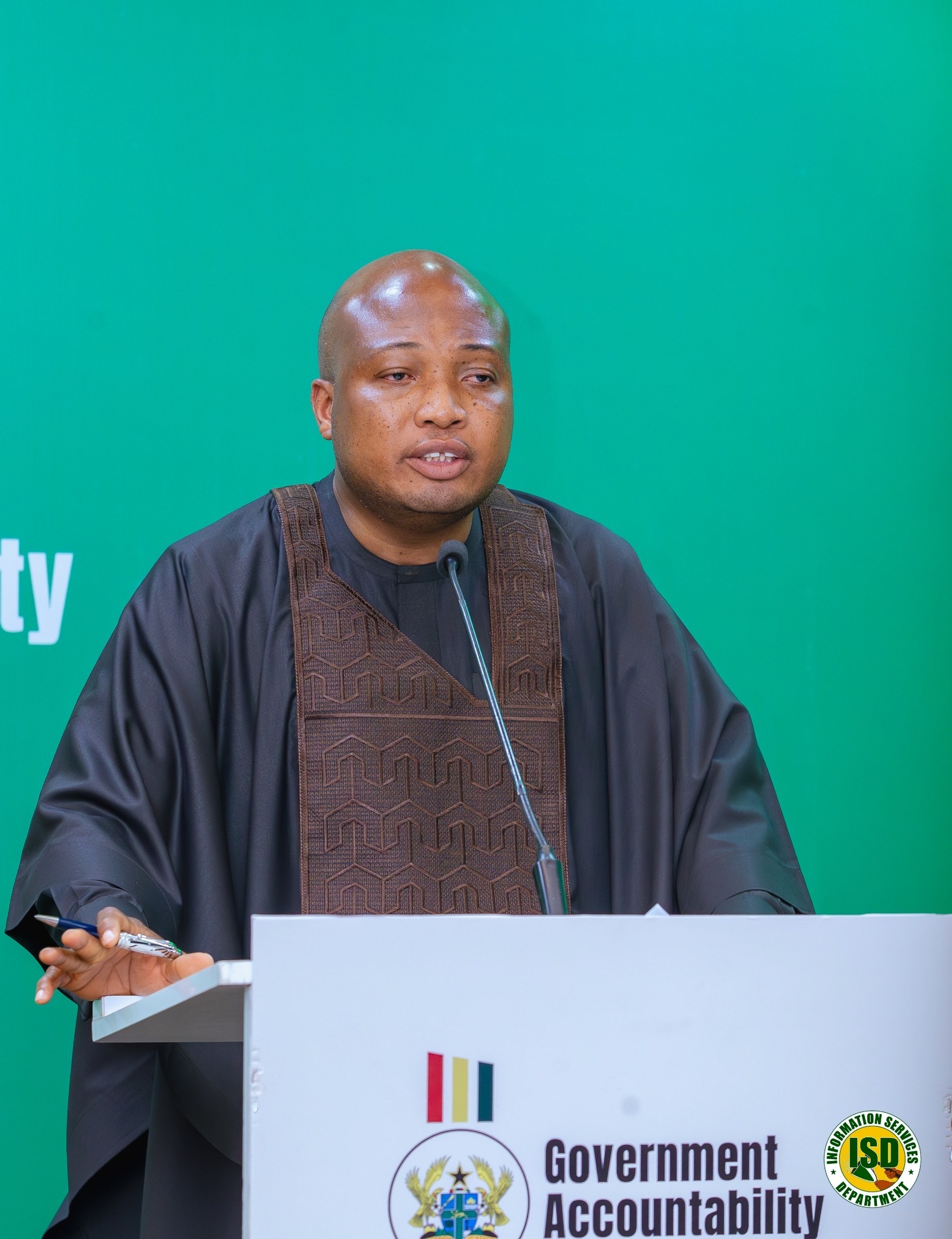
    Before the planned evacuation, the government announced a support package for Ghanaians being evacuated from South Africa. In a statement shared on the Ministry of Foreign Affairs’ (MoFA) official X (formerly Twitter) account on May 20, Foreign Affairs Minister Samuel Okudzeto Ablakwa stated that returnees would receive a welcome-home financial package, transportation assistance to their destinations across Ghana, and a reintegration allowance.


    The package also included free psychosocial support for those who may have experienced trauma or violence, as well as counselling and medical assistance to aid their recovery.

    In addition, the government indicated that the evacuees would be enrolled in a special database for job and startup opportunities as part of efforts to support their reintegration.


    The Ministry described the intervention as part of the government’s commitment to protecting the welfare of Ghanaian citizens abroad and assisting them during times of crisis, stating that it valued and cherished all Ghanaian citizens.


    The support package was announced ahead of the planned evacuation of the first batch of 300 Ghanaians from South Africa on a special chartered flight.


    The evacuation had been approved by President John Dramani Mahama after Ghana’s High Commissioner to South Africa, Benjamin Anani Quashie, reported growing fears among Ghanaians living in the country amid renewed xenophobic attacks targeting foreign nationals.


    Is this the first time xenophobic attacks have happened in SA?

    The recent xenophobic attacks on foreigners by South African nations aren’t the first. SA has a history of violent xenophobic attacks dating as far back as 1998.


    In 1998, three foreign nationals were killed in Johannesburg. Two years later, seven more were killed in Cape Town. After a long period of quiet in the attacks, the worst in SA’s history happened in 2008 when sixty‑two (62) people lost their lives, 1,700 were injured, and about 100,000 were displaced nationwide, cementing xenophobia as a recurring national crisis.


    In 2015, violence flared again after inflammatory remarks by the Zulu King. The unrest spread across the country, forcing the government to deploy the military to restore order.


    By 2019, riots erupted in Durban and Johannesburg, with Nigerian‑owned businesses being specifically targeted.More recently, between 2022 and 2025, smaller but persistent flare‑ups were linked to vigilante movements such as Operation Dudula.


    These included blocking foreigners from accessing health facilities in Gauteng and KwaZulu‑Natal, reflecting how xenophobia had become embedded in everyday life.

  • Ukraine war: Putin endorses evacuations from occupied Kherson

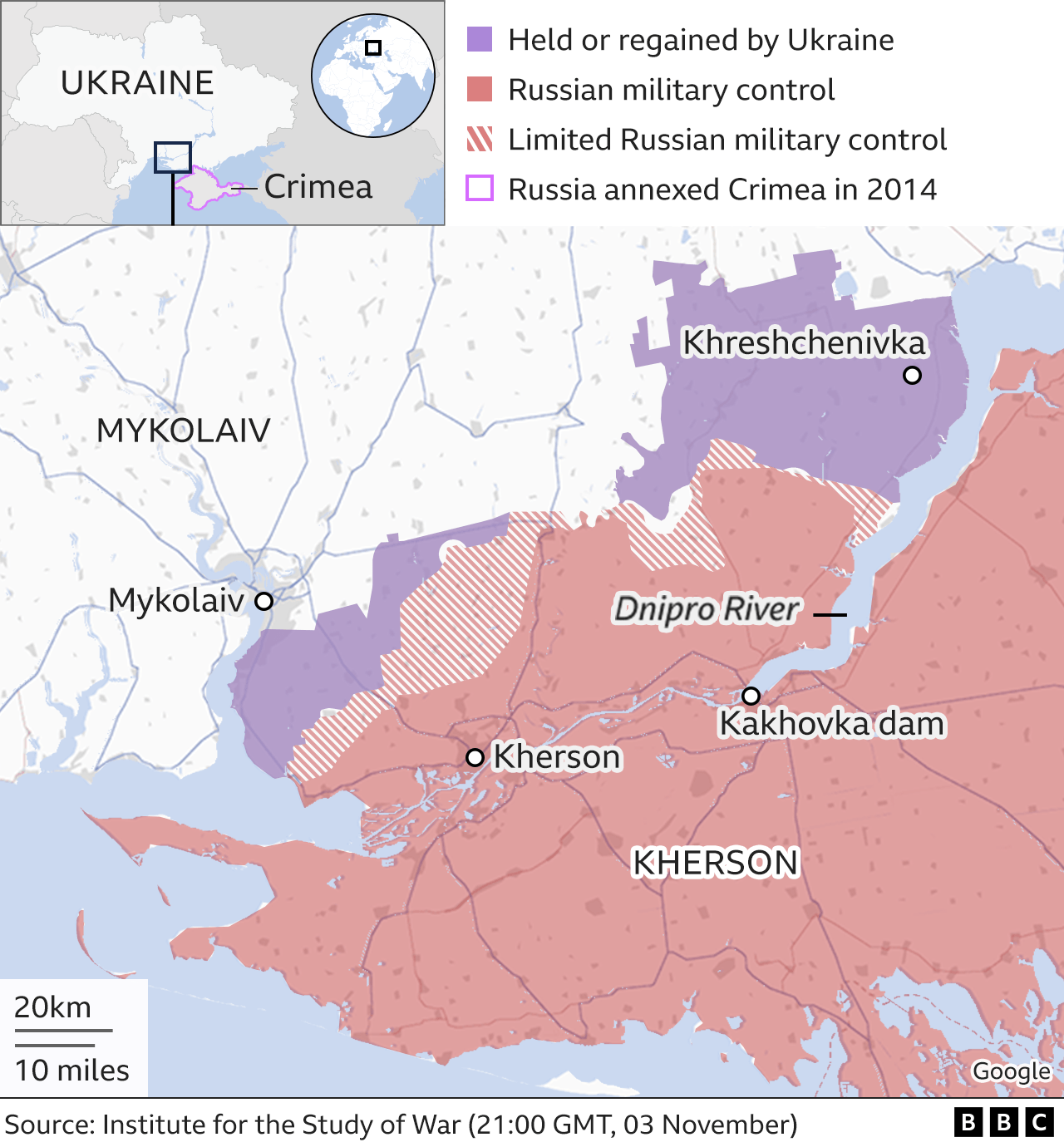
    Russian President Vladimir Putin has publicly approved the evacuation of civilians from parts of Russian-occupied Kherson in southern Ukraine.

    Kyiv’s forces have been steadily advancing on the strategic port city.

    Mr Putin said people living in dangerous areas should leave as “the civilian population should not suffer”.

    At least 70,000 people are reported to have been moved already from Kherson – the only major city gained by Moscow since its troops invaded in February.

    Civilians at risk from shelling and attacks should be “removed”, Mr Putin said, during the Unity Day holiday in Moscow’s Red Square.

    Kyiv accuses Russia of forcibly deporting Ukrainian civilians – which is considered a war crime – although Moscow denies this.

    Russia’s intensive missile and drone strikes on civilian infrastructure across Ukraine have caused heavy casualties and damage, and forced Kyiv to impose frequent electricity blackouts.

    Mr Putin’s comments followed reports on Thursday that Russian soldiers, too, had been leaving Kherson – in what would mark a major withdrawal.

    A Kremlin-installed official in the region, Kirill Stremousov, told Russian media that Moscow was “likely” to pull its troops from the area.

    Ukrainian officials remained cautious, warning that the reported move could be a trap to lure their soldiers into dangerous areas.

    Kherson was captured soon after Russia attacked its neighbour on 24 February, but recently Ukrainian forces have steadily recaptured territory on the city’s outskirts.

    Civilians were first urged to leave Kherson in the middle of last month, as the Russian army switched the city to defensive mode.

    Military commanders later said they had completed an operation to evacuate the city’s residents, ahead of an expected battle there.

    Russia claims the Kherson region and three other Ukrainian regions as its own territory, though it does not fully control any of them. It hastily arranged local “referendums” to justify the claim – a move condemned internationally.

    Russia also annexed Ukraine’s Crimea peninsula in 2014.

    During Friday’s speech in Red Square, Mr Putin also said some 318,000 military recruits had signed up for duty during a mobilisation, now complete – exceeding his target of 300,000.

    Of these, Mr Putin said 49,000 were already involved in active fighting – a figure not independently verified by the BBC.

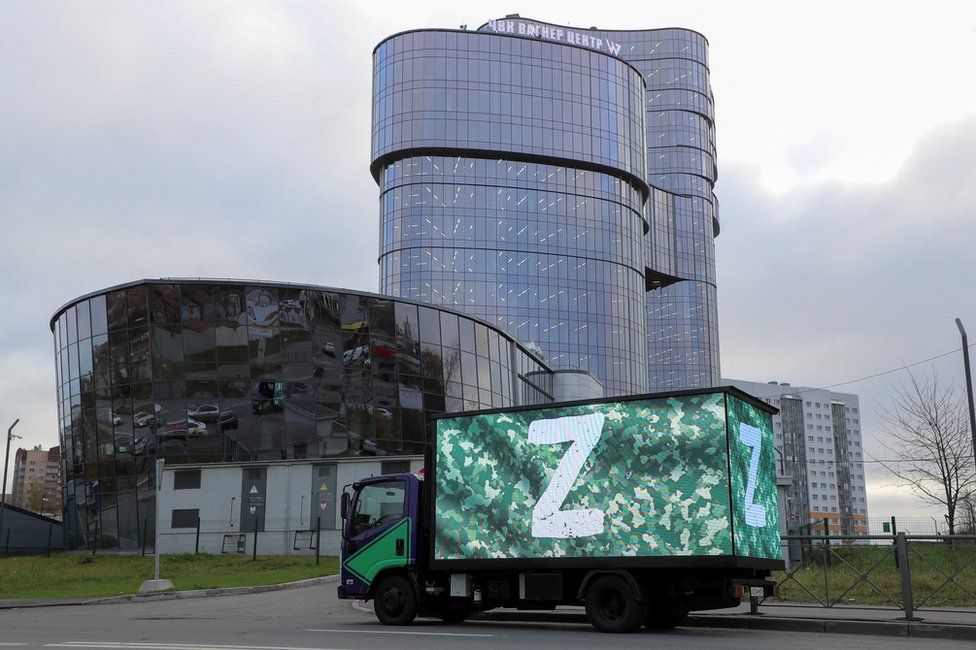
    Meanwhile, a Russian private military company, the Wagner Group, has opened its first official headquarters, in St Petersburg.

    Its fighters are reported to be active in the Russian campaign in Ukraine, and it has recruited prisoners to fight there, in exchange for their sentences being commuted in Russia.

    The Wagner headquarters in St PetersburgImage source, Reuters
    Image caption, The new Wagner headquarters in St Petersburg

    Wagner soldiers have repeatedly been accused of human rights violations, including in Syria, Libya and other conflicts.

    Mr Putin has now amended the Russian law on calling up reservists to include men convicted of serious crimes who recently left prison.

    The change means that convicted murderers and drug dealers who have recently been released could be conscripted to fight in Ukraine.

    Former prisoners convicted of sex crimes against children or terrorism are still excluded from serving.

    In his latest comments on the war, Ukrainian President Volodymyr Zelensky attacked the “absolutely insane stubbornness of the owners of today’s Russia”.

    He said his enemy was uninterested in peace talks, but was instead sending “people to the meat grinder” – both mobilised troops and mercenary fighters.

    Referring to the week’s “fiercest fighting”, Mr Zelensky singled out the eastern towns of Bakhmut and Soledar.

    A map showing Ukrainian and Russian positions


    Source: BBC