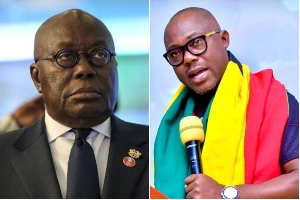
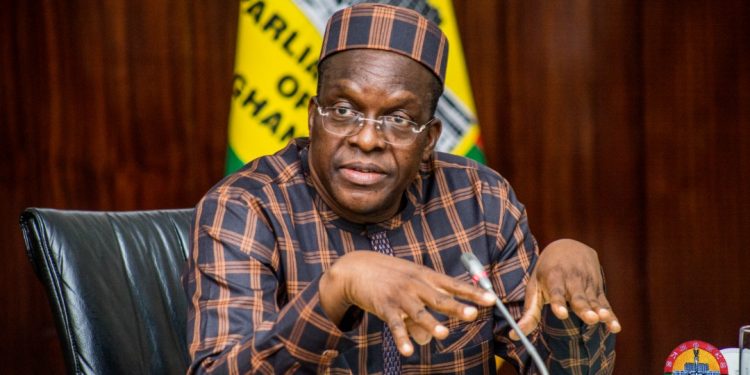
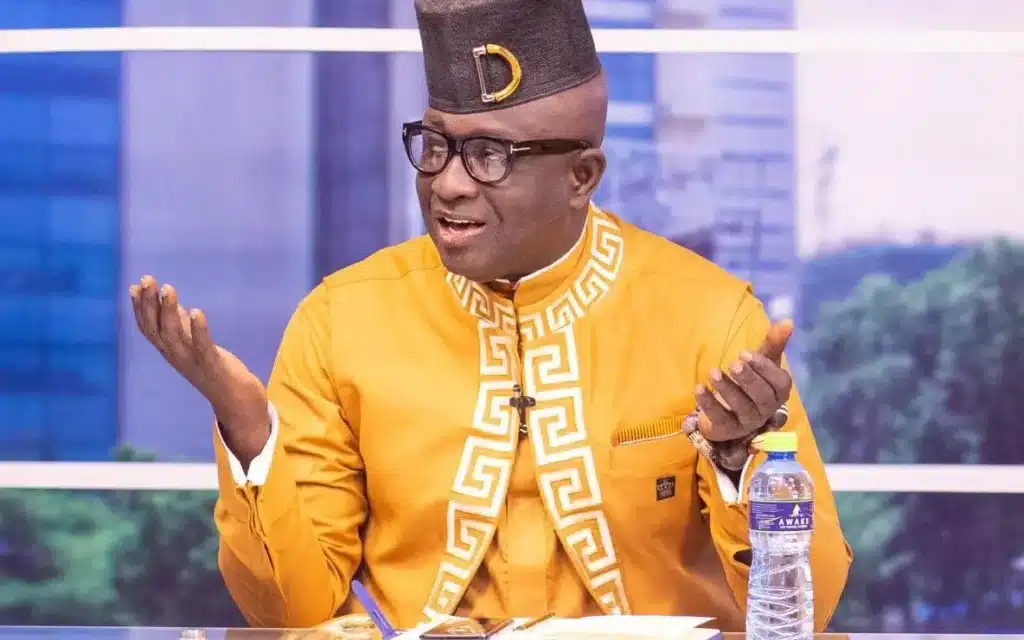
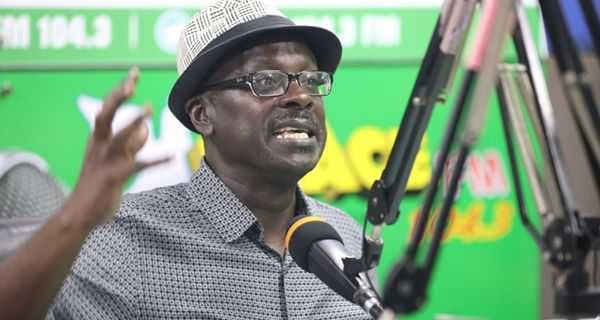
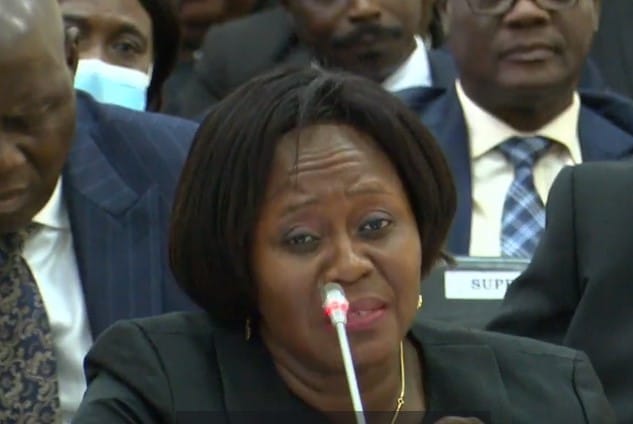
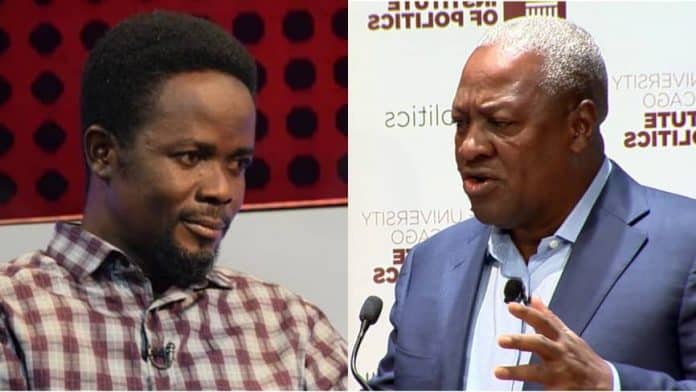
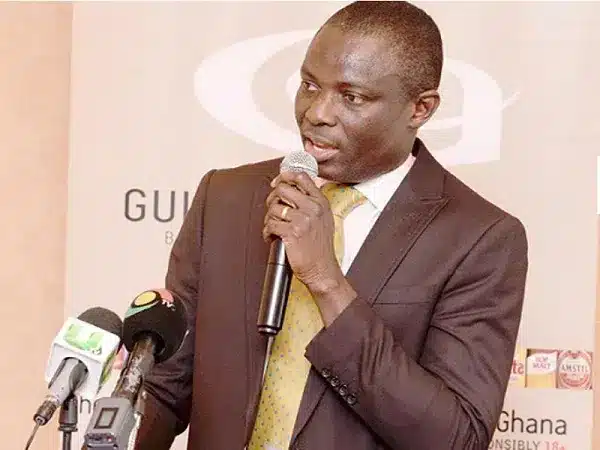
A political science lecturer at the University of Ghana, Professor Ransford Gyampo, has proposed an unconventional method for raising funds to reclaim the land used for the National Cathedral’s foundation.
During a panel discussion on TV3, Professor Gyampo argued that President Nana Addo Dankwa Akufo-Addo should face personal losses for his involvement in the National Cathedral’s construction.
Gyampo suggested that the state should freeze President Akufo-Addo’s ex-gratia and use the funds for land reclamation.
Despite questioning the legality of his own proposal, Gyampo insisted that Akufo-Addo should be held accountable for the funds spent on the project.
He added that the President and his ministers involved in allocating state funds for the Cathedral should be sued for causing financial loss to the state.
“Somebody must be sued for the construction of the National Cathedral. Somebody must be sued for causing financial loss to the state. President Akufo-Addo must suffer some consequences, so if possible for us to freeze his gratuity to be used in paying for the covering of the Cathedral, let’s do it. If that is not enough, then we sue him and his appointees,” he said.
The National Cathedral, which President Akufo-Addo deemed a ‘priority among priorities,’ has stalled due to funding issues.
Reverend Victor Kusi Boateng, Executive Secretary of the National Cathedral’s Board of Trustees, stated that $250 million is needed to complete the project.
“If we could raise an amount of $200 million to $250 million, the National Cathedral will be completed. Let’s look at the advantages the Cathedral will bring to Ghana and its financial benefits as a nation. God has blessed us, we need to come together and thank Him.”
“Washington Museum in construction cost $600 million, but after the completion of the Cathedral, Ghana shall have a Bible museum of Africa that will in terms of space, content, and technology be higher than the American Museum that cost them $600 million.
“All costs together, our Cathedral, Biblical Museum, and Biblical Gardens is just around $300 million, and ours is bigger than the American Bible Museum that costs $600 million. If you look in-depth into the data, you realize that although $300 million is money, compared to the $600 million, we’ve done well.”
Ghana Association of Assembly Members has urged the Local Government Ministry to expedite the payment of their ex-gratia.
During a press conference held in Sehwi Essam, Bia West District, Western North Region, National President Frank Nelson Ackah expressed frustration over the seven-month delay in payment since the new Assembly’s inauguration.
He emphasized that the payment is mandated by Section 11(2) of the Local Governance Act.
GAAM also suggested creating an Electoral Area Fund for Assembly members, sourced from the District Assembly Common Fund.
Ackah advocated for a law that would empower Assembly members to undertake developmental projects, with rigorous auditing and oversight.
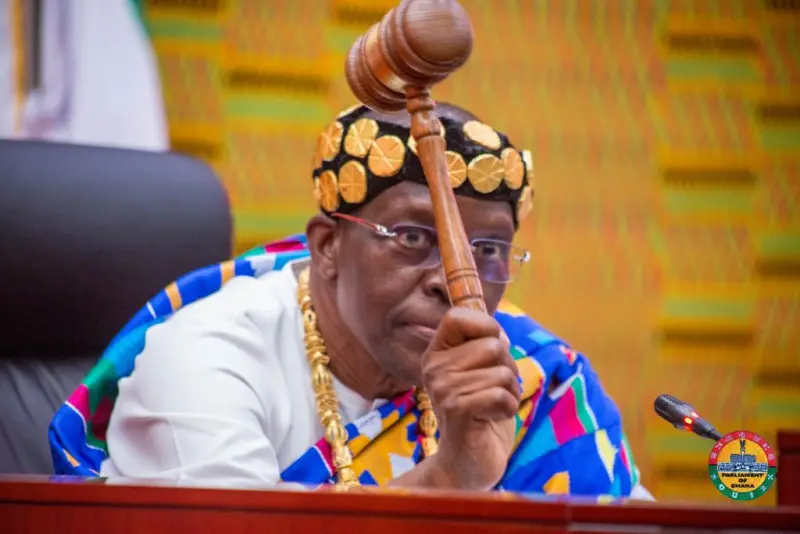
The Speaker of Parliament, Alban Sumana Kingsford Bagbin, has reaffirmed his stance against ex-gratia payments for Article 71 officeholders, arguing that they no longer serve their original purpose.
Speaking at a public forum in Kumasi to commemorate the 30th anniversary of the Fourth Republican Parliament, Bagbin explained that these payments were initially designed to combat corruption by assuring public servants and political officeholders that their post-office financial needs would be met, thus encouraging them to prioritize public interest over personal gain.
However, he noted that this goal has not been achieved in practice, and the payments have failed to effectively curb corruption.
“The issue of ex gratia is a very thorny issue. The founders envisaged a situation where they wanted some particular category of public servants, including political officeholders. The ex gratia is not for members of Parliament and it’s not even ex gratia, it’s gratuity.
Bagbin expressed his support for amending Article 71 of the Constitution to eliminate ex-gratia payments, which he believes have become redundant.
He clarified that these payments are not exclusive to members of parliament but also include various categories of public servants and political officeholders, such as the auditor general, chairpersons of constitutional commissions, ministers of state, the presidency, and the judiciary.
Bagbin highlighted that the original concept was to reassure officeholders of their financial security after their term, allowing them to focus on representing the people’s interests.
Unfortunately, this concept has not been successful in reducing corruption, leading him to advocate for the removal of Article 71 from the Constitution, as it no longer serves its intended purpose.
“But the concept was to assure them, because of the importance of the position they occupy, and the decisions they take on your behalf, the concept was to assure them, don’t think about yourself, think about the people you represent because, after your office, we will take care of you. So it was to assist us to contain corruption. And I’m happy that a number of industrial chiefs from this region were members of the consultative assembly.”
“Unfortunately, in practice, it has not served its purpose. It has not been able to assist us to curb or contain corruption. And so when I made an attempt to contest as a presidential candidate, I did announce that if elected as president, I was going to ensure that that article is amended from the constitution. So I agree totally with anybody who comes to say that we should do away with Article 71 of the Constitution. It hasn’t served its purpose, there’s no use maintaining it.”
The Speaker of Parliament, Alban Sumana Kingsford Bagbin, has reaffirmed his view that ex-gratia payments to Article 71 officeholders no longer fulfill their intended purpose.
He noted that the original goal of ex-gratia payments for certain public servants and political officeholders was to combat corruption, a goal that is no longer being achieved in the current climate.
Speaking at a public forum in Kumasi to celebrate the 30th anniversary of the Fourth Republican Parliament, Alban Bagbin pointed out that these payments were initially meant to ensure that public servants and political officeholders would have their needs met after leaving office, encouraging them to serve the public interest rather than their own.
However, he acknowledged that in reality, this objective has not been realized, and the payments have not effectively reduced corruption.
The Speaker voiced his support for amending Article 71 of the Constitution to eliminate ex-gratia payments, which he believes have become redundant.
“The issue of ex gratia is a very thorny issue. The founders envisaged a situation where they wanted some particular category of public servants, including political officeholders. The ex gratia is not for members of Parliament and it’s not even ex gratia, it’s gratuity.
There’s a difference between ex gratia and gratuity and it’s not for members of parliament alone. It cuts through a category of public servants and political officeholders, including auditor general, including the chairpersons of all the constitutional commissions, including ministers of state, the presidency, judiciary, and all others, it’s not just members of parliament.”
“But the concept was to assure them, because of the importance of the position they occupy, and the decisions they take on your behalf, the concept was to assure them, don’t think about yourself, think about the people you represent because, after your office, we will take care of you. So it was to assist us to contain corruption. And I’m happy that a number of industrial chiefs from this region were members of the consultative assembly.”
“Unfortunately, in practice, it has not served its purpose. It has not been able to assist us to curb or contain corruption. And so when I made an attempt to contest as a presidential candidate, I did announce that if elected as president, I was going to ensure that that article is amended from the constitution. So I agree totally with anybody who comes to say that we should do away with Article 71 of the Constitution. It hasn’t served its purpose, there’s no use maintaining it.”
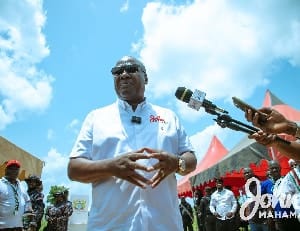
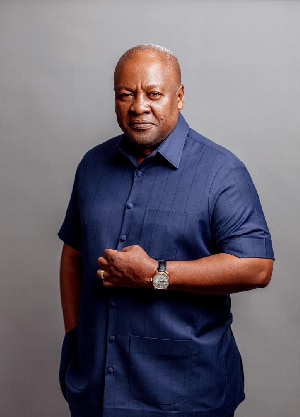
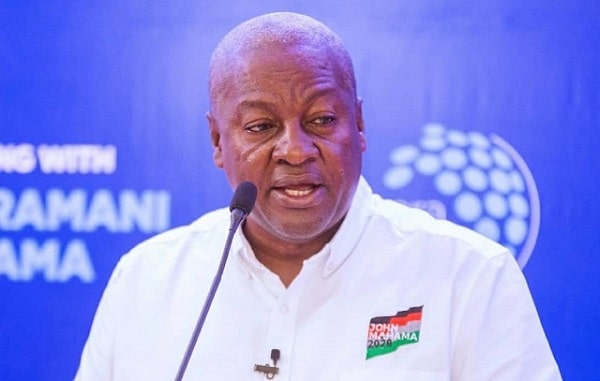
Head of Sports in the media, Dan Kwaku Yeboah has declined to provide commentary on the pledge made by John Dramani Mahama, the flagbearer of the National Democratic Congress (NDC), regarding a proposed new strategy for football management in the country.
During one of his campaign tours, John Mahama proposed the adoption of a sporting blueprint aimed at reshaping the management of the Black Stars. This strategy would pivot the team’s composition towards players from the Ghana Premier League, departing from the prevalent reliance on foreign-based players.
Mahama’s stance rests on the belief that nurturing a robust Ghana Premier League would yield players of sufficient calibre to competitively represent the nation on the international stage.
“We will build the new Black Stars based on homegrown players,” Mahama asserted. “Domestic players who have trained together for a long time and work as a team, and then we will bring in the foreign ones to blend with them.”
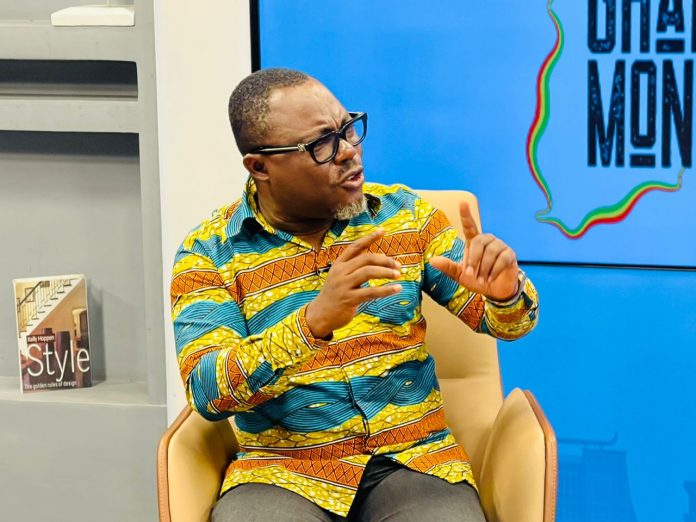
The issue came up for discussion on the Tuesday, February 6, 2024 edition of Okay FM’s breakfast show and Dan Kwaku Yeboah, who was one of three panellists on the show declined to comment on the promise made by the former president.
While maintaining that his decision is not influenced by fear of anyone, Kwaku Yeboah was worried by what he views as the consistent spinning of his comments on any issue relative to the former president.
“Only God gives life and only he can take it so I don’t fear any human. I respect every human being but I don’t fear anyone. I have been framed as someone who revels in attacking men, and I wasn’t brought up that way so it hurts to see those things. If he were a family member of mine, I’d be glad, so I can never disrespect him, but I don’t want the attacks to continue,” he said.
Kwaku Yeboah mentioned his response to John Mahama’s promise to scrap the payment of ex-gratia as one incident where he was, in his estimation, attacked by communicators of the NDC.
He defended his statement, insisting that his comment was a mere analysis of Mahama’s promise and not what the NDC communicators perceive it to be.
“I won’t talk about him again. The attacks I suffered from NDC communicators after speaking about the ex-gratia are enough; I won’t talk about him again. I was accused of insulting John Mahama but it was a mere analogy that I drew that our constitution has aberrations.
“We’ve over the years attacked Rawlings due to the constitution so those who came after him should have made efforts to address the inefficiencies in the constitution. Atta Mills is the only person who attempted to address the situation and Mahama came after Mills so if he wanted to scrap ex-gratia, he had the best opportunity to do it because Mills had done the groundwork,” he said.
President Nana Addo Dankwa Akufo-Addo has proposed a debate aimed at reaching a constitutional resolution regarding the benefits of Article 71 Officeholders, in response to public concerns on the issue.
He initiated the discussion by recommending that the nation should explore the practices of other countries, including the United States of America, where these principles were initially established and were automatically adjusted based on specific objective criteria.
He further averred to the newly constituted Committee of Emoluments for Article 71 Officeholders to consider public concerns about whether or not such officeholders, notwithstanding the constitutional imperative, deserved what was paid to them in view of the current economic challenges.
President Akufo-Addo made the call when he swore in a five-member Committee of Emoluments for Article 71 Officeholders at the Jubilee House in Accra last Wednesday evening.
Composition
The committed is chaired by a lawyer and immediate past Chairperson of the Public Services Commission, Dr Janet Ampadu-Fofie.
The members are the Chairman of the National Development Planning Commission, Professor George Gyan-Baffuor; a lawyer and women’s rights activists, Gloria Ofori-Buadu; a research fellow at the Institute of Statistical, Social and Economic Research (ISSER) of the University of Ghana, Prof. Isaac Osei-Akoto, and the Chief Executive of the Fair Wages and Salaries Commission, Benjamin Arthur.
They swore the Official Oath and Oath of secrecy.
As the terms of reference, the committee is to make recommendations in respect of emoluments and other privileges for Article 71 Officeholders as specified under the Constitution.
The committee is also to examine any other relevant matter which it deems appropriate to its work.
President Akufo-Addo indicated that in recent times, there had been public discourse surrounding the remuneration of public officers which had centred primarily on those of Article 71 Officeholders.
Public
The debate, the President explained, had centred on “whether or not notwithstanding the Constitutional imperative, we are deserving of what is being paid to us in view of the challenges currently confronting our national economy”.
He, therefore, suggested to the committee that it might well be that their work should also focus on those concerns and make recommendations on how they should be addressed.
President Akufo-Addo stated that it appeared that every President of the Republic was bound by the constitutional injunction to establish the Committee of Emoluments for Article 71 Officeholders to consider the emoluments of Article 71 officeholders.
“I think it may be worth our while to examine the practice of other jurisdictions.
For example, the American one, where the principles are established and automatically adjusted according to certain objective criteria,” he added.
Article 71
The inauguration of the five-member committee is sanctioned by Article 71 (1) of the Constitution which requires the President to set it up to determine the salaries and allowances payable, and the facilities and privileges available to his office, the Vice-President, the Speaker and Members of Parliament and a group of nine officeholders spelt out in that Article.
The recommendations of the five-member committee are subject to the approval of the President and Parliament.
The composition of the committee is done on the advice of the Council of State.
“I’ve appointed you to this committee on the advice of the council of responsible Ghanaians as eminently qualified to undertake this important function and I congratulate each and every one of you on your appointment,” President Akufo-Addo said.
He urged the committee to bring to the table the work of previous committees, namely those chaired by Miranda Greenstreet, Mary ChinneryHesse, Ishmael Yamson, Marian Ewurama Addy, Francisca Dora Edu-Buandoh and Yaa Ntiamoah Badu in the conduct of their work to be able to establish some consistencies.
The President also reminded members of the committee that the task ahead was a challenging one but it was his expectation that they would be up to it and deliver their report expeditiously.
President Akufo-Addo assured the committee of his full support for the assignment as well as his government’s assistance if needed throughout the period of their work.
Dr Ampadu-Fofie, on behalf of the committee, commended the government and the Council of State for the confidence reposed in them.
She gave an assurance that they would work diligently and expeditiously to deliver on their mandate.
Background
The Speaker of Parliament, Alban Sumana Kingsford Bagbin, recently reiterated that the money paid to Members of Parliament (MPs) and other Article 71 Officeholders every four years was accumulated salary arrears (gratuity) and not ex gratia.
He said at the beginning of every Parliament, most legislators, including himself as the Speaker, did not know the exact salary they were entitled to until the end of their four-year term; a practice he described as “wrong”.
The Speaker explained that whenever Ghanaians talked about budget for Parliament, they considered such budget as money earmarked for salaries and conditions of service of MPs, “especially what people refer to as ex gratia.”
“Gratuity is different from ex gratia; what they pay MPs is gratuity and it is another wrong practice because as we sit here in our third year, which is three years down, I as the Speaker do not know my salary,” he revealed.
Unstable salary
Speaking during a visit to the Graphic Communications Group Limited (GCGL), Mr Bagbin said: “My salary has not yet been fixed and so every month I am paid something based on what my predecessor was earning.’’
“But we all know from the labour front that every year they try to renegotiate with the government and so at the end of the four years then they (government) come out with your salary.”
“And that will definitely be higher than the first year and so they have to pay you arrears.
It is those arrears that balloon to what the Members of Parliament take at the end of four years and people call that ex gratia and you get the problem,” the Speaker explained.
The money given to Members of Parliament (MPs) every four years, according to Speaker of Parliament Alban Sumana Kingsford Bagbin, is not ex-gratia but rather accumulated salary arrears (gratuity).
He claimed that most lawmakers, including himself as Speaker, do not know their actual salaries until the end of their four-year terms, a practice he called “wrong” at the start of every new parliament.
He said that whenever Ghanaians discussed the budget for the House of Representatives, they thought of it as funding for the wages and working conditions of the members, “especially what people refer to as ex gratia.”
“Gratuity is different from ex gratia; what they pay MPs is gratuity and it is another wrong practice because as we sit here in our third year, which is three years down, I as the Speaker do not know my salary,” he revealed.
Speaking during a visit to the Graphic Communications Group Limited (GCGL), Mr Bagbin said: “My salary has not yet been fixed and so every month I am paid something based on what my predecessor was earning.’’
“But we all know from the labour front that every year they try to renegotiate with the government and so at the end of the four years then they (government) come out with your salary.”
“And that will definitely be higher than the first year and so they have to pay you arrears.
“It is those arrears that balloon to what the Members of Parliament take at the end of four years and people call that ex gratia,” he explained.
Former President John Mahama’s promise to scrap the ex-gratia when given the presidential mantle again in 2024 has sparked several controversies among many, including the Managing Director of the State Transport Corporation (STC), Nana Akomea, who has challenged the ex-president to stop taking it ahead of the elections.
Speaking on Monday, 29th May during a JoyNews interview on the current state of Ghana’s economy and other matters, including Ghana’s IMF bailout, KKD jabbed the government to prioritize the needy, not the greedy.
KKD
Pension schemes such as SSNIT and other insurance covers are enough to sustain the beneficiaries of the ex-gratia.
“Now I think ex-gratia should be scrapped… We have SSNIT. If you pay into that, depending on your profession and position, you may go home with your full salary; some get less.
“So the people who are already in the highest positions and will go home with perhaps their full salary when they go on pension are the ones who are still looking for more.
“Let’s serve the needy, not the greedy, Ghana, listen; serve the needy, not the greedy,” the cultural icon fumed.
He took a swipe at “our elders” and some laws, including some provisions of Article 71, which provides ex-gratia for retired government officials.
“We have to question our elders. Not all our elders are brilliant, and we have to accept that now. From the days of slavery until now.
And some of them looked at the exigencies at the time and put certain things into law, but not all laws make sense.
“There was a time when slavery was in law, so are we going to say it was a good law?” he noted.
KKD called ex-gratia “a bad idea” and wants a complete abolishment of it, however, through right constitutional procedures.
“The ex-gratia idea is a bad idea if the people who are taking it would stand up and say, like the former president, Mahama is saying, you know, I will speak to my people and tell them if I’m going to give you an appointment, you must accept that you will not take ex-gratia, and then they would go through the court processes and parliament.
“We need to scrap it, and we need to do that lawfully.”
Akufo-Addo
While the 1992 Constitution of Ghana does not explicitly mention the term “ex-gratia,” it has become a commonly used phrase to describe the retirement benefits provided to government employees who fall under the scope of Article 71 office holders in the constitution.
Article 71 office holders include the President, Vice President, Speaker of Parliament, Chief Justice, and Justices of the Supreme Court.
Additionally, it includes Members of Parliament (MPs), Ministers of State, political appointees, and certain public servants whose salaries are funded by the Consolidated Fund and who enjoy special constitutional privileges.
According to Article 71(1) and (2) of the Constitution, the determination of salaries and allowances for the Executive, Legislature, and Judiciary, financed by the Consolidated Fund, is the responsibility of the President.
This is made based on the recommendations of a committee, consisting of no more than five individuals appointed by the President and acting upon the advice of the Council of State.
Professor Stephen Kwaku Asare, a private legal practitioner and professor of economics, widely known as Kwaku Azar, has strongly advised Ghanaians to disregard the assertions made by Chief Justice nominee, Justice Gertrude Torkornoo, regarding ex gratia payments to apex court judges.
During her appearance before Parliament’s Appointment Committee on Friday, May 26, 2023, the Chief Justice nominee sought to dismiss the belief that judges and magistrates receive ex gratia benefits upon retirement.
“I think that consistently, the Association of Judges and Magistrates has responded to questions on ex gratia for judges and made it very clear that judges don’t receive ex gratia.
“We continue in office; we don’t leave office until you retire. We don’t have a cycle, and therefore, the discussion of ex gratia is not applicable to us.
“This specific provision, where our names [judges] are mentioned, and how our salaries are set under Article 71, is determined by a committee, a presidential committee that handles that work. The framers of the Constitution believed that was the appropriate way to ensure our independence, and we are not the only individuals subject to it. It’s an entrenched provision and can only be changed through an elaborate process,” she stated.
However, Kwaku Azar has urged the public to completely disregard these claims.
In a Facebook post dated Saturday, May 27, 2023, Prof. Azar stated that the claim cannot be true.
According to the US-based professor, Supreme Court Justices, for instance, do receive ex gratia, which does not even include other benefits such as cars, protocols, and health benefits.
“So, completely disregard the claim by the CJ nominee that judges do not receive ex gratia. They do.
“Judges’ ex gratia is much better than that of politicians, whose tenure is entirely at the mercy of the electorate. In contrast, judges have job security and lifetime pensions,” he stated.
The Good Governance (GoGo) advocate said the system of ex gratia for judges should be abolished and replaced with a certificate of appreciation, which will be awarded to judges upon their retirement.
“Note that GoGo will scrap all monetary payments for ex gratia and replace it with a certificate of appreciation.
“Also, note that such a certificate is entirely consistent with Article 71. In fact, because ex gratia is a ‘tip,’ it’s supposed to be minimal, not the extravagant scheme that the Professor Dis and Dat Committees have turned it into,” Prof. Azar said.
The issue of ex gratia has become topical in Ghana’s political and governance discoure in recent time.
Flagbearer of the National Democratic Congress, former President John Dramani Mahama has already promised to scrap ex gratia if he is elected back into office.
However, pro-government persons have dismissed his promise describing it as populist and not feasible.
Read Prof Azar’s full post below:
SC judges retire on the current salary of SC judges.
In addition, they receive ex gratia (gratuity) equal to 3 months salary for each year on the SC, 2 months salary for each year on the Court of Appeal, and one month salary for each year on the high court.
So let’s assume a SC judge currently earns ₵40k a month.
He’d receive this amount, adjusted for any future increases in the salary of serving members, for life. That is his pension.
But on retirement, he’d also receive a one time payment as gratuity. Consider Justice Anin Yeboah who served on the HC for 1 year, CoA for 5 years, and SC for 15 years.
His ex gratia is 45 (3*15) months salary for his service on the SC; 10 (2*5) months salary for his service on the CoA; and 1 (1*1) month salary for his service on the HC. He gets ex gratia credit for 56 months (45 + 10 + 1). So in total 40,000 * 56 = ₵2,240,000 in ex gratia.
This does not prejudice their other benefits in the form of cars, protocols, health, etc.
So ignore completely the claim by the CJ nominee that judges do not receive ex gratia. They do.
Judges’ ex gratia is much better than the politicians whose tenure is entirely at the mercy of the electorate. In contrast, judges’ have job security and life time pensions.
Note that GOGO will scrap all monetary payments for ex gratia and replace it with a certificate of appreciation.
Note also that such a certificate is entirely consistent with article 71. In fact, because ex gratia is a “tip,” it’s supposed to be de minimis not the boondoggle that the Professor Dis and Dat Committees have turned it into.
Chief Justice nominee, Justice Gertrude Torkornoo, has indicated that the payment of ex-gratia to former government officials does not include those in the Judiciary.
Appearing before Parliament’s Appointments Committee on Friday, May 26, 2023, Justice Gertrude Torkornoo explained that it is the doing of the law to ensure the independence of the Judiciary.
“We continue in office, we don’t leave office until you retire. We don’t have a cycle, and therefore, the discussion of ex-gratia is not applicable to us.
“This specific provision, where our names [judges] are mentioned, how our salaries are set under Article 71, it’s a committee, a presidential committee that does that work. And the framers of the Constitution thought that, that was the appropriate thing to keep us independent and we are not the only persons subject to it. It’s an entrenched provision and can only be changed by a very elaborate position.
“It’s an entrenched provision and can only be changed by a very elaborate position,” she however added.
Her submission on ex-gratia comes at a time when some Ghanaians have strengthened their calls for the removal of ex-gratia as Ghana battles an economic crisis.
Wading into the conversation, former President John Dramani Mahama has pledged to cease the payment of ex-gratia to former government officers (Article 71 holders) in his next government.
Speaking at the University of Development Studies, Tamale on Monday, May 15, he asked Ghanaians to hold him to his promise.
“I am committed to operating an effective government with not more than sixty (60) ministers.
“These ministers together with other appointees of the government will not be entitled to ex-gratia payments after their tenure, as they will commit to that undertaking even before the necessary constitutional amendments, including a review of the controversial Article 71.”
But some citizens have come against the former statesman. They claim he has been a beneficiary of the ex-gratia payment regime.
According to former President Mahama, he has never received ex-gratia. He clarified that he receives monthly pension.
My friend Nana Akomea. Really sad what politics can do to a fine mind!
I don't take ex-gratia. I receive a monthly pension.
“My friend Nana Akomea. Really sad what politics can do to a fine mind! I don’t take ex-gratia. I receive a monthly pension,” he wrote on Twitter today.
The Majority Leader and Member of Parliament for Suame Constituency, Osei-Kyei Mensah-Bonsu, has said the concerns of Ex-gratia which is paid to government appointees after their service cannot be scraped unless it goes through a constitutional review.
His comments were in reaction to the pronouncement by the former President, John Dramani Mahama, who, during his acceptance speech after the primaries of the National Democratic Congress (NDC), said he will scrap off Ex-gratia when he comes into office come 2025.
In an interview, the majority leader stated that gratuity which is due to every government appointee is entrenched in the constitution hence it cannot just be scrapped.
“I think that what the former president is saying should be one of the things that we should have a national conversation on. I have personally had some discussions with him on that. Indeed in 2020, during the electioneering campaign time, he raised it. This is not the first time he is talking about that. He raised it in 2020, that when he was elected, he was going to go away with it. I told him, that he didn’t know what he was talking about. Because the gratuity is part of the chapter on the executive and the who chapter on the executive in the constitution is entrenched. So, you can’t wake up one day to say, I have cancelled it,” he said.
According to him, the change can be possible if it’s part of a holistic constitutional review.
“So, I told him that unless it is part of a holistic review of the constitution I will subscribe to it but you going out on a political platform to say that you are going to cancel it, how are you going to cancel it, he asked.
Political Communications Lecturer at UniMAC-GIJ, Dr. Paul Ezuah, has asked flagbearer for the National Democratic Congress (NDC), John Mahama to go gently with the promises he’s making ahead of 2024 general elections.
The former President in his victory speech on Monday reiterated a litany of promises he says he wants Ghanaians to hold him to if they vote him to become President in 2025.
Mr Mahama among others, promised to run the leanest but most efficient government under the fourth republic by appointing not more than 60 ministers and deputy ministers. Work to abolish the payment of Ex-gratia and cut out waste and ostentation in Government.
He also promised to give anti-corruption state institutions unfettered space to operate – The days of the Clearing agent must come to an end on January 07, 2025.
Speaking to Starr News, Dr. Paul Ezuah said even though this is to be expected in political seasons, John Mahama should hasten slowly given a recent history of unfulfilled promises.
“Looking at how he spoke about the whole thing, it is good. But let us be mindful that we are in Ghana where we have in the past had promises being made everywhere and very little is fulfilled. So for me, I will advise that he’ll hasten slowly as far as promises are concerned because we have the benefit of hindsight and we also know what has happened before even in the NDC and NPP.”
“The electorate in Ghana do not really fancy promises, they want the work to be done for them to see that the right thing is being done. So, on one hand, I will say that it’s good but he should tone down a bit on the promises because if he doesn’t fulfill it, it will be counter-productive as far as the 2024 election is concerned,” Dr. Paul Ezuah added.
The National Democratic Congress(NDC) flagbearer, John Dramani Mahama, has indicated that if he is elected the next president of Ghana he will ensure that ministers and other appointees are exempted from ex-gratia.
The former president during his acceptance speech after his election as the flagbearer of the NDC, said he will not repeat the mistakes of the NPP government.
He said he will not bloat his government size.
Speaking at the University for Development Studies (UDS) in Tamale, Mr. Mahama said he will appoint less than 60 ministers in his next government to protect the public purse.
“Ladies and Gentlemen, our nation is still at the crossroads with crippling debt, and an inefficient and wasteful government. We cannot continue this pathway. It is a betrayal of the people, as a leader, to keep doing things the same way when the results leave them poorer”.
“I am committed to operating an effective government with not more than sixty (60) ministers. These Ministers together with other appointees of the government will not be entitled to ex-gratia payments after their tenure, as they will commit to that undertaking even before the necessary constitutional amendments, including a review of the controversial Article 71.”
Mr. Mahama in March 2023, during his campaign launch at the Cedi auditorium at the University of Health and Allied Sciences (UHAS) in Ho in the Volta Region first disclosed his decision to assemble not more than sixty ministers and deputies should he win the 2024 presidential elections.
Associate Professor of Political Science at the University of Ghana has revived calls for the Council of State to be scrapped.
The discussion on the uselessness of the Council of State became rife especially when calls for the amendment or abolition of the 1992 Constitution became topical.
The Council of State was established by Articles 89 to 92 of the 1992 Constitution of Ghana: “There shall be a Council of State to counsel the President in the performance of his functions.” But the Council’s advice is not binding on the President as he can choose to take or reject.
Meanwhile, huge sums of monies are being used to pay their allowances and ex-gratia without them having any impact on state affairs.
Adding his voice to the conversation Monday, March 20, 2023, Prof. Ransford Gyampo of the University of Ghana said the modus of constitution of the council itself is wrong.
According to him, the President should have no locus in determining who becomes a member of the Council of State.
Likening the institution to that of the chieftaincy in the traditional society, the Professor said chiefs were always born to the existence of a council which gave the latter the power to spite whenever the chief went wrong.
Special aide to former President John Mahama, Joyce Bawa Mogtari, has disclosed how much former President John Dramani provided details on what he receives as Ex-Gratia since he left office in 2020.
According to her, John Dramani Mahama received a lump sum of Gh¢250,000 as ex-gratia and a monthly pension of Gh¢22,000.
She made the revelation during an interview on GHOne over Mahama’s promise to scrap ex-gratia.
She said; “Mahama has received his ex-gratia, he received a lump sum of Gh¢250,000 as ex-gratia and takes Gh¢22,000 as monthly pension pay,” Mahama Aide, Joyce Bawa.
Former President John Dramani Mahama has promised to scrap the payment of ex-gratia to members of the executive should he be re-elected in the 2024 elections.
Speaking at the launch of his campaign which took place in the Cedi Auditorium at the University of Health and Allied Sciences in Ho, in the Volta Region on Thursday, March 2, Mr. Mahama said he will take the necessary steps to scrap the payment as soon as he assumes power.
“The payment of ex-gratia to members of the executive will be scrapped. The necessary Constitutional steps to take this will start in earnest in 2025. We will also persuade members of the other arms of government to accept its removal,” he said in Ho.
Amidst calls for payments of ex-gratia to be scrapped, former Member of Parliament for Hohoe South, Kosi Kedem has proposed that a pension scheme should be instituted to cater for parliamentarians after their tenure in office.
Mr. Kedem was elected into the first Parliament of the fourth republic of Ghana on 7 January 1993.
According to him, the payment of ex gratia is not enough to sustain legislators for a lifetime.
Speaking to Raymond Acquah on Upfront on JoyNews, Mr Kedem said that “it will be a good idea because, in parliaments where pension scheme exists, they don’t pay them ex gratia. You cannot have ex gratia and pensions at the same time.”
He noted on Thursday that a pension scheme will save MPs from all the troubles that come with managing huge sums of money, a challenge some MPs are faced with when the ex gratia is paid.
“The way they pay the money to us is a very dangerous and unsafe mechanism. When you are given that bulk money you can misuse it, and you can invest it wrongly. What happens if the investment goes wrong?” He quizzed.
Mr Kedem said, “but with pension, you can be given some money in bulk then they spread the rest over your lifetime.”
Juxtaposing the unstructured nature of Ghana’s second parliament during his tenure, he said “during our time as I have told you, we were guinea pigs. They were experimenting with us. We did not even have condition of service; we were paid on account.”
“It means you cannot even make a budget for yourself. It is that they pay you as and when they decide. We were being paid on account, so our life was quite miserable,” he recalled.
However, he insisted that a similar plight could be avoided if a pension scheme is established.
“In other Parliaments, they have pension schemes but in the parliament of Ghana, they don’t have a pension scheme. So, whatever you are paid you have to depend on it for life. We are fighting for this pension scheme to be introduced if not for us but for the sitting MPs,” he added.
Former President John Dramani Mahama will be unable to heed to calls for the refund of ex-gratia paid him following his opposition against the payment of such emolument to Article 71 holders.
According to the former President, he is unable to do so since he has spent the money paid to him by the government as stated by the laws of the country.
“I have spent the money already and now I am a pensioner, where am I going to get that money to pay back? I am unemployed but they say bring yours to show you have good faith, I have no source of income, and you say I shouldn’t work.
“They say the president should not hold the office of profits so you gave it to me, I spent it then you come and say I should refund it, where am I going to refund it from?”
He made the comments while speaking at the National Democratic Congress (NDC) Professional Forum Dinner and Awards Night in Accra on Sunday, March 5, 2023.
“I say we will cancel ex gratia, if you will also cancel it say it but why are you insulting me and saying I should refund mine? Will you cancel it or you won’t, tell the people of Ghana but they are saying I should bring mine first.
“They don’t understand the gravity of the situation. I do think that for those of them who speak for NPP, don’t understand the gravity of the situation, but is good for our party,” the former statesman added.
Earlier, Mr Mahama described the comment by private legal practitioner Martin Kpebu to return all the ex gratia paid to him in the past following his promise to cancel it, as silly.
Addressing supporters of the NDC in the Volta region on Saturday, March 4, Mr Mahama said “I said categorically that when we come into office we will cancel ex gratia for the executives because the president is in charge of the executive, so he can cancel it for the executives but then you have to persuade the other arms of government to see that there is no fairness in continuing to pay ourselves ex gratia when the ordinary worker does not receive it because you are the leaders, you must show by example. If the economy is in crisis why should we continue to take ex gratia when the rest of the public and civil services don’t take it? So, I said categorically that we will cancel exgratia.
“And then somebody who should know better, a lawyer, he said, then I should refund all the ex gratia we took before to show Ghanaians that yes, we are serious about cancelling it, he does not even know the principle in our constitution that says that you can’t pass retroactive legislative if you pass legislative today, it does not affect what happened in the past, what he says is a bit silly because it is like saying because we have introduced free SHS all of us should go and get a refund of our school fees that we paid in the past. That is how silly what he is saying is.”
Mr Martin Kpebu had said it makes sense to ask Mr Mahama to return the ex gratia that he received after indicating that he is going to cancel its payment should he win the next elections as President.
Speaking on TV3 on Saturday, March 4, Mr Kpebu said “Mahama made money whiles as president so he should look within himself and say look ‘I will return it’. He should return it because, in these national elections, they are going to do, hundreds of millions of dollars, where does it come from? They made money so the exgratia is small. So he should just tell the people ‘I have grown older, I think I have become wiser, I am returning the money,’ That exgratia he should return it
“You know Dan Kwaku Yeboah of Peace FM, I think he is the lead campaigner for Mr Mahama to return his ex gratia. When I looked at it I said yes it made sense. Mr Mahama should do introspection and return it as a sign of good faith, that once I have returned the money I am committed. Number two, the amendment he should put into writings.”
Mr Mahama promised that he will scrap ex gratia when he gets the nod to lead this country again.
“The payment of ex gratia to members of the executive will be scrapped,” Mr Dramani Mahama announced when he launched his bid to be the 2024 Presidential Candidate of the National Democratic Congress (NDC).
“The necessary constitutional steps to take this will start in earnest in 2025. We will also persuade members of the other arms of government to accept its removal,” he assured.
For Ghanaians to take John Dramani Mahama seriously, Dan Kwaku Yeboah, a sports writer with the Notwithstanding Media Group, has urged him to follow in the footsteps of Togbe Afede XIV.
The journalist wants Ghanaians to know there is some kind of dedication to the former President’s promise to abolish the honorarium when re-elected, who is running to represent the opposition National Democratic Congress.
He also indicated his government would work to scrap ex-gratia benefits given to appointees under the other arms of government.
“The payment of ex-gratia to members of the executive under Article 71 will be scrapped. And the necessary constitutional steps to abolish that payment will start in earnest in 2025.
“We will also begin the process of persuading the other arms of government other than the executive to accept the removal of this ex-gratia payment,” he said.
Reacting to his promise, Dan Kwaku Yeboah who casted some doubts opined the statement is enough a message to win Mahama the 2024 polls if he proves it by example.
Just as the Paramount chief and Agbogbomefia of the Asogli State did, Dan Kwaku Yeboah wants Mr. Mahama to follow suit to distinguish this statement from the one he made in 2015 which he didn’t honour.
He was speaking on Ɛkwanso Dwoodwoo on Peace FM same day the former President made the promise.
“You said it in 2015, the time you were in government, but you couldn’t scrap it, now that you’re on the bench (in opposition) you want to scrap what? Bring the ones that you’ve taken to set an example of what you’re saying.
“If the former president brings his ex-gratia, Kwame I will campaign for him, I will clap for him. Let him say he’s doing what Togbe Afede did, so he’s also doing the same…Kwame this is a big campaign message.
“I wanted him to set an example, actions speak louder than words….Togbe Afede is a human being, and Mahama is also a human being, so why not return it as Togbe Afede did?” he quizzed.
A law professor, Judge Abdulai, has advised Ghanaians to be “measured” in their optimism regarding political promises to repeal ex-gratia, which is ingrained in the 1992 Constitution.
Also a legal practitioner, Mr Abdulai said any president who promises to scrap ex gratia for Article 71 office holders will find the process very cumbersome.
“Scrapping ex gratia will be very difficult,” he said in an interview with Media General‘s Noble Crosby Annan on Thursday, March 2.
This comes in the wake of the promise by former President John Dramani Mahama that he will scrap ex-gratia when he gets the nod to lead this country again.
“The payment of ex gratia to members of the executive will be scrapped,” Mr Dramani Mahama announced when he launched his bid to be 2024 Presidential Candidate of the National Democratic Congress (NDC).
“The necessary constitutional steps to take this will start in earnest in 2025. We will also persuade members of the other arms of government to accept its removal,” he assured.
But Mr Abdulai, who lectures at the University of Professional Studies, Accra (UPSA), said the emoluments of persons entitled for ex gratia are not determined by a President but by the constitution.
“This is not a decision that is made by Parliament,” he added.
He said before an amendment is made, the entire constitution may need to be reviewed.
“For all of us who have hope, we should be measured in our hope,” he cautioned.
Mr Abdulai said a referendum will, for instance, need to be conducted to have this changed and so the scrapping will not rest with one president but “the entirety of Ghanaians will have to come together”.
Former President John Mahama has vowed to scrap ex-gratia if given the nod in the upcoming 2024 elections.
Speaking at the launch of his campaign, Mr Mahama explained that this will be part of measures to ensure financial prudence during his administration.
“The payment of ex-gratia to members of the Executive under article 71 will be scrapped. And the necessary Constitutional steps to abolish that payment will start in earnest in 2025,” he said.
Ex-gratia payments are regarded as part of the end-of-service benefits for a certain class of public servants — and it is paid every four years.
The category of workers who benefit from ex-gratia payment is Article 71 office holders made up of the President, the Vice President, the Speaker of Parliament, the Chief Justice and other Justices of the Supreme Court of the country.
The rest are Parliamentarians, Ministers of State, political appointees and public servants with salaries charged to the Consolidated Fund, but enjoying special Constitutional privileges.
There have been conflicting arguments about the essence of the payment of ex-gratia to Article 71 Office holders, with some commentators and Governance experts describing the practice as an “unfair arrangement.”
The debate resurrected when it emerged that Togbe Afede, the Agbogbomefia of the Asogli State, returned an amount of GHS350,000 paid to him as ex-gratia for serving as a Member of the Council of State.
Togbe Afede described the amount as “outrageous” saying it was “inappropriate for a short, effectively part-time work.”
Mr Mahama has also assured Ghanaians that ex-gratia will become a thing of the past.
“We will also begin the process of persuading the other arms of government other than the executive to accept the removal of these ex-gratia payments,” he mentioned.
Former President John Dramani Mahama has resurrected the discussion on the payment of his emoluments as an ex-Ghanaian leader. According to Mr Mahama, he is entitled to some benefits according to Parliament but those entitlements have been withheld because he is politically active.
“I’ve been Vice President before, I’ve been President of this country before, according to parliament, I’m supposed to receive all kinds of emoluments to pay my fuel and my electricity bill, my water bill, medical bills, air travel, vehicles, everything but I can assure you that all those emoluments have been withheld because I’m politically active,” he said.
Mr Mahama reiterated this in his interaction with his former appointees in Accra on Wednesday, 22 February 2023, where he called on them to come out of retirement and join him in the fight to reclaim power in 2024.
“If I was retired and not commenting on national issues, I would have all those emoluments paid but it doesn’t bother me, because of my new granddaughter and my children, I believe that the future of this country is one that we must rescue from the hands of this looting brigade and reset the Ghanaian project, bring back good governance, strengthen the fight against corruption, put in place the things that will make it impossible for another president to come and land us in the same ditch that we currently are, and so I’m the first to announce to you that even though I was retired in 2016, I’ve come out of retirement and I’m available for the task ahead.”
Last year, Mr Mahama made similar comments about his emoluments.
He had said in an interview with Accra-based TV3 on Monday, 12 September 2022, that: “I receive only my monthly pension, like President Kufuor or President Rawlings was receiving until he died. That is all I get.”
Kwaku Kwarteng, the member of parliament for Obuasi West, wants parliament to reduce spending as well in order to salvage the faltering national economy.
Mr. Kwarteng who served as a Deputy Finance Minister under the first term of the Akufo-Addoadministration says MPs should stop using V-8s and stop receiving ex-gratia at the end of every term of office.
The Chairman of the Finance Committee was contributing to the Domestic Debt Exchange Programme discussion on the floor of Parliament, when the Finance Minster, Ken Ofori-Atta appeared before the House to brief them on the DDEP.
“Mr. Speaker how many times have we not heard the people who elected us into office say that there are issues with the V8s that we use? How many times have we not heard our people complain about the ex-gratia we take?
“Mr. Speaker I’m making the point that the problem we have on our hands today is not just a debt treatment matter. There is the need to deal with a fundamental weakness that has characterised the management of our economy for decades,” MP for Obuasi West said.
Mr Kwabena Agyei Agyepong, a flagbearer hopeful of the New Patriotic Party (NPP), has called for the scrapping of the four-year ex-gratia payments.
He said the country did not have the needed resources to honour that arrangement.
The former General Secretary of the NPP said there should be arrangements where Members of Parliament for instance could be offered “something little” at the end of their term in office instead of giving them lump sums every four years under the current system.
“Ex-gratia should be like a parachute payment. When you have served your country like a member of Parliament…it’s a difficult assignment. I would say it is like marriage. When you elevate a lady to a certain level as a wife and you want to leave, that’s why they let you pay alimony,” he said in an interview in Accra.
“It cannot be right on any moral standing. We should stop it immediately. We don’t have the money as a country,” Mr Agyepong added.
Ex-gratia payments are regarded as part of the end-of-service benefits for a certain class of public servants — and it is paid every four years.
The category of workers who benefit from ex-gratia payment is Article 71 office holders made up of the President, the Vice President, the Speaker of Parliament, the Chief Justice and other Justices of the Supreme Court of the country.
The rest are Parliamentarians, Ministers of State, political appointees and public servants with salaries charged to the Consolidated Fund, but enjoying special Constitutional privileges.
There have been conflicting arguments about the essence of the payment of ex-gratia to Article 71 Office holders, with some commentators and Governance experts describing the practice as an “unfair arrangement.”
The debate resurrected when it emerged that Togbe Afede, the Agbogbomefia of the Asogli State, returned an amount of GHS350,000 paid to him as ex-gratia for serving as a Member of the Council of State.
Togbe Afede described the amount as “outrageous” saying it was “inappropriate for a short, effectively part-time work.”
Nana Adjei Ampofo, a former member of the Council of State also called for a review of the payment of ex-gratia to members of the Council to meet the economic realities of the day.
Former President John Dramani Mahama recently pledged to implement the recommendations of the Constitutional Review Committee as well as review ex-gratia payments in the next NDC administration.
John Mahama stated that in order to minimise government expenditure, he would decrease the amount of money the state pays to some Article 71 holders in
his next administration.
Speaking at the 2022 Te Za (Yam Festival) of the Asogli Stateon Monday, September 12, said, “I want to assure all Ghanaians that the next NDC administration will revisit the act, especially the matter of Article 71 emoluments, especially the issue of ex-gratia payment and the size of government to cut down on expenditure.”
Article 71 of the 1992 constitution states that salaries and allowances payable, and the facilities available, to the President, the Vice-President, the chairman and the other members of the Council of
State; Ministers of State and Deputy Ministers, being expenditure charged on the Consolidated Fund, shall be determined by Parliament on the recommendations of the committee (of not more than five persons appointed by the President, acting in accordance with the advice of the Council of State.)
The “salaries” in question include allowances, facilities, and privileges, as well as retirement benefits or awards.
The payment of ex-gratia to former statesmen has come under heavy criticism in recent times as the country faces intense economic challenges.
For most Ghanaians and the Paramount Chief and Agbogbomefia of Asogli, Togbe Afede XIV, it is unwise for such spending to continue in recent times when the government is supposed to cut back on its expenditure, as it currently spends more than it generates.
It will be recalled that Togbe Afede XIV made headlines when he turned down more than 365,000 as allowance for serving on the Council of State from 2017 to 2020.
“I returned the ex-gratia amount I was given not because I didn’t need the money. In fact, at that particular time, I needed money very badly to meet various family obligations. But I truly believe that money was not deserved,” Togbe Afede XIV said at a youth empowerment forum and anti-corruption day celebration ahead of this year’s Asogli Yam Festival.
The Paramount Chief was lauded for his actions by Ghanaians on social media, as well as former statesman John Mahama.
“As people in authority, we must not massage the truth but we must be bold always and fearless in speaking the truth, and I must say one traditional leader who has always spoken the truth no matter who is hurt is Togbe Afede XIV,” the former President said.
According to Togbe Afede XIV, anyone who voluntarily gives his time to work for the country should be considerate and not demand ex-gratia “because our country is very poor.”
Ghana has reached out to the International Monetary Fund (IMF) to obtain an economic program to address its economic challenges.
It is expected that the government. and the Fund reaches an agreement by the end of the year. Ghana has requested a USD 3 billion from the IMF.
The Association of Magistrates and Judges of Ghana (AMJG) has denied claims that Superior Court Judges receive ex-gratia every four years.
According to the judges, they rather take back pay when their actual salary is computed and back-dated.
“It is this arrears of salary or back pay which is mischievously being described as ex-gratia in the press, particularly on radio, television and on social media platforms by some seasoned journalists and so-called social commentators, who never attempted to look for the truth.
“These arrears of salary or back pay are paid in a lump sum or instalment this has been the situation since 1996,†a press statement dated June 21, 2022 said.
The subject of payment of ex-gratia resurfaced after a former Council of State member, Togbe Afede XIV, decided to reject over ¢300,000 paid to him for serving on the Council for the period between 2017 and 2020.
His move was subsequently greeted with mixed reactions, including calls for the abolishment of the payment of ex-gratia to Article 71 office holders and claims that suggested that judges too are being paid ex-gratia.
“The Association of Magistrates and Judges of Ghana (AMJG) has noted with dismay the false and malicious allegation that judges of the Superior Courts Supreme Court, Court of Appeal and High Court are paid ex-gratia at the end of every four years.
“The AMJG would like to state without any equivocation, whatsoever that, that allegation is false and baseless. The Association would like to state categorically that no Superior Court judge is or has ever been paid ex-gratia every four years as being wrongly stated in the media,†the statement added.
The 7th Parliament is racing against time to finalise the determination of the salaries and allowances payable and the facilities and privileges available to Article 71 officeholders.
Article 71 office holders include the President, the Vice-President, the Speaker of Parliament, the Chief Justice, and Justices of the Supreme Court.
The current Parliament is seeking to approve the ex gratia for this category of public office holders before the 8th Parliament begins official business next year.
When Parliament reconvened on Monday, December 14, 2020, the matter was on the agenda.
“In accordance with the 1992 Constitution, this House will be required to consider the approval of the Executive component of Article 71 officer holders report before the dissolution of the House,†Speaker of Parliament, Prof Aaron Mike Oquaye, told legislators on Monday.
The report the Speaker was referring to is one prepared by a five-member Committee put together by President Nana Addo Dankwa Akufo-Addo in June this year to make recommendations in the ex gratia of Article 71 officeholders.
At the time the five-member committee was being inaugurated, President Akufo-Addo said there was the need for a national debate to regularise the payment of the ex gratia to Article 71 officeholders and urged the members to examine the practice in other jurisdictions, especially the American system, where the principles were established and automatically adjusted.
Ex gratia payments to former public office holders remain one of the controversial issues in Ghana.
There have been disagreements over the number of officials who must benefit from the ex gratia payments and whether there is a need for the payments at all.
Parliament is set to approve the emoluments for Article 71 office holders in the Executive.
The intended action is on the agenda of the house after it reconvened yesterday, Monday, December 14, 2020.
In June this year, the President inaugurated a five-member Committee to make recommendations on the salaries, allowances and privileges for article 71 officeholders.
The report of the Committee has not been presented to Parliament but the Speaker, Prof Mike Oquaye says the house must make a determination on the matter before the house is finally dissolved.
“Again with accordance with the 1992 Constitution, this house will be required to consider the approval of the Executive component of Article 71 officer holders report before the dissolution of the House.â€
Article 71 office holders include the President, the Vice-President, the Speaker of Parliament, the Chief Justice and Justices of the Supreme Court.
The rest are Members of Parliament (MPs), Ministers of State, political appointees and public servants.
The payment of ex gratia to former public office holders is a controversial issue in Ghana, with details of the payments made to these officials, particularly former presidents, generating massive public interest.
In recent years, however, arguments have surfaced about the number of officials who benefit from the ex gratia payments and whether there is a need for the payments at all.
In 2017, a Ghanaian lawyer, Elikplim L. Agbemava, went to the Supreme Court seeking clarification on some of the benefits enjoyed by the Article 71 officeholders.
The lawyer wanted presidential staffers who benefit from salaries, allowances, and privileges like the Article 71 officeholders, to be stripped of such gratuities claiming it “is inconsistent with Article 71 and therefore unconstitutional.â€
“No politician should be agitating for ex-gratia arrears at this traumatic time†Member of Parliament for North Tongu Samuel Okudzeto Ablakwa has said.
According to the lawmaker, “The ex-gratia agenda should be immediately aborted and priority given to the masses who are losing jobs and livelihoods to COVID-19.â€
Mr Ablakwa said these in a Facebook post and commended and commended Auditor General Daniel Domelevo describing his as “God sent and a true patriot.â€
This is because Mr Domelevo rejected a request by Chief of Staff Frema Osei Opare for an audit verification of some 200 former MPs as part of processes to pay them some GHS29.7 million in salary arrears.
A group of ex-MPs calling themselves Forum for Former Members of Parliament had petitioned the Presidency to that end.
However, the A-G, in his response to the Chief of Staff, said, among other things that: “Apart from the fact that the claim from the FFMP is invalid because the CHC report for 2005 to 2009 was rejected, it may also amount to an abuse of power or conflict of interest to make additional payment (20% salary increase per annum for four years) to former Members of Parliament (covering a period of 10 to 14 years ago) especially when some of them are now the executiveâ€.