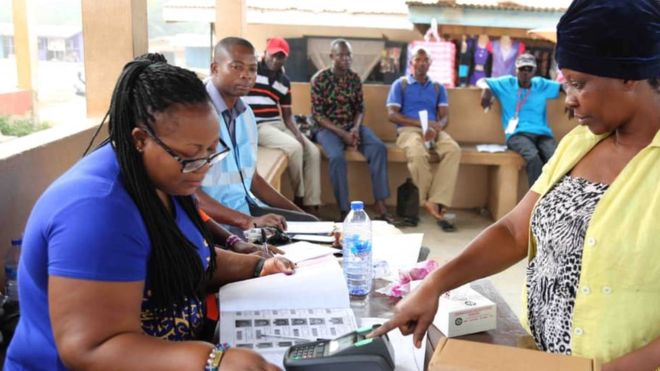
A mop-up voter registration exercise will be conducted by the Electoral Commission (EC) from August 1 to August 3, 2024.
This initiative aims to register individuals who turned 18 after the limited voter registration period and those who missed the previous registration opportunity.
Additionally, the EC has scheduled a voter exhibition from August 20 to August 27, allowing registered voters to verify their details and make necessary corrections ahead of the elections.
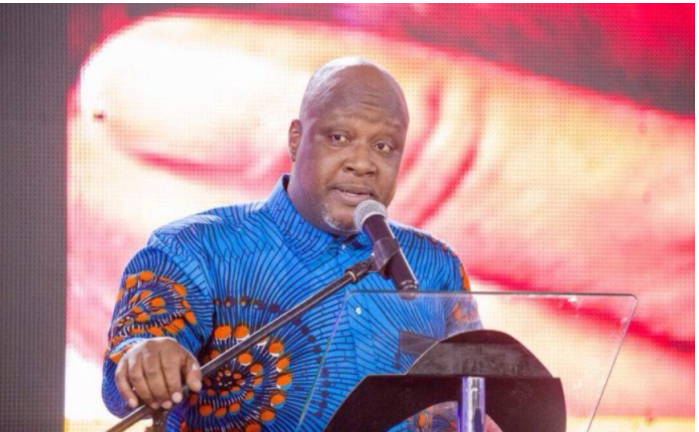
Jean Mensa, Chairperson of the Electoral Commission, announced this at a press conference on Monday, July 8, during a visit from the Election Security Taskforce.
She stated, “I would like to put on record that the mop-up of the voter registration exercise will take place from August 1–3, 2024, and it is to afford persons who turned 18 after May 29 or persons who have not previously registered the opportunity to get onto our register; this goes to persons who are eligible,” she disclosed.
The taskforce, led by Inspector General of Police Dr. George Akuffu Dampare, briefed the commission on election security performance in the first half of the year.
The EC emphasized the importance of these exercises in ensuring a comprehensive and accurate voter register, underscoring its commitment to facilitating a fair and transparent electoral process.
Host of Peace FM’s Kokrokoo Show, Kwami Sefa Kayi has admitted to misreporting on the availability of a period for Ghanaians who are yet to turn 18 to register after the just ended Limited Voter Registration Exercise.
His admission comes after the founder and leader of New Force Movement, Nana Kwame Bediako, popularly known as Cheddar appeared on the Show advocating for a continuous voter registration system where individuals who turn 18 years after the close of the Voter Registration Exercise can be given a chance to register.
But the Director of Electoral Services at the Electoral Commission (EC), Dr Serebour Quaicoe who also waded in the conversation revealed that the Commission is yet initiate such a system.
“We are yet to roll out the continuous registration, the Commission is planning to do a mob up exercise if the need arises,” he added.
However, Kwami Sefa Kayi confidently objected to Cheddar’s proposal asserting that such a system is being run by the EC.
Kwami Sefa Kayi rendered an apology to Cheddar after the EC‘s clarification stating ” I said that because of the findings I got, forgive me, you are right, I am wrong”.
Three police personnel have been interdicted by the Ghana Police Service for their failure to carry out their duties professionally during the ongoing Limited Voter Registration Exercise.
The officers, namely Inspector Michael Addo, G/Const. Eric Boakye, and G/Const. Michael Gyan, were found to have not executed their duties properly on May 11, 2024.
Assigned to maintain security at the Electoral Commission Office in Adugyama, Ashanti Region, they failed to respond adequately when individuals attempted to disrupt the Limited Voter Registration Exercise.
According to a statement issued by the Police Service, “The interdicted personnel will undergo the due disciplinary process of the Police Service.”
The Ghana Police Service has interdicted three police officers, Inspector Michael Addo, G/CONST. Eric Boakye, and G/CONST. Michael Gyan, with immediate effect, over their failure to perform their duty professionally when some persons disrupted the ongoing Limited Voter… pic.twitter.com/0KiiUKiCGe
In today’s fast-paced world, maintaining a healthy heart is more important than ever. With heart disease being the leading cause of death globally, it’s crucial to take proactive steps to protect your heart health.
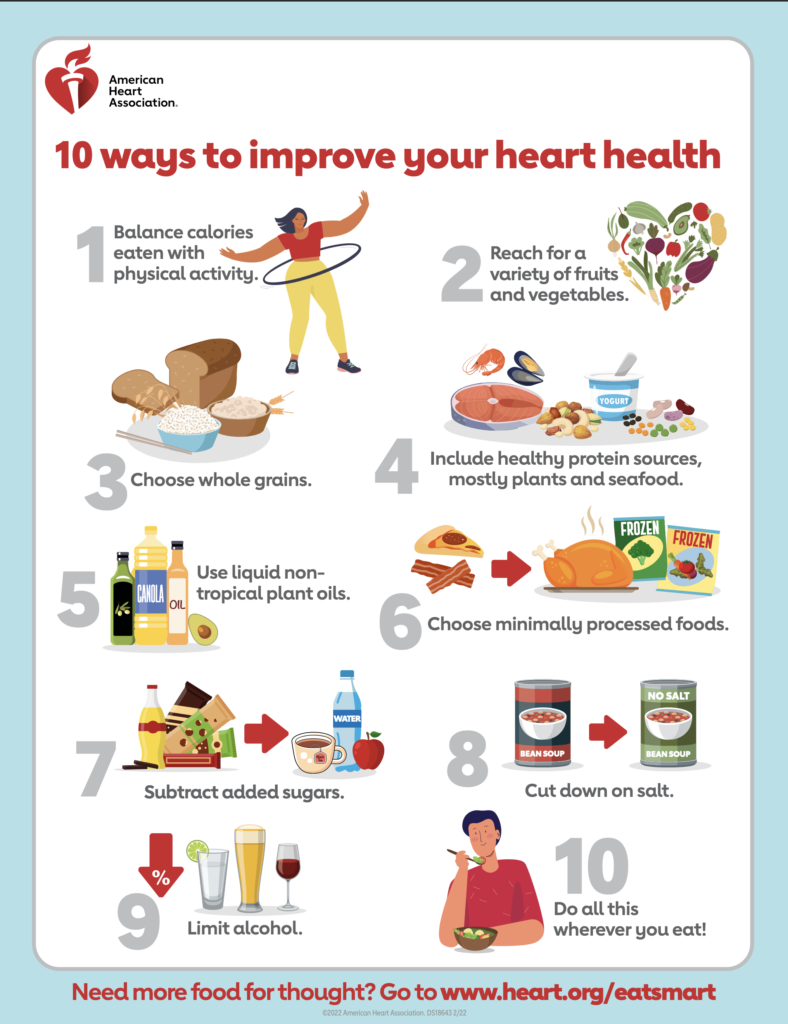
The American Heart Association recommends ten key strategies to keep your heart in top condition:
Balance calories eaten with physical activity: Maintaining a healthy weight is essential for heart health. Aim to balance the calories you consume with regular physical activity. For example, if you indulge in a high-calorie meal, make sure to incorporate extra physical activity to burn those calories.
Reach for a variety of fruits and vegetables: Fruits and vegetables are packed with vitamins, minerals, and antioxidants that support heart health. Aim to incorporate a variety of colorful fruits and vegetables into your diet to reap the most benefits.
Choose whole grains: Whole grains, such as brown rice, oats, and whole wheat bread, are rich in fiber, which can help lower cholesterol levels and improve heart health. Swap out refined grains for whole grains whenever possible.
Include healthy protein sources, mostly plants and seafood: Opt for lean protein sources, such as beans, lentils, tofu, and fish, which are lower in saturated fat compared to red meat. Incorporating more plant-based proteins into your diet can benefit both your heart and overall health.
Use liquid non-tropical plant oils: Instead of using butter or lard, opt for healthier cooking oils such as olive, canola, or avocado oil. These oils are rich in monounsaturated fats, which can help improve cholesterol levels and protect against heart disease.
Choose minimally processed foods: Processed foods are often high in unhealthy fats, sugars, and sodium. Opt for whole, minimally processed foods whenever possible to protect your heart health.
Subtract added sugar: Excess sugar consumption has been linked to an increased risk of heart disease. Be mindful of your sugar intake and limit foods and beverages high in added sugars.
Cut down on salt: Consuming too much salt can lead to high blood pressure, a major risk factor for heart disease. Limit your salt intake by avoiding processed foods and using herbs and spices to flavor your meals instead.
Limit alcohol: While moderate alcohol consumption may have some heart-healthy benefits, excessive drinking can lead to a range of health issues, including heart disease. Limit your alcohol intake to protect your heart.
Do all this wherever you eat: Whether you’re dining out or eating at home, make heart-healthy choices. Look for menu options that align with these guidelines, and when cooking at home, prioritize whole, nutrient-rich ingredients.
By incorporating these ten strategies into your lifestyle, you can protect your heart health and reduce your risk of heart disease. Remember, small changes can lead to significant improvements in your heart health over time.
It’s time to add these justifications for exercising to your list: New research suggests that staying active can reduce the chance of dying from the flu and pneumonia.
The risk of dying from influenza and pneumonia is reduced by 48% when physical activity guidelines for aerobic and muscle-strengthening activity are met, according to a study published on Tuesday in the British Journal of Sports Medicine.
According to the US Department of Health and Human Services’ Physical Activity Guidelines for Americans, adults should engage in at least 150 minutes of moderate aerobic exercise and two or more days of moderate muscle-strengthening exercises per week.
More than 570,000 people’s survey responses from the US National Health Interview Survey from 1998 to 2018 were included in the study. The study divided participants into groups based on how well they met the advised amount of exercise after asking about their physical activity habits.
After the first survey, the participants were followed up with on average for nine years. During that time, 1,516 people died from the flu or pneumonia.
Meeting only the aerobic exercise objective was associated with a 36% decreased risk, but meeting both recommendations for aerobic and muscle-strengthening activity practically cut the risk associated with flu or pneumonia death in half.
The results are significant, according to lead study author Dr. Bryant Webber, an epidemiologist with the US Centers for Disease Control and Prevention’s Division of Nutrition, Physical Activity, and Obesity, as influenza and pneumonia are both among the leading causes of death in the US and around the world.
“Readers may appreciate the importance of influenza and pneumococcal vaccination. This study might encourage them that physical activity may be another powerful tool for protecting themselves against influenza and pneumonia death,” he said.
The results make sense given existing knowledge, and the benefits may extend to other conditions, said Dr. Robert Sallis, director of the sports medicine fellowship at Kaiser Permanente FontanaMedical Center, and clinical professor of family medicine at Kaiser Permanente Bernard J. Tyson School of Medicinein California. He was not involved in the study.
“This study is also consistent with the various studies showing that regular exercise dramatically lowered the risk of COVID-19 related death in similar fashion,” Sallis said in an email.
But even if you can’t reach the recommended amount, some activity can still provide more protection than none, according to the study.
“We also found that any level of aerobic physical activity, even at amounts below the recommended level, lowered the risk of influenza and pneumonia death, as compared to doing no aerobic activity,” Webber said.
Getting 10to 149 minutes a week of aerobic physical activity was associated with a 21% decreased risk of flu and pneumonia death, the study showed.
“Our overarching advice for everyone — regardless of age or perceived physical fitness level — is to ‘move more and sit less,’” Webber said in an email.“Readers who do not get any physical activity should be encouraged that doing any is better than none.”
That being said, no additional benefit was seen for people who got more than 600 minutes a week of aerobic activity, the study showed.
And in the case of muscle strengthening, there is such a thing as too much, the study showed.
Meeting the target of two or more sessions lowered the mortality risk significantly, but getting seven or more sessions was associated with a 41% increased risk of death by flu or pneumonia, the study showed.
However, this was an observational study, the researchers noted, which means that the study can’t make claims about what causes or prevents the deaths — just what factors were associated with a level of risk.
The increased risk could be related to a range of factors, including the cardiovascular impacts of frequent muscle-strengthening activity or inaccurate responses to the survey, the study said.
Even though there are limitations in the design, researchers often rely on these studies when it is impossible to randomize people into different lifestyles, Sallis said.
Aerobic activity — or cardio, as it’s often called — doesn’t have to mean getting yourself to the gym regularly, the study said. This type of movement is anything that gets your heart rate and sweat glands going, including speed walking, swimming, biking, running or stair climbing.
Exercises such as lifting weights, squats, lunges or even heavy gardening can count as your muscle-strengthening activity, the study added.
A megastudy published in December 2021 showed that the best exercise programs include planning when you work out, getting reminders, offering incentives and discouraging missing more than one planned workout in a row.
“If people are hoping to boost their physical activity or change their health behaviors, there are very low-cost behavioral insights that can be built into programs to help them achieve greater success,” said that study’s lead author Katy Milkman, the James G. Dinan Professor at the Wharton School of the University of Pennsylvania and author of “How to Change: The Science of Getting From Where You Are to Where You Want to Be.”
You can start small, said Dana Santas, a CNN fitness contributor and mind-body coach for professional athletes, in a 2022 CNN article.
“Fitting in ten minutes of exercise every day is so much easier than people think. Consider how fast ten minutes goes by when you’re mindlessly scrolling social media or watching your favorite TV show,” Santas said in an email. “It’s not a big time investment, but it can deliver big health benefits.”
A civil engineer, Ing. Abdulai Mahama, has urged motorists on the Accra-Tema Motorway to exercise additional caution to safeguard their own lives as they wait for the government to repair the damaged road.
According to him, the building materials needed to fix the road are very costly and government will need a huge amount of money.
He also says that some buildings will have to be collapsed and owners compensated if the road will be expanded.
This he said, might take a while for government to be ready financially so until then, drivers will be better advised to drive with minimum speed and be watchful of the potholes to prevent accidents and loss of lives.
“Let’s just give one advice to everybody, the Motorway has lost its designed speed, the Motorway is gone, now it is only proper that we apply our common sense, a lot of people that are using the Motorway are not first time users. But it’s so strange that they are doing over 120km/h, 140km/h on the motorway, we should be doing something about 60km/h maximum; and when you are behind a car, science tells us that within 100km/h, the minimum distance between you and the other car in front of you should be about 80m when you’re doing over 100km/h”, he advised.
Speaking on Joy FM’s Super Morning Show, Ing. Mahama also said that most of the streetlights on the road are not functioning, which makes it difficult for drivers to see in the evening when it gets entirely dark.
This, he explained, is the cause of most of the accidents on the road at night. He urged the government to, in the interim, provide solar lights along the entire stretch of the road which can go a long way to help drivers locate potholes and even see pedestrians to aid safe driving.
Deputy Governor of the Central Bank, Dr. Maxwell Opoku-Afari, has said the ongoing SIM Card registration exercise seeks to ensure the centralization of KYC data to boost the delivery of financial services devoid of fraud.
According to him, the exercise has become necessary to curtail theft, opportunities for money laundering and financing of terrorism.
Speaking at the 2022 Digital Banking, Innovation and Fintech festival organised by Standard Chartered Bank, Dr. Opoku-Afari said, “the consumer should be at the centre of our collective efforts. As such, the Bank will not relent on its effort to protect them.”
“It is in this vain that the Bank of Ghana has developed an artificial intelligence-powered automated customer complaint system, I believe this community refers to it as a chatbot; dubbed ‘Akushika’,” he disclosed.
He explained that this customer experience solution is being deployed as an additional mechanism, to manage consumer complaints and promote consumer protection.
“The chatbot is currently in its pilot phase and I would like to use this opportunity to encourage you all to interact with it to ensure that it becomes fit for its purpose,” the Deputy BoG Governor added.
Touching on the introduction of the central bank digital currency known as the eCedi, Dr. Opoku Afari said the comprehensive pilot testing process has been completed.
He noted that the pilot process saw the testing of online and offline versions of the eCedi in Accra, Tarkwa and Sefwi Asafo.
“The pilot has unearthed useful insights on the impact of the initiative of the Bank which will prove instrumental in the event of a full-scale deployment of the eCedi.”
The deputy central bank governor in his conclusion said as part of the effort to build stronger collaboration and cooperation with industry, the regulator has embarked on an engagement drive through the FinTech and Innovation Office.
He further said the central bank remains resolute in its commitment toward a cash-lite agenda in Ghana.
Researchers at Tokyo Medical and Dental University claim to have identified a drug that replicates the benefits of exercise on muscles and bones.
Many of us may not want to admit it, but modern life in developed countries is easier and more comfortable than it’s ever been. Gone are the days when humans had to rely on heavy labor to sustain themselves and their families, but this particular part of our evolution has had some unwanted health-related consequences – the vast majority of people aren’t getting enough exercise and that is taking a toll on their bones, muscles and overall health.
The problem is that many of us don’t want to put in the physical work to keep our bodies in good shape, even though we know we should, but the good news is that we may not have to…
The fact that physical inactivity causes frailty of the muscle and bone has been known for a while now, and yet debilitating conditions like osteoporosis and sarcopenia are more prevalent than ever before. And then there are the people who simply aren’t physically able to exercise, due to life-threatening conditions like cerebrovascular diseases or being bedridden. unfortunately, all these people are at risk of developing cardiovascular disease, stroke and diabetes due to a lack of physical activity. Thus the need for an alternative to physical exercise.
Researchers have been able to identify that the reinforcement of the muscle and bone during physical exercise coincides with anabolic changes in both muscle and bone. Using a new type of drug screening system, they were able to identify a compound that replicates the changes in muscle and bone. named “locamidazole” – after ‘locomotor’ and the chemical backbone ‘aminoindazole’ – or LAMZ for short, is somewhat of a chemical miracle.
According to a study published in August in the medical journal Nature, LAMZ not only has the ability to stimulate the growth of bone-forming osteoblasts and muscle cells, but also to inhibit the formation of osteoclasts, which break down bone and lead to chronic diseases like osteoporosis.
During a test trial on mice, Japanese researchers administered locamidazole to lab mice once a day, for a total of 14 days. At the end of the experiment, the drug was detected in the blood, muscle and bone, with no detectable adverse effects on hematologic parameters.
“We were pleased to find that LAMZ-treated mice exhibited larger muscle fiber width, greater maximal muscle strength, a higher rate of bone formation, and lower bone resorption activity,” Takehito Ono, the study’s lead author, said.
Locomotor frailty caused by diseases like osteoporosis is one of the main targets for drugs like LAMZ, and the results of preliminary experiments is very encouraging. Locamidazole administered orally or via subcutaneous injection “improved the muscle and bone of mice with locomotor frailty, according to senior study author Tomoki Nakashima.
Although LAMZ may not get you those chiseled abs you’ve been dreaming of, researchers are confident that it could help as a therapeutic drug for patients with impaired locomotion, such as those suffering from osteoporosis and sarcopenia.
The Ghana Statistical Service (GSS) yesterday launched the 7th round of the Ghana Demographic and Health Survey (GDHS) at Winneba.
The launch paves way for field officers to begin data collection for the 2022 GDHS, (7th round) estimated to cost $4.2 million.
This followed five weeks (32 days) of training for about 220 field officers recruited for the exercise.
Data collection for the field exercise would begin on October 17, 2022 and end on January 20, 2023.
The GDHS which is a population-based survey to collect demographic, health and socio-economic data for planning and monitoring of policies, started in 1988.
The exercise is done at least every five years and the last one was done in 2014.
Speaking at the launch here, the Government Statistician, Professor Samuel K. Annim, said the GDHS is an international exercise, which Ghana uses to collect demographic, socio-economic and health data for national planning.
He said the survey, which would take 90 days to complete would collect data on issues including fertility rate, contraceptive use, child and maternal mortality, nutritional status of women and children, child marriage, toilet facilities, water and breastfeeding.
“The survey exercise will also create awareness on HIV/AIDS, malaria and incidence of malaria in the country,” Prof. Annim, stated.
He said the survey would cover 18,540 households across the country and about 23,577 women between the ages of 15 and 49; and 5,812 men between 15 and 59 would be interviewed.
He said the data collected would be analysed in comparison with the data on the Population and Housing Census and the Annual Household Income and Expenditure Survey.
The government statistician said the data collected would help the Ministry of Health and the Ghana Health Service in their policy planning, formulation and monitoring.
Prof. Annim said the objective of the exercise was to update the data of the previous GDHS.
He said for the first time GSS did district analysis of the data to help provide interventions for the local people “to leave no one behind.”
Prof. Annim said the analysis and dissemination of the GDHS would be done in real time as GSS had deployed electronic data collection tools for that.
He commended the government, its donors and development partners for sponsoring the programme.
The Director of Family Health Division of the Ghana Health Service, Dr Kofi Issah, who chaired the programme, said the exercise was an important one.
He said the data that would be collected would help in policy planning and monitoring.
Dr Issah commended the GSS for its continuous development of the GDHS.
The Programme Director, Dr Kerzia Malm, for her part, said she was excited malaria was one of the component of the 2022 GDHS.
Dr Peter Takyi Peprah, the Project Coordinator the 2022 GDHS, said the survey would help to collate up-to-date data on health and socio-economic data, stressing GDHS was a powerful tool to measure so many health indicators.
Join Dana Santas for a four-part series to learn how you can recover from and prevent low back pain. Santas, known as the “Mobility Maker,” is a certified strength and conditioning specialist and mind-body coach in professional sports, and is the author of “Practical Solutions for Back Pain Relief.” Here’s Part II.
When you’re suffering from back pain, perhaps the last thing you want to do is get out of bed. However, for most back pain sufferers, the path to relief actually involves moving through the pain. That notion may seem counterintuitive, but exercise is more effective for relieving lower back pain than passive approaches such as medication, bed rest and support braces, according to research.
In Part I of this series, we looked at why it’s important to understand the potential causes of back pain to assess the best treatment course.
Now, we’ll focus on helping you move through exercises to determine which ones can alleviate pain and restore your back health.
Movement as medicine
Designed for movement, your body needs to stay active for good health. When you’re sedentary for long periods, muscles weaken, connective tissue stiffens and joint lubrication reduces. Conversely, movement heals and sustains you. Your physiology rewards your activity by releasing feel-good hormones and decreasing stress.
The most common causes of back issues include poor breathing mechanics and posture, hip tension, physical trauma, age-related degeneration, sedentary lifestyle, excess weight or pregnancy, and stress. Because most of these tie to muscular issues, using corrective exercises to mobilize and strengthen the musclesthat support and move the spine is key to reducing and preventing back pain.
Listening to your body
The mind-body connection is the bridge that helps you develop an attuned sense of your physical state, enabling you to respond to your body’s messages.
With back pain, misunderstanding or ignoring pain messages can cause injury, while overreacting can lead to unnecessary tests, medications and procedures that could slow down recovery. Leveraging your mind-body connection, you can better differentiate between cautionary sensations warning you to avoid particular movements and less severe ones stemming from muscle tension and joint stiffness. The latter is the kind of pain we want to move through to achieve relief.
Mindfulness meditation and breathing techniques can help strengthen your mind-body connection as you work through the exercises below.
Practicing corrective exercises
Here are three exercise categories for addressing low back pain with examples for you to try.
When practicing any exercises, stop immediately if your pain increases or feels “wrong.” Remember to pay attention to any sensations you experience.
I have designed these exercises to address the most common causes of back pain, but because not all back pain responds to the same remedy, not all exercises work for everyone. Talk with your doctor to understand the source of your pain and get approval before beginning any exercise program.
Although many of these exercises can work for low back pain with sciatic nerve symptoms, Part III in our series will focus on sciatica and offer additional methods for managing its nerve-related presentations.
1. Exercises for breathing and posture
Practicing proper diaphragmatic breathing is the foundation of all the back pain treatment and prevention programs I use in professional sports. Because your primary breathing muscle, the diaphragm, is also a core and postural muscle that attaches to your lumbar spine and rib cage, by establishing proper breathing biomechanics, you can realign your spine, pelvis and rib cage while strengthening your core. Deep breathing also decreases your body’s physiological stress response and facilitates recovery.
In addition to the 5-7-3 breathing exercise from Part I, try my breathing bridge exercise by following the directions below or watching this video (shown above). For information on breathing’s impact on overall health, read my breathing series.
Breathing bridge
Begin on your back with your knees bent and feet on the floor, hip-distance apart.
Hold a foam yoga block or rolled towel between your knees to keep them from splaying out.
Place your hands on your lower ribs to guide and monitor their movement in and out with each breath.
Exhale fully, drawing your lower ribs in toward each other, feeling your core turn on and your rib cage move down. At the end of that exhale, without inhaling, tuck your tailbone to flatten your low back and lift your hips 3 or 4 inches off the floor.
Maintaining the bridge posture, take five long, deep breaths, focused on proper rib movement, particularly on exhales.
Hold this position using the strength of your core and glutes to avoid letting your low back arch.
Avoid upward movement of your rib cage while breathing; you shouldn’t feel stress or tension in your jaw, neck or shoulders.
If you experience cautionary pain when lifting your hips into the bridge, keep your hips and back on the floor as you practice your breaths.
Practice two sets for a total of 10 breaths.
2. Exercises for hip and pelvis mobility
The lumbar vertebrae in your low back are not designed for twisting; they are meant to be stable. The hips are designed with ball-and-socket joints to enable rotation in all directions.
Unfortunately, if your hips are tight or your pelvis doesn’t move freely, you put pressure on your low back. It’s important to avoid that pressure by creating a healthy balance of hip and pelvis mobility and lumbar stability.
Your thoracic spine in the middle of your back is designed for rotation, and when it doesn’t rotate well, it causes your low back to compensate. Midback rotation exercises are good for relieving low back pressure and creating healthy spinal movement.
This double bent-knee twist uses breathing and corresponding rib movement to support healthy rotation from the middle of your back while keeping your low back stable. When trying any type of midback twisting exercise, keep these instructions in mind.
Double bent-knee twist
Lie on your right side with your knees bent at 90 degrees and aligned out in front of your hips.
Use a pad or pillow under your head to keep your neck neutral.
Place a yoga block or pillow between your knees.
Make sure to stack your shoulders, hips and knees.
Reach both arms straight out in front of you in line with your shoulders with your palms together, hands resting on the floor.
Inhale as you open your left arm to the left while keeping your lower body in place on the right; knees and hips remain aligned and stacked. This is important for keeping your low back stable.
Twist from the middle of your back — not your low back.
Place your right hand on the outside of your left leg to help hold it in place.
Exhale and focus on drawing your lower ribs inward on the right side of your rib cage to help rotate your rib cage and thoracic spine further into the twist.
Take four more breaths, holding the position and continuing to focus on rib movement on exhales to guide the rotation. Then release back to the start.
Repeat from the left side.
After trying exercises that fit into these three categories, decide what works for you and do them daily for at least two weeks.
If sciatica is an aspect of your low back pain, look for the next article in this series for techniques to alleviate your nerve pain. Once you start to see improvement in your back health, refer to the series’ fourth installment to create a proactive maintenance plan to keep you out of pain.
Keeping your body and brain fit has long been a prescription for better mental health as you age. A new study has now revealed that women’s mental processing speed may actually benefit more than men from a boost of exercise, such as brisk walking or biking for at least 15 minutes a week.
A delay in the brain’s processing speed is one of the key aspects of cognitive aging. Being able to think more quickly helps with planning, problem-solving, staying focused on tasks and the ability to easily engage in conversations with others.
“We found that greater physical activity was associated with greater thinking speed reserve in women, but not in men,” said study author Judy Pa, a professor of neurosciences at the University of California, San Diego, School of Medicine, in a statement.
Mental processing speed in both sexes also benefited from cognitive activities such as playing card games and reading, according to the study, which Neurology, the medical journal of the American Academy of Neurology, published Wednesday.
“Taking part in more mental activities was associated with greater thinking speed reserve for both men and women,” said Pa, who is co-director of the Alzheimer’s Disease Cooperative Study at UC San Diego.
However, any positive association between cognitive activities and memory reserve only applied to women, the study found.
“Any woman reading this story can feel empowered to take control of their brain health today by staying physically active and cognitively engaged,” said Dr. Richard Isaacson, director of the Alzheimer’s Prevention Clinic in the Center for Brain Health at Florida Atlantic University’s Schmidt College of Medicine. He was not involved in the study.
“In this study, a twofold increase in physical activity was equivalent to about 2.75 fewer years of processing speed aging in women,” Isaacson said. “Further, each extra cognitive activity corresponded to 13 fewer years of processing speed aging on average between women and men.”
Processing speed, not memory
The study asked 758 people with an average age of 76 about their weekly physical and mental activities. Participants earned points for each of three categories of cognitive engagement: taking classes on various subjects; playing cards, games or bingo; and reading magazines, newspapers or books.
Each person in the study underwent a brain scan and took thinking speed and memory tests: Some people showed signs of cognitive impairment and dementia while others had no thinking or memory problems. The researchers then compared those test results with brain scans of the hippocampus, a part of the brain associated with dementia.
Each additional mental activity, such as playing cards or reading, lessened the aging of that person’s mental processing speed by an average of 13 years — 17 years among men and 10 years among women, the study found.
“As we have arguably few-to-no effective treatments for Alzheimer’s disease, prevention is crucial. An ounce of prevention is worth a pound of treatment,” Pa said. “To know that people could potentially improve their cognitive reserve by taking simple steps such as going to classes at the community center, playing bingo with their friends or spending more time walking or gardening is very exciting.”
However, the study did not find any significant impact on memory. For example, greater physical activity was not associated with additional memory reserve in men or women. Why? That’s a complicated question, said Isaacson, who also serves as a trustee of the McKnight Brain Research Foundation, which focuses on cognitive aging research and education.
“Was the memory test being used sensitive enough to detect change? Were the people in the study exercising enough to really move the needle?” Isaacson asked.
“In our work, we have found that certain people need to really commit to their exercise program to demonstrate effects on the memory domain,” he said. “For example, people with one or more copies of the APOE4 genetic variant need to participate in more intense cardiovascular exercise programs, such as high-intensity interval training on a regular basis, to show positive effects.”
A genetic risk for Alzheimer’s
People who carry at least one copy of a gene called APOE4 have a greater risk of developing the characteristic beta-amyloid plaques and tau tangles of Alzheimer’s as they age.
Women in the new study carrying an APOE4 gene did not see the same benefits to their cognitive reserve from additional physical and mental activities.
“The most interesting aspect of the study is that APOE4 differentiated women from men,” said Rudy Tanzi, professor of neurology at Harvard Medical School and director of the genetics and aging research unit at Massachusetts General Hospital in Boston.
“It’s possible that APOE4 either increases amyloid burden in women more than men. Or, perhaps, once amyloid accumulates, it leads to a fast cascade of pathology and neurodegenration in women versus men,” said Tanzi, who was not involved in the study.
“The study also implies that women who carry the APOE4 risk (gene varient) for Alzhiemer’s may need to be extra diligent about practicing a more brain-healthy lifestyle,” he added.
The study had limitations: Participants self-reported physical and mental activity, so people may not have remembered correctly. Nor did the study control for other factors, such as education, that impact how well a person’s brain ages.
“While exercise and staying mentally engaged shined through in this study, a comprehensive approach toward reducing Alzheimer’s risk factors is the best recipe for success,” Isaacson said.
“Any prevention plan should also include regular follow-up with a primary care physician, management of vascular risk factors like blood pressure, blood sugar, and cholesterol, avoiding smoking, minimizing alcohol use, prioritizing sleep, managing stress, and following a Mediterranean-style diet, among many other
A longer life may mean scheduling in even more than the recommended amount of weekly exercise, according to a new study.
Adults should get 150 to 300 minutes of moderate physical activity or 75 to 150 minutes of vigorous physical activity a week, according to the World Health Organization. But people who surpass those levels live longer than those who don’t.
Researchers analyzed more than 116,000 adults in a study published Monday in the American Heart Association journal Circulation. Participants self-reported their leisure time activity in questionnaires several times over the course of 30 years, and researchers estimated the association between the time and intensity of exercise with rates of death.
The highest reduction in early death was in people who reported 150 to 300 minutes a week of vigorous physical activity or 300 to 600 minutes of moderate physical activity — or an equivalent mix of the two, said study author Dong Hoon Lee, a research associate in the department of nutrition at Harvard T.H. Chan School of Public Health.
“It is also important to note that we found no harmful association among individuals who reported (more than four times) the recommended minimum levels of long-term leisure-time moderate and vigorous physical activity,” he added in an email.
Examples of moderate activity include a very brisk walk, mowing the lawn or playing tennis doubles, while vigorous activity includes things like hiking, jogging or playing soccer, according to the Harvard T.H. ChanSchool of Public Health.
The study results support WHO’s current physical activity guidelines, but also pushes for higher levels to see even more benefit in living a longer life, Lee said.
How to add more movement
You may be thinking, “10 hours a week of moderate activity sounds like a lot. There is no way I can work that in with all my other responsibilities.”
And yes, it may take some intentionality and effort. But studies have also shown the best ways to work in exercise into routines so that they stick.
A mega study published in December 2021 showed that the best exercise programs include planning when you work out, getting reminders, offering incentives and discouraging missing more than one planned workout in a row.
“If people are hoping to boost their physical activity or change their health behaviors, there are very low-cost behavioral insights that can be built into programs to help them achieve greater success,” said the December study’s lead author Katy Milkman, the James G. Dinan Professor at the Wharton School of the University of Pennsylvania and author of “How to Change: The Science of Getting from Where You Are to Where You Want to Be.”
And you don’t have to add it all in at once. Just 11 minutes of exercise a day made a difference on life span, according to a 2021 study.
You can make it a brisk walk outside or on the treadmill, do four sets of a three-minute body-weight exercise sequence, practice a yoga flow or pick three upbeat songs to dance to, said CNN fitness contributor Dana Santas, a certified strength and conditioning specialist and mind-body coach in professional sports.
You can make it a brisk walk outside or on the treadmill, do four sets of a three-minute body-weight exercise sequence, practice a yoga flow or pick three upbeat songs to dance to, said CNN fitness contributor Dana Santas, a certified strength and conditioning specialist and mind-body coach in professional sports.
Source: CNN
DISCLAIMER: Independentghana.com will not be liable for any inaccuracies contained in this article. The views expressed in the article are solely those of the author(s) and do not reflect those of The Independent Ghana.
Its been drilled into you a zillion times: There are scientifically proven benefits of exercising regularly. Among other things, it can help reduce anxiety and boost your mood things we all could really use during the age of the novel coronavirus .
We know about the mental and physical benefits of exercise for the brain, and that it aids with sleep, says Jordan Metzl, MD, a sports medicine physician at Hospital for Special Surgery in New York City. When people are ruminating about something, exercise helps.
That said, health experts keep talking about the importance of social distancing right now to help lower the odds that you’ll contract the novel coronavirus, a.k.a. COVID-19Â . That raises a huge question: Is it safe to go to the gym right now?
If you belong to a gym, you’ve probably gotten an email from someone there about the special precautions they’re taking to keep you and other members safe. The YMCA of Greater New York, for example, released a statement to WomensHealthMag.com noting they’ve “significantly increased” how often they clean high-traffic and high-touch items like door knobs, exercise equipment, locker rooms, phones, banisters, tabletops, and handrails. They’re also making sure that disinfectant wipes are available for all YMCA equipment.
Look: This is a really weird time and were in uncharted territory here. But experts stress that, while tempting, holing up in your home and staying there isn’t the way to handle this. And, if you want to go to the gym, you should just use caution.
I think going to the gym is okay, says Rajeev Fernando, MD, an infectious disease expert in Southampton, New York. You have to live your life. Suzanne Willard, PhD, associate dean of Global Health at the Rutgers University School of Nursing, agrees. As long as its clean and you take certain precautions, you should be fine, she says.
Of course, there’s a little more to it than that, and experts say you’ll probably want to alter your standard gym routine a little. (For starters, obviously do not hit the gym if you feel sick!) Keep these things in mind before you head to your next workout.
You’re probably okay if you use the weight room.
Yes, people are constantly touching weights and other objects there and you are, too. But there are a few ways to make this situation pretty safe for you:
Wash your hands well with soap and water before and after you work out. Per the Centers for Disease Control and Prevention (CDC), that means lathering up for at least 20 seconds , i.e. the amount of time it takes to hum the Happy Birthday song twice.
Wipe down equipment before and after you use it. Gyms usually have disinfectant wipes located throughout the space and if not, you can always bring your own. Use them, Dr. Willard says.
Keep your distance from people. Social distancing is important for preventing the spread of COVID-19, Dr. Fernando points out. So, if you don’t need to be on top of the person next to you while you’re pumping iron, don’t.
Stay away from anyone who appears to be sick. Same deal as above. Coronavirus is transmitted through respiratory droplets that you can then breathe in or get in your nose, mouth, or eyes. Those droplets are thought to be able to travel up to six feet, the CDC says. So, ideally, you want to keep at least that much distance between you and someone who is coughing and/or sneezing.
Maybe rethink group fitness classes for now.
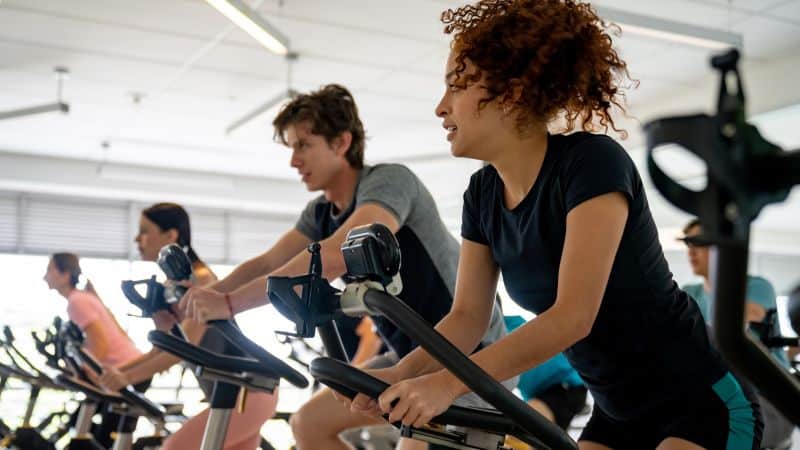
Its a good idea to avoid group classes at the gym, Dr. Fernando says. Why? People are usually in close proximity during group classes (generally less than six feet apart) and that makes it really easy for COVID-19 to spread if the person on the indoor bike next to you happens to be infected and is coughing or sneezing.
There’s no evidence right now that the novel coronavirus can be transmitted through sweat but, again, if you’re packed into a class with plenty of other people, there’s the whole coughing/sneezing thing to consider.
Instead, consider sweating outside now that the weather is getting better, try one of Women’s Health’s many indoor workouts you can do at home, or stream a workout from our All Out Studio app .
Swimming is probably okay.
But again, it depends on a few factors, including how crowded your local pool is. Some places have people share lanes and, if you’re regularly coming face to face with a fellow lane swimmer during laps, it could present a less-than-ideal situation.
Also, plenty of pool water gets into other peoples noses and mouths during swimming and comes back out into the water you’re swimming in, where it can also travel into your nose and mouth. That’s worth considering.
There’s been some debate online about whether chlorine kills coronavirus, but its unclear at this point. We don’t have that information yet, but there is a lot of chlorine in those pools, Willard says.
The World Health Organization (WHO) recently posted on their website that chlorine can be useful to disinfect surfaces but it needs to be used under appropriate recommendations. However, they stopped short of saying that chlorine can actually kill COVID-19.
If you’re thinking of hopping into your community pool, Dr. Willard recommends paying attention to local health alerts. If I know in my community that there are several cases of novel coronavirus, I’m not going to the gym or pool, she says. You’ve got to be smart about it.
Again, its understandable that you might be freaked out about the novel coronavirus these days, but experts stress that you don’t need to avoid the gym entirely. Just pay attention to local health alerts and do your best to follow good prevention steps. And wash your hands please.