Parliament has directed the Ministry of Food and Agriculture (MOFA) to compensate farmers who incurred losses due to the avian influenza or Bird Flu outbreak between 2015 and 2018.
As per the 2022 Auditor General’s Report, a substantial portion of the earmarked compensation funds, exceeding GH¢1.8 million, remains unutilized in the Ministry’s account.
While the Ministry argues that the funds are undistributed due to a lack of necessary details from affected farmers, the Public Accounts Committee, led by Chairman James Klutse Avedzi, has mandated the Agriculture Ministry to identify the affected farmers and disburse the funds within the next month.
During a Public Accounts Committee session, Avedzi instructed, “I am sure you have a list of the farms that are affected and a certificate for destroying the birds as well. All that you need is to have the affected farmers’ bank details to do the transfer and I am sure that you have the contact details of these farmers.
“So we are giving you one month to disburse the monies to them quickly. Call them so that they will give their bank details so you can do the transfer for them.”
Farmers in Germany are blocking roads with tractors to protest against cuts in subsidies. Around 200 tractors are parked near Berlin’s Brandenburg Gate.
There are also traffic jams in Baden-Württemberg, North Rhine-Westphalia, Saxony and Bavaria.
The government reduced subsidies to save money because a court said their budget plan was against the law.
The cuts didn’t work and now people are worried that the argument will make the far right more popular.
In response to the blockades, Interior Minister Nancy Faeser said that blocking people from going to work, school, or to see a doctor will make people upset and cause arguments.
The farmers are very angry, and their group, DBV, wants the government to stop all the plans to reduce subsidies for farmers.
“Joachim Rukwied, the head of DBV, said that if things don’t change, there won’t be enough good food available. ”
Ministers are rushing to fix a money problem of tens of billions of euros after a big decision in November by Germany‘s highest court. The court said the government’s budget was not allowed.
However, later ideas to stop giving farmers tax breaks for agricultural diesel have been weakened. Now, the change will happen gradually over time. The government decided not to get rid of special treatment in vehicle tax.
However, farmers are still angry and a group of protesters stopped the Vice Chancellor Robert Habeck from getting off a ferry last week.
The protest caused a lot of people to be angry and worried that political discussions in Germany are becoming more extreme.
But the other leader of the far right Alternative for Germany (AfD) party, Alice Weidel, said that the incident proved that the vice chancellor was not being respected anymore.
“He would rather escape on a ferry than talk,” she wrote.
The AfD is getting more popular in the polls and has been scoring higher than the three parties in power.
The group in charge of Germany is having a lot of arguments and it’s causing tension.
Important local elections will happen later this year in three eastern states – Saxony, Brandenburg and Thuringia. These elections will show how the people in these areas are feeling.
Train drivers are going to go on strike, which will create more problems for the government.
The GDL union in Germany has announced that its members will go on strike starting this Wednesday because they are in a disagreement with the railway company Deutsche Bahn over their wages.
As the tractors arrive in central Berlin, it is a bad start to the year for Chancellor Scholz’s government. It also comes with predictions of slow economic growth for a country that is often called the EU’s “powerhouse”.
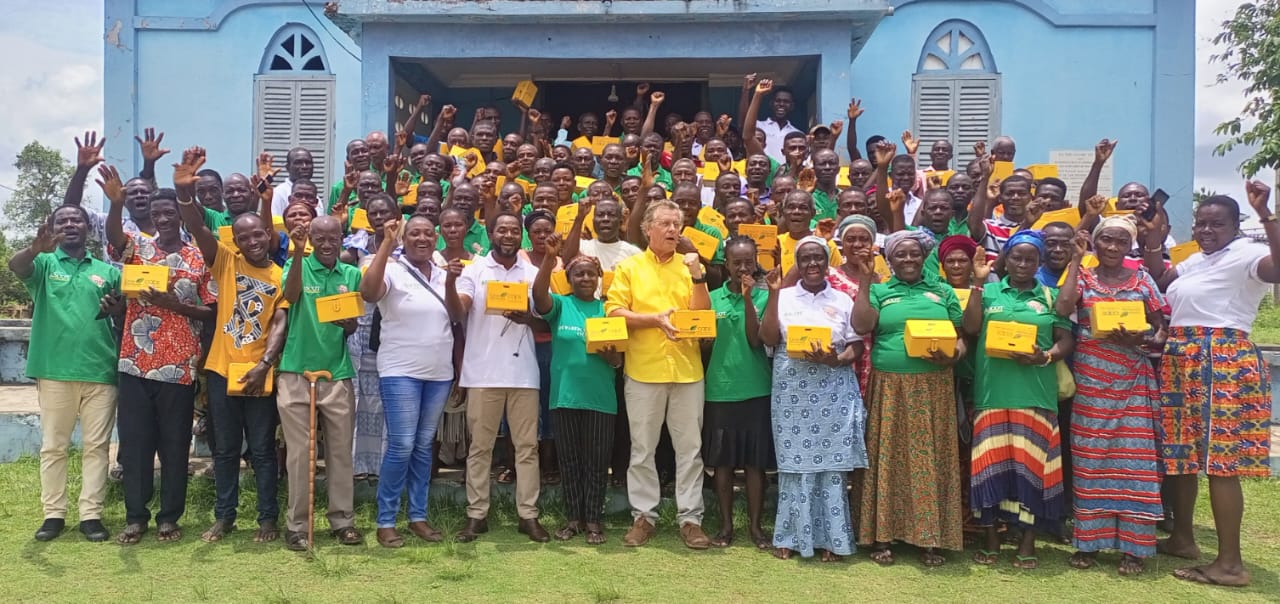
Smallholder farmers in the Bono region have been encouraged to leverage emerging digital agribusiness solutions to increase their yields and improve their livelihoods.
The digital agribusiness platforms include various applications and solutions designed to address challenges faced by players within the agricultural sector. Victor Yao-Dablu, the Jaman North District Director of the Department of Agriculture, offered this advice at Sampa in the Jaman North District of the Bono region.
Yao-Dablu highlighted that these digital agribusiness platforms play a crucial role in establishing connections between farmers and input or output market services. He emphasized the importance of smallholder farmers in the Bono region embracing these platforms to enhance their agricultural practices and ultimately improve their economic outcomes.
“A recent study conducted by the USAID-funded ADVANCE programme reveals that only 7 per cent of farmers in northern Ghana use certified seeds, whilst 37.53 per cent use improved but not certified seeds, so the digital agribusiness platforms will be the game-changer if smallholder farmers get hooked on to the services,” he stated.
Mr. Yao-Dablu highlighted the opportunity presented by mobile phone technologies to integrate dispersed smallholder farmers into structured input and output markets. He pointed out that mobile phone-based Information Technology (ICT) can play a crucial role in facilitating timely access to information and promoting the exchange of information among various actors along the agricultural value chain.
The use of mobile technology can help manage transactions, organize logistics, and ensure that smallholder farmers adhere to quality standards. By harnessing mobile-based ICT solutions, farmers can access valuable information that can enhance their decision-making processes, improve productivity, and contribute to the overall efficiency of the agricultural value chain in the Bono region.
“Most digital agribusiness solutions are often integrated and customised ICT platforms designed to help stakeholders in the agricultural value chain, communicate with others efficiently, establish and maintain business relationships and manage the flow of goods and services amongst them,” he added.
Mr. Yao-Dablu emphasized that smallholder farmers in the Bono region stand to gain numerous benefits from embracing digital platforms. These advantages include increased yields and incomes, securing markets before production, obtaining information about improved seed and fertilizer application, and accessing other valuable insights.
By leveraging digital agribusiness solutions, farmers can enhance their overall productivity, make informed decisions about agricultural practices, and strengthen their economic viability.
“These platforms also provide virtual marketplaces that allow smallholder farmers to save and borrow towards the purchase of discounted agricultural inputs through a mobile wallet for increased productivity and reduce food insecurity as well as poverty,” he pointed out.
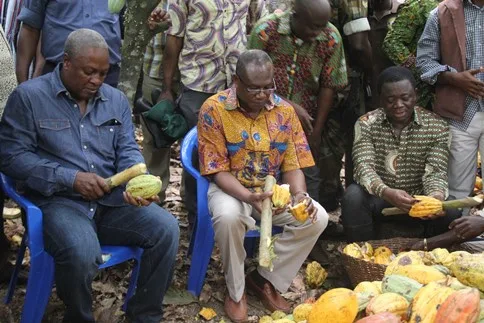
Former President John Dramani Mahama has vowed that farmers across the country will have their needs met and concerns addressed in his next administration.
According to the 2024 NDC flagbearer, he will “prioritise their welfare and work tirelessly to ensure they have the necessary resources and support to thrive.”
He continued: “Our farmers are the backbone of our economy, and we will continue to invest in their success.”
Mr Mahama made this known today as the country commemorates farmers for their efforts in ensuring food security in the country.
As part of his message shared on his Facebook wall, he encouraged farmers across the country to take a leap of faith and ready themselves to jump onto the NDC’s 24-hour economy programme that would change the agriculture industry for the better.
The former President noted that there is the need for smart solutions within a 24-hour economy to ensure sustainable food security for the nation.
As such, he revealed that the his next administration will introduce agro-processing units in all regions to add value to the country’s agricultural products and create more opportunities for all farmers.
“Establishing agricultural processing plants will target crops such as palm, cashew, groundnuts, cotton, coffee, cocoa, soya, cassava, shea nuts, cereals, ginger, spices, cut flowers, fruits and horticultural products,” he added.
Today, December 1, the 39th National Farmers’ Day celebration is set to unfold at the University of Mines and Technology in Tarkwa, Western Region.
The calendar event is meant to celebrate farmers for their invaluable contribution to the development of the country. The theme of the celebration is Delivering Smart Solutions for Sustainable Food Security and Resilience”.
The pinnacle of the event will be an extravagant dinner, graced by both celebrants and awardees, with President Akufo-Addo serving as the esteemed Guest of Honour.
Former President John Dramani Mahama has encouraged farmers across the country to take a leap of faith and ready themselves to jump onto the NDC’s 24-hour economy programme that would change the agriculture industry for the better.
He made this request today as the country commemorates farmers for their efforts in ensuring food security in the country.
The former President noted that there is the need for smart solutions within a 24-hour economy to ensure sustainable food security for our nation.
As such, he revealed that the his next administration will introduce agro-processing units in all regions to add value to the country’s agricultural products and create more opportunities for all farmers.
“Establishing agricultural processing plants will target crops such as palm, cashew, groundnuts, cotton, coffee, cocoa, soya, cassava, shea nuts, cereals, ginger, spices, cut flowers, fruits and horticultural products,” he added.
He assured farmers that the next NDC government will “prioritise their welfare and work tirelessly to ensure they have the necessary resources and support to thrive.”
He continued: “Our farmers are the backbone of our economy, and we will continue to invest in their success.”
Today, December 1, the 39th National Farmers’ Day celebration is set to unfold at the University of Mines and Technology in Tarkwa, Western Region.
The calendar event is meant to celebrate farmers for their invaluable contribution to the development of the country. The theme of the celebration is Delivering Smart Solutions for Sustainable Food Security and Resilience”.
The pinnacle of the event will be an extravagant dinner, graced by both celebrants and awardees, with President Akufo-Addo serving as the esteemed Guest of Honour.
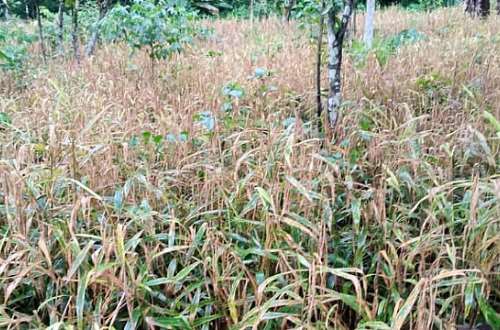
Ginger farmers in the Kadjebi District of the Oti Region are facing significant losses due to a mysterious disease suspected to be a fungal infection that has affected their crops. This outbreak has left them feeling anxious.
A visit by the Ghana News Agency (GNA) to affected farms in the Poase-Cement, Obuase, and Butabe areas of the district showcased the devastating and heartbreaking consequences of this disease. The disease causes the ginger plants to turn yellow and damages the rhizomes, leading to the rotting of the seeds.
Mr. Aliu Salisu, a 27-year-old farmer with a three-acre ginger farm, expressed his sadness during the GNA’s visit, explaining that he had lost his sense of purpose and didn’t know what to do.
Mr. Salisu, a resident of Poase-Cement, had sold his taxi and invested the proceeds in the farm, hoping for a bountiful harvest that would enable him to purchase a new vehicle. Unfortunately, his plans have been derailed.
He called upon the Ministry of Food and Agriculture to find a long-term solution to this problem, as the youth in the area rely on ginger farming for their livelihoods.
Mr. Yakubu Muniru, a 29-year-old high school graduate who had cultivated a four-acre ginger farm, shared that this was the first time they had encountered such a mysterious disease in the region.
He had invested GHS30,000.00 into the ginger farm, anticipating a good harvest, but all his investments now appear to have been in vain.
“The government through the Department of Food and Agriculture should help us find the resistance to the disease as this area that is the work of the youth,” he said.
Mr. Muniru, who resides in Poase-Cement, emphasized that finding a solution to this disease is crucial to prevent the potential migration of the area’s youth to urban centers in search of scarce employment opportunities for their sustenance.
Mr. Mutakilu Tsadenu, the Assemblyman for the Butabe and Obuase Electoral Area, who accompanied the GNA on the visit to the affected farms, confirmed that the disease had impacted numerous farms, including his own.
He said ginger farming had become the main source of income to the youths in the area and that it was “unfortunate that this year over one hundred acres of farms were destroyed by the strange disease.”
Mr. Tsadenu said, “there are some homes that cannot even feed three times daily due to the situation. I am therefore pleading with the government and other benevolent organisations to please come to our aid,” he said.
“If there is any relief package, be it cash or food item to sustain these affected families, then it should come,” Mr Tsadenu appealed.
The Assemblyman for Butabe and Obusase, who also maintains a five-acre ginger farm in Butabe, earnestly appealed to the Department of Food and Agriculture to step in and seek enduring remedies for this issue, as the catastrophe may potentially trigger rural-to-urban migration.
Mr. Besa Akpalu, the Kadjebi District Director of the Department of Food and Agriculture, confirmed that they were aware of the infection, suspecting it to be a fungal disease. He mentioned that samples of the affected plants and rhizomes had been forwarded to the Pokuase Agricultural Research Centre for thorough examination and confirmation of the exact nature of the disease.
Mr. Akpalu assured the farmers that they were committed to identifying a sustainable solution to this problem.
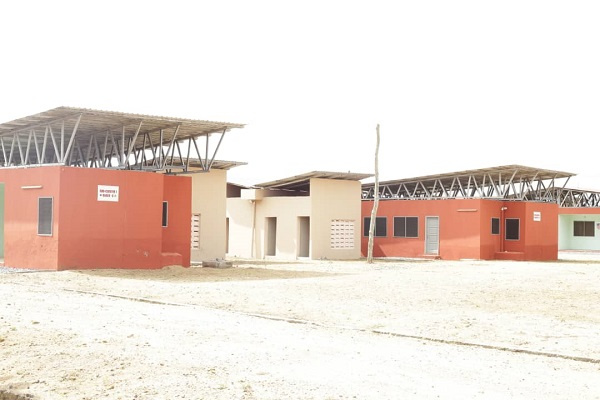
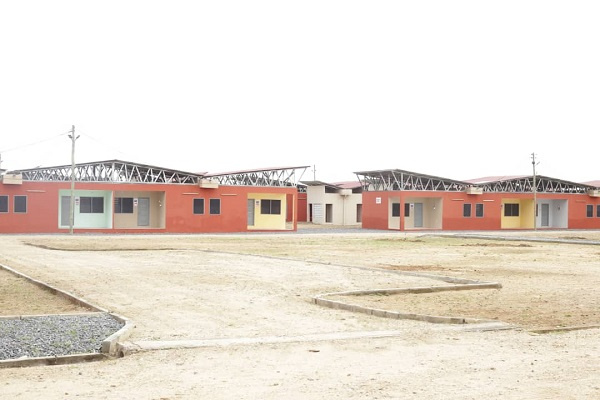
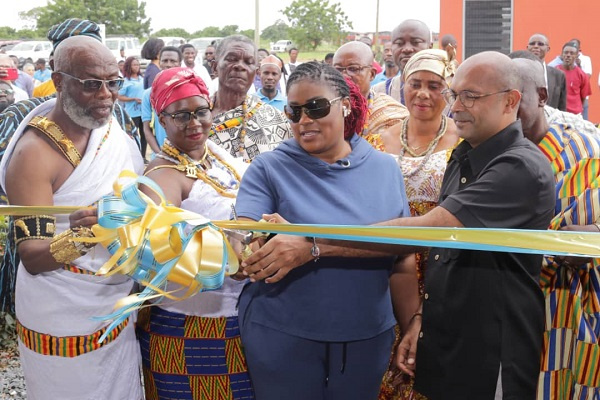
The Ministry of Trade and Industry has inaugurated 224 on-farm housing units situated on the Golden Exotic Limited (GEL) plantation in Kasunya/Asutsuare, within the Shai Osoduku District of the Greater Accra Region.
In a speech delivered on behalf of the Minister of Trade and Industry, Nana Ama Dokua Asiamah-Adjei, who is the Deputy Minister responsible for International Trade, highlighted that these newly constructed housing units come fully equipped with modern amenities.
They are specifically intended to offer a comfortable living environment for farmers and their families as part of the Banana Accompanying Measures (BAM) initiative.
Furthermore, the houses have been meticulously designed with an emphasis on functionality and sustainability. Notable features include energy-efficient electrical systems, a water treatment facility, and a community center.
Nana Ama Dokua Asiamah-Adjei went on to say that the completion of the 224 dwelling units is a long-awaited but critical milestone in Ghana’s road to becoming a prosperous farming community.
“The European Union and the Government of Ghana look forward to continuing their fruitful partnership to further empower farmers, contribute to sustainable rural development, and improve the overall quality of life in the agricultural sector” she said.
She stressed the importance of access to adequate and affordable housing in providing a suitable climate for farmers to prosper and efficiently contribute to the agricultural sector.
“By providing farmers with these housing units, the BAM project is aimed to address the pressing issue of rural poverty and homelessness within the farming community,” the Deputy Minister noted.
She continued, “The project is part of the broader Banana Accompanying Measures Program, which prioritized the development of the agricultural sector while enhancing social welfare within the farming community.”
She expressed government’s appreciation for the European Union’s support for the project.
“We are proud to have collaborated with the European Union in realizing this important project. The housing units will unlock potential and enhance the agricultural productivity of the farmers. This is an embodiment of the shared vision for rural development and poverty reduction, which lies at the core of our collaboration” she indicated.
It was disclosed that in 2009, the European Union reached an agreement with Latin America and the USA to resolve a 15-year-long dispute related to banana trade. As part of this accord, the EU reduced tariffs on bananas imported from Latin American nations, intensifying competition for African and Caribbean banana exporters. To assist these African and Caribbean countries in maintaining their competitiveness in the EU market, the Banana Accompanying Measures (BAM) program was introduced.
In 2013, the EU and the Government of Ghana, represented by the Ministry of Finance, entered into a Financing Agreement (FA) for the BAM initiative, with a total funding of €7.2 million Euros allocated to support Ghana’s Banana Industry.
The European Union Ambassador to Ghana, H.E. Irchad Razaaly, emphasized the importance of this partnership in empowering local communities.
“These housing units are a testament to our commitment to uplifting farmers and strengthening the agricultural sector. They will not only provide a safe and comfortable space for the farmers but also enable them to lead better lives.” He added that,” he said.
He noted that the BAM supports the competitiveness of the Ghanaian Banana export sector, while ensuring its environmental and socio-economic sustainability in the long run
Vice President of Compagnie Fruitiere in Ghana (parent company of Golden Exotics Limited) Olivier Chassang, in his address said, “This is a major milestone in the social development of the company and a great example of international cooperation”
Poultry farmers and retailers in South Africa are cautioning residents to prepare for increased prices for eggs and chicken due to the ongoing deaths of millions of chickens caused by a combination of power outages and avian flu.
The outbreak of avian flu in South Africa’s Mpumalanga province was initially reported in April, followed by the more lethal H7N6 strain of the flu in May.
Since then, the avian flu has extended its reach to four additional provinces, compelling poultry farmers to carry out mass culling of their chickens.
“The bird flu has already caused short supplies of table eggs into the market, and it is expected that the supply of poultry meat into the value chain could be affected negatively in the coming months,” Astral Foods, one of South Africa’s biggest chicken producers said on Thursday.
The company reported a decrease in its financial performance, attributing it to losses linked to bird flu and rising operational expenses resulting from power shortages.
The company disclosed that it incurs monthly expenses of 45 million rand ($2.4 million; £1.9 million) to operate diesel generators.
Abongile Balarane, the leader of the South African Poultry Association, stated to the Daily Maverick earlier this month that the nation had suffered the loss of over four million chickens, equivalent to 15% of the country’s total production.
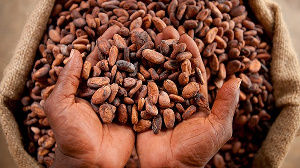
The New Patriotic Party (NPP) has stated that the significant increase in the producer price of cocoa for the upcoming 2023/2024 cocoa season will provide farmers with a stable and secure source of income.
The party highlighted that the 63.5% raise in the farm-gate price represents the highest increase in 50 years among the West African sub-regional cocoa-producing nations. The NPP encouraged farmers to disregard critics who attempt to diminish the importance of this substantial increase.
During a press conference held in Accra, Mr. Richard Ahiagbah, the Director of Communications for the NPP, asserted that this price hike would serve as a motivator for cocoa farmers to increase their cultivation efforts and could also entice new entrants into the industry.
He further emphasized that an increase in cocoa production would generate employment opportunities across the entire value chain and contribute to the long-term sustainability of the cocoa sector.
“Cocoa farmers will receive a higher price for their cocoa beans, increasing their income. Farmers can use the extra income to improve their living standards, invest in their farms, and meet other financial needs.
“It reduces their vulnerability to economic shocks, leading to a more stable and secure livelihood,” he said.
On Saturday, September 9, President Nana Addo Dankwa Akufo-Addo announced a revised cocoa price during the launch of the 2023/2024 cocoa season at an event in Tepa, located in the Ashanti Region.
The new cocoa price has been increased from GHC 12,800.00 per tonne to GHC 20,943.00 per tonne, representing a substantial 63.5% increase. This new price marks the highest in the sub-region over the past 15 years and aims to enhance the living standards of cocoa farmers by providing them with a fair compensation for their efforts.
Mr. Ahiagbah refuted allegations made by the National Democratic Congress (NDC) that the government had unfairly compensated farmers with a “meager fraction” of what it could earn on the international market. He clarified that the calculations for the new price were based on the achieved Free-On-Board (FoB) Price of $2,600 per tonne from the forward sales of cocoa, using an exchange rate of GH₵11.50 to a dollar.
Furthermore, he explained that the country had engaged in forward sales of substantial cocoa volumes to secure a syndicated loan for farmer payments.
As a result, the determination of the Producer Price considered the achieved FoB Price obtained over several months of sales. Since prices in the forward sales market differed significantly from spot sale prices, the most recent FoB Price of $2,600 per tonne served as the foundation for calculating the new Producer Prices.
Rescue crews have said that dozens are missing while 24 people perished when a boat bringing farmers to their crops in central Nigeria capsized on Sunday.
According to Garba Salihu, the chairman of the Niger State Rescue Management Agency, the boat carrying more than a hundred farmers overturned while crossing the River Niger on their way to their fields on the other side, in Niger State.
“At this stage, 24 bodies have been recovered and 30 people rescued,” he said. “More than 100 people must have been on board when the boat sank,” he added. The causes of the accident were not specified.
He reported that efforts to locate the missing passengers were ongoing.
On Friday, a tragic incident occurred when a boat carrying 23 passengers, including traders en route to a market, capsized on Lake Njuwa in the northern state of Adamawa, Nigeria. According to Amin Suleiman, the local head of the Rescue Management Agency, ten individuals lost their lives in the accident, while three others were reported missing, as confirmed by AFP.
Boat accidents on Nigeria’s bustling rivers are regrettably common and often attributed to factors such as overloading, inadequate maintenance, and safety oversights.
While President Nana Addo Dankwa Akufo-Addo’s announcement of a revised cocoa bag producer price was greeted with enthusiastic celebrations during an event in Tepa on Saturday, a certain faction of farmers has voiced concerns about the government’s decision to set the new price at GH¢1,308.
Johnson Asante, the Secretary of the National Cocoa Farmers Association, expressed in an interview with Oyerepa FM that farmers were anticipating a minimum of GH¢3,000 as the new price.
“We have heard about it but we don’t want to believe in rumours that the cocoa price has been increased to GH¢1,308.
“For myself and my members, we are not happy about it because if cocoa price on the world market is $12.99 per pod, its unfathomable for us to be given that amount. We cultivated the crop on our own lands… If I had my way the price should be increased to GH¢3,000 per bag.”
Speaking at a gathering on September 9, 2023, President Akufo-Addo noted that until recently, cocoa prices on the international market had remained extremely low and had been made worse by COVID-19. He continued by saying that despite this, COCOBOD and the government had been making the extremely difficult decision to raise the producer price of cocoa.
“Cocoa prices have increased from seven thousand, six hundred cedis (GH¢7,600) per tonne in 2016, to twelve thousand, eight hundred cedis (GH¢12,800) per tonne in 2022, a significant increase of sixty-eight percent (68%).
“This has had an adverse impact on COCOBOD’s financial performance,” he said.
Acknowledging that the sustainability of the entire cocoa industry hinges on a well remunerated producer, who is willing to invest in business only with the certainty that Government will pay the appropriate price, the President stated that Government, in keeping with its promise to cocoa farmers has increased the producer price.
According to President Akufo-Addo, Government has “increased cocoa prices from twelve thousand, eight hundred cedis (GH¢12,800) per ton, to twenty thousand, nine hundred and forty-three cedis (GH¢20,943) per ton, or one thousand, three hundred and eight cedis (GH¢1,308) per bag. That price is seventy-point-five percent (70.5%) of the Gross FoB price, and is equivalent to one thousand, eight hundred and twenty-one dollars ($1,821) per ton.”
The president noted that the new price “is the highest price to be paid to cocoa farmers across West Africa in some fifty (50) years. With the predicted stable prices above two thousand, six hundred United States dollars (US$2,600) threshold, Government will continue to honour our famers with good prices in the years ahead. Indeed, better days are ahead.”
But according to Johnson Asante, farmers have been dealt raw deal by the government and thus bemoaned that contribution of the state in making cocoa farming unattractive to the youth.
He emphasized that the GH¢3000 cedis his group was proposing “will be helpful to farmers. These are some of the reasons why farming is no longer attractive to the youth who would prefer to engage in galamsey instead of cocoa farming,” he said.
A 62.5kg bag of cocoa beans should cost GH1,380 at the farm gate, a 72.5 percent increase over the present price of GH800, according to cocoa growers.
A group called the Ghana Civil Society Cocoa Platform (GCCP) argued at a press conference in Accra that the 72.5 increase will help stop the problem of cocoa smuggling along the country’s western and eastern borders and protect farmers from rising cost of living and inflation as COCOBOD gets ready to announce new prices for the upcoming 2023/2024 cocoa season.
“We realised that just as the international cocoa market price started appreciating, our neighbours that use the liberalised cocoa marketing approach increased their farm-gate prices. At some point this year, a bag of cocoa was selling in Togo at GH¢1,500 (twice what Ghanaians were being paid), which fuelled the nefarious activity of cocoa smuggling – as some farmers were offered over 30-40 percent beyond the prevailing market price in Ghana to sell their cocoa to these smugglers,” said GCCP, which represents cocoa farmers’ interest.
Leticia Yankey, the founder of Cocoa Mmaa and a cocoa farmer, took the podium at the press conference and urgently urged COCOBOD, the regulator of the cocoa industry, to heed the group’s demands.
She elaborated that, according to the assumptions of the Producer Price Review Committee (PPRC), the Ghanaian Cocoa Coalition for Progress (GCCP) firmly maintains that Ghanaian farmers should be entitled to a minimum of GH¢22,080 per tonne. This translates to GH¢1,380 per bag (62.5kg) of cocoa beans.
The PPRC’s objective is to ensure that the farm-gate price constitutes at least 70 percent of the net free on board (FoB) price of cocoa beans.
Ms. Yankey clarified that this calculation was derived from the lowest projected values, which included the agreed-upon living income differential (LID) of US$400 per tonne and the current International Cocoa Organisation (ICCO) world cocoa market price, standing at US$3,647 per tonne of cocoa beans.
The calculation also factored in the substantial decrease in the origin differential/country premium, which has plummeted from over US$400 to its current level of US$25.
“Assuming COCOBOD gives all the US$400 LID to the farmer that brings the farm-gate price to US$2,162 per tonne (US$135 per bag) for the 2023/2024 cocoa season – and using the year-on-year Bank of Ghana (BoG) exchange rate of US$1:GH¢10.2 – cocoa farmers are expected to receive not less than GH¢22,080 per tonne of cocoa beans; which should translate into a minimum of GH¢1,380 per bag of cocoa beans,” she stated.
“These are very conservative estimates, and we expect COCOBOD will be able to meet them with ease,” she added.
COCOBOD’s announcement
In the previous year, the government did not make any announcements regarding a new cocoa farm-gate price for the 2022/2023 crop season, which commenced on October 1, 2022.
The most recent adjustment to the cocoa farm-gate price by the government occurred in 2020 when it was increased by 21 percent, rising from GH¢660 to GH¢800 per bag. This increase was closely tied to the implementation of the living income differential, a pricing mechanism designed to alleviate poverty among cocoa farmers.
As a result of ongoing developments in the international cocoa market, Ms. Yankey highlighted that cocoa farmers are eagerly anticipating the announcement scheduled for Saturday, September 9, 2023, by COCOBOD, and their expectations are running very high.
The Ghana Soya Bean Farmers and Aggregators Association has alleged that certain supporters of the ruling New Patriotic Party (NPP) engaged in commercial activities with the government’s Planting for Food and Jobs program.
Abdul Hakeem Issah, the association’s Director of Administration, stated that a significant amount of fertilizers intended for farmers were smuggled, with supplies that could benefit farmers being redirected to party members.
He emphasized that unless this issue is resolved, the success of the government’s second phase of the Planting for Food and Jobs initiative will be jeopardized.
“The first challenge has not been addressed, and we are bringing on another one,” he said. “With the earlier one, fertilizers were smuggled, and inputs were being given to party people instead of farmers. At the end of the day, party people were using these things to do business, and the resources were not getting to the farmers,” he said in an interview with CitiNews. “So, the point is that if these things are not checked, and the next thing comes on board, it will fail,” he added.
Mr. Issah’s statement coincides with the launch of Phase two of the Planting for Food and Jobs program by President Nana Addo Dankwa Akufo-Addo on August 28, 2023.
The second phase of the PFJ initiative outlines a five-year strategy aimed at revolutionizing agriculture in Ghana. Its primary objectives are to promote modernization by enhancing specific commodity value chains and fostering active involvement from the private sector.
According to information provided by the Ministry of Trade and Industry, the Planting for Food and Jobs, a prominent agricultural campaign, was initially inaugurated on April 19, 2017.
Tragically, four farmers died when a canoe carrying seven people capsized in the Golinga Dam in the Tolon District of the Northern Region.
The terrible incident happened as the victims, who were Galinkpegu villagers, were returning from their fields on the western side of the Golinga Dam.
On Saturday, August 12, three bodies were successfully retrieved around 4 pm, while the fourth body was recovered on Sunday, August 13.
According to a report by Myjoyonline.com, the deceased have been identified as Alhassan Zakaria (40), Yakubu Danah (45), Alhassan Musah (45), and Issah Baako (46).
The recovered bodies of Alhassan Zakaria, Yakubu Danah, Alhassan Musah, and Issah Baako were subjected to rituals at the dam’s bank before their respective burials.
Similar rituals are currently being performed for the last body before its final interment.
According to one of the survivors, the canoe tilted due to uneven weight distribution while they were paddling back. Residents from Galinkpegu and Gbalahagu came to the rescue, managing to save Masahodu Issah, Dana Nablido, and Sadiq Yussif, who swam to the bank. The other four individuals were unable to escape the tragedy and drowned.
A team of officials from the National Disaster Management Organisation (NADMO), led by District Director Abdullah Salifu, successfully recovered the fourth body from the water. The Golinga Dam is a vital irrigation site utilized by local farmers for their agricultural needs in the area.
Incidents like these have unfortunately become common in Ghana, often attributed to the lack of life jackets among rural dwellers who engage in such activities.
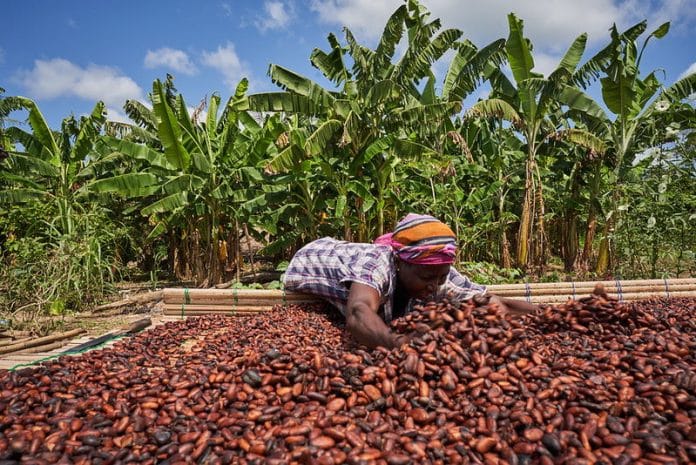
A farmer-based organization called Cocoa Abrabopa Association (CAA) has paid a total of $9.2 million in premiums to its farmers in Ghana’s several cocoa-growing districts.
The Rainforest Alliance Certification Programme’s operations included the monetary premium, sometimes known as the Sustainability Differential.
The Sustainability Differential is an additional, required payment that farmers must get on their produce for the 2022–2023 growing season in order to encourage them to use sustainable agricultural methods and to better their living circumstances.
Overall, the program benefited around 8,000 cocoa growers across their 39 operating cocoa areas. For each bag of certified cocoa sold to CAA, a farmer received an additional payment of $52.50.
Mode of payment
All of the recipients of payments received their payments via mobile money, saving them the trip to the association office in Kumasi.
Abrabopa implemented a number of initiatives as part of its corporate social responsibility to the sector to assist farmers in increasing their yields, promoting environmental sustainability, eradicating child labor and other harmful farming practices, and promoting sustainable agriculture in all of its operational areas.
Success
The Regional Manager for CAA, Ebenezer Agbozo, said the sustainability program has supported numerous development projects in the areas of education, water, and sanitation in the 39 cocoa operational areas across the cocoa regions of the country since its inception. He was speaking to a durbar of stakeholders at Anyinam in the Eastern Region.
“We at Abrabopa have also embarked on other sustainability programmes such as afforestation, accessible soil and Sustainable Environment Projects, Child Labour Monitoring Projects and Living Income Projects.”
The Sustainability Differential is an extra compulsory cash amount earned on the produce for the 2022/23 crop season. It is designed to motivate and enhance the living conditions of approximately 8,000 cocoa farmers in their 39 cocoa operational areas.
“Women participation in our programmes in the Eastern Region has also grown to about 30 per cent in the last three years, an increase we see as encouraging,” he said.
Chairman of the CAA Council, Ismaila Pomasi, stated that Abrabopa and its partners contributed millions of cedis to the sustainability program by way of infrastructure facilities and financial premiums.
He said the regional durbars for 2023 were special since they were set up in the operational regions so that many farmers could participate.
“The significance of the durbar is to provide a platform for farmers, the council and management to fraternize and share ideas on the strategic policies and programs outlined to propel the association’s growth and development.
“I believe that sustainable agriculture and a targeted set of alternative livelihood innovations, like the additional livelihood initiative we have introduced will help the farmers produce better cocoa, adapt to climate change, and increase their productivity,” he said.
The Acting Executive Secretary and Chief Finance and Operations Manager for CAA, Patrick John Van Brakel said this year’s durbars also served as an opportunity for members to verify the total volumes of certified beans delivered to the association and to sign their premium letters thereof.
“The signing of premium letters helps the management to pay premiums to farmers electronically and on time.
“We need good quality cocoa beans this year and our target is 16,000 tonnes for the 2023/24 crop season. Every one of you must work hard for us to achieve this together and also remember to record every delivery in your passbook” he said.
Motivation
For his part, the Operations Manager for CAA, Roland Obosu asked the farmers to let the increase in premium payment motivate them to produce quality cocoa that would meet the standards, help increase local sourcing and contribute to the local economy.
“The increase in premium payment for you our farmers, is part of the Association’s commitment towards developing thriving and resilient communities within our 39 operational areas” he said.
Appreciation
The farmers were grateful to Abrabopa for the massive improvements it has made in their lives and their work and assured them of their commitment to the association.
they appealed to the association to engage Ghana Coaoa Board (COCOBOD) to find a solution to the menage of the illegal mining popularly known ‘galamsey’, which they said was posing a threat to their livelihood.
“As farmers, our livelihoods depend on the land and we are urging you to discuss with COCOBOD immediately about how galamsay is destroying our future”, Joseph K. Bosompem who owns about 15 acres of cocoa farm said.
“My fear is that some farmers may accept such juicy offers and this will not bode well for the industry,” he pleaded.
Over 240,000 farmers across 1,400 communities in Ghana’s seven cocoa-producing regions are now benefiting from the Carbon Emission Fund, receiving direct payments and support for community projects.
Under this initiative, carbon emissions were substantially reduced in 2019, amounting to approximately 973,000 tons, equivalent to taking 200 cars off the road.
In 2019, Ghana signed a 5-year Emission Reductions Payment Agreement with the Forest Carbon Partnership Facility Carbon Fund, which is administered by the World Bank. This agreement allowed for performance-based payments of up to $50 million to be awarded for carbon emission reductions in the forest and land use sectors.
Ghana is the third country in Africa, following Mozambique and the Democratic Republic of Congo, to enter into such an agreement, aiming to realize 10 million tons of emissions reductions within six years.
Forest degradation and deforestation, driven mainly by cocoa farm expansion, illegal logging, and illegal mining, have been pressing issues. The Cocoa Board and the Forestry Commission have been collaborating to promote climate-smart cocoa production as part of their efforts to combat this trend.
Although the World Bank released the funds in January 2023 after assessment and verification, the implementation of due diligence measures caused a slight delay in the disbursement.
At a commemorative payment event held on July 20, 2023, in Akyiawkrom, Ashanti region, the World Bank’s Environmental Specialist, Darshani De Silva, praised Ghana for becoming the second African country to receive this payment.
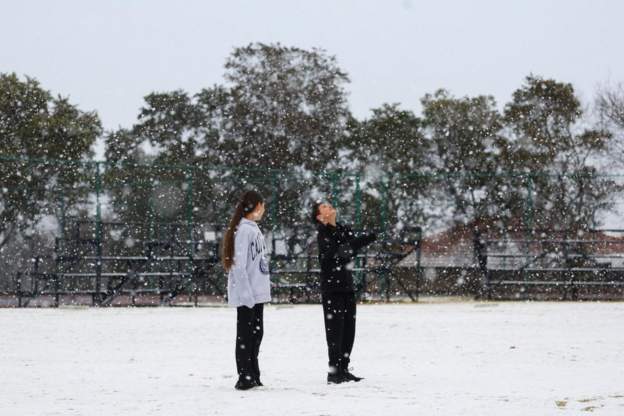
The first snowfall in Johannesburg since 2012 has occurred as the nation as a whole experiences frigid weather. Farmers are urged to shelter cattle, and locals are urged to take extra care to stay warm.
Eastern Cape and Mpumalanga have also been reported to have snow, according to South Africa’s weather service.
“The public is advised to keep warm during these conditions,” said the South African Weather Service (Saws) in a statement.
Weather experts have also urged initiation schools in the Eastern Cape to exercise increased caution over the coming week as they keep an eye on hundreds of teenage boys who will be having traditional circumcision rites performed on remote mountaintops throughout the province. The Xhosa ethnic group views this ritual as a rite of passage into manhood.
Throughout the week, the chilly weather is anticipated to last.
“No major disruptions have been caused by the snowfall at this stage,” Saws spokesperson Hannelee Doubell told the BBC.
The Minister for Food and Agriculture, Bryan Acheampong has announced that government would stop providing farmers with fertilizer subsidies starting of April 11, 2023.
He claimed that despite the subsidies costing the country GH3 billion over the previous six years, it had little impact because of the rampant corruption that disfigured the intervention.
“We have canceled subsidy since 11th April, 2023 when I assumed office. Because the subsidy has cost the nation GH¢3 billion in the last 6 years. Yes, it has moved Agriculture contribution to GDP from 2% to about 6% but the amount of money invested and the way the structure has behaved is due to misconducts in the subsidy”.
The Agric Minister said “The subsidy was not reaching the farmers but the people in the middle colluded such that the farmers were not benefiting from the subsidy. I believe if they were really benefiting in the full hog the way the government intended it would have been better.”
Bryan Acheampong hurried to add, however, that the government will soon implement a guarantor system where it will ensure the farmers’ access to fertilizers in exchange for repayment after harvest.
“With this new program, there will be no subsidy. You don’t also have to come up with that GH¢85 that you have to pay. What the government is going to do is to sign an agreement with the suppliers to guarantee for the farmers to provide the fertilizers on credit and after harvest payback”.
The Minister said these when answering questions from the local media in Kwahu dubbed “The Big Interview”.
The flagbearer of Ghana’s largest opposition party, John Dramani Mahama, has consistently criticized the government’s decision to discontinue the free fertilizer supply program, arguing that it has exacerbated the challenges faced by Ghanaian farmers.
Mahama has pledged to reinstate the free fertilizer supply program if his party, the NDC, regains power in 2025.
However, Bryan Acheampong holds a different perspective and believes that the cancellation of the program and the implementation of the guarantor system are in the best interest of the country.
Acheampong disclosed that the government is entering into an agreement with a private fertilizer company in Takoradi to produce fertilizer using gas waste. This initiative aims to address the significant fertilizer deficit exacerbated by the Russia-Ukraine conflict, which has disrupted global fertilizer production and supply chains.
Numerous farmers in the Sissala region have bemoaned the scarcity of maize seeds for planting.
Only those that bought the commodity in the dry season can sow now.
It came to light when the Ghana News Agency (GNA) went to selected Agro input shops in Tumu, Gwollu, and Welembelle to find out about the alleged shortage of some hybrid seeds demanded by maize farmers.
It came out that the major maize seed often used by the farmers included: ‘Pioneer’, ‘Lake’, ‘Pan 53’, ‘Kabamanoj’ and ‘LG 336’ which have become known seeds among farmers for their good yields and drought-resistant nature were out of stock.
A farmer, Asmiru Kwesi told the GNA he wanted pioneer seed but it was not there so he would wait for a few more days to see if they would be available ‘but today being the 21st of June if I don’t get it, I will be forced to go for anything available’.
At another agro shop, WY Farms, Mr Waris Ibrahim, representative of LakeSeedd, said he was expecting 1600 bags of the 50kg seed to come into the Sissala area in the next few days for farmers to buy and gave the assurance that they still had some quantities of the yellow lake seed available.
In an interview with Mr Isaac K. Razak, the Municipal Agriculture Extension Officer, he mentioned that over the years, the farmer’s preference for the Pioneer, Lake, and the LG 336 seed made their absence suggest there was no seed for farmers.
Mr Razak disclosed that there were other seeds such as ‘Seedco’, ‘kabamanoj’ and ‘Mastrop’ in some of the Agro shops including the ones produced by the Savannah Agriculture Research Institute of the Center for Scientific and Industrial Research (CSIR-SARI) which included ‘Wandata’, ‘Bihilnfa’ and encouraged the farmers to buy and plant as they could give equal yields.
Attempts to speak to Pioneer representatives were not successful except for dealers of their products including agro-input dealer Paapa and BB Slows Enterprises who assured the farmersthey were working hard to get the seed for the farmers.
The situation of shortage of pioneer and lake seed product was reported in Tumu, Gwollu, Welembelle, and Funsi where thousands of acreage of maize field is expected to be cultivated around this farming season.
To tackle the challenges faced by small-scale farmers in rural areas of Ghana, the United States Agency for International Development (USAID) is partnering with the United Nations World Food Programme (WFP) to allocate approximately US$7 million in crucial assistance.
The funding will be distributed in two installments through a specially designed cash transfer program, benefiting around 17,000 farming households in selected districts within the northern regions of Ghana.
Barbara Clemens, the Representative and Country Director of the World Food Programme in Ghana, emphasized the significance of this initiative in addressing the needs of the targeted beneficiaries.
“Starting in June, 17,000 targeted productive smallholder farmers in 163 communities and 17 districts in Northern Ghana will be assisted with MoMo cash transfers to mitigate the risks of shocks and loss of productive assets due to input prices caused by inflation,” she said.
“During this lean season, from June to August 2023, farmers will use these transfers to buy the inputs and food they need, when they need them,” she added.
“Let me emphasize the who and where of this initiative. Productive ( and the key word is productive) smallholder farmers in Northern, Northeast, Upper East and Upper West were targeted to receive this assistance because they are in USAID’s zone of influence,” she noted.
On his part, the Deputy Minister for Ministry of Food and Agriculture in charge of Crops, Yaw Frimpong Addo indicated that the Farmer Support Activity project is in line with government phase two of the planting for food and jobs which seeks to shift agriculture activities from the subsistence to commercial terrain.
“This project we are launching today there’s a component in the new PFJ chapter two which will be launched latest by early next month. It is a 5 year program and it is about commercial agriculture which focuses on from input subsidy to input credit,” he said.
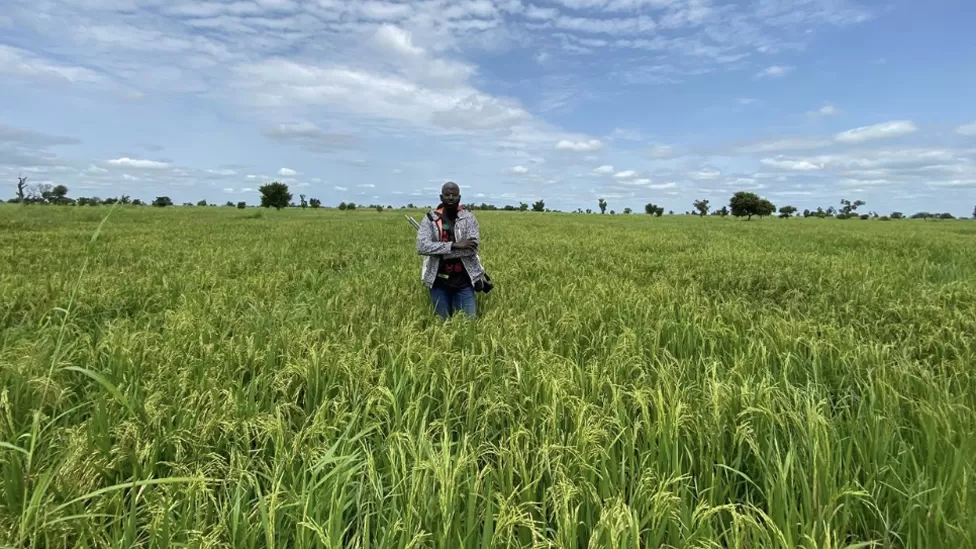
Rotimi Williams was seen as one of Nigeria’s most successful rice farmers seven years ago, but now the 42-year-old’s land stands idle.
The problem: insecurity, which has ground his farms to a halt.
In 2012, Mr Williams left his career as a banker and ventured into agriculture. He was profiled in international media and described as the second-largest producer of rice in Nigeria, with thriving farms across the north.
But the threat to his life and the lives of his workers grew too much.
“There was a time my car was shot at on my way back from the farm,” he said. “There were also kidnap attempts.”
In the past three years, a sharp rise in insecurity has led to gangs kidnap hundreds of people for ransom in Nigeria, and staff of prosperous agricultural enterprises have been particularly targeted, forcing many farms to abandon or reduce operations.
More than 350 farmers were kidnapped or killed in the 12 months up to June 2022 alone, according to a Nigerian security tracking website.
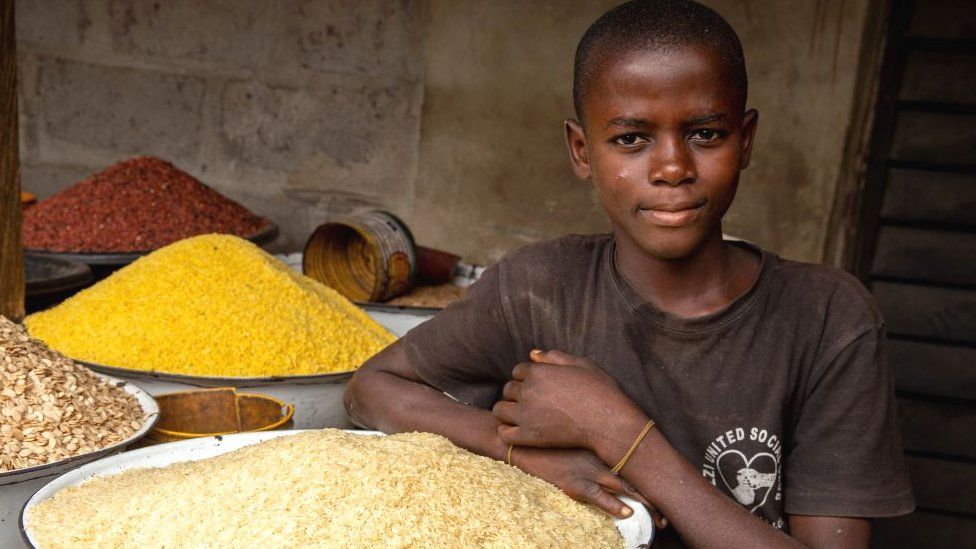
Image caption,Rice is a crucial part of many Nigerians’ diet
The majority of attacks took place in the northern region where there is swathes of uncultivated land and some of the country’s largest farms.
In January 2022, five people were killed in an exchange of gunfire between security agents and armed gunmen on motorbikes, gang members known locally as “bandits”, who attacked the premises of GB Foods, a tomato-processing plant in the north-western state of Kebbi.
When the multi-million-dollar factory, partly funded by the central bank, had launched to great fanfare in 2020, it was described in the media as Nigeria’s second-largest food processing plant and included the country’s largest tomato farm.
Bandits then tried to kidnap some of the staff. They failed, but the plant has been out of operation since.
“There’s nowhere else in the world where people require armed security to go to the farm,” said Mezuo Nwuneli, the managing partner of Sahel Capital.
His agriculture investment firm is in its ninth year of a 10-year contract to invest $66m (£54m) in the farming sector on behalf of the government and its partners, including the UK government and some Dutch investors.
On one of Sahel Capital’s farms, a security officer was killed during a kidnapping attempt.
“They used to be comfortable working till 10pm but because of the attack, they don’t feel safe to work late. In other parts of the world, you can run a farm 24/7.”
‘Green revolution’
Prior to the discovery of crude oil in 1956, Nigeria was known for a long list of cash crops, such as palm oil, cocoa, and groundnuts, but the government’s focus on the booming oil sector led to the underdevelopment of non-oil sectors, such as agriculture.
This began to change after Olusegun Obasanjo was elected as president in 1999, and made a push to revive agriculture. His government offered farmers improved irrigation as well as new machinery and crop varieties to help boost agricultural productivity.
Image caption,Akinwumi Adesina (L) and Olusegun Obasanjo (R) were instrumental in boosting Nigeria’s agricultural sector
However, the magic really began to happen when the subsequent administration in 2010 appointed the sleek, bowtie-wearing, charismatic Akinwumi Adesina, as the minister for agriculture.
“When Adesina was minister, he was able to communicate the opportunities in the sector in a way that was exciting for people,” said Mr Nwuneli, a graduate of Harvard Business School, who launched Sahel Capital in 2010 when he was 35 years old.
“Around that time, there was a lot of excitement and interest in the youths and the many people coming into the sector at the same time.”
The next few years saw the emergence of many young Nigerian agriculture entrepreneurs, like Mr Williams and Mr Nwuneli, in a period that many reports described as Nigeria’s “green revolution”.
“We had 20 million youths entering the oversaturated workforce from 1990 to 2010. For us, we are committed to unlocking the power of agriculture and job creation with the goal to create 10 million jobs by 2030,” said Kola Masha, another Harvard graduate, who founded Babban Gona, which means “Great Farm” in Hausa, in 2010.
His firm uses innovative technology to help its more than 20,000 smallholder maize farmer members to improve crop yields, reduce the cost of production and increase the sale price.
In 2017, Mr Adesina, by then head of the African Development Bank, was awarded the World Food Prize “for driving change in African agriculture” and “his breakthrough achievements as minister of agriculture”.
‘We lost 300 farms’
All that progress now seems to be unravelling, with nearly 25 million Nigerians at risk of facing hunger between June and August 2023, according to the UN.
“We’ve lost about 300 farms,” said Stella Thomas, who in 2011, at the age of 32, founded Techni Seeds. Based in the north-western city of Kano, the company applies scientific research to produce quality seeds that it then distributes to thousands of farmers across Nigeria, whose work they supervise from planting to harvesting, to ensure maximum yield.
“We call them ‘out growers’. We found out that because most farmers use saved seeds – they recycle their seeds – [then] over time, they don’t get enough output. So, we give them the seeds that they use, and we are responsible for ensuring that they do the right thing.”
The insecurity has forced hundreds of her “out growers” to drop out of the network of supervised farms.
otimi Williams
If there’s no security, there’s no agriculture. It’s that’s simple”
Mr Williams used to enjoy spending months at a time on his farm, organising barbecues for the farmers at the end of a hard day’s work, complete with a stereo and loud music.
He is now in the process of moving his rice production to other West African countries, such as The Gambia and Senegal, which also consume rice in large quantities.
His current calculations show that transportation costs would make it unprofitable for him to supply rice to Nigeria from those countries, and he predicts that the rising food inflation in Nigeria will only get worse – if the government continues to slack in its handling of security.
“If there’s no security, there’s no agriculture,” he said. “It’s that’s simple.”
Bola Ahmed Tinubu was sworn in at the end of last month as the new president taking over from Muhammadu Buhari – and the insecurity is his problem to solve.
“We all have hopes that this issue will be dealt with,” said Mr Williams, reflecting on the future, “but we will see.”
Parts of Gomoa Okyereko have reportedly been invaded by more than 150 land guards, who are using live ammunition and firearms to intimidate farmers and forcefully grade their lands for sale.
Gomoa Okyereko, situated in the Gomoa East District of the Central Region, is a farming community with a population exceeding 2,000.
Residents have accused certain opinion leaders and politicians from Effutu of orchestrating this invasion and attempting to unlawfully acquire their lands without any legal proceedings.
Speaking to Adom News, some of the residents say several complaints have been made to the Dominase District Police Command, Central East Regional Police Command, and DCE Solomon Darko Quarm but nothing has been done since they started the grading.
The residents have expressed their displeasure and called on the IGP and the authorities to act adding that they would mobilised themselves and fight if their attempt to control the act proves futile.
Concerned youth express worry
Meanwhile, the chief of Gomoa Okyereko, Nana Kofi Donkor revealed that these land guards have graded over 200 acres of land and all crops on it.
Nana Donkor says it is painful that, this government has laws in place yet some politicians from Winneba are using land guards to terrorize them.
Increases in fertiliser prices under the Planting for Food and Jobs (PFJ) program in the 2022 agricultural season has prompted farmers to buy inputs from neighboring Togo, according to the Peasant Farmers Association of Ghana (PFAG).
The finding is part of an assessment of last year’s PFJ policy and its impact on smallholder farmers across the country by the PFAG, and showed that PFJ fertiliser prices escalated from GH¢96 for 50 kilogramme (kg) NPK and GH¢106 for 50kg Urea in 2021 to about GH¢320 for both products in 2022 – constituting some 233 percent increase.
Speaking at a PFJ Stakeholder Validation and Budget Credibility Workshop in Accra, Executive Director-PFAG, Dr. Charles Nyaaba, said one of the critical points that led to farmers’ disinterest in the programme was the high prices slapped on subsidised fertiliser from 2021, which reached an all-time peak last year – in contrast to prices in neighboring countries.
The assessment by PFAG indicates that about 92 percent of respondents perceived the 2022 prices as being too high.
While PFAG was hoping for government intervention to normalise the situation – particularly in 2022, that did not happen.
A 28-years old farmer in Chereponi, according to the findings, shared his frustration and how they rather bought fertiliser from Togo in 2022…which was unusual.
He said: “In Togo, they have two types of fertiliser. One is expensive and the other one is not too expensive. The cedi equivalent of the less expensive one in 2022 was GH¢210/50kg and the expensive one was GH¢270/50kg. In 2022, most of us bought our fertiliser there and even bought some and sold to other farmers in Chereponi. Is the COVID-19 and Ukraine-Russian War not affecting them?”
It must be noted that Chereponi is a border town. In previous years, farmers from neighbouring Togo purchased fertiliser from Ghana – with some reported cases of smuggling the subsidised fertiliser.
The 2022 turn of events, according to the association, was therefore surprising – as to how prices could escalate beyond controllable limits in Ghana.
This is what a 43 year-old female farmer from the Telania community in the Kassena Nankana West District shared: “Why would I buy just one bag of government fertiliser for GH¢320? I need about three bags of NPK and one bag of urea for one acre. When I put the cost together, it is more than GH¢1,000; what about tractor service, agro-chemicals, labour and harvesting cost? How much do I get paid for a bag of maize? Where is government support for farmers when the price of open market fertiliser is same as the subsidised?
Dr. Nyaaba suggested that the current PFJ should be modified and a value chain approach adopted, as hinted by the sector minister.
Zambia and Kenya have conditionally agreed on a deal under which the Lusaka government will give Kenyan commercial farmers land to produce maize.
A local media report has it that,a memorandum of understanding (MOU) permitting Kenyan farmers to grow maize in Zambia will be signed.
“I am happy the Zambian government has agreed to offer Kenyan farmers land for large-scale farming in Zambia. Kenyan farmers will in turn be required to export their yields back to Kenya in order to boost our food supply and security,” Linturi is quoted as saying.
He stated that the agreement was reached during a meeting he had on Monday in Lusaka with his Zambian counterpart, Reuben Mtolo, although he did not provide a date for its signing.
According to Linturi, the proposed MOU is anticipated to lower the price of maize and its products in both countries.
“Based on the projections he shared with us, the farmers will be able to achieve the objective of bringing down the cost of unga (maize meal) because, clearly, they got it right and there is something to learn from them.”
He said officials from the two countries would work out the price at which Zambia would sell the maize to Kenya, which “of course, (would be) a much lower price than we are currently getting from the traders.”
Farmers in Zambia would gain from the agreement as well because Kenya would receive short-term access to Zambia’s surplus maize.
Following a recent shortfall of maize meal in Kenya, which Linturi attributed to farmers stockpiling in anticipation of higher producer prices, an agreement with Zambia is now being negotiated.
Former President John Dramani Mahama has acknowledged that his administration erred in its decision to purchase tractors forfarmerswhile he was in power.
Mr Mahama says that given another chance, he will rather buy the tractors, and put them in a pool for someone with the expertise to manage and provide the tractor services to farmers.
“I realised some of the things that we did, we made mistakes, we imported tractors and agricultural equipment, and we gave it to farmers. The farmer does not need the tractor, he does not need the agricultural equipment, he needs the services of a tractor,” the former President said in Munich.
The former President added “so somebody who knows how tomaintain that tractor must have a service centre, where he provides the services to the farmer. But we gave the tractors to the farmers, and in a year or two the tractor had broken down because he [farmer] doesn’t know that every six months you must change the engine oil, you must change the filters, you must grease the tractor, he [farmer] doesn’t know that. So we will approach it differently.
Former President Mahamais in Munich, Germany, attending the 59th Munich Security Conference 2023. The conference provides a platform for high-level debates “on key foreign and security policy challenges.”
Mr Mahama is the Chairperson of the Tana High-Level Forum on Security in Africa. The Tana Forum in collaboration with Bundesverband der Deutschen Industrie e.V. (BDI) on Saturday, hosted a side event, an MSC Regional Breakfast on “Africa’s Place in a multipolar world: Moving from strategy to action.”
The session was opened by President Mahama as Chair of the Tana Forum and addressed by the Chairman of the Munich Security Conference, Ambassador Christoph Heusgen, and Wolfgang Niedermark of BDI, the Federation of German Industries.
South Africa’s Minister for Defence, Thandi Modise, delivered the keynote remarks.
The government has been asked to establish agricultural laboratories in rural areas so that smallholder farmers can access services for soil testing.
Professor Osei-Agyeman Yeboah, Lecturer at the North Carolina Agriculture and Technical University, who made the call, said the move would help improve farming and smallholder farmers’ access to recommendations on the best crops for their soil and the best local fertilizer recipes for good harvests.
He gave the advice during USDA-NIFA Projects outreach event for farmers at Sanpebga in the Kumbungu District to showcase the best technologies to increase productivity, food security, and nutritional health benefits in the Northern Region.
It was organized by CSIR-Savanna Agricultural Research Institute and supported by North Carolina Agriculture and Technical University and the University of Maryland East Shore.
It was on feed harvesting, silage preparation, good livestock husbandry practices, commentary feeding, crop residue management, and compost preparation, and was conducted at the farm level to create awareness of integrated soil fertility management strategies, compost preparation, farm residue recycling, intercropping and improved varieties.
Professor Yeboah, who is also the Project Leader for the United States Department of Agriculture (USDA) and National Institute of Food and Agriculture (NIFA) Project, said, “Soil is a critical part of thriving agriculture, which provides the necessary nutrients for crop growth. However, not all soils are suitable for growing crops.”
He said regular soil testing could help improve soil health, which was typically inaccessible and too expensive for smallholder farmers.
He stated that mostly the small farmers had limited access to correct information to remedy deficiencies leading to incorrect or insufficient agro-input use that adversely affected soil health, productivity, and local ecosystems.
President Akufo-Addo remarked that farmers and citizens must collaborate to battle the galamsey threat during his speech at the 38th National Best Farmer award.
According to the President, if farmers and the general people do not cooperate with the government to eradicate the galamsey threat, the unlawful activity would wreak havoc on the ecosystem.
This is Munu Nyende’s first harvest of avocado after clearing his sugarcane farm for Hass three years ago.
Many had cautioned him about his decision. However, with the government’s assurance, he found the courage to grow the fruit whose new popularity around the world is widening its global market.
“There is a shamba which I harvested after about 36 months and obviously you get disappointed. And when you look at avocado and what we read about it because incidentally we have not started harvesting but the prospects are high”. Nyende said
Uganda’s soils and climate favour avocado growing and are considered among the best even compared to the world’s top ten exporters including neighbour Kenya.
According to Africanews correspondent, Raziah Athman, “From one avocado tree that’s about five years old, a farmer can harvest 3000 fruits in a year, that’s about 500 kilograms. And, as direct export, a kilogram is sold at $2. That compared to a cane farm of the same size means that the avocado farmer is earning six times more but experts say sufficient export volume needs at least 10,000 more farmers to grow the fruit”.
Munu Nyende’s is not the only in this field of farming. Ali Kibwika Muyinda says even as it picks up, those willing to venture into Hass are treading carefully. Ali Kibwika Muyinda is part of an initiative working with a nucleus avocado farm in the eastern region.
“I wouldn’t say switching to avocado is a gamble, I think it should be the thing”. Ali said
The government says the idea is not to replace sugarcane but grow the list of strategic crops.
“Our intention is to have Hass avocado for export, but also have value-addition because vegetable oil is extracted from Hass avocado so the nucleus farmer will act as the off-taker, the buyer from the grass root farmers in the sub-counties but also act as a value adder”. Bwino Fred Kyakulaga – minister of state for agriculture
In 2021, avocado exports totalled $7 billion, a figure Uganda hopes it can tap into if more farmers embrace avocado.
Current data from the United Nations COMTRADE database have indicated that Ghana imported US$151million worth of raw sugar in 2020 alone – with the country being ranked 45th largest importer of the commodity globally.
The commodity is also ranked among the first ten most-imported products into the country, as Ghana’s essential food imports bill continuously rise year by year – currently valued at US$2billion according to the finance ministry.
The data also added that the imports of sugar and sugar confectionery was US$158.3million in 2019, with Mexico, Brazil, USA, Guatemala, France and India being the lead importers.
Data from the Ghana Export Promotion Authority (GEPA) show that the country consumes about 370,000 tonnes of sugar annually, with domestic production currently at an all-time low.
Industrial and domestic supply prospects
Huge supply opportunities exist for large industrial sugar importers, such as FNJ Investments, Fan Milk, Multi-Pac, Kasapreko, Stallion Industries, Nutrifoods and Blow Chem, among others
The Ministry of Trade and Industry has further projected that domestic consumption of sugar in Ghana could rise to 872,000 metric tonnes in 2030.
Similarly, the West Africa sub-region – which is also forecast to experience rapid growth in sugar consumption – also presents a potential sugar export market for Ghana. Amid these market potentials and existing congenial climatic and lithospheric conditions, production of sugar remains at zero.
The Sugar Industry in Ghana
Ghana’s sugar industry is virtually fully dependent on imports. Local production remains negligible at a mere 150 tonnes in 2013 according to the UN data, and there’s a mere 6,000 hectares of sugar plantation in existence.
With two sugar mills in Asutsuare and Komenda, these facilities have been lying idle since 1983 largely due to inefficient management. However, the Komenda Sugar Factory was revived in 2015 and 2016 – but was shut down shortly after due to lack of raw materials.
Attempts to revive Komenda sugar factory
In 2016, government secured a US$35million loan from the Export-Import (EXIM) Bank of India and invested it in the factory. An additional US$24million was set aside to support out-grower farmers.
The factory, which was inaugurated on May 31, 2016 to produce sugar, became stillborn due to a multiplicity of factors that were touted as technical and operational challenges.
On June 3, 2020, however, Trade and Industry Minister Alan Kyerematen announced in parliament that Cabinet had officially approved Park Agrotech Limited as a new strategic investor to operate the factory.
That notwithstanding, the current status of the investment by Park Agrotech is unknown.
Nevertheless, a number of plans, according to the trade ministry, are also underway to develop sugar-cane plantations for a second revival of the Komenda sugar factory.
Also, plans by multinational trading house Cargill to build a sugar refinery in Tema are a possibility.
GEPA’s NEDS projections
Meanwhile, GEPA through the National Export Development Strategy (NEDS) has designed a blueprint for harnessing the full potential of sugar production to curb the rising imports.
In the NEDS, the Authority has projected revenues from the export of sugar by 2029 to be US$1.2billion.
The Chief Executive Officer of Bankyekrom Limited, Sarpei Kwadey, has revealed that despite the high volumes of cassava produced in the country, only a fraction of it is processed.
According to him, 10 million metric tonnes of cassava remain un-harvested each year, while annual production amounts to 18 million metric tonnes – thereby ranking the country among the tuber’s top five producers in Africa. However, of this quantity only a measly 0.5 percent is processed.
This, he said, is worrying; given more than 70 percent of farmers in Ghana produce cassava, and the sector contributes about 22 percent of agricultural GDP.
“We need huge tracts of land to cultivate cassava on a large scale, as well as skilled labour, mechanisation and planting materials,” Mr. Kwadey said at the maiden Cassava Multi-Stakeholder Forum held in Accra and organised by the Ghana Incentive-based Risk-sharing System for Agriculture Lending (GIRSAL) in partnership with the Development Bank, Ghana (DBG) and Ghana Industrial Cassava Stakeholder Platform (GICSP).
The forum was held to identify opportunities and key challenges facing the national agenda of industrialising the cassava ecosystem, and the key interventions that would support solutions for an effective and efficient value chain pivoted around major, small and medium processors.
Chairman of the GICSP, Chris Quarshie, noted that the high starch content in cassava root is an important characteristic that makes the crop a potential industrial cash-crop. However, lack of varieties in cassava prevents starch production in large quantities; and, therefore local ethanol-consuming industries use imported raw materials for production due to inadequate supply.
He said: “This country consumes about eight million tonnes of cassava annually, and records 10 million tonnes of annual surplus that is un-harvested and left in the ground to rot. We have cassava, but we need to get the variety that is high in starch, high-yielding, and will be of interest to industries”.
Mr. Quarshie added that cassava has a low risk-profile and matures between 20 and 24 months, depending on the variety. He therefore called for proactive policies, financing and capacity building for players in the industry.
On his part, Mr. Duker of the Development Bank Ghana assured that the bank will collaborate with key stakeholders to help fund and support businesses to grow the cassava value chain.
According to him, this will be done by helping to unlock sectors with transformational potential and providing thought-leadership on policy development to stimulate a conducive environment for agri-businesses.
“This we will do through our holistic approach to combine finance, capacity-building and market development.”
Mr. Duker explained that DBG focuses on four key sectors: agribusiness, manufacturing, ICT and high value services.
“The importance of unlocking value within key agriculture value chains must not be understated. So, that explains why we are here today as a sponsor for this event.”
He added that DBG’s mandate is to grow the private sector, and unlock growth for the economy by working constructively with stakeholders to address the finance gap for long-term capital in a catalytic way – while delivering a beneficial Ghanaian credit market that works for everyone sustainably.
He called for urgent action through a joint effort to address challenges faced in the cassava sector. “We need to do it differently. What does this mean? We need to collaborate on setting new standards together, and this requires that we have authentic conversations. We are here this morning to roll-up our sleeves and work together to come up with solutions which allow us to take the important next steps.”
Speaking to EIB subsidiary station in Nkawkaw, Agoo FM, one of the Assembly members who led the protest, Boamah Alexander said the nomadic herdsmen are destroying their farms with impunity and unleashing terror on farmers.
He alleged that many farmers have been attacked by lawless herdsmen.
The farmers petitioned the Member of Parliament for Abetifi Constituency Bryan Acheampong, Kwahu Tafo Chief, and the Kwahu East Assembly.
“We the farmers of Kwahu Tafo write with great concern this petition to bring to your notice the difficulties and challenges we are going through as a result of the presence of Fulani herdsmen in our community. Some of us cultivate cash crops especially cocoa and the majority of us are subsistence farmers who grow crops like maize, cassava, yam and cocoyam, tomatoes, pepper, carrots, cabbage, green pepper, and cucumber” excerpts of the petition stated.
“Our concern is that, the herdsmen allow their cattle to come to our farms and destroy our crops. The destruction of our crops usually occurs in night. The following morning we go to our farms to find out our crops have been completely destroyed. In some cases, they deliberately burn the bush in which the new growth serves as grazing ground for their animals”.
The farmers alleged that “most of the herdsmen armed themselves with rifles when they walk around in the bush which in itself is very intimidating. We are experiencing untold hardship as a result of their nefarious activities which are adversely affecting our farming activities and livelihood and thereby posting a threat to our very existence. We are therefore presenting this petition to you to bring to the fore the plight of farmers of Kwahu Tafo as a result of the presence of Fulani herdsmen on our farmlands”
The aggrieved farmers are demanding an immediate clamp down on the herdsmen.
“We are by this petition demanding the removal of these herdsmen from our farmlands to enable us farm peacefully. We count so much on your kind cooperation in this regard and look forward to a swift response to our plea”.
Kwahu Afram Plains area is notorious for fatal clashes between farmers and nomadic herdsmen particularly during the dry season.
General Secretary of the Tabital Pulaaki International, Ghana Chapter, Yakubu Musah Barry has called on government and the National Security Ministry to check the illegal entry of hundreds of Fulani herdsmen from Saharan countries to Ghana during dry seasons.
He said the situation is not only a threat to national security but also to food security.
He said some of these nomadic herdsmen may be kidnappers, hardened criminals, or terrorists who enter the country unchecked and commit atrocities and crimes in farming communities.
Government established a cattle ranch at Wawase to address their situation however many of the herdsmen have abandoned the facility.
A studyconducted by a team of researchers from the University of Ghana has revealed that most farmers in the country sell a large proportion of their produce, including food they reserve to eat for the rest of the year.
Those who produce food crops such as maize, rice, yam and sorghum also sell their produce because they need cash.
A researcher at the Institute of Statistical, Social and Economic Research (ISSER) of the University of Ghana, Dr Fred Dzanku, said “they [farmers] have children who go to school, and since they do not have any other source of income, they sell [the food] to take care of their needs”.
Unfortunately, he said, after engaging in such commercialisation, those farmers did not have food to depend on in the latter part of the year.
He said most of them also devoted their resources to the production of non-food cash crops, even in highly commercialised regions.
According to the study, those practices could lead to food insecurity in the country.
Dr Dzanku, who was among the nine-member team that conducted the research, made the disclosure at the presentation of findings and observations of the research in Accra yesterday.
The research, which was on land commercialisation, gendered agrarian transformation and the right to food, is a Demeter Project conducted from 2015 to 2022.
Demeter Project
The overall objective of the Demeter Project is to strengthen knowledge on the relationship among food security, the right to food and gender equality to enable the people to claim their rights and also encourage governments to facilitate the realisation of the objective.
Ghana and Cambodia were used for the research, but the presentation in Accra focused on the findings and observations in Ghana.
In Ghana, the study was done in four districts in four regions.
The seven-year Demeter Project is funded by the Research for Development Project of the Swiss National Science Foundation and the Swiss Agency for Development and Cooperation.
On how to deal with the over-commercialisation of farm produce, Dr Dzanku suggested that in the short term, farmers should be educated to devote a certain proportion of their land to food production, while the state must invest in roads, infrastructure and storage facilities, in the long term.
Cassava production
Presenting her work on the political economy of food insecurity in Ghana, a member of the research team, Dr Gertrude Dzifa Torvikey, said industrial cassava production was an important policy imperative.
“The state and policy makers should map out what cassava means in the development of the nation and its position in the future development agenda,” she said.
Earlier, the principal investigator of the team, Prof. Dzodzi Tsikata, had said during the demeter study in 2015, there were 800 million chronically food insecure people, with 50 per cent living on small farms, 20 per cent landless, while 70 per cent were women and girls.
Small-scale farmers from developing countries produce one-third of the world’s food, yet they only receive 1.7% of climate finance even as they are forced to cope with droughts, floods, cyclones and other disasters.
This sentiment echoed through dozens of pavilions and conference rooms in Sharm el-Sheikh on Saturday (12 November) as COP27 turned its attention to the vital issues of adaptation, agriculture and food systems in the context of climate change.
“We need to help rural populations build their resilience to extreme weather events and adapt to a changing climate. If not, we only go from one crisis to the next. Small scale farmers work hard to grow food for us in tough conditions,” Sabrina Dhowre Elba, Goodwill Ambassador for the UN International Fund for Agricultural Development (IFAD), said during a press conference.
As a Somali woman, Dhowre Elba said this issue was personal: as COP27 got underway her country had experienced four consecutive failed rainy seasons, a climatic event not seen in 40 years.
“I can’t stand idly by while mothers, families and farmers are suffering across the Horn of Africa as it experiences its most severe drought in recent history,” she explained, urging developed countries to mobilize political will and investments.
“Trillions of dollars were made available to tackle the COVID-19 pandemic and its economic consequences. The same is needed for climate change. The same is needed for sustainable agricultural support. It’s crucial to the well-being and the food security of us all,” she added.
Funds for adaptation must be delivered
Dina Saleh, the Regional Director of IFAD, explained that failure to help rural populations to adapt could have dangerous consequences, leading to longer poverty, migrations and conflict.
“This is why today we are calling on world leaders from developed nations to honour their pledge to provide the US$100 billion a year in climate finance to developing nations and to channel half of that to have that amount to climate adaptation,” she underscored.
Thirteen years ago, at COP15 Copenhagen, developed nations made a significant pledge. They promised to channel US$100 billion a year to less wealthy nations by 2020, to help them adapt to climate change and mitigate further rises in temperature. That promise, however, was not kept.
Saleh cautioned that there is a “narrow window” to help rural poor people to survive and protect their communities, and that crop yields could reduce by as much as 50 per cent by the end of the century.
“The choice is between adapting or starving,” she warned, urging COP27 to be about action, credibility and justice for the invisible and the silent.
A new initiative
Precisely to address these issues, the COP27 Egyptian Presidency launched on Friday the new initiative Food and Agriculture for Sustainable Transformation or FAST, to improve the quantity and quality of climate finance contributions to transform agriculture and food systems by 2030.
The cooperation programme will have concrete deliverables for helping countries access climate finance and investment, increase knowledge, and provide policy support and dialogue.
The UN Food and Agriculture Organization (FAO), along with other UN agencies, will be the facilitator of this initiative, which, according to Zitouni Ould-Dada, deputy director of the agency’s Climate and Environment Division, puts agriculture at the heart of efforts to tackle climate change.
“The message really is to recognize that agriculture must be an integral part of the solution to the climate crisis,” he told UN News.
The importance of investing in innovation
At the same time, while the agricultural and food sector is profoundly impacted by climate change, it also contributes around a third of global greenhouse emissions, from production to consumption, Ould-Dada explains, saying that there must be a transformation of the agri-food systems.
“We can’t continue with the current model of producing food and then degrading the soil, declining biodiversity, affecting the environment. No. It must be sustainable,” he notes.
The expert highlights that if the right choices are made, agriculture can be an important part of the solution to fight the climate crisis by sequestering carbon in soil and plants and promoting adaptation and resilience.
“We can’t produce the food to feed and nourish a growing population with the current model, with the threat of climate change. We can’t.”
The first thing the world should be tackling, he says, is addressing food waste, which is responsible for 8 per cent of global gas emissions.
The importance of investing in innovation
At the same time, while the agricultural and food sector is profoundly impacted by climate change, it also contributes around a third of global greenhouse emissions, from production to consumption, Ould-Dada explains, saying that there must be a transformation of the agri-food systems.
“We can’t continue with the current model of producing food and then degrading the soil, declining biodiversity, affecting the environment. No. It must be sustainable,” he notes.
The expert highlights that if the right choices are made, agriculture can be an important part of the solution to fight the climate crisis by sequestering carbon in soil and plants and promoting adaptation and resilience.
“We can’t produce the food to feed and nourish a growing population with the current model, with the threat of climate change. We can’t.”
The first thing the world should be tackling, he says, is addressing food waste, which is responsible for 8% of global gas emissions.
Civil society calls for finance, economy transformation
UN representatives were not the only ones underscoring the need for countries to invest in transformation and deliver their climate finance promise.
A massive protest led by a coalition of environmental, women, indigenous, youth and trade union organizations took over the roads and pathways between the pavilions at COP27.
“Right to territories, rights to resources, human rights, indigenous people rights, loss and damage must be in all the negotiation texts…. 1.5 is not negotiable that is what we are here standing for,” said Hindou Oumarou Ibrahim, Chadian environmentalist and SDG advocate.
The activist stated that her people are dying because of floods, droughts, while some indigenous communities in the Pacific are losing their homelands.
“We want to have justice. Justice for our people, for our economies for loss and damage. We are losing our culture, our identity, our life, and these are not payable, but climate finance needs to be delivered,” she shouted amid hundreds of protesters.
The German Ambassador to Ghana H.E Daniel Krull has advised the government to encourage farmers to venture into full-scale organic farming to help them become more resilient to the economic crisis.
According to him, organic farming will not only improve the livelihoods of farmers and their families but will also have an enormous positive impact on the country’s trade balance as the government will stop the importation of fertilizers, pesticides and also reduce the importation of food.
Speaking at the Maiden Ecoland Organic Farmers Day Celebration held in Bunso, H.E Daniel Krull indicated that only organic farming guarantees greater fertility of the land and will help farmers and their families become more resilient to the economic crisis.
The Overlord of Akyem Abuakwa State Osagyefo Amoatia Ofori Panin who indicated that Ghana has a future in organic farming said it can only be achieved if Ghanaians respect nature and end the destruction of the environment through illegal mining popularly known as galamsey.
“Organic farming will work only if we put up the right attitude. The right attitude is respecting the rule of law and the rule of nature. We have a future to build ourselves to a middle class in organic farming, so let’s all join and make this work. We have to plant our own food and eat our food and plant it in surplus so we can send some somewhere and get the needed foreign exchange.”
The President of Ecoland International Rudolf Buhler whose company has taken a giant step in the cultivation of organic ginger in Bunso addressing the gathering indicated that organic agriculture is the only sustainable climate and environmentally friendly way of land use and food production.
The Department of Agriculture in the Kintampo South District on Friday held the Research, Extension farmer – Linkage Committee (RELC) planning session, at Jema in the Bono East Region.
RELC was a platform which brought together researchers, agricultural extension officers, farmers and the various stakeholders to deliberate on and to find solutions to challenges faced by farmers in the agricultural value chain.
It was held under the Modernising Agriculture in Ghana (MAG) project, to help reverse the declining growth of the agriculture sector, and to ensure food security.
The District Director of Agriculture, Afia Asokua Ofori, stated that a total of 189 farmers from four zones namely Krutakyi, Kokuma, Akora and Sabule presented their challenges, where the most pressing among them were given immediate attention.
Mrs Ofori indicated that the farmers identified constraints namely high incidence of livestock and poultry diseases, fall army worm infestation, high cost of veterinary drugs and farm inputs.
She noted that others were the destruction of crops by cattle, high incidence of post harvest loss of food crops, lack of ready market and price standardisation of produce and bad roads linking farms.
The Bono East Regional Crops Officer, Eric Kantoma, disclosed that as part of measures to address last year’s challenges identified, three farmer – based groups were formed and linked to tractor service providers.
He was happy to announce that most of their farmers had adopted the usage of hermetic storage bags for cereals and legumes, as a best way to correct poor post – harvest handling of the produce.
Mr Kantoma was optimistic that proper medication and good husbandry practices for farm animals, training farmers on good agricultural practices and integrated pest management, and effective usage of agrochemicals, would solve most of the constraints enumerated.
“More farmer-based groups will be formed to negotiate for better price of produce. We will also hold talks between community leaders and herdsmen on how to protect farms from cattle invasion ” he assured.
The Regional Crops officer indicated that the various challenges in the agriculture value chain enumerated, would be dealt with from the zonal level to the national headquarters.
A mango farmer, Mr Adjei Dufour, who chaired the session, thanked the Department of Agriculture and partners for promoting the welfare of farmers saying that “we hope the various constraints identified will be given immediate attention.”
An Agro-tourism organization, the Ghanaian Farmer Tourism Club (GHAFTC) has joined forces with travel firm Adansi Travels and airline RwandAir to introduce the “Agric Exchange” program in Accra.
This is part of the GHAFTC’s attempts to give Ghanaian farmers travel opportunities to broaden their understanding of contemporary agricultural techniques and build contacts with foreign farmers for the benefit of their businesses.
The joint venture is also aimed to expand the local market and promote agro-tourism while encouraging foreign farmers to visitGhana and take advantage of the opportunities provided by the agricultural industry.
The package, which would be priced affordably, would include a flight, a hotel, transportation, meals, networking events, and sightseeing.
The group announced that the first trip was scheduled for Rwanda in November, this year.
Minister for Food and Agriculture, Dr Owusu Afriyie Akoto, in his keynote address in Accra on Friday lauded the initiative, saying that any project that targeted the well-being of Ghanaian farmers and offered such opportunities to “enable them compare notes with other counterparts was welcomed.”
He said advancements by government in its Planting for Food and Jobs programme was producing entrepreneurs and wealth in the sector and was encouraging people to pursue agro-tourism.
“A lot of people have ventured into farming because of the potential of Planting for Food and Jobs and this is creating more opportunities in the sector as well as changing its image,” he disclosed.
He urged Ghanaian farmers to partner and access opportunities that the African Continental Free Trade Area (AfCFTA) provided to grow their various products.
A farmer and founder of Count on Crops Hub, the agric advocacy firm behind GHAFTC, Enyonam Manye, said travelling would afford and expose Ghanaian farmers to the importance of value addition and the utilisation of post-harvest losses.
“A lot of Ghanaian farmers discard post-harvest losses because they have no knowledge or skill on its benefits. But just travel to Rwanda and you will see how they are utilising post-harvest losses from pear for oil and body lotion. Same in India where post-harvest losses from pawpaw are utilised in the same way.
“When us farmers we travel, it opens our eyes to such innovations and also introduces us to value addition companies and agro-processors to help us grow our business,” she said.
Chief Executive Officer (CEO) of Adansi Travels, Gideon Asare, said the constant introduction of new technologies and inventions into farming made it imperative for Ghanaian farmers to travel and witness what was being done elsewhere to improve their practice.
He called on all famers to also register their farms and to open business accounts that was separate from their personal bank accounts.
On his part, Country Manager for RwandAir, Robert Okumu, expressed delight at the partnership saying that as the project sought to improve farming in effect it improved Africa.
A total of £32m has been pledged for farmers and landowners to plant 86 million trees in Wales by 2030.
Climate Change Minister Julie James said the money would help combat climate change and create “green jobs”.
The cash is part of plans for Welsh farmers to cover 10% of their land with trees to qualify for future public funds.
A union said the policy should not affect farmers’ ability to produce food.
Ministers believe 43,000 hectares (106,255 acres) of new woods are needed by the end of the decade so Wales can reach net zero carbon emissions by 2050.
Wales to avoid some of the worst effects of climate change.
Â
“Woodland creation can also provide a wealth of benefits to local communities from green jobs to places for nature.
“We want farmers in Wales to be central to our plans. They know their land better than anybody else so, to ensure the sustainability of their business, we will leave decisions around where trees should be planted entirely with them
The money will provide grants for tree planting, fencing, gates and 12 years of maintenance support.
NFU Cymru’s Hedd Pugh said: “We are still awaiting further detail of the schemes and how they will operate in practice, how the funding will be allocated between them and over what time period, as well as what the payment rates will be.
“Without that detail it’s very difficult to comment on whether this scheme will deliver the outcomes Welsh government wishes to see.”
Many farmers, he said, did not oppose planting trees on less productive land.
“NFU Cymru is clear that approaches to increase tree cover in Wales should not impact our ability to produce food and properly safeguard our communities, culture and language,” he added.
About 100,000 smallholder farmers are expected to benefit from some high-quality fertiliser under the “GrowGhana” initiative.
The intervention by fertiliser company, Yara Ghana Company Limited, is to provide farmers with free bags of YaraMila Actyva fertiliser to help reduce the average fertiliser cost incurred by smallholder farmers by one-third.
The goal of the programme is to help smallholder farmers to have access to enough but affordable fertiliser to sustain food production to enhance the country’s food security.
Consignment
Last Friday, the company took delivery of 18,000 tonnes of high-quality YaraMila Actyva fertiliser at the Port of Tema to support the programme.
Yara’s Regional Director for West Africa, Danquah Addo-Yobo, announcing the arrival of the consignment, said Yara was working alongside smallholder farmers and partners to secure access to high-quality fertilisers that would help strengthen the country’s national food security and deliver a lasting, positive impact on farmers.
He said the “Grow Ghana” initiative was to bring a market systems development approach to help smallholder farmers build resilience and sustainability in the process to help them contribute to national food production.
This initiative, Mr Addo-Yobo explained, had the potential not only to avert food insecurity across Ghana, but to help catalyse a larger continent-wide commitment to increase food system resilience, grow food security and prevent hunger for 60 million people in Africa.
Market-based solutions
Yara’s Senior Vice-President for Africa, Luis Alfredo Perez, said the company believed that market-based solutions were the most effective response to strengthen Ghana’s national food security, and would have a better chance of delivering a sustained impact on farmers.
He said the global geopolitical situation and macroeconomic indicators suggested that the current global food supply challenges might persist for some time.
The war in Ukraine has compromised global access to affordable fertilisers, hindering farmers’ ability to feed their communities and threatening food security around the world.
This has directly impacted smallholder farmers, who needed to apply crop nutrients in the form of mineral and organic fertilisers to their fields.
If farmers cannot access reliable and affordable supplies of fertilisers, it could result in reduced yields and higher risks to local food production.
Ultimately, that could impact food supplies, leading to larger numbers of people slipping into food insecurity.
It is against this backdrop that Yara Ghana has initiated the “Grow Ghana” programme to ensure that farmers, especially smallholder farmers, have access to high-quality affordable fertilisers to enhance food production and ensure food security for the country.
Farmers in five regions in Northern Ghana have appealed to government and other stakeholders to design more effective interventions to enable them to improve on crop yields.
The farmers further called for a ban on tomato importation and revisit initial plans to revamp tomato factories in the country, subsidise the cost of farm inputs and extend the Planting for Food and Jobs programme to cover all year round.
The farmers’ needs were contained in the Agro Policy Performance Barometer Report (APPBR 2019) of the Ghana Trade and Livelihood Coalition (GTLC), and was presented at a policy dialogue on gender responsiveness to the Planting for Food and Job programme in Tamale.
It brought together stakeholders in Agriculture from the Northern, Savannah, North East, Upper East and Upper West Regions.
The farmers further called for direct government consultancy, for proper implementation of Agriculture policies, including; investments in the Agriculture sector and the early release of subsidised fertilizers.
Mr Ibrahim Akalbila, Coordinator of Ghana Trade and Livelihood Coalition (GTLC), said the report showed that women farmers had little access to information about government’s Agricultural policies as well as the use of improved seeds and subsidised fertilizers.
He reiterated that, there was significant disparities between women and men in accessing information on improved seeds, and it was important to advocate gender responsiveness in the Planting for Food and Jobs policy.
Mr Akalbila said there was an improvement in the delivery of fertilizer to farmers, however, there was the need to do more to improve on the PFJ system to make it more impactful.
Hajia Hawa Musah, the Northern Regional Director of Agriculture, advocated collaboration from Non-Governmental Organisations, Civic Society Organisations and the media in changing the attitude of peasant farmers to appreciate the effects of climate change and the need for them to consider including; practices that would improve on the environment as well as sensitise them to adopt strategies to avoid the practice of defaulting in loan payments.
The GTLC since 2012 has conducted surveys annually on the implementation of Agriculture policies in Ghana, assessing their implementation and effects on beneficiaries.
As part of its commitment to boost Ghana’s non-traditional export sector, the Ghana Export Promotion Authority (GEPA), has distributed 400,000 coconut seedlings to farmers across the country under the Government of Ghana Coconut Revitalization Programme.
The coconut seedlings distribution exercise which commenced in June 2020 and intended to accelerate the production of the tree crop for export, has been lauded by key industry stakeholders, particularly the Coconut Federation of Ghana (COCOFEG), as a timely intervention to farmers in the wake of the COVID-19 coronavirus health crisis.
CEO of Ignite Farms, a commercial coconut grower and exporter based in the Bono East Region, Jeffery Osei Bonsu, lauded GEPA for the initiative and pledged to continue collaborating with the government to grow the industry.
Mr. Osei Bonsu said the government’s supply of 10,000 coconut seedlings to the company will ease its cost of production and give it a significant boost to thrive in the industry.
Director of GEPA in charge of Ashanti, Bono, Bono East and Ahafo Regions, George Danquah Ameyaw, said the distribution of seedlings forms part of the government’s flagship programme, Planting for Export and Rural Development (PERD), which is being spearheaded by GEPA.
He said, just as the Western Region, Ghana’s middle belt has the potential of becoming a hub for the production and processing of coconut for both the domestic and export markets.
Ghana’s coconut industry, according to organisers of the 2019 International Coconut Festival held in Accra, has a potential of earning the country 2.8 billion dollars of revenue annually.
Underscoring its enormous economic potential, the Government of Ghana added coconut into the National Tree Crop Development Authority (NTCDA), which was established in 2019 and mandated to develop and regulate production, processing, marketing and export of coconut and other selected tree crops.
The implementation of the National Export Development Strategy (NEDS), which was launched in October 2020 and currently being championed by GEPA, is also expected to develop businesses to produce value-added products for export.
In 2017, Ghana was ranked 14th on the list of the world’s top coconut producers, with 383,960 metric tonnes produced that year alone according to data from the Food and Agriculture Organization (FAO) Corporate Statistical Database.
As part of its commitment to boost Ghana’s non-traditional export sector, the Ghana Export Promotion Authority (GEPA), has distributed 400,000 coconut seedlings to farmers across the country under the Government of Ghana Coconut Revitalization Programme.
The coconut seedlings distribution exercise which commenced in June 2020 and intended to accelerate the production of the tree crop for export, has been lauded by key industry stakeholders, particularly the Coconut Federation of Ghana (COCOFEG), as a timely intervention to farmers in the wake of the COVID-19 coronavirus health crisis.
CEO of Ignite Farms, a commercial coconut grower and exporter based in the Bono East Region, Jeffery Osei Bonsu, lauded GEPA for the initiative and pledged to continue collaborating with the government to grow the industry.
Mr. Osei Bonsu said the government’s supply of 10,000 coconut seedlings to the company will ease its cost of production and give it a significant boost to thrive in the industry.
Director of GEPA in charge of Ashanti, Bono, Bono East and Ahafo Regions, George Danquah Ameyaw, said the distribution of seedlings forms part of the Coconut Revitalization Programme which is being spearheaded by GEPA.
He said, just as the Western Region, Ghana’s middle belt has the potential of becoming a hub for the production and processing of coconut for both the domestic and export markets.
Ghana’s coconut industry, according to organisers of the 2019 International Coconut Festival held in Accra, has a potential of earning the country 2.8 billion dollars of revenue annually.
Underscoring its enormous economic potential, the Government of Ghana added coconut into the National Tree Crop Development Authority (NTCDA), which was established in 2019 and mandated to develop and regulate production, processing, marketing and export of coconut and other selected tree crops.
The implementation of the National Export Development Strategy (NEDS), which was launched in October 2020 and currently being championed by GEPA, is also expected to develop businesses to produce value-added products for export.
In 2017, Ghana was ranked 14th on the list of the world’s top coconut producers, with 383,960 metric tonnes produced that year alone according to data from the Food and Agriculture Organization (FAO) Corporate Statistical Database.
Over 20, 000 smallholder farmers have been supported to cultivate about 38, 000 hectares of maize and soya, Mr Felix Ngmenkaara Darimaani, the National Programme Coordinator of the Savannah Zone Agricultural Productivity Improvement Project (SAPIP) has said.
He said under the COVID-19 response strategy of the programme, 15,000 farmers were also supported to cultivate 12, 000 hectares of rice, adding that out of the number, 3,600 hectares was in the Builsa South District of the Upper East Region.
Addressing farmers, off-takers, processors, policymakers and implementers at a market access workshop at Fumbisi the Builsa South District capital, Mr Darimaani said with COVID-19, importation of rice would be a challenge.
“Therefore, the government has developed strategies to develop rice production for which we have the potential. Processing facilities are being procured by the project to add value to rice produced.â€
He said value chain infrastructure played a key role in Agriculture and therefore the need for such intervention.
Mr Darimaani said the Technologies for African Agricultural Transformation (TAAT) programme was part of the SAPIP and the Savannah Investment Programme (SIP), implemented by the Ministry of Food and Agriculture (MoFA).
The projects are funded by the African Development Bank (AfDB) and the overall goal of the programme was to reduce the importation of animal protein, enhance the competition of the poultry industry, improve small ruminants breeds and contribute to improved food and nutrition security.
Mr Sylvan Dauda Danaa, the Builsa South District Director of the Ministry of Food and Agriculture (MoFA) said with the support of SAPIP, MoFA in the District had acquired over 50 aggregators.
“So you will realise that this year, we have produced more than last year in terms of land space, but you are not hearing much about the hustle we got last year, because a lot of the aggregators have come.â€
He said there were buyers for their produce at the Valleys adding “We are looking for sustainable marketing to link the farmers in the value chain.â€
Mr Danaa said with the support of SAPIP and SIP, MoFA would create a data base to ensure synergy between farmers, aggregators, processors and marketers.
Mr Richard Akuka, a farmer at the Fumbisi rice valleys said through SAPIP, farmers received seeds and fertilizers which supported them to increase their production.
He said even though the market for their produce had also improved with most buyers from the Southern part of the country, they could not buy all the rice, “We need processing millers like Avanash and others to also come and buy.â€
Mr Yussiff Zimbe Badia, the Assembly Member for the Sigri Electoral Area in the Wa West District, has appealed to the government and Non-governmental Organisations to help provide farmers with a tractor for ploughing purposes.
He said through the Planting for Food and Jobs (PFJ) programme, there was an abundance of farm inputs such as fertilizer for the farmers, but that farmers could not derive the maximum benefit of the programme due to the lack of timely access to ploughing services.
Mr Badia made the appeal in an interview with the Ghana News Agency (GNA) at Dorimon on the sidelines of a fertilizer distribution fair organised by the Co-operative Development Foundation Canada (CDF-Canada) for beneficiaries of its Access Project.
“If the government could help us with a tractor, it would have been goodâ€.
The Assembly Member also appealed to the government to provide the Electoral Area with a dam under the One-Village-One-Dam project to enable their livestock to have access to drinking water.
On her part, Madam Tagaasori Dampuori, a farmer at Maase explained that women in the community could not engage in meaningful farming due to their difficulty in accessing tractor services.
“You look for the tractor and will not get, the time you will farm it is already late and you will get a poor harvest, so we really need a tractor to plough on time to enjoy good harvestâ€, she explained.
Mr Joseph Dary, a farmer at Nyose, also told the GNA that though the Wa West District Assembly had a mechanisation centre for farmers in the district, the tractors were not enough.
“The time the tractor will move from one community to your community, the ploughing period will have passed, Mr Dary noted.
Some 400 small holder farmers are undergoing training in Orange Fleshed Sweet Potato farming in Dodze in the Volta region.
The nine day training programme, under the auspices of Maphlix Trust Farms at Dodze and German Agency for International Cooperation (GIZ) will see the farmers well equipped to grow the Orange Fleshed Sweet Potato among other fruits and vegetables for export.
The training facilitated by the Adidome Agricultural Institute commenced last Monday will end on August 12, 2020, after which all participants will be duly certified to go into brisk farming of the vegetable among others.
The farmers, from Konongo, Kentu North and South and surrounding areas are also being taken through the basics.
Managing Director of Maphlix Trust Farms, Mr Felix Kamassah told Business Finder the objective was to beef up the number of out-growers to be able to produce enough to feed the potato processing factory and ensure they are armed with the relevant and appropriate agricultural methods.
“Our target is to train 400 smallholder farmers by the end of the nine day workshop so they can meet set targets in terms of yields,†he told this reporter in an interview.
According to Mr Kamassah, the original plan was to handle 50 participants a day but “we have to do more than that, about 80 farmers are coming each day for the sessions,â€
After the training, Maphlix Farms would supply the farmers with the requisite planting material, as well as extend other services like tractor and equipment services to them. When the crops are due for harvesting the company buys from the farmers for onward export.
Mr Kamassah has indicated that the plan was to make his farm part of the One District One Factory (1D1F) initiative. Even though a project proposal had been submitted to the 1D1F Secretariat and the Ministry of Trade and Industry some two years ago, no feedback had been received.
When up and running, the factory would give employment to some 200 people and benefit about 500 out-growers in the Ketu North Municipality.
The agribusiness entrepreneur who is also the president of the Vegetable Producers and Exporters Association of Ghana (VEPEAG) said there was a huge international market for vegetables, especially the OFSP and that given adequate funding there would be a significant expansion of their farming activities.
Some hundreds of acres of farmlands belonging to peasant farmers in the Adigon community in the Kpone Katamanso District of the Greater Accra Region have allegedly been destroyed by land guards operatives working for some unknown estate developers.
The situation is threatening the livelihood of hundreds of families in the community, with the police being accused of doing nothing.
The destruction of farmlands belonging to some peasant farmers in Adigon, which began a week ago by armed land guard operatives under the supervision of some police personnel, has rendered farmers in the community jobless.
According to natives of the community, some unknown persons with the support of government officials are taking advantage of a lingering boundary dispute between Adigon and Kpone, to drive them out of their land, while the police sit and watch without doing nothing.
An opinion leader of the area, Ataa Aboe, said aside the destruction of their properties, coupled with some threats and the recent assault of their Chief by land guards operatives, has caused fear and panic among them.
According to him, their only source of water, which is a dugout dam, has been polluted by the land guards, making life difficult for them and their livestock.
Some natives also narrated their frustrations and fears to this reporter, calling on authorities to act swiftly.
According to them, the rampant firing of warning shots at midnight and dawn has also brought some fear in the community.
Meanwhile attempts to reach the Oyibi District Police Commander on the issue proved futile, since he was not ready to touch on the subject matter.
Data released by the Minister of Food and Agriculture, Dr Owusu Afriyie Akoto, shows that farmers in the Northern region have so far benefited from the Planting for Food and Jobs (PFJ) initiative more than their colleagues in the other regions.
The data showed that 278,137 farmers in that part of the country have so far benefited from the programme followed by 218,833 farmers in the Ashanti region.
Dr Afriyie Akoto released the data at a press conference in Accra on Tuesday, March 10, 2020.
“Ashanti 218,833, Upper West 118,328, Upper East 105,704, Northern 278137,Brong Ahafo 161,054, Western 94,339, Central 31,899, Volta 89675,, Greater Accra 17,2015, Eastern 68,119,†he announced.
The PFJ programme is a Government of Ghana (GoG) designed and implemented programme aiming to promote growth in food production and create jobs across the country.
The programme, launched in 2017 is structured around 5 Pillars. These include: ¬ Seed; ¬ Fertilizer; ¬ Extension Services; ¬ Marketing; and ¬ e-Fertilizer & Monitoring.
It seeks to create food security and produce the raw material to feed the agro-processing industries while creating jobs in the process.
Dr Afriyie Akoto further stated that 1.4million farmers are expected to benefit from the PFJ programme this year.
Last year, he said at a press conference in Accra Tuesday, March 10, 1,183,000 farmers benefited from the programme.
“The target for this years is 1,4million farmers,†he said.
The Minister of Food and Agriculture, Dr Owusu Afriyie Akoto, has revealed that 1.4million farmers are expected to benefit from the Planting For Food and Jobs (PFJ) programme this year.
Last year, he said, at a press conference in Accra Tuesday, March 10, 1,183,000 farmers benefited from the programme.
“The target for this years is 1,4million farmers,†he said.
The PFJ programme is a Government of Ghana (GoG) designed and implemented programme aiming to promote growth in food production and create jobs across the country.
The programme is structured around 5 Pillars. These include: ¬ Seed; ¬ Fertilizer; ¬ Extension Services; ¬ Marketing; and ¬ e-Fertilizer & Monitoring.
It seeks to create food security and produce the raw material to feed the agro-processing industries while creating jobs in the process.
Farmers in the Sunyani West District have complained over high cost of fertilizers, despite government subsidies under the implementation of the Planting for Food and Jobs (PFJs) programme.
They lauded the PFJs programme, but added that the cost of NPK fertilizer was still high, and required downward adjustments to enable them afford it.
Instead of GH¢100.00 in the open market, fertilizers are being sold to farmers registered under the PFJs between GH¢70.00 and GH¢75.00.
But, in an interview with reporters, the farmers said despite the cost of the agro-chemicals, it was also difficult for them to access and buy the fertilizers.
Mrs Agartha Ayiwa, the spokesperson for farmers at Kankro in the District, observed that many of the farmers had registered under the PFJs and appealed to the government to review the subsidies.
She said reduction in the cost of the agro-chemicals and inputs would make the programme more attractive for the farmers to expand their farming activities.
Mr Gilbert Sonkpi, the Sunyani West District Director of Agriculture, explained that the government had directed the Ministry of Food and Agriculture (MOFA) to ensure that farmers bought agro-chemicals under the PFJs from certified dealers.
He advised the farmers to contact agriculture extension officers in their localities who would also assist them to identify the dealers to buy agro-chemicals from.
Though, Mr Sonkpi could not immediately provide statistics, he said majority of farmers in the District had registered under the PFJs.
He said the implementation of the PFJs had made farming a lucrative business, and advised the farmers to plan well and keep records of their activities.
Mr Sonpki advised traditional authorities to support the PFJs by releasing lands to interested youth to engage in farming as a commercial and joint ventures.
The Ghana Agricultural Sector Investment Programme (GASIP) has supported more than 60,000 smallholder farmers with production inputs to increase productivity, yield and incomes.
The inputs are improved seeds and fertilizers, which can cover about 93,000 acres of rice, maize, soya and vegetable value chains.
The initiative is to boost their competitiveness and improve their ability to access markets and credit facilities.
Mr Klutse Kudomor, the National Programme Coordinator for GASIP announced this in Accra at the opening of a meeting with the farmer-based organisations and value chain drivers of the middle and southern operational zones.
He said GASIP was committed to investing in the smallholder farmers, particularly women, young adults and the youth, to develop agriculture in the country.
Mr Kudomor said GASIP’s support to the smallholder farmers was accelerated through the partnership value chain drivers and farmer-based organisations. He explained that the value chain drivers were trained and assisted by GASIP to provide output markets for the smallholder farmer’s produce, as well as expand their operations.
Mr Kudomor stated that as part of the programme, farmers were trained in good agricultural practices, food safety, and quality, to enable them to meet the emerging market demands.
“GASIP is strategically positioning the smallholder farmer through training and awareness on food contaminants and food hygiene to meet the quality-consciousness of the consumer”, he added.
He was optimistic that these commitments would contribute effectively and efficiently to improving the livelihoods of the rural people in the country. The GASIP is a government programme funded by the International Fund for Agricultural Development and being implemented by the Ministry of Food and Agriculture.
The participants were positive that the outcome of the deliberations would chart the path in improving the gaps in the agricultural value chain for sustained growth.
It was launched in 2015 as the main vehicle for public sector agricultural investment in the country.