Tag: Farming

  • Flashback: We shouldn’t be encouraging everybody to go into farming – Mensa Otabil

    Flashback: We shouldn’t be encouraging everybody to go into farming – Mensa Otabil

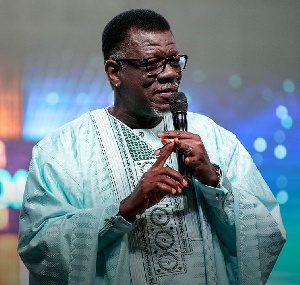
    Eight years ago, Pastor Mensa Otabil, founder of the International Central Gospel Church (ICGC), voiced his reservations about the popular notion that the youth should be encouraged to go into farming.

    During a sermon delivered on Sunday, October 2, 2016, Dr. Otabil emphasized that while farming is essential, it should not be viewed as the primary career path for the youth.

    “By no means am I saying that farming is not good, but most farmers are not farmers by choice in Ghana. Most African farmers are not farmers by choice; they are farmers by force because there is nothing to do,” Pastor Otabil remarked.

    He elaborated that many people turn to farming out of necessity rather than passion or preference. This situation, he suggested, is not ideal for a country’s economic and social development.

    Pastor Otabil expressed his puzzlement over Ghana’s approach to pushing young people into farming when already 70% of the population is involved in agricultural activities.

    “I believe that a nation should not be encouraging everybody to be farmers. I don’t think we need more than 5% of Ghanaians as farmers. All we need to do is to do it well so a few people can produce for more than all of us,” he asserted.

    Drawing comparisons with developed nations, Dr. Otabil highlighted that less than 3% of their populations are directly involved in agriculture.

    “The whole agricultural industry, including those who produce, process, and market everything in the United States, is just about 6%. Here [in Ghana], we have 70% [of people in farming] – not processing, but producing – and we can’t feed ourselves,” he pointed out.

    The crux of Pastor Otabil’s argument centered on the need for quality over quantity in the agricultural sector. He argued that having a large portion of the population engaged in farming does not necessarily translate to food security or economic prosperity. Instead, he called for a focus on improving the efficiency and productivity of the agricultural sector.

    “It’s not the number of people in farming, it’s the quality of the farming, and we shouldn’t be pushing young bright people and say: ‘Go to the land!’. That’s not the way,” he emphasized. Dr. Otabil stressed the importance of leveraging the talents and skills of young people in other sectors that can drive innovation and economic growth.

    “I don’t want to have people with talent reduced to farmers and miners and workers with their body. I want people to work with their brain, with their ideas,” he concluded, advocating for a diversified approach to national development where the youth are encouraged to pursue careers that align with their talents and the demands of a modern economy.
  • I’ve dreamt of making a million dollars through farming, not politics – John Dumelo

    I’ve dreamt of making a million dollars through farming, not politics – John Dumelo

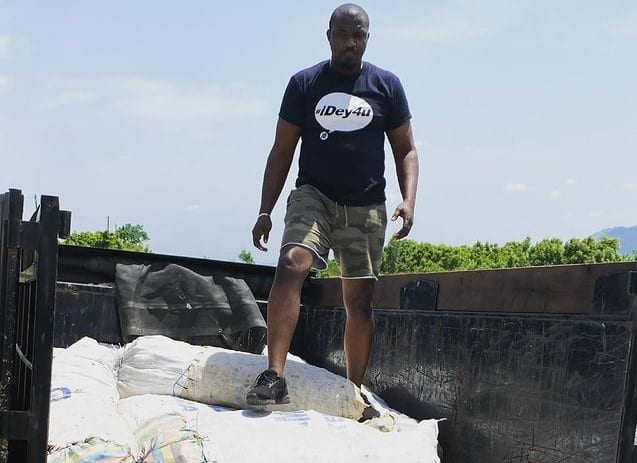
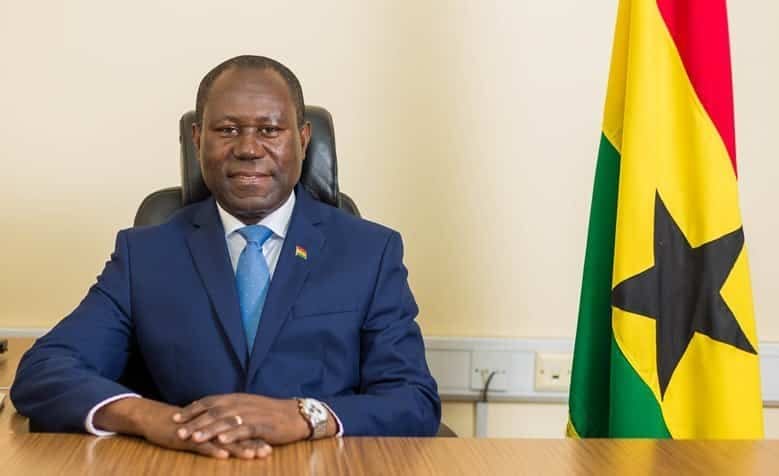
    Ghanaian actor cum politician, and farmer, John Dumelo, has noted that he aims to accrue vast wealth from his farming activities and not politics.

    Some Ghanaians are of the notion that individuals venture into politics in order to make huge sums of money.

    According to Mr Dumelo, he does not work with such a notion as “I am getting into Parliament to serve my people.”

    Mr Dumelo is eyeing the Ayawaso West Wuogon seat once again on the ticket of the National Democratic Congress (NDC).

    In an interview on TV3 on Monday night, August 14, he indicated that he aspires to one day make a million dollars.

    However, that will not come from his activities as a politician, but as a farmer instead.

    “I’ve dreamt of making a million dollars through farming, but not through politics. Not at all,” he told host of Ghana Tonight, Alfred Ocansey.

    Dumelo’s agriculture journey started in 2012. Currently, he owns more than 2000 acres of farmlands scattered across Ghana, producing maize, rice, ginger, mushrooms, cabbage and rearing snails and livestock.

  • Dumelo ‘boasts’ of employing 400 people to work on his farms annually

    Dumelo ‘boasts’ of employing 400 people to work on his farms annually

    Actor-cum-politician, John Dumelo, has disclosed that he provides employment to approximately 400 people annually to work on his farms.

    He considers this initiative as his small contribution to Ghana’s economy and takes pride in offering others a means of livelihood.

    Dumelo explained that his motivation to venture into farming stemmed from witnessing vast areas of land lying idle in the northern region of Ghana, while the nation continues to import crops that could be cultivated locally.

    This realization fueled his desire to make a positive impact by engaging in agricultural activities.

    “Ten years ago, I was driving to the Northern part of Ghana and saw huge fertile fields on the roadside, which can help the country farm and have more foodstuff to sustain the country. So I made up my mind to zoom into farming,” he stated.

    According to him, agribusiness is a highly profitable venture. However, he expressed concern about the misconception ingrained in the minds of the youth, leading them to believe that farming is solely for elderly individuals or those residing in rural areas.

    During an interview with Nana Jantuah on Nhyira FM’s ‘Kuro Yi Mu Nsem,’ Mr. Dumelo emphasized the urgency of investing more in agriculture. He warned that Ghana might find itself importing eggs in the near future if the country fails to prioritize and enhance its agricultural sector.

    “When you get to our supermarkets, most of the fruits, ginger, and other stuff are imported, which should not be allowed because if we sit idle, one day we will import eggs,” he cautioned.

    The 2020 Ayewaso West Wuogon Parliamentary Candidate of the NDC says he hopes to receive the government’s support to boost his agribusiness.

    “I do not get any support from the government; I finance whatever I am doing on the farm. I hope to receive support from the government and trust I will be called on board.

    “It is very costly because I use my own money to pay all the workers I have employed; for instance, when it is time for harvesting, you have to pay those who uproot and all the value chain, but I am happy about it because I have created employment for others. I can employ 300–400 workers annually,” said Mr Dumelo.

    He added that the only factor that can positively contribute to the growth of agriculture is irrigation.

    “Farming is now expensive, but we have the Volta River, Tunu Dam, and other big streams that can be used for irrigation in agriculture in the country. Hence, if we start irrigation farming on tomatoes, maize, and onions, it will reduce our shortage of those items,” he observed.

    Mr Dumelo says agriculture is very important, and discussion of how to make it attractive and stabilise prices will all be in the blueprint of his 2024 manifesto.

  • Cocoa sector has not collapsed – COCOBOD to Mahama

    Cocoa sector has not collapsed – COCOBOD to Mahama

    John Dramani Mahama’s assertion that Ghana’s cocoa industry has collapsed has been refuted by the Ghana Cocoa Board (COCOBOD).

    The former president had claimed that it now takes three months for farmer to receive their cash for cocoa beans.

    Mahama also added that the cocoa farmers no longer enjoy free fertiliser as they used to during the period of the NDC.

    But in a statement, COCOBOD said, “The notion of a collapsing cocoa industry. Such statements are misleading and detrimental to a vital sector like cocoa, which forms the foundation of Ghana’s economy. We, therefore, wish to use the opportunity to make some clarifications and also set the records straight.

    “It is widely acknowledged that galamsey operations pose a significant danger to our nation, and any attempts to justify or rationalise the conversion of a piece of land, especially a cocoa farm, into a Galamsey site, like the former president sought to do, must be met with contempt.”

    The statement added “this menace has the potential to negate all the investments made by the government to modernise cocoa farming and improve productivity. It is, therefore, crucial that prominent figures in our society exercise caution when making public statements that rationalize cocoa farmers trading their farms for temporary monetary benefit through illegal mining.

    “Management also wishes to place on record, that the Former President’s statement regarding the increase in cocoa producer prices every year during his administration is inaccurate, since the records available point to the opposite. Specifically, there was no upward adjustment of the producer price of cocoa in the 2012/2013 Crop Season. Similarly, the producer price of the preceding season was maintained for the 2015/2016 Crop Season, with no upward adjustment.”

  • Female graduate farmer calls for farmers to be placed on monthly salary

    Female graduate farmer calls for farmers to be placed on monthly salary

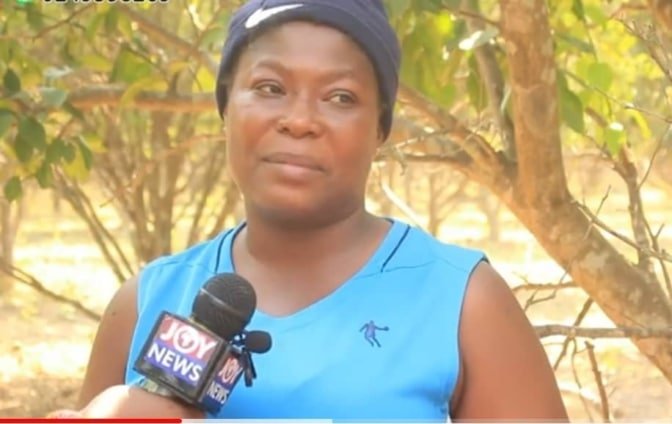
    A young female graduate farmer in the Kpando Municipality, Genevieve Nutsu Avornyotsey wants government to place farmers on monthly salary.

    She also wants to government to provide young farmers with combine harvesters and other equipment to alleviate the stress they go through in farming. 

    Aside from asking for help with the needed equipment to help in farming activities, the CEO of First Agro Limited, Mrs Nutsu Avornyotsey, also urged government to put hardworking farmers on monthly salary to help them cope with the prevailing economic difficulties in the country.

    Mrs. Nutsu Avornyotsey who spoke with JoyNews noted that it has been difficult getting the needed help apart from her husband and family for the progress of the farming project, which is one of the biggest farms consisting of almost all farm produce and animal husbandry.

    She stated that it will be a good thing if government considers the plea for farmers to be placed on salary to motivate them into working more and feeding the nation.

    She noted that her motivation to go into full commercial farming as a graduate was her husband who has been her source of support since she realised the need to forget about the corporate or white colour jobs and concentrate on farming.

    Place farmers on monthly salary – Female graduate farmer tells government

    “My husband motivated me to go into full-time commercial farming because looking at the corporate world now, it is very difficult combining work with family responsibilities,” Mrs. Genevieve Nutsu Avornyotsey said.

    She noted that it has been hectic and difficult for the few years she has been into farming as a family woman coupled with to labour and financial challenges.

    She also requested that a borehole be installed on the farm as well as solar panels to help the workers enjoy and feel comfortable on the farm, particularly in the evenings.

    Mrs. Nutsu Avornyotsey stated that because farming is seasonal, she needs to do other things to make money throughout the year, highlighting the need for organizations and the government to assist farmers in any way they can to enable them to enjoy their work.

    The CEO of First Agro Limited, on the other hand, urged young ladies, particularly young female graduates and those unable to further their education, to enter farming in order to help them financially and in other ways.

    The NDC Women Organizer, Victoria Yayra  Afidenyo urged women to become entrepreneurs and be useful in society instead of depending on non-existent jobs.

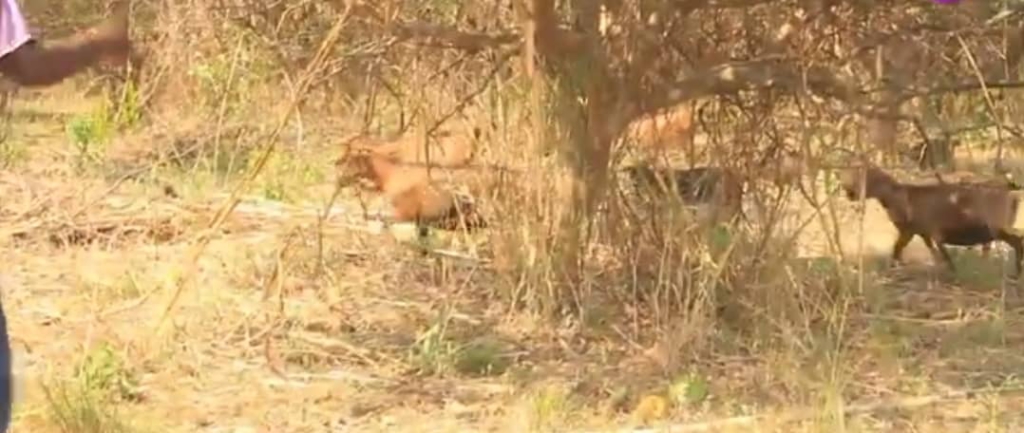
    Mrs Nutsu Avornyotsey is also into commercial animal rearing and has several fruit crops and a variety of other crops on her farm.

  • KNUST students develop smart farming system

    Farming improves on food security and also stimulates economic growth.

    However, lack of time and resource to go to the farm site to monitor the conditions of the farm and motivation to manually irrigate the farm deter many from partaking in this venture.

    Fortunately, two computer science students at the Kwame Nkrumah University of Science and Technology, Isaac Junior Ampah and Blaise Ayindingo have developed a smart farming system to curtail these problems.

    The smart farming system uses sensors to determine the moisture content in the soil and activates the irrigation system when the soil moisture is very low.

    It checks for the amount of water left in the reserve tank and tops up if the tank is low on water.

    Live Monitoring: This system provides the climatic and soil conditions of the farm to the farmer through a mobile app.

    Intelligent Fire Prevention System: This system uses sensors to determine if smoke is present on the farm and automatically activates the irrigation system till the smoke dissipates from the farm.

    To learn more about the App and join the waitlist for its release, partners, stakeholders, or investors can visit https://csapps.knust.edu.gh.

  • Kenya allows farming and imports of GM crops

    Kenya has authorised the cultivation and importation of genetically modified crops and animal feeds, ending a decade-long ban that had been imposed due to health fears.

    It comes as the country is experiencing a devastating drought. The worst drought in 40 years has left millions facing hunger.

    President William Ruto’s government has turned to genetically modified crops as a way of helping boost yields.

    It says the country needs seeds that are resistant to drought, pests and diseases.

    A decade ago the production and import of GM crops was banned due to concerns over possible health risks.

    It was clearly an unpopular decision with America, which is home to major producers of genetically engineered seeds.

    In July, Joe Biden’s administration announced a new partnership with Kenya which included a commitment to boost trade in the agriculture sector.

    Despite the prospect of better yields some are wary that farmers could become too reliant on rules laid down by foreign, private companies.

    Source: BBC

  • 50-year-old man allegedly rapes class 6 pupil

    A 16-year-old class six pupil, name withheld, allegedly was raped by a 50-year-old Opanin Kwame Nkrumah.

    Maame Pokua and Mr Kwaku Osei, aka Dwen Wo Daakye, mother and father of the victim, narrating the incident to Class 91.3 FM’s correspondent said upon seeing the signs of rape, they interrogated their daughter and she disclosed that she had indeed been raped by the suspect.

    The case was forwarded to the chief’s palace for the necessary actions to be taken, while he, Nana Abredu Somuah II, the chief of town, had travelled.

    Nana Osei Wiafe, one of the chief’s elders who stood in his stead, settled the rape case and awarded a GHS 1,000 cost for the suspect to pay for allegedly raping the class 6 pupil.

    Nana Somuah Abredu upon hearing this after returning from his journey was very angry with his elders for mishandling the case.

    He has therefore called on the police to intervene and make the necessary arrests to deter others in the area from such actions.

    The suspect has taken to heels upon hearing of the recent decision by the chief.

  • African farmers need GMOs more than other farmers in the world – Ghanaian scientist

    Ghanaian plant geneticist and founding director of the West Africa Centre for Crop Improvement (WACCI) of the University of Ghana, Professor Eric Yirenkyi Danquah, says smallholder farmers in Africa need access to biotech crops more than farmers anywhere else in the world.

    For him, the time has come for African governments to use available data on biotech solutions to take decisions that would improve livelihoods and lift millions out of extreme hunger and poverty in Africa.

    He expressed the concern that “anti-GMO activism has stalled the adoption of genetically engineered crops in many countries, contributing to the perpetuation of unsafe pesticide use, hunger and poverty.”

    Prof. Danquah made the remarks at a training workshop for scientists, graduate students undertaking agricultural biotechnology related research, researchers, undergraduate students studying agriculture and related programmes, communicators and agricultural stakeholders in Accra on Wednesday, May 11, 2022.

    Background

    The workshop, dubbed “Speaking Science Ghana” and organised by Alliance for Science, a science communication initiative, was intended to equip the participants with effective communication skills that they can use in sensitising the public about genetically modified organisms (GMOs) and agricultural biotechnology.

    The workshop also aimed at equipping participants with the best skills in using the media to communicate about science, including opinion pieces writing, giving media interviews, and the use of digital media tools.

    Alliance for Science is a science communication initiative that is working to promote science globally, whilst countering misinformation on scientific innovations and science issues like GMOs, gene editing, COVID-19 and climate change.

    Why GMOs

    Prof. Danquah said currently, only seven countries in Africa had approved GMOs, stressing that GMOs were under various stages of development in 11 other African countries, including Ghana.

    He was of the view that “there is an urgent need for more food to be produced on less land with less chemicals,” saying “the development of improved varieties of our staple crops with high yields and resistance to the physical and biological stresses is absolutely necessary for a green revolution and food self-sufficiency in Ghana.”

    He explained that science-based agriculture could preserve critical indigenous foods such as cowpea, millet, cassava, and sorghum, while reducing the environmental impacts of farming.

    Prof. Danquah said “on average, genetically engineered crops have cut chemical pesticide use by 37 per cent, increased crop yields by two per cent, boosted farmer profit by 38 per cent, and reduced greenhouse gas emissions equivalent to taking 12 million cars off the road.”

    He argued that farmers across the globe were struggling with devastating impacts of climate change, pointing out that disrupted rainfall pattern, drought, extreme weather events, pest infestations, plant diseases, crops losses, and hunger had made it necessary for African governments to adopt biotech solutions such as the GMO crops.

    “Better seeds developed through genetic engineering offer hope,” he said, adding “Let us not allow regulatory delays to prevent millions of farmers from accessing this life-saving technology.”

    Urgent action

    Prof. Danquah has therefore called for the integration of the rapidly evolving tools of modern biotechnology including genome editing into crop improvement programmes to make agriculture “in Ghana more productive and sustainable.”

    He also called on the government to give farmers in the country a free choice to select and adopt crops developed through modern science in plant breeding including the GM technology, saying “Ghana needs a comprehensive science policy that puts science on the top of the agricultural transformation agenda.”

    He noted that biotech solutions and innovations enable scientists to be able to solve agricultural problems that conventional farming methods were unable to do, saying “This can be achieved with precision and efficiency using plant biotechnologies and genomics as important tools.”

    Prof. Danquah explained that biotech innovations protected crops against insects and weeds, the two major challenges that militate against crop yields and lead to crop failure worldwide.

    Misinformation

    He also expressed concern about the growing misinformation on GMO crops in the country, saying “It is 27 years since the first GMOs were released and I am not aware of a single credible food or feed problem on the safety of GMOs.”

    In addition, he noted, “There is a very strong scientific consensus globally on GMOs just as scientists are on climate change.”

    For Prof. Danquah, it was worrying that in spite of the fact that scientific official reports on the safety and benefits of GMOs had been published by the World

    Health Organisation, Food and Agriculture Organisation, National Academic of Sciences (USA), Royal Society (UK), American Medical Association (USA), French Academy of Medicine, European Commission, US Food and Drugs Administration, Society of Toxicology, and Institute of Food Technology, some uninformed people still peddled falsehood about GMOs.

    Source: Graphic Online

  • PWDs expend share of Common Fund on farming

    Persons with disability in the East Gonja Municipality of the Savannah Region have channeled their share of the District Assembly Common Fund into farming.

    The move, according to leadership of PWDs, will improve the livelihood of beneficiaries and also make them self-reliant.

    Their share, the Disability Fund, is 3 percent of the District Assembly Common Fund.

    It is to be used to support Persons with Disability (PWDs) in various assemblies.

    Before one can access this fund, he or she will have to apply to the assembly through the Association of Persons With Disabilities.

    A five-member committee sits to vet the applications and approve or reject based on the request.

    Previously, the fund was disbursed in the form of cash to members.

    But in 2017, President Nana Addo Dankwa Akufo-Addo directed all MMDAs to equip the beneficiaries instead of giving them cash.

    This led to many assemblies distributing ruminants, industrial materials, fridges, provisions and many others to beneficiaries as support.

    This year, the Association in the East Gonja Municipality decided to invest in farming for beneficiaries.

    Over 160 acres of groundnut and maize farms have since been ploughed for some 80 beneficiaries.

    Each beneficiary has two acres.

    Thirty of the beneficiaries cultivated groundnut with the remaining 50 cultivating maize.

    The assembly ploughed the land for them and also provided them with seeds and some weedicides.

    Municipal Chief Executive for East Gonja Mohamed Tamimu said the move will improve upon their livelihood.

    “We moved away from the cash system to equipping them just to make them self-reliant and seeing these farms and how well they are doing, I think we took the right decision.”

    He added: “The only appeal to them is for them to take good care of their farms.”

    Secretary to the Association of Persons with Disability in the East Gonja Municipality Ewurtomah Abdul Wahid said members were happy with the the switch to farming.

    He is optimistic members will be self-reliant henceforth.

    A physically challenged beneficiary, Imoru Alhassan, expressed gratitude to the assembly.

    He indicated that the switch to farming will give them a source of livelihood.

    Source: 3 News

  • Dear Kennedy, I’m proud to be a fool – Senyo Hosi responds to farming comments

    Chief Executive Officer of the Ghana Chamber of Bulk Oil Distributors, Senyo Kwasi Hosi has responded to comments made by controversial politician Kennedy Agyapong, suggesting that anyone who makes money and embarks on farming is a fool.

    “If you make money in Accra, and you tell me you are going to farm you are a fool. I failed at farming, not because of my management but because of litigation.”

    Mr Senyo Hosi who is also the Chief Executive Officer of HGL Company, an agro-based and agro-processing entity, in his response took to his social media page to respond. “Dear Kennedy, I am proud to be a fool,” he wrote.

    Mr Hosi who didn’t seem pleased with the utterances of the Assin Central lawmaker, has always believed that agriculture is the key to Ghana’s economic success.

    Having been an ambassador for championing the youth to cultivate the habit of tapping into crop production, he was disappointed at Ken Agyapong’s comments about farming.

    Addressing the issue of farming on the Joynews channel on Monday, Mr Agyapong noted that “any person who wants to be serious in life” should leave the village for a bigger town or city “and start hustling”.

    According to him, “When you wake up in the morning and you pray that God let me be poor, then you go into farming.” Mr Agyapong said.

    He also explained that farming does not pay, while cautioning entrepreneurs not to establish businesses in the villages so as not to be defrauded by the people in the villages.

    Source: Naa Adjorkor Sowah, Contributor