Tag: Félicien Kabuga

  • UN chief prosecutor criticises tolerance shown to those guilty of genocide

    The International Residual Mechanism for Criminal Tribunals‘ head prosecutor, Serge Brammertz, has issued a warning that the system has to devote more resources to finding suspects.

    He was speaking to BBC Focus on Africa TV after a UN court mandated that Félicien Kabuga, a suspect in the Rwandan genocide, have his war crimes trial suspended indefinitely due to dementia and that his release be considered.

    In 2020, Mr. Kabuga was apprehended after 20 years on the run.

    The prosecutor urged nations that refused to extradite individuals to quickly set up procedures for prosecuting these suspects there instead.

    The BBC was informed by Mr. Brammertz that “time is running out for the pursuit of justice” and that “this case very much shows that justice delayed in some cases can be justice denied.”

    In addition, the UN tribunal rejected the prosecutor’s requests for a quicker alternative process.

    Even while the accused is somewhat at the centre of the proceedings and their rights must be protected, Mr. Brammertz noted that the issue at hand is far larger than just the accused person.

    “There are thousands of casualties as well. The genocide’s historical record. In addition to weighing the accused’s situation, which is crucial, one must also consider how justice is administered.

    However, Mr. Brammertz continues to be confident that more justice for genocide survivors must be sought.
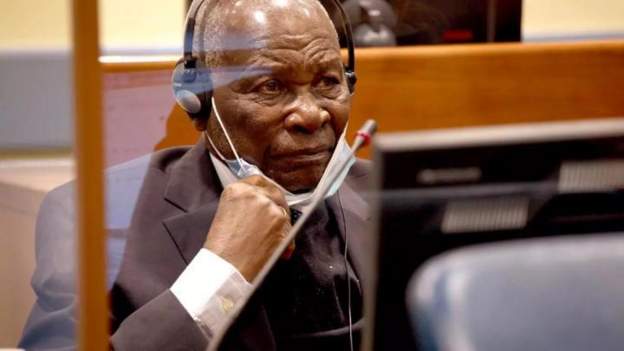
  • Kabuga of Rwanda ought to be freed – UN court says

    Kabuga of Rwanda ought to be freed – UN court says

    The United Nations appeal judges have issued a directive that Rwandan genocide suspect Félicien Kabuga be promptly evaluated for potential release, and concurrently, the war crimes trial against him be indefinitely halted.

    In a previous ruling in June, judges from a UN war crimes court had determined that Mr. Kabuga’s dementia rendered him unfit to stand trial. Nonetheless, they recommended that alternative proceedings be explored.

    Presently, these alternative suggestions have been dismissed by the appeal judges.

    The judges assert that the UN war crimes tribunal erred in June by deciding that despite his health condition, Mr. Kabuga should undergo an alternative simplified trial process. Consequently, a lower trial chamber has been tasked with overseeing efforts towards his release.

    Félicien Kabuga, a businessman and owner of a radio station, who is now in his late 80s, was among the final suspects sought by the tribunal responsible for prosecuting crimes committed during the Rwandan genocide of 1994.

    He stands accused of disseminating hatred through his radio station and inciting the perpetrators who were responsible for the deaths of over 800,000 individuals in a mere 100 days.

    Having been apprehended in Paris in 2020, following a two-decade-long evasion, Mr. Kabuga pleaded not guilty.

    The court acknowledges that this recent ruling might bring disappointment to the victims and survivors of the genocide. However, it underscores that justice must be administered with unwavering adherence to the rights of the accused.

  • Kabuga of Rwanda ought to be freed – UN court

    Kabuga of Rwanda ought to be freed – UN court

    Félicien Kabuga, a suspect in the Rwandan genocide, has been ordered to be urgently assessed for release, and the war crimes trial against him has been temporarily halted by UN appeal judges.

    Although Mr. Kabuga’s dementia rendered him unsuitable to stand trial in June, judges at a UN war crimes court recommended that alternate processes be used instead.

    Judges in the appeals court now reject this proposition.

    The judges claim that the UN war crimes tribunal committed “an error of law” in June when it decided that Mr. Kabuga should be tried using a different, more straightforward method despite his condition.

    Additionally, a lower trial chamber has been instructed to begin working on his release.

    The 80-year-old businessman and owner of a radio station was one of the final suspects pursued by the tribunal investigating crimes committed during the 1994 Rwandan genocide.

    He is accused of inspiring the assassins who slaughtered more than 800,000 people in just 100 days and inciting hatred through his radio programme.

    After 20 years on the run, Mr. Kabuga was captured in Paris in 2020 and entered a not guilty plea.

    The court acknowledged that this most recent ruling will be upsetting to the genocide victims and survivors, but added that justice could only be carried out with the utmost respect for the rights of the accused.

  • Félicien Kabuga’s assets in Kenya remain frozen – Court declares

    The assets of suspected Rwandan genocide perpetrator Félicien Kabuga in Kenya have not been released by a court.

    According to local media, the Kenya anti-corruption court denied Mr. Kabuga’s son Nshimyumuremyi Donatien’s request to provide his elderly mother access to rent from the property in the nation’s capital, Nairobi.

    The court upheld decisions of a lower court from 15 years prior.

    The 2008 lawsuit aimed to seize Mr. Kabuga’s property and use the earnings to pay genocidal victims and their families. Mr. Kabuga was wanted at the time.

    In her court-filed submissions, Mrs. Kabuga stated that there was no evidence to support Kenyan government claims that the contested property was obtained with proceeds of crime.

    She also claimed that there was no proof that Mr Kabuga used the rent collected from the house to evade arrest.

    Mr Kabuga, one of the key suspects of the 1994 Rwandan genocide, was arrested in France in 2020 after evading capture for about 26 years.

    He has been charged with several counts of genocide and crimes against humanity.

  • Rwanda genocide witness says Félicien Kabuga was responsible for propaganda

    A witness testifying at the trial of Félicien Kabuga for his role in the 1994 Rwandan genocide, which got underway last week at a United Nations tribunal in The Hague, said on Wednesday that he should have stopped the propaganda broadcast on his radio station calling for the killing of Tutsis.

    Kabuga is being charged with three counts of genocide and two counts of crimes against humanity. In his late 80s, he was captured in Paris two years ago after decades on the run.

    He initially refused to appear before the UN court but was in attendance at the proceedings on Wednesday for the first time.

    ‘I note the presence of Mr. Kabuga this morning by video link from the UN detention unit. I confirm having been advised that he is able to view the proceedings and to hear them in the Kinyarwanda language, said the presiding judge, Iain Bonomy.

    Killing spree

    In 1994, over a period of about 100 days, ruling Hutu majority extremists killed more than 800,000 minority Tutsis and moderate Hutus.

    Prosecutors accuse Kabuga of using his infamous radio station, Radio Television Libre des Milles Collines, to fuel the genocide.

    The anonymous witness, who worked at the Rwandan Ministry of Information at the time, told the court that if one is in charge of an institution and members of that institution commit faults, the chief is the first one to be responsible

    ‘The chairman of the RTLM was indeed the first person who needed to make sure that the sub-paragraph of the article in question was complied with by the staff,’ the witness said.

    Despite warnings from the Rwandan Ministry of Information, the witness continued, the ‘RTLM did not correct anything but rather redoubled its efforts to propagate its divisionist propaganda’.

    ‘This hatred and division continued to such an extent that members of the Tutsi population were killed throughout the country,’ the person added.

    Kabuga has pleaded not guilty to the charges. The trial will likely last for months with prosecutors expected to call more than 50 witnesses.

    Source: Africanews