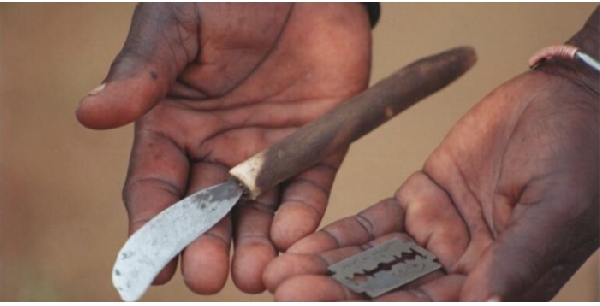
Tag: Female Genital Mutilation

  • More than 230 million women have undergone female genital mutilation globally – UNICEF

    More than 230 million women have undergone female genital mutilation globally – UNICEF

    A recent report by the United Nations Children’s Agency has revealed that over 230 million women and girls have undergone female genital mutilation, with the majority residing in Africa.

    Within the past eight years alone, approximately 30 million individuals have been subjected to this harmful procedure, which involves the partial or complete removal of external genitalia.

    Despite a decline in the percentage of women and girls affected by female genital mutilation, UNICEF cautioned that efforts to eliminate the practice are progressing too slowly to match the rapid growth of populations.

    “The practice of female genital mutilation is declining, but not fast enough,” the report said.

    Female genital mutilation, a practice erroneously thought to regulate women’s sexuality, poses severe risks, including excessive bleeding and fatalities. Girls undergo this procedure at various stages, from infancy to adolescence.

    Over time, it can result in urinary tract infections, menstrual issues, discomfort, reduced sexual fulfilment, and childbirth difficulties. Additionally, it may lead to psychological effects such as depression, diminished self-esteem, and post-traumatic stress disorder.

    “We’re also seeing a worrying trend that more girls are subjected to the practice at younger ages, many before their fifth birthday. That further reduces the window to intervene,” said UNICEF Executive Director Catherine Russell.

    The report highlights that Africa has the highest number of women and girls subjected to female genital mutilation, with approximately 144 million affected. Asia and the Middle East follow, with 80 million and 6 million cases, respectively.

    Somalia stands out as the country with the highest prevalence, with 99% of females aged 15 to 49 having undergone the practice.

    However, Burkina Faso has made significant strides, reducing the percentage of circumcised women in the same age group from 80% to 30% over a thirty-year period.

    Additionally, the report notes that 4 out of every 10 survivors reside in conflict-affected regions with rapid population growth rates, highlighting how political instability hampers efforts to combat the practice and assist victims.

    “Ethiopia, Nigeria and Sudan account for the largest numbers of girls and women who have undergone female genital mutilation in conflict-affected countries,” the report said.

    While the report acknowledged advancements achieved in certain nations, it cautioned that the global community is not on track to fulfill the United Nations’ objective of eliminating the practice entirely by 2030.

    “In some countries, progress would need to be 10 times faster than the best progress observed in history to reach the target by 2030,” said the report.

    Nimco Ali, CEO of the Five Foundation, a UK-based charity that fights female genital mutilation, said the UNICEF estimates were “shocking” and “devastating,” and more funding is urgently needed to end the practice.

    “We must use the last six years of this decade to finally get to grips with this abhorrent abuse of a girl’s human rights and save the next generation from the horrors of FGM,” the Somali-born activist, author and female genital mutilation survivor said in a press release.

  • Female Genital Mutilation has no validity in Islam – Islamic Cleric

    Female Genital Mutilation (FGM) is a harmful practice and has no legitimacy in the Islamic Religion, Shaykha Ayisha Yussif, an Islamic cleric has said.

    FGM involves the partial or total removal of external female genitalia or other injuries to the female genital organs for non-medical reasons.

    Speaking in an interview with the Ghana News Agency in Tema, Shaykha Yussif, who is also a Tutor at the Frafaha Senior High School, said that FGM is a traditional practice and not a religious ethos.

    “The Quran teaches that the painful act is not an Islamic religious obligation,” she said.

    Shaykha Yussif explained that some tribes subjected their daughters to the cruel act because they were misled to believe it was an Islamic obligation, adding that “the practice has done a lot of damage to girls, depriving many of an interest in sex, an important leisure which Allah gave to all human beings”.

    She said Islam appreciated the way of life of every tradition and urged Muslims to condemn traditional practices that violated the rights of members.

    “FGM is dangerous and a life-threatening procedure that causes unspeakable pain and suffering to girls,” she stressed.

    The Islamic cleric stressed that Islam is very clear, no part of the body should be removed or changed, adding that only boys were supposed to be cut, therefore, FGM must end as a matter of urgency.

    She emphasized the need to galvanize the support of the citizenry and media to eliminate the harmful and degrading practice.

    Shaykha Yussif admonished religious and traditional leaders to focus on issues that affect the dignity of women and to expose the perpetrators of the inhumane acts so they could be punished.

    She noted that FGM is a violation of girls’ and women’s human rights and the international communities and nations must continue to condemn the act and pass laws, treaties, and conventions to stop the act
    .
    According to data, FGM is practiced in 31 countries in Africa, the Middle East, and Asia. It’s most prevalent in Djibouti, Egypt, Guinea, and Mali, where 90 percent or more of women aged 15 to 49 have been subjected to FGM.
    in Islam – Islamic Cleric

  • Kenya fighting to end Female Genital Mutilation by 2023

    Despite Kenya banning female genital mutilation in 2011, the tradition of circumcising girls has continued in some ethnic communities. President Uhuru Kenyatta vowed to end FGM by 2023, but activists say more needs to be done as millions of girls are still at risk of undergoing the cut.

    At just seven years old, Sylvia Keis’ family told her she would be circumcised.

    One day before the ceremony, Keis ran away from her home village of Ewaso Ngiro to the town of Narok — a three-hour walk.

    “I just decided I better ran away even if I was going to die, because I had that emotion,” Keis said. “My father never took me to school and now he wants to circumcise me. After circumcision and you are not in school, what next? You will get married. I said I better ran away, whether I will get help or not.”

    The Tasaru Girls Rescue Center gave Keis the shelter and support to avoid circumcision and stay in school.

    The center’s 63-year-old founder, Agnes Pareiyo, has helped more than 1,000 girls escape genital mutilation since 1999.

    Her mission to protect girls is a personal one, as her family put her through FGM when she was 14 years old.

    “Because of what I went through, nobody could tell me that FGM was good,” Pareiyo said. “I did not know other effects, but I knew the pain I went through, the bleeding the whole day and nobody cared, they kept talking.”

    Activists: Community, family support needed

    Kenya banned FGM in 2011, but some ethnic groups like the Masai still see it as a traditional rite of womanhood before marriage.

    The United Nations says one in five Kenyan women between 15 and 49 years old have been circumcised.

    Activists say more needs to be done to reach the U.N. goal to end FGM worldwide by 2030.

    “It is estimated that around 200 million girls in the world alive today have undergone one form of FGM or another globally,” said Anne Njuguna, Plan International’s Regional Disaster and Risk Management Specialist. “It is further estimated that 15 million more girls will undergo FGM by 2030, and these girls are between the ages of 15 and 19 years old. This is a huge number that we cannot allow to happen.”

    Activists say more community and family support is needed to end FGM in Kenya.

    After final high school exams this year, Keis plans to return home for the first time in 11 years to reconcile with the family that tried to circumcise her.

    She wants to share with them her dream of becoming a doctor, and show everyone in the village that girls should not be cut and are instead better off in school.

    Source: allafrica.com