Technology is dismantling longstanding barriers for women in Africa’s mining industry and enabling greater participation without the physical and logistical challenges that once deterred female involvement.
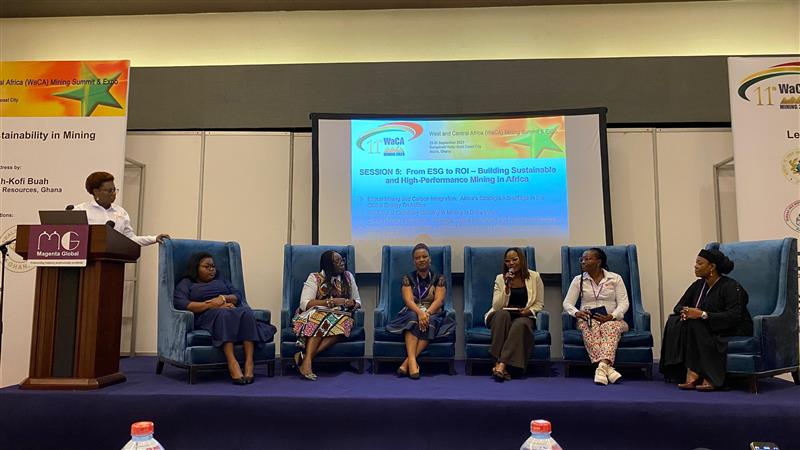
This is according to industry leaders who gathered at the West and Central Africa (WaCa) Mining Summit & Expo at the Kempinski Gold Coast Hotel in Accra for a conversation themed around innovations making technical roles in geoscience, engineering, metallurgy, mining operations, and plant management more accessible to women.
The discussion, led by members of Women In Mining, Ghana (WIM), layed strong emphasis on how mining technology is shifting the nature of work from manual and physically intensive to digital and analytical.
Hajia Amina Tahiru, a seasoned industry player, highlighted how technology has revolutionised gold purchasing, testing, and concession applications, directly empowering women. “In the past, applying for a mining concession meant days of travel, including crossing rivers and remote areas, which families often wouldn’t allow for women,” she recounted. “Now, I can send someone to take coordinates with a phone, input them into a search engine from my office, and apply online. Technology is wonderful; it’s helping us break those little things that held women back.”
Women in mining Ghana at a summit
She added that real-time pricing apps and advanced testing equipment, which project gold purity on screens in real time, have further levelled the playing field. “Even local miners who can’t read have learned to check prices on their phones; no more relying on distant sources.”
The speakers also stressed the importance of environmentally responsible innovation. Ghana, a signatory to the Minamata Convention, is phasing out mercury in small-scale mining. New mercury-free gold recovery technologies, gravity concentrators, and centralised processing facilities are being deployed, and women are taking on research, advocacy, and operations leadership roles in the area, according to geologist and environmental scientist, Justine Seyire.
On her part, Dr. Yvonne Loh, an academic, addressed the reluctance among female students to engage in fieldwork, a key entry point to the industry. “Getting females into the field is difficult; they worry about dressing or long nails. But we teach them that technology like machine learning and Python programming complements hands-on skills,” she said. “It’s not just about software; it’s understanding data collection. We urge industry women to mentor them, showing that tech makes the ‘real deal’ more manageable.”
Globally, women account for just 8–17% of the mining workforce, with only 12–14% holding senior leadership roles. Ghana’s numbers are improving, with women now making up roughly 10% of the large-scale mining workforce, but industry experts say technology can accelerate inclusion further.
The panel, therefore, called for more mentorship programs, policy incentives, and industry-academia partnerships to ensure that women are not only participating but also leading technological change.
The WaCA Summit focused on disruptive technologies, capital raising, and green metals amid the global energy transition. It attracted stakeholders from Ghana, Mali, Ivory Coast, Democratic Republic of Congo, Nigeria, and Sierra Leone.
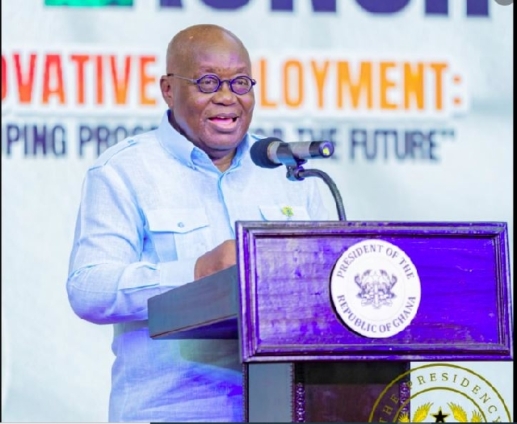
President Akufo-Addo underscored the vital role played by female judges in combating detrimental cultural practices, particularly those hindering the development of women and girls.
He emphasized that the diverse experiences of female judges uniquely position them to contribute distinct perspectives and strengths to the pursuit of justice and equity.
Speaking at the inauguration of the 18th International Association of Women Judges (IAWJ) Conference in Accra, President Akufo-Addo highlighted the theme “Combating Negative Cultural Practices in Contemporary Times – The Role of Women Judges.”
He emphasized that having women represented at all levels of the judicial system not only enhances respect for the judiciary but also instills confidence in the justice delivery system.
“Women judges across Africa and the globe bring unique viewpoints and strengths to the judiciary.
Their experiences, often mirroring the societal challenges we seek to overcome, equip them uniquely to advocate for justice and fairness.”
The President stressed that addressing negative cultural practices requires a collaborative effort beyond the courtroom, involving education, awareness, and governance.
He urged female judges to uphold fairness, equality, and justice in their decisions, emphasizing the profound impact their rulings can have on societal transformation.
President Akufo-Addo envisioned a future where the law serves not only to punish but also to educate and reform, ensuring a society where individuals are judged based on their potential rather than conformity to outdated customs.
He concluded by highlighting the essential role of the IAWJ in empowering women judges worldwide to promote gender equality, end discriminatory laws, and uphold human rights.
“As judges and upholders of the law, you have the power to redefine norms and set precedents that protect the vulnerable and marginalised,” he said.
“In dealing with issues like gender-based violence, child marriage, widowhood rites and female genital mutilation – practices steeped in deep-rooted cultural norms – your voices and rulings can resonate deeply, driving societal transformation.”
“It is imperative to acknowledge that the fight against these practices is not confined to the courtrooms. Education, awareness, and collaborative governance are critical.
“We must engage traditional leaders, educators, and communities to recalibrate mindsets and attitudes. It is in our schools, homes, and community gatherings where the foundational beliefs of our next generation are formed,” he said.
Last Saturday midnight in Juapong, North Tongu District of the Volta Region, a ghastly accident claimed the lives of three individuals, including a recently graduated young female soldier identified as Sherri Shalom.
Reports suggest that the other two individuals, alleged to be involved in fraudulent activities commonly known as “game boys,” were also victims of the accident.
The accident occurred when the Hyundai vehicle they were traveling in collided with the back of a cargo car heavily laden with firewood.
The impact of the collision proved fatal for the two male occupants seated in the front of the vehicle, who died instantly.
While Sherri Shalom initially survived the crash, she was found unconscious at the scene.
She was rushed to Akosombo Hospital for urgent medical attention. Unfortunately, despite medical efforts, she succumbed to her injuries a day later.
The tragic incident has left the community in mourning, highlighting the dangers of road accidents and the devastating impact they can have on families and communities. Authorities are investigating the circumstances surrounding the accident to determine the cause and prevent similar tragedies in the future.
Watch video below:
A young female soldier identified as Sherri Shalom, who graduated from the Ghana Armed Forces last month, and two other guys, who people are alleging are game boys, d!ed in a gh@stly acc!dent last Saturday midnight in Juapong, North Tongu District of the Volta Region.
The 2023 United Nations’ State of Food Security and Nutrition in the World (SOFI) report has disclosed that approximately 783 million individuals across the globe are grappling with hunger.
While this figure remains relatively unchanged from 2022, various factors like conflict, poverty, climate issues, economic shocks, and the impact of Covid-19 have made it improbable to achieve the 2030 sustainable development goal of eradicating hunger without significant transformations in both global and local food systems.
Released on July 12, 2023, the report also explicitly points out that food insecurity disproportionately affects women compared to men in all regions of the world.
However, the gender disparity in food insecurity, which had widened at a global level in the aftermath of the Covid-19 pandemic, narrowed from 3.8 percentage points in 2021 to 2.4 percentage points in 2022. This suggests that the unequal impacts of the pandemic on women’s food security have lessened both on a global scale and in some specific regions.
The gender gap notably decreased in Asia, Latin America, and the Caribbean, but expanded in Africa, Northern America, and Europe.
“Hunger has been on the rise in Africa since 2010, with a sharp increase in all sub-regions in 2020 followed by a gentler rise in 2021. In 2022, the prevalence of undernutrition in Africa continued to rise from 19.4 per cent in 2021 to 19.7 per cent – the equivalent of 11 million more people in one year and nearly 57 million more since the outbreak of the Covid-19 pandemic. Moreover, hunger increased throughout all Sub-regions of Africa in 2022,” the report partly read.
“It’s time for all stakeholders to ask themselves if the systems created to feed the planet are working. It is very clear they are not. We need to shift our mindsets around ending hunger—it’s time to invest in people and in communities to transform these global systems that only benefit some,” said Rowlands Kaotcha, Vice President of Programs, Africa and Mexico with the Hunger Project.
Comparing East African countries based on the latest data from the live WFP hunger map as of August 11, 2023, reveals notable differences in their hunger and malnutrition statistics.
In Uganda, out of a population of 42.7 million, a significant 9.5 million individuals experience insufficient food intake. Among children under five years old, 3.5 percent are grappling with acute malnutrition, while a concerning 28.9 percent in the same age group are afflicted by chronic malnutrition.
Shifting to Kenya, which has a population of 51.4 million, approximately 12.1 million people are facing inadequate food consumption. Among children under five, 4.2 percent are currently dealing with acute malnutrition, and 26.2 percent of this age category are experiencing chronic malnutrition.
Turning to Ethiopia, with a population of 109.2 million, a substantial 23.2 million people are dealing with insufficient food intake. Among children under five, 7.2 percent are facing acute malnutrition, while a significant 36.8 percent are suffering from chronic malnutrition.
In South Sudan, which has a population of 11.0 million, around 3.5 million individuals are struggling with inadequate food consumption. Among children under five, a high 22.7 percent are experiencing acute malnutrition, and an equally concerning 31.3 percent in the same age group are contending with chronic malnutrition.
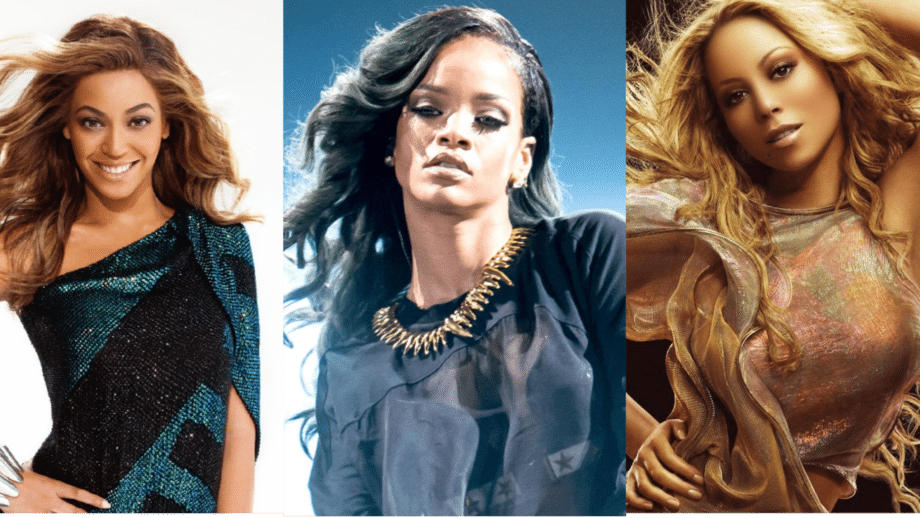
While being at the pinnacle of the music industry in any genre can bring substantial financial success, many artists have found that diversifying their income streams through various business ventures is the key to amassing massive wealth. Here is a glimpse at the 15 richest female singers in the world and how they have built their fortunes:
1. Rihanna – $1.7 Billion
Rihanna is by far the wealthiest female singer on the planet and is a recent addition to Forbes’ list of billionaires. She has done so well that only one other woman who has a higher net worth than her is Oprah Winfrey. Her music career has lasted for over a decade, giving us hit songs like Umbrella, Disturbia, and What’s My Name. That illustrious chapter earned her over 250 million record sales worldwide and a slew of awards that includes nine Grammy Awards, seven Guinness World Records, and 12 Billboard Awards.
Outside of her music career, she has launched successful lingerie and beauty brands such as Savage X Fenty and Fenty Beauty. Her jump in net worth over the past few years can mostly be attributed to these two brands and the wild success they’ve found in commercial markets worldwide.
2. Madonna – $850 Million
Madonna has continually reinvented both herself and her artistic approach over the years, becoming one of the most successful music artists of all time and the best-selling female artist of all time with over 300 million record sales worldwide. The Queen of Pop is a natural nickname for her, with the most number-one songs on the Hot 100 in several different countries.
In addition to her solo career, she is one of the top songwriters in the music business and an established actress, landing roles in films like Evita, which won her the Golden Globe for Best Actress, and A League of Their Own. In 1992, she launched Maverick Records, becoming one of the most successful artist-run record labels in history, and has worked on several other business ventures in film, fashion brands, writing, and health clubs.
3. Céline Dion – $800 Million
Céline Dion’s music career has run the gamut of genres, and she’s notably one of the best singers of all time, as well as the best-selling French-language artist of all time. She’s had seven albums sell over 10 million records, with over 200 million record sales worldwide. Her Taking Chances World Tour became one of the highest-grossing concert tours of all time, and her two Las Vegas concert residencies also rank among the highest-grossing in history.
Outside of music, she owns a perfume label, a line of bags and accessories, and several other establishments including Le Mirage Golf Club and Pure Nightclub, and founded the Nickels food chain. Her perfume line alone has netted $850 million in commercial sales.
4. Dolly Parton – $650 Million
Dolly Parton is perhaps the most successful woman in country music. She began as a songwriter before debuting as a solo act in 1967 and has since gone on to sell over 100 million records worldwide. One hundred ten charted singles and 3,000 composed songs show just how massive her impact in the music industry has been, but her net worth doesn’t just come from that.
She co-owns the Dollywood Company, which manages and controls several different entertainment venues. Dollywood Theme Park, Splash Country, The Dolly Parton Stampede, and Pirates Voyage are all under that umbrella.
5. Beyoncé – $500 Million
Beyoncé is one of the best-selling recording artists of all time with over 200 million worldwide record sales. She spent time in the group Destiny’s Child, one of the best-selling girl’s groups of all time before beginning her solo career. She is also one of the most-awarded recording artists of all time, netting 28 Grammy Awards and becoming one of the most influential women in music.
Her marriage to Jay-Z formed one of the first hip hop power couples in history, with a total of over 300 million album sales between the two of them. In addition to her incredible music career, she is also known for several different endorsement deals with L’Oreal, Pepsi, and American Express. She is also at the helm of a successful fashion line and works as an ambassador for numerous different charities.
6. Gloria Estefan – $500 Million
Gloria Estefan is one of the best singers to come out of Cuba in recent history. Her influence is so massive in the industry that she is credited with breaking the mainstream barriers facing Latin artists and allowing others like Selena and Shakira to thrive. She has earned over 75 million worldwide record sales, but music hasn’t been her only interest.
As an actress, she has starred in several TV shows and made appearances in a few films. In addition to being a singer and actress, she has written children’s books, one of which made it onto the New York Times Bestseller list.
7. Victoria Beckham – $450 Million
It would be true to form that a member of the best-selling female group of all time would make this list. Victoria Beckham rose to fame as Posh Spice, a member of the Spice Girls, selling over 100 million records worldwide. After the Spice Girls split up, she released a solo album but found more success on TV and in the fashion industry. She spent time as a guest judge on American Idol, Project Runway, and America’s Next Top Model while also starring in several documentaries and reality shows.
She’s since become a fashion icon, working with several big-name brands before launching two of her own fashion labels, one of which was named the designer brand of the year in the UK in 2011.
8. Barbra Streisand – $400 Million
Barbra Streisand is a name you no doubt know, thanks to her success across multiple fields that made her one of the few performers to win an Emmy, an Oscar, a Grammy, and a Tony Award. An established music career in the 60s saw her release a total of 11 albums that topped the Billboard 200 chart and earn over 150 million worldwide record sales. By the 70s, she began starring in films, winning both an Oscar and Golden Globe in those endeavors.
9. Jennifer Lopez – $400 Million
Jennifer Lopez would become the first Hispanic female actress to earn over $1 million for a film and became the highest-paid Hispanic actress in Hollywood for a while. She broke in with the leading role in the 1997 film Selena and would go on to star in Anaconda and Out Of Sight as well.
In 1999, her debut album helped bring Latin pop to mainstream audiences, but her second album and appearance in the film The Wedding Planner made her the first woman to have a number-one album and movie in the same week. She is a true icon in the entertainment industry, a singer, actress, and dancer who can truly do it all.
10. Taylor Swift – $400 Million
Taylor Swift’s music career started early and found almost immediate success. At age 14, she moved to Nashville to become a country artist and her 2006 debut album made her the first female country artist to write a US platinum album in its entirety. Over time, her sound has changed from country to pop music, always writing songs from her personal experiences that many people find easily relatable.
Her list of accolades is ridiculously astounding. Two hundred million worldwide record sales, the only artist with five albums opening over one million sales in the US, 11 Grammy Awards, 40 American Music Awards, 92 Guinness World Records, and being named to numerous Greatest of All Time lists by major outlets. She has always done things her own way and retained artistic control in her music, which is one of the reasons her albums have done so well and are so beloved by so many people.
11. Trisha Yearwood – $400 Million
Trisha Yearwood established herself in the country music scene with singles like She’s In Love With The Boy, XXX’s And OOO’s (An American Girl), and Walkaway Joe. Her career continued to find success throughout the 90s and early 2000s before taking a hiatus from music and focusing on other career options.
She would publish three successful cookbooks and take a spot on the Food Network with her own show, Trisha’s Southern Kitchen. Outside of that Food Network show, she has appeared in a recurring role on JAG and done work for several films including Stuart Little.
12. Shania Twain – $400 Million
There are several female country music artists on the list, and Shania Twain is one of the greats. When you look at only country albums, she is the highest-selling female artist with over 100 million worldwide album sales. Her biggest hits are Any Man of Mine, You’re Still The One, Man! I Feel Like A Woman, and That Don’t Impress Me Much.
Among the greatest female country artists of the 90s, she was instrumental in the pop-country movement of the time, and her influence on the genre has had a long-lasting impact that we can still see today. She’s won numerous awards in music, but outside of the music industry, she only has a few business endeavors that include two fragrances released with Coty.
13. Cher – $360 Million
Cher has had a six-decade-long career in music, rising to fame as part of the Sonny & Cher duo and launching a solo career around the same time with two Top 10 singles. By the 70s, she had become a TV personality on The Sonny And Cher Comedy Hour and then Cher. While on those shows, her fashion style made her a trendsetter thanks to her elaborate costumes.
After she divorced Sonny Bono, she had a lucrative concert residency in Las Vegas. She spent time as an actress on Broadway before finding new success in the 90s in with her album Believe, pioneering the use of Auto-Tune before going on one of the highest-grossing concert tours of all time.
14. Katy Perry – $330 Million
Katy Perry has been one of the biggest names in pop from the late 2010s onward.
Songs like I Kissed A Girl, Teenage Dream, and California Gurls broke her into the mainstream and rocketed up the charts.
She’s found major success and sold over 140 million albums worldwide, becoming one of the most successful artists of all time.
Outside of the music industry, she is best known for her role as a judge on American Idol, but she has also launched her own shoe line and starred in an autobiographical documentary.
15. Lady Gaga – $320 Million
It’s hard to miss Lady Gaga with her incredible outfits, but she’s become an absolute icon of music in recent years.
Hits like Bad Romance, Bloody Mary, and Poker Face are some of the catchiest songs you’ll hear.
She’s the only female artist to have four different singles reach 10 million worldwide sales and has sold around 170 million albums worldwide. She is also an accomplished actress, with roles in the television series American Horror Story and several films including House Of Gucci and Machete Kills.
Bonus: Mariah Carey – $320 Million
Mariah Carey – All I Want for Christmas Is You (Make My Wish Come True Edition)
Hey, sorry. The list is fifteen, but Mariah Carey and Lady Gaga are tied, and I couldn’t leave the Songbird Supreme out. Especially since you know a big chunk of that is all the royalties from her recording of All I Want For Christmas Is You.
Any of my current or former retail people out there are acutely aware of how much that song gets played. That single alone has earned her over $60 million in royalties, but her lucrative record deal with Universal and a few other business ventures has led to her massive net worth.
Females account for two-thirds of the unemployed in Ghana, according to the 2022 Annual Household Income and Expenditure Survey Third Quarter Labour Statistics Report, which was released on Wednesday, May 3, 2023.
The Government Statistician,Professor Samuel Kobina Annim, emphasized at the report launch that the high rates of female unemployment were not solely due to their gender.
He stated that the unemployment rate for females was almost double that of males. “Unemployment among females was close to twice of males,” he said.
In the first three quarters of last year, about 157,000 individuals, which accounted for roughly 13.2% of the labour force, experienced a spell of unemployment lasting one or more days.
Other findings
According to the report, around 7.5 million individuals held their jobs continuously for three quarters out of approximately 11 million employees in each quarter. This suggests that roughly 3.5 million individuals were experiencing employment fluctuations over the three quarters, indicating vulnerability.
67% of jobless Ghanaians are women
Another important discovery was that the likelihood of shifting from informal employment to unemployment is five times greater on average than transitioning from formal employment to unemployment.
In Q3, two out of every three individuals who were unemployed but had been employed in Q1 were in precarious employment during the first quarter.
Lastly, the group of people who are burdened by the triple threat of being unemployed, food insecure, and multidimensionally impoverished increased by almost 55,000 between Q2 and Q3.
Speech and Language Therapist, Zahrah Ibrahim has debunked claims that femalebabies develop speech swiftly than their male counterparts is a folk tale.
According to her, it was a myth in the olden days that made parents of male babies reluctant to seek help, even when their children could not speak.
Speaking on Prime Morning on Tuesday, the therapist asserted that child exposure is the major way to enhance speech development among children, rather than believing the myth.
“…it is a myth, actually. In the past, that’s what they were doing, and it made parents sit down and wait and say, because he’s a boy, let’s wait till he’s about 3 years old.”
“Just so you avoid this, expose your child as much as you can. Have conversations with your children. There are boys who pick up much faster than girls.
She implored parents to ignore the myth and intensify communication and understanding among their children, as it is the solution to improving their children’s speech.
The therapist also affirmed that early detection of the deficiency helps to rectify or avoid it.
Zahrah Ibrahim further attested to the fact that autism is one of the leading factors in language impairment. She added that some children without underlying conditions may also develop speech challenges.
“Currently, in the western world, we’re finding out that sometimes there may not be any medical condition, but there’s something we call DLD, a developmental language condition. That means that there isn’t any underlying cause, but the child is just finding it difficult to communicate,” she indicated.
Miss Zahrah further revealed that speech disorders in children could be genetic, as most kids inherit them from their parents, but they can be corrected.
According to her, the prevalence rate of children with communication difficulties is increasing, as 1 out of 5 schools in the country contain a child with speech difficulties.
Gifty Tetteh was thrown into jail after she could not cough up an amount of GH¢30,000 she mistakenly sent to a customer instead of GH¢3,000.
An oversight perhaps, but that could not convince the judge enough as Gifty painfully recounted how she was given a two and a half years sentence.
That wasn’t all, the judge also instructed that she produce the GH¢30,000 to her boss right after serving her jail term.
Narrating the story behind her ordeal, the 27-year-old young lady stated that her boss, whom she worked with for a period of five years, ordered for her arrest.
Gifty, who used to operate at Afariwa, within the Tema Golf City around the time, said all efforts to retrieve the money from the ‘lucky account’ proved futile.
“I was in the shop one day and someone wanted to send money, GH¢3,000. Mistakenly, I sent more than that. That is GH¢30,000. We called and called the person didn’t pick up. That was my first time setting my eyes on the sender. I had not seen him before. He is not even my customer. There were people in a long queue so I was under pressure.
“We called the MTN customer care line and we were informed that the recipient had withdrawn the money. The next day my boss took me to the MTN office but still nothing came out of it. Initially, my family and I pleaded that I worked to refund the money. I started paying GH¢1000 a month for four months. The fifth month, I paid GH¢800 and that was when he said he wouldn’t accept such an arrangement.
TWI NEWS
“So my boss reported to the police to come and arrest me. I was sentenced to two and a half years in prison and when I return, I will have to pay the GH¢30,000,” she stated in an interview with Crime Check Foundation on the day of her release.
Reacting to the incident on Twitter, outspoken media personality, Bridget Otoo has labeled as unfair the boss’s decision to arrest his salesgirl.
The person will pay for the rest of their lives. I don’t know why they jailed her. When my ex-sales girl mistakenly sent 5,000 to someone. I took the loss. It’s painful as business people but we need to do better. You could have asked her to work and pay! https://t.co/AEqKdmLqgZ
Bridget recalled a similar situation that transpired in her line of business but stated that the thought of arresting her salesgirl never crossed her mind.
“The person will pay for the rest of their lives. I don’t know why they jailed her. When my ex-salesgirl mistakenly sent 5,000 to someone. I took the loss. It’s painful as business people but we need to do better. You could have asked her to work and pay!” she wrote on Twitter.
No casualties were reported, but the inferno damaged thousands of cedis belonging to the students.
Meanwhile, management of the institution is looking at how best it can accommodate the affected students .
The Principal of the Dadiesoaba Nursing College, Marcelina Teni Kwose has been speaking to Citi Newsabout the inferno.
“A student hostel that takes about 208 has been razed down. The students are in a classroom as we look for accommodation for them. The light was off for a while. The moment it came back on, we heard a sound, and the fire started. Our fire extinguisher could not help.â€
“We want as much support as we can get as the students are stranded.â€
Despite Kenya banning female genital mutilation in 2011, the tradition of circumcising girls has continued in some ethnic communities. President Uhuru Kenyatta vowed to end FGM by 2023, but activists say more needs to be done as millions of girls are still at risk of undergoing the cut.
At just seven years old, Sylvia Keis’ family told her she would be circumcised.
One day before the ceremony, Keis ran away from her home village of Ewaso Ngiro to the town of Narok — a three-hour walk.
“I just decided I better ran away even if I was going to die, because I had that emotion,” Keis said. “My father never took me to school and now he wants to circumcise me. After circumcision and you are not in school, what next? You will get married. I said I better ran away, whether I will get help or not.”
The Tasaru Girls Rescue Center gave Keis the shelter and support to avoid circumcision and stay in school.
The center’s 63-year-old founder, Agnes Pareiyo, has helped more than 1,000 girls escape genital mutilation since 1999.
Her mission to protect girls is a personal one, as her family put her through FGM when she was 14 years old.
“Because of what I went through, nobody could tell me that FGM was good,” Pareiyo said. “I did not know other effects, but I knew the pain I went through, the bleeding the whole day and nobody cared, they kept talking.”
Activists: Community, family support needed
Kenya banned FGM in 2011, but some ethnic groups like the Masai still see it as a traditional rite of womanhood before marriage.
The United Nations says one in five Kenyan women between 15 and 49 years old have been circumcised.
Activists say more needs to be done to reach the U.N. goal to end FGM worldwide by 2030.
“It is estimated that around 200 million girls in the world alive today have undergone one form of FGM or another globally,” said Anne Njuguna, Plan International’s Regional Disaster and Risk Management Specialist. “It is further estimated that 15 million more girls will undergo FGM by 2030, and these girls are between the ages of 15 and 19 years old. This is a huge number that we cannot allow to happen.”
Activists say more community and family support is needed to end FGM in Kenya.
After final high school exams this year, Keis plans to return home for the first time in 11 years to reconcile with the family that tried to circumcise her.
She wants to share with them her dream of becoming a doctor, and show everyone in the village that girls should not be cut and are instead better off in school.
Female genital mutilation (FGM) will not be eradicated unless women are economically empowered to make their own decisions, an activist stressed today, as the United Nations released data warning that the ancient practice may take centuries to eliminate.
Despite world leaders promising to eradicate the practice by 2030, FGM remains as common today as it was 30 years ago in Somalia, Mali, The Gambia, Guinea-Bissau, Chad and Senegal. “Some countries are not moving at all, and those that are moving are not moving fast enough,” said Claudia Cappa, an analyst at the United Nations Children’s Fund (UNICEF).
Estimated to affect at least 200 million girls and women globally, FGM causes multiple mental and physical health problems. A 12-year-old girl recently died in Egypt after undergoing FGM. The practice typically involves the partial or total removal of the external genitalia. Sometimes the vaginal opening is sewn up.
Jaha Dukureh, a survivor of child marriage and FGM, said that while it is “not unrealistic” to make the promise to end the practice by 2030, people must “put their money where their mouth is” and stop wasting funding on ineffective aid programmes.
“The best way women can stand up for themselves and their rights is if they are able to earn a little more,” said Dukureh, who in 2013 founded the advocacy group Safe Hands for Girls, which works in The Gambia, Sierra Leone and the United States.
She said that all too often, politicians shy away from the sensitive topic of FGM, with the responsibility falling on charities to do the work. What is more concerning is that foreign donors often fund international organisations that do not understand local customs and practices.
“I don’t know why anyone expects change if that’s the way the development sector is going to continue funding these issues,” she said.
FGM is most closely linked to 30 predominantly African countries, but UNICEF said it may be practised in about 50 countries including those in Asia, the Middle East, Latin America and Eastern Europe.
Although no high-prevalence country is on track to meet the 2030 goal, Cappa said attitudes are changing in many places.
In countries affected by FGM, seven in 10 women think the practice should end, and half of women who have themselves been cut would like to see it stop, according to the report published on Thursday, February 6 – the International Day of Zero Tolerance for Female Genital Mutilation.
The most dramatic decline in recent decades has been in the Maldives, a chain of islands in the Indian Ocean, where FGM used to affect nearly 40 percent of girls and women, but has now been virtually eradicated.
UNICEF also voiced concern about increased “medicalisation” of FGM hampering global efforts to end the practice.
About a quarter of girls and women who have undergone FGM were cut by a doctor, midwife or other health worker as opposed to a traditional circumciser, UNICEF said.
“Doctor-sanctioned mutilation is still mutilation. Trained healthcare professionals who perform FGM violate girls’ fundamental rights, physical integrity and health,” said UNICEF executive director Henrietta Fore