Tag: Fertiliser

  • Middle East tensions stoke fears of global fertiliser shortage

    Middle East tensions stoke fears of global fertiliser shortage

    As the shockwaves from Hamas‘ unexpected strike on Israel reverberate, concerns are mounting over potential disruptions to the global supply of vital nutrients crucial for food cultivation.

    The Port of Ashdod in Israel, strategically located just north of Gaza, plays an indispensable role in the country’s potash fertiliser exports. Due to the escalating conflict, the port has been plunged into emergency measures. This scenario, according to Ben Isaacson, an analyst at Scotiabank, threatens to compromise a significant 3% of the world’s potash supply.

    The plot thickens with the looming shadow of Iran, a pivotal nitrogen exporter in the vicinity. Should Iran become embroiled in the Israel-Gaza conflict, the ramifications on the global nutrient market could be dire. Isaacson warns of a potential surge in prices for the crucial nutrient required for grain cultivation.

    This spike could be a result of diminished supply coupled with surging premiums in Dutch TTF natural gas, an essential ingredient for producing nitrogen-based fertilisers.

    In response to these geopolitical tremors, shares in leading fertiliser manufacturers have soared. Nutrien Ltd., a titan in the potash industry, saw its shares ascend by a notable 4.2%, marking its highest surge since last July.

    Similarly, CF Industries Holdings Inc., a foremost nitrogen manufacturer, experienced a robust 6.2% increase, its most substantial monthly jump. Mosaic Co. wasn’t left behind, registering a 6.7% rise, its most significant intraday boost in nearly a year.

    This year had witnessed a moderation in global fertiliser prices, offering a respite from the spikes of 2022, attributed to supply disruptions resulting from the Ukrainian conflict.

    However, the situation could become graver if Iran, feeling the pull of the conflict, intervenes. The vital Strait of Hormuz, through which a staggering third of globally traded liquefied natural gas flows, could become a strategic chokepoint. Isaacson underscores the historical precedent of Tehran threatening its closure.

    Already, experts like Alexis Maxwell of Bloomberg Intelligence had forecasted firmer nitrogen prices later this year, due to a nearly 10% swell in European natural gas prices spurred by a pipeline leakage in the Baltic.

  • Yara Ghana assures farmers of adequate fertiliser this farming season

    Yara Ghana assures farmers of adequate fertiliser this farming season

    Yara Ghana, a fertilizer company, has assured farmers in the country of the availability of fertilizers in the quantities required and at affordable prices to make this year’s farming season successful.

    Mr Kudjoe Agbenyega, Acting Managing Director of Yara Ghana, who gave the assurance, said “This year, I can assure that there will be no shortage of fertilizers as far as Yara is concerned. We will bring all the products in the quantities that are required to make the season successful. So, farmers can rest assured that fertilizers will be readily available for them in every part of the country.”

    He was speaking in an interview with the Ghana News Agency in Tamale on the sidelines of a stakeholders’ meeting on the Sustainable Soyabean Production in Northern Ghana project.

    The GNA sought to find out measures put in place to ensure availability of fertilizers for this year’s farming season given the fact that there had been a shortage of fertilizers in previous years, which was attributed to the COVID-19 pandemic and the Russia-Ukraine war.

    Mr Agbenyega said “You know we had the issue of COVID-19, which necessitated that some countries held back on exports. For example, China held back, some countries in Europe also held back. Thankfully, COVID-19 is behind us now even though we still have some challenges with COVID-19. So, because of that, prices shot up a little. But now thankfully, prices are going down and we are happy to pass on that reduction in price to our farmers.”

    He spoke about the Russia-Ukraine situation on imports saying “It affected imports last year but generally, we have found solutions; other sources of bringing fertilizer to Ghana. So, that problem has been solved a little. There are still issues of imports from Russia but by and large, I think we have seen the end of that problem.”

    On the Grow Ghana Project being implemented by the company; Yara Ghana said it was running this year as well adding it had started in the south of the country where the farming season had begun and would be replicated in the north of the country too at the beginning of farming season.

    Under the Grow Ghana Project, farmers are to buy two bags of fertilizer and receive one bag free.

    Mr Agbenyega said “We are very happy to help the farmer to farm in a very scientific way in a way that will help them improve their livelihoods, and income levels.”

  • Plastics are piling up in soil across the world warns UN environment agency

    Plastics are used extensively in agriculture, from plastic-coated seeds to protective wraps used to modify soil temperature and prevent weed growth over crops.

    These synthetic materials also added intentionally to biosolid fertilizer, which is spread on fields, and are used in irrigation tubes, sacks and bottles.

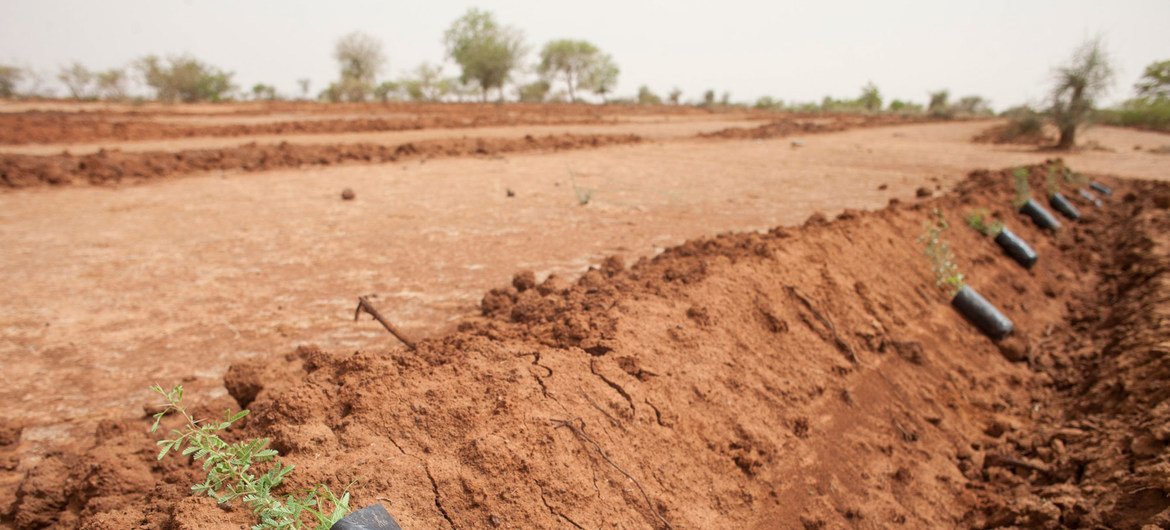
    Plastic covered seedlings.

    Plastic covered seedlings.

    Biodiversity, health impacts

    While all these products have helped increase crop yields, there is growing evidence that degraded plastics are contaminating the soil and impacting biodiversity and soil health, the report warns.

    Moreover, microplastics, such as the one used in some fertilizers, are also impacting human health when transferred to people through the food chain.

    “There is only a finite amount of agricultural land available,” said report’s co-author Professor Elaine Baker from the University of Sydney. “We are starting to understand that the build-up of plastic can have wide-ranging impacts on soil health, biodiversity and productivity, all of which are vital for food security”.

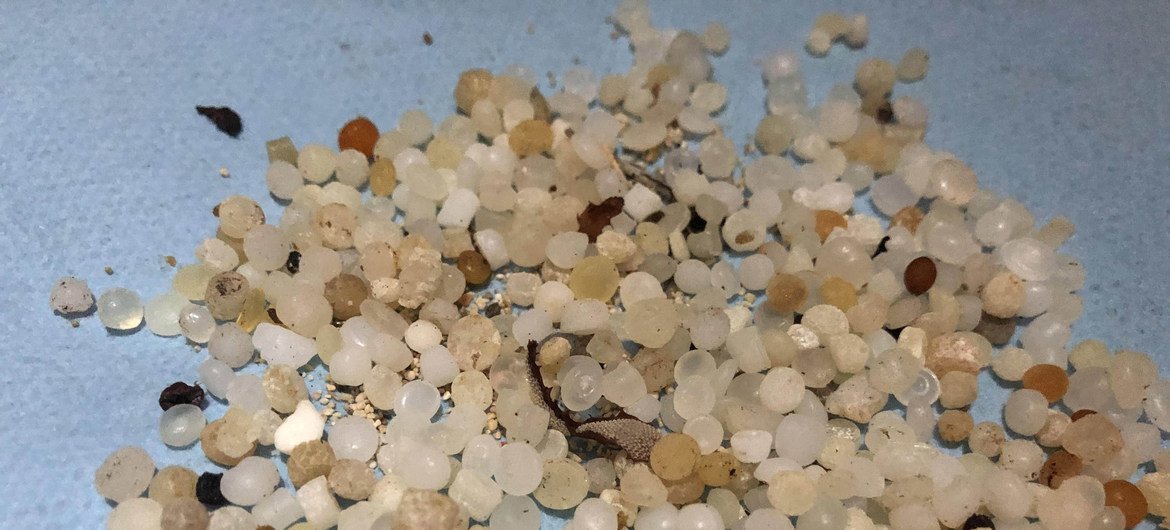
    Microplastics come in a large variety of sizes, colours and chemical compositions, and include fibres, fragments, pellets, flakes, sheets or foams.

    Microplastics come in a large variety of sizes, colours and chemical compositions, and include fibres, fragments, pellets, flakes, sheets or foams.

    Everything’s affected by plastic

    UNEP’s experts explain that over time, big pieces of plastic can break into shards less than 5 mm long and seep into the soil.

    These microplastics can change the physical structure of the earth underfoot and limit its capacity to hold water. They also can affect plants by reducing root growth and nutrient uptake.

    Currently the single-biggest source of microplastic pollution in soil, is fertilizers produced from organic matter such as manure.

    Although these can be cheaper and better for the environment that manufactured fertilizers, the manure is mixed with the same plastic microspheres that are known to be commonly used in certain soaps, shampoos, and makeup products.

    While some countries have banned these microspheres, other microplastics continue to enter our water systems via discarded cigarette filters, tire components, and synthetic clothing fibres.

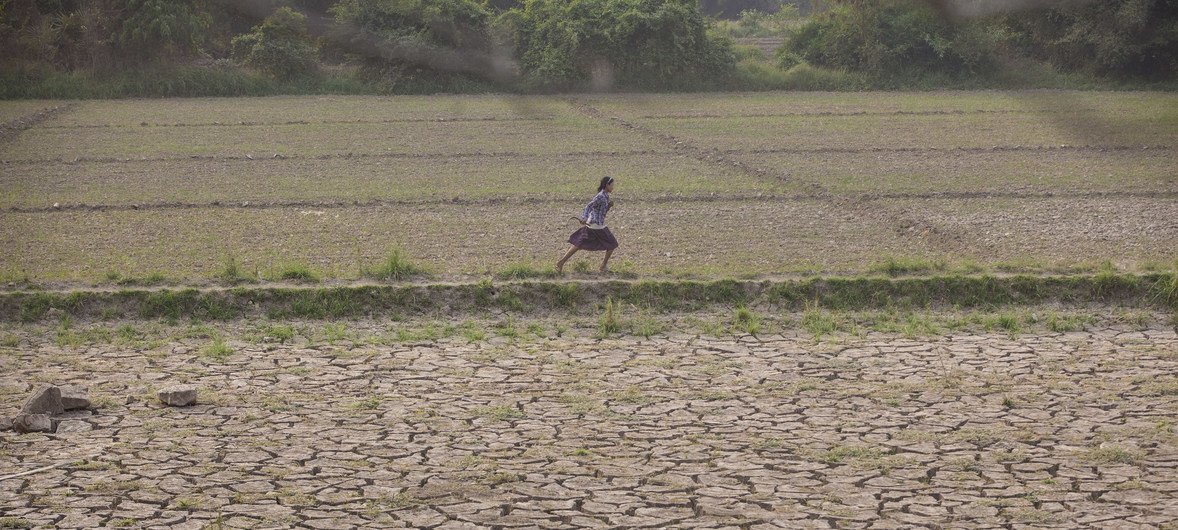
    A girl runs through deserted farmland in Mynmar's Sagaing region.

    A girl runs through deserted farmland in Mynmar’s Sagaing region.

    What to do?

    The report highlights that progress is being made to improve the biodegradability of polymers used in agricultural products.

    However, some protective films – used to prevent moisture loss – are now being marketed as fully biodegradable and compostable, which is not always the case.

    Bio-based polymers are not necessarily biodegradable, some may be as toxic as fossil fuel-based polymers, and their price is still an issue.

    A solution proposed by the report authors are the so-called ‘cover crops’, which shield the soil and are not meant to be harvested.

    These nature-based solutions can suppress weeds, counter soil diseases and improve soil fertility, but there are concerns they could reduce yields and increase costs, UNEP warns.

    “None of these solutions are a magic bullet. Plastic is inexpensive and easy to work with, which makes trying to introduce alternatives a hard sell”, Ms. Baker explained.

    However, the expert recommends governments to disincentivize” the use of agricultural plastics, following the path of the European Union, which earlier this year restricted certain types of polymers from being used in fertilizer.

    “Now is the time to adopt the precautionary principle and develop targeted solutions for stopping the flow of plastic from the source and into the environment”, the Australian scientist underscored.

    Source: BBC