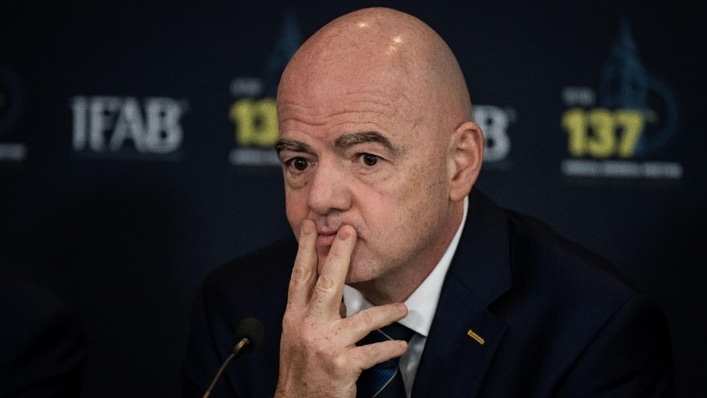
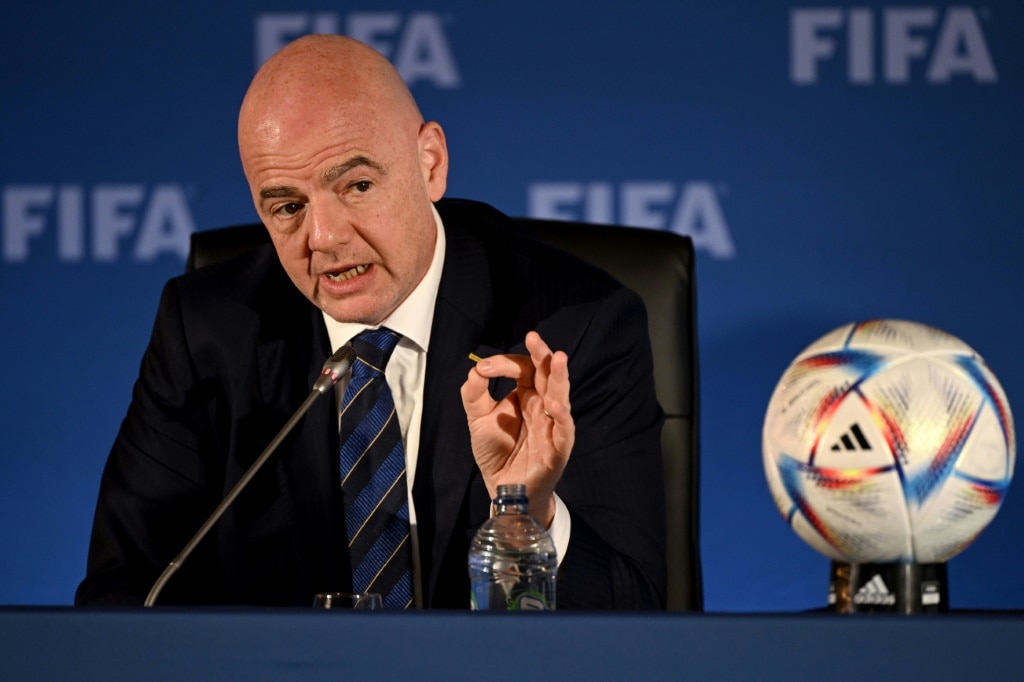
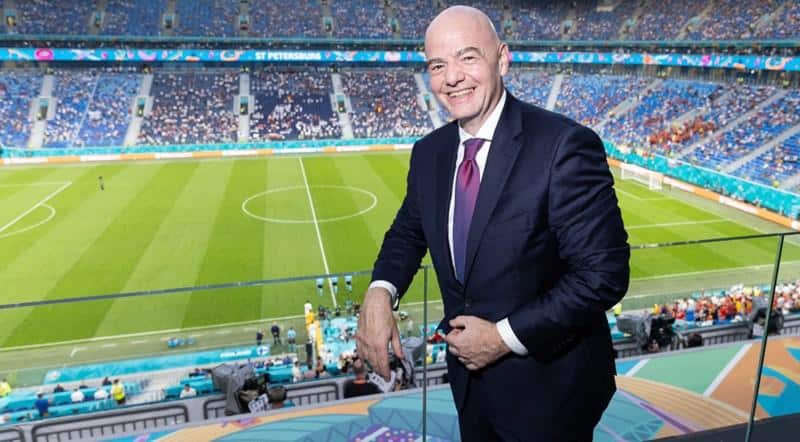
FIFA President Gianni Infantino strongly emphasizes the necessity for a “zero tolerance” stance against racism and urges referees at all levels to halt matches in the event of such incidents.
Infantino recently held discussions with Real Madrid’s Vinicius Junior, who spoke out against racial targeting he experienced during the season.
Infantino condemned the racists as “criminals” and emphasized that football authorities must take responsibility.
Real Madrid recently filed a complaint with the Spanish State Attorney General’s Office, alleging that the racist abuse directed at Vinicius constituted a hate crime, following an incident during their LaLiga defeat to Valencia.
“It’s very important not just to talk about racism and discrimination, but to take action in a decisive and convincing manner – zero tolerance,” Infantino said after meeting Vinicius and the rest of the Brazil squad in Barcelona.
“There is no football if there is racism – so let’s stop the games.
“The referees have this opportunity in FIFA competitions as we have this process for stopping the game, and actions have to be taken at every level, at national level as well.
“It’s a football-related problem and we mustn’t look for excuses like: ‘It’s society’s problem, therefore, it’s fine in football.’ In the world of football, we must act in a very forceful way.
“We want to identify racists in stadiums and across social media. They are criminals. They have to be banned from stadiums across the globe.
“The authorities need to take these people to court and we will say this to all of them. Racism is a crime.”
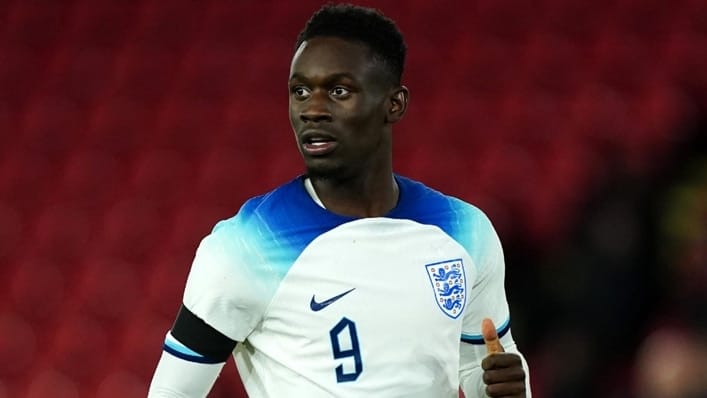
FIFA has confirmed Arsenal striker Folarin Balogun’s request to change his national team allegiance from England to the United States.
The 21-year-old, who was born in New York and is currently on loan at French club Reims, previously represented England at the Under-21 level but has now decided to pursue his senior international career with his country of birth.
A FIFA spokesperson told the PA news agency said: “The change of association of the player Folarin Jolaoluwa Balogun from England to the USA has been approved.”
The news comes just weeks before England are due to launch their European Under-21 Championship finals campaign in Georgia and Romania.
Balogun has made 13 appearances for Lee Carsley’s side, but withdrew from the squad in March due to injury.
Having been born in America, Balogun moved to England when he was two years old and also qualifies for Nigeria through his parents.
Qualifying players are allowed to switch associations before they have played a competitive match for a nation’s senior team.
Balogun has made 10 first-team appearances and scored two goals for the Gunners, and spent the second half of the 2021-22 season on loan at Sky Bet Championship Middlesbrough.
However, he has made a name for himself in Ligue 1 this season with 19 goals in 34 appearances to date.
FIFA has given more support in our mission to improve every area of the game and guarantee that members are properly supported.
The Ghana Football Association’s application for the FIFA Football for Schools Program was approved, and it will now be implemented in compliance with the appropriate FIFA regulations.
“After a thorough review of the documentation provided, the FIFA Football for Schools administration has decided to approve your application to start implementing the programme in Ghana” said Madam Fatimata Sidibe, Director, FIFA Football for Schools.
The FIFA Football for Schools administration will work with the Ghana Football Association to coordinate the release of the Football for Schools mobile app in Ghana, as well as to provide appropriate training and capacity-building support for users (selected public schools in Ghana).
The Ghana Football Association is working with the Ministry of Youth and Sports and the Ministry of Education on this programme to benefit students between the ages of 10 – 14 years.
The Association will also ensure that there is gender parity as all schools selected are mixed schools.
This programme will further support GFA’s project to introduce football to young girls as early as possible toincrease the participation of girls in football.
The programme will provide training to Physical education teachers as well as provide footballs to almost 3,000 schools across every region of the country.
“The GFA is extremely happy that its application has received approval from FIFA.
This programme will benefit the Schools and Colleges as a member of the Association and a lot of PE Teachers and students between ages 10 to 14.
The GFA will continue to work assiduously with its partners, FIFA, the Education Ministry and the Ministry of Youth and Sports to ensure the success of this excellent programme” said Kurt Edwin Simeon-Okraku, President of the GFA.
Goalkeeper Lawrence Ati-Zigi of theBlack Stars was listed among the best saves at the 2022 FIFA World Cup.
In the second group games against South Korea, the St. Gallen goalkeeper’s stop from a free kick made the cut.
Ati-Zigi gave a great performance in the contest, making four crucial saves to lead Ghana to a slim 3-2 victory.
His save from the free-kick came in the 75th minute when the Black Stars were leading 3-2. Ati-Zigi superbly tipped Kang-In Lee’s goal-bound freekick around the post to keep Ghana in the lead.
Ghana eventually grabbed the win but failed to progress from the group after losing to Portugal and Uruguay to finish bottom of Group H.
Lawrence Ati-Zigi played all three games and conceded a total of seven goals at the tournament.
TheBlack Stars of Ghana have fallen to 60th on the most recent FIFA Ranking despite defeating Angola 1-0 on March 23, 2023.
In the 2023 Africa Cup of Nations qualifiers, the team started the year off on a victorious note with a late 1-0 triumph over Angola.
The Black Stars pulled off a spirited 1-1 draw with Angola in Luanda four days after their dramatic victory at the Baba Yara Stadium.
The team moved backwards in the FIFA rankings, therefore the win and draw had minimal effect on their position.
The Black Stars used to lie 59th in the World but have now slumped to 60 in the global rankings.
In Africa, Ghana maintained its 11th position while Morocco continue as the number one footballing nation on the continent.
In the world, Morocco are 11th, with Tunisia, Algeria, Egypt and Nigeria placing 28th, 34th, 35th, and 40th respectively as the top five African countries.
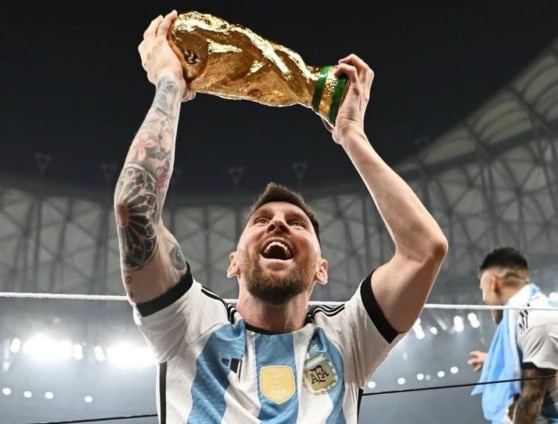
World Cup champions Argentina, for the first time in six years, is at the top of the FIFA World Rankings.
In the March international break, Lionel Scaloni’s team defeated Panama and Curacao in friendlies. Last year, they defeated France in an exciting final to earn their third world championship.
In both games, captain Lionel Messi reached two milestones: he scored his 800th career goal in a 2-0 victory over Panama and then registered his 100th international goal with a hat-trick in a 7-0 demolition of Curacao.
Argentina previously held the top spot in the standings in 2017, but the Albiceleste fell as far as 12th the year after a disappointing World Cup performance in Russia in 2018.
Argentina replace rivals Brazil at the summit after the Selecao suffered a surprise friendly loss to World Cup semi-finalists Morocco in March, a result which sees them drop to third.
France are second in the rankings after their Euro 2024 qualification wins over the Netherlands and the Republic of Ireland, while the rest of the top 10 remains unchanged.
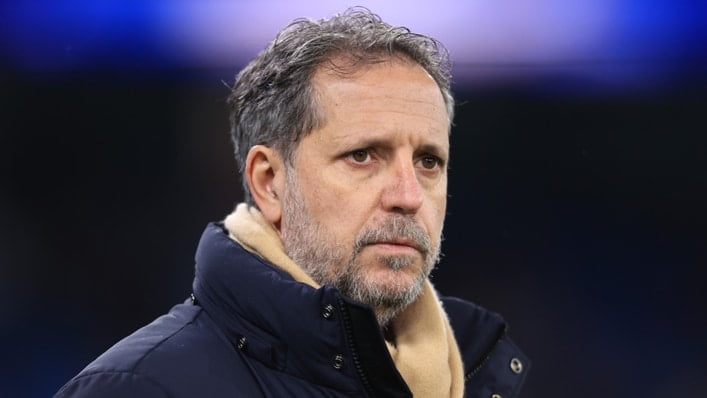
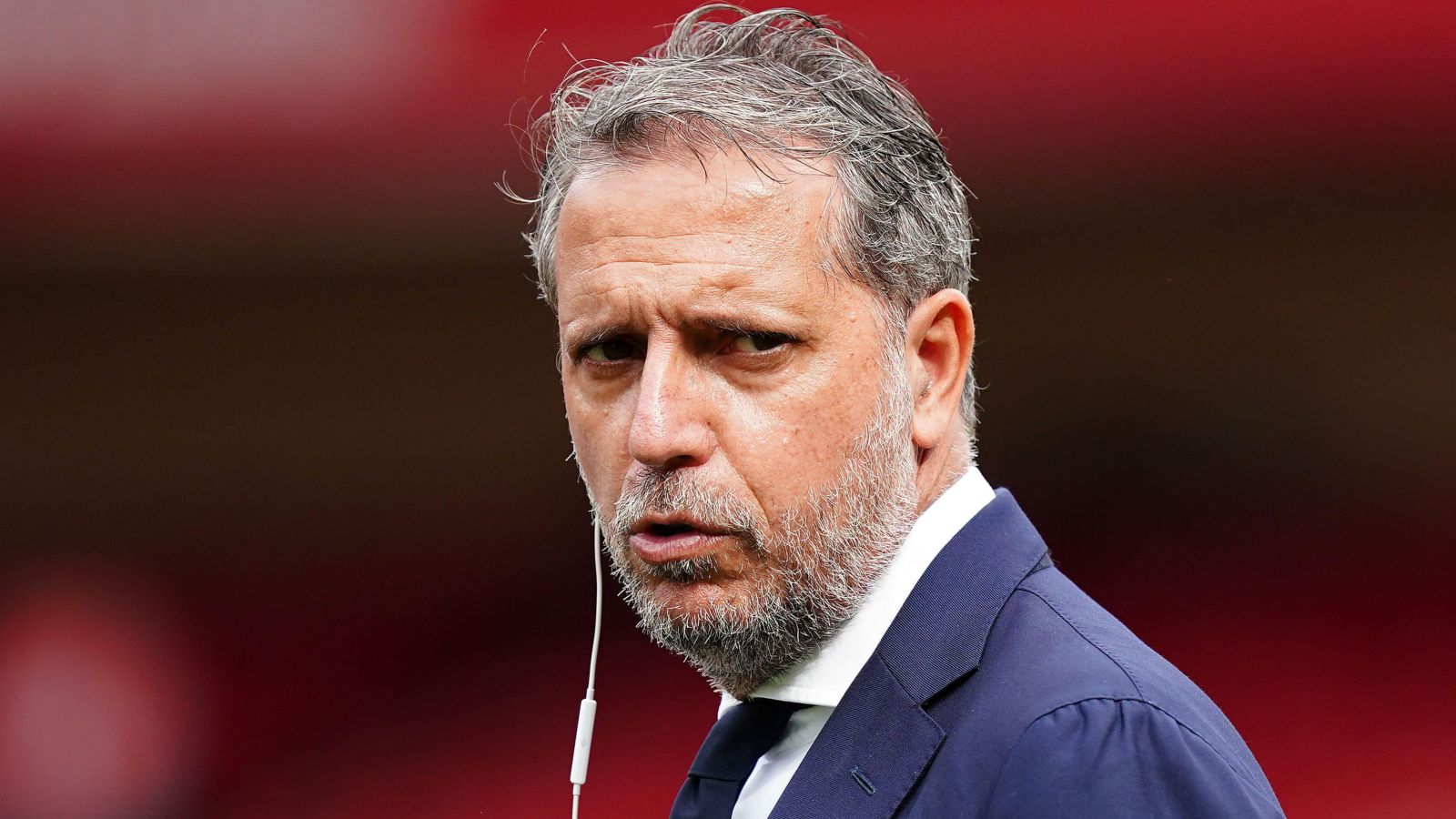
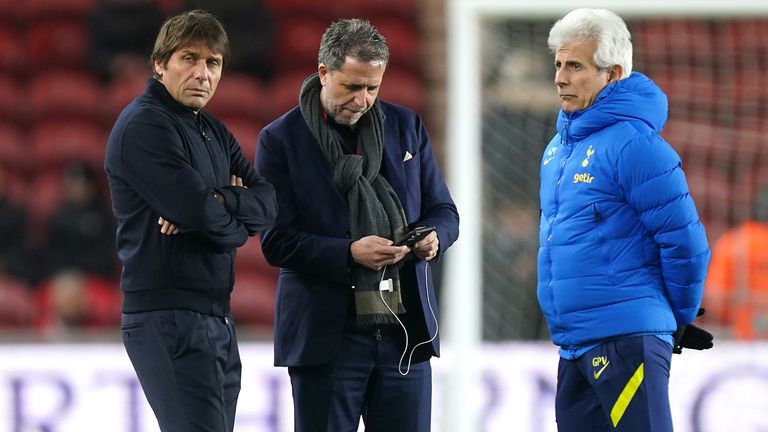
Tottenham managing director Fabio Paratici has resigned from his position while the club awaits the resolution of his appeal against a global football ban.
The Italian Football Federation (FIGC) suspended Paratici for 30 months in January, and FIFA confirmed on Wednesday that the ban would apply to all football worldwide.
Because of the abrupt timing of the notification, Spurs released a statement stating that they were “urgently seeking further clarification from FIFA” regarding Paratici’s predicament.
The 50-year-appeal old’s will be heard on April 19, but Tottenham said on Friday that he will take a leave of absence from his duties until then.
“In view of FIFA’s decision, Fabio has agreed with the club that he will take an immediate leave of absence pending the outcome of his appeal,” a Spurs statement read.
Paratici was one of 11 individuals banned by the FIGC in January after Juventus were found guilty of alleged breaches in relation to historical transfer dealings.
Juve were docked 15 points in Serie A as part of the punishment, with Paratici and the club denying any wrongdoing and lodging an appeal to the Italian Olympic Committee.
Then-chairman Andrea Agnelli and former director Pavel Nedved were hit with 24 and eight month bans respectively, which they are also appealing in April.
Paratici’s leave of absence comes at a time when the club are on the lookout for a new head coach following the sacking of Antonio Conte last week.
After a protest from an Indonesian official against Israel’s participation, FIFA has revoked Indonesia’s ability to host the Under-20 Men’s World Cup later this year.
“FIFA has decided, due to the current circumstances, to remove Indonesia as the host of the FIFA U-20 World Cup 2023,” FIFA said in a statement, without providing further clarification. “A new host will be announced as soon as possible, with the dates of the tournament currently remaining unchanged.”
Sanctions could also be imposed on the Football Association of Indonseia (PSSI), according to the statement.
The youth competition was slated to take place in six Indonesian cities from May 20 to June 11 and feature a total of 24 teams. First time qualifiers are Israel.
Indonesia, a Muslim majority nation of more than 270 million people, does not have formal diplomatic relations with Israel and supports the cause of the Palestinians.
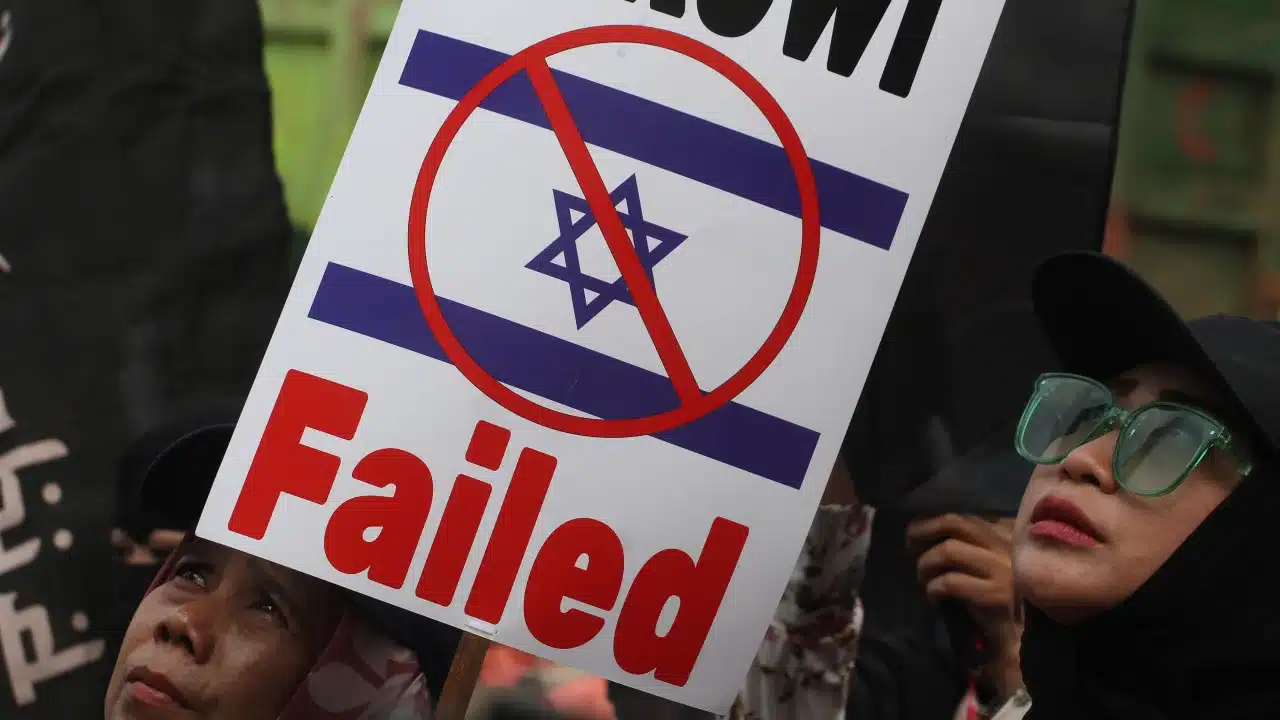
Anti-Israeli sentiment runs high among conservative Muslims in Indonesia and earlier this month, protesters marched in the capital Jakarta demanding the government ban Israel from playing in the tournament.
Indonesian President Joko “Jokowi” Widodo appealed to the public in a televised address on Monday, reiterating Indonesia’s support for the Palestinians but also stressing the country must follow FIFA regulations, according to state news agency Antara.
“Do not link sports issues with political affairs,” he reportedly said.
PSSI president Erick Thohir said he pleaded Indonesia’s case to FIFA president Gianni Infantino on Wednesday, which included showing him a letter from the Indonesian President.
“I have tried my best. We must accept FIFA’s decision to cancel the holding of the event that we are both looking forward to,” Thohir said in the statement. “Because we are members and FIFA considers that the current situation cannot be continued, we must submit.”
FIFA said it will continue to work with Indonesia and the PSSI “in the transformation process of Indonesian football following the tragedy that occurred in October 2022,” referring to the East Java stadium disaster.
“A new meeting between the FIFA president and the PSSI president for further discussions will be scheduled shortly,” the statement said.
In January, Paratici received a 30-month suspension from participating in Italian Football Federation activities as part of an investigation into alleged financial mismanagement at Juventus, which resulted in the suspension of 11 other officials and a 15-point deduction for the team.
As a result of an investigation into alleged financial mismanagement at Juventus, which resulted in the suspension of 11 other officials and a 15-point deduction for the team, he was given a 30-month ban from participating in activities within the Italian Football Federation in January.
The Italian FA requested that these bans be extended globally, and FIFA confirmed to Sky Sports News that it granted this request, meaning that Paratici is now prohibited from participating in any football-related activities worldwide.
They said in a statement: “FIFA have confirmed that – following a request by the Italian FA (FIGC) – the Chairperson of FIFA Disciplinary Committee has decided to extend the sanctions imposed by FIGC on several football officials to have worldwide effect.”
Sky Sports News has contacted Tottenham and the Football Association for further guidance on what this means for Paratici and his role at Spurs.
Sky Sports News understands Paratici cannot conduct any transfer market activity directly – he cannot talk to agents nor negotiate deals, which is a fundamental part of his job as managing director of football – but he can work internally at Spurs, including attending meetings.
However, Sky Sports Newsare awaiting for official clarification of this – such as whether he can be involved in Tottenham’s search for a new permanent manager following the departure of Antonio Conte.
Paratici, Juventus and the other officials involved have appealed the sanctions – with the result of the appeal expected later in April, potentially 19.
The ban is in effect even while this appeal to CONI (Italian Olympic committee) is going on.
Image:Paratici cannot conduct any transfer market activity directly
Paratici and 11 other former Juventus officials may also face a separate criminal case – with a preliminary hearing, due to take place yesterday, was postponed until May 10.
Juventus, and the 12 officials – including Paratici – deny any wrongdoing.
On Tuesday, in an extended interview on the club’s official website, Paratici described Conte’s exit as “the right decision” and called on everyone at the club to focus on a successful end to the season.
Fan group the Tottenham Hotspur Supporters’ Trust on Wednesday afternoon called for clarity and reassurance from the club.
Responding to the Paratici ban, it tweeted: “This news adds further to the extremely concerning situation at the club. No manager, no director of football and uncertainty around our star player and our end of season finish.
“Fans deserve to hear a clear statement of strategy from THFC so they can be reassured by the board on their plan to bring success and stability to the club.”
The forward Heung-min Son said he was saddened by Conte’s departure and feels responsible.
“As a player, I am really sorry,” he said. “He’s a world-class coach, and we had a great journey together. I should have played better. I feel responsible for his departure, because I haven’t helped the club all that much.”
Currently, teams and captains risk sanctions if they don’t wear the FIFA-required armbands; Harry Kane, the men’s captain of England, was compelled to abandon his plans to wear a “OneLove” armband during the World Cup in Qatar; The 2023 Women’s World Cup begins in July in Australia and New Zealand.
With regards to rules prohibiting “OneLove” or rainbow armbands at the Women’s World Cup this summer, FIFA claims that it is in discussions with teams and players.
Currently, teams and captains risk punishment if they compete in one of FIFA’s tournaments without the required wristband.
The German FA brought up the matter formally during a World Cup planning workshop because they don’t want players from Australia and New Zealand to face sanctions during the competition from July to August.
The matter was also discussed by the game’s lawmakers IFAB during post-Qatar 2022 debriefs.
A FIFA spokesperson has told Sky Sports “at a team workshop, FIFA was asked about equipment and competition regulations in relation to the 2023 FIFA Women`s World Cup.
FIFA wishes to reiterate that no decision has been taken in relation to armbands.
FIFA remains committed to ongoing dialogue with players and member associations.”
The FA and England team bosses were left angry in December when the armband issue left players potentially facing punishment if they went against tournament rules.
England captain Leah Williamson has been open about her desire to show support to the LGBTQ+ community during the World Cup this summer and wore a rainbow armband when she lifted the Euros trophy last summer.
“Obviously, you hope it’s not a last-minute call once we get there but it’ssomething we want to do all year round and we’ve done previously,” she told reporters in February.
“The statement that was made at the Euros with every team participating was incredible, every picture we have with a trophy lift there’s a rainbow armband in there.
It’s a great stage and a great time to promote the values we believe in so much, so I hope it’s the same.
“We’re never shy in saying what we stand for, we’re a squad that promotes inclusivity and equality, we obviously have a number of people that feel very strongly about it,” Williamson said.
“It’s not even a question for us, you’ve seen another men’s player step out and be as brave as they can be and they’ve changed their whole life. They don’t know what’s coming.
So, for us to stand in solidarity with that is important to us but it’s something we’ve always done, it’s something we’ll continue to do.
We’re not just impacting football, we’re trying to have a positive impact on society too and that’s one of the ways we can do that.”
Since breaking into Barca’s first team, the 20-year-old has been a revelation, establishing himself as a key player for the LaLiga leaders.
Pedri won FIFA’s Golden Boyaward for the best young player in Europe in 2021 and quickly forced his way into the Spain team.
The young maestro is under contract with the Blaugrana until 2026 and has no plans to leave for the time being, though he has hinted that he may work abroad in the future.
When asked about the possibility of a switch to England, he is quoted as saying by Marca: “At the moment, no. I’m at Barca and hopefully I’ll stay here for many more years.
“I love LaLiga, but nothing should ever be ruled out.”
Pedri will miss Spain’s Euro 2024 qualifiers against Norway and Scotland due to a hamstring injury, but is relishing a new era for the national team under Luis de la Fuente.
Having played under De la Fuente at Under-21 level and in the Tokyo Olympics, Pedri believes the new Spain head coach will be a success.
Pedri said: “He is a person who goes straight ahead, he likes to work on the things he believes in and I think we will do well.
“All the coaches who come try to have the ball and play, especially because of the style of footballers we have, and I think it will not change a lot.”
At the FIFA Congress on Thursday, Gianni Infantino was unanimously elected to serve as the organization’s president again through the year 2027. As they did four years prior, delegates from the 211 member federations ushered in the 52-year-old Swiss lawyer, who succeeded the disgraced Sepp Blatter in 2016, for a third term by acclamation.
“I love you all,” Infantino told delegates in the Rwandan capital, where the voting system did not register the number of dissident voices. While FIFA statutes currently limit a president to a maximum of three four-year terms, Infantino has already prepared the ground to stay until 2031, declaring in December that his first three years at the helm did not count as a full term.
Infantino, who staunchly defended Qatar’s hosting of last year’s World Cup as the Gulf state’s treatment of migrant workers, women and the LGBTQ community came under the spotlight, has overseen the expansion of the men’s and women’s World Cup and huge increases in FIFA revenues.
The men’s World Cup will increase from 32 teams to 48 for the next edition in North America in 2026, while the women’s World Cup will feature 32 teams for the first time in Australia and New Zealand later this year.
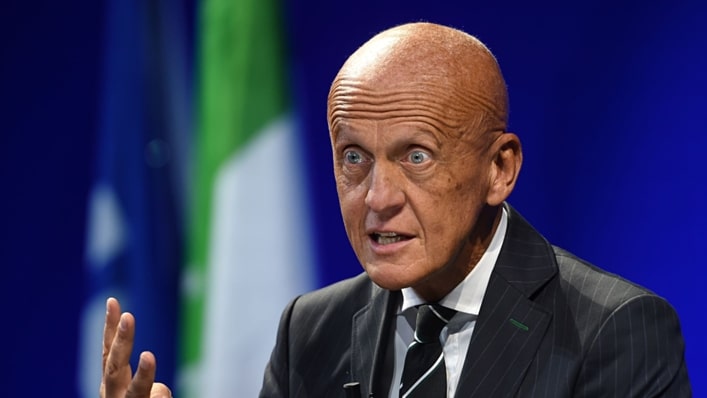
Regardless of the situation, Pierluigi Collina has urged referees to add the appropriate amount of stoppage time at the conclusion of games.
The match between Liverpool and Manchester United on Sunday at Anfield was discussed byFIFA’s head of refereeing. Only three minutes were added to the game’s final score, which resulted in a 7-0 victory for the hosts despite the fact that six goals were scored in a second half that also featured 10 substitutions and a VAR delay.
Although games at the World Cup in Qatar were extended by additional time that was meant to reflect actual time lost during the 90 minutes, this trend has largely not continued in club football.
“Last weekend in the Premier League, there were 10 matches,” Collina told reporters. “Four had additional time of 10 minutes or more [across the first half and second half], and two should have been higher but weren’t only because they had scores of 7-0 and 4-0.
“In the game at Liverpool, there was four minutes added, one in the first half and three in the second. But there were six goals in the second half.
“Maybe at some point in the future we will have a rule which says: if the difference between the two sides is big, the additional time is not to be given. But this would be in the laws of the game.
“Now it is common sense, but it is [only] common sense when it doesn’t affect someone.
“I can understand that showing the right amount of time when it is 7-0 is difficult to understand. But in some competitions, the goal difference in the entire competition may be decisive at the end for the ranking.
“So, even one goal scored or not scored could make the difference.”
Former referee Collina believes adding on as much time as necessary would eventually stamp out time-wasting, much like the introduction of VAR appeared to reduce the amount of simulation in the game.
“It’s time to compensate time that was not played during the match,” he said. “We are not considering to go from 70 to 75. No, we want to avoid just playing 43 minutes.
“The effective time at Aston Villa vs Brentford [earlier this season] was 43 minutes. I don’t think someone wants to pay to watch a match that lasts 43 minutes.
“We have seen implementing VAR has reduced simulation. How many cards are now given for simulation? Very little because the players know it is meaningless to try.
Due to a pay dispute, Canada Soccer is coming under increasing pressure from both its men’s and women’s teams.
Earlier this month, the women’s team had planned to strike, but they abandoned their plans when legal action was threatened.
They played instead “under protest” and openly discussed the possibility of boycotting an April camp if an agreement had not been reached by that stage.
However, given that both the men’s and women’s teams have asked for changes to Canada Soccer’s management, Bontis’ departure might be seen as a sign of progress.
As his exit – effectively immediately – was confirmed on Monday, Bontis said in a statement: “Canada Soccer and both of our national team programs have the real potential to sign a historic collective bargaining agreement.
“Once signed, it will be a landmark deal that will set our nation apart from virtually every other FIFA member association.
“While I have been one of the biggest proponents of equalising the competitive performance environment for our women’s national team, I will unfortunately not be leading this organisation when it happens. I acknowledge that this moment requires change.”
The Swiss official will be paid a gross remuneration (base) of CHF1.9 million (£1.7 million, $2.0 million, or €1.9 million), according to the governing body’s 2022 Annual Report.
The 52-year-old will receive a CHF24,000 (£21,589/$26,031/€24299 flat-rate allowance in addition to a gross salary (variable) of CHF1.6 million (£1.4 million/$1.7 million/€1.6 million).
In comparison with the last World Cup year in 2018, Infantino’s gross salary (variable) has increased by more than $1 million.
After Russia 2018, the FIFA boss received a gross salary (variable) of $555,000 (£460,650/€518,580).
Meanwhile, the global football governing body’s secretary general Fatma Samoura is set to pocket CHF1.3 million (£1.1 million/$1.4 million/€1.3 million) as gross salary (base), CHF600,000 (£539,250/$649,424/€607,042) as gross salary (variable) and CHF24,000 as part of the flat-rate allowance.
Samoura’s variable salary when the World Cup was held in Russia four years ago was $195,000 (£162,390/€182,375).
FIFA also published the salaries of Council members and management, who will be getting a total of $31.9 million (£26.5 million/€29.8 million), including pension contributions.
The FIFA Council senior vice-president and vice-presidents, including confederation Presidents, each receive a net annual compensation of $300,000 (£249,426/€280,959) and a daily allowance of $250 (£207/€233) while on duty.
The FIFA Annual Report 2022 published yesterday (February 14) claims a record-breaking revenue of $7.6 billion (£6.3 billion/€7.1 billion) during the 2019-2022 cycle and expects $11 billion (£9.1 billion/€10.2 billion) for 2023.
After Guinea was stripped of its rights to host the AFCON in 2025, the Confederation of African Football (CAF) had to restart procedures to select a host. Many countries declared official interest in hosting the event, amongst them Morocco.
Land of football, Morocco has the ambition to host one of the best African Cup of Nations, in order to celebrate the best of African football, its values of tolerance, unity and respect, to serve the development and the influence of African football as a whole, and finally, to share an authentic and human experience.
Morocco’s candidacy is legitimate, firstly, because the national team has offered unparalleled influence to African football by having reached the semi-finals of the World Cup.
Secondly, because the Royal Moroccan Football Federation (RMFF) is very committed to the development of African football and to the cooperation with more than 45 African partner federations, and this, within the framework of the Enlightened Vision of His Majesty the King, which promotes greater involvement in South-South and win-win development, particularly in Africa.
Finally, Morocco is the only African country to have successfully passed the prerequisite required by FIFA concerning all the criteria established in its specifications, namely, sports infrastructures, hotels, hospitals, …etc
Indeed, when Morocco’s bid for the 2026 World Cup was presented, a task force composed of dozens of experts had crossed the country for several months before awarding it a mark above the average which made its bid eligible for the World Cup under the new format of 48 teams. The AFCON 2025 will be a 24-team event, which means that Morocco is de facto well beyond the requirements of the AFCON 24-teams.
In organising the AFCON 2025, Morocco guaranteed accessibility for football fans from their countries of residence, richness and diversity of the tourist experience, and safety within the Kingdom. And for the players and their staff, the comfort and quality of the hotel facilities, the modernity of the sports infrastructures, and an ideal and temperate climate.
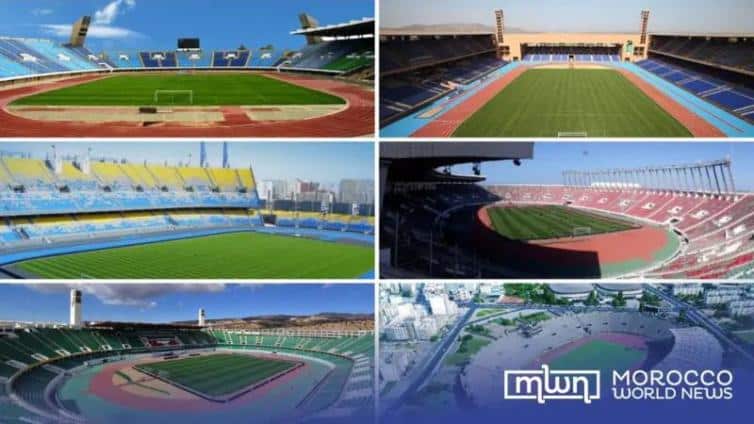
Six iconic host cities were selected to celebrate the best of African football, namely, Rabat, Marrakech, Casablanca, Agadir, Tangier and Fez. The choice was based on operational and logistical excellence, notably in terms of sports, residential and transport infrastructures meeting the requirements of CAF. The 6 cities have the following capacities: Tangier (60,000 seats), Fez (35,000 seats), Rabat (65,000 seats), Casablanca (65,000 seats), Marrakech (45,000 seats) and Agadir (45,000).
Thus, all the host cities, located within a radius of 465 km around Casablanca, are connected through optimal transport networks, including the air network which covers the six host cities of the competition with an average of one-hour flight.
These cities are characterized by strong and unique identities, reflecting Morocco’s diversity and passion for football, each with its own historical, geographical and social identity. Among these cities, some of them are on the coast, or historical and mountainous destinations, this diversity will not fail to offer the African Cup of Nations a magical setting for the show.
Having a strong experience in the field of tourism (more than 12 million tourists in 2019), the Kingdom is endowed with a high-quality hotel infrastructure and in sufficient quantity (90,000 rooms distributed among the host cities) to welcome national teams, official delegations and supporters in favourable conditions. Morocco’s accommodation offer will make it possible to accommodate all the players in the competition by offering rates adapted to all budgets.
The Kingdom of Morocco has the ideal conditions for the organization of one of the best African Cup of Nations, due to its diversity, its geographical position, its legendary hospitality, its political stability and its security.
At the same time, Morocco benefits from one of the best football infrastructures in Africa. All the selected stadiums have been approved by FIFA (as part of the bidding process for the 2026 World Cup), as well as by CAF, as part of the World Cup and African Cup of Nations qualification.
Finally, Morocco is committed to the development of African football and continues its activities in continuity with the bid to organise the 2025 African Cup of Nations, in order to show its capacity to organize a safe African Cup, in the best conditions and to the standards of the most prestigious international competitions. The 2025 AFCON guarantee a magical and unforgettable experience for players, supporters, guests and viewers around the world.
Morocco aim to share its expertise in the organization of major sporting events, to inspire the younger generation for a world of solidarity, justice, tolerance and care for the planet, and to celebrate the universal values of football through a multicultural and unifying continental event.
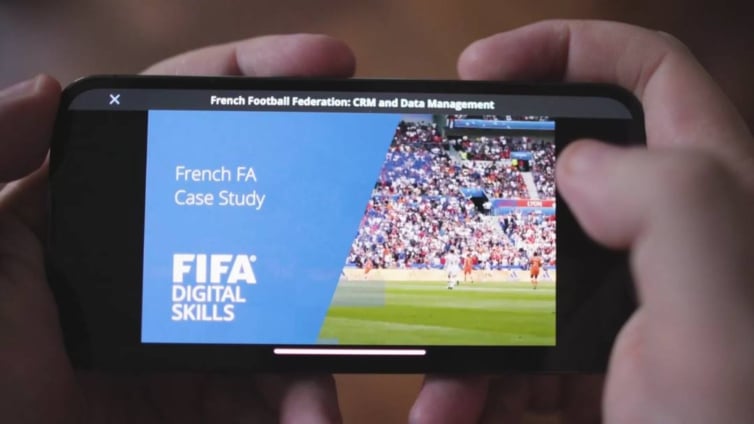
FIFA has launched FIFA Digital Skills, an educational programme designed to develop the expertise of professionals in the global football community on all things digital, through a dedicated e-learning platform and a series of live masterclasses.
As administrative and business activities continue to develop due to emerging technologies, the programme will be a crucial tool for member associations seeking to hone their skills in many areas. Representatives from FIFA’s 211 member associations now have access to masterclasses from some of the world’s biggest and most innovative brands.
Through the platform’s peer-to-peer learning function, users can also host tailored sessions focused on their own experiences. From best practice case studies from football stakeholders to analyses of the latest technological trends from the brands driving the digital revolution, FIFA Digital Skills aims to leverage the power of the digital world to maximise the strategic and operational effectiveness of those running the game globally.
“As the world changes around us, we need to invest in people so that they are better placed to embrace the future,” said FIFA’s Chief Member Associations Officer, Kenny Jean-Marie. “We are proud to launch a platform that will be a one-stop resource for member associations, allowing them to access valuable information and encourage learning as part of the football community in the area of digital. I am proud that we are providing this platform, and that the member associations will be contributing to the process by sharing their success stories to benefit us all.”
FIFA’s Director of Strategy, Digital and FIFA+, Charlotte Burr, added: “The FIFA Digital Skills initiative is powered by FIFA +, our world-class digital destination for football fandom. We already have nearly 100 MAs on board and more than 400 participants learning and sharing their experiences, and we want to continue to use FIFA+ as a platform to give the entire world of football a voice, telling their stories and bringing their beautiful game to light. The FIFA Digital Skills initiative will provide best practices from experts and organisations for the 211 MAs to develop their digital capabilities to appeal to future fans and, ultimately, grow football for all.”
In support of FIFA’s commitment to strengthening football professionals’ competencies worldwide and exploring new technologies that can positively impact the game and the wider industry, the initiative complements the wide-ranging educational products and services available to FIFA’s member associations. FIFA Digital Skills’ unique offering aims to provide a 360-degree view of digital’s role in enhancing football across all levels of the game – from grassroots to the elite.
Having launched at the end of 2022, participants from across the globe have had the opportunity to engage with the programme and take their digital skills to the next level.
“I really appreciated the FIFA Digital Skills initiative because it’s a whole package of how to successfully create a great digital marketing plan and strategy for our association,” commented Fatouma-Degan Mohamed Idriss, Djiboutian Football Association.
“We had a wonderful time and learnt very valuable lessons,” added Ahmad Abuzaid, Jordan Football Association. “Great experience, the case studies allowed us to see in a practical way the points to improve in our digital strategy and the templates allowed us to review the entire marketing strategy of the federation for more efficiency,” said Franchelle Bijou Boutamba Mouyabi, Gabonese Football Federation.
Juventus has stated that they will appeal their 15-point deduction because they feel it is “a clear injustice towards millions of fans.”
An examination into the 36-time Italian champions’ prior transfer dealings led to the sanction, which was officially announced by the Italian Football Federation (FIGC) on Friday.
With 20 games remaining, Juventus has dropped from third place in Serie A to tenth place and is 12 points outside of the Champions League spots.
The FIGC also imposed two-year suspensions from Italian football on the club’s former president Andrea Agnelli and former CEO Maurizio Arrivabene.
Former sporting director Fabio Paratici, who is now at Tottenham, has been given a 30-month ban.
A statement by the club’s lawyers read: “Today’s acceptance of the appeal for revocation by the Federal Court of Appeal seems to us to constitute a clear unequal treatment to the detriment of Juventus and its managers compared to any other club or registered player.
“We are waiting to carefully read the reasons for presenting the appeal before the Sports Guarantee College. However, we point out, as of now, that only Juventus and its managers are attributed the violation of a rule, which the sports justice itself had repeatedly recognised did not exist.
“We believe that this is a clear injustice also towards millions of fans, which we trust will soon be remedied in the next level of judgement.”
Turin Public Prosecutor’s Office had been seeking a nine-point deduction following a hearing earlier on Friday.
But the FIGC announced a harsher punishment after Juve were found to have used transfers to artificially boost their balance sheet.
The sanctions come on the back of chairman Agnelli and the rest of the Bianconeri’s board resigning en masse last year.
That came in the wake of an investigation being launched into financial violations during their time in charge.
A separate ruling made last year acquitted Juve and other clubs of their financial conduct within Serie A, with a case centred on player values in exchanges and transfers.
But football prosecutors reopened the case against Juve after seeking new documents collected by public prosecutors in Turin surrounding the club’s conduct.
In the result of a probe into the team’s prior transfer activities, Juventus has been docked 15 points.
Fabio Paratici, an ex-director of Juventus who is currently at Tottenham, received a two-and-a-half-year suspension from Italian football, the Italian Football Federation (FIGC) announced on Friday.
The ban for Paratici includes a request for an extension to encompass UEFA and FIFA activities, which could have significant repercussions for Premier League team Spurs.
Andrea Agnelli, a former Juve executive, has also been barred from holding any positions in Italian football for the subsequent two years.
It has been widely reported the decision is likely to be appealed by Juve.
The Bianconeri had been third in Serie A, but have now dropped to 10th – 12 points off the Champions League places – as a result of the punishment.
Turin Public Prosecutor’s Office had been seeking a nine-point deduction following a hearing earlier on Friday.
But the FIGC went with a harsher punishment after Juve were found to have used transfers to artificially boost their balance sheet.
The sanction comes on the back of chairman Agnelli, vice-president Pavel Nedved and the rest of the Bianconeri’s board resigning en-masse last year.
That came in the wake of an investigation being launched into financial violations during their time in charge.
A separate ruling made last year acquitted Juve and other clubs of their financial conduct within Serie A, with a case centred on player values in exchanges and transfers.
But football prosecutors reopened the case against Juve after seeking new documents collected by public prosecutors in Turin surrounding the club’s conduct.
Juve have denied any wrongdoing, while lawyers claimed prosecutors had not brought enough in to reach the adequate threshold for a new ruling.
The 36-time Italian champions are next in action on Sunday at home to Atalanta, in what was set to be a potentially crucial clash in the race for Champions League qualification.
The three English nominees Leah Williamson, Beth Mead, and Keira Walsh are joined by Lionel Messi, the captain of Argentina’s World Cup-winning team, as nominees for the 2022 Fifa Best Awards.
Jude Bellingham, an English midfielder for Borussia Dortmund, and Karim Benzema and Luka Modric, both players for Real Madrid, are also on the men’s shortlist.
The nominees for the women’s prize include Alexia Putellas, who won last year, Sam Kerr, and Jessie Fleming of Chelsea.
For best coach, Sarina Wiegman, Emma Hayes, and Pep Guardiola are contenders.
Sarina Wiegman, Emma Hayes and Pep Guardiola are up for best coach.
Arsenal forward Mead’s nomination comes in a year in which she was named player of the tournament at Euro 2022, shortlisted for the Ballon d’Or and won BBC Sport’s Personality of the Year.
Lionesses manager Wiegman, who led the team to their first major tournament trophy at Euro 2022, is joined on the women’s coach list by Canada’s English-born manager Beverly Priestman, as well as Chelsea’s Hayes.
The Chelsea coach, who won the Fifa Best award last year, became the first manager to guide a side to three consecutive WSL titles in May.
Real Madrid’s Carlo Ancelotti, France’s Didier Deschamps and Argentina’s World Cup-winning manager Lionel Scaloni are nominated for best men’s coach.
Morocco’s Walid Regragui also features on the shortlist after his side became the first African nation to reach a World Cup semi-final.
Manchester City’s Erling Haaland, Kevin de Bruyne and Julian Alvarez are all nominated for best men’s player, as is Liverpool’s Mohamed Salah.
Liverpool’s Alisson Becker, Manchester City’s Ederson and Aston Villa and Argentina’s Emiliano Martinez are up for the best men’s goalkeeper award.
England and Manchester United number one Mary Earps is on the women’s shortlist, alongside Chelsea’s Ann-Katrin Berger.
Alessia Russo’s backheeled finish in England’s Euro 2022 semi-final win over Sweden is among the contenders for the Fifa Puskas Award for the year’s best goal.
She will face competition from Kylian Mbappe’s stunning volley for France, which took the World Cup final to extra time.
Voting closes on 3 February, with the three finalists in each category to be announced later that month.
Best Women’s Player
Aitana Bonmati (Spain/Barcelona)
Debinha (Brazil/North Carolina Courage)
Jessie Fleming (Canada/Chelsea)
Ada Hegerberg (Norway/Lyon)
Sam Kerr (Australia/Chelsea)
Beth Mead (England/Arsenal)
Vivianne Miedema (Netherlands/Arsenal)
Alex Morgan (USA/Orlando Pride/San Diego Wave)
Lena Oberdorf (Germany/Wolfsburg)
Alexandra Popp (Germany/Wolfsburg)
Alexia Putellas (Spain/Barcelona)
Wendie Renard (France/Lyon)
Keira Walsh (England/Manchester City/Barcelona)
Leah Williamson (England/Arsenal)
Best Men’s Player
Julian Alvarez (Argentina/Club Atletico River Plate/Manchester City)
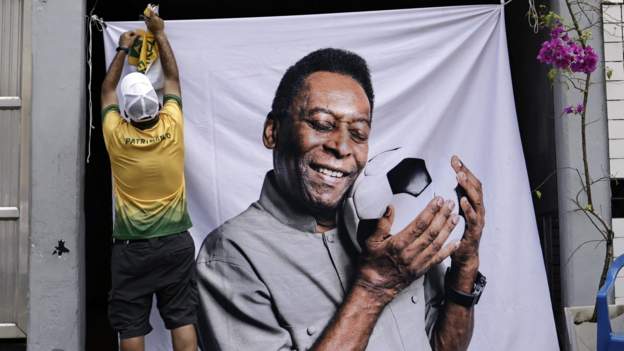
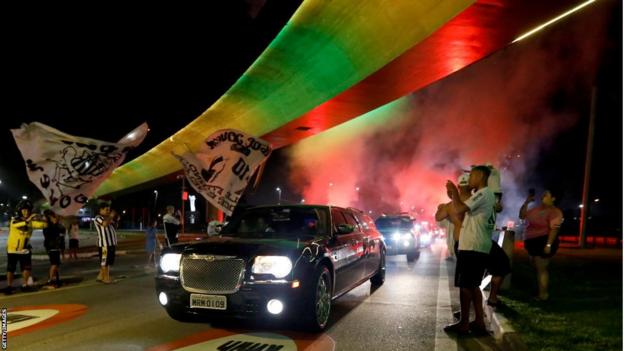
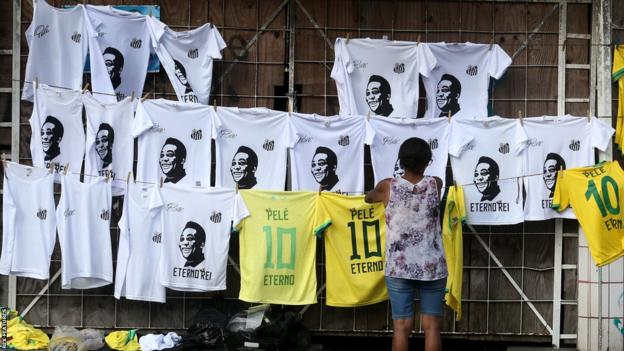
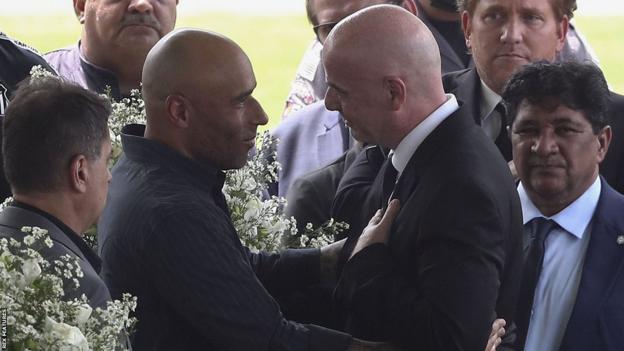
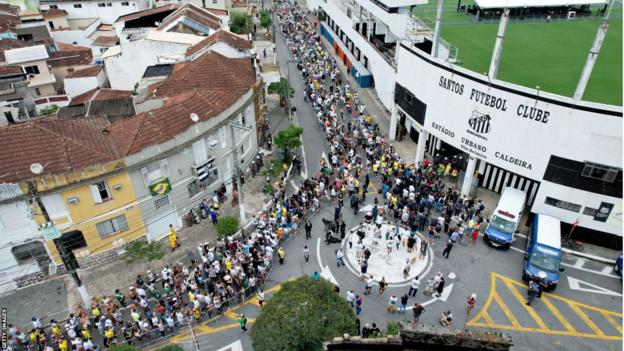
Throughout the night, thousands of mourners lined up to pay their respects to Pele, a legend of Brazil who is buried at the site of his old team Santos.
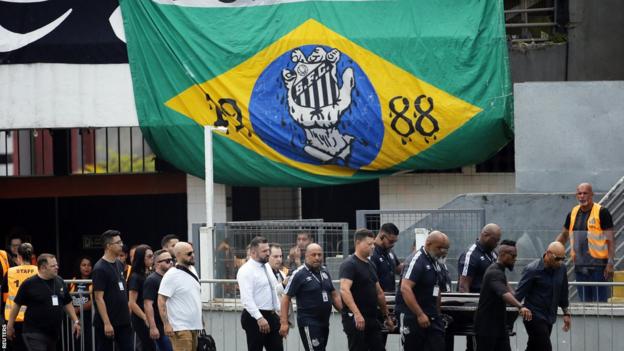
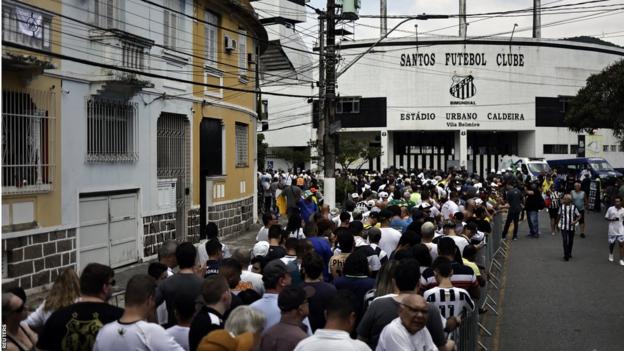
Fans lined the streets to enter the stadium as Pele’s coffin was positioned in the middle of the field at the Urbano Caldeira stadium in Sao Paulo.
The three-time World Cup champion passed away on December 29th at the age of 82.
At 12:00 GMT on Tuesday, there will be a parade through Santos’ streets to a private family burial.
“We’re going to ask every country in the world to name one of their football stadiums with the name of Pele,” said Fifa president Gianni Infantino, who attended the memorial.
Following Pele’s passing, the Brazilian government proclaimed three days of national mourning.
As the 24-hour vigil comes to an end, the newly elected president of Brazil, Luiz Inacio Lula da Silva, will go to Santos, a city in the state of Sao Paulo, to pay his respects.
The greatest footballer in history, Pele, had been receiving treatment for colon cancer since 2021.
‘There will be no one else like Pele’ – fans pay tribute
Thousands of fans gathered on the streets as the hearse arrived at the stadium on Monday morning, with some queuing overnight to see the coffin.
Former Brazil midfielder Ze Roberto and Pele’s son Edinho helped carry his coffin while floral wreaths were sent by Neymar, Vinicius Junior and Real Madrid.
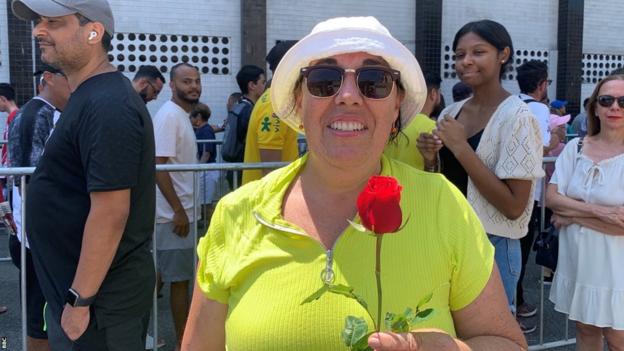
Beatrice woke up at six in the morning to travel with her husband from the city of Soracaba to Santos, and had been waiting for more than two hours in the queue.
“I’m determined to pay my final respects to him,” the 56-year-old told the BBC.
Beatrice queued for more than three hours to see Pele lying in state
When asked what Pele meant to Brazilians aside from football, Beatrice said he had helped unite modern Brazil, breaking through racist standards in Brazilian society to open the world of football and wider society to black Brazilians.
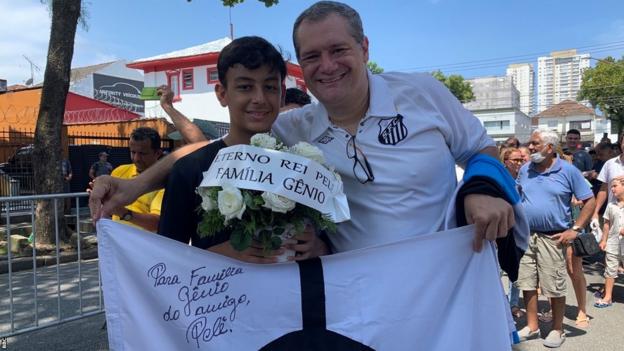
Wilson Genio queued with his 13 year old son Miguel, carrying white roses and a family treasure: a Santos Football Club flag personally signed by the legend himself.
The flag reads: “To the family Genio, your friend Pele”.
The Genio men had travelled overnight with the hearse carrying Pele’s body from Sao Paolo. “We followed him all the way. We’ve been here since 3.30am,” they said.
“We could pass another 1,000, 2,000 years and there will no one like Pele. He’s the one and only legend.”
Wilson Genio and his son Miguel queued to pay their respects with a signed flag from Pele himself
‘The whole city is drawn to the stadium’
The BBC’s Frances Mao in Santos
It is baking hot- about 30 degrees in Santos, but it feels like the whole city is drawn to the heart of Vila Belmiro stadium where Pele’s coffin lies.
A steady stream of mourners pass through the centre to pay their final respects – sometimes a smattering of applause breaks out as they pass his coffin. People from all over Brazil – and the outside world – have come. I spot a Mexican flag, a Dutch pin.
There are several news helicopters buzzing overhead. People are dressed in the striped black-and-white jerseys of the Santos Football Club – Pele’s team – or in Brazilian national team yellow jersey.
Pele’s voice blasts over the stands in the stadium – his 2006 song “Meu Legado”, meaning My Legacy, is playing on repeat.
Outside the stadium, a queue of thousands snakes for kilometres across half a dozen city blocks. It is a two-hour wait in the midday sun.
Men have taken off their shirts to wrap around their heads like bandanas. Others are fanning themselves with the tribute newspaper printed just for the day. Some have come prepared with hats, umbrellas and their tributes.
Sometimes a Mexican wave ripples through. There are occasional chants of Pele! Rei! But mostly, the crowds are patient in the heat, waiting for their turn to say goodbye.
Hundreds of fireworks were set off on Monday as Pele arrived at Santos’ stadiumThe city of Santos prepares to say goodbye to its hero Pele, who played 656 competitive matches for the clubSeveral authorities are expected to attend the memorial, including newly sworn-in Brazilian President Luiz Inacio Lula da SilvaPele’s body will lie in state at Santos’ stadium for 24 hours for the public to pay their respectsFifa president Gianni Infantino attended the memorialThousands of mourners from all around the world are expected to gather in Santos
Many found Salt Bae’s behavior at the World Cup to be outrageous.
A quick recap in case you missed it: after Argentina’s win against France in the finals, Salt Bae, or Nusret Gökçe, somehow found his way onto the pitch, where he held and kissed the FIFA World Cup trophy and bothered a handful of players, including Lionel Messi, into taking photos with him.
Due to his actions, he is no longer allowed to attend the U.S. Open Cup final in 2023. The official Twitter account for the soccer competition tweeted as much on Tuesday: “Salt Bae is hereby banned from the 2023 U.S. Open Cup Final.”
FIFA hasn’t yet announced any punishment. The organization has launched a probe into how he got onto the field after the game. Additionally, FIFA said that his appearance on the field breached World Cup rules, which say that only winners and heads of state can touch the trophy. The 18-carat World Cup Trophy costs around $21.3 million.
“Following a review, FIFA has been establishing how individuals gained undue access to the pitch after the closing ceremony at Lusail stadium on 18 December. The appropriate internal action will be taken,” the statement said, per Fox News.
Besides Messi, Salt Bae managed to get photos with Angel di Maria, Leandro Paredes, Nicolas Otamendi, Paulo Dybala, and Alexis Mac Allister, among others.
Former FIFA president Sepp Blatter criticized plans to expand the World Cup while accusing his successor Gianni Infantino of showing contempt.
The present 32-team format of football’s preeminent competition will not be used in the Qatar 2022 edition; instead, 48 nations will compete in the 2026 edition.
Since taking over for Blatter as the leader of FIFA, Infantino has advocated for growth and has looked into making the World Cup a biannual or triennial event.
However, his predecessor claims he is not acting in the sport’s best interests.
“What is happening at the moment is an over-commercialisation of the game,” he told German newspaper Die Ziet. “[It is] trying to squeeze more and more out of the lemon.
“[Look at] the World Cup with 48 teams, or a Club World Cup that must be viewed as competition to the UEFA Champions League. FIFA is meddling in something that doesn’t really concern them.
“I have no relationship with Infantino. He behaved disrespectfully because he has refused any contact with me since his election. He only communicates with me through lawyers.”
Infantino returned to an expansion that had been delayed by the COVID-19 outbreak earlier this month by announcing plans for a 32-team Club World Cup.
The idea is still awaiting confederation approval, and numerous elite teams are expected to object, especially in light of the failed European Super League breakaway.
Davido’s uncle, who doubles as the Governor of Osun State in Nigeria, Mr. Ademola Adeleke, has hailed the singer for what he described as an impressive show at the closing ceremony of the 2022 FIFA World Cup.
In a video shared on his social media platforms, Mr. Ademola Adeleke was captured in the company of some individuals grooving to Davido’s performance which took place in the presence of thousands of spectators gathered in the stadium.
He shared the said video with the caption;
“Myself and the beautiful people of Osun love you, Davido. We all watched your performance live and you put a smile on our faces. Thank you for representing the nation yet alone the state of Osun.”
However, the ‘Jowo’ hitmaker was supported by fans all over the world after he made his return to the stage, months after the demise of his three-year-old son.
The Nigerian Afrobeats superstar was among a host of artistes who entertained the audience at Lusail Stadium after Argentina’s clash with France in the World Cup final.
The 30-year-old singer performed the 2022 World Cup theme song alongside Dana, Aisha, Ozuna, Gims, Nora Fathi, Balqees, Rahma Riad, and Manal.
Canadian rap star Drake predicted Argentina’s hard-won victory at the FIFA World Cup finale yesterday, Sunday, December 18, 2022, but still lost his $1 million bet.
Drake had bet in the 1×2 market, which meant he was confident Lionel Messi and his side’s victory would come within the 90 minute period of the showdown.
The lacklustre game, with Argentina completely dominating France with possession and a 2-0 scoreline, suddenly turned into a nail-biting clash some minutes into the second half.
By end of 90 minutes and 8 minutes added time, the French star Kylian Mbappe had found the net three times, twice by a penalty, bringing the scoreline to 3-3.
This signalled that the ‘God’s Plan’ hitmaker had lost on his bet.
With France finding their rhythm and confidence heading into 30 minutes of extra time, it seemed the South Americans were on their way to becoming the latest victims of the Canadian rapper’s curse; almost always, when Drake, alias Drizzy, supports or bets on a sports figure, he or she loses their game.
After a demanding 30 minutes extra time, with Rodrigo De Paul crying on the bench, the Qatar 2022 climax came to penalities.
Argentina edged out France during the shootout, 4-2, to lift the World Cup.
Gonzalo Montiel scored the winning penalty for Argentina.
Had Drake’s Sunday morning bet and prediction proven accurate, he would have won $2.75 million.
FIFPRO claims that FIFA‘s “short-sighted” intentions to start a 32-team Club World Cup in 2025 are endangering the wellbeing of the players.
At a news conference on Friday, the football governing body presented their brief recommendations for the new iteration of the competition, which is presently played yearly by seven teams.
The FIFA Council met earlier in the day and authorized plans to move through with the expanded competition, which will be contested once every four years.
In addition, FIFA announced the creation of a Women’s Club World Cup and the alternating-year World Series event, which would feature nations from other continents.
However, the global union for professional football players has hit out at the announcement, claiming there had been no dialogue with FIFA prior to the competitions being ratified.
“FIFPRO took note with surprise of today’s decisions by the FIFA Council concerning the international match calendars for men’s and women’s football that could have serious consequences for and aggravate pressure on the welfare and employment of players,” the statement read.
“Despite an understanding FIFPRO reached with FIFA last week that a joint negotiation of the international match calendar would take place before the FIFA Congress in March 2023, these decisions were taken unilaterally without seriously consulting, let alone agreeing, with the players.
“The announcements today of a new format for the Club World Cup as of 2025, new principles for the Men’s and Women’s IMC [international match calendar] post-2024 and 2023 respectively, including the ‘rolling over’ of the current women’s IMC into 2024-25 which will cause severe congestion during the Olympic competition year, have created new conditions, that further increase pressure on player workload and their job.
“Once again, decisions to scale competitions without implementing appropriate safeguards are short-sighted and pay no attention to players’ health and performance.
“This decision once more shows that key stakeholders of the game are not being appropriately involved in decision making of football, even when it concerns the core of their fundamental rights.”
It was confirmed on Friday that Morocco will host the 2023 Club World Cup in February, when European champions Real Madrid will be seeking a record-extending fifth title.
“There will be a club World Cup with 32 teams held every four years. And the first edition would be held in the summer of 2025.
“It will be in the slot of the Confederations Cup,” Infantino said on Friday ahead of the World Cup final on Sunday between Argentina and France in Doha.
The current format of the tournament involves seven teams competing for the title, with Chelsea the current holders after victory over Palmeiras in the United Arab Emirates in the a delayed 2021 edition held in February.
This event has been pushed back several times, first due to COVID and then again in 2021 to accommodate the Copa and Euro. Infantino added.
FIFA must still discuss, agree on, and decide on the details. Infantino also mentioned that a women’s Club World Cup is in the works. FIFA’s governing body also established the FIFA Women’s Futsal World Cup.
In addition to FIFA’s club competition, the Under-17 World Cups will be moved to an annual format.
Gianni Infantino, the president of FIFA, said that the organization is moving on with plans for a 32-team Club World Cup, while the structure of the following World Cup would be reviewed.
For the first time since his extraordinary news conference at the commencement of Qatar 2022, Infantino spoke to the media in Doha on Friday.
On this occasion, he decided against a 45-minute opening speech and instead used the chance to give an update following a FIFA Council meeting earlier in the day.
Plans to move forward with a previously suggested expansion to the Club World Cup were authorized at that meeting.
Currently, the competition puts the champions of the major continental club competitions against one another every year. The new competition, which will take place every four years, will involve 32 teams from around the world.
“It will be a Club World Cup of 32 teams, every four years, and the first edition will be summer of 2025,” he said. “They will be the best teams in the world invited to participate.”
“I have to say, after this World Cup and the success of groups of four and looking at other competitions such as the Euros, here [four-team groups] have been incredible,” he added
“I think we have to revisit or at least re-discuss the format. This is something that will certainly be on the agenda.”
Speaking two days before Qatar 2022’s final, Infantino summarised the tournament as a success in every way, in his opinion, praising the behaviour of supporters.
“The World Cup has been an incredible success on all fronts,” said Infantino.
“The main one being the fans, the behaviour, the joyful atmosphere, the bringing of people together. The fans meeting the Arab world, it has been very important for the future of all of us.
“When it comes to the matches, we have seen some incredibly competitive games, some surprises, some great goals.
“At the end of the day, there was on average 10 minutes played as additional time every match. This was a very fair World Cup on the pitch, no simulations, not so many yellow and red cards.
“But this shows the compliment goes to the players and coaches, who maintained their calm, and of course the referees.”
FIFA turned down Volodymyr Zelensky’s request to deliver a message of world peace before the World Cup final kicked off on Sunday, a source told CNN.
According to the source, Zelensky’s office offered to appear in a video link to spectators in the stadium in Qatar before the game and was taken aback by the response. It’s not clear if Zelensky would deliver a live or recorded message.
“We thought FIFA wanted to use its platform for the greater good,” the source said.
However, talks between Ukraine and the sport’s governing body are still underway, the source added.
The request, while unorthodox, is unsurprising. Kyiv has repeatedly tried to use major world events, regardless of their theme, to keep the global spotlight on the war in Ukraine.
Zelensky has appeared via video at everything from the Group of 20 Nations summit to the Grammys and the Cannes Film Festival. He’s also done interviews and conversations with a diverse array of journalists and famous entertainers, including Sean Penn and David Letterman.
FIFA awarded Morocco on Friday the hosting rights for the upcoming Club World Cup, which will take place in February and grow to 32 teams in 2025.
From February 1 through 11, the usual seven-team competition will feature Real Madrid, the European champion, Flamengo, the South American champion, and Seattle Sounders, the first American team to win the CONCACAF Champions League.
After Morocco’s inspiring run to the World Cup semifinals in Qatar, the country will now stage the next global soccer event in six weeks’ time, FIFA’s ruling council decided.
It will be one of the last seven-team editions for continental champions with an expanded, month-long tournament planned to start in 2025.
FIFA president Gianni Infantino said the intended change was “making it really like a World Cup.”
In Morocco, Casablanca should stage games with the city set to provide two teams in the 10-day competition, which features continental champions from each of the six confederations in world soccer.
Wydad won Africa’s Champions League last season and also the Moroccan league. The place FIFA reserves for the host nation’s domestic champion should revert to league runner-up Raja. Both teams are based in Casablanca, where the 67,000-seat Stade Mohammed V is the likely venue for some of the eight Club World Cup games.
Morocco also hosted Club World Cups in 2013 and 2014, which were won by Bayern Munich and Real Madrid, respectively
Only European and South American teams have won the Club World Cup since it was revived in the current format in 2005.
FIFA has long wanted to launch an expanded version with 24 or 32 teams in a tournament played in June.
A planned inaugural edition in 2021 in China was cancelled because of the COVID-19 pandemic, though no tournament format had been agreed nor broadcasters or sponsors signed.
A 2025 launch is now planned, Infantino said, promising talks with soccer stakeholders after the ruling council approved the principle Friday.
It could be hosted in the United States and serve as a test event for the 2026 World Cup, which is being hosted in the U.S., Canada and Mexico.
Morocco’s national football association (FMRF) has complained to FIFA over the refereeing following their World Cup semifinal loss to France.
WHAT HAPPENED? Morocco believe they should have been awarded a penalty when Sofiane Boufal went down in the box in the first half, but referee Cesar Ramos booked the winger for a foul on Theo Hernandez instead. They were also upset about the refusal to act when Selim Amallah was brought down in the second half.
WHAT THEY SAID: The FMRF said in a statement confirming their complaint: “The FMRF has written to the relevant body to review the refereeing decisions that deprived the Moroccan team of two penalties that were indisputable in the view of several refereeing specialists. The FMRF was equally astonished that the video assistant referee (VAR) did not react to these situations.”
THE BIGGER PICTURE: The decisions may have proved crucial for Morocco as they went crashing out of the World Cup, losing 2-0 due to goals from Theo Hernandez and Randal Kolo Muani.
WHAT NEXT FOR MOROCCO? After their semi-final loss, Morocco will take on Croatia on Saturday to decide who finishes third in the competition.
The Ghana Football Association (GFA) has decided to donate more than 33,000 footballs to schools throughout the nation in collaboration with FIFA, UNESCO, the Ministry of Youth & Sports, and the Ministry of Education.
Through this project, football will be used as a vehicle for social development, and schools will get support to better the lives of schoolchildren around the nation.
Students between the ages of 4 and 14 may participate in this program through FIFA’s Football for School initiative at schools that have physical education teachers who are certified to do so.
In January 2023, the GFA will launch this program in collaboration with the Ministries of Education and Youth and Sports.
In the growth of grassroots football in Ghana, schools and colleges continue to play a significant role in the Ghana Football Association.
FIFA will send approximately 33,000 footballs to Ghana, and it is anticipated that the Ministry of Education will assist in clearing the footballs to ensure a prompt program launch and an equitable distribution to schools in all areas and for boys and girls.
FIFA has confirmed a new match ball will be used for the final stages of the World Cup.
The Al Hilm, which succeeds the Al Rihla, will be used in the semi-finals, third-place play-off and final of Qatar 2022, having been introduced for the last four games by adidas.
The existing ball, which has been implemented with technology to assist in tracking and helping referee decisions across the tournament, has been used so far across the group stages and initial knockout rounds.
But the Al Hilm, which will come with a gold base design and triangular pattern paying tribute to the deserts surrounding major host city Doha, will now take its place.
Adidas general manager Nick Craggs said: “Al Hilm represents a beacon of light on the power of sport and football to bring the world together.
“Millions will tune in from almost every country around the globe, united by their passion for the game. We wish all teams involved in the final stages of the tournament the best of luck.”
The semi-finals have been set for Qatar 2022, with 2018 winners France and runners-up Croatia both potentially in line for a rematch in the final four years on.
The pair will play Morocco, the first African nation to reach the last four in the tournament’s history, and former winners Argentina respectively.
South American champions Argentina prevailed 4-3 on penalties at Lusail Stadium, having earlier squandered a two-goal lead to draw 2-2 as the game went the distance.
Referee Antonio Mateu Lahoz issued 15 cards to players who played a part in the game – the most in World Cup history, overtaking Cameroon versus Germany in 2002 (14).
Netherlands defender Denzel Dumfries was also shown a red card after the match.
There was a big flashpoint in the 89th minute when Leandro Paredes committed a foul on Nathan Ake and then booted the ball into the Netherlands’ dugout.
Both sets of players and coaching staff squared off, though tensions again threatened to boil over in extra-time and also in the subsequent penalty shoot-out.
FIFA announced in a statement on Saturday that proceedings have been opened against the Argentinian Football Association and the Dutch Football Association.
The charge relates to a possible breach of article 12 of the FIFA Disciplinary Code – the misconduct of players and officials.
Lionel Scaloni’s side are also being investigated over an additional potential breach of article 16, which relates to order and security at matches.
After hosting seven matches in two weeks at Qatar 2022, Stadium 974 – the World Cup’s first temporary stadium and the country’s “beacon of sustainability” is set to be pulled down.
Named after Qatar’s international dialling code and the number of shipping containers used in its construction, Stadium 974 was one of seven grounds built for the tournament, while an eighth was extensively redeveloped.
The infrastructure of Stadium 974 can be repurposed for another World Cup or major sporting tournament with similar size or several smaller facilities.
The 44,089-capacity Stadium 974 which sits on Doha’s stunning waterfront presents an array of multicoloured shipping containers and linked steel frames that can be seen from outside the stadium. It contains toilet facilities, tea kiosks and food stands.
Qatar’s intent derives from its pledge to deliver the first carbon-neutral World Cup. Apart from the seven new stadiums, Qatar has a new airport, metro system, roads and about 100 new hotels. Many have thrown flacks at the government over concerns about the mistreatment of thousands of migrant workers who built the infrastructure.
Because it was the only stadium built for the World Cup without air conditioning, it hosted only evening matches, culminating in Brazil’s last-16 victory over South Korea on December 5.
Deploying shipping containers and recycled steel helped reduce waste generated and construction time compared to the other new venues.
The designers Fenwick Iribarren Architects and the Qatari government said they aimed to avoid building a “white elephant”. It wasn’t meant to be a facility rarely used after a tournament, as has proven the case following the three previous World Cups in Russia, Brazil and South Africa.
A report into Stadium 974 commissioned by FIFA and delivered by emission reduction experts pointed out that reusing existing dismountable structures could be widely replicated. It allows stadiums to be assembled in more central and “easily accessible” locations, thereby reducing “intra-city fan travel” during competitions.
There are indications that the dismantled Qatar stadium will be shipped to Uruguay, where it could host the 2030 World Cup.
In honor of International Human Rights Day, FIFA will broadcast anti-discrimination messages during the World Cup quarterfinal games on Friday and Saturday.
The #NoDiscrimination hashtag will be shown on the enormous screens and LED boards within the stadiums thanks to a partnership between FIFA and the World Health Organization (WHO).
The World Cupin Qatar has drawn significant criticism for the host country’s standards of human rights, particularly for its attitudes toward same-sex marriage and its treatment of the migrant workers who built the tournament’s infrastructure.
The Athletic reported on Wednesday that a Filipino man in his early 40s passed away while working at the Saudi Arabian base during the group round.
When questioned on the incident the chief executive of Qatar 2022, Nasser Al Khater, told the BBC: “Death is a natural part of life, whether it’s at work or in your sleep.”
FIFA also declined to comment on the reports, with its secretary general Fatma Samoura saying to Reuters: “We’ve already elaborated… about what we are doing in Qatar.
“We are talking about things we have already discussed for months and months, time and time again.”
Ahead of International Human Rights Day on Saturday 10 December, FIFA and @WHO will reinforce the message that there is no place for discrimination of any kind, anywhere.
However, FIFA announced its decision to observe International Human Rights Day on December 10, stating in a press statement that discrimination is one of the most widespread types of abuse and violation of human rights.
“FIFA and the World Health Organization (WHO) will mark International Human Rights Day on Saturday, 10 December by reinforcing the message that there is no place for discrimination of any kind, either in football or in society in general.
“During the FIFA World Cup quarter-final matches on 9 and 10 December, the #NoDiscrimination message will feature on giant screens and LEDs in stadium and, as during the whole of the tournament, on the captains’ armbands.”
According to The Athletic, the Filipino national died after collapsing while performing maintenance at a resort that served as a base of operations for the Saudi Arabian team.
The organization that governs football worldwide stated that it had been informed of an accident but withheld further information.
It stated that it was speaking with the local authorities to get additional information.
“Fifa is deeply saddened by this tragedy and our thoughts and sympathies are with the worker’s family,” it said.
“Fifa will be in a position to comment further once the relevant processes in relation to the worker’s passing have been completed.”
Qatar’s treatment of migrant workers has been one of the main controversies overshadowing the build up to the World Cup.
A report by the Guardian newspaper last year said 6,500 migrant workers had died in Qatar since the country was awarded the World Cup in 2010.
That figure has been rejected by the Qatari authorities, who say there have been three work-related deaths in construction related directly to the tournament and a further 37 non work-related deaths.
World Cup officials say a number of reforms to improve the health and safety standards for migrant workers have been implemented in recent years, and that they are “committed” to making more improvements as a legacy of the tournament.
Human rights organisations and a number of football associations whose countries are involved in the tournament say they will “continue to press” Qatar and Fifa to establish a compensation fund for migrant workers and their families, as well as the establishment of a migrant worker centre in Doha.
Fifa expressed its sorrow over the alleged death of a migrant worker at a World Cup facility in Qatar.
The organisation says it is “deeply saddened” following the reported death of a migrant worker at a World Cup facility in Qatar.
The Filipino national fell to his death while carrying out repairs at a resort used as a training base by the Saudi Arabian team, The Athletic reported.
Football’s world governing body said it had been made aware of an accident, without giving details of the incident.
It added it was in touch with the local authorities to request more details.
“Fifa is deeply saddened by this tragedy and our thoughts and sympathies are with the worker’s family,” it said.
“Fifawill be in a position to comment further once the relevant processes in relation to the worker’s passing have been completed.”
Qatar’s treatment of migrant workers has been one of the main controversies overshadowing the build up to the World Cup.
A report by the Guardian newspaper last year said 6,500 migrant workers had died in Qatar since the country was awarded the World Cup in 2010.
That figure has been rejected by the Qatari authorities, who say there have been three work-related deaths in construction related directly to the tournament and a further 37 non work-related deaths.
World Cup officials say a number of reforms to improve the health and safety standards for migrant workers have been implemented in recent years, and that they are “committed” to making more improvements as a legacy of the tournament.
Human rights organisations and a number of football associations whose countries are involved in the tournament say they will “continue to press” Qatar and Fifa to establish a compensation fund for migrant workers and their families, as well as the establishment of a migrant worker centre in Doha.
FIFA President Gianni Infantino has asserted that the 2022 World Cup has been a “fantastic success,” pushed along by the best group stage in the competition’s history.
Speaking on the first rest day of the World Cup, Infantino said: “I have seen all the matches, indeed, and put very simply and very clearly, this has been the best group stage of a FIFA World Cup ever.
“So, it’s very promising for the remainder of the FIFA World Cup.
“The matches have been of great, great quality in beautiful stadiums – we knew that already. However, as well, the public who was there was incredible. Over 51,000 on average.
“Record-breaking figures on TV – we already had over two billion viewers, which is really incredible.
“Two and a half million people in the streets of Doha and a few hundred thousand every day in the stadiums, all together, cheering together, supporting their teams, fantastic atmosphere, great goals, incredible excitement and surprises.”
Following an unprecedented opening address in which he disregarded several critiques and controversies surrounding the finals, FIFA president Infantino was under fire as Qatar 2022 got underway.
Even though there have been more of these incidents during the tournament, most notably the controversy surrounding the OneLove campaign, Infantino thinks the product on the field has improved.
No side finished the group stage with nine points out of a possible nine, since there were several surprises, most notably Argentina’s defeat to Saudi Arabia and Germany’s early exit.
These surprises have continued into the round of 16, with Morocco eliminating Spain on Tuesday via penalties.
“For the first time as well, national teams from all continents going to the knock-out phase, for the first time in history. This shows that football is really becoming truly global.”
Infantino expects the finals to conclude in a similarly entertaining manner.
“We hope that the FIFA World Cup continues and concludes as it has started – a fantastic success,” he said. “I am sure that we will reach the five billion viewers around the world.
“When it comes to stadium attendances, the stadiums are sold out, full practically at every match. The fan festivals, the different fan zones, are also very crowded with people celebrating and enjoying [themselves].
“And at the end [of the day], we simply want to give some joy and some smiles to people all over the world. That’s what football is about, that’s what the FIFA World Cup is about, and that’s what should also happen from now until the end.”
Eight nations are eyeing to win the championship in Qatar on December 18 as the 2022 Fifa World Cup reaches its pinnacle.
Portugal defeated Switzerland on Tuesday, winning 6-1 to complete the quarterfinal line-up.
Morocco, who are the only African country left earlier defeated Spain 3-0 on penalties, after a goalless 120 minutes, to become only the fourth African country to reach the quarter-final stage of a World Cup.
Uruguay striker Luis Suarez has expressed his displeasure after FIFA denied him access to meet his wife and children after the 2-0 win over Ghana at the 2022 World Cup in Qatar.
Ghana skipper Andre Ayew missed a penalty in the 21st minute as his kick was saved by Uruguay goalkeeper Sergio Rochet following a foul on Mohammed Kudus.
Uruguay went on to win the game 2-0 thanks to goals from Giorgio de Arrascaeta in the 26th and 32nd minutes of the game but it was not enough as teams went out of the tournament.
Suarez explained to TeleDoce after the game: “I saw a France player with his children on the substitute bench. So why always (is it a problem) against Uruguay?”
“It seems that we have to have another power at the media level to have access to have my children to allow them come down for a second to greet me, but hey, that’s FIFA.”
Amid a report that FIFA accused Ethiopian Broadcasting Corporation (EBC) of illegal piracy of FIFA World Cup Qatar 2022 matches, Addis Zeybe learned from its sources at EBC that the national TV claims to have an agreement granting it the right to broadcast all the matches of the competition.
This has resulted in a heated controversy between the two parties, while EBC kept on broadcasting the matches despite FIFA’s alleged cautionary notice.
A Kenyan football news portal, Soka25east.com, disclosed on Nov 29 that FIFA has threatened the Ethiopian Broadcasting Corporation (EBC) with the permanent withdrawal of any FIFA rights accusing EBC of illegal piracy of the FIFA World Cup 2022 matches.
According to the report, EBC had only acquired the media rights to 28 matches for the FIFA World Cup but the Ethiopian broadcaster had repeatedly and illegally pirated the broadcast signal from a large number of matches for which “it had not acquired a valid license going against the terms and conditions in its media agreement with FIFA free-to-air license for the territory”.
EBC’s sports department official who preferred to speak anonymously told Addis Zeybe that the prior agreement between FIFA and EBC is to broadcast “all the Qatar 2022 World Cup games”. But later EBC is approached with a new deal arrangement that allows it to only broadcast 28 matches which EBC refused to accept. He said, “when this happened EBC proposed options of paying more money or its initial payment getting refunded”.
“We refused to comply with their new [28 matches scheme] because we’ve already informed the public and even got into sponsorship deals. So since we got the FIFA rights to broadcast all the matches with our first agreement, we have decided to go forward accordingly. There wasn’t anything that says ‘28 matches’ in the initial document.”
A private local radio, Tirita, came up with a report on Nov 28 that firms that dealt an agreement with EBC to sponsor the World Cup matches issued a complaint with the allegation that EBC shouldn’t have announced to televise all the 64 matches when it’s only allowed to broadcast 28 games.
Addis Zeybe’s source at EBC explained that despite the fact that EBC had signed an agreement with FIFA to broadcast the complete matches, FIFA didn’t even send the national TV the signals of the 28 matches it admitted to having given EBC the right to broadcast.
“Full payment is settled for all the matches according to the first agreement. And since we paid not EBC’s but the Ethiopian people’s money, we are obliged to broadcast the matches irrespective of the outcome and will continue to do so. We are working to resolve the disagreements though.”
Soka25east.com’s report stated that “despite FIFA pointing out the issue of the illegal breach to EBC it is said that they continued the piracy operations of the said signal”.
Tirita radio’s report also added that FIFA media rights licensees in Ethiopia have claimed that EBC violated the agreement by pirating and broadcasting the matches it is not licensed with and would report the breach to FIFA.
EBC’s official believes the dispute may not have been basically incited by FIFA as an institution but by corrupt individuals/agents in the association and is plausibly fueled by the business interests of private satellite TV broadcasters operating locally.
“Such private sports satellite broadcasters operating in Ethiopia would possibly conspire to get EBC prohibited from having full rights to air the matches. This is because if a national broadcaster is granted such rights, their local market is expected to be affected,” he said.
FIFA’s official document on media licensees for Qatar 2022 World Cup shows that SuperSport International, New World TV (Free to Air), BBC Radio Sub-Sahara, and RFI – Radio France International are licensed to broadcast the matches from FIFA while Ethiopian Broadcasting Corporation (EBC) is licensed to televise the matches from New World TV (Free to Air).
It is indicated in Soka25east.com’s news that “FIFA has threatened to exclude EBC from the FIFA Family of broadcasters such that the Ethiopian national broadcaster will no longer be permitted to acquire commercial rights from FIFA directly or indirectly.”
Following the widespread departure of the club’s board, including president Andrea Agnelli, LaLiga has demanded that UEFAimpose “immediate sport consequences” against Juventus.
Following an urgent meeting on Monday, Juve declared that Agnelli, vice president Pavel Nedved, and managing director Maurizio Arrivabene had all resigned from their positions.
It comes after Juventus reported a record deficit of €254.3 million for the 2021–2022 season and as a result of an inquiry into an alleged tax fraud, which Juventus has disputed.
“Following the resignation of the Juventus board of directors, LaLiga demands immediate sports sanctions to be applied on the club,” read a league statement.
“LaLiga filed an official complaint against Juventus with UEFA in April 2022 reporting financial fair play breaches being investigated by Italy´s Guardia di Finanza.
“Specifically, the complaint charges that Juventus accounted for transfers above fair value and under accounted for employee expenses, resulting in a breach of UEFA break even requirements.
“This Monday, in the same statement announcing the resignation of its board, Juventus acknowledges financial accounting irregularities, which are also aimed at misleading UEFA financial fair play authorities, among others.
“LaLiga continues to pursue these complaints against Juventus and demands immediate sporting sanctions to be applied on the club by the relevant authorities.”
Javier Tebas, the president of LaLiga, has enforced a high standard of financial restraint among the league’s clubs and has regularly clashed with the state-owned business models of Manchester City and Paris Saint-Germain.
In addition, he was one of Agnelli’s most outspoken detractors of Juventus and the attempts of Barcelona and Real Madrid, two of the teams he oversaw, to form the independent European Super League.
“LaLiga has long been a major proponent for the implementation, application, and enforcement of strong financial sustainability rules in football,” the statement added.
“Financial sustainability is paramount to protecting the business of football. Protect our football.”
FIFA has lifted the suspension on the Kenya Football Federation (FKF) following the local government’s decision to reinstate the body after it was dissolved over suspicions of corruption, the sports minister said on Monday.
A letter from Fifa on Monday, seen by AFP, said it had “decided on November 25, 2022 to lift the suspension of the FKF with immediate effect.”
In February, world football’s governing body had suspended the FKF, citing government interference after authorities shut down the organisation last year over allegations of corruption.
In November, Sports Minister Ababu Namwamba announced that the federation would be reinstated, but warned former leader Nick Mwendwa, who is facing corruption charges, not to return to the KFK until the case was concluded.
Namwamba told reporters in Nairobi that he had met Fifa officials in Qatar to discuss the suspension.
“I would like to express my joy for Kenya making a comeback (on the scene) of international football,” he said.
“I am happy that FIFA has made it clear that certain issues of integrity, accountability and good governance in football will be addressed and that the judicial investigations will remain ongoing,” he added.
The FKF was dissolved in November 2021 after an investigation into its finances revealed it had failed to account for funds received from the government and other sponsors.
Its leader Nick Mwendwa was arrested the same month.
The case was dropped for lack of evidence, but Mr Mwendwa was re-arrested in July 2022 on new charges of misappropriating 38 million shillings, about €312,000.
Iranian football federation slams ‘unprofessional act’ as US footballbody uses modified flag in social media posts.
Iran’s football federation says it has lodged a complaint to FIFA over the removal of the word “Allah” from the Islamic Republic’s flag on social media posts by its counterpart in the United States, ahead of an upcoming World Cup game between the two countries.
“In an unprofessional act, the Instagram page of the US football federation removed the Allah symbol from the Iranian flag,” state news agency IRNA reported on Sunday.
“The Iran Football Federation sent an email to FIFA to demand it issue a serious warning to the US federation,” it added.
There was no immediate public response from world football’s governing body to the reported complaint, which came as the US prepares to face Iran in a decisive World Cup match on Tuesday — a fixture already burdened by the decades of enmity between the countries.
The US and Iran cut diplomatic relations in 1980.
Show of ‘support’ for Iran protests
The United States Soccer Federation (USSF) said in a statement on Sunday morning it had decided to forego the official flag on social media accounts in a show of solidarity with the “women in Iran fighting for basic human rights” in the wake of the death of 22-year-old Iranian woman Mahsa Amini in police custody.
The Islamic Republic’s flag consists of three horizontal bands in red, white and green with the word “Allah” appearing in stylised script in the middle.
The Twitter account of the US men’s team displayed a banner with the squad’s matches in the group stage, with the Iranian flag only bearing its green, white and red colours. The same was seen in a post on its Facebook and Instagram accounts laying out the point totals so far in its group.
By Sunday afternoon, the normal flag with the emblem had been restored in the Twitter banner, and the Facebook and Instagram posts with the altered flag had been removed.
“We wanted to show our support for the women in Iran with our graphic for 24 hours,” the federation said.
The United Nations says more than 300 people have been killed amid a crackdown on the protests which erupted in the wake of Amini’s death in September, and some 14,000 have been arrested, including children. Iran has accused the US and other foreign states of fomenting the demonstrations, without providing evidence.
Iran’s Tasnim news agency said on Twitter that the US team had “breached the FIFA charter,for which a 10-game suspension is the appropriate penalty”.
The US team “should be kicked out” of the World Cup, it added.
By posting a distorted image of the flag of the Islamic Republic of #Iran on its official account, the #US football team breached the @FIFAcom charter, for which a 10-game suspension is the appropriate penalty.
Team #USA should be kicked out of the #WorldCup2022pic.twitter.com/c8I4i4z3Tv
It is not expected that FIFA will take any such action.
Meanwhile, the two nations’ prospects on the pitch at the World Cup remain finely posed.
Iran’s dramatic 2-0 win over Wales and the US team’s tense goalless stalemate against England on Friday set up a tantalising final round of Group B matches.
England, sitting top with four points, face the bottom side Wales, meaning the Iran-United States contest will decide which team goes through to the round of 16.
The eagerly awaited meeting is a rematch of the 1998 World Cup groupstage contest, dubbed the “mother of all games”, which Iran won 2-1. In a symbolic moment before that match at Lyon’s Stade Gerland, the Iranian players gave white roses, a symbol of peace in the country, to their American opponents.
Fifa+ has worked out all the potential scenarios for every team in terms of qualifying and going out.
France are the first team to progress, while Qatar and Canada are out
Brazil and Portugal have the chance to qualify in their second fixtures
These calculations will be updated after every match
Who needs what to make it through to the Round of 16 at the Fifa World Cup Qatar 2022™? And who could soon be on their way home?
With Matchday 2 now underway, Fifa+ has analyzed all the key scenarios going forward.
Group A
Ecuador-Senegal (29 November, 18:00 local time)
Netherlands-Qatar (29 November, 18:00 local time)
Netherlands need to win or draw to qualify. They will still qualify if they lose, provided Ecuador beat Senegal.
Ecuador need to win or draw to qualify. They remain in contention to qualify if they lose and Qatar beat the Netherlands.
Senegal need to win to qualify but remain in contention if they draw and Qatar beat the Netherlands.
Qatar are eliminated.
Group B
Wales-England (29 November, 22:00 local time)
IR Iran-USA (29 November, 22:00 local time)
England will qualify with a win or draw. Depending on goal difference, the Three Lions could also make it through in defeat.
Wales must win to have any chance of progressing.
IR Iran are guaranteed to progress if they beat the USA.
A draw will also take the Iranians through provided Wales do not beat England (in which case goal difference will come into play).
For the USA, it’s simple: win and they are through. Lose or draw and they will be heading home.
Group C
Saudi Arabia v Mexico (30 November, 22:00 local time)
Poland v Argentina (30 November, 22:00 local time)
Poland will be through with a win or a draw but would be knocked out by a defeat coupled with a Saudi Arabia victory. If Poland lose and Saudi Arabia draw, the two teams will have to be separated by goal difference. If Poland lose and Mexico win, their fate will also be decided by goal difference.
Argentina must win to be sure of progressing, while a draw would be enough if Mexico and Saudi Arabia also draw. However, a draw coupled with a Saudi Arabia victory would see La Albiceleste knocked out, and a draw coupled with a Mexico win takes the group to a goal difference. Argentina are out if they lose.
Saudi Arabia will reach the Round of 16 if they win. A draw would be enough if Poland defeat Argentina, but if both matches are tied, they will go out. Should Argentina defeat Poland and Saudi Arabia draw, progress will be decided othe n goal difference between the European and Middle East sides. Defeat would see them knocked out.
Mexico must win to have any chance of staying in the competition. They will be sure to go through if Poland win. If they win and Argentina and Poland draw, it will come down to goal difference with Argentina. Should Argentina win, goal difference will be required to separate Mexico and Poland.
Group D
Tunisia-France (30 November, 18:00 local time)
Australia-Denmark (30 November, 18:00 local time)
France are already qualified and will top the group unless they lose to Tunisia and Australia beat Denmark, which would leave them tied on six points with the Socceroos.
Victory will see Australia qualify, while a draw would be enough unless Tunisia beat France, which would see the North African side go through on goal difference.
Denmark must win against Australia and, if they do so, will be certain to qualify unless Tunisia beat France, which would leave them tied on four points with the Carthage Eagles.
Tunisia must beat France and hope Denmark avoid defeat by Australia to be in contention to qualify.
Group E
Costa Rica-Germany (1 December, 22:00 local time)
Japan-Spain (1 December, 22:00 local time)
Spain will qualify for the Round of 16 with a win or a draw. Defeat to Japan will leave them relying on their currently superior goal difference to progress unless Costa Rica beat Germany, in which case Luis Enrique’s side will be out.
Japan can go through with a victory against Spain, while a draw, coupled with deadlock in Costa Rica v Germany clash, will ensure they progress. They will go out if they are beaten by Spain, or if the match ends in a draw and Costa Rica triumph against Germany. Goal difference will be required to decide their fate if they draw and Germany are victorious.
Costa Rica can reach the last 16 by defeating Germany. A draw for Luis Fernando Suarez’s side would also guarantee a spot in the next phase if Spain overcome Japan, but if the current group leaders are beaten then goal difference comes into play. A draw in both games or a defeat for Costa Rica puts them out.
Germany must pick up three points to stay in contention. Victory over Costa Rica coupled with a win for Spain against Japan will see them qualify. A draw between Luis Enrique’s side and the Samurai Blue, or a win for Japan, would take the equation to goal difference. All other results would see Hansi Flick’s men out of the competition.
Group F
Canada-Morocco (1 December, 18:00 local time)
Croatia-Belgium (1 December, 18:00 local time)
Croatia are through if they win or draw. Defeat would leave them needing eliminated Canada to overcome Morocco, in which case goal difference would be required to separate Zlatko Dalic’s side from the Atlas Lions.
Morocco are through if they win or draw. Defeat would leave them needing Belgium to overcome Croatia, in which case goal difference would be required to determine if they or the 2018 runners-up progress to the last 16.
Belgium will qualify for the Round of 16 with a victory over Croatia. Defeat will see them knocked out. A draw will only be enough if Morocco are beaten by Canada, with a goal difference then set to determine where Roberto Martinez’s side and Walid Regragui’s outfit finish in Group F.
Canada are already eliminated after losing their opening two fixtures.
Group G
Cameroon-Serbia (28 November, 13:00 local time)
Brazil-Switzerland (28 November, 19:00 local time)
A defeat would knock Serbia out if Brazil fail to win against Switzerland.
A win would Brazil see through if Cameroon fail to win against Serbia.
A defeat would knock Cameroon out if Switzerland fail to win against Brazil.
A win would see Switzerland through if Serbia fail to win against Cameroon.
Group H
Korea Republic-Ghana (28 November, 16:00 local time)
Portugal-Uruguay (28 November, 22:00 local time)
A win would see Portugal into the Round of 16.
A defeat would put Ghana out.
Uruguay and Korea Republic can neither qualify nor be eliminated on Matchday 2.
TIEBREAKER INFORMATION
If two or more teams in the same group are equal on points after the completion of the group stage, the following criteria, in the order below, shall be applied to determine the ranking:
STEP 1:
(a) greatest number of points obtained in all group matches;
(b) superior goal difference in all group matches;
(c) greatest number of goals scored in all group matches.
STEP 2:
If two or more teams in the same group are equal on the basis of the above three criteria, their rankings will be determined as follows:
(d) greatest number of points obtained in the group matches between the teams concerned;
(e) superior goal difference resulting from the group matches between the teams concerned;
(f) greatest number of goals scored in all group matches between the teams concerned;
(g) highest team conduct score relating to the number of yellow and red cards obtained;
Fifa has opened disciplinary proceedings against Serbia’s football association after its team hung a controversial flag depicting Kosovo in their dressing room prior to their World Cup defeat by Brazil.
The flag showed an outline of Kosovo filled with the Serbiaflag, with the words ‘no surrender’.
Tensions are running high between ethnic Serbs and the Albanian-led government in Kosovo, amid fears violence could flare up again, 23 years after the Kosovo war.
Kosovo declared independence from Serbia in 2008 but Serbia – an ally of Russia – does not recognise it as an independent country.
On Friday, the Football Federation of Kosovo (FFK) submitted a complaint to Fifa, football’s world governing body, over Serbia’s “chauvinistic rhetoric”.
In a statement, it said: “Such acts of chauvinism have no place in a sports event, and even less inside the facilities where the biggest event of world football takes place, therefore FFK, as an equal member with all other members of Fifa, demands from this institution to undertake sanctioning measures against actions that incite hatred between peoples and are against human values.”
It added: “It is unacceptable for this act to pass in silence, therefore we strongly request that Fifa strictly implement its rules and punish the football federation of Serbia for this aggressive action and against the values that football conveys.”
Kosovo’s sports minister, Hajrulla Ceku, said it expected “concrete actions” from Fifa against Serbia’s “hateful, xenophobic and genocidal messages”.
Fifa’s proceedings were opened on the basis of article 11 of the Fifa disciplinary code, which is “offensive behaviour and violation of the principles of fair play” and includes “using a sports event for demonstrations of a non-sporting nature”, as well as article four of the regulations for the 2022 World Cup which refers to team’s responsibilities at the tournament.
Kosovo was accepted into Uefa and Fifa in 2016 but under Uefa rules, Serbia and Kosovo can not play each other in World Cup qualifying because of the tensions between the two countries.
Serbia were beaten 2-0 by Brazil in their World Cup opener in Qatar on Thursday, and play Cameroon in their next Group G fixture on Monday.
Cristiano Ronaldo has been called a “total genius” by Fifafor the way in which he won a penalty for Portugal in their World Cup victory over Ghana.
The 37-year-old converted from the spot to become the first man to score at five different Fifa World Cups.
Portugal won 3-2, but the awarding of the spot-kick outraged Ghana boss Otto Addo, who said it was “not a penalty”.
At a briefing in Doha, Fifa technical study group (TSG) member Sunday Oliseh said strikers are “getting smarter”.
The TSG, which is led by former Arsenal manager Arsene Wenger, looks at each match and provides analysis including performance data and trends.
After 20 games in this tournament, nine penalties have been awarded, which is on track to reach the previous record of 24 that were given in the group stages in Russia four years ago.
Poland’s Robert Lewandowski and Canada’s Alphonso Davies have seen their efforts saved, while the remaining seven have been scored.
This includes Ronaldo, who went down under a challenge from Southampton defender Mohammed Salisu. Former England defender Matt Upson, speaking on BBC Radio 5 Live, called it a “dive”.
Ghana boss Addo was left fuming after the defeat and told BeIN Sports: “The referee gave a penalty which was not a penalty – everyone saw that. Why? Because it’s Ronaldo or something?
“The referee was not in our favour.”
But former Nigeria international Oliseh, who played at the 1998 World Cup, feels Ronaldo was clever in his movement to win the penalty that allowed him to score his 118th international goal.
“Maybe the strikers are getting smarter?” said Oliseh.
“The Ronaldo penalty, people can say what they want about him, but the smartness to wait for that second, to touch the ball, continue his leg and then get the contact. That is total genius.
“Let’s give strikers the compliment for getting smarter. VAR is also a major reason why this (more penalties being awarded) is happening. Referees can look at it three or four times.”
‘Teams will become braver’
There were four goalless games in the opening 16 matches, which set a new record of 25% in the first round of group games.
A fifth followed on Friday as England and the United States played out a stalemate in their second game of the tournament in Qatar.
The record number of 0-0 draws at the World Cup stands at seven, which happened at four different editions of the tournament, but Qatar 2022 is already close to that tally with only 20 of the 64 scheduled games completed before Saturday’s matches.
At the last World Cup in Russia, there was one goalless draw, between Denmark and France in a group game.
“Teams have not wanted to take too much of a risk,” said Oliseh.
“Clearly many teams are relying on a cautious approach,” added colleague Alberto Zaccheroni, who won Serie A with AC Milan and the Asian Cup when he was the coach of Japan.
“But as the tournament progresses we will see teams become a bit braver.”
Players ‘feeling comfortable’ with matchball
A total of 49 goals have been scored in the 20 matches played by the end of Friday, 25 November.
The first round of 16 games did not see a single goal scored from outside the box. Two have been scored from distance in the four games so far played in the second round of matches, which is significantly fewer than at this stage in the past two tournaments.
Iran’s Roozbeh Cheshmi broke the trend on Friday with a rasping strike against Wales, while later in the day, the Netherlands forward Cody Gakpo scored in a 1-1 draw with Ecuador.
The ‘Al Rihla’ match ball developed for the World Cup is described by Fifa as “travelling faster than any ball” in the tournament’s history.
Global football’s governing also said the ball “provides the highest levels of accuracy and reliability on the field of play”.
TSG member Faryd Mondragon, who played in goal for Colombia at the 1998 World Cup, told BBC Sport: “Technology has improved the game, it is helping the ball, boots, gloves, data. Everything is for the improvement of the game.
“When you have good shooters, any kind of ball will be fast and dangerous. I have spoken with friends from all over the world, this is a ball they are all feeling comfortable with.
“Us goalkeepers are always talking about the fast-moving ball but everything is for the good of the game.”
Ghanaian Sports Journalist, Saddick Adams has called on the Federation International de Football Association (FIFA) to take action against Referee Ismail Elfath.
The performance of the referee has been condemned by Ghanaians and some football fans after Portugal and Ghana’s match in the World Cup 2022.
Some decisions by the referee have been questioned.
His refusal to check the VAR after a protest from Ghanaian players on a penalty award to Portugal and a supposed offside goal scored by João Félix have been the concerns of most people sympathizing with Ghana.
In a post on Twitter, Saddick asked FIFA to review and suspend the referee.
According to him, this is a public protest.
The Angel FM/TV sports presenter wrote: “Dear @FIFAcom, this is a public protest asking you to review and suspend this referee, Ismail Elfath.
He’s an apology of a referee and shouldn’t be doing this at this level. Game changing decisions without remorse.
Portugal beat Ghana by 3-2 in the Group H opener of the World Cup 2022.