Tag: film

  • Inside Out 2 becomes the highest-grossing animated film of all time, six weeks after its release

    Inside Out 2 becomes the highest-grossing animated film of all time, six weeks after its release

    Inside Out 2 has surged to become the highest-grossing animated film ever, amassing $1.46 billion globally just six weeks post-release. This sequel to the 2015 hit Inside Out has surpassed the previous record held by Frozen II, which earned $1.45 billion in 2019. The film‘s earnings are expected to climb further, with its release in Japan still pending.

    Currently, Inside Out 2 has outpaced Barbie—last year’s top-earning film, which brought in $1.45 billion. However, it still trails behind Disney’s 2019 live-action remake of The Lion King, which grossed $1.65 billion, although it is categorized as a live-action film despite its computer-generated nature.

    With this achievement, Inside Out 2 stands as the 13th highest-grossing film of all time. It has a long way to go to surpass the leaders in the global box office race: Avatar at $2.9 billion and Avengers: Endgame at $2.7 billion.

    Of the film’s total revenue, $601 million was generated in the US, while international markets contributed $861 million, including $61 million from the UK. Produced with a budget of around $200 million, Inside Out 2 represents a significant rebound for Pixar, which faced challenges during the pandemic with many films debuting on streaming platforms due to closed cinemas.

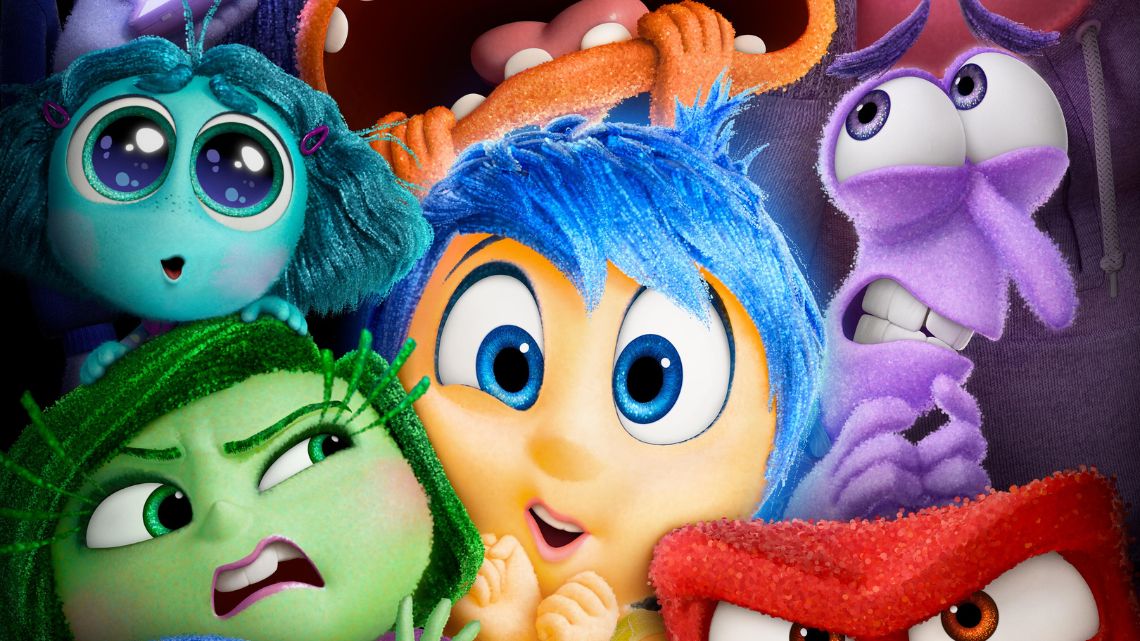
    The sequel continues the story of emotions inside the mind of Riley, now a teenager, and introduces new characters such as Anxiety, Envy, and Embarrassment, alongside the returning Joy, Sadness, Disgust, Anger, and Fear.

    Here’s a snapshot of the top 10 highest-grossing animated films:

    Inside Out 2 (2024) – $1.46 billion
    Frozen II (2019) – $1.45 billion
    The Super Mario Bros. Movie (2023) – $1.36 billion
    Frozen (2013) – $1.27 billion
    Incredibles 2 (2018) – $1.24 billion
    Minions (2015) – $1.16 billion
    Toy Story 4 (2019) – $1.072 billion
    Toy Story 3 (2010) – $1.068 billion
    Despicable Me 3 (2017) – $1.032 billion
    Finding Dory (2016) – $1.025 billion
    These figures are not adjusted for inflation, which means older films might appear lower on the list when inflation is considered.

    Watch video below:

  • Ivan Quashigah envisions Ghana becoming film production hub of Africa

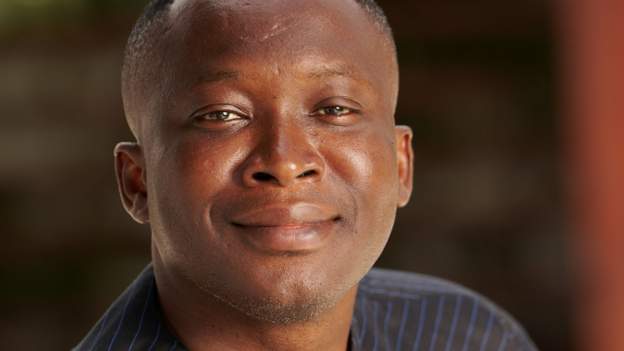
    Chief Executive Officer of Farmhouse Productions, Ivan Quashigah, is certain that Ghana will soon become the hub of filmmaking on the African continent.

    He believes that the nation’s film sector has enormous potential and requires significant investment.

    Mr. Quashigah has a strong conviction that the National Film Authority’s present initiative would advance the growth of the film industry.

    “Corporate organisations should also look at the film sector. It’s going to be a very vibrant film industry. The structures that are being put in place, led by the National Film Authority, will make Ghana the hub of film production in Africa. Corporate organisations should look at the film area as a space they can work with,” Mr. Quashigah indicated.

    “Corporate organisations should also look at the film sector. It’s going to be a very vibrant film industry. The structures that are being put in place, led by the National Film Authority, will make Ghana the hub of film production in Africa. Corporate organisations should look at the film area as a space they can work with,” Mr. Quashigah indicated.

    During the third edition of Joy FM’s Showbiz Roundtable in Accra, the Creative Director expressed his views. The thought-leadership program delved into the dynamics of sponsorship within the creative space.

    The CEO of Farmhouse Productions highlighted that, in recent times, the movie sector has seemingly been overlooked compared to other creative sectors. Nonetheless, he expressed optimism that the tide is turning, urging businesses to consider investing in the film industry.

    He also mentioned the Film Authority’s comprehensive product placement packages, which corporate Ghana can leverage at discounted rates.

    Mr. Ivan Quashigah remained hopeful that with the right investments in the movie industry, Ghana will advance significantly as a major player in film production on the continent and even beyond.

  • Social media reacts to Tonto Dikeh undergoing another liposuction

    Social media reacts to Tonto Dikeh undergoing another liposuction

    Social media is buzzing with comments after nollywood actress, Tonto Dikeh revealed that she has undergone another liposuction treatment.

    The outspoken actress was captured in a viral video entering the operating room amidst reactions from fans on social media.

    Tonto outlined her efforts to lose her “stubborn” tummy fat, saying that it had not been simple.

    The mother of one claimed that she was negligent with the healing procedure following the initial surgery.

    She wrote, “Finally sharing this exciting news I have aggressively tried to burn my stubborn tummy fat, but it has not been easy. After my first Lipo, I was so careless with my healing process and I lost guard on my stomach. So it grew back.”

    While some praised her for making such a courageous decision and wished her luck in the process, others criticized her for undertaking such a life threatening decision again.

    Tonto Dikeh has already undergone two plastic surgeries and this will be the third one.

    Read the comments below:

    tracyforbi: “One of the reasons I like her. Others will do it and tell u they drink 46 gallons of water a day. U will drink yours and end up with edema why they stay snatched 247”

    sexy_amanda22: “D best aesthetics clinic in the southeast their warn reception and professionalism is top notch”

    sparklifeafrica: “Why do you want to destroy your beautiful body? hmmm, they won’t tell you the after dangerous effects, in the near future you will be running here and there.There are laser machines , you could have bought one and use at home, they are just using you for advert amidst the impending future danger.”

    beautiful_berrygold: “We are waiting for you… get someone like that lady in your life,,,,we are waiting for you,her voice speaks are intentions in a sharing and loving way (We )but in real sense we know they are no We is I will be awaiting for you…get well soon my”

    joynkechi51: “Please you guys should be calming down o people are dieing everyday cos of this process, hmmm the fear of death is the beginning of wisdom”

    pauliina_adewale: “Another Liposuction Again???? Hey Gawd oooo. Please my love Tonto, you are already too beautiful, biko stop already o, let’s not talk sad stories about you. These repeated surgeries are so scaring”.


  • How a marine protected area off coast of Kenya  inspired underwater movie

    How a marine protected area off coast of Kenya inspired underwater movie

    Kenya’s 882 miles of coastline along the Indian Ocean are frequently disregarded in favor of the country’s vast natural reserves, which are famous for being home to all “Big Five” mammals. It’s a place where people go to “chill out,” but not to observe and connect with the wild and unique ecosystem, says Kenyan filmmaker, photographer and conservationist Jahawi Bertolli.

    Bertolli is determined to change this outlook and believes that visual storytelling is one way to do it. “No one was telling stories about the ocean here (in Kenya),” he says.

    So far, his work has focused mainly on the Lamu Archipelago along Kenya’s northern coast, where his wife Elke Bertolli, also a photographer and filmmaker, grew up. Lamu is a hidden gem, he says, and filming has led to new discoveries. “There’s not much scientific work that’s happened up here so a lot of what we’re finding is new,” he adds. “We’re finding these incredible reefs. We’re finding incredible biodiversity.”

    But this rich biodiversity is increasingly under threat. Bertolli says that harmful fishing practices, such as drag netting, coupled with habitat degradation due, in part, to coastal development, pollution and an increasing human population have caused a reduction in fish populations.

    Not only is this bad for the ecosystem, but for local fishers too. Lamu is home to one of the oldest Swahili settlements in East Africa, a community who have depended on the ocean since the 12th century. Traditionally these fishers respected the balance with nature, says Bertolli. They stopped fishing when they had enough for what was needed, they only fished in certain seasons, and they left the coral reef alone, understanding it to be a home for fish, where they needed space and time to reproduce and grow. “There’s a lot of cultural knowledge, which is actually conservation knowledge. It’s just packaged differently,” Bertolli explains.

    In 2020, Bertolli made a short film about Lamu’s sea life and the conservation traditions of the local fishers. He called it “Bahari Yetu” – “Our Ocean” in Swahili – and began showing it the local community. The screenings were a gamechanger, he says: “When you bring back that imagery, all of a sudden people are like, ‘Oh my God. Wow, this is ours … this is our heritage, these are our reefs, this is what’s happening underwater in our ocean.’”

    A viewing of “Bahari Yetu” was also put on for local beach management units and members from the county government and fisheries department. Bertolli also screened another film he had made a few years earlier on locally managed marine areas in Africa. The next time the group met, all members voted unanimously to begin setting up a marine protected area around Lamu’s Kinyika island, a craggy rock that acts as a nursing ground for seafaring birds and hosts a bustling coral reef system.

    For Bertolli and the people of the Lamu Archipelago, this has been a significant first step to ensuring the preservation of an essential ecosystem. While it’s only the beginning and a management plan still needs to be established, Bertolli believes it has also been a testament to the power of visual storytelling. “Because it was their film, told in their language, filmed here – it became an incredibly powerful tool to inspire the community to come together to try and start actually conserving these areas,” he says.

  • Judy Blume expresses delight to be alive to see the creation of movies

    Judy Blume expresses delight to be alive to see the creation of movies

    The 85-year-old author talks about her reaction to seeing Are You There God in this video. More than 50 years after it was initially released as a novel, It’s Me, Margaret was made into a movie.

    Are You There God?, by American author Judy Blume, is a beloved book. The first edition of It’s Me, Margaret came out in 1970. An 11-year-old girl who is battling with puberty, friendships, and faith is the protagonist.

    Its frank look at adolescence courted controversy and in the the 1980s, it was banned from some American school libraries.

    Asked today why it took so long to bring the book to the screen, Blume says she was waiting for someone who she could recognise as having the passion to deal with the project.

    “It was the right moment because it was the right team,” she tells Laura Kuenssberg.

    Blume says her son once told her she should wait until “all those people who grew up with your books are in power in Hollywood and… see what happens”.

    “And I’m so glad that I’m around to see it,” she adds.

    You can watch the trailer for the film here.

  • ‘Gut-wrenching’ film wins Ghanaian hearts

    The producer of award-winning film Borga, which has just started streaming on Netflix and Amazon Prime, has told the BBC that its reception was markedly different in Ghana and Germany – the two countries in which it is set.

    “The film is a Ghanaian film in that it is in Twi, but it’s not a typical Ghanaian film in that it’s not a slap-stick comedy; it’s not a supernatural comedy; it’s not a romantic comedy – it’s an emotionally driven film about subject matter that is very dear to Ghanaians,” Danny Damah says.

    It has allowed Ghanaians to see themselves on the big screen following a widespread ambition to travel overseas – in this case to Germany “where the Western dream is actually a nightmare”, he says.

    “Borga” is a word used to describe a Ghanaian who has travelled abroad and returns, trying to keep up a lavish lifestyle.

    Damah says the word is short for Hamburg, a city in Germany: “In the 80s there were so many Ghanaians that migrated to Hamburg and when they returned to Ghana they were obviously very wealthy and really showed off their gains.”

    The film was inspired by German director York-Fabian Raabe’s visit to Ghana 12 years ago as well as the 2012 hit Borga Borga by Ghanaian rapper Sarkodie, which explores these migration issues.

    For audiences in Germany, the scenes of Borga set in the Agbogbloshie electric waste dump site in the Ghanaian capital, Accra, have been an eye-opener.

    Danny Damah
    Image caption: Danny Damah says it is rare for Ghanaians to see locations like Agbogbloshie on the big screen

    Germany refers to Ghana as a “digital dumping ground” and is one of the biggest producers of toxic e-waste sent to the West African country, Damah says.

    The movie tells the story of brothers Kojo and Yoofi, who grew up on Agbogbloshie. To make ends meet, they extract valuable metals by burning the dumped devices – and one of them eventually makes it to Germany.

    Filming the scenes in Agbogbloshie were the most difficult but the most powerful as it is rare to see locations like this in the cinema, Damah says.

    “It’s a very toxic area to be in. We’d go there in the morning and by evening time we would have changed about four different industrial masks throughout the day, and we would have to wash and rinse our eyes and wash our skin. It was just so horrible. And we had to do this for a couple of weeks.

    “Agbogbloshie looks like an apocalyptic neighbourhood but you’re seeing it in real life – even though it’s cinematic, it’s a little gut wrenching to actually know that people have to do this for a living.”

    Source: BBC

  • Belgian filmmaker Thierry Michel accused of plagiarism by DRC

    Belgian filmmaker, Thierry Michel is being sued by in the Democratic Republic of Congo by documentary making partnership, the Balufu brothers.

    Gilbert Balufu Mbaye and Balufu Bakupa-Kanyinda accuse Michel of plagiarising their 2015 film “The Silence of Forgotten Crimes.”

    It follows the release of Michel’s 2021 film, “Empire of Silence.”

    “What he has done is plagiarism,” said Gilbert Balufu. “Plagiarism is making the same thing as someone else. He used the same narrative structure, as well as the technical cutting and even the synopsis.”

    Michel’s “The Empire of Silence” tells the story of war crimes in DRC over two decades.

    In the film he suggest war criminals are more likely to be rewarded than convicted and he calls for an end to impunity.

    But the Balufu brother have claimed there could be as many as 80 elements of comparison with their film.

    “We asked for the comparison of the two films,” said Balufu. “From the comparison we can remove the doubt, we can see who is right and who is wrong but Thierry Michel does not want to put the film at the disposal of justice, so it is already an admission of guilt.”

    Michel denies the accusations and says it is an attack on freedom.

    “The objective is to ban the film, to seize it and to sentence me and the producer to 1 to 5 years in prison,” he says.

    “Of course this film is disturbing, there are many people that this film disturbs who are in power in positions that they have acquired through crimes … predation”

    Independent analysis carried out at the request of the international society of authors, SCAM shows there are only four images common to both films but the Belgian filmmaker faces up to five years in prison in the DRC if found guilty.