Tag: firearms

  • Why seized firearms marked for destruction cannot be used by security and intelligence agencies in Ghana

    Why seized firearms marked for destruction cannot be used by security and intelligence agencies in Ghana

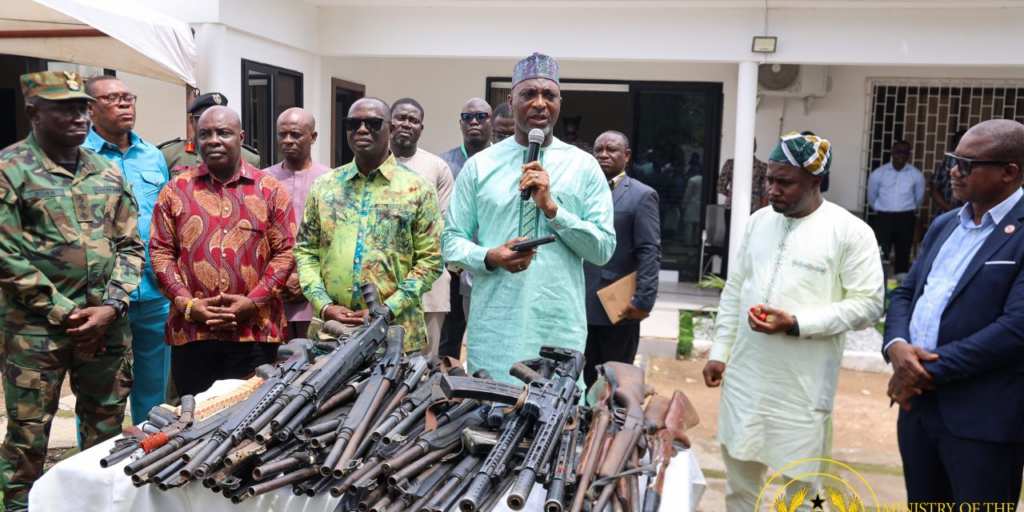
    The Republic of Ghana marked its 8th Arms Destruction Ceremony on Thursday, 9th July, 2026, following a Gun Amnesty Programme that ended in January 2026. The Arms Destruction Ceremony, which also

    marks the United Nations Small Arms Destruction Day, is part of ongoing national and international efforts

    to strengthen peace, security and public safety by destroying illicit, recovered and obsolete small arms.

    The ceremony was organised by the Ministry of the Interior, under the leadership of Hon. Muntaka Mohammed-Mubarak, in collaboration with the National Commission on Small Arms and Light Weapons,

    the Ghana Police Service, the Ghana Armed Forces and the National Security Council Secretariat.

    The periodic destruction of seized and surrendered firearms by the Government of Ghana often raises

    questions among the general public. Some wonder why firearms confiscated from criminals or recovered

    during security operations are not simply refurbished and issued to the Security and Intelligence Agencies,

    notably the Ghana Armed Forces, the Ghana Police Service, the Ghana Prisons Service and others. Such a

    plan may initially seem economical, particularly given the logistical constraints faced by the Security and

    Intelligence Agencies.

    However, seized firearms marked for destruction should never be returned to operational use based on the legal, operational, forensic and national security standpoints. Destroying confiscated firearms is a deliberate policy meant to lessen the risks associated with illegal firearms and increase public confidence in the country’s firearms control system.

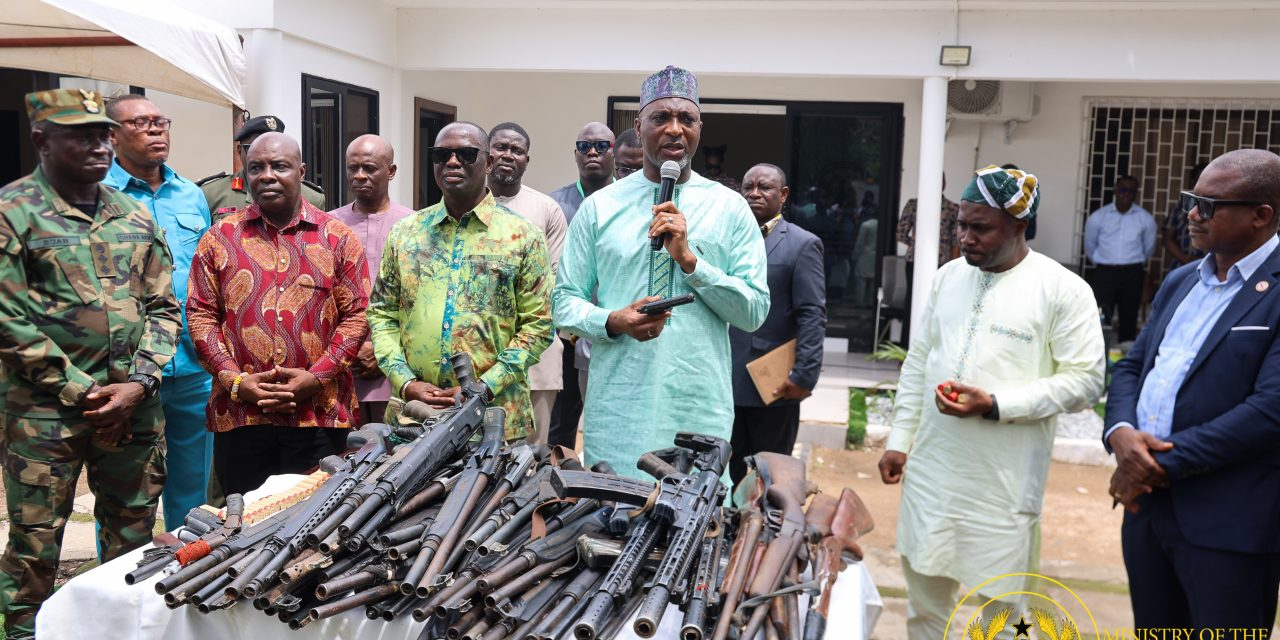
    Chief of Staff Julius Debrah and Interior Minister Muntaka Mohammed-Mubarak

    Legal Status of Seized Firearms

    A seized firearm is one confiscated by law enforcement during criminal investigations, intelligence operations, border interceptions or by the ruling of the court. Once the judicial process has concluded and

    the firearm is forfeited to the State, the appropriate authorities determine its final disposal.

    A firearm essentially leaves the State’s inventory when it is determined to be unsuitable for retention, or

    when it is formally authorised for destruction. The integrity of the disposal procedure would be

    compromised and there would be doubt about the fate of confiscated weapons if they were returned to

    operational use.

    Unknown History and Integrity of Seized/Surrendered Firearms

    Unlike arms and ammunition procured from certified manufacturers through licensed Arms and Ammunition Dealers, seized firearms often have unknown or questionable histories. Many may have been illegally manufactured, smuggled across borders, modified to increase their lethality or poorly maintained. Others may also have been used extensively in criminal activities.

    Because their complete maintenance and ownership history cannot be reliably established, their mechanical integrity cannot always be guaranteed. Even if they appear functional, hidden defects may only become apparent during operational use, placing security personnel at unnecessary risk.

    Safety of Security Personnel

    The primary responsibility of any security institution is to protect its personnel while safeguarding the

    public. Issuing seized firearms whose reliability cannot be fully verified exposes officers to potential

    weapon failures during critical operations. Components weakened by corrosion, excessive wear, poor

    quality repairs or unauthorised modifications may malfunction when lives depend on them. Similarly,

    altered firearms may not meet the operational standards required by Ghana’s security agencies. No

    responsible armoury should introduce such uncertainty into its operational inventory.

    Forensic and Evidential Concerns

    Many seized firearms have been used in criminal offences, including armed robbery, murder, illegal mining,

    terrorism and organised crime.

    Even after legal proceedings conclude, the firearm itself remains an important forensic object and its history

    forms part of criminal intelligence records. Returning such weapons to active service complicates future

    investigations should the weapon reappear in another incident.

    Maintaining a clear chain of custody from seizure to destruction preserves the integrity of the criminal

    justice system.

    Preventing Diversion into Illicit Circulation

    One of the principal objectives of destroying seized firearms is to ensure they never return to criminal

    hands. If confiscated weapons were routinely retained for operational use, they would remain in circulation

    indefinitely, thereby increasing the risk of theft, diversion, corruption or unauthorised transfer.

    Destruction permanently removes these weapons from both legal and illegal markets, reducing the number

    of illicit firearms available domestically, regionally and international.

    Standardisation Within Security Agencies

    Security agencies rely on standardised weapon systems to simplify training, ensure operational

    compatibility, simplify maintenance and ammunition supply.

    Seized firearms often include numerous makes, models and calibres from different countries and

    manufacturers. Incorporating such a diverse range of weapons into official inventories would complicate

    armoury management, increase maintenance costs and reduce operational efficiency.

    Standardisation enables armourers to stock appropriate spare parts, train personnel consistently and

    maintain reliable operational readiness.

    Public Confidence and Transparency

    The destruction of seized firearms demonstrates that government institutions are committed to accountability and to responsible firearms management. If firearms publicly declared destroyed were later

    found in operational use or diverted into criminal circulation, public confidence in security institutions

    would be seriously undermined.

    Transparent destruction exercises, conducted under official supervision and witnessed by oversight bodies,

    assure the public that confiscated weapons have been permanently removed from circulation.

    International and Regional Legal Frameworks Prohibiting the Reuse of Illicit, Confiscated and Unserviceable Arms and Ammunition Designated for Destruction by Security and Intelligence Agencies

    The idea that illegal confiscated and unserviceable firearms designated for destruction should not be

    reintroduced into circulation, including for use by security agencies is supported by several international

    and regional legal instruments. Although these documents do not always explicitly state that “security

    agencies cannot use seized firearms marked for destruction,” they do set out clear requirements to prevent

    the recirculation of weapons designated for destruction.

    The following are the most relevant conventions and standards:

    1. United Nations Programme of Action on Small Arms and Light Weapons (UNPoA) (2001)

    The UN Programme of Action on Small Arms and Light Weapons (UNPoA), established in 2001, is the

    key international framework for addressing the illicit trade in small arms and light weapons. It urges States

    to destroy confiscated or surplus weapons, prevent their re-circulation and enforce strict stockpile

    management. Ghana has committed to the UNPoA by implementing national arms-control policies to

    support its objectives.

    2. International Small Arms Control Standards (ISACS)

    ISACS, developed by the United Nations for the UNPoA implementation, includes ISACS 05.50 –

    Destruction: Weapons, which guides the destruction of firearms. Key points include ensuring firearms are

    permanently inoperable to prevent reconstruction, eliminating diversion risks and ensuring destruction

    occurs only after all legal and investigative requirements are met. The standards advise against returning

    any weapons approved for destruction to operational use, as this undermines accountability and stockpile

    security.

    3. ECOWAS Convention on Small Arms and Light Weapons, Their Ammunition and Other Related Materials (2006)

    This Convention is legally binding on all ECOWAS Member States including Ghana. It aims to prevent the

    accumulation of illicit firearms, promote the destruction of illegally possessed weapons, reduce

    opportunities for diversion and strengthen stockpile management. It encourages the destruction of seized

    weapons unless retention is legally justified. The overall goal is to reduce the number of illicit firearms in

    circulation.

    4. United Nations Firearms Protocol (2001)

    The United Nations Firearms Protocol (2001), formally known as the Protocol against the Illicit

    Manufacturing of and Trafficking in Firearms. This agreement requires States to seize illicit firearms,

    prioritise their destruction, prevent confiscated weapons from re-entering illicit markets and maintain strict

    records of seized firearms, emphasising destruction as a safeguard against diversion.

    5. Arms Trade Treaty (ATT) (2013)

    The Arms Trade Treaty (ATT) regulates the international transfer of conventional arms. It requires State

    Parties to prevent the diversion of firearms, maintain national control systems, ensure secure management of stockpiles and reduce the risk of unauthorised circulation. Reintroducing firearms designated for

    destruction may jeopardise these goals by increasing the risk of diversion.

    6. United Nations Office on Drugs and Crime (UNODC) Technical Guidelines

    UNODC guidance on firearms control emphasises that confiscated firearms should be securely stored

    pending destruction following judicial proceedings, permanently destroyed when authorised and kept out

    of illicit circulation to ensure public safety and confidence in the criminal justice system.

    Why do the above-mentioned international and regional instruments support non-reuse?

    Collectively, these international and regional frameworks are grounded in five key principles:

    1. Preventing Diversion: Destroyed or condemned firearms cannot be stolen, diverted or trafficked.

    2. Maintaining Accountability: Once a firearm is designated for destruction, reversing that decision undermines audit trails and stockpile management.

    3. Protecting Public Safety: Seized firearms often have uncertain histories and may be unsafe or unlawfully modified.

    4. Reduces Illicit Weapons in Circulation: Permanent destruction reduces the overall number of firearms available for misuse.

    5. Promoting Transparency: Publicly supervised destruction exercises reinforce confidence in state

    institutions and demonstrate compliance with international obligations.

    Implications for Ghana

    As a member of the United Nations and ECOWAS and a State Party to relevant international arms control

    instruments, Ghana is expected to maintain robust controls over confiscated firearms. Once seized weapons

    have completed the legal process and are officially designated for destruction, international best practice

    strongly supports their permanent disposal rather than reintroducing them into the inventories of security

    agencies. This approach strengthens the rule of law, reduces the risk of diversion and aligns Ghana’s arms

    management system with globally recognised standards.

    Better Alternative

    Newly procured firearms from licensed Arms and Ammunition Dealers meet certified manufacturing

    standards, including quality assurance, warranties, technical documentation and predictable maintenance requirements. They also support standardised training and operational capability across all Security

    Agencies. When Security Agencies require additional firearms, the solution is transparent procurement

    from authorised manufacturers and suppliers rather than reusing seized illicit weapons.

    Conclusion

    Seized firearms marked for destruction should never be reintroduced into operational service. Their

    uncertain history, questionable mechanical integrity, potential forensic significance and the risk of diversion

    make them unsuitable for use by Ghana’s Security and Intelligence Agencies.

    Destroying confiscated firearms is not a waste of valuable resources; it is a necessary safeguard that protects

    security personnel, strengthens the criminal justice system, supports accountability and enhances national

    security. By permanently removing illicit weapons from circulation, Ghana reinforces its commitment to

    responsible arms control and the rule of law.

    Finally, I wish to commend the current Government of Ghana, under the leadership of His Excellency

    President John Dramani Mahama and previous governments, for their continued commitment to

    combating the proliferation of illicit firearms by destroying seized and surrendered weapons. This policy

    reflects Ghana’s adherence to international and regional arms control standards and demonstrates a

    collective resolve to enhance public safety, strengthen national security and prevent illicit firearms from re-

    circulation. Sustaining this initiative will further reinforce public confidence in the country’s security

    institutions and contribute to a safer, more secure Ghana.

    References

    1. Economic Community of West African States. (2006). ECOWAS Convention on Small Arms and Light

    Weapons, Their Ammunition and Other Related Materials. ECOWAS Commission. https://www.ecowas.int/wp-content/uploads/2021/12/Convention-on-SALW.pdf

    2. Government of Ghana. (1972). Arms and Ammunition Act, 1972 (NRCD 9) (As amended) Assembly Press.

    3. Government of Ghana. (2023). National Commission on Small Arms and Light Weapons Act, 2023 (Act

    1087). Assembly Press.

    4. National Commission on Small Arms and Light Weapons. (2025). Gun Amnesty Programme.

    https://www.smallarmscommission.gov.gh

    5. National Commission on Small Arms and Light Weapons. (2025). Ghana declares nationwide gun amnesty

    to reduce illicit firearms in circulation. https://www.smallarmscommission.gov.gh/ 

    6. The HALO Trust. (2025). Ghana: Managing weapons to keep the peace. https://www.halotrust.org/where-we-work/africa/ghana/ 

    7. United Nations. (2001a). Programme of Action to Prevent, Combat and Eradicate the Illicit Trade in Small

    Arms and Light Weapons in All Its Aspects. United Nations. https://digitallibrary.un.org/record/446051 

    8. United Nations. (2001a). Programme of Action to Prevent, Combat and Eradicate the Illicit Trade in Small

    Arms and Light Weapons in All Its Aspects. United Nations. https://digitallibrary.un.org/record/446051

    9. United Nations. (2001b). Protocol against the Illicit Manufacturing of and Trafficking in Firearms, Their

    Parts and Components and Ammunition, Supplementing the United Nations Convention against

    Transnational Organized Crime. United Nations. https://www.unodc.org/unodc/en/firearms-protocol/

    10. United Nations Office on Drugs and Crime. (2011). Criminal justice assessment toolkit: Firearms. United

    Nations Office on Drugs and Crime. https://www.unodc.org/unodc/en/organized-crime/firearms-toolkit.html

    11. United Nations Office on Drugs and Crime. (2015). Model law against the illicit manufacturing of and

    trafficking in firearms, their parts and components and ammunition. United Nations Office on Drugs and

    Crime. https://www.unodc.org/unodc/en/firearms-protocol/model-law.html

    12. United Nations. (2013). Arms Trade Treaty. United Nations. https://thearmstradetreaty.org/

    13. United Nations Office for Disarmament Affairs. (2018). International Small Arms Control Standards

    (ISACS): Module 05.50—Destruction: Weapons (Version 1.1). United Nations. https://www.un.org/disarmament/isacs/ 

    14. United Nations Office for Disarmament Affairs. (2015). International Ammunition Technical Guidelines

    (IATG) 10.20: Demilitarization and destruction of conventional ammunition. United Nations. https://www.un.org/disarmament/convarms/ammunition/iatg/ 

    15. United Nations Office for Disarmament Affairs. (2021). MOSAIC (Modular Small-arms-control

    Implementation Compendium). United Nations. https://www.un.org/disarmament/mosaic/ 

    16. Small Arms Survey. (2020). Handbook on weapons and ammunition management. Small Arms Survey.

    https://www.smallarmssurvey.org

    17. United Nations Office on Drugs and Crime. (2011). Criminal justice assessment toolkit: Firearms. United

    Nations Office on Drugs and Crime.

    About the Author

    Patrick K. YEBOAH | Analyst | HR Generalist | Systems Administrator |

    The author possesses educational and professional background in Peace, Security and Intelligence, Strategic

    Human Resource Management and Information Technology. Drawing on expertise across these disciplines,

    he is dedicated to uncovering critical information, fostering strategic thinking and supporting informed

    decision-making. His multidisciplinary approach reflects a commitment to excellence, integrity and

    continuous learning. Guided by the enduring mantra, “Honour to the End, in Service for God and

    Country,” In both his personal and professional endeavors, he upholds the principles of professionalism,

    moral leadership and selfless service.

    E-Mail Address: pkyeboah65@gmail.com

    DISCLAIMER: Independentghana.com will not be liable for any inaccuracies contained in this article. The views expressed in the article are solely those of the author’s, and do not reflect those of The Independent Ghana
  • Ghana to hold its 8th firearms destruction ceremony on July 9 – Interior Minister

    Ghana to hold its 8th firearms destruction ceremony on July 9 – Interior Minister

    The government has scheduled July 9 to hold its eighth arms destruction ceremony. 

    This comes after the end of the government’s gun amnesty programme. Aside from the weapons which were voluntarily surrendered, those seized by security agencies in operations will also be destroyed, the Interior Minister Muntake Mohammed has announced.

    Addressing the media yesterday, Tuesday, June 23, the Minister indicated that the ceremony will be held at the Police depot in Accra, citing that this forms part of the government’s efforts to ensure public safety, particularly to protect the vulnerable, especially children.

    “Ghana’s future must not be compromised by illicit arms. Our children deserve classrooms, not fear. Our communities deserve safety, not violence. As part of post-armament measures, the government will organise its eighth arms destruction ceremony on Thursday, 9th July, at the Police Depot, Accra, at 10:00 a.m. At this event, over 2,000 seized and surrendered firearms will be destroyed,” he noted.

    The announcement comes days after the Ministry suspended the operating licence of Kantanka Security Services Limited following a shooting incident at Kwabenya that left former Dome-Kwabenya MP Sarah Adwoa Safo injured.

    According to the Ministry, the suspension was prompted by alleged regulatory breaches involving the use of unapproved uniforms as well as the possession and use of firearms and ammunition by some personnel of the security company while on duty.

    The government says the latest measures form part of broader efforts to strengthen oversight of firearms possession and improve public safety across the country.

    Revocation of gun licenses

    Mr Muntaka also announced that rffective Tuesday, June 23, permits for all firearms licensed nationwide have been revoked, citing the move as a major of a sweeping overhaul of Ghana’s firearms regulatory system to ensure responsible handling of legally acquired firearms and ensure public safety.

    Highlighting the gaps in the current licensing system, Minister Muntaka Mohammed indicated that the new system will ensure thorough background checks on all applicants. Also, all firearm owners will be required to reapply and undergo the same vetting process before any licence is issued to them.

    “In the last few months, we have seen an increase in some individuals committing suicide with firearms that are registered. Because of that, from this afternoon, all permits that have been granted to any individual are hereby revoked.

    “We are revoking them, and we are opening a window where everyone will have to come forward again to re-register their guns because we have changed the procedure. We have realised that there is a short gap in the registration procedure that we’ve been using. Now we are introducing mental health. Before we give you the sidearm, we have to be sure that you have the mental stability to hold the firearms,” he said.

    Under the new regime, all firearm holders will be required to reapply for their licences and undergo a more rigorous vetting process aimed at strengthening gun control and enhancing public safety.

    New license requirements

    The Minister revealed that, before an applicant is granted a licence, he will be required to go through a mandatory mental health assessment, drug screening, and structured firearms training.

    The Minister expressed concern that some individuals have used licensed firearms for purposes other than those for which they were originally authorised, posing a threat to public safety.

  • Gun license applicants to now undergo mental health and drug checks – Muntaka Mubarak

    Gun license applicants to now undergo mental health and drug checks – Muntaka Mubarak

    Ghana’s firearm licensing regime has undergone changes as part of measures to control unlicensed firearms in the country and improve public safety.

    The update features mandatory mental health assessments, drug screening and structured training for persons applying for firearm licenses.

    The Interior Minister Muntaka Mubarak gave the announcement while addressing the media on Tuesday, June 23. According to him, the amendment was necessary in order to address significant gaps in the initial system.

    He added that background checks will be run by the Bureau of National Intelligence (BNI) to ensure applicants meet all security and eligibility requirements before being granted firearm licenses.

    “Immediately — we have a training range at Tesano. We have the Narcotics Control Commission that is ready to do the drug test. And then we have the Mental Health Authority that is ready to do the mental health.

    “What I’ll first do is to refer to the BNI to do a background check on you, the CID to do a background check on you. They check on their system that you have not committed any crime,” he said.

    Firearms are weapons that use gunpowder or explosive force to fire bullets or projectiles through a barrel.

    Earlier this year, NACSA launched a Gun Amnesty Programme aimed at addressing the persistent gun-related violence across the country. The programme disclosed that the Greater Accra Region led in the number of firearms retrieved under the Programme.

    The Executive Secretary of NACSA, Dr Adam Bonaa noted, “The Greater Accra Region is one of the areas where most of the weapons we have collected are coming from. It is currently leading in terms of arms surrendered under the amnesty programme, with the support of the security commanders”.


    Dr Adam Bonaa’s meeting with the Chief Imam forms part of efforts to create awareness of the ongoing programme within the Muslim community. The illegal possession of small arms remains a pressing challenge in the country.


    In September this year, Ghana strengthened its global stance against nuclear weapons. Ghana joined sixty-nine (69) other nations in efforts to reduce and ultimately eradicate dangerous weapons, particularly atomic bombs, from the world.


    The sixty-nine (69) countries that have ratified the treaty are Antigua and Barbuda, Austria, Bangladesh, Barbados, Belize, Benin, Bolivia, Botswana, Brazil, Cabo Verde, Cambodia, Central African Republic, Chile, Colombia, Comoros, Congo, Cook Islands, Costa Rica, Côte d’Ivoire, Cuba, Democratic Republic of the Congo, Dominica, Dominican Republic, Ecuador, El Salvador, Fiji, Gambia, Ghana, Grenada, Guatemala, Guyana, Honduras, Indonesia, Ireland, Jamaica, Kazakhstan, Kenya, Kiribati, Laos, Lesotho, Liberia, Liechtenstein, and Madagascar.


    The others include Malawi, Malaysia, Maldives, Mali, Malta, Mexico, Mongolia, Namibia, Nauru, Nepal, New Zealand, Nicaragua, Nigeria, Niue, Panama, Paraguay, Peru, Philippines, Saint Kitts and Nevis, Saint Lucia, Saint Vincent and the Grenadines, Samoa, San Marino, Seychelles, South Africa, Sri Lanka, the State of Palestine, Sudan, Thailand, Timor-Leste, Togo, Trinidad and Tobago, Tunisia, Uruguay, Venezuela, Vietnam, Zambia, and Zimbabwe.


    Announcing the development on Saturday, September 27, via the X platform, the Minister for Foreign Affairs, Samuel Okudzeto Ablakwa, stated that Ghana has officially ratified the Treaty on the Prohibition of Nuclear Weapons (TPNW).


    The move, according to the Minister, reflects Ghana’s commitment to supporting global peace and a stable security for the world. The Minister further applauded both the Cabinet and Parliament for their unanimous approval of the treaty.


    He also recalled how Ghana’s first president, Osagyefo Dr Kwame Nkrumah, was a strong advocate of disarmament in 1962, adding that the late President would be proud of this groundbreaking step.


    “Yesterday, Ghana boldly demonstrated to the world that we shall be a Nuclear-Weapon-Free State by depositing our instrument of ratification on the Treaty on the Prohibition of Nuclear Weapons (TPNW) at the UN. I commend the Ghanaian Cabinet and Parliament for the unanimous ratification.


    As I indicated in my UN address, Ghana has been consistent across all political parties in advocating for total disarmament and creating a new world without nuclear weapons.


    “Ghana’s Founder, Osagyefo Kwame Nkrumah, who convened the 1962 World Without the Bomb conference in Accra, would be absolutely proud of this moment. It was an honour to meet with the inspiring Melissa Parke and Seth Shelden of the International Campaign to Abolish Nuclear Weapons (ICAN). ICAN won the 2017 Nobel Peace Prize for their groundbreaking work to attain a world without nuclear weapons. We shall triumph and end global impunity,” he wrote.


    Ghana’s final ratification of the TPNW was signed in 2017 and approved by Parliament in July 2025. The country has been instrumental in promoting Africa’s stance as a nuclear-free continent.


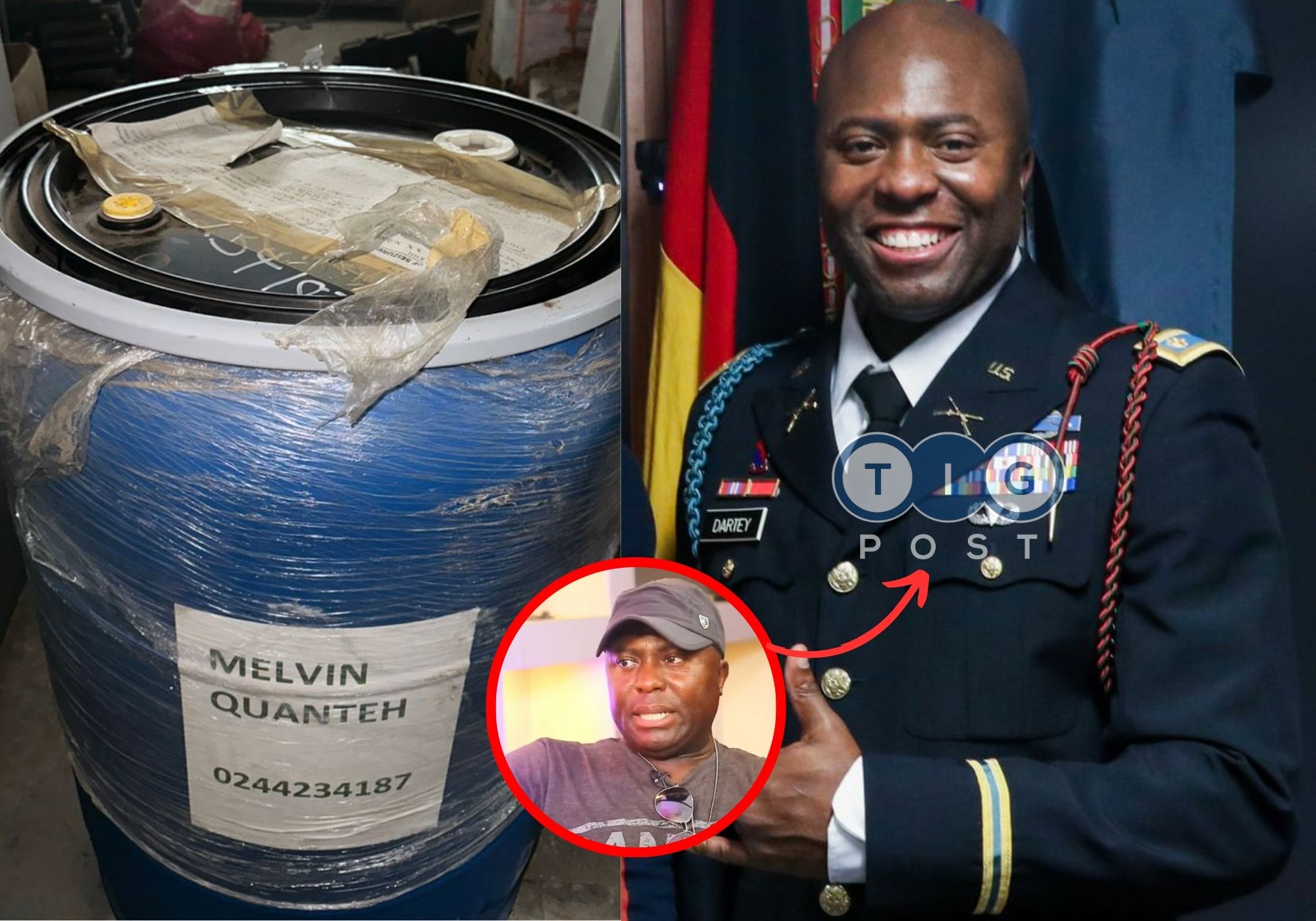
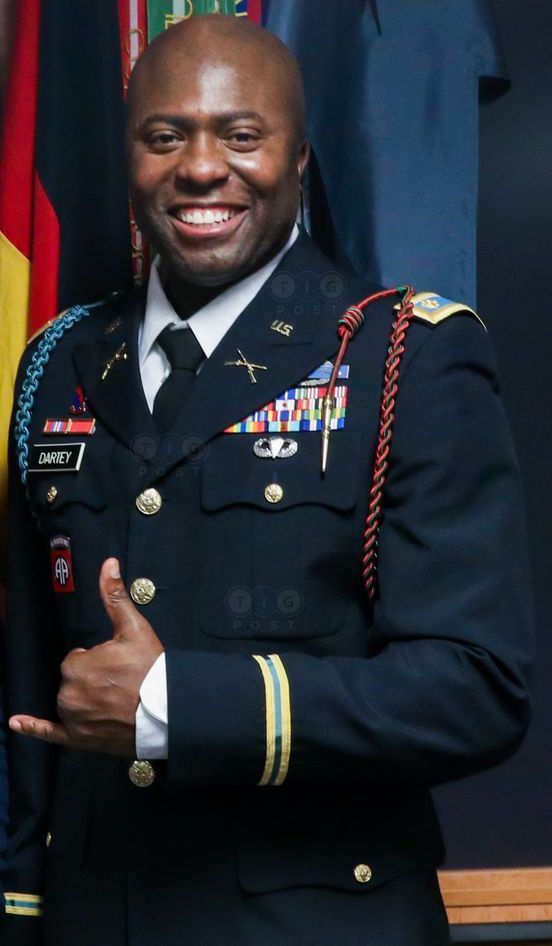
    In 2025, U.S. Army Major Kojo Owusu Dartey was sentenced to 70 months in prison and three years of supervised release for smuggling firearms to Ghana and making false statements to federal authorities.


    The 42-year-old, based at Fort Liberty, was found guilty by a jury on April 23, 2024, on charges including conspiracy, illegal firearm dealing, false declarations in court, and exporting firearms without a license.


    According to court records and trial evidence, Dartey orchestrated a firearms smuggling operation by purchasing seven firearms in North Carolina and instructing a U.S. Army Staff Sergeant at Fort Campbell, Kentucky, to buy three more and send them to him.


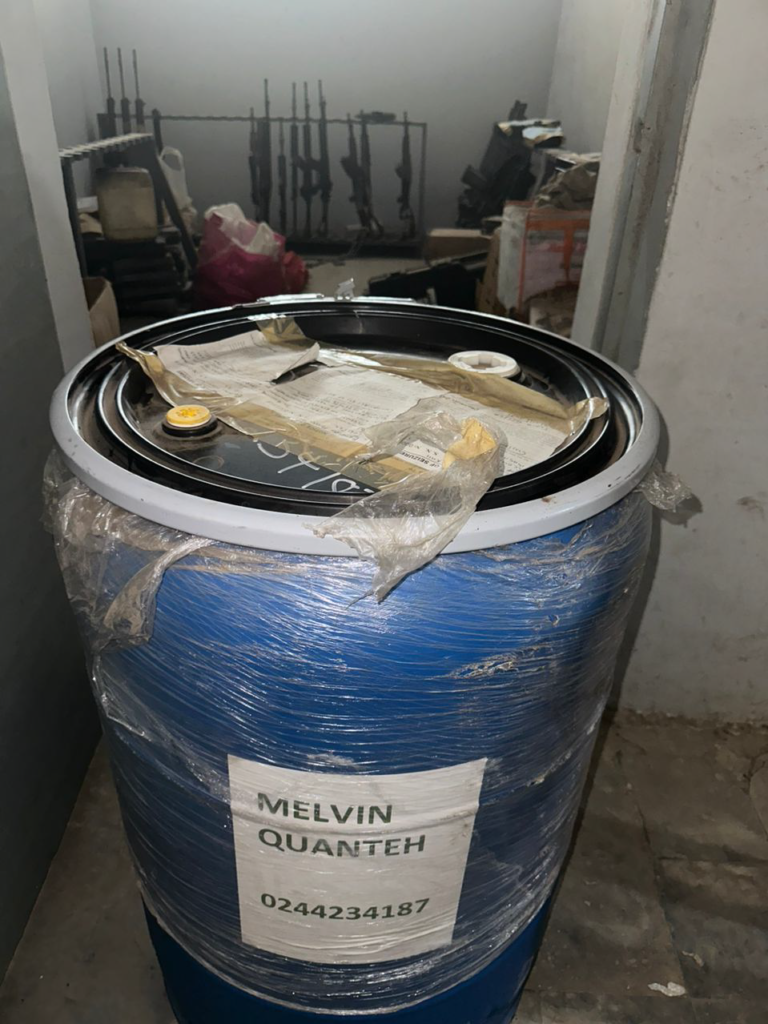
    He then concealed the weapons inside blue barrels filled with rice and household goods before working with an Army Chief Warrant Officer to smuggle them through the Port of Baltimore, Maryland.


    The barrels were shipped to the Port of Tema, Ghana, where Ghanaian authorities later seized them and alerted the DEA attaché in Ghana and the ATF Baltimore Field Division.


    Dartey was also linked to a 16-defendant marriage fraud scheme involving soldiers at Fort Liberty and foreign nationals from Ghana. He provided information that led to its prosecution but later lied to federal law enforcement and under oath in court about his relationship with a defense witness during the U.S. v. Agyapong trial between June 28 and July 2, 2021.


    His sentencing was announced by Acting U.S. Attorney for the Eastern District of North Carolina, Daniel Bubar, following an investigation by the Bureau of Alcohol, Tobacco, Firearms, and Explosives (ATF), the Army Criminal Investigation Division (CID), and the Department of Commerce’s Office of Export Enforcement. Assistant U.S. Attorney Gabriel J. Diaz prosecuted the case.


    In Ghana, institutions such as the National Commission on Small Arms and Light Weapons (NACSA) have called on the judiciary to impose stricter punishments on individuals found in possession of unlicensed firearms.


    In 2024, NACSA reported one million illicit pump-action guns, AK-47s, pistols, and locally manufactured arms in circulation in Ghana. The Commission described these figures as a threat to national security.
    The Head of the National Arms Marking Programme at the time, Mr. Frank Boateng Asumani, stated: “Currently, we have 2.3 million small and light weapons in circulation, out of which 1.2 million are legally registered and the remaining 1.1 million cannot be accounted for.”


    Speaking to The Independent Ghana, the Deputy Director of Policy, Planning, Monitoring, and Evaluation (PPME) at NACSA, Gyebi Asante, stressed the urgent need to review existing laws governing firearms possession to better counter current security challenges.


    “We are advocating for the law to be reviewed to suit the current situation and also be able to align with our current dispensation. It is something we have taken steps to do. Already, we have a proposed Bill, the National Arms Bill, at the Ministry of Interior to look at the document and endorse it.


    “For example, the penal sanction, when you have a law that regulates the possession of arms that can kill, you must have a strong penal sanction that can deter people from going behind the law to buy these weapons, so the law as it is now is not deterrent enough,” he added.


    He emphasized that the current penal sanctions are insufficient to deter illegal arms possession. According to him, the existing law stipulates a maximum jail term of five years or a fine of up to 1,000 penalty units, equating to 12,000 Ghana cedis.


    He added that there is no minimum penalty established, allowing judges to exercise discretion in sentencing. This loophole, he indicated, has led to situations where individuals found guilty of illegal gun possession could potentially pay as little as 100 Ghana cedis or serve a mere two weeks in jail.


    “For example, it says that you can be jailed for not more than five years and you can also be fined for not more than 1,000 penalty units. A penalty unit is 12 Ghana cedis, which makes it 12,000 Ghana cedis, not beyond, but it doesn’t give a minimum.


    “If you are arrested for illegally possessing a gun, the judge uses his discretion and he can decide that go and pay 100 cedis and if you don’t pay, you will go to jail for two weeks because the law does not give you any minimum requirement. We see that as a serious challenge and a gap in the law that must be addressed,” he added.


    Mr. Asante revealed that the Commission has submitted to the Ministry of Interior a proposal to amend the current Arms and Ammunition (Amendment) Act, 1972 (Act 604).


    The National Arms Bill aims to close existing gaps in the law, ultimately working towards a safer environment for all Ghanaians. Additionally, he emphasized the urgent need for the bill to be enacted into law to ensure effective control and regulation of small arms and light weapons (SALW).


    Established by an Act of Parliament in 2007, NACSA’s mandate includes regulating the possession and control of small arms and light weapons, with a particular focus on curbing illegal production, trade, transfer, and cross-border movement of such weapons that contribute to crime and insecurity.

  • US Army Major nabbed for smuggling guns into Ghana, faces 20-year jail term

    US Army Major nabbed for smuggling guns into Ghana, faces 20-year jail term

    A Ghanaian living in the US as an army officer, Kojo Owusu Dartey, has been found guilty of multiple charges, including smuggling goods from the United States, unauthorized dealing in firearms, delivery of firearms without proper notice, illegal exportation of firearms, providing false statements to a U.S. agency, making deceptive declarations in court, and engaging in conspiracy.

    Dartey faces a maximum penalty of 240 months when sentenced on July 23, 2024.

    Court documents and evidence provided by the United States Attorney’s Office reveal that between June 28 and July 2, 2021, Dartey acquired seven firearms in the Fort Liberty region.

    Furthermore, he enlisted the help of a U.S. Army Staff Sergeant stationed at Fort Campbell, Kentucky, to procure three firearms and forward them to him in North Carolina.

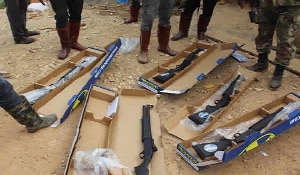
    Dartey is said to have hidden the firearms, including multiple handguns, an AR15, 50-round magazines, suppressors, and a combat shotgun, inside blue barrels underneath rice and household goods.

    These barrels were smuggled out of the Port of Baltimore, Maryland, on a container ship destined for Ghana. The Ghana Revenue Authority seized the firearms and reported the seizure to the Bureau of Alcohol, Tobacco, Firearms and Explosives (ATF) Baltimore Field Division.

    Michael Easley, U.S. Attorney for the Eastern District of North Carolina, made the announcement after Chief U.S. District Judge Richard E. Myers II accepted the verdict. The ATF, Army Criminal Investigation Division and the U.S. Department of Commerce’s Office of Export Enforcement investigated the case. Assistant U.S. Attorney Gabriel J. Diaz prosecuted it with technical assistance from David Ryan, DOJ Counterintelligence and Export Control Section.

    “We are partnering with law enforcement agencies across the globe to expose international criminals – from money launderers to rogue international arms traffickers capable of fueling violence abroad,” said U.S Attorney Michael Easley. 

    “Through a partnership with Ghanaian officials, this rogue Army Major was convicted at trial after smuggling guns to Ghana in blue barrels of rice and household goods. I want to thank the Ghana Revenue Authority and the International Cooperation Unit Office of the Attorney-General of Ghana for their assistance in the investigation. I also commend the Drug Enforcement Administration (DEA) and the Federal Bureau of Investigation (FBI) attachés to U.S. Embassy Accra and the U.S. Department of Justice’s Office of International Affairs of the Department’s Criminal Division for their significant assistance to this prosecution.”

    “Far from being a victimless crime, firearms trafficking threatens public safety across our nation and beyond,” said Toni M. Crosby, Special Agent in Charge of the ATF Baltimore Field Division.

    “The Baltimore Field Division is proud to partner with the Ghana Revenue Authority and ATF’s Charlotte and Louisville Field Divisions for this investigation, which has kept firearms off the streets — preventing them from being used in any number of killings and other crimes — and ended this international firearm trafficking scheme.”

    In a surprising turn of events, it was discovered that Dartey lied on the stand about his sexual relationship with a defense witness while serving as a witness in the trial of U.S. v. Agyapong.

    This trial involved a marriage fraud scheme between soldiers on Fort Liberty and foreign nationals from Ghana.

  • US Army Major found guilty of smuggling firearms into Ghana

    US Army Major found guilty of smuggling firearms into Ghana

    A Ghanaian based US Army Major officer named Kojo Owusu Dartey has been found guilty by a jury of smuggling guns to Ghana. He hid the guns in blue barrels filled with rice and other household items.

    The 42-year-old officer, who works at Fort Liberty, could be sentenced to 20 years in prison. The sentence will be announced on July 23, 2024.

    US and Ghanaian authorities worked together to find and charge someone for selling weapons across borders. Dartey was accused of selling guns without permission, sending guns without telling the carrier, bringing goods into the US illegally, sending guns out of the country without permission, lying to a US agency, lying in court, and working with others to commit a crime.

    The US Attorney Michael Easley said thank you for working together with officials from Ghana. He mentioned how the Ghana Revenue Authority and the International Cooperation Unit Office of the Attorney-General of Ghana helped with the investigation. He also thanked the Drug Enforcement Administration (DEA), Federal Bureau of Investigation (FBI) agents in Accra, and the US Department of Justice’s Office of International Affairs for their support.

    Toni Mrewritten as Simple words: Toni M. Crosby, who is in charge of the ATF Baltimore Field Division, talked about how trafficking guns is bad for public safety. He also praised the joint investigation that stopped guns from getting into the hands of criminals.

    In June and July 2021, the court found out that Dartey got seven guns in Fort Liberty and told a soldier at Fort Campbell to buy three more for him. These guns, like pistols and a type of rifle, along with lots of bullets, attachments to make them quieter, and a powerful shotgun, were hidden in blue barrels with food and other things and sent from one port in the US to another port in Ghana.

    The Ghana Revenue Authority found some guns and told the DEA and ATF about it. Dartey was also a person who saw what happened during the trial in the United States. I would be happy to help, but it looks like there is no text provided for me to rewrite. Can you please provide the text that you would like me to simplify. AgyapongDartey told officials about a marriage fraud scheme between 16 soldiers and people from Ghana at Fort Liberty. Before the trial, Dartey told federal law enforcement a lie about his sexual relationship with a witness for the defence. Then, he also lied on the witness stand and when he swore to tell the truth.

    The Ghana Revenue Authority found the guns, which caused a big reaction from US agencies around the world. At the same time, Dartey was part of another trial as a witness. He gave the police wrong information about personal things and lied in court about a relationship, which caused more charges against him.

    The ATF, Army Criminal Investigation Division, and the US Department of Commerce’s Office of Export Enforcement looked into the case. Assistant US Attorney Gabriel J. led the prosecution. Diaz received help from David Ryan, who is an expert in technical matters from the Department of Justice’s Counterintelligence and Export Control Section. The head judge in the US agreed with the decision.

  • Downtown smoke shop accused of trafficking illicit narcotics and firearms

    Downtown smoke shop accused of trafficking illicit narcotics and firearms

    A store in downtown Edmonton has been caught selling illegal weapons and things used for drugs, according to the police.

    Edmonton Police are looking into 5 Star Gift and Smoke Shop on 107 Avenue because people in the neighborhood have complained about violence.

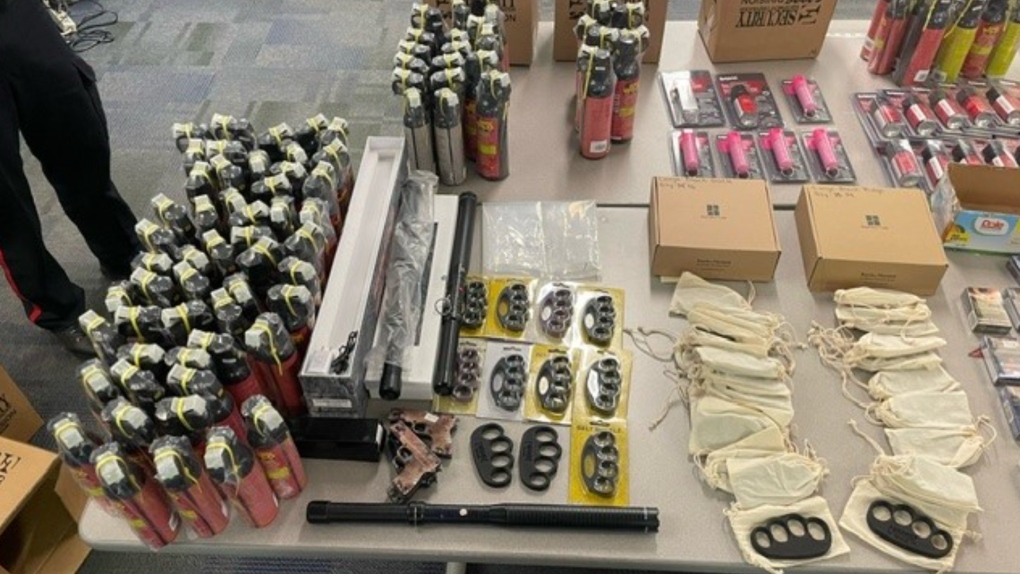
    On Thursday, police took 10 sword canes, over 120 cans of bear spray, five cattle prods that look like flashlights, and many butterfly knives and brass knuckles during a search.

    The police also found illegal tobacco and a plant called khat, which is believed to have stimulating effects.

    The 41-year-old person who owns a store has been charged with selling weapons and illegally moving them around.

    This news story is still being updated. Come back later for more information.

  • Ghanaian resident in US admits guilt in unlawful export of firearms to Ghana

    Ghanaian resident in US admits guilt in unlawful export of firearms to Ghana

    A Ghanaian based in Columbia, Maryland, Eric Nana Kofi Ampong Coker, has pleaded guilty to illegally exporting firearms to Ghana from the United States of America.

    According to the United State Attorney’s Office of the District of Maryland, Ampong Coker, on Thursday, June 8, 2023, confessed to exporting firearms to Ghana without the required license or written approval to export the weapons.

    The district attorney’s office indicated that Ampong Coker, since 2017, has purchased at least 81 firearms from three separate Maryland Federal Firearms Licensees (“FFLs”)

    It added that in 2019 the accused person received a Regulated Firearms Collector status through the Maryland State Police, which waived the restriction on the number of firearms he could purchase during a 30-day period.

    “In May 2021, federal agents surveilled Ampong Coker as he retrieved firearms purchased from one of the FFLs and was then observed in a variety of locations, including a business that packaged and shipped items from the Port of Baltimore. A shipping vehicle was subsequently seen departing that location on May 27, 2021. On May 29, 2021, Ampong Coker was searched as he was departing the United States from Detroit, Michigan, bound for Ghana. Among other items seized in his luggage were foam cutouts used for packaging and securing firearms in gun cases.

    “In early June 2021, HSI and CBP agents identified a shipping container scheduled to depart the Port of Baltimore for Tema, Ghana, on June 14, 2021. Included in the listed contents of the container was a 2018 Toyota Corolla registered to Ampong Coker.

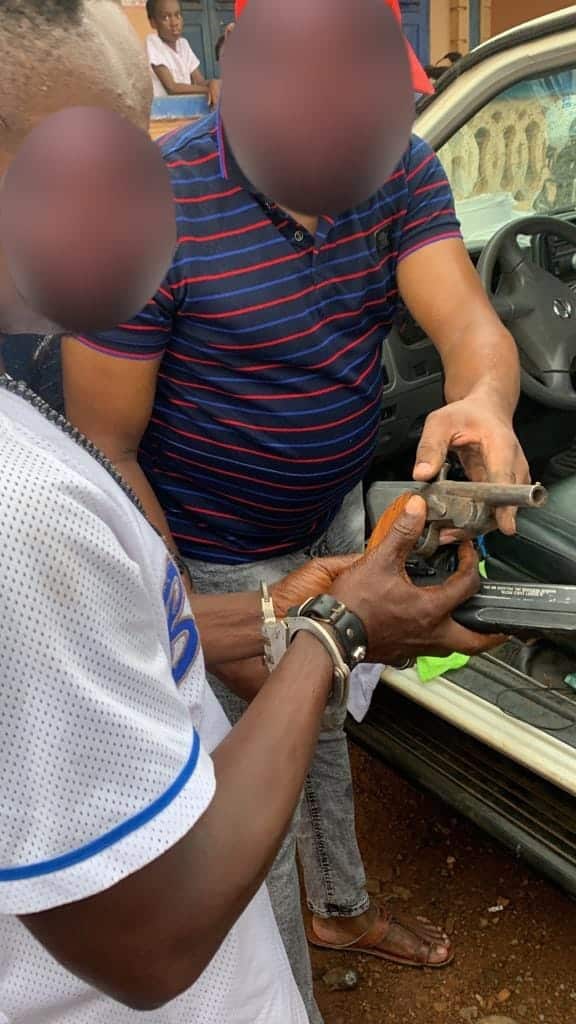
    “…On June 8, 2021, HSI, ATF, CBP and other agents searched the contents of the shipping container. Within the trunk of the 2018 Toyota Corolla, which had the Defendant’s name on cardboard on top of the vehicle, the agents found a grey suitcase. Secreted in the lining of the suitcase, the agents found five 9mm handguns previously purchased by Ampong Coker,” parts of a release issued by the state attorney’s office read.

    U.S. Attorney Erek L. Barron indicated that Ampong Coker faces a maximum sentence of 20 years in federal prison for illegally exporting firearms when he faces the court on September 6, 2023.