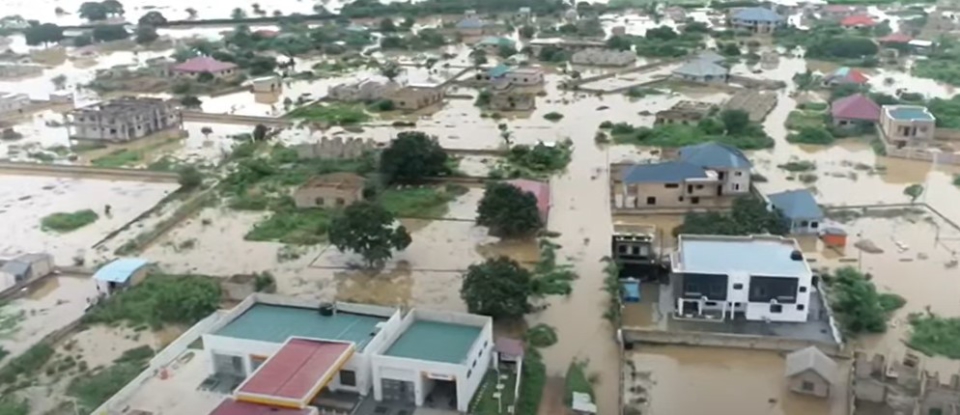
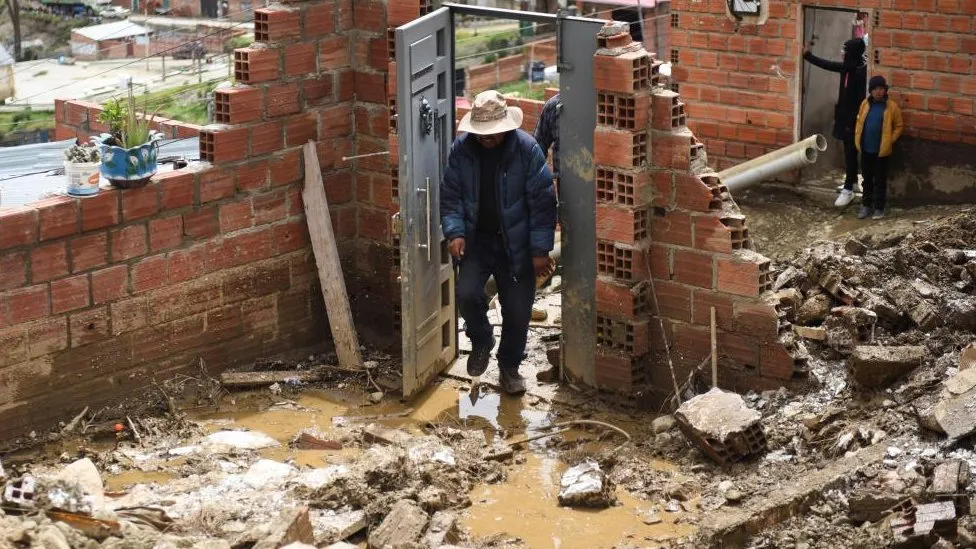
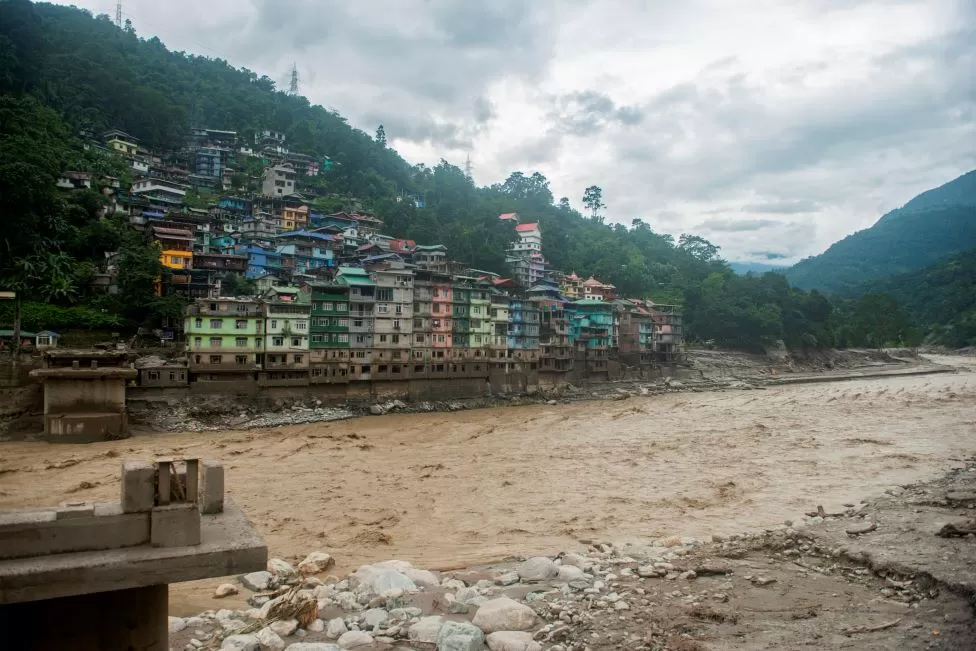
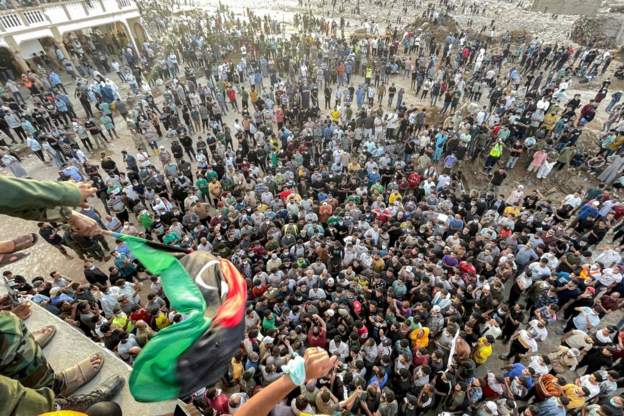
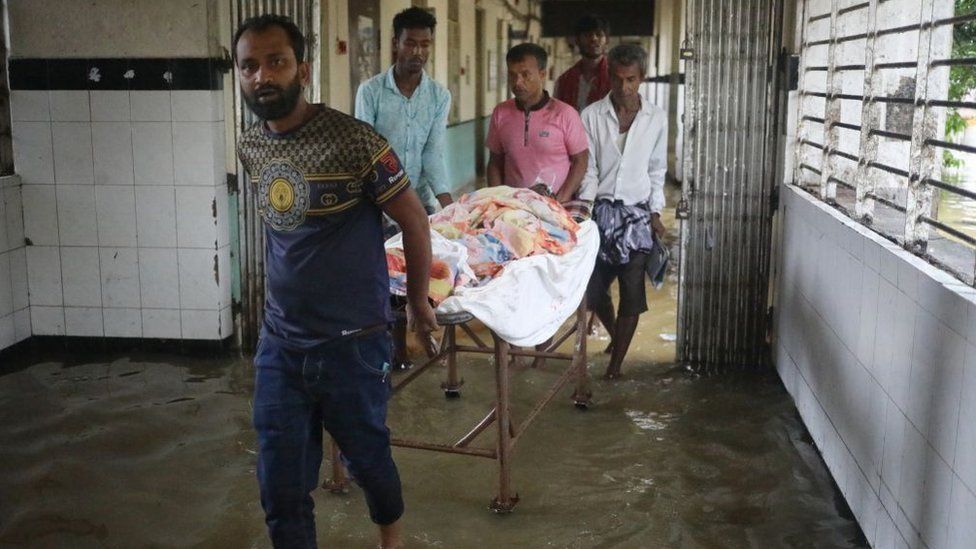
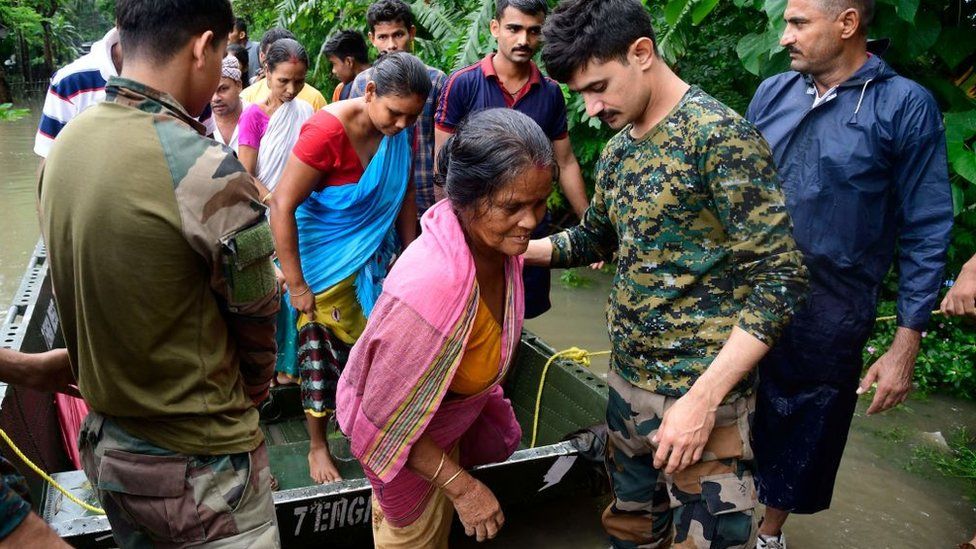
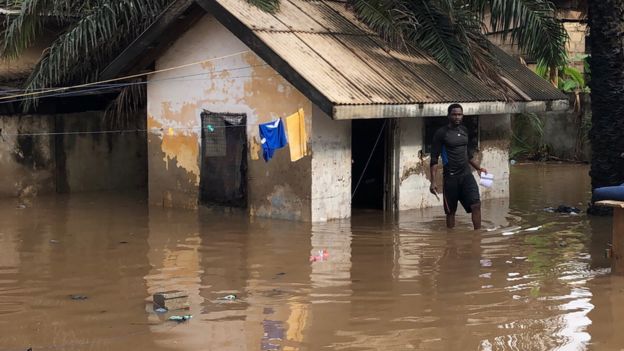
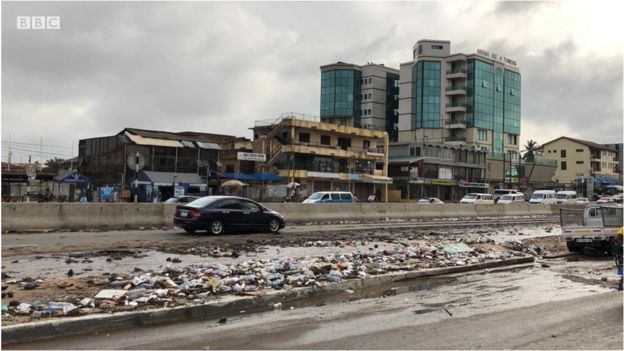
A demolition exercise targeting illegal structures in the Ga East Municipality is expected to be carried out by the Assembly in the coming days. Consequently, residents occupying structures along waterways in parts of the municipality have been given until Thursday, July 16, to vacate the premises.
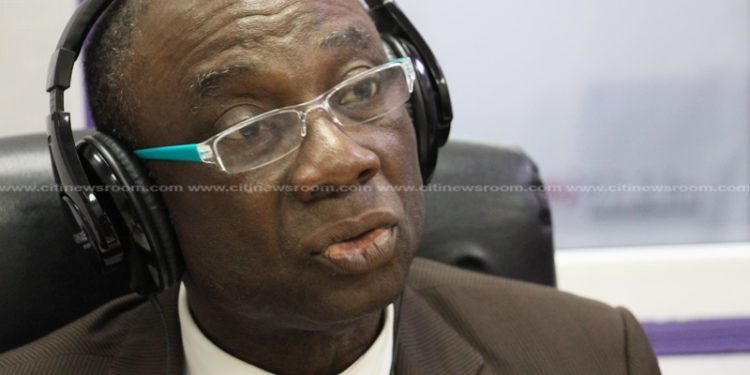
According to the Environmental Health Officer for Dome-Kwabenya, Ing. Charles Asabreh Ampomah, occupants of the structures marked for demolition had already been given prior notice.
“There are still a lot we are going to do. There is a particular area with a lot of squatters and a choked drain; about 11 people died in that area. As part of efforts to avert future floods, the place has been marked for demolition.
“We have given them a deadline. By Thursday, they are all supposed to leave the place after which the Assembly will go and conduct the demolition exercise,” he said.
The upcoming exercise is part of measures to prevent future flooding following recent heavy rains that claimed 11 lives in one of the affected communities. Meanwhile, additional backhoes and other specialised equipment are expected to be procured by the government in the coming days to improve drain desilting and help prevent flooding.
The specialised equipment will assist the military in removing silt and waste excavated from drains and transport the debris to designated dumping sites. President John Dramani Mahama announced after participating in a nationwide environmental clean-up exercise organised by the government today, July 10.
According to him, “So we’re going to get some more backhoes for the military so that all the garbage and the silts that we have taken out of the drains, they’ll be able to gather it and go and dump it somewhere”.
“We also have to get specialised machines like backhoes to take the silts that we have taken out of the drains and put them in a tipper truck to take them away”.
Also speaking during an inspection of the Alajo drains as part of the National Clean-Up Exercise, President Mahama cautioned the public against dumping unwanted items into drains, warning that such practices contribute to flooding incidents.
According to him, the National Clean-Up Exercise has come to stay to promote a cleaner environment and encourage citizens to take responsibility for proper sanitation practices.
“We have to clear the drains. We just worked on this Alajo drain. It’s part of the outdoor stream. And there are two problems in it. There’s silt, and then there’s also plastics and household waste.
“You find in a drain like this, there are Indian blocks. People discard an Indian block and throw it in the drain. Old furniture, dining tables, everything you can find in that drain.The drains are not garbage instruments. If you want to dispose of something, you know how to dispose of it,” he said.
The government’s initiative is to help improve sanitation and reduce the risk of future flooding. In a statement issued on Monday, July 6, government spokesperson Felix Kwakye Ofosu announced that Friday, July 10, and Saturday, July 11, have been declared National General Cleaning Days across the seven regions affected by the devastating June 29 floods, following a directive from President John Dramani Mahama.
Part of the statement read, “This is a critical, nationwide exercise and all citizens are strongly encouraged to fully participate in it. For far too long, indiscriminate littering and plastic pollution have clogged our drainage systems, contributing to devastating, preventable floods that destroy livelihoods and claim precious Ghanaian lives”.
Ministers of State, Chief Executive Officers, Members of Parliament, Metropolitan, Municipal and District Chief Executives (MMDCEs), and heads of public institutions in the affected regions have been directed to oversee the exercise.
Ghana witnessed a series of flooding incidents on Monday, June 29, in parts of the Greater Accra Region and other regions following heavy rains.
The rains, which started late on Sunday, June 28, left commuters stranded, brought traffic to a standstill, resulted in the deaths of several individuals and destruction of properties.
While some victims managed to salvage a few belongings, many suffered devastating losses as floodwaters submerged their homes and properties.
The current death toll from the flooding incidents, as confirmed by the Ghana National Fire Service Public Relations Department, stands at 34. Meanwhile, the Finance Minister has realised a sum of GH¢300 million from the Contingency Fund for individuals affected by the incident following President John Dramani Mahama’s directive.
The directive forms part of the government’s response to the flooding of parts of Accra and other communities in the southern sector of the country after hours of unusually heavy rainfall.
In Ghana, the Contingency Fund is a constitutional fund set aside to meet urgent and unforeseen government expenses that cannot wait for the normal budget approval process.
It is established under Article 177 of the 1992 Constitution of Ghana.In a statement issued on behalf of the President by the Spokesperson to the President and Minister for Government Communications, Felix Kwakye Ofosu, it was indicated that the GH¢300 million will be divided into two, with portions designated to provide relief and implement measures to mitigate flooding.
“President John Dramani Mahama has directed the Minister for Finance to release GHS 300 million from the Contingency Fund to finance urgent flood relief and mitigation efforts.
GHS 150 million out of the amount will finance urgent relief efforts for flood-affected persons and communities in the southern sector of the country. Another GHS 150 million will be spent on flood mitigation measures aimed at reducing incidents of flooding,” parts of the statement read.
Also, due to the scale of destruction and the effects of the floods, President Mahama has ordered that additional support be provided by the Ghana Armed Forces and other security services for the rescue operations ongoing across the city.
“The President has also directed the deployment of personnel of the Ghana Armed Forces and Police to work with NADMO and other security services in the rescue and relief operations currently underway across the city,” adding that, “the President earlier today undertook an aerial tour of the flooded areas to assess the full extent of the situation and announced a raft of steps being taken to safeguard residents and prevent further flooding.”
Death toll from the devastating floods that occurred on Monday, June 29, in some parts of the country has reached thirty-four (34), the National Disaster Management Organisation has confirmed.
Addressing the press on Thursday, July 2, the Director of Inspectorate at NADMO, Richard Amo Yartey, explained that the Greater Accra Region recorded 12 deaths out of the figure. He added that Central, Ashanti, Eastern and Volta Regions recorded the rest of the numbers.
The Director of Inspectorate at NADMO noted that Ghana could record more deaths as rescue efforts continue.
“The death toll in Accra is 12, across the country is 34 but it could go up. If we did the matching and realise that some of the people missing have been found dead, then the death toll will increase and those listed as missing will reduce,” he stated.
The Finance Ministry has disbursed GHC 350 million from the Contingency Fund to the respective National Disaster Management Committee accounts to finance urgent flood relief and mitigation efforts, as earlier directed by President John Dramani Mahama in response to the recent floods.
In Ghana, the Contingency Fund is a constitutional fund set aside to meet urgent and unforeseen government expenses that cannot wait for the normal budget approval process.
It is established under Article 177 of the 1992 Constitution of Ghana.
The President issued the directive after conducting an aerial assessment of the extent of damage caused by the floods and announced the intervention in line with Article 177 of the 1992 Constitution.
The Finance Minister first secured parliamentary approval through the Finance Committee for the withdrawal from the Contingency Fund.
Following Parliament’s approval, the Minister for Finance authorised the Controller and Accountant-General to release and transfer GH¢350 million from the Contingency Fund to the National Disaster Management Committee in Accra on Tuesday, June 30, to implement the National Emergency Response Programme and support flood relief efforts.
Acting on the Minister’s instructions, the Controller and Accountant-General established a dedicated account for the National Disaster Management Committee at the Bank of Ghana and subsequently transferred the approved GH¢350 million into it, completing the full disbursement.
The allocation comprises GH¢200 million for immediate relief assistance to flood victims and affected communities, while the remaining GH¢150 million has been earmarked for flood prevention and mitigation interventions to help minimise the occurrence and impact of future flooding.
The flood emergency, providing timely assistance to transfer, gives effect to President Mahama’s directive for an immediate government response to the affected communities while supporting long-term measures to reduce the impact of future flooding.
Death toll after Monday June 29 downpour
So far, Ghana has recorded 12 deaths following Monday’s, June 29, devastating floods that swept across large parts of the Greater Accra Region. Earlier, the Ghana National Fire Service (GNFS) reported nine (9) deaths.
Addressing the media, a member of the Public Relations Department of the Ghana National Fire Service, Alex King Nartey, said the Service has been leading rescue efforts in some of the worst-hit communities.
“So at this time now, the confirmable or confirmed figures that I have, the only case is in the case of about nine people,” he stated.
Parts of Accra were submerged following heavy rains that started late on Sunday, June 28, and continued into the morning of Monday, June 29, 2026. This caused commuters to be stranded and disrupted traffic flow.
Affected areas include parts of the N1 Highway, Apenkwa towards Tesano, the Accra–Kasoa stretch, Weija, Mallam, Achimota, Spintex, Atomic in Madina, Kaneshie, Darkuman Junction, portions of the Kwame Nkrumah Interchange, and other surrounding communities, according to residents and road users.
Weeks ago, several commuters were left stranded following a heavy downpour in Accra on June 3. The incident disrupted traffic flow as a result of flooding from the rain.
Commuters using routes from Ashaiman to neighbouring communities including Sakumono, Kaneshe, and Adjei Kojo were left stranded for hours as floodwaters submerged key sections of the road.
Also, the heavy downpour on Monday, June 29, led to the collapse of a three-storey, seven-bedroom house at Tabora No. 9.
The unfortunate incident occurred around 9 p.m. in Accra, when the 90 percent-complete structure gave way and collapsed to the ground.
Speaking to Adom News, the landlady, Serwaa Prempeh, said she heard something fall, followed by a sound similar to that of an avocado dropping to the ground.
She then asked her children to check what had fallen, only to learn that a block had fallen from the top of the building. They quickly ran to safety and escaped unharmed before the structure caved in.
“When I asked my children to pick it up, they discovered it was actually a block that had fallen from one of the building’s pillars,” she narrated.
Although no casualties were recorded, some property remains buried under the rubble.
Ghana on Monday, June 29, witnessed a series of flooding incidents in some parts of the Greater Accra Region following heavy rains.
The rains, which started late on Sunday, June 28, left commuters stranded, brought traffic to a standstill, resulted in the deaths of several individuals and destruction of properties.
While some victims managed to salvage a few belongings, many suffered devastating losses as floodwaters submerged their homes and properties.
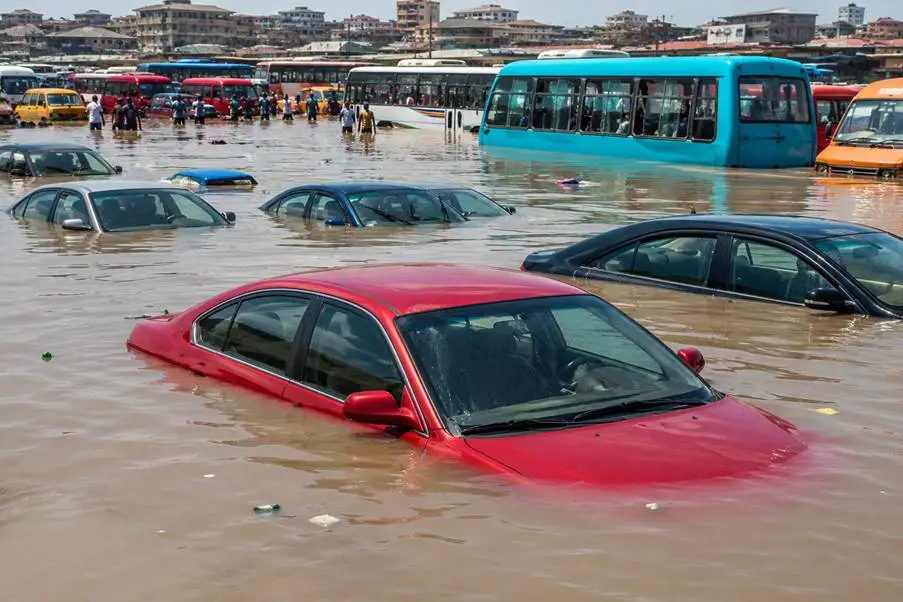
At the Odawna Garage in Accra, about 1,500 apprentices now risk losing their training opportunities and livelihoods after more than 1,000 vehicles were submerged, disrupting operations and threatening the survival of numerous businesses.
The Odawna Garage is the largest automobile repair centre in the country, serves as a major training ground for young mechanics. Speaking to the media on Thursday, July 2, Chairman of the Odawna Garage, Sampson Prempeh, said they did everything possible to save most of the vehicles, but their efforts proved unsuccessful.
He added, “On that day, we called the ECG office to turn off the light in the area because of the flood, and also to help us be able to at least get access. When we finally got access, we could count to say that at the time, about 1,000 vehicles had been submerged in the flood. We have about 1,500 apprentices who are in training. Many of them reside at the premises, so they were able to move a few of the cars to safe havens”.
Other areas affected by the floodwaters include parts of the N1 Highway, Apenkwa towards Tesano, the Accra–Kasoa stretch, Weija, Mallam, Achimota, Spintex, Atomic in Madina, Kaneshie, Darkuman Junction, portions of the Kwame Nkrumah Interchange, and other surrounding communities.
The current death toll from the flooding incidents, as confirmed by the Ghana National Fire Service Public Relations Department, stands at 12.
Meanwhile, the Finance Minister has realised a sum of GH¢300 million from the Contingency Fund to individuals affected by the incident following President John Dramani Mahama’s directive.
The directive forms part of the government’s response to the flooding of parts of Accra and other communities in the southern sector of the country after hours of unusually heavy rainfall.
In Ghana, the Contingency Fund is a constitutional fund set aside to meet urgent and unforeseen government expenses that cannot wait for the normal budget approval process.
It is established under Article 177 of the 1992 Constitution of Ghana.
In a statement issued on behalf of the President by the Spokesperson to the President and Minister for Government Communications, Felix Kwakye Ofosu, it was indicated that the GH¢300 million will be divided into two, with portions designated to provide relief and implement measures to mitigate flooding.
“President John Dramani Mahama has directed the Minister for Finance to release GHS 300 million from the Contingency Fund to finance urgent flood relief and mitigation efforts.
GHS 150 million out of the amount will finance urgent relief efforts for flood-affected persons and communities in the southern sector of the country. Another GHS 150 million will be spent on flood mitigation measures aimed at reducing incidents of flooding,” parts of the statement read.
Also, due to the scale of destruction and the effects of the floods, President Mahama has ordered that additional support be provided by the Ghana Armed Forces and other security services for the rescue operations ongoing across the city.
“The President has also directed the deployment of personnel of the Ghana Armed Forces and Police to work with NADMO and other security services in the rescue and relief operations currently underway across the city,” adding that, “the President earlier today undertook an aerial tour of the flooded areas to assess the full extent of the situation and announced a raft of steps being taken to safeguard residents and prevent further flooding.”
Acting CEO Prof. Nana Ama Browne Klutse has called for an immediate stop to the encroachment of wetlands, emphasizing that such actions are crucial in mitigating the potential devastation caused by floods.
Addressing the media following her inaugural lecture at the University of Ghana on Thursday, March 27, 2025, Prof. Klutse underscored the urgent need to halt construction on Ramsar sites to safeguard flood-prone areas.
Her warning follows a heavy downpour and storm on Tuesday, March 26, which triggered flooding in parts of the Greater Accra Region. The storm also brought down trees and billboards, causing damage to vehicles.
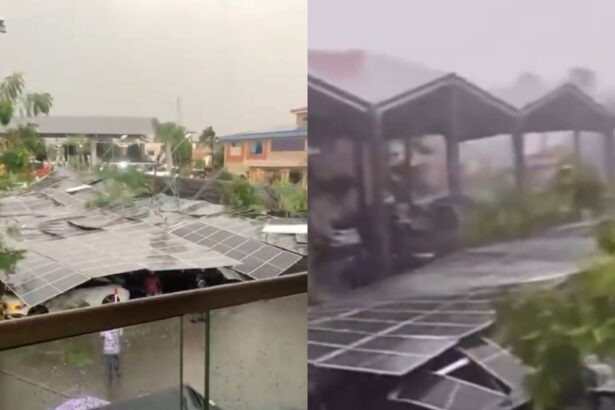
A case in point is the collapse of solar panels at the A&C mall’s car port which caused severe damages to customers cars.
“We see flooding happening, and this year, we are going to have a lot of flooding happening. Two days ago or even yesterday [Wednesday, March 26], we had heavy rain for a short period, but heavy and stormy,” she said.
“These are some of the extreme events we are going to be having this year, and we need to prepare our adaptation plan so that we can survive the impacts when they happen.
“There are a few things we do that actually cause us the flooding. We have to stop building on waterways. So no matter how heavy it rains, water should find its way running into wetlands or areas that are supposed to store water,” Prof. Klutse added.
Prof. Klutse, former Head of the Department of Physics at the University of Ghana, delivered the lecture titled “Physics, Policy, and Politics of Climate Change: The Foundation of Human Survival.”
A heavyrainstorm on the evening of Tuesday March 25 evening caused serious flooding and damage in several parts of Accra, including Madina, Legon, Okponglo, and East Legon.
The downpour left roads underwater, slowed traffic, and brought down billboards. At A&C Mall in East Legon, a carport collapsed due to the strong winds and heavy rain, adding to the destruction.
Many residents and drivers were stranded as the floodwaters blocked major roads. People are now calling for better drainage systems to prevent frequent flooding in the city.
Authorities have yet to determine the full extent of the damage, but emergency teams have been asked to act quickly to bring the situation under control.
Real Madrid’s upcoming La Liga match against Valencia, originally slated for Saturday, has been postponed following severe flash floods across parts of Spain.
The Spanish Football Federation (RFEF) announced that all games in the Valencia region would be suspended after torrential rains led to at least 95 fatalities and left many others unaccounted for.
In addition to Real Madrid’s match, Villarreal’s game against Rayo Vallecano and three Segunda division matches—Castellon vs. RC Ferrol, CD Eldense vs. SD Huesca, and Malaga vs.
Levante—have also been postponed.
In the women’s top flight, Liga F, fixtures such as Valencia’s match against Deportivo La Coruna and Real Madrid’s clash with Levante have also been suspended.
The RFEF acted on requests from La Liga, Liga F, and the clubs themselves to call off all professional matches in the affected areas after the devastating flooding.
The ongoing Copa del Rey tournament was similarly affected, with Valencia’s away game against Parla Escuela among the rescheduled matches.
The RFEF said a minute’s silence will be observed during the weekend’s games to show Spanish football’s “solidarity for those affected, especially the relatives of those who have died in the natural disaster.”
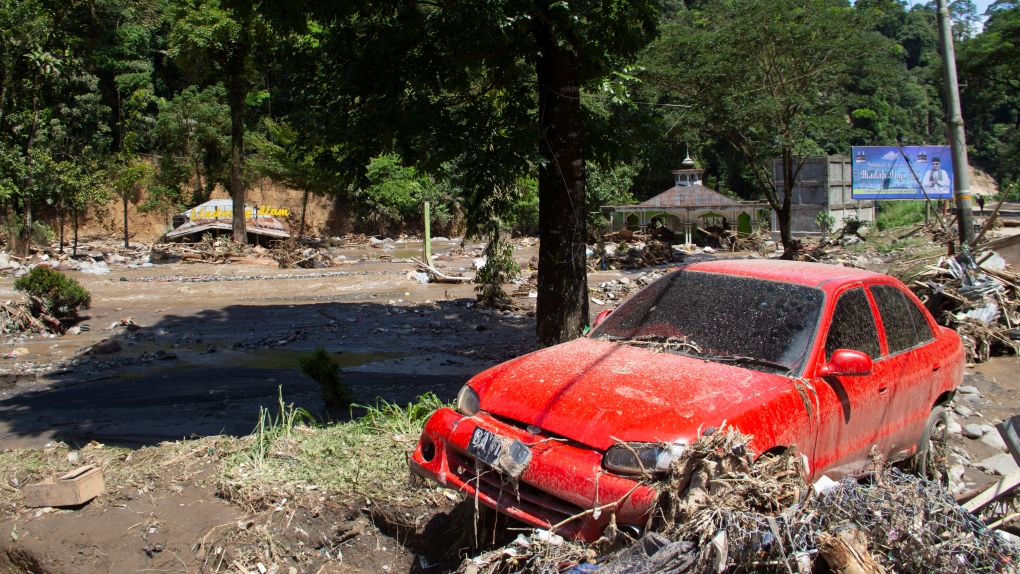
Heavy rains during the monsoon season, along with a big mudslide from a cold lava flow on Mount Marapi, made a river overflow and destroy villages in West Sumatra province. This happened late at night on Saturday. The floods took away people and covered more than 100 houses and buildings, said Abdul Muhari, a spokesperson for the National Disaster Management Agency.
Cold lava, also called lahar, is a mixture of volcanic stuff and rocks that flow down a volcano when it rains.
On Sunday afternoon, rescuers found 19 bodies in the village of Canduang in Agam district, and 9 more bodies in the nearby Tanah Datar district, according to the Indonesian National Search and Rescue Agency.
The agency reported that eight people were found dead in mud during the flash floods in Padang Pariaman, and one person was found dead in Padang Panjang. Rescuers are looking for 18 people who are missing.
Flooding on Saturday night blocked the main roads near Anai Valley Waterfall in Tanah Datar district. This made it difficult to get to other cities. Padang Panjang Police Chief Kartyana Putra said this on Sunday.
The disaster happened two months after a lot of rain caused floods and landslides in West Sumatra’s Pesisir Selatan and Padang Pariaman districts. At least 21 people died and five are still missing.
Last year, Mount Marapi, which is 2,885 meters tall, erupted and 23 climbers died because they were surprised by the eruption on a weekend. The volcano has been at the third level of alert since 2011. This means there is more volcanic activity than usual. People need to stay at least 3 kilometers away from the volcano. This is for the safety of climbers and villagers.
Marapi is famous for erupting suddenly, and it’s hard to tell when it will happen because the volcano is shallow and close to the top. Its eruptions aren’t caused by deep magma movement, and they make the ground shake on seismic monitors.
Marapi has been erupting since January 2023, but no one got hurt. There are over 120 active volcanoes in Indonesia and this is one of them. The country is at risk of earthquakes because it’s on the Pacific “Ring of Fire,” a circle of volcanoes and fault lines around the Pacific Ocean.
Authorities say that 33 people have died because of the rain since November. The rain has caused landslides and made rivers overflow.
The number of people who have died is eight times more than this time last year.
Officials are watching a few dams closely because they are worried they might flood.
Juan Carlos Calvimontes, who is in charge of Civil Defence, said that in Bolivia, 10 out of 340 towns are on the highest alert and 279 are on the second highest alert.
Authorities also mentioned that they sent help to Achocalla, in La Paz province. A 35-year-old woman and her two children were buried in a mudslide that covered their home.
A neighbor told the local newspaper that she yelled at the woman to leave the house, but the mother might not have been able to take her children with her in time.
More than 20 people got hurt.
In La Paz province, officials are watching the water levels in the Incachaca dam very carefully.
Government experts and the mayor of La Paz city went to see the dam on Sunday. La Paz is the city below the dam.
Three additional water storage areas – Hampaturi Alto, Pampalarama and Alpaquita – are also full.
Bolivia is getting heavy rain after a very long time of not much rain and one of its hottest winters ever.
In October, many people came to the Incachaca reservoir to pray for rain because it was nearly full. The doors that release water at the Incachaca reservoir.
Bolivia often has extreme weather, like heavy rain. But now, climate change has made it more likely to have even heavier rain.
The world has gotten 1. 1 degrees Celsius warmer since the industrial era started, and temperatures will continue to rise unless governments make big reductions in emissions.
The torrential downpour in Dar es Salaam, Tanzania resulted in collapsed houses and damaged roads and bridges. – The floods swept away a woman, and the local radio interviewed relatives searching for a missing child.
The flooding caused the most damage in neighborhoods near the rivers that flow into the Indian Ocean. Due to the road closures, several children and employees were unable to leave their homes on Monday.
Many families are checking their homes for damage and trying to find their things.
There was a lot of rain in the city on Saturday and Sunday. The areas that got the most rain were Kinondoni and Ilala. – Flooding caused the closure of the bridge connecting to the city center, where the President resides, on Sunday.But now it’s open again because the water has gone down.
The weather agency in Tanzania says there will be a lot of rain for the rest of the month. The president has asked people to go to safer places if they live where there might be a flood.
The authorities haven’t said how many people were hurt or killed, but one man said his wife was taken by the water, and another family is looking for their son who is missing.
They don’t know if he was carried away by the water or if he is okay and being taken care of by another family.
Member of Parliament (MP) for Pru East, Dr. Kwabena Donkor, has forecasted that there might be a food scarcity in Ghana in 2024.
This comes after communities near the Volta Lake’s bank were inundated due to the lake’s bank being broken by an excessive amount of water entering it.
During a Monday Eyewitness News on Citi FM interview with Umaru Sanda Amadu, Dr. Donkor stated,
“The flooding is so severe, whole communities are under the lake. Health infrastructure, clinics, schools, etc. have all been flooded. And so there is not just the humanitarian end of it; there is also the medical, public health end of it, and the educational end of it. In my constituency, schools have had to shut down because they have been submerged.”
“What exacerbates the situation is that in Pru, Oti, Bono East, Savannah, and Northern, farmlands have also been flooded, so there is a possibility of a serious food inadequacy and food insecurity going forward next year [2024] because farmlands have been flooded and the crops have not survived.”
Dr. Donkor disclosed that the flooding of the communities bordering the lake commenced as early as June and July 2023 but had not been taken seriously due to a lack of media coverage.
He added that the flood victims had so far received only communal aid.
In the Pru East District of the Bono East Region, nine communities have been submerged as a result of the Volta Lake overflow, displacing more than 2,500 residents.
The worst-affected communities include Kobre Nsuano, Pentecost Nsuano, Adiembra, Fanteakura, Tokobikope, Tonka, Agokope, Logakope, and others.
This information was relayed by Fredrick Ndila Ntana, the Pru East District Director of the National Disaster Management Organization (NADMO), during an interview with Citi News on Monday.
“So far we have about over nine communities which are affected by the floods. These are Fanteakura, Birikente, Tokobikope, Accra Town, Kobre Nsuano, Who Are You, and many others.”
“And so now we have about 2554 people displaced, and these are the breakdowns. The males are 1,302 and the females are 1,252…we have relocated them to the highest grounds,” he stated.
In the meantime, more than 30,000 individuals have been forced to leave their homes as a result of the Akosombo Dam spillage, affecting various communities in the Volta and Eastern regions.
The controlled spillage from the Akosombo and Kpong Dams, initiated by the Volta River Authority (VRA), began on September 15, 2023, in response to a consistent increase in the inflow pattern and water level of the Akosombo reservoir.
As a consequence of the spillage, a large number of residents in areas including South Tongu, North Tongu, Central Tongu, Asuogyaman, and numerous other regions have experienced flooding and property damage.
On Friday, officials said that at least 22 people have died, including seven soldiers.
The big floods happened because of a sudden heavy rainfall over a lake on the mountain this week.
The floods got worse when water was let out from a dam near the Teesta river.
It broke the power system at the Chungthang dam and then went down the river and flooded towns and villages.
Many search and rescue people have been sent to Sikkim and northern parts of West Bengal, which is lower in elevation. Places close to the river are being cautious.
Some army personnel, around 23, have been reported as missing. The Chief Minister, Prem Singh Tamang, said that they have found the bodies of seven people in various places downstream of the river. One soldier was saved and found alive earlier this week.
A sum of 103 individuals, counting 15 soldiers, are still not found, as per his statement. Over 22,000 people have been impacted by the floods, and many are stuck in Lachen and Lachung in northern Sikkim. The floods have caused problems with mobile phone service in the area.
Mr Tamang said that the roads connecting different districts have been blocked and the bridges have been taken away by water.
The army said they were giving food and medical help to people. They were also helping civilians and tourists by helping them communicate with others. Rescue teams are also taking people who have been evacuated to places where they can receive help and support.
All schools and colleges in the state will be closed until 15 October because of bad weather.
On Tuesday night, because of a lot of rain, the Lhonak lake in the state broke its embankment. This caused the water level in the Teesta river in Lachen Valley to rise very quickly, which was worrying.
The flood got worse when water was let out from a dam close by into the river. A person from the military said that the water levels downstream suddenly went up very fast and got as high as 15 to 20 feet.
Pictures from space that Isro, India’s space agency, shared showed big changes in the amount of water in the lake.
On 28 September, the lake was 167. 4 hectares big, but by 4 October, it had become much smaller, just 60. 3 The floods destroyed many things, like roads and bridges.
The northern areas of West Bengal have been flooded by water from the Teesta river, affecting districts like Darjeeling, Kalimpong, Cooch Behar, and Jalpaiguri.
According to officials, two people died and six others got hurt when a mortar shell, found in the river that was full, exploded in Jalpaiguri.
Sikkim, a place in the Himalayas, has a high risk of floods and other natural disasters. Last year, there was a lot of flooding in that area that forced tens of thousands of people to leave their homes, and sadly 24 people lost their lives.
Authorities in India are in a hurry to save people who are missing after sudden floods in the state of Sikkim. The floods have caused 102 people to go missing, including 22 army members.
Fourteen people have died because of a big flood caused by a lake in the Himalayas overflowing.
Officials said that there were more than 3,000 tourists who couldn’t leave different areas of the state.
Many people who look for and save others have been sent all over the state.
Prime Minister Narendra Modi talked to Chief Minister Prem Singh Tamang on Wednesday and promised to support him in every possible way.
The Lhonak lake in the state had its barrier broken on Tuesday night because of a lot of rain. This caused the water level in the Teesta river in Lachen Valley to increase rapidly.
The flood got worse because water was let out from a dam close to the river. A person from the military said that the water levels suddenly went up by 15-20 feet in the area further down the stream. Around 14 individuals were stuck in the tunnels of the dam, according to a government representative.
Pictures taken from space by Isro, India’s space agency, displayed major differences in the size of the lake. On September 28th, the lake covered an area of 167. 4 hectares, but by October 4th, it had decreased to 60. 3
The Indian army is searching very hard to find and save people who are missing. Officials said that a soldier was saved on Wednesday night and is doing well.
Rescue workers have also recovered bodies, including that of a child, from the flood area of the Teesta river in Singtam, according to officials from the PTI news agency.
The search operations are happening during heavy rain and fast-moving water in the Teesta River. Many roads and bridges have been washed away.
The floods in Sikkim have caused a lot of damage to things like roads and bridges, according to the chief secretary VB Pathak.
Cell phone service in the northern areas of the state has also been interrupted.
The army has created three phone lines to help families of missing individuals, including their own soldiers.
“Family members of the people who are missing have been reached out to and told about what’s happening,” the message stated. The northern areas of the nearby West Bengal state are also facing problems because water from the Teesta River has flooded the districts of Darjeeling, Kalimpong, Cooch Behar, and Jalpaiguri.
On Wednesday, Mamata Banerjee, the Chief Minister of West Bengal, said that the government saved and relocated 10,000 individuals to 190 shelter camps.
Flooding and other natural disasters happen often in Sikkim, which is located in the Himalayas. Last year, a lot of rain caused very bad floods in that place. This made tens of thousands of people have to leave their homes and sadly, at least 24 people died.
Abla Dzifa Gomashie, the Member of Parliament for Ketu South, has expressed her deep frustration with the ongoing struggle to secure assistance for her constituents who continually suffer from the adverse effects of climate change, including floods and related disasters.
During an interview with JoyNews on Monday, October 2, 2023, the MP conveyed her immense distress regarding the difficulties she has encountered in securing sustained support for her constituents.
She emphasized the relentless challenges she has faced since assuming office as MP in 2019, explaining how they have taken a severe toll on her and left her feeling overwhelmed.
“I do not know what I’m going to do. I’m here biting my fingers and praying and asking God why? 3 years going on – 3 years! I have not breathed since 2019. I’m suffocating. I’m drowning,” she lamented.
Additionally, the MP did not hold back in directly criticizing President Nana Addo Dankwa Akufo-Addo and his government, attributing their administration to the redundancy that local government assemblies are currently experiencing.
She also expressed her dismay at the ineffectiveness of the National Disaster Management Organisation (NADMO) in addressing the ongoing challenges faced by her constituents, particularly those caused by climate change and recurrent floods over the past three years.
“I am going to answer you and I do not care how it lands in anybody’s ears or heart. President Nana Addo and his government have collapsed not only NADMO, they have collapsed the local government structure.
“This assembly here is so toothless, they cannot even provide a bag of rice or corn. They have not provided one bag of rice or corn in the whole period that this has been going on. Everything you (the president) are collapsing. I wish that I don’t have to raise my voice when I’m speaking but I’m so up my nose in this mess that we find ourselves in, I cannot sleep,” she added.
Furthermore, the Ketu South area has been repeatedly affected by flooding, resulting in the destruction of communities, yet little to no assistance has been provided to her and her constituents in dealing with these crises.
She made a fervent plea to the government, urging them to prioritize the completion of the sea defense wall in the region, as well as in other vulnerable communities like Keta, in order to provide a lasting solution to the challenges faced by her constituents.
In addition, Dzifa Gomashie pointed out that Vice President Dr. Mahamudu Bawumia had recently visited the constituency as part of his campaign to become the flagbearer of the New Patriotic Party (NPP).
However, she expressed disappointment that he had not taken the opportunity to visit the affected people in the constituency during his visit.
National Democratic Congress (NDC) flagbearer John Dramani Mahama expressed sympathy to those affected by the recent flood that wreaked havoc on the nation.
Last week’s flash floods had an impact on people across the nation, particularly in the Greater Accra Region.
The former president described the floods as depressing and blamed their occurrence on the government’s inability to come up with solutions and resolve to deal with the long-lasting damage they had caused.
“It is profoundly disheartening to witness the annual recurrence of these floods, with the toll on lives and property steadily increasing. The ability to prevent or minimise such disasters should be a priority for any responsible government. Unfortunately, the Akufo-Addo administration has repeatedly demonstrated its lack of commitment towards implementing effective measures to address this recurring menace.”
“The administration has run out of ideas for ameliorating the situation. Today, even with the shortest burst of rainfall, areas previously immune to the flooding menace experience severe destruction from the raging waters. We are witnessing an increase in flooding, especially in the cities, despite the huge funds injected into flood control by foreign partners such as the World Bank and from the domestic budget.”
Mr. Mahama urged the government and relevant agencies to adopt strategic and proactive measures to solve the situation.
“Our firm belief is that tragedies of such magnitude can be prevented through proactive measures such as implementing appropriate regulations, good waste management, and investing in the construction and management of sustainable drainage systems.
“We call on the government to take immediate action to rectify the systemic failures that have contributed to these floods.”
The mayor of Derna, a city in Libya that was severely damaged by flooding, has been taken into custody by officials in connection with the disaster.
Abdulmenam al-Ghaithi was one of the many officials who were accused of being involved in a tragic event that caused the death of many people in eastern Libya this month.
Angry people in Derna set fire to the mayor’s house because they were protesting.
The attorney general’s office, located in the main city of Tripoli, said on Monday that the officials were in charge of taking care of the country’s dam buildings. Because of this, the office has started a criminal case against them.
Some of the officials, like Mr. al-Ghaithi, have already been arrested before the trial.
On Monday, the attorney general’s office said that the officials did many things wrong. They didn’t use the money properly to take care of the dams. This caused the dams to burst and the floods in Derna happened.
His office also said that the officials did not take proper care and precautions, which caused people to die and Libya to lose a lot of money because of the floods.
Mr al-Ghaithi has also been accused of using his power in a harmful way.
Libya is split into two opposing governments – one in the east and one in the west. The attorney general is in Tripoli, which is in the west. It is uncertain if he has the power to order arrests in the eastern part.
On Sunday, the government in the east announced that 3,868 people have died due to the floods.
The lawyer in charge of the government’s legal affairs said they are still investigating other officials and there might be more people getting arrested as a result.
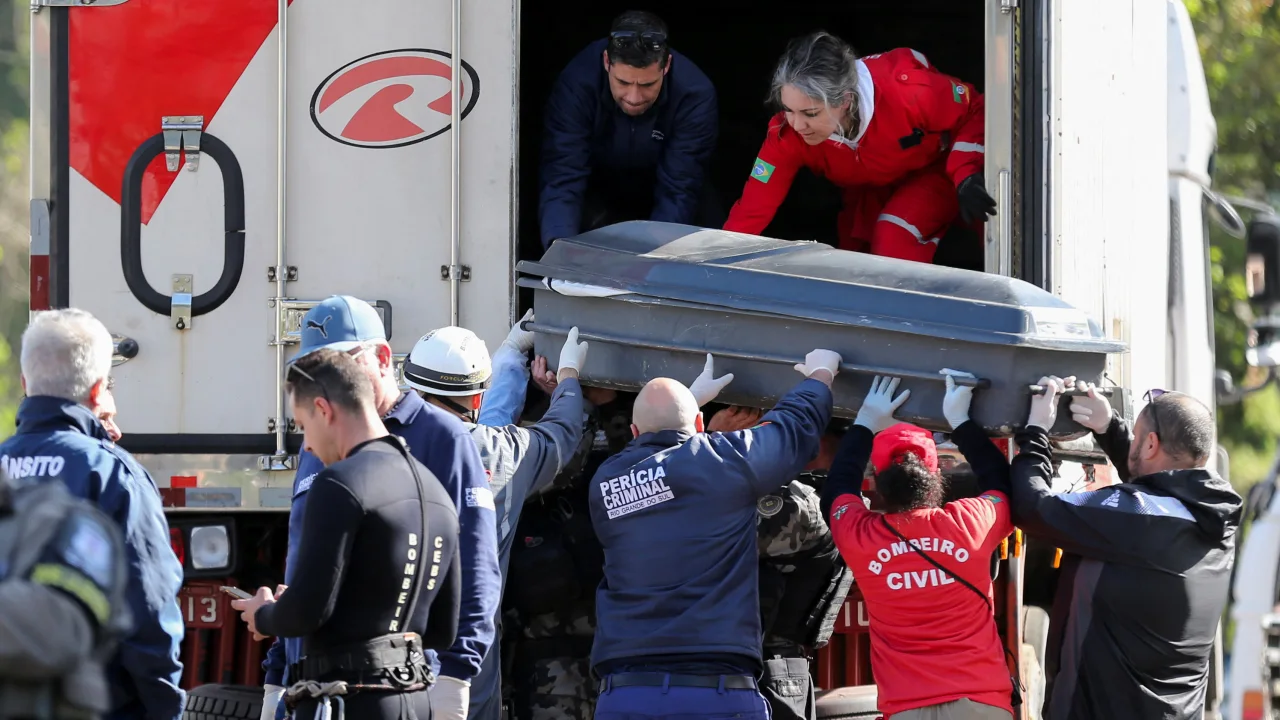
More than thirty people have died because of the heavy rains and floods in Rio Grande do Sul, Brazil, according to state governor Eduardo Leite on Wednesday.
Leite went to the place affected by the disaster on Wednesday morning. He promised on social media that they will do whatever it takes to rebuild the homes and infrastructure that got destroyed by the flooding.
The storm will keep affecting the area for the rest of the week.
According to a news source from CNN in Brazil, the heavy rains this week are the most severe natural disaster the state has had in 40 years.
The Brazilian weather expert Dr. Maria Clara Sassaki said to CNN Brasil that in just one week, the state received the same amount of rain that was expected for the whole month of September.
This week’s heavy rains in Rio Grande do Sul are the fourth time extreme weather has happened in the past three months, says Leite.
Earlier today, the Ministry of Social Development (MDS) announced that around 50 cities in the southern states have been affected. Almost 80% of Muçum city in Rio Grande do Sul is currently underwater.
On Wednesday, the local authorities warned people about the possibility of a flood around the Jacuí River and the Jacuí Delta.
“The situation is very serious,” MDS Minister Wellington Dias said on X, which is the new name for Twitter.
Greece is experiencing heavy rain that has caused floods in homes, businesses, and roads. The extreme weather caused a wall to collapse, resulting in at least one person dying.
In the past day, some areas have received a lot of rain due to a strong storm passing through. This has caused flash floods, which can be very dangerous.
Greece’s leader, Kyriakos Mitsotakis, says they are experiencing very bad weather and wants people to listen to the authorities.
The rainfall is very heavy in central Greece and on the island of Evia and the Sporades Islands.
A man was killed on Tuesday when a wall fell on him in a village called Agios Georgios, near the city of Volos. The Greek fire service reported this.
Another man is missing because his car was carried away on the edges of Volos, as reported by the fire service to CNN.
The police in Volos and nearby areas, and also on Skiathos island, have prohibited traffic movement. Part of the hospital in Volos has been flooded.
The storm named Daniel by meteorologists in southeast Europe is moving slowly across the country towards the southwest.
The middle part of the storm is moving towards the Mediterranean Sea, but it will still cause a lot of rain and flooding in Greece and nearby islands in the next 24 to 48 hours.
Warnings for heavy rain and thunderstorms have been posted for several provinces, specifically the coastlines in the east. The thunderstorms will happen regularly until Wednesday.
When the storm moves into the Mediterranean Sea, it might become similar to a tropical storm.
Medicanes are like tropical storms and hurricanes in the Atlantic or typhoons in the Pacific, and they can create dangerous situations in the Mediterranean Sea and coastal countries.
The storm might get stronger in the next day or two because the temperature of the sea is warm, around 27 to 30 degrees Celsius, in the eastern Mediterranean.
The storm is arriving just when Greece is finally getting the wildfires under control after they caused a lot of damage in the country for several weeks.
Scientists say that the very bad weather in Greece this summer, like floods, fires, and extreme heat, will happen more often and get worse if people keep burning fossil fuels that warm the planet.
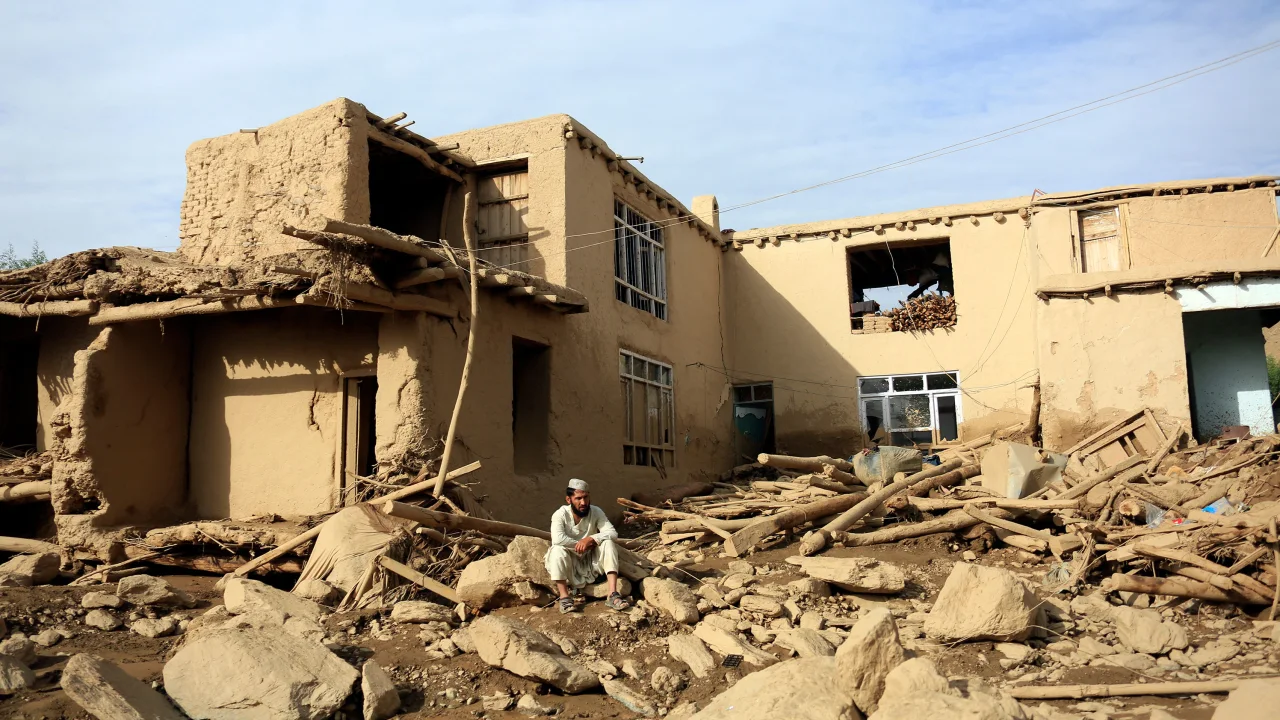
The fatal flash floods that struck multiple Afghan provinces over the weekend claimed at least 31 lives, according to authorities’ reports on Sunday.
74 people had been harmed, and at least 41 were still missing, according to Shafiullah Rahimi, a spokesman for the Taliban’s Ministry of Disaster Management, who talked to the media from Kabul.
Rahimi claims that in seven regions of Afghanistan, flash floods caused by heavy seasonal rains have destroyed 606 residential dwellings and hundreds of acres of agricultural land, either completely or in part.
Teams from the ministry, as well as teams from the defence and public welfare ministries, the Red Crescent, provincial officials, and other officials, arrived at the flood scenes and managed the rescue efforts, the official claimed.
In a statement made public on Sunday, the Taliban’s Ministry of State for Disaster Management asserted that since the year 2023 got underway, over 100,000 families in different provinces affected by natural disasters had gotten food and money aid.
According to the report, including the most recent recorded deaths from flash floods, at least 214 individuals have perished as a result of natural catastrophes in the previous four months.
Authorities have annouced that floods and landslides in Rwanda’s northern and western districts have resulted in at least 130 fatalities.
The rains hit at night when many people were asleep – an official told the BBC this is one reason why so many died.
The five-year-old daughter of Claudette Nyiraneza was among them.
“We could not save my daughter under the rubble until morning,” she told the BBC, adding that neighbours eventually helped retrieve her body.
Local governor François Habitegeko said many houses had collapsed on people.
He said that main roads in the area “are not usable because of landslides”.
Rwanda’s public broadcaster RBA reports that the casualty numbers are expected to increase as floodwaters continue to rise.
Rwanda’s president offered his condolences to those who have been affected. His statement also added that residents were being evacuated from “affected and high-risk areas”.
The government’s main priority now is to “reach every house that has been damaged to ensure we can rescue any person who may be trapped”, the Reuters news agency quotes Mr Habitegeko as saying.
Relief efforts have already started, “including helping to bury victims of the disaster and providing supplies to those whose homes were destroyed,” a government minister for emergencies, Marie Solange Kayisire, told AFP
Africa Live Page: For news updates from around the continent
The heavy rains pounded Rwanda “all night” and more downpours are expected throughout the month, authorities say.
Heavy rains and consequent damage and casualties between March and May are commonplace in Rwanda, but the deluge on Tuesday night was unusually strong and long-lasting.
This is the worst flooding Rwanda has seen since May 2020 when around 80 people died.
Deaths have also been reported in neighbouring Uganda, where six people have died after landslides, the Ugandan Red Cross says.
Rwanda’s weather authority is linking the unusual rains seen in recent years to climate change.
Many factors contribute to flooding, but a warming atmosphere caused by climate change makes extreme rainfall more likely.
The world has already warmed by about 1.2C since the industrial era began and temperatures will keep rising unless governments around the world make steep cuts to emissions.
Floods caused by torrential rains have hit two Turkish provinces devastated by last month’s earthquakes, killing at least 13 people and exacerbating the misery of thousands who have been displaced, according to officials.
According to Turkish media, the floods on Wednesday killed 11 people in Sanliurfa, which is about 50 kilometers (30 miles) north of the Syrian border. According to reports, two people died in nearby Adiyaman, including a one-year-old child.
A number of other people were reported missing.
The two people died in Adiyaman when surging waters swept away a container home in the town of Tut where a group of earthquake survivors was living, Governor Numan Hatipoglu said. Four people were reported missing.
Rescuers found the bodies of five Syrian nationals inside a flooded basement apartment in neighbouring Sanliurfa province and retrieved two other bodies inside a van that was trapped at an underpass.
Four other people were killed and two firefighters were reported missing, Sanliurfa Governor Salih Ayhan told HaberTurk television.
Several people were evacuated from a drenched campsite where earthquake survivors were sheltering in tents. Patients were also evacuated from a hospital, HaberTurk reported.
Television footage from Sanliurfa showed floodwaters surging along a street and sweeping away cars.
Turkey’s disaster management agency said more than a dozen professional divers were involved in the rescue efforts in each of the two provinces.
The powerful earthquakes that struck parts of Turkey and Syria on February 6 killed more than 52,000 people, the vast majority in Turkey.
More than 200,000 buildings in Turkey either collapsed or were severely damaged.
Floodwaters have carried corpses from a cemetery on the banks of the Umbeluze river close to Maputo, the capital of Mozambique, into surrounding homes and onto farms.
The consequences of the surging waves that inundated numerous neighborhoods in the Boane area, roughly 25 km south-west of the capital, and elsewhere were depicted in televised photographs.
According to reports, the bodies’ dispersion threatens public health.
The corpses were collected throughout the course of the weekend by local residents.
The impacted cemetery dates back more than three decades and has a large number of unmarked graves.
Tropical Cyclone Freddy made landfall in the country on Friday leading to major flooding across the region.
After seven of its nine provinces were submerged by flooding brought on by heavy rains,South Africa declared a national disaster on Monday. Farmers also suffered losses, and roads and bridges were destroyed.
The national weather service expects the heavy rains to continue, according to a White House statement.
According to the statement, the government “declared a national state of disaster to enable an intensive, coordinated response to the impact of floods,” but no details regarding casualties were provided.
It claimed that the La Nia global weather phenomenon, which happens in the Pacific Ocean, was to blame for the intense rains.
“These conditions demand the provision of temporary shelters, food, and blankets to homeless families and individuals and the large-scale, costly rehabilitation of infrastructure,” the statement added.
New Zealand is getting ready for a severe storm that could hit areas of the country that have already suffered from deadly flooding.
From Saturday night, Cyclone Gabrielle is anticipated to make landfall on the nation’s North Island, possibly bringing with it strong winds and additional heavy rain.
In case they become stranded at home, residents have been advised to make sure they have enough supplies to last three days.
The storm strikes just a few weeks after Auckland was flooded by torrential rain.
There, tens of thousands of sandbags have been distributed due to worries that the weakened infrastructure and soggy ground have made homes more susceptible to flooding.
Evacuation shelters have been set up once again, and Air New Zealand, the national carrier, has cancelled several domestic flights ahead of the cyclone’s arrival.
Photographs and videos posted on social media showed long queues at supermarkets and bare shelves as people prepared for more severe weather.
Local media have reported that New Zealand’s most northern region, Northland, has already begun to experience high winds.
Cyclone Gabrielle has been downgraded from a category three storm to a category two, meaning less destructive winds are now expected.
However, forecasters have warned that they could still be strong enough to damage trees and power lines and that enough rain could fall to cause further flooding and landslides in the coming days.
The Coromandel Peninsula and the Tairāwhiti/Gisborne region, which were also affected by the recent torrential rain, have been placed under the most serious weather alert.
Residents in flood-prone areas have been told to prepare to evacuate.
“There’s a degree of nervousness and anxiety around this coming event,” the Thames-Coromandel district’s mayor, Len Salt, told the Stuff news website.
“Coromandel people are pretty resilient, but the fact we’ve been in this mode dealing with storm events from the beginning of January…people are tired.”
Meanwhile, the Australian Bureau of Meteorology has said that conditions on the remote territory of Norfolk Island have begun to deteriorate because of Cyclone Gabrielle.
The island, which lies north of New Zealand, has also been placed under a red alert. Residents have been warned to stay indoors and to find the strongest part of their homes under which to take shelter.
Only three cyclones have come within a 50km (31 mile) range of the island in the past 30-40 years.
InCalifornia, where a powerful storm has caused flooding, strong winds, and torrential rains, at least 14 people have died.
While millions more are under severe weather warnings, thousands of people have evacuated their homes.
Data from Poweroutage.us show that nearly 188,000 homes and businesses were without electricity.
Much of the state is expected to experience heavy rain all day Tuesday, and some areas could experience hazardous mudslides as a result.
It has been referred to as “the most impressive storm since January 2005” by the National Weather Service (NWS).
The weather is expected to dump up to 7in (18cm) of rain in some parts by Wednesday and could produce additional flooding, mudslides and landslides. particularly in areas previously hardest hit by heavy rainfall, NWS officials warned.
“An enormous cyclone” is developing off the coast, officials said.
A five-year-old, who was swept away by floodwaters near Paso Robles on Monday, is still missing.
The boy and his mother were reportedly in a truck taking him to school when the vehicle was overcome by water. It sparked a seven-hour search that was called off when the conditions became too dangerous for divers. He has not been declared dead, local officials said, however details of when the search will resume have not been given.
Around 90% of Californians – some 34 million people in the most-populous US state – are under flood watch, according to the National Oceanic and Atmospheric Administration.
“This is not a day to be out doing anything you don’t have to,” Santa Barbara County Sheriff Bill Brown told the Los Angeles Times.
An order issued on Monday afternoon by the Montecito Fire Department directed residents of the town and nearby canyons: “Leave now!”
Residents unable to flee were told to move to their innermost room or high ground.
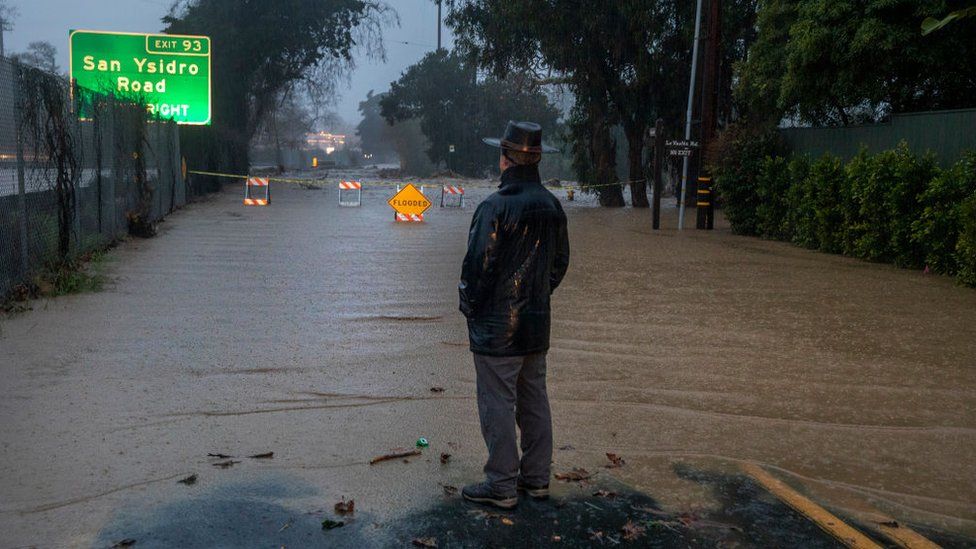
Image caption, Creeks in Montecito, and around California, have flooded into roadways
The NWS reported that up to 14in (35.5cm) of rain was dumped in the last 24 hours in the region.
Across the state, average rainfall totals have hit between 400% and 600% above average values, the NWS said on Tuesday.
People living in the elite coastal enclave of Montecito were among those ordered to leave their homes.
Montecito is home to many Hollywood stars, including actor Rob Lowe, and comedian Ellen DeGeneres, who posted a video from the banks of a flooded creek on Monday.
“This is crazy!” DeGeneres said. “This creek next to our house never flows, ever. It’s probably about nine feet up and is going to go another two feet up.”
The evacuation comes on the fifth anniversary of a mudslide in Montecito that killed 23 people and destroyed more than 100 homes.
This new round of severe weather will bring heavy rain onalready flooded rivers, damaging winds that are expected to topple trees and power lines, and heavy snow in the California mountains.
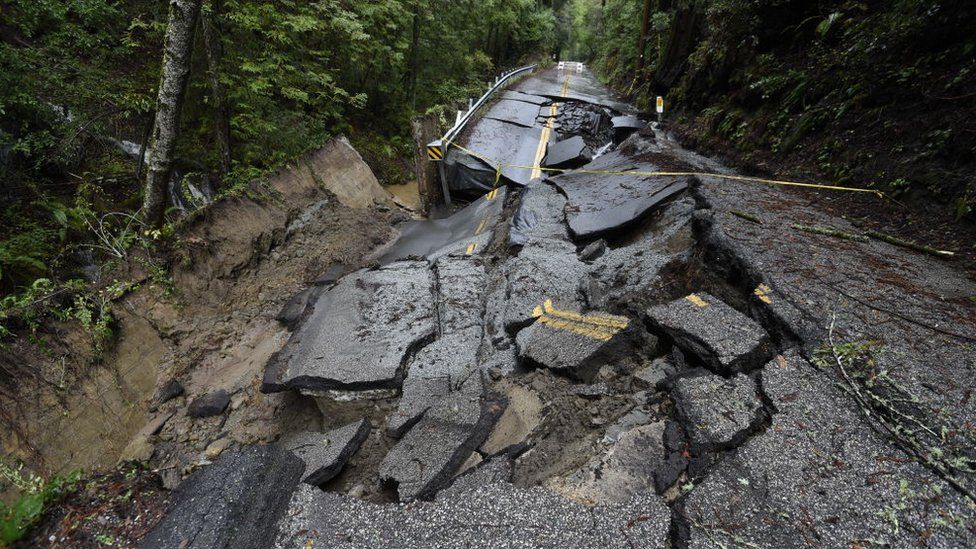
Image caption,A damaged road in the Santa Cruz mountains
The NWS forecasts the heaviest and most widespread rain to hit early Tuesday and into the afternoon. The agency issued a flood warning in areas around Los Angeles, including Orange County and the San Bernardino County Mountains.
Other evacuations have been ordered by officials, including in areas downstream of reservoirs that could overflow.
President Joe Biden declared a state of emergency for California on Monday, which allows the Federal Emergency Management Agency (Fema) to provide disaster relief.
What are atmospheric rivers and bomb cyclones?
In the last week, California has experienced two overlapping weather phenomena – an atmospheric river, where an airborne stream of dense moisture flows in from the ocean, and a bomb cyclone, a storm with a rapid drop in pressure that creates an explosive effect.
Watch: More perilous storms head to California and Oregon
Atmospheric rivers can cause extreme rainfall and floods. Bomb cyclones require a mix of high and low temperatures, rising and dropping air pressure, and moisture, often resulting in strong winds and severe storms.
Much of the area hit by heavy rain has been under extreme drought conditions. Last year, California capped how much water residents can use in an effort to conserve its depleting supply.
Despite the rain, much of the state remains under moderate to extreme drought warnings, according to the US Drought Monitor.
Experts have said that it would take many years of rain to reverse the two-decade drought that has hit the western US.
Climate change was the main cause of the floods that killed over 600 people in Nigeria this year, according to scientists.
In a study revealed on Wednesday, scientists claim that the floods that affected Nigeria, but also Niger, Chad, and neighbouring countries were directly linked to human activity.
According to the experts the floods between June and October this year displaced more than 1.4 million people and were 80 times likelier to occur because of human activity.
The report comes as COP27 climate talks continue in Egypt’s Sharm el-Sheikh, where developing nations are demanding rich polluters pay for climate-change-linked calamities.
Africa is home to some of the countries least responsible for carbon emissions but hardest hit by weather extremes, with the Horn of Africa currently in the grips of a severe drought.
Eastern Australia is experiencing its fourth flood crisis this year as a result of a rare multi-year La Nina weather phenomenon.
Hundreds of people have been rescued in Australia, some from rooftops and trees, as rapidly rising floodwaters in the state of New South Wales (NSW) cut off towns and inundated homes, farms, highways, and bridges.
The Australian Broadcasting Corporation reported on Tuesday, citing the southeastern state’s emergency services, that at least 200 people had been rescued from floodwaters in the worst-affected towns in central NSW over a 24-hour period. An estimated 900 calls for assistance were received.
The NSW Rural Fire Service said its helicopters saved nearly 70 people, some of them found clinging to the branches of trees and trapped on rooftops.
Officials said about 600 properties in Forbes will likely be flooded with the Lachlan River set to match levels hit during a severe flooding event in 1952.
It is the fourth major flood to hit eastern Australia this year.
The crises have been caused by a rare multi-year La Nina weather phenomenon, which brings above-average rainfall to eastern Australia.
Data showed that the town of Cowra, about 300km (186 miles) west of Sydney, received 121mm (4.8 inches) over the 24 hours to Monday morning, the highest daily rainfall in 118 years.
Although rains have eased and blue skies have returned to many areas, emergency crews warned the danger had not yet passed.
“Although it is sunny out there at the moment, the waters are still flowing into catchment areas and creating severe risk to communities,” said Carlene York, NSW’s emergency services commissioner.
Rescue efforts are focused on Forbes and the nearby town of Eugowra, officials said.
“We know for many of our communities in the central west, there is a lot of pain and a lot of hurt, but we’ve got through these challenges in the past and we’ll get through these challenges again,” NSW Premier Dominic Perrottet said.
“We do expect a difficult period of time over the next couple of days.”
The federal government will deploy an additional 100 defence personnel for relief efforts, volunteers from New Zealand have arrived, and NSW has also sought help from the United States and Singapore, he said.
The authorities in Nigeria say there has been an increase in snake bites as severe floods continue being experienced in parts of the country.
Snakes are jostling with humans for shelter in most cities experiencing floods, according to Nasir Sani Gwarzo of the Ministry of Humanitarian Affairs.
“After the increase in snake bites, what will follow is the outbreak of epidemics, such as cholera, typhoid fever and many other diseases,” Dr Gwarzo told BBC Hausa.
He said the ministry had urged health facilities to stock sufficient antivenoms due to the increase in snake bites.
Nigeria is being hit by some of its worst flooding in over a decade. The authorities say that more than one million people have been displaced.
Indonesia’s capital, Jakarta, faces such challenges due to climate change that the plan is to build a new capital city more than 1,000 kilometres away.
Jakarta is sinking.
Notorious for traffic gridlock and poor air quality, Indonesia’s sprawling capital faces such a perfect storm of climate and environmental challenges that the government has decided to move it somewhere safer.
Increasingly severe rainfall and flooding, rising sea levels, and land subsidence have conspired to make the Southeast Asian megacity a challenging place for its more than 10.5 million people to live.
A quarter of the city — located on the western tip of the densely populated island of Java — could be underwater by 2050.
So, the Indonesian government is bidding farewell to Jakarta and plans to relocate to a new capital: Nusantara — a purpose-built city more than 1,000km (620 miles) away in Borneo island’s East Kalimantan province.
As world leaders gather for the COP27 summit in Egypt and thrash out ways and timeframes to avert what UN Secretary-General Antonio Guterres told them was the “collective suicide” of climate change, Jakarta’s fate vividly demonstrates how people in the developing world are already suffering from, and adapting to, a climatically-changed reality.
Indonesian national police rescue residents from flooding that inundated Jakarta in February 2021 [Bagus Indahono/EPA]
Relocating a capital city is a daunting task although plans appear to be advanced, according to the official ibu kota negara (the nation’s capital) website.
President Joko Widodo plans to host Indonesia’s 79th independence day celebrations in Nusantara in August 2024, where core infrastructure for an initial 500,000 residents will have been completed, according to the website.
Bambang Susantono, a former Indonesian transport minister who is leading the new capital city development project, is upbeat about the gargantuan task.
Creating a new city from “scratch” was an advantage, Susantono wrote on his LinkedIn page recently, as it allowed control over the master plan, quality of engineering work, and the application of the latest technology.
“In Nusantara, we do climate change adaptation at scale,” he wrote, pointing out that 65 percent of the city will remain tropical forest.
“Given these facts, I believe Nusantara will be a prime example of how cities and countries can respond to climate change,” he wrote.
Critics are not so sure.
Goodbye, Jakarta. Welcome to Nusantara
Indonesian President Joko Widodo gestures with Governor of East Kalimantan Isran Noor during their visit to the planned location of Indonesia’s new capital [File: Akbar Nugroho Gumay/Antara Foto via Reuters]
Climate change did not cause Jakarta to sink — that is due to unsustainable groundwater depletion that has resulted in subsidence — but the city is being swamped by rising sea levels, which have been caused by planet-warming greenhouse gases.
Whether to move or not is “a big question for many”, said Edvin Aldrian, professor of meteorology and climatology at the Agency for Assessment and Application of Technology BPPT Indonesia.
Building a new capital might also amount to “only moving the problem”, said Aldrian, who also teaches at the University of Indonesia, Bogor Agricultural Institute and Udayana University in Bali.
Moving will not stop the increasingly extreme rainfall and flooding, which is “getting heavier and heavier” either in Jakarta or, in the future, in Nusantara, he adds.
“I’m afraid that there are many floods already in Kalimantan.”
Aldrian has warned that about 40 percent of Jakarta lies below sea level and the northern part of the city is sinking at a rate of 4.9cm (almost 2 inches) each year.
Subsidence is due mainly to the city’s use of groundwater sucked up through water wells. Although heavy rains should replenish underground aquifers and shore up Jakarta’s foundations, urban sprawl creates a concrete boundary that prevents the aquifers from being replenished, while the streets often flood.
And “while the capital’s land surface is sinking, the sea is rising,” he added.
Below, groundwater is being depleted, but three bodies of water above ground threaten the city, as he explains:
Torrential rain over the city has become more common, causing an increase in severe floods. Added to that, heavy rain in higher terrain nearby flows down into Jakarta, flooding the city’s canals and waterways. And then there is the sea, where rising waters threaten the city, particularly at high tide.
The New Year’s Eve storm of 2020 that turned Jakarta into a mucky swimming pool in just a few hours demonstrates for Aldrian the challenges posed by climate change.
Rain clouds were estimated to have formed for many kilometres above the city, whereas a normal height for cloud cover would be about 3 to 4km, he says. When the rain fell, it was like nothing he had ever seen.
Some areas saw rainfall at an intensity of 377mm (almost 15 inches) in a day, inflicting some of the worst flooding ever to hit Jakarta.
“You can’t do anything. You are isolated in your home…. Cars can’t move, electricity and communications are down, and drinkable water supplies have become contaminated by overflowing drains and sewers,” he told Al Jazeera.
“The problem is not during the flood it is afterwards”, he adds, explaining that all the costs are in cleaning up the mess.
Asia’s sinking megacities
What has occurred in Jakarta is also affecting other megacities in South and Southeast Asia, where, according to a recent study led by Singapore’s Nanyang Technological University, coastal cities are sinking faster than in other parts of the world.
Indonesian youths play in flood water in a neighbourhood in Jakarta after overnight rains caused rivers to burst their banks, inundating thousands of homes and paralysing parts of the city’s transport networks [File: Achmad Ibrahim/Reuters]
Vietnam’s economic hub Ho Chi Minh City, Myanmar’s Yangon, Bangladesh’s port city of Chittagong, China’s Tianjin, and the Indian city of Ahmedabad are among the cities most steadily subsiding under the weight of their populations and the effect of urbanisation.
Like Jakarta, they too are contending with rising sea levels.
Learning from Jakarta’s challenges, Nusantara’s city planners want to create a green city that can cope with and mitigate the effects of climate change.
Widodo announced the plan to relocate the capital from flood-prone Java to a 2,560-square-kilometre (almost 990 square miles) site on the forested island of Borneo in 2019.
Work is already underway and a completion date of 2024 has been set for the first of four phases of development: the relocation of key administrative elements, including the president’s office, according to a report on the move by scholars Anuar Nugroho and Dimas Wisnu Adrianto.
The second phase is a decade-long process, from 2025-35, to develop a foundational capital city area, followed by a third phase, from 2035-45, to develop the overall infrastructure — physical and socioeconomic.
The final phase is to establish Nusantara’s reputation globally as a “World City for All”, according to Nugroho and Adrianto, and an “economic Super Hub driving the economy of the nation” with the creation of 4.8 million jobs by 2045.
Plans for the city available on the ibu kota negara (the nation’s capital) website look and sound impressive: Eco-friendly construction of all high-rise buildings; 80 percent of travel in the city will involve public transport or “active mobility”, such as walking and cycling; and all important facilities will be located within 10 minutes of a public transport hub.
Residents will also have access to recreational green space as well as social and community services within 10 minutes of their homes. Zero poverty is to be achieved by 2035, and there will also be 100 percent digital connectivity for all residents and businesses.
A computer-generated image released in 2022 showing the design illustration for Indonesia’s future presidential palace in East Kalimantan [Nyoman Nuarta/handout via AFP]
Renewable energy will provide all energy needs, and the city will achieve net zero emissions by 2045. Ten percent of the city’s area will be devoted to food production, 60 percent of the city’s waste will be recycled by 2045, and 100 percent of wastewater will be treated by the city’s water management system by 2035.
With such a list of envy-inducing initiatives, the city also aims to be among the top 10 cities on the Global Liveability Index by 2045.
Computer-generated images depict the future city as covered in trees with water features, wide pedestrian avenues, electric vehicles on carless roads, and futuristic buildings that appear to borrow a virtual world aesthetic.
Such a green city does not come cheap.
The cost of building the new capital is estimated to be more than $34bn and three international firms — United States-based engineers AECOM, global consulting firm McKinsey and Japanese architects and engineers Nikken Sekkei — have been brought in to help design its high-tech and environmentally-friendly elements, according to news reports.
Indonesia will build the new city with state funds and is seeking investors.
But the issue of who should pay for the damage created by the climate crisis – such as the inundation of megacities like Jakarta due to rising sea levels – has emerged as a key issue at COP27.
People in the most vulnerable countries in the world have done little to contribute to the change in their climates, but are suffering the effects earlier and more severely than countries whose industries and consumption patterns are responsible for the lion’s share.
“It evokes the question,” Bethany Tietjen of the Climate Policy Lab at Tufts University wrote last week in The Conversation.
“Why should countries that have done little to cause global warming be responsible for the damage resulting from the emissions of wealthy countries?”
Jakarta is still sinking
Critics point out that the new city is being built on an island with vast tracts of rainforest that are a crucial carbon sink and there are fears the new capital might eventually face some of the same issues as the old capital.
Building a state-of-the-art capital on Borneo also does not solve the crises faced by the millions who will remain in Jakarta.
“It’s a very ambitious plan,” said Tiza Mafira, head of Climate Policy Initiative (CPI) Indonesia.
Mafira says while she is in favour of the country’s administrative and political centre being separated from its business hub, moving away will not solve the issues facing Jakarta, which still must be tackled.
Improved spatial planning, safeguarding groundwater, and, basically, re-thinking Jakarta as a city, is the no small task that is required, Mafira said.
“In order to solve that root of the problem, you would need to rethink, re-green Jakarta,” she told Al Jazeera.
“It is possible to re-green Jakarta,” she added.
“It would take some transition. You would not only have to re-green whatever area is left to re-green, but you would also need to reassess the function of some areas,” she adds.
“Some areas would need some hard decisions. If a mall was built that wasn’t supposed to be built, then it would have to go … and be replaced with a park, for example.”
What also might need re-thinking is the decision to build in Kalimantan.
“It’s literally a forest … you would have to cut down an existing forest in order to build this capital city,” Mafira said.
There is also the real possibility that Nusantara turns out to be more of a white elephant in Borneo than a green-city alternative to Jakarta.
Mafira speaks of capital cities that end up being “a seat of administration, but nobody really wants to live there”.
Myanmar’s capital, Naypyidaw, comes easily to mind.
“There has to be a whole cultural and social shift that will make it actually a comfortable place to live, that people would want to move to,” Mafira said.
Otherwise, “they end up moving back and forth between their home and that capital city”, she said, noting the possible effect on climate through increased air traffic as people commute between their homes in Jakarta and their jobs in the new capital.
‘We have to be hopeful’
Chisa Umemiya, research manager at the Institute for Global Environmental Strategies in Japan, emphasises community involvement as the essential ingredient in the success of decision-making around climate change.
Umemiya wonders about the extent of the Indonesian government’s consultation with local communities on the project.
“My point is that from a community inclusion point of view, it’s really essential to have such a discussion,” she told Al Jazeera, drawing parallels with earlier research she conducted on forest preservation in Thailand.
On an international level too, Umemiya says, solutions to climate change need to include the input of local communities.
Particularly communities in the developing world, she says, as the climate change debate has too often and or too long been “framed around the needs or interests of developed countries”.
“Of course, reducing emissions is the solution. But who does that? To me, responsibility lies mostly in developed country and not developing country,” she said.
“I really see a gap there, to involve more views coming from the community level and especially from developing countries, and especially from Southeast Asia, where climate impact is enormous.”
Tiza Mafira, of the CPI, echoes that sentiment, noting that climate change has long affected people in the developing world — Jakarta’s problems have been evident for years — but the crisis is just now being acknowledged because richer countries are also beginning to experience the effects.
“We’re only now starting to see a larger level of ambition because it now has begun to affect, glaringly, the industrialised and developed countries,” she said.
“I can’t remember who said it, but I’m echoing the sentiment that we’ll see accelerated ambitions at COP [the UN’s climate change Conference of the Parties] once the industrialised countries are truly suffering the consequences of the climate crisis,” she added
“And it’s unfortunate that it has to come to that, because we could have prevented this sooner.”
On Jakarta’s future and successfully mitigating the effect of climate change, Aldrian says: “Of course, we have to be hopeful.”
It was dark. Everything was dark. And the water level rose, even higher. This time, Fortune Lawrence resigned herself to flee with her 8 children on a makeshift boat, far from her house ravaged by the floods.
It has been two weeks since the 50-year-old and her “pikin” (“children” in Nigerian pidgin) fled the deadliest floods of the decade in Africa’s most populous country.
The family is now living in deplorable conditions in a crowded school near Ahoada, Rivers State, in southeast Nigeria.
According to records, more than 1,000 people have taken refuge in the classrooms of this makeshift IDP camp.
“I was afraid to die,” says Ms. Lawrence, surrounded by about 20 children, in the middle of a classroom.
“Here, we have nothing. Not enough food, no diapers or mosquito nets. We need help,” she says, her features drawn.
According to the authorities, the floods have killed more than 600 people and displaced 1.3 million since June across the country. In the memory of Nigerians, confirmed by the weather agencies, the rise in water this year is particularly meteoric. Much more than in 2012 and 2020.
Today, the South East is the most affected region.
In Rivers State, here and there, many crowded camps for displaced people are hosting those who were able to flee.
The others have stayed in the submerged villages and are sleeping where they can, in trees for example,” says Obed Onyekachi, referring to several members of his family.
“It was impossible for them to come here. And how many others, swallowed by the waters, are missing?”, asks the 32-year-old man, rage in his voice.
“The crops were destroyed. We have lost hope. Famine is coming.”
“Contaminated water”
Without a boat, moving from one state to another is impossible. The supply of food is laborious.
On the main road to the west, the current overturned a tanker. Several people died at this point, according to local residents.
Some people are still trying to cross on foot, with water up to their waist.
“I’ve been stuck on the road for seven days. We don’t know how long it will last. Everything is devastated”, laments Alamin Mohamed, 25 years old, who hopes to be able to cross soon by motorcycle.
The crowded boats, made of wood and, for the lucky ones, motorized, are shuttling back and forth. No one wears a life jacket.
On the right bank, the roof of a church protrudes from the dark waters, brushed by high-voltage electric cables.
The representative of the UN Food and Agriculture Organization (FAO) in Nigeria, Fred Kafeero, warned that the flooding increased the risk of diseases such as cholera.
At Ihuike Primary School, most of the students are sleeping on the floor, huddled together. Each classroom houses about 50 people.
A team of student volunteers cleans the premises and divides the meager food supplies sent by local authorities.
One of them, with a “Ekpeye students” T-shirt on his shoulders, worries about the risk of epidemics and infections.
“We need a clean environment. We pay attention to everything but we are exhausted,” he said, speaking on condition of anonymity.
In just 24 hours, parts of the country received up to four times their typical October rainfall.
At least 500 homes have been flooded, one person has died and another is missing as the disaster unfolds.
Widespread flooding across Australia – driven by a La Niña weather pattern – has killed more than 20 people this year.
Victoria – Australia’s second most populous state – has been worst hit this week. Several communities have been ordered to evacuate, including some in the state capital Melbourne.
Floods have swamped roads, forced school closures, and cut power to 3,000 houses and businesses.
Premier Daniel Andrews said the number of inundated homes was “absolutely certain to grow”, calling it one of the state’s worst flood events in decades.
“This has only just started, and it’s going to be with us for a while,” he told the Australian Broadcasting Corporation.
Barry Webster, who lives in Melbourne’s northwest, is one of those whose house has gone underwater.
“I always said I wanted riverfront views, but not like this,” he told The Age.
“Going downstairs and seeing the lounge floating… it’s a bit surreal, kind of like a movie.”
Many areas received massive 24-hour rainfall totals, but the highest was in Strathbogie, northeast of Melbourne.
It received 220mm – more than double the town’s average October rainfall or about a third of London’s annual average.
Several rivers have also flooded in Tasmania after up to 400mm of rain fell in some areas in 24 hours. It is unclear how many homes and businesses have been affected there.
In New South Wales, about 600 people were told to evacuate from the town of Forbes, where about 250 properties and businesses were expected to flood.
One man died in the state’s west earlier this week after his car became submerged in floodwaters.
Rescuers have also been searching for a man thought to have been swept away in similar circumstances on Tuesday.
More rain is forecast in the coming weeks, placing strain on already swollen rivers and saturated ground.
Experts say recent flooding in Australia has been worsened by climate change and a La Niña weather phenomenon. In Australia, a La Niña increases the likelihood of rain, cyclones, and cooler daytime temperatures.
The Nigerian Meteorological Agency (NiMet) and the Nigeria Hydrological Services Agency (NIHSA) have cautioned Nigerians in some states, especially in the North Central, South East, and the South Western States that they should be expecting more floods soon.
The Director-General, NiMet, Prof. Mansur Bako Matazu, and Director-General, of Nigeria Hydrological Services Agency (NIHSA), Mr. Clement Nze, made this known during a ceremony of the workshop on Hydro-meteorological status and outlook system (HydroSOS).
According to Matazu, with high-intensity rains and with the dams being let open, there will be more floods.
He said: “Remember, we issued the forecast in February and we followed up with the monthly updates that we’re going to have above-normal rainfall in most parts of the country. So in terms of the rainfall-induced floods, we’ve seen the peak but remember we told you that this rainwater gets collected into the reservoirs and dams, and whenever they are filled, it gets spilled. So, on September 13, the Lagbo Dam was released. And also Kainji and Shiroro dams were also released. So what we’re witnessing now is riverine flooding.
“And from the information, we’re getting from NIHSA we’re going to see more floods. And now the rain is concentrating on the North Central and the southern states. So that will be a combination of short duration, high-intensity rain, which riverine flooding. So we’re going to see more of these floods in the north-central states as we are seeing in Kogi and also southeastern and southwestern states as we are beginning to see in a number of parts of South West.
“In Africa, water-related hazards such as flood, drought, etc. have become a major cause of food insecurity, strains on livelihoods, health risks, and conflicts in many parts of the continent.”
The UN Office for the Coordination of Humanitarian Affairs (Ocha) reports that over 900,000 people have been affected by floods in 29 countries throughout South Sudan and in the southern portion of the Abyei administrative territory.
It says the worst affected states are Northern Bahr El-Ghazal, Warrap, Unity, and Western Equatoria.
Increasing water levels reported in Rubkona and Bentiu towns in Unity State were putting pressure on existing dykes, the UN agency said.
It added that the collapse of a key bridge in Western Bahr El-Ghazal State continues to hamper humanitarian response to some 50,000 people living in the area.
Funding shortfalls and insecurity have hampered humanitarian work, Ocha added.
Seventy-six people have died as their boat capsized while they tried to flee dangerously high floodwaters that have inundated swathes of southern Nigeria.
The boat, carrying more than 80 people, capsized in the southeastern state of Anambra on Friday, as people desperately tried to escape floods that had risen as high as rooftops.
Recent flooding in the area had displaced up to 600,000 people, according to the country’s National Emergency Management Agency (NEMA).
Nigeria’s flood crisis has been disastrous this year, killing at least 300 people and affecting more than half a million people, NEMA said last month. NEMA warned of more catastrophic flooding for states located along the courses of rivers Nigerand Benue, explaining that three of Nigeria’s overfilled reservoirs were expected to overflow.
The Anambra tragedy follows the devastating aftermath of a flood that swept through swaths of neighboring north-central Kogi state a week ago, leaving buildings submerged under water that rose to levels not seen in a decade, according to officials of the Kogi Red Cross Society.
At least six people, including a toddler, were reported to have died in Kogi’s worst-hit Ibaji district, which the state Governor Yahaya Bello said was “100% underwater.”
Bello described the flooding as a “humanitarian tragedy” in an October 1 address.
Kogi is located around 200 kilometers from Nigeria’s capital, Abuja. Kogi’s capital, Lokoja, is the meeting point for West Africa’s largest rivers, the Niger and Benue.
“As the two major rivers meet in Lokoja, they overwhelmed the banks of the Lower Niger river, hence the inundation,” environmentalist Simi Adeodun told CNN.
“Not only Lokoja is inundated right now, but most of the riparian communities along the fringes of River Benue in Nasarawa State … and River Niger traversing the boundary between Kwara and Niger states are also submerged.” he said.
The Kogi Red Cross Society said: “Many people have been rendered homeless in Lokoja … as houses were submerged by flood,” adding that some major roads in the capital city had been submerged.
“The roads served as a link between North Central and Southern parts of the country,” it said. “And many passengers were stranded.”
The Red Cross told CNN some of the deceased in Ibaji also lost their lives in a separate boat accident as they canoed through flood waters.
Bello said that nine areas along the Niger and Benue were affected.
“Ibaji [district] is almost 100% under water while the rest range from 30% up … We therefore have a serious and humanitarian tragedy on our hands, but I wish to assure every person, family and community which has been affected that they are not alone and that help is coming,” he said.
Some travelers said they were trapped for more than a day in flooded areas.
Okeke Grace Eche told CNN of her experience traveling from Lokoja to Abuja at the height of the flooding on October 3.
“It was the most terrifying two nights of my life,” she says of a two-day ordeal for a trip that would normally take only a few hours.
Eche arrived at Lokoja at 4 pm on Monday (October 3), and told CNN she “noticed a long queue of trailers, and vans conveying heavy equipment and animals.”
“I had hoped that it was normal traffic caused by a fallen trailer but we were not ready for the nights that followed,” she said.
“I spent my first night in the middle of bushes … I saw first-hand, houses, filling stations, vast land submerged, women, children, and their husbands building makeshift paper bag houses along the road,” she told CNN.
In many parts of the north-central state, locals are taxiing across their flooded communities in canoes.
Abdullahi Abubakar, an official of the Red Cross in Kogi is worried that the use of canoes may lead to more fatal accidents.
“It is dangerous, especially for those who don’t know how to swim,” Abubakar told CNN.
Abubakar said many displaced people were taking shelter in the homes of relatives and good Samaritans in neighboring towns unaffected by the flood, which he added was gradually receding.
Kogi Governor Bello, who visited ravaged communities by canoe, said he was working to reduce the impact of the flood while urging those affected to relocate to designated camps for displaced persons in the state.
According to NEMA, the release of excess water from a dam in neighboring Cameroon was bound to “complicate”” Nigeria’s already disastrous flood crisis.
“The Lagdo dam operators in the Republic of Cameroun have commenced the release of excess water from the reservoir by 13th September, 2022. We are aware that the released water cascades down to Nigeria through River Benue and its tributaries thereby inundating communities that have already been impacted by heavy precipitation,” NEMA said in a statement on September 19.
“The released water complicates the situation further downstream as Nigeria’s inland reservoirs … are also expected to overflow between now and October ending,” it stated, adding that: “This will have serious consequences on frontline states and communities along the courses of rivers Niger and Benue.”
Kogi and Anambra were among 13 Nigerian states predicted to be overrun by “the combined waters of rivers Niger and Benue as they empty into the region,” NEMA said.
Many communities in Kogi are now underwater.
Flooding in Kogi this year had a more severe impact on communities than what was recorded during the last major flooding in 2012, Abubakar told CNN.
According to Nigeria’s National Inland Waterways Authority, the 2012 flood rose to the level of 12.84 meters while the latest flooding was gauged at 13.22 meters.
But Kogi is not the only state reeling from the devastating impact of the latest flood.
In neighboring Nasarawa state, which is also grappling with flood water cascading down the River Benue, farmers are counting their losses from ravaged farmlands.
In northeastern Adamawa, more people are dying from flood-related incidents, NEMA said. Around 37 people have died during the current rainy season and more than 170,000 displaced, the agency stated.
Many parts of Nigeria are prone to yearly floods with coastal cities like Lagos even more vulnerable to seasonal flooding.
Climate activists are intensifying the call for climate finance to address Nigeria’s climate crisis.
Nigerian authorities are heeding this call as the country joins its African counterparts to seek an expansion of climate financing ahead of next month’s COP27 climate summit in Egypt.
Thousands of travelers remained stranded Friday in Nigeria’s Kogi state after major roads connecting the northcentral state to other parts of the nation were submerged amid the country’s worst flooding in a decade.
The floods have killed seven people, the Kogi commissioner for information said.
“Five days complete now, all the transport we carry, we don’t feel safe now”, Yahaya Yunusa says.
“Hunger is affecting us now. Nobody is happy, everybody is crying inside their hearts but we thank the Almighty we are alive”, the truck driver adds.
One or two days ago one older man died because of hunger. All this (is) because the conditions (we find ourselves in). Weneed help, we need assistance, I pray to Almighty God.”
Authorities have so far struggled to evacuate residents in affected areas. Lokoja, the state capital, is situated at the confluence of Nigeria’s two biggest rivers, Niger and Benue.
The floods are blamed mainly on the release of excess water from Lagdo dam in neighboring Cameroon and unusual rainfall.
Floods have caused more than 300 deaths in Nigeria this year.
In the Philippines, a storm that left homes underwater and millions without electricity claimed the lives of five rescue personnel.
They were operating in the San Miguel district, north of the Philippine capital of Manila, when sudden floods washed them away.
The district was among those hit hard by Typhoon Noru, with some residents seen stranded on their roofs, while others waded through chest-high garbage-strewn waters, attempting to pass on supplies.
The typhoon caused gusts of up to 240km/h (149mph) on Luzon, where more than half of the country’s 110 million population live.
Noru, known locally as Karding, first made landfall as a super typhoon, but later weakened at 20:20 local time (12:20 GMT) on Sunday. It is expected to leave the Philippines by Monday evening.
In San Vincente, a village in San Miguel, one man was seen futilely trying to brush water away from his door.
Another, standing on top of the rooftop of her home, shouted that the country’s leaders needed to “focus on climate change”.
Floods in the village peaked at around 04:00 in the morning, and waters are said to be receding.
More than 74,000 people had been evacuated from the typhoon’s path, and officials had earlier issued warnings of “serious flooding” in areas of the capital, Manila.
But so far there have been no reports of severe damage or widespread loss of life.
“I think we may have gotten lucky, at least this time,” said Philippines president Ferdinand Marcos during a briefing on Monday. “I think it’s clear from what we did these last two days is that, very, very important, is preparation,” he added.
“It’s not yet over. I think the point when we can stand down is when the majority of evacuees are already back in their homes,” he said.
Mr Marcos has ordered that supplies be airlifted and clean-up equipment provided to communities that have been most affected.
In Quezon Province, east of Manila, fishermen had earlier been prevented from heading to sea, and there were reports of some areas being without power.
Flights and ferry services have been canceled. On Luzon, President Marcos suspended all government work and school classes were also canceled.
In Dingalan municipality, northeast of Manila and on the Pacific coast, residents were forced to seek shelter.
Trading on the country’s stock exchange will also be suspended on Monday and Mr Marcos warned that the energy ministry had placed on high alert all energy-related industries in the county.
Thousands of volunteers are monitoring river levels, bridges, and mountains for landslides which could hamper rescue efforts, said Dick Gordon, chairman of the Philippine Red Cross.
Information will be crucial in getting help to where it is needed, he said.
The Philippines, an archipelago of more than 7,000 islands in the Pacific Ocean, is highly vulnerable to storms. It sees an annual average of 20 tropical storms.
An estimated 400 people died when Typhoon Rai hit the country in December 2021, with rescue teams describing scenes of “complete carnage”.
And in 2013, Typhoon Haiyan, one of the most powerful tropical storms ever recorded, killed some 6,300 people.
Floods at the Kpasenkpe Bridge caused by the Bagre Dam spilling its contents onto some farmlands in the North East and Upper East Regions, respectively, have cut off two districts, the Mamprugu Moaduri District and West Mamprusi Municipality.
The White Volta bridge at Kpasenkpe in the West Mamprusi Municipality of the North East Region is inaccessible, and residents in the aforementioned districts, as well as other road users, have been locked out for the past week.
The journey, which is 2 hours trip from Mamprugu Moaduri District to Walewale in the West Mamprusi Municipality, will now take one to spend five to six hours to get to Walewale after using the Bolga-Navrongo road in the Upper East Region.
Motorbikes riders are compelled to pay Ghc30.00 before they are transported by a canoe from and to any side of the bridge for them to continue their journey.
Given this, Several farmlands along the White Volta and Black Volta tributaries in the North East Region have been flooded and destroyed by the Bagre Dam spillage and the torrential rainfalls.
“Almost all farms along the riverside have been messed up. Now, People cannot even cross the road from Kpasenkpe to Moaduri was the shortest road, but now it has been cut off from the bridge to Kpasenkpe. So people cannot cross to Kunkua unless they use a canoe,” he said.
“We don’t know the water level now because it is like seawater. So it is only God who can save us now,” he lamented.
Some other roads, including the Dibisi-Kpasenkpe road, have also been cut off, making them unmotorable for traders, farmers, and other road users to ply on the road.
Meanwhile, the farmers at Kpasekpe are salvaging their mature and immature crops with the canoes and, at the same time, using them to transport stranded toad users on that stretch of the road.
Nigerians have been cautioned to brace themselves for more floods as Cameroonopens its Lagdo dam.
The cautions comes after Nigeria’s National Emergency Management Agency (Nema) held an emergency meeting on Tuesday following deadly floods that could worsen after neighbouring Cameroon opened flood gates at a dam to release excess water.
Since the start of the rainy season in July, at least 300 people have been killed and more than 100,000 others displaced.
Nema Director General Mustapha Habib Ahmed said 13 Nigerian states are at risk.
He said the spill-over effects from Cameroon’s Lagdo dam combined with heavy rainfall could affect more states – including the oil-producing Niger Delta.
“The released water complicates the situation further downstream, as Nigeria’s inland reservoirs including Kainji, Jebba and Shiroro, are also expected to overflow between now and October ending,” Mr Ahmed said.
Heavy rains in the north-eastern Yobe State have submerged roads and swept a major bridge linking the state capital and some local government areas, the authorities said.
An exceptional monsoon season sparked flooding in the eastern Afghan province of Logar and in neighboring Pakistan. More than 50 people have been killed and several people are still missing.
Seasonal rains caused heavy flooding that killed dozens of people in Afghanistan and parts of neighboring Pakistan, officials said Sunday.
The rains lashed several areas of the eastern Afghan province of Logar, where at least 20 people died and more than 30 others were wounded.
Thousands of homes were destroyed, officials said, along with canals and about 5,000 acres of agricultural land.
A village elder said the flooding was unprecedented in the history of Khushi.
“It destroyed all the people’s animals, houses and agricultural land,” he said. “People are homeless, they have been forced to take refuge in the mountains.”
Footage posted to social media showed bodies of children as well as villages inundated by the waters.
Helicopters used to rescue trapped residents
Officials at the country’s National Disaster Management Authority told DPA news agency that they were using helicopters to try to rescue those trapped by the flooding.
Afghan government spokesman Bilal Karimi urged the international community to provide aid.
“We urgently request the international community… to join hands with the Afghans at this critical time and (to) spare no effort to help the victims,” Karimi said in a statement.
Foreign aid and disaster relief have been dramatically reduced since the Taliban stormed back to power in August last year, amid concerns that any assistance could be commandeered by the Islamist group.
The floods come as the country faces a hunger crisis, partly caused by the lack of aid and Western sanctions imposed on the Taliban.
Last week, northern Afghanistan was hit by heavy rains that set off flash floods that killed at least 31 people and left dozens missing.
Since June more than 600 people have been killed during monsoon season in Pakistan
Pakistan sees heaviest rain in decades
In neighboring Pakistan, at least 36 people were killed by flooding triggered by the heaviest monsoon rains in decades, according to the country’s natural disaster management authority.
Rescue workers and the military evacuated thousands of people, officials said. The Balochistan and Sindh provinces have been hardest hit by the flooding
Balochistan, which borders Iran and Afghanistan, received 305% more rain than the annual average, the disaster agency said.
Forecasters say more rain is expected this week.
Since June, 618 people have been killed during the unprecedented monsoon season.
The rains and flooding have damaged more than 69,874 houses, leaving thousands homeless and stranded in remote villages, the agency wrote in its latest report.
Recent torrential rain has caused flooding in Northern Nigeria and has killed about fifty people and displaced many, according to reports from the executive secretary of the State Emergency Management Agency (SEMA) for Jigawa State, Sani Yusuf.
According to Sani Yusuf, executive secretary of the State Emergency Management Agency (SEMA) for Jigawa State, at least 50 people have died, and “many” have been relocated as a result of recent severe rains that triggered floods in northern Nigeria.
“When you go around [Jigawa State], we lost about 50 people to the flood,” Yusuf told reporters on camera Sunday from the city of Dutse, which was broadcast by local media.
Nigeria’s Federal Minister of Humanitarian Affairs Sadiya Farouq also visited Jigawa State recently to distribute relief materials, the federal ministry tweeted.
“This incident is particularly sad because it has become perennial. This is causing serious damage to schools, houses, and the livelihood of the people,” Farouq told reporters on camera.
Farouq said Nigeria’s President Muhammadu Buhari has directed the Ministry of Humanitarian Affairs and Disaster Management to activate National Emergency Management Agency to provide the necessary support to those affected by the floods.
The floods come after days of severe thunderstorms which have prompted flash flooding warnings from the Nigerian Meteorological Agency.
Many parts of Jigawa are vulnerable to flooding after rainstorms. Earlier in August, around seven people died and dozens of buildings were destroyed following flooding from heavy rains in seven districts in the northeastern Nigerian state.
Last year, more than 120 families were displaced in the state’s Guri district when their homes were submerged by floods after a heavy downpour.
“Desilting a river is not a solution to flooding, it’s a temporary solution, it takes a lot of money. If all the budgets of the federal government and Jigawa State are combined to desilt River Hadejia, we cannot achieve it,” Adamu said, adding that: “There are no short-term measures to stop flooding but we can mitigate and do early warning.”
Devastating flash floods have killed at least 19 people in the Appalachia region of eastern Kentucky – the worst such disaster there for decades.
Kentucky Governor Andy Beshear said he expected the death toll to continue to rise. He said hundreds of homes and businesses had been flooded.
President Bidendeclared the floods “a major disaster” on Friday and ordered federal aid to help local rescuers.
Among the dead are at least six children, including a one-year-old.
Scientists say climate change is triggering more extreme weather events like the Kentucky flooding.
After an aerial tour with the National Guard, Mr Beshear said the flood “is by far the worst” he has seen.
“There’s still a lot of people out there, still a lot of people unaccounted for. We’re going to do our best to find them all,” he said. So far hundreds have been rescued by boat or helicopter.
There is widespread poverty in the affected area, where at least 33,000 people now have no electricity. The flooding – after torrential rain – caused mudslides and made roads impassable.
Appalachia has had flash floods before, but not on this scale, Mr Beshear said.
“Folks who deal with this for a living, who have been doing it for 20 years, have never seen water this high,” he said.
IMAGE SOURCE,REUTERS Image caption, A car is submerged in flood waters along Right Beaver Creek, following a day of heavy rain in in Garrett, Kentucky
Some areas reported receiving more than eight inches (20cm) of rain in a 24-hour period.
Perry and Knott counties are especially hard hit, and there has been some flooding too in neighbouring Virginia and West Virginia. Rivers in the region are expected to crest throughout the weekend.
More rainfall is expected early next week, Mr Beshear said, urging people to have a safety plan in place.
Representatives from the US Federal Emergency Management Agency arrived on Friday to assist local rescue efforts.
Mr Beshear said it’s unclear yet exactly how many people are affected or missing. Some areas have been difficult to reach due to damaged portions on 28 state roadways.
He confirmed that the bodies of four young siblings were among those who were found – the oldest an eight-year-old and the youngest a one-year-old.
The children’s cousin – Brittany Trejo - told the Lexington Herald-Leader that the children and their parents “managed to get to a tree”, but later “a big tide came and wash them all away at the same time”.
She added the mother and father, who survived, were stranded at the tree for eight hours before help arrived.
Mr Beshear said “it’s going to be a tough couple of days, it’s going to be a long rebuild”.
Kentucky, like other parts of the world, has seen the impact of more frequent extreme weather events. The state has seen more inches of rain outside the historical average in the last 10 years, according to date from the National Oceanic and Atmospheric Administration.
Bill Haneberg, a climate expert and the state’s geologist, said this rainfall event is “extraordinary” for Kentucky.
“It is virtually unprecedented in the Appalachians,” he said.
He added the increases in the amount of rainfall over the years are consistent with what experts have predicted for the region – that Kentucky’s climate will become hotter and wetter due to climate change.
The historic flooding comes as the state recovers from the deadliest tornadoes in its history, which killed more than 70 in December 2021.
At least 59 people are known to have died in lightning strikes and landslides triggered by severe monsoon storms in India and Bangladesh.
Millions of people have been stranded while emergency workers have struggled to reach those affected.
Forecasters are warning that the flooding is expected to get worse over the next few days.
Bangladesh government officials have described the recent flooding as the country’s worst since 2004.
Unrelenting rains over the last week have inundated vast swathes of the country’s north-east region, exacerbated by runoff from heavy downpours across mountains in neighbouring India.
Schools have been converted into makeshift shelters and troops have been deployed to evacuate households cut off from neighbouring communities as a result of rising waters.
IMAGE SOURCE,GETTY IMAGES Image caption, Bangladesh government officials have described the floods as the country’s worst since 2004
“The whole village went under water by early Friday and we all got stranded,” Lokman, whose family lives in Companiganj village in Bangladesh, told AFP news agency.
“After waiting a whole day on the roof of our home, a neighbour rescued us with a makeshift boat. My mother said she has never seen such floods in her entire life,” the 23-year-old added.
IMAGE SOURCE,GETTY IMAGES Image caption, A patient is moved to a higher floor as flood waters enter a hospital in Sylhet, Bangladesh
In Assam state in neighbouring India, more than 1.8 million people have been affected by floods after five days of incessant downpours.
Assam Chief Minister Himanta Biswa Sarma told reporters he had instructed district officials to provide “all necessary help and relief” to those caught in the flooding.
“Our house is submerged in water. I’ve never seen such huge floods in my life,” Husna Begum, a resident of Udiana village in Assam, told the BBC.
The 28-year-old has been living in a rickety plastic tent with her children since Thursday. “There is no drinking water in the camp here. My son has a fever but I am unable to take him to the doctor,” she said.
Ronju Chaudhary, who lives in the same village, described the scale of the flooding. “We are surrounded by water on all sides. There’s water inside our homes too,” he said.
IMAGE SOURCE,GETTY IMAGES Image caption, Army soldiers evacuated flood victims following heavy monsoon rainfall in India’s Assam state
This week’s rains come as Bangladesh’s Sylhet region was still recovering from its worst floods in nearly two decades in late May, when at least 10 people were killed and four million others were affected.
Syed Rafiqul Haque, a former lawmaker, said Bangladesh was at risk of a humanitarian crisis with “almost the entire Sylhet-Sunamganj belt.. under water and millions of people… stranded”.
Some 3.1 million people were displaced in the region, officials said, with 200,000 of them now being housed in makeshift shelters on higher ground.
Seasonal monsoon rains represent a lifeline for farmers across South Asia, but typically cause deaths and destruction to property every year. Bangladesh and India have both experienced increasingly extreme weather in recent years.
Environmentalists – while not ascribing single weather events to climate change – do warn it could lead to more disasters, especially in countries that are low-lying and densely populated.
A prison officer has been washed away by floodwaters while he was rescuing residents from being washed away along the Cape Coast-Elmina Highway in the Komenda Edina Eguafo Abraim Municipality of the Central Region.
The body of the said officer whose name has not been given is yet to be retrieved.
The incident happened Saturday morning, June, 18 when over 30 prison officers from the Ankaful Prison had been deployed to the area to rescue residents who had been inundated with floodwater.
Information gathered by Kasapa News, Yaw Boagyan revealed that the prison officers were retrieving materials being washed away from the rooms of the residents when unfortunately the officer was swept away.
In an interview, the Central Regional NADMO Director Mr. Joe Donkor confirmed the incident, adding that efforts are underway to retrieve the body.
Some residents of Asylum Down in Accra are livid about the perennial flooding of the community and asked Government to address the situation and desist from “lip service.â€
Residents along the main drain at Asylum Down said they had always been submerged by floodwaters with reports of people losing their lives and said it was time the government fixed the problem.
Mr. Kofi Atsu Dogbadzi, a resident, in an interview with the Ghana News Agency, said Government officials had failed to honor their pledges of fixing the problem after many engagements with the people.
He said the floodwaters usually accumulate from the Mamobi-Nima stretch through Paloma and to Asylum Down, destroying lives and property.
“The big gutter is not able to contain the volume of water here in Asylum Down. The flood breaks the wall and overflows. Besides, the gutter is not that deep and needs proper reconstruction,” Mr. Dogbadzi said.?
“Former Works and Housing Minister Atta Kyea had been here, Zanetor Agyeman Rawlings, MP for Korle Klottey Constituency had been here and Former Assembly leaders as well. We explained to them but they went and nothing happened to date,” Mr. Dogbadzi alleged?
He said Madam Zanetor Agyeman Rawlings, in her quest to find a solution to the problem, erected parts of the wall destroyed but it got broken again with a heavy flow?
“We are begging the Government! We are Ghanaians and we deserve better than this…” Mr. Dogbadzi said.
The main drain has two footbridges connecting Nima, Kokomlemle, Paloma, and Adabraka.
Residents in these communities complained of the weakness of the bridge and asked for it to be fixed in time.
Madam Deborah Amiorkor Sarpie, a resident of Asylum Down, said parts of the bridge had broken, exposing metals on the sides and the floor?
Floods in Northern Ghana have claimed a total of 35 lives from 2018 to 2020, according to statistics from the National Disaster Management Organisation (NADMO).
Within the same period, the floods collapsed a total of 69 bridges disconnecting some communities and rendering them inaccessible.
The statistics also indicated that in 2018 alone about 100,000 people were displaced bringing upon them untold hardships on the affected families.
STAR-Ghana Foundation has, therefore, been convening series of dialogue sessions to initiate conversations and partnership for joined-up efforts on long term and sustainable solutions to the perennial flooding in Northern Ghana.
Madam Eunice Aabenyadzi, Programmes Manager, STAR-Ghana Foundation, in one of the forums in Wa noted that the forum would provide a platform for stakeholders to contribute to a roadmap and implementation plan for improving responses to the flood situations in Northern Ghana.
She said the annual torrential rainfall and the spillage of the Bagre Dam had often resulted in the flooding of communities along the White Volta Basin in Northern Ghana, which was associated with loss of lives, livelihoods and property.
Madam Aabenyadzi pointed out that losses and destructions associated with the floods had often seen government and development partners through NADMO responding with temporary forms of relief.
She said most often, there were no resources for post-floods rehabilitation and reconstruction, which often left the affected persons vulnerable to subsequent foods.
The STAR-Ghana Programme Manager noted that floods have long-lasting impact on the already fragile livelihoods, food security, access to education and health, hence the need to shift from emphasizing the response towards the need for preparedness in building the resilience of communities.
“When you respond to floods, you are meeting the immediate needs of the communities but beyond that, livelihoods have to be recovered and economies rebuilt when we focus attention on resilience and preparedness, we will be contributing to long-lasting solutions to how to manage the situationâ€, she said.
Madam Aabenyadzi noted that government alone and a few organisations supporting NADMO would not be able to raise all the resources required to meet the short and long term needs of the communities and families affected by the floods.
She said this was why they were targeting key stakeholders including churches, traditional authorities, and local and international civil society that were already working in the sector.
She stressed that if they approached the issue from a collective perspective, they would be able to raise enough resources both internally and externally to address the perennial flood challenge.
Dr Chrys Anab, Lecturer, Department for Sustainable Development Studies, University for Development Studies (UDS), Tamale, noted that people needed a minimum of two years to recover from the impact of floods, adding that, relief items were good but were reactionary measures that were often not adequate to mitigate the sufferings of the flood victims.
He said this explained the need for a coordinated response to the issue of floods and disaster risk reduction in the north and called for attitudinal change in favour of disaster mitigation efforts.
Mr Peter Maala, Chief Director of the Upper West Regional Coordinating Council who delivered a speech on behalf of the Regional Minister, Dr. Hafiz Bin Salih, said the issue of flooding had become an annual ritual, which demanded concerted efforts to proffer sustainable solutions to it.
He described the forum as timely because very soon the Bagre Dam would be spilled by authorities of Burkina Faso and those living along the Black Volta needed to be sensitized to start organizing themselves to avoid any mishap.
He said it was sad to note that as many as 127 people were displaced by floods out of which 80 houses were destroyed in the Upper West Region in 2019 whilst in 2020, 775 people were displaced by floods and destroyed 111 houses.
Mr Ahmed Mustapha, the Upper West Regional Director of NADMO disclosed that the Government of Ghana and the Government of Burkina Faso had signed a Memorandum of Understanding (MoU) in respect of the spillage of the Bagre and Kompienga Dams, which enabled NADMO to always provide accurate and up-to-date information on the spillage of the dams to communities prone to flooding.
The joint action forum was organised by STAR-Ghana Foundation in collaboration with the Tamale Ecclesiastical Province Partnership for Action (TEPPIA) and Tama Foundation.
Some 124 people have been displaced by rainstorm that struck the Adaklu-Kpogadzi area in the Volta Region on Sunday, February 14, ripping the roofs off 30 buildings and causing extensive damage to property.
The affected persons, now living with relatives and friends, are appealing for support to reroof their buildings. No casualty was recorded.
Mr Nicholas Amanfu, the Adaklu District Director, National Disaster Management Organisation (NADMO), who visited the community on Monday, advised the people to plant trees to serve as a windbreak.
He entreated them to always consult the Physical Planning Department of the Assembly for technical advice before putting up buildings.
Mr Amanfu said 54 bundles of roofing sheets were needed to reroof the affected buildings after damage assessment.
He appealed to organisations and philanthropists to support the NADMO to resettle the victims.
Mr Prosper Agbo, a victim, said aside the roof of his building being ripped off, his farm had been inundated, with some electric poles destroyed leaving some areas in darkness.
The public has been cautioned to avoid walking or driving through flood waters as the rainy season peaks in Southern Ghana.
“Sometimes, a stretch of running water might seem easy to wade or swim through, but strong currents could easily sweep you off and carry you away when you attempt to swim or wade your way through.”
Mr Richard Amo-Yartey, Director for Inspectorate at the Headquarters of the National Disaster Management(NADMO), in an interview with the Ghana News Agency, also cautioned motorists against driving through flood waters, adding that many cars were swept away because drivers had underestimated the strong currents within seemingly harmless flood waters.
He said flood waters, even if one could safely swim or wade through them, also often carried dangerous objects such as faecal matter and other forms of disease-causing material and dangerous reptiles that could easily harm a human.
“It is often a much better option to be patient and wait for flood waters to recede than to risk harm that could easily be avoided,” said Mr. Amo-Yartey.
He also cautioned people staying within places that were prone to flooding and urged them to relocate to safer places to avoid the inconveniences of flooding during the rainy season.
Mr Amo-Yartey reminded the public that while the government was always working around the clock to ensure the welfare of people, individuals had the responsibility of ensuring their safety.
“The rains are here with us. People should be alert and stay wary of the dangers of the season, to remain safe,” he said.
Mr Amo-Yartey said NADMO was educating communities on how to stay safe in the face of floods and other ill effects of the rainy season.
He urged people in emergency situations to call the hotlines of NADMO, which are 112 or 0299350030.
Meanwhile, the Ghana Meteorological Agency(GMet) has urged the public to read its daily and weekly forecast on the website to plan their activities.
A four-hour downpour last Saturday caused flooding in many parts of Southern Ghana, including Kasoa, Weija, Adentan and many others.
Many people had to wait for some hours before they could leave or return to their homes, because of heavy flooding.
Southern Ghana is currently experiencing its second and minor rainy season for the year.
The rains are expected to end within November to make way for the dry or harmattan season, the GMet said.
The Ghana Water Company Limited (GWCL) has started spilling excess water from the Weija Dam in the Ga South Municipality.
This is due to the downpour in the catchment area of the Densu River basin, according to a statement issued by the GWCL on Monday.
The spillage started on Sunday, October 11, 2020.
“The safe operating level of the Weija Dam is 47ft, however, the heavy rains shot the dam level from 46.8ft to 48.4ft in less than 24 hours, prompting the spillage immediately to prevent it from possible collapse,†the GWCL explained in the statement signed by its Chief Manager for PR and Communications, Mr Stanley Martey
Below is a copy of the GWCL statement
WEIJA DAM SPILLAGE
Due to the heavy downpour in the catchment area of the Densu River basin, Management of Ghana Water Company Limited (GWCL) has begun minimal spillage of excess water from the dam as at Sunday 11th October, 2020
The safe operating level of the Weija Dam is 47ft, however, the heavy rains shot the dam level from 46.8ft to 48.4ft in less than 24 hours, prompting the spillage immediately to prevent it from possible collapse.
As a result of this, Management has informed the National Disaster Management Organization (NADMO), the National Security, Bureau of National Investigation (BNI), Chiefs, District Assembly, opinion leaders and all stakeholders downstream the dam to evacuate the area immediately to avoid any eventuality.
Management of GWCL, therefore, wishes to inform members of the general public as well as institutions and organizations who have properties downstream of the dam to take note and act accordingly since information from the Ghana Meteorological Agency (GMA) indicates that there will be more rains. Meanwhile, the GWCL, NADMO and other sector agencies are making arrangement for the provision of water and other services to the people displaced by the flood.
Affected communities include; Tetegu, Oblogo, Pambros Salt, Lower McCarthy Hill, Lower Weija, Bojo Beach, Ada Kopey and surrounding communities.
A clean-up has begun in Ivory Coast’s main city of Abidjan after floods triggered by torrential rains left streets and houses underwater and at least three people dead.
Local residents said three hours of heavy rain on Thursday caused waters to surge by one and half metres in the space of 30 minutes, forcing some to take refuge on the roofs of buildings.
The Ivorian fire service is helping with the rescue and clean-up operation.
Last week, 16 people in the city died after heavy rains prompted mudslides.
Floods and landslides are common during Abidjan’s rainy season, which begins in May and usually lasts until the end of July.
The National Disaster Management Organisation (NADMO) has advised people living in flood-prone areas to relocate to safer places to protect lives and properties with the onset of the rains.
In an interview with the Daily Graphic in Accra, the Deputy Director-General of NADMO in charge of Technical, Mr Seji Saji, said during the rainy season, it was always advisable for people living in low-lying areas and on water courses to relocate to safety.
He, however, said the dredging of storm drains and the de-silting of gutters were ongoing, adding that NADMO officials were also on the ground assisting victims of floods.
Public education
Mr Saji said as part of measures to reduce the impact of floods, the organisation had started public education on rains, which had been forecast to be much higher this year.
The sensitisation exercise was being conducted by disaster management committees whose duty was to develop disaster management and implementation plans for districts, he said.
Situation
Over the years, residents of low-lying areas across the country, particularly in the Great Accra Region, have experienced flooding whenever it rains, which has often destroyed lives and properties.
Even though there have been education on good sanitation practices, some people continue to litter the environment, including the dumping of refuse into drains.
Observations made around some parts of Accra showed that there are no refuse dumps along the streets due to clean-up exercises undertaken during the lookdown period.
However, a number of drains are still choked with filth.
Meanwhile, some metropolitan, municipal and district assemblies (MMDCEs) say they have started desilting drains in their respective areas to reduce flooding.
The Works Engineer of the Ga East Municipal Assembly (GEMA), Mr Peter Bah-Lano, said the assembly was desilting drains in areas such as Pure Water, Dome Ayigbe Town and the Railway area, which were all flood-prone.
“During the dry season, the assembly, including its collaborators, such as the Department of Urban Roads, the Greater Accra Metropolitan Area (GAMA) project and the Ministry of Sanitation and Water Resources, dredged about 7.5km of drains within the municipality,†he said.
He added that GAMA was also supporting the assembly to construct a storm drain of about 300 kilometres at critical areas where flooding occurred within the municipality.
He said the assembly was also in discussions with assembly members to have local emergency response teams within the communities to assist people in times of need.
For his part, the Municipal Chief Executive for Korle Klottey, Mr Nii Adjei Tawiah, said the assembly had also started desilting drains and educating people living in low-lying areas to relocate.
He added that it would also clean markets and surrounding communities to ensure good hygiene.