Tag: Forbes

  • Michael Jackson tops Forbes list as highest paid dead artist

    Michael Jackson tops Forbes list as highest paid dead artist

    American Singer and song-writer Michael Jackson has once again topped Forbes’ list of highest-paid dead celebrities for 2025, earning an estimated $105 million before taxes in the past year. 

    According to Forbes, the continued inflow of revenue comes from music sales, live show productions, licensing deals and catalog-related profits.

    A major factor in the latest surge was a landmark deal in 2024, when Jackson’s estate sold a 50 percent stake in his master recordings and publishing to Sony Music for about $600 million.

    Since his passing in 2009, the estate has now generated roughly $3.5 billion, making Jackson the most profitable late artist in the world.

    The money continues to flow from a mix of sources including a long-running Las Vegas residency, global touring shows built around his music, and Broadway and international stage productions.

    An estate attorney noted that Michael Jackson’s earnings place him far ahead of every other deceased celebrity, with a wide gap separating him from the rest.

    Forbes’ latest list is led largely by musicians, reflecting the growing importance of owning and commercializing music catalogs. The trend underscores a shift in the industry, where intellectual property and licensing strategies are now key sources of long-term revenue.

    Months ago, Cristiano Ronaldo (CR7) once again emerged as the highest-paid athlete for the third consecutive year, according to Forbes’ recent ranking.

    NBA star Stephen Curry has taken Lionel Messi’s position as the second highest paid, falling four places behind his rival.

    Curry, the Golden State Warriors guard who became the first NBA player to reach 4,000 career three-pointers in March, recorded $156 million (approximately £117 million) in income.

    Forbes says Ronaldo has been on the list five times in his career and has since increased his estimated total earnings by $15 million, reaching $275 million (about £206 million).Cristiano Ronaldo’s earnings have increased following his juicy contract with Al-Nassr and partnerships with Nike, Binance, and Clear, as well as his brand and huge social media following.

    The only sportsman that has surpassed the Al-Nassr star is former world champion boxer Floyd Mayweather, who earned $300 million in 2015 (then £194 million) and $275 million in 2018 (then £205 million).

    Tyson Fury moved to third place on Forbes’ highest-paid athletes list, replacing Dak Prescott, the American football quarterback. Prescott, who was previously ranked third, has now dropped to fourth place, earning $137 million in 2025.

    Fury was the beneficiary of a Netflix reality television show and a partnership with Maltese tourism.

    Cristiano Ronaldo, football: $275m (£206.6m)Stephen Curry, basketball: $156m (£117.2m)Tyson Fury, boxing: $146m (£109.7m)Dak Prescott, American football: $137m (£103m)Lionel Messi, football: $135m (£101.4m)LeBron James, basketball: $133.8m (£105.5m)Juan Soto, baseball: $114m (£85.7m)Karim Benzema, football: $104m (£78.2m)Shohei Ohtani, baseball: $102.5m (£77m)Kevin Durant, basketball: $101.4m (£76.2m)

    Ghanaian Afro-pop and Afro-fusion singer Gyakie was named in Forbes Africa’s 30 Under 30 Class of 2025.

    The announcement was made on X by Forbes Africa with the caption, “The FORBES AFRICA 30 Under 30 Class of 2025 has officially landed,and this year’s trailblazers are rewriting the rules of what it means to lead.”

    The recognition highlighted Gyakie’s soulful sound, cross-border collaborations and influence as a cultural ambassador for Ghana and Africa.

    The songbird took to Instagram to express her gratitude for the acknowledgment.

    “Grateful to be a part of the @forbesafrica 30 under 30 prestigious list with other amazing people. thanks for the recognition. this is for my fans, family, friends and country,”

    She also spoke at the 2025 Forbes Woman Africa Leading Women Summit, sharing insights on her artistic evolution and her genre-blending approach, incorporating Afro-fusion, R&B, hip-hop, and highlife.

    The world’s wealthiest individuals continue to indicate how global business and innovation shape fortunes on an extraordinary scale. Topping the list is Elon Musk, who maintains his position as the richest person in the world.

    His net worth is placed in the hundreds of billions of dollars due to vast holdings in Tesla, SpaceX and other ventures.

    Following Musk is Larry Ellison, co-founder and chief technology officer of Oracle Corporation. Ellison has risen sharply in the ranks thanks to Oracle’s strong performance in cloud and AI infrastructure.

    In the third position comes Jeff Bezos, founder of Amazon, who regained ground recently. Bezos’s shift back into the top tier reflects renewed investor interest in e-commerce and his other ventures.

    Next is Larry Page, one of the two co-founders of Google LLC (now part of Alphabet Inc.). Page’s standing underscores the enduring value of foundational tech platforms and the long-term growth of digital infrastructure.

    In fifth place sits Mark Zuckerberg, who built Meta Platforms (formerly Facebook). After leading the list in earlier years, Zuckerberg slipped slightly in the latest ranking as Meta pivots more heavily into the metaverse and artificial intelligence.

    Sixth is Sergey Brin, the other Google co-founder. Brin’s presence on the list highlights how early tech entrepreneurs continue to accumulate wealth over decades through equity and diversified holdings.

    The seventh slot is occupied by Bernard Arnault, chairman and CEO of luxury-goods conglomerate LVMH Moët Hennessy Louis Vuitton. Arnault is the lone major non-tech billionaire in the top ten, pointing to the enduring power of luxury markets globally.

    Eighth place is held by Jensen Huang, co-founder and CEO of Nvidia Corporation. Huang’s rise corresponds with the explosion in demand for AI-chips and graphics processing units, which has rapidly boosted Nvidia’s market valuation.

    The ninth spot belongs to Steve Ballmer, former CEO of Microsoft. Ballmer’s sustained wealth is rooted in Microsoft’s long-term growth and the strength of its enterprise software business.

    Finally, tenth is Michael Dell, founder of Dell Technologies. Dell’s appearance in the top ten underscores how hardware, computing infrastructure and legacy tech companies still matter in a world dominated by software and internet-based business models.

    Together, these ten individuals embody the massive economic forces reshaping the global economy: electric vehicles, cloud computing, artificial intelligence, social networks, luxury consumption and legacy enterprise systems. Their net worths are fluid, shifting with stock markets, innovation cycles and geopolitical events.

    These leaders’ fortunes also highlight key lessons: long-term ownership stakes in dominant companies, exposure to fast-growing sectors, and the compounding effect of capital gains. For journalists, analysts and business-minded readers alike, the rich list is more than a curiosity—it signals which industries and companies are truly shaping the future.

    In short, when you look at the top ten richest people in the world today, you are looking at a snapshot of where modern wealth is generated—and where it is likely to shift next.


  • Real Madrid surpasses Man Utd as the world’s most valuable football club

    Real Madrid surpasses Man Utd as the world’s most valuable football club

    Real Madrid claimed the top spot as the world’s most valuable football club in Forbes’ annual list released on Thursday.

    They edged past Manchester United, Barcelona, Liverpool, and Manchester City in the rankings.

    According to the business magazine, Madrid’s value stands at $6.6 billion, narrowly surpassing United’s $6.55 billion.

    Despite facing financial challenges, Barcelona secured the third position with a value of $5.6 billion, exceeding Liverpool’s $5.37 billion.

    This marks Madrid’s third consecutive year at the top and their eighth time leading the list in 11 years.

    Forbes evaluates clubs based on their “enterprise value,” considering factors such as market value, debt, and liquid assets, with data sourced from Deloitte.

    Madrid’s record-breaking revenue of $873 million in 2022-23, the highest among all clubs, was highlighted by Forbes.

    This revenue was attributed to broadcasting, commercial deals, and matchday income.

    The Forbes list features 30 teams, with 12 Premier League clubs making the cut.

    Tottenham, Chelsea, and Arsenal also secured spots in the top 10. Atlético Madrid, representing LaLiga, ranked 13th with a value of $1.3 billion.

    Real Madrid’s financial success has been fueled by their recent achievements in the Champions League, having won the tournament five times since 2014.

    They are set to face Borussia Dortmund in this year’s final on June 1.

    Despite challenges in broadcast rights markets for the Bundesliga, Serie A, and Ligue 1, Forbes noted that the average value of teams on the list has increased by 5.1% compared to the previous year, reaching $2.3 billion.

  • Who did Hajia4Reall snitch on in exchange for a plea deal?

    Who did Hajia4Reall snitch on in exchange for a plea deal?

    Socialite Mona Faiz Montrage also known as Hajia4Reall has admitted guilt to the ‘Conspiracy to receive stolen money’ charge among the seven counts she faces.

    The plea deal, a common legal strategy, raises speculation about the undisclosed conditions she has agreed to in exchange for the guilty plea.

    Plea bargains typically involve benefits for both the prosecution and the defendant.

    Incentives for the accused may include reduced charges or a recommendation for lenient sentencing.

    Additionally, it allows the defendant to minimise uncertainty by avoiding a court verdict.

    However, such agreements often come with conditions beyond simply pleading guilty.

    Defendants might be required to testify against others involved in the same criminal activity.

    Forbes legal advisor noted, “Sometimes, prosecutors will impose additional conditions on a deal beyond a defendant admitting guilt. For example, a prosecution might allow a defendant to plead down to a less serious charge if the defendant agrees to testify against others involved in the same criminal misconduct.”

    Hajia4Reall’s plea deal has sparked curiosity about the information she might have provided in exchange.

    While some speculate on social media, opinions from figures like Ghanaian socialite Kwadwo Sheldon and American ex-convict Showboy add complexity to the unfolding story.

    Sam Safo also known as Showboy, well-acquainted with the US court system, shared insights on Snapchat, praising Hajia4Reall’s decision.

    He compared it to his own choice of going to trial and not accepting a plea deal.

    Showboy highlighted instances of friends receiving substantial sentences and expressed admiration for those who accepted plea deals without testifying.

    “Hajia4Reall, you are quite impressive. If I were to explain how plea deals function, you would likely find it intriguing. I opted for a trial and did not accept any plea bargain. If someone can receive over $2 million and serve just 5 years, then America seems appealing. I urge for the release of my friend Darius, who is currently serving an 8-year sentence. I also call for the release of my friend Chubby, who is serving 4 years and spent nearly 4 years under house arrest, adding up to a total of 8 years. I extend blessings to all my friends who accepted plea deals without testifying.”

    The unfolding legal drama leaves the public wondering about the undisclosed terms of Hajia4Reall’s plea bargain and the potential impact on the broader case.

    What is a plea bargain?

    A plea bargain is when a defendant agrees to admit they are guilty of a criminal offense rather than making the prosecutor prove their guilt beyond a reasonable doubt.

    The prosecutor makes some type of concession to the defendant in exchange for admitting guilt, such as charging the defendant with a less serious offense or recommending less serious penalties.

    What’s in it for the prosecutor?

    When a defendant agrees to a plea bargain, it prevents the overriding of cases within the courts, which in turn allows prosecutors and judges to spend their time and resources on more controversial cases.

    It eliminates the chances of the defendant being acquitted while saving the time and cost of the prosecution going into a full trial.

    Background

    Mona Faiz Montrage, also known as Hajia4Reall, reportedly entered a guilty plea on Wednesday, February 21, 2024, in a U.S. Magistrate court regarding her fraud case.

    She only pleaded guilty to count 5 (Conspiracy to receive stolen money), which exposes her to a maximum of five years imprisonment.

    Per the US Constitution, count 5 (considered a third-degree felony) is a crime punishable by a term of imprisonment of one year or more.

    Hajia4Reall’s six other charges are the ‘Attempt and conspiracy to commit wire fraud’, ‘Fraud by wire, radio or television’, ‘Money laundering, fraud, and other conspiracies’, ‘Money laundering, fraud, and others’, ‘Sale or receipt of stolen goods, securities money’ and ‘Felony’.

    See post below by Showboy:


  • Aliko Dangote’s net worth drops below $10b – Forbes

    Aliko Dangote’s net worth drops below $10b – Forbes

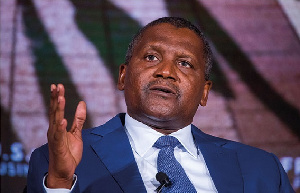
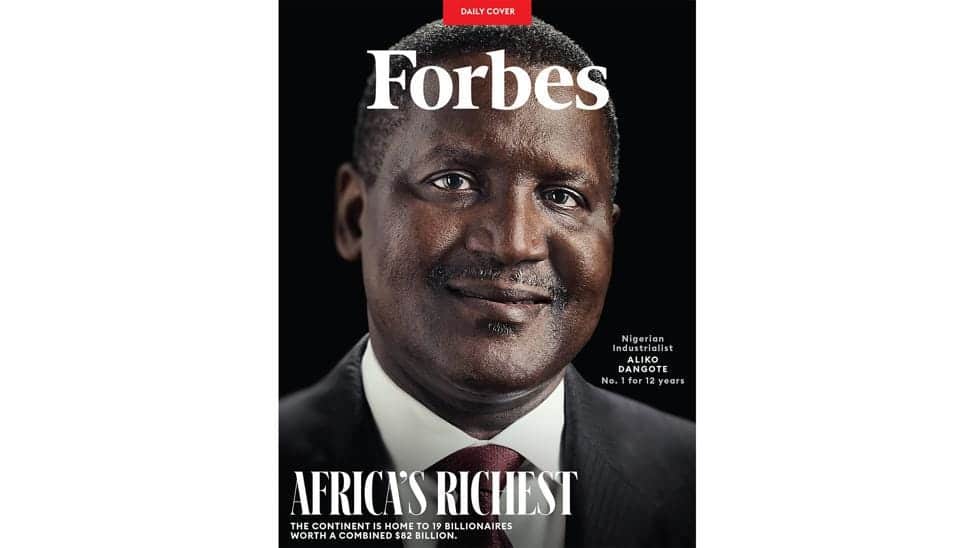
    Forbes reports that Nigerian tycoon Aliko Dangote’s net worth has fallen below the $10 billion threshold for the first time since the COVID-19 epidemic in 2020.

    As of the close of business on Friday, Dangote’s net worth, according to Forbes, stands at $9.9 billion. The last time Forbes pegged the Nigerian Cement’s tycoon wealth below $10 billion was in April 2020, at the height of the global COVID-19 stock market crash.

    The Bloomberg Billionaires Index still values Dangote at $15.7 billion and insists the Nigerian billionaire is still Africa’s richest man.

    Forbes and Bloomberg, the world’s leading authorities on the wealth of the world’s wealthiest people, have different approaches to valuing billionaires.

    In the case of Dangote, both outlets have varying opinions on the actual value of one of Dangote’s key assets – the 650,000-barrel-per-day Dangote Oil Refinery in Lagos, which former President Muhammadu Buhari commissioned in May.

    While the exact amount it has cost to build the complex to its current level is unknown, various figures ranging from $18 billion to $19 billion have been peddled around Nigerian and international media.

    Dangote took on debt to fund the project and is still heavily indebted to the tune of several billion dollars.

    As a result, Forbes does not ascribe any value to this asset in valuing him. On the other hand, in valuing Dangote, Bloomberg accounts for debt on the Dangote refinery by discounting 50 percent of the refinery’s value and ascribing the other 50 percent to his net worth.

    Dangote held sway as Africa’s richest man for 12 years.

    However, the Central Bank of Nigeria’s decision to allow market forces to dictate the value of the naira has resulted in significant losses for the nation’s billionaires.

    Last week, the naira reached an all-time low of 750 to the dollar, plummeting from 477 naira to the dollar.

    The value of the Naira-denominated stock prices of Dangote’s various companies listed on the Nigerian Exchange – from Sugar to salt and Cement, took a severe beating.

    South African billionaire Johann Rupert, who heads Swiss luxury goods company Richemont, is now Africa’s richest man, at least according to Forbes.

  • 10 African billionaires missed out on the Forbes list

    10 African billionaires missed out on the Forbes list

    Since 2012, Forbes Magazine, the media outlet well known for its rankings of the world’s richest people, has published an annual list of “African billionaires.”

    But for many years, it’s ranking of Africa’s richest people has been deeply flawed.

    From the looks of it, the valuations of African billionaires are handled by editors sitting in offices in San Francisco and New York, who have never set foot in Africa, and who do not understand the nuances of valuing African assets that are not listed on stock exchanges.

    All the while, they believe themselves qualified to do so.

    Little attention, unfortunately, has been given to African billionaires who own companies and assets that are not listed on African exchanges, even though the vast majority of African billionaires own companies that are privately held.

    The Forbes list thus seems highly unreliable in many regards, and many of the world’s richest people these days have sought to be excluded from the list.

    In November 2013, Ventures Africa, an African business media company published its own ranking of African billionaires and introduced a few names of African billionaires that had never featured on a Forbes list, such as Algerian tycoon Issad Rebrab and Aziz Akhannouch of Morocco. These people had never before been on Forbes’ radar, and yet — two months later, in its 2014 ranking — the magazine included them as “its new discoveries.”

    It’s clear — Forbes needs to invest more in research to identify “new” African billionaires. And until it does, its list of African billionaires should be taken with a pinch of salt.

    In 2012, Mark Mobius, the legendary former head of Franklin Templeton’s emerging markets business noted that Africa might have more than 200 hidden billionaires.

    That number is highly unlikely.

    A more realistic number based on years of research by Billionaires.Africa and our affiliates puts the number somewhere between 45 and 60, the majority of whom are from Southern African families that shun the spotlight and prefer to avoid prying eyes scrutinizing their wealth.

    Meet 10 African billionaires, each worth $1 billion or more, who do not feature on Forbes’ billionaires list.

    Mary Oppenheimer-Slack

    Nationality: South Africa

    Source: Mining, inheritance

    Mary Oppenheimer-Slack, 79, is an heir to the De Beers fortune and the elder sister of South Africa’s second richest man, Nicky Oppenheimer. Like her brother, she inherited a significant fortune from her father, the legendary Harry Oppenheimer.

    She has since grown her wealth through her single family office, Mary Oppenheimer Daughters family office (MODO), which has offices in the Isle of Man, London and Johannesburg.

    The family office has more than $3 billion in assets under management invested in foreign government bonds, stock market indexes and private equity funds like Stockdale Street. MODO’s investments are usually very private and without much fanfare, but in May 2020 the family office made it into the news when it invested $5.5 million into Phumelela Gaming & Leisure Ltd., the nation’s biggest horse-racing company when it was facing bankruptcy.

    Benedict Peters

    Nationality: Nigeria

    Source: Oil, Mining

    Benedict Peters, a reclusive Nigerian billionaire, is the founder of Aiteo Group, which is Nigeria’s largest independent oil producer. Aiteo has a share of 45 percent in Oil Mining Lease 29, with state-owned Nigerian National Petroleum Corp. Aiteo currently pumps about 90,000 barrels of oil a day.

    Peters founded Sigmund Communecci, a petroleum trading company, in 1999, and built it into the largest operator of petroleum storage facilities in Nigeria. It is a successor company to Aiteo Group. Aiteo also has interests in power generation. His latest venture, Bravura, is developing a $1-billion platinum mine in Zimbabwe.

    Said Alj

    Nationality: Morocco

    Source: Food & Beverages

    Sixty-seven-year-old Said Alj has earned a reputation as one of Morocco’s shrewdest businessmen and investors. He is the founder of Sanam Holding, a large Moroccan investment company with interests in food manufacturing, finance, hotels and distribution.

    Sanam, which Alj founded in 1986, acquires and controls controlling positions in large Moroccan enterprises. Sanam’s most valuable asset is an 80-percent stake (held through various investment vehicles) in Unimer VCR Groupe, one of Morocco’s largest food companies.

    Unimer is a $1.5-billion (annual sales) company that manufactures and distributes canned foods and vegetables, including the wildly popular “Titus” brand of sardines, which is sold in more than 30 African countries.

    Sanam also has a large stake in the distribution company Stokvis, as well as stakes in the insurance company CNIA Saada and hotels in Casablanca such as Villa Blanca and Dawliz.

    Femi Otedola

    Nationality: Nigeria

    Source: Power Generation

    Femi Otedola, 60, owns close to 80 percent of Geregu Power, a Nigerian utility company that was the first power generating company to list on the Nigerian Exchange in October last year. Geregu, which has a market capitalization of more than $1.8 billion, has 435 megawatts installed capacity and generates about 10 percent of the country’s power. Otedola also owns a 5.6-percent stake in FBN Holdings, one of Nigeria’s largest financial services companies, and a valuable property portfolio in Nigeria, London, Monte Carlo and Dubai.

    Rostam Aziz

    Nationality: Tanzania

    Source: Telecom

    Rostam Aziz was the first Tanzanian to ever make it to the Forbes list of billionaires, but he subsequently refrained from providing information to the U.S.-based magazine to protect his privacy. Aziz previously owned more than 35 percent of Vodacom Tanzania, the country’s largest mobile telecom operator. He pocketed close to $500 million after he sold off his shares.

    Rostam also owns Taifa Gas, East Africa’s largest LPG distributor, air charter company Coastal Aviation, mining company Caspian Limited and a significant stake in Tanzania International Container Terminal Services, the largest container terminal in Tanzania.

    Said Salim Bakhresa

    Nationality: Tanzania

    Source: Food

    Said Salim Bakhresa is one of the most reclusive African billionaires. He is the founder of Bakhresa Group, the largest industrial conglomerate in Tanzania today. The $1.4-billion (annual revenues) group has its tentacles food and beverages, logistics, media and fintech – among other businesses.

    Jim Ovia

    Nationality: Nigeria

    Source: Banking

    Jim Ovia, 71, founded Zenith Bank in 1990 and built it into one of the largest financial services groups in Africa with a market cap of close to $2 billion.

    Zenith has consistently paid some one of the most generous dividends among listed companies in Nigeria and Ovia has pocketed hundreds of millions of dollars in dividends over the years.

    In 2016, Ovia sold his telecoms company, Visafone, to MTN.

    But apart from his banking interests, Ovia is easily one of the ten largest property owners in Lagos.

    He owns landmark properties in Nigeria’s Victoria Island include Civic Center, Civic Towers and Zenon Towers, among others.

    Theophilus Danjuma

    Nationality: Nigeria

    Source: Oil, Shipping

    Theophilus Yakubu (TY) Danjuma, a Nigerian billionaire and former minister of defense, is well known for founding the oil exploration company South Atlantic Petroleum (SAPETRO).

    In 2006, SAPETRO sold part of its stake in OML 30 for $2.27 billion.

    He also owns NAL-COMET, one of Nigeria’s largest shipping companies, five-star hotels in Lagos and Port Harcourt as well as significant stakes in Industrial and Medical Gases Nigeria Plc and fertilizer producer Notore Chemical Industries.

    His family owns an impressive property portfolio in Nigeria, London, Los Angeles, Marbella and Singapore.

    Tony Elumelu

    Nationality: South Africa

    Source: Banking, Real Estate

    Elumelu, 60, is the chairman of Heirs Holdings, a Lagos-based, family-owned investment company that manages a $2.5-billion portfolio of assets in real estate, power generation, oil exploration and production.

    Folorunsho Alakija

    Nationality: Nigeria

    Source: Oil

    Alakija has featured on the Forbes list in the past, but not anymore. But she is still a billionaire. She is a co-founder and vice chair of Famfa Oil, a Nigerian oil exploration company with a stake in Agbami Oilfield.

  • Forbes acknowledges 3 Ghanaians among list of African most influential women

    Forbes acknowledges 3 Ghanaians among list of African most influential women

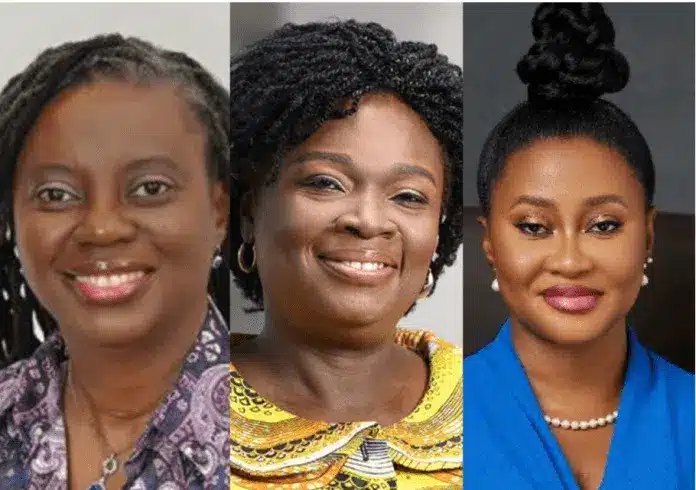
    Three accomplished Ghanaian women have been named among the 50 Most Important Women in Africa by Forbes Afrique. According to a recent article, the list recognizes female leaders who help their organizations expand, inspire young women, and have the economic, political, and cultural clout to have an impact on decisions made throughout the continent and in their home nations.

    The annual 2023 list features these three remarkable women from Ghana, who have made significant strides in banking, mining, and technology and achieved international success in their respective fields. These women are Dr. Victoria Kwakwa, Regional Vice President for Eastern and Southern Africa at the World Bank, Angela Kyerematen-Jimoh, Africa Strategic Partnerships Manager at Microsoft, and Georgette Barnes Sakyi-Addo, founder of Georgette Barnes Limited (GBL) and President of the Association of Women in Mining Africa.

    At the World Bank, Dr. Victoria Kwakwa is the current Regional Vice President for Eastern and Southern Africa (26 countries) where she oversees an active portfolio of 313 operations totalling $58 billion and an extensive program of cutting-edge analytic work, technical assistance, and policy advice. Since joining the bank in 1989, she has worked in various capacities as the Vice President for East Asia and the Pacific from 2016 to 2021.

    Georgette Barnes Sakyi-Addo is a well-known figure in the mining industry, having founded Georgette Barnes Limited (GBL) and serving as the President of the Association of Women in Mining Africa. GBL is a renowned supplier of drilling, exploration, and extraction materials, as well as mining equipment. Georgette is also a co-founder of the Accra Mining Network and served as its president from 2015 to 2020. Georgette was recognized by Women in Mining UK as one of 100 Global Inspirational Women in Mining. She was also awarded the Female Entrepreneur of the Year by Invest in Africa (IIA), a non-profit organization that supports African-owned SMEs across the continent, in 2018.

    Angela Kyerematen-Jimoh is a renowned business leader who has worked for Global and African blue-chip companies such as UBS Investment Bank, ABN AMRO, GT Bank, UBA and IBM where she spent a decade of her career life. She ended her tenor with IBM as the Regional Director for North East and West Africa responsible for managing 35 countries in this region.  She is well known for scaling IBM’s business in Africa.  She is currently the Strategic Partnership Lead for Africa at Microsoft. Angela has lived and worked in many cities such as New York, London, Brussels, Lagos, and Nairobi and is currently in Casablanca, Morocco. Besides her professional accomplishments, Angela is also a philanthropist who has adopted Siti, a village in the Eastern Region, where she has provided them with solar-powered electricity and clean water. She has served on many boards and currently sits on Ghana’s central bank, the Bank of Ghana. Angela is an Alumna of Harvard Business School.

    Ghana takes pride in these women who are making waves on a prestigious list in Africa as the world celebrates women. Their accomplishments have been a great source of inspiration to many young women, reminding them that with hard work and determination, anything is attainable. Their success in male-dominated industries like mining, banking, and technology is especially inspiring to young girls who aspire to follow in their footsteps. These women are exceptional role models who prove that perseverance and dedication can lead to extraordinary achievements.

  • Forbes 30 under 30: 2 Mfantsipim  old students listed under social impact category

    Forbes 30 under 30: 2 Mfantsipim old students listed under social impact category

    Two old boys of the Mfantsipim Senior High School have been listed under the social impact category of the 2023 Forbes 30 under 30 Europe list. 

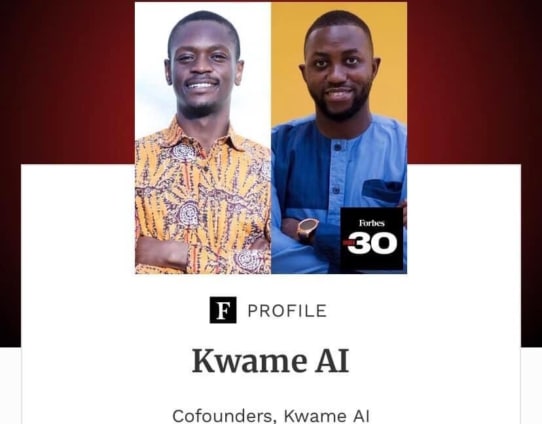
    From humble beginnings in Ghana’s capital – Accra, an Artificial Intelligence startup jointly established by the two has received recognition from Forbes, an American Business magazine. 

    Kwame AI, developed by Dr. George Boateng and Victor Kumbol, is an AI-powered web application that is making science and technology education readily accessible to students across Africa and other parts of the world through smartphones.

    Their web app employs an artificial intelligence teaching assistant known as Kwame – a name sourced from Ghana’s first President “Kwame Nkrumah”, to obtain instant answers to science questions and also view past standardized exam questions on its Kwame AI web app.

    “It’s a huge honor for my cofounder, Victor and I to be recognized on the 2023 Forbes 30 Under 303 Europe list for our hard work at Kwame AI towards impacting the lives of millions of young Africans using AI and mobile devices,” Dr. Boateng, Chief Executive Officer of Kwame AI said. 

    He explains the inspiration to develop the user-friendly web app was ignited during the group’s 4th annual edition of an innovation boot camp in 2017.

    They realized out of the 27 trainees who attended, a quarter of them had laptops, yet 100% possessed smartphones. It compelled them to redesign their coding module to fit the five-inch screen – a first of its kind in Ghana. 

    “Realizing the potential of our smartphone-based course, in 2018, we created SuaCode, a smartphone-based online coding program aiming to teach millions across Africa how to code by exploiting the proliferation and untapped capabilities of smartphones. Between 2018 and 2020, we ran 4 pilots of SuaCode that reached 3K learners across 69 countries (42 in Africa). Our alumni have landed coding internships and jobs at Microsoft and Google, and others are now studying computer science/engineering at top universities such as Yale, Dartmouth, MIT, and Columbia. We then built an AI teaching assistant, Kwame to help us scale our support to students in the coding course and for science education,” he said.

    The nomination comes at the heels of recent major global recognition of the company’s works such as the 2022 IBM New Creators and the 2021 MIT Technology Review’s 35 Innovators Under 35.

    The group is currently enhancing features on Kwame AI to have primary and secondary school students in remote parts of Ghana ask educational questions in local dialects like Twi without call charges and get curriculum-aligned answers.

    This is to ensure that students not only in Ghana but across Africa have personalized, high-quality educational support daily, regardless of their limited or no access to the internet.

  • 14-year-old Nigerian-British model makes it to Forbes

    14-year-old Nigerian-British model makes it to Forbes

    Forbes has recently released its eighth annual Under 30 Europe list. The exclusive list recognizes the outstanding achievements of young founders, leaders, and entrepreneurs who are creating an impact and driving change in Europe.

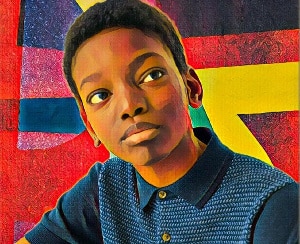
    Forbes’ eighth annual Under 30 Europe list showcases a remarkable group of young founders, leaders, and entrepreneurs, who collectively raised more than $3 billion to reshape Europe and beyond. Among these outstanding individuals is Jordan Oguntayo, a 14-year-old Nigerian-British model and the youngest person on the list.

    At just 14 years old, Oguntayo is making waves in the modeling industry as one of the most successful child models in the world.

    The Nigerian-British model has achieved more in his short career than most do in a lifetime, and now he’s being recognized as one of Forbes Under 30 Europe’s honorees.

    His story is one of perseverance and hard work. He started his modeling career at the tender age of seven, shooting with fashion powerhouse Burberry.

    Since then, he’s worked with some of the biggest names in fashion, including Dior, Calvin Klein, Moncler, Tommy Hilfiger, and Primark. He’s even walked in London Fashion Week and been a mainstay on Zara’s campaign for the past three years.

    It’s not just his impressive resume that makes Oguntayo stand out.

    He has also become an inspiration for children of color around the world, proving that with hard work and determination, anything is possible.

    Despite facing obstacles along the way, he continues to push himself toward his ultimate goal of becoming the most-booked child model in the world.

    What success means to Jordan Oguntayo

    As a young Nigerian-British model, Oguntayo has an unmatched work ethic.

    He has had more than 300 shoots around the world, including in Germany, Hungary, and Amsterdam, and has traveled to Spain over 20 times for his work with Zara.

    His dedication and passion for modeling have led him to achieve more in a few short years than many do in their entire careers.

    However, Oguntayo’s success is not just about his own achievements. As a young Black model, he is helping to inspire children of color to reach for their dreams and achieve their goals. He wants children around the world to understand that with hard work and dedication, anything is possible.

    His success story is a testament to the power of passion and perseverance, as he continues to push for his goal of becoming the most-booked child model in the world.

    At just 14, he is already a role model for many young people around the world, and his future looks brighter than ever.

  • Elon Musk: Twitter’s CEO drop in fortunes breaks world record

    Elon Musk: Twitter’s CEO drop in fortunes breaks world record

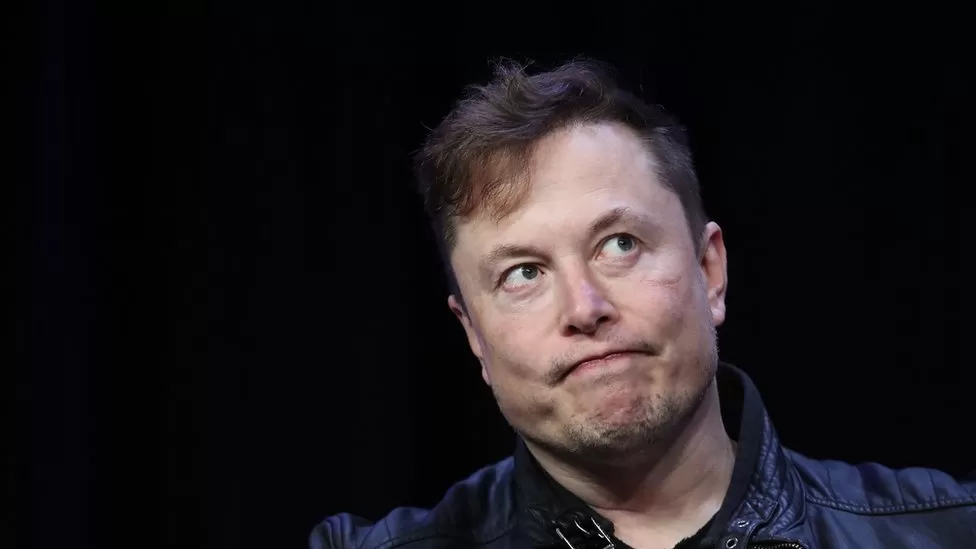
    Elon Musk has set a new world record for the largest personal fortune loss in history.


    Guinness World Records said in a blog on its website that he lost around $165 billion between November 2021 and December 2022.

    The figures are based on data from the publisher Forbes, but Guinness believes Mr Musk’s losses could have been higher.

    It follows a drop in the value of Mr Musk’s electric car company Tesla after he purchased Twitter last year.

    Investors are concerned that Mr. Musk is no longer giving Tesla enough attention following his $44 billion (£36 billion) acquisition of the social media company.

    Mr Musk’s losses since November 2021 surpass the previous record of $58.6 billion (£47 billion), suffered by Japanese tech investor Masayoshi Son in 2000.

    The estimated loss is based on the value of his shares, which could regain their value, meaning Mr Musk’s wealth would increase again.

    In December, the Tesla boss lost his position as the richest person in the world to Bernard Arnault, the chief executive of French luxury goods company LVMH, which owns fashion label Louis Vuitton.

    The value of Tesla shares dropped around 65% in 2022, in part because of Tesla’s performance. The firm delivered just 1.3 million vehicles during the year, falling short of Wall Street expectations.

    However, Mr Musk’s takeover of Twitter – where he has sparked controversy by firing large numbers of staff and changing content moderation policies – is behind most of the share slump.

    Many Tesla investors believe he should be focusing on the electric vehicle company as it faces falling demand amid recession fears, rising competition, and COVID-linked production challenges.

    “Long-term fundamentals [at Tesla] are extremely strong. Short-term market madness is unpredictable,” Mr Musk tweeted after the stock markets closed for the year in December 2022.

    According to Forbes, Mr. Musk is now worth approximately $178 billion (£152 billion), while Bernard Arnault is estimated to be worth $188 billion (£155 billion).

    Source: BBC.com

  • 14 of Africa’s 18 billionaires ‘too poor’ to make Forbes 400 list – Report

    Despite exhibiting a strong recovery from the COVID-19 pandemic and exceptional wealth growth that caused their total net worth to exceed $84.9 billion at the end of 2021.

    When compared to their collective net worth of $73.8 billion in 2020, the amount implies a rise of 15%, or $4.7 billion. Many of Africa’s greatest billionaires will likely struggle to make the Forbes 400 list in 2022.

    With 14 of Africa’s 18 billionaires missing from this exclusive list, it’s critical to understand who these people are and what industry they work in, as well as their potential to join the list in the not-too-distant future.

    Despite the fact that it now takes $6 billion to make the Forbes 400 richest list, up from $6.4 billion at the start of the year, African billionaires such as Nigerian telecom mogul Mike Adenuga, Algerian billionaire Issad Rebrab, and Egyptian businessman Naguib Sawiris rank among the 14 billionaires who are still far short of the $6-billion mark.

    According to data tracked by Billionaires.Africa, these 14 billionaires are presently ranked in this order.

    #1 Mike Adenuga

    Net worth: $5.7 billion

    Nationality: Nigerian

    Mike Adenuga, the founder of Nigerian telecom company Globacom Limited and the majority owner of Nigeria’s pioneer petroleum marketer, Conoil Plc, is now the third-richest man in Nigeria, the seventh richest on the African continent, and the 426th richest person in the world.

    His net worth has dropped by $1 billion since the beginning of the year, from $6.7 billion in January to $5.7 billion at the time of writing this report, due to a decline in the value of his stake in Globacom Limited, Nigeria’s third-largest telecom service provider.

    #2 Issad Rebrab

    Net worth: $5.1 billion

    Nationality: Algerian

    Issad Rebrab, the founder and CEO of Cevital and Algeria’s richest man, ranks 483rd in the world. The Algerian billionaire’s net worth has increased from $4.2 billion in 2020 to $5.1 billion at the time of writing this report, representing a net worth gain of $900 million.

    His $5.1-billion fortune stems from the valuation of Cevital, his well-diversified manufacturing conglomerate, which has increased significantly due to increased capacity and robust earnings growth.

    #3 Naguib Sawiris

    Net worth: $3.4 billion

    Nationality: Egyptian

    According to Forbes, Naguib Sawiris, the elder brother of Egypt’s richest man Nassef Sawiris, is the second-wealthiest man in Egypt and the 815th richest man in the world, with a fortune of $3.4 billion.

    The billionaire amassed his fortune after selling Orascom Telecom to Russian telecom firm VimpelCom (now Veon) in a multibillion-dollar transaction in 2011. He is presently a shareholder in Orascom TMT Investments and Ora Developers, a real estate developer.

    #4 Patrice Motsepe

    Net worth: $2.7 billion

    Nationality: South African

    With a net worth of $2.7 billion, Motsepe is the richest Black South African and the world’s 1,067th richest man. The majority of his wealth is derived in gross terms from his 40-percent stake in African Rainbow Minerals (ARM), a South African diversified mining and minerals company.

    His net worth has dropped by $200 million as a result of the recent decline in the market value of his stake in ARM, a company he founded in 1997, from $2.9 billion to $2.7 billion at the time of writing this report.

    #5 Mohammed Mansour

    Net worth: $2.5 billion

    Nationality: Egyptian

    Mohamed Mansour, an Egyptian billionaire businessman and the world’s 1,151st richest man, is the chairman of Mansour Group, a family conglomerate worth more than $6 billion, according to Forbes.

    Mansour derives the majority of his $2.5-billion net worth from the company, alongside his brothers Yasseen and Youssef Sawiris, who are also billionaires.

    The Egyptian billionaire played a crucial role in the group’s growth, primarily through GM dealerships in Egypt, which he established in 1975.

    Mansour Group has since grown into one of the biggest GM distributors worldwide.

    #6 Koos Bekker

    Net worth: $2.1 billion

    Nationality: South African

    Koos Bekker is a South African billionaire businessman and the chairman of Naspers, a leading South African multinational media group.

    He was instrumental in the establishment and growth of Prosus, a Naspers subsidiary established as the company’s global Internet assets division under Bekker’s leadership.

    The majority of the South African billionaire’s wealth is derived from his holdings of Naspers and Prosus. Since the start of the year, his net worth has decreased from $2.7 billion to $2.1 billion.

    #7 Mohamed Al Fayed

    Net worth: $1.8 billion

    Nationality: Egyptian

    Mohamed Fayed, an Egyptian businessman and retail mogul whose primary residence and business interests have been in the United Kingdom since the late 1960s is the world’s 1,504th richest man, according to Forbes, with a net worth of $1.8 billion.

    Fayed amassed a fortune in retail after selling his stakes in the London department store Harrod’s to Qatar in a deal valued at $2.4 billion in 2010. Following the sale of Fulham Football Club in 2013, he received a whopping $300 million from U.S. auto parts billionaire Shahid Khan.

    #8 Aziz Akhannouch

    Real-time net worth: $1.8 billion

    Nationality: Moroccan

    Aziz Akhannouch is a Moroccan businessman and the country’s Prime Minister since September 2021. His fortune is derived from the Akwa Group, a Moroccan conglomerate with oil and gas investments.

    The company also has interests in telecommunications, tourism, hotels, and real estate. The Afriquia brand is used by its service stations.

    Akhannouch has a net worth of $1.8 billion, making him one of Africa’s wealthiest men and the world’s 1,586th richest man, according to Forbes.

    #9 Mohammed Dewji

    Net worth: $1.5 billion

    Nationality: Tanzanian

    Mohammed Dewji is a Tanzanian billionaire businessman and former politician. He is the owner and CEO of MeTL Group, a Tanzanian conglomerate founded in the 1970s by his father.

    MeTL Group has active operations in East, Southern, and Central Africa in textile manufacturing, flour milling, beverages, and edible oils.

    Dewji has an estimated net worth of $1.5 billion as of press time, making him the world’s 1,784th richest person and the African continent’s youngest billionaire.

    #10 Youssef Mansour

    Net worth: $1.5 billion

    Nationality: Egyptian

    Like his younger brothers, Mohamed and Yasseen Mansour, Youssef Mansour, a director in the family-led Mansour Group, is worth more than $1 billion.

    With a net worth of $1.5 billion, the Egyptian billionaire businessman who co-owns Mansour Group with his brothers ranks 1,854th in the world.

    He is in charge of the consumer goods division, which includes the Metro supermarket chain and the exclusive distribution rights for L’Oreal in Egypt.

    #11 Michiel Le Roux

    Net worth: $1.4 billion

    Nationality: South African

    Michiel Le Roux is a South African billionaire businessman and the founder of Capitec Bank, one of Africa’s largest retail banks.

    According to Forbes, the billionaire is worth $1.4 billion, making him the world’s 1,941st richest man.

    His net worth has dropped by $300 million since the beginning of the year, from $1.7 billion on Jan. to $1.4 billion at the time of writing.

    #12 Strive Masiyiwa

    Net worth: $1.2 billion

    Nationality: Zimbabwean

    Zimbabwe’s richest man Strive Masiyiwa presently ranks as the world’s 2,132nd richest man, with a net worth of $1.2 billion.

    Econet Wireless Zimbabwe, which he founded in 1998, has grown to become the country’s largest mobile phone company.

    He owns slightly more than half of Econet Wireless Zimbabwe, which is part of his larger Econet Group. The company has stakes in mobile phone networks in Burundi and Lesotho, as well as investments in African fintech and power distribution firms.

    #13 Yasseen Mansour

    Net worth: $1.1 billion

    Nationality: Egyptian

    Yasseen Mansour, Egypt’s sixth-richest man and the 2,294th wealthiest man in the world, owns a stake in the family-owned conglomerate Mansour Group.

    Aside from his business interests in Mansour Group, Mansour is the chairman of Palm Hills Development, a leading Egyptian real estate group.

    #14 Othman Benjelloun

    Net worth: $1.1 billion

    Nationality: Moroccan

    According to Forbes, Othman Benjelloun, who is worth $1.1 billion at the time of writing this report, is the world’s 2,363rd richest man and one of Africa’s richest billionaires.

    The Moroccan billionaire is best known for co-founding BMCE Bank of Africa, where he currently serves as chairman and CEO.

    Based solely on market capitalization, Benjelloun’s stake in the bank was worth $4 billion in 2021.

    After purchasing the Mali-based Bank of Africa, his banking firm BMCE Bank now has a presence in at least 12 African countries.


    Source: Billionaires Africa

  • Gap ‘taking immediate steps’ to remove Yeezy Gap product from stores following Kanye’s Anti-Semitic remarks

    Gap has issued a new statement in the wake of continued fallout from the artist formerly known as Kanye West’s anti-Semitic comments. In it, the company said “immediate steps” were now being taken to remove Yeezy Gap product from its stores.

    The statement, shared on Tuesday, noted that the Yeezy Gap partnership (initially slated to span a decade upon its announcement back in 2020) had previously seen its end announced in September.

    “Our former partner’s recent remarks and behavior further underscore why,” the new statement reads. “We are taking immediate steps to remove Yeezy Gap product from our stores and we have shut down [the Yeezy Gap site]. Antisemitism, racism, and hate in any form are inexcusable and not tolerated in accordance with our values. On behalf of our customers, employees, and shareholders, we are partnering with organizations that combat hate and discrimination.”

    Also on Tuesday, Adidas announced the immediate termination of its Yeezy deal, with Forbes later reporting this had resulted in Ye no longer being a billionaire.

    The latest Gap statement follows a report from Women’s Wear Daily last week revealing Balenciaga doesn’t have “any plans for future projects” involving Ye. The Kering-owned house had worked extensively with Ye, including in the form of the Yeezy Gap Engineered by Balenciaga project.

    Ye, meanwhile, was recently announced to be acquiring right-wing social media platform Parler. The CEO of Parlement Technologies is George Farmer, the husband of Candace Owens.

    Ye and Owens were photographed together at the YZY SZY 9 presentation in Paris earlier this month, both wearing a widely criticized design from the show featuring the “white lives matter” hate slogan.

    Source: Complex.com

  • Many companies intend to provide pay ranges in job postings, even when it’s not necessary

    Most job descriptions include the position’s title, the qualifications needed, and the duties involved, but they omit the most crucial detail: the salary.: The salary.

    But that’s about to change, according to a new survey that finds a flood of new employers plan to publicly postpay ranges in upcoming job ads, following a series of state and local laws that now mandate the disclosures. A survey of nearly 400 employers by the advisory firm WTW, formerly known as Willis Towers Watson, found that while only 17% say they currently post salary ranges in locations where there is not a legal requirement to do so, an additional 62% say they are either planning to or considering adding pay ranges to job postings even in places where it’s not required by law.

    “By the first of next year, job seekers are likely to see a brand new world in terms of job postings—one where they can see what the job pays before they even have to go through an application or interview,” says Christine Hendrickson, vice president of strategic initiatives at Syndio, which conducts pay equity analyses for corporations.

    She points to a “trifecta” of populous states and major localities that have bills expected to become law or laws that will go into effect in the coming months. Late last month, the California legislature approved a bill that Gov. Gavin Newsom has until Sept. 30 to sign or veto. It will require employers with 15 or more workers to include a job’s pay scale in job postings, as well as provide similar information to employees and, for companies with more than 100 employees, submit a pay report to the state that includes median and mean pay rates by race, gender and ethnicity.

    Starting Nov. 1, employers hiring job candidates in New York City will have to include job postings in ads, and at the start of next year, the state of Washington will have a similar requirement. (Colorado was the first state to pass such a law in 2019; it went into effect in early 2021. Local governments in Ithaca, N.Y., Westchester County, N.Y., and Jersey City, N.J. have passed similar measures.)

    Washington’s new law was the likely catalyst for Microsoft’s announcement in June that it would disclose salary ranges in all internal and external U.S. job postings no later than January 2023, no matter where the job is located. After the company said in a blog post that it would add the “best practice” of committing to publicly disclose salary ranges by January, many predicted other companies would follow the tech bellwether’s move.

    For national or multi-state employers, having a patchwork of policies between different locations can make things too complex, say human resources experts, setting up different rules for different states and unequal access to information for employees who live in locations that don’t have laws in place.

    Mariann Madden, who co-leads WTW’s fair pay practice for North America, compares the growing interest in adopting a national policy to how employers responded after a number of states passed bans against asking job candidates about their salary history. “Companies just decided I’m going to take a national approach,” she says.

    The new law in California is expected to have a particularly big impact. “It’s the fifth largest economy in the world,” says Hendrickson. New York State also has legislation in the works, and both Hendrickson and Madden expect more local jurisdictions to work on similar legislation.

    Of course, some employers aren’t ready to reveal those numbers to the world, whether due to worries they aren’t paying at the level of competitors, a lack of internal clarity about how jobs are paid or, more likely, concerns about pay equity discrepancies and how they would be received by workers if shared publicly. Nearly half of the organizations cited the reactions of employees as a reason they were holding back on communicating about pay, and a quarter pointed to a lack of clear job titles and pay bands as reasons for not saying more.

    But human resources experts predict they won’t be able to hold back for too long, thanks to shifting employee norms and expectations about pay transparency. “Employers need to own that narrative because it causes chaos if you have incorrect information swirling around,” says Hendrickson. “Employers are realizing half-truths and partial information doesn’t serve them well, and creates much more complication than it solves.”

  • Microsoft says ‘Productivity Paranoia’ can hurt hybrid workplaces

    Employees think they’re being just as productive as ever. Bosses aren’t buying it.

    New data from Microsoft’s Work Trend Index, which surveyed 20,000 employees across 11 countries, finds that despite early signs of a productivity boom during the pandemic—when many workers traded commuting time for more hours of working from home—there’s a steep divide between how workers and their employers see productivity two years later.

    Eighty seven percent of employees who responded to the survey said they are productive at work, and Microsoft reported earlier this year that many signs of productivity are up. This spring, the tech giant found that the number of meetings per week among users of its Teams platform had increased by 153% since the start of the pandemic.

    Overlapping meetings increased by 46%. At least 42% of people multi-task, actively sending an email or pinging a colleague during a scheduled meeting.

    Yet as many as 85% of leaders in the survey said hybrid work has made it challenging to be confident employees are being productive. This “productivity paranoia,” as Microsoft calls it in its report, has resulted from the paradox of leaders fearing productivity is being lost, even while hours worked, numbers of meeting and metrics showing actual activity have increased.

    “You end up with workers saying ‘I’m doing just great’ and leaders saying, ‘I’m not sure you are,’” Microsoft corporate Vice President Jared Spataro told Forbes in an interview. “There’s real tension that is developing. Every company is working through that.”

    Microsoft, of course, is a behemoth maker of productivity software; the research is being released as the software behemoth rolls out new features designed to help address related issues. The company announced a suite of new product updates for Viva, its employee management platform, which will include more integrations of workers “goals” between Viva and Microsoft Teams, for instance, as well as a new app called Viva Pulse for getting worker feedback and a new capability that uses artificial intelligence to match questions from employees with company experts. Two years ago, the company made changes to productivity measures in its tools amid some questions about privacy.

    The report comes as macroeconomic figures have shown steep declines in productivity, potentially fueling employers’ fears about how much work their employees are getting done, especially when out of sight. After surging amid the pandemic, U.S. nonfarm labor productivity, which measures goods and services produced per hour worked, fell at the highest rate in 74 years during the first quarter, and also declined in the second quarter.

    But many have argued the productivity declines are not really a sign of lazy young workers “quiet quitting” or hybrid workers folding their laundry at home instead of answering email.

    Rather, inexperienced workers taking on new jobs following the Great Resignation, seasoned workers having to train so many new hires and the burnout of those who worked overtime during the pandemic’s early years appear to be what’s really having the greatest impact on productivity declines.

    Microsoft’s report says differences show up in the data: Managers of hybrid workers, for instance, are more likely to say they struggle with trusting their employees to do their best work than onsite managers do (49% vs. 36%).

    Spataro says he thinks managers’ lack of confidence comes not only from not being able to see their workers in hybrid environments, but the relentless pressures and high expectations managers face for business performance. When he speaks with executives one on one, he says, and reminds them of how productive workers were when the pandemic began, “they’ll say something that really has caught my attention. They’ll say … I wonder if it was just kind of an 18 months to two year surge of adrenaline. We were all pulling together as well as we could. But if this is going to become the new normal, can we continue to be as productive?”

    The latest Work Trends Index also found that the offers of free food, rock concerts—or threats of punishment—may not do much to draw people back to the office. What could really get people to return is simply their coworkers: 84% say employees would be motivated to go back to the office by the promise of socializing, and 85% by the opportunity to rebuild team bonds.

    Survey takers also said they’d be apt to go to the office more often if they knew their team members (73%) or work friends (74%) would be there.

    Source: Forbes