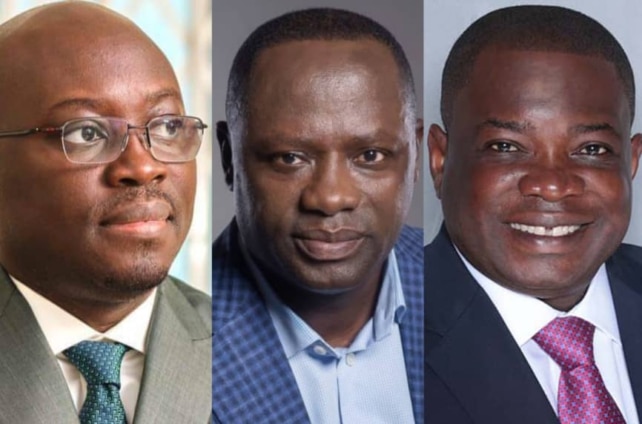
On February 28, 2024, Parliament approved legislation criminalising LGBTQ activities and prohibiting their advocacy, promotion, and financial support.
Under this law, individuals found guilty could face imprisonment ranging from six months to three years, while those promoting and financing such activities may face sentences of three to five years.
During an interview on The Big Issue with Selorm Adonoo on Citi TV, Mr. Cudjoe criticised the bill, arguing that it lacked thorough analysis and consideration, particularly regarding the imprisonment of LGBTQ individuals.
“I don’t think it is sensible to imprison anyone who you believe is gay unless, of course, that person must have raped; you think they must have unduly influenced other people, especially minors and you found them.
“But how are you going to police people who are doing their acts in the bedroom? I think the law was limited in terms of sensible thinking and analysis in that regard,” he stated.
On February 28, 2024, Parliament approved legislation criminalising LGBTQ activities and prohibiting their advocacy, promotion, and financial support.
Under this law, individuals found guilty could face imprisonment ranging from six months to three years, while those promoting and financing such activities may face sentences of three to five years.
During an interview on The Big Issue with Selorm Adonoo on Citi TV, Mr. Cudjoe criticised the bill, arguing that it lacked thorough analysis and consideration, particularly regarding the imprisonment of LGBTQ individuals.
“I don’t think it is sensible to imprison anyone who you believe is gay unless, of course, that person must have raped; you think they must have unduly influenced other people, especially minors and you found them.
“But how are you going to police people who are doing their acts in the bedroom? I think the law was limited in terms of sensible thinking and analysis in that regard,” he stated.
The Founder and President of IMANI Africa, Franklin Cudjoe, has expressed his indifference towards President Akufo-Addo’s governance, stating that he has become immune to the disappointments from his friend, the president.
In an interview on Adom FM on Monday, February 26, 2024, Mr Cudjoe revealed that he no longer takes the president’s statements seriously.“I’ve stopped being disappointed in my friend, the president.
In fact, I have stopped listening to him actually. It is now not about being disappointed, I have gone beyond that. As one would put it ‘I’m now beyond be careful’.“The person himself said that has done all he could and that the next captain would come and fix things.
He added, “You know he is a very good friend; he has said very interesting things about me publicly and I like him for that, but he has completely disappointed me.”
Highlighting the president’s acknowledgment of having done all he could and passing the responsibility to the next leader, Mr Cudjoe emphasized that despite their friendship and the positive things said about him, President Akufo-Addo has completely let him down.
These comments were made in the context of discussing the upcoming State of the Nation’s Address (SONA) scheduled for Tuesday, February 27, 2024.Mr Cudjoe urged the president to issue an apology to the Ghanaian people for the current state of the country during his address.
The Founder and President of IMANI Africa, Franklin Cudjoe, has expressed his indifference towards President Akufo-Addo’s governance, stating that he has become immune to the disappointments from his friend, the president.
In an interview on Adom FM on Monday, February 26, 2024, Mr Cudjoe revealed that he no longer takes the president’s statements seriously.
“I’ve stopped being disappointed in my friend, the president. In fact, I have stopped listening to him actually. It is now not about being disappointed, I have gone beyond that. As one would put it ‘I’m now beyond be careful’.
“The person himself said that has done all he could and that the next captain would come and fix things.
He added, “You know he is a very good friend; he has said very interesting things about me publicly and I like him for that, but he has completely disappointed me.”
Highlighting the president’s acknowledgment of having done all he could and passing the responsibility to the next leader, Mr Cudjoe emphasized that despite their friendship and the positive things said about him, President Akufo-Addo has completely let him down.
These comments were made in the context of discussing the upcoming State of the Nation’s Address (SONA) scheduled for Tuesday, February 27, 2024.
Mr Cudjoe urged the president to issue an apology to the Ghanaian people for the current state of the country during his address.
The President of IMANI Africa, Franklin Cudjoe, has expressed concern about Osei Kyei-Mensah-Bonsu’s resignation as Majority Leader, alleging that the Suame legislator was sacrificed for expediency by the New Patriotic Party (NPP).
In an interview with Citi TV on Saturday, February 24, Mr. Cudjoe commented that while the NPP might have considered pressuring Kyei-Mensah-Bonsu into resigning expedient, such actions raise moral questions and are deemed improper.
“I think the party must have sacrificed Kyei-Mensah-Bonsu on the altar of expediency, partly because he said he was not returning to Parliament and also because the party needed someone in the saddle who may be promoting the party’s interests.
“Expediency was that, ‘let’s send a certain signal to the electorate out there that we are probably interested in gearing up their support base with new life’ and whatever that means, I don’t know how that goes into winning an election but they are on the ground and so they probably know better.”
Osei Kyei-Mensah-Bonsu officially stepped down as Majority Leader on Friday, February 23, after informing the Majority Caucus on Wednesday, February 21, 2024.
Despite speculation of coercion, the former Majority Leader maintained that his decision to resign was voluntary.
“A lot of discussions have gone on in respect of the subject matter. Some of them are very informed, others unfortunately not informed…Mr Speaker, it was amidst the discussions that at a meeting of the caucus, which the President had requested, I tended my resignation as Majority Leader in order to still the storm and facilitate peace and unity required for my party at this time,” Mr Kyei-Mensah-Bonsu said.
He added “Mr Speaker, that decision that I made was not within the presence of Parliament. This morning, I summoned the caucus meeting to formally announce to my colleagues that I’ve elected voluntarily to step down as a majority leader and by that leader of the house.”
President of IMANI Africa, Franklin Cudjoe, has embraced Parliament’s initiative to encourage the use of local languages during its sessions.
Cudjoe commended the idea of Members of Parliament expressing themselves in their native dialects, deeming it a commendable practice, especially as the assembly gears up to welcome new members.
On February 16, Speaker of Parliament, Alban Bagbin, directed committees on education, finance, culture, and tourism to investigate the factors contributing to the decline of local languages in the country.
The aim is to propose recommendations to address this issue, prompted by concerns raised by MPs regarding the diminishing use of local languages, particularly in schools nationwide.
Bagbin also disclosed plans for technological upgrades in the parliamentary chamber to facilitate the incorporation of local languages in future sessions.
In a statement released on February 19, Cudjoe expressed his satisfaction, stating, “I was delighted to hear that Ghana’s Parliament will now allow the use of local languages in conducting business.”
He speculated that this shift might be in anticipation of new members taking the place of experienced MPs proficient in parliamentary procedure and skilled in expressing themselves in English during debates.
Mr Cudjoe envisioned the potential for MPs like Alexander Afenyo-Markin to deliver their initial remarks in Fante and Ewe.
However, Mr Cudjoe underscored the irreplaceable position of the English language as a global communication tool.
While endorsing the inclusion of local languages in internal communication systems, he emphasized the importance of being prepared to learn international languages for global relevance.
Mr Cudjoe cited examples of others learning Chinese and Australian children learning Korean for economic reasons, highlighting the need to adapt to both local and international linguistic dynamics.
READ THE FULL STATEMENT BELOW
I was delighted to hear that Ghana’s Parliament will now allow the use of local languages in conducting business.
I remember as far back in July 2015, when the young and clever master of parliamentary procedure, Hon.Alexander kwamena Afenyo-Markin now Deputy Majority Leader, made a passionate appeal for the provision of facilities to encourage the use of local languages in parliament.
In November 2015, Hon. fenyo-Markin again emphasized the urgency to allow MPs who felt comfortable making submissions in local languages be allowed. The situation had become critical against the background of grammatical errors made by two members of Parliament then, when reggae musician and radio show host, Blakk Rasta, appeared before the Parliamentary Select Committee on Privileges to interrogate the matter.
The MP for Adentan at the time, “Mr Emmanuel Nii Ashie Moore, in a question to the Editor of the Searchlight newspaper, Mr Ken Kuranchie, asked: ” I will like to know from Mr Ken Kuranchie, in your paper, did you attributed (sic) the story to Adom FM online. Did you also spoke (sic) to Blakk Rasta?.”
“The member for Effigya Sekyere East, Mr Henric David Yeboah, who filed the complaints with the House, also kept referring to Blakk Rasta as “Brack Rasta.” Since then, one news report said, “some radio presenters have played both voices on their stations and made humorous anecdotes of the errors to provoke laughter.” Hon. Afenyo-Markin then attempted to make his submission in the Fante language, arguing that one’s ability to speak fluent English wasn’t the yardstick of intelligence and wisdom.
Today, with an activist Speaker of Parliament in Rt. Hon. Alban Bagbin, the stage is set for the adaptation of local languages in conducting Parliamentary business. It may well be timely as the House prepares to welcome many new entrants that will be replacing experienced MPs who were not just skilled in the art of Parliamentary procedure, but were able to communicate their positions during debates effortlessly in the English Language. It would be an admirable encounter to listen to Hon. Alexander Afenyo-Markin makes his preliminary remarks in Fante and Ewe when he becomes the Majority Leader in a few days. Even better it would have been if my SALL MP had been allowed to argue for a rehabilitation of very bad roads and schools in the Siwu or Sekpele language.
However, it must be made clear that the English language is a universal language and can not be replaced. These days, others are learning Chinese in order to be part of the coming Chinese ‘ economic dragon’! While travelling in Australia , I enjoyed a discussion in the media about allowing Aussie kids to learn Korean! Yes, Korean! Reason? Not just for the fact that Australia may be closer to Korea, but mainly economic! So, there you have it! Adapt your internal communication systems to include local languages but also be prepared to learn international languages of the times, or you perish!
I am looking for a great French, Spanish and Chinese teacher!
Founding President and Chief Executive Officer of IMANI Centre for Policy and Education, Franklin Cudjoe, has noted that Ken Ofori-Atta’s removal as Finance Minister does not necessarily prevent him from taking key decisions that affect the country’s economy.
According to Mr Cudjoe, reports from Asaase Radio indicate that former Finance Minister Ken Ofori-Atta is set to assume the role of Senior Presidential Advisor on the Economy and will also serve as the President’s Special Envoy on International Investment and the Capital Markets.
In a Facebook post, Mr Cudjoe noted that Mr Ofori-Atta’s appointment, if proved to be true, will help him obtain authority that exceeds that of the Finance Minister.
“The former finance minister Ken Ofori-Atta is to be appointed as the senior presidential advisor on the economy. He will also serve as the president’s special envoy on international investment and the capital markets, according to Asaase News sources in the Office of the President.”
“Meaning he will be in charge of negotiating most big deals.. he is now bigger than MoF……,” he wrote.
This revelation comes directly from sources within the Office of the President, adding a new chapter to Ofori-Atta‘s distinguished career. As the former Finance Minister, he held the position for an impressive seven years, making him the longest-serving finance minister in Ghana’s Fourth Republic.
As Ofori-Atta steps into his new advisory roles, Kwaku Afriyie, the former Minister of Environment, Science, Technology, and Innovation, is also slated to become an advisor. According to Asaase’s sources, Afriyie will take on the crucial role of President Akufo-Addo’s Special Envoy on Climate.
The reshuffling of roles within the government signals a strategic move, with Mohammed Amin Adam, the current Minister of State at the Ministry of Finance, assuming the position of the substantive Minister for Finance.
This transition is expected to be seamless, ensuring continuity in the government’s debt restructuring negotiations with private creditors and for Ghana’s second review under its extended credit facility (ECF) arrangements with the International Monetary Fund.
The developments do not end here, as sources from the Office of the President hint at further significant changes, possibly announced later today. The morning’s press release from Jubilee House primarily focused on ministerial appointments presented to the Speaker of Parliament, with consequential matters regarding appointees.
Inside sources at Jubilee House anticipate the potential reshuffling of the Majority leadership in Parliament, a move that might be officially disclosed following a scheduled National Executive Committee meeting of the New Patriotic Party(NPP)on Monday.
This suggests a broader restructuring within the government’s leadership, marking a pivotal moment for Ghana’s political landscape. This is happening some nine months to Ghana’s next general election.
Head of IMANI Africa, Franklin Cudjoe, has responded to recent reports surrounding the purported appointment of former Finance Minister Ken Ofori-Atta to a new position.
The news broke barely 12 hours after Ofori-Atta’s dismissal as minister, with pro-government Asaase Radio reporting that he had been named a senior economic advisor to the president.
Cudjoe weighed in on the development, highlighting the significance of Ofori-Atta’s alleged new role. Referring to the reported designation as “president’s special envoy on international investment and the capital markets,” Cudjoe emphasized the influential responsibilities that Ofori-Atta would likely undertake, asserting that he would effectively spearhead negotiations for major deals.
Cudjoe quoted a segment of the Asaase Report outlining Ofori-Atta’s purported responsibilities.
Quoting from the report, Cudjoe emphasized: “The former finance minister Ken Ofori-Atta is to be appointed as the senior presidential advisor on the economy. He will also serve as the president’s special envoy on international investment and the capital markets, according to Asaase News sources in the Office of the President.”
Cudjoe’s analysis followed: “Meaning he will be in charge of negotiating most big deals.. he is now bigger than MoF……” This assessment underscores the perceived significance of Ofori-Atta’s reported appointment, suggesting that it elevates his influence and responsibilities beyond those of the Ministry of Finance.
News of Ofori-Atta’s potential new role comes amidst a backdrop of governmental changes, prompting reactions and discussions about the implications of such decisions on Ghana’s economic landscape.
As the situation unfolds, stakeholders are closely monitoring developments regarding Ofori-Atta’s purported appointment and its potential impact on national economic policies and negotiations.
President of Imani Africa, Franklin Cudjoe, has underscored the continued importance of Senior Vice President Kofi Bentil within the organization, despite the latter publicly expressing support for the New Patriotic Party’s (NPP) flagbearer, Dr Mahamudu Bawumia.
Franklin Cudjoe emphasised that individual viewpoints on national matters are acknowledged but remain subordinate to the collective mission of the think tank.
In a recent Facebook post on Sunday, February 11, Cudjoe emphasized the significance of independent analysis and critique within an environment that values freedom and liberty.
He reassured that personal affiliations would not compromise Imani Africa’s commitment to impartial evaluation and discussion of crucial issues, maintaining that Bentil’s role within the organization remains unaffected by his political stance.
“Our individual wishes and preferences, however expressed or communicated, will always be overridden by the collective mandate we have carved for the organization, in putting out objective, independent analyses and critiques on many issues within an environment that guarantees individual freedom and liberty,” Cudjoe posted.
Cudjoe’s post highlights Imani Africa’s dedication to its core principles of impartiality and independent analysis despite individual members’ political affiliations. This affirmation comes in the wake of Bentil’s public endorsement of Dr. Mahamudu Bawumia as the NPP’s flagbearer for the 2024 elections.
Bentil’s stance had elicited criticism, particularly from individuals affiliated with the National Democratic Congress (NDC), who labeled him as conflicted. Additionally, Bentil revealed facing threats to his life and businesses since publicly endorsing Bawumia.
“People were meeting on attacking me, and there were efforts afoot…I don’t have a problem with debate and discourse, no matter how vigorous,” Bentil shared, underscoring his commitment to expressing his opinions without fear despite facing challenges.
These developments underscore the intersection of politics and civil society in Ghana, highlighting the importance of organizations like Imani Africa in promoting impartiality and independent analysis in national discourse.
The President of IMANI Africa, Franklin Cudjoe, has conveyed his empathy for Ghana’s future leader in light of the continuous imposition of taxes by the current New Patriotic Party (NPP) government.
With the recent introduction of the Value Added Tax (VAT) on residential electricity consumption effective January 1, Mr. Cudjoe foresees the potential for additional taxes, given the government’s expressed need for increased revenue.
Speaking on The Big Issue on Citi TV over the weekend, Mr. Cudjoe underscored the significance of prudent economic management. He expressed apprehension for the upcoming president, who will grapple with the challenges posed by numerous tax policies.
“I think it is important to be very careful about how we want to deal with this economy. I pity the next president of this country because what it means is that you are going to deal with this nonsense of taxes and there will be no breathing room at all,” he articulated.
President of IMANI Africa, Franklin Cudjoehas voiced his concerns over the relentless imposition of taxes by the current New Patriotic Party (NPP) government, expressing sympathy for Ghana’s future president.
The latest addition to the tax burden is the implementation of the Value Added Tax (VAT) on residential electricity consumption, effective January 1. Franklin Cudjoe anticipates the likelihood of further taxes, given the government’s pursuit of increased revenue.
In an interview on The Big Issue on Citi TV, Mr Cudjoe underscored the crucial need for prudent economic management. He shared his apprehensions for the next president, who will grapple with the challenges posed by the numerous tax policies.
“I think it is important to be very careful how we want to deal with this economy. I pity the next president of this country because what it means is that you are going to deal with this nonsense of taxes and there will be no breathing room at all,” he stated.
The continuous introduction of taxes has sparked discussions about the economic implications and the burden it places on the country’s leadership. Mr Cudjoe’s remarks add to the ongoing discourse, highlighting the potential challenges awaiting Ghana’s future president in navigating the economic landscape shaped by these taxation policies.
President of IMANI Africa, Franklin Cudjoe, in a scathing critique, has expressed strong disapproval of the government’s sudden decision to cancel The Convention 2024, an event organized by the New Africa Foundation.
Characterizing the decision as irresponsible and comparable to “brigandry,” Mr. Cudjoe voiced his apprehension about the sudden cancellation. Attendees reportedly found themselves stranded as heavily armed security forces prevented entry to the venue.
In a social media post, he asserted that the government’s action is in contrast with the President’s claim of upholding individual liberties and freedoms.
“The President in his Constitution Day speech promised to uphold individual liberties and guarantee freedom of assembly and association.
“Less than five hours after his speech, his office strangely torpedoed a licensed public event a group of law-abiding citizens had put together, leaving thousands stranded as heavily armed security forces barred entry to the venue.”
“The reason? The President’s office had booked the same venue for an unspecified event. Chaotic, reckless, and brigandry!”
The Diaspora Affairs Directorate at the Office of the President has issued clarification regarding the unexpected cancellation of The Convention 2024, organized by the New Africa Foundation. Despite securing approval in November 2023, organizers were directed to cancel the event, leading to confusion and disappointment among participants.
Dr Nadia Adongo Fynn, Deputy Director of the Diaspora Affairs Directorate, explained that the decision to revoke the permission was prompted by the emergence of an “unforeseen” state event scheduled to take place at the Black Star Square venue.
This clarification sheds light on the circumstances surrounding the sudden cancellation of The Convention 2024. Stay tuned for any further updates or developments related to this matter.
John Dramani Mahama alleges that President Nana Addo DankwaAkufo-Addo has remained silent on the fatalities and injuries suffered by conscientious Ghanaians during the aforementioned elections.
In his perspective, the President ought to reflect on his actions with a sense of remorse, as he believes Akufo-Addo has failed to express sympathy towards grieving families and individuals coping with various forms of deformities resulting from the aftermath of the 2020 elections.
“On a rather sad note, it is unconscionable that three years after these tragic events, our President, Nana Akufo-Addo, has not uttered even a word of sympathy to the bereaved families. The perpetrators of these murders continue to walk as free men and still hold on to positions of authority and power,” he said in a tweet on X.
Meanwhile, President Nana Addo Dankwa Akufo-Addo, in a speech after he was declared the winner of the 2020 elections, condemned various isolated incidents of post-electoral violence.
He said, “We condemn in no uncertain terms the isolated incidence of post-electoral violence in Odododiodo and Techiman that led to a few regrettable deaths. May their souls rest in peace”.
President Nana Akufo-Addo’s decision to appoint a private firm for the audit of the GRA/SML contract has left Franklin Cudjoe, a prominent figure and head of policy think tank IMANI, expressing disbelief.
In a statement, Mr Cudjoe said the move by the President is an indication that he (the President) has lost faith in the state investigative bodies.
“Clearly the President has lost faith in all the state’s investigative bodies to investigate the SML matter. Not even in his own Office of Special Prosecutor he championed with such fanfare and millions of tax payers’ money.
“I know the President is worried about mounting quarterly / monthly scandals even in his last year in office, (which he alone must be blamed for) but l had no idea he would be this erratic in asking a private company with NO constitutional power to investigate grave acts of state institutions the same private company advises for a fee and in some instances in direct competition with other clients of the same state entities it works for,” Mr. Cudjoe stated.
His comments come on the back of the directive by President Akufo-Addo to KPMG to audit the contract between the Strategic Mobilisation Limited (SML-Ghana) and the Ghana Revenue Authority.
A contractual agreement was established to bolster revenue assurance in the downstream petroleum sector, as well as in the upstream petroleum production and the value chain of minerals and metals resources.
President Akufo-Addo has tasked KPMG to complete the assignment in two weeks, and submit appropriate recommendations to him.
In a Facebook post the IMANI boss questioned why the President has mandated a body with no constitutional power to investigate the SML and GRA alleged scandal.
According to him, he cannot fathom why the President could not direct the Office of Special Prosecutor (OSP) to conduct investigation into the SML and GRA deal but rather KPMG.
“Clearly the President has lost faith in all the state’s investigative bodies to investigate the SML matter. Not even in his own Office of Special Prosecutor he championed with such fanfare and millions of tax payers’ money.
“I know the President is worried about mounting quarterly / monthly scandals even in his last year in office, (which he alone must be blamed for) but l had no idea he would be this erratic in asking a private company with NO constitutional power to investigate grave acts of state institutions the same private company advises for a fee and in some instances in direct competition with other clients of the same state entities it works for,” Mr. Cudjoe stated.
He continued: “Well, my dear friend the President listens to none these days, (recall he hasn’t bothered to respond to his party’s General Secretary’s hapless cry for a reshuffle) but I will still offer my advice- please hand over the reins of government to your Veep now to avoid further blunders.
“We can meet later to discuss what must go into your memoir- for there is still a lot of beautiful stories about you before you became President the world must know.
Founding President of IMANI Africa, Franklin Cudjoe, has urged the Electoral Commission (EC) to ensure proper management of electoral processes to avoid errors in the 2024 general elections.
Citing instances from the recently held District Level elections, he emphasized that technical challenges encountered during those elections should not be repeated in the upcoming 2024 elections.
He added that “Ghana must ensure our Electoral Commission gets it right without the haphazard and in some instances, as in the infamous case of SALL, complete high-handed and near banditry tactics carefully deployed 24 hours to the elections in alienating a whole lot of Ghanaians in the vote without any official remedy, nearly four years on.”
“The recent bungling of district-level elections by the EC must not be repeated in 2024,” he said.
He expressed concerns about the EC’s handling of the 2020 election, suggesting that the electoral body may have been “complicit” in the unfortunate deaths of seven Ghanaian voters during that election.
“I still think Ghana’s EC is complicit in the needless deaths of 7 Ghanaian voters in 2020. Even sadder is the complete disregard by the security agencies, the National Security Ministry and the President on this grave matter,” he added.
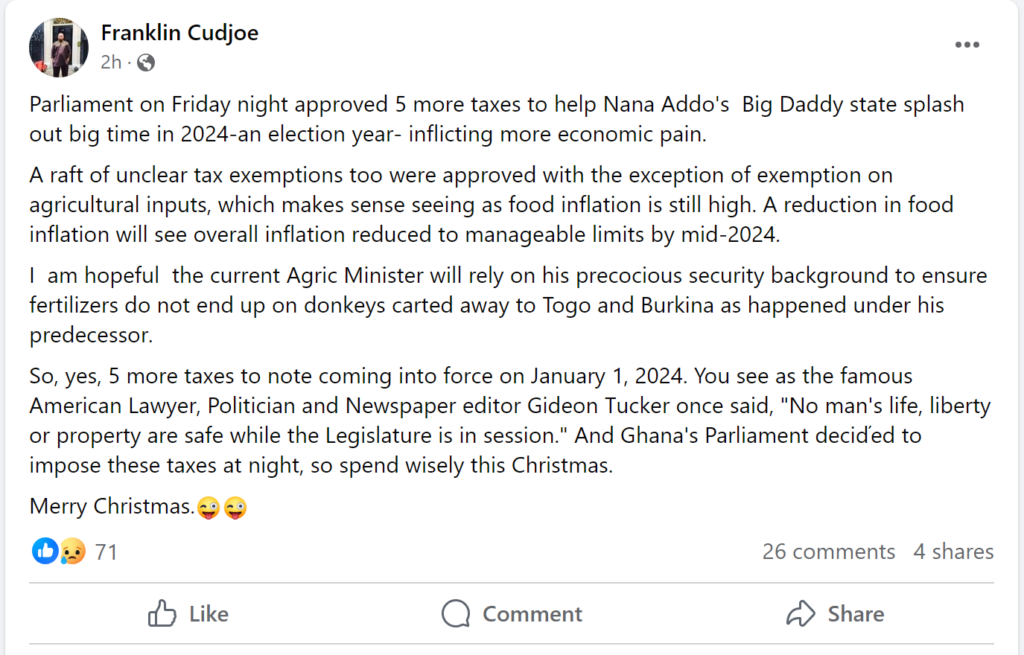
Ghana’s Parliament has approved five new taxes, raising concerns about potential economic hardships in the coming year.
Founding President and Chief Executive Officer of IMANI Centre for Policy and Education, Franklin Cudjoe, has expressed apprehension, warning that Ghanaians should prepare for more economic challenges in the aftermath of these approvals.
Mr Cudjoe, known for his outspoken views on policy matters, suggested in a Facebook post that the approved taxes are aimed at funding extravagant spending in 2024, an election year.
In his post, Cudjoe remarked, “Parliament on Friday night approved 5 more taxes to help Nana Addo’s Big Daddy state splash out big time in 2024 – an election year – inflicting more economic pain.”
The decision to implement new taxes in Ghana includes a range of unclear tax exemptions, with the exception of agricultural inputs. Franklin Cudjoe justified this exception by highlighting the persistently high food inflation.
“A reduction in food inflation will see overall inflation reduced to manageable limits by mid-2024.”
Expressing hope in the Agriculture Minister’s ability to prevent misuse of fertilizers, Cudjoe added, “I am hopeful the current Agric Minister will rely on his precocious security background to ensure fertilizers do not end up on donkeys carted away to Togo and Burkina as happened under his predecessor.”
The approved taxes in Ghana are scheduled to take effect on January 1, 2024. This implementation is expected to add to the financial burden on citizens and businesses, raising concerns about the potential impact on the cost of living and economic activities.
Cudjoe concluded his post with a cautionary note, quoting the famous American lawyer Gideon Tucker: “No man’s life, liberty or property are safe while the Legislature is in session.”
“And Ghana’s Parliament decided to impose these taxes at night, so spend wisely this Christmas,” he said.
President of IMANI Africa, Franklin Cudjoe, has vehemently criticized the Electoral Commission (EC) for dismissing recent lapses in the District Assembly elections as mere “technical challenges.”
He asserted that this explanation is disingenuous and points to deeper issues regarding the Commission’s planning and transparency.
Mr. Cudjoe emphasized that the EC’s earlier assurances of preparedness, provided weeks before the election, are contradictory to their claims of last-minute technical difficulties.
“This whole conversation about technical issues for the lapse the EC had cannot be true. You see if they are saying that maybe someone’s name was misspelled or something on the ballot, maybe yes. You can’t tell me that 12 hours or 6 hours to the elections, you didn’t know that you didn’t have all the accoutrement.
“These are not technical issues, they are just blatant disregard for the processes, it should have been ready two weeks earlier”.
In addition to his earlier criticism, Franklin Cudjoe further scrutinized the Electoral Commission (EC) for what he described as a “headstrong” approach and a lack of collaboration with stakeholders. He expressed the belief that excluding voices from various political parties and stakeholders contributes to avoidable problems, as evidenced by the recent District Assembly elections.
“The EC has been very headstrong…If they had internalized some of these issues, I don’t know why they would then wake up and tell us recently that in the main 2024 polls, they will close polls at 3 pm. What kind of signs went into that type of decision?
Speaking on the Big Issue, Mr Cudjoe added “Well, if you are going to have an election and this District level election is an example of some of the processes that were bungled, would you think that 3 pm should applied to every polling station? Would you want to do something like that”? he added.
Franklin Cudjoe, the president and founder of IMANI Africa, has criticized the Electricity Company of Ghana (ECG) for its recent donation of 200 motorbikes to the Ghana Police Service.
Cudjoe, in a post on X dated December 13, 2023, pointed out that despite being indebted to independent power producers, the ECG is engaging in donations.
He argued that the funds used for purchasing the motorbikes could have been better utilized to provide additional streetlights, contributing to crime prevention efforts.
“When your debtor goes spraying cash like an Arabian prince at a naming ceremony… But on a serious note, crime would have been reduced drastically &society benefited more if part of such funds were channelled to providing adequate streetlights in crime prone areas & our motorway,” he wrote.
The Electricity Company of Ghana (ECG) faced significant scrutiny recently when Sunon Asogli Power Limited, an independent power producer, declined an offer to restructure the arrears owed by the ECG.
In response, Sunon Asogli Power threatened to shut down operations, raising concerns about a potential return to the days of intermittent power supply, commonly known as ‘dumsor.’
Under pressure, the ECG responded by making a partial payment of $30 million towards its $60 million debt to Sunon Asogli, committing to settle the remaining arrears within a two-week timeframe.
About ECG’s donation to the Ghana Police:
The Electricity Company of Ghana (ECG) has made a generous donation of 200 motorbikes to the Ghana Police Service. The police received these motorbikes on Monday, December 11, 2023, with the aim of bolstering their operations nationwide.
Leading the ECG management in this philanthropic gesture, Board Chairman Keli Gadzekpo expressed the company’s commitment to supporting the police. He announced plans to donate additional vehicles to further enhance police services and efficiency, with a pledge of an extra 800 motorbikes to be delivered in batches.
The Inspector-General of Police, Dr. George Akuffo Dampare, who accepted the donation on behalf of the police, conveyed his gratitude to the ECG management for their generous contribution.
XDS Data, Ghana’s prominent credit bureau, has refuted claims made by two senior officials of policy think tank Imani Africa, Franklin Cudjoe and Bright Simons, regarding the existence of a personalized credit-scoring system in the country.
The officials asserted that a credit bureau, XDS Data, was already providing credit scores. This comes after Vice President Dr. Mahamudu Bawumia announced that beginning next year, Ghana will introduce a personalised credit-scoring system, which will be anchored by the Ghana Card, the national biometric identity card.
However, XDS Data clarified through a statement that, despite having the capability, it has not produced individual credit scores due to the absence of a unique identifier like the Ghana Card.
The credit bureau anticipates releasing individual credit scores once Ghana Card penetration reaches 90%, potentially by the end of 2024.
“XDS Data Ghana Limited, Ghana’s leading Credit Bureau wishes to inform the public about the bureau’s capability of producing individual credit scores as stated in the document Credit Reporting Activity, Annual Report 2022 published by the Bank of Ghana,’ the statement said.
It added: “Despite our capabilities, the bureau has not produced scores. This is because of the lack of a unique identifier. Currently, facilities are accessed by individuals using different kinds of identification which makes it difficult for the bureau to be 100 percent sure of capturing a credit subject’s total exposure. However, XDS Data Ghana Limited produces credit information just like any International Credit Bureau, adequate for lenders to be able to make informed credit decisions.”
Read the full release by XDS Data below:
PRESS RELEASE
STATUS OF CREDIT SCORES IN GHANA 5th December 2023
XDSData Ghana Limited, Ghana’s leading Credit Bureau wishes to inform the public about the bureau’s capability of producing individual credit scores as stated in the document Credit Reporting Activity, Annual Report 2022 published by the Bank of Ghana.
Despite our capabilities, the bureau has not produced scores. This is because of the lack of a unique identifier. Currently, facilities are accessed by individuals using different kinds of identification which makes it difficult for the bureau to be 100 percent sure of capturing a credit subject’s total exposure. However, XDSData Ghana Limited produces credit information just like any International Credit Bureau, adequate for lenders to be able to make informed credit decisions.
The mandatory use of the Ghana card from the 1st of July, 2022 for all financial transactions has seen Data Providers submitting Ghana Card Information to the bureau. Credit scoring models require unique identifiers to fully map information. The penetration of the Ghana Card information supplied to the bureau is progressing at a slow pace. In collaboration with the Bank of Ghana, we have been tracking the Ghana Card penetration which stands at 35 percent as at the end of the last quarter of 2023. This is based on 11,067,161 unique active loan customers submitted by Data Providers.
In addition to continuous research into the use of alternative information within the credit score models, we anticipate releasing the individual credit scores when the Ghana Card penetration rate reaches the 90th percentile; hopefully before the end of year 2024.
The continued active participation and support from Bank of Ghana, ensuring credit bureaus get adequate data on Ghana Cards from Data Providers is paramount. This will ensure that all aspects of the credit ecosystem are included in scoring calculations.
XDSData Ghana Limited has pioneered credit referencing over the years and thus will endeavor to make credit scoring a reality in Ghana and trusted abroad.
President of the policy think-tank IMANI Africa, Franklin Cudjoe, has urged the ruling New Patriotic Party (NPP) to focus on resolving the nation’s economic issues rather than relying on regional sentiments.
Mr Cudjoe emphasized that emphasizing Dr. Bawumia’s Northern heritage might not benefit the party’s 2024 election prospects. He highlighted the presence of two Northerners in the race, noting that it would be the responsibility of the people to discern and select the candidate who prioritizes their needs and development.
“If the NPP relies on that and thinks that will become an electoral advantage, and forget about the larger issues of the economy or governance, they will be in for a shocker. I think it is important that we don’t necessarily dwell on sectarian politics.
“I admit that these things play a role, even in global politics…but I think it is important that we move away from this kind of thing because already it is driving a certain trend that I’m not in favour of,” he was quoted by citinewsroom.com.
The Deputy Majority Chief Whip, Alhaji Habib Iddrisu, highlighted that the backing for Vice President Dr. Mahamudu Bawumia isn’t merely due to his Northern heritage.
He emphasized that the Vice President is not the initial Northerner to stand for election within the New Patriotic Party (NPP), dismissing any tribal inclinations.
“When you see all of us rallying behind Dr Mahamudu Bawumia, it is not because he’s a Northerner because he is not the first, not the second, not the third Northerner to have ever wanted to be the flagbearer of the party,” he said.
Founding President of IMANI Africa, Franklin Cudjoe, has cast doubts on Vice President Dr Mahamudu Bawumia’s prospects in the upcoming 2024 General Elections following his recent win in the New Patriotic Party’s (NPP) presidential primary.
Despite receiving 61.47 percent of the votes, Cudjoe suggests this endorsement may not be enough for a national victory.
In a statement following the NPP’s internal election results, Mr Cudjoe pointed out a historical pattern where successful presidential candidates in Ghana’s general elections had previously secured more than 64 percent in their party’s primaries.
“No candidate has gone on to win the general elections if the person had obtained less than 64 percent of the vote in the internal primaries,” Mr Cudjoe highlighted in a Facebook post on Sunday.
The comment follows the election of Dr. Bawumia as the NPP flagbearer on Saturday, November 4, where he secured 118,210 votes, translating to 61.47 percent of the valid votes.
His nearest rival, Ken Agyapong, Member of Parliament for Assin Central, received 71,996 votes, equating to 37 percent.
Adding historical context to his analysis, Mr Cudjoe mentioned, “No candidate in Ghana’s history has gone on to win the general elections if s/he obtained less than 85% of the vote in internal primaries, except in 2000, which was a very special election (the country had never before seen a switch of power through the ballot).”
The prediction by Mr Cudjoe brings a speculative edge to the political discussions as Ghana inches closer to its 2024 General Elections, with all eyes on whether Dr Bawumia can break the historical trend.
Founding President of policy think tank, IMANI-Africa, Franklin Cudjoe, has reiterated his resolve to fight the controversial Kelni GVG contract.
The outspoken policy analyst describing the contract as a “grand theft’’, said he will relocate to a different country should the current suit pending before the court go in favour of government.
He was delivering a lecture on “Identifying Policy Gaps and Right Headline, Right Content’’, at the African Journalists for Economic Opportunities (AJEOT) at Koforidua in the Eastern Region.
He slammed the Communications Ministry for failing to respond to the questions IMANI-Africa has demanded about the contract.
He insisted that the contract is duplication of jobs and a needless drain on the county’s scarce resource.
Two citizens have dragged government to court to halt the implementation of the contract with IT firm, Kelni GVG, for the real-time call traffic monitoring.
Connect Kelni GVG, meet me in court – Bentil warns telco
The two, Sara Asafu-Adjaye and Maximus Amertogoh want the Minister of Communication, the National Communication Authority, and the Ghana Revenue Authority, the Attorney General, the Ghana Chamber Telecommunications and the telecommunications networks to cease the traffic monitoring.
The Plaintiffs are also requesting from the court ‘’an order of interlocutory injunction restraining the respondents, whether, by themselves, their servants, workmen, hirelings, agents, privies or any persons claiming under through them, whosoever described from implementing and operationalizing the Common Platform until the final determination of this suit.’’
Kelni GVG deal is fraudulent, illegal – Inusah Fuseini
Commenting on the issue and the court case, Franklin Cudjoe said the contract which is estimated at $89 million is actually $178 million.
He said, ‘’the Ministry of Communication went to contract an unknown entity. As we speak we do not know the entity. Stop believing the $78 million, the actual figure is $178 million; that is the contract worth.’’
Franklin Cudjoe stressed the deal will invade our privacy and said, ‘’I may relocate if the ruling is different. This not to threaten the judge or anyone, but I will fight this deal till the last drop my blood.’’
AJEOT is being organised by Institute for Liberty and Policy Innovation (ILAPI) in partnership with Network for Free Society, ATLAS Network and Language of Liberty Institute.
The Executive Director of IMANI Africa, Franklin Cudjoe, has refuted allegations that certain Civil Society Organizations had approached the Speaker of Parliament in an attempt to impede the ongoing investigation into the leaked audio involving certain Police officers.
The Speaker had established a Committee to examine the audio recording, which purportedly revealed Police Officers conspiring with a Politician to have the current IGP, Dr. George Akuffo Dampare, removed from his position.
In the audio, COP Alex Mensah, a senior police officer, asserted that if the current IGP retained his position, he would obstruct the ruling NPP’s efforts to secure victory in the 2024 election.
All individuals featured in the recording, including the IGP, had subsequently appeared before the Parliamentary Committee.
Nonetheless, there were indications that some figures from civil society, among them Franklin Cudjoe, expressed reservations regarding the committee’s proceedings. They allegedly met with the Speaker to urge him to suspend the investigation in order to protect the IGP’s reputation.
Nevertheless, during an interview, Cudjoe categorically denied the validity of these claims.
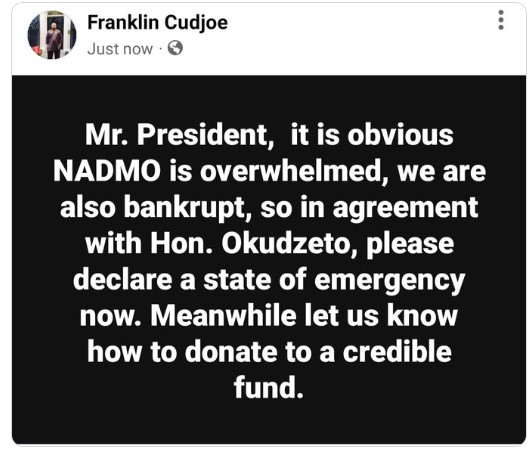
President Nana Addo Dankwa Akufo-Addo has been urged by Franklin Cudjoe of IMANI Africa to issue a state of emergency for residents affected by the recent dam spill in the Volta region.
Franklin Cudjoe asserted in a Twitter post that it appears that the National Disaster Management Organisation (NADMO) is underutilised and that there is a shortage of resources in the country.
“Mr. President, it is obvious NADMO is overwhelmed, we are also bankrupt, so in agreement with Hon. Okudzeto, please declare a state of emergency now,” Cudjoe urged in a Twitter post.
Franklin Cudjoe’s appeal is in line with that made by Samuel Okudzeto Ablakwa, a North Tongu member of parliament, who also called for the declaration of a state of emergency to allow for a more effective and well-coordinated response to the crisis.
Ablakwa emphasised the requirement for the creation of a special fund to gather donations from the public and well-wishers in order to aid those affected by the spillage.
He added, “Meanwhile, let us know how to donate to a credible fund.”
The spillage of the Akosombo and Kpong Dams in the Volta region has severely damaged and uprooted many local communities, leaving many locals in utter need of assistance.
The founder and president of IMANI Africa, Franklin Cudjoe, has voiced strong criticism against the Electoral Commission (EC) for its refusal to expand the venues for the ongoing voter registration process.
During an interview on Citi TV’s political talk show, The Big Issue, Cudjoe accused the EC of employing a “Machiavellian approach” in its actions, which he argued was disenfranchising a significant portion of the Ghanaian population.
Cudjoe also expressed disapproval of the EC’s decision to revise the expected number of registrants. He questioned the rationale behind such a move and urged the EC to permit registration at multiple centres for the convenience of the public.
He further advised the EC to adopt a more practical approach, commending Joseph Whittal, the head of the Commission on Human Rights and Administrative Justice (CHRAJ), for opposing the EC’s position.
However, Cudjoe criticised the National Commission on Civic Education (NCCE) for not speaking out against the EC’s actions and stance.
“I haven’t seen that of the NCCE. The NCCE has shut its mouth and eyes to all the things that are happening in the EC,” he pointed out.
A portion of the public has expressed dissatisfaction with the Electoral Commission’s decision to restrict voter registration centres to district offices, which are frequently inconveniently situated for numerous eligible voters.
Various civil society organisations and the opposition National Democratic Congress (NDC) have urged the EC to broaden the registration process to more accessible sites.
Despite these calls, the EC has stood firm in its position and continued to conduct registration exclusively at its district offices.
During an appearance on JoyNews’ PM Express, Cudjoe noted that the IGP’s statements regarding his association with Bugri Naabu, the central figure in the leaked tape controversy, were clear and compelling.
“If there was any shred of doubt about the integrity of the IGP today, it was all put to rest. I mean, I don’t know who probably in his sound mind will still be questioning the IGP’s integrity as far as the allegations go.”
“As far as the conversation about Mr Naabu’s involvement, I mean, he treated it as such. The police have been dealing with a gazillion number of people and interests, they do not have a commercial arrangement with the gentleman.”
Mr. Cudjoe emphasized that Dr. Dampare’s acknowledgment of his acquaintance or lack thereof with Mr. Naabu should not tarnish his integrity.
“He didn’t say he doesn’t know him, he didn’t say that. He says he has no commercial arrangement of interest to discuss with Mr Naabu,” he added.
He emphasized that these claims have inflicted harm not only upon his family but also on the reputation of the police service.
“I feel in my spirit that this is just not fair. Honourable chair, it is just not fair. Are we killing patriotism? That anybody can just get up, make allegations upon allegations, and people who go across the country – at times 48 hours without sleep, just to keep the country at peace – will be called to come and answer allegations that are unfounded?”
In response to the allegations made by two officers during the parliamentary committee probe, IGP Dr. Dampare defended himself. COP Alex Mensah, one of the individuals heard on the tape, made several accusations against the IGP, including claims of obstructing promotions within the service, maintaining frequent contact with former President Mahama, and labeling Dr. Dampare as the worst IGP ever.
Supt. George Asare, also heard on the tape, supported some of COP Mensah’s statements regarding the IGP’s management of the Service. When pressed for further details, he indicated a preference to disclose them in a closed session. However, he asserted that the leaked tape had been edited.
During his appearance before the committee, Dr. Dampare refuted all the allegations made by the officers. He denied any involvement in orchestrating the recording of the leaked tape, which purportedly contained discussions about removing him from his position. He characterized the accusations against him as baseless and lacking evidence.
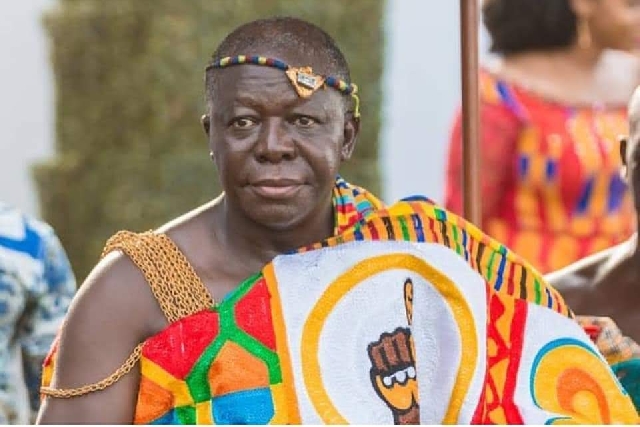
Franklin Cudjoe, the President of IMANI Africa, has drawn a comparison between the recent actions of Asantehene Otumfuo Osei Tutu II and the performance of the Nana Addo Dankwa Akufo-Addo-led government. Cudjoe points out that the Asantehene has taken decisive action by destooling five subchiefs in a span of four months due to insubordination and illegal activities, including land sales and involvement in galamsey.
Cudjoe’s Facebook post dated August 22 highlights that, in his opinion, the actions of Asantehene have been more forceful and proactive than President Nana Akufo-Addo’s approach to dealing with underperforming government appointees. He specifically mentions that despite the economic challenges faced during the Akufo-Addo administration, certain appointees continue to hold their positions.
“Asantehene is reshuffling. Destools 5 sub-chiefs in just 4 months. More in the pipelìne. This record is unnmatched by Nana, who seven years on is happy with his men even though they helped him ran the economy into a ravine,” Cudjoe stated in a Facebook post dated August 22.
Among the subchiefs destooled by Asantehene is Nana Kwaku Duah III, the Abuontemhene of the Kumasi Traditional Council. He was removed from his position for illegally selling lands under his jurisdiction. The decision to destool Nana Kwaku Duah III was made after accusations were brought against him by fellow subchiefs.
The subchiefs accused Nana Kwaku Duah III of disregarding the directives of Asantehene and engaging in unauthorized land sales. They claimed that he even used Asantehene’s name to gain approval for his activities related to the land sale, which was under investigation.
Nana Kwaku Duah III defended himself against some of the allegations but admitted his presence on the land in question. He argued that he had permitted others to work on the land with his approval. In response, Asantehene Otumfuo Osei Tutu II stated that Nana Kwaku Duah III’s actions had violated his authority and orders, leading to his destoolment.
This comparison made by Franklin Cudjoe underlines the proactive approach taken by the Asantehene in addressing issues within his jurisdiction, as opposed to what Cudjoe perceives as a lack of similar actions by the Akufo-Addo government to address its challenges.
Chief Executive of the policy think-tank IMANI-Africa, Franklin Cudjoe, has remarked that the attention surrounding the ECOWAS court’s decision, where certain civil society organizations lodged a complaint against the government’s controversial Agyapa Royalties deal, is merely “noise.”
In July 2023, the regional court dismissed a legal action against the Agyapa deal, filed by the Ghana Integrity Initiative and Transparency International Ghana.
The verdict from the ECOWAS Court of Justice essentially indicated that there was no valid basis for the plaintiffs’ plea to halt the sale of the nation’s gold royalties through the Agyapa deal.
However, Cudjoe pointed out that there were economically grounded arguments that were not presented in court, which he deemed as technically sound. He further noted that these arguments have remained unanswered, even three years after the fact, without any response from the government.
He wrote on his Facebook page: “Ignore the noise over some ECOWAS court ruling over Agyapa. Here are technically sound economic arguments advanced by CSOs against Agyapa. None were before the ECOWAS court and none has been adequately responded to by promoters of the deal 3 years on!”
Here are the ‘technically sound’ economic arguments the CSOs made in 2020.
A more intensive treatment of these issues are found in the briefing document used during our consultative forum (available here: ).
1. The government arrived at the valuation of the deal by assuming that the average annual production volume of gold across the 48 lease areas shall be 2.9 million ounces during the term of the agreement. This is woefully undervalued. A careful review of the 2019 data submitted by the Ministry of Finance to the CSOs to back this position reveals alarming omissions, missing numbers, and a poor appreciation of the fact that since 1990, gold production in Ghana has grown at an average of about 7% per year.
More careful analysis show that gold production in the 48 lease areas is already heading towards the 4.2 million ounces mark in the near-term. Over the 21-year conservative life of the agreement (the agreement has no definite term as any renewal of the leases covering the relevant areas automatically extends the tenure), output shall average 4.9 million ounces a year using a conservative growth figure of 4% a year over the next two decades.
2. The government conveniently argues that the agreement will terminate when the last of the 48 mining leases expire. This betrays a weak understanding of the mining sector in Ghana, where extant agreements are crafted to enable continuous renewal so long as gold is being discovered and commercially mined. Anglogold’s Obuasi operations have leases that have been effectively active for over 100 years.
The Government is thus seriously underestimating the amount of gold that can be found in the vast tracts of land that makes up these leases. Until recently, AngloGold’s lease areas exceeded 400 square kilometers. Some of the leaseholders are currently only impacting less than 10% of their concessions. As the price of gold increases, they shall aggressively a) expand development of deposits and b) start mining lower grade deposits. The government’s low “reserve life” estimates are based on a misunderstanding of how pricing helps convert mere “measured resources” into new reserves.
3. Some of the reserve estimation work is completely confused. Take AngloGold, for instance. The government limited its calculation of output in terms of 2019 reserves and duration of the output of 15 years, forgetting that it was the same government that went to Parliament in 2018 to seek considerable reliefs for the mining giant on the basis that the company shall be extending mine life by an additional 22 years, and that after 10 years the company expects to hit much higher grades of ore. The reliefs granted to Anglogold were premised on lower output today and higher production beyond 10 years. The government’s calculations are clearly muddled.
4. The Government’s use of $1300 as the average price of gold over the long-term is quite frankly reckless. Gold has moved from $393 in January 2001 to over $1900 today. Between that period, its trajectory has been mostly upwards except for a few retreats. The long-term picture of gold has thus been generally upwards. Every analyst worth its salt is predicting a long-term average above a new support of $1800. When you combine this fact with the proper treatment of the production forecasts available in the mining company’s own disclosures, you arrive at a present value calculation of more than $3 billion. The attempt to dump this valuable resource for $1 billion is unconscionable.
5. The government is misguided on multiple fronts when it says that “it is the market that shall value” the royalties it is giving away. There are two levels of analysis here. First, government is investing Ghana’s future gold earnings into a company. Second, it is trying to sell half of that company for cash upfront today through an IPO. There must thus be an initial valuation of how much exactly Ghana is investing before we talk about anything else. Only then can the returns: upfront cash and shares that entitles Ghana to future dividends be valued.
Ghana is investing a total of at least 5 million ounces of gold over a 21-year period (or more gold over a longer period). How much is this gold worth for how much return exactly? Government wants $500 million upfront for 2.5 million ounces of this quantity. These numbers are fixed in the agreement and have nothing to do with any “market”. The CSOs believe that by selling forward less than 1 million ounces, Ghana can get more than $500 million. The government’s current structuring means that it is selling Ghana’s gold forward at a price of $200 an ounce, when current prices are at $1900 and similar sell-forward deals have recently priced gold at $500 on average (taking time value of money into account).
It is the next stage of the analysis that involves valuing the shares in the company in which Ghana intends to invest another $100 million (as working capital) and an extra 2.5 million ounces of gold (minimum) over a 21 year period in exchange for 51% of shares. The price of these shares has already been decided by the underwriters that government has been working with for more than 2 years and set at $500 million. That is the whole point of a bookbuilding IPO. The bookrunners set a final price and offer the shares to the market. There is no planned auction for the “general market” to decide, and Government cannot make any gains on the secondary market because it must hold the 51% of shares for the long haul.
6. The government is confused about the short-term price rises that will follow the debut of the stock on the public market. These do not translate into capital gains unless government sells a big chunk of the 51% stake in a few days following the debut. Government is barred from doing this by market rules and its own policy. The people who will thus cash in are the underwriters, the investors they allocate some of the shares during bookbuilding to, and the brokers/dealers. We expect a cool $350 million could easily be made by these people due to the deliberate underpricing of the asset. After the price surge in the first few days, the stock will return to its mean. All this is on top of the massive fees they shall be earning (about 10% of total funds raise, making this method of raising upfront cash far more expensive than any debt government has raised in the last decade on the international markets).
7. Government’s expectation of 50% of retained earnings being paid out as dividends is founded on nothing. This is a company that is starting life with just $100 million of working capital, a lack of experienced management, and a non-existent operating history; and is furthermore seeking to invest in the heavily capital-intensive gold mining sector. It will need to borrow massive amounts of money at relatively high-interest rates to be competitive, and invest all the Ghana gold royalties it receives. It will have no latitude to be handing large dividends to anyone for a long time. So, future governments are being “robbed” of the highly reliable royalty income stream, which accounts for more than 90% of mineral revenues (besides oil) that government can use to support the budget. In fact, a low initial valuation means a weak starting balance sheet which more or less guarantees this outcome.
8. More worryingly, because the government also agreed to hand over effective control of the company to the minority shareholders and their appointed independent directors, it cannot dictate a dividend policy or push the company to even invest in Ghana. The government was happy to agree to this as part of the process of admission to the standard listing of the Main Market of the London Stock Exchange despite there being an option for the company to list as a “sovereign controlled commercial company”, which would have allowed government to retain significant control.
The strategy at work here is the same one that was used to push Ghana to abandon its golden share in what became AngloGold on the basis that this will unlock more value. In 1994, before the listing of the then Ashanti Goldfields, Ghana had a 55% stake in the entity worth $880 million as share of bullion. Today, it owns 0.01% (having given up even the standard 10% it owns in all local gold companies) worth a paltry $110 million in equity value. Actual earnings come just from royalties, a measly $22 million, whereas in 1996, dividends and royalties together amounted to $115 million. Poor “internationalisation” strategies have never served Ghana’s sovereign commodity interests well.
9. The government, on top of selling gold going for $1900/oz today at $200 an ounce, then added a highly valuable option to the package. Agyapa has right of first refusal to any future royalties deal Ghana enters into. A simple rule of basic finance is that options are always valuable and must be priced. Ghana gave away this powerful bargaining chip for FREE.
10. The argument that the listed vehicle (Agyapa Royalties) had to be incorporated in the tax haven of Jersey to mirror the tax efficiency rules in the MIIF Act is untenable. Whilst returns to the SPV itself need not be taxed, investors who profit from buying shares in the SPV during the book-building period need to be KNOWN and TAXED. Even if we must go the IPO route, many jurisdictions with far better transparency standards exist, some of which have double-taxation treaties with Ghana. The same tax-efficient outcome could have been reached by using a BEPS strategy in one of these other places.
By incorporating in Jersey, where the laws permit notoriously impenetrable trusts, it has become all too easy for the underwriters to underprice the vehicle (and by implication, Ghana’s gold royalties), allot the shares to investors hiding behind trusts, and when the stock debuts, join these crony investors to pocket hundreds of millions of dollars without any of us being any wiser since such trusts would usually be “trusts of trusts”, and effectively impossible to unveil. Regardless of the government’s protestations, they have no tool to stop the underwriters from doing this. Can Ghana tolerate this risk?
President of Imani Africa, a policy think tank, Franklin Cudjoe, is urging that individuals accountable for the Bank of Ghana’s GHC60 billion loss in 2022 should face surcharges as a means to recover the funds.
Mr Cudjoe criticised the Central Bank for displaying negligence and neglecting its responsibilities, factors he believes were responsible for the incurred loss.
“If you are suggesting to us that because you supported the government and so the loss should be taken, then you are simply saying that your fundamental duty as an independent arbiter in disputes among government institutions should be thrown to the dogs.”
He told Selorm Adonoo on The Big Issue on Citi TV that it is standard practice to surcharge individuals responsible for financial infractions in an audit and so it will be prudent for the conversation about the resignation of the Central Bank’s governor and his deputies to also gravitate toward surcharging them and any other person responsible for the losses.
“The auditors were quite clear about the mandate of the Bank and as to why all these infractions are coming out tells me one thing, that the right procedures were not adopted by the central bank and if that is the case, why are we running around to get a solution? What I know is that if you are audited as an independent organization and certain infractions are found, you are surcharged, so my point is, are we not supposed to be looking in that direction as well?”
“This should go beyond calls that people should resign, I think we must also find out if some surcharging will be done because this is substantial money.”
Ahead of the 2023 Mid- Year Budget review, President and Founder of IMANI Africa, Franklin Cudjoe, has outlined eight reasons why the Akufo-Addo government cannot introduce new taxes.
In a Facebook post dated July 31, 2023, Cudjoe stated that one of the justifications for the government’s inability to introduce new taxes in the mid-year budget review is that taxation is an unproductive approach to generating revenue.
Furthermore, he emphasised that the introduction of new taxes by the government would have a detrimental impact on businesses and go against President Akufo-Addo’s pledge to shift the nation’s focus from taxation to production, as outlined in his manifesto.
Below are the reason the IMANI boss gave for the government not to introduce new taxes:
1.Some taxes imposed by the government is not only a lazy way of raising money to finance poorly thought policies and a very large and unproductive size of government, it drives millions of severely poor citizens further into extreme penury. These taxes a reverse of what was promised in the ruling NPP government’s manifesto- from taxation to production.
2. There is no worse tyranny than to force a man to pay for what he does not want merely because you think it would be good for him.—Robert A. Heinlein, 3. The wages of sin are death, but by the time taxes are taken out, it’s just sort of a tired feeling.—Paula Poundstone
4..Government’s view of the economy could be summed up in a few short phrases: If it moves, tax it. If it keepsmoving, regulate it. And if it stopsmoving, subsidize it.– Ronald Reagan.
5. Giving money and power to government is like giving whiskey and car keys to teenage boys.– P. J. O’Rourke
6. The real goal should be reduced government spending, rather than balanced budgets achieved by ever rising tax rates to cover ever rising spending.– Thomas Sowell
7. Which countries contain the most peaceful, the most moral, and the happiest people? Those people are found in the countries where the law least interferes with private affairs; where the government is least felt; where the individual has the greatest scope, and free opinion the greatest influence; where the administrative powers are fewest and simplest; where taxes are lightest and most nearly equal–Frederic Bastiat.
8. Elections should be held on April 16th- ( April 18th for Ghana??) the day after we pay our income taxes. That is one of the few things that might discourage politicians from being big spenders.–Thomas Sowell.
President of IMANI Africa, Franklin Cudjoe, has lauded the former Minister of Sanitation and Water Resources, Cecilia Abena Dapaah, for her sacrifice in resigning amid the stolen money scandal, stating that she safeguarded the New Patriotic Party (NPP) from potential embarrassment.
Concerns have been raised by various groups regarding the origin and intended use of the US$1 million, €300,000, and unspecified amounts of Ghanaian cedis allegedly stolen from Ms. Dapaah’s residence.
Reports circulated about two house helps facing court charges for supposedly stealing significant sums of money and personal belongings from the former minister and her husband.
As a result of the incident, Madam Dapaah chose to step down from her ministerial position and was later arrested by the Special Prosecutor.
Her two residential properties were searched before she was granted bail.
During an interview with the media, Mr. Cudjoe expressed his belief that her decision to resign was not only in her own interest but also a sacrifice for the entire party.
He empathized with the potential damage she could have faced due to the circulating information, emphasizing the human aspect of such situations, especially if she had not committed any wrongdoing.
Mr. Cudjoe commended the former minister for her honorable resignation and acknowledged that external pressures might have influenced her decision.
He recognized her efforts to preserve a sense of sanity amidst ongoing investigations, concluding that her resignation was well-received, and he holds no fault against her for making that choice.
“When matters of this kind happen, the damage you are likely to suffer due to the information that is out there, if you don’t take care, you could break down. We are humans, especially if it’s really the case that you haven’t done anything wrong.”
“Maybe some pressures made her resign. Ultimately, she made the decision that she could save some sanity, for now, while investigations continue. Her decision to resign was welcomed. I don’t fault her.”
Inspector General of Police, Dr George Akuffo Dampare, has been lauded as one of the “limited outstanding” appointments made by President Akufo-Addo, according to Franklin Cudjoe, the founding President and CEO of IMANI Centre for Policy and Education.
In a Facebook post, Cudjoe called on the President to disregard those conspiring to remove the police chief due to his professionalism.
He wrote, “Mr. President, ignore those treasonable elements planning to oust the Inspector General of Police (IGP). Much as we at IMANI would have wished the power to appoint the IGP should be taken away from your office and vested in a police electoral college, we say without equivocation that the current IGP is one of the very few excellent appointments you have made in seven years.”
Cudjoe’s post continued, emphasizing the potential consequences of removing the IGP: “Remove the IGP, and you would have lent credence to the ignoble and infamous sagas of your penchant for throwing good men and women to political hounds on a whim. May this not be part of your enduring legacy.”
Sulemana Braimah, the head of the Media Foundation for West Africa, also expressed support for the IGP in a statement. Braimah highlighted the unprecedented public backing the IGP has received, suggesting that Ghanaians recognize and appreciate his leadership abilities.
He stated, “It is not for nothing that for the first time, we are witnessing overwhelming public support for an IGP. The Ghanaian people know true leadership when they see and experience one. For once, let’s leave the partisanship and hatred and support Dr. George Akuffo Dampare to continue with his exceptional effort and leadership to build the Ghana Police Service we want and deserve as a nation.”
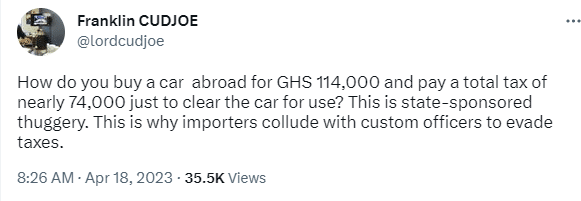
In a post on Twitter, Franklin Cudjoe questioned the rationale behind paying import tax more than half the value of the imported product. According to him, Ghana’s import tax can simply be described as a state-motivated crime.
“How do you buy a car abroad for GHS 114,000 and pay a total tax of nearly 74,000 just to clear the car for use? This is state-sponsored thuggery,” Franklin Cudjoe explained in a tweet published on his Twitter page.
He added that, the phenomenon accounts largely for the practice of tax evasion at the various borders and ports of the country.
“This is why importers collude with custom officers to evade taxes,” another part of the tweet read.
Earlier this year in January, the Association of Customs House Agents, Ghana (ACHAG) expressed their disappointment in the government over the complete reversal of the discount policy on import duties at the ports.
Speaking on behalf of the association, Yaw Kyei, the president of the association explained that his outfit is unhappy because of the exchange rate volatility negatively affecting trade. He said the discount policy served as a cushioning for importers.
The Government of Ghana, through the Customs Division of the Ghana Revenue Authority, in 2019, applied a 50 percent discount on duties payable on all general goods, and 30 percent discount on vehicles to encourage more importation and tax compliance as well as alleviate the economic burden on the trading and consuming public. This discount was further reduced to 30 percent and 10 percent respectively in 2021. However, beginning January 1, 2023, the discount policy has been scrapped.
Founding President and Chief Executive Officer of IMANI Centre for Policy and Education, Franklin Cudjoe has kicked against proposals for the state to fund political parties.
He is completely opposed to the idea of the state bearing some of the cost incurred by political parties during elections.
This comes on the heels of former President John Dramani Mahama’s suggestion that the state finances campaigns of viable political parties in order to prevent financiers from determining electoral outcomes.
“I totally oppose any attempt by the state to fund political parties. Even if we were to consider the idea, it would be predicated on performance. But that’s even the second order of things. The first order of things is a no no no. Political parties pride themselves as mass mobilisers of people and in this country, I’m sure NDC and NPP can boast of about half the number of people that go to the polls.”
”It is not in the place of citizens to contribute towards a party but its members. If the party while in power had contributed to the growth and development to the extent that the individuals had built for themselves sufficient bulwarks against poverty there would have been no qualms at all about people being asked to contribute.”
Mr. Franklin Cudjoe indicated that he truly understands and supports John Mahama on his call for political campaign reforms, he however has reservations.
“In fact, the only part I support is the crowd-funding as it will eliminate situations where political parties owe big wigs who fund them.”
Mr. Mahama during a public lecture on March 22, at UPSA auditorium in Accra said viable political parties play a strong role in promoting democracy in the country hence the need for the state to incur some of their expenditure in future.
He admitted that the state is now broke and therefore financing political campaigns going into the 2024 general elections is not an option.
He recommended that public funding of political parties be scaled up in the future supervised by an independent and credible institution to ensure fairness in the sharing formula.
The Founding President of Imani Africa has reacted to the appointment of a new parliamentary leadership for the opposition National Democratic Congress (NDC).
According to him, the previous leadership played their roles well, guiding their colleague MPs to provide knowledgeable opposition to the government.
He added, however, that he believes these new leaders will succeed but will falter too.
In a Facebook post, he said Haruna Iddrisu and Mohammed Muntaka are ripe for bigger roles, adding that the new leaders should support them when the time comes.
“I have followed the fallout from the change in minority leadership, and I must admit both sides, for and against the decision of the executive leadership of the NDC party, make compelling arguments. In fact, I have to admit that Honourable Haruna Iddrisu, Hon. Muntaka and Hon. Avedzi have not only cleverly shepherded their colleague MPs to provide distinctively knowledgeable opposition to the government but have also dignified their respective roles to almost being peerless.
“And it was from such rarity in quality leadership that birthed the current leadership in Hon. Ato Forson, Hon. Agbodza and Hon. Buah. These ‘new’ made men will succeed, but they will falter too, and whose giant shoulders will they fall on in crisis moments other than those of Hon. Iddrisu and Hon. Muntaka? And yet, Hon. Iddrisu and Hon. Muntaka are ripe for much bigger roles, whose time will come with the support of the very men replacing them in Parliament and the party’s rank and file, which must not be divided. The country needs a viable alternative to the current economic atrophy. The NDC must be worthy, but in unity,” he posted on Facebook.
There have been mixed reactions after the NDc announced the list of new leaders in parliament.
According to some MPs, the caucus was not engaged before the appointment was made.
Others have also welcomed the idea, as they believe the appointment is a step in the right direction for the party to win power in 2024.
Meanwhile, the chairman of the party, Johnson Asiedu Nketiah, has indicated that reshuffling its leadership in Parliament aligns with the party’s agenda ahead of the 2024 elections.
According to him, the 2024 elections will primarily focus on the economy; thus, the party must surround the people with finance and economic experts to ensure they can assist Ghanaians in doing things better.
The Founding President of Imani Africa has added his voice to the ongoing debate on the shake-up in the parliamentary leadership of the opposition National Democratic Congress (NDC).
Franklin Cudjoe says the arguments from both sides – persons in support and those against the decision – have cogent reasons.
According to him, the outgoing leaders despite their shortfalls have performed well.
However, Mr Cudjoe also welcomed the elevation of the incoming Minority leaders whom he said have a huge task on their hands.
“I have followed the fallout from the change in Minority leadership and I must admit both sides, for and against the decision of the executive leadership of the NDC party, make compelling arguments.
“In fact, I have to admit that Haruna Iddrisu, Muntaka and Avedzi have not only cleverly shepherded their colleague MPs to provide distinctively knowledgeable opposition to the government, but have also dignified their respective roles to almost being peerless.”
“And it was from such rarity in quality leadership that birthed the current leadership in Ato Forson, Agbodza and Buah,” he posted on Facebook on Wednesday, January 25.
Meanwhile, he said the new leadership performed well should they fall on the former leadership in times of difficulty.
These ‘new’ made men will succeed, but they will falter too, and whose giant shoulders will they fall on in crisis moments, other than those of Iddrisu and Muntaka?
“And yet, Iddrisu and Muntaka are ripe for much bigger roles whose time will come with the support of the very men replacing them in Parliament and the party’s rank and file, which must not be divided.
“The country needs a viable alternative to the current economic atrophy. The NDC must be worthy, but in Unity,” he added.
The party on Tuesday, January 24, petitioned the Speaker of Parliament about a change to its leadership in Parliament.
According to the Party, the decision is in the best interest of the party.
Per the changes, Dr Cassiel Ato Forson has taken over from Haruna Iddrisu as the new Minority Leader. Ellembelle MP, Kofi Armah Boah will replace James Klutse Avedzi as Deputy Minority Leader.
Kwame Agbodza becomes the Chief Whip for the opposition side and will be deputised by Banda MP, Ahmed Ibrahim and Ada legislator, Comfort Doyo Ghansah respectively.
However, some NDC legislators expressed their opposition to the decision describing the development as a “coup d’etat” and questioning the rationale behind the change.
Amongst them is Tamale Central MP, Ibrahim Murtala Mohammed who said the timing of the decision by the party’s hierarchy is ‘wrong.’
But this has taken a new twist with some 77 NDC MPs endorsing the decision.
IMANI Africa’s Franklin Cudjoe has urged the government to once again extend the deadline for the domestic debt exchange programme to allow for negotiations.
According to him, it will be in the best interest of the government to do so as it will afford them the opportunity to fully get bondholders on board the programme.
Individual bondholders have put up a strong resistance against the debt programme citing among other things the government’s failure to include them in engagements as well as the lopsided positioning of the deal which they say offloads a significant chunk of the burden on them.
Some have since accused the government and local banks of using subtle coercion to get them to sign the deal.
Addressing the issue on JoyNews’ PM Express, Franklin Cudjoe said, “The question really is, why are we using shadow boxing, subterfuge in order to coerce people, to sign onto something that is supposed to be contractual, really? I mean if it was in good faith you wouldn’t have to use subterfuge.
“I suspect what should be done immediately…I think this deadline of 16th or 17th must be extended, and a proper discussion, a proper negotiation terms handed down by the Ministry of Finance. I don’t even know whether they’re getting overwhelmed by the work itself. It looks to me that they’re very confused.”
“I don’t think they’ll be saving face if they decided to extend the time actually. I think it will be in their best interest to extend the time and cover up the bases properly. And I will submit to people who have been coerced or who are called upon to sign onto something they know very well is not in good faith to desist from doing so,” he added.
He has called on all individual bondholders, including those being coerced to sign onto the deal to join the Individual Bondholders Forum.
The Individual Bondholders Forum was created to pushback against the government’s debt programme and force government to come to the table with a better offer than it is currently proposing.
“If they’ll do that they probably should come under the IBF or any other entity that is calling on people for some mass action. But that is the only language I suspect will be understood at this juncture. Otherwise they’ll be on their own really,” he said.
Bright claims that no meetings of any kind have ever taken place with the corporation regarding any issue.
In a tweet on December 24, Nana Appiah Mensah, also known as NAM1, predicted that the truth regarding IMANI’s connection to Menzgold will come to light over time. He claims that he has evidence to support his assertions, including a previously documented and securely “vaulted” meeting with IMANI.
He wrote: “Time has painfully conceived. It will certainly birth the TRUTH one day.”
However, Bright Simons responded by saying “IMANI as an org has never met Menzgold or its founders/execs in any context. 2. No exec of IMANI has met them or Menzgold privately on ANY subject EVER. 3. The suggestion that some info in a “vault” relates to secret meetings is ENTIRELY false & borders on defamation.”
Bright Simons also noted that the claims by NAM1 are “perverse and actionable at law”.
Meanwhile, the IMANI Veep referenced a GhanaWeb article with the headline “Menzgold has become a public policy issue – IMANI suggests way forward” to point out that The only analytical work done on Menzgold by IMANI urged SEC, not BoG, to take the lead & questioned the gold-based business model. That is it.”
Franklin Cudjoe, the chief executive of the IMANI Centre for Policy and Education, criticized the government for allocating GH240 million as “waste of money” and unnecessary for the collection of the electronic transfer levy.
“I believe that the GH 241 million budgeted for this e-levy is unnecessary.
It contradicts the purpose behind this tax.
I’m shocked by this judgment because there is a fictitious business set up to handle the collection, he stated.
Chief Executive of the IMANI Centre for Policy and Education, Franklin Cudjoe, has slammed the government’s allocation of over GH¢240 million for the collection of the proposed 1.75 percent electronic transactions.
Speaking on Citi TV’s ‘The Big Issue’ on Saturday December 11, 2021, Franklin Cudjoe said that Ghana Revenue Authority and KelniGvG can do the collection of the levy on behalf of the government instead of establishing a new entity for collection.
“We tend to spend too much in this country to collect some of these taxes. And I think the government is compounding the problems of the e-levy just when some of us were beginning to understand some of the reasons given,” he said.
“I think this GH¢241 million allocation for this e-levy is needless. It flies in the face of the motive for this tax. So, I’m appalled at this decision when in actual fact there is some supposed entity in place to do the collection,” Citi Newsroom quoted.
Ken Ofori-Atta announced a new 1.75% levy on all electronic transactions covering mobile money transactions, remittances and other electronic transactions in the 2022 budget.
The Minority caucus in parliament have however kicked against the introduction of the E-levy as they believe it will worsen the plight of Ghanaians.
Aside from being against the introduction of the E-levy, they have however discovered that the government is allocating over GH¢240 million for E-Transaction Levy Services.
The Minority have since demanded full disclosure of the proposed e-levy.
Franklin Cudjoe criticized the administration in a message that was published on Facebook on Wednesday for the way it was handling the economy.
He asked Ghanaians to carefully consider the candidates they choose to govern the nation.
“Based on Marked to Market value, I received a haircut in my EDC investment of slightly more than 100,000 cedis throughout the years.
In a somewhat harsh addition, my fund manager says that investors who decide to hold onto their investments until Ghana’s macroeconomic situation and bond prices improve are unlikely to collect these losses.
“Folks, based on IMANI’s analysis of government handling of finances from 2010 to 2022, leading to the publication of IMANI’s Fiscal Recklessness Index, this means waiting for at least 8 years for governments not to be so reckless in pretending to manage the economy.
“And this will be hoping against hope. Until we fix our broken political system that rewards cheap sloganeering with limitless tax and borrowed funds to be splurged at will, we are going nowhere,” he said.
He stated in a four-minute address that the announcement was in line with government’s Debt Sustainability Analysis as contained in the 2023 budget he presented to parliament on November 24.
The minister laid out, among others, the exchange of existing domestic bonds with four new ones as well as their maturity dates and terms of coupon payments.
He also addressed the overarching goal of the government relative to its engagements with the International Monetary Fund as well as measures to minimize impact of domestic bond exchange on different stakeholders.
“The Government of Ghana has been working hard to minimize the impact of the domestic debt exchange on investors holding government bonds, particularly small investors, individuals, and other vulnerable groups,” he said before outlining three main measures:
• Treasury Bills are completely exempted and all holders will be paid the full value of their investments on maturity.
• There will be NO haircut on the principal of bonds.
• Individual holders of bonds will not be affected.
The Chief Executive Officer of IMANIAfrica, Franklin Cudjoe, claims that the Ghanaian government has not taken the current economic situation seriously.
According to him, reports from meetings on the government’s planned debt exchange programme does not suggest in any way that the government is committed to tackling the economic crisis head-on.
“I mean the reports that I’ve been hearing from the meetings that are going on doesn’t seem to suggest to me that the government seems to be quite serious at all in dealing with the urgent issues because we’re going to be in this quagmire for the next eight years if not 10, and I don’t see any ray of hope on the horizon given the way we’re behaving already,” he said on JoyNews’ PM Express.
He further bemoaned the government’s lack of sincerity in how it is handling the entire debt exchange programme.
“I mean, there was a bit of insincerity in the way the whole communication between the committee that was set up to look into this debt exchange and the way announcements were made almost immediately because some aspects of the deal had been leaked to the public. So it doesn’t evoke some sense of seriousness,” he said.
Meanwhile, he has reiterated calls for the government to implement austerity measures on itself by drastically cutting expenditure and reducing the size of government.
According to Franklin Cudjoe, the failure of government to even symbolically internalize these austerity measures is partly responsible for the pushback against the government’s debt operation policy.
“Unfortunately, I’m not too sure that keeping things the way they are or should be will take us out of the doldrums. Something ought to give and it started with this so-called debt exchange programme. All we’re asking for is that you need to show some sincerity in asking everybody else to tighten their belts while you turn to loosen yours.
“I think we need to start from that fundamental point that if you’re asking us who were not party to the debt iceberg that you have created, the only way to have a thawing of the iceberg is for you to also be seen to be melting, having sunshine over some parts of the iceberg really.
“So I’m not too sure we’ve reached a point where you say you’re no longer going to listen. I think essentially what it is, is how you’re listening and how you’re going to practicalise what you’ve heard. And that’s where we’re at,” he said.
Founding President of IMANI Centre for Policy and Education, Franklin Cudjoe, has been a victim of the current debt restructuring programme announced by the government on December 4, 2022.
He says he has suffered a “haircut” of over ¢100,000 on his investment with EDC.
Mr. Cudjoe said the loss is due to the Marked to Market value currently being implemented.
He disclosed this in a Facebook post on Wednesday.
“I have been given a haircut of a little over 100,000 cedis in my EDC investment made over the years based on Marked to Market value.
“My fund manager adds a note rather painfully, that ‘Investors that choose to remain in the fund until Ghana’s macroeconomic health and bond prices improve are not likely to realize these losses.’,” he posted.
Mr. Cudjoe in the same post added it will take at least 8 years for the current “economic mess” to be rectified.
He explained this requires the current government and succeeding ones to focus on solving problems rather than achieving political points.
“Folks, based on IMANI’s analysis of government handling of finances from 2010 to 2022, leading to the publication of IMANI’s Fiscal Recklessness Index, this means waiting for at least 8 years for governments not to be so reckless in pretending to manage the economy.
“And this will be hoping against hope. Until we fix our broken political system that rewards cheap sloganeering with limitless tax and borrowed funds to be splurged at will, we are going no where.,” he added.
Following the country’s worrying debt stock and interest payments, government has announced a domestic debt exchange programme.
The programme which was announced by the Finance Minister, Ken Ofori-Atta on Sunday, aims at realigning some domestic bonds.
This, when achieved, will give the government fiscal space ahead of the bailout package from the International Monetary Fund (IMF).
Mr. Ofori-Atta in a subsequent presser on Monday, said the government was inviting “holders of domestic debt to voluntarily exchange approximately GH¢137 billion of the domestic notes and bonds of the Republic, including E.S.L.A. and Daakye bonds, for a package of New Bonds to be issued by the Republic.”
The domestic debt exchange programme, which is a Government initiative seeks to classify domestic bonds into four categories to create fiscal space as part of preparations to qualify Ghana for an IMF facility.
Franklin Cudjoe, the founding president of the think tank Imani Africa, has criticised Kwaku Rafiki’s imprisonment over remarks he made on social media concerning the financial industry.
Cudjoe believed that those who had stated that the nation would not request a bailout from the International Monetary Fund (IMF) and those who had stated that there would not be “haircuts” should also be detained.
National Security agents detained Kwaku Rafiki, an activist who supports the National Democratic Congress (NDC), for reportedly inciting fear and terror through his social media posts.
After much engagement between Kwaku Rafiki’s lawyers and the National Security and the Ghana Police Service, he was granted bail.
Reacting to the news, Franklin Cudjoe wondered who gave the order for his arrest.
“Who gave the order for Kwaku to be picked up? I have a few recommendations. Those who said we were not going to the IMF and No Haircuts on investments could be invited too. The economy is stupid,” he wrote.
President of policy think tank, IMANI Africa, Franklin Cudjoe says the Finance Minister, Ken Ofori-Atta was given a fair hearing to respond to allegations leveled against him by the Minority.
This comes on the back of a motion of censure filed by the Minority in Parliament to sack the Mr. Ofori-Atta for what they describe as poor management of the economy.
Speaking on Citi FM/TV‘s news analysis programme, The Big Issue, Mr. Cudjoe said the Finance Minister who took his turn at the ad-hoc committee of Parliament on Friday has been able to clear himself with his explanations.
“I think that somehow the Minister acquitted himself with the explanations he gave simply because of the nature of the accusations or the grounds that were made against him. Some of them were on policy, others were on issues around divergence that constituted deliberate breaking of the law.”
“There were however a few explanations that were problematic, especially the ones that have to do with the cathedral. The grounds were a bit narrow, so it afforded him the opportunity to explain himself quite well, so he could have addressed them head-on.”
President of Imani Africa, Franklin Cudjoe, has said the FX Committee set up by government to help tackle the depreciation of the Cedi did its best to advise government on the local currency notwithstanding, the Cedi has become the most worthless against the US Dollar.
In a social media post, Mr Cudjoe noted that the FX Committee tried to prevent the Cedi from becoming the most worthless against the US Dollar, adding that the government should have just dealt with the problem of the Cedi depreciation rather than set up a committee on it.
“The Ghanaian currency, the Cedi is officially the most worthless against the $. My Cedi Committee did its best to advice against this eventually. Alas, when you see a snake, just kill it. No need setting up a Committee on snakes,” Mr Cudjoe revealed.
Government in 2020 set up an FX Committee made to advise it on how to stem the depreciation of the Cedi, particularly against the US Dollar.
The establishment of the committee, named the FX Developments Committee, is in fulfilment of a promise made by the ministry to constitute a bi-partisan committee to look into the problem and help address it.
Inaugurating the committee, Deputy Finance Minister, Charles Adu Boahen said the committee will work to complement the efforts of the Bank of Ghana in curtailing the usual poor performance of the cedi against other major foreign currencies.
“The formation of this committee is not to infringe on the independence of the central bank in its foreign exchange operations,” he said.
The admission of failure by Franklin Cudjoe, who controversially accepted to be a member of the Committee, puts paid to claims that the committee has not had any impact on the value of the Cedi.
The Founding President of think-tank IMANI Centre for Policy and Education, Franklin Cudjoe, has bemoaned the depreciation of the cedi against the US dollar.
The cedi currently trades at above GH¢12 against US$1.
In a Facebook post on Monday, 17 October 2022, Mr Cudjoe described the Ghanaian currency as the most worthless against the US dollar.
“My Cedi Committee did its best to advise against this eventuality,” he wrote.
He noted that setting up committees in the country, to deal with important issues such as the depreciation of the Ghana Cedi is a waste, as the recommendations of such committees are not enforced.
“Alas, when you see a snake, just kill it. No need to set up a committee on snakes,” Mr Cudjoe remarked.
President of IMANI Africa, Franklin Cudjoe says it is unlikely Traditional Authorities will discontinue their interests in an entreprise they benefit from despite Akufo-Addo meeting them over the galamsey menace.
President Akufo-Addo says the protection of the lands against illegal small-scale mining also known as galamsey should be the responsibility of the traditional rulers and the government.
Addressing the House of Chiefs at the Ashanti regional capital Kumasi on Wednesday, October 5, 2022 President Akufo-Addo indicated that ownership of the lands rests with both the government and chiefs hence protecting it should be a collective one.
“80 percent of the lands in this country continue to be under your custody, much of it having been acquired through the blood and sacrifices of your ancestors. The remainder of 20 percent which I hold in trust of the people of Ghana, derived from state acquisition from you.
“What this means is that ultimately, the welfare of the state of the lands is our joint responsibility, although by statute the minerals in the soil belong to the President in trust for the people,” the President explained.
He also pleaded for the support of the chiefs in applying stringent measures to curb the galamsey menace in the country.
Commenting on Akufo-Addo’s meeting with the House of Chiefs over the galamsey menace, Cudjoe who described the traditional rulers as the godfathers of galamsey said they[Chiefs] have a vested interest in the entreprise hence do not share the same sentiments with the President on the national crusade against illegal mining.
“Galamsey just got another bad name today. The godfathers assembled to disown their own child but will continue benefitting from its existence,” he wrote in a Facebook post.
“Due to the fact that corruption still permeates every aspect of life, doing business is expensive.
Because of the high interest rates, getting financial assistance from the bank is impossible “said Franklin Cudjoe.
Speaking on the Challenges With the Ease of Doing Business to the African Journalists For Economic Opportunity Training (AJEOT-2020), he outlined some of the challenges in doing business in Ghana.
Mr. Franklin Cudjoe said there is an exponential cost in doing business, and as such, there is the need to create a favorable atmosphere for economic prosperity.
“You can play your role as journalists by asking tough and intelligent questions for the government to immediately address what it describes as the numerous economic challenges affecting businesses in the country,” he stressed.
According to him, the current environment within which businesses operate is harsh and unprofitable.
“Many employers complain that although the government has undertaken some reforms to boost economic growth, the challenges they face persist,” he stated
He mentioned that the payment of taxes has improved because the processes one goes through is a bit streamlined.
“The cost of doing business is high due to the fact that corruption is still seen in every nook and cranny of society. There are high-interest rates making it impossible to secure financial support from the bank”, he added.
He also indicated the depreciation of the cedi against the dollar affects employers especially those who import raw materials for their products.
“I know people who in the process of shipping cars go through hell as a result of useless immigrants” he said.
He added that Property Tax registration is a big problem in the country. and as such, almost 100 percent of lands in the capital are hugely taxed.
Mr. Cudjoe is, therefore, asking the government to ensure that banks reduce their rates.
He is also asking business starters to check and study the inflation rates even before acquiring a loan to start or do their businesses.
Founding President and Chief Executive Officer of IMANI Africa, Franklin Cudjoe, has cautioned the opposition National Democratic Congress (NDC) to be measured in their hope that the 2024 election year is a done deal and that they will by all means win power.
According to him, it will take hard work and vigilance from the party to pull off the magic wand in the election year.
In a post on his social media handle, Franklin Cudjoesaid the government can turn things around before 2024 consequently giving the NDC a run for its money.
His comment comes on the back of the recent rising cost of living and an economic downturn which has compelled the government to seek assistance from the International Monetary Fund.
“Meanwhile the major opposition party, the NDC should not assume 2024 is a done deal. Harder work, a very different path to the current one and VIGILANCE. The NPP may turn things around by 2024,†Franklin Cudjoe tweeted.
Ahead of the 2024 elections, the governing New Patriotic Party (NPP) has vowed to break the 8-year power cycle jinx under the Fourth Republic, where power changes hands every eight years between the NDC and NPP.
The NDC is lacing its boots to upend the governing party in 2024 in the wake of an economic crunch.
President of IMANI Centre for Policy and Education, Franklin Cudjoe, has bemoaned the inability of Ghana’s security apparatus to bring to book the persons responsible for the murder of investigative journalist Ahmed Hussein-Suale.
The IMANI president said that until the murder of the journalist who was killed in 2019 is resolved, the Government of Ghana will continue to be viewed by the international community as repressive towards the media.
“It hurts gravely that the masterminds, agitators and assassins of Ahmed Suale are still lurking about freely. Until this and other murders are resolved, our free press ranking will be bad,” a tweet shared by Cudjoe on May 4, 2022, read.
Franklin Cudjoe made these comments reacting to the release of the 2022 World Press Freedom Index, which ranked Ghana at 60 out of 180 countries in the world and 9th in Africa in terms of press freedom.
Ghana’s performance on the index shows that it dropped 30 places in the world from its previous 30th position, and it also fell by six places from its previous third position in Africa.
Stakeholders in the media landscape in Ghana have described the performance as the worst in the last 17 years and have attributed the poor performance to the murder of Ahmed Hussein-Suale and the criminalisation of speech which has led to recent arrests of some media personalities in the country.
Ahmed Hussein-Suale, an associate of fellow Ghanaian investigative journalist Anas Aremeyaw Anas, was murdered on Wednesday, January 16 2019. He was shot three times while in his vehicle, twice in the chest and once in the neck, by two unidentified men on motorbikes.
Ahmed Hussein-Suale was a member of an investigative firm called the Tiger Eye Private Investigations. This firm investigated corruption in the Ghana Football Association named Number 12, which led to the dismissal and ban of its president, Kwesi Nyantakyi. He was also part of an investigative journalism piece in collaboration with the BBC into human body parts sold for rituals in Malawi.
Franklin Cudjoe, the founding President and CEO of IMANI Africa has said if the Chairperson of the Electoral Commission succeeds in not subjecting herself to cross-examination in the ongoing Election Petition at the Supreme Court, it will be a major dent on the credibility of the Electoral Commission.
According to him, the ordinary Ghanaian will think that there will be some moral victory for John Dramani Mahama who is the Petitioner in the Election Petition.
“It will be a major dent to the EC’s image if its lawyers succeed to have their own witness evade cross-examination. Many laypeople will think that moral victory will be the Petitioner if that happens. This is getting [more] interesting than I imagined,†Franklin Cudjoe wrote on his Facebook timeline. “Somehow, I think Charlotte [Osei, the former EC Chairperson] would have jumped at the opportunity to defend her work.â€
Counsels for the first Respondent and second Respondent told the Supreme Court on Monday, February 8, that they do not intend to open their defence nor call witnesses.
Citing Order 36 Rule 43 and C.I 87 rule 3 (e) 5, lead counsel for the EC, Justin Amenuvor told the 7-member panel of judges that the EC was satisfied with proceedings so far and asked the court to make a determination on the petition before it.
But Tsatsu Tsikata disagreed, explaining that the request by the counsel for the 1st Respondent was not in line with Order 36 Rule 43 and CI 87 rule 3 (e) 5 as stated.