Tag: Fuel Prices

  • Fuel prices to hit GHS18 per litre in April – COPEC

    Fuel prices to hit GHS18 per litre in April – COPEC

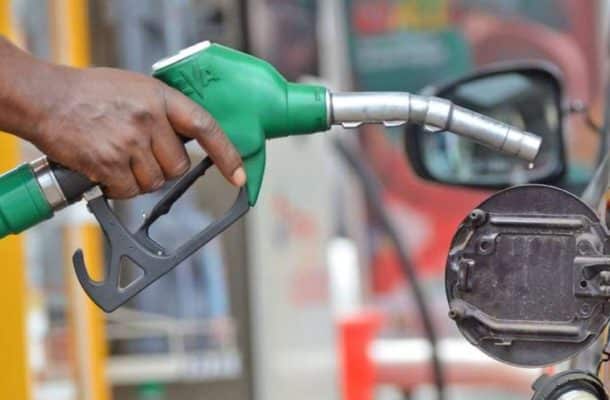
    The Chamber of Petroleum Consumers (COPEC) has projected that fuel prices will rise in the first pricing window of April.

    According to the Executive Secretary of COPEC, Duncan Amoah,  COPEC, fuel prices could rise to between GH¢17 and GH¢18 per litre if BOST Energies, a Ghanaian state agency under the Ministry of Energy and Petroleum, fails to store adequate fuel reserves.

    “April will be very okay, because there is enough in-country. Prices may differ, but you may not be so lucky a month after, because clearly, the global supply situation is grinding slowly. What you have now that has even sustained us is because the G7 and America itself have decided to put out reserve stock.They will not have that stock forever. They will not be able to put out that stock, I mean, in perpetuity. So it calls for us as a country to start looking for strategic stock immediately.

    “I have said, and I would repeat, it will be better to sustain the Ghanaian petroleum prices at the GHȼ15, GHȼ14, GHȼ13 region than to wait for it to get to GHȼ17, GHȼ18, which is probably what you are going to see in the next window, or wait for it to get even worse before you plan. So whatever can be done, if the finance minister can find some contingency funds and help BOST to get some product to store, it is high time we do so now.

    “We are around GHȼ15, GHȼ16 almost. It is potentially likely you could be doing about GHȼ17, GHȼ18 by the first window in April. That should not be the only worry. The supply disruptions that is happening within the Gulf could also bite so badly if it persists to such a time that cargoes are no longer coming in as planned,” he added.

    His comments come amid ongoing tensions in the Middle East. The tensions have been linked to the death of Iran’s Supreme Leader, Ayatollah Ali Khamenei.

    Ayatollah Ali Khamenei was reportedly killed in strikes by the United States (U.S.) and Israel. This development is significantly impacting travelers from Ghana to Asia, Europe, and North America, as Dubai is a major transit hub connecting travelers through the United Arab Emirates.

    Ghana, being one of the dependents of the global oil supply, stakeholders began to express concerns about a possible shortage of fuel across the country. However, the Corporate Affairs Officer of the Tema Oil Refinery (TOR), Godwin Mahama Ayaba, during an appearance on March 11, indicated that Ghana is unlikely to experience fuel shortages despite rising tensions in the Middle East, citing the country’s diversified sources of petroleum imports and growing local refining capacity.

    According to him, the NPA recently issued a statement indicating that the situation in the Middle East will not lead to shortages of petroleum products in the country.

    “The National Petroleum Authority, which is the regulator, some three to four hours ago issued an official statement assuring all of us that as for shortage, there is no way the Iran–Israel conflict is going to affect us,” he said.

    Mr Ayaba explained that Ghana’s fuel import structure significantly reduces the risk of supply disruption because the country imports most of its finished petroleum products from Europe.

    “Ghana largely imports from two different areas: Europe and the Arabian region. Where we import most is Europe,” he noted.

    “We import about 80 per cent of our finished petroleum products from Europe and about 20 per cent from the Arabian region, where this conflict may have an impact.”

    While acknowledging that the Middle East tensions could affect that 20 per cent supply, he said Ghana’s domestic refining capacity is expected to fill the gap.

    “So we are likely to lose that 20 per cent, but with TOR coming on stream, we will be able to block that gap,” he said.

    Mr Ayaba revealed that the refinery is currently producing about 28,000 barrels and expects output to increase significantly after ongoing upgrades.

    “Currently, we are producing about 28,000 barrels. After the tie-in, we will move to about 45,000 and further move to 60,000,” he explained.

    He added that increased output from other refineries in the country will also contribute to stabilising supply.

    “Sentuo is doing around 36,000 to 40,000 barrels a day, Akwaaba is doing somewhere less than 10,000, and Platon is around a little below 3,000,” he stated.

    “Together, all these companies will be able to block that 20 per cent that would have come from the Arabian region.”

    Mr Ayaba emphasised that Ghana will still maintain the bulk of its imports from Europe, further ensuring supply stability.

    “We will still have the 80 per cent from Europe coming in,” he said.

    He therefore urged the public not to panic, reiterating the assurances provided by the National Petroleum Authority.

    “I will add my voice to the official communiqué from the NPA that we should rest assured that we are not going to record fuel shortages,” he stated.

    Meanwhile, in a separate interview about 3 days ago, Mr Ayaba revealed that TOR is eyeing a sixty-one (61%) percent increase in its production capacity as part of renewed efforts to strengthen operations and improve output at the facility.

    Currently, the refinery seeks to expand its crude distillation capability from 28,000 barrels per stream day to 45,000 barrels per stream day.

    Speaking during an interview on Citi FM’s Eyewitness News on Monday, March 9, he stated that,

    “The refinery is currently undertaking technical processes aimed at expanding its processing capability from 28,000 barrels per stream day to 45,000 barrels per stream day. This represents a sixty-one percent increase in capacity, and it forms part of our broader plans to revitalise operations and enhance TOR’s contribution to Ghana’s petroleum sector.”

    He continued that, the planned increase will be achieved through the integration of an additional processing unit, known as the F61 unit, which will operate alongside the existing F1 unit.

    Both units will be connected to the refinery’s crude distillation system to improve overall efficiency and output.

    Mr Mahama also noted that engineers are currently carrying out some temporary technical steps to connect a new unit to the refinery’s main processing system, which is expected to increase the refinery’s output from the current level.

    The refinery is presently operating under a tolling arrangement, a system in which private companies supply crude oil to the facility for processing.

    Under this arrangement, the refinery refines the crude and charges a processing fee, while the refined petroleum products are returned to the companies that provided the crude.He explained that under the tolling system, the refinery does not control the marketing or distribution of the finished products, as those decisions are taken by the crude oil suppliers.

    Mr Ayaba added that while the refinery’s current nameplate capacity stands at 28,000 barrels per stream day, the introduction of the F61 unit will push output to 45,000 barrels per stream day.

    He further indicated that management is also considering plans to expand capacity to about 60,000 barrels per stream day in the medium term.

    After several years of inactivity, the management of Tema Oil Refinery announced the resumption of operations. The resumption was possible following the completion of extensive Turnaround Maintenance (TAM) works on the refinery’s Crude Distillation Unit (CDU). Maintenance works began on August 1 and on October 30 in 2025. This information was contained in a press statement released by the management on Saturday, December 27.

    TOR’s resumption was expected to boost energy security, industrial growth and national development, potentially saving Ghana up to $10.2 billion in oil import bills annually.
  • Transport fares will not increase soon despite fuel price hike – GPRTU

    Transport fares will not increase soon despite fuel price hike – GPRTU

    In a new twist of events, the Ghana Private Road Transport Union (GPRTU) has assured commuters that it will not rush to adjust transport fares despite the recent increase in fuel prices.

    New prices of fuel took effect yesterday, Monday, March 17. As a result, petrol priced at GHȼ10.46 per litre will now be sold at GHȼ11.57. The price floor for diesel has jumped from GH¢11.42 to GH¢14.35 per litre, and LPG has risen from GH¢9.38 to GH¢10.67 per kilogramme.

    The assurance follows growing public concern that recent increases in fuel prices at the pumps could trigger a corresponding rise in transport fares across the country.

    Speaking on Channel One Newsroom, the Deputy Public Relations Officer of the GPRTU, Samuel Amoah, backed the Union’s Industrial Relations Officer, Abass Imoro, who earlier mentioned a possible upward adjustment of the fares following the fuel price hikes, citing fares were not determined solely by fuel prices but also by other operational costs, including spare parts, lubricants and taxes.

    “We all agreed that where it is now, we will not rush into making any decision but will wait to see what will happen next. We are going to maintain the fares we are taking for now because who knows, the fuel price may stabilise or there may be an increase or reduction in the next pricing window,” he said.

    According to him, authorities and other stakeholders met with the leadership of the Ghana Road Transport Coordinating Council and the Concerned Drivers Association of Ghana on Monday, March 16, and after the meeting, it was concluded that the current fares are to remain for the time being.

    According to Amoah, the unions rely on a technical team to monitor market conditions and provide guidance on when fare adjustments may be necessary.

    “We have a technical team that goes out to check all these things and reports. Per their report, there is a need for us to hold on to see what will happen in the next pricing window. We do not know where it will go. What if we increase, and then in the next pricing window, it goes up to where we can’t control the situation? We will not know what to tell our members, and we can’t come back to tell the public that we are coming in for another increment,” Amoah said.

    He added that the unions will review the situation after the next fuel pricing window before determining whether fares should be increased, reduced or maintained.

    The last time the Ghana Private Road Transport Union (GPRTU) officially increased transport fares was in October 2025, when fares went up by about 20% nationwide due to rising fuel prices and spare parts costs.

    Amid stakeholders and some experts’ predictions, the Middle East crisis is likely to soon affect fuel prices in Ghana, and given the country’s dependence on the Arabs states for about 20% of its fuel, commuters will bear the cost.

    Speaking on the fares, GPRTU’s Industrial Relations Officer, Abass Imoro, indicated that transport fares may increase if fuel prices go up in the next pricing window.

    He said the review will be to cope with rising operational expenses.

    “You know we work for profit, and for some time now prices have remained the same. Some of our people even went out of their way to increase their prices, but we were able to stop them. This indicates that they are looking for a change in the prices of fares,” he explained while speaking on Accra-based Channel One TV.

    Meanwhile, last year, GPRTU justified its decision to maintain its transport fares despite a minor reduction in fuel prices, emphasising that fare adjustments were influenced by several cost elements beyond fuel hike.

    During an interview on PM Express on Joy News on Tuesday, March 18, GPRTU’s Deputy PRO, Samuel Amoah, highlighted that expenses related to spare parts, insurance, DVLA charges, and other operational costs significantly impacted fare determinations.

    “Before December, we had plans of increasing transport fares, first, because of the high cost of spare parts; then where the fuel price was also heading; and the cost of lubricants, insurance, and DVLA taxes,” Amoah stated.

    “But we held on, thinking that things would improve because of the promises we had that going forward, things were going to get better.”

    He admitted that fuel prices had decreased slightly but insisted that the reduction did not justify a fare decrease.

    “Yes, we had seen that fuel prices were coming down a little bit. But what I could say was that it had not gotten to the level that would call for a reduction in transport fares.”

    He acknowledged the slight drop in fuel prices but maintained that the decrease was not substantial enough to justify reducing transport fares.

    Amoah also emphasized that fuel costs were just one of several key factors considered when reviewing fare adjustments.

    “We didn’t only consider fuel prices to determine our transport fares,” he explained.

    “We had other components, like the cost of spare parts, as I earlier mentioned. We also considered the cost of lubricants, taxes, and other petroleum products.”

    He also detailed the procedures the GPRTU adhered to when determining fare adjustments.

  • Ghana experiencing traffic congestion due to reduced fuel prices – Pres Mahama

    Ghana experiencing traffic congestion due to reduced fuel prices – Pres Mahama

    Traffic congestion ranks among the top three urban challenges in Ghana. While past governments over the years have made efforts to resolve it, it remains a challenge.

    Per reports, when petrol prices rose by approximately 150% and diesel by nearly 200% from 2020 to 2024, moving from below GHS 5/litre to above GHS 13/litre, traffic congestion reduced in some parts of Ghana, as discretionary trips for some households and businesses were reduced.

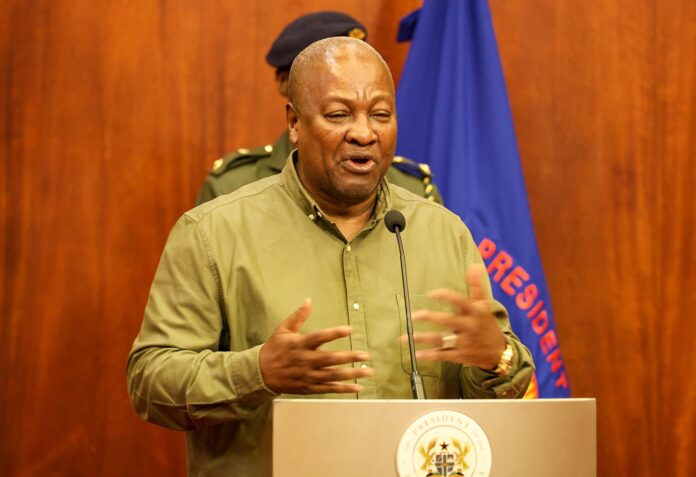
    However, while addressing Ghanaians living in Zambia during an official engagement on Wednesday, February 4, President Mahama mentioned that Ghana is currently experiencing congestion due to reduced fuel prices.

    The recent drops in fuel prices have created a new dynamic: more vehicles on the road, leading to heavier traffic volumes.

    According to him, the prices of fuel under the erstwhile government had limited people who wanted to travel to places in their own cars; things are different now, stressing that the congestion is a sign of a growing economy.

    “We have also seen improved economic activity. Business is booming, and one sign of booming economic activity is traffic congestion. More people are using their cars because, previously, people could not buy fuel and would not drive unnecessarily.

    “But now that fuel is more affordable, people are using their cars more and going to places they would not have gone before,” President Mahama said, while warning Chief Executive Officers (CEOs) of State-Owned Enterprises (SOEs) to submit their annual and audit reports by April or face sanctions.

    “I said we will take action against any chief executive of a state-owned enterprise who, by the end of April, which is the target date, has not completed their audits and presented their annual reports.

    Meanwhile, the recent report from the Ghana Statistical Service (GSS) indicates that petrol prices fell by 20.1% year-on-year, while diesel prices also fell by 18.7% year-on-year, driving down transport costs and contributing to lower inflation.

    Consequently, motorists started the New Year on a good note with less pressure on their pockets as several  Oil Marketing Companies (OMCs)  effected a reduction in fuel prices at their respective pumps across the country in the January pricing window.

    The price cuts, which took effect in the early hours of the New Year, signified a continued downward trend in petroleum costs, offering much-needed breathing room for both commercial and private transport users.

    Among the first OMCs that effected the reduction was market leader Star Oil. It set the pace and a benchmark for other OMCs as it adjusted its digital displays. A marginal dip from previous prices.

    Petrol is now selling at GH¢10.86 per litre, diesel is priced at GH¢11.96 per litre, and RON 95 is selling at GH¢13.56 per litre.

    According to the Star Oil management, the reduction in oil prices is a result of a “favourable domestic and external cost environment,” citing the cedi appreciation and a dip in international refined product prices.

    It said the current reductions may only be the tip of the iceberg for January. The Chamber of Oil Marketing Companies (COMAC) projected a robust outlook for the month, suggesting that competitive pressures will force more OMCs to follow suit in the coming days.

    In its January pricing outlook, COMAC provided a breakdown of the expected percentage declines. It was projected that petrol would fall by up to 4.80%, and diesel was also estimated to drop by approximately 3.77%. LPG, on the other hand, was expected to see a reduction of roughly 2.19%.

    Industry analysts believe that if the cedi maintains its current trajectory and international crude prices remain below $80 per barrel, Ghanaians could see even more substantial relief by the second pricing window in mid-January.

    While the prices of fuel are dropping, Ghanaians have had to brace themselves for an increase in utility tariffs, which took effect on January 1, 2026.

    Following the announcement of the increase, there was widespread disapproval, particularly from stakeholders and the general public.

    On December 2, 2025, the Public Utilities Regulatory Commission (PURC) announced an imminent increase in tariffs, with the new rates set to take effect from January 1, 2026. The Commission said the increases, 9.86% for electricity and 15.92% for water, had become necessary to meet utility investment needs, respond to macroeconomic pressures, and ensure the long-term stability of the sector.

    Consequently, the Trades Union Congress (TUC), the labour umbrella body that represents workers’ interests and coordinates labour unions, engaged the Commission on two different occasions, first, about a week after the increase was announced, and later in a subsequent meeting nearing the end of December.

    Following these engagements, a joint statement released by the institutions revealed efforts to balance consumer concerns with the financial sustainability of utilities; however, the PURC’s stance remained unchanged.

    The Commission contended that any reversal of its 2026–2030 Multi-Year Tariff Order (MYTO) could have serious consequences for the stability of Ghana’s energy and water sectors, as well as the broader economy.

    The Multi-Year Tariff Order (MYTO) is a regulatory framework used by the Public Utilities Regulatory Commission (PURC) to set electricity and water tariffs over a fixed period, 2026 to 2030, in this case. It is intended to ensure predictable pricing, financial stability for utilities, and protection for consumers.

    The Commission reaffirmed this position during meetings with the Trades Union Congress (TUC) held on December 11 and 30, 2025, during which the new tariff schedule, which took effect on Thursday, January 1, 2026, was discussed.

    “…The PURC reaffirmed its position that any reversal of the tariff decision would have significant implications, not only for the Commission’s independence but, crucially, for the stability of the energy and water sectors and the broader Ghanaian economy,” parts of the statement said.

    According to the joint statement, discussions focused particularly on the implications of the tariff adjustments on the living conditions of workers, as well as on electricity stability and investments in the power and water sectors. The discussions also explored avenues for collaboration between the two institutions.

  • Fuel prices reduced as cedi gains, global prices fall

    Fuel prices reduced as cedi gains, global prices fall

    Motorists have started the New Year on a good note with less pressure on their pockets as several  Oil Marketing Companies (OMCs)  have effected a reduction in fuel prices at their respective pumps across the country in the January pricing window.

    The price cuts, which took effect in the early hours of the New Year, signify a continued downward trend in petroleum costs, offering much-needed breathing room for both commercial and private transport users.

    Among the first OMCs that effected the reduction was market leader Star Oil. It set the pace and a benchmark for other OMCs as it adjusted its digital displays. A marginal dip from previous prices.

    Petrol is now selling at GH¢10.86 per litre, diesel is priced at GH¢11.96 per litre, and RON 95 is selling at GH¢13.56 per litre.

    According to the Star Oil management, the reduction in oil prices is a result of a “favourable domestic and external cost environment,” citing the cedi appreciation and a dip in international refined product prices.

    It said the current reductions may only be the tip of the iceberg for January. The Chamber of Oil Marketing Companies (COMAC) projected a robust outlook for the month, suggesting that competitive pressures will force more OMCs to follow suit in the coming days.

    In its January pricing outlook, COMAC provided a breakdown of the expected percentage declines. It was projected that petrol would fall by up to 4.80%, and diesel was also estimated to drop by approximately 3.77%. LPG, on the other hand, was expected to see a reduction of roughly 2.19%.

    Industry analysts believe that if the cedi maintains its current trajectory and international crude prices remain below $80 per barrel, Ghanaians could see even more substantial relief by the second pricing window in mid-January.

    While the prices of fuel are dropping, Ghanaians have had to brace themselves for an increase in utility tariffs, which took effect on January 1, 2026.

    Following the announcement of the increase, there was widespread disapproval, particularly from stakeholders and the general public.

    On December 2, 2025, the Public Utilities Regulatory Commission (PURC) announced an imminent increase in tariffs, with the new rates set to take effect from January 1, 2026. The Commission said the increases, 9.86% for electricity and 15.92% for water, had become necessary to meet utility investment needs, respond to macroeconomic pressures, and ensure the long-term stability of the sector.

    Consequently, the Trades Union Congress (TUC), the labour umbrella body that represents workers’ interests and coordinates labour unions, engaged the Commission on two different occasions, first, about a week after the increase was announced, and later in a subsequent meeting nearing the end of December.

    Following these engagements, a joint statement released by the institutions revealed efforts to balance consumer concerns with the financial sustainability of utilities; however, the PURC’s stance remained unchanged.

    The Commission contended that any reversal of its 2026–2030 Multi-Year Tariff Order (MYTO) could have serious consequences for the stability of Ghana’s energy and water sectors, as well as the broader economy.

    The Multi-Year Tariff Order (MYTO) is a regulatory framework used by the Public Utilities Regulatory Commission (PURC) to set electricity and water tariffs over a fixed period, 2026 to 2030, in this case. It is intended to ensure predictable pricing, financial stability for utilities, and protection for consumers.

    The Commission reaffirmed this position during meetings with the Trades Union Congress (TUC) held on December 11 and 30, 2025, during which the new tariff schedule, which took effect on Thursday, January 1, 2026, was discussed.

    “…The PURC reaffirmed its position that any reversal of the tariff decision would have significant implications, not only for the Commission’s independence but, crucially, for the stability of the energy and water sectors and the broader Ghanaian economy,” parts of the statement said.

    According to the joint statement, discussions focused particularly on the implications of the tariff adjustments on the living conditions of workers, as well as on electricity stability and investments in the power and water sectors. The discussions also explored avenues for collaboration between the two institutions.

    While the PURC stressed the need to maintain the increases, it also acknowledged the concerns raised by the TUC and committed to addressing them during the next tariff review window.

    The TUC, on the other hand, in line with its mandate to advocate for workers’ interests, pledged to engage the government on wage levels, anticipating the financial impact the increases would have on workers. It added that it would continue to monitor the situation to determine its next course of action.

    The TUC said it would continue to monitor the impact of the tariff adjustments on salaries and wages, noting that the findings would inform Congress’s subsequent course of action. It further indicated that it would engage the government on current wage levels and their impact on the cost-of-living conditions of the Ghanaian worker.

    Meanwhile, the TUC had earlier warned that it would call a nationwide strike if the government failed to intervene to stop or adjust the new utility tariff increases announced by the PURC.

    In a statement signed by Secretary-General Joshua Ansah on Wednesday, December 3, the TUC argued that the 9% wage adjustment for 2026 was insufficient to cushion workers against a 9.86% increase in electricity tariffs and a 15.92% rise in water tariffs scheduled to take effect on January 1, 2026.

    “Workers cannot accept these increases unless the government returns to the negotiating table to top up the wage increase for 2026. Anything short of that, the TUC will mobilise workers to resist the implementation of these insensitive increases in utility prices,” the statement said.

    The union further described the tariff adjustments as an unpleasant “New Year’s gift,” deliberately targeting the 9% increase in the national minimum wage and base pay, an increment it said it was still struggling to accept due to the additional financial burden it would place on workers.

  • Fuel prices to go up from today – COMAC predicts

    Fuel prices to go up from today – COMAC predicts

    Petroleum prices at the pumps will see a slight increase beginning today, Monday, December 1, the Chamber of Oil Marketing Companies (COMAC) has predicted.

    In its latest outlook report, COMAC indicated that petrol prices at the pumps will sell at GH¢12.91 per litre, representing an increase of 1.97% to 3.30%.


    Diesel prices are projected to sell at GH¢13.37 per litre, representing an increase of 2.85% to 5.15%. Liquefied Petroleum Gas (LPG) is expected to sell at GH¢13.80. COMAC has attributed the adjustment to the marginal increase in the price of finished petroleum products on the international market, as well as other contributing factors.


    Some Oil Marketing Companies (OMCs) in June reduced prices of petroleum products at the pumps. Fuel prices dropped for the second time that week under the current pricing window for June.

    Leading the trend, Star Oil announced on June 19, 2025, that it had slashed its petrol price from GHS10.99 per litre to GHS10.80. Diesel prices at the same outlets were also cut, moving from GHS12.77 to GHS12.13 per litre.


    Looking ahead, Allied Oil indicated that it would implement further reductions beginning June 20. Earlier this month, on June 16, Allied was selling petrol at GHS10.97 per litre, but the new price stands at GHS10.75.

    Joining the trend, Zen Petroleum also reduced its petrol price to GHS10.75. Reports indicated that the reduction in petrol prices was driven by heightened competition among major OMCs, sparking a price war in the sector.


    Introduced in 2015, the government’s Price Deregulation Policy aimed to encourage competition and help reduce prices beyond the influence of global oil market dynamics.


    Meanwhile, some OMCs have hinted that pump prices could increase from July 1, 2025, if the conflict between Israel and Iran in the Middle East continues. Since tensions escalated in the region, crude oil prices have surged from $66 to about $76 per barrel.


    Despite this, some industry insiders argue that if the Ghanaian cedi strengthens further in the coming days, it could help absorb the projected five percent or more rise in crude prices.

    So far, petroleum prices have seen more than six reductions this year, with industry data attributing much of the decline to the cedi’s appreciation.


    The escalating missile exchanges between Israel and Iran are contributing to rising global crude oil prices, posing a potential threat to Ghana’s fuel costs and overall economic stability.


    President John Dramani Mahama has directed the Ministers for Finance and Energy, Dr Cassiel Ato Forson and John Abdulai Jinapor, respectively, to closely monitor the unfolding conflict between Israel and Iran and provide proactive measures to safeguard the country’s recent economic gains from external shocks.


    However, the Chamber of Oil Marketing Companies (COMAC) has assured that the escalating geopolitical tensions between Iran and Israel will not affect the oil market.

    Speaking to the media, the Chief Executive Officer (CEO) of COMAC, Dr. Riverson Oppong, noted that when prices go up or down in the world market, it takes some time before those changes are seen in local prices.


    A week-old air war escalated with no sign yet of an exit strategy from either side, as Israel bombed nuclear targets in Iran on Thursday and Iran fired missiles and drones at Israel after hitting an Israeli hospital overnight.


    The White House said President Trump would make a decision as to whether the United States will join the war or not in the next two weeks.

    “Based on the fact that there’s a substantial chance of negotiations that may or may not take place with Iran in the near future, I will make my decision whether or not to go within the next two weeks,” Press Secretary Karoline Leavitt told reporters on Thursday.


    The government has launched a new GHS1 Energy Sector Shortfall and Debt Repayment Levy on petroleum products. This move is to settle energy sector shortfalls, reduce legacy debts, and stabilize power supply across the country, following parliamentary approval.


    President John Dramani Mahama assented to the levy on June 5, under the Energy Sector Levies (Amendment) Act, 2025 (Act 1141). The GRA had earlier announced the implementation of the levy; however, it was postponed after strong opposition from oil marketing companies and transport operators.


    Initially set to take effect on Monday, June 9, it was rescheduled to start on Monday, June 16. It was then rescheduled again due to the tensions between Iran and Israel.


    According to Tariff Interpretation Order (TIO) No. 2025/003, issued by the GRA, the new levy affects several key fuel products.

    The levy on petrol (motor spirit, super) and diesel (gas oil) will rise from GHS0.95 and GHS0.93, respectively, to GHS1.95 and GHS1.93 per litre. Marine gas oil (local) will increase from 0.30 to 0.23, marine gas oil (foreign) from 0.93 to 1.93, and heavy fuel oil by 0.04.

    All cash-and-carry transactions where products are lifted on or after the effective date will attract the revised levies.

  • COPEC predicts small decline in fuel prices for November’s second pricing window

    COPEC predicts small decline in fuel prices for November’s second pricing window

    Chamber of Petroleum Consumers (COPEC) has predicted a slight decrease in fuel prices as the second pricing window for November begins on Saturday, November 16.

    COPEC forecasts a 5.06% drop in the retail price of petrol, which is expected to fall from the current average price of GHȼ14.30 per litre to a range of GHȼ12.90 to GHȼ14.26 per litre.

    Diesel prices are also anticipated to decrease by 3.88%, dropping from the current average of GHȼ15.16 per litre to a range of GHȼ13.85 to GHȼ15.31 per litre.

    This forecast comes after several months of substantial increases in the prices of refined petroleum products.

    For example, state-owned GOIL raised the price of diesel from GHȼ14.90 per litre in October’s second pricing window to GHȼ15.45 per litre in the first window of November.

    COPEC’s projection brings some relief to consumers who have been struggling with the rising fuel costs. The price adjustments are attributed to fluctuations in global oil prices and changes in exchange rates.

  • Fuel prices to decrease in August by 2% to 4%

    Fuel prices to decrease in August by 2% to 4%

    Petroleum product prices are anticipated to decrease by 2% to 4% for petrol, diesel, and Liquefied Petroleum Gas starting August 1, 2024.

    This reduction is attributed to the slowdown in the Ghana cedi’s depreciation in the latter part of July 2024 and favorable conditions in the global market.

    The Institute for Energy Security (IES) reports that, in the latter half of July 2024, petrol and diesel prices dropped by 2.99% and 4.59% respectively, while LPG decreased by 1.10%.

    “Precisely, the price of gasoline [petrol] fell by 2.99%, gasoil [diesel] by 4.59%, and LPG by 1.10% in the second half of July 2024.  The Ghana cedi also recorded slowed depreciation (0.52%), the lowest since February 2024.

    “Following the positive realised on the foreign fuel market coupled with the slowed depreciation of Ghana Cedi recorded on the domestic forex market, the Institute for Energy Security (IES) projects a fall in fuel prices in the coming days”.

    World Oil Market

    In the second pricing window for July 2024, Brent crude futures fell below $80 per barrel for the first time since the post-OPEC+ meeting.

    This decline was prompted by weak global demand, with Chinese imports in July 2024 reaching their lowest level in two years.

    Brent Crude was priced at $78.70 per barrel, down from $83.03 per barrel at the beginning of the pricing period.

    Local Fuel Market Performance

    In the second pricing window of July 2024, liquid fuel prices saw a significant increase at local fuel stations.

    Oil Marketing Companies (OMCs) raised the per litre price of petrol by GH¢0.30 and diesel by GH¢0.20.

    According to IES calculations, the national average price for the three refined petroleum products in the first pricing window of July 2024 showed petrol and diesel at GH¢14.23 and GH¢14.70 per litre respectively, while LPG was priced at GH¢15.22 per kilogram.

  • Fuel prices to begin to fall from May 16 – IES projects

    The Institute for Energy Security has predicted a slight decrease in fuel prices starting May 16, 2024.


    This reduction has been attributed to the decline in prices of refined petroleum products on the international market, which outweighs the impact of cedi depreciation.


    “Following the changes recorded on the international market for refined petroleum products, Gasoline [petrol], Gasoil [diesel] and Liquified Petroleum Gas (LPG) recorded a fall of about 5.68%, 4.51% and 4.72%, respectively.”


    “In the second pricing-window for May 2024, ex-pump is expected to fall given the reductions recorded for refined petroleum products on the international market, which is wider than Ghana cedi depreciation,” IES stated.


    The Global Standard & Poor (S&P) Platts tracking of petroleum products performance on the world fuel market has shown a significant fall in prices for petrol, diesel, and LPG.


    Specifically, the price of petrol has decreased by 5.68%, diesel by 4.51%, and Liquefied Petroleum Gas by 4.72%.
    Comparative analysis of the data indicates a notable decline in the prices of all petroleum products on the world fuel market.


    In the local fuel market, the first pricing window for May 2024 saw marginal increments in the price of some petroleum products.


    The Institute for Energy Security (IES) computation of petroleum products for May 2024 showed petrol and diesel selling at GH¢14.22 and GH¢14.00 per litre respectively, while LPG was priced at GH¢15.05 per kilogramme.

  • Government to seize terminals from drivers over proposed hike in transport fares – Drivers’ Union alleges

    Drivers affiliated with the True Drivers Union claim they are facing government threats to seize their terminals should they decide to raise fares in response to increases in fuel prices, spare parts, and other essentials.

    Yaw Berima, the Union’s Public Relations Officer, revealed in an interview on Abusua FM’s Abusua Nkommo program with Kojo Marfo that officials issuing these warnings are adamant about preventing any actions by driver unions that could tarnish the government’s reputation.

    “The government has informed us that if we continue to increase lorry fares and bring them disgrace, they will close all our terminals in the country and render us jobless,” he divulged.

    Yaw Berima stated that the drivers had chosen to keep quiet in order to continue their transportation company in order to survive, despite being shaken by the threats.

    “We do not have lands that we are operating on; all the lands belong to the various assemblies. You can’t argue with someone who has chewed a crab before if he says he can chew a calabash.”

    “Someone who was able to collapse radio stations and banks, we cannot argue with them as to whether they can do it or not. We have decided to remain silent,” he said.

    Barima however, took it out hard on the government, arguing that no sensible driver would support the ruling party after such threats.

    He went on to issue a stern warning to the Agriculture Minister, Bryan Acheampong, regarding statements about not conceding power to any other party that wins the elections, asserting that such tactics would not be tolerated by voters.

    “Those childish talks and threats will not wash in this upcoming general election. Ghanaians will vote, and they will not vote for you. No sound driver will vote for the NPP. If another candidate wins and the government says they won’t give him the mandate, we will see what happens in the country,” he dared.

  • Ghana holds 10th position in Africa as country with affordable fuel prices

    Ghana holds 10th position in Africa as country with affordable fuel prices

    GlobalPetrolPrices.com’s recent analysis positions Ghana as the 10th African country with the most economical fuel prices as of March 2024.

    Globally, Ghana secures the 39th spot for its notably affordable fuel rates.

    Currently, petrol prices in Ghana fluctuate between GH¢12.02 and GH¢13.29 per liter, while diesel ranges from GH¢13.21 to GH¢14.60 per liter, showing a slight uptick from previous levels.

    With an average fuel price of GH¢13.03, Ghana’s rates remain below the global average of $1.30 per liter, offering significant advantages for both consumers and businesses. This advantageous pricing fosters greater purchasing power and bolsters seamless economic activities.

    The report underscores the importance of maintaining low fuel costs, particularly in economies with lower income brackets, acknowledging their manifold effects on global economic landscapes.

    While Ghana’s status as the 10th most affordable fuel provider in Africa brings numerous benefits, it also poses challenges for the petroleum sector.

    The report recommends implementing strategic measures centered on efficiency, tax diversification, and infrastructure enhancements to address potential drawbacks and capitalize on this ranking to cultivate a mutually beneficial environment for all stakeholders.

    Meanwhile, several nations offer petroleum products at rates lower than the global average, highlighting the crucial role of affordable fuel prices in driving economic prosperity and sustaining essential operations across diverse sectors.

  • Fuel prices in Cuba to rise by more than 500%

    Fuel prices in Cuba to rise by more than 500%

    The Cuban government announced that they will increase fuel prices by five times due to fuel shortages and financial difficulties.

    Starting in February, the price of a liter of gas will go up from 25 pesos to 132 pesos.

    The government gives money to many goods to help reduce its debt.

    This is the newest rule that is making life harder for Cubans who don’t have much money.

    Finance minister Vladimir Regueiro stated that the price of diesel and other types of gasoline would go up by similar amounts. He also said that the price of electricity will go up by 25% for big users in neighborhoods where people live, and that the cost of natural gas will also go up.

    Mr Regueiro said the government will open 29 new gas stations that will only take US dollars as payment. This will help the government get enough foreign money to buy fuel from other countries.

    “Mr Regueiro said on Monday that these steps are meant to help our economy get better. ”

    Cuba’s economy has taken a big hit because of problems caused by the coronavirus, tighter sanctions from the US, and weaknesses in the country’s infrastructure.

    Last month, the economy minister of Cuba, Alejandro Gil, said that the government can no longer sell fuel at reduced prices and that it was the cheapest in the world.

    Economics professor Omar Everleny Pérez said that even though gas is cheap in Cuba compared to other countries, it’s still very expensive for people who live there because their salaries are low.

    He said that the new prices will impact everyone in society.

    In a country where not many people have cars, the price of petrol going up makes it even harder for people to afford one.

    Cuba relies a lot on things from other countries. For the past four years, it has not had enough food, medicine, or things for people to buy.

    The cost of things is going up, and also the prices of basic items are going up. People who work for the government aren’t getting paid more, which makes it harder for people in Cuba to afford things.

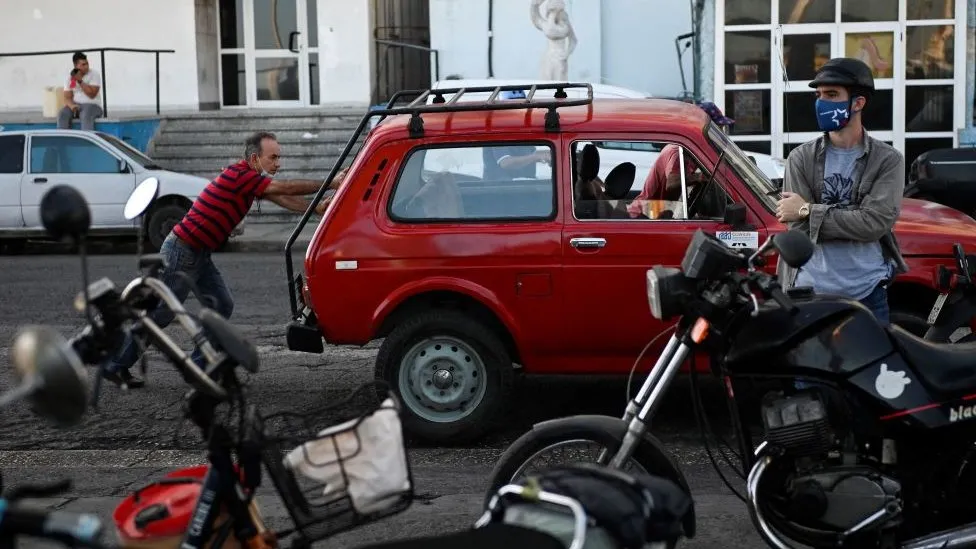
    The fuel shortage is causing long lines at gas stations, which can sometimes be miles long and make it take a long time to fill up a car with gas. Public transportation has also been greatly impacted.

    The government had to cancel Cuba’s May Day parade in 2023 because there were not enough things to do it.

  • Tanzanians to prepare for tougher times as fuel price soar

    Tanzanians to prepare for tougher times as fuel price soar

    The Energy and Water Utilities Regulatory Authority (EWURA) has recently announced an increase in fuel prices in Dar es Salaam, with petrol seeing a rise of Sh463 per litre, and diesel going up by Sh391 per litre.

    EWURA attributes this price hike to various factors, including challenges in the availability of US Dollars, changes in fuel levy, fluctuations in global prices of petroleum products, and importation premiums.

    The depreciation of the Tanzanian shilling against the US Dollar has also contributed to the increase in fuel prices. With the shilling trading at around Sh2,300 to a greenback in the past, it now stands between Sh2,505 and Sh2,610, affecting the cost of petroleum products locally.

    For consumers of petroleum products in Tanzania, this means they will be paying more for fuel, regardless of global price fluctuations.

    The Tanzania Truck Owners Association (TTOA) has expressed concerns over the fuel price hike, noting that petrol and diesel are significant drivers of inflation and have implications for governments worldwide.

    “When the price of fuels rises, our operational costs will rise and so will the prices of everything else,” cautioned Mr. Lukumay. This, he added, is because everything else is being moved from one place to another—from producer to consumer—on vehicles using either diesel or gasoline.

    Diesel is more frequently used to move commodities, but gasoline is far more widely used by everyday drivers.

    Donath Olomi, chief executive officer of the Institute of Management and Entrepreneurship Development, claimed that the rise in fuel prices was causing more people to worry about inflation.Dr. Olomi, an economist and trade specialist, cautioned that the current prices (Sh463 for a litre of gasoline and Sh391 for diesel) represent a significant increase from before.

    He went on to add: “The costs of living will be high as the skyrocketing of fuel prices have an impact on transport and transportation that tends to drive the costs of other products.”

    To alleviate the impact of rising fuel prices, Dr. Olomi suggested that the government should consider providing subsidies to reduce the cost of fuel. This wouldn’t be the first time for such measures, as in May, the government had already provided a subsidy of Sh100 billion to lower fuel prices in the country.

    In the long run, Dr. Olomi proposed that Tanzania should shift its focus towards natural gas to reduce its dependency on imported petrol and diesel. He emphasized the need for substantial investments in gas, which is a more cost-effective option compared to traditional fuels.

    Currently, residents in Dar es Salaam spend around Sh17,000 to refill an 11-kilo cylinder of compressed natural gas (CNG). Given that a kilo of CNG has the energy equivalent of 1.39 liters of petrol, the price difference is significant, with petrol being 65.24 percent more expensive than CNG.

    The increase in fuel prices is particularly challenging for drivers, whose livelihoods heavily rely on affordable fuels. The Tanzania Drivers Workers Union chairman, Schubert Mbakizao, warned that if fares don’t increase, some employers might consider suspending operations, leading to potential job losses for drivers without contracts.

    The Tanzania Bus Owners Association (TABOA) secretary general, Priscus Joseph, expressed concerns about how the price hikes will affect them. For buses traveling to upcountry locations, the increased fuel costs will result in higher operational expenses, ranging from Sh100,000 to Sh250,000.

    Joseph called on the respective authorities to review bus fares to help mitigate the impact of rising fuel prices. The Land Transport Regulatory Authority (LATRA) acting head of Public Relations and Communication, Salum Pazzy, stated that if stakeholders desire new fares, they should adhere to the appropriate procedures for fare adjustments.

    “They need to file an application to us,” he underscored.
    However, he said, there were several factors to be considered before changing fares of public transport. The factors include prices of vehicles and spare parts, as well as the business trend.

    It was unsuccessful to contact The Tanzania Association of Oil Marketing Companies (TAOMAC) for new comments.

    But recently, The Citizen reported that the organization’s executive director, Mr. Raphael Mgaya, suggested that the government set up a system so that Oil Marketing Companies (OMCs) may import fuels using the local currency.

    Additionally, TAOMAC suggested a government-to-government agreement that will enable OMCs to make payments in installments notwithstanding the problem of the dollar shortage.

  • COPEC predicts a marginal fuel price increase

    COPEC predicts a marginal fuel price increase

    In the current pricing window, the Chamber of Petroleum Consumers (COPEC) has made a projection indicating a minimal but noticeable rise in fuel prices.

    According to the Executive Secretary of COPEC, Duncan Amoah, petrol and diesel prices are expected to see an increment between 2% and 5% compared to the current prices at the pump.

    He stated that the increase in petroleum products is due to the depreciation of the local currency – Cedi against the major trading currency – dollar.

    He however noted that Liquefied Petroleum Gas (LPG) prices remain unchanged.

    In an interview with Citi News, Duncan Amoah said, “Fuel products across the country, except for liquefied petroleum gas (LPG), are likely to rise, albeit marginal. LPG is likely to have prices sustained or remained at the current level. For petrol and diesel, we are likely to pay 2% – 5% more on current pump prices and a depreciation of the cedi largely accounts for this.

    “International benchmarks have remained relatively stable and even declined, unfortunately, you can’t say the same for the local currency and so give or take what most oil marketing companies are likely to give all of us is some marginal increase in the next pricing window of June,” he stated.

  • Fuel prices drop by 2% at some filling stations

    Fuel prices drop by 2% at some filling stations

    Fuel prices have seen some slight reduction at the pumps since April 1, 2023.

    Some Oil Marketing Companies have reviewed their prices to reflect the 2% and 5% reduction in petrol and diesel accordingly.

    GOIL is selling a litre of petrol at GH¢12.65 and diesel at GH¢12.84 pesewas, respectively.

    The Institute for Energy Securities had projected that fuel prices will fall by between 2 and 9 percent for the third consecutive time from April 1, 2023, with Liquefied Petroleum Gas (LPG) expected to witness its biggest decline in recent times.

    It also predicted that LPG will go down by about 9 percent while petrol and diesel will witness a drop between 2 percent and 5 percent.

    The reduction was however linked to the stability of the cedi against the dollar and the easing of prices of finished products on the international market.

    “Fuel consumers must expect another round of fuel price drops in the coming days”, the IES announced.

    “The imminent price drop is a reflection of happenings on the world fuel market over the past two weeks which shows a decline in prices of gasoline [petrol], Liquefied Petroleum Gas and some other finished products,” Nana Amoasi VII, Executive Director of the Institute for Energy Security, said.

    “In the last 14 days, the price of gasoline [petrol] on the world market posted a drop of $21 per metric tonne.

    “Gasoil [diesel] also dropped by roughly 3.6 percent from the previous price of $813 per metric tonne,” he added.

  • Pump prices for fuel decrease

    Pump prices for fuel decrease

    The leading OMC, GOIL, sold a litre of gasoline for $12.95 and a litre of diesel for $13.49. This was discovered during checks this newspaper conducted yesterday at a few filling stations in Accra.

    Diesel and gasoline rates from TotalEnergies and Shell, respectively, have been lowered to 13.49 and 12.95 pounds per liter.

    Petrosol charges 12.97 for a litre of gasoline while charging 13.37 for a litre of diesel.

    The Institute for Energy Security (IES) predicted on Tuesday that gas prices would decrease by between three and ten percent.

    The prices of all three major petroleum products—gasoline, diesel, and liquefied petroleum gas (LPG)—were forecast to decline, according to IES.

    The IES said, “The last two weeks have seen price indicators on both the domestic and interna­tional fronts falling and this can translate into some price reduc­tions at the pumps for various petroleum products”.

    The domestic fuel market prices are projected to fall be­tween ¢12.60 for petrol, ¢13.40 for diesel and ¢14 per Kilo­gramme for LPG. Some Oil Marketing Com­panies (OMCs) have started reducing the prices of petro­leum products at the pumps.

    Checks at some filling stations by this paper in Accra yesterday saw the leading OMC, GOIL, selling a litre of petrol at ¢12.95 and diesel at ¢13.49.

    TotalEnergies and Shell also have dropped their prices for both diesel and petrol to ¢13.49 and petrol, ¢12.95 per litre

    Petrosol is selling a litre of petrol at ¢12.97, whereas diesel is going for ¢13. 37 per litre.

    The Institute for Energy Se­curity (IES) on Tuesday projected that fuel prices will fall between three per cent and 10 per cent at the pumps.

    IES predicted that the prices of all three key petroleum prod­ucts – petrol, diesel and Lique­fied Petroleum Gas (LPG) were expected to fall.

    The IES said, “The last two weeks have seen price indicators on both the domestic and interna­tional fronts falling and this can translate into some price reduc­tions at the pumps for various petroleum products”.

    The domestic fuel market prices are projected to fall be­tween ¢12.60 for petrol, ¢13.40 for diesel and ¢14 per Kilo­gramme for LPG.

  • A reduction in fuel prices is a relief for road users – Gabby

    A reduction in fuel prices is a relief for road users – Gabby

    A leading member of the governing New Patriotic Party (NPP), Gabby Otchere-Darko, says he is optimistic that the reduction in fuel prices will last longer.

    He noted that in December 2022, diesel was sold at GHS23.43 and Petrol for GHS17.42.

    As at, March 1, 2023, diesel is selling at GHS 13.49 and Petrol at GHS 13.19.

    “A leap of relief for Ghana’s road users. In December 2022, Diesel was sold at GHS23.43 and Petrol for GHS17.42. As at today, March 1, 2023, Diesel is selling at GHS13.49 and Petrol GHS13.19. We hope this is yet another sign that the economy is turning the corner. Long may it last!!” Mr Otchere-Darko said in a tweet.

    The Chamber of Petroleum Consumers (COPEC) had earlier predicted that fuel prices were likely to see a decline in the first pricing window of March 2023.

    According to COPEC, prices of both petrol and diesel have all declined marginally within the period while crude price has also minimally dropped from $82.99/barrel to $82.48/barrel (-0.61%).

    With the international price decreasing from $878.41/MT to $849.25/MT (-3.32%), the retail price works up to GHS13.66/L.

    These expected drops in prices for the second time running since the second pricing window of February 2023 do not have any correlation with the much-touted Gold for Oil programme as these movements are simply a derivative of market forces at play within the period, we still await the reductions the two cargoes brought in this month will add to the relieving the suffering of the petroleum consumer”, COPEC said in a statement.

  • Fuel prices have decreased as a result of changes in the global market, not G4O – IES

    Fuel prices have decreased as a result of changes in the global market, not G4O – IES

    Its forecast on lower fuel prices in the second pricing window, according to the Institute of Energy Security (IES), is due to a slight drop in prices on the global market.

    According to IES, the impact of government’s gold-for-oil policy which is intended to cushion consumers to purchase fuel at a cheaper price is yet to be felt.

    IES in its prediction for the second pricing window projected that petrol will sell at about GH¢14.40 and diesel around GH¢13.90. 

    Explaining the decrease in fuel prices to Citi News, Research Analyst at the IES, Adam Yakubu said, “let me state that what we are reporting at the moment is not as a result of the gold-for-oil policy but as a result of international market indicators and the domestic performance of the forex”.

    “But the government has also given indications that early weeks of March, we will be receiving more consignment from the gold-for-oil policy. So let me say that from now till the end of the window, we might not see much from the gold-for-oil policy. But we still call for government to give more details so that we input it in our computation”.

  • Prices for gasoline and fuel at the pumps exceed GH15

    Prices for gasoline and fuel at the pumps exceed GH15

    Beginning on Wednesday, February 1, 2023, the cost of petroleum products on the Ghanaian market has increased at the pump.

    A litre of gasoline is currently being sold by one of the market leaders, GOIL, for GH15.25 as opposed to GH13.60 previously.
    In contrast, diesel is now selling for $15.90 a litre, up from $15.52 previously.

    Later today, new fuel rates are anticipated to be announced by other OMCs.

    Petrol will retail for roughly GH$15 per this month, according to an earlier prediction by the energy think tank Institute of Energy Studies (IES).

    Its prediction was between a 7% and 13% jump in the prices of petrol, diesel and Liquefied Petroleum Gas (LPG), from February 1, 2023.

    It is expected to last for a while when the Cedi stabilises.

  • Petrol, diesel prices to shoot up by 7% – 13% from February 1 – IES

    Petrol, diesel prices to shoot up by 7% – 13% from February 1 – IES

    Fuel prices are likely to go up between 7 per cent and 13 per cent for the first pricing window of February 2023, Institute for Energy Security (IES) has predicted.

    Currently, a litre of petrol is sold at around GH¢13.60 while diesel is sold at GH¢15.52 per litre, with LPG selling at around GH¢11.29 per kilo.

    Per the projection of IES, a litre of petrol is likely to be sold for over GH¢14 while diesel will be sold for around GH¢16 per litre.

    In a statement issued by IES and signed by Adam Yakubu, Research Analyst, it said the projected increase in fuel prices is due to the sharp depreciation of the cedi during the last two weeks and the rising international fuel prices as observed on the global S&P Platts platform.

    The energy think tank pointed out that the increase in fuel prices would be occasioned despite the government’s receipt of approximately 41,000 metric tonnes of diesel under its ‘Gold for Oil’ programme.

    “Based on the rising international fuel prices as observed on the global S&P Platts platform, linked with the local currency’s value decline against the greenback, the Institute for Energy Security (IES) estimates a 7% to 13% jump in the prices of gasoline [petrol], gasoil [diesel], and LPG over the next two weeks ending February 14, 2023.

    “The rise in domestic fuel prices would be occasioned despite the government’s receipt of approximately 41,000 metric tonnes of Gasoil under its ‘Gold for Oil’ programme, and that consumers must be prepared to buy, for instance, a litre of gasoline [petrol] for roughly GH¢15 in the coming days,” it stated.

    Although IES believed both petrol and diesel would be going up from Wednesday 1st February 2023, Star Oil, one of the Oil Marketing Companies, in a public notice issued on Monday, informed its customers that it expects petrol prices to go up while diesel prices likely to remain stable or unchanged, citing 41,000 metric tons of diesel brought into the country under the Government gold for oil programme.

    The international crude oil benchmark, Brent, increased to about $86.14 per barrel on average terms from a previous average rate of  $81.72 per barrel.

    This represented a 5.41 per cent increase in average price over the last two weeks.

    Following an initial steady grind upwards to $88.16 per barrel at the close of January 23, Brent crude oil price settled lower on Friday, January 26, 2023, making the commodity’s weekly finish flat to lower.

    Brent closed Friday’s trading at $86.66 after closing the day before at $87.28 per barrel, up from the year’s low of $72.50.

  • Ghanaians were shaken by price increases for these ten commodities in 2022

    In 2022, prices for both products and services skyrocketed. The record-breaking inflation rates reported by the Ghana Statistical Service reflect this.

    By November 2022, the rate had risen above 50%. High import levels were mostly to blame for the high inflation rate.
    The rapid and occasionally unparalleled rate of price hikes left Ghanaians gasping in awe.

    Even if the overall increase in prices for products and services was stunning, some things experienced price jumps to extremely high levels in a very short amount of time.

    In this article, here are some of the items whose price increases came as a shock and were a topic of discussion for a long time.

    Rice

    A bag of 5kg of rice was selling at about GH¢40 at the beginning of 2022. The price shot up to GH¢60, GH¢80 and is currently selling at almost GH¢100 at various supermarkets.

    Oil

    The price of the product shot up to GH¢1,000 overnight from an earlier price of GH¢550 earlier this year. Some retailers even pegged their prices at GH¢1,200. However, after several agitations and complaints, the price has been reduced to GH¢600 and GH¢650, GhanaWeb Business can confirm.

    Fuel

    Fuel prices have topped the chart of conversations this year as the price of the commodity kept increasing with each pricing window.

    This was highly linked to the depreciation of the cedi and the increase in the price of crude oil on the international market. Fuel prices jumped from GH¢6 to almost GH¢16 before coming down to GH¢13 in December 2022.

    Transport fares

    As fuel prices kept increasing, the rippling effect was seen in transport fares. Transport fares increased by more than 50% in 2022 alone, a situation that has never been experienced in the country’s history.

    Bread

    The price of flour, sugar and other baking materials increased significantly this year. This is reflected in the cost of bread. One loaf of butter bread is currently GH¢15 from GH¢6 at the beginning of the year.

    Cement

    The cost of building materials also shook Ghanaians this year as cement moved from GH¢50 to above GH¢80 in a few months. This also caused an increase in rent and other real estate businesses. The increase was also associated with the depreciation of the cedi.

    Pure water

    Another commodity whose price increase shook Ghanaians was sachet and bottled water. Pure water as it is popularly called shot up to GH¢40p from GH¢20p by the end of December 2021.

    Water and electricity

    The Public Utilities and Regulatory Commission announced a 27.15% increase in the price of electricity and a 21.55% increase in water tariffs.

    Sanitary Pad

    The price of sanitary pads increased to GH¢22 from GH¢5 at the beginning of the year. Even though Ghanaians have been calling for a reduction in the taxes on the product, those calls are yet to be heeded.

  • Year in Review: Here is the number of times fuel prices were increased in 2022

    In 2022, fuel prices began at GHS 6.00. In the second pricing window of January, checks by GhanaWeb Business showed that a litre of petrol and diesel sold for GHC 6.50 and GHC 6.80 at various fuel pumps.

    Some others sold petrol at GHC 6.99 per litre and diesel at GHC 7.05 per litre.

    The price increased to GHC 7.42 and GHC 7.99 in February.

    During the first pricing window of February, there was a 9.6% increase in brent and gasoline prices, moving the price of petrol and diesel to GHC 7.42 pesewas. This was the first time fuel prices had crossed the GHC 7 mark.

    The increase was an upward adjustment of 0.52 pesewas from the January price.

    In the second pricing window, some Oil Marketing Companies (OMCs) increased fuel prices again on February 17, 2022, to GHC 7.99 at various pumps, an increase of 57 pesewas.

    Experts stated that this was a result of rising crude oil prices on the international market. At the time, the price of crude oil was $93.39.

    Fuel prices cross GH¢8 mark in March

    On March 1, 2022, diesel and petrol were selling at GHC 8.29 pesewas.

    Industry players attributed the upsurge in the prices of petroleum products to the sharp increase in brent crude, gasoline, and gasoil on the international market and the free fall of the cedi.

    Oil prices jumped on Thursday, February 24, with brent rising above $100 a barrel for the first time since 2014, after Russia attacked Ukraine, exacerbating concerns about disruptions to global energy supply.

    Meanwhile, by the close of March, fuel prices were projected to hit GH¢9 per litre.

    The increase was attributed to the depreciation of the cedi and the increase in the price of crude oil on the international market.

    As the pressures were weighing on citizens, the government announced a reduction of 15 pesewas to begin in April.

    Speaking at a press briefing in Accra on March 24, 2022, the finance minister said, “To mitigate the rising price of petroleum products at the pumps for the next three months, the government has decided to reduce margins in petroleum price build-up by a total of 15 pesewas per litre with effect from 1st of April,” he said.

    “BOST margin reduced by 2 pesewas per litre, unified petroleum pricing fund margin reduced by 9 pesewas per litre, fuel marking margin reduced by 1 pesewa per litre, primary distribution margin reduced by 3 pesewas per litre. These are expected to reduce the price of petrol by 1.6 percent and diesel by 1.4 percent. We anticipate the measures taken to stabilize the currency will help further stabilise the prices at the pumps,” Ken Ofori-Atta added.

    However, in May, fuel prices took an upward turn as LPG experienced a slight reduction.

    It was projected that petrol may sell for GHC9.538 per liter, about a 0.4% increase, while diesel will go for GHC10.829 per liter, a 3% increase.

    Liquefied Petroleum Gas (LPG) was projected to be sold at about GHC10.093 per kilogramme, an indication of a reduction of about 21 pesewas (2%).

    In June, the Chamber of Petroleum Consumers-Ghana (COPEC) projected that “Petrol will go up to almost GH¢11 for this window, while LPG will decline by as much as 17 pesewas or some 1.61 percent for the first window.”

    But OMCs started selling a litre of diesel for GHC12.40 and petrol for GHC10.10 per litre on June 6, 2022.

    Chief Executive of the Chamber of Petroleum Consumers, Duncan Amoah, noted that petroleum products may see a reduction in the second pricing of July.

    They noted that both petrol and diesel will witness some decline, with diesel expected to go down by more than 11% and petrol by 4%, while LPG will fall by almost 10% per kilogramme.

    In August, petrol was selling at GHC10.95 whereas diesel was selling at GHC13.26 among the leading oil marketing companies.

    By the end of August, a liter of petrol was selling at a little over GH¢11 and GH¢13.70 for diesel at various fuel pumps.

    By September 1, 2022, fuel prices at local pumps had shot up by about 5.4 percent with petrol and diesel trading at an average of GHC 11.55 and GHC 14.50, respectively.

    In October, Petrol was projected to sell at GHC12.63 per litre and GHC15.46 for diesel.

    In November, fuel prices saw an unprecedented increase, coupled with increasing transport fares.

    Petrol was selling at GHC16.82 and diesel at GHC20.50.

    Meanwhile, from the beginning of December, fuel prices have begun dropping due to the appreciation of the cedi and the reduction in global oil prices.

  • Reduce prices of goods and services now – Akufo-Addo pleads with traders

    President Akufo-Addo has called on traders and other industry players to reduce the prices of goods and services.

    Speaking on Sunday during the Centenary Celebration of the Ga Presbytery of the Presbyterian Church of Ghana, the President asserted that adjusting prices of commodities is the best way to alleviate the already burned citizens as the cedi regains its strength against major international currencies.

    “I add my voice to those of GUTA, GRTCC and others, to appeal to manufacturers, traders and transport operators, that with the height of the cedi’s recent depreciation and increased prices of goods and services, to reduce their prices of goods and services now that the cedi is regaining much of its strength. I believe this is not only a fair request but also a just one.”

    In recent times, the two main drivers of the economy (the local currency and fuel prices) have seen tremendous adjustments in prices.

    The Ghana cedi is currently trading at GH¢8 on the forex market, according to the Bank of Ghana.

    It will be recalled that the Ghana cedi, which lost 45.1% of its value against the US dollar this year, was tagged by Bloomberg as the worst-performing currency in the world on October 17, 2022.

    In a turn of event, the Ghana cedi witnessing an overwhelming appreciation in value against the dollar has been adjudged as the best performing currency against the US dollar by Bloomberg.

    Also, a litre of petrol and diesel now sells at ¢13 and ¢16 respectively.

    Commenting on the cedi appreciation, Akufo-Addo noted that the local currency is performing so well due to prudent financial decisions his government has implemented to salvage Ghana’s economy.

    “Things are beginning to turn around, what seemed impossible yesterday is now becoming possible. Today the cedis is appreciating against the dollar and all major currencies and the prices of petroleum products are reducing at the pumps.The strengthening of the cedi has not happened by chance but the deliberate policies of the government in collaboration with the Bank of Ghana,” President Akufo-Addo stated.

    Source: The Indepndent Ghana


  • Fuel prices drop by over ¢2 per litre at pumps

    Major Oil Marketing Companies (OMCs) in the country have started reducing prices of petroleum products at the pump stations.

    Market leader GOIL has reduced the price of petrol to ¢13.40 per litre, representing more than ¢2 drop from its previous price.

    Diesel is also going for ¢16.10 per litre from the previous ₵18.86.

    TotalEnergies is also selling petrol for ¢13.40 per litre, while diesel is going for ¢15.85 per litre.

    Meanwhile, most of the smaller OMCs have reduced their prices earlier on Wednesday, December 14, 2022.

    Some of the OMCs told Joy Business the reduction in the prices of the petroleum products has been influenced by improved dollar supply and the stability of the cedi.

    Source: Myjoyonline

  • Transport fares to decrease on Monday – Transport Ministry

    The Transport Ministry has asked commuters to anticipate lower transportation costs on Monday.

    The announcement comes after a significant reduction in fuel prices.

    Diesel is likely to be sold at GH¢15 per litre in the next pricing window on Friday, December 16, 2022, while the price of petrol is expected to drop further.

    Deputy Transport Minister, Hassan Tampuli, in an interview with Citi News, said his outfit is negotiating for a margin that will be fair to both passengers and transport operators.

    “We understand that the fares will definitely come down. It is the margin of reduction that we are still negotiating. We are waiting for the next pricing window on Friday [December 16, 2022].

    “So when the new prices are announced, we will see the clearest picture and we will see the percentage margin for the reduction of fares. We do not have the full picture until the window opens on Friday. Hopefully, by Monday, the general public should see a reduction in transport fares”.

    On his part, the General Secretary of the Ghana Private Road and Transport Union (GPRTU), Godfred Abulbire, assured the citizenry that some downward adjustments to transport fares will be announced soon.

    “Once the fuel prices have come down, the fares will be reduced. The reduction is obvious. Fare increment is not in the interest of anybody.

    “Today, what we have discussed is to arrive at the margin for reduction that the general public and operators will equally be satisfied with. So on, Monday, we will conclude on the actual margin,” Mr Abulbire assured.

  • Reducing transport fares is dependent on fuel’s next pricing window – GPRTU

    Should fuel prices decline in the upcoming pricing window, the Ghana Private Road Transport Union (GPRTU) says it will lower its rates.

    Should that occur, the Union asserts that they won’t think twice about lowering transportation costs.

    They won’t, however, cut corners and lower prices in an effort to avoid being stung by fuel price increases, according to Mr. Godfred Abulbire, general secretary of the GPRTU.

    Before lowering transportation costs, many factors, in his opinion, would have been taken into account.

    “For now, we will not rush and reduce fares, we need to observe things before we reduce before they increase again, and we are told to increase.

    We are going to observe and by the next pricing window, if the price comes down, nobody will need to tell us to reduce fares,” he said in a media interview.

    The cost of petroleum products has been declining recently, and this trend is projected to continue.

    Analysts predict that prices for gasoline and diesel will fall to 13 and 16 cents per liter, respectively, while liquefied petroleum gas will cost roughly 12 cents per kilogram.

    This development is what has necessitated the demand for a reduction in transport fares.


  • Price Hikes: Drivers, traders call for price control measures

    Some commercial drivers and petty traders in Accra have called on the Government to institute a price control measure to regulate the prices of goods and services.

    They said the economic challenges facing the country demanded that the Government controlled prices to protect the poor and the vulnerable.

    The drivers and traders, who were reacting to President Nana Addo Dankwa Akufo-Addo’s televised address on the economy on Sunday, told the Ghana News Agency in an interview that some wholesalers were taking undue advantage of the economic situation and feared without a price control measure by government, the situation could get worse.

    They said the Government must engage producers, manufacturers and importers in determining prices of goods and services and task the police and military to ensure compliance with agreed prices.

    “Some of our members who are wholesalers increase prices although their stocks are old, but as petty traders we are compelled to buy at those prices and it’s affecting our businesses, so the President and his government must send the military men into the shops to stop that…”

    The President in his televised address asked traders not to make utmost profits out of the current economic challenges.

    He said the Government was working to restore and sustain macroeconomic stability within the next three to six years with focus on ensuring debt sustainability to promote durable and inclusive growth while protecting the poor.

    The Ghanaian economy has for the past months faced difficult times due to high interest rate, depreciation of the Cedi against the United States Dollar (USD) and the continuous increase in fuel prices leading to increases in prices of goods on the market.

    Patrick Nyarko, a Petty Trader, said the daily increase in prices of goods was affecting their businesses badly but hopeful that the President would take a “strong” decision on pricing in the country “to give hope to the citizenry”.

    “For us retailers, our situation is worse. Some of our businesses have collapsed but I have some hope in the President’s speech and we pray that he does something to control the price for us.”

    Daniel Ofoe Zutovi, a Commercial Driver, said it was time the Government controlled prices and that the citizenry was looking up to him to fulfill his promise of restoring confidence in the economy.

    Mr Zutovi said: ” We are worried about the future of the younger generation, at least we are old people but if the economic hardship is not addressed, our younger generation will suffer in the near future, so the prices must be controlled.”

    “Everything is now expensive, even the price of Apketeshie (local gin) has gone up, we cannot make ourselves happy anymore, so the President must control the prices,” another Commercial Driver, Samuel Ofosu, said.

    Meanwhile, Mr. Clement Boateng, Vice President of the Ghana Union of Traders Association (GUTA), said price control would not be possible.

    He said price variation was the order in a liberalised market, so prices could not be controlled.

    The GUTA Vice President said it was true that some members of the Association were taking undue advantage of the situation and said the executive was engaging them.

    Source: GNA 


  • Fuel prices shoot up significantly by about 10 percent before next pricing window

    Fuel prices have shot up significantly by about 10 percent even before the fortnight review of petroleum products on Sunday, October 30, 2022 by the Oil Marketing Companies (OMCs).

    This is coming despite a stable price of crude oil on the world market.

    Checks by Joy Business indicate some market leaders such as GOIL and TotalEnergies are selling petrol at ¢13.99 a liter while Petrosol and Engen, have increased prices for both petrol and diesel astronomically.

    Whilst Petrosol is now selling petrol for ¢17.45 per liter, Engen is selling a liter of petrol for ¢17.54.

    Fuel prices shoot up significantly by about 10 percent before next pricing window   

    The two OMCs are also now selling a liter of diesel for ¢19. 89 pesewas and ¢19.44 pesewas respectively.

    Fuel prices shoot up significantly by about 10 percent before next pricing window   

    Some Industry players have attributed the surge in prices to recent depreciation of the cedi against the U.S dollar.

    An industry analyst told Joy Business that the OMCs can no longer wait for the bi-weekly review of prices of petroleum products because the Bulk Oil Distribution Companies have been selling to them at the current market rate.

    Already, the Ghana Private Road Transport Union (GPRTU) has indicated its intention of increasing transport fares, effective Saturday, October 29, 2022 by 19%.

    The increasing fuel prices will push inflation up. This will subsequently influence interest rates and the cost of borrowing.

    Fuel prices went up between 7% and 12% on October 16, 2022

    Fuel prices went up between 7% and 12% in the last price review on October 16, 2022.

    According to the Institute for Energy Security (IES), this ws due to the increases in price of the products on the international market, and the significant decline in the value of the local currency against the American greenback or US dollar.

    Source: Myjoyonline

  • ‘Arrest’ Dollar to bring fuel prices under control – COPEC to BoG

    The Chamber of Petroleum Consumers Ghana (COPEC) has asked the Bank of Ghana and the Economic Management Team to take immediate steps to halt the fast decline of the Cedi against the US Dollar to stabilise fuel prices.

    The Chamber attributed the continuous hikes in fuel prices to the “free fall” of the Cedi and cautioned that fuel prices could hit “uncontrollable” levels in future if the local currency was not stabilised.

    In an interview with the Ghana News Agency, Mr Duncan Amoah, Executive Secretary of COPEC, said fuel prices could hit GHS20 per litre by the end of the year if the rate of depreciation of the Cedi was not halted immediately.

    “Bank of Ghana should find some immediate solution to halt the Cedi’s steep depreciation. Whatever policy intervention that our Economic Management Team would need to put in place immediately to find a way to stabilise the cedi should be done,” he said.

    “Availability of dollar, if not addressed in the coming days, we could also be hitting a fuel shortage situation as well,” Mr Amoah added.

    Some oil marketing companies on Monday morning, October 17, 2022, adjusted their prices upwards, selling petrol and diesel for GHS 13.10 and GHS15.99 per litre respectively.

    The adjustments represent more than 10 per cent increment from the last pricing window, which closed on Saturday, October 15, 2022, with diesel and petrol then selling at an average GHS11.05 and GHS 13.98 respectively.

    Ahead of the current pricing window, which opened on Sunday, October 16, 2022, COPEC and the Institute for Energy Security (IES) projected an increase in fuel prices, citing the increases in price of petroleum products on the international market, and the “significant decline” in the value of the local currency against the dollar as the catalyst.

    Whereas COPEC projected an increment of about 10 per cent for both petrol and diesel, the IES estimated that prices would go up by about 7 and 12 per cent for petrol and diesel respectively.

    “Between the current window and the next window due, crude oil price is observed to have seen an increase of 3.66 per cent from $89.46 to $92.73 per Barrel, whilst the Dollar index has further gone up by about 4.08 per cent from GHS10.21 to GHS10.627 per Dollar as per Government rate (Conservative figures) though actual market rates are quite higher currently,” COPEC said in a statement.

    In its review of the last pricing window, the IES said the Cedi depreciated by 2.5 per cent from the previous rate of GHS10.53 to the current rate of GHS10.89, to the US Dollar.

    “In IES’ estimation, consumers of Gasoline and Gasoil may pay between 7 and 12 per cent more for a litre at the pump in the next two weeks, with Gasoil per litre price hinging close to GHS15,” it said.

    The BoG recently embarked on a joint operation with the Police, which led to the arrest of 76 individuals and entities who allegedly engaged in the buying and selling of foreign currencies without license.

    The move formed part of the Bank’s strategy to sanitise the foreign exchange market and ensure compliance with the country’s foreign exchange regulations.

    Source: GNA

  • RAC: Drivers missing out on 10p cut in petrol prices

    Fuel prices are still considerably lower than they were during the summer when the average cost of petrol was over 190p per litre and that of diesel was just shy of 200p.

    According to the RAC, retailers have increased their profit margins, preventing motorists from receiving a further 10p reduction in gasoline costs.

    The motoring organization said a further oil price fall in September pushed down the average price at forecourts by nearly 7p to 162.9p.

    It was the sixth biggest monthly drop since 2000, but the RAC says it should have been bigger.

    “Drivers really should have seen a far bigger drop as the wholesale price of delivered petrol was around 120p for the whole month,” said RAC fuel spokesman Simon Williams.

    “This means forecourts across the country should have been displaying prices around 152p given the long-term margin on unleaded is 7p a litre.

    “In stark contrast to this, RAC Fuel Watch data has shown margins to be around 17p a litre – a huge 10p more than normal.”

    Supermarkets usually charge about 3.5p per litre less than the UK average but are now only about 1.5p cheaper, the RAC added.

    It advised drivers to shop around for the best fuel deals rather than assume supermarkets are always the cheapest.

    Diesel’s average price in September dropped from 3.5p to 180.2p.


  • Fuel prices may drop between 3% and 6% from August 1 – COPEC

    Prices of petroleum products may go down between 3% and 6% from August 1st, 2022.

    According to the Chamber of Petroleum Consumers (COPEC), the expected reduction will have been bigger if not for the depreciation of the cedi against the U.S dollar.

    The drop in fuel prices will be the second consecutive time since oil prices started falling on the world market.

    “What, we picked from the market for the first window of August [2022] is an indication that prices at the pumps should have gone down significantly. The unfortunate thing at this point happens to be with the currency [cedi]. As I speak with you, over the two weeks window, the FX has seen some depreciation, from about ¢8.30 to about ¢8.90 pesewas currently”, Executive Secretary of COPEC, Duncan Amoah, disclosed.

    “And so that could on its own erode the reductions that you and I could have seen at the various pumps”, he added.

    Mr. Amoah urged government to take a second look at the deregulation policy to cushion consumers against the high fuel prices.

    “We have said on a good number of occasions, that the earlier we take a second look at this whole regulation programme, the better it would be”.

    Source:myjoyonline.com

  • Fuel prices to go up as NPA announces restoration of UPPF margin

    The National Petroleum Authority (NPA) has announced that it is restoring the full Unified Petroleum Price Fund (UPPF) margin on petroleum products.

    It made the announcement to players in the industry on Thursday June 30, 2022, indicating that the decision takes effect from Friday, July 1, 2022.

    “We hereby wish to inform you that, following the expiration of the period for the reduction of the margins as mentioned in the letter above, the UPPF Margin is being restored to its actual amount effective 1st July, 2022. The restoration of the UPPF Margin has become necessary to ensure that the Fund is able to sufficiently pay the freight cost for transporting petroleum products to retail outlets,” the NPA said.

    In March 2022, it announced a downward review of the margin for three months effective April 1, 2022.

    Following the expiration of the downward review, the hitherto, removed 9 pesewas will now be restored.

    The reviewed UPPF margin which was 20 pesewas on petrol and diesel will now be 29 pesewas each.

    The margin on kerosene and LPG will now increase from 21 pesewas and 18 pesewas to 30 pesewas and 27 pesewas respectively.

    Source: Citinews

  • Economic hardship: Prices of food are rising, but salaries are not – Dr Adomako Kissi

    Dr Dickson Adomako Kissi, the MP for Anyaa-Sowutuom, has admitted that there is economic hardship in the country since prices of goods and services rise daily but salaries remain unchanged.

    He blamed the increase in fuel prices observed worldwide for the recent condition Ghanaians are facing.

    Per media reports, the Russia-Ukraine war is exacerbating the rise in fuel prices.

    His analysis was that, the cost of transportation is affected by changes in price of fuel, and the former affects the prices of general goods and services, hence the rise in fuel prices is expected to affect the welfare of individuals.

    “The key thing about prices is transportation goods and the key index there is fuel. Everything runs on fuel. That is a fact. Once fuel prices worldwide have issues and are not controlled necessarily by government, these are expected.

    “These are facts. The key thing is that, world wide, prices are changing almost every three weeks or so and that is a fact. Whether you are an oil producing country or not, you don’t have the luxury of fixing your prices.”

    Following the economic principle that needs and wants are limitless, however, resources are scarce, he advised Ghanaians to adjust their daily spending as that is the only way to ensure savings.

    “I beg Ghanaians, we all need to adjust and the appropriate word is tightening our belts in the sense that, that is the only way you can save some money.

    If I’m visiting twice a week, I have to change that. Salaries are not going up and that is a fact, but our needs and demands are going up.”

    According to him, Members of Parliament are also being affected by the recent economic challenges.

    Dr Dickson Adomako Kissi revealed that the number of constituents he assists in a week has doubled, thereby affecting the weight in his pocket.

    “The pain is not discriminatory. Every part of the country is going through it. Once our constituency members are struggling, we are struggling. We are going through what they are going through. If there were 10 people coming to me for help, obviously now it is 20 and that drains all of us.”

    Due to the weight, the MP is thinking of running a series to inform Ghanaians on the responsibilities of Members of Parliament.

    Ghanaians are to brace themselves because the Institute of Energy Security (IES) has predicted that a litre of petrol will be sold at GH₵12.

    Currently, a litre of petrol and diesel are selling at GH₵9.85 and GH₵11.95 respectively at the pumps.

    There have been no comments about transport fares increasing yet should the prediction come to pass.

    Already, transport prices have been reviewed twice this year. The first was in February, by 15% and the second, in May, by 20%.

    These adjustments have affected the prices of commodities. A ball of kenkey is currently going for GH₵3.

    Source: The Independent Ghana


  • Ofori-Atta announces GHp2 reduction in BOST Margin, 50% cut in fuel coupons

    Finance Minister Ken Ofori Atta has announced a reduction in the BOST Margin and also a 50 per cent cut in fuel coupons.

    He announced the “2pesewas on BOST Margin” and the “50 per cent reduction in fuel coupons” while announcing measures to deal with the economic challenges facing the country.

    “These times call for very efficient use of energy resources. In line with this, there will be a 50% cut in fuel coupon allocations for all political appointees and Heads of government institutions, including SOEs, effective 1st April 2022,” he said.

    BOST Margin is a tax imposed on petroleum products used to cover the maintenance and operating cost of petroleum product depots and undertaking expansion programs at depots.

    The BOST Margin has remained at 3 pesewas per litre since 2011.In December 2019, it almost went up to 6 pesewas per litre but the decision was quickly reversed following intense pressure on government by opposition parties as well as CSOs such as the Chamber of Petroleum Consumers (COPEC).

    Regarding the cedi, Mr Ofori-Atta said that despite the challenges facing the country at the moment, the Cedi is doing better than it did in 2014 and 2015 when Mr John Dramani Mahama was the President of Ghana.

    Announcing measures to deal with the economic challenges facing the country on Thursday March 24, he said “In spite of it all, the cedi has held under these extreme challenges better than it did in 2014 and 2015. This is because the fundamentals are much stronger.”

    The cedi has been going through some troubles over the period. It is currently trading beyond 7 cedis to the dollar. Analysts have predicted it is most likely to cross 8.

    Following this situation, the Importers and Exporters Association of Ghana has said consumers in Ghana should prepare to pay more for goods and services.

    Source: 3news.com

  • Fuel prices reduced by 15 pesewas per litre effective April 1 Ken Ofori-Atta

    Government has announced a reduction in the margin for petroleum price-build up by a total of 15 pesewas per litre effective April 1, 2022. 

    The move, according to the Finance Minister, Ken Ofori-Atta is expected to mitigate the impact of rising petroleum prices at the pump covering a three-month period. 

    Speaking at a press briefing in Accra on March 24, 2022 the minister said, “To mitigate the rising price of petroleum products at the pumps for the next three months, government has decided to reduce margins in petroleum price build-up by a total of 15 pesewas per litre with effect from 1st of April,” he said.

    “BOST margin reduced by 2 pesewas per litre, unified petroleum pricing fund margin reduced by 9 pesewas per litre, fuel markin margin reduced by 1 pesewa per litre, primary distribution margin reduced by 3 pesewas per litre. These are expected to reduce the price of petrol by 1.6 percent and diesel by 1.4 percent. We anticipate the measures taken to stabilise the currency will help further stabilise the prices at the pumps,” Ken Ofori-Atta added.

    The Finance Minister added that the National Petroleum Authority and the Ministry of Energy are in discussions with various Oil Marketing Companies (OMCS) in the country “to reduce their margins in the spirit of burden-sharing”.

    Meanwhile, prices of petrol at various pumps are selling above GH¢9 while diesel is currently selling between GH¢10 and GH¢11 per litre across the country.

    Source: www.ghanaweb.com

  • GPRTU to adjust transport fare automatically against fuel increment

    Henceforth, transport fares will be adjusted automatically anytime fuel prices go up more than 10 per cent cumulatively, the Ghana Private Road Transport Union (GPRTU) has said.

    The Union said the recent 15 per cent increment in transport fares, which took effect on February 26, 2022, was based on previous increment in fuel prices and that it would review transport fares upwards by 10 per cent if the gradual increments in fuel prices crossed 10 per cent.

    Mr Richard Yaw Amankwah, Deputy General Secretary in Charge of Operations, GPRTU, told the Ghana News Agency that the Union was worried about the rising cost of fuel at the pumps, hence it’s decision to benchmark transport fares against fuel prices to sustain the transport business.

    “We have indicated that whenever fuel prices go up above 10 per cent as of the time, we were increasing transport fares (February 26), we will adjust the fares upwards.

    “So, we are still monitoring the prices. Even today it has gone up, so we are just marking time. When it is up to the 10 per cent increase, the same margin would be added to the transport fares,” he said.

    Private commercial transport operators had initially proposed a 30 per cent increment in transport fares ahead of its negotiations with the Government last month.

    The transport operators, after three successive meetings with the Government, agreed to reduce the rate to 15 per cent. The new rate took effect on Saturday, February 26, 2022.

    Mr Amankwah said the implementation of the new rate had been smooth across the country despite initial agitation by some operators about the rate.

    “It was in Ashaiman that we had some problem on the day it started but we quickly intervened. Apart from Ashaiman, we have not heard any problem all over the country,” he said.

    Ex-pump prices for petrol and diesel went up by some 30 pesewas per litre on March 1, 2022, trading at an average GHC 8.20.

    Some market analysts have projected that prices at the pumps could shoot up to GHC9.0 per litre if nothing was done to check the rate at which the cedi is depreciating against the US Dollar.

    The continuous rise in the price of Brent Crude on the international market has also been blamed for the instability in prices of petroleum products locally.

    The Institute for Energy Security (IES) had projected that the prices of petrol and diesel would go up by at least 4 per cent this week, citing the performance of the cedi against the Dollar as a major catalyst.

    In its review of the February 2022 Second Pricing Window, the IES found that the cedi depreciated by 4.11 per cent to close at GHC6.85 to the Dollar in the last pricing window.

    The Chamber of Petroleum Consumers (COPEC) had also projected that ex-pump prices of petrol, diesel and LPG would increase by about 4.6 per cent, 3.4 per cent, and 2.5 per cent respectively from March 1, 2022.

    It projected that both petrol and diesel would trade at an average GHC8.190 per litre whereas LPG would sell around GHC9.163 per kilogram in the First Pricing Window of March 2022.

    Source: GNA

  • Fuel price hikes: Dr. Ayariga slams Ghanaian leaders for their ‘short term’ idealogies

    Ghanaians economist and founder of All People’s Congress (APC), Dr. Hassan Ayariga, is troubled over the continuous increment of fuel prices in the country.

    Dr. Ayariga who could not fathom why Ghana continuous to rely on foreign nations for fuel at high prices believes something could be done to avert the situation.

    Taking to his Facebook page, he indicated crude oil can be locally processed at a competitive price and sold to Ghanaians.

    To him, this will be beneficial to Ghanaian society and ease the pressure on the consumers rather than importing the final processed oil from foreign countries.

    “Can the Ghanaian cope with the high prices of fuel increments in Ghana in recent times? We cannot rely on foreign nations for our fuel when we are a fuel producing country.

    “I believe we can decide to take crude oil as our returns from the Oil exploration and process it at a competitive price and sell it to Ghanaians than importing the final processed oil from abroad every time,” he wrote in his post.

    Dr. Ayariga went ahead to slam the leadership of the country for being “unpatriotic” and only believing in what he described as “short term results”.

    “The Ghanaian leaders only believe in short term results rather than the long term. We are not patriotic in this country at all,” he fired.

    He said the well-meaning should go to the discussion table for “non-partisan consensus” on how to make life comfortable for the locals.

    “We need all well-meaning Ghanaians to build non-partisan consensus to navigate alternative ways of making life more comfortable for our people,” he indicated.

    He continued, “In accounting, we learnt “make or buy options of scarce resources allocation between two competing objects” and its socio-economic benefits. Why are we pretending we don’t know how to make life better for Ghanaians?”

    He added, “May the Good lord grant all of us wisdom. If you refuse to cook for your family, then you will always buy expensive food from outside for them. Exactly what is happening to us as Ghanaians. Because we have refused to put up an oil refinery to refine our crude oil.”

    Source: ghanaguardian.com

  • Government to restore PSRLs on petrol, diesel and LPG effective February 1

    The National Petroleum Authority (NPA) has indicated its decision to restore the Price Stabilisation and Recovery Levies (PSRL) on petrol, diesel and Liquefied Petroleum Gas (LPG) products effective February 1, 2022.

    President Akufo-Addo had directed the National Petroleum Authority to extend the removal of the Price Stabilisation and Recovery Levies on petrol, diesel, and LPG to the end of January.

    Following the exhaustion of the grace period, the NPA has restored the PSRLs.

    “We hereby wish to inform all Oil Marketing Companies (OMCs) and LPG Marketing Companies (LPGMCs) that effective 1st February, 2022, the PSRLs on petrol, diesel and LPG have been fully restored,” it said in a statement.

    Government to restore PSRLs on petrol, diesel and LPG effective February 1

    Source: myjoyonline.com

  • Fuel prices to go up ¢0.25 per liter from Feb. 1 Institute of Energy Security

    Fuel prices are expected to go up by 25 pesewas per liter from tomorrow if the suspended Price Stabilisation and Recovery Levies (PSRL) is reintroduced, the Institute of Energy Security (IES) has disclosed.

    This is as a result of an 8.52% increase in the price of Brent crude as well as a marginal depreciation of the cedi to the US dollar during the last two weeks.

    “Over the next two weeks, the Institute for Energy Security (IES) foresees the prices of Liquefied Petroleum Gas (LPG), diesel, and petrol recording yet another jump at the pump, in spite of a suspension of the Price Stabilisation and Recovery Levy (PSRL)”.

    “The pending increases comes on the back of an 8.52% increase in the price of Brent crude, a 5.5% rise in LPG price, a 6.23% increase in price of gasoline, and 9.86% jump in gasoil price; all on the international oil and fuel markets.

    “Further depreciation of the Ghana cedi against the US dollar on the foreign exchange (forex) market adds on to the factors that will push up the prices of the commodities on the local market”, it explained.

    Furthermore, it said “the impending price increases could see all the major Oil Marketing Companies crossing the ¢7 per litre mark for gasoil and gasoline, moving the price increases for both products over the past six-months beyond the 16 percentage mark recorded at the end of January 2022″.

    Total, Puma sell highest fuel price

    During the last pricing window, some OMCs including Puma Energy, Ready, Total, EV were spotted selling diesel above ¢7.00 per litre for the first time.

    Benab Oil, Dukes Oil, Star Oil, Reliance, Goodness Oil and Westport were however the OMCs with the least-priced fuel on the local market.

    Over the last two weeks, prices of petrol and diesel rose by roughly 3%, from ¢6.70 a litre on average terms at most pumps to reach ¢6.94 per litre.

    The current national average price for petrol is pegged at ¢6.90 per litre, while that of diesel stands at ¢6.98.

    Meanwhile, crude oil traded at over $90 per barrel this morning, a situation that could trigger increase in transport fares soon.

    Source: myjoyonline.com

  • Here are your top fuel stations and their price tags

    Some Oil Marketing Companies (OMCs) have started reducing prices of fuel at the pump stations due to the reduction of crude prices on the international market.

    The Institute for Energy Studies (IES) has indicated that prices of fuel products will go down by this weekend.

    But for now, here are your top 10 oil marketing companies and their prices for petrol and diesel. These prices are the same for both petrol and diesel.

    Shell is selling fuel at GH¢6.90

    Puma Energy is selling at GH¢6.88

    GOIL is selling at GH¢6.85

    Petrosol is selling at GH¢6.64.

    Allied is selling at GH¢6.83

    Benab Oil is selling at GH¢6.83

    Total is selling at GH¢6.80

    Frimps Oil is selling at GH¢6.78

    Zen Petroleum is selling at GH¢6.68

    Star Oil is selling at GH¢6.65.

    Source: www.ghanaweb.com

  • Scrap taxes to reduce fuel in 48 hours or we will withdraw our service on Thursday 16 driver unions

    Sixteen driver unions are demanding that the government scraps some taxes on petroleum products.

    According to the unions, they have identified at least five taxes that they believe serve no useful purpose.

    The Coalition of Private Transport Associations includes Tipper Truck Association, Articulated Drivers Association, Ghana Private Road and Transport Union (GPRTU), Tipper Truck Association, Ghana National Cargo Transport Association, Ghana Committed Drivers Association, True Drivers Union and Digital Drivers Union

    They say should their caution go unheeded, they will be forced to withdraw their services on Thursday at 3 pm.

    A litre of petrol and diesel currently sells at ¢6.90 at major oil marketing companies across the country.

    The driver unions say they cannot continue to put up with such high prices.

    The government has since the recent hikes in prices announced the suspension of two levies for the next two months, but the unions say this is inadequate.

    Sixteen driver unions are demanding that the government scraps some taxes on petroleum products.

    According to the unions, they have identified at least five taxes that they believe serve no useful purpose.

    The Coalition of Private Transport Associations includes Tipper Truck Association, Articulated Drivers Association, Ghana Private Road and Transport Union (GPRTU), Tipper Truck Association, Ghana National Cargo Transport Association, Ghana Committed Drivers Association, True Drivers Union and Digital Drivers Union

    They say should their caution go unheeded, they will be forced to withdraw their services on Thursday at 3 pm.

    A litre of petrol and diesel currently sells at ¢6.90 at major oil marketing companies across the country.

    The driver unions say they cannot continue to put up with such high prices.

    The government has since the recent hikes in prices announced the suspension of two levies for the next two months, but the unions say this is inadequate.

    They want the energy debt recovery levy, the Road fund levy, Energy sector levy, Sanitation levy and Special petroleum levy, scrapped.

    Source: myjoyonline.com

  • Ofori-Atta, Energy Ministry to blame for hike in fuel prices COPEC

    The Chamber of Petroleum Consumers (COPEC) has blamed the rising petroleum prices in the county on the lackadaisical attitude of the Ministry of Energy and the Finance Minister, Ken Ofori-Atta.

    According to the Chamber, the Finance Minister who should have taken steps in curtailing the rising fuel prices has been adamant even when prices on the International Market was dropping.

    “We started talking about the rising price of fuel sometime in March this year. We had indicated the need to relax some of the taxes in the sector in order that we do not push the cost of living beyond the reach of the average Ghanaian. Sadly, nothing has been done.

    “I also blame a section of the media, again the Energy Ministry also tries to rationalize and make the justification on why prices are going up,” the Executive Secretary for COPEC Ghana, Duncan Amoah told Starr FM.

    However, a Research Fellow with the Institute of Energy Studies, Fritz Moses has also predicted that Ghanaians should expect an increase in petrol and diesel prices due to the rising price on the International Market.

    According to him, if the government does not put in place temporary measures Ghanaians should have no option other than to brace themselves to pay more for fuel.

    “We also see the rise in demand as we are getting closer to the winter season in Europe and America for keeping purposes because of that we are expecting prices to go up.

    “For us, we are not saying the government should step in now, we think that the government should have stepped in a long time ago. When we see price increase from last year, last year as of 23rd November was GH¢49.50 per liter at local pumps entering the year, we reached 5ghc per liter,” he revealed during an interview on Starr FM.

    Meanwhile, some Transport Operators have threatened to increase transport fares from Monday, 8th November 2021.

    Source: starrfm.com.gh

  • Transport unions hike fares by 20%

    The Ghana Committed Drivers Association, International Drivers Road Transport Union, Truth Drivers Union, Concern Drivers Association and others, have increased transport fares by 20% effective Monday, 17 May 2021.

    The increase according to the group has become necessary in view of the number of taxes on fuel announced by government in the 2021 budget and was subsequently approved by Parliament.

    “A gallon of fuel which used to be sold at the pump for GH¢24.52 pesewas is now sold at GH-¢27.22 pesewas. Also, prices of spare parts and DVLA charges have shot up considerably,” the statement read.

    “With these developments, if we delay any further in increasing lorry fares by at least 20%, our transport business will collapse,” the statement added.

    Read their joint statement below:

    JOINT STATEMENT BY PRIVATE ROAD TRANSPORT OPERATORS ON 20% INCREASE IN LORRY FARES, SUNDAY, 16TH MAY 2021

    The Ghana Committed Drivers Association, International Drivers Road Transport Union, Truth Drivers Union, Concern Drivers Association and other unions and associations, wish to inform our customers and the general public that we have increased our lorry fares by 20% effective tomorrow, Monday, 17th May, 2021.

    The increase has become necessary in view of the number of taxes on fuel announced by the Government in the 2021 budget and was subsequently approved by Parliament.

    The implementation was effective 1st May, 2021 and it has been running for a little over 2 weeks.

    A gallon of fuel which used to be sold at the pump for GHC 24.52 pesewas is now sold at GH¢27.22 pesewas.

    Also, prices of spare parts and DVLA charges have shot up considerably.

    With these developments, if we delay any further in increasing lorry fares by at least 20%, our transport business will collapse.

    We, therefore, wish to impress upon our customers and the general public to bear with us as we have also factored their financial situation into our calculations before arriving at the 20%.

    For the sake of our customers and the general public, we arrived at the 20% lorry fare increase by dividing 120 by 100 and multiplying it by the old or existing lorry fare.

    Our dear customers and the general public must know that we have absorbed a lot of the petroleum products price increases for a long time and have gotten to a stage where we can no longer contain it.

    We selflessly operated and abided by the decision of the stakeholders to increase lorry fares twice in a year.

    However, we the private road transport operators have been at the receiving end of this decision for far too long. While we diligently obey the decision, prices of petroleum products keep increasing without corresponding increases in lorry fares.

    We hold a strong view that this has become unfair business practice with a dire consequences for our business. We have, therefore, resolved that any time fuel prices, spare parts, and other levies relating road transport go up, we will also adjust our lorry fares to reflect the increment.

    It is our considered view that we will only go by the decision to increase lorry fares twice year if the powers that be can also ensure that prices of petroleum products and spare parts are not increase in the course of every year so as to guarantee stable prices and lorry fares.

    We wish to state that we are not part of the Ghana Road Transport Coordinating Council (GRTCC) which together with the Government fix percentage increase in lorry fares.

    It must interest the general public to note that the GPRTU for some time now has pulled out of the Council and now joined the TUC and has since been negotiating with the Government for increase in lorry fares on its own. It has even gone ahead to put it in its constitution, Article 2 (k).

    It will, therefore, be difficult for us to keep waiting for them to conclude negotiations on the percentage of increase in lorry fares.

    As at 2016, a gallon of fuel for instance was between GH¢14.000 and GH¢16.00. Since 2017, the prices have increased astronomically to the current GH¢27.22 pesewas but without the corresponding increases in lorry fares.

    We, however, acknowledge the brief reduction in fuel prices during the peak of the Covid-19 last year from GH¢24.00 to GH¢19.00. Since then the price returned to GH¢24.00 until the recent fuel taxes were imposed.

    We also wish to state that the strict implementation of the deregulation of the petroleum products sub-sector since 2012, has meant that government no longer subsidises petroleum products except premix fuel.

    However, the same government has found it to be a convenient and easy way of generating revenue by imposing new taxes and increasing existing taxes on petroleum products.

    We want to assure our customers and the general public that we are sensitive to the economic challenging situation we all find ourselves but we also need to save our business from collapsing with this modest increase in lorry fare. Remain assured of our best services.

    Thank you.

    Signed Charles Danso (Chairman, Ghana Committed Drivers Association) 0244-233929/0264-233929

    Alex Kofi Sarpong (Chairman, International Drivers Road Transport Union) 0244-137615

    Yaw Barimah (PRO, Truth Drivers Union) 0500-312104/ 0554-822565

    George Osei (Chairman, Concern Drivers Association) 0202-965120/0242-971025

    Source: Class FM

  • Koforidua commercial drivers grumble over fuel price increase

    Some commercial drivers in the New Juaben Municipality have complained about the increases in fuel prices, saying the situation is having a negative toll on the transport business and cost of living.

    Scores of the drivers who spoke with GNA said they were looking up to their union leadership to adjust upwards transportation fares in the coming days to help cushion them against the hike.

    Petrol, diesel and LPG are the most purchased fuel products in Ghana, and any price increase turns to affect transport fares and prices of goods and services.

    Current figures from the pump show that prices of petrol and diesel which were both selling at an average price of GHS 5.450 per litre in April 2021 are now going for on average of GHS 6.020.

    Both drivers and passengers continue to show their displeasure over the persistent upward adjustment of fuel prices and expressed fears prices might go up again within the year.

    Speaking in an interview with the Ghana News Agency in Koforidua, Mr Richmond Atteh, a commercial driver, expressed worry that fuel cost was taking a major chunk of his daily income with little to save.

    He said if the expected daily sales demanded by car owners were not met, it created lots of inconveniences for drivers, who sometimes had to rush for passengers or loads.

    Mr Harruna Mohammed, another driver, said transport fares must be adjusted to reflect the percentage increase in fuel prices to avoid confrontation with passengers.

    A passenger, Mr Ali Nuhu, called for a downward revision of fuel prices to relieve Ghanaians from the high cost of living.

    Meanwhile, the 17 pesewas per litre increase in fuel margins previously announced by the National Petroleum Authority (NPA) has been slashed to 9 pesewas per litre.

    The situation has triggered oil marketing giants like Shell quoting GHS 6.130 per litre, Total GHS 6.130 per litre and GOIL 6.050 per litre.

    Source: GNA

  • Fuel prices increased

    Fuel prices in the country have consistently seen a steady increase since the beginning of the year.

    This issue is of great concern to Ghanaians because the increase affects transport fares and the pricing of goods and services in the country.

    The prices of petrol and diesel which were both selling at GH¢5.74 pesewas now being sold between GH¢6.13 pesewas and GH¢ 6.05 pesewas.

    Though the National Petroleum Authority (NPA) reduced fuel margins from 17 pesewas to 9 pesewas after a crunch meeting with key stakeholders in the petroleum sector yesterday, the prices of fuel at various pumps are still above the previous price, GH¢5.74 pesewas.

    Stakeholders in various oil marketing companies (OMCs) had earlier described the newly introduced Energy sector levy as a nuisance and insensitive to the plight of Ghanaians.

    Commercial vehicle drivers and other driver unions have also threatened to increase transportation fares in the coming days.

    They asked Ghanaians to be ready to pay between 15% to 40% increment in transport fares.

    Source: www.ghanaweb.com

  • 5.7% increment in fuel prices pure wickedness – Union

    The Public Relations Officer of the True Drivers Union, Yaw Barimah has described the government as insensitive to the plight of drivers.

    Speaking on Nyankonton Mu Nsem on Rainbow Radio 87.5Fm, he said the day Caretaker Finance Minister Osei Kyei-Mensah-Bonsu announced the 5.7% increment in fuel prices, the prices of fuel products had been increased.

    When he presented the budget statement last week, Caretaker Finance Minister Osei Kyei-Mensah-Bonsu told Parliament the price of Petroleum products will go up by 5.7% in the coming days.

    “I should note that on the basis of existing world crude oil prices, the implementation of the two proposed levies for sanitation and pollution as well as to pay for excess capacity charges would result in a 5.7% increase in petroleum prices at the pump,” he said.

    Reacting, Yaw Barimah claimed that fuel prices have gone up on five occasions representing 13.3%.

    He said the Union would have no option other than to increase transport fares, adding, drivers are currently experiencing extreme hardship due to the regular price increment in fuel products.

    Yaw Barimah asked Ghanaians to brace themselves to pay more for transport because the increment has gone beyond the threshold for them to increase transport fares.

    Source: rainbowradioonline.com

  • Fares must go down now COPEC on eased transport sector restrictions

    The Chamber of Petroleum Consumers (COPEC) is calling on commercial transport operators to reduce their fares immediately as they return to taking passengers at full seating capacity.

    “We are, by this statement calling on some of our major stakeholders in the transport sector including the GPRTU, Concerned Drivers Association, Committed Drivers Association and the Ghana Road Transport Coordinating Council to immediately without fail, ensure that transport fares are reversed by close of day tomorrow [Monday],” COPEC urged in a statement.

    The government recently approved a 15% increment in transport fares following fuel price hikes amid social distancing in vehicles.

    During his 14th address to update the public on measures taken by the government in the COVID-19 battle on Sunday, July 26, 2020, President Nana Akufo-Addo said commercial vehicles can now take full capacity.

    “In consultation with the Ministries of Transport and Aviation and the leadership of transport operators, Government has taken the decision to lift the restrictions in the transport sector, and allow for full capacity in our domestic airplanes, taxis, trotros and buses. The wearing of masks in vehicles and aircrafts, and the maintenance of enhanced hygiene protocols, remain mandatory,” said the President.

    But COPEC in a statement signed by its Executive Secretary, Duncan Amoah however suggested that the recent fare increases could be slashed by 5% “since fuel price variance as at this point remains positive by at least a further 12% from the pre-COVID-19 lockdown period.”

    Below is the full statement from COPEC

    CHAMBER OF PETROLEUM CONSUMERS-GHANA

    ACCRA

    26/07/20

    REDUCE TRANSPORT FARES IMMEDIATELY.

    The President of the Republic in his 14th Covid-19 address to the nation on Sunday has among other things issued new directives for the commercial transport operators to forthwith pick the normal number of passengers as before the lockdown and the accompanying social distancing restrictions.

    What this directive means is that every revenue that until the date has been losing per trip by the commercial transport operators before the announcement during the period and for which commuters have recently been forced to cough up additional 15-30% transport fare increases is now restored in favour of our commercial transport operators and thus the recent increases of between 15-30% must and should be reversed forthwith.

    The Chamber takes cognisance of the fact that the period prior to the covid-19 lockdowns and restrictions had fuel prices trading at ghc5.650/litre but due to a global fall in demand and its attendant effects on pricing, fuel prices dropped by over 30% to below Ghc3.890/litre and has in recent times gone up marginally by a cumulative average of 16% to currently average 4.80/litre at the pumps.

    The above thus renders any possible argument on the part of transport operators for a stay of current transport fares at this point, citing the marginal fuel price increases as an excuse ostensibly to deny Ghanaian commuters the deserved reductions in transport fares moot since the fuel price variance before and after the lockdown period remains a distant 10%+ positive to the commercial transport operators at this point.

    We are, by this statement calling on some of our major stakeholders in the transport sector including the GPRTU, Concerned Drivers Association, Committed Drivers Association and the Ghana Road Transport Coordinating Council to immediately without fail, ensure that transport fares are reversed by close of day tomorrow, not only to previous rates but a further 5% reduction possibly on the previous rates before these recent increases since fuel price variance as at this point remains positive by at least a further 12% from the pre-covid-19 lockdown period.

    Signed.

    Duncan Amoah
    Executive Secretary.


    Source: citinewsroom 

  • Fuel prices must go down immediately NDC demands

    The National Democratic Congress (NDC) has called on President Nana Addo Dankwa Akufo-Addo to immediately ensure that fuel prices at the pumps are reduced.

    According to the party, the declining prices of crude oil on the international market, amongst other factors, should have led to a drastic reduction of fuel but the government has refused to do so.

    According to the opposition, the call for reduction is to help commercial drivers as they have been compelled to reduce the number of passengers that board their vehicles in order to adhere to social distancing.

    Speaking to the media in Accra today, July 13, 2020, National Communication Officer of the NDC, Sammy Gyamfi, described the increase in fuel prices as unacceptable and demanded that prices be reduced immediately.

    “Ladies and gentlemen, we cannot end by urging government to reduce fuel prices, instead of the recent consistent increments at a time crude prices have plummeted on the world market. The need to reduce fuel prices comes at a time government has directed all commercial drivers to reduce the number of passengers they take in line with social distancing protocols. This has drastically reduced the incomes of transport owners who are still being asked to pay more for fuel. This is unacceptable, and prices must go down immediately.”

    Attendant increase in transport fares

    Commercial transport operators over the weekend increased transport fares by 15%.

    This was after the transport operators made a proposal for the government to allow them to revert to carrying their usual full seating capacity or for the fares to be adjusted upwards by 30%.

    After considering both proposals, government subsequently approved a 15% increase.


    Source: citinewsroom 

  • Report drivers who charge unapproved fares GPRTU to passengers

    The leadership of the Ghana Private Road and Transport Union (GPRTU) is urging passengers to report drivers who charge unapproved fares to authorities of the transport union.

    According to them, no driver must increase the transportation fare beyond the 15 percent approved by government.

    The Chairman of GPRTU, Kwame Kuma in a Citi News interview said the doors of the national and regional officer of GPRTU are open to help resolve any such challenge especially in cases where the station officers fail to take action against errant drivers.

    “At the stations, we have officers there and if they are not taking action, let the region know so that we can work on it and get the local chairman. They need to calculate and make sure that the drivers take the actual fares,” Kwame Kuma said.

    On Saturday 11th July 2020, a 15% increment in transport fares approved by the government took effect.

    A deputy Transport Minister, Nii Kwartei Titus Glover had told Citi News that the decision was taken after a meeting with transport operators on Tuesday, July 7, 2020.

    He said the transport operators made an alternative proposal which was for the government to allow them to revert to carrying their usual full seating capacity or for the fares to be adjusted upwards by 30%.

    Titus Glover said after considering both proposals, the government decided to approve the increment in transport fares by 15%.

    Even before the amount took effect, some transport operators had increased the fares beyond 15%.


    Source: citinewsroom 

  • Fuel prices to go up today

    Consumers of petroleum products should be prepared to pay more for fuel at the pumps beginning today, June 1, 2020.

    This follows an increment in the BOST Margin by Cabinet which was announced by the National Petroleum Authority (NPA) over the weekend.

    The BOST Margin has been increased from 3 pesewas to 6 pesewas for a litre of petroleum product.

    Meanwhile, the Executive Secretary of the Chamber of Petroleum Consumers (COPEC), Duncan Amoah says fuel prices at the pumps will go up by between five and eight percent.

    “Consumers will most likely have to pay more for fuel because world market prices, crude alone has done about 40%. With finished products such as gasoline, gas oil has also seen a sharp jump on the international market. It is quite certain that we will be doing between 5% and 8% [increase in fuel prices],” he said in an interview.

    Background 

    The BOST Margin has remained at 3 pesewas per litre since 2011.

    In December 2019, it almost went up to 6 pesewas per litre but the decision was quickly reversed following intense pressure on government by opposition parties as well as CSOs such as the Chamber of Petroleum Consumers (COPEC).

    BOST MD appeals for nine pesewas increment 

    It will be recalled that Managing Director of BOST, Edwin Provencal earlier in March appealed to the government to increase the BOST Margin from three pesewas per litre to nine pesewas.

    According to Provencal, the increment will help them maintain the deteriorating facilities at BOST, a strategic asset of the State.


    Meanwhile, Executive Secretary of the Chamber of Petroleum Consumers, Duncan Amoah says apart from the increment in the BOST Margin, recent increment on the world market will also result in an 8 percent rise in prices at the pump.


    Source: citinewsroom 

  • Kwesi Pratt, Brogya Genfi call for reduction in fuel prices

    A member of the communication team of the opposition National Democratic Congress (NDC), Brogya Genfi is urging the ruling government to reduce fuel prices.

    According to him, the prices of crude oil have dropped significantly on the global market and so the same should reflect in Ghana.

    Contributing to a panel discussion on Peace FM’s morning show ‘Kokrokoo’, Brogya Genfi asked government to be sensitive to the plight of Ghanaians and “reduce fuel prices by 20%”.

    Speaking on the same platform and on the same issue, the Managing Editor of the Insight newspaper, Kwesi Pratt Jnr supported that there will be the need for the authorities in charge to reduce fuel prices.

    “The prices need to come down to take away the huge burden and suffering of Ghanaians,” he urged.

    NDC Calls For Drastic Reduction Of Fuel Prices

    The National Democratic Congress (NDC) as a matter of urgency is demanding an immediate and drastic reduction of a minimum of 20% in the pump prices of fuel from the ruling NPP government.

    In a statement signed by the National Communication Officer, Sammy Gyamfi, he stated that; “the declining prices of crude oil on the international market, coupled with the artificial stability the Ghana cedi appears to be chalking, which is largely due to the Coronavirus outbreak and the injection of the recent $3 billion Eurobond into the economy, should have led to a significant drop in the pump prices of fuel by now.”


    Source: peacefmonline.com