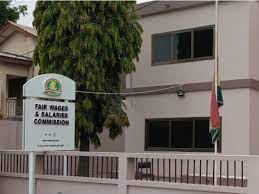
The Fair Wages and Salaries Commission (FWSC) has announced significant savings of nearly GH₵345 million following the first phase of its nationwide payroll monitoring exercise.
The initiative, which spanned 120 public sector institutions across four regions, was designed to curb unnecessary expenditure on the public wage bill while promoting transparency within the public sector.
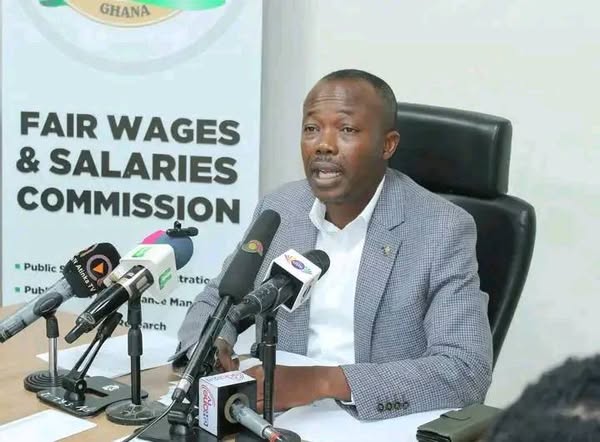
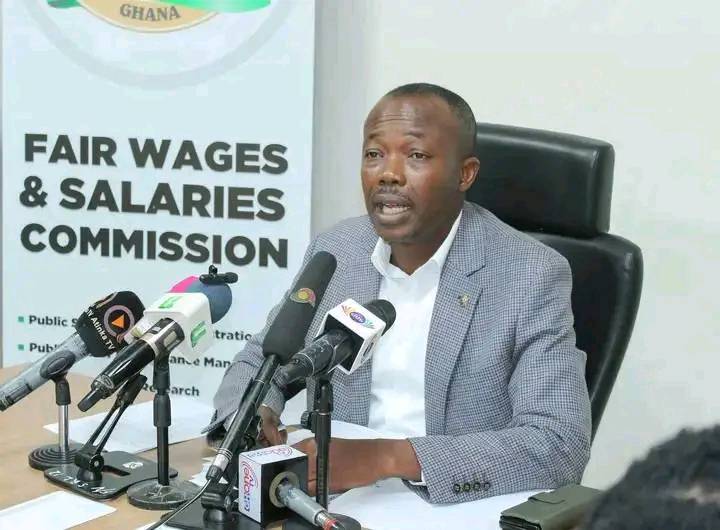
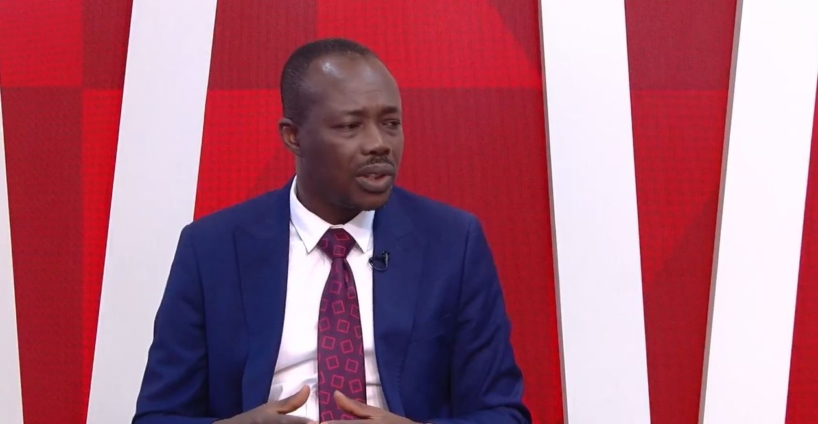
Speaking on JoyNews, the Chief Executive Officer of the FWSC, Benjamin Arthur, revealed the impressive financial gains achieved through the monitoring efforts.
“Last year, we made a lot of savings—345 million cedis from the monitoring exercise,” Arthur disclosed.
Beyond the financial benefits, Arthur highlighted how the exercise contributed to improving productivity within the public sector.
“But it has other benefits on improving productivity. We go out to collect comprehensive information. We go out on the field to do some monitoring; we also monitor the payrolls,” he explained.
He further noted that the commission’s analysis suggested potential for even greater savings moving forward.
“About 8% of what we pay in the public sector can be saved, and when we started doing the payroll monitoring, the analysis showed that for 2023 and 2024,” he added.
Arthur also pointed out that the exercise uncovered valuable lessons and exposed irregularities within the system.
“Going forward, the payroll monitoring has taught us a lot. Of course, we also saw some anomalies of people who were entitled to some allowance who were not receiving,” he stated.
The FWSC is expected to continue the monitoring exercise in the coming months, aiming to boost efficiency and accountability in Ghana’s public sector payroll system.
Labour, Jobs, and Employment Minister-designate, Rashid Pelpuo, has suggested renaming the Fair Wages and Salaries Commission (FWSC) to the Bureau of Remuneration and Productivity, arguing that the change would better reflect the organization’s true purpose and the goals of labor negotiations.
During his appearance before Parliament’s Appointments Committee on Thursday, January 30, Mr. Pelpuo explained that the proposal was inspired by a suggestion from a labor activist.
After careful consideration, he expressed his belief that the name change would more accurately align with the commission’s role in balancing worker productivity with fair compensation.
“We should consider renaming it the Bureau of Remuneration and Productivity. By framing it this way, we capture the true essence of the commission. It should focus on the fact that, yes, I have produced, but I must also earn something in return. How much have I produced, and how much will I earn? That alignment is crucial for effective negotiations,” Mr. Pelpuo said.
The minister-designate also emphasized his commitment to working with the Fair Wages and Salaries Commission (FWSC) to ensure that workers’ productivity is fairly reflected in their compensation.
He highlighted the importance of listening to the concerns of workers, stating that understanding and empathizing with their needs are critical to addressing labor-related issues.
“A key factor in addressing labor issues is to listen to workers, appreciate what they are asking for, and offer solutions. I believe I have the composure to do this. To listen, empathize, and help them understand the broader context. That’s why I support the idea of renaming the commission,” he added.
He also credited seasoned labor activist, Mr. Gabby, for suggesting the name change. Dr. Pelpuo further stressed the importance of fostering gender equality in the workplace, advocating for equal access to opportunities for all individuals.
He reaffirmed his commitment to addressing the challenges within Ghana’s labor market and driving economic development through strategic collaborations with the private sector.
To combat unemployment, Dr. Pelpuo discussed plans to create a Labour Market Information System.
This system would provide a comprehensive list of job openings and available talent, facilitating smoother connections between employers and job seekers.
He also called for greater support for the private sector, proposing the provision of incentives such as better access to financial resources and investment opportunities to encourage job creation and economic growth.
“We will encourage the private sector to maximize production, and we will support them in doing so,” Dr. Pelpuo assured.
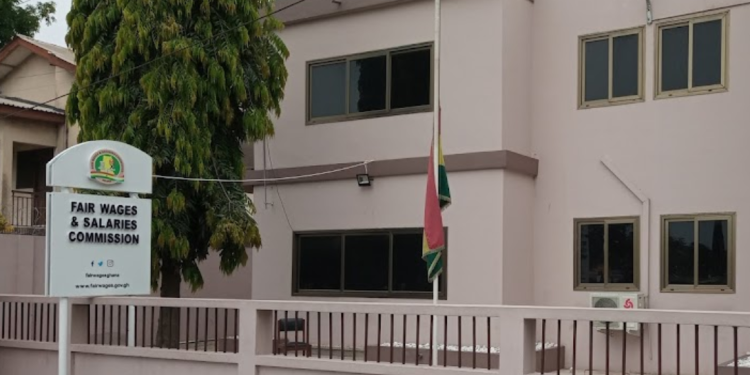
The Minister of Employment, Labour Relations and Pensions, Ignatius Baffour-Awuah, has challenged the staff of the Fair Wages and Salaries Commission (FWSC) to justify the state’s investment in their newly inaugurated office complex by improving service delivery.
Speaking at the commissioning of the new facility on Friday, November 15, Mr. Baffour-Awuah acknowledged the government’s efforts to enhance public sector institutions but stressed the need for the FWSC to ensure its services match the quality of its upgraded infrastructure.
“You can have the best of office buildings, but if the service is poor, it means nothing. I want to entreat the staff to justify why the state invested in the facility,” he said to the gathering, which included FWSC staff.
The modern office complex, envisioned by President Nana Akufo-Addo, is designed to provide the FWSC with a well-equipped workspace to enhance productivity and service delivery.
Mr. Baffour-Awuah underscored the government’s commitment to promoting decent work and fair compensation, expressing confidence that the new edifice would support the Commission in fulfilling its critical role in advising the government on wage policies, salaries, and conditions of service for public sector workers.
“I am confident that the new edifice will give you the self-satisfaction you need to work in an efficient and effective manner,” he said.
The Minister concluded by emphasizing the importance of leveraging the improved facility to contribute to the government’s broader agenda of ensuring fair pay, enhancing productivity, and fostering a more efficient public sector.
The Minister of Employment, Labour Relations, and Pensions, Ignatius Baffour-Awuah, has emphasized that while the inauguration of the new office complex for the Fair Wages and Salaries Commission (FWSC) marks a significant achievement, it should not be seen as an excuse for complacency.
During the official opening of the facility on Friday, November 15, the Minister urged FWSC staff to ensure that the quality of service they deliver matches the high standards of the newly upgraded workspace.
“I am confident that the new edifice will give you the self-satisfaction you need to work in an efficient and effective manner,” he said to the gathering, which included mostly workers of the Commission.”
“You can have the best of office buildings, but if the service is poor, it means nothing. I want to entreat the staff to justify why the state invested in the facility,” he said.
He went on to reiterate the government’s commitment to fostering an environment where workers’ well-being is prioritized, which in turn enhances productivity across the public sector.
The newly inaugurated office complex, envisioned by President Akufo-Addo, is designed to provide FWSC with a modern and well-equipped environment to improve service delivery.
The Minister concluded by expressing confidence that the new edifice would provide the staff with the self-satisfaction needed to work efficiently and effectively, while also urging them to focus on fulfilling the Commission’s critical mandate of advising the government on wage policies and workers’ conditions.
A whopping amount of GHC348 million has been recovered from fraudulent entries on the public payroll by the Fair Wages and Salaries Commission (FWSC).
This was revealed by the Chief Executive Officer of the FWSC, Benjamin Arthur yesterday during a press briefing, explaining that the recovery follows a nationwide audit aimed at removing unauthorised names from the payroll.
“The last estimate, done in August, was about GH₵348 million. Of course, there are also people who were entitled to certain benefits they weren’t receiving, and through payroll monitoring, we were able to detect those” he said.
All names found culpable are to face prosecution by the Attorney-General following recommendations to the Office of the Attorney-General, Mr Arthur said.
“For the institutions where we detected some—let’s call them anomalies, as I can’t judge intent—we’ve sent their names and details to management for further action. It’s only if management fails to act that we consider reporting to other authorities. Unfortunately, we don’t have prosecutorial powers, so we can’t take legal action ourselves.”
He noted this feat would not have been achieved but for whistle-blowers whose intel proved to be reliable.
“The whistleblowers have been very helpful. Issues that could not come to the attention of Fair Wages, we were able to address through the whistleblowers,” he said, adding that more people are becoming aware that someone is monitoring them.”
Mr Arthur also announced that his uniform will in the coming days clear the names of all unauthorised persons, stating “It will be, and beyond that, it’s not just about illegal names. If you’re inactive and no one knows where you are, you will be deactivated.”
Following nearly two decades of implementing the current salary structure, the FWSC has announced that a review is underway to link productivity to pay.
“One of the areas that we have been very keen on and we are also very optimistic, waiting patiently for it to be part of the new pay policy is to be able to have strong measures to link pay to productivity.
“The President ordered that the Fair Wages and Public Services Commission should work together to ensure that this comes to fruition,” he said.
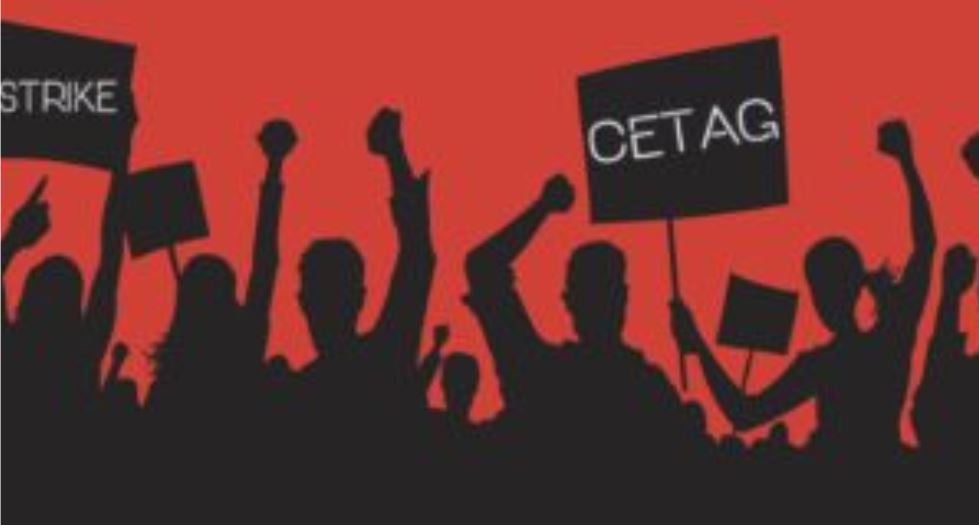
The Fair Wages and Salaries Commission (FWSC) will meet with the leadership of the Colleges of Education Teachers Association of Ghana (CETAG) today, in a bid to resolve the ongoing strike by teachers across the country’s colleges.
The meeting, which will take place at the Ministry of Employment and Labour Relations, will address the concerns of CETAG members and potentially bring them back to the classrooms.
The FWSC has invited key stakeholders including the President of CETAG, Prince Obeng-Himah, the Director-General of the Ghana Tertiary Education Commission (GTEC), Professor Ahmed Jinapor Abdulai, the President of the Conference of Principals of Colleges of Education (PRINCOF), Dr Samuel A. Atintono, the Director of Tertiary at the Ministry of Education, Dr Yayra Dzakadzie and the Head of the Public Financial Management Unit (CPMU) at the Ministry of Finance, Mr. Augustus Kwasi Adu.
CETAG’s strike began on June 14, with teachers from 46 colleges of education laying down their tools to demand improved working conditions and remuneration packages. The action was prompted by delays in implementing the National Labour Commission’s (NLC) Arbitral Award Orders and negotiated service conditions.
The Association’s demands include payment of one month’s salary for additional duties performed in 2022 and the application of agreed rates of allowances given to public universities to deserving CETAG members.
It has been over 2 months and the government has not been able to resolve the concerns raised by the group.
CETAG President Prince Obeng-Himah revealed that a leadership vote on the continuation or suspension of the strike will also take place on Monday.
He explained that the decision followed a meeting with Vice President Dr. Mahamudu Bawumia on August 16, where discussions were held to address the teachers’ grievances.
“Since there was no consensus today to suspend the strike, council members will have to meet with their constituents over the weekend so that we can vote on it on Monday,” Obeng-Himah stated. He added that each council member would base their vote on the assurances given by the Vice President’s office during the August 16 meeting at Jubilee House. “The outcome shall be communicated by the close of day on Monday,” he noted.
In a related turn of events, the Ghana Tertiary Education Commission (GTEC) is seeking financial clearance from the Ministry of Education (MoE) to hire 2,500 new teachers.
This recruitment is intended to alleviate the heavy academic workload and ensure a timely start to academic sessions.
Once financial clearance is granted, GTEC will quickly proceed with the recruitment to have the new staff in place as soon as possible.
“The Commission is in serious talks with the Honourable Minister of Education for financial clearance to be granted to GTEC to recruit some two thousand five hundred (2,500) teaching staff to augment the current load for academic work to commence as quickly as possible while we work with CETAG to resolve their concerns.
“GTEC will communicate to you the modalities with which this urgent staff recruitment will be expedited as soon as the clearance is provided,” the statement read.
Meanwhile, the Deputy Ranking Member of Parliament’s Education Committee, Dr. Clement Abas Apaak, has criticized the Ghana Tertiary Education Commission’s (GTEC) handling of the Colleges of Education Teachers’ Association of Ghana’s (CETAG) ongoing strike.
He argued that GTEC’s focus should be on resolving the strike instead of proposing the hiring of additional tutors.
Dr. Apaak condemned the government for opting for this approach rather than engaging in direct negotiations with the teachers’ association.
The Fair Wages and Salaries Commission (FWSC) is set to meet with the leadership of the Colleges of Education Teachers Association of Ghana (CETAG) on Monday, August 19, in a bid to resolve the ongoing strike by teachers in the country’s colleges of education.
The meeting, which will take place at the Ministry of Employment and Labour Relations, aims to address the concerns of CETAG members and potentially bring them back to the classrooms.
The FWSC has invited key stakeholders for the upcoming meeting. The invitation includes the President of CETAG, the Director-General of the Ghana Tertiary Education Commission (GTEC), the President of the Conference of Principals of Colleges of Education (PRINCOF), the Director of Tertiary at the Ministry of Education, and the Head of the Public Financial Management Unit (CPMU) at the Ministry of Finance.
CETAG’s strike began on June 14, with teachers from 46 colleges of education laying down their tools to demand improved working conditions and remuneration packages. The action was prompted by delays in implementing the National Labour Commission’s (NLC) Arbitral Award Orders and negotiated service conditions.
CETAG’s demands include payment of one month’s salary for additional duties performed in 2022 and the application of agreed rates of allowances given to public universities to deserving CETAG members.
It has been over 2 months and the government has not been able to resolve the concerns raised by the group.
CETAG President Prince Obeng-Himah revealed that a leadership vote on the continuation or suspension of the strike will also take place on Monday.
He explained that the decision followed a meeting with Vice President Dr. Mahamudu Bawumia on August 16, where discussions were held to address the teachers’ grievances.
“Since there was no consensus today to suspend the strike, council members will have to meet with their constituents over the weekend so that we can vote on it on Monday,” Obeng-Himah stated. He added that each council member would base their vote on the assurances given by the Vice President’s office during the August 16 meeting at Jubilee House. “The outcome shall be communicated by close of day on Monday,” he noted.
General Secretary of the Medical Laboratory Professional Workers’ Union (MELPWU), Cephas Kofi Akortor, has criticized the Fair Wages and Salaries Commission (FWSC) for failing to fulfill its obligations.
The union initiated a strike on June 17 after nearly two years of unsuccessful negotiations with the FWSC regarding conditions of service for its members.
Describing the last meeting on May 31, 2024, as “disappointing,” the union stated that the FWSC’s promises to the National Labour Commission remained unfulfilled, prompting their industrial action.
Patients seeking lab services at public health facilities have been adversely affected, often resorting to higher-cost options at private facilities.
In an interview on Joy FM’s Midday News on June 19, Mr. Akortor criticized the FWSC for its lack of proactive engagement, particularly noting the essential role of lab workers.
“Fair Wages is not being fair. Fair Wages should have been a bit more proactive in their engagement because we are essential service workers. We should not be treated like any kind of people,” he said.
Mr. Akortor alleged that the FWSC consistently ignored the union’s requests for timely engagement, often reacting only when faced with protests. He highlighted prolonged gaps between meetings, sometimes spanning three to four months, which he described as unfair treatment.
“We have never written to them [FWSC] requesting a meeting and Fair Wages will act upon that. At all times our engagement will take about three months cycle. We will have one meeting today, the next engagement will be about three months later, four months later. It has not been fair,” he added.
Regarding the strike’s impact on healthcare delivery, Mr. Akortor acknowledged challenges but explained that union members felt compelled due to perceived government inaction.
He expressed hope that the FWSC would initiate negotiations to resolve the ongoing dispute.
In response, the Ministry of Health issued a statement on June 17, indicating substantial progress in negotiations and urging the union to cease the strike and return to the negotiation table.
The teacher unions currently on strike have expressed disappointment with the Fair Wages and Salaries Commission (FWSC) for calling for a revision of the labor law.
The unions, including the Coalition of Concerned Teachers (CCT), Ghana National Association of Teachers (GNAT), and the National Association of Graduate Teachers (NAGRAT), began a nationwide strike on Wednesday, March 20, citing the government’s failure to address their poor conditions of service.
Key grievances highlighted by the unions include the continuous withholding of teachers’ salaries, changes in timetables without union consultation, and delays in distributing laptops to teachers.
The FWSC has urged the unions to reconsider their decision, with CEO Benjamin Arthur expressing surprise at the strike. He noted that negotiations to address the teachers’ demands were ongoing and suggested that the unions’ decision to strike was inappropriate, considering the ongoing negotiations.
He subsequently called on stakeholders “to begin vigorously to change our labour laws.”
Herbert Ako Forson, the General Secretary of the CCT, criticized the FWSC CEO’s remarks during an interview with Umaru Sanda Amadu on Citi FM’s Eyewitness News on Wednesday.
“I am very disappointed in Eng Arthur for calling on stakeholders to start the process of revising the labour laws. He is very aware, and he knows what happened in Koforidua… Negotiations began in Koforidua; it didn’t end well. You waited, then yesterday at 8 pm, we received letters from Fair Wages inviting us to come and continue with the negotiation. Is that fair? He is calling for fairness. He also mentioned that three people would go and sign. This is an affront to us; this is disrespect to us. I mean, it is not fair, you don’t have to use such statements,” he stated.
Angel Carbonu, the President of NAGRAT, also expressed disappointment in the FWSC CEO’s comments, stating “I am very disappointed in the choice of words of the [FWSC CEO].”
The University Teachers Association of Ghana (UTAG) and the Technical University Teachers Association of Ghana (TUTAG) on Wednesday, January 10, 2024, walked out of a meeting with the Fair Wages and Salaries Commission (FWSC).
The groups cited reasons such as bad faith, contempt, and a lackadaisical attitude on the part of their employer, FWSC, towards the crucial aspects of their conditions of service, as grounds for their decision.
They maintained that UTAG/TUTAG would not participate in meetings that do not result in benefits and cautioned that the voices of University Lecturers would soon be heard in a language better understood by the Employer/Government.
The National President for UTAG, Professor Mamudu A. Akudugu, in an interview noted the commission picked out some key components in the conditions an left some out.
He explained that as groups, they are not going to pick and choose conditions rather, they want the commission to relook at the entire condition of service as they have agreed.
“We were in a meeting with the FWSC about our condition of service and some other key component of our conditions of service that we thought would be part of the meeting. Our employer is of a different view regarding our concerns
“Some key components of our conditions of service were supposed to be included in our meeting. So, we think that as we are talking about them, then it should have been everything and not to pick and choose. So we decided to walk out,” he said.
Although Prof. Mamudu A. Akudugu, did not give out the specifics of the conditions for which they walked out, he noted that as associations, they would return to the Fair Wages and Salary Commission if it is ready to meet all of the terms and conditions.
The Fair Wages and Salaries Commission (FWSC) has declined to reinstate the allowances of Ghana Broadcasting Corporation (GBC) staff, despite an order from the National Labour Commission.
The Director General of GBC, Professor Amin Alhassan, revealed this during a Public Accounts Committee session where the state broadcaster was addressing infractions highlighted in the 2021 Auditor General’s report.
In June 2023, GBC staff protested when the FWSC issued a directive to withdraw certain allowances.
After engaging with the parties involved, the National Labour Commission (NLC) ordered FWSC to restore the allowances.
However, as of the end of the week, FWSC had failed to comply with the Labour Commission’s directive.
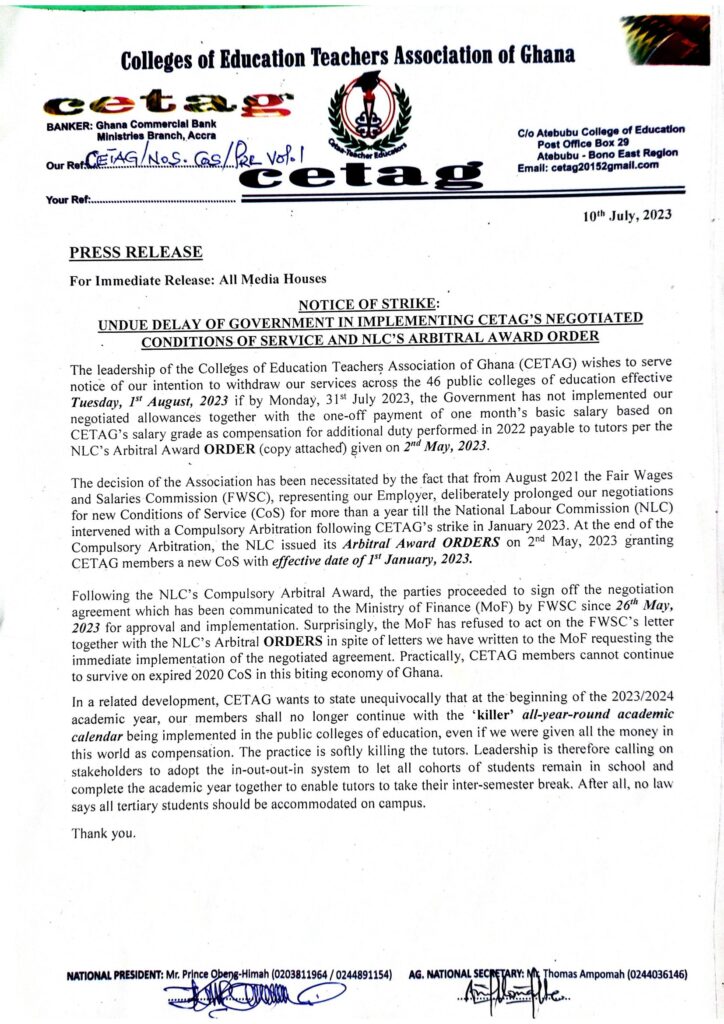
The leadership of the Colleges of Education Teachers Association (CETAG) has announced their intention to withdraw services from all 46 public colleges of education starting from Tuesday, August 1, 2023.
CETAG has given the government a deadline of July 31, 2023, to implement the negotiated allowances.
“Together with the one-off payment of one month’s basic salary based on CETAG’s salary grade as compensation for additional duty performed in 2022 payable to tutors per the NLC’s Arbitral Award ORDER given on 2nd May 2023,” the National President of CETAG, Mr. Prince Obeng-Himan stated in a press release dated July 10, 2023.
The decision of the Colleges of Education Teachers Association (CETAG) to withdraw services was driven by what they perceive as intentionally prolonged negotiations by the Fair Wages and Salaries Commission (FWSC) regarding their condition of service.
TheFair Wages and Salaries Commission(FWSC) has been ordered by the National Labour Commission (NLC) to overturn a decision to block the allowances of certain GBC employees.
This follows weeks of protests and threats of industrial strike action by the workers.
According to Sam Nat Kevor, the Divisional Union Chairman of GBC, the affected allowances which include rent, housing, utility, vehicle maintenance and transportation, must be restored since inflation keeps rising and therefore the withdrawal of such allowances will worsen the cost of living.
However, the FWSC Boss, Ben Arthurinsists the initiative forms part of its nationwide payroll monitoring exercise with the Internal Audit Agency.
He explained that as part of the payroll monitoring exercise, it had been discovered that some staff of GBC are currently enjoying allowances that they are not entitled to.
Mr Arthur said the commission exists to ensure better working conditions for workers and will not compromise.
But during a hearing of a complaint tabled before it by the FWSC over the pending strike by the staff of GBC, the NLC described the FWSC’s directive as unlawful.
Subsequently, the Commission has given the FWSC a 14-day ultimatum to reverse its decision to strike out the allowances in question and restore all deductions made from the salaries of GBC staff.
Background
The FWSC began payroll auditing in April this year. Two weeks ago, the FWSC audited the payroll of the staff of GBC over some allowances which, it said, some staff did not deserve.
It, therefore, wrote to the CAGD to stop the payment of the allowances and allow the affected staff to refund the money. The GBC unionised staff cautioned against the directive, but the CAGD carried it through.
Recounting the genesis of what led to the deductions by the FWSC, the divisional union chairman said these allowances were negotiated as “per our collective agreement and senior management staff condition of service.”
He said the last negotiation by the Public Services Joint Standing Negotiation Committee (PSJNC) occurred on August 26, 2019, with the effective payment date being January 1, 2020.
He said, “The disposition of the CEO of the FWSC began with the negotiation for our category two and three non-core allowances which started smoothly in 2021 with the then CEO, Dr Edward Kwapong until Mr Arthur took over in the latter part of 2022.”
The posture of Mr Arthur, according to Mr Kevor, was clearly manifested in the number of times negotiations had to be adjourned.
Negotiations
Mr Kevor alleged that Mr Arthur deliberately delayed forwarding the outcome of the negotiations to the Ministry of Finance for onward transfer to the CAGD.
He said in spite of the intervention from the Minister of Employment and Labour Relations, Mr Arthur still delayed for four months until he finally forwarded the signed agreement to the Ministry of Finance.
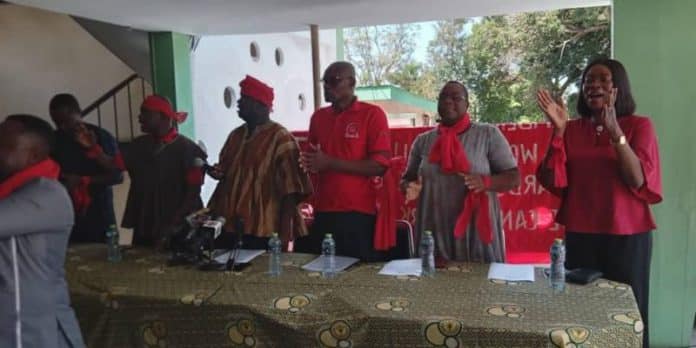
Mr Kevor, who wore red headgear and was flanked by the Chairman of the Senior Management Union, Alhaji Abdul Razak Tahiru, and a member of the Local Trustee, Mr Abraham Osekre, said a meeting convened by the Minister of Information and the CEO of FWSC to seek a resolution to the impasse could not yield any result as Mr Arthur claimed that the collective agreement of GBC had expired and also the allowances had been revised under the Single Spine Salary Scheme.
He said in spite of efforts to prevent the deductions and to meet him, Mr Arthur went ahead and directed the CAGD to remove the allowances of GBC workers.