Tag: G20

  • Debt restructuring for G20 members must be expedited – BoG Governor

    Debt restructuring for G20 members must be expedited – BoG Governor

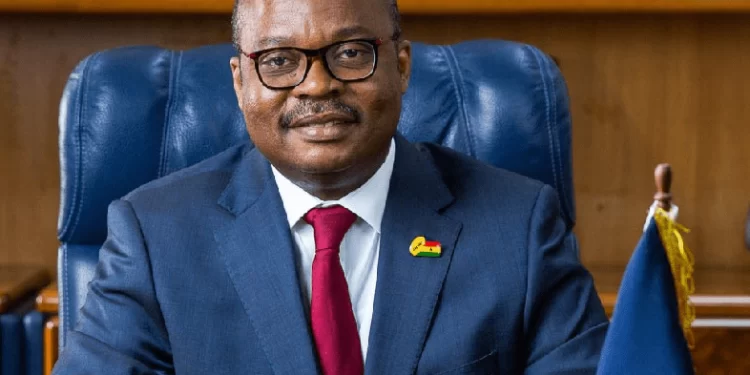
    Governor of the Bank of Ghana (BoG), Dr. Ernest Addison, has advocated for an expedited debt restructuring process for vulnerable members of the G20, which includes countries such as Ghana, Ethiopia, and Malawi.

    This call follows recent agreements made between Zambia, Chad, and their respective creditors, highlighting the importance of shielding these nations from potential domestic financial market instability.

    Dr. Addison made these remarks during an African Caucus Meeting focused on the theme of “Leveraging Public Debt for Sustainable Growth in Africa” held at the ongoing International Monetary Fund (IMF)/World Bank Group (WBG) Annual Meetings in Marrakech, Morocco.
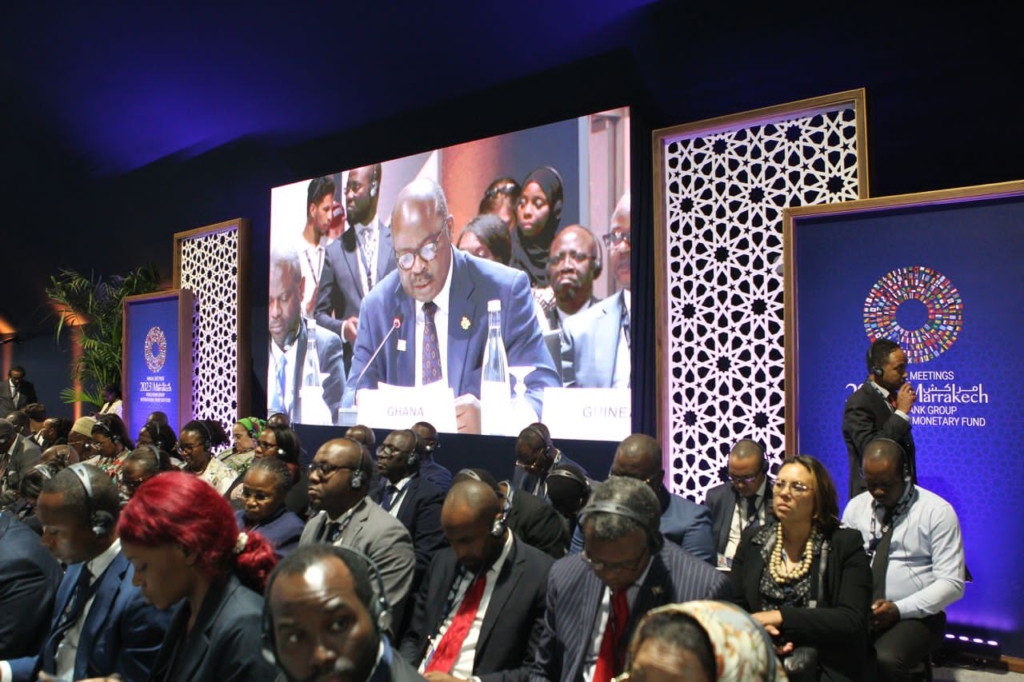
    “While welcoming the latest developments on Zambia and Chad, we underscore the need to revamp the G20 Common Framework (CF) to ensure timely, orderly, equitable, inclusive, and transparent debt restructuring for distressed members in the region (including, Ghana, Ethiopia, and Malawi),” he said. 

    “We also call for a carefully designed debt resolution mechanism, especially, for vulnerable members with large-domestic creditors (as in the case of Ghana) to help avert domestic financial market instability,” the BoG Governor added. 

    The Governor emphasized the significance of enhanced engagement between debtors and creditors, emphasizing the need for an improved Global Sovereign Debt Roundtable (GSDR) and enhanced technical support. These measures are essential to facilitate a more efficient, proactive, and systematic debt restructuring process.

    “We also reaffirm the request for debt standstill during times of negotiations to offer immediate relief to debtors and restate our request for multilateral debt cancellation for the most vulnerable members facing acute debt challenges,” Dr Addison said. 

    He emphasized the need for improved cooperation between the IMF and Multilateral Development Banks/Regional Development Banks to ensure the prompt delivery of financial aid to G20 member countries grappling with substantial debt and growth difficulties.

    “In this context, we restate the call for new SDR allocation through the MDBs/RDBs’ (including the African Development Bank – AfDB), given their multiplier effects in achieving climate and development goals,” he said. 
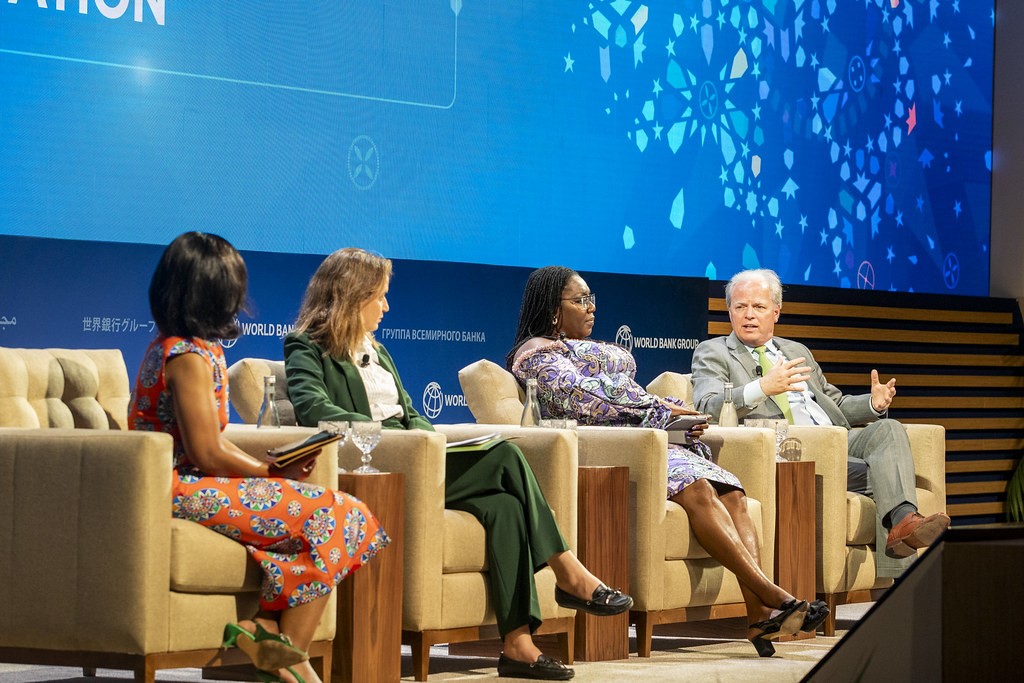
    “Given the fragmented global financial architecture, we urge the IMF to remain steadfast and adapt its lending toolkits to changing global conditions to serve its G20 vulnerable membership better,” Mr Addison advocated. 

    Speaking on this issue at a press briefing on Thursday, Kristalina Goergieva, Managing Director, IMF, said: “The Common Framework has been slow to deliver to countries that turn to it for support.” 

    She noted, however, that: “We see an encouraging sign that the time taken to reach an agreement among creditors is short with every step.” 

    She pointed out that the process took varying durations, with Chad’s creditors taking 11 months to provide the necessary financial assurances to the Fund, followed by nine months for Zambia, six months for Sri Lanka, and five months for Ghana.

    The Managing Director of the IMF elaborated that the complexity of creditors and the unique arrangements in each case made debt restructuring an arduous task since it necessitated unanimous agreement from all creditors.

    She suggested adopting a case-specific approach to identify creditors and establish a Creditors’ Committee, with the IMF and World Bank outlining the key parameters that require agreement.

    “This is the way that today, debt restructuring is delivered, ” Goergieva said, adding that “my plea is, pressure for speed and efficiency, but don’t throw the towel on the Common Framework, because if we lose it, then we’re back in a much less predictable environment.” 

    Numerous African economies find themselves confronted by severe debt issues, accentuated by the growing demands for social and infrastructure investments. These challenges are exacerbated by the ramifications of the COVID-19 pandemic, the conflict in Ukraine, tightening global financial conditions, and climate-related disasters.

    In light of these circumstances, it has become imperative for these nations to regain control over their debt situations and foster inclusive, sustainable growth across the continent. Achieving these goals hinges on effective debt management, particularly concerning external creditors.

  • African Union to join G20 permanently – Modi

    African Union to join G20 permanently – Modi

    India’s prime minister Narendra Modi announced on Saturday that the African Union is set to join the Group of 20 (G20) as a constant member.This was revealed during a leaders’ summit in New Delhi for the world’s wealthiest nations.

    In his first speech, Modi asked the African Union chair, Azali Assoumani, to become a permanent member of the group. The other leaders clapped and watched as this happened.

    Modi is gathering leaders from all over the world in New Delhi. Divisions over Russia’s war in Ukraine are getting worse. He is taking charge of leading discussions on important issues like global economic concerns and the urgent need for action on the climate crisis by wealthy nations.

    Modi, the president of G20, said that India wants everyone in the world to join hands and change the lack of trust between nations to trust and dependence.

    Now is the time for all of us to come together. Whether it’s the differences between different regions, the distance between the East and West, how we handle food and fuel, terrorism, cyber security, health, energy or water security, we need to find a strong solution to these issues for the sake of future generations.

    The African Union is a group of 55 countries in Africa that work together as one big organization.

    It has been invited for a long time to the G20 meeting, along with other important global organizations such as the World Bank and International Monetary Fund.

    This action will make the African bloc a permanent member of the G20, similar to how the European Union is. This could change the name of the group to G21 and give Africa a prominent position in one of the world’s most influential global governing organizations.

    Ever since Modi became the President of G20, he has been eager to show that India is a leader among other developing nations. He wants to work closely with wealthier countries to get financial support for India.

    Modi has said before that he wants to include the African Union in the group.

    Modi said in an interview with one of India’s biggest news agencies, Press Trust of India, that when they say they see the world as one family, they genuinely mean it.

    Africa is very important to us, even when compared to other countries in the G20. When we took charge of the G20, one of the initial activities we organized was a summit called Voice of the Global South, where Africa showed great enthusiasm and participation.

  • G20 Summit: Africa ‘just wants peace,’ not to take sides in the Ukraine conflict, says Paul Kagame

    Rwandan President Paul Kagame has lamented the effects of the Ukraine conflict on Africa, declaring that the continent desires world peace.

    On Tuesday, Kagame spoke at the G20 Summit in Bali, Indonesia, as chairperson of the African Union Development Agency’s (Nepad) Heads of State and Government Orientation Committee.

    The setting was ideal for Kagame to say: “I commend the attention given to the priorities that matter to small and developing countries, including coping with the effects of the war in Ukraine and other crises.” The conference was held under the theme “Recover Together, Recover Stronger.”

    Parts of Africa, particularly central and southern Africa, are currently experiencing or preparing for cropping seasons.

    But the war in Ukraine has resulted in a shortage of fertiliser, which is mostly procured in Ukraine and Russia. This has led to a spike in the price.

    One of the single most notable compromises to help alleviate this crisis this week was the release of a Russian fertiliser cargo which had been detained for months in the port of Rotterdam because of sanctions.

    It’s now on its way to Malawi, one of southern Africa’s most food-insecure countries.

    The 20 000 tons of fertiliser belong to a Russian who’s been on the United States sanctions list since the start of the war in Ukraine. However, he will not benefit from the cargo that’s now under the radar of the World Food Programme (WFP).

    Since the start of the war, a number of African countries have been sitting on the fence, choosing not to vote against Russia or outright support the invasion.

    It’s a diplomatic approach that seeks to please both sides of the divided world. But Kagame said Africa should not be blamed for allegedly taking sides.

    He said:

    What Africa wants to see is peace. We are confident that we cannot be accused of taking sides, simply by asking for peace. Africa is here for Africa and our productive relationship with the rest of the world.


    Kagame also highlighted that Africa had specific challenges, made worse by external factors such as the war in Ukraine, and that “too often our people are left to pay the price”.

    Climate change, the war in Ukraine, and conflicts in Africa are the major drivers of the widening gap between developing and developed countries. This has led to even more debt for the continent.

    Kagame pleaded with the G20 to reintroduce debt write-offs, and for more support from the International Monetary Fund through its Resilience and Sustainability Trust.


  • Zelenskyy sets out Ukraine’s 10-point peace plan and rules out ‘Minsk 3’ deal

    We are getting a bit more on President Volodymyr Zelenskyy’s speech at the G20 summit in Bali.

    During his virtual address, the Ukrainian leader presented a 10-point plan for peace with Russia.

    He also said there would be no “Minsk 3” deal to end the fighting in Ukraine.

    The Minsk agreements were a series of international agreements which sought to end the Donbas war and his statement refers to two failed ceasefire deals between Kyiv and Moscow over the status of the region.

    “We will not allow Russia to wait, build up its forces, and then start a new series of terror and global destabilisation. There will be no Minsk 3, which Russia will violate immediately after the agreement,” Mr Zelenskyy said.

    Mr Zelenskyy’s 10-point plan for peace are:

    • Radiation safety and nuclear weapons;
    • Food safety
    • Energy security
    • Release of prisoners and internees
    • Implementation of the UN Charter
    • Withdrawal of Russian troops and cessation of hostilities
    • Justice
    • Ecocide and environmental protection
    • Escalation prevention
    • Confirmation of the end of the war
  • G20 currently less than sum of parts – Analyst

    Analyst James Crabtree of the Institute of Strategic Studies has been telling the BBC’s Karishma Vaswani about what would constitute success for the summit.

    “This is the body that came together in 2008 and 2009, and was the focal point of getting the world out of the global financial crisis. Now we have comparably complex challenges,” he said.

    “So inflation, food insecurity, the climate transition, a whole host of issues… but because the United States and China and Russia are unable to cooperate with one another, then any progress on those issues is going to be incremental at best. So you have a body that is now much less than the sum of its parts,” he said.

    However, he adds that there will some success – and opportunities created – as a result of the summit.

    “The fact that Xi and Biden [are meeting], or Xi to meet Australian President Albanese… these are not insignificant things. So I think the success will simply be that some of the leaders will talk to one another, and maybe there’ll be tiny bits of progress on the broader G20 agenda in areas like climate change.”

    The fact that the meeting is happening at all, is another success in itself, he adds.

    “When the Ukraine invasion happened, people worried that this entire G20 would collapse… that there simply wouldn’t be able to be a meeting because of the disagreements,” he said.

    Source: BBC

  • What has G20 achieved in the past?

    At the 2008 and 2009 leaders’ summits, during the financial crisis, leaders agreed on a host of measures to rescue the global economic system.

    However, some critics argue that subsequent summits have been less constructive – often as a result of tensions between rival powers.

    But that hasn’t always been the case – in 2019 in Japan, then-US President Donald Trump and China’s President Xi Jinping agreed to resume talks to settle a major trade dispute.

    Source: BBC

  • German Chancellor and Rishi Sunak head for G20 working lunch

    Global leaders are debating topics like debt relief and food security at the G20 summit, which has begun on the Indonesian island of Bali.

    Here’s what’s happened so far:

    • Ukraine President Volodymyr Zelensky made a virtual appearance at the summit, where he called for Russia’s “destructive war” to end
    • Similarly, UK PM Rishi Sunak criticised the “Putin regime”, saying it had “stifled domestic dissent and fabricated a veneer of validity only through violence”
    • Russian Foreign Minister Sergei Lavrov was in the room listening to Sunak’s comments – Vladimir Putin has decided not to attend.

    • Sunak also said he believed China posed a “systematic challenge” to the UK’s values, but did not clarify if he would commit – like his predecessor Liz Truss – to recategorising China as a “threat” to national security
    • About an hour ago, the leaders took a break from the summit to head for lunch at the luxury Apurva Kempinski hotel – with some of them being driven to the venue by Indonesian President Joko Widodo himself


    Source: BBC

  • Rishi Sunak promises to condemn Putin’s regime at the G20

    Rishi Sunak has promised to “call out Putin’s regime” at an international summit in Indonesia.

    On Sunday afternoon, the prime minister will travel to Bali for a G20 summit of the world’s largest economies.

    British officials had planned for this meeting assuming Russia‘s president would attend.

    The prime minister was expected to join other world leaders in publicly condemning Vladimir Putin.

    But Moscow said last week he wouldn’t be attending and the Kremlin would be sending Russia’s foreign minister, Sergei Lavrov, instead.

    So the words of anger will be directed at him.

    Speaking before setting off for Indonesia, the prime minister said: “Putin’s war has caused devastation around the world – destroying lives and plunging the international economy into turmoil.

    “This G20 summit will not be business as usual. We will call out Putin’s regime, and lay bare their utter contempt for the kind of international cooperation and respect for sovereignty forums like the G20 represent.”

    The G20 is a hotchpotch of countries with little in common beyond big economies.

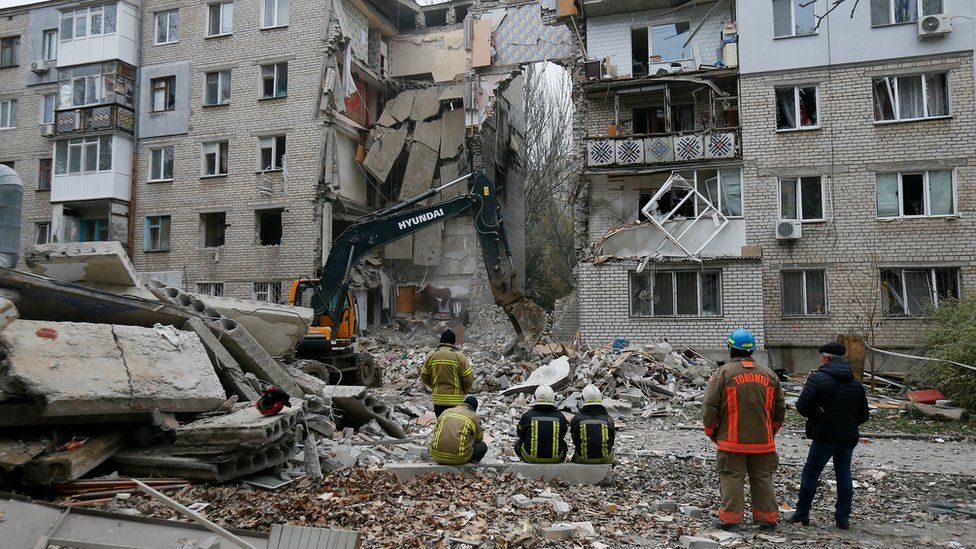
    A block of flats in Mykolaiv after being hit by a Russian missile
    IMAGE SOURCE, SHUTTERSTOCK Image caption, None of the other G20 leaders want to pose for a smiling photo with Russia amid its invasion of Ukraine

    An economic forum whose members have been hammered, economically, by one of their own, Russia.

    So the backdrop is awkward, to say the least.

    There won’t even be one of the basic diplomatic niceties of these gatherings this time, what is known as the family photo, where the leaders pose for a group picture.

    The other leaders refuse to be seen smiling in the presence of Russia.

    Recent precedent suggests another usual staple of these affairs, what is known as a communique, a set of agreed conclusions published at the close of the summit, probably won’t happen either.

    Almost three weeks into the job, this is Mr Sunak’s second overseas trip as prime minister, after last week’s dash to the COP27 climate summit in Egypt.

    He managed to see a good number of fellow European leaders in Sharm el-Sheikh.

    The trip to Bali will mean he can meet plenty from the Indo-Pacific region, a part of the world the government has been increasingly focused on since Brexit.

    And, perhaps, a first chance to meet US President Joe Biden.

    Meanwhile, back home, as Laura Kuenssberg writes, Chancellor Jeremy Hunt will continue preparing what is called the Autumn Statement, a budget in all but name, to be delivered on Thursday, just hours after the prime minister gets back home.

    Downing Street is seeking to frame both the summit and the Autumn Statement as responses to the same shock: the consequences of the war in Ukraine.

    A desperate global economic situation, as they describe it, with big domestic implications, that they seek to be trusted to grapple with, after the chaos of the Liz Truss administration.

    But a fractious summit followed by what many will see as a bad news Budget won’t make for an easy week for Mr Sunak.


  • G20 in Bali: Trouble in paradise as leaders gather

    An idyllic paradise of palm trees and pineapples, sun, sand and serenity is what comes to mind when you think of Bali.

    But this week the Indonesian island is hosting what could well be the most strained edition of the G20, or Group of 20 nations.

    The annual summit – which includes 19 advanced and emerging economies and the EU – was created after the Asian financial crisis in 1999. And it considers itself something of a superpowers club that manages future crises.

    And this time, there are plenty on the discussion block – the Russia-Ukraine war, brewing US-China tensions, soaring inflation, the ever-looming threat of a global recession, nuclear threats from North Korea, and perhaps most alarming of all, a rapidly warming earth.

    Amid all this, host and Indonesian President Joko Widodo hopes to play chief dealmaker. Can he do it?

    An era of living dangerously

    When we spoke ahead of the G20 meeting, Mr Widodo seemed sanguine about what has been described as the most diplomatically delicate and stressful G20 ever.

    US President Joe Biden and China’s leader Xi Jinping are set to meet on Monday – and the clash of the world’s two largest economies has Mr Widodo worried.

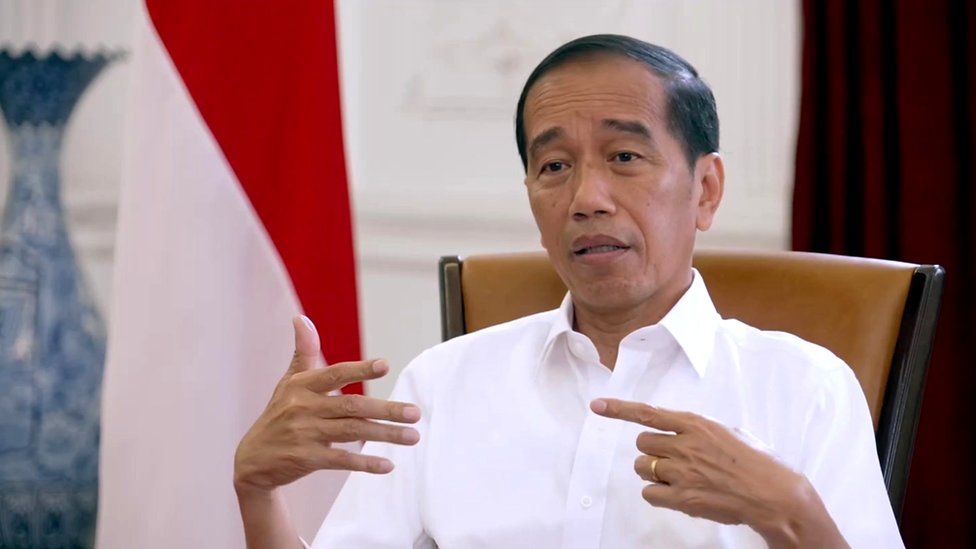
    “There can be no peace without dialogue,” he told me in an exclusive interview at the presidential palace in Jakarta.

    “If President Xi Jinping and President Joe Biden can meet and talk, it would be very good for the world, especially if they are able to come to an agreement about how to help the world recover.”

    Like many Asian countries, Indonesia has benefited from decades of free trade and multilateralism. The US has always been Indonesia’s most important global strategic partner, but over the last decade, China has consistently ranked as one of its top two foreign investors.

    That’s made navigating the relationship between the two giants tricky, to say the least.

    jokowi interview
    Image caption, “There can be no peace without dialogue,” says Joko Widodo – popularly known as Jokowi

    An era in which China and the US aren’t getting along is a far more dangerous one than Indonesia and other Asian countries have been accustomed to.

    Observers say that that growing tensions between Washington and Beijing increase the risk of conflict in the Indo-Pacific.

    Meanwhile there are also fears of the possible use of nuclear weapons, either in Ukraine or on the Korean peninsula, where Pyongyang has fired a record number of missiles this year.

    “The use of nuclear weapons for any reason, cannot be tolerated,” Mr Widodo, also known as Jokowi, says. “The increasing potential for nuclear use is… very dangerous for peace and for world stability.”

    Getting people to talk

    A key issue for Mr Jokowi personally has been food security – particularly as the war in Ukraine has been responsible, in his view, for rising prices, something that directly impacts Indonesia’s 275 million people.

    He politely termed Russia’s invasion of Ukraine a “headache”, something that has been “taking up his mind”.

    Securing a steady and consistent resumption of grain exports is one of the reasons why – ahead of the meeting – he’s crisscrossed the globe, meeting with Presidents Vladimir Putin and Volodymyr Zelensky to convince them to come to the meeting.

    He had hoped they could talk. “I think it would be great if they [Presidents Vladimir Putin and Volodymyr Zelensky] could sit at the same table – to solve the problems that exist, because the problems that we are dealing with now are on all fronts,” Mr Widodo said.

    Mr Putin is not coming, Russian diplomats have since said, but Mr Zelensky could attend virtually.

    Jokowi’s swansong

    The G20 is as much Indonesia’s coming out party as it is Mr Widodo’s swansong – he is in the final stretch of his presidency, and in 2024 he will have to stand down after two terms in power.

    When I first met him in 2012, as the then Jakarta governor he was a younger and more idealistic. Branded the first “outsider” to become president in Indonesia’s history, he was elected as a man of the people, a democrat’s democrat.

    Since then he’s had to govern a vast archipelago of 17,000 islands, a country that from west to east stretches the distance between London and Baghdad, with hundreds of different languages and ethnicities in between.

    jakarta
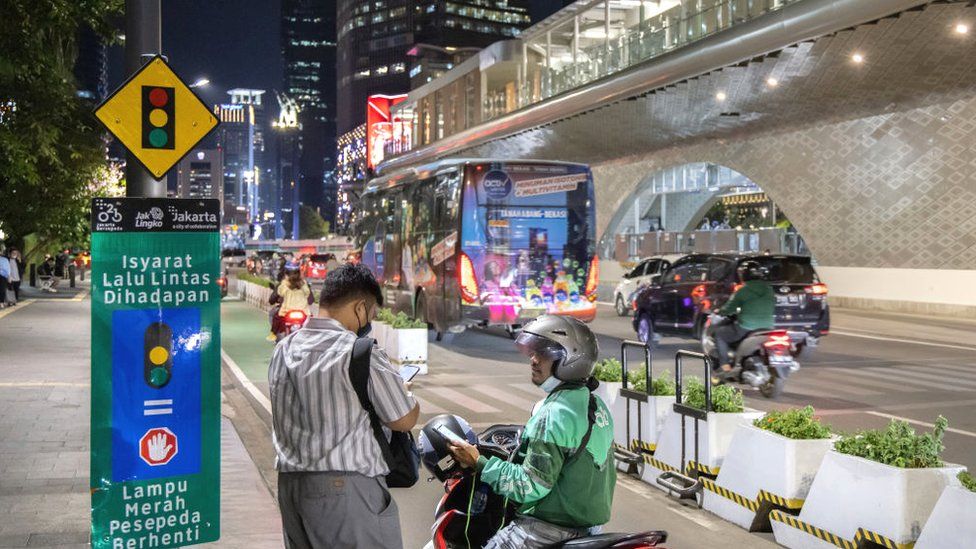
    IMAGE SOURCE,GETTY IMAGES Image caption, Mr Widodo wants to cement his economic legacy in Indonesia – but it may be out of his hands

    It’s a challenge I’ve written about before and over the last few years I’ve seen Jokowi, man of the people, transform into Jokowi the president. Now a pragmatist, he’s become a coalition-builder; someone who knows he has to compromise to not just survive but also thrive. Critics say he is no longer the democrat he used to be. Human rights groups and environmental campaigners have both said that he has consistently put the economy ahead of democratic interests.

    Although he remains extremely popular by international standards, his approval ratings have fallen recently, partly because of rising prices.

    Yet the country has weathered the current economic slowdown better than others, described by the International Monetary Fund as a “good performer” among regional economies.

    It is obvious Mr Widodo is keen to preserve and grow the economic legacy he is leaving behind for Indonesia.

    “What we would like to see in 2045 is that Indonesia’s golden era will truly be realised,” he says towards the end of our conversation. “By 2030, we expect Indonesia to become the number seven economy in the world.”

    It is a lofty ambition, and one that will resonate with many of his citizens. But it’s also one that may be out of his hands.

    Indonesia’s future depends on a stable global economic environment – something Mr Widodo hopes to come closer to securing at next week’s G20 summit.

    Source: BBC.com