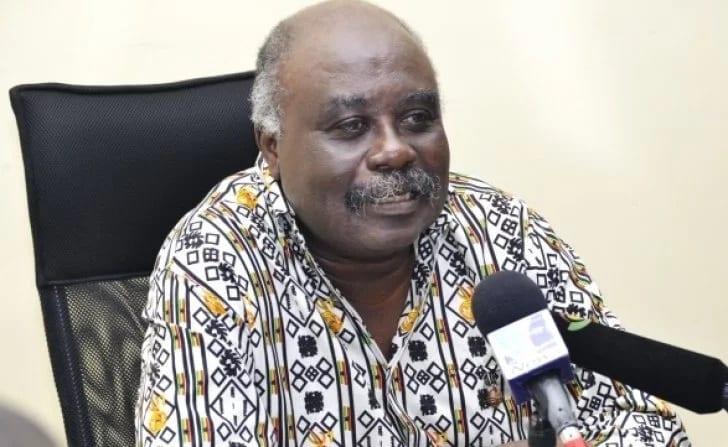
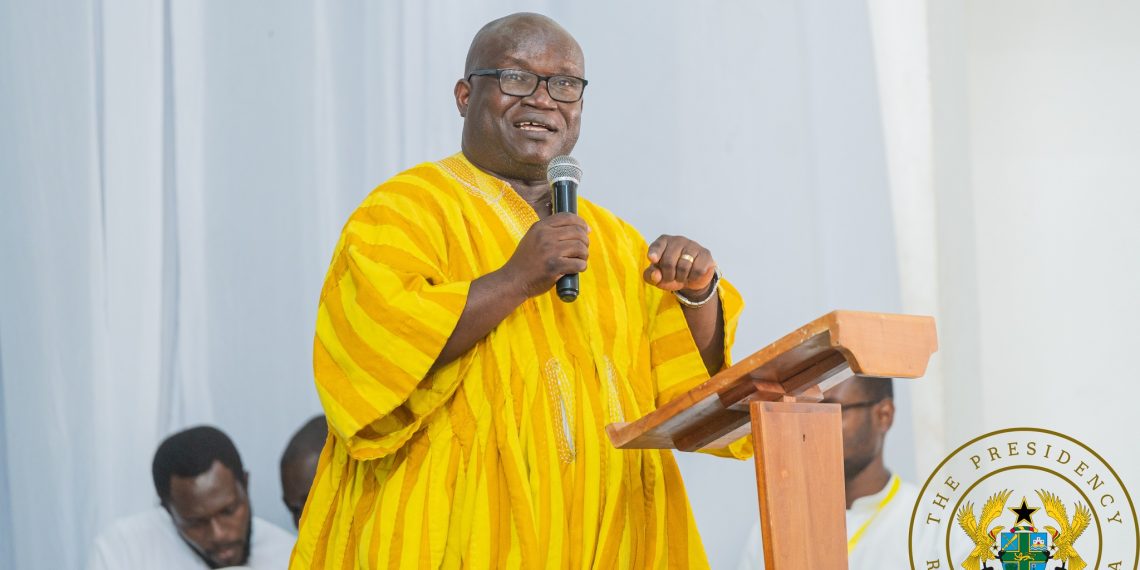
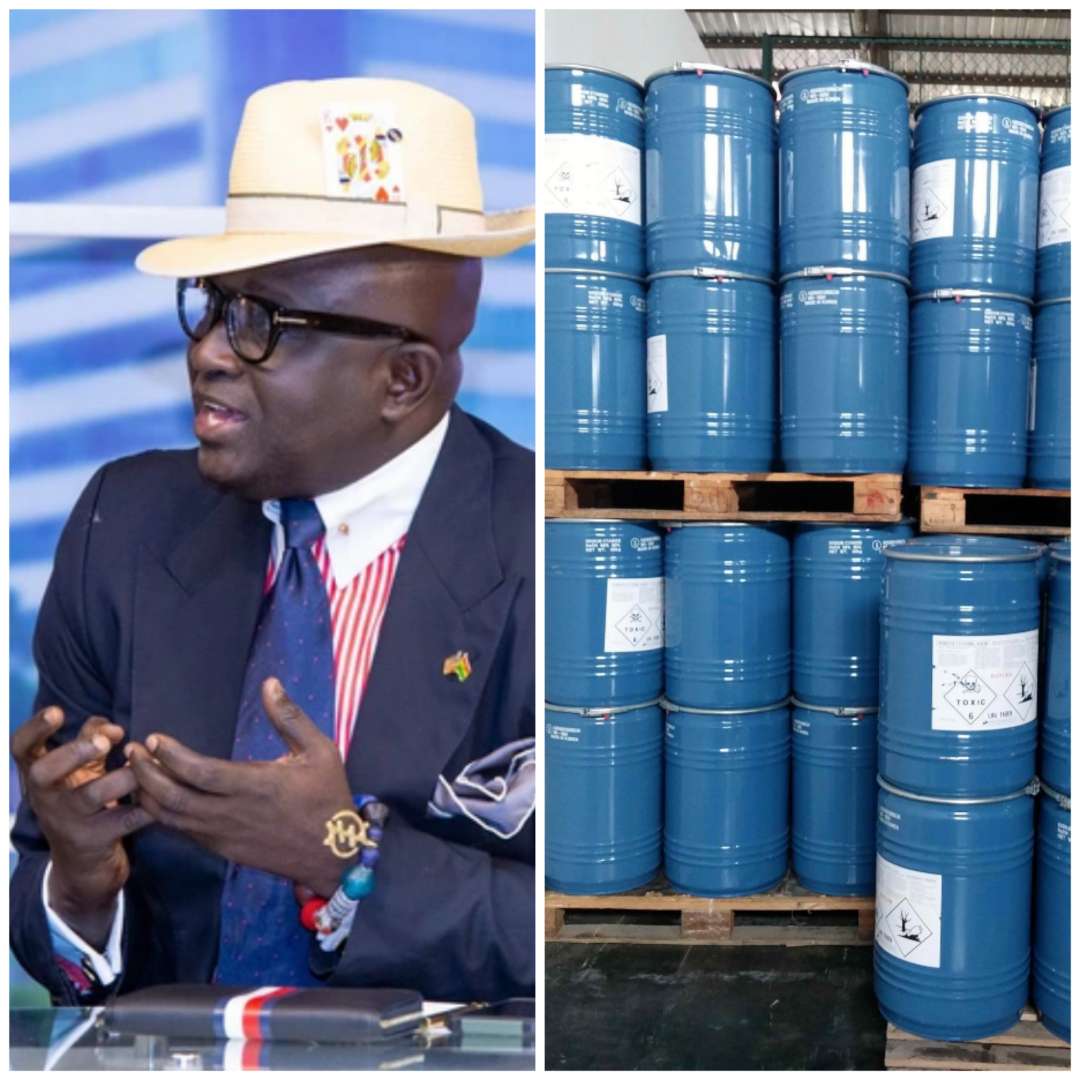
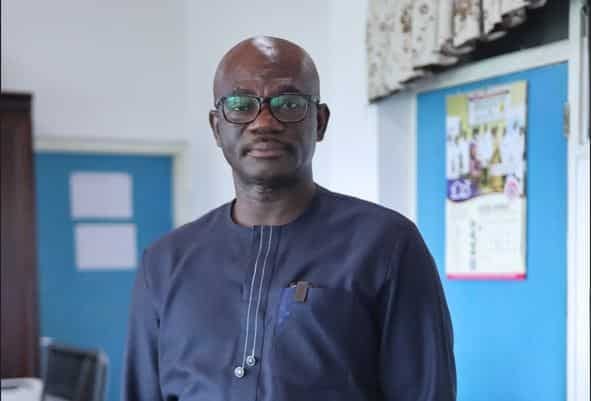
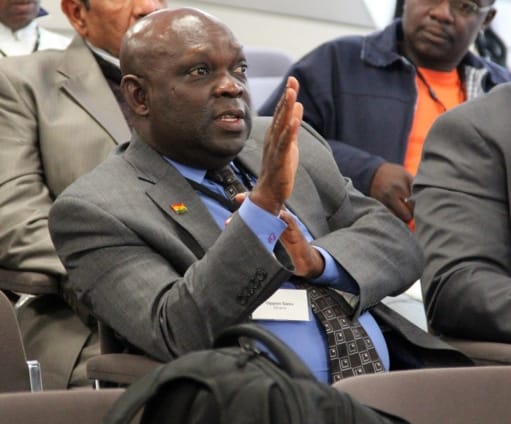
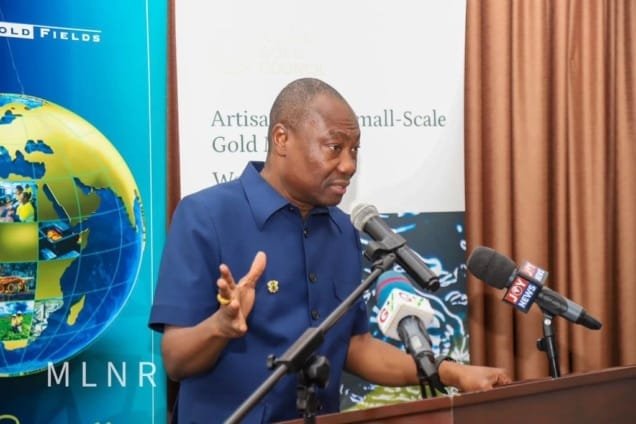
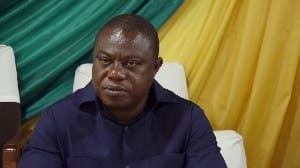
Ghanaian politician, Dr. Charles Wereko-Brobby has emphasized the need for the government and its anti-galamsey forces to prioritize honesty in their fight against illegal mining.
He urged the government to direct their efforts towards apprehending the key players involved in the illegal mining operations, rather than solely focusing on the small-scale participants.
As the former chief executive officer of the Volta River Authority, Dr. Wereko-Brobby attributed the persistence of illegal mining to political patronage.
In Dr Wereko-Brobby’s view, the “fight against galamsey must be fought in a very honest way”.
“For example, a few weeks ago, when Prof Frimpong-Boateng’s report became open and he had mentioned certain characters in that report, etc., one of my biggest disappointments was the fact that I heard one of the leading media stations in the fight against galamsey, spend a whole morning show trying to defend the actions of one of the people who had been fingered as being responsible for the damage to our lands”, he noted.
“So, the question I asked myself is: ‘What does the fight against galamsey mean when people’s interests are touched – whether it’s overtly or covertly?’”
“For me, holding the government to account to respect the laws of the country has to be paramount”, Dr Wereko-Brobby noted, adding: “So, we should, as a country, not be focused on arresting the young men who are down doing the illegal mining”.
Instead, he said, the attention should be on the big sponsors of the canker.
“But I’ve never actually heard the fight of galamsey looking for or pushing for or taking any action against the kingpins who finance galamsey”, he said.
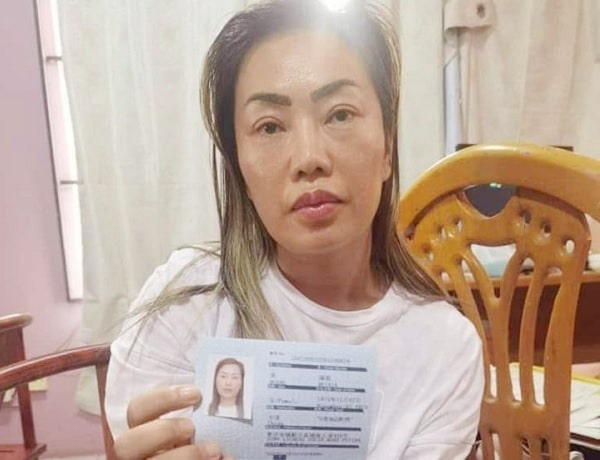
“Aisha Huang; we made a lot of noise, what’s happened to Aisha Huang?” he asked.
He said the laws of Ghana are clear-cut that small-scale mining is reserved for Ghanaians, “so who are the Ghanaians who get the licences and invite the Chinese to front for them?”
“Who are the Ghanaians who can afford USD50,000 excavators to support the operations of these people in the pit?” he asked.
“If we are really serious about fighting galamsey, we really ought to go hard against the local kingpins who are fronting and finance the effort”, he said.
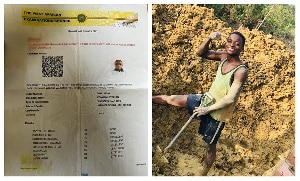
Koomson Stephen, a brilliant student who achieved outstanding results in the West African Senior School Certificate Examination (WASSCE) in 2021, has found himself involved in illegal mining, known as ‘galamsey’, as a means to overcome financial difficulties.
Koomson, a former student of Mpohor Senior High School, attained an impressive academic record with 5As and 3Bs across various subjects.
Unfortunately, due to financial constraints, the brilliant student has been unable to pursue higher education since 2021, Instead, he has resorted to engaging in galamsey and other menial jobs in order to support himself and provide assistance to his younger siblings.
A tweet shared by popular entertainment blogger Ameyaw Debrah displayed Koomson diligently working with a shovel in a galamsey pit.
Ameyaw Debrah’s post shed light on Koomson’s situation, bringing attention to the plight of the ambitious student. The tweet mentioned that Koomson who had five (5As) in his WASSCE including Mathematics, Integrated Science, Religious and Moral Education, Government, and Geography is actively seeking scholarship opportunities and any possible means to return to school.
“Koomson Stephen is a graduate of Mpohor SHS in the western region with 5As and 3Bs in his WASSCE in 2021. Due to financial constraints and other circumstances beyond him, the needy but brilliant student has abandoned education since 2021 and joined in “Galamsey” artisanal mining and other menial jobs to survive and also support other junior siblings,” part of his post read.
The issue of galamsey has long been a contentious topic in Ghana, as illegal mining activities pose significant environmental and social challenges to the wellbeing of Ghanaians.
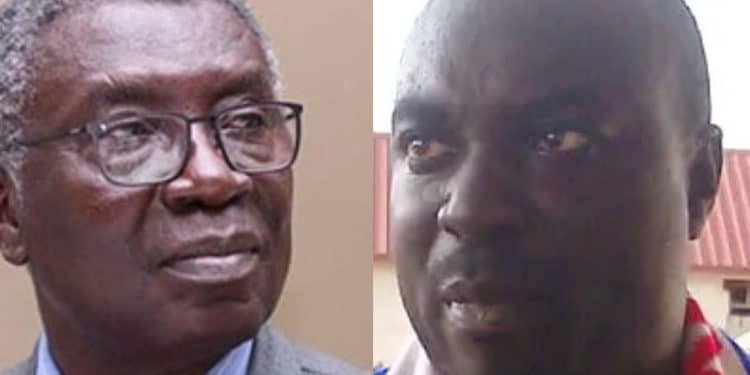
A former member of parliament (MP) for the Manso Nkwanta seat, Joseph Albert Qualm, has filed a defamation lawsuit against the former head of theInter-Ministerial Committee on Illegal Mining (IMCIM), Professor Kwabena Frimpong-Boateng.
Mr. Qualm among other reliefs is seeking GH¢2.5 million in damages from the former Minister of Environment, Science, Technology and Innovation as well as a restraining order preventing Prof. Frimpong-Boateng from making further commentary on the bombshell galamsey report he authored.
Prof. Frimpong-Boateng in the report leaked to the public domain alleged, among other things that, the former MP had used his position as a board member on the Minerals Commission to acquire dozens of mining concessions.
Professor Fimpong-Boateng also alleged in the report that Mr. Qualms would usually end “up selling these concessions to private individuals, including party members for two hundred thousand Cedis per concession. This infuriated the party in the constituency so during the 2020 primaries to select a candidate the electorate voted against Hon. Quarm, the sitting MP, who was more resourced than other candidates. Although there were allegations that he “camped” delegates and attempted to bribe them, he lost to a lesser known individual who did not have any financial muscle.”
Mr. Qualm is praying thecourt to declare “that the Defendant’s averments in his report which alleged underhand sales of mining concessions to the Plaintiff is capable of a defamatory meaning and are actually defamatory of the Plaintiff.”
He is also seeking an “injunction restraining the Defendant his servants, or agents or otherwise, from further publishing or causing to be published any portion of the Defendant’s report so long as they relate to the allegations made against the Plaintiff; and to further restrain the publication or repetition of the said or similar words defamatory of the Plaintiff through media interviews and other such by the Defendant.
A number of persons mentioned in the report have all taken legal action against the former IMCIM chairman.
In order to purify water, Ghana Water Company Limited(GWCL) has been forced to use polymer in place of alum due to ‘galamsey’ activities to the company’s director of communications, Stanley Martey.
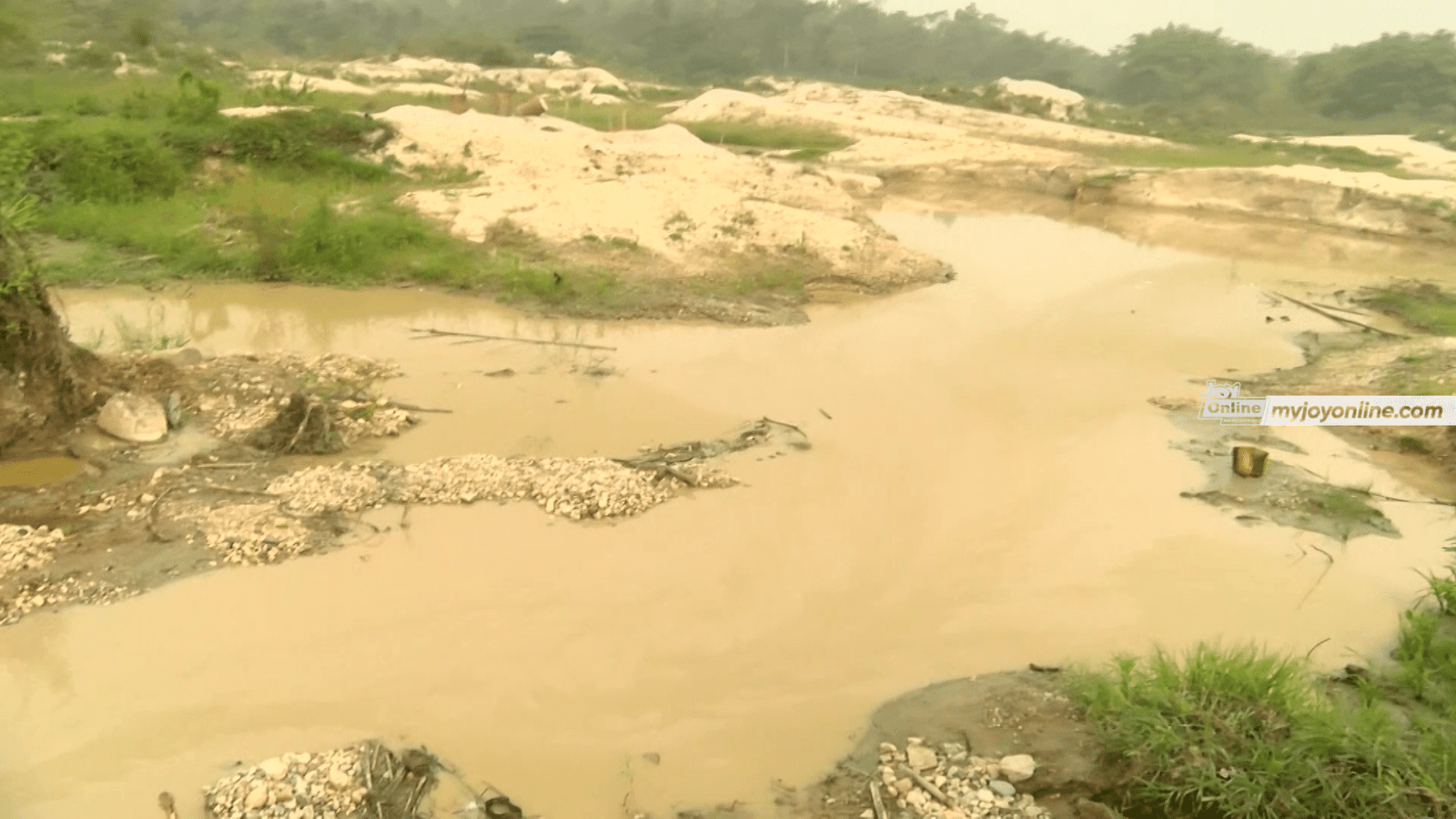
He explained that the turbidity levels in the water bodies have exceeded 10,000 NTU as a result of galamsey, rendering alum ineffective in the treatment process.
Speaking to the media on Sunday, “Initially we were using alum but now the alum is now almost ineffective and we are now using polymers.”
According to him, the use of more dangerous chemicals to treat water is affecting the staff health-wise as they inhale the chemicals.
This comes after illegal mining activities are destroying the river bodies in the country.
Meanwhile, the Ghana Water Companyin October last year noted that the cost of producing water has increased tenfold as a result of illegal mining activities, hence Management has resolved to pass the cost to the consumer.
The Company says it is burdened with spending huge sums of money on chemicals to treat high turbidity levels of raw water at various extraction stations.
Managing Director of the Company with the media he noted that after a recent tour with the Sanitation Minister, Cecilia Abena Dapaah to some mining communities in the Ashanti Region to assess the state of water bodies, it is evident that all stakeholders must join forces to chase out “galamseyers”.
However, given the surge in the cost of processing water for public consumption Mr Braimah says Ghana Water Company has no choice but to pass on the cost to the consumer.
“They (PURC) might not give us full cost but a lot of activities have changed. All those parameters would have to be considered in reviewing the tariff as long as we continue to carry out some of these activities.
“Let the quality of water get to the level the Ghana Water Company will take, then the cost will be taken out, your tariff will come down, then the other ones we cannot control, we maintain them. But if the ones that you can control, the self-inflicted ones, for me as the Managing Director the cost must be passed on”, he explained.
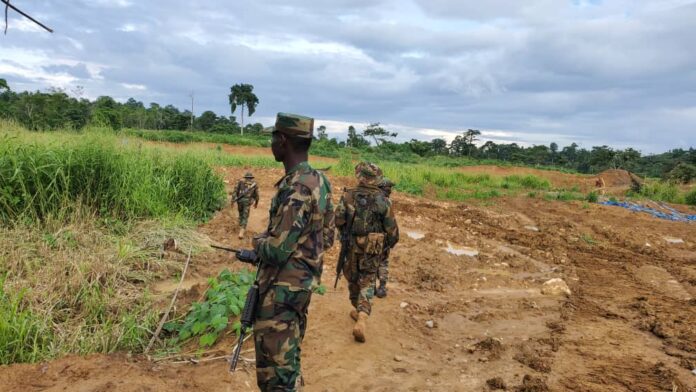
The operation halt II has burnt mining equipment as well as seized five excavators in the Bosomtwe forest reserve in theBekwai Forest Districtof the Ashanti Region.
A total of six pumping machines and other mining equipment being used by illegal miners in the reserve were seized and burnt by the operation halt II team.
The equipment were impounded and burnt in a four-day operation carried out by the military task force.
The Operation Halt II team was deployed to the area four days ago to fight galamsey in forest reserves and also to permanently patrol the the area to halt illegal mining activities in those reserves.
Some of the floating platforms and equipment mounted in various sections of the reserve had been decommissioned and destroyed.
The Bosomtwe Range Forest has been attractive to illegal miners in recent times.
It has in the last three years survived five illegal mining attacks as Forestry Commission staff on several occasions thwarted efforts of galamseyoperators who are bent on mining in the reserve.
The galamsey operators caused destruction to portions of the forest reserve.
Economic trees and water bodies and others have been destroyed by the illegal miners in the reserve.
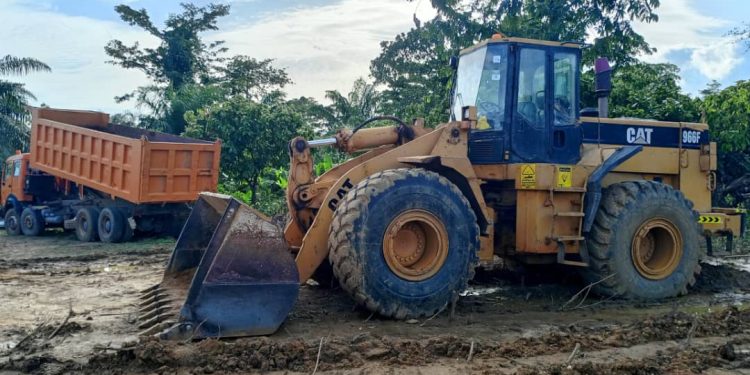
Despite the swift intervention of the Operation Halt II, which acted on tip-off, the illegal miners, with the help of the five excavators, destroyed part of the forest reserve in less than three weeks after gaining access to the reserve.
The Deputy Command Operations Officer of the Central Command of the Ghana Armed Forces, Flt. Col Louis Boakye, expressed worry at how the reserve has become target for galamsey operators.
He said that the team would be ruthless in weeding out recalcitrant illegal miners in the area.
“We want to remind everyone about the government’s uncompromising and unshakable stance against galamsey operators. Those who are stubborn and will not pay heed to any warnings should be prepared because we will keep coming at them,” he stated.
He said the current operation would remain in force until all waterways, forest reserves are without illegal miners.
Dr. Kenneth Ashigbey, the Convener of the Media Coalition Against Galamsey (MCAG), is urging the media and civil society groups to exert pressure on leaders to ensure the prosecution of the directors of Akonta Mining Limited.
According to Dr. Ashigbey, the directors of Akonta Mining Limited have caused significant destruction to water bodies and land within their operational area, making their prosecution long overdue.
To address this issue, he is calling on civil society organizations and the media to launch a robust advocacy campaign to ensure that the directors of Akonta Mining Limited face legal consequences for their actions.
On Thursday, June 8, 2023, the MCAG had a meeting with senior officials from the Criminal Investigations Department (CID) of the Ghana Police Service (GPS) to discuss the progress of the investigation into the mining activities of Akonta Mining Limited in the Tano Nmira Forest Reserves.
Speaking on Eyewitness News on Citi FM, Dr. Ashigbey pointed out that “there was enough evidence that Akonta Mining had sinned against the Minerals Commission. Therefore, we were expecting that after this long period, some action would have been taken, and they would have been in court by now.”
“If you take our Constitution, sovereignty resides in the people. The same Constitution also gives the media the mandate to hold leadership to account. Citi FM and other media houses, you need to make sure that the Director General of CID, the Attorney General, and the judiciary ensure that the likes of the directors of Akonta Mining and other influential people, including Aisha Huang and Yaw Danso Bosome Freho, the former District Chief Executive, are brought to book.”
The Convener of the Media Coalition Against Galamsey posited that it would be meaningless for leaders to plant trees without safeguarding the existing forests.
“It is really important that leaders take action. Today, we are out there planting trees. For example, in the case of Akonta Mining, the number of trees that have been cut down from these forests is alarming. As much as we want to plant trees, we need to ensure that we safeguard our forests, cocoa, and not support this illegality. It is important that all of us, including civil society and the media, ensure that we get leaders to do what they ought to do,” Dr. Ashigbey asserted.
MCAG sent two petitions to the Inspector General of Police (IGP), Dr. George Akuffo Dampare, in January 2023, to carry out swift investigations into the alleged illegal mining activities by Akonta Mining, which is owned by the New Patriotic Party (NPP) Ashanti Regional Chairman, Bernard Antwi-Boasiako.
The MCAG said it was informed that investigations were ongoing, but the group expressed disappointment that the directors of Akonta Mining Limited had not yet been prosecuted, despite the clear evidence of their alleged wrongdoing.
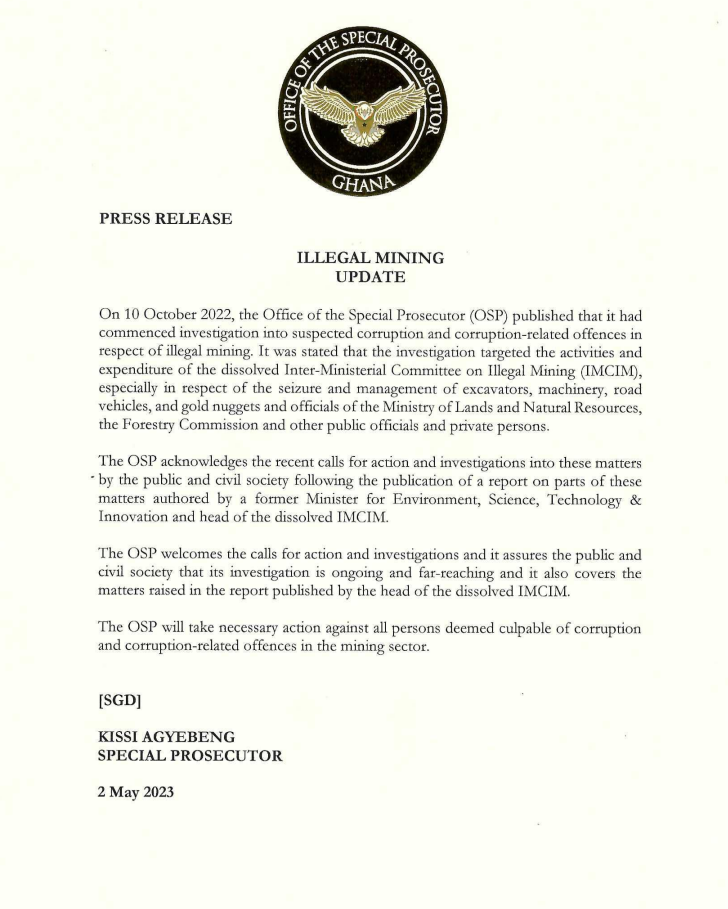
Special Prosecutor, Kissi Agyebeng, has indicated his outfit has brought in tens of people for its investigations into corruption and corruption-related activities with regard to illegal mining also known as galamsey.
In an interview with JoyNews on Saturday monitored by The Independent Ghana, Mr Kissi Agyebeng noted that since galamsey is happening in significant parts of the country, the Office of the Special Prosecutor (OSP) will likely probe hundreds of people.
In its investigations over illegal mining, the OSP has brought in former Environment Minister, Professor Frimpong-Boateng, who is being accused of being unable to account for some money spent by defunct- IMCIM.
His apprehension and subsequent release on bail did not sit well with some individuals including University of Ghana lecturer, Professor Gyampo, who says Prof Frimpong-Boateng was arrested without a charge.
Also, Horace Ekow Ewusi, the former 1st Vice-Chairman of the New Patriotic Party (NPP) in the Central Region, and Seth Mantey, a journalist with Peace FM, were both arrested and questioned as part of the ongoing probe.
According to Mr Kissi Agyebeng, he does not have the luxury of treating people accused of engaging in unlawful acts as saints.
Currently, persons directed to come to the OSP as part of investigations are considered suspects, the Special Prosecutor said.
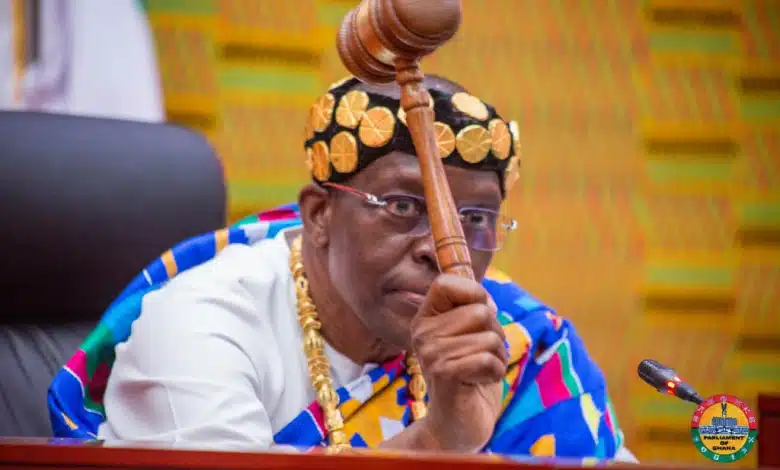
Speaker Alban Bagbin has instructed all members of parliament (MPs) to desist from engaging in any other activity today apart from planting of trees.
The speaker gave the order to enforce the planting of 10 million trees seedlings directive by government to commemorate Green Ghana Day.
Drawing inspiration from successful tree-planting endeavours in other parts of the world, such as Dubai, where deserts have been transformed into lush forests, Alban Bagbin highlighted the need for a comprehensive approach to tree planting in Ghana.
He acknowledged that while the survival rate of planted seedlings needed improvement, it was crucial to persevere in the face of challenges.
Mr. Bagbin stressed the importance of taking action and not using concerns such as illegal mining, known asgalamsey, as a reason to abandon tree planting efforts.
He emphasized that refraining from planting trees would only exacerbate the situation. Instead, he encouraged members of Parliament to lead by example and engage their constituents in the tree planting exercise.
In light of his support for the cause, Mr. Bagbin announced that there would be no parliamentary sitting on Friday to allow members to participate in tree planting activities.He called for collective efforts in nurturing and growing trees to ensure their long-term survival and the positive impact on the environment.
“The tree planting you’ve seen in the Middle East, Dubai and the rest where they really bring trees and plant for a desert to be turned into forest. That is tree planting. What we do here is planting seedlings and we should talk about growing trees.
“We plant and go away and the survival rate is what we are talking about which we have to work on. But I believe that it’s better to do this than to say that because there is galamsey (illegal mining) we will not plant the trees, then we will worsen the situation,” Mr. Bagbin stated.
He continued: “So please I want to encourage members to continue and let’s grow the trees together and I will direct that honorable members to as usual proceed to lead their constituents in the exercise. So there will be no sitting on Friday.”
The Ministry of Lands and Natural Resources, in collaboration with the Forestry Commission also urged all Ghanaians and residents to actively participate in the national tree-planting exercise.
Today, Friday, June 9, 2023, marks the third edition of Green Ghana Day.The event forms a vital component of an ambitious afforestation and reforestation agenda aimed at restoring the country’s depleted forest cover.
The lawyer for Charles Bissue, the former Secretary of the Inter-Ministerial Committee on illegal mining, says despite the issuance of a court order for his client’s arrest, he will not be turning himself in.
Speaking on Top Story on Joy FM, the legal practitioner, Nana Agyei Baffour Awuah said this is not because his client is on the run but because the arrest warrant was improperly secured.
He explained that if the court was privy to all the information including complaints of human rights abuse of Mr Bissue by the Special Prosecutor, the court order for his client’s arrest would not have been given.
“The arrest warrant would have been secured ex parte, which is without notice to Charles Bissue. So the court would have acted based solely on information the Special Prosecutor gave to it. The court made that order without being fed with the global evidence in this matter, and granted the arrest order without properly exercising its discretion not through its fault,” Mr Awuah said.
He added that “if the court was privy to certain facts including but not limited to pending suits and motions for interlocutory injunctions, it would not have granted or made an order for that arrest.”
Mr Awuah said that it is seemingly suspicious that the Special Prosecutor is in a hurry when there are about three pending suits against him.
“Why can’t he allow the processes to run their course? Is it because he has got scores to settle? There is another suit in our human rights court by Charles Bissue where he complains of warrant and breach of his fundamental human rights. When the Special Prosecutor went to secure that, warrant I am sure he didn’t disclose all these facts.”
The Lawyer stated that he and his team are also working on the way forward saying “we are going to take steps.”
This comes after the Office of the Special Prosecutor secured an order from the court to arrest the former Secretary of the Inter-Ministerial Committee on Illegal Mining (IMCIM). The order follows investigations into suspected corruption and corruption-related offences relating to illegal mining.
This order was secured after Mr Bissue failed to honour an invitation by the Special Prosecutor last month.
The OSP, on May 3, wrote to Mr. Bissue informing him that he was a necessary person for the investigation into the activities of the IMCIM, and was asked to appear on May 22.
Lawyers for Mr Bissue then wrote to the OSP requesting a copy of the petition forming the basis of this invitation, and asking that the said meeting be rescheduled to May 25 due to “a domestic emergency”.
But, Mr Awuah said that the Special Prosecutor did not only refuse the proposed May 25 date but he has also refused to hand them a copy of the petitions or documents forming a basis of the invitation and the subsequent call for arrest.
“You (Special Prosecutor) proceed to say that he should rather make available copies of documentation, what documentation are you talking about? Documentations to speak to or respond to what? You never stated so. So, is it proper discretion? Is that the way you conduct an investigation?”
Meanwhile, Charles Bissue, has gone to the High Court to stop the Office of the Special Prosecutor (OSP) from investigating him over suspected corruption and corruption-related offences involving a public officer.
According to the former Presidential staffer, an investigation cannot be launched when a copy of the petition forming the basis of the investigation has not been given to him.
In a writ sighted by JoyNews, Mr. Bissue argued that, the OSP in its half-year report dated December 31, 2022, had stated that “the Office has concluded investigation into the allegation of the use of public office for profit against Charles Bissue during his tenure as secretary to the erstwhile Inter-Ministerial Committee on Illegal Mining (IMCIM) arising from an investigative documentary titled Galamsey Fraud Part 1 published by Tiger Eye P.I and the journalist, Anas Aremeyaw Anas.”
Former Minister of Environment, Science, Technology, and Innovation, Professor Frimpong-Boateng has broken his silence over his arrest for alleged corrupt activities.
The Office of the Special Prosecutor is said to have detained the former chairman of the Inter-Ministerial Committee on Illegal Mining on May 16, during questioning over his recent galamsey report but was immediately granted a gh2 million bail.
Sources say he is yet to account for some GH320 million spent by the Committee.
Interacting with JoyNews on June 7, the former minister said he would be among the most wealthy individuals in the country should he have engaged in thievery.
“If I were a thief, I would be one of the very wealthy people in this country. If we all thought about Ghana and had the best interests of this country at heart, we would not be where we are now,” he said.
Professor Frimpong-Boateng again noted that he is not afraid of being convicted as he has nothing to hide.
According to the professor, he remains a victim of the unjust system being controlled by some powerful individuals. He compared his situation to the difficulties Jesus Christ faced at the hands of the Romans.
“I am not sacred. Why should I be scared? Even the son of God, Jesus Christ, the sinless one was convicted and killed. So if people want to kill you, they know what to do to kill you. This is what I want to say. If people who have the power to do things… they will know what to do because it happened to even the sinless one,” he said.
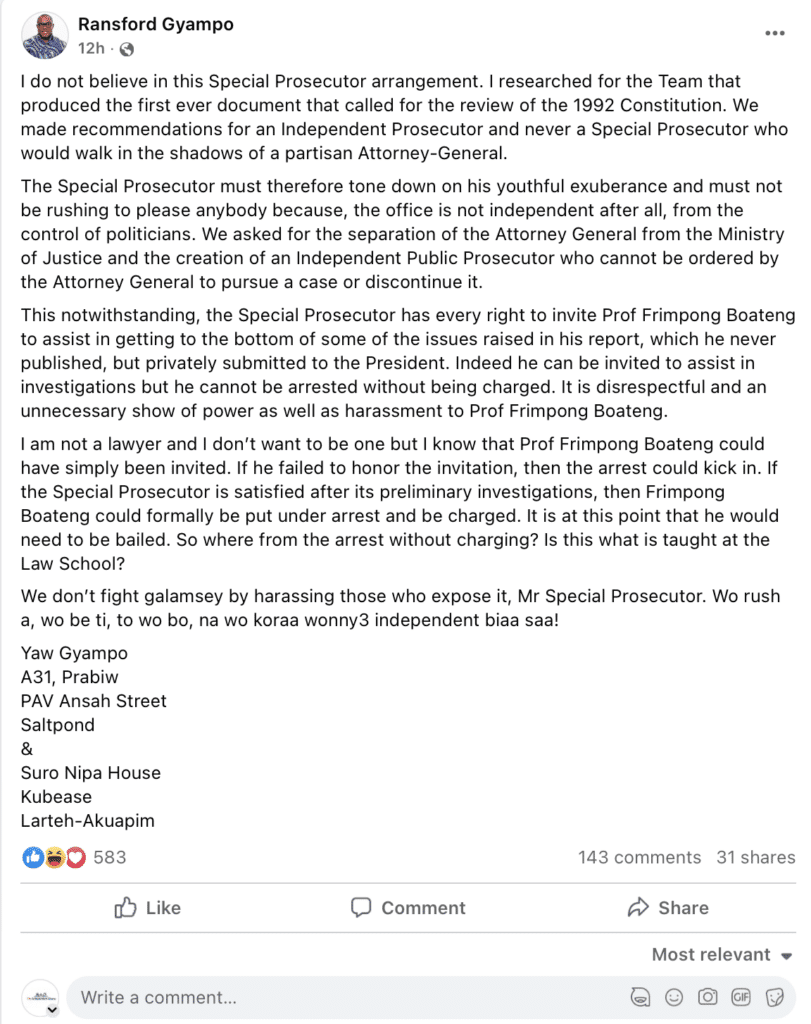
Political Scientist and lecturer at the University of Ghana, Professor Ransford Gyampo, has entreated Special Prosecutor Kissi Agyebeng to tread careful as he carries out his mandate.
He made the request following reports on the arrest of former Environment Minister, Professor Frimpong-Boateng over corrupt-activities by the Office of the Special Prosecutor.
Prof Frimpong-Boateng is being investigated by the Office over his Inter-Ministerial Committee on Illegal Mining (IMCIM) report that accused many government officials of being behind activities that affect the environment negatively.
He was granted a GH¢2 million bail as investigations continue.
Reacting to the recent development in a Facebook post, Professor Gyampo questioned the Special Prosecutor’s diligence and advised him to “tone down on his youthful exuberance and must not be rushing to please anybody.”
He strongly contested the arrest of the former minister, noting that Professor Frimpong-Boateng cannot be arrested without a charge.
The outspoken lecturer crowned his rant with a popular saying in Akan; “We don’t fight galamsey by harassing those who expose it, Mr Special Prosecutor. Wo rush a, wo be ti, to wo bo, na wo koraa wonny3 independent biaa saa!”.
Meanwhile, Prof Frimpong-Boateng believes he is a victim of the recent matter, noting that he is not involved in any shady business.
Read belowProf Gyampo’s write up on Prof Frimpong-Boateng’s arrest
The Chief Executive Officer of the Minerals Commission, Martin Ayisi, has expressed his concerns about the proposal to ban all mining operations including small-scale mining, as a measure to curb illegal mining otherwise known as ‘galamsey’ practices in Ghana.
In recent months, there has been a growing public concern regarding the environmental impact of illegal mining activities. As a result, there have been calls for the banning of all mining operations, including small-scale mining, to curb illegal practices. The aim is to facilitate the restoration of depleted forests, allowing them to regenerate their vegetation, and to enable water bodies to recover their previous state.
Considering these arguments, the CEO of the Commission believes that the sector is too resourceful to be banned uprightly.
Speaking on Asempa FM’s Ekosiisen, the CEO argues that there are about 3 million Ghanaians whose source of livelihood depends on the existence of small-scale mining and banning it will have a devastating effect on these people.
“There are about 3 million Ghanaians whose source of livelihood depends on small-scale mining across about 13 regions. Let me break it down then you can explain the source of livelihood to Ghanaians. As I try to explain livelihood, I am referring to both direct and indirect employment. You go to places like Dunkwa, Tarkwa, Diaso, Prestea, Bogoso, and Wassa Akyempin, wherever there is large-scale mining, you will find small-scale mining there. They are just around the large scale,” he said.
He continued to explain the complex dynamics of employment and livelihood in the small-scale mining sector which makes it the number one reason why the sector cannot be banned uprightly.
“If you have about let’s say 40-50 people with licenses who work at the mine who are direct small-scale employees, that is he goes to the pit to operate as an excavator operator or he handles the gold catcher, etc., all these people are directly involved. Now, Aunty Mansa who gets up to come and set up a food joint at the small-scale site for workers who work in the pit to get food to eat, we count her as part of employment, but she will fall under indirect employment. So, for such a person, her livelihood depends on the mine. So, when the mine collapses, Aunty Mansa who sells food around the mine, you have deprived her of her livelihood, so she is also part of the 3 million. The person Aunty Mansa gets her cassava from is also part of the supply chain. So, it’s a whole value chain…that is what I mean by livelihood,” he added.
Given the above, Martin Ayisi believes that banning the sector as a measure to curb illegal mining will rather collapse the small-scale mining industry in Ghana.
“So, if people get up and say let’s ban small scale, I find it quite unfortunate. But I don’t blame them because they have this information. For example, the entire Tarkwa township and everything that goes on there is associated with mining. The market in the township serves as the shipping centre for many of the things small-scale miners use in their operations. So, if the mines in the community collapse, Tarkwa town goes dead. The mines there are a source of livelihood, that is how I want people to see it, not just employment.
“There are traders in the Tarkwa market who trade with the miners every time. It is because the small-scale miners are working and mining is circulating. If you take out the university and collapse the two mining companies there, that is the end of Tarkwa, it will only exist in name. Prestea town grew out of mining, the entire town is mining. So, that is the number one contribution of small-scale mining. Not less than 10% of Ghana’s population can trace their livelihood to mining,” he continued.
The CEO of the Minerals Commission, Martin Ayisi, further shared light on the other benefits of the small-scale sector to the economy of Ghana.
“The Large-scale mining companies export their gold. Apart from those polished jewellery imported from Turkey and Dubai; all other jewellery we use locally comes from a small scale. So, another contribution is that is a source of raw gold for the jewellery industry. So, when you collapse small-scale mining, you have collapsed the jewellery industry as well. Unless you import from Turkey and Dubai.
Additionally, now, the government is pursuing ‘Gold-for-Oil’. The government buys the gold from small-scale miners. Last year, the receipt was over 1 billion dollars,” he pointed out.
The small-scale mining industry, the CEO went on to say, helps the local economy grow.
“If you take out mining, we will not have Tarkwa, Bibiani, Obuasi. When the gold mine in Obuasi, went down, you saw what happened. Business activities in the region collapsed.
“Additionally, small-scale mining is a precursor to large-scale exploration. So, when two or more small-scale mining companies begin operations in a region, then you get the large-scale miners coming around to also, explore the area. Sometimes you can get the large-scale buying the area and paying off the small-scale miners or they reach other agreements,” he argued. Martin Ayisi further highlighted the obligation of small-scale mining companies to repatriate 80% of their earnings back to the country, as required by regulations which become and source of revenue for the government.
“Then also, the receipts come back into the country. As required, as a small-scale mining company, if you export, 80% of your earnings go back to the country. And not less than a third of Ghana’s gold comes from small scale. So, unless you don’t appreciate these things or downplay them. It would be wrong on the part of anybody to say let us stop small-scale mining. It will not work.
However, amid growing concerns over the pollution of water bodies and the disruption of the forest reserves by the activities of illegal miners ‘galamseyers’, the CEO urged the public to rally around the fight to restore the lost resources to their previous state and not call for the upright banning of mining entirely in Ghana.
“I accept that rage and anger, when Ghanaians look at the water bodies and mounts pressure on the commission to ensure that the water is clean, I accept that, and I wish we all work to get the water back to what it was but don’t look at that and say we should stop it,” he stated.
The Member of Parliament for Tempane, Joseph Dindiok Kpemka believes that the fight against illegal mining, popularly known as galamsey, is a tougher battle than the fight against corruption.
Speaking on Newsfile, on Saturday, he explained that there is a mass movement of young men, who have lost interest in making an honest living, moving to areas, mostly affected by galamsey, to join in the menace.
“Go to the rural areas, at this time of the year the majority of the young men are not at home…they are not prepared to go to school, they want to cut corners, do galamsey and make money,” Mr Kpemka said.
He added that “a young man came home recently with a landcruiser V8 with three guards, what is his work? Galamsey. They all come back home to acquire assets and put up houses.”
Mr Kpemka noted that despite the increase in this phenomenon, none of these people have been arrested or penalised to dissuade others from also engaging in illegal mining.
“The fight against galamsey is more difficult than the fight against corruption. We are nowhere near winning the battle against galamsey. I will say we have just started the battle,” the MP said.
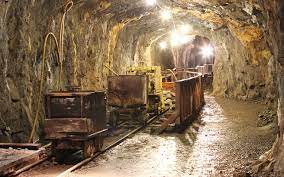
This comes after some illegal miners invaded an underground pit of AngloGold Ashanti Obuasi Mine.
The miners, who were initially reported to have been trapped, entered the underground shaft in search of gold deposits however the entry point the miners used was closed.
But in a May 30 statement, the company clarified that unauthorized individuals who enter the mine are able to exit on foot through the existing ramp and main access points, and no one has been confined underground.
The DCE for Obausi East told JoyNews that some of the miners feared they would be arrested and as a result held back on using the designated exist.
“When they go through their own access and coming back they realised its block, they exaggerate things and make it seem like people are dying so they get public sympathy,” Faustina Amissah said.
However, former MP Inusah Fuseini believes that illegal mining activities in the country result from the actions of corrupt leaders.
Also speaking on Newsfile, he stressed that, corrupt actions of leaders have led to illegal activity, adding that both corruption and illegal mining require equal attention in eradicating them.
Renowned Ghanaian broadcaster, Kwasi Kyei Darkwah (KKD), has once again sparked a fervour of discussion with his unfiltered and candid remarks.
During his appearance on the Joy News AM Show with host Benjamin Akakpo on Monday, 29th May 2023, KKD passionately voiced his concerns over what he perceives as a lack of attention from the Akufo-Addo administration towards the use of cyanide in illegal mining activities, commonly known as galamsey, in Ghana.
Cyanide and mercury are hazardous substances widely employed in illegal mining operations. They have posed significant environmental and health risks to the country’s natural resources and people’s well-being.
The host who interrogated KKD on the performance of the Akufo-Addo administration, as well as several other economic and social issues, brought up a conversation about galamsey and the use of hazardous chemicals in the mining process.
In an effort to address these issues on fair grounds, Mr. Akakpo mentioned that the government has introduced the gold catch-up programme, targeting the use of cyanide. However, KKD questioned the effectiveness of such measures.
KKD expressed his concern that the government was not doing enough to regulate the use of cyanide and other harmful chemicals used in galamsey. To him such practices essentially mean that, “now we are killing people for gold.”
The severity of the situation, according to Benjamin Akakpo, has reached a point where even the Ghana National Fire Service is encountering challenges in providing water to extinguish fires caused by galamsey activities. The widespread pollution has rendered water sources murky, prompting concerns from the fire service.
“…it is becoming so destructive that the Ghana National Fire Service has said that even water, it’s got to the point where it’s so murky in some places that the Ghana National Fire Service is struggling to get water to douse fires, it’s got to the point where a professor at the KNUST is saying you know is saying we’re having children with deformities so many things are happening, and they are more exposed,” the host contributed.
KKD further highlighted the implications on water quality, as Ghana Water asserts that treating the contaminated water has become increasingly expensive. The escalating costs of purification may soon render drinking water unaffordable for the affected communities.
“Ghana water is saying the water is getting so bad it’s getting too expensive to treat it to make it potable. So very soon water will be too expensive to drink. The people going to the galamsey sites are buying bottled water to take there,” he lamented.
Expressing his frustration, KKD condemned the ‘selfishness’, ‘greed’, and ‘irresponsibility’ exhibited by those in positions of authority. He urged Ghanaians to awaken to the realization that elected officials should possess not only knowledge but also goodwill and compassion. Without these qualities, he argued, individuals should not be chosen for leadership roles.
“So if I talk of this selfishness and greed and total irresponsibility in positions of authority Ghanaians must wake up and understand that when we elect people we choose them as our brothers as our kinsmen who have some knowledge, but we also have goodwill and compassion to come and serve. If they don’t have knowledge we shouldn’t choose them at all.”
KKD emphasized that the pursuit of wealth, avarice, and material gain should not overshadow the genuine needs and concerns of the populace. He called for a collective voice against injustice and greed, as remaining silent would only allow the few greedy individuals to prosper while the majority of the needy continue to suffer.
“If they don’t have knowledge, we shouldn’t choose them at all. But if they have knowledge, but they have no compassion, if they have knowledge, but they have no wisdom, and if they have knowledge, but they are not truthful, and if they have knowledge but all they are worrying about is their wealth and their avarice and greed so that they can fly in an aeroplane that they cannot afford and within three months of flying in that expensive aeroplane all of a sudden we realize we have no money. And we are all sitting there like you can’t be angry,” KKD said with visible distaste.
The gold catch-up programme in Ghana is an initiative of the Bank of Ghana to buy domestically produced gold from selected gold aggregators and mining firms and pay in local currency at the prevailing market price.
The gold catch up programme in Ghana is related to cyanide because cyanide is one of the chemicals used to extract gold from ore by some mining firms that participate in the programme.
According to the Society for Mining, Metallurgy & Exploration, cyanide leaching is a process that dissolves gold from ore using a dilute solution of sodium cyanide.
Cyanide is a rapidly acting, potentially deadly chemical that can dissolve gold from low-grade ore. It is commonly used in leaching processes where cyanide solution is sprayed over huge heaps of crushed ore or mixed with ore in large tanks. Cyanide can cause environmental and health impacts if released into water sources or soil. Cyanide use in gold mining requires careful management and control to prevent these impacts.
Over 300 illegal miners are allegedly trapped in AngloGold’s Obuasi mine shaft at Anwiam, Ashanti Region.
The miners reportedly entered the underground shaft in search of gold deposits but were unable to come out after all exit routes were closed.
One of the illegal miners, Ali Tijani who spoke to the media said some of his colleagues are unconscious as they have run out of food and water.
He said they have reached out to their families and are hoping authorities can intervene to get them out of the shaft.
“We went to the AngloGold mine to work, but the place was closed down. For four days now, we are just in there. We don’t have any food or water. And they do not want to give us water. We are about 300. We went there on our own. The DCE must come to our aid. We don’t have any work, that’s why we go there to mine to take care of ourselves and our families,” he said.
Meanwhile, efforts to get a comment from officials of AngloGold on the development have not yielded any positive results.
A man in his fifties tragically lost his life while fishing in a galamsey pit at Kofikurom, near Aboso in the Prestea Huni Valley Municipality.
The deceased, identified as Michael Nartey, set out on Tuesday, May 23, 2023, in the afternoon to the nearby river with the intention of catching fish.
According to a local resident named Kofi Mensah, it was initially assumed that Nartey had proceeded to his farm after fishing.
However, when he failed to return by Wednesday, May 24, 2023, concern grew among the community, prompting them to initiate a search for him.
He explained: “Michael didn’t come home after several hours, so we all thought he after hanging his net, he had moved to one of his farms and that he would come back later in the night, but he didn’t come.
“So yesterday, Wednesday morning, May 24, 2023, a search party was dispatched to look for his whereabouts. After several hours of search, the team found Michael Nartey’s footwear, dress, and the fishing net close to a pit, but the body could not be found”, he said.
According to him, Upon further search, the team noticed something in one of the pits that resembled a human hair; they drew closer and realised it was a human head.
They called on some elders and committee members of the community who came to pour libation then some divers went in to remove the body.
He added that the community folks were surprised to see Michael’s body standing in the pit when they expected a drowned body to be lying under the water or floating at the surface of the water.
The Aboso Police Command has been informed about the incident and have begun their investigation.
Meanwhile, the mortal remains have been deposited at the morgue in Tarkwa.
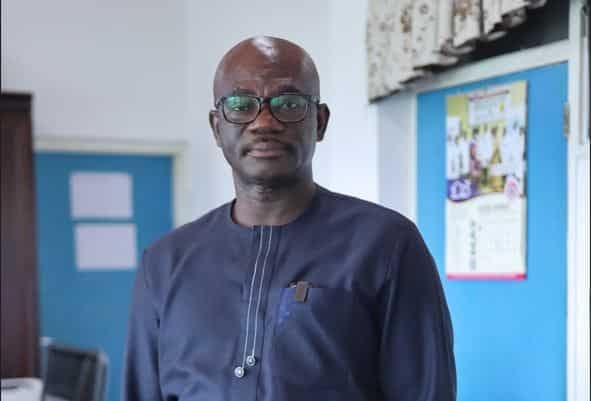
Director of Water Research Institute of the Council for Scientific and Industrial Research (CSIR), Prof Mike Osei-Atweneboana ‘twitches’ at the extent of devastation done to Ghana’s water bodies by illegal mining activities otherwise known as ‘galamsey’.
Not even the US$ 3 billion IMF loan granted the country is enough to salvage the water bodies from the destructing impact of galamsey, Prof Mike Osei-Atweneboana says.
In an interaction with The Independent Ghana, he noted that the country risks an alarming prospect of expending significant financial resources if it decides to safeguard its water bodies from the devastating impact of illegal mining activities.
Director, CSIR-Water Research Institute – Prof Mike Osei-Atweneboana
He, thus, has called for stringent measures to be taken in order to curb the menace, and also salvage Ghana’s water bodies as well as save the country from losing huge sums of monies in a bid to restore them.
“In terms of how much money the government needs to recover these water bodies, if you want to recover them just like that, the amount of money you’ll need to recover the water bodies, the country cannot envisage. It’s going to use huge sums of money.
“I wonder if I can (quantify it). The money we are even going in for from the IMF cannot even treat the water that we have here currently.
Ghana for many many years has been grappling with the ramifications of illegal mining, especially on the country’s arable lands, water bodies as well as its forest reserves.
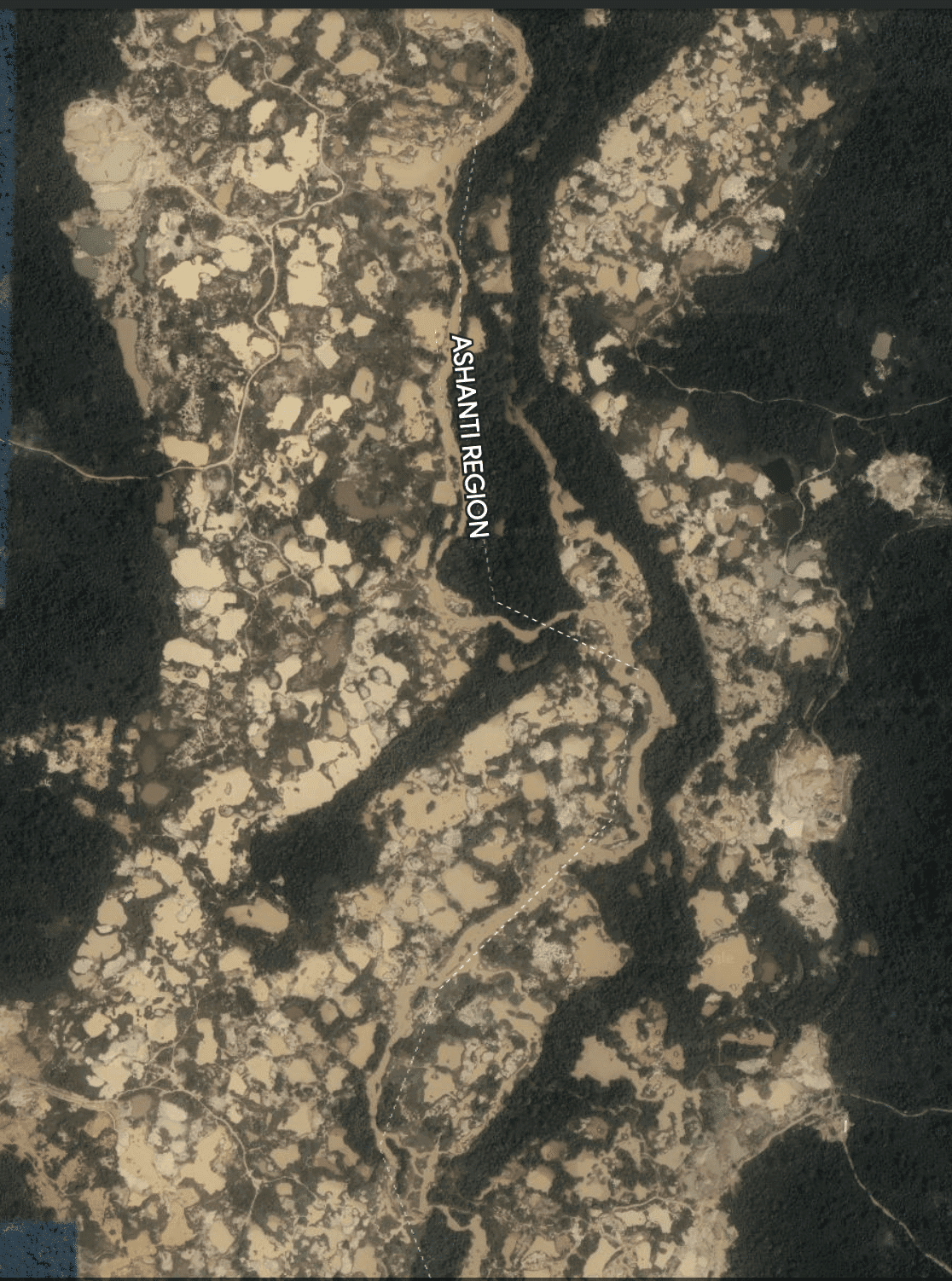
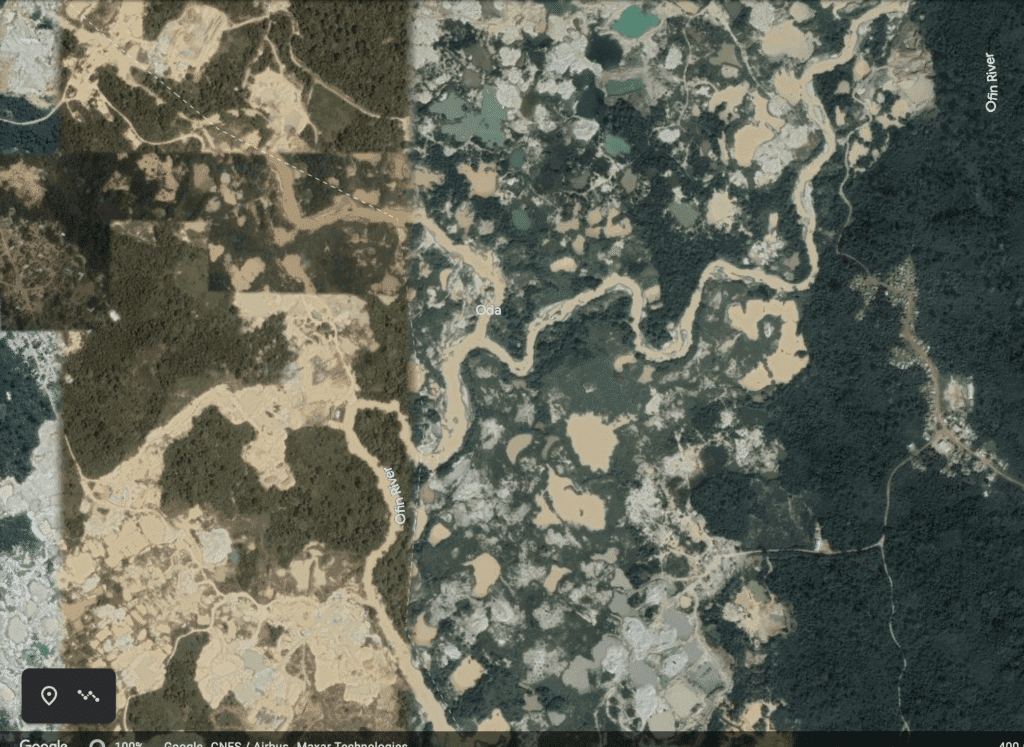
The activities of illegal miners has resulted in the pollution of various water bodies including River Pra, Offin, Densu, etc.
It is estimated that the country loses US$ 2 billion to galamsey annually. The International Growth Centre (IGC), in 2017, estimated that Ghana needs $250 million to reclaim lands and water bodies affected by illegal mining (galamsey) activities in the Western Region.
Throwing more light on the subject, Professor Osei-Atweneboana intimated that Ghana does not need to spend huge sums of monies on trying to recover its water resources if small-scale or artisanal mining is temporarily banned and galamsey is put under check.
Recall that in 2017, a government ban was issued on small-scale mining, directed at both licensed and unlicensed miners. This was in efforts to mitigate the impact of these activities on the country’s natural resources as well as crackdown on illegal mining.
The Professor contended that Ghana’s turbid water bodies were regaining its value during this period. He, thus, wants the government to reintroduce the ban on small-scale or artisanal mining as it did in 2017 in order to help restore the water bodies.
“There’s always a way of treating it because the water will refresh or treat itself if mining is stopped and I must say that when the government put an embargo on mining sometime ago for about a year or so, and [we later] accessed our data on the quality of the water, it was relatively good. When galamsey was stopped, the water started cleaning Itself and we saw significant differences in the quality of water in terms of the turbidity and the chemical composition of the water.
“We may not have the money to treat the volumes of ( polluted ) water but if we put the right methods in place, we would not need to spend money on treating the water,” he said.
Director for the CSIR-Water Research Institute, Prof Mike Osei-Atweneboana, has asked the government to re-introduce the ban on small-scale or artisanal mining as a solution to the country’s perennial illegal mining menace.
He believes this will also help restore Ghana’s water bodies which have been polluted as a result of mining activities, especially illegal mining.
Interacting with the Independent Ghana, he mentioned that available data at the Institute indicates that some water resources in the country significantly improved around 2017 when the government issued a ban on small-scale or artisanal mining.
The Professor explained that the water bodies naturally purify themselves if these activities do not go on as frequently as they currently are. In view of this, he has called for a (temporary) ban on the activity to help revive Ghana’s lost water resources.
“There’s always a way of treating it because the water will refresh or treat itself if mining is stopped and I must say that when the government put an embargo on mining sometime ago for about a year or so, and [we later] accessed our data on the quality of the water, it was relatively good… When galamsey was stopped, the water started cleaning itself and we saw significant differences in the quality of water in terms of the turbidity and the chemical composition of the water,” he said.
Government in 2017 announced a ban on small-scale or artisanal mining. This was only intended to be a temporary response to illegal mining, however, the government under President Nana Akufo-Addo extended the ban indefinitely in October 2017.
However, the following year (2018) the ban was lifted.
Speaking on the implication of illegal mining, the Professor noted that Ghana risks losing all its water resources in a few years to come if nothing is done about the menace.
“Most of the animals in water bodies – the fishes and other primary producers that sustain life- are being killed. Fishes cannot stay in these water bodies. Even those that stay become completely polluted. So the fish that you eat may have an accumulation of the chemicals that we do not want because when they get into our system, they are going to kill us. So going forward, we need to do something, otherwise in the next 10 years we will have a lot of rivers but we cannot use them and we need to change and now.
“We may not have the money to treat the volumes of ( polluted ) water but if we put the right methods in place, we would not need to spend money on treating the water,” he said.
A former Executive Director of the Forestry Commission, Oppon Sasu, has claimed that politicians’ failure to crack down on illicit mining (galamsey) during election periods.
According to him, the country witnessed an increase in illegal mining during the election years of 2012, 2016 and 2020 due to the involvement of politicians in galamsey.
He said the active involvement of politicians and politically exposed individuals in the illegal gold trade had also helped to entrench the destructive activity in the nation’s forest reserves.
Mr Sasu told the Daily Graphic in an interview that during the past three election years, politicians either relaxed the clampdown on illegal mining or simply looked away to profit from the proceeds of the illegal trade to support their political campaigns.
“During election years, we see the increase in galamsey because it gives the politicians easy money, so they lack the political will to stop it and sometimes they even take money from the illegal miners even before they enter the forest to mine, and all you need is the power to mine without restrictions.
“Even if they enter the forest for only a week, imagine the destruction they can cause and the money they can make,” he said.
Mr Sasu was speaking to the Daily Graphic during the recently held stakeholders’ dialogue on natural resources in Accra. It was held on the theme: “Harnessing our natural resources responsibly for our sustainable collective good.” Galamsey surges in election years – Former Forestry Commission boss Destructions
With over 40 years of experience in managing forest resources, Mr Sasu said without the help or protection of the political class, individuals would not be able to enter forest reserves illegally to mine gold.
Giving a personal history of how the country’s forest reserves had been degraded over the years, he said major degradation started in the 1980s when devastating wildfires broke out in many parts of the country.
He said the mass return of Ghanaians living in Nigeria in 1983 also brought about the phenomenon of illegal chainsaw logging, while farmers also encroached on forest reserves to expand their farms around the same period.
“As young officers, we realised the destruction before illegal mining set in,” he recalled.
He said until around 2000, there were no illegal mining in forest reserves, and that galamsey activities were only done with hand-held tools such as pickaxes and shovels, limiting the extent of destruction.
However, he said, by 2012, illegal miners had begun using excavators for their activities, thereby increasing the impact on the forest.
The advent of excavators in theillegal mining trade came with the influx of foreign nationals in the trade. Solution
Mr Sasu said there was no small-scale mining ongoing in any of the country’s forest reserves but rather, large- scale illegal mining under the pretext of prospecting for gold.
He, therefore, urged the government to, as a matter of urgency, stop all prospecting activities in forest reserves and encourage deep mining instead of surface mining if there was the need to mine in a forest reserve.
He also called for strict implementation of the country’s regulations on mining, noting that enforcement of the regulations would deter people from indulging in illegal mining. Positive stories
However, the Chief Executive Officer of the Minerals Commission, Martin Kwaku Ayisi, said a lot was being done to contain the menace and also cause people to shift from illegalities to legal mining.
He said small-scale mining was taking place in 13 out of the 16 regions, apart from Oti, Volta and Greater Accra, with about three million people depending on small-scale mining.
“We have to do it very well. We must not look at the few in illegal operations to say we should shut down small-scale mining,” he said.
Mr Ayisi said there were areas where illegal small-scale mining was not taking place in water bodies, ramsar sites or ecological sensitive areas and they could be supported to formalise their operations.
He said recently when the commission discovered that 200 smaller scale miners were mining illegally underground in a community in the Upper East Region, the commission stepped in to support them and they were now doing things right.
“We have given them two mercury free processing machines which cost $300 to $1,000 to work and pay. Their operation has been licensed, they have their EPA permit and they are working lawfully,” Mr Ayisi pointed out.
Also in the Bole District, the Minerals Commission CEO said 300 people were operating illegal mines, but the commission sent them three mercury-free processing machines and formalised their operations which would translate to providing a means of livelihood to 3,000 people.
‘If we do it over the next five years we will see responsible mining. The solution will not be overnight. It will require time to do this,” Mr Ayisi pointed out at the just ended Natural Resource Stakeholders Dialogue.
Pathologist Professor, Paul Opoku Sampene Ossei,has warned about the harmful impact of unlawful mining on unborn babies and pregnant women residing in mining communities across the country.
According to him, the exposure of expecting mothers to harmful toxins in the air, in water bodies and through the ingestion of foodstuff cultivated on contaminated lands has led to a rise in birth defects, stillbirths and maternal mortality in affected areas.
The pathologist who has been conducting a case study in affected areas said cognitive impairments are the least of worries in comparison to some mothers carrying dead fetuses to full term.
“Not only are these children born with cognitive impairments, some of them are born what we call stillbirth, where they die in their mothers’ uteruses or their mother’s uterus. And then some of them will also have to go through what we call spontaneous abortion.
“And then if they’re lucky and they come unto this earth, some of them will have all manner of congenital anomalies such as those that I’ve shown… children with different limbs, limbs about four limbs, some of them having to have eyes that are situated in a funny area around the forehead.
“Some of them will have what we call polydactyl which means that their limbs will have – in fact when we talk about the digitals, the fingers will have maybe six here, six there, another six on the limbs making it 12:12 making it 24 digitals. And then some of them were born, not born, let me say, were delivered without genitals,” he said.
He said the cognitive impairments of the fetuses also leads to many half formed babies being born in the affected areas.
He explained that the cognitive impairment being suffered by the foestus means that some of them are out of synch with their mothers’ labour time and thus are either born without some body parts or in some cases born with extra body parts.
“Some of these things, what happens is that these children because of their development, they cannot synchronise with the mother’s time of labour so they will have different times because of their cognitive impairments they don’t synchronise with their mother’s way of delivery so they cannot be born naturally what we call spontaneous vaginal delivery.
“So most of the mothers, most of them are from the remotest parts of where these galamsey work is being done. So by the time they’re brought to the hospital, they’re already dead. So basically, when they die like this, their mothers are dead, it behoves on the hospital and the family members to make sure that these babies are retrieved from their mother’s uterus.”
He said should government fail to address the issue, these anomalies will become commonplace in those areas in the near future.
Asantehene Otumfuo Osei Tutu II has announced that an agreement has been reached with King Charles III to reclaim lands in Ghana that have been destroyed by the activities of illegal miners.
According to the Asantehene, a conversation on Ghana’s destroyed lands surfaced while in a meeting with King Charles III whose coronation he had attended.
He noted that since the British monarch’s objectives includes preserving the forest reserves and the environment, he quickly jumped on board.
“As you know, a couple of days ago I returned from London, where I attended the coronation of King Charles III whose number one legacy, perhaps is his commitment to afforestation , reforestation and the fight against climate change.
Interestingly, my discussions with him were on land reclamation in Ghana and we had some private discussions that he has accepted to collaborate with me for us to do that,” he said.
Otumfuo Osei Tutu II made this revelation known while speaking at the launch of the Green Ghana Day held at the Kwame Nkrumah University of Science and Technology in Kumasi on May 17.
Technical teams on environment in the United Kingdom and Ghana are expected to hold a series of meetings on the matter, the Asantehene said.
This would see to the formulation of policies on ways to reclaim the lands.
Before the government’s agenda to plant trees in a bid to restore Ghana’s endangered lands and forest reserves, the Asantehene has committed to planting trees within the Ashanti region.
He reiterated his efforts to ensuring Ghana’s vegetation is protected at the launch. He called some initiatives done in the past.
According to him, 2.5 million trees were planted on a 4,000 hectare land in 2019 towards the protection of the Lake Bosomtwe.
Reiterating his commitment to tree planting and knowing the importance of trees, the overlord of Asante kingdom indicated that he has a teak plantation of about 640 acres in Kumawu.
“I am collaborating with the Forestry Commission to plant more trees in various compartments I have in the region,” he said.
The Ashanti region, despite planting over 7 million trees – highest of all regions – since the inception of the Green Ghana Day – is heavily riddled with illegal small-scale mining.
The Nkawie Forestry district in the Ashanti region is reported to have planted the highest number of seedlings on the 2022 edition of Green Ghana Day.
On his part, Chief Executive Officer of the Forestry Commission, John Allotey indicated that 81% and 72% of trees planted in 2021 and 2022 respectively survived.
He says more local trees were planted during the last edition.
“One unique feature of the 2022 edition of Green Ghana was that 35% of the seedlings were planted in Ghana’s forest reserves. A deliberate effort was made to plant more indigenous species. This help increase the percentage of economic timber species planted over the two years to 75%,” he said.
The Asante overlord, Otumfuo Osei Tutu II, has reiterated his true commitment to getting chiefs involved in galamsey and forest destruction menace severely punished, especially those in the Amansie area.
The king was speaking as a special guest during the launch of the Green Ghana Project campaign at Kwame Nkrumah University of Science Technology (KNUST) on Wednesday. This year’s program, which is scheduled for June 9, 2023, is themed “Our Forest, Our Health”.
Touching on the theme, he urged that the protection of forests and water bodies should be a collective responsibility.
Otumfuo further disclosed that we could only achieve a great impact if we worked collaboratively towards this goal.
According to him, it places a responsibility on all of us to prevent selfish people who put their personal interests above the national interest and end up destroying our forest reserves and natural resources.
“It is very sad that despite the several measures government has been putting in place to curb this menace, illegal logging and illegal mining continue to pose a threat to our forest. This means that government cannot do it alone. We must all get involved and support government and come together to solve these matters.
“My chiefs have noted that I have been strictly speaking about this, and I’m not happy about chiefs in the Amansie area where galamsey has taken over the land, and I say to them that if you sit there and you claim that you don’t know what is happening, then you’re not fit to be a chief over there,” he warned.
In a video footage available to GhanaWeb, Otumfuo Osei Tutu II said he was soon going to start with his recalcitrant chiefs who are involved in these illegalities and, however, urged the government to deal with the other ones. He entreated everyone to take matters seriously to make sure we bring all these things to a close.
According to him, the protection, preservation and sustainable exploitation of our natural resources, including our forest resources, should be a collective responsibility.
Applauding the government for the tree planting initiative, Otumfuo urged everyone, including Nananom, students and the youth, to take an active part in this exercise and contribute to the restoration of our lost forest cover.
He also commended the Ministry of Lands and Natural Resources for actively engaging our youth in this national exercise through the one-student one-tree initiative. “Each one should make a conscious effort to plant trees”.
Meanwhile, the Minister for Lands and Natural Resources, Samuel Abu Jinapor, in his speech, disclosed that the number of trees targeted to be planted this year across the country is 10 million.
Minister of Lands and Natural Resources, Samuel Abu Jinapor, has affirmed the government’s commitment to fighting illegal mining, popularly known as “galamsey”.
He said the government was not against small-scale mining but rather irresponsible mining that destroyed the natural environment.
“Our efforts, which are necessary to clamp down on galamsey, have sometimes been interpreted to mean the government of President Akufo-Addo is against small-scale mining,” he said.
Mr Jinapor was speaking at the opening ceremony of a two-day Transformational Dialogue on Small-Scale Mining organised by the University of Energy and Natural Resources (UENR) at Fiapre near Sunyani in the Bono Region yesterday.
He said it was rather the commitment of President Akufo-Addo to promote responsible small-scale mining, which was demonstrated in the reduction of withholding tax on unprocessed gold by small-scale miners, which was introduced in 2015, from three per cent to 1.5 per cent.
The dialogue organised on the theme: “Sustaining Environmental Security and Human Rights in Small-Scale Mining Operation in Ghana”, is to create a unique platform to undertake in-depth discussions on one of the most pressing issues, not only in our country, but across the globe on the sustainable exploitation of natural resources.
It brought together representatives of the Ghana National Association of Small-Scale Miners, Association of Women in Mining in Africa and Ghana, the Regional House of Chiefs, Large-Scale Mining companies, students and civil society organisations, among others.
Under severe stress
Mr Jinapor said in recent years, the world’s natural resources had come under severe stress due to rapid population growth and urbanisation, increasing agriculture production and high demand for raw materials to meet the needs of the modern-day sophisticated lifestyle and climate change.
He explained that the demand for raw materials globally had doubled in the last 20 years, adding that the increasing demand for resources had also contributed to the climate crisis, thereby worsening the pressure on these resources, and causing a form of a vicious cycle between climate change and resources.
Mr Jinapor said governments across the world were changing measures to address the emerging changes and improve the sustainability of land and resources.
Economy
The minister said mining continued to be the backbone of the national economy, “but for many years, small-scale mining remain illegal until it was formalised in 1989, through three sets of laws”.
He said since the formalisation, the small-scale mining sector had increasingly contributed to the national economy, reaching over 40 per cent in 2018.
“Last year, for example, the sector produced a total of 712, 405 ounces of gold; bringing in almost $1.2 billion in export receipts.
Today, all diamonds produced in the country are from small-scale mining, which in 2022 amounted to 82,251.99 carats,” he stated.
Mr Jinapor said apart from their contribution to the gold and diamond output, the sector was a source of employment to thousands of people and supported the lives and livelihoods of millions of citizens.
He, however, expressed concern about the increasing illegalities associated with the sector, adding that their effect on the environment had, sadly, resulted in small-scale mining being associated with environmental destruction.
Greedy
Mr Jinapor said apart from greedy and unscrupulous nation wreckers who destroyed the environment due to their interests, the drivers of the illegalities in the small-scale mining sector included unemployment, the lack of blocked-out areas for small-scale mining, challenges with securing licences and other regulatory permits and the lack of law enforcement.
He said the government was implementing policies and measures aimed at addressing the drivers such as the National Alternative Employment and Livelihood Programme, alternative sources of income and livelihood to persons engaged in mining.
Mr Jinapor explained that the programme employed several youths in the production of seedlings and reclamation of degraded mined lands.
Out of poverty
For his part, the Vice-Chancellor of UENR, Professor Elvis Asare-Bediako, said the Artisanal and Small-Scale Gold Mining (ASGM) subsector had the potential to lift many rural people out of poverty if properly organised, controlled and monitored with a strong sense of environmental responsibility.
He said in Ghana, the ASGM subsector alone directly employed about one million people and indirectly supports about 4.5 million.
Prof. Asare-Bediako said UENR would continue to promote the development of human resources and skills required to solve critical energy and natural resources challenges of society and undertake interdisciplinary academic research and outreach programmes.
The Bono Regional Minister, Justina Owusu-Banahene, said the government was doing its best to resource institutions, particularly universities to fight galamsey.
She said the government was sensitive to some shortfalls and had prepared plans to resource universities in the country, particularly UENR to assume their rightful duty and be able to contribute everlasting and innovative ideas.
The Attorney-General, Godfred Dame has revealed that the Ghana Police Service has invited former chairman of the defunct Inter-Ministerial Committee on Illegal-Mining (IMCIM), Prof Kwabena Frimpong- Boateng, for questioning following the release of the IMCIM report.
He noted that the police service has written to Prof Kwabena Frimpong-Boateng as it opens an investigation into his 37-page galamsey report, from which a docket is to be built for prosecution.
The Attorney-General said that the docket would eventually get to his office for the already-started due process to continue, thus, debunking perceptions that he has removed himself from the matter.
Prof Frimpong-Boateng, who chaired the Inter-Ministerial Committee on Illegal Mining, accused some government officials and appointees of the president at the Jubilee House, of not only engaging in galamsey but also frustrating his fight against it while in office as the Minister of Environment, Science, Technology and innovation.
He named the director of operations at the presidency, Mr. Lord Commey, as one of the bigshots behind galamsey in the country.
The world-renowned heart surgeon also accused the president’s cousin, Mr. Gabby Asare Otchere-Darko, of intervening to frustrate attempts by the committee to stop Imperial Heritage Limited from decimating some forest reserves through illegal mining activities.
Prof Frimpong-Boateng also said Information Minister Kojo Oppong Nkrumah, orchestrated media attacks on him so as to court disaffection against him in the eyes of President Nana Akufo-Addo as far as his fight against galamsey was concerned.
Additionally, Professor Frimpong-Boateng named Mr. Joseph Albert Quarm, a former Member of Parliament for Manso Nkwanta, as being neck-deep in illegal mining.
They have all denied the allegations.
Speaking on the matter, the Attorney General said, although he is interested in the report, he wants due process to be gone through without him being seen as “railroading” it.
“I am interested in it, but of course, certain fora have been invoked: I understand CHRAJ sees of it, the OSP sees of it. If now I, as Attorney General were to review the report, what would you think? I’m sure it will lend itself to all kinds of suspicions,” he told Kojo Yankson.
“I think that really, I can look at the report and review it, but if I do so, you the same media, will say: ‘He’s just a government’s lawyer.’ Yes, let independent people look at it,” Mr. Dame stated.
He said since the docket would eventually land on his table, his intervention is not needed now.
“So, really, I’ve not removed myself from the process, I’m part of it. It’s just due process that will have to be followed”.
He advised the media against sanctifying the report prematurely.
“But a caution and admonition that I would like to give you, the media is that do not raise the level of it and do not accord any sanctity to the report until it has gone through the test prescribed by law.”
Deputy Director of National Disaster Management Organisation (NADMO), Douglas, has said it is likely that the remaining miners who were believed to be trapped in the collapsed pit at Korley Teye in the Birim North District of the Eastern Region may have found an escape route.
Seven miners have been confirmed dead, and while one eyewitness mentioned that five others were rescued with injuries, NADMO can only confirm the whereabouts of three survivors.
The specific hospital where the injured miners were taken is unknown. Local residents suggest that injured victims of illegal mining accidents avoid seeking help from official facilities or reporting to the police due to fears of being handed over to law enforcement agencies.
An eyewitness, Frank Owusu Amoah, who said he personally got involved in rescue efforts, told Adom News he saw five persons rescued alive, who were taken to the hospital with injuries.
However Deputy NADMO Director, Douglas Adomako said has told Adom News Akwasi Dwamena that they managed to save three persons who are currently responding to treatment at the hospital.
He added that the rest may have used another root to escape from danger and that there is nobody in the pit.
Emmanuel Okyere, Unit Committee Secretary said the casualty rate could have been higher, explaining that torrential rains prevented many miners from going down the tunnel, leaving the field to the ‘very stubborn’ ones.
He said when they heard of the accident, they mobilised to attempt to rescue the trapped, however their efforts yielded only seven dead bodies.
Emmanuel Okyere said he was yet to confirm that one of those rescued with injuries may have died as well.
Seven people have been confirmed dead after an illegal mining pit in which they worked caved in on them at Korle Teye (Takorso site) in the Birim North District of the Eastern Region. This is according to myjoyonline.com report.
About 17 others remain trapped under debris as time runs out, with locals helping with rescue efforts doing so with anything they could lay hands on.
According to Adom News correspondent Akwasi Dwamena, who visited the site and saw the uncoordinated rescue efforts, only two of the trapped miners had been rescued alive, albeit with injuries, while the lifeless bodies of the seven had been laid out in the open, covered only with bushes.
The miners prevented the team of journalists from taking photographs of the incident and chased them away.
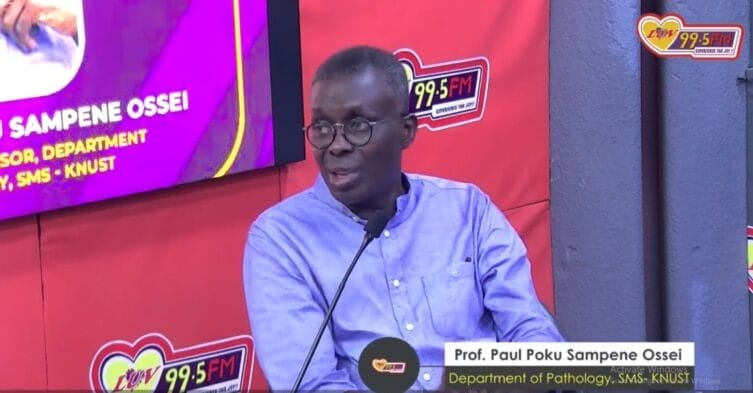
Children born in areas prone to illegal mining experience cognitive impairment and physical deformities according to Prof. Paul Poku Sampene Ossei, an Associate Professor in the Department of Pathology at the School of Medical Sciences, KNUST, and a Consultant Pathologist at the Komfo Anokye Teaching Hospital (KATH).
He noted that this is due to the extensive utilization of heavy metals in gold extraction conducted by galamsey operators.
Common metals used in the extraction of gold, including mercury, cyanide, and lead are inhaled and ingested into the bloodstream of the miners and residents of mining communities.
Children and infants can absorb up to 50% of these heavy metals when they inhale these substances or eat food contaminated by these heavy metals. Adults have the capacity to absorb 15-20 per cent of the metals, he said.
Due to this, babies conceived come out with one eye, or have their genitalia missing. He noted that their brains are not able to function properly.
“The placenta of a pregnant woman has a high affinity for lead. So if such a woman lives in a galamsey area, her baby will certainly have deformities when born. The first thing that affects these babies when they are infected by these toxins is cognitive impairment; their brains do not respond to these normal things that we see,” he said on Luv FM.
“The child’s gastrointestinal tract has a very high affinity to all those metals, which includes lead. In Ghana, we have babies being born with one eye, without genitalia,” said Prof. Sampene Ossei, adding that some mothers die with their babies.
Meanwhile, pressure mounts on government to ensure illegal mining activities become a thing of the past.
Forest reserves and several water bodies have been destroyed due to galamsey. Communities who depend on water bodies currently affected no longer have a safe space to acquire clean water for domestic and commercial purposes.
Two foreign nationals and a sub-chief have been arrested by the Akim Oda Divisional Police Command for allegedly engaging in unlawful mining at Akyem Oda in the Birim Central Municipality.
The 3, a Ghanaian sub-chief and two Yemenites who were picked up by the police at the mining site were sent to the Akim Oda Police station before being granted police inquiry bail.
The Akim Oda community mining project Coordinator Nana Owusu Agyekum, who dispelled claims they were engaging in galamsey said the two Yemenites only came to install components of a recycling machine and train his workers on the use of the machines which will be used for the community mining.
He addressed the media at Asamankese shortly after he was released on bail.
“They are Yemenites, we are in a global world and as a businessman if you are able to write a good business proposal, you can lure any investor to your side. That is how we were able to partner them. We have been using so many mechanisms, and it’s not helping. So we decided to team up and buy this machine so that we can get good results in which our water bodies and lands will not be destroyed. No one is using this machine as of now in Ghana. The two Yemenites only came to install components of the recycling machine,” he explained.
On the issue of the galamsey fight, Nana Owusu Agyemang called on the government to permanently ban the importation of chanfans.
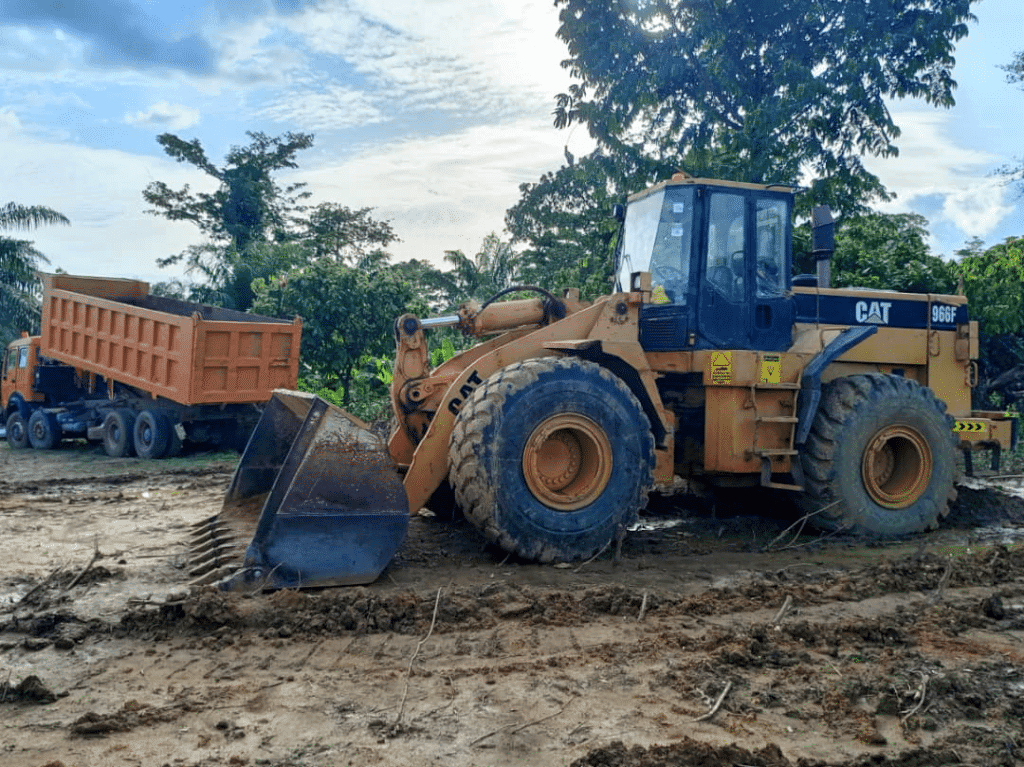
“The equipment and everything that they use is very cheap, so anybody at all can go into mining provided they can get a land. Illegal mining is the cheapest way of doing mining. If we want to check the menace of galamsey, government has to stop people from importing chanfan machines, the cheapest machine they use to do galamsey. If you stop them, they will not get machines to do galamsey,” he opined.
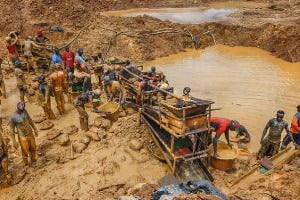
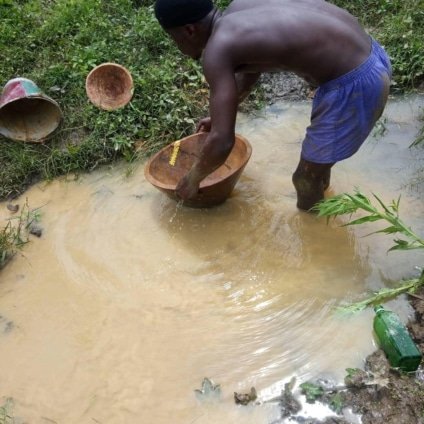
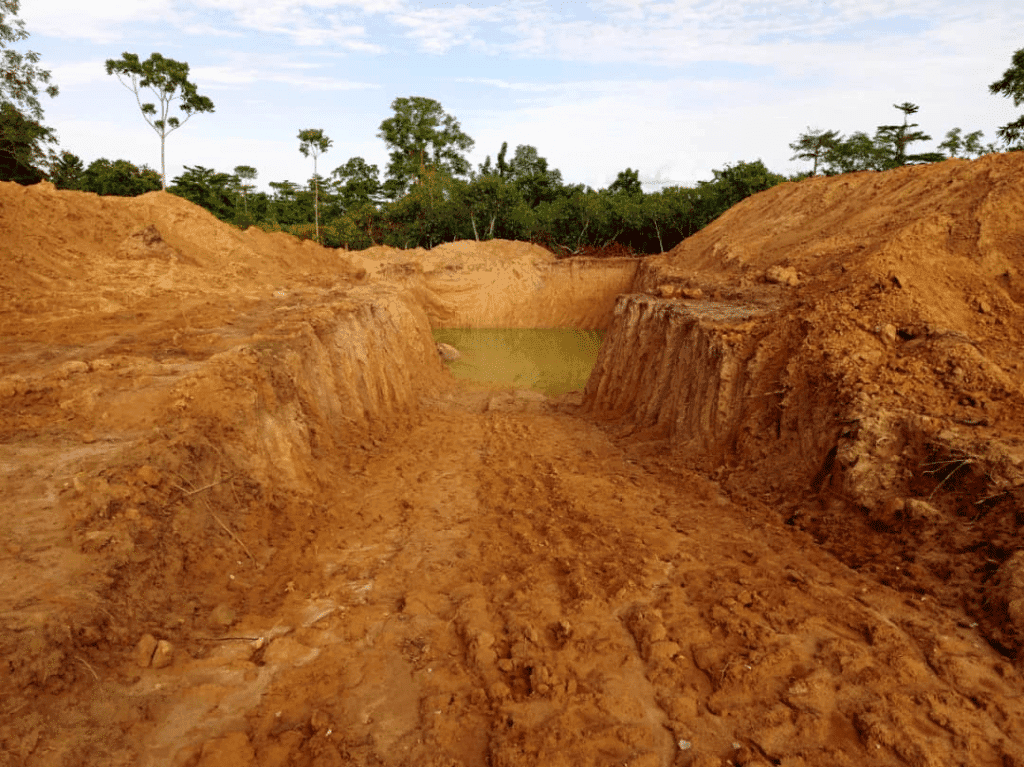
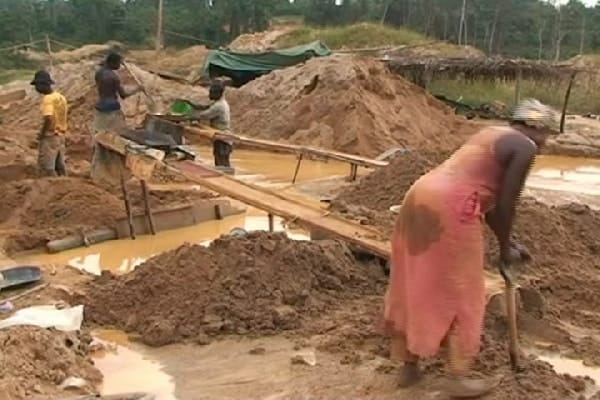
The word “Galamsey” was derived from the phrase “gather them and sell”, which means to illegal small-scale gold mining in Ghana. It is a local Ghanaian parlance used to describe individuals who engage in mining activities outside the framework of mining companies. Galamseyers dig small working pits, tunnels, and sluices by hand, often to limited depths that are far shallower and smaller than those of commercial mining companies.
Galamsey is also referred to as illegal Artisanal Small Scale mining (ASM) and is predominantly carried out in the southern part of Ghana where there are substantial reserves of gold deposits, usually within the environs of larger mining companies. The number of galamseyers in Ghana is unknown but is believed to be from 20,000 to 50,000, including thousands from China. However, according to recent estimates, there are nearly 3 million people who rely on it for their livelihoods. Galamsey settlements are usually poorer than neighboring agricultural villages, and as a group, they are economically disadvantaged.
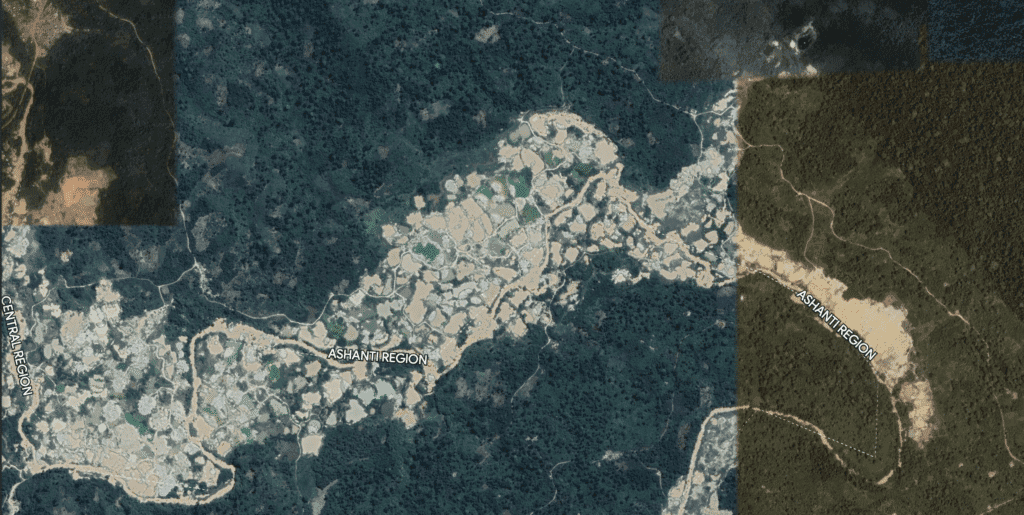
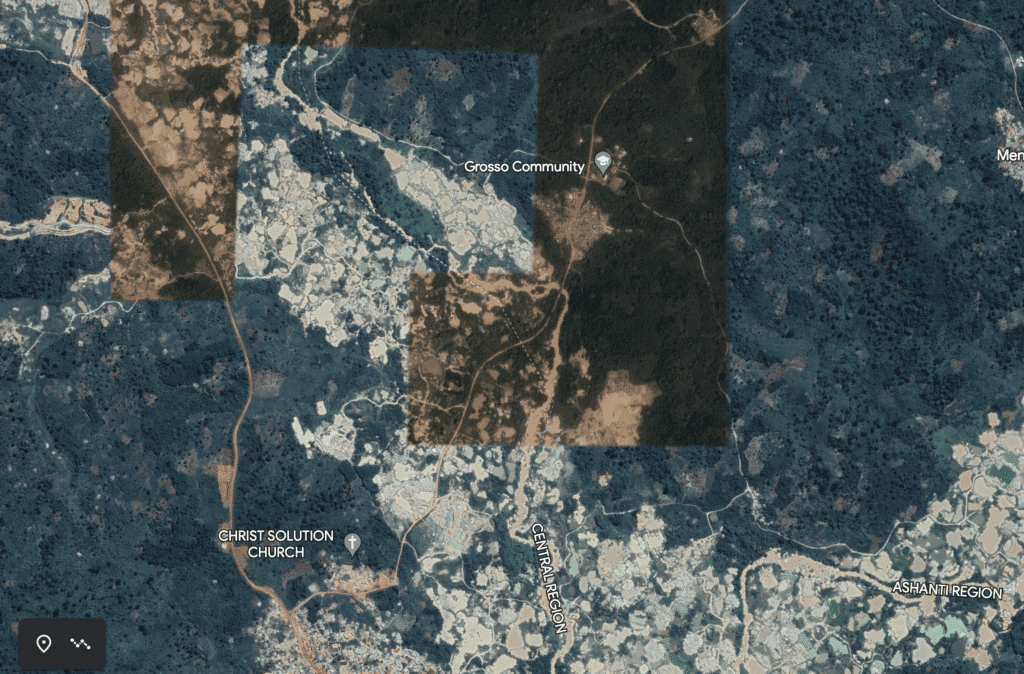
Under current Ghanaian law, it is illegal for galamseyers to dig on land granted to mining companies as concessions or licenses. Despite this, many galamseyers operate on land owned by mining companies, which is a major cause for concern. Moreover, the environmental impact of galamsey is also a significant issue. The use of mercury and other chemicals in the processing of gold ore leads to water pollution and degradation of soil quality, with long-term effects on ecosystems and human health. Deforestation and land degradation are also associated with galamsey, as miners clear vegetation and disturb the land in their quest for gold.
Galamsey poses a threat to public health, especially the health of workers who are often exposed to mercury poisoning from their crude processing methods. Many women are among the workers, acting mostly as porters for the miners. Galamsey settlements are also known to have high rates of accidents due to the use of crude tools and lack of safety measures.
In some cases, galamseyers are the first to discover and work extensive gold deposits before mining companies find out and take over. Galamsey workings are an indicator of the presence of gold. However, such discoveries often lead to conflicts between galamseyers and mining companies, as well as with traditional landowners.
Efforts to curb galamsey have been ongoing in Ghana for decades, with successive governments introducing policies and laws aimed at regulating the sector. The government of Ghana has recently embarked on a renewed effort to clamp down on the practice, with the formation of the Inter-Ministerial Committee on Illegal Mining (IMCIM) in 2017. The IMCIM’s mandate includes implementing a ban on small-scale mining, with the aim of ensuring that mining is carried out in a sustainable and environmentally responsible manner.
The government has also initiated a number of programs aimed at providing alternative livelihoods for galamseyers. These programs include the Youth in Afforestation program, which provides training and employment opportunities for young people in afforestation, and the Community Mining program, which aims to formalize small-scale mining and ensure that it is carried out in a sustainable manner.
The fight against galamsey is a long-term battle that requires a multi-faceted approach. This includes addressing poverty and unemployment, enforcing laws and regulations, promoting sustainable mining practices, and providing alternative livelihoods for those who rely on galamsey for their livelihoods. Only through sustained effort and cooperation between all stakeholders can Ghana effectively combat galamsey and ensure a sustainable future for its people and environment.
Member of Parliament for Builsa South, Dr. Clement Apaak, has reacted to claims by the Chief of New Denkyira Obuasi, Nana Agyei Nkyere II, that some government officials, soldiers, policemen, and pastors are deeply involved in galamsey.
The lawmaker says the allegation by the traditional ruler is not surprising but only a confirmation of what is already known.
In his remarks, the chief wants the formation of task forces by chiefs in their communities to check illegal mining since those in charge have failed to fight it because of their involvement.
For the chief, this would help protect our water bodies and forests for future generations’ benefit and save them from being blamed by posterity.
He said this during the observation of the Akwasidae festival.
“The fight against galamsey must not be seen as political because it affects every Ghanaian,” he said.
He added that not only have illegal mining activities destroyed the water bodies and degraded our forests, but has also adversely affected the livelihood of the good people.
Reacting to this in a tweet, Dr. Apaak said it would be important for this country to be rescued from the NPP before it becomes a galamsey republic.
He said under this administration, government appointees, pastors, soldiers, and police officers are all part of the galamsey.
He believes it will take the NDC government to rescue Ghana from the hands of this administration.
“Under the corrupt, reckless, duplicitous galamsey Akufo-Addo/Bawumia NPP gov’t, we may as well be a republic of galamsey. Well, if gov’t officials, soldiers, police, and pastors are deeply involved in galamsey, what does that make us? Walahi, we must rescue and reinstate Ghana!”
A former Minister of Trade and Industry, Dr. Ekwow Spio-Garbrah, has urged the National Democratic Congress’ (NDC) delegates to nominate John Dramani Mahama as the party’s flagbearer for the 2024 elections.
The NDC, will on Saturday, May 13, hold its presidential and parliamentary primaries across the country to elect a flagbearer and parliamentary candidates for next year’s elections.
In a statement, Dr. Spio-Garbrah described formerPresident Mahama as the best person to lead the country out of its current economic mess.
According to Dr. Spio-Garbrah, Mr. Mahama’s political experience places him ahead of other flagbearer hopefuls to rescue the country from the current economic crisis and bring relief to Ghanaians.
Dr. Spio-Garbrah also admonished the NDC leadership to adopt new and radical economic measures that would help to dramatically change the current sad global narrative of Ghana.
“The current worsening economic circumstances of our country under the failed Akufo-Addo-Bawumia administration demands that individuals and groups such as the NDC adopt new and radical economic measures that would help to dramatically change the current sad global narrative of Ghana. Among many other elements of change, Ghana needs urgent and speedy rebranding, along with an IMF bailout.
“The hope in the message of a “Ghana Beyond Aid” has been swallowed up by the dark and brackish waters of our Galamsey Waterloo, the monumental tourist attraction of a National Cathedral, “Large Hole in the Ground”, and the flights of luxurious fancy and expensive Imperial-style jetting at the Presidency.”
The founding president of the Association of Ghana Industries, Prince Kofi Kludjeson say Ghana can leverage on an estimated US$6 billion revenue in the galamsey sector which was revealed in Professor Frimpong-Boateng report.
Professor Frimpong-Boateng’s investigation on galamsey revealing the roughly billion in assets that Ghana can use.
Mr Kludjeson, who is one of the pioneers of Ghana’s telecom industry and one of the main brains behind the creation of the Ghana Stock Exchange, told Korku Lumor on the Class Morning Show on Monday, 8 May 2023, that: “If you take Ghana today, the biggest headache we are having today is looking for US$3 billion dollars and you’ll never get it until you have a button on an equity”.
The founder of the Ghana Chamber of Telecommunication noted: “If you look at Frimpong-Boateng’s report, if I were the government and all those who are fighting him, [they] should look closer at the report, [and] will see the answers there”.
“The answer is that so-called galamsey or illegal mining has about US$6 billion floating out there, ‘go and pick it’. That was in the report. ‘And I’m telling them, as a doctor, or as a surgeon, I’ve seen these lapses, so, let’s focus and go and solve the problem so that the gold that is not owned by AshantiGold and all that, we are Ghanaian-owned, not bounded by equity, let’s go and find a way to optimise it and transform it into money’”.
“These are my understandings as a businessman. That is the positive thing that the Frimpong-Boateng report has put out there”, Mr Kludjeson said.
The 37-page leaked report on galamsey authored by Prof Frimpong-Boateng, who once chaired the Inter-Ministerial Committee on Illegal Mining while he was the minister of environment, science, technology and innovation, named some top government officials, including people at the presidency, for supporting and engaging in galamsey.
In the report, the world-renowned heart surgeon said: “Throughout our struggle with illegalities in the small-scale mining sector, what baffled me was the total disregard of the president’s commitment to protect the environment”.
“I can state without any equivocation that many party officials from the national to the unit committee level had their friends, PAs, agents, relatives, financiers or relatives engaged in illegal mining”, parts of Prof Frimpong-Boateng’s report read.
Reacting to the allegations in a statement, the office of the president indicated that the report was not an official document delivered submitted to the presidency.
It described it as a catalogue of personal grievances by Prof. Frimpong-Boateng, intended to respond to some issues he faced as Chairperson of the IMCIM.
The statement explained that the document was handed to the chief of staff at the office of the president on 19 March 2021, at an informal meeting, where Prof Frimpong-Boateng complained about public attacks and criticisms made about his tenure as chairperson of the IMCIM.
“This was after Prof. Frimpong-Boateng’s tenure as Minister had not been renewed by the president of the Republic in his second term. The document did not have a transmittal or cover letter nor, indeed, an addressee, such as to suggest that it was submitted to the chief of staff for action. It is noteworthy that the IMCIM was a creature of cabinet, and any formal report on its activities would, normally, be submitted to cabinet through the cabinet secretary, or directly to the president of the Republic as chairperson of cabinet. Till date, Prof. Frimpong-Boateng has done neither,” the statement said.
It added that while Prof. Frimpong-Boateng makes serious allegations against some government appointees, as having been involved in, supporting or interfering with the fight against illegal mining, not a single piece of evidence was adduced or presented to enable the claims to be properly investigated.
The office of the president described the allegations contained in the document as hearsay.
According to the statement, since Prof. Frimpong-Boateng’s meeting with the chief of staff in March 2021, he has taken no step nor acted in furtherance of the matters contained in his report.
The statement assured the public that the president’s commitment to fighting illegal mining is unassailable, and the office of the president welcomes any information on illegal mining activities which provides a credible basis for investigations to be conducted by the Criminal Investigations Department of the Ghana Police Service.
Former minister of environment, science, technology, and innovation, Prof. Kwabena Frimpong-Boateng, has amid growing criticism, once again defended his report on the work of the Inter-Ministerial Committee on Illegal Mining (IMCIM), which he chaired until its dissolution.
The report, presented to the Chief of Staff in an informal meeting in March 2021, accused some government officials of being involved in or interfering with the fight against illegal small-scale mining (Galamsey).
Most of the implicated officials have however denied the allegations and have instead, questioned Prof. Frimpong-Boateng’s credibility and motives.
Speaking on TV3’s Ghana Tonight programme on Monday, May 8, Prof. Frimpong-Boateng, who was not reappointed as a minister in President Akufo-Addo’s second term, said he wrote the report based on his personal grievances and observations as the chairperson of the IMCIM.
According to him, he had to be brutally honest with the president about the challenges and failures of the committee.
“It wasn’t an easy thing writing about some of my colleagues, but I had to be brutally honest with the president and that is why I did what I did. I could have said, Mr President, everything is ok, it is under control, maybe given a chance we will be able to do it, write some wishy-washy thing and then not achieve anything,” he said.
“I had to be honest with myself and knowing the president, who he is, he wanted the truth and I did that from my point of view,” he added.
Meanwhile, Prof Frimpong-Boatenghas acknowledged concerns about his omission of evidence in the report, which would have helped to back his claims.
He however maintained confidence in his report and suggested that the president rather investigates his claims further.
“I didn’t have any evidence. I heard things and I put them down for him [the president] to investigate. I have not done anything about it since then. It is up to him [the president] to do whatever he wants to do with it,” he is quoted to have said in other engagements with the media.
Prof. Frimpong-Boateng’s report has sparked a lot of controversy and debate in the media and among stakeholders in the mining sector.
Some have praised him for his courage and honesty, while others have labelled him as bitter.
The Office of the President has issued a press statement on Prof. Frimpong-Boateng’s report, stating that it was not an official report formally delivered to the Office of the President. It also pointed out how the report did not have any evidence to enable investigations.
“The President’s commitment to fighting illegal mining is unassailable, and the Office of the President welcomes any information on illegal mining activities which provides a credible basis for investigations to be conducted by the Criminal Investigations Department of the Ghana Police Service,” the statement read.
Prof Kwabena Frimpong-Boateng, a former Minister for Environment, Science, Technology, and Innovation, has stated that he will not accept any ministerial position from any government again. He said he remains an active politician, but he does not want to be part of the cabinet.
“I am still a politician but to accept a ministerial appointment, no, it will never happen again,” he said on UTV.
Prof Frimpong-Boateng also defended his role as the former Chairman of the Inter-Ministerial Committee on Illegal Mining. He said he was not scared or intimidated by any lawsuits or allegations against him over the ‘galamsey’ report. He said he did his best to fight illegal mining, but some people in government sabotaged his efforts.
“I fear God, I respect people but I’m not afraid of humans. And you cannot intimidate me,” he said.
He advised government officials to be honest and upright in their work and not to compromise their integrity for personal gain.
Prof Frimpong-Boateng served as the Minister for Environment, Science, Technology, and Innovation from 2017 to 2021. He is a renowned cardiothoracic surgeon and the founder of the National Cardiothoracic Centre.
An illegal small-scale miner by name Kwofie K has vowed to convert the country into a desert if government does not resolve the unemployment problem in the country.
He sent a warning to the government over the resolve of his mining crew to engage in wanton destruction of forest cover in search of gold.
In a Facebook live video sighted by GhanaWeb, Kwofie dared the government to come after him and his crew saying their action is motivated by the alleged involvement of government and political party officials in illegal gold mining on a rather large scale.
“What is happening is annoying and I have been compelled to do this video, you should see the number of excavators passing through here to go and destroy the forests and that’s nonsense.
“We will all destroy the forest together. We cannot protect the cocoa trees because of GH₵1 milo. The leaders are destroying the land and we are following suit,” he stated.
He further implored the government to cause an end to the active involvement of political actors in the illegal mining and also provide alternative jobs for the youth engaged in same or risk the deforestation of the entire country in the near future.
“The leaders should wise up. If we destroy the land, future generations will suffer so they have to implement good policies that will provide us with sustainable jobs so we can stop the galamsey. If not, we will turn the whole Ghana into a desert in just 20 years,” he stated.
Despite several efforts by the government, Ghana continues to lose its forest cover and water resources to illegal mining at a rapidly increasing rate.
A report submitted to the presidency by former Minister for Environment, Science, Innovation and Technology, Professor Kwabena Frimpong-Boateng indicted several government and political party officials as being complicit in the galamsey canker.
The former minister who was the chairman of the now-dissolved Inter-Ministerial Committee on Small Scale Mining in his 2021 report which was recently published in the media implicated several individuals including members of parliament, ministers and presidential staffers.
Malaria cases in the Upper Denkyira East Municipality is on the rise due to the activities of illegal miners within the area.
According to reports, uncovered pits of illegal miners are spreading mosquitoes within the area; a situation which has resulted in the high numbers of malaria cases recorded in the area.
The canker if not halted or reduced would continually threaten resident lives which tend to affect the economy and development of the country.
The Municipality has over the past three years recorded increased cases of malaria due to galamsey pits left uncovered, serving as breeding grounds for mosquitoes.
In 2022, it recorded a total of 32,741 malaria cases as compared to 31,150 recorded in 2021. The number represents increased cases of 1,591 recorded and raises alarm as the country still fights illegal mining.
The Municipality in 2020 recorded 28,943 cases meaning, malaria cases had not reduced over the last few years in the area.
Joshua Bediako Mensah, the Municipal Health Information Officer told Ghanaweb that as the cases looked scary, the Directorate was working tirelessly to help reduce the menace.
He said the refusal to use treated nets, and bushes within the area among other factors were contributors to the increased number.
Also, uncovered drainage systems, poor sanitation and the environment within some communities create breeding places for mosquitoes. Thus, the spread of the disease leads to a high number of persons affected by malaria yearly.
Mensah called on stakeholders to join the fight against galamsey to help achieve the zero malaria target in the country.
The Directorate was engaging residents on regular use of the treated nets, and clearance of various drainage systems to support in that regard.
Additionally, spraying of nearby bushes, pits and radio education was ongoing to get residents informed on the need to ensure a clear and healthy environment.
The Information Officer urged the public especially pregnant women to take their health seriously in order to keep themselves and their unborn babies safe from malaria.
The Chief Executive Officer (CEO) of the Minerals Commission says government has not failed in its efforts to curb the activities of illegal mining in the country, popularly known as galamsey, is not over.
Martin Kwaku Ayisi said the menace cannot be ended anytime soon.
Even though Mr Ayisi will not admit that the government has failed in ending the canker, he said he understands the anger expressed by the citizenry.
According to him, the activities of illegal mining in the country is a big problem that must be dealt with urgently.
“I will be the first just as my minister, to say that galamsey is not over. But I will not say we have failed. I can understand the outrage and anger being expressed by Ghanaians.
“When people switch on their televisions and see that waterbody that looks like apple juice or milo, that is their anger and I understand them,” he said on JoyNews’ Newsfile on Saturday, May 6.
The issue of the galamsey canker has come to the front burner recently following the controversial report by the former chairman of the Inter-Ministerial Committee on Illegal Mining (IMCIM).
Prof Frimpong-Boateng cites persons in government who he accuses of frustrating his effort to fight galamsey when he was Environment Minister.
“Throughout our struggle with illegalities in the small-scale mining sector, what baffled me was the total disregard of the President’s commitment to protecting the environment.
“I can state without any equivocation that many party officials from the national to the unit committee level had their friends, PAs, agents, relatives, financiers, or relatives engaged in illegal mining. Most of them engaged Chinese working for them.
“I am not referring to party people who had their legitimate concession and were mining sustainably as they were instructed to do.
“There are appointees in the Jubilee House that are doing or supporting illegal mining or interfering with the fight against the menace,” excerpts of the document said.
While some of the persons he mentioned in the report have denied any wrongdoing, many in the public believe the galamsey fight is a lost cause.
Civil society organisation, Alliance for Social Equity and Public Administration (ASEPA) has called for investigations into the Operation Vanguard taskforce tasked to curb illegal mining in the country as well as the report about illegal mining (galamsey) authored by Professor Kwabena Frimpong-Boateng.
An explosive report compiled by former Environment Minister, Prof Frimpong Boateng who was the chairman of the Inter-Ministerial Committee on Illegal Mining (IMCIM) set up by President Akufo-Addo leaked into the public domain recently.
In the 2021 report to the President, Prof Boateng named senior government officials accused of active involvement in illegal mining locally called ‘galamsey’.
The Special Prosecutor, Kissi Agyebeng, has announced that he is investigating the report that has already been given to Ghana’s Chief of Staff, Madam Frema Osei Opare.
As Ghanaians begin to show interest in the Prof. Frimpong-Boateng’s report, the Executive Director for ASEPA, Mensah Thompson, wants the Office of the Special Prosecutor (OSP) to probe the matter with all seriousness.
Speaking on Power Midday news on Power 97.9 FM, Thompson alleged that Operation Vanguard– the joint military and police force tasked to fight illegal mining– was compromised at the time of its operations in the country.
He told Piesie Okrah on Power FM that there were issues raised against the taskforce when it was tasked to combat illegal mining.
“We want the Special Prosecutor not to investigate Professor Frimpong-Boateng’s report but all issues linked to galamsey, including Operation Vanguard,” Thompson said.
He believes if the works of the IMCIM and Operation Vanguard are investigated, the lapses in the fight against galamsey will be exposed.
The former chairman of the disbanded Inter-ministerial Committee on Illegal Mining (IMCIM), has said that every detail in his galamsey report is accurate and not fabricated.
Speaking to the media, the former Minister for Environment, Science and Technology said he stands by everything in the controversial report on illegal mining.
Professor Frimpong-Boateng on April 20 caused a stir when a report he authored on illegal mining popularly known as galamsey was leaked to the media.
The report indicted a couple of NPP officials for engaging in illegal mining activities.
Among the persons mentioned in the report included a leading member of the New Patriotic Party, Gabby Asare Otchere-Darko, Director of Communications at the Presidency, Lord Commey, Information Minister, Oppong Nkrumah, and a host of others.
All the persons mentioned have denied the allegations.
But speaking on the report for the first time, the renowned Heart Surgeon said he had to be brutally honest with the President in his report. Professor Frimpong-Boateng also denied leaking the report to the public.
According to Prof. Frimpong-Boateng, the report was handed over to personnel of the Criminal Investigations Department during investigations on some missing excavators.
“I didn’t write the report for Ghanaians to talk about it. It has been two years since the report was authored. I didn’t leak it. After I was granted an interview with GTV, some CID officials visited me to investigate some comments I made in the interview concerning some excavators. I then handed over the report to them.
“I am not saying the CID officials leaked the report but I gave them the report to aid with their investigations and that was the end.”
The High Courtin Accra has postponed the sentencing of En Huang, also known as Aisha Huang, until the trial for all accusations leveled against her is completed, despite pleading guilty to the allegation of unlawfully entering Ghana.
The galamsey queen was convicted after she changed her plea in the immigration offence she is facing at the High Court to guilty.
She had earlier pleaded not guilty to four counts of undertaking a mining operation without license, facilitating the participation of persons engaged in a mining operation, the illegal employment of foreigners and entering Ghana while she had been prohibited from entry.
But after eight months of trial,Aisha Huang decided to change her plea in the last charge but her plea to counts on illegal mining remain not guilty.
She was arrested in 2022 for re-entering Ghana, engaging in illegal mining despite her deportation in 2018 for a similar offence.
The state in an attempt to prove the four charges have so far presented eleven witnesses consisting of immigration officers, police officers and community leaders to testify against the Galamsey Queen.
The last witness Superintendent of Immigration, Divine Ahumah Ocansey was put to the stand on Tuesday where he testified to the immigration and illegal mining offences of the accused person.
The decision of Aisha Huang to change her plea with respect to the immigration offence, followed the testimony of the eleventh witness. Even though Aisha Huang has been convicted, her sentencing has been deferred until the final determination of the matter.
TESTIMONY ON FALSE MARRIAGE
Superintendent of Immigration, Divine Ahumah Ocansey in his testimony revealed that he was tasked by the Ghana Immigration Service to investigate the immigration status of Aisha Huang when she was arrested in 2017.
During investigations, Superintendent Ocansey indicated that it emerged that Aisha Huang entered the country in May 2010 with a thirty-day visitor’s visa and had been travelling in and out of the country until she obtained a dependent permit on November 25, 2010, as the wife of one Anthony Fabian, a Ghanaian.
According to the witness, upon further checks on the processes leading to the acquisition of her indefinite residence it was discovered that ‘most of the documents supporting her application, like the Ghana Passport Biodata pages of Anthony Fabien and the marriage certificate of her alleged marriage to Anthony Fabian were forged.’
The witness further revealed that the bank account statement belonging to Anthony Fabien which was used to support the accused person’s indefinite residence application was found to be dormant and the said account was opened with the forged Ghanaian passport.
TESTIMONY ON ILLEGAL MINING
Superintendent of Immigration Ocansey indicated in his evidence in chief that his investigation established that the accused was conducting mining operations at Bepotenten where some four Chinese males were arrested in 2017.
He revealed that the four Chinese males during interrogation in 2017 admitted to having been employed by Aisha Huang to work on a mining concession and equipment belonging to her.
TESTIMONY ON IMMIGRATION OFFENCE
On the immigration offence, the witness testified that “the accused was deported on December 19, 2018, and arrived in China on December 20, 2018, and was directed to stay out of the country until any future approval by the comptroller-General”.
The accused is however said to have returned to Ghana in 2022 and investigations into her re-entry commenced on September 9, 2022.
The witness revealed that while Aisha Huang was deported with a passport bearing the name En Huang, she returned with another passport under the name Ruxia Huang. The second passport according to the witness however had no Ghana Visa Permitting her travel to Ghana.
Superintendent of Immigration Ocansey further testified that the “edge of the biodata page of the new passport had been cut and the last page slit meaning it was invalid”.
PROSECUTION CLOSES CASE
The prosecution closed its case after the cross-examination of the eleventh witness and the case has been adjourned to May 25 for a determination of whether prosecution has proved a prima facie case against the accused.
Meanwhile, Aisha Huang and his lawyers are expected to file their submission of no case by May 16 while prosecution is expected to respond by May 24.
Two young girls are alleged to have perished in Sanfo-Aduam’s Bekwai Municipality in the Ashanti Region after falling into a galamsey pit.
The two; Alicia and Anita Asare, are all 13-year-old students at Sanfo-Aduam SDA elementary school.
They were said to have spent hours trapped beneath the pit before neighbors came to their aid.
According to eyewitnesses, the victims drowned in the pit while swimming in a river surrounded by galamsey pits with their companions who had gone on a swimming expedition.
The two teenagers were laid to rest on Tuesday, May 2, 2023, amid community mourning.
Hon. Joseph Owusu, Assemblyman for Sanfo-Aduam, verified this in a statement describing the incident as painful.
He lamented that the activities of illegal miners have destroyed the water body in the area.
He said the miners failed to cover the pits and that is something he had complained about.
“The children got stuck in one of the abandoned pits in the area. Their death was painful. They are currently not mining at the moment. But they have abandoned the pit without covering it. That was what caused the death of the two minors.”
A former Ghana Journalist Association (GJA) president, Gifty Afenyi-Dadzie, has urged the media to prioritise the fight against illegal mining, popularly known as galamsey, given the devastating impact the canker is having on the environment.
The Veteran Broadcaster made the call at an event held in commemoration of the International Press Freedom Day held on May 3, 2023, at the Ghana International Press Centre (GiPC) in Accra.
During her speech, she called on all media houses to join in the fight and ensure the menace is significantly brought to a halt.
“I believe all media houses should continually highlight the challenges until the menace is brought to a minimum,” she said.
This comes on the back of recent revelations about how Ghana’s mining sector is being exploited.
First, was a documentary aired by Al Jazeera dubbed “Gold Mafia.” It was revealed in this piece that gold worth $40 million is smuggled out of the country annually.
Second is the leaked Inter-Ministerial Committee on Illegal Mining (IMCIM) report authored by Prof Kwabena Frimpong-Boateng that exposed a number of government officials as either being involved in galamsey or interfered in the galamsey fight during his tenure as chairman of the defunct Committee.
Madam Afenyi-Dadzie during the gathering acknowledged the media’s important role in highlighting the dangers. She, however, bemoaned how the fight has become tough due to ‘powerful’ figures engaged in the menace. That notwithstanding, she urged the media not to give up the fight.
“The media played and is still playing its role in raising concern about the dangers of galamsey which threatens our existence as a people. Subsequent developments have shown that the beneficiaries of galamsey are very powerful and will not easily give up irrespective of the danger to our water bodies and environment.
“On this occasion, it is relevant to remind ourselves that based on the happenings we know now, the agenda to stop galamsey should be treated as a major existential threat that should go beyond the coalition that first highlighted the menace,” she added.
Galamsey’s impact on the environment
Illegal Mining also known as galamsey over the years has had a devastating impact on communities where such activities go on. It is also destroying the country’s virgin forests and water bodies.
At a press briefing held at the Information Ministry on Tuesday, May 2, 2023, Chief Executive Officer of the Forestry Commission, John M. Allotey, stated that thirty-four (34) of the country’s forest reserves are under threat to illegal mining, popularly known as galamsey.
Majority of these reserves under threat, he said, were in the Ashanti region.
He noted that out of the 16 regions of the country, seven have been experiencing some form of illegal mining.
“Out of this, thirty-four reserves have been affected. These are areas where you have significant illegal mining. The total area that has been mapped is about 4, 722 hectares of forest lands have been impacted. But then this is only the surface. Some of these impacts result in very deep holes and they excavate a lot of materials that will also impact on the forest,” he said.
Minister for Lands and Natural Resources, Samuel Abu Jinapor, has refrained from passing judgment on former Environment, Science, Technology and Innovation, Prof Kwabena Frimpong-Boateng, following the leaked Inter-Ministerial Committee on Illegal Mini (IMCIM) report.
Jinapor noted that it would be “undignified” on his part to judge the Professor, who is his predecessor in the fight against illegal mining (galamsey). He added that Ghanaians would be in a better position to pass any judgment on the report, as well as the work of the defunct Frimpong-Boateng-led IMCIM, which operated between 2017 and 2021.
“I think it will be most unfair to the Professor…if I’m to stand here to speak against his work, that will be so undignified and I cannot do that,” Jinapor said at a press briefing organised by the Information Ministry in Accra on Tuesday, May 2, 2023.
The release of the report, authored by Frimpong-Boateng, who was the Chairman of the defunct IMCIM, has been controversial. The report contains a list of government officials and party faithful from both the New Patriotic Party (NPP) and the National Democratic Congress (NDC) who were either involved in illegal mining or interfered in the fight against the activity during the Professor’s tenure.
NPP stalwart Gabby Asare-Otchere Darko, Information Minister Kojo Oppong Nkrumah, and former CEO of the Forestry Commission, Kwadwo Owusu Afriyie, popularly known as Sir John, are among those accused of involvement in illegal mining or interference in the fight against it. Asare-Otchere Darko has filed a defamation lawsuit against the Professor over the allegations.
While acknowledging that there may be shortcomings associated with the report, Jinapor noted that it also contains valuable information that the government can adopt in the fight against the menace.
“The report cannot be sacrosanct. It has to be interrogated. It has to be examined, and as I said, those parts that can be adopted should be, and those parts that should be jettisoned should be. What is important is that we remain focused and do the work of the good people of Ghana,” he said.
Regarding calls for persons mentioned in the report to be sanctioned, Jinapor urged persons with evidence to submit it, so that the necessary actions can be taken against anyone found culpable of the claims in the report.
“If there is evidence that anybody is involved in illegal mining, the full force of the law must be brought to the person. So the most important thing is evidence, and I believe that the security agencies are very wide awake and picking intelligence. We cannot win this fight if we begin to pick and choose,” he added.
A once pellucid water bodies bustling with aquatic fauna and flora lie lifeless in an unusual murky-brown colour.
Satellite images taken by The Independent Ghana from Google Earth show a disturbing destruction done to two natural water bodies located in the Ashanti Region; namely Oda River and Ofin River.
Pocket of craters dot across the landscape, discharging polluted liquid into the rivers that meandered it way through communities.
It seems the havoc being wreaked by illegal mining activities popularly referred to as Galamsey across Ghana’s forest reserves and water bodies is at its crescendo.
The Oda River, a source of water supply to the inhabitants of Obuasi Municipality and beyond, is still suffering from heavy pollution.
Illegal mining is ongoing in the river right at the pumping station of the Ghana Water Company Limited (GWCL) at Watereso in the Amansie South District of Ashanti.
The Ofin River is an easterly-flowing waterway in Ghana. It flowed through the Tano Ofin Reserve in Ghana’s Atwima Mponua District.
But now it is almost like a stagnant water after losing out on the characteristics of good water – it is opaque, has color, and definitely has an odour.
According to the Forestry Commission, ‘galamsey‘ is threatening 34 of the country’s 288 forest reserves.
This comes at a time when government’s fight against the menace has been questioned following a report put together by the former chairman of the defunct Inter-Ministerial Committee on illegal mining (IMCIM), Professor Kwabena Frimpong-Boateng, accusing government officials of engaging in the menace.
The report by Prof Frimpong-Baoteng raised concerns over permits given to mine in some forest reserves and buffers.
Speaking at a press conference on the state of Ghana’s Forest Reserves, the CEO of the Forestry Commission, John Allotey said the level of devastation in the affected reserves is dire.
“34 out of 288 reserves have been affected. These are areas we have significant illegal mining. The total area mapped is about 4,726.2 hectares. This is only the size of the surface, some of these impact is fully in whole. And they excavate lots of materials that will impact the forest. It’s not only the size but the impact on our water bodies and the depth of the holes created. A lot more would have to be done to be able to reclaim the land,” he stated.
In Aisha Huang‘s trial, the prosecution’s eleventh witness claimed that the defendant used forged paperwork to get a residence permit.
Huang allegedly faked her marriage certificates to obtain visas, according to the witness, Superintendent Divine Ahumah Ocansey, an officer of the Ghana Immigration Service (GIS).
Ms. Huang has been accused of conducting a mining operation without a permit, encouraging others to participate in a mining business, hiring foreign nationals without authorization, and entering Ghana despite being barred from doing so.
Superintendent Ocansey told the Court that the accused, who is also known as En Huang, was admitted into the country on May 28, 2010, and was granted a 30 days visitor’s visa.
The witness noted that Aisha travelled in and out of the country on visitor’s visas until she obtained a dependent permit on November 25, 2010, as the wife of Mr Anthony Fabien, a Ghanaian.
The dependent permit, he said, restricted the accused from working in the country but was renewed on April 28, 2015, when she obtained an indefinite residence permit as the wife of Anthony Fabien.
The 11th witness added that En Huang conducted mining operations at Bepotenten where she engaged the services of Lu Qi Jun, Gao Jin Cheng, Habin Gao and Zhang Zhipeng to mine at the mining site where the four Chinese nationals were arrested by the Obuasi GIS District Command on May 5, 2017.
During investigations, the witness explained that Aisha told security officers that she was not mining but rather rendering mine support service to one Aunty Maggie at her concession at Bepotenten, adding; “but this was found to be untrue.”
“Following the arrest of En Huang, the process leading to her acquisition of the indefinite residence permit was reviewed and it was found that most of the documents supporting her application like the Ghana passport biodata pages of Anthony Fabien and the marriage certificate of her alleged marriage to Anthony Fabien were forged.
“The Passport Office of the Ministry of Foreign Affairs and the Births and Death Registry, Accra, did not have any records on the accused person’s husband, Anthony Fabien,” he added.
The Forestry Commission has disclosed that illegal mining activities known as ‘galamsey‘ are threatening 34 of the country’s 288 forest reserves.
This comes at a time government’s fight against the menace has been questioned following a report put together by the former chairman of the defunct Inter-Ministerial Committee on illegal mining, Professor Kwabena Frimpong-Boateng, accusing government officials of engaging in the menace.
The report by Prof. Frimpong-Baoteng raised concerns over permits given to mine in some forest reserves and buffers.
Speaking at a press conference on the state of Ghana’s Forest Reserves, the CEO of the Forestry Commission, John Allotey said the level of devastation in the affected reserves is dire.
“34 out of 288 reserves have been affected. These are areas we have significant illegal mining. The total area mapped is about 4,726.2 hectares. This is only the size of the surface, some of these impact is fully in whole. And they excavate lots of materials that will impact the forest. It’s not only the size but the impact on our water bodies and the depth of the holes created. A lot more would have to be done to be able to reclaim the land,” he stated.
Reacting to Prof. Frimpong-Boateng’s report, Minister in Charge of Lands and Natural Resources, Samuel Abu Jinapor says the government’s fight to clamp down on illegal mining activities should not be judged based on portions of the report.
“I found the work of the IMICM valuable, and I am working with my team to factor into the things we are doing today. There are things about the work I may not adopt today for many reasons because the terrain may have changed and so on and so forth. The report doesn’t capture my stewardship till today. I have heard people say that the report shows that government has failed, that I have failed, the report didn’t capture my tenure. The report cannot be sacrosanct, what is important is that we remain focused,” he said.
Chief Executive Officer of the Forestry Commission, John M. Allotey, has stated that thirty-four (34) of the country’s forest reserves are under threat to illegal mining, popularly known as galamsey.
Majority of these reserves under threat, he said were in the Ashanti region.
Speaking at a press briefing held at the Information Ministry on Tuesday, May 2, 2023, he noted that out of the 16 regions of the country, seven have been experiencing some form of illegal mining.
“Out of this, thirty-four reserves have been affected. These are areas where you have significant illegal mining. The total area that has been mapped is about 4, 722 hectares of forest lands have been impacted. But then this is only the surface. Some of these impact results in very deep holes and they excavate a lot of materials that will also impact on the forest,” he said.
According to him, the total forest cover gazetted to serve as reserves and habitats of wildlife is gradually shrinking as a result of illegal mining activities.
In his submission, John Allotey explained that forest areas such as Tano Nimiri, Bonsa River, and Apamprama Forest Reserves, in the Western North, Western and the Ashanti Regions, have been heavily impacted by the menace.
He further added that as a Commission they try their best to flash out illegal miners in some of the forest reserves, but there are some areas being mined with rented armed guards who end up fighting them back.
“We have three forest reserves that have been classified as a the most difficult areas, these places are having active illegal mining happening and they have rented security and they are in the Bekwai forest district,” he added.
The Minister for Lands and Natural Resources, Samuel Abu Jinapor, indicated that the government remains resolute in fighting the illegal mining menace in the country.
Below is a list of some forest regions impacted by galamsey activities;
Nkawie Forest Region (Jimira, Tano Offin South, Offin Shelterbelt, Asenanyo)
Bekwai Forest Region (Oda River, Denyau, Bomsontwe Range, Apamprama, Subin Shelterbelt, Supuma)
Mankranso Forest Region (Desiri)
Asankregua Forest Region (Tonton, Fure River, Totua)
The Office of the Special Prosecutor (OSP) has revealed that its investigation into the country’s unlawful mining activities is well underway.
Mr Kissi Agyebeng’s administration maintains that it is already aware of the issues raised in a newly leaked report written by Prof. Kwabena Frimpong-Boateng, the former Environment Minister.
This follows calls from the general public for the office to take a keen interest in the report which exposes many infractions in the fight against galamsey. It also names top government officials supposedly involved in the activity.
This included an allegation that a garden in President Akufo-Addo’s Kyebi home was also affected by illegal mining which took the Minister’s intervention to halt.
Most of the government officials named in the report have denied any wrongdoing.
In a May 2 communique, Mr Agyebeng welcomed the calls for an investigation and also assured that his “investigation is ongoing and far-reaching and it also covers the matters raised in the report published by the head of the dissolved IMCIM.”
He also added that action will be taken against persons found culpable in the activity.
Meanwhile, the Attorney-General, Godfred Yeboah Dame says the slow pace of criminal trials and grant of bail to illegal miners who return to sites is hampering the fight against ‘galamsey’.
He however says more than 700 persons are standing trial for various offences.
Since January 2022, there have been a total of 119 criminal cases pending at the High Court and a few Circuit Courts across the nation. These cases involve the prosecution of roughly 725 people for crimes related to illegal mining (galamsey) in the nation.
The main regions where the prosecution of people involved in illicit mining is being done are the Eastern, Ashanti, Western, and Greater-Accra Regions. There are some in the Northern and Upper East Regions as well.
The Attorney-General and Minister for Justice, Godfred Yeboah Dame, provided a breakdown to the media and said that, on average, a typical galamsey case entails the arrest and prosecution of at least six or seven people.
For that matter, the total number of persons standing trial in the 119 cases is over 727. Most of the cases are prosecuted in the region in which the arrests were effected.
According to Mr. Dame, certain Ghanaians, Chinese, Nigerian, Nigerien, Burkinabe, and other West African nationals are involved in the trials.
Thirty-three (33) cases are being prosecuted at Tarkwa and Sekondi in the Western Region, twenty-three (23) cases are being prosecuted in the Obuasi and other parts of the Ashanti Region, and seven (7) cases are now pending in the High Court in Accra.
In the courts in Bolgatanga and Tamale, the Upper East and Northern Regions have three (3) and one (1) cases, respectively.
The Minerals and Mining (Amendment) Act, 2019 (Act 995) defines the offenses for which the accused are being tried as undertaking a mining operation without a license and buying or selling minerals without a license.
The passage of Act 995, spearheaded by the Akufo-Addo administration in 2019, enhanced the sentences for both buying and selling minerals without a licence and undertaking a mining operation without a licence.
In the case of a Ghanaian, it is now a term of a minimum of fifteen years imprisonment and a maximum of twenty-five years together with a fine of a minimum of ten thousand penalty units and not more than fifteen thousand penalty units. In the case of a non-Ghanaian, Act 995 has enhanced the punishment for the same offences to a term of a minimum of twenty years imprisonment and a maximum of twenty-five years, together with a fine of a minimum of one hundred thousand penalty units and not more than three hundred and fifty thousand penalty units.
The new punishment regime is in contrast to the situation under Act 703 passed in 2006, which prescribed a penalty of a minimum of three thousand penalty units or imprisonment of not more than five years for the offence of trading in minerals and mining without a licence.
Some severe challenges with prosecution of galamsey cases
The Attorney-General drew attention to some of the challenges which have accounted for the relatively slow pace of prosecution of suspected galamsey offenders.
He stated that the grant of bail by the court to accused persons on very lenient conditions enables accused persons to easily meet them and abscond afterwards.
A number of the accused persons standing trial around the country have absconded after they were granted bail by the courts. Estreating the bail bonds has proved futile since the sureties have also absconded. Even when they do not abscond, they go back to engage in galamsey after having been granted bail by the courts.
The A-G indicated that the Judiciary ought to cooperate in this fight against galamsey by being cautious in the grant of bail and speeding up its processes to ensure swift prosecution and punishment of offenders.
There is also a lack of cooperation on the part of witnesses. The prosecution sometimes finds it difficult to secure witnesses who initially give statements at the investigations stage to come to Court to testify.
The unwillingness to testify is attributable to the fact that witnesses in galamsey cases live in the same community as the accused persons and are often threatened and intimidated by them.
Mr. Dame also indicated that sometimes, investigators fail to seize the illegal mining equipment used to commit the crime, and even when they do, they fail to bring the items to court. This makes the case of the prosecution quite difficult.
Another challenge is the failure of arresting officers to arrest suspects on the mining site itself, thereby making it difficult to link the suspects to the offence.
The absence or lack of court interpreters who can speak and interpret court proceedings in the language accused persons may want to use, as witnessed in the trial of a Vietnamese national in Accra, slows down court proceedings.
The A-G assured the nation of the commitment of his Office to the prosecution and punishment of suspected offenders following the conclusion of sound investigations.
Wrong sentencing by the court
One major drawback to the prosecution of galamsey offenders is what the A-G describes as the “strange and absurd situation” where some judges fail to apply the new mandatory punishment for convicted persons and rather sentence them to a fine only.
He cited the example of a conviction of some Chinese and Ghanaian nationals for galamsey by a Circuit Court in Tarkwa in 2021 and the accused persons were sentenced to a fine.
Pursuant to the instruction of the A-G, the Western Region Office of the Attorney-General intervened and applied to the High Court for judicial review of the orders of the Circuit Court.
This application was upheld and the accused persons were then sentenced to terms of fifteen and 20 years as required by law, which are being served.
A similar situation has occurred in the Upper East Region with persons being prosecuted by the Police, having been convicted in 2022 and sentenced to only a fine. This has come to the attention of the A-G, who has instructed the Upper East Regional Office of the Attorney-General to take over and file applications to quash the sentences and for the mandatory minimum of fifteen years in jail to be imposed.
Galamsey cases in the Greater-Accra – Aisha Huang
Even though Greater Accra is not a “galamsey region”, the High Court, Accra, has been the scene of many high-profile prosecutions in the fight against galamsey, especially involving Chinese and other foreign nationals.
Notably, in September 2022, the Attorney-General, Godfred Dame, revived the prosecution of the alleged notorious galamsey queen, En Huang also known as Aisha Huang, after her prosecution had been discontinued by the Republic in 2018, and she had been subsequently repatriated.
The prosecution of Aisha Huang is proceeding steadily, with the prosecution expected to close its case by Thursday, 4th May, after having called 11 witnesses.
Mr. Dame stated that most of the galamsey cases involving foreign nationals are often coupled with charges under the immigration laws of Ghana, in view of the regular infraction by them of those laws. Most immigration offences are however punishable with the option of a fine, a situation the Attorney-General cited as responsible for the persistent violation by foreign nationals. There is a need for a strengthening of Ghana’s immigration laws to make the punishment for a violation stricter and more deterrent.
Prosecution of galamsey in the Eastern Region
50 galamsey cases are currently pending in the High Court and Circuit Courts in the Eastern Region. The prosecution has closed its case in about eight (8) of them, with the court holding that a case has been established for the accused persons to open their defence. The accused persons are thus calling evidence in their defence.
Convictions in the Eastern Region
The Attorney-General had cause to recognise the exceptional contribution of the Eastern Regional Office of the Attorney-General for their distinct contribution to the punishment of galamsey.
It would be recalled that in October 2022, the Attorney-General reported the conviction of 187 persons, including twenty-nine (29) nationals of Niger, seven (7) Nigerians and 3 Chinese for galamsey offences between 2017 and October 2022.
A majority of the accused persons were tried and sentenced under the old section 99 of the Minerals and Mining Act, 2006 (Act 703), which allowed punishment by a simple fine. This situation often compelled accused persons to plead guilty and walk away with just the imposition of a fine. The enhancement of the punishment for galamsey with the mandatory 15 years in prison, in the case of a Ghanaian and 20 years imprisonment in the case of a foreign national, in the view of the Attorney-General, has made trials in galamsey cases last longer as accused persons resist pleading guilty and resort to various processes to frustrate their trial.
This notwithstanding, out of the 187 convicted persons, thirty-three (33) were tried and sentenced under the new Act 995 between August 2021 and September 2022, and are currently serving various prison terms of between 15 years and 20 years, together with fines imposed by the court.
Galamsey trials in the Western Region
Mr Dame stated that 23 galamsey cases are currently pending, mostly at the courts in Tarkwa and Sekondi. These cases involve a range of people, including foreign nationals and officers of companies which have abused their exploratory and prospecting licences to illegally engage in mining.
Prosecution of galamsey offences in the Ashanti Region
The Ashanti Region also records 33 pending galamsey cases since 2022. The Attorney-General indicated that until recently, dockets on galamsey cases were prosecuted entirely by the Ghana Police Service, a situation which was fraught with serious challenges and which compelled the Attorney-General to instruct the Head of the Kumasi Office of the Attorney-General to call for all dockets on galamsey for prosecution.
This has sped up and boosted the general efficiency of prosecution of galamsey cases in the Ashanti Region.