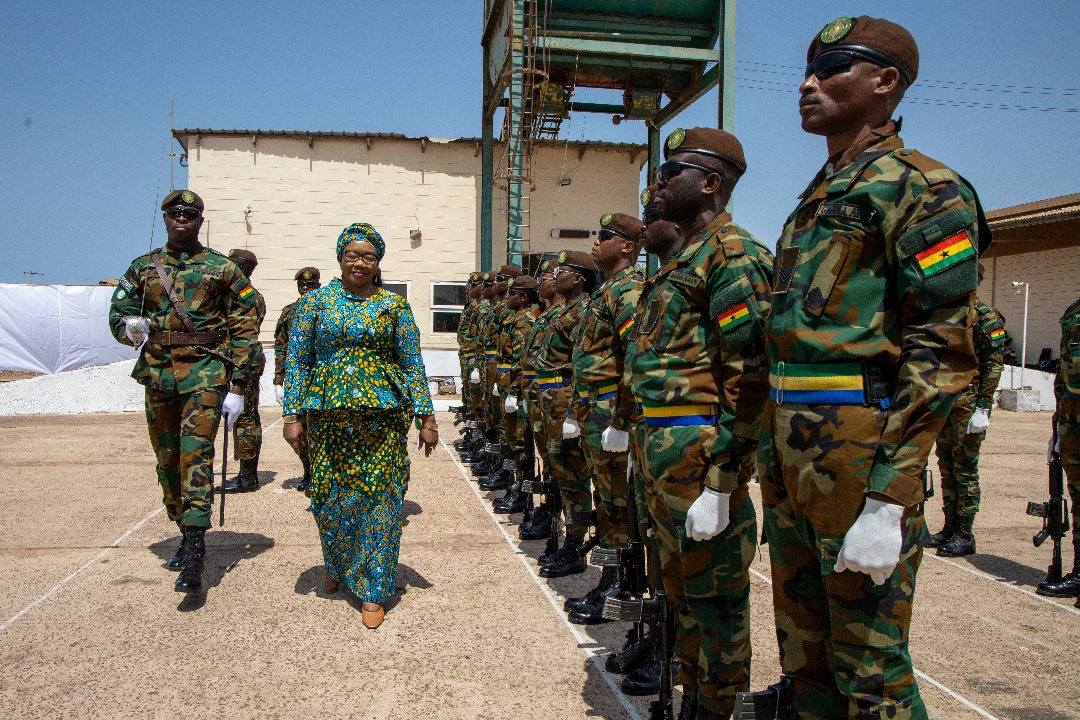
Ghanaian troops serving with the ECOWAS Mission in The Gambia (ECOMIG) were decorated with ECOWAS medals in recognition of their exceptional service and contribution to peace and stability in The Gambia.
The medal presentation ceremony, held at the contingent’s base in Barra, North Bank Region, featured a vibrant parade and was attended by high-ranking officials, dignitaries, and members of the local community.
The event coincided with Ghana’s 68th Independence Anniversary, commemorated on Thursday 6 March 2025 under the theme ‘Reflect, Review, Reset’, with the troops organisng cultural performances and showcasing made-in-Ghana products as part of the Medal Presentation ceremony.
The ceremony was graced by the presence of the ECOMIG Head of Mission, Her Excellency Madam Miatta Lily French, who was the Guest of Honour and Reviewing Officer, alongside the Minister for Defence of The Gambia, Honourable Sering Modou Njie, the Special Guest of Honour. Both officials praised the Ghanaian contingent for their professionalism, resilience, and dedication to ECOMIG’s mandate.
HE Madam Miatta Lily French highlighted GHANCOY 8’s pivotal role in maintaining peace and security in the North Bank Region, emphasizing their collaboration with the Gambia Defence and Security Forces (GDSF) in executing critical operations.
She also commended the contingent for their impactful Civil-Military Cooperation (CIMIC) activities, including blood donation drives, Tobaski donations, and community sports engagements as well as participation in last year’s Pink October awareness efforts, which she said had strengthened ties with the local communities.
President John Mahama’s Acting Spokesperson has offered an explanation for the President’s use of a private jet owned by his brother, Ibrahim Mahama, for recent official trips to Senegal and The Gambia.
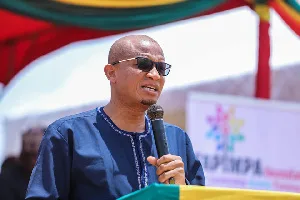
Felix Kwakye Ofosu, responding to public inquiries, stated that the private jet had been available for the President’s use well before the 2024 elections.
He highlighted that the arrangement places no financial strain on the state, as the jet is made available at no cost.
Kwakye Ofosu reiterated President Mahama’s unwavering dedication to fiscal responsibility and his sensitivity to Ghana’s current economic realities.
He also noted that the official presidential aircraft is currently under evaluation by the Air Force’s Communications Squadron, which has necessitated the temporary use of the private jet.
“The most critical point is that this alternative arrangement has not in any way, shape, or form cost the Ghanaian taxpayer a dime.
“President Mahama is mindful of the precarious economic situation and is committed to utilising public funds prudently,” Kwakye Ofosu stated in an interview with TV3.
He further assured that President Mahama would resume using the official presidential jet once the evaluation process is finalized.
“The president is focused on ensuring the best outcomes for Ghana, especially during these economically challenging times,” he added.
The National Petroleum Authority (NPA) has reached an agreement with Senegal and Gambia to export petroleum products from Ghana.
This expands the list of countries already importing petroleum products from Ghana, including Mali, Niger, Burkina Faso, Côte d’Ivoire, and Togo.
In 2023, the total volume of petroleum products re-exported and transited to these neighboring countries was 385,154,100 liters.
Delivering his opening speech at the Ghana International Petroleum Conference (GhiPCon), with the theme: “The Petroleum Industry: Building a Future for Growth, Efficiency, and Sustainability”,
Dr. Mustapha Abdul-Hamid stated that the rise in export volumes is evidence of the NPA’s significant achievements in tackling illicit fuel activities in the country.
At present, the industry has over 3,000 service providers with substantial local involvement, collectively supplying over four million metric tonnes of petroleum products each year, both domestically and internationally.
This progress has enabled the industry to become a major contributor to the growth of Ghana’s gross domestic product (GDP).
“We estimate that the sector had a monetary value of over Ghc 71 billion, representing about 84% of the country’s 2023 GDP. In the past seven years the industry returned an average annual value of over Ghc 35 billion”, he said.
The NPA emphasized its commitment to leveraging technology and innovation to stay relevant in the evolving downstream petroleum industry. By developing and implementing forward-thinking strategies and policies, the NPA aims to ensure the industry’s efficiency and profitability while providing consumers with optimal value for their money.
The authority highlighted that the new transparent automatic price adjustment formula has transitioned from an annual regulated price with unpaid subsidies to a more frequent bi-weekly and daily pricing model.
Dr. Abdul-Hamid underscored the NPA’s zero-tolerance stance on toxic fuels, noting that Ghana, Kenya, Tanzania, Uganda, and Morocco now use low-sulphur fuels with typical imports below 50 ppm, and local refineries are on track to meet compliance standards.
He also pointed out that the NPA has introduced technology-driven initiatives such as the petroleum marking scheme, bulk road vehicle tracking project, electronic cargo tracking system, and enterprise relational database management software to ensure the quality and quantity of petroleum products delivered to consumers.
Meanwhile, the Minister of Energy, delivering a speech on behalf of Vice President Dr. Mahamudu Bawumia, praised the NPA for its effective management of the “Gold for Oil” program and the Cylinder Recirculation Model (CRM), which has increased investor confidence in the sector.
He noted that these efforts, combined with a strong policy framework, have encouraged private sector investment and significantly contributed to achieving Ghana’s goal of 50% LPG penetration by 2030.
He urged the NPA to continue investing in infrastructure, adopting cutting-edge technology, and strengthening the supply chain to secure Ghana’s energy future.
He said with the geopolitical tensions to technological advancements and environmental concerns, “our strategies must be robust, innovative, and adaptable.”
He also pledged the government’s ongoing dedication to advancing and exploring policies that boost Ghanaian content, support capacity building, and create opportunities for the Ghanaian population.
He believes that such efforts can ensure that the advantages of our resources are broadly distributed while fostering the growth of our local workforce and businesses.
The National Petroleum Authority (NPA) has recently secured an agreement with Senegal and Gambia for the importation of petroleum products from Ghana.
This development expands Ghana’s export portfolio, which already includes Mali, Niger, Burkina Faso, Cote D’Ivoire, and Togo.
In 2023, the volume of petroleum products re-exported and transited to these neighboring countries amounted to an impressive 385,154,100 liters.
Speaking at the Ghana International Petroleum Conference (GhiPCon), themed “The Petroleum Industry: Building a Future for Growth, Efficiency, and Sustainability,” Dr. Mustapha Abdul-Hamid highlighted the increase in export volumes as evidence of NPA’s success in curbing illicit fuel activities in the country.
The Ghanaian petroleum industry has registered over 3,000 service providers, featuring significant local participation.
Annually, the industry delivers over four million metric tonnes of petroleum products domestically and internationally, positioning itself as a key contributor to Ghana’s GDP growth.
Dr. Abdul-Hamid noted, “We estimate that the sector had a monetary value of over GHC 71 billion, representing about 84% of the country’s 2023 GDP. In the past seven years, the industry returned an average annual value of over GHC 35 billion.”
Emphasizing the dynamic nature of the downstream petroleum industry, the NPA is committed to leveraging technology and innovation.
The NPA has implemented various strategies and policies to ensure efficiency, profitability, and value for consumers. One such initiative is the transparent automatic price adjustment formula, which has reformed pricing from an annual regulated price with unpaid subsidies to bi-weekly and daily regulations.
The NPA has also declared zero tolerance for toxic fuel, with Ghana, Kenya, Tanzania, Uganda, and Morocco now consuming low-sulfur fuels. The typical import contains less than 50 ppm, with a roadmap for local refineries to comply.
To ensure the integrity of the quality and quantity of petroleum products delivered to consumers, the NPA has rolled out several technology-based projects. These include the petroleum marking scheme, bulk road vehicle tracking project, electronic cargo tracking system, and enterprise relational database management software.
During the conference, the Minister of Energy, on behalf of Vice President Dr. Mahamudu Bawumia, praised the NPA for its strategic management of the “Gold for Oil” program and the Cylinder Recirculation Model (CRM), which have boosted investor confidence in the sector. These efforts, combined with a robust policy framework, have encouraged private sector investment, contributing significantly to Ghana’s policy target of 50% LPG penetration by 2030.
The Minister challenged the NPA to continue investing in infrastructure, leveraging cutting-edge technology, and enhancing supply chain resilience to secure Ghana’s energy future. He emphasized that strategies must be robust, innovative, and adaptable to geopolitical tensions, technological advancements, and environmental concerns.
Gambia’s national football team head coach, Tom Saintfiet, has immediately resigned following their elimination from AFCON 2023, as confirmed by AfricaSoccer.com.
The 50-year-old Belgian coach stepped down after Gambia failed to secure any points in the group stage, succumbing to a 3-2 defeat against Cameroon in their final match.
Despite initially taking the lead, a late free-kick by Cameroon’s Christopher Wooh secured their victory, advancing them to the next round.
Gambia finished the group phase without a single point, losing all three games to Senegal, Guinea, and Cameroon.
Expressing gratitude to the Football Association and his staff, Saintfiet declared,
“This was my last match as coach of Gambia. My contract expires in August 2026, but I step down.”
Despite leading Gambia to the quarter-finals in the previous AFCON, where they lost to the hosts, Saintfiet has chosen to end his tenure prematurely due to the disappointing campaign in Cote d’Ivoire.
Having led Gambia to their maiden AFCON appearance two years ago, the experienced tactician has decided to part ways, citing the timing and his commitment to the nation.
Aguibou Camara’s second-half goal secured a crucial 1-0 victory for Guinea over Gambia in Group C of the Africa Cup of Nations.
With both teams seeking their first win in the tournament, the goal came in the 69th minute when Camara slid home from Morgan Guilavogui’s cross.
The win propelled Guinea to four points in the group standings, setting the stage for a decisive final group game against current leaders Senegal.
Gambia’s coach, Tom Saintfiet, made five changes from their opening loss to Senegal, but chances were limited in the first half. Guinea came close to taking the lead in the 33rd minute, with Mohamed Bayo’s strike hitting the post.
The breakthrough came in the second half when Guilavogui set up Camara to poke home, beating Gambia defender James Gomez. Despite Bayo hitting the crossbar shortly after, Guinea held on for the 1-0 win.
The victory holds particular significance for Guinea, as Gambia had eliminated them in the last-16 stage of the 2021 edition.
Senegal kicked off theirAfrica Cup of Nations title defence with a commanding 3-0 triumph over 10-man Gambia in Group C, bringing an end to a series of surprising results at the tournament in the Ivory Coast.
In the opening Group C encounter at the Charles Konan Banny Stadium, Pape Gueye scored early for Senegal, and Lamine Camara’s brace solidified their victory. Gueye netted in the fourth minute, setting the tone for Senegal’s dominance.
The 20-year-old Camara, Young African Player of the Year in 2023, showcased his talent with a superb finish seven minutes into the second half and a sublime second goal into the top corner four minutes from time.
Gambia faced adversity as Ebou Adams received a red card for a needless stamp on Camara in stoppage time at the end of the first half. The numerical disadvantage left Gambia vulnerable in the second period.
https://www.youtube.com/watch?v=b3wxW1tnWDA
Senegal’s initial lead was established when Gueye capitalised on a poor clearance by Gambia captain Omar Colley, with Sadio Mane providing the assist.
Adams’ reckless foul on Camara led to his red card after a VAR check, resulting in a two-match ban for the Cardiff City defender.
Senegal doubled their lead with simplicity, as Ismaila Sarr received a defense-splitting pass from captain Kalidou Koulibaly, setting up Camara for his second goal. The third goal came from Iliman Ndiaye’s skillful play, creating an opportunity for Camara to complete his brace.
Despite Gambia’s surprising quarter-final run two years ago, they struggled to mount a significant offensive threat in this match. Senegal goalkeeper Edouard Mendy thwarted an early shot from Musa Barrow to secure the victory.
Gambia national football team narrowly averted a potential disaster when the oxygen supply on their flight from Gambia to Ivory Coast malfunctioned en route to the 2023 Africa Cup of Nations.
Gambian journalist Sané Malang reported that some players experienced fainting spells due to the lack of oxygen on board, prompting the aircraft to return to Gambia.
As a result, two players are grappling with the trauma of the incident.
According to a report by First Mag+, the unsettling situation was attributed to the confined size of the plane.
In a recent tweet on X (formerly Twitter), Sané Malang revealed that Ivory Coast intervened by dispatching Air Ivoir to transport the Gambian delegation safely to Yamoussoukro.
The incident underscores the critical importance of ensuring proper conditions for the safe travel of sports teams during major tournaments.
“Air Ivoir sent a new plane, which has already arrived in Gambia, to transport the Gambian delegation to Yamoussoukro.”
Gambia finds itself placed in Group C for the upcoming tournament scheduled to commence on January 13, 2024. Their campaign kicks off with a match against Senegal on Monday, January 16.
Subsequently, they will encounter Guinea and Cameroon in their last two group stage matches. The group stage fixtures will be crucial for determining their advancement in the tournament.
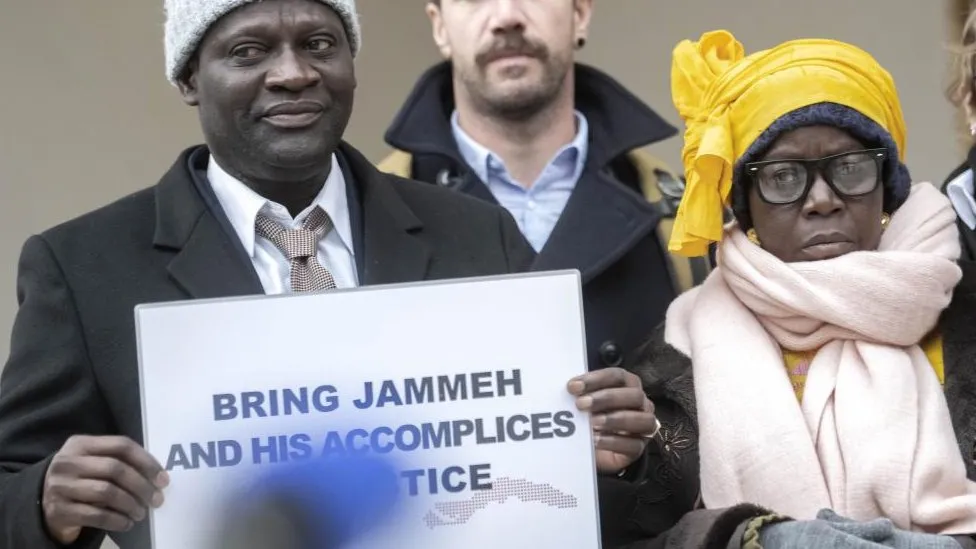
A former leader from Gambia will be tried in Switzerland for doing terrible things to people.
Ousman Sonko ran away in 2016, just before Gambian President Yahya Jammeh, who was accused of leading a harsh government, was removed from power.
Mr Sonko got arrested because some organizations showed proof that he might have been part of killings, rape, and torture.
However, his lawyer said he did not do it.
Philippe Currat said to the AFP news agency that The Gambia’s National Intelligence Agency has never. Under his control, the alleged crimes took place.
Switzerland is holding a trial using the universal jurisdiction principle, which allows them to prosecute people on their land for crimes committed in other places.
Human rights organizations think this case could be a warning to governments that are strict and controlling, showing them that the law can reach very far.
Switzerland has a long list of charges against Mr Sonko.
This involves taking part in or ordering killings, torture, and rape, all aimed at people who disagree politically. These actions could be considered severe crimes under Swiss law.
Swiss investigators went to The Gambia and talked to many people who said they were victims or saw what happened. Nine of them will be in court to tell their stories.
Mr Sonko is the most important government official to ever be tried in Europe under universal jurisdiction.
Yahya Jammeh was the president of The Gambia from 1996 to 2016. During his time in office, many people were treated unfairly and some were even killed without a fair trial.
Mr Sonko was a very important person to Mr Jammeh. He was in charge of the security services and a group called “the Junglers”.
But in 2016, just before Mr Jammeh also lost power, Mr Sonko ran away to Switzerland and asked for protection.
He was arrested a few months later because an organization called Trial International told the Swiss authorities about the bad things he was supposed to have done.
After visiting The Gambia six times and interviewing 40 people who made complaints, the Swiss attorney general created a document listing the charges.
Benoit Meystre from Trial International thinks that using universal jurisdiction is an important legal rule that shows other people who may have committed a crime that they can be held accountable for their actions. “They can’t escape punishment, or at least being charged with a crime. ”
The case against Mr Sonko is seen as very important.
Many European countries are now using universal jurisdiction, but he is the most important former government official to ever be tried like this.
This is only the second time that Switzerland has ever prosecuted someone for crimes against humanity under universal jurisdiction.
In June 2023, the former leader of a group in Liberia named Alieu Kosiah was given a 20-year prison sentence for doing crimes like rape, murder, and eating human flesh.
Other countries are also charging ex-members of Mr. Jammeh’s government with crimes.
In October, Germany gave Bai Lowe, a former member of a group called “the Junglers”, a life in prison for doing really bad things to people.
There will be a trial in Colorado for someone who used to be part of a group.
The Gambia has started a way to bring justice for the wrong things that happened under Mr Jammeh’s rule. But it is taking a long time, according to human rights groups.
Even in the trial in Switzerland against Mr. Sonko, one of the people who was supposed to talk in court died before the trial started.
But for those who share their stories in court, it helps them feel better. If the federal court finds them guilty, they will feel very relieved. “They will finally get the answers they have been waiting for after many years,” said Mr. Meystre from Trial International.
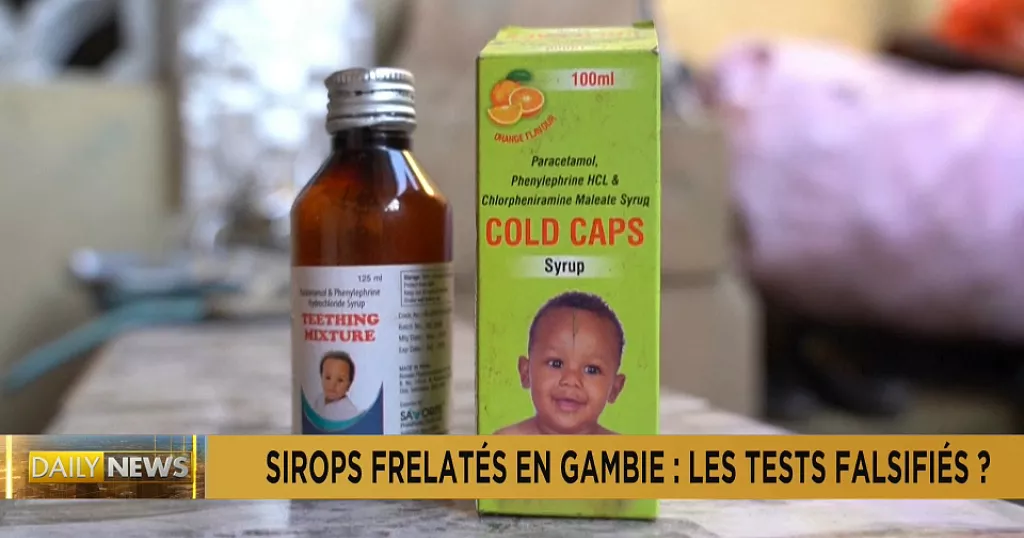
A pharmaceutical company, Maiden Pharmaceuticals, whose cough syrups have been associated with the deaths of children in Gambia, has refuted allegations of tampering with test samples or bribing officials to do so.
The denial from India’s Maiden Pharmaceuticals comes in response to an accusation made against it in a complaint currently under investigation by local health officials in India.
Authorities in the state of Haryana’s Food and Drug Administration announced on Friday that they were close to completing a probe into whether a state drug regulator was bribed to switch samples tested by the Indian government.
These samples contradicted the World Health Organization (WHO)’s findings of toxic substances in the cough syrups.
Maiden founder Naresh Kumar Goyal has vehemently denied the allegation. Goyal, as reported by Reuters, stated that a competitor was behind the complaint but did not disclose their identity.
The WHO has linked syrups made by Maiden to the deaths of 70 children in Gambia.
These deaths in the Gambia, attributed to kidney-related problems between July and October last year after consuming the cough syrup, were not isolated incidents. Dozens of other children also died in Cameroon and Uzbekistan.
A man from Gambia who lives in Germany has been given a life sentence for being part of a group that killed people for the ex-president of Gambia, Yahya Jammeh.
The man’s name is Bai L. Drove for the group called the “Junglers”. He was proven to have done very bad things, like killing and trying to kill people, and he was found guilty.
In 2019, during a Gambia investigation, three people accused Mr Jammeh of ordering many murders, including the 2013 killings of two US-Gambian businessmen and journalist Deyda Hydara.
Bai L committed a few crimes. The news agency AFP says that someone is being accused of helping to stop Hydara’s car before he was killed and then driving one of the attackers away.
After being president for 22 years, Mr. Jammeh didn’t want to give up being president when he lost the election in 2016. After other regions sent armies to make him leave, he decided to live in a different place.
According to Human Rights Watch, the trial could happen in Germany because it has the power to prosecute serious crimes no matter where they happened.
A junior navy officer, who was identified by Gambia’s government as the mastermind behind a thwarted coup plot in December the previous year, has been convicted of treason and sentenced to 12 years in prison.
On Tuesday, a high court determined that Lance Corporal Sanna Fadera had conspired and made unlawful attempts to overthrow the democratically elected government of President Adama Barrow.
Fadera and seven other soldiers had been charged with treason, conspiracy, and inciting mutiny for their alleged involvement in the 2022 coup attempt.
However, the court acquitted three other military officers on Tuesday. One soldier involved in the coup attempt remains on the run and is considered a fugitive.
Additionally, the court exonerated a police officer and two civilians who had faced charges of concealing treason and conspiring to commit a felony.
Before President Barrow’s ascension to power, The Gambia had been under the rule of Yahya Jammeh for two decades.
Jammeh had seized power in a coup in 1994 and successfully thwarted multiple coup attempts against his regime before losing the 2016 election.
A junior navy officer accused by The Gambia’s government of orchestrating a thwarted coup plot in December of the previous year has been found guilty of treason.
The high court’s ruling on Tuesday sentenced Lance Corporal Sanna Fadera to 12 years in prison, deeming him responsible for planning and attempting to unlawfully overthrow the democratically elected government led by President Adama Barrow.
The charges against Fadera and seven other soldiers included treason, conspiracy, and incitement to mutiny for their alleged involvement in the 2022 coup attempt.
However, the court acquitted three other military officers on Tuesday. One soldier implicated in the foiled coup attempt remains at large and is considered a fugitive.
Additionally, the court cleared a police officer and two civilians who had been charged with concealing treason and conspiring to commit a felony.
The Gambia experienced a significant political transition when President Barrow assumed office, ending two decades of rule by Yahya Jammeh, who had taken power in a coup in 1994 and successfully thwarted several coup attempts before losing the 2016 election.
Lance Corporal Sanna Fadera, the suspected mastermind of The Gambia’s failed coup attempt last year, has denied any wrongdoing.
He is standing trial alongside two other soldiers and a police officer for plotting to overthrow the government of Adama Barrow in December.
Lance Corp Fadera and his co-accused are facing charges of treason, concealment of treason and mutiny.
He told the court that he had not planned to overthrow the government or instigated any of his colleagues to stage a mutiny.
The junior naval officer also denied the prosecutor’s claim that he was unhappy his application for promotion was rejected on two occasions after obtaining a university degree but admitted applying for promotion.
He also denied discussing with a state witness, Saikou Gassama, to take him to a marabout (spiritual guide) in Mauritania and subsequently make him the head of intelligence if the coup succeeded.
Gambian President Adama Barrow, who was re-elected in 2021, has hinted that he may run for a third term at the next election in 2026.
The Gambia does not have presidential term limits and the two previous presidents both served more than two decades in office.
During a meeting in the north of country President Barrow said those waiting for him to relinquish power have to wait a little longer.
The Gambian leader alleged that there were people going around telling Gambians that he wanted to step down and that they would soon take over the government. He said that he was not going anywhere.
Mr Barrow came to power in 2017, on an agreement that he would serve only three years and then step down – but he reneged on that campaign promise.
A new constitution drafted in 2019 included a two-term limit but was not passed by parliament.
Gambia has enlisted the services of a United States law firm to explore potential legal recourse following the findings of a government-funded investigation, which concluded that contaminated medicine sourced from India was highly probable to be responsible for the deaths of a minimum of 70 children, Reuters have said
Justice Minister Dawda Jallow did not tell the news agency which entity they would make the claim against, not did Mr Jallow reveal the name of the law firm hired.
Reuters says the makers of the cough syrup, Maiden Pharmaceuticals, have denied any wrongdoing.
The Indian government says it found no toxins when it tested the medicines.
Yet tests by the WHO showed that the cough syrups contained two lethal toxins usually found in car break fluid.
A former interior minister from the Gambia has been accused of crimes against humanity and other offenses by Swiss prosecutors.
They charge Ousman Sonko of complicity in and failing to stop deliberate attacks against Yahya Jammeh’s opponents.
In the authoritarian government of Mr. Jammeh, who ruled The Gambia for more than 20 years after gaining control in a military coup in the mid-1990s, Mr. Sonko held a number of important positions.
Mr. Sonko is accused by the prosecution of supporting and taking part in repression up until 2016.
Gambian protesters are assembling to protest against corruption through the capital Banjul after a youth group affiliated with the main opposition party called for a demonstration.
Lawyer Ousainu Darboe, the leader of the United Democratic Party (UDP), in a WhatsApp audio had earlier called on supporters to be peaceful ahead of a corruption demonstration slated for Friday.
The UDP Youth Wing recently applied for a police permit for a peaceful procession against corruption. This came after several corruption allegations were reported about government institutions and other local government councils.
Lawyer Darboe called on Gambians to be part of the peaceful demonstration starting from Jah oil in Banjul to the National Assembly in Banjul.
He pointed out that when this kind of activity happens, some criminals always want to capitalise on the occasion to get involved in the crowd and act unlawfully and be destructive. However, the UDP leader said they would be very vigilant to those people while calling on the police to also help in identifying such criminals.
The country’s biggest opposition leader emphasised that everyone knows that UDP is a law-abiding party, calling on the party militants to follow the rule of law, ignore insults and other confrontations.
“I call on Gambians who are concerned about corruption to join us, especially the UDP supporters,” he added. “The demonstration will start from 11 a.m to 2 pm. Everyone should come out to show their concerns on corruption.”
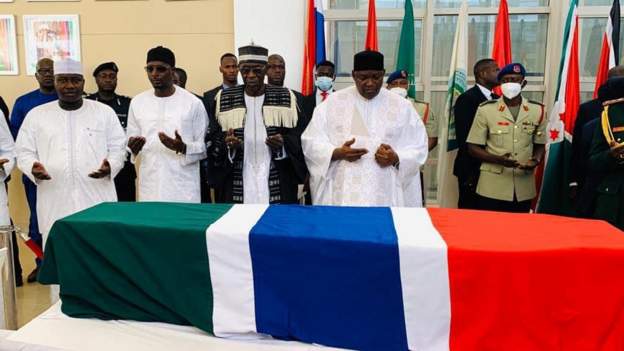
Gambia bids farewell to Vice-President Alieu Badara Joof at the country’s parliament after his death last week at the age of 66.
He passed away while receiving treatment in India for an undisclosed illness.
Joof had only been Adama Barrow’s vice-president for nine months.
Thousands of mourners, including the president, attended the funeral to pay their respects to a man who was described as “modest and blunt.”
Mr Barrow remembered one of the late vice-president’s controversial statements and quoting him as saying: “You cannot make omelette without breaking the eggs. I will talk to the truth, if you want, let the president get me out. But I will say it as it is and I have been saying as it is in the cabinet.”
Since last year, 200 children have died in Indonesia from acute kidney injury, and The Gambia and Uzbekistan have both reported numerous cases of acute kidney injury linked to cough syrup.
In an Indonesian court that has begun hearing their class-action lawsuit against governmental organizations and pharmaceutical companies, the families of Indonesian children who died after ingesting tainted cough syrup have demanded compensation.
Authorities in Indonesia reported that two hazardous ingredients, ethylene glycol and diethylene glycol, which are present in some syrup-based paracetamol medications, have been linked to 200 pediatric acute kidney injury deaths since last year.
In response to the deaths and injuries of the children, 25 families have filed lawsuits against the Indonesian health and finance ministries, the nation’s drugs regulator, and at least eight pharmaceutical firms.
Al Jazeera’s Jessica Washington, reporting from Jakarta, said the 25 families are suing 11 parties, including Indonesia’s ministry of health, the country’s food and drug agency, as well as pharmaceutical manufacturing companies and suppliers.
“Today they are calling for accountability for what happened to their children,” Washington said, adding that the families are seeking compensation for the children who died and those left with debilitating injuries.
“A very difficult day for these families as they have to reflect on what happened to their children after they consumed cough syrup that was contaminated with ethylene glycol and diethylene glycol, substances typically found in a manufacturing capacity in paints and dyes that can only be consumed safely in very small doses,” Washington said.
The two ingredients are used in antifreeze, brake fluids and other industrial applications, but also as a cheaper alternative in some pharmaceutical products to glycerine, a solvent or thickening agent in many cough syrups. The substances can also be toxic and can lead to acute kidney injury.
Solihah, 36, who was at the court in the Indonesian capital Jakarta on Tuesday, said her 3-year-old daughter was diagnosed with an acute kidney injury after consuming a syrup medication and died a few days later. She said she wanted the government to be held accountable.
“If my daughter had not consumed the drug, maybe she would still be here,” she said, her voice breaking with emotion.
“I hope all parties involved are held responsible for the conditions of the children who died and are still sick.”
Representatives of the finance ministry and five pharmaceutical companies named in the lawsuit did not respond to requests for comment. Another three companies could not be reached. The country’s drugs regulator said it would respect the ongoing legal process, while the health ministry declined to comment.
Authorities in Indonesia have banned a number of cough syrups and mounted legal action against several pharmaceutical companies whose products allegedly contained the dangerous ingredients.
In October, the World Health Organization said the deaths of dozens of children in The Gambia from kidney injuries may be linked to contaminated cough and cold syrups made by an Indian drug manufacturer.
Indian health authorities said later that they had halted all production of New Delhi-based Maiden Pharmaceuticals after a WHO report that its cough and cold syrups exported to The Gambia may be linked to the deaths of children.
In December, India again launched an investigation into the death of 18 children in Uzbekistan after they consumed an Indian-manufactured cough syrup. India’s health ministry said the Central Drugs Standard Control Organisation (CDSCO)– – the country’s drug regulatory authority – was communicating with its counterpart in Uzbekistan over the incident.
The 40-year war between Senegaland rebels in its Casamance region has left legacies of landmines with diverse impacts.
Night was falling, and Boubacar Ba was once again hunting in the forest outside his hometown of Mpak in southern Senegal. Then a crack rang out, not from his rifle or another hunter. Not the Senegalese army or even the rebels waging a war for secession in the area.
It was a landmine, which blew off his right leg.
Ba tied up a makeshift tourniquet, but when he hobbled up on his left leg, he quickly discovered it was broken, and crashed back onto the forest floor.
“When someone hears these mine accidents, an explosion, they can’t go adventuring to see what happened,” without putting themselves at risk, Ba told Al Jazeera. Alone, he ended up crawling on his elbows 10km (6.2km) to find help.
That was in 2004.
The mine he had stepped on had been forgotten at the start of Senegal’s simmering civil war two decades earlier. These days, Ba walks with a slight limp, his prosthetic leg deftly hidden under his boubou and pants.
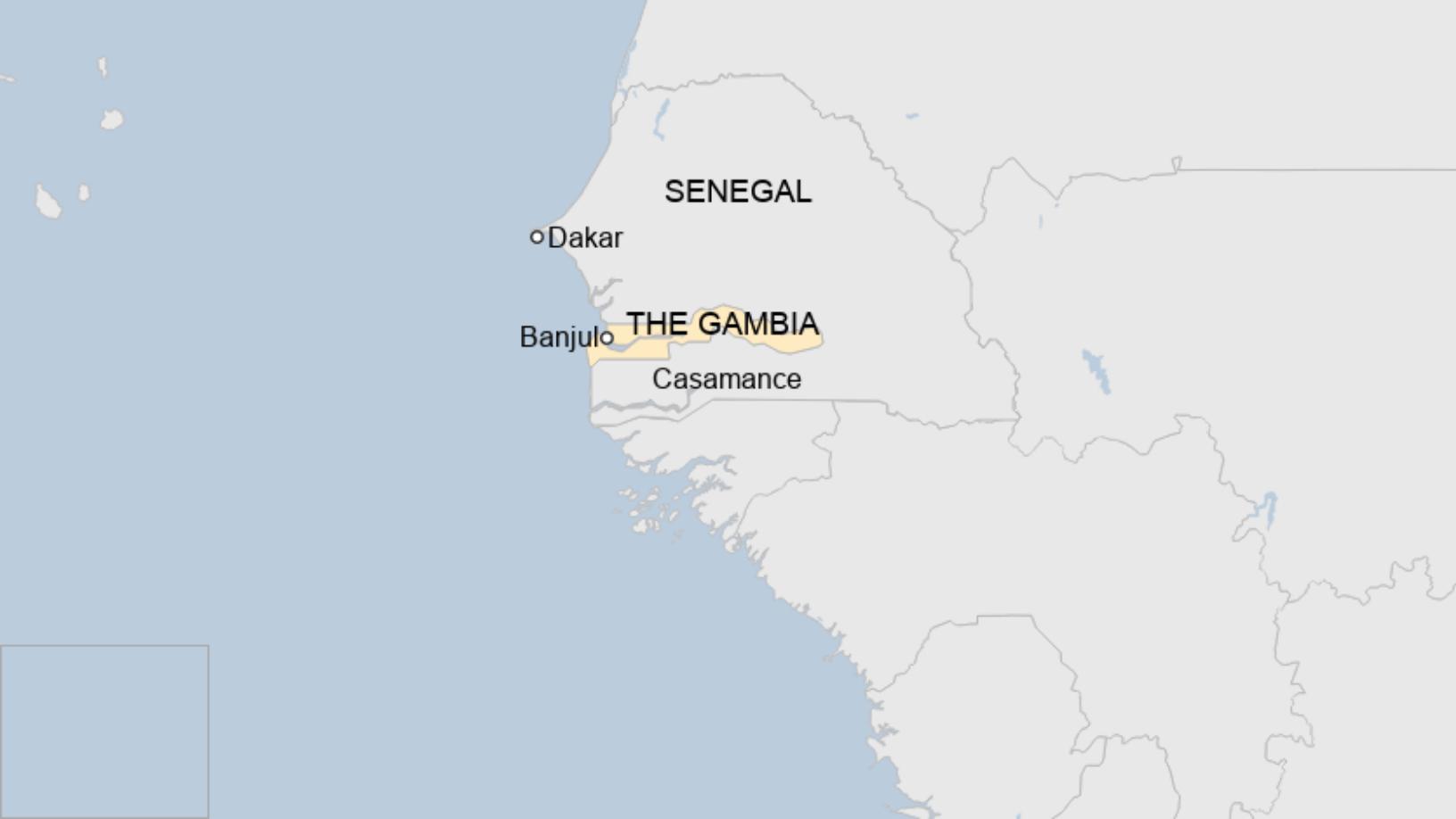
The region of Ziguinchor, along the porous borders of The Gambia to the north and Guinea-Bissau to the south, contains the last fragments of the Movement of Democratic Forces of Casamance (MFDC). The armed movement was born in 1982, pushing for the independence of Casamance, the collective of regions situated underneath The Gambia, which is enveloped by Senegal.
Peace has largely returned to the Casamance – comprising the regions of Ziguinchor, Sedhiou, and Kolda – since then. A few strongholds of fractured rebel groups hold out near the borderlands, but elsewhere, citizens mostly go about their day without a second thought, and tourists hit the beach in the resort town of Cap Skirring.
But in too many villages, mines remain. Estimates from the Senegalese National Mine Action Center (CNAMS), the government authority in charge of demining activities, put some 49 to 170 hectares (120 to 420 acres) of land, mostly all in the Ziguinchor region, as still at risk of being mined. In addition to the physical risk posed by the ordnance, the mines – planted by the Senegalese military and the rebels – often cut people off from roads, schools or farmland.
“The socioeconomic impact is real,” Emmanuel Sauvage, Senegal country director at Humanity and Inclusion, an NGO contracted by CNAMS to carry out demining operations, told Al Jazeera. “It’s affecting the whole economy.”
Boubacar Ba speaks during a meeting at the Senegalese Association of Mine Victims in Casamance, Senegal [Guy Peterson/Al Jazeera]
Finding landmines
Reports of civilian victims first appeared in the 1990s, more than a decade into the conflict. Estimates of how many people have been killed or injured are hard to pin down.
The Senegalese Association of Mine Victims (ASVM) counts 482 members on its rolls – mostly people directly injured, but also including “indirect victims”, like family members who sometimes struggle economically after a breadwinner is killed or disabled. CNAMS estimates 453 civilian injuries, and 157 deaths. Incidents are isolated, but pop up from time to time: Most recently, six people were killed by a mine returning from Friday prayers last year.
In the village of Bassere, about 8km from the Guinea-Bissau border, Pierre Marie Badji slowly waves his metal detector across the barren, brown earth. Dressed in a sky-blue kevlar vest and a face shield, he’s scanning what used to be thick brush, chewed up by a tank-like demining machine whose rotating claws eat away at the bush, seeking explosives. Badji’s metal detector is silent, so he marks the area immediately in front of him as clear, and takes another step forward.
A few dozen meters away, his colleague Papa Bourama Diedhiou is on his knees, slowly scraping away dirt. His metal detector went off, and now he’s inspecting further, hunched over what would be the blast zone if a mine indeed goes off.
It’s an old can of sardines. He tosses it away.
“If I find a mine, I’m happy,” he said. “I’m saving lives.’”
Bassere, sitting under towering baobab and kapok trees deep in one of Ziguinchor’s lush forests, was completely abandoned in 1990, though residents have started to trickle back in recent years. For a time, the Senegalese military set up an outpost here, though they left about 15 years ago. But when villagers returned, they found a plaque in the forest warning of mines. Mines found in nearby villages, and by the abandoned school on the other side of town, added to their fears.
“The forest has reclaimed 80 percent of the village,” said Bassere resident Therese Sagna. “This year, there was a lot of fruit in the woods that spoiled because no one could access it.”
Liboire Sagna, the village chief, said uncertainty about what areas are safe is preventing the rest of the village from moving back and making it impossible to build a school or clinic.
While the total at risk of having mines is small – a bit less than 2 square kilometres (1.6 square miles) maximum, mostly in the Ziguinchor region, which covers 7,352sq km (4,568sq miles) – finding scattered pockets of mines in the region’s dense, isolated forests can be a bit like finding needles in a haystack.
So far, the demining team, run by the nongovernment organisation Humanity and Inclusion, hasn’t found anything in Bassere besides sardine cans and old bullet shells. Charles Coly, the team leader, reckons it will take three months to clear the area.
A variety of deactivated landmines mostly found by the demining team over the years in Casamance, Senegal used for demonstrations and educational purposes [Guy Peterson/Al Jazeera]
A simmering conflict
Authorities in Dakar say the Casamance can be mine-free by 2026. But because demining teams can only safely work in areas without rebel presence, the success of that plan largely rests on the Senegalese military snuffing out the elusive rebel camps that remain. The conflict is arguably Africa’s longest-running war, and total victory against a small group of ideologically-driven fighters across heavily forested borderlands is far from an easy task.
Ba, now the community outreach leader at the ASVM, has contacted rebels to convince them to allow demining teams to come into their territory, as has Barham Thiam, director of CNAMS. But so far, both men say their overtures have been unsuccessful.
“I told the guy, OK, you want independence. If you get it, it would be hard for your budget to find money to destroy mines, and then to find money to rehabilitate the victims,” said Thiam. “I told him, somehow, we are working for you … If the government brings you a road, take it. A bridge, OK, whatever. A demining programme – take it.”
The continued rebel presence has been an existential threat to deminers too. Nine years ago, Fatou Diaw was kidnapped on a demining mission alongside a few colleagues. She was held in a rebel camp in the countryside for a month until government negotiations led to her and her female colleagues’ release. The men were held another month before being freed eventually.
“I [told them] we didn’t know [that area] was a red-line – otherwise, we wouldn’t have come to work there,” she says, suiting up for the demining mission in Bassere, unfazed all these years later. “We don’t work for the military,” she recalled telling the rebels. “We work for the population.”
Given the opportunity, she believes she can get the rebels to give up their mines – if not their other weapons or their cause – but “they’re not easy to convince”.
Meanwhile, recent peace agreements, like one signed in August with some of the rebel factions along Guinea-Bissau’s border, offer hope – but only applied to a few groups.
So, the conflict simmers as rebels traffic illegal timber and cannabis far out in the countryside. But it still boils over from time to time.
Amid a renewed offensive by the Senegalese military earlier this year, some 6,000 refugees fled to neighbouring The Gambia. Earlier this month, three refugees were killed in a Senegalese drone strike. The Gambian government insists that while victims were registered as refugees, the strike happened on Senegalese territory, across the porous border. Gambian opposition politicians, meanwhile, have complained that the conflict is increasingly spilling out of Senegal.
At home, the rebels are facing tough odds. The conditions that led to the revolt – land reform laws that tipped power into the hands of the Senegalese state, and an economic downturn – are ancient history to a population ground down by four decades of war.
Anyone under 40 has known conflict their entire lives. Those taking up arms in the ’80s could easily point to Casamance’s distance from Dakar – literally in terms of geography and figuratively in the lack of investment from the government – as serious grievances. Economic development projects – roads and bridges – and a new university in Ziguinchor have helped close those gaps.
For advocacy groups like the ASVM, where some members have lifelong disabilities, not even physical peace can bring peace of mind until the mines are fully rooted out.
“Even if there’s a definitive peace in the Casamance … we’re going to continue to work,” said Souleymane Diallo, ASVM’s finance chief, himself missing a leg.
Gambia has not yet confirmed that toxic cough syrup was the cause of the deaths of 70 children from acute kidney injury, a representative of the country’s Medicines Control Agency said this Monday.
The small West African state has been investigating a mysterious slew of child deaths in recent months, which police said in a preliminary investigation was linked to four cough syrups made in India.
World Health Organisation investigators have found “unacceptable” levels of diethylene glycol and ethylene glycol in the products, which were made by New Delhi-based Maiden Pharmaceuticals Ltd.
But Gambia’s MedicinesControl Agency, a national regulatory body, has not yet pinpointed the exact cause of the deaths, said Tijan Jallow, an officer at the agency.
“We haven’t concluded yet it is the medicine that caused it. A good number of kids died without taking any medications,” Jallow told a news conference.
“Other kids died, the medication that they took, we have tested them and they are good,” he added.
The agency is trying to establish exactly which medications if any, each child took.
A South Sudan Human Rights Commissionofficial says large-scale intercommunal violence is “claiming lives,” “displacing hundreds of thousands and destroying their properties and livelihoods.”
Beny Gideon Mabor made the comments in a statement delivered during a meeting of the African Commission on Human and Peoples’ Rights in Banjul, Gambia, on Sunday.
It marks the first statement from the South Sudan human rights body acknowledging the gravity of the ongoing violence in the country.
The statement also recognized that the implementation of the revitalized peace agreement which was signed in September 2018 to end five years of the conflict “remains slow”.
There was also a warning about how “communal violence threatens total breakdown of social fabric amongst and between ethnic groups with no history of violence between them.
“The Jieeng (Dinka) ethnic communities of Twic and Ngok of Bahr El-Ghazal region are attacking each other in scale and brutality never seen before. The Shilluk and Nuer ethnic groups in Upper Nile are also fighting each other, same as worrisome tensions between the Murle and the Jieeng in Jonglei State, respectively,” Mr Gideon continued. He said this unprecedented surge in violence requires the swift deployment of the necessary unified forces to protect civilians and their properties.
Late month, a UN panel of experts on human rights in South Sudan said incidents of rape had become common in the country, and women who are victims were no longer bothering to report repeated sexual violence.
However, Mr Gideon did not highlight sexual violence in his presentation.
The recent deaths of dozens of children from acute kidney problems in The Gambia and Indonesia have caused alarm worldwide.
They were possibly caused by harmful substances in medicinal syrups.
The first fatalities were reported in The Gambia last month, prompting authorities to launch an investigation.
Separately, Indonesia this month announced a ban on all syrup and liquid medicines after the reported deaths there of dozens of children, also from acute kidney injuries.
There is no confirmed link between the cases in the two countries, but investigations are ongoing.
Here is what to know about what has happened.
The Gambia
In September, the government of The Gambia launched an inquiry into the deaths of 28 children from acute kidney problems after they took a paracetamol syrup to treat fever.
In early October, the World Health Organization (WHO) said the deaths in The Gambia may be linked to four contaminated cough and cold syrups made by Maiden Pharmaceuticals, an Indian drug manufacturer. It said an investigation was under way, together with Indian regulators and the New Delhi-based company.
The WHO said in a medical product alert on October 5 that excessive levels of diethylene glycol and ethylene glycol had been found in the four products produced by Maiden Pharmaceuticals and sold in The Gambia: Promethazine Oral Solution, Kofexmalin Baby Cough Syrup, Makoff Baby Cough Syrup and Magrip N Cold Syrup.
The agency warned that their use may result in serious injury or death, especially in children,
Diethylene glycol and ethylene glycol are alcoholic toxic chemicals used in industrial applications such as the making of paints, ink or brake fluids. Their effects reportedly include altered mental states, stomach cramps, nausea, vomiting and diarrhoea. They might cause damage to the kidney, liver and central nervous system.
Gambian authorities on Friday ordered all cough and cold syrups in circulation in the country to be recovered, extending the scope of a previous recall for medicines containing paracetamol or promethazine syrup.
Last week, police in The Gambia said in a preliminary investigative report that the number of child deaths had increased to at least 69.
The report also said the deaths from acute kidney injury were linked to four India-made cough syrups mentioned in the WHO’s alert, according to news agencies. It did not name Maiden Pharmaceuticals directly but included the company’s four liquid products in question.
Indian health authorities, who also conducted their own internal probe, halted all production at Maiden Pharmaceuticals in mid-October after discovering violations at its production facilities in Haryana state.
The state drug regulator said the tainted products sold in The Gambia had been made at the factory in Harayana in December, according to Indian media reports.
“In view of the seriousness of the contraventions observed during the investigation and its potential risk to the quality, safety and efficacy of the drug being produced, all the manufacturing activities of the firm is being stopped with immediate effect,” said an order by federal and state drug authorities.
Al Jazeera reached out to Maiden Pharmaceuticals but did not a receive a response by the time of publication.
Maiden Pharmaceuticals director Naresh Goyal told India’s Economic Times newspaper that “the deaths have been due to paracetamol syrup and not due to our cough syrups”.
Prashant Reddy, a lawyer and writer who researches drug regulations in India, said the country’s drug regulatory laws are inadequate and outdated.
“In total India has 38 regulators with limited jurisdiction, limited to their own states and a lot of bad actors slip through the cracks,” he told Al Jazeera.
Reddy added that longtime government efforts to consolidate the system to create a more unified regulator have not been successful.
“It is important to understand that the Indian pharmaceutical industry is a very powerful entity in the country,” he said. “A lot of them are completely against a more unified system because they know that this will increase the quality and efficiency of regulations and perhaps the cost of manufacturing drugs.”
Indonesia
Indonesian health authorities first announced an investigation into the death of about 20 children from acute kidney injury in early October.
Alongside WHO officials, the authorities formed a team of experts to investigate the fatalities.
As the reported number of deaths first increased to 99 and then to 133, the country moved to impose a ban on sales and prescription of all syrup-based medications.
Health Minister Budi Gunadi Sadikin said on Thursday that the deaths were among a total of 241 cases of kidney failure in 22 provinces, adding that most patients were children under the age of five.
Budi added that some of the medicinal syrups containing paracetamol in Indonesia also included ethylene glycol and diethylene glycol, the same ingredients that have been linked to the deaths of children in The Gambia.
Indonesia’s food and drug agency announced on Thursday that five locally produced medicines, out of 26 tested, contained excessive levels of ethylene glycol. It said it had ordered the manufacturers to pull them out of circulation and destroy them.
According to the agency, Maiden Pharmaceuticals’ products are not available locally.
In its alert, the WHO said the four products identified in The Gambia “may have been distributed, through informal markets, to other countries or regions”.
Other cases
In the winter of 2019 and 2020, at least 14 children died after taking an adulterated cough syrup prescribed to them by local doctors in India-administered Kashmir and the Jammu region. Twelve of the deaths happened in Jammu.
The Coldbest PC cough syrup manufactured by Himachal Pradesh-based Digital Vision contained diethylene glycol, according to media reports that cited authorities.
The Jammu and Kashmir police have still not indicted the company, and a court case against it is still pending.
In Nigeria, 84 children died in various parts of the country between late 2008 and early 2009 after taking a teething syrup tainted with diethylene glycol.
The government at the time said there had been 111 reported cases of children who had fallen ill after taking the syrup called My Pikin.
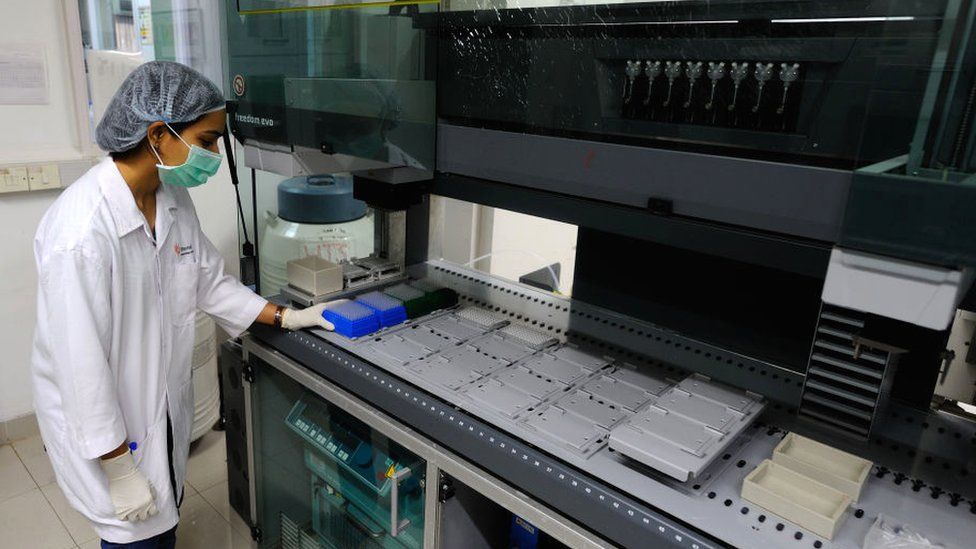
Investigations into the nearly 70 child deaths in The Gambia linked to Indian-made cough syrups are being conducted amid worries about the effectiveness of regulations governing the production and distribution of pharmaceuticals.
What went wrong in The Gambia?
Last week, the World Health Organization (WHO) issued a global alert over four brands of cough syrups, saying they could be linked to acute kidney damage, following reports from The Gambia of children diagnosed with serious kidney problems.
Laboratory analysis of the syrups “confirms that they contain unacceptable amounts of diethylene glycol and ethylene glycol as contaminants”, according to the WHO.
The Indian authorities and the cough syrup manufacturer, Maiden Pharmaceuticals, say these syrups have been exported to The Gambia only.
What is known about the manufacturer?
Maiden Pharmaceuticals says it adheres to internationally recognized quality-control standards.
But some of its products have failed to meet national or state-level quality-control standards in India.
Official records there show the company:
was blacklisted by Bihar state, in 2011, for selling syrup failing to meet local standards
was subject to legal proceedings by India’s drug regulator, in 2018, for quality-control violations
failed a quality-control test in Jammu and Kashmir state, in 2020
has failed quality-control tests in Kerala state four times in 2022
It is also among nearly 40 Indian pharmaceutical companies blacklisted by Vietnam for exporting sub-standard products.
The company, based in Haryana state, has said it is “shocked” by the deaths in The Gambia and had “been diligently following the protocols of the health authorities, including [the] drugs controller general [of India] and the state drugs controllers, Haryana”.
We’re not selling anything in domestic market. We’ve been obtaining raw materials from certified & reputed companies. CDSCO officials have taken samples & we are awaiting the results: Maiden Pharmaceuticals Ltd on deaths of 66 children in Gambia allegedly due to their cough syrup pic.twitter.com/HFEJbx1POx
It would not comment further while drugs regulators were still testing, it added.
Haryana Health Minister Anil Vij told BBC News samples had been sent for testing and if something wrong was detected, action would be taken.
How effective is India’s quality control?
India produces a third of the world’s medicines, mostly in the form of generic drugs.
It is a major supplier to countries in Africa, Latin America, and other parts of Asia.
IMAGE SOURCE, GETTY IMAGES Image caption, India is a major global pharmaceutical manufacturer
Its manufacturing plants are required to adhere to stringent quality-control standards and production practices.
But Indian companies have faced criticism and even bans by overseas regulators such as the US Food and Drug Administration (FDA) for quality-control problems at some plants.
One analysis of India’s pharmaceutical industry points to underfunding of oversight bodies and a lax interpretation of regulations as key issues, with a lack of interest in ensuring purity standards are adhered to.
Public-health activist Dinesh Thakur also highlights the relatively light punishment in India for flouting quality standards – a fine of $242 (£220) and a possible prison sentence of up to two years.
“Unless one can causally establish a direct link between a sub-standard drug and a fatality, this is the norm of punishment meted out,” he says.
Also, India is not included in the WHO standards for national bodies that regulate medicines, although it is for vaccines.
“This may result in inconsistent regulatory control over pharmaceutical manufacturing activities,” Leena Menghaney, head of Médecins Sans Frontières (MSF) Access Campaign South Asia, says.
Should The Gambia have tested?
The Health Ministry in Delhi has launched an investigation but says it is “usual practice that the importing country tests these imported products… and satisfies itself as to the quality”.
But The Gambia’s Medicine Control Agency executive director Markieu Janneh Kaira says it prioritises checks on anti-malarial drugs, antibiotics, and painkillers, rather than cough syrup.
BBC News contacted the agency for clarification but had no response.
The Gambia’s President, Adama Barrow, has said he “would get to the bottom” of the causes of the tragedy and announced the creation of “a quality-control national laboratory for drugs and food safety”.
The Gambia would “establish safeguards to eliminate the importation of sub-standard drugs”, he added.
MSF wants countries with the sufficient testing capacity to help low-income countries such as The Gambia.
“This is not about the importing countries’ responsibility only,” Ms Menghaney says.
In Nigeria, the National Agency for Food and Drug Administration and Control is now asking for all imported shipments of pharmaceuticals to be cleared by approved agents prior to leaving India.
Police in The Gambia have started an investigation into the deaths of 66 children, which have been linked to four brands of imported cough syrup.
Senior officials from the Medicine Control Agency and the importers have been called for questioning, the president’s office said.
President Adama Barrow said that the authorities would “leave no stone unturned” in the investigation.
Gambians, angry about what happened, are wondering who is to blame.
On Wednesday, the World Health Organization (WHO) issued a global alert over the four cough syrups – warning they could be linked to acute kidney injuries and the children’s deaths in July, August and September.
Bereaved parents have told the BBC how their children stopped being able to pass urine after being given the syrups. As their condition worsened, efforts to save their lives were fruitless.
The products – Promethazine Oral Solution, Kofexmalin Baby Cough Syrup, Makoff Baby Cough Syrup and Magrip N Cold Syrup – were manufactured by an Indian company, Maiden Pharmaceuticals, which had failed to provide guarantees about their safety, the WHO said.
The Indian government is also investigating the situation. The firm has not responded to a BBC request for comment.
Gambian health officials and Red Cross workers are now going door-to-door, as well as to pharmacies and markets, searching for the syrups as well as other medicines.
More than 16,000 products have been located so far and have been taken away for destruction, a Red Cross official told the BBC.
On Friday, President Barrow addressed the nation, expressing his regret for the loss of life saying that “the source of the contaminated drugs” would be investigated.
He announced plans to open a laboratory capable of testing whether medicines are safe and a review of relevant laws and guidelines for imported drugs.
He also said that “the child mortality figure of 66 is not at much variance with the recorded data for similar periods in the past”, which left some wondering whether the authorities thought that these deaths were unusual.
The president followed this up on Saturday evening with a more robust statement, suspending the licence of the suspected importer and announcing the police investigation.
Some of the parents who lost their children have told the BBC that they are considering taking legal action of their own against the authorities.
Three things to know about cough syrup and deaths in The Gambia.
A global alert has been issued over four cough syrups after the World Health Organization (WHO) warned they could be linked to the deaths of 66 children in The Gambia.
The syrups have been “potentially linked with acute kidney injuries and 66 deaths among children”, it said.
The products were manufactured by an Indian company, Maiden Pharmaceuticals, which had failed to provide guarantees about their safety, the WHO added.
The firm has not yet commented.
The BBC has contacted Maiden Pharmaceuticals for comment.
Indian officials say they have asked the WHO to share evidence of the link between the syrups and the deaths.
The WHO identified the medicines as Promethazine Oral Solution, Kofexmalin Baby Cough Syrup, Makoff Baby Cough Syrup and Magrip N Cold Syrup.
The four products had been identified in The Gambia, but “may have been distributed, through informal markets, to other countries or regions”, the WHO added, in the alert published on its website.
It warned that their use may result in serious injury or death, especially among children.
The WHO’s intervention came after medical authorities in The Gambia – a popular tourist destination – detected an increase in cases of acute kidney injury among children under the age of five in late July.
The Gambia’s government has since suspended the use of all paracetamol syrups and has urged people to use tablets instead.
The number of deaths has declined since the ban but two more have been recorded in the past two weeks, Gambia health services director Mustapha Bittay told the BBC’s Focus on Africa programme.
He said that The Gambia did not currently have a laboratory capable of testing whether medicines were safe and so they had to be sent abroad for checking. Mr Bittay added that The Gambia was in discussions with the World Bank to get funding for a quality-control laboratory.
The WHO said that laboratory analysis of samples of the products “confirms that they contain unacceptable amounts of diethylene glycol and ethylene glycol as contaminants”.
The substances were toxic, and their effects “can include abdominal pain, vomiting, diarrhoea, inability to pass urine, headache, altered mental state and acute kidney injury which may lead to death,” it added.
Mr Bittay also said that traces had also been found of E.Coli, a bacteria which can cause diarrhoea and vomiting.
The Gambia’s health officials said last month that dozens of children had died, without giving an exact number.
Speaking in Geneva on Wednesday, WHO chief Tedros Ghebreyesus said: “The loss of these young lives is beyond heart-breaking for their families.”
The WHO said that India’s Central Drugs Standard Control Organisation indicated that the manufacturer may have only supplied the contaminated medications to The Gambia, AFP news agency reports, quoting an email from the UN health agency.
But the WHO said that “global exposure” was possible as the “manufacturer may have used the same contaminated material in other products and distributed them locally or exported” them, the agency reports.
The Gambia has banned timber exports and revoked all export licenses to try to combat illegal logging.
The ban has come into effect immediately, and the port authorities have been instructed to refuse to load timber logs onto any vessel.
In 2020, a BBC investigation revealed that vast quantities of protected West African Rosewood were being trafficked through the country from Senegal.
Much of it ends up in China, where it is used to make furniture.
It has been listed as an endangered species since 2017, and last month Cites, the Convention on International Trade in Endangered Species, called on seven countries, including The Gambia, to suspend its trade.
The Gambia is consistently among the five largest global exporters of West African Rosewood (Pterocarpus erinaceus), despite declaring its own stocks close to extinction almost a decade ago.
By value and by volume, rosewood is one of the most trafficked wildlife products in the world.
Also called Hongmu or “red wood”, it is prized for its colour and durability and is primarily used for antique-style furniture.
Figures obtained by BBC Africa Eye showed that China imported more than 300,000 tonnes from The Gambia between 2017 and 2020.
That is the equivalent of about half a million trees and worth more than $100m (£80m).
During a year-long investigation in both Senegal and The Gambia, multiple sources confirmed to the BBC that the rosewood being shipped out of The Gambia to China came from the Casamance region of southern Senegal.
Along a 170km- (105 mile) long stretch of the border between the two countries, the BBC found at least 12 depots containing rosewood and other timber. They were all within Gambian territory.
The Gambia has accepted a recommendation of its Truth, Reconciliation and Reparations Commission (TRRC), to prosecute its former leader, Yahya Jammeh and 13 others for the brutal, state sponsored extra-judicial killings of unarmed economic migrants from some ECOWAS countries in 2005.
A Government of The Gambia whitepaper on the recommendations of the TRRC, issued Wednesday, agreed that a paranoid Jammeh sanctioned the executions, aided by the 13 others it called “enablers and accomplicesâ€.
Yahya Jammeh is currently in exile and is thought to be in Equatorial Guinea.
The 13 others named to face prosecution are;
Ousman Sonko
Solo Bojang
Malick Jatta (Alfidie)
Sanna Manjang
Kawsu Camara (Bombardier)
Tumbul Tamba
Bai Lowe
Nuha Badjie
Landing Tamba
Alieu Jeng
Omar A. Jallow (Oya)
Buboucarr Jallow
Lamin Sillah
The 178-page Whitepaper of 600 paragraphs, accepted virtually all the 265 recommendations of the TRRC, set up in December 2017 to;
create an impartial historical record of violations and abuses of human rights from July 1994 to January 2017, in order to –
promote healing and reconciliation;
respond to the needs of the victims;
address impunity; and
prevent a repetition of the violations and abuses suffered by making recommendations for the establishment of appropriate preventive mechanisms including institutional and legal reforms;
b. establish and make known the fate or whereabouts of disappeared victims;
c. provide victims an opportunity to relate their own accounts of the violations and abuses suffered; and
d. grant reparations to victims in appropriate cases.
On the specific case of the killing of the West African migrants, including a good number of Ghanaians, the Whitepaper copiously quotes the report of the TRRC, saying that on 22nd July, 2005, “over sixty-seven economic migrants (including 50 Ghanaians, 7 Nigerians, 2 Senegalese, 3 Ivoirians, and 2 Togolese) entered The Gambia hoping to get to Europe via the Atlantic Ocean and the Mediterranean Sea,†having been advised by their agents to travel to The Gambia where a boat would be on standby to transport them to Europe.
“However, upon arrival, their agent/smuggler abandoned them. Many of the migrants were subsequently detained, perceived as mercenaries, arrested, and executed by Gambian State Agents comprised of the Marine Unit, Police officers from the now defunct National Intelligence Agency (NIA), and the Junglers. The execution site was by an old well.â€
“On 23 July 2005, dead bodies were discovered in a forest at the Tanji Bird Reserve towards Tanji Village. The discoveries were reported to the Police by a passer-by.
“Following local and international outcry from human rights activities/groups, and the Ghanaian Foreign Minister at the time Nana Akufo Addo’s meeting with President Yahya Jammeh, and his press statement on 16 August 2005, an investigation was launched in 2005 to investigate the killings of the West African migrants. The investigation panel was headed by Malamin Cessay, a former Commissioner of the Gambian Police Force. However, the investigation was blighted with falsehoods, cover-ups, and destruction of evidence.
“Having conducted its investigation, the Commission found that the accounts provided by the witnesses relating to the arrests, enforced disappearances, and extrajudicial killings of the West African migrants in July 2005, and on Gambia soil, was consistent throughout and ought to be believed. The victims were economic migrants hoping to get to Europe via The Gambia, but were perceived as mercenaries by former President Yahya Jammeh’s regime.
“The Commission found that on 21 July 2005, the West African migrants and victims, many of whom were from Ghana travelled on a boat from Mbour in Senegal and arrived near Barra in The Gambia on the morning of 22 July 2005. At least 5 or 7 migrants jumped off the boat, swam to the shore, and entered Banjul. The remaining migrants attempted to contact their agent without success. They were subsequently arrested by Police officers when they tried to find a boat that would take them to Banjul to join their connecting boat to Europe. The migrants were arrested without being informed of the reason for their arrest and taken to Barra Police Station. The migrants were transferred from Barra Police Station to the Navy Headquarters in Banjul. A large number of high-ranking officials were present at the Navy Headquarters that night, and included Biran Mbye (Police Operations Commander); Assan Sarr (former Navy Commander); Abou Njie (Deputy Inspector General of Police); Ngorr Secka; Foday Barry; Baba Saho; Saddy Gassama; as well as other senior NIA officials and Jungler Kawsu Camara (nicknamed Bombardier). Many of these officials would subsequently go on to participate in the cover-up of the massacre.
“This incident coincided with the 22 July “Revolution Day” celebrations and while attending the celebrations in Banjul with other senior officials, President Jammeh was informed about the migrants’ apprehension. Yahya Jammeh, whose previous attempted coup against his regime left him paranoid, dealt with coupists brutally as a way of deterring others from launching coups against his government. With his history of paranoia, the Commission concluded that when he was informed about the migrants onshore, a sense of “fear and paranoia about a new possible coup gripped him, leading him to make a rushed decision, believing that the migrants were mercenaries or coup-plotters” – which the Commission believes “led him to give direct orders to the Junglers to summarily execute the defenceless harmless migrants.”
“As attested by multiple witnesses who testified before the Commission, there was nothing in the appearances or behaviour of the migrants which suggested or might have suggested that they were something else other than migrants. The Commission asserts that, even if they were criminals or broke Gambian law in any way or form, due process should have been adhered to. Despite being economic migrants, the Commission affirms that former President Yahya Jammeh, in his fear and paranoia, backed by State Agents under his command, already made up their minds and the migrants were extrajudicially executed.
“The Commission’s investigations revealed that the migrants were brutally tortured at the Navy Headquarters when additional officers and members of the Marine Unit, Police, the NIA, and Junglers arrived on site. They were later tied up with ropes, forced onto two pickup trucks and transported to a forest about two kilometres away from Yahya Jammeh’s residence in Kanilai. The Junglers included Solo Bojang, Malick Jatta, and Sanna Manjang. The Commission found evidence substantiating the fact that Solo Bojang was in regular contact with President Yahya Jammeh that night, and was ordered by the President to execute the migrants.
“The Commission found that when the pickup truck transporting the migrants stopped in the forest, Martin Kyere, the only Ghanaian migrant that survived the massacre managed to escape by jumping off the back of the truck and making a run for it. The other migrants however did not survive as they were shot alternatively by the Junglers and pushed into a well. After their heinous act, they returned to Kanilai and President Jammeh was briefed by a Jungler as to what had taken place.
“The Commission found that on 23 July 2005, the bodies of eight migrants were discovered near Brufut village and the Tanji Bird Reserve and reported to the Police. Many witnesses testified that they found blood coming from the mouths, noses, and ears of the migrants when their bodies were found. Further, their skulls were fractured, and they had facial injuries consistent with hacking.
“Acting under the instructions of their Commander, two police officers from Ghana Town Police Station tried to conceal the evidence and buried two of the bodies at the Tanji Bird Reserve without investigating the identities of the victims and their cause of death. At the hearing, the Commission obtained evidence that two Ghanaian migrants escaped and sought refuge at Ghana Town near Brufut but were turned over to the Police by local leaders. The two escapees have not been heard from since.
“The Commission learnt that the migrant who escaped reported the matter to the Ghanaian authorities. Following that report, Ghanaian authorities wrote to the Gambian authorities requesting a joint investigation. Despite accepting Ghana’s offer for a joint investigation, Gambian authorities set out to covertly conceal the evidence before the arrival of their Ghanaian counterparts. The Commission found that: “This was calculated and deliberate to mislead and conceal evidence so as to exculpate the culpability of Jammeh’s regime.”
“The brutal killing of the West African migrants caused national and international outcry, and a demand for justice and accountability for the victims. The Commission found that, not only did the State sanction the gruesome execution of victims, but it also went to great lengths to cover it up including destruction of evidence such as the police diaries of the Police Stations where the victims were taken to and detained prior to their gruesome execution.
“The Gambian authorities set up an investigation panel in 2005 however, the Commission found that the investigation panel was not interested in investigating the incident properly and bringing the killers to justice. Instead, it was a sham whose brief was to conceal evidence and refute Martin Kyere’s account that the victims were massacred following his return to Ghana. In his testimony before the Commission, Malamin Cessay confessed that he presided and directly participated in that sham and deceptive investigation, as well as fabricated the panel’s report that came from the investigation. Malamin Cessay admitted to the Commission that “it was all part of a collective and massive state-wide campaign aimed to cover-up and exonerate Yahya Jammeh’s regime from its responsibility for these brutal killings.”
“Based on the evidence received by the Commission, the Commission concluded that the national task force was created solely to hamper the ECOWAS/UN investigation by deliberately misleading them. That former President Yahya Jammeh was responsible for the extrajudicial killings, enforced disappearance, and torture of the West African economic migrants. The Commission concludes that, in July 2005, President Jammeh gave the Junglers the direct orders to summarily execute the migrants. Further, the Commission holds Yahya Jammeh responsible for the subsequent mass cover-up designed solely to exonerate him for these heinous crimes.â€
The Government of The Gambia accepted the TRRC’s recommendation, along with several other recommendations, and made further proposals aimed at putting the matter to rest.
Most Gambians I know are quite proud of their unique voting system.
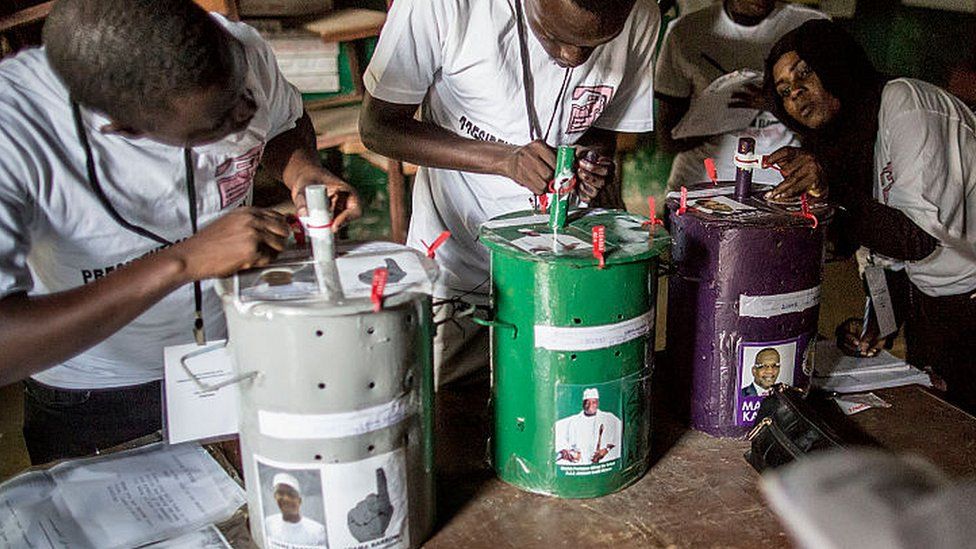
When they go to the polls on Saturday 4 December to elect a president, ballot papers will not be used.
Instead, on arrival at a polling station, and after their ID has been verified, a voter will be directed to a series of drums painted in the party colours of the different candidates.
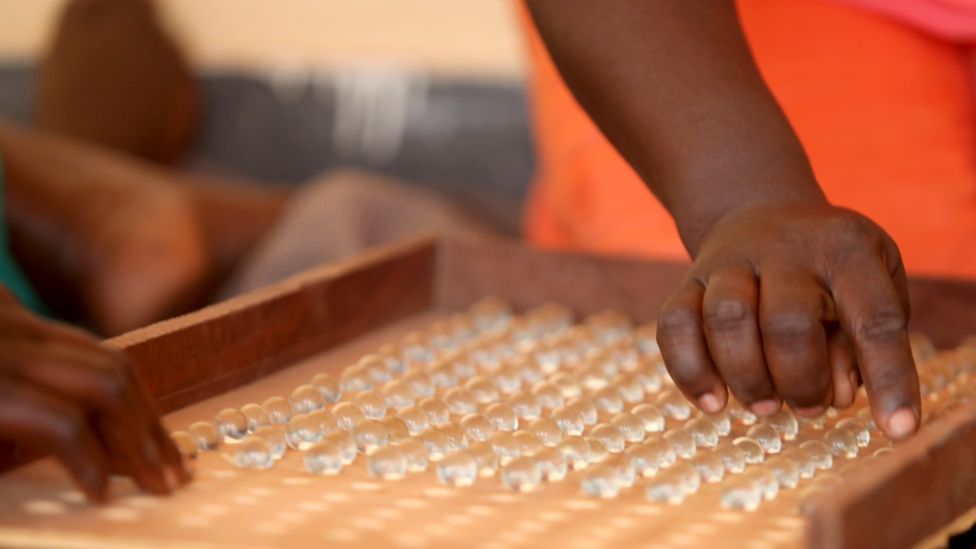
Protruding from the top of each drum is a pipe into which the voter will slot a marble handed over by an election official.
Image caption, In previous elections, like the one in 2016, there were three drums at each polling station to represent three candidates
As it drops a bell sounds so officials are able to hear if anyone tries to vote more than once.
When the polls close, the marbles from each barrel are counted and tallied – as would be done with ballot papers.
This way of voting was introduced after independence in 1965 because of The Gambia’s high illiteracy rate.
A number of reforms have been ushered in since Yayha Jammeh reluctantly left power after losing presidential elections in 2016.
Nightmare scenario avoided
Some election officials had secretly hoped that ditching marbles would be one of them.
They had argued that with the opening up of the democratic space and the possibility of more candidates participating in future elections, the marbles and drums might prove too cumbersome.
In the past only about three drums were needed at each polling station.
During Mr Jammeh’s 22 years in power there seemed little point in contesting.
In fact The Gambia has only had three presidents in its history.
Image caption, Boards like these are used to count the marbles
Mr Jammeh seized power in a coup in 1994, ousting independence leader Dawda Jawara.
Many observers concede the only election Mr Jammeh went on to win fairly was in 1996, when there was still a honeymoon period after the coup and his authoritarian excesses had not yet taken hold.
Subsequent elections they say were fixed in his favour, and his defeat in 2016 seemed to take him – and his successor Adama Barrow – by surprise.
It had largely been a two-horse race, with Mr Barrow being a consensus candidate chosen by a coalition of opposition parties. The third candidate, Mama Kandeh, took about 17% of the vote.
President Barrow is running again, this time on his newly formed party’s ticket.
At one stage it looked like he would face 22 candidates – a nightmarish scenario for the election commission given the marble-and-drum system remains in place as there was no real political will to change it.
To its relief these candidates have since been whittled down to six – still a lot for a country of approximately 2.2 million people.
Jammeh still divisive
That there are all these candidates is a testament to how much the country has changed, and is still changing.
In times past, people were either too scared to contest against Mr Jammeh or deemed it a waste of time.A DaramyA comedian called Wagan has a weekly TV show in which he pokes fun at all the main politicians, including the president – something unthinkable five years ago”Ade Daramy Journalist
These days, in what is regularly referred to as “The New Gambia”, that fear has gone and freedom of speech abounds.
A comedian called Wagan has a weekly TV show in which he pokes fun at all the main politicians including the president – something unthinkable five years ago.
Journalists comment on anything without fear of being carted off, tortured or killed as happened under Mr Jammeh.
Some of these atrocities came to light during the Truth, Reconciliation and Reparations Commission (TRRC), which heard testimony from nearly 400 people from January 2019 until May 2021.
It delivered its 17-volume final report last week – the president now has six months to respond to it and its recommendations.
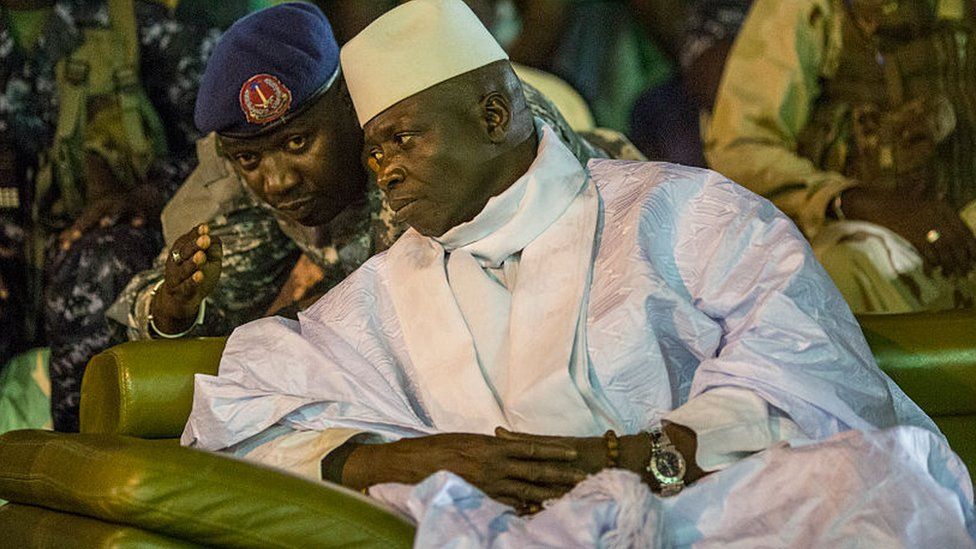
Image caption, Yahya Jammeh’s 22-year rule has been investigated by the Truth, Reconciliation and Reparations Commission (TRRC)
This means it will fall to whoever wins on 4 December to begin the real process of healing the wounds left behind by Mr Jammeh’s tenure.
Even from exile in Equatorial Guinea, the former president is trying to cast his shadow over the polls.
More on the truth commission
The 56-year-old remains a divisive figure – exemplified by a fall-out with the party he founded, the Alliance for Patriotic Reorientation and Construction (APRC).
It has gone into a formal alliance with the party of President Barrow – much to the annoyance of Mr Jammeh, who issued a series of audio recordings backing Mr Kandeh instead.
But the real shadow that has been cast over The Gambia, like the rest of the world, is the Covid pandemic.
The country with its beautiful beaches and abundant wildlife relies heavily on tourism and was hit hard by the travel restrictions. Many people lost their jobs.
There is now a trickle of tourists but much more needs to happen to get back to pre-Covid levels.
Image caption, Boosting the economy is a key challenge for whoever wins the presidency
Even before coronavirus, the country contributed a disproportionate number of migrants seeking to get to Europe for its size.
Much, though not all, is driven by unemployment.
For whoever gains the most marbles on 4 December, developing and creating opportunities in The Gambia to make it more attractive to residents not just tourists will be the greatest challenge.
Six candidates in the running:
Adama Barrow (National People’s Party) – the incumbent
Ousainou Darboe (United Democratic Party) – a lawyer who briefly served as Mr Barrow’s vice-president. He was part of the coalition that brought down Mr Jammeh and is contesting for a fifth time
Essa Mbye Faal (Independent) – a lawyer and former lead counsel at the recently concluded TRRC. Contesting for the first time
Mama Kandeh (Gambia Democratic Congress) – came third in the 2016 contest, backed by Mr Jammeh
Abdoulie Ebrima Jammeh (National Unity Party) – a former teacher who once headed the country’s civil aviation authority. Contesting for the first time
Halifa Sallah (People’s Democratic Organisation for Independence and Socialism) – an MP contesting for the fifth time
Black Satellites goalkeeper Danlad Ibrahim is ecstatic with Ghana’s progress to the final of the Africa U-20 Cup of Nations.
The Asante Kotoko shot-stopper was at his best as the three times Africa U-20 champions reached the final with a 1-0 win over the Gambians.
Ibrahim wrote on Twitter after the game, “Glory be to Ya ALLAH. Great Win and a Clean Sheet. Happy Independence Month for Ghana.”
The 18-year-old has conceded only three goals at the tournament and remains in contention for the golden gloves award at the tournament following his outstanding displays at the competition in Mauritania.
The Black Satellites will face debutants Uganda in the final on March 6, 2021, at the Stade Olympique in Nouakchott.
Gambia’s opposition leader has blamed the government for the rejection of a draft constitution that would have limited presidential terms.
Parliament rejected the draft constitution on Tuesday.
A clause that prevented President Adama Barrow from resetting the clock to make him eligible for two more terms appears to have been the biggest sticking point.
The United Democratic Party (UDP) leader, Ousainou Darboe, said the rejection of the draft was not a good sign for democracy.
The next general elections are scheduled for next year.
Mr Darboe vowed to reintroduce the draft constitution if the opposition wins the elections.
President Barrow came to power in 2016 – ending 22 years of dictatorship under Yahya Jammeh.
In our series of letters from African journalists, Sierra Leonean-Gambian writer Ade Daramy explains how he was instrumental in getting Gambians an address.
Last year I did a piece for the BBC about how easy was to get lost in The Gambia where very few streets are named.
It sparked lively debate here in the small West African nation and I also received lots of messages on social media from people saying: “It’s the same in my country.”
Some viewed it as humour – as I explained how bank forms, for example, had boxes big enough for you to draw where your house was, in relation to the nearest landmarks.
But it has taken Covid-19 to show us that addresses are not a cosmetic add-on but a necessity.
How do you contact trace and monitor suspected coronavirus-infected people, if you do not have a proper address where you can find them?
How do you pick up all the suspected cases to take to a quarantine centre, when you spend hours being directed to a single house and there are hundreds of patients in other places who also need to be picked up?
Coronavirus ‘to the rescue’
Well, imagine my surprise and delight when the non-profit organisation Finding Gambia called the TV channel where I work to see if we could cover a pilot scheme to give people addresses.
My name and telephone number were given as contacts, at which point they said: “Is it the same Ade Daramy who wrote that BBC article?”
I was quite flattered to be told that my piece had been used in several meetings to convince potential partners – central government and municipal councils – of the necessity for addresses.
The people who started Finding Gambia, Bakary Suso and Alieu Sowe, explained that they were using something called “plus codes” to do this.
It is Google technology, useable both online and offline, that creates a short code for any location which can easily direct people using Google Maps.
The codes work just like street addresses – and are made up of a combination of two elements:
*First is a short code of between six and seven letters and numbers
*And then a locality – a town or city.
Needless to say, I was intrigued, as our team set off to “address” the issue.
We arrived at the first house where a sign with its code printed on was fixed to the outside wall.
The process was repeated at residences and businesses in one of the largest residential areas of The Gambia, each with its own unique identifier.
I tested it out on my Google Map app – and indeed it worked – pointing me directly to one of the doors.
Despite the unarguable logic of this or any address system, Mr Suso and Mr Sowe told me they had been having a hard time getting the required authorities on board, which is where Covid-19 has probably come to their rescue.
An investigation into the unlawful killings of about 44 Ghanaians in the Gambia in 2005 has exposed untruths and cover-ups by Yahya Jammeh and Gambian authorities in the aftermath of the killings.
As well, the finding by a joint ECOWAS and UN team absolving Yahya Jammeh of the killings of the Ghanaians has been called into question following the testimonies of the three Gambian soldiers at the Truth, Reparations and Reconciliation Commission (TRRC) that they participated in the killings on the orders of Yahya Jammeh.
A link to the full documentary film ‘The Massacre of Ghanaians in The Gambia: Justice in Limbo? is below:
Source:Â Africa Center for International Law & Accountability
Gambian ex-autocrat Yahya Jammeh’s palatial country residence, where he allegedly administered a self-invented Aids cure, has been partially “gutted by bushfire”, the West African state’s army said on Thursday.
Located in Jammeh’s home village of Kanilai in western Gambia, his sprawling former private residence was engulfed by a wildfire on Wednesday, according to army spokesperson Lamin Sanyang.
Jammeh – whose regime has been accused of murder, torture and rape – fled The Gambia in January 2017 after losing a presidential election to relative newcomer Adama Barrow.
Some of the abuses are believed to have occurred in Kanilai.
Three men who disappeared after plotting a coup in 2014 were exhumed in the village in 2017, for example.
Aids patients have also alleged that Jammeh detained them in the compound in order to force them to undergo a herbal treatment of his own design.
Sanyang said the wildfire started on Tuesday in the neighbouring village of Alla Kunda, where villagers unsuccessfully tried to extinguish the blaze, before spreading to Kanilai the following day.
“The house where the former president used to conduct his treatment programme was gutted by bushfire,” Sanyang said, referring to Jammeh’s alleged Aids cure.
A “mini stadium” in the complex also burned down, he said, adding that no one was hurt in the incident.