Tag: GDP

  • SONA 2026: Ghana’s GDP expected hit $113bn in 2025 – President Mahama

    SONA 2026: Ghana’s GDP expected hit $113bn in 2025 – President Mahama

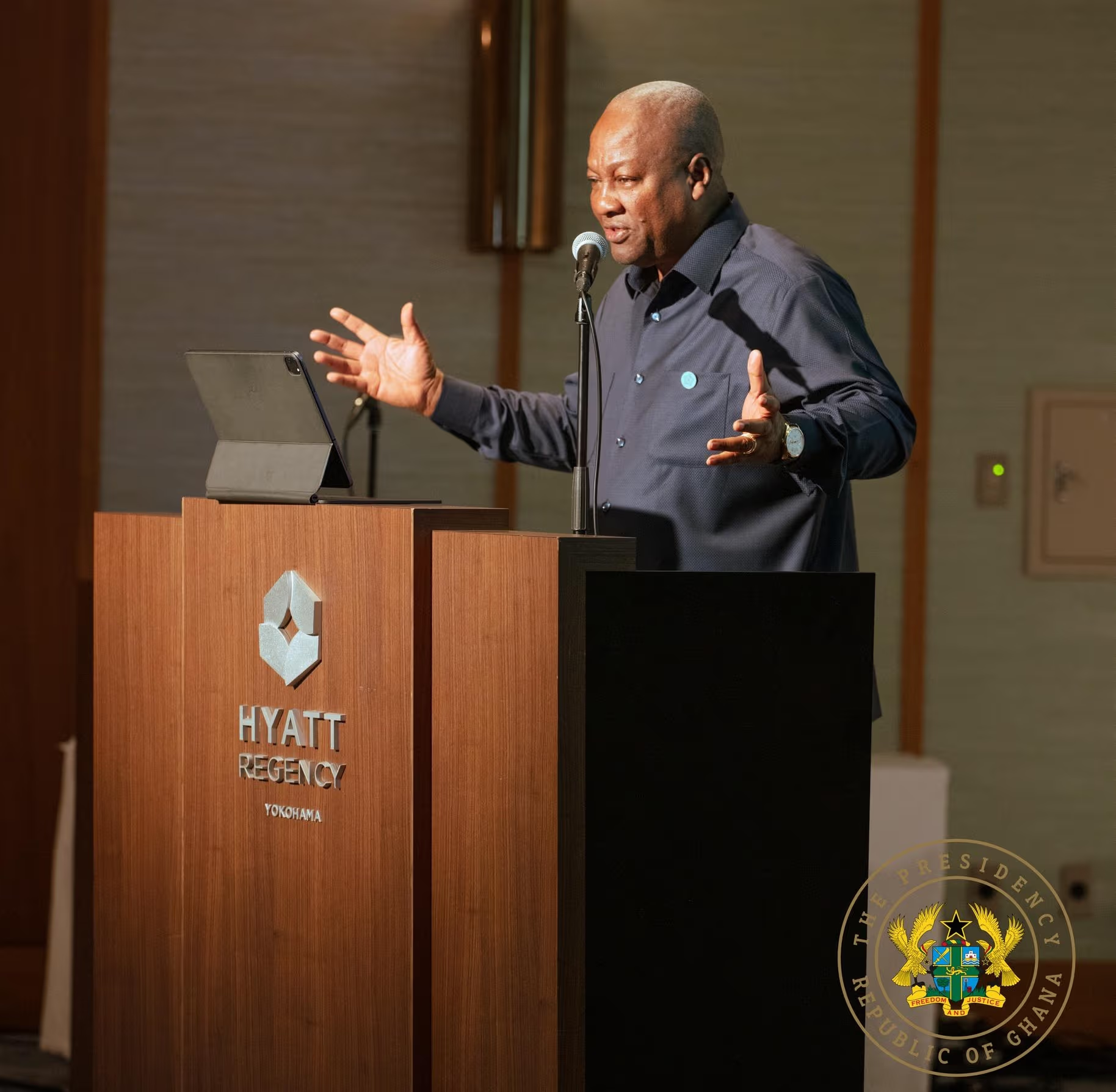
    President John Mahama has announced that Ghana’s economy has grown significantly, with a $113 billion Gross Domestic Product (GDP) in 2025. This, President Mahama noted, marks a sharp increase from $83 billion at the end of 2024.

    According to President Mahama, this economic growth places Ghana among the top 10 largest economies in Africa, reflecting the nation’s rising influence on the continent.

    “Mr Speaker, our economy has grown significantly, in 2025, Ghana’s GDP is expected to reach one hundred and thirteen billion dollars. An increase from eighty-three bilion dollars at the end of 2024. This has placed Ghana among the top 10 largest economy in Africa ,” President Mahama said while delivering State of The Nation address in Parliament today, Friday, February, 2026.

    Bank of Ghana (BoG) announced a 6.3% Gross Domestic Product (GDP) in the second quarter of 2025. While acknowledging the global financial pressures, the BoG governor, Johnson Pandit Asiama, speaking during the 126th Monetary Policy Committee (MPC) meeting held on September 15, stated that Ghana has seen a 1.0% growth in GDP from the previous 5.3% in the first quarter.

    “Ghana’s recovery is gaining momentum even as the global environment remains uncertain. Worldwide, growth is easing, and financial conditions are still tight amid trade tensions and geopolitical risks; yet domestically, improved fundamentals have strengthened confidence in our outlook. Real activity has firmed. Provisional data show GDP growth accelerated to 6.3 percent in Q2 2025, led by services and agriculture, with non-oil GDP expanding by 7.8 percent,” Dr Asiamah stated.

    According to him, some short-term economic measurements (called high-frequency indicators) show that the economy is still growing. Among the short-term measurements, the Bank of Ghana’s Composite Index of Economic Activity was 6.1% higher in July than it was a year earlier.

    “High-frequency indicators confirm this momentum: the Bank’s Composite Index of Economic Activity was up 6.1 percent year-on-year in July, and recent PMI readings alongside our business and consumer Surveys point to improving sentiment,” he stated.

    In his update, he also touched on inflation, stating that it has gone down from the previous 12.1% in July to 11.5% in August, marking a 0.6 percentage point drop in just one month, marking the eighth consecutive month of decline and the lowest inflation rate since October 2021. He added that, even though there was a decline in remittance, the cedi remains one of the strongest-performing currencies on the global level.

    “On the price front, headline inflation fell further to 11.5 percent in August, its lowest since October 2021, supported by a tight monetary stance, fiscal consolidation, and better food supplies; core measures and expectations continue to re-anchor. External buffers have strengthened. For the first eight months of the year, Ghana recorded a trade surplus of US$6.2 billion, underpinned by robust gold exports and higher cocoa receipts.

    “Gross international reserves stood at US$10.7 billion in August, covering about 4½ months of imports. Despite seasonal pressures and a moderation in remittance inflows in recent weeks, the cedi remains among the strongest currencies globally year-to-date, appreciating by about 21 per cent as of September 12.

    “It now ranks alongside high performers such as the Russian ruble, Swedish krona, Norwegian krone, Swiss franc, Euro, and British pound. This outperformance reflects prudent monetary policy, effective liquidity management, fiscal consolidation, and increased foreign exchange inflows,” he stressed.

    The Bank of Ghana in late July projected that inflation was likely to decline further and fall within the medium-term target range of 6 to 10 percent during the third quarter of 2025, ahead of earlier expectations.

    According to a statement released by the Chairman of the Monetary Policy Committee (MPC) and Governor of the Bank of Ghana, Dr Johnson Asiama, on July 30, 2025, macroeconomic conditions saw a significant improvement, inflation expectations were broadly anchored, external buffers were strengthened, and confidence in the economy was returning.

    “The July forecast also shows that headline inflation is expected to decline further in the third quarter of 2025 and trend within the medium-term target of 8±2 percent by the end of 2025, earlier than initial projections,” the statement indicated.

    It further explained that the external sector outlook was positive, anchored on favourable commodity prices and improved remittance inflows, despite the resumption of external debt service, adding that the cedi has further strengthened against major trading currencies on the back of the strong external sector performance and increased reserve accumulation.

    Meanwhile, the BoG cautioned that there are upside risks to the inflation outlook, which include potential supply chain challenges emanating from the global trade tensions, and upward adjustment in utility tariffs.This notwithstanding, the central bank maintained that the impact of these risks on inflation is expected to be offset by an appropriately tight monetary policy stance and continued fiscal consolidation.

    The IMF projects a decrease in global inflation while predicting slower 2025 economic growth in the U.S. and other regions.

    The Bretton Woods institution attributed this anticipated improvement to the debt restructuring programme implemented by the erstwhile government, noting its positive impact in placing the country on a path toward debt sustainability.

    During the IMF press briefing held on September 11 in Washington, D.C., the Director of Communications, Julie Kozack, responded to a journalist’s question on Ghana’s debt sustainability and the impact of the restructuring agreement. She explained that Ghana’s “debt service indicators” have improved significantly because of the restructuring.

    According to her, this development provides the country with greater space to recover economically and channel resources into key investments.“The recent restructuring agreement has significantly improved debt service indicators for Ghana, and that has created more space for economic recovery and also much-needed investments in the economy,” she stated.

    Kozack added that IMF research indicates Ghana’s public debt will decline from about 82% of GDP in 2022 to around 60% in 2025, describing the trend as a “fairly steep reduction” that demonstrates progress toward fiscal stability.“

    According to our latest assessment, public debt is expected to fall fairly sharply from 82% in 2022. We estimate or project that it will reach 60% of GDP in 2025. That is a fairly steep reduction in public debt and marks a significant step toward durably restoring fiscal sustainability,” she said.Bank of Ghana (BoG) has announced a 6.3% Gross Domestic Product (GDP) in the second quarter of 2025. While acknowledging the global financial pressures, the BoG governor, Johnson Pandit Asiama, speaking during the 126th Monetary Policy Committee (MPC) meeting held on September 15, stated that Ghana has seen a 1.0% growth in GDP from the previous 5.3% in the first quarter.

    “Ghana’s recovery is gaining momentum even as the global environment remains uncertain. Worldwide, growth is easing, and financial conditions are still tight amid trade tensions and geopolitical risks; yet domestically, improved fundamentals have strengthened confidence in our outlook. Real activity has firmed. Provisional data show GDP growth accelerated to 6.3 percent in Q2 2025, led by services and agriculture, with non-oil GDP expanding by 7.8 percent,” Dr Asiamah stated.

    According to him, some short-term economic measurements (called high-frequency indicators) show that the economy is still growing. Among the short-term measurements, the Bank of Ghana’s Composite Index of Economic Activity was 6.1% higher in July than it was a year earlier.

    “High-frequency indicators confirm this momentum: the Bank’s Composite Index of Economic Activity was up 6.1 percent year-on-year in July, and recent PMI readings alongside our business and consumer Surveys point to improving sentiment,” he stated.

    In his update, he also touched on inflation, stating that it has gone down from the previous 12.1% in July to 11.5% in August, marking a 0.6 percentage point drop in just one month, marking the eighth consecutive month of decline and the lowest inflation rate since October 2021. He added that, even though there was a decline in remittance, the cedi remains one of the strongest-performing currencies on the global level.

    “On the price front, headline inflation fell further to 11.5 percent in August, its lowest since October 2021, supported by a tight monetary stance, fiscal consolidation, and better food supplies; core measures and expectations continue to re-anchor. External buffers have strengthened. For the first eight months of the year, Ghana recorded a trade surplus of US$6.2 billion, underpinned by robust gold exports and higher cocoa receipts.

    “Gross international reserves stood at US$10.7 billion in August, covering about 4½ months of imports. Despite seasonal pressures and a moderation in remittance inflows in recent weeks, the cedi remains among the strongest currencies globally year-to-date, appreciating by about 21 per cent as of September 12.

    “It now ranks alongside high performers such as the Russian ruble, Swedish krona, Norwegian krone, Swiss franc, Euro, and British pound. This outperformance reflects prudent monetary policy, effective liquidity management, fiscal consolidation, and increased foreign exchange inflows,” he stressed.

    The Bank of Ghana in late July projected that inflation was likely to decline further and fall within the medium-term target range of 6 to 10 percent during the third quarter of 2025, ahead of earlier expectations.

    According to a statement released by the Chairman of the Monetary Policy Committee (MPC) and Governor of the Bank of Ghana, Dr Johnson Asiama, on July 30, 2025, macroeconomic conditions saw a significant improvement, inflation expectations were broadly anchored, external buffers were strengthened, and confidence in the economy was returning.

    “The July forecast also shows that headline inflation is expected to decline further in the third quarter of 2025 and trend within the medium-term target of 8±2 percent by the end of 2025, earlier than initial projections,” the statement indicated.

    It further explained that the external sector outlook was positive, anchored on favourable commodity prices and improved remittance inflows, despite the resumption of external debt service, adding that the cedi has further strengthened against major trading currencies on the back of the strong external sector performance and increased reserve accumulation.

    Meanwhile, the BoG cautioned that there are upside risks to the inflation outlook, which include potential supply chain challenges emanating from the global trade tensions, and upward adjustment in utility tariffs.This notwithstanding, the central bank maintained that the impact of these risks on inflation is expected to be offset by an appropriately tight monetary policy stance and continued fiscal consolidation.

    The IMF projects a decrease in global inflation while predicting slower 2025 economic growth in the U.S. and other regions.

    The Bretton Woods institution attributed this anticipated improvement to the debt restructuring programme implemented by the erstwhile government, noting its positive impact in placing the country on a path toward debt sustainability.

    During the IMF press briefing held on September 11 in Washington, D.C., the Director of Communications, Julie Kozack, responded to a journalist’s question on Ghana’s debt sustainability and the impact of the restructuring agreement. She explained that Ghana’s “debt service indicators” have improved significantly because of the restructuring.

    According to her, this development provides the country with greater space to recover economically and channel resources into key investments.“The recent restructuring agreement has significantly improved debt service indicators for Ghana, and that has created more space for economic recovery and also much-needed investments in the economy,” she stated.

    Kozack added that IMF research indicates Ghana’s public debt will decline from about 82% of GDP in 2022 to around 60% in 2025, describing the trend as a “fairly steep reduction” that demonstrates progress toward fiscal stability.“

    According to our latest assessment, public debt is expected to fall fairly sharply from 82% in 2022. We estimate or project that it will reach 60% of GDP in 2025. That is a fairly steep reduction in public debt and marks a significant step toward durably restoring fiscal sustainability,” she said.Bank of Ghana (BoG) has announced a 6.3% Gross Domestic Product (GDP) in the second quarter of 2025. While acknowledging the global financial pressures, the BoG governor, Johnson Pandit Asiama, speaking during the 126th Monetary Policy Committee (MPC) meeting held on September 15, stated that Ghana has seen a 1.0% growth in GDP from the previous 5.3% in the first quarter.

    “Ghana’s recovery is gaining momentum even as the global environment remains uncertain. Worldwide, growth is easing, and financial conditions are still tight amid trade tensions and geopolitical risks; yet domestically, improved fundamentals have strengthened confidence in our outlook. Real activity has firmed. Provisional data show GDP growth accelerated to 6.3 percent in Q2 2025, led by services and agriculture, with non-oil GDP expanding by 7.8 percent,” Dr Asiamah stated.

    According to him, some short-term economic measurements (called high-frequency indicators) show that the economy is still growing. Among the short-term measurements, the Bank of Ghana’s Composite Index of Economic Activity was 6.1% higher in July than it was a year earlier.

    “High-frequency indicators confirm this momentum: the Bank’s Composite Index of Economic Activity was up 6.1 percent year-on-year in July, and recent PMI readings alongside our business and consumer Surveys point to improving sentiment,” he stated.

    In his update, he also touched on inflation, stating that it has gone down from the previous 12.1% in July to 11.5% in August, marking a 0.6 percentage point drop in just one month, marking the eighth consecutive month of decline and the lowest inflation rate since October 2021. He added that, even though there was a decline in remittance, the cedi remains one of the strongest-performing currencies on the global level.

    “On the price front, headline inflation fell further to 11.5 percent in August, its lowest since October 2021, supported by a tight monetary stance, fiscal consolidation, and better food supplies; core measures and expectations continue to re-anchor. External buffers have strengthened. For the first eight months of the year, Ghana recorded a trade surplus of US$6.2 billion, underpinned by robust gold exports and higher cocoa receipts.

    “Gross international reserves stood at US$10.7 billion in August, covering about 4½ months of imports. Despite seasonal pressures and a moderation in remittance inflows in recent weeks, the cedi remains among the strongest currencies globally year-to-date, appreciating by about 21 per cent as of September 12.

    “It now ranks alongside high performers such as the Russian ruble, Swedish krona, Norwegian krone, Swiss franc, Euro, and British pound. This outperformance reflects prudent monetary policy, effective liquidity management, fiscal consolidation, and increased foreign exchange inflows,” he stressed.

    The Bank of Ghana in late July projected that inflation was likely to decline further and fall within the medium-term target range of 6 to 10 percent during the third quarter of 2025, ahead of earlier expectations.

    According to a statement released by the Chairman of the Monetary Policy Committee (MPC) and Governor of the Bank of Ghana, Dr Johnson Asiama, on July 30, 2025, macroeconomic conditions saw a significant improvement, inflation expectations were broadly anchored, external buffers were strengthened, and confidence in the economy was returning.

    “The July forecast also shows that headline inflation is expected to decline further in the third quarter of 2025 and trend within the medium-term target of 8±2 percent by the end of 2025, earlier than initial projections,” the statement indicated.

    It further explained that the external sector outlook was positive, anchored on favourable commodity prices and improved remittance inflows, despite the resumption of external debt service, adding that the cedi has further strengthened against major trading currencies on the back of the strong external sector performance and increased reserve accumulation.

    Meanwhile, the BoG cautioned that there are upside risks to the inflation outlook, which include potential supply chain challenges emanating from the global trade tensions, and upward adjustment in utility tariffs.This notwithstanding, the central bank maintained that the impact of these risks on inflation is expected to be offset by an appropriately tight monetary policy stance and continued fiscal consolidation.

    The IMF projects a decrease in global inflation while predicting slower 2025 economic growth in the U.S. and other regions.

    The Bretton Woods institution attributed this anticipated improvement to the debt restructuring programme implemented by the erstwhile government, noting its positive impact in placing the country on a path toward debt sustainability.

    During the IMF press briefing held on September 11 in Washington, D.C., the Director of Communications, Julie Kozack, responded to a journalist’s question on Ghana’s debt sustainability and the impact of the restructuring agreement. She explained that Ghana’s “debt service indicators” have improved significantly because of the restructuring.

    According to her, this development provides the country with greater space to recover economically and channel resources into key investments.“The recent restructuring agreement has significantly improved debt service indicators for Ghana, and that has created more space for economic recovery and also much-needed investments in the economy,” she stated.

    Kozack added that IMF research indicates Ghana’s public debt will decline from about 82% of GDP in 2022 to around 60% in 2025, describing the trend as a “fairly steep reduction” that demonstrates progress toward fiscal stability.“

    According to our latest assessment, public debt is expected to fall fairly sharply from 82% in 2022. We estimate or project that it will reach 60% of GDP in 2025. That is a fairly steep reduction in public debt and marks a significant step toward durably restoring fiscal sustainability,” she said.

  • Why banks won’t lend to farmers – And how to fix it in the new age

    Why banks won’t lend to farmers – And how to fix it in the new age

    In a country where agriculture contributes 21 percent of GDP, and the crops sub-sector alone adds nearly GHS 32 billion to national output, one would expect farmers to be among the banking sector’s most valued clients. Yet, smallholder farmers like Kojo in Ejura, who needs GHS 50,000 for maize inputs despite having a confirmed buyer, often face repeated rejection. The sector that feeds Ghana remains under-financed, and the consequences are national.

    Data from the Ghana Statistical Service and the Bank of Ghana show the scale of the problem: agriculture receives only 3–5 percent of total banking sector credit, despite its economic importance and the livelihoods it sustains.
    Banks’ Risk Perception

    Banks are not indifferent; they are cautious. Farming income is seasonal, unpredictable, and highly dependent on rainfall, pest cycles, and market prices. A delayed rainy season in Tamale, a pest outbreak in Techiman, or a sudden drop in maize prices can wipe out projected income.

    Credit committees are trained to evaluate steady cash flows and formal records. Many farmers operate without audited accounts, documented sales contracts, or formal bookkeeping. From a banker’s perspective, the uncertainty is high—and the conventional tools for assessing creditworthiness fall short.

    The Collateral Challenge

    Collateral requirements remain a major barrier. Many farmers work on customary land without formal titles, and equipment like tractors or irrigation systems often cannot be used as bankable security. Until land documentation is digitized and movable asset registries are fully operational, these structural barriers will continue to exclude even creditworthy farmers.

    High Costs and Small Loans

    Monitoring rural farmers is expensive, and the individual loan sizes are small. For banks, it is often cheaper and more profitable to lend large sums to urban businesses than to hundreds of small agricultural loans scattered across the country. This is not negligence—it is a commercial calculation. But when economic sectors are sidelined for efficiency, the cost is ultimately borne by the broader economy.

    Modern Solutions for Agricultural Finance

    The challenge is not that agriculture is too risky. The challenge is that risk has been measured with the wrong tools.

    1. Data as the New Collateral

    Mobile money records, digital input purchases, satellite mapping, and off-take agreements provide measurable indicators of farmers’ creditworthiness. Banks that integrate this data can more accurately assess risk and extend financing with confidence.

    2. Make Insurance Standard

    Weather-index and crop insurance should be a default part of agricultural loans. When loans are insured, banks can manage risk, and farmers are protected against catastrophic losses. Public-private partnerships can further encourage lending and adoption.

    3. Finance the Value Chain, Not Just the Farmer

    Linking farmers to processors, aggregators, or exporters ensures repayment can flow directly from sales. This reduces risk and improves financial discipline. Ghana’s drive to reduce food imports and boost agro-industrialization makes this model particularly urgent.

    4. Policy Must Reflect Priority

    Agriculture is strategic. Credit guarantees, regulatory incentives, digitized land records, and operational movable asset registries are all necessary enablers. Capital allocation must match agriculture’s contribution to GDP and the economy.

    A National Imperative

    Ghana spends billions on food imports while domestic farmers struggle to access capital. This is not merely a banking issue—it is an economic one.
    Agriculture is not unbankable. It is underserved. Modern data, structured insurance, value chain financing, and supportive policy can transform the sector.

    Until capital flows deliberately to the farmers who feed the nation, Ghana’s agricultural ambitions will remain aspirational. The question is not whether banks should lend to farmers—it is whether Ghana can afford not to.

  • Gold industry injected GHS88bn into Ghana’s GDP in 2024 – Vice President

    Gold industry injected GHS88bn into Ghana’s GDP in 2024 – Vice President

    Ghana’s gold industry made a significant contribution to the country’s Gross Domestic Product (GDP), recording GH¢88 billion in 2024, according to Vice President Professor Naana Jane Opoku-Agyemang.

    She made this revelation during the inauguration of the Newmont Ahafo North Mine on Thursday, October 30. According to her, Ghana’s gold exports stood at US$11.2 billion as of August 2025.

    “The opening of the Ahafo North Mine is an act of partnership and progress, and the fruit of mutual respect and collaboration. Last year, Ghana’s gold industry contributed GH¢88.1 billion to our GDP. Also, this year, our gold exports reached a record of US$11.2 billion. These figures demonstrate and encourage more confidence in our economy, governance, and national potential,” she added.

    Small-scale gold exports carried out by the Ghana Gold Board (GoldBod) and the Bank of Ghana between January and August 2025 totaled 66.7 tonnes, with an estimated export value of approximately US$6.3 billion. This was revealed by the Chief Executive Officer (CEO) of GoldBod, Sammy Gyamfi, while delivering a speech at the Mining and Minerals Convention on Tuesday, September 9.

    “Since January up to the end of August 2025, small-scale gold exports undertaken by or through the GoldBod, working closely with the BoG, have hit a record high of 66.7 tonnes with an export value of approximately US$6.3 billion.”

    “What this means is that the volume and value of small-scale gold exports from January to August 2025 alone have exceeded the total small-scale exports outturn for the whole of 2024 — which stood at 63 tonnes with a value of about US$4.6 billion,” he added.

    Additionally, Sammy Gyamfi disclosed that effective October, the Ghana Gold Board will process raw gold within Ghana instead of exporting it in its unrefined form. He explained that the move is part of a new collaboration with the Bank of Ghana and local refineries.

    “It is a national shame that, as a long-standing continental leader in production, Ghana continues to export doré, that is, raw gold, instead of bullion. The Ghana Gold Board, which I lead, is determined to change this narrative as a matter of urgency.

    “As part of the reset agenda of President Mahama, the GoldBod, in conjunction with the BoG, is partnering with local refineries such as the Gold Coast Refinery to begin the local refining of gold purchased and exported by the GoldBod, and this will begin next month, October 2025,” he added.

    In August this year, GoldBod offered a special temporary bonus scheme to miners operating under valid mining licenses. In its announcement, GoldBod emphasised that licensed miners would enjoy an additional GH¢832 per pound of gold sold through the Ghana Gold Board. This information was contained in a statement issued by GoldBod on Wednesday, August 27.

    “This novelty is in response to legitimate complaints from licensed miners about the significant reduction in the local price of gold in the last few months due to the continuous appreciation of the Ghana cedi.

    “The special bonus will ensure that licensed miners who have contributed immensely to the country’s increased gold output and foreign exchange earnings do not indirectly suffer as a result of the significant appreciation of the Ghana cedi that they have helped the country achieve,” the statement read.

    According to GoldBod, the recent development has been made possible due to the continuous appreciation of the Ghana cedi. On July 7, a task force was inaugurated with a special mandate and specific powers as police officers to combat smuggling and all forms of illegal gold trading activities in the country. Sammy Gyamfi noted that this will save the government from revenue leakages in the sector, helping to generate and invest revenue for economic development.

    “(This will) help the state combat and defeat the phenomenon of gold smuggling, the canker of illegal gold trading, and price disruptions that deprive the state of the needed revenue, profit, and foreign exchange for our economy and the development of our country,” he announced.

    Earlier this month, GoldBod reported significant revenue accrued from small-scale gold exports between January and October 15. The sector earned US$8 billion in foreign exchange within ten months, according to data from the Ghana Gold Board (GoldBod) and the Precious Minerals Marketing Company (PMMC).

    The data shows that small-scale miners exported 81,719.23 kilograms of gold during the period, valued at US$8.06 billion. This marks a sharp increase from US$4.61 billion recorded in 2024 and nearly quadruples the US$2.19 billion achieved in 2023.

    Additionally, the data shows that gold exports increased by 29% between 2024 and 2025, rising from 63,647 kilograms to 81,719 kilograms. When compared to 2023, GoldBod’s earnings have grown more than threefold.

    The data highlights a consistent upward trend in both gold volume and export value over the three years, reflecting improved regulation, transparency, and compliance within Ghana’s small-scale mining sector.

    It also shows robust month-on-month growth in the second quarter of the year, with revenue of US$1.17 billion recorded in May, US$957.9 million in June, and US$897.6 million in April.

    The country’s official gold buying and distribution authority has linked its significant gains to its partnership with PMMC and strengthened oversight of small-scale gold exports and other related gold-purchasing regulations. The GoldBod-PMMC collaboration has proved efficient since mid-April 2025, when GoldBod began absorbing the functions of PMMC.

    The collaboration has been instrumental in curbing illicit trade and ensuring that proceeds from gold sales are properly repatriated into the Ghanaian economy.

  • Ghana’s economy slows to 4.5% in July 2025, down from 8.3% last year

    The Ghana Statistical Service (GSS) has introduced a new index aimed at filling the information gap between quarterly GDP releases, providing policymakers and investors with a more immediate measure of economic performance.

    Data from the index indicates that the economy continued its growth momentum, with the MIEG rising to 110.2 in July 2025, up from 105.4 in the same period last year.

    Despite the positive trend, the latest figures point to a slowdown compared to the 8.3 percent growth recorded in July 2024. The expansion was largely supported by a strong rebound in agriculture, which grew by 8.0 percent, and steady growth in the services sector at 6.4 percent.

    The industrial sector, however, showed minimal growth, recording only a 0.1 percent increase.

    Presenting the findings, Government Statistician Dr. Alhassan Iddrisu said the MIEG provides “timely insights to support swift and evidence-based policy responses.”

    He added that the new measure serves as a “leading high-frequency indicator of GDP growth,” enabling better tracking of policy impacts and improving the forecasting of economic trends.

    According to the sectoral analysis, services contributed 2.63 percentage points to the 4.5 percent total growth, while agriculture accounted for 1.67 percentage points. The industrial sector made a modest contribution of 0.04 percentage points.

    Although industrial gold production increased, the GSS noted that this was largely offset by a decline in petroleum and gas output.

    The MIEG, which uses 2023 as its base year with an index of 100, is provisional and may be revised as more comprehensive data becomes available. The next update, covering August 2025, is scheduled for release on November 12.

    Meanwhile, the World Bank has made a U-turn on its earlier prediction of Ghana’s 2025 economic growth, upgrading the forecast from its previous estimate to 4.3 percent.

    This was contained in the October 2025 edition of Africa’s Pulse Report, released by the Bank in Washington, D.C. In April this year, the World Bank projected Ghana’s economy to expand by 3.9%.

    The Bank attributed weather-related uncertainties as factors that could influence the country’s overall economic performance. Meanwhile, the World Bank expects Ghana’s December inflation to close at 15.4%.

    Earlier in September, the World Bank disbursed $360 million from its International Development Association (IDA) to Ghana.

    This funding was made possible through the Second Resilient Recovery Development Policy Financing operation, to support Ghana’s efforts to restore macroeconomic stability.

    Parliament gave the nod in July after the World Bank Board approved the facility in June. The World Bank Group is a family of five international organizations that provide leveraged loans to developing countries. It is the largest and best-known development bank in the world, serving as an observer at the United Nations Development Group.

    The Bank is headquartered in Washington, D.C., United States. Its objectives are to restore fiscal sustainability, support financial sector stability and private sector development, improve energy sector financial discipline, and strengthen social and climate resilience.

    The recent disbursement comes at a time when Ghana’s local currency, the cedi, has been ranked as the worst-performing currency in a recent report published by the global financial news outlet Bloomberg.

    Ghana cedi’s strong performance was a central theme highlighted by President John Mahama during an interaction with potential investors in Singapore and Japan weeks ago. President Mahama emphasised the robust performance of the local currency to underscore Ghana’s macroeconomic stability and attractiveness as a destination for foreign capital.

    However, the cedi’s brief gains were short-lived after its rapid depreciation made it the worst-performing currency. According to Bloomberg’s recent report released on Thursday, September 4, the Ghana cedi is the worst-performing currency among all trading currencies, attributing the depreciation to a surge in demand for dollars by companies paying for imports.

    “A surge in demand for dollars by companies paying for imports has ended the Ghana cedi’s recent strong performance,” Bloomberg said.Bloomberg attributed the new development to the “strong gold prices,” while emphasizing that Ghana’s cedi has seen more than a ten percent (10%) depreciation in the current quarter.

    This, Bloomberg noted, has erased the fifty percent gain against the dollar in April and June. According to Bloomberg, the cedi traded 0.1 per cent weaker at GH¢11.9507 per dollar at 1:50 a.m. Despite the losses, it has gained 23 per cent so far this year.

    “Now, the currency, which had ranked first globally on the back of strong gold prices, has weakened by 13 per cent in the current quarter. Bloomberg data showed this was the steepest fall worldwide, erasing part of the 50 per cent gain recorded between April and June,” the report said.

    But Bloomberg has indicated that “Despite the losses, it has gained 23 per cent so far this year based on market data.” Reacting to Bloomberg’s report, the Bank of Ghana (BoG) noted, “The cedi should be stable within a reasonable range,” the central bank said in an emailed response.

    “Our role is to ensure fluctuations remain orderly, that they reflect fundamentals, and that they do not undermine confidence in the broader economy.”

    Bloomberg, in April this year, ranked the cedi as the best-performing currency with a sixteen percent (16%) gain against the dollar. What made the cedi earn the tag as the worst-performing currency is the steepest decline on the global level.

  • IMF projects Ghana’s total debt stock to reach 60% of GDP by end of 2025

    IMF projects Ghana’s total debt stock to reach 60% of GDP by end of 2025

    The International Monetary Fund (IMF) has projected that Ghana’s total debt stock will decline to sixty percent (60%) of GDP by the end of 2025.

    The Bretton Woods institution attributed this anticipated improvement to the debt restructuring programme implemented by the erstwhile government, noting its positive impact in placing the country on a path toward debt sustainability.

    During the IMF press briefing held on September 11, 2025, in Washington, D.C., the Director of Communications, Julie Kozack, responded to a journalist’s question on Ghana’s debt sustainability and the impact of the restructuring agreement. She explained that Ghana’s “debt service indicators” have improved significantly because of the restructuring.

    According to her, this development provides the country with greater space to recover economically and channel resources into key investments.
    “The recent restructuring agreement has significantly improved debt service indicators for Ghana, and that has created more space for economic recovery and also much-needed investments in the economy,” she stated.

    Kozack added that IMF research indicates Ghana’s public debt will decline from about 82% of GDP in 2022 to around 60% in 2025, describing the trend as a “fairly steep reduction” that demonstrates progress toward fiscal stability.
    “According to our latest assessment, public debt is expected to fall fairly sharply from 82% in 2022. We estimate or project that it will reach 60% of GDP in 2025. That is a fairly steep reduction in public debt and marks a significant step toward durably restoring fiscal sustainability,” she said.

    She recommended that Ghana continue implementing reforms such as boosting domestic revenue, strengthening public financial management, and cutting unnecessary expenditure.
    “Now, to make this stick for the country, Ghana will need to continue on the path of reform. Some of the reforms needed to really entrench debt sustainability include boosting domestic revenue in the country, strengthening public financial management to ensure that expenditures are effective and efficient, and, of course, in a broader sense, maintaining overall fiscal discipline. These are all essential to lock in the recent gains,” she added.

    On the issue of cost-cutting and excessive spending, the current government has taken steps, including reducing the size of the Cabinet and scrapping DSTV subscription payments for diplomats and at the Jubilee House.

    President Mahama has ordered the discontinuation of all DSTV and other satellite TV subscription payments at the Presidency. This forms part of the government’s reset agenda to cut costs and save taxpayers’ money, according to the Minister of State for Government Communications, Felix Ofosu Kwakye.
    “I can reveal to you that if you come to this house, there’s no office in this house that is allowed to subscribe to DSTV or any satellite television,” he said.

    Speaking on JoyNews, Mr. Kwakye explained that the ban will eventually extend to all government agencies and institutions. While he admitted the decision may seem “trivial,” an internal review revealed that satellite TV subscriptions accounted for a notable share of operational expenses.

    “You would say that that is a trivial matter, but he has done that. Because when you computed the cost, it was a significant money. You can turn on the television that you see here, and you will find that I’m limited to local television stations. It is something that will be extended to all government agencies to ensure that we don’t waste the taxpayers’ money,” he added.

    He further disclosed that more cost-cutting measures are under discussion and will soon be announced. President Mahama, he said, remains committed to accountability, transparency, and eliminating unnecessary government spending.


    “This is a man deeply committed to making savings for the Ghanaian people. Governance necessarily involves taking tough decisions… but the citizenry must see corresponding levels of modesty on the part of government officials—and that’s what President Mahama is committed to doing,” he stressed.

    Earlier in September, President Mahama also announced plans to end government funding for costly rental properties at Ghana’s diplomatic missions abroad. This measure, he said, will save the country $15 million annually.

    Speaking at the induction ceremony for 15 distinguished individuals, the President emphasised that Ghana can no longer afford the financial burden of renting expensive accommodation for its missions overseas. He described the practice as wasteful and incompatible with the ruling National Democratic Congress (NDC) Reset Agenda.

    He disclosed that the Cabinet has already approved a new policy, the Strategic Transition from Rental to Developing (STRIDE), which will shift foreign missions into state-owned properties. However, the Ministers of Foreign Affairs and Finance will review the policy to ensure smooth implementation.

    The Mahama-led administration assumed office on what it describes as a “reset agenda”—an economic recovery and social transformation initiative designed to stabilise the economy and promote growth.

    Among the measures taken so far is a reduction in government size, with the President appointing 56 ministers, four fewer than his 60-minister cap. The STRIDE policy, in particular, is expected to eliminate the huge losses Ghana incurs annually on rent for diplomatic missions by securing permanent, state-owned accommodation.

    “From my latest briefing, a transaction advisor has been appointed, standard developments are being prepared, and funding mechanisms are already being negotiated. This shift will ensure that our missions abroad are housed in proper homes owned by the republic, reducing wasteful expenditure while safeguarding Ghana’s dignity on the international stage.

    “Ghana cannot continue spending more than $15 million every year on renting properties abroad for our diplomatic use. This is not a judicious use of taxpayers’ resources, and the Reset Agenda is an immediate reversal of this trend,” he stated.

    Presenting the 2025 mid-year budget review on July 24, Finance Minister Dr Cassiel Ato Forson noted that the government’s commitment to fiscal discipline, prudent debt management, and exchange rate appreciation has resulted in significant improvement in Ghana’s debt profile.

    He revealed that the public debt reduced from GH¢726.7 billion as of the end of December 2024 to GH¢613 billion as of the end of June 2025. Ghana’s public debt reduced by GH¢113.7 billion in six months.

    The sector minister noted that “for the first time in Ghana’s history, there is a negative 15.6% rate of debt accumulation.”

    Ghana’s public debt-to-GDP ratio as of the end of June 2025 was 43.8%, down from 61.8% at the end of 2024. Ghana’s public debt as a percent of GDP reduced by 18% in six months. The country’s foreign debt, as a percentage of total public debt, declined from 57.4% as of the end of December 2024 to 49% by the end of June 2025.

    “This has significantly improved Ghana’s debt sustainability,” the Finance Minister said while speaking on the floor of the House.

    Touching on Ghana’s programme with the International Monetary Fund (IMF), the Finance Minister noted that Ghana remains on track with the implementation of the Programme. He revealed that the government’s commitment to fiscal discipline, prudent debt management and exchange rates has paved the way for a 5th review scheduled for September.

    “The 5th Review, which is scheduled for September 2025, will be based on end-June 2025 data. Preliminary data shows that Ghana is on course to achieving most of the targets for the 5th Review. Mr. Speaker, our commitment to fiscal discipline, prudent debt management, and exchange rate appreciation has resulted in significant improvement in Ghana’s debt profile,” he added.

    On commercial debt restructuring, the Finance Minister stated that the Ministry has made two debt service payments of about US$700 million to Euro bondholders. Dr Forson disclosed that beginning in August, the Ministry of Finance will commence the building of cash buffers to support the repayment of Ghana’s domestic debt service obligations relating to the Domestic Debt Exchange Programme bonds, which will fall due in 2027 and 2028.

    Six months of the year, the government’s expenditure stood at GH¢109.7 billion, equivalent to 7.8% of the Gross Domestic Product (GDP).

    The Finance Minister noted that the current expenditure was 14.3% below the programmed amount of GH¢128.0 billion, equivalent to 9.1% of GDP. According to the sector minister, this reflects the government’s strong expenditure control.

    The minister noted that total expenditures (commitment) for 2025 have been programmed at GH¢270.9 billion, down from GH¢279.2 billion in 2024. Primary expenditure on a commitment basis (expenditures net of interest payments)—is projected at GH¢206.8 billion in 2025 (14.8% of GDP), presenting a significant decline from 19.8% of GDP in 2024 and lower than the 2023 level of 15.6% of GDP.

    Providing a breakdown of the total expenditure in six months in Parliament, the minister said that primary expenditure, or non-interest expenditures on a commitment basis, amounted to GH¢84.3 billion, or 6.0% of GDP. This is an improvement of about GH¢13.3 billion over the target of GH¢97.5 billion, which is 7.0% of GDP.

    Interest payments, on the other hand, amounted to GH¢25.4 billion, which is 1.8% of GDP. This is below the target of GH¢30.5 billion, which is 2.2% of GDP. Dr Cassiel Ato Forson explained that this was mainly due to lower domestic interest payments.

    Domestic interest payments amounted to GH¢21.6 billion, against a target of GH¢26.5 billion, representing a reduction of GH¢4.9 billion, and this was mainly on account of lower than planned domestic borrowings and the decline in T-bill rates. External interest payments amounted to GH¢3.8 billion, against a target of GH¢4.0 billion. This stemmed from the appreciation of the Ghana cedi.

    The cedi has recorded a remarkable turnaround in the first six months of 2025, appreciating by 42.6% against the US dollar. The cedi also gained 30.3% against the British pound and 25.6% against the euro during the same period.

    Other expenditure, mainly comprising Energy Sector Levies (ESL), transfers, and Energy Sector Payment Shortfalls, amounted to GH¢11.4 billion, or 0.8% of GDP. This was 12.7% below the target of GH¢13.1 billion, or 0.9% of GDP for the period. Arrears clearance amounted to GH¢4.8 billion.

    On a cash basis, the overall balance recorded a deficit of 1.1% of GDP. The deficit, according to Dr Cassiel Ato Forson, was largely financed from domestic sources with Net Domestic Financing (NDF) of GH¢13.1 billion, well below the GH¢18.7 billion target.

    Net Foreign Financing was GH¢2.8 billion, mostly from the utilization of a GH¢4.5 billion International Monetary Fund (IMF) loan disbursement from the 1st to the 6th of January 2025, before the Mahama administration took office. Project loan disbursement was GH¢2.4 billion.

    The Finance Minister noted that although Ghana is relying on the domestic market for financing, “We have borrowed less than we planned, signifying strong expenditure control and fiscal discipline.”

    Presently, the government is revising both revenue and expenditure projections to reflect the impact of the additional revenue from the Energy Sector Levies (Amendment) Act, 2025 (Act 1141).

    Total expenditure on a commitment basis has been revised downward to GH¢269.5 billion from the original budget projection of GH¢270.9 billion. However, primary expenditure has been revised upwards to GH¢209.6 billion from the original budget projection of GH¢206.8 billion.

    Total revenue and grants have been revised upwards from the 2025 budget target of GH¢227.1 billion to GH¢229.9 billion, or from 16.2% of GDP to 16.4% of GDP, representing a nominal increase of 1.3%.

    “The additional revenue of GH¢2.9 billion will come from the increase in revenues from the amendment to the Energy Sector Levies Act,” the minister added.

    Interest payments have been revised downwards by GH¢4.3 billion, from the original budget projection of GH¢64.1 billion to GH¢59.9 billion. Domestic interest, on the other hand, has been revised downward by GH¢5.1 billion, mainly on account of gains from the reduction in the treasury bill rates, as a result of the implementation of our prudent debt management policies.

    However, external interest payments have been revised upward by GH¢795 million to make additional provision for debt service due on post-cut-off date disbursements made by our bilateral creditors since 2023. Energy sector payments have also been revised upwards by GH¢2.9 billion to provision for fuel purchases for power generation.

  • GSS: Informal sector employs 80% of Ghanaians yet contributes just 27% to GDP

    GSS: Informal sector employs 80% of Ghanaians yet contributes just 27% to GDP

    Ghana’s informal sector, which employs nearly 80% of the workforce, contributes only 27% to the country’s GDP, exposing a significant productivity gap, according to the inaugural National Report on Productivity, Employment, and Growth by the Ghana Statistical Service (GSS).

    The report highlights the persistent challenges in the informal economy, including low productivity, underemployment, and stagnant wages, which continue to hinder broader economic progress despite the sector’s dominance in employment.

    Between 1991 and 2019, labour productivity in Ghana increased at an average annual rate of 3.2%, with the highest gains recorded in capital-intensive industries such as mining and finance. However, these sectors have contributed little to widespread job creation, reflecting an economy that is growing unevenly across industries.

    For instance, while the manufacturing sector saw a 14% rise in productivity between 2013 and 2022, employment within the industry expanded by only 2.5%, signaling slow industrial growth. Similarly, the mining sector demonstrated high productivity but limited job generation, emphasizing Ghana’s dependence on resource-based industries that do not significantly absorb labour.

    The report further points to a widening disconnect between productivity growth and wages. While workers in finance, insurance, and professional services have experienced higher wage increases, those in household agriculture, trade, and repair services have seen minimal improvements in earnings despite productivity gains.

    A sectoral analysis identifies commercial agriculture, manufacturing, transportation, and utilities as key industries driving both employment and productivity improvements. However, the overall pace of economic transformation remains slow, with many workers shifting from traditional occupations to low-productivity urban services, restricting broader economic advancement.

    To tackle these issues, the report calls for increased investments in industrialization, the expansion of commercial agriculture, and policies that facilitate the transition of informal enterprises into the formal economy. It also stresses the importance of technology adoption, workforce skill development, and targeted fiscal policies to enhance productivity.

    With Ghana at a pivotal economic juncture, experts caution that without bold policy interventions, the nation risks widening income inequality, sluggish productivity growth, and missed opportunities to create sustainable employment.

  • Gold prices to rise in 2025 due to US interest rate cuts, others – Databank Research 

    Gold prices to rise in 2025 due to US interest rate cuts, others – Databank Research 

    Gold prices are projected to experience a significant surge in 2025, according to the latest projections from Databank Research in its Ghana Market Outlook 2025 report, released in January.

    Currently, the price of gold stands at approximately $2,693.60 per ounce. The anticipated rise in gold prices, according to Databank Research, will be driven by global political tensions and possible interest rate reductions by the US Federal Reserve.

    “We believe 2025 will be a promising year for gold. We expect prices to rise between USD 2,500 and USD 3,100, supported by geopolitical tensions and potential interest rate cuts by the US Federal Reserve,” parts of the 37-page report noted.

    In light of this, the report advised local investors to diversify their portfolios by considering financial products linked to gold, such as gold-backed securities.

    “We recommend that local investors diversify their portfolios into gold-backed securities to capitalize on this potential price increase and hedge against the local currency depreciation,” the document further stated.

    The report provides a comprehensive analysis and forecast of Ghana’s economic and market conditions for the year, highlighting key trends that could influence the performance of key sectors.

    A rise in gold prices presents positive prospects for Ghana’s economy, given the significant contribution of the mining sector to the nation’s revenue. The mining sector remains the largest taxpayer, contributing 22.7% of Ghana’s direct taxes. In 2023 alone, the gold mining industry generated GH₵11.55 billion (US$980 million) in taxes.

    Higher gold prices could further strengthen Ghana’s currency by increasing export earnings and foreign exchange reserves, as gold mining plays a pivotal role in the country’s economy. In 2023, the mining sector accounted for 47.4% of Ghana’s nominal GDP and 17.1% of its real GDP. Gold exports alone made up 62.1% of the country’s total export income.

  • Ghana’s GDP growth projected to increase, inflation revised to 18%

    Ghana’s GDP growth projected to increase, inflation revised to 18%

    Ghana’s economy is expected to grow steadily, reaching around 5.0% growth in the coming years.

    This matches many predictions from global research groups.

    The International Monetary Fund (IMF) has a positive outlook for the country’s economy.

    Despite challenges like ongoing efforts to reduce the budget deficit and a dry spell affecting agriculture, the IMF noted that strong economic growth in the second quarter of 2024 shows better-than-expected results.

    As a result, the IMF has raised its growth forecast for 2024 to 4.0%, up from the earlier estimate of 3.1%.

    The IMF also predicts that inflation will hit 18% by the end of 2024, higher than the previous forecast of 15%. This is mainly due to price increases caused by a weaker cedi and the ongoing dry weather.

    “Continued tight monetary policy will bring inflation back to the Bank of Ghana’s target band (8±2 per cent) by end-2025,” the Fund said.

    The IMF explained that continued efforts to reduce the budget deficit and complete the debt restructuring will help keep Ghana’s public debt on a sustainable path.

    It also forecasted that Ghana’s current account deficit will stay balanced until 2026, and international reserves are expected to cover three months of imports.

    However, the IMF warned that there are still significant risks to this outlook. On the external front, it highlighted that worsening regional conflicts, along with the effects of the Ukraine and Middle East crises, or fluctuations in commodity prices, could harm Ghana by increasing inflation from imports and causing investors to be more cautious.

    4o mini

    “If protracted, weak cocoa harvest could affect exports and growth prospects. More generally, Ghana is subject to risks related to climate shocks. On the domes­tic side, policy slippages ahead of the end-2024 general election or during the political transition could undermine macroeconom­ic stability, deteriorate domestic financing conditions and the debt dynamics, and complicate debt restructuring discussions with Ghana’s remaining external com­mercial creditors, it indicated.

  • Ghana on track to exceed IMF’s GDP growth projection of 4% for 2024 – Finance Ministry

    Ghana on track to exceed IMF’s GDP growth projection of 4% for 2024 – Finance Ministry

    The Ministry of Finance has stated that Ghana is on course to surpass the International Monetary Fund’s (IMF) 2024 GDP growth projection of 4%.

    The Ministry in a statement noted that the country continues to exceed expectations, defying challenges and solidifying its position as one of the most dynamic economies in the Africa region due to remarkable economic performance during the third quarter of 2024.

    For the first three quarters of 2024, Ghana recorded an impressive average real GDP growth rate of 6.3%, a significant leap from the 2.6% recorded during the same period in 2023, according to the Ghana Statistical Service (GSS).

    This growth was fueled by quarterly expansions of 4.8% in Q1, 7.0% in Q2, and an outstanding 7.2% in Q3—the highest quarterly GDP growth in the last five years. The non-oil sector has been equally robust, posting an average growth rate of 6.2% for the first three quarters of 2024, compared to 2.6% in the same period last year. Quarterly growth figures for the non-oil economy were 4.3% in Q1, 6.6% in Q2, and 7.7% in Q3.

    Given this stellar performance, Ghana is on track to exceed the recently revised GDP growth projection of 4% for 2024 under the 3rd Review of the IMF-supported Programme. Ghana’s post-debt restructuring growth defies global trends, where such economies typically grow at a modest 1-2%.

    The Industry sector led the way with an average growth of 8.9% for the first three quarters, driven by strong performances in key sub-sectors. Mining and Quarrying recorded 15.0% growth while Construction expanded by 9.0% . The Oil and Gas sector saw an average growth of 8.6%, and Manufacturing posted 3.1% growth.

    The Services sector expanded by 5.0%, buoyed by key areas such as Information and Communication, which grew by 15.9%. Financial and Insurance Activities recorded growth of 6.9%, while Accommodation and Food Services grew by 5.7%. Transport and Storage also contributed, recording growth of 3.8%.

    The Agriculture sector grew by 4.6%, with significant contributions from the Crops sub-sector, which expanded by 4.6%. The livestock sub-sector recorded a steady growth rate of 4.7%.

    The remarkable growth trajectory could be sustained through strategic government initiatives aimed at enhancing economic resilience and improving the living standards of all Ghanaians. Key programmes include the Planting for Food and Jobs Phase 2 Programme, SME Growth and Opportunity Programme, One District, One Factory Programme, Economic Enclave Programme, and the Ghana CARES Programme.

    The International Monetary Fund (IMF) has revised Ghana’s growth rate for 2024 to 4% from 3%. Director of the African Department, Abebe Aemro Selassie, noted that the 3% projection, as captured in the World Economic Outlook, was based on mid-April 2024 data and did not factor in recent developments in Ghana.

    Ghana’s economic resurgence underscores its unwavering commitment to fiscal consolidation, debt restructuring, and inclusive growth. This performance not only highlights the country’s resilience but also its ability to lead the charge in economic recovery across the region.

  • Global GDP growth rate predicted to reach 2.7% in 2025 – Goldman Sachs

    Global GDP growth rate predicted to reach 2.7% in 2025 – Goldman Sachs

    Goldman Sachs Research anticipates steady global economic growth in 2025, projecting a 2.7% expansion in worldwide GDP, slightly above the Bloomberg consensus and consistent with 2024 estimates.

    The forecast highlights stronger-than-expected performance in the United States, where GDP is expected to grow by 2.5%, surpassing the consensus of 1.9%.

    Meanwhile, the euro area is predicted to see slower growth at 0.8%, falling short of the consensus expectation of 1.2%, amid potential trade challenges linked to new tariffs from the Trump administration.

    In Asia, China’s economy is set to grow by 4.0%, while India is poised for an impressive 6.7% GDP increase, further solidifying its status as one of the fastest-growing major economies.

    “Global labor markets have rebalanced,” Goldman Sachs Research Chief Economist Jan Hatzius wrote in the team’s report, which is titled “Macro Outlook 2025: Tailwinds (Probably) Trump Tariffs.”

    “Inflation has continued to trend down and is now within striking distance of central bank targets,” Hatzius said. “And most central banks are well into the process of cutting interest rates back to more normal levels.”

    US, the world’s largest economy is expected to grow faster than other developed-market countries for the third year in a row. The re-election of US President Donald Trump is predicted to result in higher tariffs on China and on imported cars, much lower immigration, some fresh tax cuts, and regulatory easing.

    “The biggest risk is a large across-the-board tariff, which would likely hit growth hard,” Hatzius added.

  • African leaders push for natural assets to count in GDP

    African leaders push for natural assets to count in GDP

    African leaders urge inclusion of natural capital in GDP calculations.

    In a statement released on November 13 at COP29 in Baku, they highlighted Africa’s forests’ vital roles in carbon capture, pollution control, and soil and water retention.

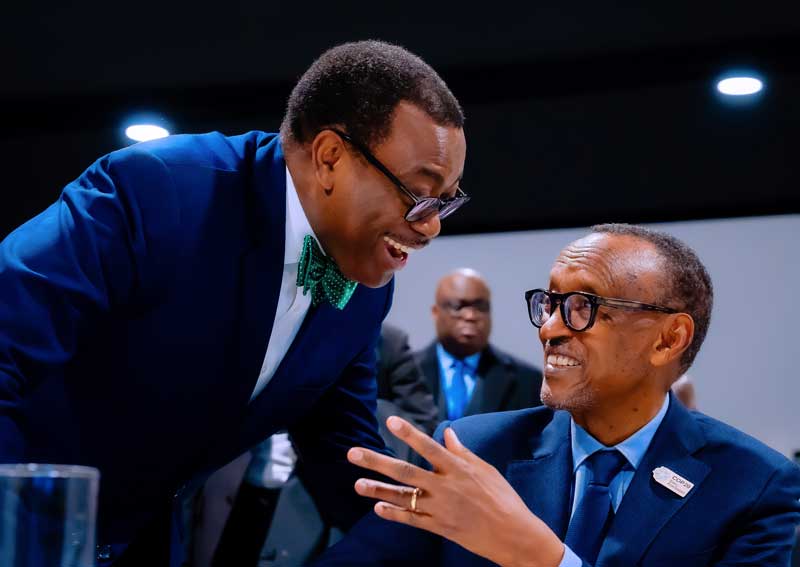
    The event, titled Measuring the Green Wealth of Africa, was co-hosted by President Denis Sassou Nguesso of Congo, Kenya’s Dr. William Ruto (represented by Musalia Mudavadi), and African Development Bank President Dr. Akinwumi Adesina.

    Attendees included Presidents Paul Kagame of Rwanda, Emmerson Mnangagwa of Zimbabwe, and Faure Gnassingbé of Togo.

    President Sassou Nguesso stressed the importance of valuing Africa’s underappreciated natural assets as integral to national wealth.

    “We are doing useful work for Africa and the rest of the world, in contributing to the acceleration of the recognition of the environmental dividend,” he said.

    Kenya’s President Ruto said at the heart of the leaders’ conversation is the need to “ensure that Africa’s ecosystem services such as carbon sequestration and pollution control are valued as global public goods.

    He said, “by appropriately valuing our green wealth, countries can unlock financial flows into investments to boost our economies and even improve our credit ratings.”

    President Paul Kagame of Rwanda said Africa is a key player in the fight against climate. “Unfortunately, Africa’s key obstacle remains access to climate finance.”

    The Rwandan leader said he fully supports the bold agenda to measure the continent’s natural capital and added, “we are not asking for handouts but for the world to pay for something that has tremendous value for all of us.”

    The leaders commended the African Development Bank Group for its leadership and dedication to finding innovative mechanisms to mobilize the required financial and technical support for natural capital accounting and measuring the Green GDP of African countries.

    The Bank has produced a report on “Measuring the Green Wealth of Nations: Natural Capital and Economic Productivity in Africa”.

    Adesina said the report sets out key actions to value and integrate natural capital in the measure of Africa’s GDP.

    “Africa contributes significantly to global public good for tackling climate change with its vast resources of natural capital, its vast natural capital has been undervalued,” he pointed out.

    This situation, he said, “makes Africa to be green rich but cash poor,” adding, “while the GDP of Africa was estimated at $2.5 trillion in 2018, this was 2.5 times lower than the estimated value of its natural capital, evaluated at $6.2 trillion, which partly includes some valuation of the ecosystem services.”

    He stated that, according to the Bank’s initial estimates and “under very conservative assumptions,” Africa’s nominal GDP in 2022 could have risen by $66.1 billion if carbon sequestration was factored in. This amount exceeds the combined GDP of 42 African nations!

    The Bank Group president voiced concern over what he called a ‘carbon grab,’ where numerous African nations are leasing out their extensive lands for carbon credits but receiving minimal benefits in return.

    “While the price of carbon in Europe is high and could be as high as $200 per ton because of the strict EU Emission Trading Standards, carbon price in Africa could be as low as $3 to $10 per ton,” Adesina pointed out.

    Consequently, Adesina said, Africa gets underpaid for carbon because its carbon sinks are undervalued.

    Furthermore, “the sequestered carbon on the lands can no longer be used as part of the nation’s nationally determined contributions,” he said, “that means countries lose sovereignty over their lands.”

    According to Adesina, “the ongoing carbon grab in Africa is a lose-lose proposition.”

    In their statement, African leaders committed to collaborating with other developing nations and regions, including Latin America, the Caribbean, and Asia, to form a powerful global coalition advocating for the inclusion of natural capital in national GDP calculations.

  • SMEs contributes 70% to the country’s GDP – Dr Amin Adam

    SMEs contributes 70% to the country’s GDP – Dr Amin Adam

    Finance Minister, Dr. Mohammed Amin Adam, has indicated that the impressive 5.8% economic growth recorded in the first half of the year, the highest in five years, was largely fueled by the resilience and innovation of Small and Medium Enterprises (SMEs) and supported by the government’s economic reform initiatives.

    “I want to emphasize that SMEs are the backbone of our economy, contributing 70 percent to our GDP and constituting 92 percent of businesses”.

    Citing data from the Ghana Statistical Service, Dr. Mohammed Amin Adam emphasized that the entrepreneurial strength of businesses has been a key factor in the impressive rebound of economic growth.

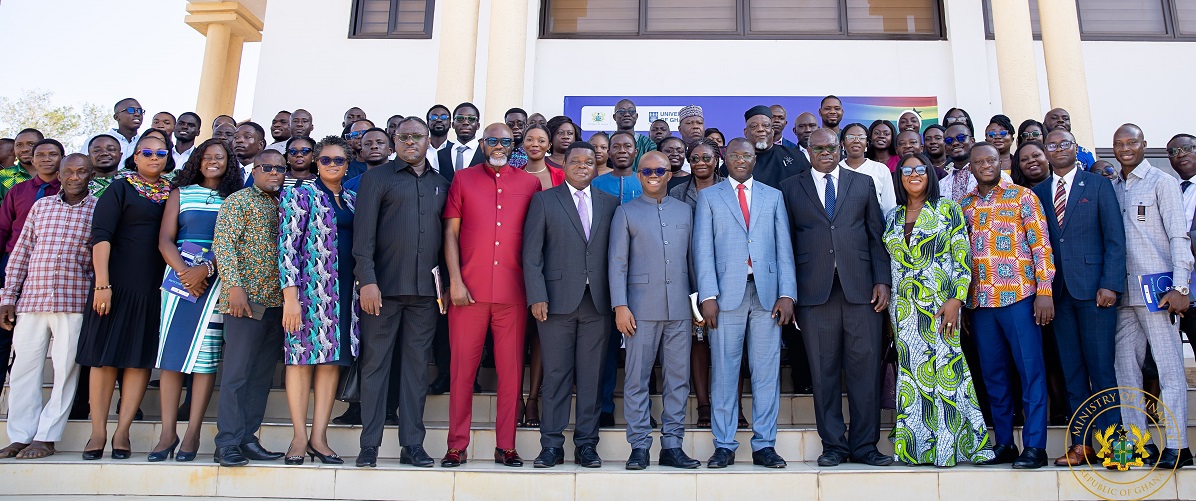
    He made these remarks during the 2nd Quarterly Economic Roundtable (QER) held at the University of Ghana, under the theme, “Driving Economic Growth Through Small and Medium Enterprises (SMES)”.

    SMEs behind Strong Half-Year Economic Growth
    SMEs behind Strong Half-Year Economic Growth – Dr Amin Adam

    He noted further that the economy was back on track, an indication that government policies to support the private sector are yielding positive results.

    “However, we know that future stellar growth is not guaranteed. To manifest our growth prospects, we need to mitigate key risks. Managing these risks require us to reconsider policies and reinforce strong partnerships with stakeholders, especially with the SME sector.”

    He said the round table on SMEs was therefore a step in the right direction as the discussions will focus on how to address challenges faced by SMEs and how to mitigate them to optimize the gains from SME for job creation, income generation and economic expansion.

    “Ladies and Gentlemen, as we engage today, it is my sincere expectation that we are guided by our unity of purpose on SMEs. As demonstrated in our remarkable recovery story, there is nothing that purposeful partnerships and focused leadership cannot achieve. The strides we have made in fiscal consolidation, debt restructuring, and economic reforms are a testament to our collective will to succeed.”

    Dr Amin Adam noted that government is already implementing a number of programmes in that sector. These include the 8.2 billion SME-Go programme to support SMEs to leverage regional and global opportunities; the US$200 million Ghana Jobs and Skills Project and the US$200 million Ghana Economic Transformation Project being implemented with the World Bank.

    In addition to the above, government has put in place measures to strengthen Ghana Enterprises Agency, Ghana Commodity Exchange, MASLOC, National Entrepreneurship and Innovation Programmes and Venture Capital Trust Fund to provide timely and comprehensive support to SMEs.

    “To the SMEs that continue to strive, I say to you: we are here in your name. You are not alone or lonely. You are priority of the Ghanaian society and this Government. We will not fail you. The outcome of this Roundtable is expected to benefit your current operations and future growth prospects.”

    The Vice Chancellor of the University of Ghana, Prof. Nana Aba Appiah Amfo said the QER was in line with the University’s vision and mission saying “Through the Quarterly Economic Roundtable, University of Ghana strengthens it position not only as a knowledge generation hub but also to influence public policy, provide informed insights, foster innovation and promote collaboration with key stakeholders for national development”

    The focus on SMEs she noted was also very critical as it will provide job opportunities for the thousands of students who churn out of the universities annually.

    “As Vice Chancellor, who is involved in the training of young people, this is an area of interest for me, as it is obvious that the formal public and private sectors cannot absorb the tens of thousands students that we graduate every year, and who are out there in search of jobs. SMEs should be a viable option for consideration for many of them”.

    Mr. Kyle Kelhofer, Senior Country Manager, International Finance Corporation (IFC) welcomed the initiative noting that the collaboration between academia, government and financial institutions was essential for driving innovation and creating sustainable solutions for SME financing.

    “Academia provides valuable research, data, and insights that can inform financial products and services tailored to the needs of SMEs. By working together, we can develop innovative financing models, leverage technology, and create an enabling environment for SMEs to thrive.”

    The Quarterly Economic Roundtable is organized by the Ministry of Finance and the Institute of Statistical, Social and Economic Research of the University of Ghana and was supported by the International Finance Corporation of the World Bank.

    The main objective of the second roundtable was to provide critical analysis and discussions around policy strategies that can catalyze innovation and promote sustainable growth in SMEs

  • Each Ghanaian owes over GHC22K as public debt hits GHC761.2bn

    Each Ghanaian owes over GHC22K as public debt hits GHC761.2bn

    Ghana’s public debt has surged to GH¢761.2 billion ($51.1 billion), representing 75.7 percent of the country’s GDP, according to the latest data from the Bank of Ghana (BoG).

    With a population of 33.48 million, this equates to an average debt burden of GH¢22,735.96 per citizen.

    This marks a sharp increase from the GH¢633.3 billion recorded earlier this year and the GH¢587 billion reported in 2023, underscoring the mounting fiscal pressures Ghana faces as it navigates economic challenges and embarks on a complex external debt restructuring program.

    External debt alone now accounts for 47.1% of GDP, amounting to GH¢470.3 billion ($31.6 billion), up from 36% at the beginning of the year. This rise reflects the country’s efforts to stabilize its balance of payments, although the figure remains below the 39.2% recorded during the same period last year.

    With Ghana’s nominal GDP estimated at GH¢1.02 trillion, concerns are growing over the country’s ability to manage its soaring debt without exacerbating its economic difficulties. These figures are expected to intensify scrutiny of the government’s fiscal policies, as investors and global financial institutions continue to monitor Ghana’s pursuit of debt relief from external creditors.

    The surge in public debt highlights the urgent need for structural reforms to restore macroeconomic stability and prevent further debt distress, especially given Ghana’s vulnerability to external shocks.

    Last month, Ghana took a significant step by signing a memorandum of understanding (MoU) with its bilateral creditors, including China and France, to restructure $5.4 billion of its debt. This agreement is crucial for unlocking $360 million from the International Monetary Fund (IMF) as part of Ghana’s $3 billion bailout program, which is expected to be finalized next month.

    Ghana defaulted on most of its $30 billion external debt during the pandemic, prompting the IMF to declare the country’s debt unsustainable. The IMF’s goal is to reduce Ghana’s public debt-to-GDP ratio from 88.1% in 2022 to 55% by 2028.

  • Ghana’s public debt reached GHS742bn by June 2024, representing 70.6% of GDP

    Ghana’s public debt reached GHS742bn by June 2024, representing 70.6% of GDP

    Finance Minister Dr. Mohammed Amin Adam has announced that, as of the end of June 2024, the provisional total central government debt stood at GH¢742.0 billion (US$50.9 billion), which equates to 70.6 percent of GDP.

    This represents a 22.0 percent increase, driven by the depreciation of the Cedi and continued disbursements from creditors.

    “The stock consists of external debt of GH¢452.0 billion and domestic debt of GH¢290.0 billion, representing 60.9 percent and 39.1 percent of the total debt stock, respectively. As a percentage of GDP, external and domestic debt represented 43.0 percent and 27.6 percent, respectively,” he added.

    The Bank of Ghana’s May 2024 Summary of Economic and Financial Data reports a notable rise in the country’s public debt, which surged by GH¢47.4 billion in the first two months of 2024, reaching GH¢658.6 billion.

    This amount represents 62.7% of the Gross Domestic Product (GDP) as of February 2024. The external debt totals GH¢380 billion, or 36.1% of GDP.

  • Ghana witnessed 2.9% GDP growth in 2023 – Amin Adam

    Ghana witnessed 2.9% GDP growth in 2023 – Amin Adam

    During the Ministry of Finance’s monthly briefing on Friday, May 24, Finance Minister Dr. Mohammed Amin Adam unveiled Ghana’s Gross Domestic Product (GDP) growth of 2.9 percent in 2023.

    This exceeded both the World Bank’s projected 1.5% and the revised projection of 2.3% for the same period.

    Dr. Amin Adam expressed optimism about future growth, anticipating an average of 5% in the medium term.

    He attributed this optimism to the implementation of Ghana’s growth strategy under the PC-PEG, focusing on revitalizing industrialization, modernizing agriculture for increased value addition and economic opportunities, and supporting small and medium-sized enterprises (SMEs).

    Furthermore, Dr. Adam noted an improvement in Ghana’s international reserves, which now stand at $6.2 billion, covering 2.7 months of import cover as of February 2024, up from $5.9 billion in the corresponding period of 2022.

    He projected further enhancement, aiming for the reserves to cover at least 4.4 months of imports in the medium term.

    This progress is expected to be bolstered by external inflows from entities such as the IMF and World Bank, Ghana’s Gold-for-Oil Programme, the Bank of Ghana’s Gold for Reserves programme, and funds from the Cocoa Syndicated Funds.

  • 3% GDP growth rate for Ghana in 2024 – World Bank predicts

    3% GDP growth rate for Ghana in 2024 – World Bank predicts


    The World Bank anticipates Ghana’s Gross Domestic Product (GDP) to grow by approximately 3% by the end of 2024, as outlined in the April 2024 edition of the World Bank Africa Pulse report.

    This growth rate signifies a deceleration compared to previous years, despite indications of economic activity and stability following challenges experienced in 2022 and 2023.

    The World Bank also predicts a slowdown in Ghana’s growth trajectory for 2024, aligning with the government’s announced target of 2.8% GDP growth rate.

    However, there is optimism for the future, with the report forecasting a significant rise in Ghana’s GDP to around 5% in 2025.

    In terms of regional contribution to economic growth among the largest economies, Ghana’s GDP growth is expected to be approximately 0.10%, indicating a relatively modest impact on the overall regional economic landscape.

    Nevertheless, the Africa Pulse report presents a positive outlook for Sub-Saharan Africa, with economic growth projected to accelerate to 3.4% in 2024 and further improve to an average rate of 3.9% in 2025 and 2026.

    The report also offers recommendations for policy measures aimed at fostering equitable economic growth.

    These include restoring macroeconomic stability, promoting intergenerational mobility, facilitating market access, and ensuring that fiscal policies do not disproportionately burden the poor and vulnerable segments of society.

  • Please don’t scrap e-levy – GRA to political parties

    Please don’t scrap e-levy – GRA to political parties

    Amid promises from political parties to abolish the Electronic Transfer Levy (E-Levy) following the 2024 general elections, Charles Addae, the Assistant Commissioner of the Ghana Revenue Authority (GRA), has urged whichever party emerges victorious to retain the tax measure.

    He emphasised the importance of maintaining this revenue source to bolster the state’s finances, cautioning that its elimination could result in heightened government reliance on loans.

    Addae underscored the significance of sustaining the E-Levy in enhancing the country’s tax-to-GDP ratio and stimulating the local economy.

    He emphasised that adequate revenue is essential for effective governance and urged the government to prioritise fiscal sustainability.

    Speaking to the media on the sidelines of the Taxing Mobile Money: Lessons and Ways Forward Conference held in Accra on Wednesday, February 28, 2024, the GRA Assistant Commissioner said, “It is good that people pay tax. We are having some political talks about whether the tax may be cancelled in the future.

    “We are pleading that it is better we sustain the revenue that is coming from it. The GHC1.2 billion that was raised in 2023 helped fill some holes in the country; otherwise, we may be depending too much on loans, which is not helping the economy.”

    “My plea is that we maintain and help increase the tax on the GDP of the nation to help the development agenda of the government. Whichever government is in power needs revenue to run. Without tax revenue, the country cannot run,” he added.

    It may be remembered that Dr. Mahamudu Bawumia, the flagbearer of the New Patriotic Party (NPP), declared his intention on February 7, 2024, to eliminate the electronic transfer levy if he were to be elected as Ghana’s president.

    “To accomplish this, there will be no taxes on digital payments under my administration. The E-Levy will, therefore, be abolished,” Dr. Bawumia stated.

    Unfair E-Levy tax will be scrapped if I’m made president – Mahama

    John Dramani Mahama, his opponent, also pledged to abolish the E-Levy during a speech at the University of Ghana. The NDC flagbearer argued that the tax was unjust and hindered citizens from embracing a cashless society.

    “It is an inequitable tax; it’s not a fair tax It prevents people from taking advantage of our move towards a cashless society and so when NDC comes, we will remove that tax. I’ve said it bluntly,” Mahama said.

    The government introduced the E-Levy as part of its efforts to enhance domestic revenue mobilisation. In response to considerable criticism, the E-Levy tax was subsequently reduced from 1.5% to 1%.

  • Debt-to-GDP is 66% – Bawumia

    Debt-to-GDP is 66% – Bawumia

    Vice President Dr Mahamudu Bawumia has noted that Ghana’s debt-to-GDP ratio as of 2023 stood at 66.4 percent.

    This is marginal growth following the 76.6% recorded in 2021.

    The debt-to-GDP ratio is a measure used to assess a country’s debt burden relative to its economic output. A higher ratio suggests that the country may have difficulty servicing its debt obligations, while a lower ratio indicates a healthier fiscal position.

    Addressing the nation on his vision for Ghana while speaking at the University of Professional Studies (UPSA) in Accra today said macroeconomic variable “shows that the economy is recovering from the crisis we faced.”

    Inflation has declined from 54% in January to 23% in December 2023. Economic growth is rebounding, spending is under control with the fiscal deficit as a percentage of GDP has declined from 10.8% in 2020 to 4.2% in 2023.

    On the country’s exchange rate depreciation, the Vice President noted that the loss of the local currency has slowed down
    sharply since February 2023.

    “Whereas the exchange rate depreciated by 30% in 2022, between February and December 2023, it only depreciated by 9%,” he added.

    The International Monetary Fund (IMF) forecast a decline in Ghana’s debt-to-Gross Domestic Product (GDP) ratio from 92.4% in 2022 to 84.9% in 2023.

    According to its October 2023 Fiscal Monitor, the country’s total debt-to-GDP ratio is expected to fall consistently in the next five years.

    In 2024, the debt-to-GDP ratio is estimated at 81.5%, whilst that of 2025, 2026, 2027 and 2028 are pegged at 78.8%, 75.8%, 72.8% and 70.0%.

    This will follow the expected external debt restructuring where the country’s debt is expected to go down.

  • Ghana’s GDP expanded by 2.0% in third quarter of 2023 – Ofori-Atta

    Ghana’s GDP expanded by 2.0% in third quarter of 2023 – Ofori-Atta

    Recent provisional figures from the Ghana Statistical Service (GSS) has revealed a 2.0% expansion in the economy during the third quarter of 2023.

    This growth rate is lower than the pre-pandemic 2022 average GDP growth rate of 5% and the 2.7% recorded.

    The Agricultural sector witnessed a 5.9% expansion, while Services grew by 2.0%.

    However, the Industry sector contracted by 4.3%.

    In Agriculture, all sub-sectors except Forestry and Logging experienced a 6.9% expansion, with Crops leading at 7.0% growth.

    The Services sector saw growth in all 10 sub-sectors, with Information and Communication at the forefront with a GDP growth rate of 17.3%, followed by Accommodation and Food Services Activities at 11.2%.

    Contrarily, the Industry sub-sectors recorded negative growth rates, with Construction at -8.3%, Mining and Stone Quarrying at -8.1%, Electricity at -1.8%, and Manufacturing at 2.1%.

    The Services sector remains the largest, constituting 42.1% of the economy, followed by Industry and Agriculture with shares of 33.0% and 24.9%, respectively. The nominal GDP estimate for the third quarter of 2023, at current prices, is GH¢212.36 billion.

  • Irish economy stronger than data indicates – Think tank

    Irish economy stronger than data indicates – Think tank

    Ireland’s economy is doing well, even though the main GDP numbers may not show it, according to a top research group.

    The Irish economy’s size is mostly affected by the actions of big international companies.

    This often makes the country’s economic growth rate seem higher than it really is.

    However, the ESRI says the opposite is happening now.

    The ESRI said that even though the economy has slowed down, there is still some growth happening.

    At the same time, the big international companies that control a lot of the economy have slowed down. This is easy to see because there are fewer things being sold to other countries and not as much money being invested.

    Pharmaceutical exports are going down.

    The experts expect the country’s economy to shrink by about 3% this year, but the underlying domestic economy is predicted to grow by 0.

    It was mentioned that the main thing causing Ireland’s economy to slow down this year is the decrease in the amount of goods being sold to other countries.

    The biggest thing that the country sells to other countries is medicines, but this year the amount of medicines sold to other countries has gone down by 6%.

    This is partly because big global drug companies sold a lot of drugs which became more common during the pandemic.

    Ireland’s job market has gotten a lot better since the pandemic. The unemployment rate is now less than 5%, which is almost like everyone who can work has a job.

    ESRI said that the small increase in the unemployment rate is probably just because some Ukrainian immigrants were reclassified in the statistics.

  • Ghana’s trade balance surges to US$2.058 billion, representing 2.7% of GDP

    Ghana’s trade balance surges to US$2.058 billion, representing 2.7% of GDP

    Ghana’s trade balance witnessed significant growth, reaching US$2.058 billion in October 2023, equivalent to 2.7% of the Gross Domestic Product (GDP).

    According to the Bank of Ghana’s November 2023 Summary of Economic and Financial Data, the trade balance increased by US$310 million between July and October, marking a 16% rise from the July 2023 figure of US$1.75 billion.

    This year-on-year growth represents a 10 percentage points increase from the US$1.85 billion recorded in October 2022.

    Total exports for October amounted to US$13.45 billion, compared to US$11.47 billion in July 2023. However, there is a 6.5% decline in total exports compared to the same period last year when it stood at US$14.36 billion.

    Gold remains the highest contributor to exports, bringing in $6.07 billion, followed by crude oil exports totaling $3.06 billion, and cocoa with $1.70 billion.

    As of September 30, Ghana’s balance of payment remained negative with a deficit of $617 million, accounting for 0.8% of GDP.

    The current account balance is at $1.04 billion, representing 1.4% of GDP. The Capital and Financial Account Balance reported a $1.47 billion deficit.

    In October 2023, Gross International Reserves were $5.15 billion, indicating nearly Net International Reserves of US$2.15 billion and providing 2.4 months of import cover.

  • Fitch projects Ghana’s debt to GDP to fall to 87% by end of the year

    Fitch projects Ghana’s debt to GDP to fall to 87% by end of the year

    Fitch, the rating agency, forecasts that Ghana’s public debt will decrease to 87% of Gross Domestic Product (GDP) by the close of 2023, down from 89% in 2022.

    Fitch had previously projected that Ghana’s gross public debt for 2023 would amount to 99% of GDP.

    This reduction will primarily be influenced by the 50% debt reduction agreed upon for the Bank of Ghana’s (BoG) nonmarketable debt holdings, equivalent to 4.2% of the estimated 2023 Gross Domestic Product.

    Fitch anticipates that this decline will be somewhat offset by a 33% year-on-year depreciation of the cedi, as compared to the end of 2022, and the primary deficit.

    “Assuming a 30% haircut on external debt considered for the restructuring, year-on-year cedi depreciation of 20% in 2024 and 9% in 2025 and a GDP deflator of 21% and 10% respectively, public debt would fall to 78% by 2025, although there is a high degree of uncertainty surrounding the definitive external debt restructuring parameters”, it added.

    Under the IMF program, Ghana has pledged to carry out a primary fiscal adjustment, based on commitments, amounting to 5.1 percentage points of GDP by 2026 when compared to the levels in 2022.

    Fitch estimates that the primary fiscal adjustment will reach 3.1 percentage points in 2023, leading to a decrease in the primary deficit from 3.7% in 2022 to 0.6% of GDP. This reduction is expected to be driven by cutbacks in capital expenditure, the wage bill, and other current expenditure, including transfers to the energy and financial sectors.

  • GDP contribution by SOEs rises to 10% – SIGA

    GDP contribution by SOEs rises to 10% – SIGA

    In 2022, state-owned enterprises (SOEs) significantly contributed to Ghana’s Gross Domestic Product (GDP), accounting for GHȼ58.2 billion, which amounts to 10 percent.

    This marks a notable increase from their contributions of 3 percent in 2020 and 6 percent in 2021, which equated to GHȼ10.33 billion and GHȼ29.11 billion, respectively, according to Dr. Mac-Effort Adadey, the Director of National Accounts at the Controller and Accountant-General’s Department (CAGD).

    Furthermore, the total assets of SOEs, as recorded in the consolidated National Account, also saw a substantial rise. It increased from GH¢51.8 billion in 2020 to GH¢419.2 billion in 2022. Dr. Adadey commended the steady progress in this regard.

    Dr. Adadey shared this information at the second Editors’ Forum organized by the State Interests and Governance Authority (SIGA) in Accra.

    The forum aimed to facilitate discussions on positioning state enterprises to become positive contributors to the economy and to enhance communication between SIGA and the media.

    He also revealed that there is an ongoing effort to incorporate all government legacy fixed assets into the government’s balance sheet.

    This move is considered a crucial requirement in the landscape of public financial management and will help rectify imbalances.

    “We have set out to bring all government legacy fixed assets back onto government’s balance sheet, because over the years we have been raising money – including debt contracting – to acquire these public assets; but because of the cash-accounting basis of preparing the national accounts, these assets are written-off and not reported on the balance sheet. The effect is that when you look at Ghana’s balance sheet, we have the public debt on it – but the assets which have been acquired with this public debt are not on the public sheet. So, you see a huge negative on the balance sheet,” he said.

    The Director went on to say that because the current balance sheet does not accurately depict the state of the assets, all public entities will be required to use a standardized fixed asset register.

    This register will account for the assets that are actually being used, enabling the CAGD account directorate to include them in the national account.

    “By identifying and collecting data on government assets across public entities – by this I mean ministries, departments and agencies (MDAs) across the country – once we get these assets and have their values on the balance sheet, it will correct the imbalances by showing the true picture of Ghana’s value on the balance sheet.

    “For the 2022 annual account, we have been able to bring several assets onto government’s balance sheet; and the expectation is that by end of 2023 we will do more, so the balance sheet will look better than it does now,” he added.

    He explained that a good balance sheet will give the country a strong financial standing and allow it to relate to the external world.

    “If you want to do business with other people, they will look at your balance sheet and be convinced that your net worth is okay. As a country, a good balance sheet also gives us the opportunity to relate with the external world, contract loans at a cheaper rate, and benefit from other good things a good balance sheet can offer any business or country,” he indicated.

    According to him, 19 SOEs joined the national account in 2020; that number rose to 48 in 2021, and it reached 62 in 2022.

    “We are targetting 87 SOEs for 2023: the expectation is that in the 2023 annual account, we will have all of them responding and the picture will look better,” he added – encouraging all stakeholders, especially the state enterprises, to comply with the Public Finance Management Acts and Regulations to spur growth.

    Director-General of SIGA, Edward Boateng, conveyed his organization’s and its partners’ commitment to facilitating the growth of state-owned enterprises (SOEs) to ensure their profitability and their role as a cornerstone of the economy.

    He encouraged SOEs to draw from the insights gained during their recent study tour to China, organized by SIGA. This tour provided them with direct access to their Chinese counterparts in the State-owned Assets Supervision and Administration Commission of the State Council (SASAC), which oversees 98 centrally controlled SOEs. China has effectively developed its state enterprises to make a significant contribution to its economy. Mr. Boateng expressed confidence that, with the necessary support and adherence to compliance, SOEs can substantially enhance their financial prospects.

    SASAC in China has established a reputation for operational excellence and strict adherence to statutory regulations and internal controls. Chinese SOEs maintain a well-structured human resources workforce, with high retention rates, competitive remuneration packages, and a strong focus on good governance and achieving high production targets. They are renowned for their unwavering commitment to operational excellence and growth, demonstrating zero tolerance for poor performance.

  • IMF cuts North Africa’s 2023 real GDP growth forecast

    IMF cuts North Africa’s 2023 real GDP growth forecast

    The annual IMF-World Bank meetings are currently taking place in Morocco, but the conflict between Israel and Hamas has put a shadow over them and soured the outlook for an already weak global economy.

    For the first time in 20 years, the meeting of the international lenders, which includes finance ministers and central bankers from all over the world, is taking place in an Arab nation.

    “In the Middle East and North Africa, we have lowered our real GDP growth forecast to 2 per cent for 2023, a downgrade by 1,1 percentage point from our last projections in April,” said Jihad Azour, director of the IMF’s Middle East and Central Asia department.

    He emphasized that persistent structural challenges would hinder medium-term growth.

    “Crucially, the projected growth is not expected to be robust or comprehensive enough to generate sufficient employment opportunities for the hundred million Arab youth entering the workforce in the next decade,” Azour stated.

    The slowdown is also influenced by reduced oil production, stringent policies in emerging market and middle-income economies, the Sudan conflict, and other nation-specific factors.

    This projection occurred before the conflict, and Azour acknowledged that it was challenging to gauge its economic impact, describing the situation as a significant and seismic event.

    Nonetheless, the IMF anticipates that economic growth in the Middle East and North Africa region will accelerate to 3.4 percent in 2024.

  • Leaders in business, politics support reevaluating Africa’s GDP

    Leaders in business, politics support reevaluating Africa’s GDP

    Prominent business and political figures from across the continent have stressed the urgency of reevaluating Africa’s Gross Domestic Product (GDP) by conducting a comprehensive assessment of its natural capital and ecosystem services. This includes the continent’s vast forests, which play a critical role in carbon absorption and contribute significantly to Africa’s overall wealth.

    This call for revaluation is rooted in the belief that by accurately accounting for Africa’s abundant natural resources, the continent can provide a more precise representation of its production levels. This, in turn, will enhance Africa’s appeal as an investment destination and address existing economic disparities.

    During the inaugural Africa Climate Summit (ACS) held in Nairobi, Kenya, from September 4 to 6, 2023, where the Nairobi Declaration on Climate Change and Call to Action was adopted, these leaders argued that “Africa possesses immense natural wealth, from its lush forests to its diverse ecosystems, and we must recognize their value. By incorporating natural resource accounting and establishing national accounting standards, we can better assess our true economic potential.”

    One key issue discussed at the summit was the significant discrepancy in borrowing costs faced by developing African countries compared to wealthier nations, commonly referred to as the ‘great financial divide.’ Leaders underscored that this financial gap has been a major contributor to recurrent debt crises in the region, hindering investment in development and climate-related initiatives.

    In response, they emphasized the need for responsible sovereign lending practices, enhanced accountability, comprehensive credit rating systems, risk analysis, and debt sustainability assessment frameworks. The leaders called on financial markets to eliminate this disparity by 2025.

    In addition to addressing the financial divide, leaders discussed the importance of establishing global and regional trade mechanisms that allow African products to compete fairly in international markets. They stressed the importance of building resilience to climate-related shocks and leveraging Special Drawing Rights (SDRs) to bolster climate adaptation efforts, suggesting the reallocation of at least US$100 billion of SDRs to Africa.

    The summit also proposed considering a new issuance of SDRs dedicated to responding to the climate crisis, similar in magnitude to the COVID-19 response. Leaders emphasized the need to better utilize the balance sheets of multilateral development banks (MDBs) to scale up concessional finance and enhance debt management.

    Regarding international tax cooperation, leaders urged action to reduce Africa’s annual loss of US$27 billion in corporate tax revenue due to profit-shifting. They called for measures to attract private capital, such as blended finance instruments, purchase commitments, and foreign exchange guarantees, while also advocating for the redesign of MDBs’ governance for greater inclusivity.

    Energy

    In the realm of energy, leaders have set ambitious objectives to boost Africa’s renewable generation capacity from 56 GW in 2022 to a minimum of 300 GW by 2030. They underscored the significance of relocating energy-intensive primary processing activities back to Africa, aligning with renewable energy development objectives and contributing to global emissions reduction. Furthermore, leaders emphasized the critical need for accessing and disseminating environmentally-friendly technologies to foster green industrialization across the continent.

    The summit also reaffirmed the global shift toward a low-carbon economy, calling for annual investments ranging from at least US$4 trillion to US$6 trillion. They urged world leaders to contemplate the establishment of a global carbon taxation framework, which includes a carbon tax on fossil fuel trade, maritime transport, and aviation, along with a global financial transaction tax (FTT) to finance climate-positive investments.

    Leaders welcomed pledges and commitments totaling US$26 billion from development partners to bolster Africa’s renewable energy initiatives and adaptation endeavors. They view this as a significant stride towards realizing a sustainable and equitable future for the continent.

  • Ten countries in Africa with highest GDP per capita in 2022

    Ten countries in Africa with highest GDP per capita in 2022

    Gross Domestic Product (GDP) per capita serves as a fundamental measure in economics, providing crucial insights into a nation’s economic health and the well-being of its population.

    It facilitates comparisons of living standards, economic development, and wealth distribution within a country.

    GDP per capita is derived by dividing a nation’s total GDP by its population, offering an average economic output per person. This metric enhances economic assessment beyond overall GDP, accounting for population size.

    Across countries, and even within a continent, GDP per capita varies significantly. This diversity is evident in Africa, where resource abundance, both natural and human, intersects with developmental disparities.

    Some nations experience high GDP per capita, like Seychelles and Mauritius, benefiting from thriving tourism and service sectors. This could stem from substantial GDP revenue against a controlled population or effective governance.

    Conversely, Sub-Saharan African countries such as Chad and Central African Republic struggle with low GDP per capita due to factors like political instability, insufficient infrastructure, and limited access to education and healthcare.

    Highlighted below are African countries with strong GDP per capita figures, reflecting the top ten performers.

    This list is sourced from TradingEconomics, a data platform offering precise economic data for 196 nations, including historical records and projections for over 20 million economic indicators, currency rates, stock market indices, government bond yields, and commodity prices.

    The provided figures represent GDP per capita as of December 2022.

  • Key indicators see downward adjustment in mid-year budget review

    Key indicators see downward adjustment in mid-year budget review

    Finance Minister Ken Ofori-Atta has announced significant downward revisions in key macroeconomic indicators.

    The overall real gross domestic growth and inflation rates for the end of the 2023 fiscal year have been revised to 1.5 percent and 31.3 percent, respectively. This is down from the initial projections of 2.8 percent for GDP growth and a sub-20 percent target of 18.9 percent for inflation.

    Despite the revisions, inflation remains at more than three times the central bank’s upper band target of 10 percent.

    The minister made this announcement during his presentation of the mid-year budget review to lawmakers in Accra.

    These revisions were made to align with market expectations and adhere to the targets of the International Monetary Fund (IMF)-supported Policy Coordination and post-COVID-19 Programme for Economic Growth (PC-PEG).

    During the presentation before parliament, the minister emphasized the need for these revisions, citing factors such as a broad economic slowdown across various sectors due to the fiscal consolidation plan and challenging global economic conditions.

    “All these developments, together with the need to align with targets of the IMF-supported PC-PEG, warrant a revision of the macroeconomic framework. This was necessary because the framework was guided by the September 2022 data that underpinned the 2023 budget in November 2022. The revisions of the macro-fiscal framework generally seek to align the 2023 mid-year fiscal policy review with the IMF-ECF supported PC-PEG,” he explained.

    Similarly, there have been revisions in several key non-oil real GDP growth rate, primary balance, and gross international reserves indicators. The non-oil real GDP growth rate has been adjusted to 1.5 percent, a reduction from the previous target of 3 percent. The primary balance on a commitment basis now reflects a deficit of 0.5 percent of GDP, in contrast to the initial plan of a 0.7 percent surplus. Additionally, the target for gross international reserves has been adjusted to cover at least 0.8 months of imports of goods and services by the end of 2023, significantly lower than the prudential threshold of three months.

    Regarding the fiscal framework, Mr. Ofori-Atta emphasized that it now fully aligns with the fiscal objectives of the IMF programme, encompassing primary balance, revenue path, and trajectory of primary expenditures.

    Various factors have contributed to these realignments, including fiscal developments between January and June 2023, changes in base pay, and disbursements from the IMF ECF Programme. The revised primary balance on a commitment basis now stands at a deficit of 0.5 percent of GDP, aligning with the fiscal consolidation path supported by the IMF’s PC-PEG program.

    “The revisions of the 2023 fiscal framework are driven by several factors… There was an increase in the base pay on the Single Spine Salary Structure, which was set at 30 percent instead of the previously assumed 20 percent for the 2023 Budget. Third, there was a partial restoration of capped transfers to the National Health Insurance Scheme (NHIS) and Ghana Education Trust Fund (GETFund).

    “Fourth, the completed Domestic Debt Exchange Programme (DDEP) had an impact on both debt service costs and revenue mobilisation,” he explained.

    “Additionally, there were disbursements from the International Monetary Fund (IMF) Extended Credit Facility (ECF) Programme amounting to US$1.2billion for 2023, along with other catalytic financing including US$530million from the World Bank (US$300million from Development Policy Operations and US$230million from Emergency Projects), and an expected disbursement of US$103million from the African Development Bank (AFDB). These various factors collectively influenced the revisions made to the fiscal framework for the year 2023,” the finance minister added.

    The finance minister also addressed the modification of petroleum receipts, pointing to a decline in the demand for crude oil in light of recent developments in the world economy. In order to predict petroleum revenues for 2023, the average crude oil price was changed from US$88.55 per barrel to US$74.0 per barrel. As a result, the overall petroleum receipts were reduced by 32%, from US$1.48 billion to US$1.08 billion.

    The finance minister, however, projected a recovery in GDP growth over the coming years and was upbeat about the future.

    “Overall GDP growth is projected to rebound to 2.8 percent, 4.7 percent, and 4.9 percent in 2024, 2025 and 2026, respectively. This is a result of implementing growth-oriented and structural transformation strategies in the PC-PEG,” he stated, while highlighting the importance of developing an enhanced Growth Strategy supported by private domestic and foreign investments to further boost growth and create job opportunities

  • GDP growth for Q1 in 2023 was strong – BoG

    GDP growth for Q1 in 2023 was strong – BoG

    In the first quarter of 2023, the provisional Gross Domestic Product (GDP) growth in the real sector exceeded expectations, showing significant improvement, according to the Bank of Ghana (BoG).

    According to the latest data from the Ghana Statistical Service, the real GDP grew by 4.2 percent during this period, surpassing the 3.0 percent recorded in the corresponding quarter of 2022.

    The Central Bank made this known in its Monetary Policy Committee Press Release
    dated 24th July, 2023.

    Non-oil GDP growth also experienced substantial growth, reaching 5.5 percent compared to 3.7 percent in the same period of 2022.

    The notable growth was primarily driven by the Services and Agricultural sub-sectors, which recorded growth rates of 10.1 percent and 4.8 percent, respectively.

    However, the Industry sub-sector faced challenges and contracted, experiencing a decline of 3.2 percent.

    Source: The Independent Ghana

  • Ghana’s public debt rises to GHS569. 3bn as of April 2023 – BoG

    Ghana’s public debt rises to GHS569. 3bn as of April 2023 – BoG

    Data from the Bank of Ghana (BoG) reveals that Ghana’s public debt stock surged by ¢134.7 billion in the first four months of 2023, reaching ¢569.3 billion in April 2023, equivalent to approximately 71.1% of Gross Domestic Product (GDP) or $52 billion.

    The increase in debt was mainly attributed to the depreciation of the cedi during the period and, to some extent, an increase in domestic debt by ¢15.9 billion in the first four months of the year.

    In December 2022, the debt stock stood at ¢434.6 billion, approximately 71.2% of GDP.

    According to the July 2023 Summary of Economic and Financial Data, Ghana’s debt in cedi terms rose to ¢547.8 billion ($50.7 billion) by the end of January 2023 and further increased to ¢564.1 billion ($51.2 billion) and ¢569.5 billion ($51.7 billion) in February and March 2023, respectively.

    The Central Bank’s data also shows that the external component of the total public debt stood at $29.3 billion (¢321.4 billion) in April 2023, higher than the $29.0 billion (¢240.9 billion) recorded in December 2022. The domestic debt stood at ¢247.9 billion at the end of April 2023, approximately 30.9% of GDP, compared to ¢232.3 billion, approximately 38.1% of GDP, in December 2022.

    Ghana’s nominal GDP experienced a surge of ¢190.7 billion from December 2022 to ¢800.9 billion in April 2023, primarily attributed to elevated prices of goods and services, driven by high inflation rates.

    In terms of fiscal deficits, the government’s fiscal deficit to GDP ratio stood at 1.8% in April 2023, a significant decrease from 8.3% of GDP recorded in December 2022. The primary balance stood at 0.7% of GDP in April 2023.

    Ghana took various measures to address its economic challenges, including suspending payment of loans to external creditors in December 2022 and restructuring some domestic debt in February 2023.

    These efforts paved the way for the approval of a $3 billion Extended Credit Facility (ECF) programme by the International Monetary Fund. Additionally, the country reached an agreement with banks in June 2023 to restructure ¢15 billion ($1.36 billion) of locally issued U.S. dollar bonds and cocoa bills.

    However, agreements with external creditors are still pending before restructuring the external debt.

  • GSE aims for GH₵130 billion equities

    GSE aims for GH₵130 billion equities

    The West African Capital Markets Integration Project, supported by the African Development Bank’s Capital Markets Development Trust Fund, aims to integrate the capital markets in the region.

    The Ghana Stock Exchange (GSE) is strategically planning to enhance trading and attract more companies to list on its platform.

    According to the managing director of GSE, Abena Amoah, the goal is to position the Accra bourse as the preferred medium in the country and the sub-region for companies to raise capital for their business operations.

    With a total market capitalization of over GH₵65 billion, constituting about 11 percent of Ghana’s Gross Domestic Product (GDP), the Ghanaian market holds significant importance in Africa.

    The GSE is actively encouraging both private and state-owned enterprises (SOEs) to list on its exchange.

    They are collaborating with the government to attract more SOEs and private companies to list.

    The Managing Director of GSE is optimistic about doubling the size of its equities and increasing the number of listed companies in the medium term.

    The GSE has created a market and demonstrated potential for investment opportunities.

    Notably, private pension funds have more than GH₵50 billion available for investments, presenting an opportunity for SOEs and private companies to raise capital for their business operations.

  • GDP may increase to $900b by the  West African capital market – WAMI

    GDP may increase to $900b by the West African capital market – WAMI

    Director General of the West African Monetary Institute (WAMI), Dr. Olorunsola Olowofeso, has emphasized that the successful implementation of the West African Capital Market Integration (WACMI) initiative could significantly boost the ECOWAS economy. He mentioned that the integration has the potential to increase the ECOWAS economy from $777 billion to approximately $900 billion.

    The WACMI initiative, spearheaded by the West African Monetary Institute, aims to create an open platform for the listing, trading, and settlement of capital market securities, as well as facilitate transactions for West African countries.

    During a capacity-building session for financial market operatives, Dr. Olowofeso highlighted the numerous benefits of a fully integrated capital market. He emphasized that such integration would enhance liquidity access, strengthen economies, and streamline capital access for businesses within the West African economic bloc. By fostering cooperation and collaboration among participating countries, the initiative aims to unlock the region’s economic potential and promote sustainable growth and development.

    “By the time we integrate the capital market, it will increase the GDP of West Africa from $777 billion to over $800 billion to $900 billion and that would be a plus to Africa in terms of job, liquidity and infrastructure development“

    Additionally, he expressed that the institute is actively collaborating with other member countries, namely Gambia, Guinea, Liberia, and Sierra Leone, to develop a robust capital market infrastructure. This effort is aimed at ensuring the seamless functioning of the program and promoting economic growth across the region.

    Regarding concerns about whether an open capital market platform in the West African Economic block might hinder Ghana’s securities market growth, Rev. Daniel Ogbarmey Tetteh, the Director General of the Securities and Exchanges Commission, reassured that the integration would have a positive impact.

    Instead of derailing Ghana’s capital market, the integration would actually deepen and enhance it, fostering healthy competition within the market. This alignment with other West African countries would open up new opportunities and strengthen Ghana’s position within the broader regional context.

    “So within the contest of an integrated market, it means that we will be exposing the benefits of the Ghana market to other practitioners. So I think that we shouldn’t be worried about the integration, rather it will open up to better opportunities which will make us competitive”.

    He added that the Securities and Exchanges Commission is embarking on a capital market master plan which will tie into the West African initiative to strengthen the local market.

     Abena Amoah, Chief Executive Officer of the Ghana Stock Exchange also stated that the move will offer improved diversification of funds which could reduce risk.

    “It will enable fund managers to structure a fund which will enable you to diversify portfolios in different markets. This improves diversification and concentrated risk management tools.”

  • Nigeria’s debt load expected to reach N70 trillion by H2’23

    Nigeria’s debt load expected to reach N70 trillion by H2’23

    While the current federal administration is implementing significant economic changes, it is estimated that Nigeria‘s public debt would reach N70 trillion and that inflationary pressures will continue through the second half of 2023 (H2’23).

    However, it is anticipated that the GDP will slightly increase at 2.94 percent.

    Giving information during a webinar yesterday, analysts at Meristem Securities Limited, a Lagos-based investment firm, blamed the securitization of the N22 trillion ways and means balances among other factors for the increase in the public debt portfolio in H2’23.

    Increased non-oil sector activity and higher oil output as a result of the new administration’s policies were key factors in the expected 2.94 percent GDP growth.

    The ongoing increase in the MPR, or monetary policy rate, formed the foundation for the persistent inflationary pressure.

    Presenting the Macro economic outlook for H2’23 at the webinar themed: “Tough start, bumpy road, propitious end”, aimed to provide guidance on strategies for investment positioning for H2’23, Investment Research Analyst at Meristem, Mr. Sodiq Safiriyu, said: “When we are looking at the fiscal policy, we talked about the revenue base as well as the debt structure or the debt stock of the country. We see that these are still increasing for a while now even in H1’23 we see our debt stock rise to an unprecedented level and we still expect this to go higher amidst the securitized ways and means that will accumulate the debt stock and will make it rise over N70 trillion.

    “Again, our expectation is that while the government continues to implement important reforms to increase its revenue base, to try to finance its promises, through borrowings so we expect the debt stock to continue to trend upwards.”

    On GDP growth he said: “What we expect in H2’23 is that the GDP growth will be higher and this hinges on the improvement in business activities in the non oil sector. As well we expect that policies from the administration of President Bola Ahmed Tinubu will help to increase oil production volume during the period.

    “Cumulatively, we have revised our 2023 GDP forecast upward to 2.94 percent (from an initial estimate of 2.7 percent). As I said earlier, this is lower than what was recorded in 2022.”

    Safariyu added that the Monetary Policy Committee, MPC, will increase rates by 100 basis points as a result of the expectation that inflation will continue to be high due to rising food costs.

    “For us, we expect that the MPC will still hike rates but at this point it will be less aggressive from what we experienced in the half part of the year. “For the end of 2023 our forecast for the naira for the year to end date is between N779 to N786 per dollar.”

  • Nkrumah Park renovation to boost tourism, economy – Okraku-Mantey

    Renovation of Kwame Nkrumah Memorial Park aims to position position tourism as the leading contributor to the country’s Gross Domestic Product (GDP), according to the Deputy Minister, Mark Okraku-Mantey.

    “I think that we should thank President Akufo-Addo for his vision. He said that he wants to make tourism the number one contributor to GDP in Ghana. So, if we want to achieve that, then we have to get our assets right and the numbers right,” he added.

    The Deputy Minister Mark Okraku-Mantey made this statement on Wednesday during an interview.

    “2019 was a good year because of the Year of Return, but towards the end, we had issues because of COVID-19, so we went down, not just Ghana but throughout the world. But we are bouncing back. As of now, we have met our target for the first quarter, exceeded the second quarter, and we know that by the end of 2023, we will do far better than the previous years because our third and fourth quarters are our peak times in terms of December in Ghana and all of that.”

    “And so, we know that we need to get some of these assets right, such as heritage sites and roads. We have fixed the Kakum National Park.”

    Mr. Okraku-Mantey emphasized the agenda to highlight that, beyond cocoa and oil, tourism could be leveraged to propel the country’s progress.

    “I would not be surprised if, in the next few months, Kwame Nkrumah Park takes over from Aburi Botanical Garden. You can see that 24 hours after its commissioning, there is a new energy, a new vibe. We were number one on Twitter trends yesterday,” he added.

    President Akufo-Addo inaugurated the refurbished Kwame Nkrumah Memorial Park in Accra on Tuesday. The President stated that the revamped Memorial Park is expected to draw approximately one million domestic and international tourists each year.

    During the unveiling of the revitalized memorial park, President Nana Addo Dankwa Akufo-Addo expressed the government’s commitment to further investing in the tourism sector to stimulate economic recovery.

    In the meantime, the family of Osagyefo Dr. Kwame Nkrumah expressed their gratitude to the government for the redevelopment of the Kwame Nkrumah Memorial Park.

    The government allocated $3.5 million for the park’s renovation, which now serves as the final resting place for Ghana’s first President, Dr. Kwame Nkrumah, and his wife, Fathia Nkrumah.

    Samia Nkrumah, the daughter of Dr. Kwame Nkrumah, acknowledged that the government, under the leadership of President Akufo-Addo, consulted the family prior to the redevelopment, an aspect she highlighted during the park’s commissioning.

  • EIU projects 1.3% GDP growth rate for Ghana in 2023

    EIU projects 1.3% GDP growth rate for Ghana in 2023

    The Economist Intelligence Unit predicts that Ghana’s GDP would grow by 1.3% in 2023, which will cause a substantial slowdown.

    This falls short of the World Bank’s and the IMF’s predictions of 1.8% and 1.6%, respectively.

    The UK-based group predicts that real GDP growth will decline in 2023 due to the impact that rising prices and monetary tightening will have on private consumption and investment.

    Government spending would thereafter decrease.

    According to its 2023 Country Report on Ghana, growth will be moderate in 2024 as tightness continues, but it will quicken up in 2025–2027 as new projects come online, driving an increase in gold and oil export revenues.

    “Growth will slow to 1.3% in 2023, as a cost-of-living squeeze, public spending cuts and monetary tightening by the BoG will cause domestic demand to contract for the first time since 2014. Reduced consumption and sustained cedi depreciation will, however, help to boost net exports, the sole growth driver in 2023 and the main factor behind our growth forecast of 2.3% for 2024″, it added.

    Further, EIU said macroeconomic instability and a public debt crisis will weigh on Ghana’s business environment and its ambitions to become a West African trading hub.

    A weak regional regulatory environment, poor transport links and low foreign trade, except in commodities, will also hamper progress.

    Continuing, the EIU said it expects the government to remain committed to fiscal consolidation in 2023-27 in a bid to bring the public finances and debt back onto a sustainable path, underpinned by an International Monetary Fund programme.

    The 2023 budget includes measures to both widen the tax net and extend spending cuts.

    In line with EIU expectations, in mid-April 2023, President Akufo-Addo assented to three new revenue-raising bills: the Income Tax Amendment Bill, the Excise Duty Amendment Bill and the Growth and Sustainability Amendment Bill.

    It added that the bills will boost revenue over the forecast period, helping to shrink the fiscal deficit to 7.1% of GDP in 2023 (from an estimated 8.3% of GDP in 2022) and steadily to 4.4% of GDP in 2027.

    It stressed that “despite revenue mobilisation measures in the 2023 budget including the reintroduction of road tolls, a 2.5-percentage-point rise in the value-added tax (VAT) rate, to 15%, and an increase in excise duties, a slowing economy will keep revenue/GDP ratio below potential in 2023″. 

    However, it concluded that the quickening economic growth will push up the ratio in 2024-27, adding “increasing administrative efficiency under IMF guidance will also boost revenue in 2023-27, as will an increase in the trade tax take in 2025-27, driven by rising gold and oil output”.

  • Data clearly shows that we have borrowed carelessly – Acheampong Theo

    Data clearly shows that we have borrowed carelessly – Acheampong Theo

    Economist, Dr. Theo Acheampong, is convinced that the Ghanaian government has been careless with its borrowing and spending.

    Contrary to President Akufo-Addo’s assertion that debts accumulated under the previous administration were to blame for the economy’s downturn, he claimed that the current administration bears a major share of responsibility for the dire state of the economy.

    According to statistics on the nation’s debt accumulation, a sizable portion of it was contracted under the current administration, he claimed.

    “If you look at the statement again that the President made that it is worth noting that the debts that we’re servicing were not only contracted during the period of this administration – yes that is true but if you look at it in the final details, a lot of it actually have been contracted during this administration,” he said.

    Explaining his assertion, Dr. Acheamong disclosed that the current government has borrowed three times as much as the Mahama administration and “almost about ten times” as much as former President John Agyekum Kufuor’s administration. This, he says defeats the President’s claim during his delivery of the 2023 SONA in parliament, where he explained that a chunk of the borrowed funds had been channelled into “the unprecedented road construction.”

    But Dr. Acheampong has questioned the quality of the roads said to have been constructed with such a huge amount of borrowed money.

    “So what is the quality of the roads that have been constructed,” he quizzed.

    According to the expert, borrowing is done to also service debt but currently, the country is broke to the extent that “we cannot service our debt.”

    He reiterated that data clearly shows that the country has been “on an unsustainable path that has led it down this way,” however, he said there are some positive sides to consider.

    He explained that when he takes into account state indicators such as GDP growth, inflation, lending rates, harmony on labour fronts and general sense of security, amongst others currently, he would rate the government 5 out of 10.

    He disclosed that in the last couple of years, the country has been exporting more than it imports, saying that the country exported 17.4 billion dollars’ worth of goods and imported just under 15 billion dollars.

    Although the country had recorded a positive trade balance which should have shored up its reserves, the “negative outflow from its capital account” has “offset those upflows,” according to the Economist.

  • “Surprisingly resilient”: IMF raises its predictions for global growth

    “Surprisingly resilient”: IMF raises its predictions for global growth

    The IMF that only the UK is experiencing a recession and that demand in the US and Europe has been stronger than anticipated.

    Due to “surprisingly resilient” demand in the United States and Europe as well as the reopening of the Chinese economy after Beijing abandoned its strict zero-COVID strategy, the International Monetary Fund (IMF) has slightly increased its outlook for global growth in 2023.

    However, the IMF’s most recent World Economic Outlook forecasts represent an improvement over an October prediction of 2.7 percent growth this year, with warnings that the world could easily tip into recession. The IMF predicted that global growth would still fall to 2.9 percent in 2023 from 3.4 percent in 2022.

    For 2024, the IMF said global growth would accelerate slightly to 3.1 percent, but interest rate hikes by central banks around the world would slow demand.

    IMF chief economist Pierre-Olivier Gourinchas said recession risks had subsided and central banks were making progress in controlling inflation, but more work was needed to curb prices, and new disruptions could come from further escalation of the war in Ukraine and China’s battle against COVID-19.

    “We have to sort of be prepared to expect the unexpected, but it could well represent a turning point, with growth bottoming out and then inflation declining,” Gourinchas told reporters of the 2023 outlook.

    Strong demand

    In its 2023 gross domestic product (GDP) forecasts, the IMF said it now expected GDP growth in the US of 1.4 percent, up from the 1.0 percent predicted in October and following 2.0 percent growth in 2022.

    The fund cited stronger-than-expected consumption and investment in the third quarter of 2022, a robust labour market and strong consumer balance sheets.

    It said the eurozone had made similar gains, with 2023 growth for the bloc now forecast at 0.7 percent, compared with 0.5 percent in the October outlook, following 3.5 percent growth in 2022. The IMF said Europe had adapted to higher energy costs more quickly than expected, and an easing of energy prices had helped the region.

    The United Kingdom was the only major advanced economy the IMF predicted to be in recession this year.

    It forecast the British economy to shrink 0.6 percent this year, compared with a previous expectation for growth of 0.3 percent. People are struggling with higher interest rates, and government moves to further tighten spending are also squeezing growth, it said.

    “These figures confirm we are not immune to the pressures hitting nearly all advanced economies,’’ Chancellor of the Exchequer Jeremy Hunt said in response to the IMF forecast. “Short-term challenges should not obscure our long-term prospects — the UK outperformed many forecasts last year, and if we stick to our plan to halve inflation, the UK is still predicted to grow faster than Germany and Japan over the coming years.”

    China reopens

    The IMF revised China’s growth outlook sharply higher for 2023, to 5.2 percent from 4.4 percent in the October forecast after its ‘zero-COVID’ strategy held back the economy. China’s growth rate was 3.0 percent in 2022, below the global average for the first time in more than 40 years.

    Still, the fund added that China’s growth will “fall to 4.5 percent in 2024 before settling at below 4 percent over the medium term amid declining business dynamism and slow progress on structural reforms”.

    At the same time, it maintained India’s outlook for a dip in 2023 growth to 6.1 percent but a rebound to 6.8 percent in 2024, matching its 2022 performance.

    Gourinchas said together, the two Asian powerhouse economies will contribute more than 50 percent of global growth in 2023.

    He acknowledged that China’s reopening would put some upward pressure on commodity prices, but “on balance, I think we view the reopening of China as a benefit to the global economy” as it will help ease production bottlenecks that have worsened inflation and by creating more demand from Chinese households.

    Even with China’s reopening, the IMF is predicting that oil prices will fall in both 2023 and 2024 due to lower global growth compared with 2022.

    Risks

    The IMF said there were both upside and downside risks to the outlook, with built-up savings creating the possibility of sustained demand growth, particularly for tourism, and an easing of labour market pressures in some advanced economies helping to cool inflation, lessening the need for aggressive rate hikes.

    But it detailed more and larger downside risks, including more widespread COVID-19 outbreaks in China and a worsening of the country’s property turmoil.

    An escalation of the war in Ukraine could lead to a further spike in energy and food prices, as would a cold northern winter next year as Europe struggles to refill gas storage and competes with China for liquefied natural gas supplies, the fund said.

    Gourinchas said central banks need to stay vigilant and be more certain that inflation is on a downward path, particularly in countries where real interest rates remain low, such as in Europe.

    “So we’re just saying, look, bring monetary policy slightly above neutral at the very least and hold it there. And then assess what’s going on with price dynamics and how the economy is responding, and there will be plenty of time to adjust course, so that we avoid having overtightening,” Gourinchas said.

  • Government spending, arrears clearance within target – BoG

    Government spending and arrears clearance in the first nine months of 2022 was broadly within target.

    According to the Bank of Ghana, some key expenditure lines, however, recorded overruns.

    Total expenditures and arrears clearance, for the first nine months of 2022, summed mainly up to ¢99.570 billion (16.8% of Gross Domestic Product), below the target of ¢102.566 billion (17.3% of GDP).

    This outturn represented year-on-year growth of 30.1%. The outturn was also 97.1% of the target.

    Of the expenditures, Compensation of Employees (including wages and salaries, pensions & gratuities, and other wage related expenditure) was ¢27.14 billion, lower than the target of ¢27.94 billion.

    This outturn represented 97.1% of the target.

    In terms of fiscal flexibility, compensation of employees constituted 42.0% of domestic revenue mobilized, better than the 50.4% recorded in the corresponding period of 2021.

    Use of Goods and Services totalled ¢4.233 billion, lower than the expected target of ¢5.117 billion. The outturn was 17.3% below the target, but recorded a year-on-year growth of 25.9 percent.

    Total interest payments of ¢32.10 billion was higher than the projected target of ¢30.890 billion by 3.9%, and accounted for 32.2% of total expenditure.

    It also constituted 49.7% of domestic revenue, compared with 54.7% recorded in the corresponding period of 2021. Domestic interest payments accounted for 78.0% of the total interest payments during the period under review.

    Grants to other government units consisting of National Health Fund, Education Trust Fund (GET Fund), Road Fund, Energy Fund, District Assemblies Common Fund (DACF), Retention of IGFs, transfer to GNPC and other earmarked funds all summed up to ¢17.562 billion, above the envisioned target of ¢16.820 billion by 4.4%.

    It also recorded a year-on-year growth of 57.7%.

    Other expenditures made up of ESLA Transfers, Covid-19 related expenditures, and other critical spending, for the first nine months of 2022 was ¢7.093 billion.

    ESLA transfers of ¢3.816 billion was above the projected target of ¢3.319 billion by 15.0%.

    Source: Myjoyonline

  • Fitch warns of more rating downgrades of African banks

    International rating agency, Fitch, has announced that the declining global and domestic shocks would weaken the credit drivers for African banks in 2023.

    According to Fitch’s sector outlook, these will add to existing operating environment risks, but they believe moderate GDP growth, with no major African economy entering a recession, combined with banks showing a good degree of resilience over the past two years, will prevent a more material downside scenario.

    “Weakened African sovereigns and significant contagion risks to banks play a large part in our deteriorating sector outlook for 2023,” Fitch stated.

    “Political risk will remain high and could bring further market uncertainty. Asset quality risks will return and be more prominent, with households and businesses continuing to be hit by high inflation, rising rates, currency depreciation and US dollar shortages,” it added.

    Nevertheless, Fitch assume only a moderate increase in impaired loan ratios.

    According to the rating agency, high commodity prices will be supportive of many African economies and banks’ operating environments but a key risk to asset quality would come if there was a sharp fall in commodity prices triggered by a global slowdown, especially with economic developments in China, a major trade partner.

    Rising interest rates and still satisfactory loan growth (above GDP growth) will be supportive of banks’ revenue generation and profitability, and mitigate moderate rises in credit costs, it noted.

    In a statement, Fitch said “Capitalisation, funding and liquidity remain comfortable, with the latter in particular, underpinning banks’ standalone creditworthiness. Sovereign debt distress is the major risk to African banks’ financial profile.

    “Sovereign downgrades could result in more bank rating downgrades in 2023.”

    “We are most concerned about potential sovereign defaults with many African governments facing very high and increasing debt servicing burdens exacerbated by rising interest rates, US dollar strength and unfavourable external funding conditions. The Ghana debt restructuring will affect domestic as well as regional banks,” it added.

    Source: Classfmonline

  • Every Ghanaian owes over ¢15k with the current debt stock

    Estimates made using the 2022 budget shows that , every Ghanaian owes approximately GH¢15,175.32.

    Given the current public debt stated in the budget amounting to GH¢467.37 billion (US$48.87 billion), shared among the 30.8 million Ghanaian population, amounts to a debt of GH¢15,175.32 per person.

    The domestic debt component, according to the budget, is GH¢195.65 billion making a 31.79 percent of GDP while the external debt stock was at 58.1 percent of GDP with GH¢271.71 billion.

    For a decade now, the public debt has increased by about 159.67% – from US$ 18.82 billion (GH¢35.38 billion) in 2012 to US$ 48.87 billion (GH¢467.37 billion) in 2022.

    The year 2022, has been on a downward stream with rising inflation and depreciating of the cedi.

    Loss to depreciation of the cedi amounted to added external debt stock of of GH¢93.86 billion There have also been vast increases in the public debt on month-on-month bases.

    The diagram gives the public debt per person for the year 2022. The increase per month is associated with the increases in the public debt.

    On average the public debt person increased by 32.89% from January 2022 to October 2022.


  • Akufo-Addo outlines 12 measures to restore economic stability by 2028

    As part of the measures to restore Ghana’s economy to prosperity, the government have outlined some steps to be taken to stabilise the economy by 2028.

    This was outlined by the president during his address on October 30.

    Here are some of the measures Akufo-Addo outlined

    1. To restore and sustain debt sustainability, we plan to reduce our total public debt to GDP ratio to some fifty-five per cent (55%) in present value terms by 2028, with the servicing of our external debt pegged at not more than eighteen per cent (18%) of our annual revenue also by 2028.

    2. We are committed to improving the revenue collection effort, from the current tax-revenue to GDP ratio of thirteen (13%) to between eighteen and twenty per cent (18-20%), to be competitive with our peers in the West Africa Region. The GRA is rolling out an extensive set of measures to support this enhanced revenue mobilisation. All of us must do our patriotic duty and support the GRA in this exercise.

    3. We are aiming to restore and sustain macroeconomic stability within the next three (3) to six (6) years, with a focus on ensuring debt sustainability to promote durable and inclusive growth while protecting the poor.

    4. We have decided to review the reforms in the energy sector, capping of statutory funds, implementation of the exemptions Act and a new property rate regime. We have decided also to continue with the policy of thirty percent (30%) cut in the salaries of political office holders including the President, Vice President, Ministers, Deputy Ministers, MMDCEs, and SOE appointees in 2023, just as we will continue with the thirty percent (30%) cut in discretionary expenditures of Ministries, Departments and Agencies.

    5. we will review the standards required for imports into the country, prioritise the imports, as well as review the management of our foreign exchange reserves, in relation to imports of products such as rice, poultry, vegetable oil, tooth picks, pasta, fruit juice, bottled water and ceramic tiles, and others which, with intensified government support and that of the banking sector, can be manufactured and produced in sufficient quantities in Ghana.

    6. We must, as a matter of urgent national security, reduce our dependence on imported goods, and enhance our self-reliance, as demanded by our overarching goal of creating a Ghana Beyond Aid.

    7. We must work to ensure that the majority of goods in our shops and market places are those we produce and grow here in Ghana. That is why we have to support our farmers and domestic industries, including those created under the 1-District-1-Factory initiative, to help reduce our dependence on imports, and allow us the opportunity to export more and more of our products, and guarantee a stable currency that will present a high level of predictability for citizens and the business community. Exports, not imports, must be our mantra! Accra, after all, hosts the headquarters of the Secretariat of the African Continental Free Trade Area.

    8. Enhanced supervisory action by the Bank of Ghana in the forex bureau markets and the black market to flush out illegal operators, as well as ensuring that those permitted to operate legally abide by the market rules. Already some forex bureaus have had their licenses revoked, and this exercise will continue until complete order is restored in the sector;

    9. Fresh inflows of dollars are providing liquidity to the foreign exchange market and addressing the pipeline demand;

    10. The Bank of Ghana has given its full commitment to the commercial banks to provide liquidity to ensure the wheels of the economy continue to run in a stabilised manner till the IMF Programme kicks in and the financing assurances expected from other partners also come in;

    11. Government is working with the Bank of Ghana and the oil-producing and mining companies to introduce a new legal and regulatory framework to ensure that all foreign exchange earned from operations in Ghana is initially paid to banks domiciled in Ghana to help boost the domestic foreign exchange market; and

    12. The Bank of Ghana will enhance its gold purchase programme.

  • Lula is no more than a Brazilian Biden

    If elected president, Lula would likely be unable to lead a transformational, leftist agenda.

    The theme of “return” has dominated the presidential election campaign in Brazil. Many think the country is either going to see the comeback of Luiz Inacio Lula da Silva, marking a second pink tide of progressive South American governments, or the return of the Workers’ Party (PT), removed from power after President Dilma Rousseff’s impeachment in 2016.

    Or it is going to face a government takeover by forces associated with the military dictatorship (1964-1985) – right-wing defenders of family, tradition, and property and apologists for political violence and torture of political opponents.

    There may be an element of truth to this interpretation, but sometimes turning to the past to make sense of the present can make it more difficult to discern the major differences between them. Indeed, if Lula were to win the presidential race, Brazil would not go back to the 2000s; nor is a military takeover led by his opponent, incumbent President Jair Bolsonaro, that likely.

    The vote: The poor vs the poorer

    While many saw the results of the October 2 elections as a clear victory for Lula and the Brazilian left, a closer look reveals a different reality. Lula obtained 57 million or 48 percent of the valid votes – less than what many polls predicted – which sent him to a run-off with Bolsonaro.

    The incumbent president obtained 51 million votes, two million more than in the first round of the 2018 presidential election. This is despite the fact that his government failed in its economic policies, the management of the pandemic, the fight against corruption, and the climate change agenda, especially with regard to curbing Amazon deforestation.

    In the parliamentary and governor elections, which also took place on October 2, the right-wing parties and, in particular, the far right, performed much better than forecasts showed. They won more representatives in the two houses of parliament than PT and its allies.

    Among those elected to parliament were former Judge Sergio Moro, who led the anti-corruption probe that saw Lula jailed; Damares Alves, the loudest proponent of the “gender ideology” conspiracy theory, which claims family values are under threat; and former health minister Eduardo Pazuello, who mismanaged the pandemic response. They were all ministers in Bolsonaro’s government.

    The elections did not see a massive migration of the votes from the poor to Lula and his party, as was expected in light of the pro-poor policies in his first two terms (2003-2010). In that period, the country experienced extraordinary economic growth combined with successful income distribution measures, which generated massive support among impoverished Brazilians for Lula in his bid for re-election in 2006. He ended his second term with an 80 percent popularity rating and a GDP growth of 7.5 percent.

    Part of the reason why Lula was unable to rally all of his former electorates may be that financial aid programmes for disadvantaged families introduced by Bolsonaro to address the economic downturn during the pandemic were extended.

    According to Giuseppe Cocco, a political science professor at the Federal University of Rio de Janeiro, another reason may be that the effect of anti-Bolsonarism was to some extent mitigated by anti-Lulism – the negative sentiment triggered by corruption cases against Lula and the PT that contributed to bringing Bolsonaro to power in the first place.

    Furthermore, Cocco’s research shows that the incumbent attracted more votes than Lula from the “precariat” – Brazilians who are above the poverty line but, nevertheless, face constant economic insecurity. These are people who are microentrepreneurs, who have gig jobs, small businesses or who are self-employed. They struggle economically and seek the stability that the far-right promises.

    The right-wing tendencies of this layer of Brazilian society became apparent ahead of the 2018 election when a truck drivers’ strike took place. The protest started over rising fuel prices but ended with calls by some participants for the army to intervene and “solve the problems” of the state. Bolsonaro backed the strike, which boosted his popularity ahead of the vote.

    Lula, on the other hand, draws support from the poorest strata, those who are on the threshold of subsistence. They have been the beneficiaries of his signature social programme, the Bolsa Familia, which distributed conditional cash transfers.

    The line between the two groups is blurred, but the tension between them over income and economic opportunity seems to provide a better explanation of the electoral results than a more simplistic analysis that paints Lula as the candidate of the poor and Bolsonaro – as the choice of the elites and the well-off.

    A Brazilian Biden

    The campaign rhetoric Lula adopted was also quite different from previous elections. Unlike in the past, when he openly clashed with the elites, this time around, the PT candidate presented himself as the candidate of the system, as a “Brazilian Biden”, so to speak, putting an end to a Trumpist interlude.

    He gathered an extraordinarily broad front, which included almost the entire left opposition, but also the main representatives of economic power from various sectors, social democrats, conservative liberals, the leftist environmentalist Marina Silva, former officials, such as the social-democratic liberal Fernando Henrique Cardoso, and others.

    His campaign was also not dominated by street mobilisation or sharp factionalism. On the contrary, there were explicit guidelines to supporters not to confront the voters of the other candidate, and even to deemphasise the PT’s traditional colour red at campaign events.

    Although his coalition had prepared a leftist political programme, Lula ignored it in the debates, sidestepped it in speeches to voters and the media, and stressed on several occasions that he would not take divisive positions, especially when it comes to his plans for the economy. Throughout the campaign, he built an image as the promoter of peace, indicating the need to resolve the conflicts that are multiplying in and between different social segments.

    Bolsonaro and the Bolsonarist forces, on the other hand, fully occupied the anti-systemic political space. The incumbent spent the election campaign making verbal attacks against the corporate media – especially against the biggest TV network, Globo – the Brazilian Supreme Court and universities.

    In a country that has traditionally seen intimidation, blackmail, and the murder of electoral opponents in urban peripheries and in the hinterland, Bolsonaro’s rhetoric put Brazil at risk of widespread politically motivated violence. A number of murders were attributed to feuds between sympathisers of the two candidates, while a video of a Bolsonaro supporter licking the barrel of a shotgun went viral.

    Diminished appetite for a coup

    Despite Bolsonaro’s incitement and heightened fears of violence, it is unlikely that a victory for Lula in the run-off would be challenged by the military. Even the prospect of an invasion of the Congress building in Brasilia – like the one that happened in January 2021 in the US – seems less likely.

    The army’s top generals have given clear signals that whoever wins at the polls will assume the presidency. Furthermore, foreign powers, such as the Biden administration, have indicated that they would not support anti-democratic ventures.

    Bolsonaro has been ambiguous about accepting the results. However, the fact that right-wing parties and far-right politicians won the majority of seats in parliament has diminished the appetite for coup talk.

    Whatever the outcome of the election, the struggle for safeguarding minority rights, improving public services, expanding social programmes, protecting the environment, and embracing a security paradigm that is not guided by state violence against underserved populations will remain difficult. A victory for Bolsonaro, which is quite unlikely, would consolidate the far-right takeover of the state, leading to more policies aimed at dismantling public services, destroying the environment, and systematically sabotaging minority protections and academic institutions.

    A win for Lula, which seems more likely, would also pose great challenges. Given the dominance of the right in parliament, it would be difficult to push through progressive policies. Social movements, collectives, and activists would have to focus on the defence of the government, which would take away energy and resources from ongoing struggles, as happened during the 2016 impeachment process against Dilma. The PT and its supporters would face a radicalised and armed opposition on the ground committed to defending “true Christianity”, “family values” and traditional gender roles. In this context, a Lula victory would not mean a return to the “happy Brazil” of the 2000s, as his campaign suggested.

    The way out of the deep crisis that Brazil has plunged into in the last decade could be a Brazilian New Deal that pushes through much-needed structural changes in labour law and market, supports the creative role of minorities, and embraces the centrality of the global environmental agenda, something that Lula seems far from being able to lead, as corruption scandals and worn-off populist rhetoric have broken his spell.

    But his election could at least provide an opportunity to seek reconciliation and rebuild bridges between polarised segments of society. His return could set the ground for the construction of much-needed political alternatives.

    DISCLAIMER: Independentghana.com will not be liable for any inaccuracies contained in this article. The views expressed in the article are solely those of the author and do not reflect those of The Independent Ghana


  • Proof of debt sustainability needed to get a deal – IMF tells govt

    Ghana’s ability to obtain an economic programme from the International Monetary Fund (IMF) now depends on evidence of the nation’s capacity to meet all of its present and future financial obligations without the need for extraordinary financial assistance or defaulting.

    Director of the IMF’s African Department, Abebe Aemro Selassie, made this known during the 2022 IMF/World Bank annual meetings in Washington, D.C., that ended on October 16, 2022.

    During a press conference, Mr Aemro Selassie said, “so much will depend on how quickly this reform plan can be fleshed out for implementation. There are also important initiatives that have to be taken in terms of how the programme will be financed so that we can move forward.”

    Ghana’s debt stock peaked at GH¢402.4 billion in September, equivalent to 68 per cent of its GDP.

    Ghana is a member of the IMF, and when a member country requests financing from the Fund, it assesses whether the country’s policies are consistent with debt sustainability. 

    This assessment is based on a Debt Sustainability Assessment (DSA), conducted jointly by the IMF and World Bank, to determine whether the government is able to meet all its current and future payment obligations.

     In cases where a country’s debt is assessed as unsustainable, the IMF is precluded from providing financing unless the member takes steps to restore debt sustainability, including by seeking a debt restructuring from its creditors. 

     Per reports, Ghana has furnished the Fund with proof that it has a debt sustainability plan.

     After the government of Ghana provided a debt situation plan, it was presented to the IMF’s Executive Board for consideration by the authorities’ programme request.

    According to Mr Abebe Aemro Selassie, the IMF is awaiting the results of the debt sustainability analysis (DSA) exercise.

    “So, part of the work ongoing now is to assess where the debt sustainability situation is right now and how the government would like to address that. We are waiting for the results of that assessment,” Mr Selassie said.

    Ghana formally commenced negotiations with the Fund in September 2022, after reaching out in July this year.

    An economic programme from the Fund is expected to help Ghana address the depreciation of the local currency, its high inflation, and undertake several developmental projects to resolve the current economic crisis.

    There have been assurances from the IMF that a deal could be reached with Ghana by December, should all conditions be met.

    Source: The Independent Ghana

  • Nation loses 7% GDP to psychological distress

    Psychological distress, a mental health condition, costs the country about seven per cent (GH¢8.6 billion) of its Gross Domestic Product (GDP), a clinical psychologist, Professor Angela Ofori-Atta, has disclosed.

    She attributed the loss of national revenue to the many hours and days of unproductiveness because workers were in psychological distress.

    Presenting a paper at a lecture to commemorate World Mental Health Week by the Department of Psychiatry of the Korle Bu Teaching Hospital in Accra last Monday, Prof. Ofori-Atta quoted the findings of a research conducted by a group of scholars from the University of Ghana and the Yale University in the US to indicate that 55 per cent of the population reported some form of psychological distress.

    “When you calculate the number of days people say they went to work but were unable to do anything — one hour at work lost, half a day lost — when we calculate all this lost productive time, the country is losing at least seven per cent of its GDP to psychological distress,” she said.

    She spoke on the topic, “Prioritising mental health and wellbeing for all”, which is the theme of this year’s World Mental Health Day.

    Survey

    Throwing more light on the survey, dubbed: “Ghana health and socio-economic survey”, Prof. Ofori-Atta, who is the immediate past Head of the Department of Psychiatry of the Korle Bu Teaching Hospital and the University of Ghana Medical School, described it as the first national mental health survey.

    She said the survey did both economic analyses and psychological measurement of distress and established that the prevalence of psychological distress was 18.7 per cent.

    The condition, she noted, was more prevalent among lower-income groups, the less-educated and less-empowered women.

    Recommendations

    Prof. Ofori-Atta said the country had to improve on its investment in the mental health and wellbeing of the population.

    As part of the many interventions, she suggested that the country could adopt cognitive behavioural therapy, which is a psycho-social intervention that aims to reduce symptoms of various mental health conditions, primarily depression and anxiety disorders.

    It focuses on challenging and changing cognitive distortions (such as thoughts, beliefs and attitudes) and their associated behaviours to improve emotional regulation and develop personal coping strategies that target solving current problems.

    It also involves communication and healthy lifestyles.

    Although it was originally designed to treat depression, its uses have been expanded to include the treatment of many mental health conditions, including anxiety and substance use disorders.

    Gross Domestic Happiness Index

    Prof. Ofori-Atta said the country could also adopt the use of Gross Domestic Happiness Index (GDHI) which, among others, measured the collective happiness and well-being of a population.

    She said it also measured how people felt about their lives, using happiness as the measure of development.

    “Gross national happiness was designed in an attempt to define an indicator that measures quality of life or social progress in more holistic and psychological terms than only the economic indicator of GDP,” she said.

    Prof. Ofori-Atta mentioned the components of the index to include psychological well-being, health, time use, education, cultural diversity and resilience, good governance, community vitality, ecological resilience and living standards.

    “We have the Ghana Statistical Service conducting the living standards survey over every five years and so it will not be difficult for the country to actually have a happiness index,” she said.

    Citing some benefits Bhutan derived from the index, she said the very poor country, based on the adoption of the index, was graduating out of the least developed country category, had been able to track what mattered to its population and gained happiness for its people and wealth for the nation.

    “Growth increased between 3.1 and 8.1 per cent between 2011 and 2019. This shows the association between focusing on the happiness of people and the wealth of a nation,” she said.

    Writer’s email: doreen.andoh@graphic.com.gh


  • GI-KACE Holds AI series forum on music and creative arts

    The Ghana-India Kofi Annan Centre of Excellence in ICT (GI-KACE) has organised an Artificial Intelligence (AI) knowledge series forum on music, entertainment, culture and the creative arts.

    The event, which took place at the auditorium of the centre on Thursday, September 29, brought together several students, innovators, stakeholders and industry practitioners.

    Some of the dignitaries who were present include Musicians Union of Ghana (MUSIGA) President, Bessa Simons; renowned Ghanaian poet, Rhyme Sonny; Host of Peace FM’s Entertainment Review show, Kwesi Aboagye; Director of Communications and Special Projects at MUSIGA, Ahuma Bosco Ocansey, popularly known as ‘Daddy Bosco’, among others.


    Director-General for GI-KACE, Dr Collins Yeboah-Afari

    Speaking at the event, the Director-General for GI-KACE, Dr Collins Yeboah-Afari, stated that the session’s relevance was to help create awareness about the opportunities available in using Artificial Intelligence (AI) in the music, entertainment, culture, and Creative Arts industry.

    He also stated that with the right application of AI in the Creative Arts industry, several jobs would be created in that space which will also increase revenue and impact Ghana’s Gross domestic product (GDP).

    “The adoption of AI technologies in the music, entertainment, culture, and Creative Arts industry will promote professionalism, and enhance the quality of output churned out by the various players in the industry. This will also help showcase our talents to the rest of the world while in turn increasing the tourism value of Ghana,” Dr Yeboah-Afari said.
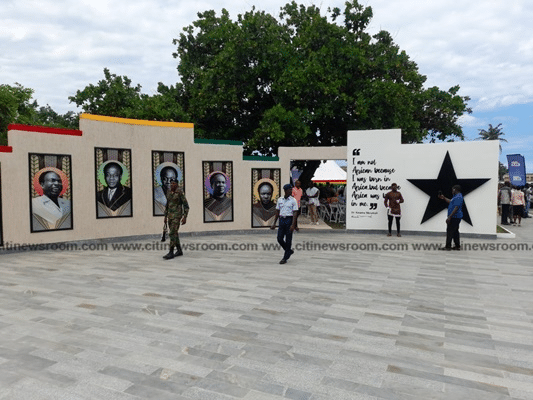
    He noted that the event forms part of GI-KACE’s mandate to grow the ICT ecosystem in the ECOWAS sub-region and contribute to youth development, while the centre tries to achieve the Sustainable Development Goals (SDGs).

    Kobby ‘Spiky’ Nkrumah, Host of Joy Geek Squad

    Presenting on how AI is transforming the music industry globally, Kobby ‘Spiky’ Nkrumah, Host of Joy Geek Squad – Multimedia Group, disclosed that AI is striking a chord in the music industry with many artists employing artificial intelligence in their music-making process.

    He added that some AIs had been developed so well that they could even analyse the style of musicians and create songs based on the data collected, which will sound exactly like the musicians themselves.

    “There are a few AI-powered music production platforms like JUKE Box, iZotope, among others, that can create and master music once all the right elements like genre and lyrics are provided. Some of these platforms can even continue the beat production for you if you want them to,” Mr. Nkrumah noted.

    He also added that digital music streaming platforms like Apple Music, Spotify and the like are AI-powered, and they analyse what you listen to regularly and send music recommendations to keep you updated on new trending songs based on your taste in music.

    On her part, Winifred Kotin, Co-founder of CDD Super Fluids Labs, mentioned that: “We can also use AI in tourism through Virtual and Augmented realities powered by Virtual assistants which deliver immersive experiences. There are also a lot of opportunities in AI in tourism through AI-Power Chatbots on Digital Kiosks. Digital Kiosk can have AI Chatbots installed and placed at vantage places like the airports.”

    Eyram Tawia, Chief Executive of Leti Arts, noted that AI plays an essential role in the development of Video Games, especially for him, as he is a Ghanaian game developer.

    The AI Knowledge Series was organised by GI-KACE in partnership with the Institute of ICT Professionals GH, AI Association Ghana, Runmila AI Institute and GIZ.

  • Ghana’s public debt stock hits GH¢402.4 billion, 68% of GDP in July 2022 – BoG

    Ghana’s public debt stands at GH¢402.4 billion as of July 2022, 68% of the country’s Gross Domestic Product.

    The debt stock which stood at GH¢392.1 billion in March 2022 dropped to GH¢388.1 billion in April 2022, and later went up marginally to GH¢389.2 billion in May 2022 and to GH¢393.4 billion in June 2022.

    But according to the Central Bank, the country’s debt dropped marginally in dollar terms from $54.4 billion in June 2022 to $53.2 billion in July 2022.

    This was contained in the October 2022 Bank of Ghana Summary of Economic and Financial Data.

    The data showed that Ghana did not borrow fresh funds from the global market in recent times.

    The external debt remained unchanged at $28 billion, equivalent to 35.8% of GDP.

    However, the domestic debt increased from GH¢190.1 billion in June 2022 to GH¢190.3 billion in July 2022.

    The domestic debt stood at GH¢181.9 billion in January 2022, went up to GH¢185.4 billion in February 2022, and GH¢190.1 billion in March 2022. It subsequently shot up to GH¢189.2 in April 2022 and GH¢188.5 billion in May 2022.

    The increase in domestic debt can be attributed to the government’s excessive borrowing from the domestic market.

    Ghana’s debt will, however, see some increases due to the receipt of the $750 million Afrieximbank loan that came in August 2022.

  • Experts say UK economy will return to pre-pandemic levels in 2024

    The UK economy will return to its pre-pandemic levels only in 2024, experts have now said.

    In its latest economic update, Deutsche Bank said: “Since our last growth update, the UK economic outlook has weakened further.

    “We now see the UK in a recessionary orbit with growth likely to remain subdued for much of the next year or so, with GDP slowing from 4.5% this year (previously: 3.5%) to -0.5% next year (previously: 0%), and rising by 1% in 2024 (previously: 1%).

    “We now expect GDP to return to its pre-pandemic level only in 2024, with growth recovering to its trend rate (1.25%) around the middle of the decade.”

    The last few weeks have been full of turmoil for the British economy, in the wake of Kwasi Kwarteng’s controversial mini-budget.

    The pound plummeted shortly afterward – but is now climbing back up.

  • Financial meltdown: Fitch downgrades Ghana once more, this time from “CCC” to “CC”

    The Long-Term Local-and Foreign-Currency Issuer Default Ratings (IDRs) of Ghana have been once again downgraded by the international credit rating agency, Fitch Ratings.

    The rating agency, in August 2022, downgraded Ghana’s Long-Term Foreign-Currency (LTFC) Issuer Default Rating (IDR) to ‘CCC’ from ‘B-‘.

    In a release posted on its website (fitchratings.com), the agency indicated that it normally does not give credit ratings below CCC.

    “Fitch Ratings has downgraded Ghana’s Long-Term Local- and Foreign-Currency Issuer Default Ratings (IDRs) to ‘CC’, from ‘CCC’. Fitch typically does not assign Outlooks to issuers with a rating of ‘CCC’ or below,” parts of the release read.
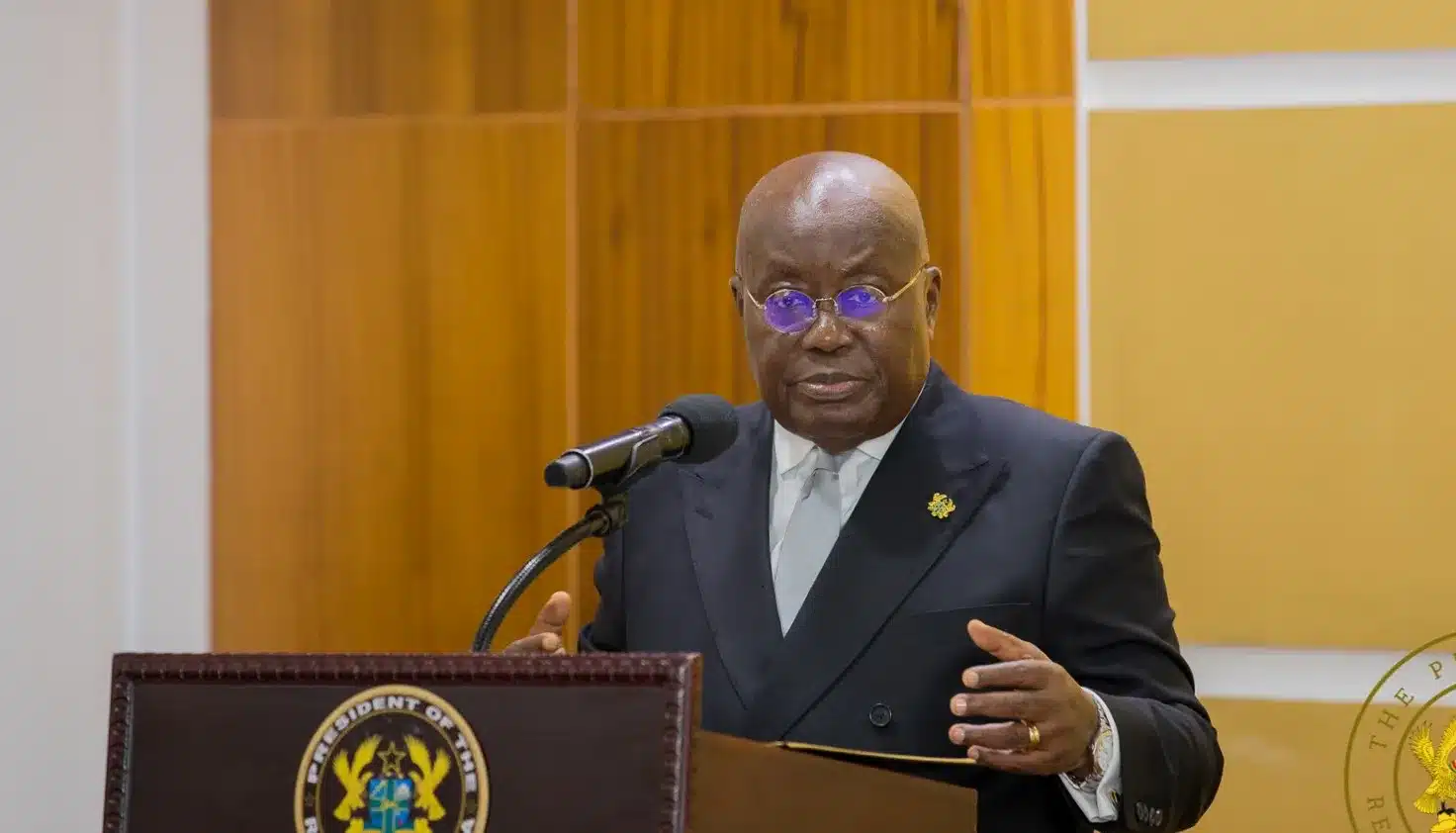
    The ‘CCC’ rating implies that Ghana is considered a “junk” country in terms of investment and any investor who buys a bond issued by the Government of Ghana is at a high risk of not getting his/her investment.

    On the reasons for the downgrade to CC, Fitch indicated that “The downgrade reflects the increased likelihood that Ghana will pursue a debt restructuring given mounting financing stress, with surging interest costs on domestic debt and a prolonged lack of access to Eurobond markets. There is a high likelihood that the IMF support programme currently being negotiated will require some form of debt treatment due to the climbing interest costs and structurally low revenue as a percentage of GDP.

    “We believe this will be in the form of a debt exchange and will qualify as a distressed debt exchange under our criteria. The government has not confirmed or denied press reports that Ghana is preparing to negotiate a restructuring.

    “Interest costs on external debt are lower than for domestic debt and near-term external debt amortizations appear manageable. However, we believe there could be an incentive to spread a debt restructuring burden across domestic and external creditors and therefore do not have a strong basis to differentiate between Foreign- and Local-Currency ratings at this time,” it added.

  • UK already in recession, Bank of England reveals

    The Bank of England hikes interest rates as it indicates the UK is already in recession; government hints energy support for schools, hospitals, and care homes could continue beyond six months; submit your cost of living dilemma to personal finance expert Gemma Godfrey using the form below.
    What is a recession?

    It is a significant decline in economic activity, lasting months or even years.

    Generally during a recession, companies make fewer sales, people lose work, the economy struggles and the country’s overall economic output falls.

    Economists usually define a recession as two consecutive quarters where GDP has fallen.

    Why do recessions happen?

    There are a number of common causes for recession, including:

    • A sudden economic shock – such as the COVID pandemic or the war in Ukraine
    • Excessive debt
    • Asset bubbles – when investors become too optimistic and inflate the stock market or real estate bubbles, before the bubble bursts and panic selling ensues
    • Too much inflation
    • Too much deflation
    • Technological changes

    When was the last recession in the UK?

    The most recent recession was during the pandemic when the UK saw negative growth in Q1 and Q2 of 2020.

    Many people will also remember the Great Recession of 2008 and 2009 – the UK’s worst in modern history.

    This was largely due to the mortgage crisis in the US impacting the British banking sector, and the subsequent “credit crunch”.

    The UK also saw a recession between 1990 and 1991, caused by rapid economic expansion under Margaret Thatcher and Britain’s plans to maintain membership of the Exchange Rate Mechanism.

    How will a recession affect you?

    Unemployment levels will rise, so more people will be at risk of losing their jobs.

    People who keep their jobs may see cuts to pay and benefits, or struggle to negotiate future pay rises.

    Meanwhile, investments can lose money and savings can be reduced, upsetting some people’s plans for retirement or for large expenses such as buying homes or getting married.

    Businesses make fewer sales during a recession, and mortgage lenders can also tighten standards for mortgages, car loans and other types of financing – meaning you may need a better credit score or larger down payment.

    Source: Sky News

  • New Zealand fully reopens borders after long pandemic closure

    New Zealand‘s borders are fully open for the first time since March 2020, when they shut in an effort to keep out Covid-19.

    Immigration authorities will now begin accepting visitors with visas and those on student visas again.

    Prime Minister Jacinda Ardern called it an “enormous moment”, adding it was part of a “cautious process”.

    Most visitors will still need to be fully vaccinated, but there are no quarantine requirements.

    The country’s maritime border has also reopened, with cruise ships and foreign recreational yachts now allowed to dock.

    New Zealand first announced a phased reopening plan in February. It allowed vaccinated citizens to return from Australia that month, and those coming from elsewhere to return in March.

    In May, it started welcoming tourists from more than 50 countries on a visa-waiver list.

    “We, alongside the rest of the world, continue to manage a very live global pandemic, while keeping our people safe,” said Ms. Ardern in a speech at the China Business Summit in Auckland on Monday.

    “But keeping people safe extends to incomes and wellbeing too.”

    Tourism was one of the industries hardest hit by New Zealand’s tough Covid measures.

    In the year ending March 2021, the industry’s contribution to the GDP dropped to 2.9%, from 5.5% the year before.

    International tourism took an especially big hit, plunging 91.5% – or NZ$16.2bn ($10.2bn; £8.4bn) – to NZ$1.5bn, according to official data.

    The number of people directly employed in tourism also fell by over 72,000 during this period.

    Source: bbc.com

  • China signals it could miss economic growth target

    China has signaled that it may miss its annual economic growth target, as Covid restrictions weigh on the world’s second largest economy.

    On Thursday, the Politburo – the ruling Communist Party’s top policy-making body – said it aims to keep growth within “a reasonable range”.

    It did not mention the official growth target of 5.5% it had earlier set.

    China is continuing to pursue a zero-Covid policy that has put major cities into full or partial lockdowns.

    In a statement after its quarterly economic meeting, the 25-member Politburo, which is chaired by President Xi Jinping, said leaders would “strive to achieve the best results possible”.

    However, it also called on stronger provinces to work to meet their growth targets.

    Analysts said the lack of a GDP mention was notable, though economists had earlier predicted it would be difficult for China to reach its 5.5% target.

    “The 5.5% growth target is no longer a must for China,” Iris Pang, chief China economist at ING Bank, had told news outlet the Wall Street Journal.

    They also added that China was urging larger provinces to make up for those that were more affected by the lockdown.

    “Beijing requested that provinces which are relatively well-positioned should strive to achieve economic and social targets for this year,” Nomura analysts Ting Lu, Jing Wang, and Harrington Zhang said in a note.

    “We think Beijing is suggesting that GDP growth targets for provinces with less favorable conditions, especially for those that were hard hit by the Omicron variant and lockdowns, could be more flexible.”

    Earlier this month, China said its economy had contracted sharply in the second quarter of this year.

    Large Chinese cities, including the major financial and manufacturing hub of Shanghai, were put into full or partial lockdowns during this period.

    China’s once-booming property market is also in a deep slump, and home sales have fallen for 11 consecutive months.

    Several Chinese developers have halted the construction of homes that had already been sold, because of concerns over cash flow.

    In recent weeks, some home buyers have threatened to stop paying their mortgages until the work restarts.

    In 2020, China made the rare decision to scrap its GDP targets, in light of the pandemic.

    GDP measures the size of an economy. Gauging its expansion or contraction is one of the most important ways of measuring how well or badly an economy is performing and is closely watched by economists and central banks.

    It also helps businesses to judge when to expand and recruit more workers or invest less and cut their workforces.

    Source: bbc.com