Tag: German Chancellor Olaf Scholz

  • Fatal gun spree at a Jehovah’s Witness center in Hamburg

    Fatal gun spree at a Jehovah’s Witness center in Hamburg

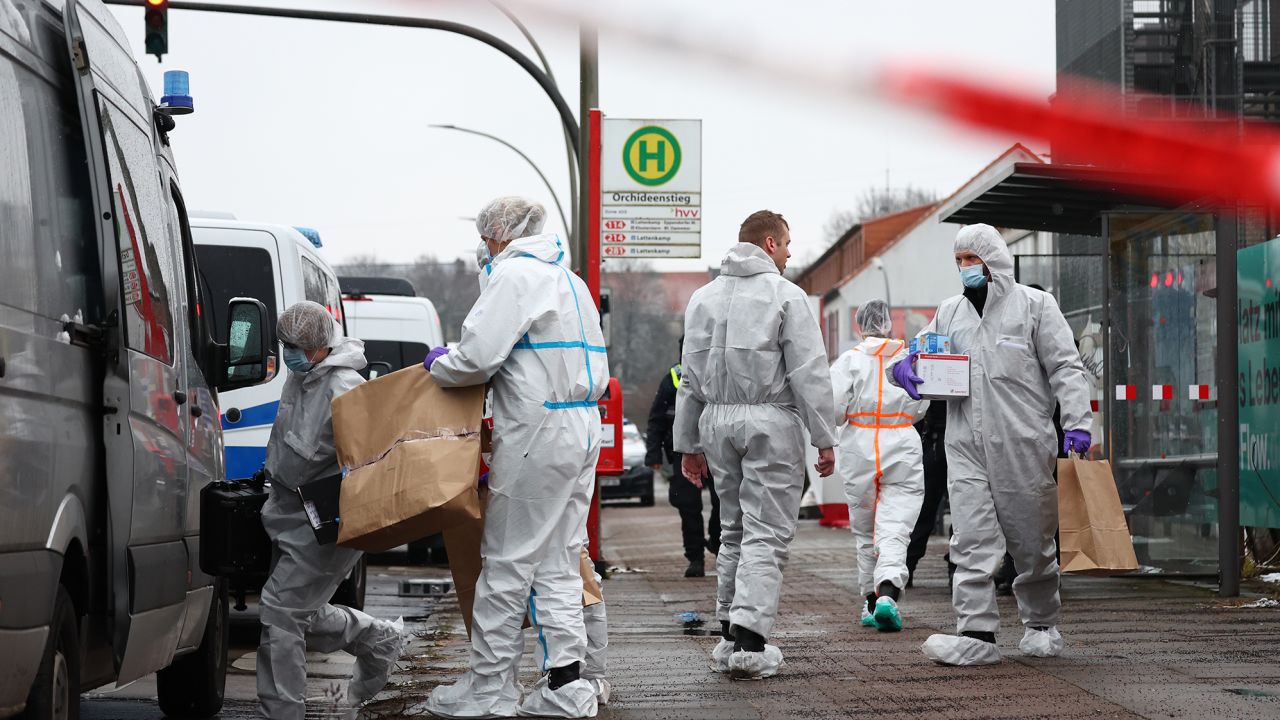
    Germany was in disbelief on Friday when a shooter at a Jehovah’s Witness center in Hamburg killed six people, including an unborn child, before killing himself as police stormed the premises.

    Hamburg’s state prosecutor reported that the attacker, a 35-year-old German national, had previously belonged to the Jehovah Witnesses movement.

    After the shooter opened fire on an event Thursday night that was attended by 50 people, German police are still looking into a potential motive.
    At a press conference on Friday, Interior Minister Andy Grote stated that a mass shooting like this had never occurred in Hamburg.

    The gunman acted alone, Grote said. ”There could have been more victims if police had not intervened so quickly,” he said.

    The mother of the unborn baby that was killed survived her gunshot injuries, Hamburg police chief Matthias Tresp told reporters. Police said that four men and two women – all German nationals between the ages of 33 and 60 – died in the attack.

    Eight people were wounded, four of them seriously. Police said that among them are six women and two men; six are German nationals, one injured person is from Uganda and one from Ukraine. The victims are not related to the suspected perpetrator, Tresp said.

    The suspect left the Jehovah’s Witnesses community about 18 months ago, “apparently not on good terms,” Thomas Radszuweit, a Hamburg security official, told reporters Friday. He was a 35-year-old German national, identified only as Philipp F. in line with German privacy laws.

    Philipp F. was a former member of the Jehovah’s Witnesses, but it is unclear if he was excluded from the community or left voluntarily. The suspected shooter was not previously known to authorities in Hamburg, according to Radszuweit. Why the suspect went on the shooting rampage is as yet unknown, he added, and there is no indication of a political motive.

    Meanwhile Ralf Peter Anders, spokesman for the Hamburg prosecution’s office, said there was “no indication of a terrorist background” to the attack.

    Ralf Martin Meyer, Hamburg’s chief of police, said investigations were ongoing into the mental state of the suspect, adding that it was possible the suspect suffered from mental illness. Meyer said he had been in legal possession of a semi-automatic pistol since December 2022. During the attack the gunman shot nine magazines of ammunition.

    Messages of condolence poured in from politicians and religious leaders, with German Chancellor Olaf Scholz denouncing the “brutal act of violence.”

    Police were called to the scene at 9:04 p.m. local time (3:04 p.m. ET) Thursday night, Grote said. The first teams arrived at 9:08 p.m. and entered the building three minutes later.

    The Jehovah’s Witnesses in Germany said in a statement: “The religious community is deeply saddened by the horrific attack on its members at the Kingdom Hall in Hamburg after a religious service.”

    One unidentified witness described the moment the shots rang out in the Thursday evening attack. “We heard shots,” they said as quoted by Reuters news agency. “There were 12 continuous shots. Then we saw how people were taken away in black bags.”

    A neighbor of the Jehovah’s Witnesses center in Hamburg told CNN affiliate RTL Germany Friday: “I heard … Bam, bam, bam, bam, bam. And I wondered, ‘who is still working with the jackhammer now?’ That was my first idea because you don’t hear any gunshots [around here].”

    Another neighbor told RTL: “We were not at home at all. Our son called us that there had been a shooting across the street at the Jehovah’s Witnesses and he had even filmed parts of it, thinking it was a scare gun.”

    Chancellor Scholz led politicians in denouncing the murder spree in the northern German city.

    “Several members of a Jehovah community fell victim to a brutal act of violence last night. My thoughts are with them and their loved ones,” he wrote on Twitter.

    He later said the country has been left “stunned” by the shooting. Speaking at a trade fair in Munich Friday, the German chancellor highlighted the devastating impact of the “terrible incident” which occurred in his hometown of Hamburg. “We are stunned by this violence,” Scholz said.

    EU Commissioner for Home Affairs Ylva Johansson expressed her sorrow, writing on Twitter: “A shocking attack on a church in GrossBorstel, Hamburg last night. My thoughts are with the victims and their families.

    “Thanks to @PolizeiHamburg who responded to the attack immediately and with incredible bravery.”

    French President Emmanuel Macron also expressed his condolences. “Terrible news from Hamburg,” he said on Twitter Friday. ”I send France’s condolences to the relatives of the victims and to all our German friends. Our thoughts are with them.”

    Footage from the scene on Thursday night showed numerous armed police officers inside and around the Kingdom Hall while a helicopter flew overhead. A bomb disposal team was deployed at one point.

    The streets around the place of worship were cordoned off, and police earlier warned of “extreme danger” in the area, the spokesperson added. Local residents were urged to stay indoors.

    There is “no confirmed information on the motive for the crime,” police said on Twitter as they urged people not to share any unconfirmed assumptions.

    Messages of support also came in from Hamburg’s religious communities.

    “The news of this bloody crime in Hamburg-Alsterdorf is shocking and leaves me speechless… My deepest sympathy goes to the relatives of the victims,” Father Sascha-Philipp Geissler, a senior member of Hamburg’s Catholic diocese, said in a statement.

    Shootings in Germany are not unheard of, though rarer than in the United States. According to statistics published by the country’s National Firearms Register in 2013, Germany has, per capita, the fourth-highest gun ownership of any nation. However, its strict laws mean they are largely kept out of the public eye.

    German citizens require a weapons possession card to own or buy a gun and a weapons license to use or carry a loaded gun. Hunters do not need a weapons license as long as they have a hunting license.

    Gun control laws in Germany have been further tightened in recent years after several shooting incidents. A new Weapons Act was introduced in 2003 after a school shooting in Erfurt that left 16 people dead.

    In January 2022, at least one person was killed after a man opened fire on students in a lecture hall at Heidelberg University in southwestern Germany.

    And in 2020, a mass shooting at two shisha bars in Hanau killed several people.
  • Scholz, Macron joins Zelenskyy in Munich Security Conference open

    Scholz, Macron joins Zelenskyy in Munich Security Conference open

    This year’s gathering is centred on Russia’s invasion of Ukraine. Attending the annual high-level conference are representatives from 96 different nations.

    The Russian invasion of Ukraine, the main topic of discussion at this year’s high-level gathering, served as the backdrop for the opening of the annual Munich Security Conference (MSC) on Friday.

    Representatives from 96 nations will discuss important defence topics over the coming days.

    ‘No alternative to Ukrainian victory’ — Zelenskyy

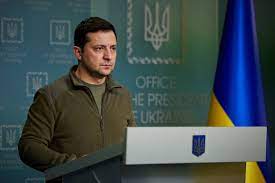
    Ukraine’s President Volodymyr Zelenskyy made the opening address by videolink and urged allies to speed up support for his country, warning that lives were hanging in the balance.

    “We need to hurry up. We need speed — speed of our agreements, speed of our delivery… speed of decisions to limit Russian potential. There is no alternative to speed because it is the speed that the life depends on,” Zelenskyy told those gathered, stressing there was “no alternative to a Ukrainian victory.”

    Zelenskyy likened the battle against Russia’s invasion to the biblical fight between David and Goliath and said that while Ukraine had David’s courage, it still needed the sling with which to defeat “the Russian Goliath.”

    Scholz calls on allies to send tanks to Ukraine

    German Chancellor Olaf Scholz told the conference that Putin’s “revisionism” would not prevail and called on allies who were in a position to do so, to send battle tanks to Ukraine.

    “Those who can send such battle tanks should really do so now,” Scholz said.

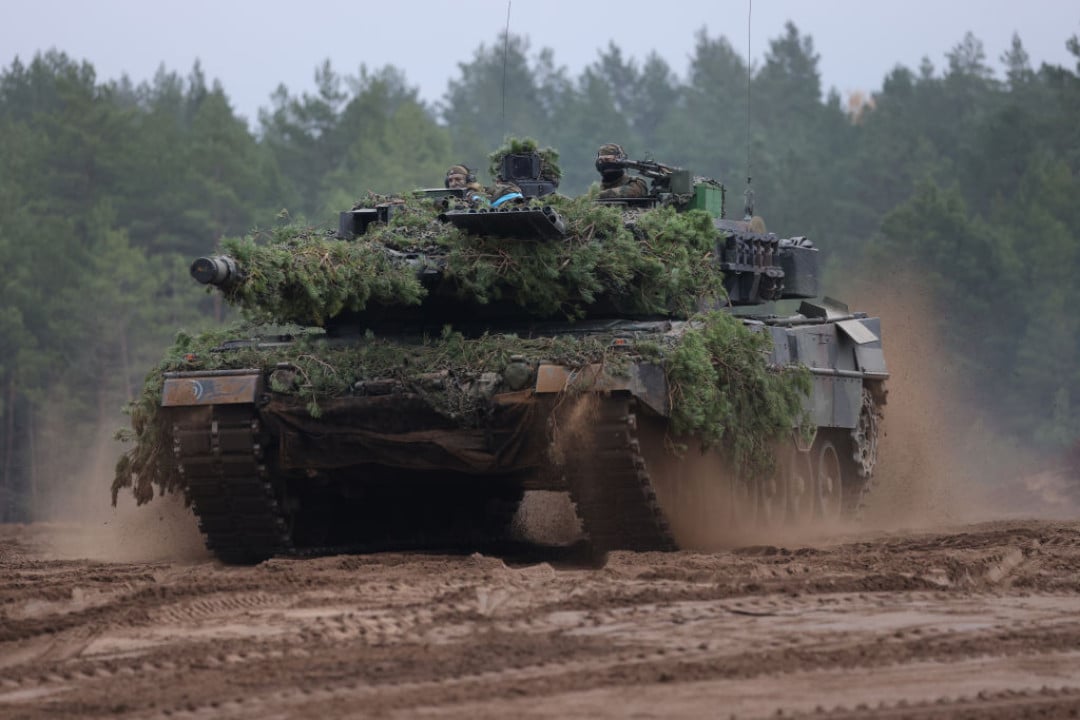
    In January, Germany approved the export of Leopard 2 battle tanks to Ukraine from its own stocks as well as from third-party allies.

    The German chancellor said that his country would provide support with training, supplies and logistics.

    In a sentiment shared by other speakers, Scholz was of the opinion that there war in Ukraine would not be over soon. 

    “I think it’s wise to prepare for a long war,” Scholz told the conference.

    ‘Not the time for dialogue’ — Macron

    French President Emmanuel Macron took the podium after the German leader and said there needed to be readiness for “prolonged conflict” in Ukraine, while calling on EU members to invest substantially in defense spending.

    “We absolutely need to intensify our support and our effort to the resistance of the Ukrainian people and its army and help
    them to launch a counter-offensive which alone can allow credible negotiations, determined by Ukraine, its authorities
    and its people”, Macron said

    The French president also said that it was not the time to attempt dialogue with Russia as it ramped up hostilities in the east of Ukraine.

    “It is not the time for dialogue because we have a Russia which has chosen war, which has chosen to intensify the war, and which has chosen to go as far as committing war crimes and to attacking civilian infrastructures,” Macron said.

    ADVERTISEMENT

    Putin committed ‘breach of civilization’ — Heusgen

    The conference is being chaired for the first time this year by Christoph Heusgen — former foreign policy advisor to ex-German Chancellor Angela Merkel — and successor of Wolfgang Ischinger who served as chair for 15 years.

    Heusgen began proceedings by saying the 2022 conference had closed with the hope that Russian President Vladimir Putin “would be impressed by the unity the international community demonstrated … We all know what happened,” Huesgen said. 

    “Vladimir Putin committed a breach of civilization,” the MSC chair said, adding that it was the first time since World War II, that a country in Europe “denied the right of existence of another country and started an all out war.”

    First conference for Pistorius as German defense minister

    Ahead of the conference, German Defense Minister Boris Pistorius reaffirmed the need to boost military funding by going beyond the target of 2% of gross domestic product, while highlighting the importance of the platform. The MSC “has always been a place of understanding and dialogue,” he said.

    “What is new is that all this is taking place while a war is being waged on European soil by Russia against Ukraine,” Pistorius added.

    It will be Pistorius’ first MSC in office, and NATO Secretary-General Jens Stoltenberg’s last as he plans to step down from his post in October.

    Participants at the conference include 40 heads of state and government and nearly 100 ministers.

    Who is attending?

    Russia will again be a notable absence, with its leadership for the first time in two decades not being invited.

    Other high-profile speakers expected on Friday include China’s top foreign policy official Wang Yi and US Vice President Kamala Harris.

  • Italy prime minister irritated by ‘inappropriate’ Zelenskyy’s meeting

    Italy prime minister irritated by ‘inappropriate’ Zelenskyy’s meeting

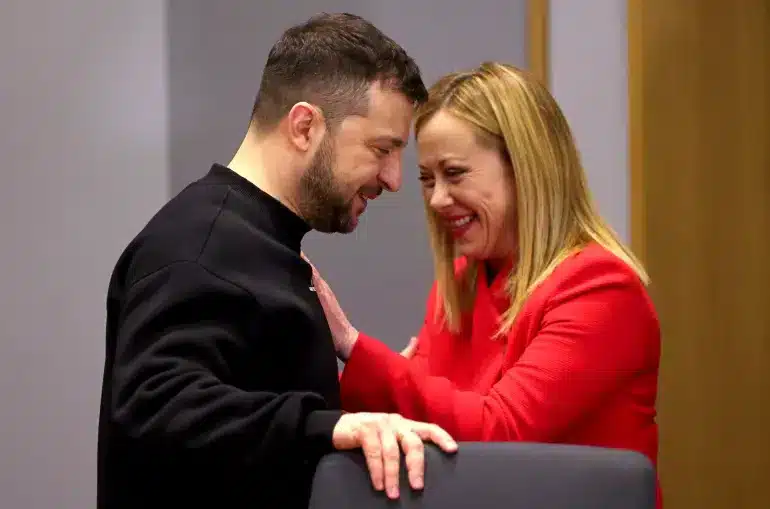
    The Franco-German meeting with the Ukrainian leader in Paris, according to Prime Minister Giorgia Meloni, did not promote “unity.”

    As a result of not being invited to a dinner in Paris with Ukrainian President Volodymyr Zelenskyy, Italian Prime Minister Giorgia Meloni has criticised France and Germany, causing a rift between the European Union’s allies.

    Zelenskyy began a surprise trip to Western Europe on Wednesday with a stop in the United Kingdom. He then travelled to France, where, ahead of a Thursday EU summit, he had a late dinner with Macron and German Chancellor Olaf Scholz.

    But unlike the previous year, when Macron and Scholz collaborated closely on Ukraine with the then-Italian Prime Minister Mario Draghi, Meloni was left out in the cold.

    Speaking to reporters as she arrived at the Brussels summit on Thursday, Meloni, who took office last October, said she thought the snub was “inappropriate”.

    “I think our strength in this fight is unity,” she added.

    She later met Zelenskyy on the sidelines of the EU meeting.

    Asked about her comments, Macron said he thought Wednesday’s dinner had been fitting.

    “As you know, Germany and France have had a special role on the Ukraine question for eight years,” he told reporters, referring to joint mediation by the two countries that tried, and failed, to prevent conflict between Russia and Ukraine.

    However, things were different when Draghi, a former president of the European Central Bank, was prime minister. Draghi travelled with Macron and Scholz to Kyiv by train last June and played a leading role with them in shaping EU opposition to Russia following its invasion of Ukraine.

    Meloni has pledged to maintain the same pro-Ukraine stance, despite the misgivings of some of her coalition allies, telling reporters on Thursday that providing help to Kyiv was the best way to bring about peace.

    Underscoring her willingness to support Kyiv, Italy and France finalised technical talks last week for the joint delivery of a SAMP/T-MAMBA air defence system to Ukraine early this year.

    However, Meloni’s brand of nationalist politics has put her at odds with both Macron and Scholz on an array of other issues and the close ties that Draghi forged with Paris and Berlin seem a distant memory.

    Paris last November accused Meloni’s new government of breaking a bond of trust and breaching international laws by refusing to take in refugees and migrants saved by a charity rescue ship. The boat eventually docked in France instead.

    Earlier this week, French and German ministers flew to Washington together to discuss contested US subsidies with their US counterparts, excluding Italy, which is the second-largest manufacturer in the European Union after Germany.

  • Germany confirms supply of  Leopard 2 tanks to Ukraine

    Germany confirms supply of Leopard 2 tanks to Ukraine

    German Chancellor Olaf Scholz said in a statement, “This decision follows our well-known line of supporting Ukraine to the best of our ability.

    We are acting in a closely coordinated manner internationally.”

    The goal is to establish two battalions with Leopard 2 tanks for Ukraine quickly, the statement said, adding Germany would first step in and provide 14 Leopard 2 tanks from military stocks.

    Training of Ukrainian troops in Germany will begin soon, and Germany will also provide logistics and ammunition.

    Poland’s prime minister Mateusz Morawiecki in a tweet expressed gratitude to the German Chancellor Olaf Scholz for his decision to send Leopard 2 tanks to Ukraine.

    “Thank you @Bundeskanzler Olaf Scholz,” Mateusz Morawiecki wrote on Twitter.

    “The decision to send Leopards to Ukraine is a big step towards stopping Russia.”

  • Macron-Scholz: Challenging Paris summit awaits German chancellor

    German Chancellor Olaf Scholz and French President Emmanuel Macron will no doubt be beaming when they meet in Paris to discuss future European cooperation.

    But, behind the smiles, both sides are aware that the EU’s central relationship is under strain like never before.

    On a variety of issues, including defence, energy, business assistance, and EU expansion, the two countries are currently pulling in opposite directions.

    And underlying everything is a fear fast becoming an obsession in Paris.

    The French concern is that the war in Ukraine has ripped up Europe’s geostrategic rule book, leaving Germany enhanced and pushing France to the Western side-lines.

    Symbolic of the rift was the cancellation of what had been until now a routine set-piece of Franco-German friendship – the regular joint meeting of the two countries cabinets.

    After a pause for Covid, these encounters were meant to resume at Fontainebleau on Wednesday. But faced with a glaring lack of common ground – as well, according to France, as the studied uninterest of several German ministers – it was agreed to call the session off.

    Mr Scholz’s arrival for a bilateral summit with the French president is an attempt to minimise the differences, but no one is deceived.

    Lamenting what it called the “glacial” state of cross-Rhine relations, Le Figaro newspaper said in an editorial that it was “the result of a profound geostrategic change – a continental shift that started a long time ago and which is destined to transform the face of Europe”.

    The essence of this shift – according to French analysts – is the awakening of the slumbering giant that is Germany and its dawning realisation that it must shift for itself in an increasingly dangerous neighborhood.

    For France, this is bad news because it casts doubt on a central assumption of the last half century: that by walking lockstep with Germany, France can not just restrain its richer and stronger neighbour, but also project its own vision of European unity.

    With almost masochistic relish, French commentators have taken to listing the ways in which Berlin has lately chosen to go its own way rather than find an accord with Paris.

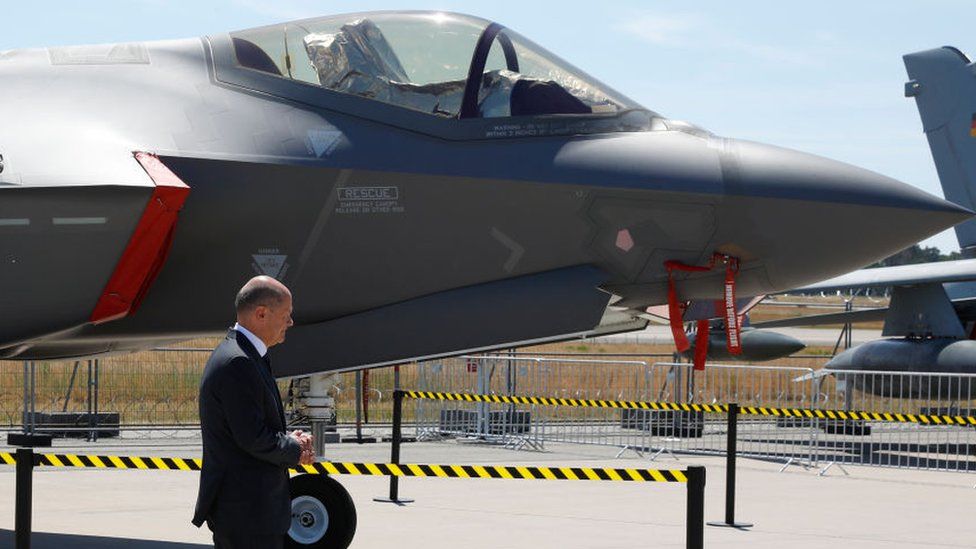
    The German chancellor alongside a US F35 fighter jet earlier this year
    IMAGE SOURCE,GETTY IMAGES Image caption, Earlier this year the German chancellor decided to buy F35 fighter jets

    On re-arming, Germany has shown a clear preference for US kit – like F-35 fighter jets and Patriot air-defence systems – and seems content to leave once-vaunted European defence initiatives on hold.

    Stung by criticism that it was suckered by Russia’s Vladimir Putin, Germany appears anxious to reassure its eastern neighbours by promoting itself as the European arm of Nato, rather than – as France would like it – a partner in EU defence.

    On energy, Germany is against a cap on gas prices, which France wants. It also wants France to authorise a new pipeline to carry gas – and eventually green hydrogen – from Spain. But France refuses.

    And then there is Germany’s decision to offer €200bn (£170bn) in state aid to businesses and households to get them through the energy crisis.

    For France, this will create severe economic distortions because other European countries will be unable to compete with that level of subsidy. Germans reply that France is hardly in a position to give lessons about the iniquity of state aid.

    In an article titled “The late Franco-German couple”, veteran French commentator Nicolas Baverez said France had only itself to blame for letting itself be eclipsed by Germany over the years.

    What has happened now with the Ukraine war, he said, merely revealed the imbalance that was already there. “While France is content to talk about sovereignty, Germany exercises it,” he wrote.
  • Germany extends nuclear power in the face of an energy crisis

    As a result of the energy crisis caused by Russia’s invasion of Ukraine, German Chancellor Olaf Scholz has ordered the country’s three remaining nuclear power plants to remain operational until mid-April.

    Germany had originally planned to phase out all three by the end of this year.

    Mr Scholz’s order overruled the Greens in his coalition, who wanted two plants kept on standby, to be used if needed.

    Nuclear power provides 6% of Germany’s electricity.

    The decision to phase it out was taken by former chancellor Angela Merkel after Japan’s Fukushima nuclear disaster in 2011.

    But gas prices have soared since Russia’s invasion of Ukraine in February, which disrupted Russia’s huge oil and gas exports to the EU. In August Russia turned off the gas flowing to Germany via the Nord Stream 1 undersea pipeline.

    After relying so heavily on Russian gas Germany is now scrambling to maintain sufficient reserves for the winter. The crisis has also prompted it to restart mothballed coal-fired power stations, though the plan is to phase out coal in the drive for green energy.

    Last year Germany got 55% of its gas from Russia, but in the summer that dropped to 35% and it is declining further.

    Chancellor Scholz’s third coalition partner, the liberal Free Democrats (FDP), welcomed his move to keep nuclear power as part of the mix. The three remaining nuclear plants are Isar 2, Neckarwestheim 2, and Emsland.

    The Social Democrat (SPD) chancellor also called for ministries to present an “ambitious” law to boost energy efficiency and to put into law a phase-out of coal by 2030.

    Last week climate activist Greta Thunberg said it was a “mistake” for Germany to press on with nuclear decommissioning while resorting to coal again.