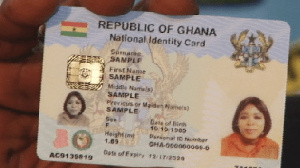
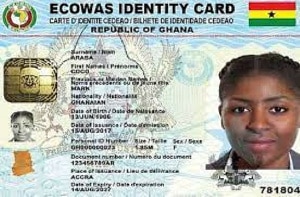
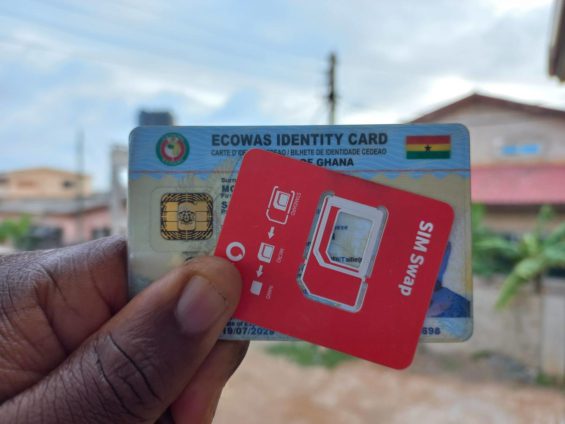
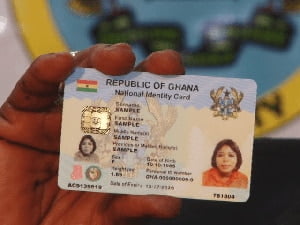
The National Identification Authority (NIA) has refuted claims made by banks that issues with the Ghana Card are responsible for identification challenges leading to unauthorized charges on money transfers between personal bank accounts and mobile money wallets.
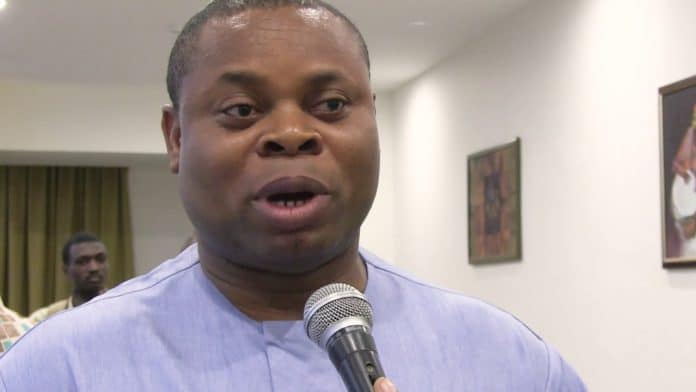
Head of the Ghana Association of Bankers, John Awuah, had attributed the fees to inconsistencies in Ghana Card details between mobile money (MoMo) and bank accounts, suggesting that these discrepancies trigger the system to treat individuals differently and apply charges.
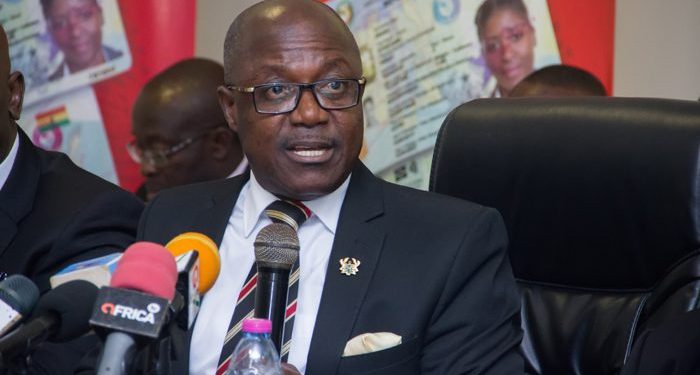
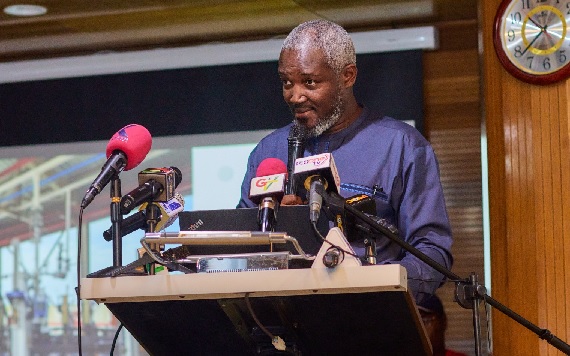
However, the Executive Secretary of the NIA, Prof. Kenneth Attafuah, firmly rejected these claims. In an interview on the Citi Breakfast Show, Prof Attafuah highlighted the successful completion of over 120 million identity verifications since 2021, indicating the effectiveness of the Ghana Card.
“These challenges have absolutely nothing to do with the NIA. I must make that very clear. We have since January 2021 conducted over 120 million verifications without a single hitch. So it must be made clear that once a bank is onboarding, all efforts to verify identities using the Ghana card lie with the bank, not the NIA.
“The infrastructure has been provided to the bank so all they need to do is to establish rules with the staff in the bank to verify identity for every transaction. That is what the law requires.”
He further emphasized that the law mandates the provision of the Ghana Card wherever identification is required, absolving the NIA of any blame in the matter.
“Whether they do this or not is another matter but the law says that wherever identification requires to be established the Ghana card shall be required or produced,” he said.
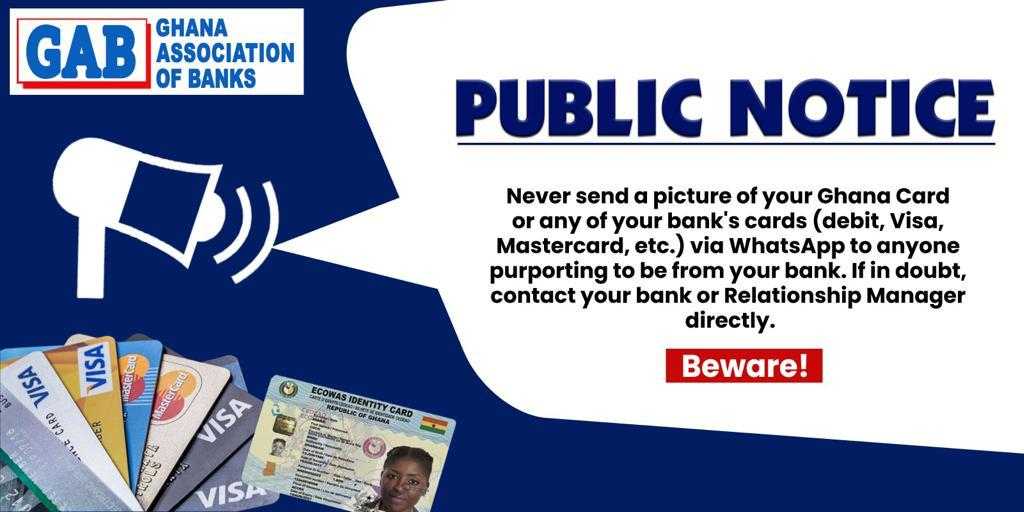
The Ghana Association of Banks (GAB) is issuing a public warning against sharing Ghana card, Visa card, or debit card details with individuals posing as bank staff on digital platforms like WhatsApp or email.
To prevent fraud and scams, bank customers are advised not to share images revealing bank account details or identity numbers.
GAB emphasizes that individuals should never send pictures of their Ghana Card or bank cards via WhatsApp to anyone claiming to be from their bank. If in doubt, customers are urged to contact their bank or Relationship Manager directly.
This cautionary message aligns with the Bank of Ghana’s directive for banks to enhance cybersecurity measures to combat fraudulent activities in the banking industry.
“Never send a picture of your Ghana Card or any of your bank’s cards, such as debit, Visa, and Mastercard, via WhatsApp to anyone purporting to be from your bank. If in doubt, contact your bank or Relationship Manager directly,” the Association stated.
While banks assure the public of increased security, GAB stresses the importance of vigilance and prompt reporting of unfamiliar incidents.
The warning from GAB coincides with the Cyber Security Advisory (CSA) addressing the rise in online employment scams, leading to losses exceeding GHS 120,000 through fraudulent transactions.
The CSA advises caution when encountering job postings or part-time roles offering unrealistically high salaries for minimal work, as these could be scams.
Recent reports also highlight an online investment scheme called Pacminer defrauding close to 800,000 Ghanaians, resulting in losses exceeding GHC 90,000. The victims are urged to report such incidents promptly.
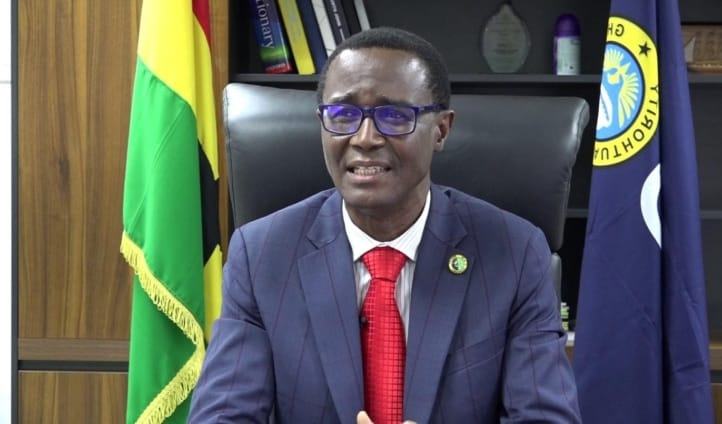
The CEO of Margins ID Group, Moses K. Baiden, has announced Ghana’s upcoming launch of a digital version of the national ID, the Ghana Card, alongside the existing physical card.
The electronic ID profile, akin to the e-passport feature, is already integrated into the card and is slated for activation in the coming year.
When activated, the digital ID will allow users to transfer all Ghana Card information from the card’s chip to the owner’s mobile phone via an app.
A digital replica of the Ghana Card, complete with a bar/QR code for digital verification, will be generated on the phone.
Baiden emphasized the importance of retaining the physical card, citing the prevalence of mobile phones and the lack of infrastructure for widespread digital ID verification.
Despite the ongoing progress, he noted that the country is not ready to entirely discard physical cards in favor of digital ones.
The Ghana Card, often subject to jokes about its payment capabilities, actually features a payment application among its 18 segments.
Baiden highlighted the need for legislation and funds to activate all segments, clarifying that Margins, by law, must pre-finance and prove functionality before government payment.
Margins, as a locally-owned company, has been instrumental in developing Ghana’s ID system.
The Ghana Card’s digital version aims to provide convenience, especially in cases where the physical card is unavailable.
Additionally, the company has saved the state over $1.5 billion, addressing a 50-year-old problem with the reliable issuance of universal national ID cards.
Despite the advancements, human behavior hurdles remain, as some individuals and institutions still require physical appearances for service delivery.
Margins has also developed NFC card-readers for online/offline verification, contributing to the efficiency of Ghana’s ID system.
Baiden believes the Ghana Card is the “master key” for precise and effective development planning, ensuring no citizen or resident is left behind.
Vice President Dr. Mahamudu Bawumia has reiterated the government’s commitment to addressing challenges in the informal economy through the implementation of the Ghana Card, a crucial element of the digitalization agenda.
Speaking at the 20th edition of the Ghana Club 100 Awards on Saturday, December 9, the NPP flagbearer highlighted the adverse effects of the informal economy, including issues like age cheating, identity fraud, and the proliferation of counterfeit documents such as insurance, birth certificates, and passports.
Dr. Bawumia stressed the significance of transitioning from an informal economy to a more disciplined and transparent system, pointing out the problems associated with informality, such as corruption, lawlessness, tax evasion, and an unbanked society.
To tackle these challenges and unlock the transformative potential of the economy, the Vice President noted that the government initiated a formalization process, with the digitalization initiative playing a crucial role and the Ghana Card serving as its anchor.
He emphasized that by digitizing government services through Ghana.gov.gh and other initiatives, the government aims to enhance transparency, clarity, and efficiency in the system.
Dr. Bawumia stated that these measures contribute to reducing corruption, as services can be accessed without the need for bribes. He highlighted the inherited issues of the informal economy, including corruption, lawlessness, tax evasion, and identity fraud, which made it challenging for the economy to reach its full potential.
The government’s focus on formalization and digitalization aims to create a transparent and disciplined economic system.
“You look at an economy in the informal sense which turned to be undisciplined, the society is undisciplined because the economy is informal and there are no consequences for bad actions, you have a society where corruption prevails, you have lawlessness, you have a tax dodging society, you have an unbanked society, you have a loan repayment dodging society, identity fraud, people assuming identities of others, lack of address systems, age cheating, fake insurance, fake birth certificates, fake passports, no functional address systems, ghost workers on government payrolls.”
“These ills of the informal economy that we really inherited made it very difficult for the economy to transform to its potential. That is why we set out to formalize the economy to make sure that the economy works in a transparent system. In that area of formalisation of the economy we realized heavily on digitalization of the economy to formalize the economy.”
Vice President Dr. Mahamudu Bawumia has clarified his previous comment about the role of the Ghana Card and the acquisition of an automobile.
Speaking at the 57th congregation ceremony of the Kwame Nkrumah University of Science and Technology, Dr. Bawumia revealed that discussions are underway with some local automobile companies to roll out a loan scheme with the Ghana card.
It was later reported that the Vice President announced that the Ghana card could be used to purchase vehicles.
While addressing an audience at the Ghana Investment Promotion Centre (GIPC) awards ceremony on December 8, Dr Bawumia emphasized that he did not suggest a direct link between the Ghana Card and purchasing a car outright.
“One of the issues facing Ghana is the deficiency of an efficient credit system in comparison to other developed nations. In Ghana, your monthly subsistence is your income. In other jurisdictions, the credit system essentially increases your consumption possibilities.”
“I was saying that one of the things that we don’t have in Ghana right now is a system for credit score that the referencing agency would typically use. Of course, what I said was taken out of context, and others even refuted it, claiming Ghana does not have a credit system that customized for each individual,” the Vice President said.
Dr. Bawumia highlighted the government’s commitment to leveraging technology for simplified and efficient services, emphasizing the Ghana Card’s diverse applications in daily life.
He continued: “But now with the cooperation with the central bank, we are very close to introducing an individualized credit scoring system in Ghana next year which allow us to differentiate risk from individuals and that was the sense which I said that an individualized scoring system will have the Ghana card as that anchor because it is a unique identifier for everybody and that will allow credit to be more accessible to all of these companies here who will then be able to offer credit to many consumers”
“The Ghana card being the anchor, some people misinterpreted that saying you can use the Ghana card to buy a car which doesn’t make sense, the Ghana card will help you get credit to be able to assist you making payments of goods and other services.”
Vice President Dr. Mahamudu Bawumia has clarified his previous comment about the role of the Ghana Card and the acquisition of an automobile.
Speaking at the 57th congregation ceremony of the Kwame Nkrumah University of Science and Technology, Dr. Bawumia revealed that discussions are underway with some local automobile companies to roll out a loan scheme with the Ghana card.
It was later reported that the Vice President announced that the Ghana card could be used to purchase vehicles.
While addressing an audience at the Ghana Investment Promotion Centre (GIPC) awards ceremony on December 8, Dr Bawumia emphasized that he did not suggest a direct link between the Ghana Card and purchasing a car outright.
“One of the issues facing Ghana is the deficiency of an efficient credit system in comparison to other developed nations. In Ghana, your monthly subsistence is your income. In other jurisdictions, the credit system essentially increases your consumption possibilities.”
“I was saying that one of the things that we don’t have in Ghana right now is a system for credit score that the referencing agency would typically use. Of course, what I said was taken out of context, and others even refuted it, claiming Ghana does not have a credit system that customized for each individual,” the Vice President said.
Dr. Bawumia highlighted the government’s commitment to leveraging technology for simplified and efficient services, emphasizing the Ghana Card’s diverse applications in daily life.
He continued: “But now with the cooperation with the central bank, we are very close to introducing an individualized credit scoring system in Ghana next year which allow us to differentiate risk from individuals and that was the sense which I said that an individualized scoring system will have the Ghana card as that anchor because it is a unique identifier for everybody and that will allow credit to be more accessible to all of these companies here who will then be able to offer credit to many consumers”
“The Ghana card being the anchor, some people misinterpreted that saying you can use the Ghana card to buy a car which doesn’t make sense, the Ghana card will help you get credit to be able to assist you making payments of goods and other services.”
Vice President Dr. Mahamudu Bawumia’s assertion that Ghanaians will soon be able to access credit and purchase cars using the Ghana Card has been doubted by a senior lecturer at the University of Ghana, Prof Kobby Mensah,
In a post shared on X on November 28, 2023, Prof. Mensah questioned the apparent underutilization of the Ghana Card for vehicle purchases, especially considering the presence of established car dealerships in the country.
He threw down a challenge, encouraging individuals to experiment by attempting to use their Ghana Card at a car dealership to determine whether they would be granted permission to buy a car on credit.
“Are we not in Ghana? Are there no garages in Ghana? If the answers to these questions are yes, then the case is simple.
“Take your Ghana card to CFAO to pick up a Mercedes and let’s prove the theory,” the academic wrote.
Are we not in Ghana? Are there no garages in Ghana? If the answers to these questions are yes, then the case is simple. Take your Ghana card to CFAO to pick up a Mercedes and let’s prove the theory 🧐 https://t.co/omtb7N86Lq
Vice President Dr. Mahamudu Bawumia unveiled intentions for Ghanaians to avail themselves of credit options and acquire cars through the utilization of the Ghana Card, aligning with the ongoing digitization efforts in the economy.
Addressing the 57th Congregation of the Kwame Nkrumah University of Science and Technology (KNUST) on November 24, he disclosed active negotiations with domestic automobile companies, including Solar Taxi, to facilitate the implementation of this initiative.
“The Ghana Card will also become the anchor for a credit system in Ghana, and it will take a couple of car manufacturers in Ghana, notably Solar Taxi, to give cars on credit to people,” asaaseradio.com quoted Bawumia as having said.
He emphasized that the Ghana Card would be the exclusive prerequisite for transactions, allowing individuals to procure cars and make payments over an extended period.
The vice president also revealed intentions to launch a credit scoring system for individuals in 2024.
This system, he explained, is designed to establish a reliable credit history for individuals, bolster the financial sector, tackle trust-related concerns, minimize the cost of conducting business, and foster financial discipline.
“Ghana next year will be introducing a credit scoring system for individuals. Every individual will have a credit score. Right now, our credit scoring system does not exist, so we are seen as risky,” he added.
View his post below:
Vice President Dr. Mahamudu Bawumia unveiled initiatives for Ghanaians to utilize credit options and acquire cars through the Ghana Card, aligning with the ongoing digitalization efforts in the economy.
Addressing the 57th Congregation of the Kwame Nkrumah University of Science and Technology (KNUST) on November 24, he disclosed ongoing talks with local automobile companies, including Solar Taxi, to facilitate the implementation of this initiative.
“The Ghana Card will also become the anchor for a credit system in Ghana, and it will take a couple of car manufacturers in Ghana, notably Solar Taxi, to give cars on credit to people,” asaaseradio.com quoted Bawumia as having said.
He emphasized that transactions would exclusively require the Ghana Card, allowing individuals to purchase cars and make payments over an extended period.
The vice president also revealed intentions to launch a credit scoring system for individuals in 2024.
This system, he explained, is designed to establish a credible credit history for individuals, strengthen the financial sector, tackle trust-related issues, minimize the cost of conducting business, and foster financial discipline.
“Ghana next year will be introducing a credit scoring system for individuals. Every individual will have a credit score. Right now, our credit scoring system does not exist, so we are seen as risky,” he added.
Vice President Dr. Mahamudu Bawumia has unveiled initiatives aimed at enabling Ghanaians to access credit and acquire cars through the utilisation of the Ghana Card and the ongoing digital transformation of the economy.
Addressing the audience at the 57th Congregation of the Kwame Nkrumah University of Science and Technology (KNUST) on November 24, Dr. Bawumia disclosed that discussions are underway with local automobile companies, such as Solar Taxi, to facilitate the implementation of this groundbreaking initiative.
“The Ghana Card will also become the anchor for a credit system in Ghana, and it will take a couple of car manufacturers in Ghana, notably Solar Taxi, to give cars on credit to people,” asaaseradio.com quoted Bawumia as having said.
He emphasised that the Ghana Card would serve as the exclusive prerequisite for transactions, allowing individuals to obtain cars and make payments over an extended period.
The vice president also revealed his intentions to implement a credit scoring system for individuals in 2024.
This system, according to him, is designed to furnish individuals with a reliable credit history, improve the financial sector, tackle trust-related concerns, lower the cost of conducting business, and encourage financial discipline.
“Ghana next year willbe introducing a credit scoring system for individuals. Every individual will have a credit score. Right now, our credit scoring system does not exist, so we are seen as risky,” he added.
A Civil Society Organization (CSO), the Community Focus Foundation (CFF), has expressed its opposition to the Electoral Commission’s (EC) proposal to use the Ghana Card as the sole document for voter registration. The CSO argues that making the Ghana Card the exclusive identification document for voter registration could disenfranchise millions of prospective voters who were unable to obtain the card.
During a press briefing in Accra, Mr. Richard Kasu, the Executive Director of CFF, noted that the EC’s guarantor system had the highest patronage during the recent limited voter registration exercise, with 61.9 percent of users relying on it.
The CFF also raised concerns about the appointment of politically exposed individuals as officials of the EC, suggesting that this could lead to mistrust. They called on the President to withdraw these appointments.
Additionally, the CSO emphasized the need for the EC to address its low public confidence and work towards rebuilding public trust in preparation for the 2024 elections. Public confidence in the electoral process is crucial for the integrity and credibility of elections.
Ghanaian company responsible for manufacturing the Ghana Card, Margins ID Group, has provided a comprehensive explanation of the e-passport features incorporated into the Ghana Card.
This detailed disclosure follows the recognition of the Ghana Card by the International Civil Aviation Organisation (ICAO).
During a recent stakeholders forum held in Accra, which included members of the media, Moses Baiden, the Chief Executive of Margins, elucidated that the Ghana Card comprises three secure identity profiles, one of which is the electronic passport (e-passport).
This e-passport, as confirmed by ICAO certification over a year ago, adheres to the highest international standards.
Moses Baiden further expounded that the e-passport embedded within the Ghana Card encompasses all vital information found on the biodata page of a traditional paper passport, including the holder’s name, date of birth, and other pertinent biographical details.
The Ghana Card is equipped with a unique electronic chip, as highlighted by the CEO of Margins. This chip houses a collection of read-only files and employs sophisticated cryptographic mechanisms to safeguard the document’s security and the passport holder’s privacy.
“The biographic and biometric data contained in the electronic chip on the Ghana Card can therefore be compared to both the traveller and the travel document (paper passport) being presented respectively. There are multiple layers of security in the e-passport that prevent duplication,” he explained.
“The e-passport on the Ghana Card meets the highest ICAO international standards at par with the most advanced countries.”
He went on to say that the Ghana Card’s chip contains three profiles that can be utilized to interface with any global application.
“The three are ICAO Document 9303 Passport Profile, which means it is a machine-readable travel document; an electronic ID (e-ID) Profile and a Match On Card (MOC) Profile, which facilitates secure connection to digital platforms and enables authenticated users to complete e-government or e-commerce transactions.”
The CEO of Margins elucidated that while mobile devices offer e-ID solutions that provide convenience, security, and efficiency, they may not suffice in all situations. This is where the Ghana Card proves invaluable, as it takes into account specific requirements such as technological capabilities, legal mandates, and the trust elements associated with particular scenarios.
In November 2021, Vice President Dr. Mahamudu Bawumia initially disclosed that the Ghana Card had been prepared to serve as a travel document and would ultimately receive certification from the International Civil Aviation Organization (ICAO) for such a purpose. Initially met with skepticism, his assertion was eventually validated after weeks of public discourse. The ICAO, responsible for certifying documents for international travel, officially certified the Ghana Card as meeting the requisite standards in a ceremony held at the ICAO’s headquarters.
With ICAO certification in place, holders of the Ghana Card can now utilize the card as an alternative to traditional passports for travel to Ghana from any international airport worldwide. Several Ghanaians have already availed themselves of this option, using the Ghana Card to travel both from abroad to Ghana and within West African countries where entry visas are not mandatory.
For Ghanaians traveling from Ghana to countries beyond West Africa and wishing to use the Ghana Card in lieu of their conventional passports, the Ghanaian government will need to establish bilateral agreements with these nations for the issuance of electronic visas, replacing the need for visas to be affixed to standard passports.
Significance of the Ghana Card
The Ghana Card is now a necessary card for every citizen to have, according to the CEO of Margins, because Ghanaians may now access their personal data with the card.
“Agencies and organizations only have access to the information they are authorized to access by law for the execution of their duties.”
“Registration from birth means no more falsification of age, clean voters register and accurate population census among other things. No more football age, ghost names on government payroll and fake names on voters’ register.”
The CEO expressed optimism that the Ghana Card, which serves as the foundation of Ghana’s drive toward digitalization, has the ability to make Ghana into a technologically advanced country and the most technologically advanced economy in the world.
Presenting the Ghana Card is currently required in order for any Ghanaian to obtain a passport, driver’s license, insurance policy, and other services including land registration, sim card registration, tax payment, SSNIT, banking, land registration, pension, and others.
Authenticity of Ghana Card
Since it is impossible to have duplicate biometric information, the Ghana Card has been referred to as a true source of unique identification and truth.
“This is the foundation for securely verifying people remotely and physically in real-time,” he said.
“There is no way one person can have two genuine Ghana Cards and there is no way anyone can beat the verification system with a fake Ghana Card unless that person uses the card at places where verification is not required.”
As of August of this year, more than 17.46 million Ghanaians had already enrolled for the Ghana Card.
]The designated centres for the registration of public sector workers without the Ghana Card have been deserted across the country.
As a measure to eradicate non-existent workers from the public sector payroll, the Controller and Accountant General has mandated all public sector employees to register for the Ghana card.
In order to facilitate this process, the National Identification Authority has allocated a specific 10-day timeframe exclusively for the registration of public sector personnel. Nevertheless, despite the substantial count of public sector employees lacking a Ghana card, the uptake of the mandatory and cost-free biometric registration for those without the card has been notably minimal, even after two days.
In alignment with the government’s objective to eliminate fictitious names from its payroll, the National Identification Authority (NIA) initiated compulsory registration for the Ghana Card among all public sector employees who do not possess the card. This initiative commenced on Monday, August 28, 2023. The limited registration process, which encompasses the enrollment of first-time applicants aged 15 and above, is anticipated to span a period of 10 days.
This unique initiative stems from a biometric audit carried out in the past year by the Controller and Accountant General Department, in conjunction with the NIA. The audit findings highlighted that out of the 601,000 public sector employees assessed through their Ghanacard registrations, approximately 148,060 individuals had data discrepancies with the NIA’s records.
This revelation raised significant concerns regarding potential instances of fraudulent ghost names or duplicate identities within the government payroll.
Officials believe many are not showing up because they are afraid of being exposed over ghost names and double identities, due to stringent measures put in place by the Controller and Accountant General Department for registration of public sector workers.
“It is quite obvious that if you are involved in ghost name scam or you have double identity, you cannot come here because you will be exposed. It is a reason they are deserting the centres,” a registration supervisor in Accra, who confirmed the low patronage said.
The registration of public sector workers forms part of an upcoming registration of first-time applicants from age 15 years and above, made possible by the supply of some 484,000 new blank cards to the NIA to enable it to fulfil its mandate.
Public sector workers are required to present a copy of their July payslips, alongside other mandatory documents, such as a birth certificate, a valid Ghanaian passport, or a certificate of citizenship, to get registered and be issued with a Ghanacard.
NIA officials and the CAGD have explained that the payslip is essential because the name on the payslip is exactly what will be used for the Ghana Card; to ensure uniformity and easy verification, and also expose ghost names and double identity on the payroll.
Public sector workers who fail to register for their Ghanacard, after this window, risk forfeiting their monthly salaries as the Ghana Card registration is a key requirement, following the revelation that ghost names on government payroll are costing the government millions of Ghana Cedis every month.
The Chairperson of Ghana’s Electoral Commission (EC), Jean Mensa, has emphasized that the proposed constitutional instrument, aimed at designating the Ghana Card as the exclusive document for voter registration, is not intended to disenfranchise Ghanaians.
Speaking to the media at the Electoral Commission’s headquarters on Friday, Jean Mensa clarified that the Commission is looking to move away from the guarantor system, which she believes has become obsolete.
This is the reason behind the decision to adopt the Ghana Card as the sole identification document for voting purposes.
Jean Mensa went on to elaborate that employing the Ghana Card as the primary means of identification is the most reliable method to safeguard the credibility of Ghana’s electoral roll.
“The current proposal in Parliament, the Constitutional Instrument, does not intend to reintroduce the guarantor system. We have observed that the guarantor system has not been effective. Thirty years ago, when we embarked on this journey without the Ghana Card, it was necessary to implement a system that would enable individuals without documentation to register. Today, with the presence of the Ghana Card, we must depend on it as the most reliable means to maintain the accuracy of our electoral register.”
She contended that the draft Constitutional Instrument, currently under parliamentary consideration, was motivated by the Commission’s commitment to conducting elections that are credible, transparent, fair, and peaceful. This decision arose from the challenges faced by the Commission during the registration process in 2020.
“As a Commission dedicated to organizing elections that are credible, transparent, fair, and peaceful, we sought to establish and uphold the credibility of the foundational document, which is the voters’ register. This is why we proposed the use of the Ghana Card as the sole means of identifying an individual’s citizenship or age.”
“Our experience from the 2020 Registration Exercise highlighted that a number of minors and non-citizens managed to enter the electoral roll through the guarantor system. To eliminate underage individuals and non-citizens from the 2020 register, the Electoral Commission set up District Registration Review Committees, which worked for several weeks to remove such names. It required significant time and effort to rectify the presence of ineligible individuals in our electoral roll. We contested around 40,000 cases involving minors and non-citizens and ultimately removed around 15,000 individuals from the register.”
Communications Manager of the National Petroleum Authority (NPA), Mohammed Abdul-Kudus, has clarified the requirements for individuals and households to take part in the upcoming Cylinder Recirculation Model (CRM) Programme scheduled for September.
It was earlier reported that the Ghana Card is the only document needed for one to purchase gas under the yet-to-be launched programme.
Speaking on the matter, Mr Abdul-Kudus highlighted that relying solely on the Ghana card as the national identification isn’t necessary for enrollment.
During an interview on Citi FM’s Eyewitness News in Accra, he emphasized that although the Ghana card remains an accepted ID, alternative identification methods will also be utilized during registration.
“It was only said among other things as part of the process of the implementation. Currently what pertains to the system is that the individual or household owned cylinders, you take your cylinder to the fuel station, you go and fill it and take it back. CRM is changing ownership and maintenance of cylinders to the bulk filling company. Individuals or households will not own cylinders anymore. So the bulk filling companies will have the responsibility of procuring the cylinders and putting them in the system for use.”
“How do you ensure successful implementation? That is where there is going to be a registration process for individuals and individuals who will be part of the programme…And there will be a need for a national ID. It does not mean any other ID card cannot be used…That particular narrative of the Ghana card or nothing else is absolutely not true,” he explained.
The primary goal of the Cylinder Recirculation Model (CRM) is to optimize the distribution of Liquefied Petroleum Gas (LPG) while also bolstering safety protocols in cylinder handling and distribution.
In this novel approach, individuals and households will transport their empty cylinders to designated fuel stations for refilling. Subsequently, the refilled cylinders will be returned to bulk filling companies for further utilization.
The implementation of the CRM will be led by the NPA and its collaborators, operating under the Ministry of Energy’s guidance.
Meanwhile, the Liquefied Petroleum Gas (LPG) Marketers Association has called on the National Petroleum Authority to suspend the implementation of the Cylinder Re-circulation Model.
According to the Association, an immediate implementation will present several challenges as members of the general public have not been properly briefed over the programme.
Speaking to Citi news, Vice President of the LPG Marketers Association, Gabriel Kumi, said there is already some sort of confusion on how the initiative can proceed effectively.
“NPA has set next month for the implementation, and so we have less than a month and the public confusion indicates that consumers are not ready and so there is a need to educate the public on the model so that we don’t confuse the public in the roll-out of the model.”
“The current system is so entrenched that if you want to introduce a new system, you just don’t throw the old one out and suddenly introduce the new one, we have to do that slowly. Our initial discussion was that we should buy back all cylinders in the system because there are a lot of them out there that are obsolete and need to be changed, and it will be difficult to tell them to simply discard them and get new ones in anticipation of the model’s roll-out,” he said.
A new model of Liquefied Petroleum Gas (LPG) distribution is set to revolutionise the way Ghanaians access and use the fuel.
Starting from September, consumers in Accra and some regions of the country will have to register with their Ghana Card details before they can buy gas at exchange points across the country.
This is part of the implementation of the Cylinder Recirculation Model (CRM), an initiative led by the National Petroleum Authority (NPA) in collaboration with its partners and supervised by the Ministry of Energy.
The CRM will allow consumers to pick up pre-filled cylinders and pay only for the content, without having to own a cylinder. However, they will have to register with their Ghana Card first.
“We are still going to use the same price build-up for the implementation of the policy. Nothing in the price build-up is going to change..all we need from you is the Ghana Card and money to buy the LP,” Perry Okudzeto, Deputy Chief Executive Officer of the NPA is quoted to have said at a press briefing.
The CRM is expected to start in Accra and Kumasi next month, and then expand gradually to cover other regions.
Mr Okudzeto, explained the extensive preparation that has gone into establishing the CRM. He said the model had been rigorously piloted, and the systems and infrastructure had been developed to ensure the safe and secure distribution and use of LPG within the operational areas.
He said, “The programme taught us quite a number of lessons and that has gone into shaping the framework for the implementation of the new policy.” He also stressed the importance of registering with the Ghana Card during the exchange process, saying it was vital for data collection and consumer traceability.
The implementation has been carefully planned. Four CRM Bottling facilities, including GOIL Bottling Plant in Tema and Kumasi, as well as BlueOcean and Newgas facilities, are ready for operation. Moreover, cylinder production is set to begin at APPEB Cylinder Manufacturing Company, SIGMA Cylinder Manufacturing Company, and the Ghana Cylinder Manufacturing Company.
The CRM operation involves procuring cylinders from manufacturing entities, which are then transported to bottling plants for filling.
The filled cylinders will then be transported in bulk to exchange depots for sorting and storage before reaching cylinder exchange points. Consumers can register and buy any quantity of LPG they need for domestic or commercial use.
The aim of this initiative is to ensure that at least 50 percent of Ghanaians have access to safe and environmentally friendly LPG by 2030.
Besides enhancing access, the CRM also seeks to improve safety in LPG distribution and encourage its adoption. Notably, it hopes to prevent the loss of lives, property, and gas filling stations due to human errors.
Regarding pricing, Perry Okudzeto clarified that the new model will maintain the same price build-up as before. He assured the public that the main change was in the distribution network and access to LPG. Consumers will have the option to buy different quantities based on their needs.
The CRM initiative will operate alongside the existing distribution model until a suitable transition period is determined. Industry stakeholders have been actively involved, and their feedback has significantly influenced the design of the framework.
The NPA is committed to a successful rollout, with ongoing collaboration and support from all parties involved.
A new model of Liquefied Petroleum Gas (LPG) distribution is set to revolutionise the way Ghanaians access and use the fuel.
Starting from September, consumers in Accra and some regions of the country will have to register with their Ghana Card details before they can buy gas at exchange points across the country.
This is part of the implementation of the Cylinder Recirculation Model (CRM), an initiative led by the National Petroleum Authority (NPA) in collaboration with its partners and supervised by the Ministry of Energy.
The CRM will allow consumers to pick up pre-filled cylinders and pay only for the content, without having to own a cylinder. However, they will have to register with their Ghana Card first.
“We are still going to use the same price build-up for the implementation of the policy. Nothing in the price build-up is going to change..all we need from you is the Ghana Card and money to buy the LP,” Perry Okudzeto, Deputy Chief Executive Officer of the NPA is quoted to have said at a press briefing.
The CRM is expected to start in Accra and Kumasi next month, and then expand gradually to cover other regions.
Mr Okudzeto, explained the extensive preparation that has gone into establishing the CRM. He said the model had been rigorously piloted, and the systems and infrastructure had been developed to ensure the safe and secure distribution and use of LPG within the operational areas.
He said, “The programme taught us quite a number of lessons and that has gone into shaping the framework for the implementation of the new policy.” He also stressed the importance of registering with the Ghana Card during the exchange process, saying it was vital for data collection and consumer traceability.
The implementation has been carefully planned. Four CRM Bottling facilities, including GOIL Bottling Plant in Tema and Kumasi, as well as BlueOcean and Newgas facilities, are ready for operation. Moreover, cylinder production is set to begin at APPEB Cylinder Manufacturing Company, SIGMA Cylinder Manufacturing Company, and the Ghana Cylinder Manufacturing Company.
The CRM operation involves procuring cylinders from manufacturing entities, which are then transported to bottling plants for filling. The filled cylinders will then be transported in bulk to exchange depots for sorting and storage before reaching cylinder exchange points. Consumers can register and buy any quantity of LPG they need for domestic or commercial use.
The aim of this initiative is to ensure that at least 50 percent of Ghanaians have access to safe and environmentally friendly LPG by 2030. Besides enhancing access, the CRM also seeks to improve safety in LPG distribution and encourage its adoption. Notably, it hopes to prevent the loss of lives, property, and gas filling stations due to human errors.
Regarding pricing, Perry Okudzeto clarified that the new model will maintain the same price build-up as before. He assured the public that the main change was in the distribution network and access to LPG. Consumers will have the option to buy different quantities based on their needs.
The CRM initiative will operate alongside the existing distribution model until a suitable transition period is determined. Industry stakeholders have been actively involved, and their feedback has significantly influenced the design of the framework. The NPA is committed to a successful rollout, with ongoing collaboration and support from all parties involved.
The Coalition of Ghanaians Without Ghana Card (CGWiGC), an interventionist national advocacy group, has expressed concerns over the Electoral Commission’s (EC) insistence on using only the Ghana Card for voter registration.
They believe that this stance raises suspicions of an ulterior motive to suppress the votes of certain Ghanaians.
The coalition firmly believes that no Ghanaian should be disenfranchised in any public election, and they call on the Electoral Commission to reconsider its position.
The Convener of the Coalition, Richard Kasu, emphasized these points during a press conference held on July 27, 2023. He stressed that no state institution should directly or indirectly exclude citizens from exercising their fundamental rights, including the right to vote, as enshrined in the 1992 constitution of Ghana.
To address these concerns on behalf of the Ghanaian people, the coalition proposed several crucial reviews that they believe the government, the Electoral Commission, and the National Identification Authority (NIA) should adopt.
Firstly, the coalition argues that considering the numerous challenges related to acquiring the Ghana Card, it should not be the sole document required for obtaining a voter registration card. Additionally, they call for an immediate halt to the premium registration exercise currently conducted by the NIA at a commercial cost of GHS280, as the economic challenges faced by Ghanaians are already burdensome.
The coalition urges the government and NIA to create provisions for Ghanaians to access Ghana card registration through a nationwide mass registration at various district levels, with further decentralization to electoral areas if possible.
Furthermore, they advocate for all-inclusive stakeholder discussions by the NIA to make its services more progressive, accessible, and affordable to all Ghanaians at all times.
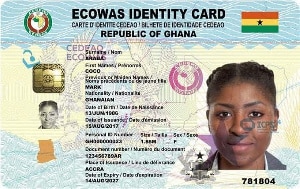
Lastly, the group highlights that the ‘Ghana Card’ is not exclusively Ghanaian but rather should be appropriately called the ECOWAS Card, and therefore, it cannot be adopted as the national identity card of Ghanaians.
In summary, the Coalition of Ghanaians Without Ghana Card urges the relevant authorities to address these issues to ensure that the voting rights of all Ghanaians are upheld and protected.
“That having taken cognizance of the numerous challenges regarding the acquisition of the Ghana Card, it must not be made as the sole source document for the voter registration card. That the premium registration exercise ongoing by the NIA at a commercial value of GHS280 should be stopped immediately due to the already burdened harsh economic challenges faced by Ghanaians. That government, NIA should make provisions to enable Ghanaians access Ghana card registration through a nationwide mass registration at various district levels and further decentralized the registration to electoral areas if possible;
“That all-inclusive stakeholder discussions by NIA to make its services more progressive, accessible and affordable to all Ghanaians at all times; That the ‘Ghana Card’ is not wholly Ghanaian but appropriately called the ECOWAS Card hence cannot be adopted as the national identity card of Ghanaians,” the group stressed.
All is set for the historic issuance of National Identification numbers, better known as Ghana Card numbers, to newborn babies in Ghana, Vice President Mahamudu Bawumia has announced.
This follows the successful integration of the databases of the Births and Deaths Registry, the National Identification Authority and the Ghana Health Service.
The Vice President, who made the disclosure on Saturday July 22, 2023 said the first such Ghana Card number was issued to a newborn baby on Friday, July 21, 2023 after a successful test run of the system.
“The work of integrating the databases has been completed, The full test was done yesterday, and i am happy to say that the first Ghana Card number for a baby was issued yesterday.
“So in the next month or two, all babies born in Ghana, once they take them to Weigh In, will be issued the Ghana Card number and also get their Birth Certificate Identification number at the same time, because the two databases are talking to each other. The nationality of the parents will be established as part of the process”.
“This is very transformational,” Dr Bawumia noted, explaining that they will have these numbers from the time they are babies till they pass away.
Officials of the National Identification Authority (NIA) say cards bearing the biometrics and other data will be issued to the children when they are older, after their digits and other features are fully formed.
Speaking in Cape Coast at the 75th Anniversary celebrations of Ghana National College, Dr Bawumia emphasized that the issuance of ID numbers at birth was an integral part of Government’s ongoing digitalization agenda, designed to prepare the nation to fully partake in the Fourth Industrial Revolution.
The Ghana Card is increasingly becoming the single source of proof of identity, with the unique number serving several purposes including as the Social Security, Health Insurance and Tax Identification number.
Ghana National College
Hailing the impact Ghana National College has had on Ghana’s pre-and post colonial life, Vice President Bawumia challenged managements, staff and students in educational institutions to embrace the possibilities offered by Artificial Intelligence (AI) to improve teaching, problem solving and critical thinking, noting that it could be deployed meaningfully to bridge the gap between the developed and developing world.
“If we are in agreement that the boys and girls in our schools today are being trained to compete on the global stage, there is every justification for our students to be given exposure to AI.
“Government’s ongoing digitalization agenda is ample testimony of its appreciation of AI and the commitment to ensure that this country is not left behind. We have focused on pursuing digitalisation as part of our economic strategy because the Fourth Industrial Revolution is upon us and we must be part of the modern world…
“Whilst Government will do its part by leading the charting of a pathway to the deployment of meaningful AI in our national life, I expect our educational authorities to devise and deploy innovative teaching strategies that factor in ICT as a key ingredient,” he added.
In a groundbreaking move, Government has launched the issuance of National Identification numbers (Ghana-Card numbers) to newborns, achieving a successful integration of vital databases.
Vice President, Mahamudu Bawumia made the momentous announcement during the 75th Anniversary of the Ghana National College in Cape Coast.
The first Ghana-Card number was issued to a newborn baby after a successful test-run on July 21, 2023.
This transformative initiative ensures that all babies born in Ghana will receive their Ghana-Card numbers and Birth Certificate Identification numbers simultaneously during their visit to Weigh-In facilities, providing lifelong identification from birth.
“The work of integrating the databases has been completed, the full test was done yesterday, and I am happy to say that the first Ghana-Card number for a baby was issued yesterday.
“So, from next month, all babies born in Ghana, once they take them to Weigh-In, they will be issued the Ghana-Card numbers and also get their Birth Certificate Identification numbers at the same time, because the two databases are talking to each other.”
“This is very transformational,” Dr Bawumia said, explaining that they will have these numbers from the time they are babies till they pass away.
The National Identification Authority (NIA) plans to issue cards with biometrics and other data when the children are older and their features are fully formed.
Vice President Bawumia highlighted that this ID issuance at birth plays a crucial role in the government’s digitalization agenda, positioning Ghana to actively participate in the Fourth Industrial Revolution.
Furthermore, during his address, Vice President Bawumia encouraged educational institutions to embrace Artificial Intelligence (AI) as a means to improve teaching, problem-solving, and critical thinking. He emphasized the potential of AI to bridge the gap between developed and developing nations, urging the integration of AI into innovative teaching strategies.
The Ghana Card is increasingly becoming the primary source of identity, serving various purposes such as Social Security, Health Insurance, and Tax Identification numbers. With the government’s commitment to staying abreast of the Fourth Industrial Revolution, this initiative marks a significant step towards a digitally empowered and AI-driven future for Ghana’s education and society at large.
The Coalition of Ghanaians Without Ghana Cards (GWiGC) has expressed concerns over the Electoral Commission’s decision to exclusively use theGhana Card for voter registration. They believe this insistence raises suspicions of a potential sinister motive aimed at suppressing the votes of certain Ghanaians.
According to a statement signed by Convening Team, the group said that it is concerned about all the processes involved in this arrangement, calling for a ceasefire from the EC.
The statement, for instance, called for an immediate stop to the ongoing ‘premium express’ registration of National Identification Authority (NIA) cards at a fee across the country.
“The Coalition has also become aware of a rather surprising ongoing silent registration of Ghana Card at various regional offices of the National Identification Authority (NIA) under the operational name ‘premium express” where ordinary Ghanaians are required to pay an amount of two hundred and eighty Ghana cedis (Ghc280) apart from having to travel from various parts of a particular region to its regional capital.
“In fact, what is more worrying is that Ghanaians who even make efforts to move to district offices of NIA seeking to register are unable to register with several excuses from officials including network challenges and lack of printing cards among other flimsy excuses. Clearly, the commercialisation of the Ghana card acquisition is given a premium than its national use as we are made to believe,” the statement said.
It also said that should the NIA and the EC go ahead with its insistence that the Ghana Card becomes the sole document for elections, it would disenfranchise a lot of citizens and as such, that move should be re-looked at.
“It’s important to note that theElectoral Commission ‘s unpopular position to make Ghana Card a sole document for registration or acquisition of a voter register means a huge number of Ghanaians will not be able to register and vote in total contravention of the provisions as contained in Ghana’s 1992 Republican Constitution.
“… That the premium registration exercise ongoing by the NIA at a commercial value of Ghs280 should be stopped immediately due to the already burdened harsh economic challenges faced by Ghanaians,” it added.
Read the full statement, dated Thursday, July 20, 2023, below:
20/07/2023
PRESS STATEMENT:
For Immediate Release.
EC’s insistence on the use of ECOWAS Travel Certificate (Ghana Card) as the sole source document for voter registration is politically dangerous and must be stopped.
The Coalition of Ghanaians Without Ghana Card (GWiGC) has taken note of the ongoing efforts by the Electoral Commission (EC) of Ghana to review the existing Constitutional Instrument (CI) particularly portions pertaining to registration of voters.
The Coalition has also become aware of a rather surprising ongoing silent registration of Ghana Card at various regional offices of the National Identification Authority (NIA) under the operational name “premium express” where ordinary Ghanaians are required to pay an amount of two hundred and eighty Ghana cedis (Ghc280) apart from having to travel from various parts of a particular region to its regional capital.
In fact, what is more worrying is that Ghanaians who even make efforts to move to district offices of NIA seeking to register are unable to register with several excuses from officials including network challenges and lack of printing cards among other flimsy excuses.
Clearly, the commercialisation of the Ghana card acquisition is given a premium than its national use as we are made to believe.
It is worth noting that the entrenched position taken by the Electoral Commission and the National Identification Authority further reinforces our suspicion of a sinister move to suppress votes of some Ghanaians for whatever reason.
For the purposes of clarity, we therefore pose the following questions to the NIA and EC to answer;
1. Is it correct that the so-called Ghana card is an ECOWAS travelling certificate intended for use within the ECOWAS Sub-region? If yes, why is it being pushed down the throats of Ghanaians as a form of identification for elections in Ghana?
2. What becomes of the poor Ghanaian who do not have money to register for the card?
3. What becomes of the people leaving in the hither lands and do not have access to regional capitals for the registration exercise?
It’s important to note that the Electoral Commission’s unpopular position to make Ghana Card a sole document for registration or acquisition of a voter register means a huge number of Ghanaians will not be able to register and vote in total contravention of the provisions as contained in Ghana’s 1992 Republican Constitution.
We wish to strongly state that though the NIA law requires mass registration, you will recall that the period within which such mass registration was organised, we were in a COVID-19 pandemic and due to government’s restrictions, it was practically impossible for all Ghanaians to participate in the registration exercise.
In line with the above, the Coalition of Ghanaians Without Ghana Card is calling for the following reviews on behalf of the Ghanaian people;
1. That having taken cognisance of the numerous challenges regarding the acquisition of the Ghana Card, it must not be made as the sole source document for the voter registration card;
2.That the premium registration exercise ongoing by the NIA at a commercial value of Ghs280 should be stopped immediately due to the already burdened harsh economic challenges faced by Ghanaians;
3. That Government, NIA should make provisions to enable Ghanaians access Ghana card registration through a nationwide mass registration at various district levels minimum and further decentralized to electoral area registrations if possible.
4. We are calling for an all-inclusive stakeholder discussions by NIA to make its services more progressive, accessible and affordable to all Ghanaians at all times.
Vice President, Dr. Mahamudu Bawumia, in collaboration with the management of the Weija Leprosarium, has facilitated the enrollment and acquisition of the national identification system, Ghana Card, for cured lepers residing at the facility.
This exercise is a fulfilment of Bawumia’s word to ensure that leprosarians across the country are enrolled and registered.
“I announced that we will extend this registration to the residents of all the other leprosaria across the country so they also get registered and get issued Ghana Cards,” he stated on facebook.
Expressing his excitement, DrBawumia shared photos from the event which was led by Prof Kenneth Agyemang Attafuah, Executive Secretary, of the National Identification Authority.
Stating that, “It was an exciting day today at the Weija Leprosarium, to have facilitated the enrolment onto and acquisition of the national identification card, the Ghana Card, for cured lepers at the facility. The system captured the face, iris, and ears of each leper in the registration process for the purpose of verification.”
He further expressed his profound gratitude to everyone who participated in making his dream come true.
“Congratulations to all my friends at the Weija Leprosarium and my thanks to the Executive Secretary and staff of National Identification Authority for making this possible. God bless our homeland Ghana,” he wrote in a facebook post.
Ever since Bawumia took office as a Vice president, he has been championing the course for digitalization in runnning the affairs of the country.
He has digitalized Biometric national ID card, Property Address System and Mobile Money Interoperability.
Data from the Volta Regional Directorate of the National Identification Authority (NIA) indicates that a staggering 61,771 individuals are yet to collect their Ghana Cards, thereby impeding the effective implementation of various government services and identity verification processes.
Regional Director of the Authority, Mr Samuel Mawuli Dayi, shared this information during a press interaction, stating that the figure pertains to the end of May 2023.
Breaking down the numbers, Mr Dayi noted that Ketu South alone accounts for 10,567 unclaimed cards, followed by Akatsi South and Central Tongu with 7,589 and 7,513 unclaimed cards, respectively.
Additionally, he noted that the Regional Directorate in Ho possesses 845 unclaimed Ghana Cards, while the Akatsi North office holds 908, and Hohoe has 1,266 unclaimed cards.
Mr Dayi highlighted possible reasons for the high number of unclaimed cards, suspecting that some migrants may have undergone registration but have since left the jurisdiction, and others may have passed away.
However, he appealed to members of the public who do not fall under any of the aforementioned categories to collect their processed cards, as the Ghana Card is a permanent identification document.
Meanwhile,the National Identification Authority (NIA) has expanded its premium Ghana Card registration services to five additional regions across the country. Residents in Volta, Bono, Bono East, Northern, and Western North regions can now access enhanced registration facilities to obtain their Ghana Cards.
The premium Ghana Card registration service has proven to be highly convenient for individuals seeking swift acquisition of their national identification cards. In line with its commitment to broaden the coverage and accessibility of this service, the NIA has extended its premium registration facilities to the newly added regions.
A statement issued and signed by the Acting Head of Corporate Affairs, Col. Peter Kwame Ghansah (Rtd.), announced the operation of new hubs alongside the existing premium centres at the NIA and CalBank Head Offices in Accra, Ashanti, Eastern, and Western regions.
Mr Dayi further stated that the premium services in Ho have received an average of 50 daily applicants since the exercise began on June 12, 2023.
He further noted that in the Volta Region, the premium registration services in Ho have seen an average of 50 applicants daily since the commencement of the exercise on June 12, 2023. Mr. Dayi expressed satisfaction with the response from residents in Ho, highlighting the steady influx of individuals seeking premium Ghana Card registration services. This positive trend indicates a strong demand for efficient and expedited registration processes.
He further highlighted that registrants who avail themselves of the premium registration services in Ho have the advantage of receiving their Ghana Cards on the same day, provided they arrive at the office early enough. This expedited process ensures that individuals can obtain their identification cards promptly and without any conflicts in the details.
The NIA has implemented measures to ensure that the registration process is efficient and accurate. In cases where there may be doubts or discrepancies in the information provided by applicants, the NIA relies on supporting documents such as affidavits and gazettes to verify and process the cards. This additional step ensures that the information recorded on the Ghana Cards is reliable and reflects the correct details of the individuals.
The premium registration centres will offer the following fee-based registration services: for first-time registration and issuance of a Ghana Card at GH¢280; replacement of lost, missing, or damaged cards attracts GH¢110; while update of personal records that requires printing of a new card costs GH¢110.
The Ghana Revenue Authority (GRA) has revealed that more than 10 million Ghana Card holders whose information has been migrated to its system are not registered as taxpayers.
Out of the 15.99 million Ghana Card records migrated from the National Identification Authority (NIA) database onto the GRA database, the tax authority has been able to link 3.08 million of its existing 5.74 million TIN numbers to the Ghana Cards as taxpayers.
This leaves a gap of 2.66 million existing taxpayers who could not be linked with their Ghana Card information.
The Commissioner-General of the GRA, Rev. Dr Ammishaddai Owusu-Amoah, told the Daily Graphic that the authority had an existing TIN record of more than 5.74 million, but only 3.08 million could be matched with the records it received from the NIA, leaving 2.66 million unmatched with TIN records.
“The unmatched TIN records have been distributed to their assigned Taxpayer Service Centres for the necessary compliance activities,” he said.
Context
Following the government’s policy on the use of a unique identifier for all taxpayers, the Personal Identification Number on the Ghana Card (Ghana Card PIN) is to replace the Taxpayers Identification Numbers (TINs) of individuals for tax identification purposes.
Unmatched TINs
Responding to questions from the Daily Graphic for an update on some of the most crucial interventions of the revenue governing body, the Commissioner-General of the GRA, told the Daily Graphic that the authority had an existing TIN record of more than 5.74 million, but only 3.08 million could be matched with the records it received from the NIA, leaving 2.66 million unmatched with TIN records.
“The unmatched TIN records have been distributed to their assigned Taxpayer Service Centres for the necessary compliance activities,” he said.
He explained that there were concerns over 10 million Ghana Card holders who were yet to be registered with the GRA, “as our assumption is that they are income earners or potential income earners who have to be captured in our system to enable us to mobilise the needed revenue for development of the nation.”
Rev. Dr Owusu-Amoah explained that there were currently two approaches by which an individual TIN number could be linked to the Ghana Card, namely the automatic link and the manual link.
The automatic link occurred when the individual’s data transferred from the database of the NIA to that of the GRA were in sync and automatically linked by the integrated system, while the manual link occurred when an individual’s data transferred from the database of the NIA to the database of the GRA were not in sync.
To manually link the Ghana Card PIN and TIN, he said the GRA had made available three channels, comprising taxpayers visiting the GRA offices with required documents, using the Self-Service Portal to submit the TIN to the Ghana Card PIN link request via: https://myid.gra.gov.gh while taxpayers with no internet facility can use the USSD short code *299# to submit their TIN to the Ghana Card PIN link request.
Following the full integration of the TIN and Ghana Card PINs, he said taxpayers were notified of the status of their request via Email and SMS.
Validating tax returns
On the outcome of the electronic issuance of invoicing (e-VAT) project popularly known as the e-VAT, he said it had resulted in a change in taxpayer behaviour and resulted in improved voluntary compliance.
E-VAT has been piloted since October 1, 2022 with the aim of optimising revenue, while curbing abuses such as non-issuance of invoices, among others.
“Since its implementation, the Authority has been able to validate the accuracy of VAT returns submitted by taxpayers,” he said.
So far, he said, 43 out of the 50 selected companies for the pilot had successfully integrated their systems to the authority’s system, while the configuration for full integration were being finalised for the rest.
The introduction of the e-invoicing system, he said, had culminated in an improvement in revenue collection and “there has been positive variance with the companies that have integrated so far.
The 19 taxpaying companies sampled from the E-VAT system saw an increase in their monthly sales from GH¢222 million in November 2021 to GH¢720 million in November 2022.
In December 2021, the total monthly sales of GH¢284 million also saw a huge increase to GH¢1 billion in December 2022.”
He said a key challenge encountered during the implementation of the programme was the reluctance of taxpayers to integrate their system with GRA’s system.
Another challenge, Rev. Dr Owusu-Amoah said, had to do with the technical capacity of some taxpayers to configure their systems to integrate with that of the GRA.
“Taxpayers had fears that the system would disrupt their businesses.
With intensive engagements, coupled with series of testing, their fears were allayed,” he said.
The Authority’s technical team, he said, therefore provided support to taxpayers as a means of creating an enabling environment for taxpayers to understand the technical requirements for integration.
As part of measures put in place to ensure compliance, he said the Authority periodically undertook mystery shopping to ascertain the effectiveness of its programme and ensured that taxpayers did not go contrary to the law.
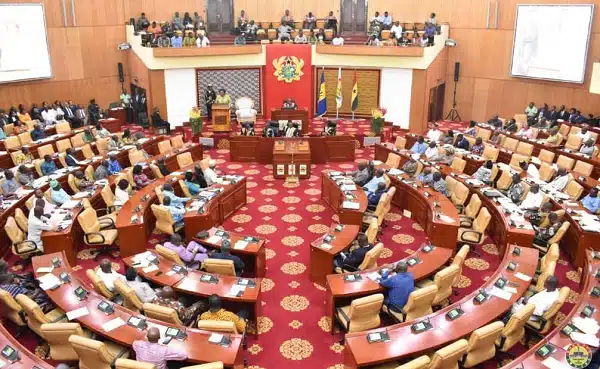
The Electoral Commission‘s insistence on laying the Constitutional Instrument (C.I) without incorporating alternative identity documents, besides the Ghana Card, has raised concerns among lawmakers.
A showdown is expected in Parliament if the EC proceeds to lay its proposed Constitutional Instrument (C. I) without amending it to add other identity documents apart from the Ghana Card as the sole identity document.
Speaking to JoyNews, the Director of Electoral Services of the EC, Dr. Serebour Quaicoe insisted that they will not heed the unanimous decision of Parliament to amend the proposed C.I.
Last week, the Minority Leader Dr. Cassiel Ato Forson, told journalists that both NPP and the NDC MPs will come together to kick against the proposed C. I if it is laid without the amendment proposed by Parliament.
Reacting to the recent comment by the EC on the C.I., the Minority Leader noted that “Dr Serebour Quaicoe’s statement is most unfortunate and reckless. It is important to recognise that the Parliament of Ghana is not just a rubber stamp. It is not some dumping ground where you can bring any C.I here and think that they would pass as you wanted.”
According to him, both sides of the House have a dissenting view on the matter hence “he wonders how the EC is going to usurp our legislative authority and have their C.I passed” adding that EC is “just setting a stage for a conflagration which is totally avoidable.”
Although he acknowledged the independence of the EC, Dr Forson insists the EC’s independence does not extend to how Parliament also conducts its business.
“The Electoral Commission is independent, but being independent does not mean you shouldn’t also respect the authority and independence of other arms of government. So what you do in that situation is to avoid a stalemate,” he advised.
The Electoral Commission in September last year, made a move to have the Ghana Card as the sole document for voter registration in the country.
The move agitated the minority group and they subsequently opposed the CI, saying it will disenfranchise voters. But the EC insisted that it will use the Ghana Card for voter registration.
According to the electoral management body, the Ghana Card is the most authentic means of identifying Ghanaians, hence the Commission’s decision to use it in compiling a new database of voters.
Effective tomorrow Monday, June 12, 2023, the National Identification Authority (NIA) will begin premium registration services in five of its regional offices.
The regions are Bono, Bono East, Western North, Volta and Nothern.
The NIA in a statement said these services at the selected centres would operate in addition to the ones being conducted at NIA headquarters and CalBank head offices in Accra, Ashanti, Eastern, and Western regional offices.
The centres according to the NIA would offer fee-paying services including first-time registration and issuance of Ghana cards (GhC 280), replacement of lost, missing or damaged cards (Ghc110) and update of records that require printing of new cards (Ghc110).
The statement issued by the NIA further indicated that updates of records that will attract the fee include change or correction of the applicant’s name, change or correction of the order of the applicant’s name, correction or addition of the applicant’s name or maiden name, correction of applicant’s date of birth, change or correction of applicant’s nationality, correction of applicant’s gender and change or correction of applicant’s height.
Applicants who would want to request the premium services are to note that the system would be done online and walk-in, the NIA said.
Deputy Director at the National Communications Authority (NCA), Kwame Gyan, has noted Ghanaians without Ghana Card whose SIMs have been blocked can have their cards activated within approximately 48 hours after reaching out to the authority.
Speaking on TV3‘s Midday Live on Friday, June 9, he is said to have noted that there are some cases where reactivating some SIM cards may take longer than two days or within a day.
This comes after Minister for Communications and Digitalisation, Ursula Owusu-Ekuful, stated that Ghanaians who legitimately do not have the Ghana Card but have had their SIM cards deactivated to reach out to the National Communications Authority (NCA) for a resolution.
According to the Communication Minister, the affected users would have to provide evidence to that effect. She made the comments while updating Parliament on the SIM card registration exercise which has seen the deactivation of over 9 million SIM Cards on Thursday, June 8, 2023.
Providing further details, Mr Gyan noted that mobile network operators (MNOs) in some instances have provided WhatsApp numbers that customers can channel their complaints to.
The Deputy Director in charge of Consumer and Corporate Affairs said NCA’s offices across the country will also be open to receive such complaints.
He also noted that affected customers can send an email via complaints@nca.org.gh to his outfit for a resolution.
Communications Minister, Ursula Owusu-Ekuful says persons who do not legitimately have the Ghana Card but have had their SIM cards deactivated must reach out to the National Communication Authority (NCA) for a resolution.
According to her, the affected users would have to provide evidence to that effect.
“In recognition of the fact that not everyone has a Ghana Card, individuals who have not registered their SIMs have been asked to submit evidence of having applied for their Ghana Card to the NCA, and they will be exempted from the exercise,” she assured.
The Ablekuma West MP noted that, also exempted from the re-registration exercise are subscribers out of the country, although they are required to register their SIM cards with their passports.
Again, once subscribers out of the country activate roaming on their devices, the mobile network operators (MNOs) can identify that they are outside the country.
“The NCA has also directed that SIM cards detected to be outside the country for a period of 6 months to be temporarily exempted until the subscribers can complete their registration,” she added.
According to her, subscribers outside who encounter challenges in registering their SIM cards are expected to contact NCA for assistance via email.
Ursula Owusu-Ekuful’s comments come in the wake of over 9 million SIM cards being deactivated for failure of the users to re-register their sim cards.
In a statement made to parliament, the Minister explained that government had to act tough to show the seriousness it attached to the SIM registration exercise.
According to her, even if the deadline for SIM re-registration was extended, there would still be people who would have defaulted.
She explained that the NCA has been monitoring the situation at MNO customer care centers and has observed that people with Ghana Cards have refused to register their SIM cards.
But Ningo Prampram MP, Sam George who has been extremely critical of the process accused the Minister of breaching laws in the blocking of SIM cards.
“Mr Speaker, again I put on record in this House that the NCA and the MNOs have not gone to the NIA to verify and authenticate the portable readers they claim they are using that have not been published in any gazette.
“And so you are acting in violation of section 9 of LI (211) since December 2022,” he said.
Meanwhile, former Minority Leader, Haruna Iddrisu says some of the challenges that have plagued the exercise could have been avoided if the NCA and its Minister did not have a poor relationship with the NIA – the state institution issuing the sole identity document to register which is the Ghana Card.
The Chamber of Telecommunications has guaranteed that all deactivated, unregistered Subscriber Identification Modules (SIM) can still be registered.
The Chamber said data on the deactivated SIM cards would be restored immediately the user completed the registration exercise using the Ghana Card and biometric data captured by the mobile operator.
In an interview with the Ghana News Agency (GNA), Dr Kenneth Ashigbey, Chief Executive Officer, Chamber of Telecommunications, said at least three million unregistered SIM cards had been deactivated as of Thursday morning.
He said as of May 31, 2023 – the deadline for the SIM registration exercise – about nine million SIM cards had not been registered.
Dr Ashigbey said six million more unregistered SIM cards could be deactivated in the coming days.
He said users of the deactivated SIM cards could not make or receive calls, send or receive text messages, access internet services, and perform mobile money transactions.
However, the deactivated numbers could receive messages from their mobile operator and could also access the code for the registration of the SIM card – *404#.
“It is important that we all take advantage of this window and register our SIM cards now because we don’t know when the National Communications Authority (NCA) will close that window.
“The Ministry of Communications and Digitalisation, the NCA, and the Telcos are not interested in barring people’s numbers. It is to ensure that these fraudsters that are in the system are taken out,” Dr Ashigbey said.
The SIM card registration campaign started on October 1, 2021, and was due to end on March 31, 2022.
The National Identification Card, also known as the Ghana Card, is the only document that can be used to undertake the registration exercise.
However, due to some difficulties in the acquisition of the Ghana Card, the NCAextended the deadline for registration multiple times until May 31, 2023, which was communicated as the final deadline.
Dr Ashigbey said about 7.4 million mobile money accounts, holding an amount of GHc200 million have not been registered and thus will be deactivated.
He said monies on blocked accounts would be kept in a special account.
Dr Ashigbey said owners of restored mobile money accounts would be required to undergo a process to have monies restored in their wallets.
“If you do not have a Ghana Card, go to the National Identification Authority for the card. Once you get the Ghana card, dial the registration code, and get registered. Once you get registered, you will get your number back,” Dr Ashigbey said.
About 11 million active Subscriber Identification Module (SIM) cards that have not been re-registered with the Ghana Card yet risk being disconnected today, Wednesday, May 31.
Following this development, hundreds of people, majority of whom are trying to register their SIMs for the first time, have thronged some National Identification Authority (NIA) centres in a desperate attempt to secure their Ghana Card.
The national card is the only prerequisite identification document admissible for the completion of the re-registration of SIM cards.
When the Daily Graphic visited some of the NIA centres, including the Premium Centre of the authority at its head office at Shiashie, Accra and other premium centres in some regions, there were long queues of last-minute card acquirers dashing to complete the process.
Many of the subscribers had come to link their Ghana Card with their SIM cards to satisfy the NCA requirement before the May 31 deadline.
While the centre with the capacity to process 650 applications sees no crowds, the long queues at the place has compelled the NIA to erect canopies outside its halls to accommodate the increasing numbers.
The Executive Secretary of NIA, Professor Ken Agyeman Attafuah, expressed regret that such a large number of people would rush to pay a premium fee of GH¢280 for a service they could have accessed for free a few weeks back.
He said it was the attitude of some people to relax in obtaining the Ghana Card until the deadlines were near.
Prof. Attafuah said based on its daily operational capacity, including that of its key partners, CAL Bank, coupled with limited cards at the moment, the NIA would not be able to issue all the people calling at its premium centres with cards.
“At the moment, given the reality and the debt owed the private partners, the public needing the service are finding recourse to the premium registration service not by laid down procedures, but by the zest and urgency of their needs and we are trying to cope with this,” he explained.
The NIA Executive Secretary said the authority had a daily capacity of about 650 at its head office and a little less of that at other premium centres, making it impossible to issue the thousands of people applying for the cards before the SIM card re-registration deadline yesterday.
He explained, however, that since the deadline was due, the NIA had to mobilise additional hands to serve all the applicants at its head office premium centre yesterday.
Prof. Attefuah said apart from NIA offices where the Ghana Card services could be accessed for free, additional registration points were established with the approach of the SIM card re-registration deadlines to ease the pressure.
“As a responsive state institution, we take no delight in seeing Ghanaians going through the anguish of queuing. So we made these opportunities and facilities available in anticipation that people would take advantage for free,” Prof. Attafuah said.
However, he said it had become the phenomenon that any time the deadline was extended, people became lackadaisical making most of the centres “ghost towns”.
“We see a phenomenon where anytime the deadline for the SIM card re-registration was extended, the additional re-registration points plus the traditional NIA offices become ghost towns and whenever the deadline is approaching then we have a situation of an avalanche of demands and in some cases people stampeding even though this is at a cost,” he pointed out.
Premium service
Prof. Attafuah said although the premium service required booking, the NIA, looking at the high demand due to the deadline, had opened its doors to the hundreds of people to help them beat the deadline even though they had not booked appointments.
He said the NIA had brought in canopies and chairs to accommodate the extra load of numbers and give them some comfort.
“It is a regrettable situation but it is the reality and we have to deal with it. It is unfortunate that so many people have to be in the sun and queue for so long for a paid for service that had been traditionally and customarily available to the public at no cost,” Prof. Attafuah said.
Extension
The Public Relations Manager of AirtelTigo, Felicia Thornhill, told the Daily Graphic that a lot more subscribers of AritelTigo visited its premises to begin the re-registration exercise yesterday, unlike the previous weeks and months preceding the May 31 deadline.
She said to help get all subscribers registered to avoid deactivation which would not benefit the business, the company had deployed most of its staff to the field to assist subscribers in the re-registration exercise.
Each staff has also been tasked to reach about 10 subscribers yet to complete the registration to remind them of the exercise and assist them to complete it.
“It will affect our business and so an extension would be appreciated as we have more customers who are yet to complete the registration exercise,” Ms Thornhill said.
Context
At the inception of the SIM re-registration exercise on October 1, 2021, there were about 42 million active SIM cards in the country.
They were made up of SIM cards registered with identity cards (IDs) such as the National Health Insurance Scheme (NHIS) cards, passports, driving licence, among others.
The National Communications Authority at whose behest the re-registration started, said a lot of the IDs were not verified at the time they were used to register the SIMs.
After the first phase of the exercise, there were about 36 million active SIM cards in circulation as of last month, out of which 25 million (69.6 per cent) have been duly reregistered.
This means that over 25.4 million SIM cards had completed both stages one and two of the SIM re-registration which was done with verified Ghana Cards.
The remaining 11 million, representing 30. 4 per cent, include active SIM cards exempted based on various demographics and active SIM cards that have not been registered with the Ghana Card using the current process.
Already the NCA has deactivated about 6.1 million SIM cards which belonged to subscribers that had completed only stage one of the current registration process.
Tomorrow’s deadline for SIM cards re-registration follows a similar announcement of mass disconnection of unregistered SIM cards before April 17, 2023.
At the time, about 33.8 million, representing 79. 60 per cent had completed only the first phase of linking their Ghana Cards with the SIM cards, while 8.65 million subscribers, representing 20.40 per cent, had not linked their Ghana cards to their SIM cards.
The NCA, therefore, extended the deadline to rope in all subscribers.
Dr. Emmanuel Acheampong, a lecturer at the University of Cape Coast (UCC), has shared an incident where the Ghana card came to his rescue, preventing him from missing his flight from Germany to Ghana after misplacing his passport.
During an interview on Okay FM on Friday morning, Dr. Acheampong upon arrival at the airport in Hamburg, he realized that he had inadvertently left his passport at home.
But for the Ghana card, he was able to resolve the challenge and make his way back home.
“Yesterday I was coming from Europe to Ghana. At the airport, I joined the queue to check in and when it got to my turn to be processed, I strangely could not find my passport. I checked all my bags and I could not find my passport so I called home and I was told I had left my passport at home,” Dr Acheampong told Okay FM.
“I had one option, which was to rebook the flight and that would cost me extra money. Then I remembered that some time ago, there were media reports that it is possible for one to travel to Ghana on a Ghana card, and I had my Ghana card in my purse.”
“So I approached the airline, Air France and showed my Ghanacard to them to prove that I am a Ghanaian and I had reason to travel to Ghana. Because the Ghanacard is machine-readable, they scanned and confirmed that I am a Ghanaian.”
“They also conferred with the Immigration officials at the airport, but unfortunately for me, by the time they completed these processes, I missed that particular Airfrance flight, but I was rebooked on KLM because of the alliance between Air France and KLM. So I travelled to Ghana from Hamburg through Amsterdam on my Ghana card,” he added.
He noted that confirming his identity was not a challenge as he had linked his Ghana card to his passport and driver’s license.
“Interestingly, because I had linked my passport and my driver’s license to the Ghanacard, they were able to see all that when they scanned it that I am indeed a Ghanaian citizen.”
“The good thing is that the Ghanacard is machine readable so you can insert it into any readable machine and every piece of information on it will show, and that’s exactly what the airline did without my passport.
“And when I got to Ghana, I realised that Ghana Immigration Service had a special desk which processed holders of Ghanacard. So I didn’t go through the normal Immigration channel where you had to show your passport. I went through the special desk. I didn’t know something like that existed.”
Dr. Acheampong admitted that until his personal experience, he did not believe the Ghanacard could be used to travel.
“Honestly I was surprised I could use the Ghanacard to travel. Some months ago when reports emerged that the Ghanacard could be used as a travel document, many people didn’t believe it. Honestly, I also didn’t believe it,” he admitted.
“But I was caught up yesterday because if I lost that flight, I would have spent some money to rebook it so I said no, let me try it because the government has announced that the Ghanacard could be used to travel. I tried it and thankfully it worked. It saved me time and money, and I am happy to be back home.”
He described the Ghanacard as a very good initiative and urged Ghanaians to embrace it, as well as other digitization efforts in the country by the government.
“The Ghanacard is a very good initiative. Not only the Ghanacard, but also efforts to digitise many aspects of our economy and national life is very important. Wherever you go, before any office or government would engage you, you’ll first have to be identified as the real person.”
“It is a good effort and Ghanaians should embrace it. My own experience shows that some of these initiatives can help, especially in situations such as I found myself in.”
His assertion if confirmed to be true, goes to confirm that the Ghana card is recognized as an electronic passport in 197 countries, per Vice President Dr Bawumia who announced preparations in 2021.
“The Ghana card will be recognized as an e-passport and can be read and verified in all [International Civil Aviation Organization] ICAO compliant borders (in 197 countries and 44,000 airports in the world). When this happens, holders of the Ghana card will be allowed to board any flight to Ghana.”
“Furthermore, the good news for diasporan Ghanaians is that when the Ghana Immigration Service is linked to the NIA architecture, diasporan Ghanaians who hold the Ghana card should not have to obtain visas to travel to Ghana,” he said on November 2, 2021.
Subscribers of mobile telecommunications networks in the country who are yet to register their SIM cards have been given a final deadline to register their cards for face sanctions.
The major telecommunication networks are encouraging all subscribers who have acquired their Ghana Cards to complete their SIM card registration by Monday, April 17.
Those who have registered more than 10 SIMs have also been directed to visit their nearest mobile network operator “to urgently verify their SIMs on record”.
This follows a directive from the National Communications Authority (NCA) to telecommunication networks to remove subscribers who are yet to register after the March 31 final deadline by Monday, April 17.
A press release issued by the Ghana Chamber of Telecommunications noted how its members – AirtelTigo, MTN and Vodafone – have heavily invested in arrangements to ensure that subscribers who have their Ghana Cards and are ready to register do so at several touchpoints set up across the country.
The Chamber, therefore, said it will be complying with the directive of the NCA to completely deactivate all impacted subscriber SIMs “which have not completed the registration by the said date without any further notice or extension of time for subscribers”.
“It is important that the cherished customers of the networks are not barred from using voice, data, USSD, mobile money services and continue to have access to emergency and other important services.
“Subscribers with Ghana cards can avoid this inconvenience by completing stage 2 (the biometric capture) of the registration process.”
The National Identification Authority (NIA) says it will from Wednesday begin the distribution of 541,529 National Identity Cards (Ghana Card) to applicants who applied since July 2022 but are yet to receive them.
This follows the completion of the expedited printing of backlog of cards, according to a statement issued by the Corporate Affairs Division of the NIA in Accra on Wednesday.
The exercise which started on March 18 to 27, was made possible by the release of GH¢100 million from the government to CalBank PLC to clear some debts for the release of blank cards for printing.
It said the printed cards, which were being packaged, would be distributed to NIA’s Regional and District Offices nationwide from today for issuance to registered applicants.
“The NIA stands committed to serving the public and the nation as a whole with respect, dignity, integrity and efficiency as a dedicated and responsible public sector institution,” it said.
The statement thanked the NIA stakeholders and staff who worked tirelessly on the printing.
The NIA has been at the centre of criticism from the public for weeks now due to their inability to print and issue cards to applicants who had been queuing at various centres.
The Executive Secretary of the Authority, Prof. Kenneth Agyemang Attafuah, was dragged to parliament to explain the delay in printing the cards, following which the Ministry of Finance released money for the blank cards.
Launched in 2017, after a number of failed attempts, the card is a biometric national identification being issued by the NIA to both resident and non-resident Ghanaians and permanently resident foreign nationals as proof of identity, citizenship and residence.
The card and the phased registration exercise is governed by NIA Act, 2006 (Act 707) that gives the Authority the legal impetus and the National Identity Register Act, 2008 (Act 750) that authorises it to collect personal and biometric data.
More than 16 million Ghanaians have so far registered for the Ghana card, representing 85 per cent of Ghana’s adult population.
The new Electoral Commission‘s Constitutional Instrument (CI) which intends to make the Ghana Card the only document for continuous voter registration in the country has been rejected by Parliament.
The House has rejected the move by the Electoral Commission (EC) to make the Ghana Card the only document for continuous voter registration in the country.
Parliament has also maintained that the guarantor system which is a means of getting an eligible voter with the required document registered must also be maintained.
A report of the Committee of the Whole also objected the EC’s move to limit continuous registration exercises to the regional, district capitals and offices determined by the commission.
The National Chairman of the National Democratic Congress (NDC), Johnson Asiedu Nketia says the use of the Ghana Card as sole proof of eligibility for prospective voters in the next general election has its own challenges.
He says the EC’s decision to exclude other forms of identification in the voter registration exercise will not resolve the challenges confronting the election management body in terms of protecting the integrity of the electoral roll.
Speaking in an Interview with Joy News’ Blessed Sogah on The Pulse, Mr. Asiedu Nketia said, “people who are holding Ghana Card also has its own challenges even if every Ghanaian has it. Do you know mad people have the right to get the citizen’s card? Do you know that undischarged bankrupts have the right to own a Ghana card?
“So you want to issue the card to a mad person and when he presents it at the registration center you can’t stop him, but a person who is active and alert and who doesn’t have the card cannot participate in the elections?
“So look, one source of identification document is good, but don’t let us misuse it. Let us go gradually and make sure that we have come to a point where there is no backlog,” he said.
The NDC Chairman was reacting to the justification offered by the Chairperson of the Electoral Commission, Jean Mensa when she addressed Parliament over the proposed Constitutional Instrument (CI) on electoral reforms ahead of the 2024 general election.
She indicated that the use of the Ghana Card is to protect the integrity of the voters register.
She added that it will also prevent unqualified persons from influencing elections in the country, thus “having a say on who should govern our country.”
Meanwhile the opposition NDC says it will not back down in its “operation save our democracy” as Mr. Nketia says Members of Parliament on the NDC ticket have been directed to kick against the CI.
A lecturer in political science at the University of Ghana, Ransford Gyampo, has pledged not to let theNational Identification Authority(NIA) top hierarchy destabilize the country.
The NIA in a statement called the bluff of the political science lecturer after it criticised its works.
In a counter statement, Professor Gyampo warned, “you guys can tickle yourselves and laugh just in the quest to protect your jobs. But some of us won’t allow you to plunge Ghana into chaos and flee the country with your Diplomatic or Serviced Passports”.
He added, “I never thought I was this big or important to deserve such an attention from a whole institution that is supposed to be busy focusing on registering people it has been deficient in registering, culminating in long queues, payment of money, and near stampedes at the NIA headquarters”.
He charged NIA’s top officials to work in the interest of the country.
“Professors must analyse things from a holistic viewpoint. There are two sides to every coin and as we seek to build Ghana, our efforts must be aimed at protecting the national interest and not to tout one’s supposed achievements that are highly contentious,” Professor Gyampo advised.
Read Professor Gyampo’s full statement
Dear NIA, I saw a very formal statement of response from your outfit to my banter with Prof Attafuah on Newsfile two weeks ago. I never thought I was this big or important to deserve such an attention from a whole institution that is supposed to be busy focusing on registering people it has been deficient in registering, culminating in long queues, payment of money, and near stampedes at the NIA headquarters.
NIA, your responses are shrouded in half-truths and this is what is referred to as propaganda. You guys can tickle yourselves and laugh just in the quest to protect your jobs. But some of us won’t allow you to plunge Ghana into chaos and flee the country with your Diplomatic or Serviced Passports.
Kindly engage the leaders of the opposition parties again and do not live in the past. The comments of Jerry Rawlings and co, were given in the past and no one has qualms with the relevance of Ghana Card. Indeed, long before Prof Ken Attafuah got his appointment, some of us had argued for the need for all identity cards to be synchronized into one card. So, it’s not a big deal if other eminent statesmen and women applauded the move to have Ghana card.
What is contentious, however, is the disagreement on the use of the Ghana Card as the sole source document for voter registration and the fact that the NIA has hugely imponderable challenges that it’s top officials share only in the private. We need the Ghana Card but let’s hasten slowly. There is no point for this inordinate haste which creates unnecessary feeling of suspicion that has the tendency to lead to implosion, given how the use of Ghana card alone, as the source document for voter registration, could impact hugely on the electoral fortunes of political parties.
Rather than citing what a dead founder of a political party said in support of the Ghana Card, let the NIA listen to the voices of the living about the dangers of intransigence and unwillingness to build consensus on the use of the Card as the sole document for voter registration. Let the NIA and Prof Attafuah not use eloquence and big English to be dismissive of challenges that stares at us in the face. Prof Attafuah was in parliament and he saw the reaction of the minority group. Using one side of the argument of Dominic Ayine on radio to support the counter view that, the NIA doesn’t have trust deficit, is quite disingenuous. Professors must analyze things from a holistic view point. There are two sides to every coin and as we seek to build Ghana, our efforts must be aimed at protecting the national interest and not to tout one’s supposed achievements that are highly contentious.
Yaw Gyampo A31, Prabiw PAV Ansah Street Saltpond & Suro Nipa House Kubease Larteh-Akuapim
An outspoken member of parliament for Assin Central and candidate for the party’s presidential nomination, Kennedy Ohene Agyapong, has criticized the Electoral Commission (EC) for choosing to adopt the Ghana Card as the only form of identification for registration in the general elections of 2024.
The new Constitutional Instrument (CI) seeks to see the elimination of the guarantor system for all first-time registrants to the country’s electoral register.
But the MP in a media interview on a local radio station, Sompa FM, in Kumasi, indicated that the new CI laid in Parliament by the Electoral Commission is “bogus”.
He maintains that it makes no sense that the Ghana Cardwould suddenly be raised above the Ghana Passport in determining the identity of citizens.
‘’I am against it. Ghana has people taking bogus decisions. We have a whole Ghana passport, but you (EC) claim that to register to vote you can’t use it to register as a voter. What makes me know that I am a Ghanaian? It is my passport”, he said.
His comments come as a surprise as members of the NPP side in Parliament had constantly supported the EC in its move for the Ghana card to be used as the only source of identification for the voters register.
But as it stands, the NDC Members of Parliament are being whipped to be in the house at all cost to kick against the proposed CI.
I saw a very formal statement of response from your outfit to my banter with Prof Attafuah on Newsfile two weeks ago. I never thought I was this big or important to deserve such an attention from a whole institution that is supposed to be busy focusing on registering people it has been deficient in registering, culminating in long queues, payment of money, and near stampedes at theNIA headquarters.
NIA, your responses are shrouded in half-truths and this is what is referred to as propaganda. You guys can tickle yourselves and laugh just in the quest to protect your jobs. But some of us won’t allow you to plunge Ghana into chaos and flee the country with your Diplomatic or Serviced Passports.
Kindly engage the leaders of the opposition parties again and do not live in the past. The comments of Jerry Rawlings and co, were given in the past and no one has qualms with the relevance of Ghana Card. Indeed, long before Prof Ken Attafuah got his appointment, some of us had argued for the need for all identity cards to be synchronized into one card. So, it’s not a big deal if other eminent statesmen and women applauded the move to have Ghana card.
What is contentious, however, is the disagreement on the use of the Ghana Card as the sole source document for voter registration and the fact that the NIA has hugely imponderable challenges that it’s top officials share only in the private. We need the Ghana Card but let’s hasten slowly.
There is no point for this inordinate haste which creates unnecessary feeling of suspicion that has the tendency to lead to implosion, given how the use of Ghana card alone, as the source document for voter registration, could impact hugely on the electoral fortunes of political parties.
Rather than citing what a dead founder of a political party said in support of theGhana Card, let the NIA listen to the voices of the living about the dangers of intransigence and unwillingness to build consensus on the use of the Card as the sole document for voter registration. Let the NIA and Prof Attafuah not use eloquence and big English to be dismissive of challenges that stares at us in the face.
Prof Attafuah was in parliament and he saw the reaction of the minority group. Using one side of the argument of Dominic Ayine on radio to support the counter view that, the NIA doesn’t have trust deficit, is quite disingenuous. Professors must analyze things from a holistic view point. There are two sides to every coin and as we seek to build Ghana, our efforts must be aimed at protecting the national interest and not to tout one’s supposed achievements that are highly contentious.
Vice President Dr Mahamudu Bawumia says Ghana Card numbers will be issued to newborn babies at birth from March 31, 2023.
The number will be a special identity for every child throughout his/her education journey and not wait till 15 years before registration.
Vice President Bawumia announced this at a breast cancer awareness programme at Accra Newtown, to mark International Women’s Day, on Wednesday.
The event was jointly organised by Breast Care International and the Office of the Vice President to sensitise women on the need to regularly check and screen their breasts for early detection of cervical cancer for treatment.
International Women’s Day is marked every year to recognise the enormous contributions of women in national development held on the theme: “Digital: Innovation and Technology for Gender Equality.”
The Vice President highlighted some of the digital programmes and interventions rolled out by the Government to enhance service delivery and promote the ease-of-doing-business in Ghana.
They included the digital property addressing system for easy identification of properties and locations, medical drone delivery centres to facilitate speedy delivery of medicines and blood products to remote areas, mobile money interoperability payment system for convenient transfer of money across the various telecommunication networks and electronic renewal of national health insurance cards.
He believed that the digitisation of the economy would fast-track economic development and urged the public to support the government’s digital transformation agenda.
Dr Mrs Beatrice Wiafe-Addai, the Founder of the Breast Care International and Peace and Love Hospitals, in an address, paid glowing tribute to women in Ghana and across the globe, for standing up for their civic rights and drawing attention to acts of injustices being meted out to women in deprived communities.
“The continued re-awakening of our consciousness to challenges impeding our progress bears testimony to our fidelity to the cause of the female textile torchbearers who triggered this struggle in New York on March 8, 1857.
“Clearly, that pioneering protest against unfair working conditions and unequal rights for women has not been in vain, given the sustained gains recorded by activists against artificial barriers and inequalities against women,” she said.
She noted that women in Afghanistan, Libya and several other places where rights were under threat, should remind Ghanaians and the world of the long walk to freedom.
Therefore, she said, it was imperative to support females across the world to bring alive the dreams of little girls yearning to become women of substance tomorrow.
“The sterling performance of several renowned global women is sufficient evidence that a successful woman is the one who can build a firm foundation with the bricks others have thrown at her,” she pointed out.
Dr Wiafe-Addai underscored the need for women to resist all cultural stereotypes stifling their initiative and drive.
She said the Breast Care International and Peace and Love Hospital were poised to move away from the generalities of the celebration and do some stock-taking on the various pitfalls to forge a future with higher women inclusion in decision-making processes.
The governing New Patriotic Party (NPP) has criticized the opposition National Democratic Congress (NDC) for resisting the new Constitutional Instrument (CI) proposed by the Election Commission (EC).
The NDC is kicking against the EC’s proposed CI through which it intends to make the Ghana card the sole identification document for voter registration.
They have argued that the new CI if passed will disenfranchise majority of Ghanaians from registering for voter cards.
In an interview with Bernard Avle on the Point of View, the Director of Research and Electionsof the NPP, Evans Nimako expressed concerns over the NDC’s penchant for challenging measures aimed at sanitising the country’s electoral system.
Mr. Nimako said he cannot fathom the fears of the NDC if the CI is passed by Parliament.
“My little worry about the NDC is that anytime there are any arrangements that seek to sanitise the registration exercise of the EC, they tend to disagree. We saw this when the new EC decided to put in place the new voter registration management system. They disagreed to the extent that they went to court and they failed.
“I’m not saying they shouldn’t challenge or bring alternatives. We have on a number of occasions disagreed with the EC. I don’t see their fears, but the question is, what does the NDC stands to lose if the EC at this point decides that we want to have a CI that will take away this whole issue about the guarantor system that gives us so much trouble,” he said on the Point of View.
The NPP’s Director of Research and Elections advised the NDC to return to the Inter-Party Advisory Committee (IPAC) in order to have extensive discussions with the other political parties on the way forward.
“The NDC should eat their humble pie and come to IPAC so that we can have a discussion there so that we will not take this whole long time to discuss this issue,” he encouraged.
Mr. Nimako called on Ghanaians especially politicians to support the EC to deliver on its mandate.
“I think that the EC’s arrangements to have a CI that will allow only those who will want to have their names onto the register to use the Ghana cards must be supported by all,” he urged.
The president of the IMANI Institute for Policy and Education, Franklin Cudjoe, believes that granting the NIA control over Ghana’s 2024 elections will save the state money rather than the EC.
According to Mr. Cudjoe, the Electoral Commission’s insistence on the Ghana card as the sole document to add eligible voters to the electoral role due to NIA’s fool-proof authentication system as the EC claims should relieve the state of some financial burden especially in these hard times.
In a Facebook post made by the IMANI boss, he said the initiative will save Ghana about GH₵700 million.
“The Electoral Commission (EC) believes the National Identification Authourity’s ( NIA) Card is the only fool-proof card every Ghanaian needs to be registered on the voter roll. In fact, in the last election 10 million out of 13.2 million voters registered with the NIA card. So why not allow the NIA to manage the elections without the need of the EC?
“NIA’s officers can be deployed with their verification machines. Afterall the NIA card has every holder’s biometric details and needed profile such as age, sex, occupation etc. The system will accept only card holders aged 18 and above.
“We will be saving at least GHS 700m out of a potential GHS 1.5bn that may be budgeted for the EC to manage the elections. We also stand to save millions of dollars that the EC might suggest may be needed to upgrade their biometric verification systems,” he wrote.
The EC Chair during a briefing to Parliament Tuesday, February 28, 2023 told the House the use of the Ghana Card as the sole identification document for continuous voters’ registration will guarantee the credibility and integrity of the country’s voter register and aid elections as a whole.
Mrs. Mensa told the MPs the Ghana card will prune the register of any excesses that may compromise thedocument’s integrity.
While eliminating the guarantor system which was prone to abuse and promote conflicts and violence, she said it would also prevent costly, time-consuming and tedious follow-up exercises by the district registration review committee established nationwide.
Whilst some MPs raised concerns about the possibility of the new C.I disenfranchising eligible voters, Mrs. Adukwei Mensa said that will not be the case.
“The continuous registration process on the contrary will be inclusive as it will make it possible to capture all those who would otherwise have been excluded in a limited registration process.
“The exercise is not a periodic or limited one that could lead to disenfranchising persons who do not possess the Ghana Card.
“More especially it will prevent unqualified persons from influencing our elections and having a say as to who should govern our country. This is an issue that borders on the sovereignty of our nation. Simply put, only eligible Ghanaians must be entitled to vote,” she stated.
Meanwhile, Executive Secretary of the National Identification Authority (NIA), Professor Ken Attafuah, insisted that his outfit was ready to issue Ghana cards to eligible citizens voters to aid the EC in the registration process.
The National Identification Authority(NIA) has been assured by Finance Minister Ken Ofori-Atta that the GHC20 million budget allocation will be released so that the authority may carry out its functions and issue Ghana Cards to the public.
Speaking in Parliament on Tuesday, February 28, he assured that the government was ready to support the electoral process.
“We agreed on a hundred million cedi transfer and 80 million has been put into the accounts and 20 million will be done by the close of business today.
“We are very comfortable about the situation to ensure the needed cash will be given to the NIA to do its work,”Mr Ofori-Atta said.
He added “The government has been extremely good about funding elections and once the NIA’s job is liked to the elections, we can assure the House that the resources needed will always be provided.”
Finance Minister, Ken Ofori-Atta has assured the National Identification Authority that the GHC20 million budget allocation will be released to enable it go ahead with its operations.#3NewsGH pic.twitter.com/LWC4IpxnXn
— #TV3GH (@tv3_ghana) March 1, 2023
Officials of the NIA and theElectoral Commission (EC) were in Parliament on Tuesday to brief the House on the proposed Constitutional Instrument (CI) that is seeking to make the Ghana Card the sole identification document for voter registration.
The Chair of the EC Jean Mensa told Parliament that the use of the Ghana Card as the sole identification document for voter registration will ensure a credible voter roll.
She said it will also prevent minors and foreigners from getting onto the electoral register to vote.
Madam Jean Mensa said “The use of only Ghana Card will ensure and guarantee the credibility of the register and elections, prevent enrolment of minors, prevent foreigners from voting, eliminate the guarantor system which is prone to abuse.”
“The Ghana Card will not be used for voting in 2024, it will be used to register,” she said.
Regarding a revelation by Tamale South Member of Parliament Haruna Iddrisu that there were about 3.5million people without Ghana Crad, she said the National Identification Authority (NIA) has told the commission that ” there are 3.5 blank cards in the warehouse, money have been released and funds are being released.”
The Minority have been raising issues against the proposed CI.
According to Finance Minister, Ken Ofori-Atta, government has been excellent about funding Ghana’s elections and will continue in that stead.
He said these in Parliament when he joined officials from the Electoral Commission (EC) and the National Identification Authority (NIA) to brief the House on the proposed Constitutional Instrument that is seeking to make Ghana Card the sole identification document for voter registration.
“The government has been extremely good about funding elections and once the NIA’s job is liked to the elections, we can assure the House that the resources needed will always be provided.”
Finance Minister, Ken Ofori-Atta has assured the National Identification Authority that the GHC20 million budget allocation will be released to enable it go ahead with its operations.#3NewsGH pic.twitter.com/LWC4IpxnXn
— #TV3GH (@tv3_ghana) March 1, 2023
The Chair of the EC Jean Mensa for her part said among other things that the Ghana Card will not be used to vote in the 2024 general elections.
She said the Commission is seeking to use the card for the voter registration exercise.
Madam Jean Mensa said “It is important to rehash that the use of the Ghana Card as the sole document of identification will ensure and guarantee the credibility and integrity of our register and elections, it will prevent the enrolment of minors to register, it will prevent foreigners from being registered to vote and it will eliminate the guarantor system which is prone to abuse and which promotes conflicts and violence.”
“The Ghana Card will not be used for voting in 2024, it will be used to register,” she added.
Managing Editor of the Insight newspaper, Kwesi Pratt Jr. has expressed opposition to the adoption of the Ghana Card as the sole form of identity required for registration as a voter in Ghana.
The Electoral Commission (EC) is proposing a new Constitutional Instrument (C.I.) to replace the existing Instrument (C.I.) in preparation for the elections in 2024 and has asked Parliament for the passage of the new C.I.
The Commission wants the Ghana Card to be used for voting, claiming this will help to avoid irregularities and the guarantor system during the elections.
Contributing to Peace FM’s “Kokrokoo” morning show, Kwesi Pratt questioned the logic in the EC’s argument to remove the guarantor system by the use of the Ghana Card.
“The guarantor system they are saying is not perfect and should be changed, we changing it to use the Ghana Card, the same system is used to do the Ghana Card. So, show me the wisdom in this!” he told host Nana Yaw Kesseh.
He also deflated the argument that the Ghana Card will improve the electoral system stating emphatically “there is no perfect identification card in Ghana. Whether a passport, birth certificate or any other thing, Ghana Card included, there is none that is perfect.”
“Elections are less than 2 years away. How do you insist on using this card which is unavailable?…Go high or low, someone has written his or her name and for 2 years now, the person has not got his or her card. How come such a person vote based on this? Based on the new C.I, how can such a person vote?”, he further asked.
Mr. Pratt concluded that “there is wisdom in opposition to the use of the card”.
Electoral Commissioner, Jean Mensa, has confirmed that theGhana Card will not be used as a voter ID in the upcoming December 2024 election.
Her statement comes in response to speculation, particularly from the National Democratic Congress (NDC), that the Commission planned to use the Ghana Card for the elections.
“The Ghana Card will not be used for voting in 2024; it will be used to register,” she emphasised.
Mensa made the assertion while responding to questions on the floor of Parliament on February 28, 2023. She had been summoned by the Speaker to appear before the House to discuss the proposed Constitutional Instrument (C.I) that seeks to make the Ghana Card the sole document for registration in the Continuous Voters Registration exercise.
Justifying the draft CI, Mensa said it aims to “promote the continuous registration of voters and advocate for an all-year-round registration of eligible voters at the district offices of the Electoral Commission.”
She further explained that this is a departure from the previous system, where the Voters Registration was done for a limited period.
“Under [the old system], registration of new voters was only conducted for a limited period and not all year round.
As such, persons who turned 18 years old after the registration period, as well as persons who had not previously registered to vote, could not do so when the time set aside for registration elapsed,” she argued.
She noted that under the new C.I, anyone who is eligible to vote can simply walk into any of the EC district offices and register. “Potential voters can register at any time of the year once the exercise begins,” she stressed.
Another significant feature of this draft constitutional instrument, according to the EC, is the proposal to adopt the Ghana Card as the sole source of identification for any person who wishes to register to vote.
Mensa clarified that the guarantor system, which is fraught with various challenges, will no longer be used in the registration exercise.
“The use of only Ghana Card will ensure and guarantee the credibility of the register and elections, prevent enrolment of minors, prevent foreigners from voting, and eliminate the guarantor system, which is prone to abuse,” she emphasized.
“This will reduce the usual pressure at registration centers, thereby reducing the likelihood of conflicts whatsoever. It will prevent minors and foreigners from voting and will take away the guarantor system,” she added.
The draft constitutional instrument, entitled Public Elections (Registration of Voters) Regulations, 2021, has received mixed reactions.
While some, particularly the Minority in Parliament, have vehemently contested it, the EC stands by it as the best option for the country, particularly the part that intends to make the Ghana Card the only form of identification for eligible voters who want to register to vote on the national register.
Also, with the assurance given by the National Identification Authority to the effect that all outstanding Ghana cards will be cleared by August, she is optimistic that there will be no or less challenges with the exercise.
However, she said that the Ghana Card will be the sole identity document to be used in the voter’s registration process in the acquisition of new Voters’ IDs if the new constitutional instrument is passed.
“Mr. Speaker, I wish to emphasize that the Ghana card will not be used to vote in the 2024 elections, the Ghana Card is only a requirement to register as a voter,” she said in Parliament.
The EC boss said this on Tuesday, February 28 2023 when she was invited to parliament to brief the House on the controversial new CI proposal.
“Once you present your Ghana card and successfully register as a voter, you will be issued with a voter’s identification card which bears the code of your region, your district, your electoral area, and the name of your polling station, the Ghana card does not have these features and therefore it will not be used to vote in the 2024 general elections,” she indicated.
This, she explained, will prevent non-citizens and minors from clandestinely going through the registration process.
According to her, the guarantor system that was previously used has been abused making it extremely easy for non-citizens and minors to be guaranteed by guarantors.
According to a member of parliament for Tamale South, Haruna Iddrisu, the Minority will oppose any attempt by the Electoral Commission (EC) to utilize the Ghana Card as the only form of identity for voter registration.
He says any such move by the EC will hurt the right to vote and be voted for.
Speaking on the Big Issue via telephone on TV3 Monday, February 27, the former Minority Leader indicated that there are 3.5million people who are without Ghana Card.
He questioned whether the EC is going to deny all these 3.5 million people from exercising their right to vote because they do not have a Ghana Card.
“There is the right to vote and be voted for, the NDC will defend that right,” he said.
“We are contesting the use of Ghana Card as the sole reference for purposes of getting registered as a voter,” he said.
He stressed “the right to vote and be voted for is sacred. 3.5 million people don’t have the card, can you tell these 3.5 million persons not to vote?”
The Minority have been raising issues against the proposed CI.
On Thursday, February 23, they rejected officials from the EC and the National Identification (NIA) who were in Parliament to brief the House on the proposed CI.
They were expecting Madam Jean Mensa herself to appear.
But a statement issued by the Commission on Monday, February 27 said “The EC received a letter from Parliament on Wednesday, February 22, 2023 inviting the Commission to brief the leadership of the House on the draft CI on the registration of voters on Thursday 23 February 2024.
“At the time the chairperson had traveled to Nigeria at the invitation of ECOWAS/ECONEC for a peer exchange and election observation mission. That notwithstanding Dr Bossman Asare Deputy Chair for Corporate Service attended the meeting together with other directors of the commission.
“Surprisingly, the meeting was canceled as the Minority side insisted on the presence of the EC Chairperson at the meeting. We wish to state that contrary to the news item that the EC chair has returned to Ghana, the chairperson is still in Nigeria. She has not returned to Ghana.”
The EC added “The Commission, especially its chairperson understands the importance of the institution of Parliament having worked with Parliament for two decades prior to her appointment as Chairperson of the EC.
“The Chairperson upholds the institution of Parliament and will therefore not disrespect it in any way.
“The fact remains that the invitation from Parliament was sent a day before the meeting at a time the chairperson was out of the jurisdiction. Had she been aware of the request prior to her travel she certainly would have prioritized the meeting and attended upon the Honourable House.”
Claims that Parliament has passed the Electoral Commission (EC’s) Constitutional Instrument (CI) that seeks to make the Ghana Card the sole document for voter registration are false. This is according to a statement from the House dated February 24, 2023.
In a release signed by the Director of Public Affairs, Kate Addo, Parliament indicated that any such publication is false.
“Parliament states categorically that it has not passed any such Instrument.” the release clarified.
According to the release, Parliament does not pass Constitutional Instruments, adding that “They only come into force with the effluxion of time; that is after 21 days of the Instrument being laid in the House.”
Clarifying what ensued in the House on the 23rd of February, 2023, it stated that “Parliament held a pre-presentation discussion on the CI, to collect input from relevant sources for the drafting of the Constitutional Instrument (Cl).”
They, therefore, urged the media to endeavor to be accurate in their reportage, adding that they can “contact the relevant authorities and officers in case of ambiguity or for further clarification on issues concerning or emanating from the House.”
It would be recalled that the Electoral Commission in September last year, made a move to have the Ghana Card as the sole document for voter registration in the country.
The move agitated the Minority Group and they subsequently opposed the CI, saying it will disenfranchise voters. But the EC insisted that it will use the Ghana Card for voter registration.
According to the electoral management body, the Ghana Card is the most authentic means of identifying Ghanaians, hence the Commission’s decision to use it in compiling a new database of voters.
Subsequently, on February 8, the Minority in Parliament reiterated its strong opposition to the use of the Ghana Card for voter registration. They explained that many Ghanaians may not have access to it in order to register.
A representative for the Kpando Constituency, Della Sowah, has expressed worry about the Ghana Card registration process’s stagnation in her district.
According to her, the workers in charge of the registration process are unable to register Ghana Cards due to their inability to pay the electricity bill in the sum of Five thousand Ghana cedis, at the registration center.
She called on the government to put in efforts to ensure that the production daily is increased from 10 to the number feasible to meet the SIM registration deadline.
“…Ghana Card registration in my constituency has stalled due to the inability to pay the electricity bill. They haven’t worked for the past five months, so no registration is going on because they owe a bill of GHC 5000.”
Meanwhile, Minister for Communication,Ursula Ekuful Owusu, has revealed that there are a total of 42,451,296 SIMs including newly registered ones in Ghana’s system.
However, as of February 9, 2023, only 33,793,132 have completed stage 1 of the registration while 8,68,164 are yet to link their Ghana Cards to their SIMs.
Communications Minister Ursula Owusu-Ekuful says the Interior Ministry and the National Identification Authority (NIA) must endeavour to increase their registration centres and days to enable more Ghanaians to register for the Ghana Card.
The Ghana Card has become a crucial public document without which one cannot register his or her SIM Card.
If the proposed Electoral Commission constitutional instrument goes through, citizens cannot register to vote without the Ghana Card.
Responding to questions in Parliament, Ursula Owusu-Ekuful explained that whilst the National Identification Authority (NIA) is not under her ministry, she continues to urge the Interior Minister to act.
“We will continue to encourage them [Interior Ministry] to increase the number of registrations per day in the country,” she said.
She, however, stated that “the Ministry of Communication and Digitalisation as part of the SIM registration exercise continues to collaborate with the National Identification Authority to enable seamless registration of SIM cards.”
She added that the Ministry of Interior is however the supervisory ministry of the NIA and not the Ministry of Communication and Digitalisation and urged for the question of extension of days for Ghana Card registration to be extended to the Interior Ministry.
Professor William Baah-Boateng, an economist at the University of Ghana, has asked the Bank of Ghana to make sure that people who do not require dollars for trade or the payment of fees are denied access to the market.
He claims that these people are also responsible for the cedi’s depreciation.
And that is how it should be since the dollar is not accepted as payment in Ghana.
Dollars are kept by people as a store of value.
“And therefore, if the Bank of Ghana is able to strengthen that part and say that if you don’t have any dollar account, you don’t have anything about dollars and then you have your cedis and say I want to change my cedis into dollar when we know that you’re not an importer when we know that you’re not travelling, when we know that you’re not using it to pay fees, Central Bank should not allow that,” he is quoted by myjoonline.com.
He re-echoed that a unique means of identification must be enforced to reduce the speculative aspect of the cedi’s depreciation.
“And I think they can also go further as we have always said that going forward, the Central Bank should also make sure that people will not just walk into forex bureau and just change money as it were.
“They need to identify themselves with the Ghana card, with their passport, and that is the regulation that we talked about so that we don’t allow the market forces to determine anything as we have in the tomato market,” he said.
The Minister of Communications, Ursula Owusu-Ekuful has denied reports that mobile subscribers without a Ghana Card which is the main document for the registration of SIM cards have had their numbers deactivated.
Telecommunication Networks have since Thursday, December 1, been applying sanctions to unregistered subscribers, including the deactivation of SIM cards that have successfully passed the first phase of registration but are yet to complete the second stage.
There are, however, reports that subscribers without Ghana cards to complete the registration process have also had their SIM cards deactivated.
But responding to some of these concerns raised by the ranking member of the Communication committee of Parliament, the Minister said these reports are inaccurate.
“People who did not have Ghana Cards have had their cards blocked, and I said No, that has not happened. It is those who have completed the first phase of the exercise by linking their cards to the SIM cards but had not gone on to do the biometric capture that has had their Ghana Cards blocked.”
Meanwhile, police officers have been deployed to some SIM registration centers in the Ashanti Regional capital, Kumasi to avert possible chaos, after hundreds of customers whose SIM cards have been blocked thronged the various centers.
There is growing frustration among affected customers at the various centers who say they cannot access major services on their mobile phones like calls, data and mobile money transactions after their SIM cards were deactivated.
The customers claim that despite going through the re-registration successfully, they have had their SIM cards deactivated.