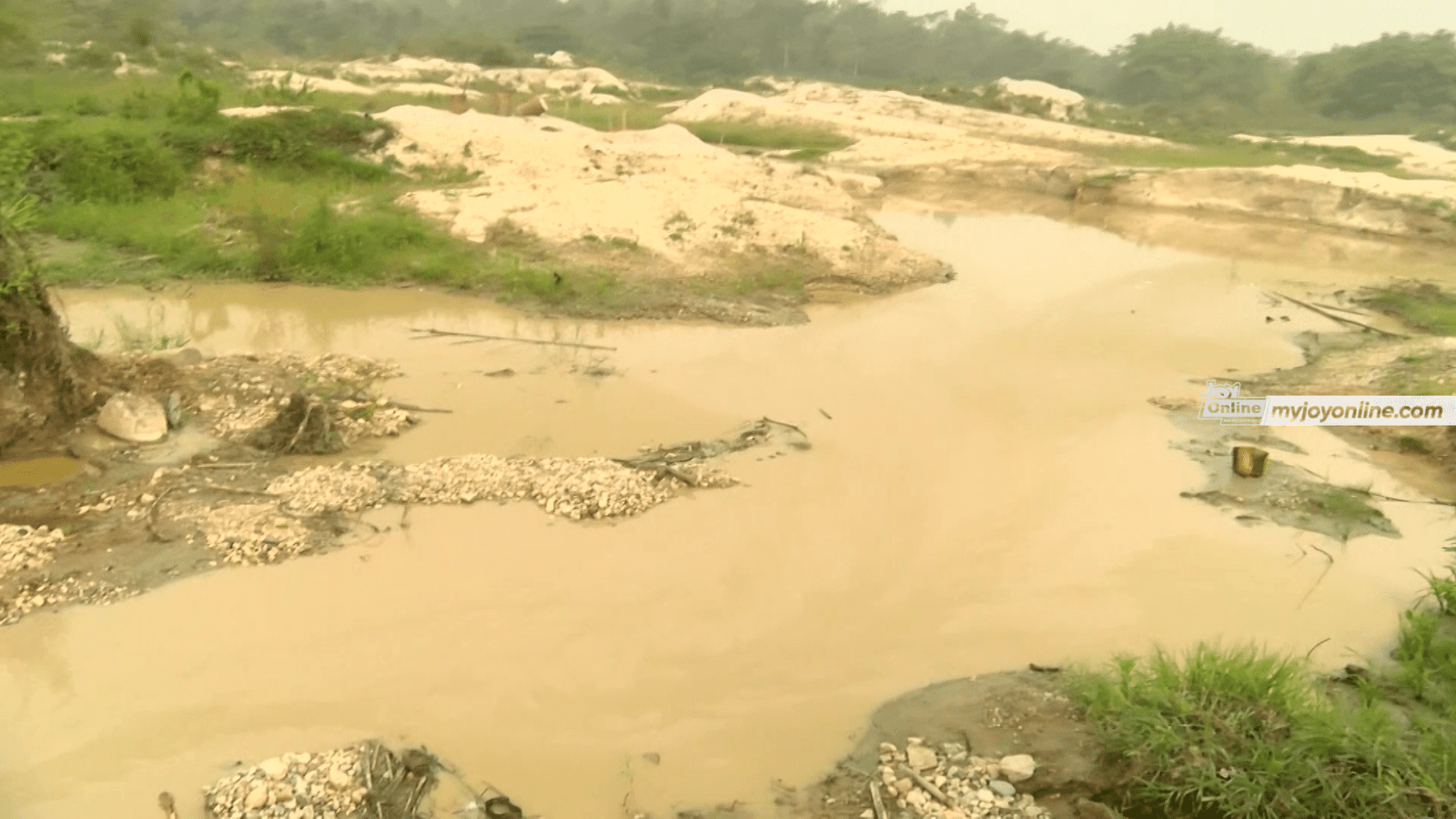
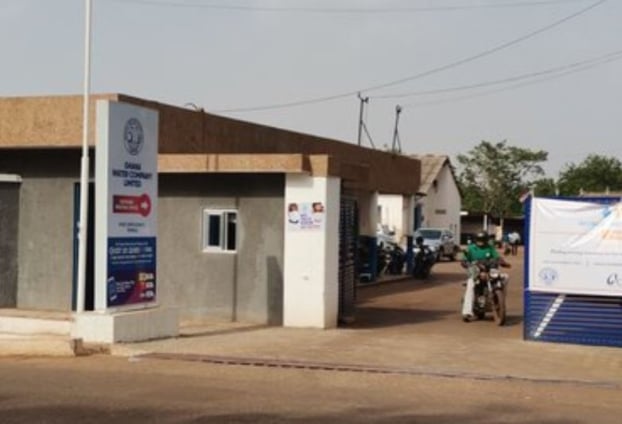
Ghana Water Company Limited (GWCL) has stated its determination to continue shutting down plants in regions affected by illegal mining if the turbidity levels of raw water exceed a critical threshold.
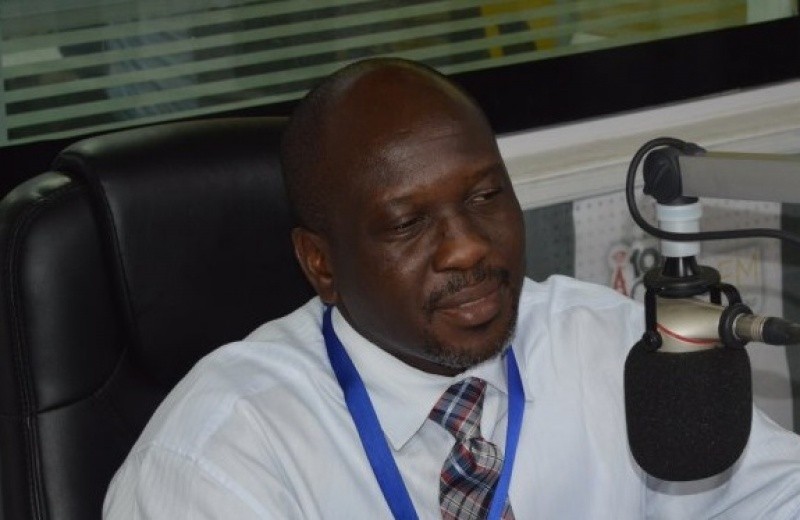
Managing Director of the utility company, Clifford Braimah, highlighted the significant effects of illegal mining on their operations and called for collaborative efforts to address this problem.
In a Public Accounts Committee hearing, he defended the company’s proposed 334% tariff increase, explaining that it aims to motivate Ghanaians to assume responsibility by deterring illegal mining activities within their communities.
“If I had my way, Ghanaians will go and chase away all the galamsayers out of their areas because once the turbidity goes up, we shut the plant. And if you have no alternative access to water, you will take the situation seriously because we stay with the people who pollute the water. And if we [GWCL] shut down, you will not even know where to go to get the water.”
“If you pollute the water and the cost of treatment goes up, why don’t you pay for it because you are making money in one breath polluting the water?”
In preparation for scheduled maintenance and repair works, the Ghana Water Company Limited (GWCL) has advised its customers in and around Kasoa to store an adequate supply of water.
The company plans to temporarily shut down two out of its three treatment plants located at the Weija Headworks on Tuesday, 4th July, 2023.
This precautionary measure aims to ensure uninterrupted water supply during the maintenance period and minimize inconvenience for the public.
The ‘important exercise’ will affect such areas as Kasoa, Weija township, Weija SCC, Nyanyano, Tuba, Tetegu, Macarthy Hill, Bortianor and surrounding areas.
A statement by GWCL said the maintenance works will be completed in 16 hours and that water supply will resume as soon as the work is completed.
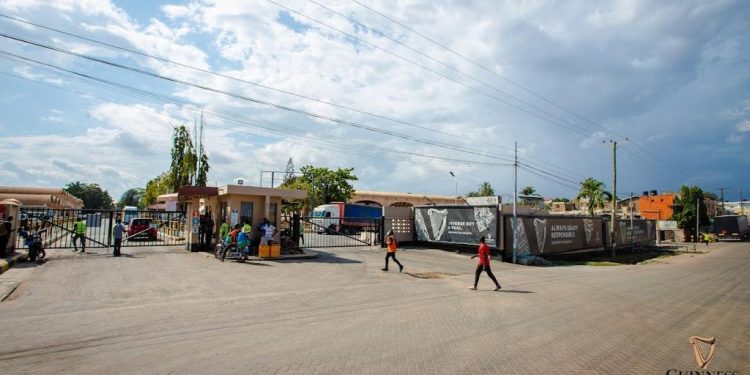
Guinness Ghana Breweries Plc (Guinness Ghana) has confirmed that water supply from Ghana Water Company Limited (GWCL) to its Achimota site was abruptly cut yesterday, Tuesday, May 9.
GWCL disconnected water supply to Guinness Ghana’s site at Achimota in Accra over alleged non-payment of bills.
According to the water distribution company, the beverage company is yet to pay a debt if GH¢6.7 million.
GWCL says it cut supply to Guinness Ghana after several caution letters to get the company to settle its debt failed.
In response, Guinness Ghana accused GWCL of taking the action without recourse to resolutions agreed upon from a meeting on Tuesday, May 9, 2023, chaired by the Minister of Sanitation and Water Resources and attended by the Managing Director of GWCL and the leadership of Guinness Ghana.
“The outcome of the meeting was to await the result of the PURC’s investigations and to hold a tripartite meeting between GGBPLC, GWCL and the Public Utilities Regulatory Commission (PURC). During this period, no disconnection was to be effected,” the company said in a statement.
The beverage company insisted that it has been fully compliant on all bills to GWCL “based on our classification under the industrial rate, pending a resolution of our petition to the PURC on the arbitrary reclassification by GWCL. Guinness Ghana has openly engaged Ghana Water Company Limited, the Public Utilities Regulatory Commission and the Ministry of Sanitation and Water Resources on numerous occasions to resolve its concerns following the arbitrary reclassification of the business in the September 2022 tariff adjustments,” Guinness Ghana added.
The Ghana Water Company Limited (GWCL) in the Volta Region has taken steps to settle its electricity debt.
So far the company has paid GHS 2 million out of its GHS 17.5 million debt.
The debt was accumulated between 2021 and 2023 making the water company the highest debtor of the Electricity Company of Ghana (ECG) in the Volta Region.
GWCL was compelled to pay after it was served a disconnection notice to clear its debt or be disconnected on Tuesday, 4th April 2023.
Both companies later had a series of engagements and agreed on a payment plan, hence, ECG rescinded its decision to cut power supply to GWCL facilities in the region.
Addressing the media, the Acting Volta Regional General Manager of ECG, Ing. Michael Buabin, explained that his outfit is not embarking on a mass disconnection exercise but a revenue mobilization exercise, therefore, for any debtor that exhibits commitment to pay, “there can be a consensus.”
“We don’t take delight in disconnecting customers but we also want to collect the needed revenue so when we engage you and there’s positive feedback, we don’t take you off the national grid but once you default or fail to present a positive solution, disconnection which is always the last resort will be done.
For example, if we disconnect GWCL, hospitals, schools, and innocent consumers who have paid their water bills will not get water supply, hence the need to engage the GWCL extensively for them to pay their bills to avoid disconnection”, he said.
Ing. Buabin indicated that the GHS 2 million paid by GWCL is just a minute fraction of the GHS 17.5 million debt and urged the company to promptly pay its bills to avoid piling up huge debts.
“The amount paid by GWCL is small compared to their debt profile but we hope they will be making regular payments to enable them to reduce or clear their debt. We will be monitoring the situation to ensure we receive frequent payments from their outfit”, he said.
Other institutions that made payments in the Volta Region include UHAS, Ho Technical University, and Abutia Stone Quarry.
The ECG has also engaged Hospitals that charge utilities as part of service bills to patients especially missionary hospitals, and security services such as the Ghana Police Service, Ghana National Fire Service, and Ghana Prisons Service in the Volta Region to settle their debts or face disconnection.
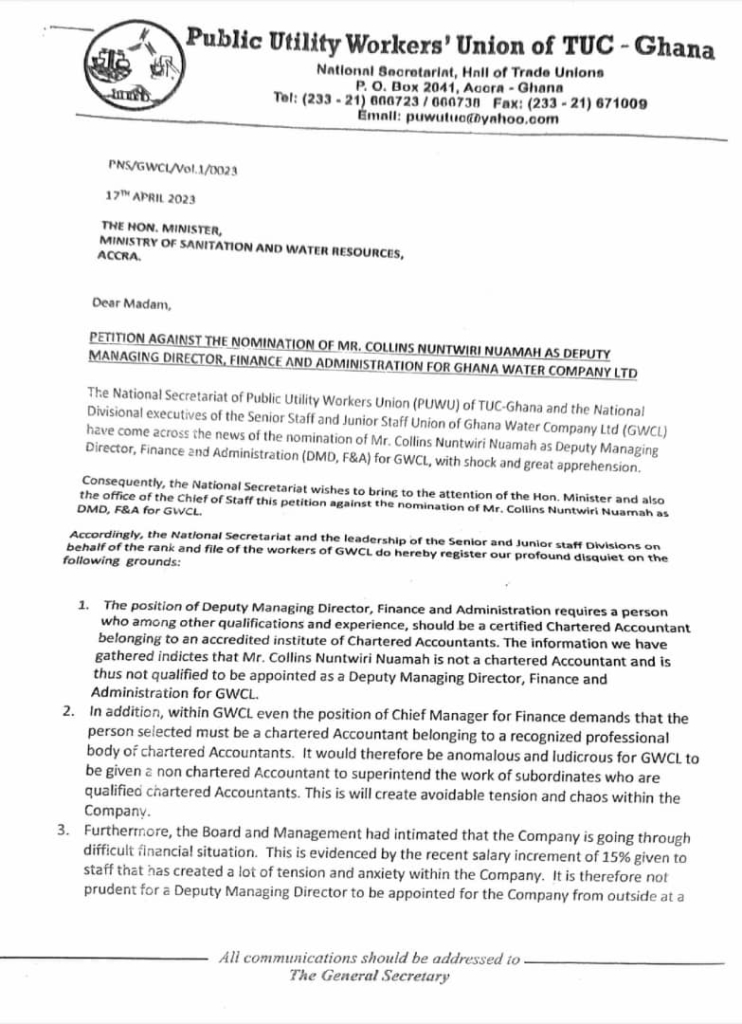
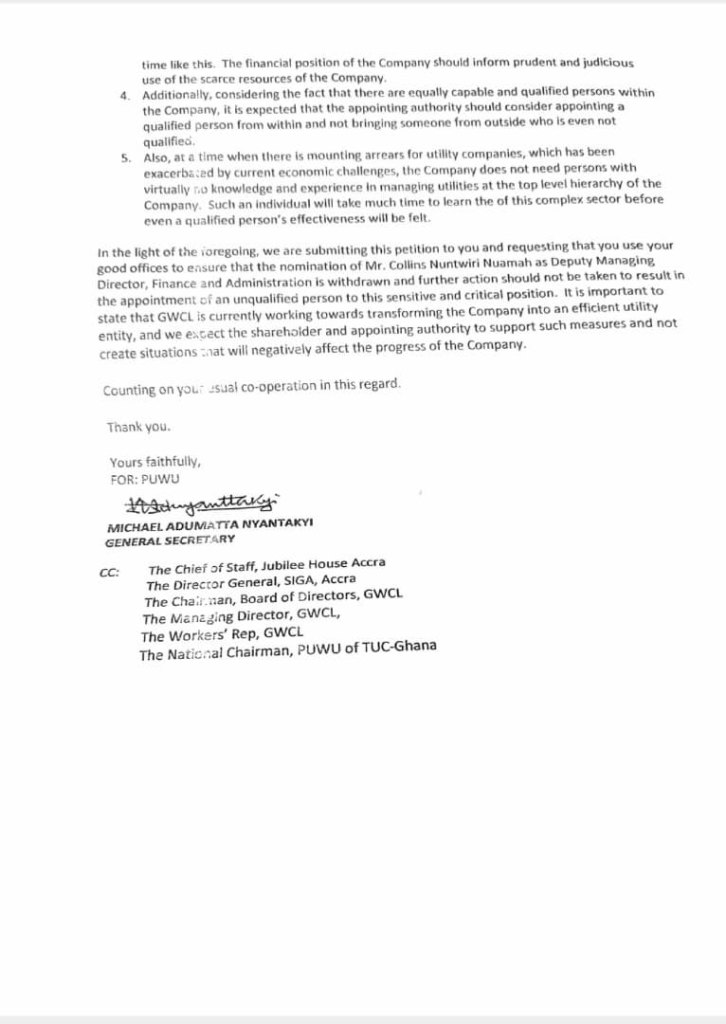
Public Utilities Workers’ Union of the Trades Union Congress are displeased with the nomination of Collins Nuntwiri Nuamah as Deputy Managing Director, Finance and Administration for the Ghana Water Company Limited (GWCL).
They have therefore petitioned the Ministry of Sanitation and Water Resources against the nomination.
According to the Union, Mr. Nuamah does not have the required qualification for the job and thus should not be considered for the position.
In press statement protesting Mr. Nuamah’s nomination, the Union said, “the position of Deputy Managing Director, Finance and Administration requires a person who among other qualifications and experience, should be a certified Chartered Accountant belonging to an accredited institute of Chartered Accountants.
“The information we have gathered indicates that Mr. Collins Nuntwiri Nuamah is not a Chartered Accountant and is thus not qualified to be appointed as a Deputy Managing Director, Finance and Administration.”
It added that “it would therefore be anomalous and ludicrous for GWCL to be given a non-chartered Accountant to superintend the work of subordinates who are qualified chartered Accountants.”
This, the Union, stressed will create “avoidable tension and chaos within the company.”
The Ghana Water Company Limited (GWCL) has started a nationwide revenue mobilisation exercise to collect all arrears owed by customers.
The company is out to collect about ¢800 million in debts as of January this year, up from ¢684 million in debts that stood on the company’s books as of January 2022.
This was when in September 2022, the Public Utilities Regulatory Commission (PURC) increased the average end-user tariff for water by 21.55 per cent, increasing the debt situation to ¢800 million.
Out of the amount, private companies and individuals account for 90 per cent, while government institutions account for 10 per cent.
According to the GWCL, whereas the government institutions had been making efforts to settle their debt, consumers in the private sector had been quoting unfavourable business conditions for the accumulation of their debts.
Teshie/Nungua
In view of that, the Managing Director of GWCL, Dr Clifford Braimah, yesterday joined a revenue mobilisation task force team from its Accra East District to collect or disconnect private industries that owed the company.
The team visited the D.U. Fresh Company, Kata Company Limited, Printex Limited, Interplast Limited and Waka Building Limited.
Interplast Limited was in good standing, but Waka Building Limited, Printex Limited and Kata Company Limited proceeded to settle part of their arrears.
However, D.U. Fresh Company, which owed ¢163,000, was disconnected for failing to settle its arrears.
Dr Braimah noted that the affected customers would be made to settle arrears in full and pay reconnection fees before they would be reconnected.
Enforcement exercise
The GWCL MD said the enforcement was successful considering how a majority of the industries were willing to settle their arrears.
He mentioned that the GWCL would not tolerate customers who refused to settle their arrears with the excuse that they did not have water flowing through their taps.
“We are not a prepaid company; we are a postpaid company.
This means that we collect bills on water consumed,” he said, explaining that what had been consumed involved the usage of chemicals and electricity by the GWLC.
Dr Braimah, however, urged the company’s customers to utilise its online platforms such as the GWCL App or pay via mobile money for convenience.
He expressed the hope that the GWCL would mobilise more than 50 per cent of money owed it nationwide by the end of April.
Illegal activities
At Tema, the Deputy Managing Director of GWCL in charge of Operations, Peter De-veer, said arrears as of April 3, 2023, was ¢140 million.
He noted that it had become expensive to produce water because of activities such as illegal mining, sand winning and farming either inside or close to the river bodies.
Mr De-veer said the GWCL used the foreign exchange to procure chemicals to treat the polluted water to meet World Health Organisation standards.
He noted that such activities increased the turbidity of the rivers where GWCL extracted water for treatment.
The Volta Regional Directorate of the Electricity Company of Ghana (ECG) has mobilised GH¢12.5 million from its debtors within one week of debt collection operation in the region.
The amount realised is above the initial target of GH¢5 million, representing 250 percent of the revenue mobilisation.
Benjamin Obeng Antwi, the Regional Public Relations Officer, who disclosed this to the Ghana News Agency in Ho, said the second-week operation was being finalised.
The ECG is embarking on a revenue mobilisation drive to retrieve a debt of GH¢5.7 billion across the country, of which customers in the Volta and Oti regions owe about GH¢219 million.
The exercise is being undertaken in 11 operational districts across the two regions and was yielding the desired results, he said, with two more weeks to go.
Meanwhile, the Regional Directorate has served the Ghana Water Company Limited (GWCL) a demand notice to redeem its GH¢17 million accrued between 2021 and till date.
The entire Kpeve headworks alone owes the highest amount of about GH¢13 million in power arrears with the least being GH¢68.48.
The notice, which was signed by Michael Buabin, the Acting General Manager of ECG, Volta Region, sighted by the GNA, is urging the GWCL to pay up its bills on or before April 4, this year, or face disconnection across its offices and generating facilities in the region.
The letter partly read: “We are compelled to serve you a disconnection notice following PURC Regulations LI 2413, 37, sub-regulation (2), which states that a public utility that seeks to disconnect a service under paragraphs (b) and (c) of sub-regulation (1) shall give the consumer written notice of disconnection at least three working days before disconnecting the service.”
“In line with the above regulation, you are required to settle all arrears within six working days or your facility will be disconnected on Monday, April 4.”
In an interview with the GNA, Mr Buabin reiterated that ECG never took delight in disconnecting its clients but as a business entity, which bought power to trade for profit, it could crush when unpaid bills piled-up uncollected.
He said disconnections as the last resort was carried out to prevent the customer from accruing more debt and to enable the Company to gather more revenue to keep the electricity supply chain running.
“We want to make Volta Region the hub of excellent customer service so we want to ensure stable power supply in the region and the revenue from our customers will enable us to complete pending projects and initiate new ones,” he said.
Child Sanitation Diplomat, Maame Akua Ohenewaa Gyimah, has advised the public, especially children, to desist from wasting water to ensure that other communities get access to clean water.
Maame Gyimah indicated that treating water by the Ghana Water Company Limited (GWCL) was expensive, therefore, wasting it had a negative effect on the country’s finances and hindered extension of the service to communities, which need it.
She gave the advice during a tour of the GWCL Kpong Treatment Plant with her mates from the Dawhenya Methodist ‘B’ Basic School as part of the celebration of 2023 World Water Day, which is marked globally on March 22.
The tour was organized by Kings Hall Media in collaboration with the Coalition of NGOs in Water and Sanitation (CONIWAS).
The theme for 2023 World Water Day is “accelerating the change to solve the water and sanitation crises.”
She said other practices such as washing, open defecation, disposal of refuse, and illegal mining in water bodies, among others, were some of the practices that must be stopped “if Ghana wants to meet the Sustainable Development Goals on water and also provide potable water to its citizens.”
She said the tour of the Kpong Treatment Plant was an eye opener on the expensive processing of raw water before reaching households and pledged to encourage children and adults to be responsible in their water usage.
Ms. Sharon Quaye, Programme Manager, Kings Hall Media, said children must know the importance of water as humans could not live without it and reiterated the need to conserve it.
Ms Quaye said Kings Hall Media and partners organized the tour for the pupils to inculcate good sanitation practices and to appreciate where the water they used came from and how it was processed.
She expressed the hope that the children would fall in love with good sanitation practices and serve as ambassadors of change among their peers, family and community.
Mr. Prince Osei, Technical Assistant at the GWCL Kpong Treatment Plant, took the children through the ten stages of water treatment, saying the company had put in measures to ensure that consumers received only the best water in line with the Ghana Standards Authority and Food and Drugs Authority’s requirements.
He said to ensure the quality was maintained, samples were taken every hour for testing for all the stages of treatment.
Mr. Osei said the stages of water treatment were screening of the raw water, which was then pumped through a 72-inch pipe to the other stages of aeriation, segmentation, filtration, and disinfection.
It also goes through the Power of Hydrogen, storage, laboratory test, and distribution through the various booster stations, he added.
The Ghana Water Company Limited (GWCL) plans to acquire the latest technology to help detect the quality of water flowing to homes.
According to the company, this will help ensure that only safe water is made available for consumption.
“We are picking equipment that will help us with water quality in real-time. So we will be measuring the raw quality at every stage of the production process till it gets to our homes,” the company said.
Head of Communications of GWCL, Stanley Martey made this disclosure at the 21st International Congress of the African Water Association (AfWA) and 7th Faecal Sludge Management Conference in Abidjan on Tuesday.
He explained that the GWCL is in talks with companies to help acquire the needed technology.
“So we are in negotiations with companies that can help us mount technology that can help us get all this information in real-time,” he said.
The AfWA conference brought together experts, engineers, technicians, researchers, and multiple stakeholders from both public and private sectors and other stakeholders to discuss water and sanitation challenges in Africa.
Reports by JoyNews showed the brownish nature of water that residents of various communities have to depend on and the health implications for the people.
Some members of the community walk for hours in search of water and some teenage girls are forced to miss classes when they are menstruating because of lack of sanitary pads and water.
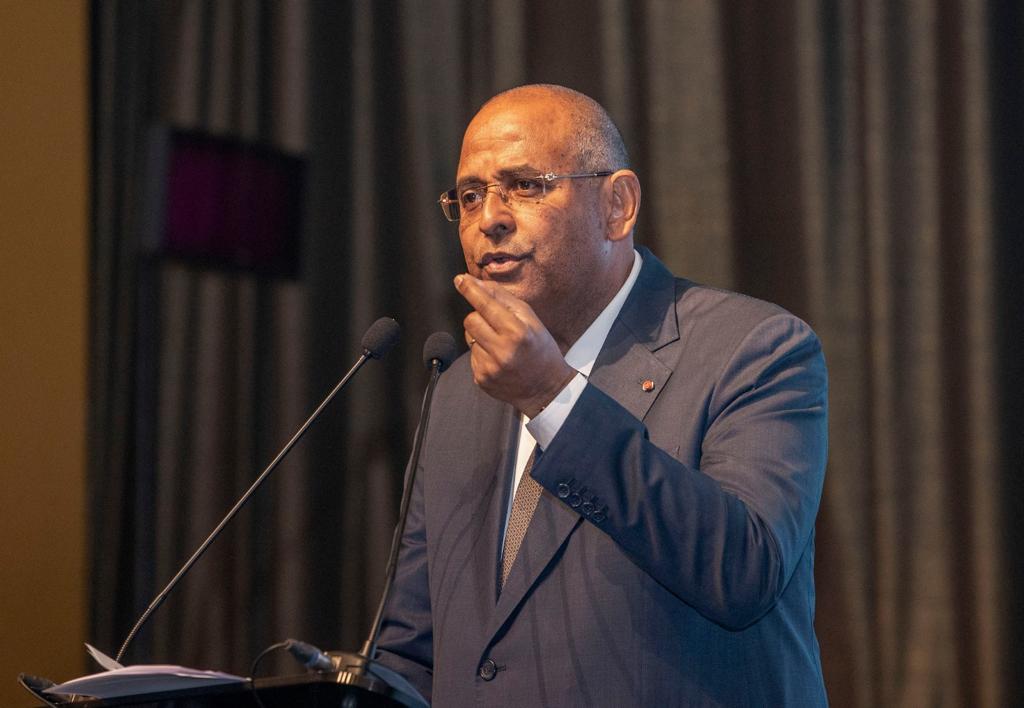
However, Prime Minister of Côte d’Ivoire, Patrick Jérôme Achi believes safe water should not continue to be a problem in Africa if African countries adopt some measures.
Prime Minister of Côte d’Ivoire, Patrick Jérôme Achi
Outlining what he called the “panacea to get safe water to all homes” ahead of the 2030 declared year, he said, “Africa must prioritise building appropriate structures for the treatment and litigation of water.”
“There should also be proper use of waste for renewal resources so that it can be used as energy in the rural areas,” he said.
For his part, the President of AfWA, Dr Eng Silver Mugisha urged President Akufo-Addo to act on the recommendations from such events and not only outline them in their policies.
He stressed that “our actions have the power to change the African water and sanitation sector and inspire others in our lives to get up and take action.
Dr Mugisha advised the President to invest in technological innovation, develop sustainable infrastructure financing, strengthen people and systems and inculcate a strong continuous improvement culture.
At the end of the event, the Africa Water Association (AfWA) was changed to Africa Water and Sanitation Association.
The Ashanti regional chapter of the Ghana Water Company has urged its customers to comply with them in their quest to supply water to the Kumasi Metropolis on regular basis.
According to a release signed by the regional PRO, Mr. Ebenezer Padi Narh, the company’s inability to supply water on a regular basis to the Kumasi Metropolis since January 9th, 2023, is a result of ECG’s inability to supply adequate power to the Barekese Water Treatment Plant and Achiase Booster station.
“The GWCL deeply regrets the inconvenience the situation has caused and however assures the general public that water supply will resume in full when ECG restores power to the production centres.”
Read the full release below
FOR IMMEDIATE RELEASE TUESDAY, 10TH JANUARY 2023 PRESS RELEASE
WATER SITUATION IN THE KUMASI METROPOLIS
1. Reference to an ECG Maintenance Release on Monday, January 9th, 2023, The Management of Ghana Water Company Limited (GWCL), Ashanti Region, wishes to inform our Cherished customers and the public, that our intermittent supply of water to the Kumasi Metropolis since Monday, 9th January 2023, is as a result of ECG’s inability to supply adequate power to the Barekese Water Treatment Plant and Achiase Booster station.
2. The Electricity Company of Ghana (ECG) explains that the dedicated lines which supply power to Barekese and Achiase has encountered some challenges.
3. Management of Ghana Water Company Limited, sincerely apologize to our cherished customers and the public, as Engineers of GWCL and ECG are working assiduously to rectify the challenges as soon as possible.
4. Management assures the general public that water supply will resume in full when ECG restores power to the production centres.
5. The GWCL deeply regrets the inconvenience the situation has caused.
The Ghana WaterCompany Limited (GWCL) has announced a 48-hour interruption in the supply of water to certain parts of Accra.
The development, according to the GWCL, is due to planned maintenance works on the Tema Booster Station.
In a statement, the company explained the work will result in a shutdown from Wednesday, 7 December 2022 to Friday, 9 December 2022.
The statement noted engineers are scheduled to install new equipment which includes a heavy-duty pump at the Tema Booster Station which will improve the volumes of water distributed in the district.
The affected areas will include Tema, Industrial Area, Baatsonaa, Coca-Cola, Kasapreko, Lashibi, Klagoon, Sakumono, Ashaiman, Adjei-Kojo, Borteyeman, and Santoe.
Others are Trassaco, Afresco Estate, Manet Court, Regimanuel Estates, O’Reilly Senior High School, Airport Hills, Martey Tsuru and surrounding communities.
Meanwhile, GWCL said it has rented water tankers to supply water to essential service providers like hospitals and schools to forestall any eventuality.
“Consumers in the affected areas have also been encouraged to store some water while water is flowing now.
The supply of water is expected to resume immediately after the mission is accomplished,” the statement admonished.
Ghana Water Company Limited (GWCL) in the Eastern Region, has taken twenty-one (21) customers to court for nonpayment of a total of Ghc279,755.83 as of June this year.
EREDEC, KES hotels, KAMA Group of Companies, Antarctic Contract Works Ltd., Trinity Presbyterian Church, Adweso, Donewell Methodist Church in Jumapo, and Jumapo Health Center are among the notable customers who have been hauled before the court.
The GWCL has already disconnected these customers, but they have refused to pay the company’s debt for water consumed, thus the legal action.
Her Lordship Nana Ama Fynn, presided over by the Koforidua District Court, has referred approximately nine of the cases for resolution to alternative dispute resolution.
The Eastern Regional Chief Manager of GWCL, Ing. Asomani Nyarko, indicated that the company will not relent in this pursuit of retrieving all arrears from customers who are owing, whether disconnected or active.
He entreated customers who are owing to pay up, contact the nearest GWCL office to negotiate a payment plan before they are made to face the law.
“This exercise is targeted at all our customers owing in the Eastern Region, whether disconnected or active”., he added.
Meanwhile, Management of GWCL is still in court with the assembly member and the Chief of Oterkpolu for allegedly inciting residents not to pay water bills after their petition for free water supply was declined by the GWCL.
Communities around the Bukunor water treatment plant including Oterkpolu and Bukunor have refused to pay water bills since 2019 stating that, they are entitled to free water supply since raw water is pumped and treated on their land for distribution to other parts of the Eastern region.
They have since threatened GWCL over any attempt to disconnect the Communities.
The situation coupled with hostility meted out to workers of GWCL at the Bukunor Water treatment plant got the Eastern Regional Security Council (REGSEC) to intervene and attempted to resolve the impasse but to no avail forcing GWCL to take legal action.
A number of residents in Weija and its environs in the Weija/Gbawe Constituency have been displaced following the spillage of the Weija Dam by the Ghana Water Company Limited (GWCL).
Most homes within the catchment area have been flooded.
Some residents who spoke to media on the condition of anonymity say they were not informed by GWCL of the spillage that occurred early Monday, October 3, 2022.
The maximum level of water the dam is built to hold is about 46 feet, but the level came up to 48 feet, thereby threatening its safety, hence the decision to spill.
Meanwhile, the GWCL has indicated that the recent spillage was brought about following the recent heavy rains but “it is in control”.
GWCL said, the situation has gravely affected its operations leading to “considerable havoc to some water treatment plants” across the country.
The management of the GWCL assured the public that despite the challenges, it is in control and has put in measures to ameliorate the situation to minimize the impact on consumers.
The management explained further, “the Weija dam is currently at a level of 49.5ft as against the maximum operating level of 48ft. Spillage normally begins when the level gets to 46.5ft. As a result, four (4) spill gates have been opened to safeguard the integrity of the dam, save the dam from collapse, and save lives and properties.”
The Tema Metropolitan Assembly (TMA), working together with the Ghana Water Company Limited (GWCL), has initiated a relief package to deal with the water challenges residents in Tema Manhean are encountering with the provision of free water tanker services.
Mr Frank Asante, the TMA Public Relations Officer, disclosed to the Ghana News Agency that areas such as Ashaiman B Park, which was upstream, were bedevilled with potable water supply challenges hence the need to bring some relief to residents to prevent the outbreak of communicable diseases.
Mr Asante noted that the free water supply, which started some two weeks ago, would be reviewed, improved and sustained until a permanent solution was found to deal with the supply challenges.
He said each electoral area with water challenges was being supplied with two water tankers twice a week under the initiative.
The TMA PRO noted that the water was supplied into some reservoirs in the electoral areas with the guidance of the Assembly Members, who then ensure that every resident in their area gets some for free.
He said Mr Yohane Amarh Ashitey, Tema Metropolitan Chief Executive, had been engaging the Tema Regional Manager of the GWCL and his team of engineers on the issue during which the free water supply was agreed on as a temporal measure.
He said the team had also held a series of engagements with the traditional leaders, residents and other stakeholders to explain the causes of the perennial water shortage before rolling out the tanker services.
According to Mr Asante, the GWCL has identified in some communities that the population has outgrown the water supply system leading to no-flow at the upstream while those in the downstream areas were able to receive a supply.
He further said according to the engineers, people had joined the mainline, which had lowered the pressure making it difficult to reach the higher grounds.