Management of the Ghana Maritime Authority (GMA) has announced that Ghanaian seafarers are losing their jobs due to new Seafarer Identity Documentation and visa restrictions.
According to the Authority, Ghanaian seafarers are in high demand worldwide, but recent restrictions, including U.S. visa policies and Brazil’s insistence on updated identification, have cut short some contracts and discouraged recruitment.
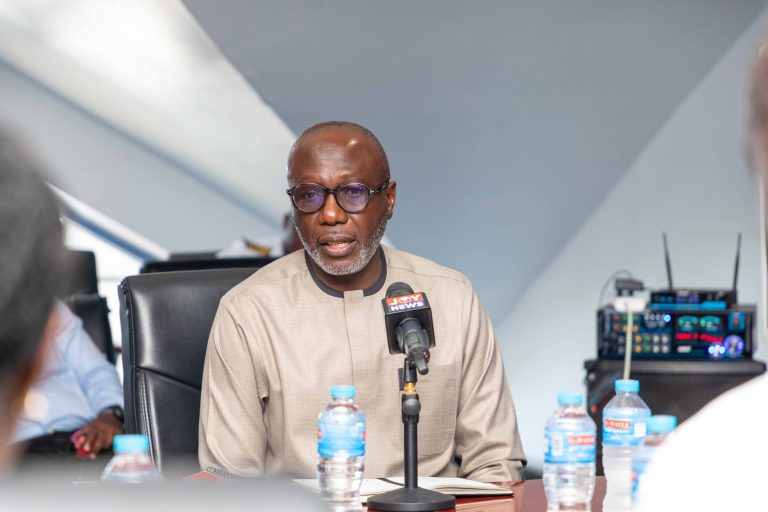
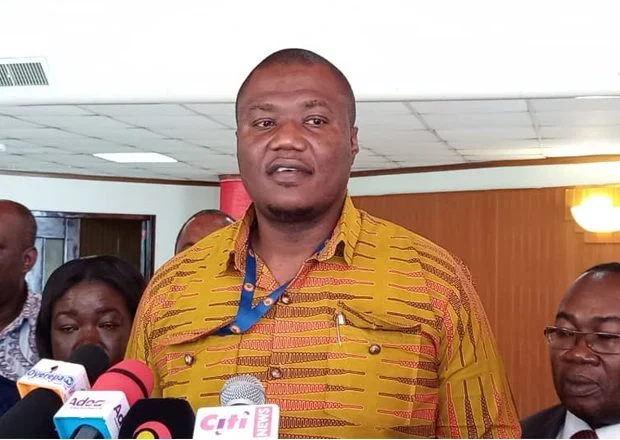
At a brief ceremony held to host the Deputy Minister for Transport, Dorcas Affo-Toffey, during her official tour, the Director General of the Authority, Naval Capt. Kamal-Deen Ali (Retired) underscored the harsh impact of the restriction while lauding the government for resolving the U.S. Visa issue.
“When the US Visa restriction was introduced, most of our seafarers were now losing their jobs. Either their contracts were being terminated or their ability to renew was becoming a challenge. You must have a Visa for major countries when you are being employed as a seafarer and US is one of the major countries. In the case of crew ships as many as over 50% of crew ships will definitely dock in the United States several times in a year so when you are a seafarer on board then you must have a visa.”
“The maritime sector is international. Luckily for us in Ghana our seafarers are counted as one of the best in the world. We rank in the first five.” Capt. Rtd Kamal Deen noted.
Since Brazil is one of the countries with a high docking record of shipping lines, Capt. Rtd Kamal Deen is hopeful that a resolution will soon be reached regarding the Brazil situation.
“For the Brazil situation it has to do with a special card that comes with a chip. It is part of global requirement but we are yet to migrate unto that system as a country. So, we’d appreciate a waiver which will allow other identification documents while the country works to migrate to that platform.”
Monitoring and coordinating inland and offshore maritime activities has become increasingly costly, given the extensive oversight responsibilities of the Authority as mandated by the Ghana Maritime Authority Act, 2002.
The Authority has therefore called on the government for support to ensure effective maritime control and regulation.
“In the long term, we believe that we’d need government support especially in the area of clearing tree stumps in our in-land waters, which often causes accidents and the mapping of inland water areas.”
Meanwhile, Dorcas Affo-Toffey, Deputy Minister for Transport, has pledged her full support to the Authority and commitment to continuous engagement.
The visit by Deputy Minister forms part of efforts to familiarize herself with agencies under her ministry.
Some of the core duties of the Ghana Maritime Authority include Maritime Safety & Security, Seafarer regulation and certification to ensure compliance with global standards marine pollution control, just to list a few.
The Authority said it will continue to enhance collaboration with other maritime bodies such as the Ghana Ports and Harbours Authority, Ghana Shippers Authority, the Ghana Navy, Volta River Authority and others to improve Ghana’s maritime industry.
It will be recalled that the US imposed visa restrictions on Ghana and other countries in July this year. The affected countries were slapped with a maximum three-month single-entry visa and other limitations. In the specific case of Ghana, the Trump Administration said they were reacting to many years of visa overstays, mainly by students.
In July, the U.S. Department of State—Bureau of Consular Affairs limited the number of entries and duration given under non-immigrant visa classifications.
Ghanaian visa applicants, including those applying for B-class visas covering business and tourism travel, will be issued single-entry visas valid for just three months. It emphasized that they can no longer access the 5-year visa and multiple-entry.
The guidelines were published under the U.S. Visa, which revealed that Reciprocity and Civil Documents by Country for Ghana also affect student visa applicants.
It noted that the F-1 visa holders, who are typically enrolled in full-time academic programmes in the U.S., will now be issued visas that allow for only one entry and expire after three months.
Additionally, diplomats and government officials will, however, continue to receive multiple-entry visas with validity ranging from 24 to 60 months.
The K1 visa, issued to the foreign-citizen fiancé(e) of a US citizen intending to marry within 90 days of arrival in the United States, and the K2 visa, provided to the unmarried dependent child (under 21 years old) of a K1 visa holder, are single-entry visas that will be valid for 6 months.
The K3 visa, for the foreign-citizen spouse of a US citizen, and the K4 visa, for their unmarried dependent child (under 21 years old), are multiple-entry visas that will be valid for 24 months.
All other visa applicants, including those applying for B-class visas, which cover business and tourism travel, will now be issued single-entry visas valid for just three months.
In reaction to the US’ new policy that affects Ghana and Nigeria, the Vice President of IMANI-Africa, Bright Simons, quizzed whether or not Ghana and Nigeria can retaliate.
“Given the scale and scope of the restrictions this time around now, citizen interest is likely to be much higher putting pressure on the government to openly discuss the measures it intends to take in response,” he noted while revealing how diplomatic channels resolved similar actions by the US in the past.
He called on the government to provide statistics on whether or not US citizens coming to Ghana do not get long-term, multiple-entry visas as often as Ghanaian citizens visiting the US do.
“Thus, they are trying to frame the issue as one of “reciprocity”. Something that, per policy, they ought to review regularly. Our governments should publish stats on this. Is it true or not?”
“The visa regimes of some other places Ghanaians like to visit, like Europe, China, and the Middle-East, are not any more liberal. Getting long-term, multiple-entry visas for these places has been quite hard. It may be hard to justify retaliation against the US when visa rules for other places seem just as tight or even tighter. Except, of course, that there is no rule that says that retaliation must be symmetrical,” he added.
The development comes at a time when U.S. President Donald J. Trump has imposed a fifteen percent (15%) ad valorem tariff on Ghana’s exports.
This means that Ghanaian goods shipped to the U.S. will be charged a 15% tax based on their price. Thus, a product at $100, would be $115 as a result of the $15 tariff. The U.S. government explains that the new development forms part of the efforts to protect its economy, as the country buys more goods from other countries than it sells to them.
According to the Executive Order, “These modifications shall be effective with respect to goods entered for consumption, or withdrawn from warehouse for consumption, on or after 12:01 a.m.” The policy is expected to reflect on Ghanaian goods entering the U.S. in the coming days, which will affect many countries, including Nigeria, Zimbabwe, Zambia, Uganda, Mozambique, Mauritius, Malawi, Lesotho, and Madagascar.
Also, countries such as South Africa and Libya face a 30 percent tariff, while Tunisia will face a 25 percent steeper duty. Meanwhile, the Ghana Export Promotion Authority (GEPA) and Ghana’s Trade Ministry are yet to react to the new tariff. The new tariff adjustment comes at a time when the Ghanaian government is implementing tax reforms to ensure the elimination of successive charges of taxation that increase the cost of goods and services.
Although the measure is premised on the principle of reciprocity, President Trump insisted in the executive order that the United States had been unfairly disadvantaged by trade barriers erected by other countries. This policy affects numerous Ghanaian exports, notably those under the African Growth and Opportunity Act (AGOA), which previously allowed duty-free access to the U.S. market.
Ghanaian officials have criticized the move, arguing that the U.S. cannot claim the tariffs are to protect domestic industries. Ghana is not facing the issue in isolation; as such, the African Union and the African Continental Free Trade Area (AfCFTA) are coordinating a collective response.
Some African nations, such as Lesotho, could face import duties of up to 50 percent. The African Growth and Opportunity Act (AGOA), which was passed by the U.S. Congress in 2000 to provide duty-free access for African exports to the U.S. market, remains in effect but faces new scrutiny in light of the latest U.S. trade policy shift.
In 2022, two-way trade between AGOA members and the US exceeded $46 billion, with $13.5 billion more in imports than exports. That year, AGOA recipients exported $30 billion worth of goods to the US, of which $10.2 billion were sold under the duty-free AGOA preference.
However, with AGOA’s framework set to expire in September, there are growing concerns that the Trump administration’s stance may hinder any renewal. The U.S. government in May announced a new 10% tariff on exports, but the then U.S. Ambassador to Ghana, Virginia Palmer, insisted that the new global tariff adjustments could benefit Ghana, unlike other countries.
In an interview with Citi News on Monday, May 26, she explained that the 10% tariff on exports to the U.S. is in favor of Ghana, as the nation’s key exports, oil and gas, are not affected, as it is imposed on rival countries.
“There were 10% applied globally, which the new US administration has taken, that may in the short term [be] to Ghana’s advantage, vis-à-vis its competitors. Oil and gas, which is being [a] major exporter to the US, is not subject to the tariff. If Ghana faces a 10% tariff, Bangladesh and Vietnam face 47% and 63%,” she said.
According to her, Ghana is currently in a better position in the U.S. market as compared to 60 countries that are facing a much higher rate of the 10% imposed tax. “There were 60 countries where tariffs were much higher than 10%, which may be an advantage for Ghana in the near term. I hope that Ghana will be the one making that point to the American legislature when it expires at the end of September [2025],” she added.
Virginia Palmer therefore urged the country’s leadership to seize the advantage to persuade the U.S. government to renew a trade benefit before its expiry in September this year. She emphasized that Ghana remains a valued partner. Trade analysts, on the other hand, suggest the U.S. is unintentionally nudging African countries toward deeper engagement with China.
In July, The U.S. Department of State—Bureau of Consular Affairs limited the number of entries and duration given under non-immigrant visa classifications.
Ghanaian visa applicants, including those applying for B-class visas—covering business and tourism travel—will be issued single-entry visas valid for just three months. They can no longer access the 5-year visa and multiple-entry. The updated guidelines, published under the U.S. Visa, reveal that Reciprocity and Civil Documents by Country for Ghana also affect student visa applicants.
F-1 visa holders, who are typically enrolled in full-time academic programmes in the U.S., will now be issued visas that allow for only one entry and expire after three months. Diplomats and government officials will, however, continue to receive multiple-entry visas with validity ranging from 24 to 60 months.
The K1 visa, issued to the foreign-citizen fiancé(e) of a US citizen intending to marry within 90 days of arrival in the United States, and the K2 visa, provided to the unmarried dependent child (under 21 years old) of a K1 visa holder, are single-entry visas that will be valid for 6 months.
The K3 visa, for the foreign-citizen spouse of a US citizen, and the K4 visa, for their unmarried dependent child (under 21 years old), are multiple-entry visas that will be valid for 24 months. All other visa applicants, including those applying for B-class visas, which cover business and tourism travel, will now be issued single-entry visas valid for just three months.
The Ministry of Foreign Affairs has debunked reports that it is responsible for the United States government’s revision of the reciprocity schedule for a considerable number of African countries, including Ghana.
The ministry noted that, consistent with bilateral arrangements, US passport holders are entitled to a maximum visa validity of five years, and in most instances, five-year multiple-entry visas are issued upon request. “Some applicants, however, apply for single-entry visas owing largely to limited validity of their passports,” a statement released by the Ministry read.
Besides the maximum five-year multiple visas, Ghana also issues multiple-entry 6-month, one-year, two-year, three-year, and four-year visas based on various considerations. From January 2025 to date, 40,648 visas have been issued by Ghana’s missions in Washington, D.C., and New York. Out of this, 28,626 are multiple-entry visas to Ghana.
The statement further indicated that “The official statistics clearly demonstrate that, contrary to false narratives, Ghana has issued, on average, an impressive 70.42% of multiple long-term visas to US passport holders, consistent with our bilateral arrangements.”