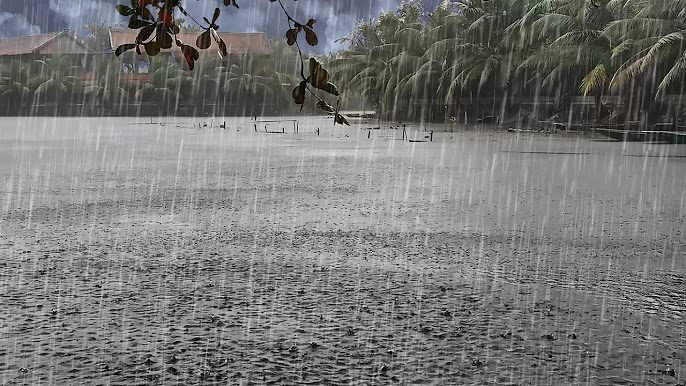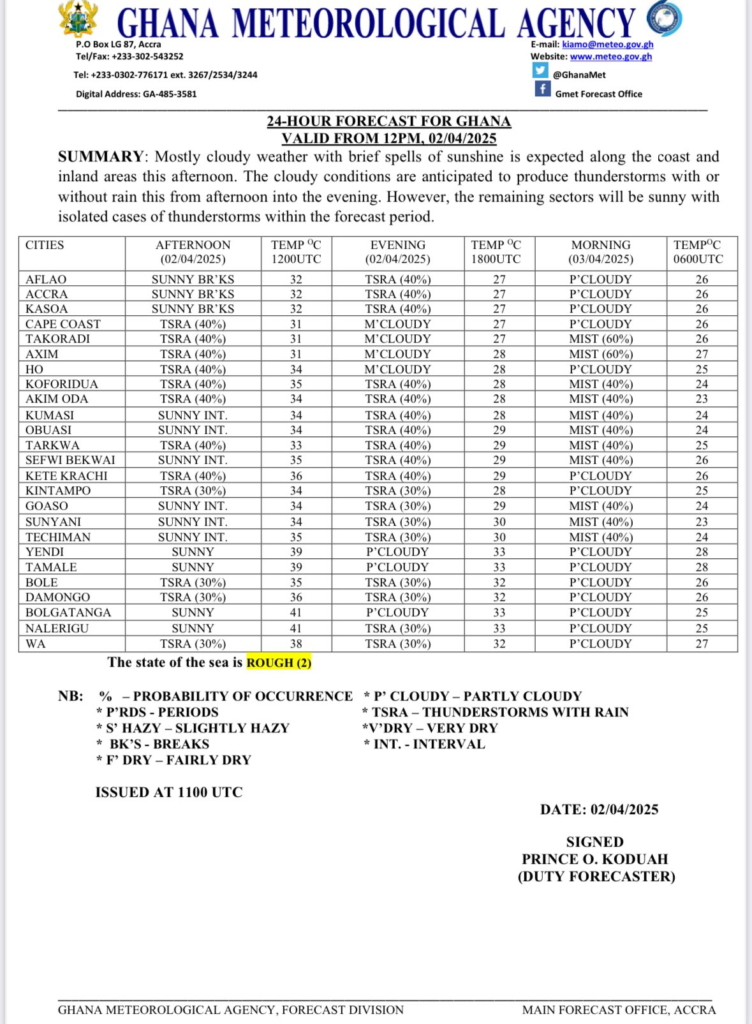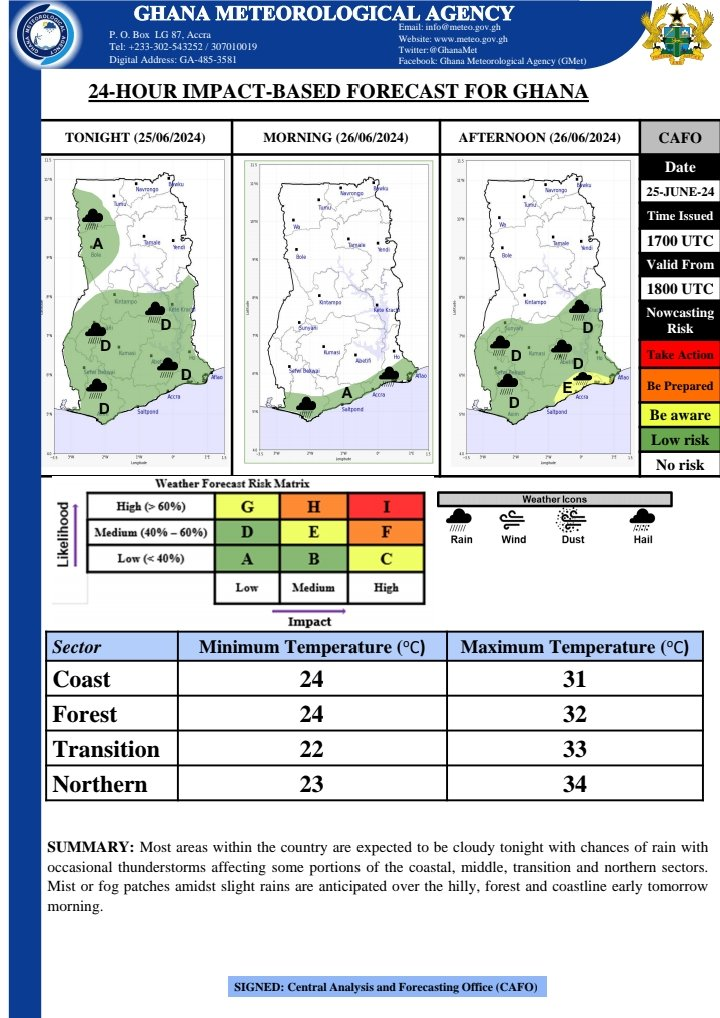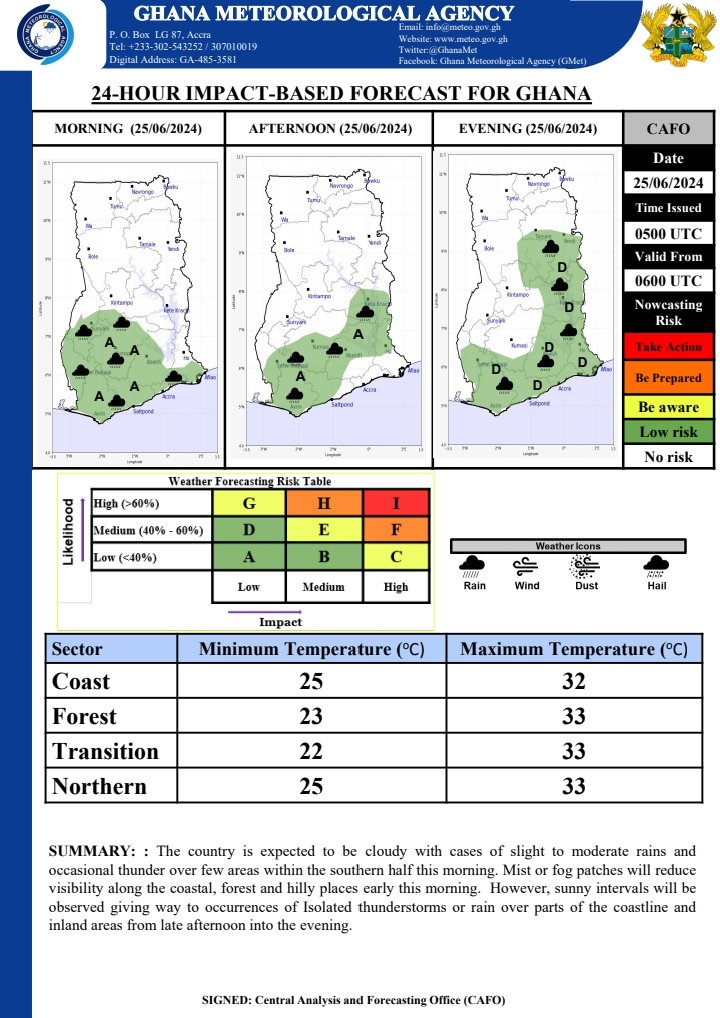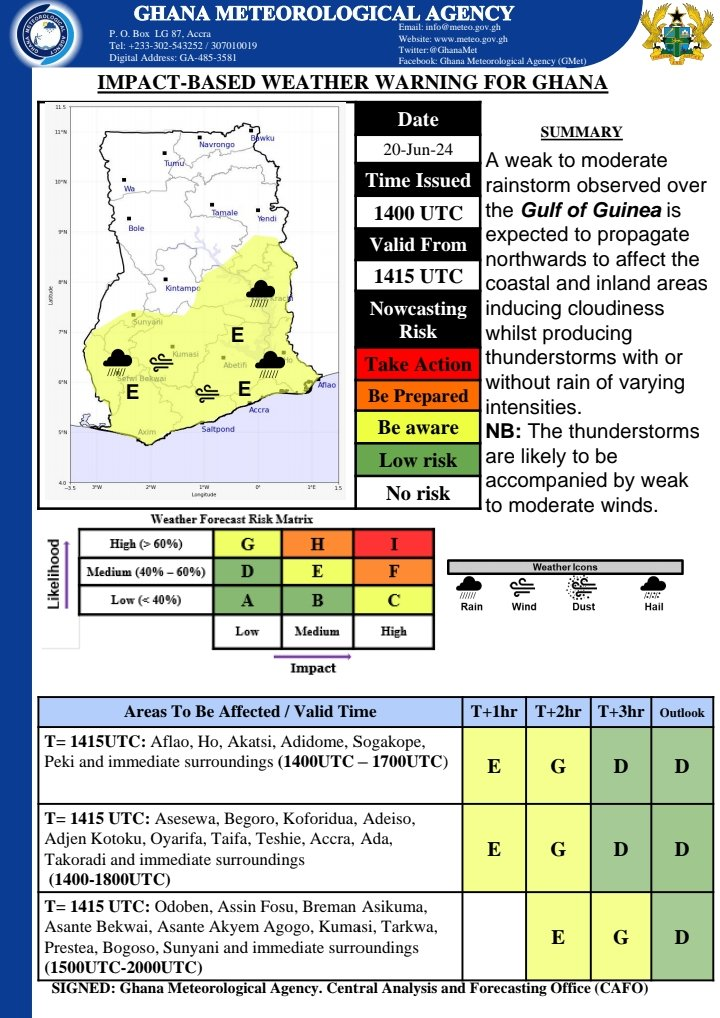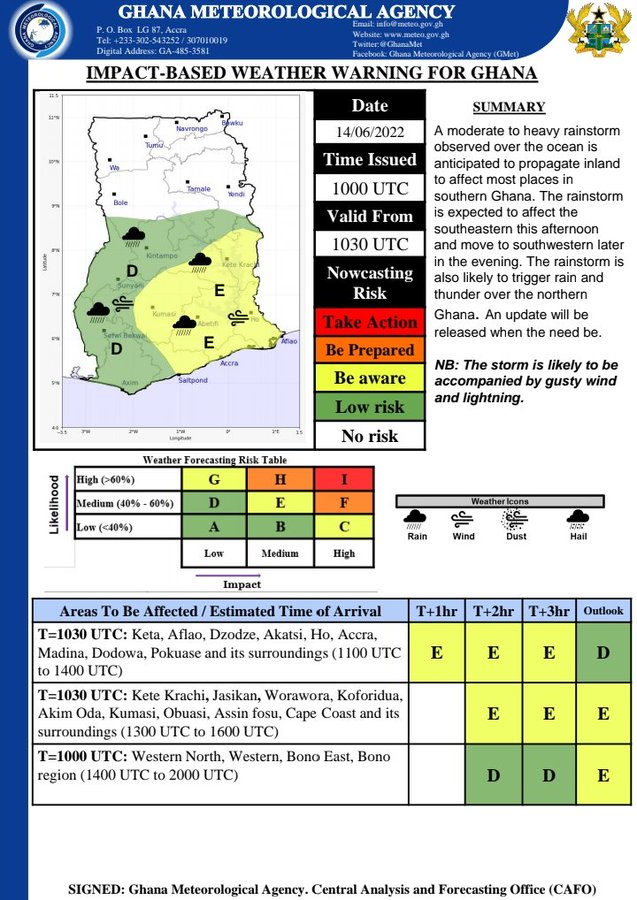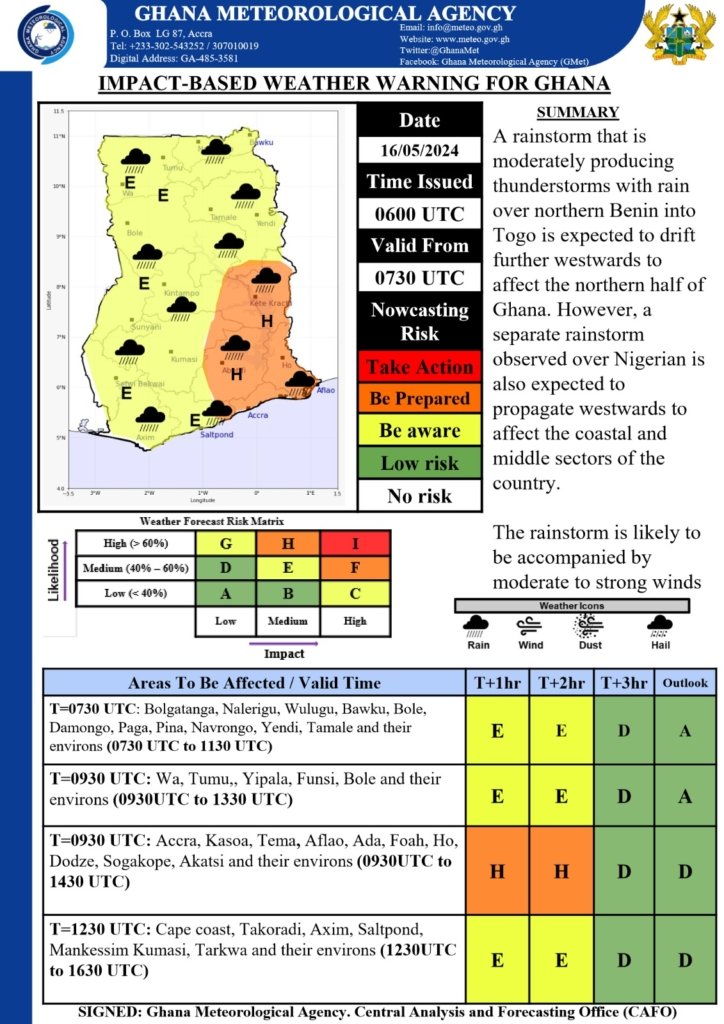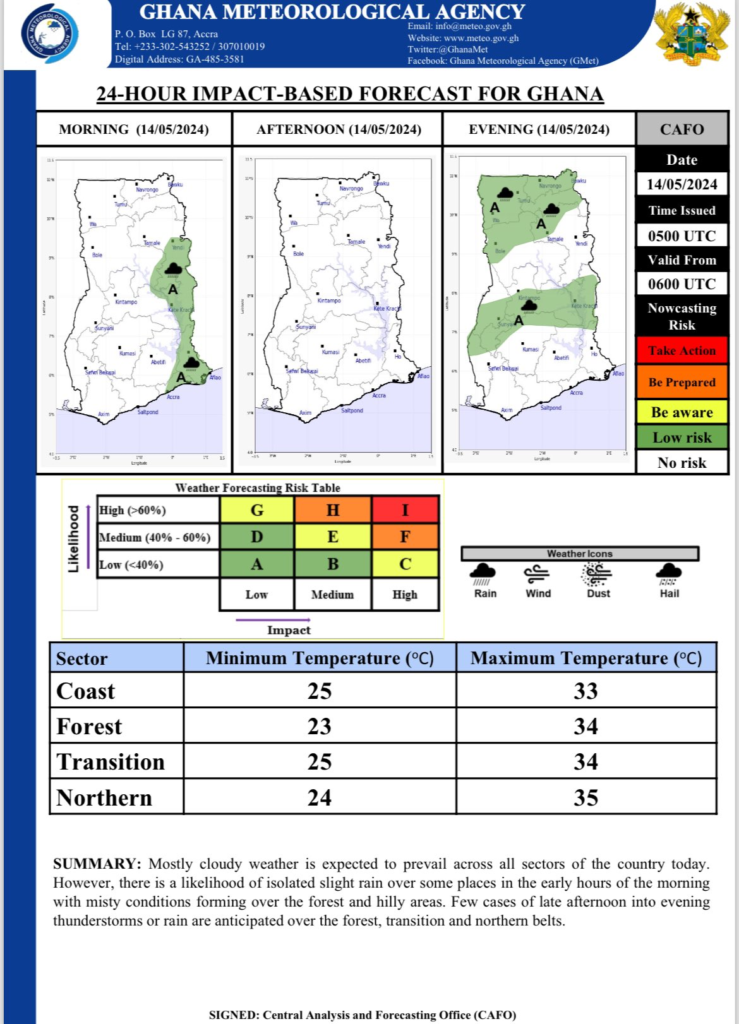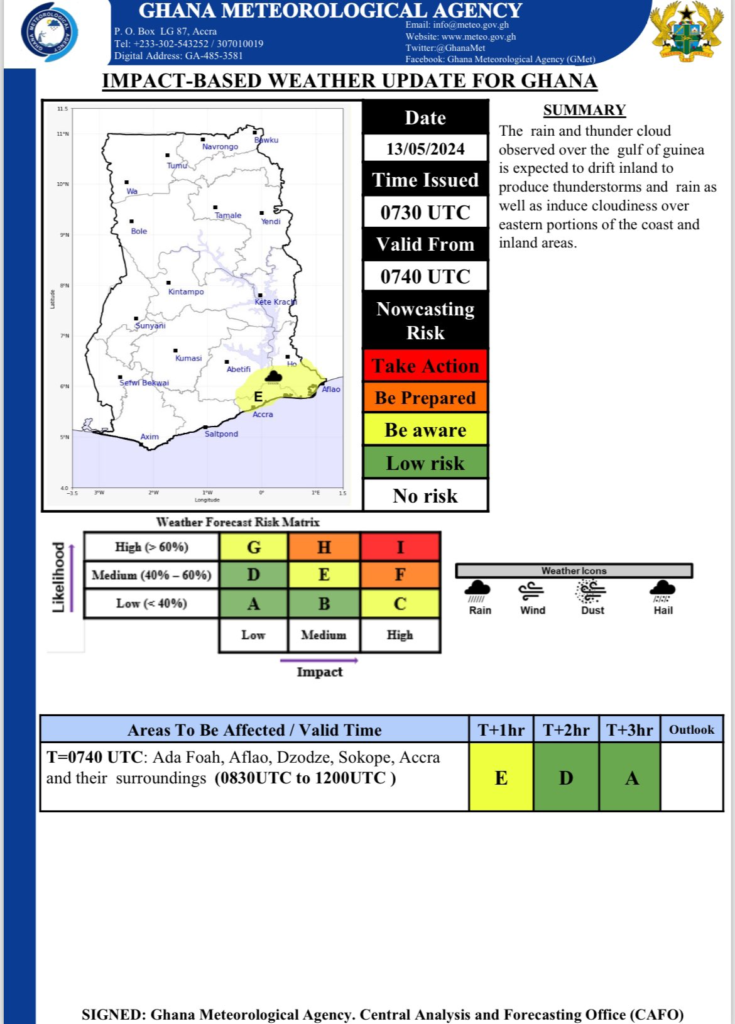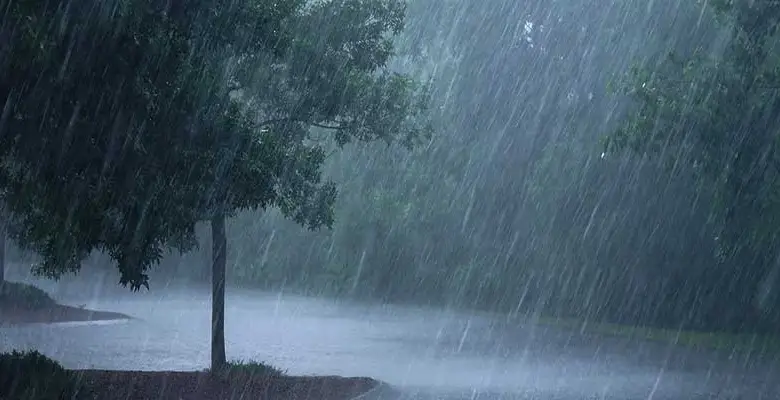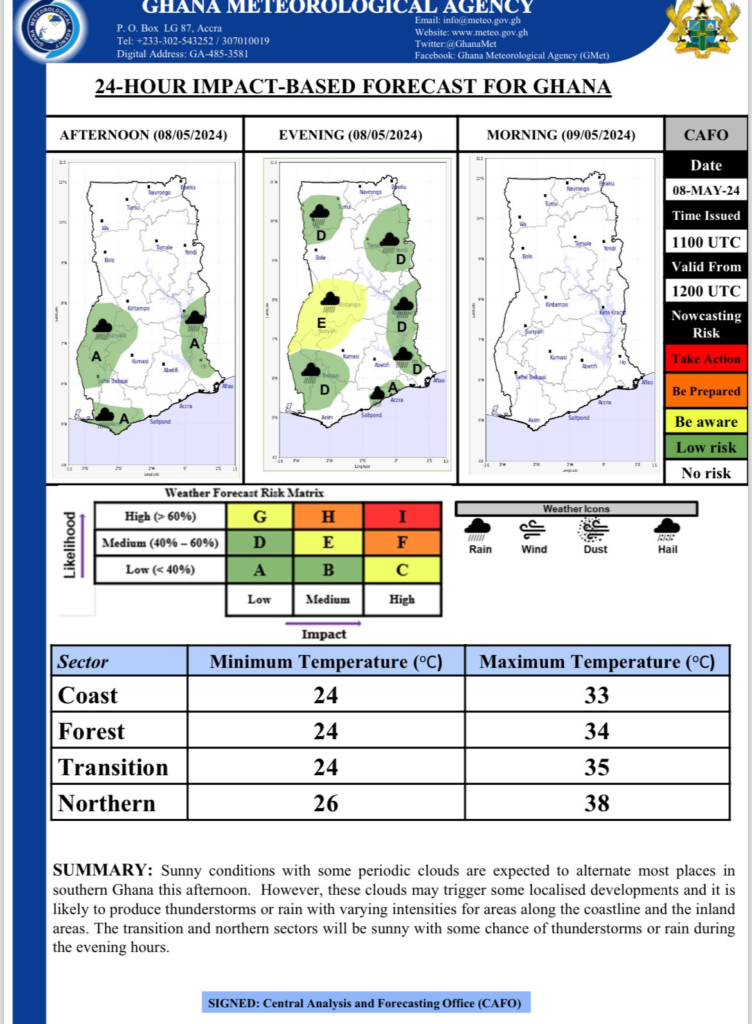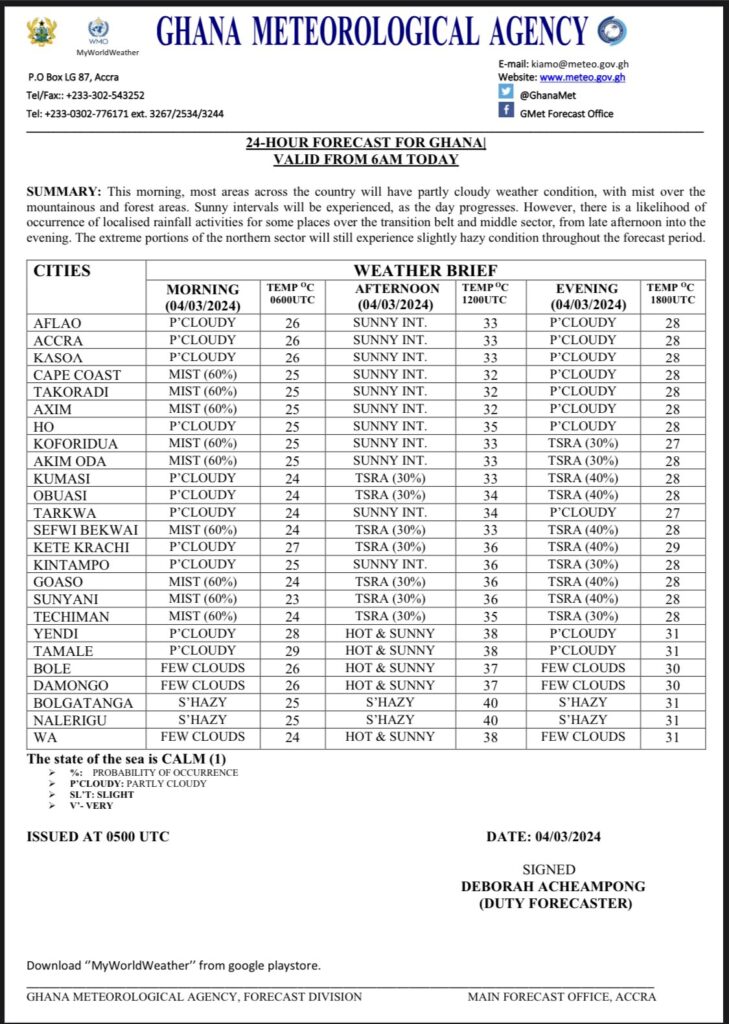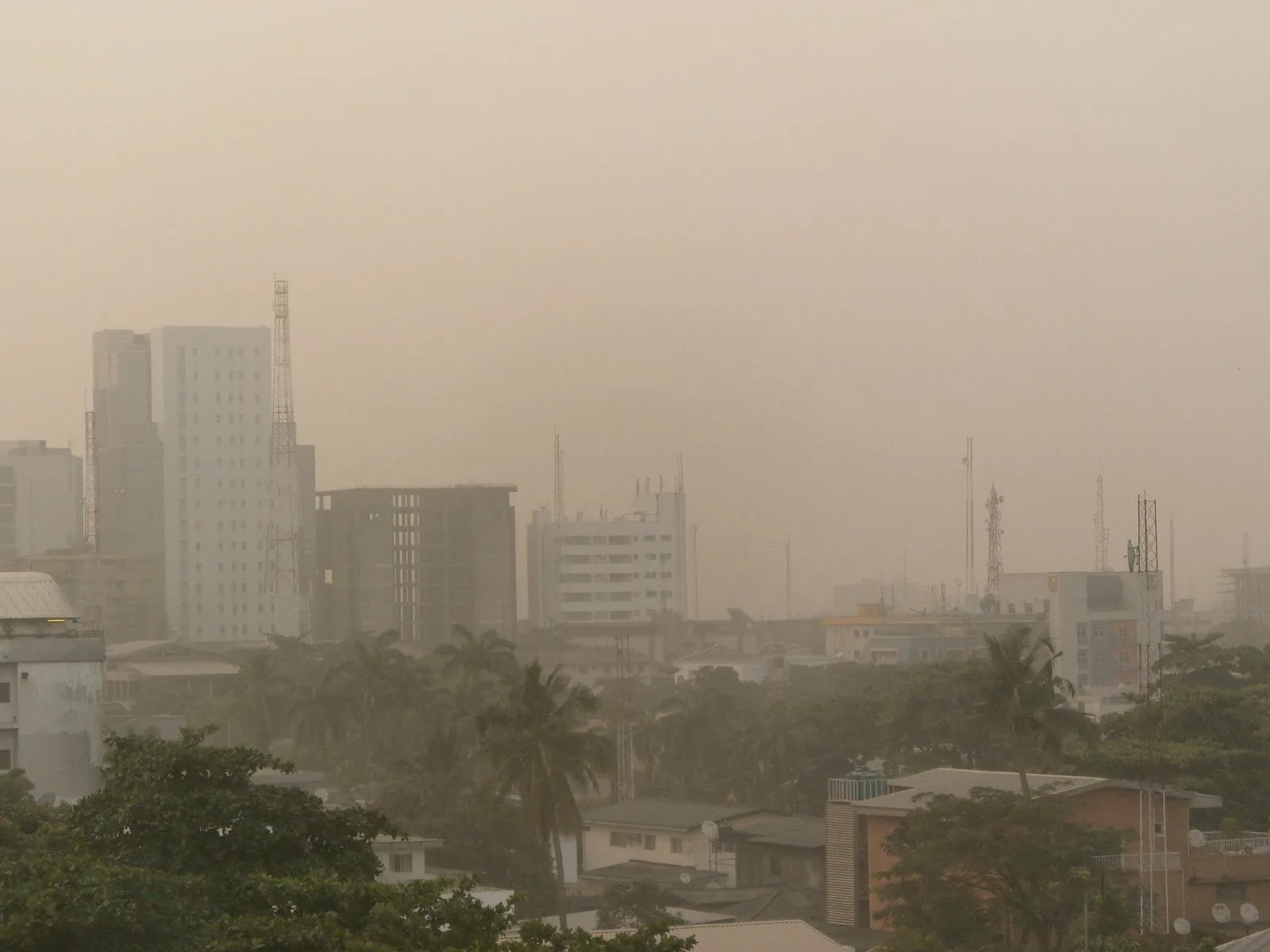
The Ghana Meteorological Agency (GMet) has forecast varying intensities of rain, accompanied by occasional thunderstorms, over parts of the coastal and middle sectors, including Greater Accra, today, Monday, July 6.
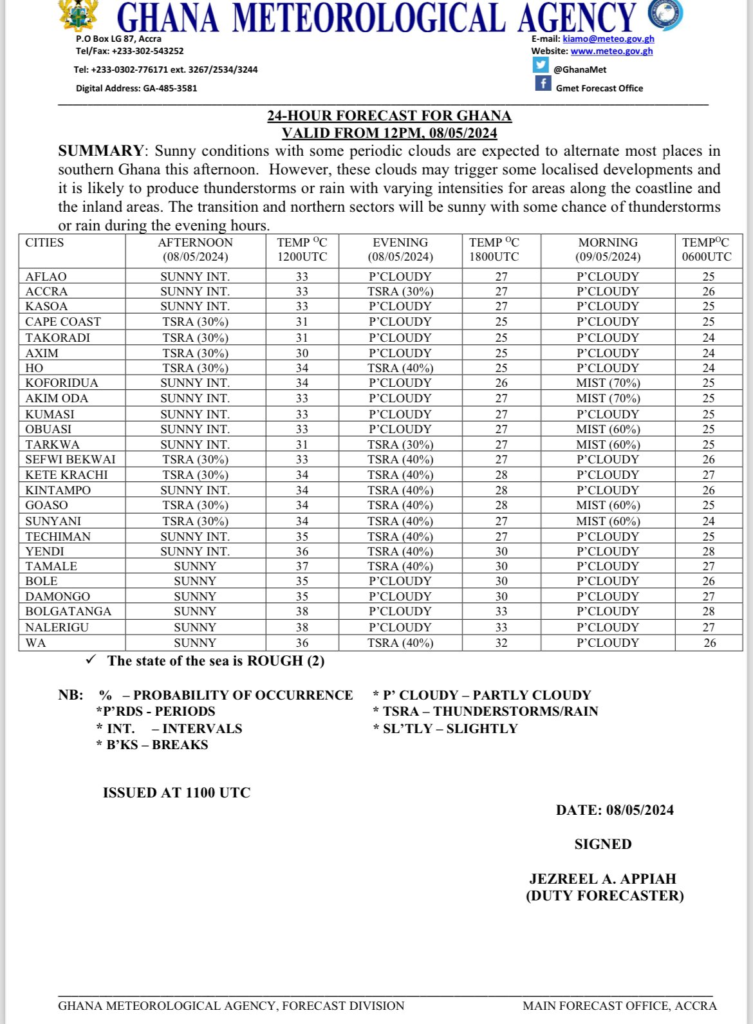
In it recent update, GMet noted that Mist or fog patches are also likely to form over parts of the coast, forest, and hilly areas during the early hours. Also, partly cloudy conditions are expected in the Northern part of the country but mostly sunny with periodic cloud cover as the the day progresses into the afternoon.
“This morning, southern Ghana will generally be mostly cloudy, with rain of varying intensity accompanied by occasional thunder expected over parts of the coastal and middle sectors.
Mist or fog patches are also likely to form over parts of the coast, forest, and hilly areas during the early hours.
“Meanwhile, northern Ghana will experience partly cloudy conditions. As the day progresses into the afternoon, northern Ghana will become mostly sunny with periodic cloud cover, while the southern half remains predominantly mostly cloudy. However, thunderstorms or rain are expected over parts of southern Ghana later in the afternoon,” the post added.
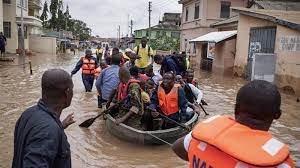
A week ago, Ghana witnessed a series of flooding incidents in some parts of the Greater Accra Region following heavy rains.
The rains, which started late on Sunday, June 28, left commuters stranded, brought traffic to a standstill, resulted in the deaths of several individuals and destruction of properties.
While some victims managed to salvage a few belongings, many suffered devastating losses as floodwaters submerged their homes and properties.
At the Odawna Garage in Accra, about 1,500 apprentices now risk losing their training opportunities and livelihoods after more than 1,000 vehicles were submerged, disrupting operations and threatening the survival of numerous businesses.
The Odawna Garage is the largest automobile repair centre in the country, serves as a major training ground for young mechanics.Speaking to the media on Thursday, July 2, Chairman of the Odawna Garage, Sampson Prempeh, said they did everything possible to save most of the vehicles, but their efforts proved unsuccessful.
He added, “On that day, we called the ECG office to turn off the light in the area because of the flood, and also to help us be able to at least get access. When we finally got access, we could count to say that at the time, about 1,000 vehicles had been submerged in the flood. We have about 1,500 apprentices who are in training. Many of them reside at the premises, so they were able to move a few of the cars to safe havens”.
Other areas affected by the floodwaters include parts of the N1 Highway, Apenkwa towards Tesano, the Accra–Kasoa stretch, Weija, Mallam, Achimota, Spintex, Atomic in Madina, Kaneshie, Darkuman Junction, portions of the Kwame Nkrumah Interchange, and other surrounding communities.
The current death toll from the flooding incidents, as confirmed by the Ghana National Fire Service Public Relations Department, stands at 12.
Meanwhile, the Finance Minister has realised a sum of GH¢300 million from the Contingency Fund to individuals affected by the incident following President John Dramani Mahama’s directive.
The directive forms part of the government’s response to the flooding of parts of Accra and other communities in the southern sector of the country after hours of unusually heavy rainfall.
In Ghana, the Contingency Fund is a constitutional fund set aside to meet urgent and unforeseen government expenses that cannot wait for the normal budget approval process.
It is established under Article 177 of the 1992 Constitution of Ghana.
In a statement issued on behalf of the President by the Spokesperson to the President and Minister for Government Communications, Felix Kwakye Ofosu, it was indicated that the GH¢300 million will be divided into two, with portions designated to provide relief and implement measures to mitigate flooding.
“President John Dramani Mahama has directed the Minister for Finance to release GHS 300 million from the Contingency Fund to finance urgent flood relief and mitigation efforts.
GHS 150 million out of the amount will finance urgent relief efforts for flood-affected persons and communities in the southern sector of the country. Another GHS 150 million will be spent on flood mitigation measures aimed at reducing incidents of flooding,” parts of the statement read.
Also, due to the scale of destruction and the effects of the floods, President Mahama has ordered that additional support be provided by the Ghana Armed Forces and other security services for the rescue operations ongoing across the city.
“The President has also directed the deployment of personnel of the Ghana Armed Forces and Police to work with NADMO and other security services in the rescue and relief operations currently underway across the city,” adding that, “the President earlier today undertook an aerial tour of the flooded areas to assess the full extent of the situation and announced a raft of steps being taken to safeguard residents and prevent further flooding.”