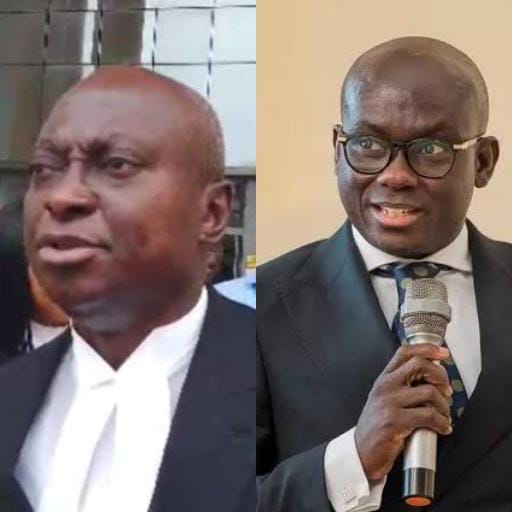
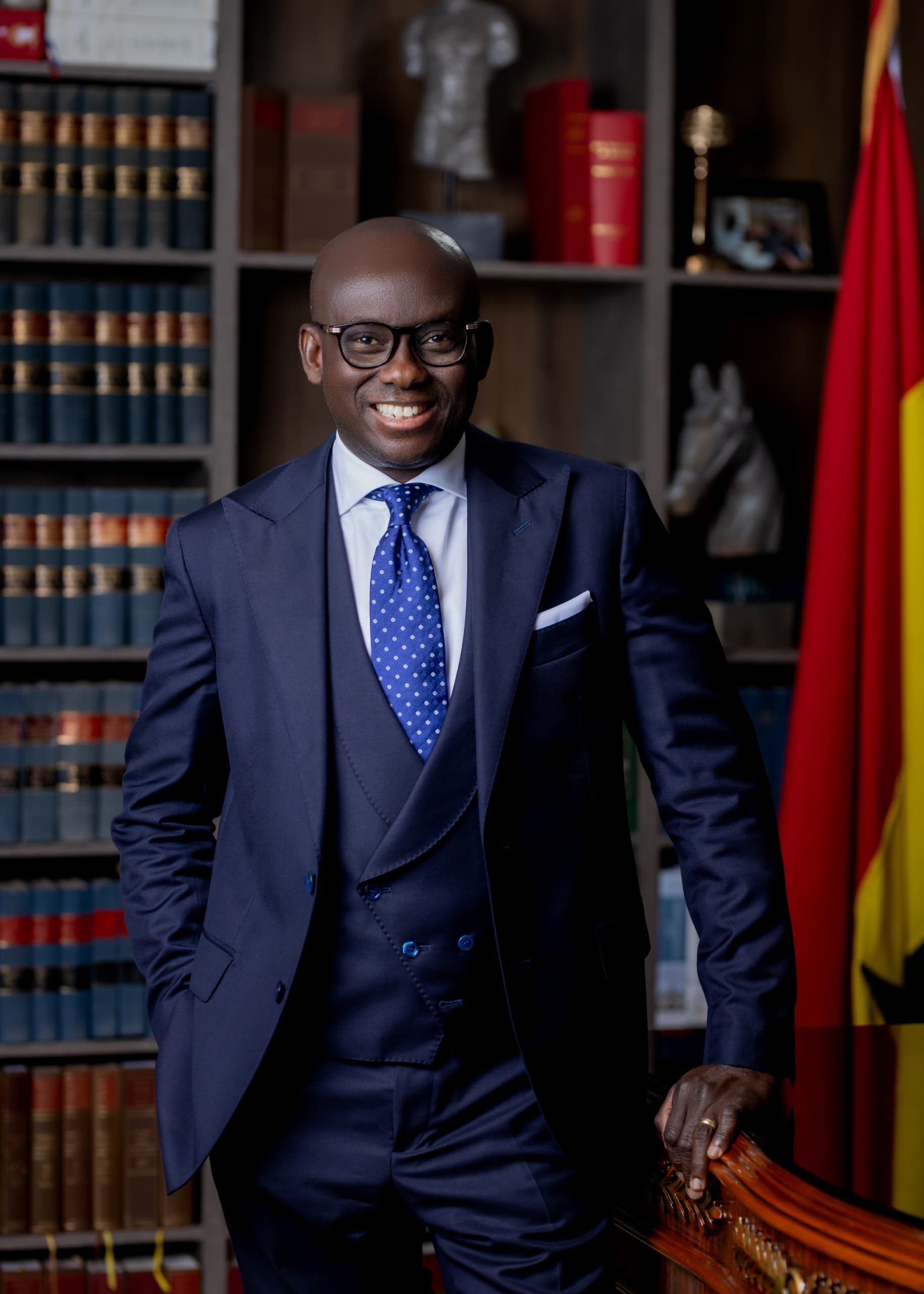
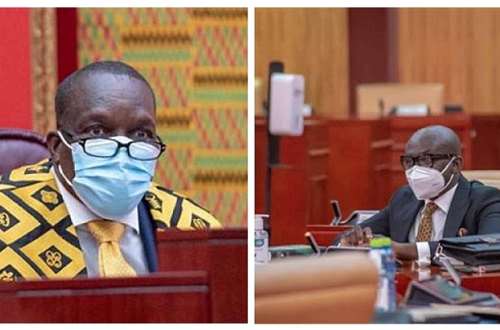
Counsel for former National Buffer Stock Company (NAFCO) Chief Executive Officer Hanan Abdul-Wahab, his wife, Faiza Seidu Wuni, and Kwabena Adu-Boahen have objected to the Court’s decision to continue the trial while the courts are on vacation.
The objection comes after the Chief Justice directed Justice Francis Achibonga, who is handling the two separate cases, to adjourn proceedings to 11 and 12 August.
According to a separate letter from the lawyers addressed to the Chief Justice, proceeding with the trial would hinder their clients’ right to a fair defence.
The lawyers, including former Attorney General Godfred Yeboah Dame, representing Abdul-Wahab, and Samuel Atta Akyea, representing Adu-Boahen , have urged the Chief Justice to halt proceedings scheduled during the judiciary’s legal vacation.
Lawyer Dame in the letter indicated that, “the warrant for Justice Achibonga to commence the hearing of the instant criminal matter, without the consent of the parties in the matter, is thus most irregular and contrary to law. There is no urgency to this matter as the accused persons were arraigned before the court only on on 5th May 2026, after earlier charges were withdrawn by the Republic through no fault of the accused.
“Respectfully, we, of Messrs. Dame & Partners, having worked throughout the legal year and cooperated for the conduct of the instant criminal matter, are not in the position to attend court in the vacation for the conduct of the trial”.
Samuel Atta Akyea, lawyer for Kwabena Adu-Boahen has stated that, the Chief Justice’s directive will disrupt their personal schedules.
Part of the letter read, “these unprecedented criminal justice delivery arrangements as we consider the Judiciary as the last bastion of refuge in our constitutional democracy. We accordingly and respectfully pray that your directive be reconsidered, the warrant withdrawn and the hearing days vacated with the matter adjourned to abide term-time in a manner consistent with the treatment afforded other pending cases”.
The letter added, “Indeed, your directive will throw in disarray all the private personal engagements and travel plans of the members of our law firm”.
The defendants, who served during the New Patriotic Party (NPP) administration, are standing trial for causing financial loss to the state.
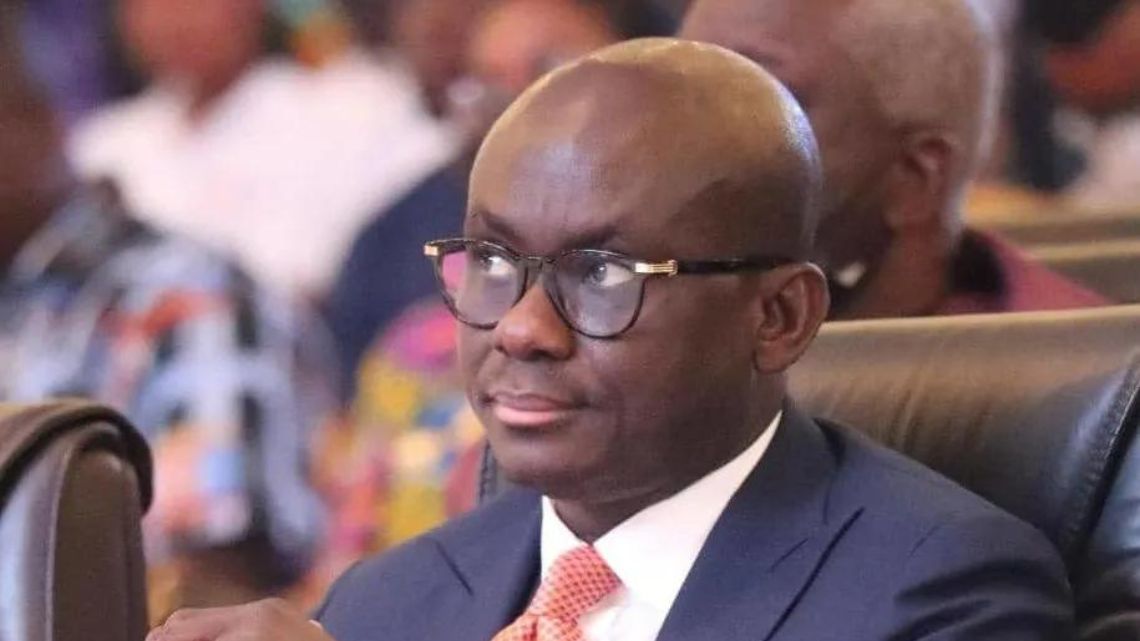
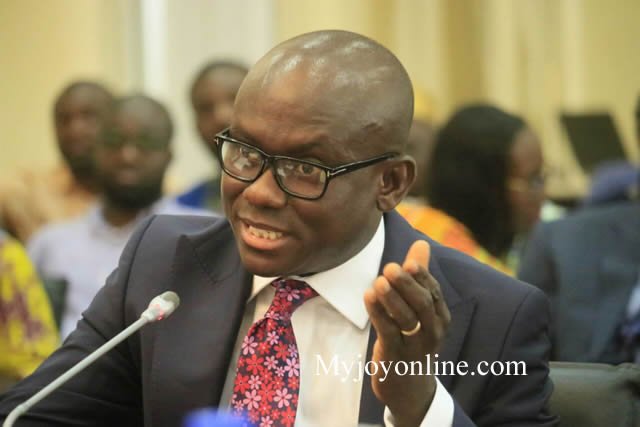
Former Attorney-General and Minister of Justice, Godfred Yeboah Dame, has penned down a letter to legal practitioner Thaddeus Sory.
The letter is a response to what he claims a pattern of professional attacks and personal attacks from the legal practitioner.
Mr Dame has described Sory’s criticisms as an unhealthy and one that needs to be checked.
According to Dame, utterances by Sory “is a clear contravention of the rules of professional conduct and etiquette governing the legal profession, coming from one with considerable standing at the Bar”.
Earlier, Thaddeus Sory who is a lawyer for one of the petitioners seeking the removal of the Chief Justice, Getrude Torkornoo, published an article which gained attention.
On Friday, May 23, Sory shared a post on Facebook where many have viewed as a jab to Godfred Dame, although he didn’t mention him (Dame)directly.
He claimed that the individual in question lacked the capacity to attack him (Sory) personally.
He wrote,” I understand the cry baby has responded somewhere and very incongruously. No direct response. Incongruous cacophony. We need some popcorn for Fridays. No Netflix. I will serialism. See you soon”.
Sory’s post comes after Dame’s engagement with the media where he allegedly accused the National Democratic Congress (NDC) of driving an agenda for the removal of the Chief Justice, especially through the petitioners’ lawyers Oliver Barker-Vormawor, Thaddeus Sory and Tsatsu Tsikata.
Central to Mr Dame’s response was a reflection on his achievements as A-G, where he defended himself against assertions by Thaddeus Sory.
“Your predilection to comment on the slightest thing I do or say is not lost on the public. For some time now, you have been expending enormous energy, time and resources to launch public attacks on me in relation to my work.
“I live in your mind rent free. Indeed, your obsession with Godfred Dame is bewildering and needs healing,” he noted.
He countered Sory’s claim that he Dame claimed he had undefeated record in court.
“You state at paragraph 22, that, I “wear [my] record of never losing a case as a badge of honour”, in my tenure as Attorney-General. You quipped “what has changed?”
“Clearly, you are wrong. The allegation is mischievous and only continues a series of falsehoods often produced by lawyers of the NDC ilk to feed their foot soldiers,” he wrote.
Meanwhile, Dame has committed to avoiding any future engagement with Sory, adding “This, I hope, will be my only and ever response to you… However, knowing your obsession with me, I am sure it will draw more abuse from you,” ending with the parting shot”.
Read Godfred Dame’s full text below:
Greetings Thaddeus Sory, Esq.,
Your predilection to comment on the slightest thing I do or say is not lost on the public. For some time now, you have been expending enormous energy, time and resources to launch public attacks on me in relation to my work. I live in your mind rent free. Indeed, your obsession with Godfred Dame is bewildering and needs healing.
The abusive and offensive language you employ is deplored by most decent minded legal practitioners, and in clear contravention of the rules of professional conduct and etiquette governing the legal profession, coming from one with considerable standing at the Bar. I leave the authorities that regulate the legal profession and are responsible for upholding standards of professional conduct to judge. I have always ignored the write-ups you have produced about me
For the first time, however, and hopefully it will be the last, I am compelled to correct a few things you have got fundamentally wrong. I will ignore the rest of the falsehood in your write-up as part of the vile propaganda you regularly engage in against me, which all can see through.
You state at paragraph 22, that, I “wear [my] record of never losing a case as a badge of honour”, in my tenure as Attorney-General. You quipped “what has changed?”
Clearly, you are wrong. The allegation is mischievous and only continues a series of falsehoods often produced by lawyers of the NDC ilk to feed their foot soldiers. The record will show that as Attorney-General, I publicly touted some significant losses suffered by my office in very important matters in the Superior Courts of Judicature as a symbol of judicial independence in Ghana. On 11th September, 2023, at the Annual Bar Conference in Cape Coast, I had this to say:
“When I look back at certain cases whose outcomes I consider undesirable, regardless of my own views on the questions being judged in them, I come to the conclusion that, what we have in this country is a fiercely independent Judiciary in which all of us should take pride that, an aggrieved citizen can go to a court of law and challenge anyone, including decisions of the President and Parliament, and be confident that the Court will give a decision without fear or favour. I refer to recent decisions of the Supreme Court in the Ghana Centre for Democratic Development & 8 others vrs. The Attorney-General, Ezuame Mannan vrs. The Attorney-General and vrs. The Attorney-General.
Again, on 9th September, 2024, at the Bar Conference in Kumasi, I proudly exhibited some of my losses.
“I can confidently say that I have been an Attorney-General in whose tenure the Judiciary has demonstrated complete independence and strength through decisions it gives in cases involving the State. In both civil and criminal jurisdictions, my Office has had many victories, but we have also experienced some adverse decisions. Examples are the decisions of the Supreme Court in Ghana Centre for Democratic Development & 8 others vrs. The Attorney-General (the removal of former Auditor-General, Mr. Dormelovo from office), Appiagyei Atuah vrs. The Attorney-General (the Imposition of Restrictions in Covid-19 case) and Ezuame Mannan vrs. the Attorney-General and the Speaker of Parliament (the Narcotics Control Commission Law case).
You would notice that most of these defeats were by a unanimous verdict of the Supreme Court. I will add to my losses the controversial 2-1 majority decision of the Court of Appeal in Republic vrs. Cassiel Ato Forson & 2 Others, whose correctness the current Attorney-General prevented the Supreme Court from assessing, by swiftly filing a notice of withdrawal when the NDC assumed power in January, 2025.
I note that in life, when one enjoys tremendous success in a field of endeavour or an office, there is the tendency to assume that one experienced no failure on any occasion. You and the NDC may thus be forgiven to think that I “never lost a case as Attorney-General”.
You state at paragraph 23 of your write-up that you “once asked: how did your [referring to me] legal acumen suddenly improve just because you became Attorney-General?”
Oh Thaddeus! Doth ye have such short memory? Have you forgotten that in the only full trial of a case you and I happened to be on opposing sides between 2007 and 2009 when you were at Dery & Co., you lost miserably (potoo, as we say in Ghanaian parlance) when judgment was delivered by Ofosu-Quartey J. in May, 2009? Unperturbed, you led your clients to pursue an appeal at the Court of Appeal and lost again, in a judgment delivered on 25th July, 2013. Was I the Attorney-General in those years?
A person who cursorily reads your write-up will be permitted to infer that you suffer pangs of jealousy. This, I cannot help. I can only urge you not to be quick to boast of your “legal acumen”, as you put it, or soil the hard-earned reputation of your fellow lawyers.
When as Deputy Attorney-General, I valiantly conducted many dangerous cases much to the chagrin of the NDC, including a recovery of part of the Woyome ill-gotten cash, was I the Attorney-General? For your reminder, part of the Woyome cash (the “balance” as we say in Ghana) is outstanding. Use your “legal acumen” to assist the current Attorney-General to recover with interest, instead of expending time and energy in coming to the Supreme Court every day to monitor how cases affecting Torkonoo CJ are going, even when you are not counsel in it.
Fortunately, the “legal acumen” you claimed I found when I was appointed Attorney-General was not limited to the domestic territories of Ghana. I deployed same to the successful defence of Ghana’s interests in many international arbitration cases and foreign courts, saving the nation billions of United States Dollars. In point of fact, in my tenure as Attorney-General, Ghana emerged victorious in all the international arbitrations my humble self and my able deputies led the Office to conduct without the aid of foreign counsel. In tribute to Ghana’s legal talent, I say that in the last international arbitration conducted solely by myself and my colleague Deputy Attorneys-General, which culminated in an award delivered on 18th November, 2024, Ghana’s case was roundly upheld with costs of about US$2.2 Million in her favour.
In all humility, I say, as a testament to the strength of Ghana’s judicial system, that the record of the consistent success I enjoyed in the courts in innumerable high-profile cases I conducted between 2003 and 2007 (as a relatively junior lawyer) and between 2009 and 2017 ( when I was not the Attorney-General but a lawyer who was a member of the opposition), is there for all to verify. It is this independence of Ghana’s judiciary that I see is threatened by recent happenings in Ghana, and which I seek to protect. You and the NDC’s desperation to churn out a false narrative now will not change the situation.
I have never said that you have not represented NPP clients. I am aware of your association with NPP clients particularly, when you were a junior to Mr. Ambrose Dery in Dery & Co. The irrefutable point I make now is that Mr. Tsikata was President Mahama’s lawyer in the last election petition in 2020. You are the current Speaker of Parliament’s lawyer and double as lawyer for a person who is aggrieved by judgments delivered by the Chief Justice against him in his attempt to recover some gargantuan money from Ecobank. If you do not find it “incongruous” that the lawyers of the heads of two arms of government have teamed up to remove the lady Chief Justice of the Republic from office, I cannot fault you.
You assert your duty to “represent anyone who retains” you. Do I not owe the same duty?
This, I hope will be my only and ever response to you. I will continue to ignore all your provocative comments. However, knowing your obsession with me, I am sure it will draw more abuse from you.
As they say, “when Godfred Dame coughs, the whole NDC catches a cold”.
Legal counsel for suspended Chief Justice Gertrude Torkornoo, Godfred Yeboah Dame, has rejected calls for the proceedings related to the counsel’s removal to be held in camera.
The immediate-past Attorney-General and Minister for Justice has requested a public hearing, insisting that all matters related to his client’s suspension have already been made public, subjecting her to intense public scrutiny.
Mr Godfred Dame, who spoke in an interview yesterday, Thursday, May 22, citing transparency and fairness, said, “It cannot be a secret. There ought to be light on the proceeding because she has already been damaged in the public domain. There is nothing that threatens public harm, public order, or public safety in this proceeding such as to warrant that it should be in the dark or in camera.”
“On the contrary, the conduct of the government so far, together with what has been witnessed in the whole of proceedings, will rather require that it ought to be in the public,” he said.
He made these remarks in response to calls by some individuals, such as Deputy Presidential Spokesperson Shamima Muslim, who has defended the in-camera hearing decision, citing Article 146 (10) of the Constitution, which mandates confidentiality in such hearings.
Shamima Muslim insists that this provision is not optional but a legal requirement meant to protect the judiciary, petitioners, and the integrity of the process.
Presently, there are ongoing legal disputes surrounding Justice Gertrude Torkornoo’s suspension.
Background
A series of petitions have been filed against Chief Justice Torkornoo, beginning with one from a group known as Shining Stars of Ghana.
The group alleges she violated Article 144 of the Constitution by personally recommending judges for promotion to the Supreme Court and further claims she ruled on a case involving the Speaker of Parliament without granting him a hearing, despite his refusal to respond to the suit.
Another petition from a police officer who is also a lawyer accuses the Chief Justice of manipulating evidence and abusing her authority following an incident during a Supreme Court session where he was reportedly reprimanded, arrested, and detained. However, court records suggest the lawyer’s conduct during proceedings prompted a unanimous caution from the bench, not just from the Chief Justice.
A third petition, submitted by a private individual, lists 21 alleged misconducts and four claims of incompetence. Among the accusations is the misuse of public funds—specifically, that she spent over GH¢261,000 and $30,000 on a family trip abroad in 2023 and misused an additional GH¢75,580 and $14,000 during another foreign assignment without proper accountability.
Subsequent reports indicate two more petitions have been added to the list, intensifying pressure on the judiciary.
Chief Justice Gertrude Torkornoo, in her written response to President Mahama, strongly denied allegations of misconduct and abuse of office brought against her by a senior police officer, describing them as baseless and lacking grounds for her removal from office.
A five-member committee has been formed to investigate the matter. The committee is chaired by Supreme Court Justice Gabriel Scott Pwamang and includes Justice Samuel Kwame Adibu-Asiedu, former Auditor-General Daniel Yaw Domelevo, Major Flora Bazwaanura Dalugo of the Ghana Armed Forces, and Associate Professor James Sefah Dzisah of the University of Ghana.
Legal matters arising
Member of Parliament for Old Tafo, Ekow Vincent Assafuah, has moved to challenge the suspension of Chief Justice Gertrude Torkornoo, filing an application at the Supreme Court to injunct the presidential decision.
The notice of motion, dated April 24, is a direct response to President John Dramani Mahama’s April 22 suspension of the Chief Justice, which was carried out in line with Article 146(6) of the 1992 Constitution after consultations with the Council of State and a determination that a prima facie case existed.
According to Mr Assafuah, the process that led to the Chief Justice’s suspension violated constitutional provisions, as she was not informed of the petitions nor given an opportunity to respond before the President engaged the Council of State.
He further described the actions taken thus far, including the formation of an investigative committee, as “a farce and the product of a preconceived orchestration to unconstitutionally remove the Chief Justice from office.”
Ekow Vincent Assafuah filed an injunction application to halt the process for the removal of the Chief Justice; however, this application was also dismissed by the Supreme Court on May 6.
The second interlocutory injunction application challenging the process for the removal of Chief Justice Gertrude Torkonoo from office has been thrown out by the apex court.
The Supreme Court, by a 4 to 1 majority decision, deemed the application by a private citizen, Theodore Kofi Atta-Quartey, unmeritorious on Wednesday, May 21.
The five-member panel comprised Justices Paul Baffoe-Bonnie (Presiding), Issifu Omoro Tanko Amadu, Yonny Kulendi, Henry Anthony Kwofie, and Yaw Asare Darko. Justice Yaw Asare Darko was the only one who disagreed with the majority’s opinion.
Justice Torkornoo heads to court
Suspended Chief Justice Gertrude Torkornoo has headed to the Supreme Court to prevent the committee set up by President John Mahama to probe the petitions seeking her removal from office.
She is also requesting the apex court to halt her suspension issued by the President under Article 146(10) of the Constitution until a final determination is made on the matter.
On Wednesday, May 21, her legal team at Dame and Partners filed an interlocutory injunction application.
The defendants per the writ, are Attorney-General Dr Dominic Ayine, Justice Gabriel Scott Pwamang, Justice Samuel Kwame Adibu-Asiedu, Daniel Yao Domelovo, Major Flora Bazwaanura Dalugo, and Professor James Sefah Dzisah.
The plaintiff has prayed the apex court to restrain the committee from proceeding with any further inquiry as well as prevent Justice Gabriel Scott Pwamang, the acting Chief Justice, from participating in the process.
Experts react to Torkornoo’s suit
A former Director of the Ghana School of Law, Kwaku Ansa-Asare, believes that Justice Torkornoo should have first sought counsel from the Judicial Council before heading to the apex court.
“The Judicial Council has been established to aid successive Chief Justices to behave themselves. So if an incumbent Chief Justice has a problem, her first port of call should be to seek counsel. I don’t think that has been done,” he said.
Director of Legal Affairs for the National Democratic Congress (NDC), Godwin Edudzi Tameklo, described the suspended Chief Justice’s move as interesting.
“I’m happy that the suspended Chief Justice is going to have the benefit of how the justice system works. Just like any one of us, her leadership may need the benefits of the very justice she, together with others, over the years, delivered to people,” he said while engaging the media in an interview.
Chief Justice Gertrude Sackey Torkornoo has formally requested copies of petitions submitted to President John Dramani Mahama, which seek her removal from office.
In a letter dated Thursday, March 27, she appealed to the President for access to these documents, stating that she needs them to provide an informed response.
Her request follows President Mahama’s decision to consult the Council of State after receiving three petitions calling for her removal.
At the same time, Vincent Assafuah, the New Patriotic Party (NPP) Member of Parliament for Old Tafo, has taken legal action at the Supreme Court, challenging the process being used to handle the petitions.
Represented by former Attorney-General Godfred Dame, Assafuah argues that the Chief Justice must be given an opportunity to respond to the allegations before the President initiates consultations with the Council of State.
Minister for Government Communications, Felix Kwakye Ofosu, has confirmed that three petitions regarding the potential removal of the Chief Justice have been submitted to the Council of State, in accordance with Article 146 of the 1992 Constitution.
Although the specific allegations remain undisclosed, this marks the initial phase of a constitutional process that could have far-reaching implications for Ghana’s judiciary. The Council of State is now tasked with reviewing the petitions and advising the President on the appropriate course of action.
Meanwhile, Chief Justice Torkornoo has formally written to the President, requesting a fair opportunity to respond to the allegations before any further steps are taken.
“I am by this letter humbly and respectfully asking His Excellency the President and eminent members of the Council of State to forward the petitions against me to me, and allow me at least seven days after receipt of same, to provide my response to you, which response can then form part of the material that you conduct the consultations anticipated under 146 (6), before the possible setting up of a Committee of Inquiry under Article 146 (7),” she stated.
Former Attorney General Godfred Yeboah Dame is representing a group of 40 former public sector employees who have taken the government to court, over the mass dismissal of workers describing it as wrongful and politically motivated.
This legal action follows a directive issued by the current Attorney General on February 10, 2025, which ordered the revocation of appointments made after December 7, 2024. The government cited irregularities in the recruitment process and concerns over fiscal sustainability as the basis for these terminations.
The directive sparked widespread criticism from civil society organizations, labor unions, and members of the opposition New Patriotic Party (NPP). Among the critics was former Attorney General Godfred Dame, who condemned the decision, arguing that it exceeded constitutional authority.
He referenced Article 191(b) of the 1992 Constitution, which prohibits the dismissal of public sector employees without “just cause.” Dame further pointed out that many of the affected workers were recruited well before the December 7 elections.
As a result, he has filed a 27-page application for judicial review, invoking Articles 141, 23, and 296 of the Constitution, to challenge the legality of the mass dismissals.
The dismissed employees, who were hired in 2024, contend that their termination violated constitutional provisions and due process. They are being represented by Dame and Partners, a law firm linked to Godfred Yeboah Dame.
The lawsuit has been filed against the Attorney General and six key state institutions:
The Ghana Revenue Authority, the National Lottery Authority, the Driver and Vehicle Licensing Authority, the Ghana Ports and Harbours Authority, the Ghana Shippers Council, and the National Health Insurance Authority.
The dismissed workers are asking the court to rule that their termination was unlawful, arguing that neither the President nor the Chief of Staff has the constitutional authority to remove public servants outside the framework established by Article 191(b) of the Constitution.
They are also seeking a declaration that the Chief of Staff’s directive is null and void, along with an order for their reinstatement and compensation for the hardship caused by their abrupt dismissal. Furthermore, they want the court to prohibit the government from carrying out any further politically motivated dismissals within the civil service.
Tafo MP, Ekow Vincent Assafuah, has strongly condemned the dismissals, calling them a clear case of injustice. He noted that the 40 plaintiffs represent only a small portion of those affected, estimating that over 5,000 public servants have been unfairly removed under the Mahama-led administration.
“These individuals went through the right processes to secure their jobs. Their dismissals are purely political, and it is unacceptable. But we believe in the rule of law, and I have no doubt that justice will be served,” Assafuah stated.
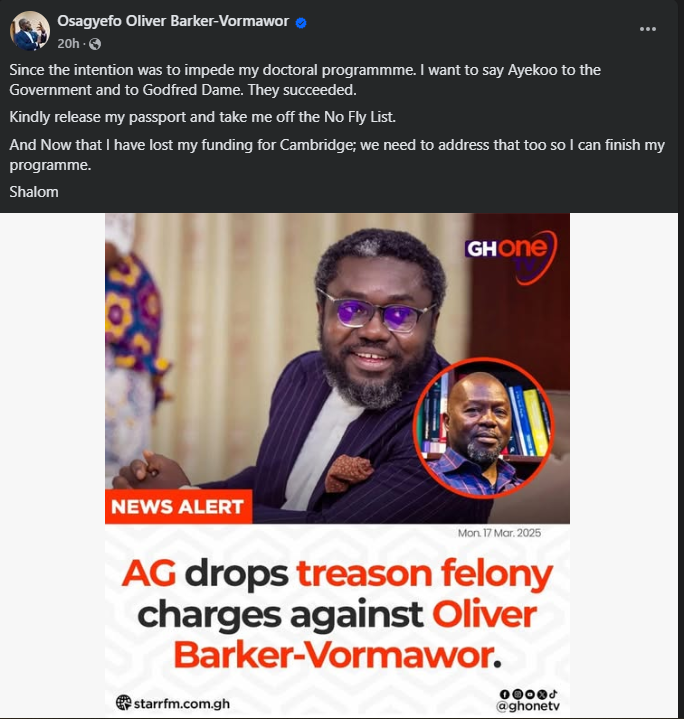
Activist and lawyer Oliver Barker-Vormawor has criticized the government and former Attorney General Godfred Dame, accusing them of deliberately disrupting his academic pursuits following the dismissal of treason felony charges against him.
Barker-Vormawor had been facing trial for over two years after being arrested in 2022 by National Security operatives for remarks suggesting a coup if Parliament passed the controversial E-Levy bill, which later became law.
However, on Tuesday, March 18, the Attorney General, Dr. Dominic Ayine, withdrew the charges, leading to the case being struck out by Justice Mary Ekua Yanzu.
Although Barker-Vormawor was not present in court, Principal State Attorney Esi Dentaa Yankah represented the prosecution team, filing a nolle prosequi to formally discontinue the case.
Reacting to the development, Barker-Vormawor took to social media, sarcastically acknowledging the government’s success in derailing his academic career.
“Since the intention was to impede my doctoral programme, I want to say Ayekoo to the Government and to Godfred Dame. They succeeded. Kindly release my passport and take me off the No-Fly List,” he stated.
He further lamented the financial burden caused by the prolonged trial, revealing that he had lost funding for his Cambridge University studies.
“Now that I have lost my funding for Cambridge, we need to address that too so I can finish my programme,” he added.
The dismissal of Barker-Vormawor’s case follows a series of high-profile trial withdrawals under Dr. Ayine, including cases involving Dr. Stephen Opuni, businessman Seidu Agongo, and former Bank of Ghana Governor Dr. Johnson Asiama.
Former Attorney-General and Minister for Justice, Godfred Yeboah Dame, has issued a stern warning to South Dayi MP, Rockson-Nelson Dafeamekpor, cautioning that any further claims suggesting he moved around with a military convoy will result in legal action.
In a letter dated February 25, 2025, addressed to the legislator, Dame rejected the allegations made on TV3’s The Key Points, describing them as “false, misleading, and a deliberate attempt to tarnish my reputation.”
Setting the record straight, he emphasized, “At no point in my eight years of public service did I have more than one bodyguard. I never had a military convoy, nor did I have Land Cruisers full of security officers following me.”
Dame dismissed Dafeamekpor’s assertions that his security detail expanded when he transitioned from Deputy Attorney-General to the substantive Attorney-General. “From the moment I was appointed Deputy Attorney-General, I was assigned a single bodyguard based on security assessments. That arrangement remained unchanged until the end of my tenure in January 2025.”
He also refuted claims that he lived extravagantly at the expense of the state, stating, “I resided in my private property throughout my time in office, made no claims for government accommodation, and used my own vehicles for official duties in Accra.”
Dame has demanded a full retraction of the allegations through the same TV platform where they were made. “I require you to withdraw these baseless claims on The Key Points. Any future publication of such falsehoods will result in a lawsuit for defamation with punitive damages,” he warned.
The former Attorney-General also copied the Speaker of Parliament and parliamentary leadership, drawing attention to what he called Dafeamekpor’s “dishonourable conduct outside the House.”
Former Attorney-General and Minister for Justice, Godfred Yeboah Dame, has demanded a full retraction of claims that he moved around with a military convoy while in office.
He described the allegations, made by South Dayi MP Rockson-Nelson Dafeamekpor on TV3’s The Key Points, as “blatantly false and misleading.”
In a letter dated February 25, 2025, Dame firmly refuted the claims, stating, “At no point in my eight-year public service did I have more than one bodyguard. I never had a military convoy or a Land Cruiser full of security officers following me.”
Dafeamekpor had alleged that Dame, even as a Deputy Attorney-General, had a large security escort, which increased when he was appointed as Attorney-General. But Dame dismissed this, asserting, “The allegations by you are a fabrication and a deliberate attempt to mislead the public.”
He further clarified that his security detail remained unchanged throughout his tenure. “As Deputy Attorney-General, I was assigned one bodyguard following a security risk assessment. When I became Attorney-General, I retained the same single bodyguard until I left office in January 2025.”
Dame also addressed suggestions that he lived extravagantly at the expense of the state. “I stayed in my private property throughout my time in office, never applied for state accommodation funds, and used my own vehicles for official duties in Accra,” he stated.
Insisting on a retraction, Dame warned of legal consequences if the claims were repeated. “I require you to withdraw these falsehoods on the same platform where you made them. Any future repetition will result in legal action for defamation.”
The former Attorney-General also copied the Speaker of Parliament and parliamentary leadership, highlighting what he termed Dafeamekpor’s “dishonourable conduct outside the House of Parliament.”
Former Attorney-General and Minister for Justice, Godfred Yeboah Dame, has refuted claims that he had an elaborate security detail during his tenure in public office, stating categorically that he “never had a military convoy” and was never accompanied by “more than one bodyguard.”
Dame’s response was contained in a letter dated February 25, addressed to South Dayi Member of Parliament Rockson-Nelson Dafeamekpor, following remarks made by the legislator on TV3’s The Key Points program on February 22.
“For the record, at no point in time in my eight-year public service, between 2017 and 2025, did I have more than one bodyguard. At no point in time did I have more than one bodyguard sitting in a vehicle I used. At no point in time did I have a Land Cruiser or any other brand of vehicle following me with bodyguards. I never had a military convoy,” Dame clarified.
Dafeamekpor had alleged that the former Attorney-General, even as a Deputy Minister, moved around with a significant military escort, a claim Dame dismissed as false and misleading.
“The allegations by you are clearly a product of your fertile imagination and highlight your skill at fabricating facts, a tendency most unworthy of a leader of the Majority in Parliament,” he stated.
He further emphasized that his security arrangements remained consistent throughout his tenure. “As a Deputy Attorney-General, I was assigned one bodyguard following an assessment of the security risks around me. Following my appointment as the substantive Attorney-General and Minister for Justice on March 5, 2021, I continued with the same [one] bodyguard to the end of my tenure on January 6, 2025.”
Dame also addressed suggestions that his lifestyle placed a burden on the public purse, asserting that he personally bore many of his expenses.
“Throughout my public service, I stayed in one of my private properties which I acquired long before my initial appointment as Deputy Attorney-General. I never made a claim for payment of any money by the State in lieu of the provision of residential accommodation. Further, I never used any government vehicle for my official functions during the week in Accra. All vehicles used by me in Accra for my official functions were privately owned.”
He demanded a “total retraction” of the claims via the same platform where they were made, warning of legal action should the allegations persist.
“I hereby serve you notice that a future publication of the same or similar falsehoods by your good self will result in an institution of legal proceedings for punitive damages for defamation together with costs of litigation,” he cautioned.
Dame also copied the Speaker of Parliament and the leadership of the House to bring their attention to what he described as Dafeamekpor’s “dishonourable conduct outside the House of Parliament.”
Legal Practitioner and host of Joy FM’s news analysis programme, Newsfile, Sampson Lardy Anyenini, has emphasized that he never accused the former Attorney General (A-G), Godfred Dame of burning certain memos meant to discontinue cases the State was prosecuting.
According to Sampson Lardy Anyenini, the memo he sighted appeared to be a draft, as it lacked both Godfred Dame’s signature and an official endorsement.
He noted that scores Ghanaians have misinterpreted his statements and urged the public to disregard the allegations.
“Don’t misconstrue and misquote me anywhere, what I said last week was that I said I have seen what is supposed to be the memo and there’s an email trail. The memo I saw I asked Justice Srei Osae, it was not signed. It was not dated and it was no minute on it. So it does appear that was a draft memo.
“I understand that Godfred Dame saw that particular memo very late, but there’s no official memo that came to him that he refused to act on. I did not say that Godfred Dame burnt memos or shredded any memos,” he added.
Upon taking office as Minister of Justice, the current A-G, Dominic Akuritinga Ayine halted prosecutions against multiple individuals accused of different crimes.
Significantly, several individuals linked to the ruling party were also freed after the National Democratic Congress (NDC) assumed power following its victory in the 2024 general election on January 7, 2025.
Speaking at a news conference in Accra the incumbent A-G alleged that Godfred Dame, was influenced by the prosecution division of his office proposed the withdrawal of certain major criminal cases.
But Godfred Dame has refuted the allegation and called on his successor, Dr. Dominic Ayine, to substantiate these claims with evidence.
Dominic Ayine lied !A dishonest Attorney General, there was no memo as claimed by the Attorney General. The supposed memo was not signed there was no date and also there was no minute on the said memo. pic.twitter.com/Bj0ZqV5I5h
“I challenge Dr. Ayine to show any memorandum presented to him by the prosecution division advising on, or expressing any view regarding the consultation or discontinuation of any of the criminal cases he refers to,” Mr. Dame said.
“I can say without any fear or contradiction that there is none, you can be assured he cannot produce any,” Mr. Dame added.
The Public Relations Officer for the Electricity Company of Ghana (ECG) in Ashanti West, Benjamin Obeng Antwi, has addressed the recent power outages in Kumasi, reassuring the public that it’s not due to “dumsor.”
In the past few weeks, some areas in Kumasi have experienced power cuts, with some communities without electricity for more than 24 hours. But Mr. Obeng Antwi explained that the outages are linked to maintenance work being done to improve power supply in the region.
“There is no ‘dumsor’, we had an underground cable fault. When that happens, we have to dig the ground and bring out all the cables so we can test them. We cannot work on the cables without turning off the electricity, that is why Kumasi has been experiencing some outages,” he said.
He also mentioned that old power structures are being renovated, which has caused further outages.
“We have five bulk supply points where GRIDCO and ECG connect to get electricity. These structures are quite old, and while we’re working on them, we’re facing some outages. We’ve decided to stop burying the cables underground and will increase the wire sizes to make the power more stable,” he said.
Mr. Obeng Antwi added that the old system worked in the past, but with time, it’s necessary to upgrade. “Even with the new, larger wires, we might need to make changes again in the future,” he explained.
He also took the opportunity to apologize to the people of Kumasi for the inconvenience caused by the power cuts. “On behalf of ECG, I want to apologize to the people of Ashanti Region. We know the power hasn’t been consistent since the start of the year, but this is due to a technical issue, not because we’re bringing back ‘dumsor’,” he said.
Finally, he urged the public to report any suspected power thefts to the police.
“We have changed a lot of fuse at Adum for a couple of weeks now. People keep breaking the locks stealing the fuse. When you see anyone around an ECG pole, please go and ask them if they work at ECG. You can identify the real ECG workers by their overall coats and reflectors. Also no ECG worker works alone, they always move in groups. When they act suspicious please report them to the police,” he added.
Attorney General Dr. Dominic Ayine has revealed that before he assumed office, the Prosecutions Division of the Attorney General’s Department had recommended that criminal charges against the current Bank of Ghana Governor, Dr. Johnson Asiama, be dropped.
However, his predecessor, Godfred Yeboah Dame, ignored the advice and proceeded with the case.
“This was the advice from the Prosecutions Division of the Attorney General’s Department to the former Attorney General, Godfred Yeboah Dame, which recommended that the charges should be dropped,” Dr. Ayine stated.
Speaking at a press conference in Accra, Dr. Ayine explained that the legal counsel provided by the department made it difficult for him to justify continuing the prosecution.
“Based on these revelations, it was difficult for me to press ahead with the prosecution of the current Governor of the Bank of Ghana, and that is why I dropped all the charges against him,” he said.
Citing Rule 40(2)(a) of the Legal Profession (Professional Conduct and Etiquette) Rules, 2020 (L.I. 2423), Dr. Ayine defended his decision, stating:
“In coming to this decision, I am fortified by the Rule 40(2)(a) of the Legal Profession (Professional Conduct and Etiquette) Rules, 2020 (L.I. 2423) which provides that, in a criminal case, a prosecutor shall refrain from prosecuting a charge that the prosecutor knows is not supported by the facts.”
Dr. Johnson Asiama, then the Second Deputy Governor of the Bank of Ghana, was among several individuals prosecuted by the state in 2020. The charges included fraudulent breach of trust, money laundering, conspiracy to commit crime, and violations of the Bank of Ghana Act.
Specifically, Dr. Asiama was accused of unlawfully granting a GH₵300 million facility to Universal Merchant Bank and causing financial loss to the state amounting to GH₵150 million.
Addressing concerns over financial loss, Dr. Ayine disclosed that a significant portion of the funds had been recovered.
“I did not see the need to pursue the case. Evidence adduced so far fell significantly short of what was required to convict the accused. I therefore find it interesting that the state pressed ahead with prosecution, which I consider as a total waste of time,” he said.
However, he clarified that not all cases had been abandoned.
“I have not yet dropped the charges against the remaining accused persons because I am currently in discussions with the receivers in order to understand the financial implications of any decision I may take in these cases,” he added.
Judgment debts have been a major problem and the Achilles heels of Attorneys-General in the recent past. Some dubious judgment debts like the Woyome and Isofotun Scandals had even contributed to the perception of corruption around some administrations and played a key role in their downfall.
These words of the learned Chief Justice as she then was, Georgina wood C.J in the case ofREPUBLIC v HIGH COURT, KUMASI EX PARTE BANK OF GHANA (REV. DE-GRAFT SEFA & ORS. INTERESTED PARTY) [TLP-SC-2013-10] available at thelawplatform.online captures the sense of this appalling situation: “the time has indeed come for this court to comment on the manner in which legal representation of state and para-statal interests are handled in our law courts. The quality of legal representation of these institutions leaves much to be desired.”
The Law Platform chronicles the direct intervention of the immediate past Attorney-General and Minister for Justice of Ghana, Godfred Yeboah Dame, whose tenure span from 5th March, 2021 to 6th January, 2025, in the mitigation and avoidance of judgment debts. It should be noted that cases for the payment of money by the State in favour of various individuals and companies for breach of contract, unlawful violation of rights, compensation for compulsory acquisition, termination of employments, etc. ran into hundreds, if not thousands of civil actions defended by the Attorney-General.
The records as provided herein leads to the irrefutable conclusion that, through a process of proactively responding to judgment debts entered against the State before his era and diligently defending civil claims filed against the State or already pending his era, Mr. Dame was able to avoid huge scandalous judgment debts. In fact, his management of civil actions, including arbitration cases, is generally deemed by many a lawyer and stakeholders of the industry to be par excellence.
Pictured: Godfred Dame and his Deputy, Alfred Tuah-Yeboah and other State Attorneys outside Ghana for an International Conference which was addressed by Mr. Dame
EXAMPLES OF HUGE DOMESTIC “JUDGMENT DEBT CASES” WHICH HAD THE TENDENCY TO SEVERELY AFFECT THE PUBLIC PURSE
The action by NDK Financial Services Limited was filed in 2008 and had gone through the hands of successive Attorneys-General. All the Superior Courts of Ghana – High Court, Court of Appeal and Supreme Court had actually given judgment in favour of NDK and the Supreme Court had actually affirmed NDK’s entitlement to the payment of over GHC1.2 Billion in compound interest on a principal sum of GHC867,000 awarded as judgment debt in December, 2011. The State had actually paid a total of GHC79 Million in settlement of the NDK judgment debt before Dame’s tenure as Attorney-General.
On assumption of office as A-G, Godfred Dame instituted an action invoking the inherent jurisdiction of the Supreme Court for a declaration that the payments to NDK were wrong and that, the amount paid by the State should be upheld as full and final satisfaction of all claims by NDK against the State. He succeeded on the application resulting in the State being relieved of any obligation to pay to NDK Financial Services Limited the amount of over GHC1.2 Billion.
2. Heritage Imperial Limited vrs. 1. Ministry of Lands and Natural Resources 2. The Attorney-General
In June, 2021, three months after being appointed A-G, the attention of Godfred Dame was drawn to a radio discussion on Joy Fm which discussion was about a judgment debt of Fifteen Million, Three Hundred and Four Thousand, Seven hundred and Fourteen United States Dollars and Twenty Cents (US$15,304,714.20) entered against the State by a company whose equipment had been allegedly seized for illegal mining, in July, 2020 – this was before being appointed Attorney-General.
Unamused by the news, Godfred Yeboah Dame filed an application under the inherent jurisdiction of the High Court for an order setting aside the judgment of US$15,304,714.20 as entered without jurisdiction and offensive of Ghanaian statutes.
The High Court in July, 2021, upheld the Attorney-General’s application and set aside the judgment of US$15,304,714.20 entered in favour of Heritage Imperial Limited.
3. China Jieling Limited vrs. The Attorney-General
The company issued a writ at the High Court, Kumasi, for payment of almost One Billion United Staes Dollars (US$1,000,000) against the State for alleged termination of its contract by the erstwhile Ministry of Roads and Transport. Judgment was entered in favour of the company.
The Attorney-General filed an application at the Supreme Court to set aside the judgment which was granted.
Pictured: Godfred Dame performing duties outside of the Jurisdiction
INTERNATIONAL ARBITRATION AND INTERNATIONAL CASES
The upsurge in international arbitration in recent times is attributed to the expansion of the Ghanaian economy, frequent insertion of arbitration clauses as the dispute resolution mechanism in commercial agreements involving the Government of Ghana and the tendency of government officials to terminate or default on obligations in agreements signed with business partners. The high number of arbitration claims filed against the Government of Ghana compelled the immediate past Attorney-General, Godfred Yeboah Dame, to remark at the first ever Conference on Public Sector Lawyers in Ghana envisioned and organized by him in November, 2024, that “arbitral claims filed against the Government, if not diligently managed, have the tendency to collapse the entire Ghanaian economy. A single arbitral claim, if successful can bring the economy of a developing country like Ghana, to its knees”
Against this background, the chronicle develops to how arbitration claims were handled between 2021 to 2025. What were the outcomes of such actions? Who were the counsel or lawyers for the Government of Ghana? Our research established that, in all, there were six (6) major awards or rulings delivered in international arbitration cases involving the Government of Ghana. There was also one major civil action pursued in the domestic court of an European country against Ghana.
1. Beijing Everyway Traffic & Lighting Tech. Co. Ltd. vrs. The Government of Ghana (US$60 Million involved).
A dispute arising from the termination of a Master Facility Agreement and Engineering, Procurement and Installation Contract (EPIC) for the planning, design, construction, supervision, operation and training for the Accra Traffic Management System. The claimant filed an investor-state arbitration against Ghana under the 2013 United Nations Commission on International Trade Law (UNCITRAL) Arbitration Rules claiming a breach of Article 4(1) of the China-Ghana Investment Treaty. The Claimant argued that the decision of the Parliament of Ghana to rescind the EPIC contract with claimant, amounted to expropriation and that, Ghana had failed to observe its obligation to protect Chinese investors as required under the China-Ghana Investment Treaty.
Ghana, in addition to contending that the decision of Parliament to rescind the EPIC Contract with the Claimant was taken in the interests of national security, raised a number of jurisdictional objections to the competence of the tribunal in determining the claim. The A-G argued that the China-Ghana Agreement limits the Tribunal’s jurisdiction to only the determination of the quantum or amount of expropriation, and not the determination of the primary issue of whether there has been expropriation in the first place. The Tribunal thus had no jurisdiction to determine whether Ghana expropriated the Claimant’s investment in terms of the Treaty. Ghana further asserted that under the Constitution of Ghana, it is Ghanaian courts that have jurisdiction over the question of lawfulness of an alleged expropriation, not an arbitral tribunal.
On 30th January, 2023, the Tribunal delivered a “final award on jurisdiction (save as to costs), upholding Ghana’s jurisdictional challenge. The tribunal held that Article 10(1) of the China-Ghana Treaty cannot be read as empowering the tribunal to determine the question of entitlement of expropriation. The Tribunal noted the important qualification of the term “the amount of” prior to the terms “compensationfor expropriation” as placing clear limitations on the scope of questions which can be referred to arbitration. Thus, the matters the tribunal could determine did not include the question of entitlement or determination of whether expropriation has taken place in the first place.
On the issue of costs, Ghana waived its right to apply to the Tribunal for costs, taking into account the pendency of another arbitration claim between the parties.
Ghana’s counsel were the Attorney-General, Godfred Yeboah Dame, Deputy A-G Diana Asona-Dapaah, Solicitor-General, Helen Ziwu and other state attorneys.
2. Michelletti Company Limited vrs. Ministry of Youth and Sports.
The claimant instituted arbitration proceedings against the government for its termination of EPC contracts for rehabilitation of various sports stadia in Ghana. The proceedings were under the Arbitration Rules of the International Chamber of Commerce (ICC).
Ghana raised an objection to the admissibility of the arbitration, contending that the claimant had failed to exhaust the dispute resolution mechanism set out in the arbitration agreement before instituting the proceedings. Ghana further contended that the claim was statute barred as same was prohibited to be pursued in terms of the Limitations Act of Ghana.
In an award dated 8th March, 2024, the tribunal upheld Ghana’s objections and declared that the claimant’s action is time barred and therefore all of the claimant’s reliefs are not admissible. The tribunal dismissed the entire action.
Costs of US$25,000 was awarded in favour of Ghana.
Ghana’s counsel – The Attorney-General, Godfred Yeboah Dame, Solicitor-General, Helen Ziwu and state attorneys from the Office of the A-G.
Pictured: Mr. Dame addressing an event of the International Criminal Court
3. GCNET Company Limited vrs. Republic of Ghana (GHC4Billion involved)
The claimant instituted proceedings against the Republic of Ghana under Article 18 of the Arbitration Rules of the United Nations Commission on International Trade Law of 1976. The claimant claimed damages under various heads amounting to over GHC4 Billion, following the termination of its Service Agreement it had with the Government by which the company was granted the exclusive right to develop, customise, update and operate an electronic system for processing customs payment and trade documents at ports in Ghana.
Ghana rejected GCNet’s claims and invited the Tribunal to hold that the country had validly terminated the agreement between the parties, canvassing a plethora of legal arguments in the process. Ghana asserted that the Agreement between the parties provided no scope for the application of common law principles on the measure and assessment of unliquidated damages, and that, by the Agreement, the compensation payable to GCNET should not exceed US$ 5.4 million.
After many rounds of submissions and a full trial, on 18th November, 2024, the tribunal upheld the whole of Ghana’s case and decided that Ghana had validly terminated the Agreement in accordance with its terms, and therefore the termination was lawful. The tribunal found that GCNet was the “unsuccessful party in the arbitration” and that Ghana had “expended money and time in defending a claim that the Tribunal has held to be ill-founded”. It therefore ordered that GCNet to pay a total of US$2,185,983.21 in favour of Ghana as costs representing legal fees.
Ghana’s counsel – The Attorney-General, Godfred Yeboah Dame, Deputy A-G Diana Asona-Dapaah, Solicitor-General, Helen Ziwu and other state attorneys.
Pictured: The Legal team of Ghana led by Godfred Yeboah Dame in the GCNET case
4. Cassius Mining Company Limited vrs. the Republic of Ghana (minimum of US$300 Million claimed).
The claimant has been suing Ghana in various international arbitration fora since February 2023, seeking compensation amounting to over USD300 Million for Ghana’s refusal to extend the term of a Prospecting Licence Agreement obtained by the company which allowed it to prospect for gold. The prospecting licence was issued on 28th December, 2016, after the first Mahama administration had lost power on 7th December, 2016. This prospecting licence expired in December, 2018.
Cassius Mining Limited instituted the proceedings under the Minerals and Mining Act of 2006 (Act 703) and applied to the international tribunal that the UNCITRAL Arbitration Rules should apply to the proceedings and that the seat of arbitration should be London, UK.
Ghana opposed the claim and asserted that firstly, the UNCITRAL Arbitration Rules were inapplicable to the proceedings since the agreement required arbitration to be conducted under the Ghana Alternative Dispute Resolution Act. Secondly, the seat of arbitration ought to be Ghana and thirdly, the Minerals and Mining Act was inapplicable to the dispute.
On 28th February, 2024, the tribunal whilst refusing to stay proceedings, upheld all of Ghana’s other contentions. It held in the ruling on the preliminary issues, that, Cassius Mining was not entitled to invoke the arbitration clauses in the Minerals and Mining Act, 2006 (Act 703). Further, the UNCITRAL Arbitration Rules shall not apply to the arbitration and, that, the arbitration is subject to the rules of Ghana’s Alternative Dispute Resolution Act. Finally, the tribunal ruled that the seat of the arbitration shall be Ghana, and not any other foreign jurisdiction.
Ghana’s counsel – The Attorney-General, Godfred Yeboah Dame, Solicitor-General Helen Ziwu and other state attorneys.
Cassius Mining has since proceeded to file its statement of claim in support of the arbitration. Ghana is required to file its statement of defence by September, 2025.
5. Eni Ghana Exploration and Production Limited & Vitol Upstream Ghana Limited (collectively called “Claimants) instituted international arbitration proceedings against the Government of Ghana (Ghana) & Ghana National Petroleum Corporation (GNPC).
The claimants filed an international arbitration against the Government of Ghana & GNPC for a declaration that Ghana had breached their Petroleum Agreements by issuing and/or refusing to withdraw Unitisation Directives in respect of the Afina and Sankofa fields. The claimants sought six (6) other reliefs including damages initially of over US$ 7Billion for losses suffered by the Claimants arising out of the alleged breaches of the Petroleum Agreement.
Ghana’s resistance of the monetary compensation sought by the claimants resulted in a reduction of same to US$915 Million by the Claimants in their post-hearing brief.
On 8th July, 2024, the Tribunal held in a final award, that, the manner in which Ghana had issued the unitisation directives was contrary to the Petroleum Agreement. However, the tribunal proceeded to dismiss all other reliefs sought by the claimants including the entire claim for damages. The Tribunal finally held that given that both parties had prevailed, with Ghana successfully resisting the financial claims by ENI/Vitol and GNPC also defending itself completely against all claims by ENI/Vitol, it “considers it fair and appropriate that each party bear its own costs.” Thus, no costs was awarded in favour of or against any of the parties to the action.
Tullow Ghana Limited alleged that the imposition by the Ghana Revenue Authority (GRA) of branch profit tax on it was in violation of the Petroleum Agreements it had signed with the Government of Ghana. In the view of Tullow, taxes payable by it were limited by the Petroleum Agreement and GRA was not entitled to levy branch profit tax on it.
The GRA asserted its right to impose branch profit tax on the company.
In an award communicated on 2nd January, 2025, Tullow Ghana Limited’s position was upheld by the tribunal. It was held that Ghana was not entitled to impose branch profit tax on Tullow. Costs of £1.9Million was awarded against Ghana.
Ghana’s counsel: Philipa Hopkins, KC (Essex Court Chambers), Messrs. Howard Kennedy LLP (both English law firms).
7. Messrs. Jongsbru AS Vrs. Government of Ghana (Norway Courts) – claim for about US$10Million.
Even though not an arbitration dispute, this was an international case brought against the Government of Ghana in the courts of Norway. It engaged a lot of attention in the Ghanaian media between 2021 and 2023.
Following the decision of the Government of Ghana to resile from an agreement with the plaintiff company to purchase a building for use by Ghana as its embassy building in Oslo, Norway, the plaintiff sued Ghana in the Oslo District Court claiming about seventy-eight million Norwegian Kroner (equivalent of about US$10 Million) for breach of contract, loss of profits, interest and costs of litigation.
The Government of Ghana resisted the claim citing the absence of a valid contract between the parties as known to Ghanaian law, particularly the common law and the provisions of the Public Procurement Act of Ghana.
After a trial in which Ghana summoned witnesses from the Ministry of Finance and Ministry of Foreign Affairs to testify, the Oslo District Court dismissed the claim against Ghana with costs of 1 million Norwegian Kroner (approximately, US$130, 000) in favour of Ghana. An appeal by the plaintiff to the Norway Court of Appeal was also dismissed with costs of 1.5 million Norwegian Kroner (approximately US$180 000) in favour of Ghana.
A final appeal by the plaintiff to the Norway Supreme Court was also dismissed without a hearing by the Court on 22nd November, 2022. In total, costs of about US$310,000 was awarded in favour of Ghana for its troubles in that litigation in the courts of Norway.
A quick analysis of the 6 international arbitration cases examined above shows that in all four (4) in which the A-G’s Office handled without foreign legal counsel, it succeeded in all. In the other 2 in which foreign counsel were engaged, the Government lost 1 and partially succeeded in the other.
We will publish in due course a brief on all international arbitration cases currently pending against the Government of Ghana. Sources of The Law Platform indicate that there are about eleven (11) international arbitration cases pending. Ghana has foreign legal representation in only 1 of them, with the Office of the Attorney-General directly conducting the rest by itself.
Attorney General (AG), Godfred Dame, has emphasized the need for African countries to amend their domestic legislation to recognize international crimes such as war crimes, crimes against humanity, and genocide.
According to AG, this recognition can be achieved through the domestication of the Rome Statute, enabling national courts to assume jurisdiction over these crimes, or by passing specific legislation that aligns with international standards for punishment.
During a recent speech at the Annual Conference of States Parties to the International Criminal Court on Monday the AG added that the call for legal reform is integral to strengthening Africa’s role in international justice and supporting the International Criminal Court (ICC) in its mission.
“Domestic legislations of African countries must recognise war crimes, crimes against humanity and genocide as specific offences,” he said.
Mr Dame emphasized that national laws should be harmonized with international legal frameworks to ensure that perpetrators of such heinous crimes are held accountable within domestic courts.
He stated, “The passage of a specific legislation affirming the creation of such offences with punishment duly prescribed according to international standards and a forum for punishment of same within our respective domestic legal jurisdictions duly stipulated” is crucial for ensuring justice at the national level.
Mr Dame has also embraced the International Criminal Court (ICC)’s recent initiatives to investigate international crimes beyond Africa’s borders.
“Ghana welcomes the opening of preliminary investigations into several situations outside the African continent by the Court and the establishment of OTP offices abroad,” he noted.
This development, Mr Dame pointed out, helps dispel the perception that the ICC focuses disproportionately on Africa.
He explained, “This development and its visible outcomes could help dispel the perception that the Court unduly concentrates on Africa, especially as international crimes under the Statute know no geographical boundaries.”
According to the Attorney General, it is essential that the ICC’s mandate be applied universally, with the Court’s searchlight focusing on war crimes, genocide, and crimes against humanity globally.
He noted that amidst increasing cyber and political threats to the security of the ICC, Ghana has reaffirmed its unwavering support for the Court’s independence.
Mr. Dame led Ghana’s delegation, which included Ghana’s Ambassador to the Netherlands, Francis Danti Kotia, and Deputy Head of Mission, Yaowi Senalor.
The Twenty-Third Session of the Assembly of States Parties (ASP) to the Rome Statute of the International Criminal Court (ICC) in The Hague is scheduled to conclude on December 7, 2024.
Attorney General (AG), Godfred Dame,has urged the government to recruit an additional 1,500 state attorneys to strengthen the legal infrastructure supporting public institutions.
He outlined this need during the opening ceremony of the Conference of Public Sector Lawyers at the Kempinski Hotel in Accra, attended by President Akufo-Addo and other officials.
Dame pointed out that Ghana currently has around 370 state attorneys serving the public sector, a number he argued is insufficient given the growing complexity of the country’s legal needs.
Addressing the president directly, he noted the recent recruitment drive under Akufo-Addo’s administration, which will soon bring 70 new attorneys on board. With these appointments, a total of 190 attorneys will have joined the Attorney General’s office during the president’s tenure.
To ensure more effective governance, Dame called for a model where at least one state attorney is stationed at every ministry, department, agency (MDA), and district assembly.
“Mr. President, I cannot resume my seat without commenting on the need to enhance the capacity of the Office of the A-G to place it in the position to rise to the demands of the complexity of modern legal needs of the state,” he said. This, he explained, would address inefficiencies and improve coordination across government functions.
A core issue, Dame highlighted, is the lack of centralization in government legal work. Presently, some public sector institutions employ their own lawyers, leading to gaps in coordination.
“The situation whereby some ministries, departments, agencies or, metropolitan, municipal and district assembly employ their own lawyers does not augur well for proper harmony and synchronisation of government’s legal work,” Dame noted.
His vision, he added, is for all public sector lawyers to be employed directly through the Attorney General’s office to establish a unified approach to government legal services.
Dame also took the opportunity to commend President Akufo-Addo for his ongoing support of the Attorney General’s office. Among the achievements noted were recent infrastructure upgrades, including the new 12-story headquarters, Law House, completed five months ago.
Dame addedthat in the next administration, “every regional office of the Ministry of Justice will own its permanent office building,” underscoring plans for continued investment in the legal sector’s infrastructure.
Dame’s call for additional attorneys aims to enhance cohesion, reduce legal bottlenecks, and support a more efficient public sector in Ghana.
Attorney-General and Minister for Justice, Godfred Dame, has noted that arbitral claims filed against the Government, if not diligently managed, have the tendency to collapse the entire Ghanaian economy.
In his speech at the Conference of Public Sector Lawyers on Tuesday in Accra, he stated that “A single arbitral claim, if successful can bring the economy of a developing country like Ghana, to its knees. In point of fact, over the past four years, the value of arbitral claims against the Republic has been over US$ 9 billion.”
He cited a few cases such as the the financial claim by ENI/Vitol against Ghana initially US$7Bn and subsequently reduced to US$915Million after a challenge in the course of the proceedings by Ghana, Cassius Mining Ltd’s claim against the Government of Ghana at value of about US$300 million, GCNet’s arbitral claim involves a claim of over GHC4Billion (the equivalent of about US$250Million) and the recently filed Eland arbitration claim against Government of Ghana involves a claim for a minimum US$320Million.
The ENI/Vitol against Ghana financial claim was recently dismissed in its entirety by the international arbitration tribunal.
He further revealed that domestically, there have been claims in excess of GHC10 trillion successfully defended by the Office of the Attorney-General against the State.
According to Dame, with the rapidly evolving business climate in Ghana and the frequent reference of disputes to arbitration by force of provisions in private agreements and specific statutes enjoying the same, the impact of arbitration on our economies cannot be underestimated. Arbitration is touted to assure neutrality, privacy and efficiency in the adjudication of disputes,
However, he stated that “there are certain glaring dangers that I think arbitration portends for Ghana and the developing world which seem to be overlooked.”
The A-G called for a reform of the laws governing arbitration and the institution of civil claims against the State, whilst taking a critical look at contracting and contract management on behalf of the State.
He explained that “be that as it may, litigation is ultimately unavoidable in some situations even in the most perfect of human environments. The need for reform of the laws regulating the conduct of arbitration involving the State has become more imperative because as I recently noted at the African Regional Forum at the International Bar Association Conference held in Mexico City, Mexico, we cannot discount the prejudice Ghana and the whole of Africa, in general, often suffers in international arbitration fora.”
“It is quite curious that in some instances, companies which fail to make out any claim in domestic courts of African countries succeed in extremely huge international arbitration actions, sometimes mounted on the back of contracts which have failed to receive the relevant statutory and constitutional approvals of the countries in which they operate. This phenomenon is not because of a weakness of the judicial systems of African countries, or indeed Ghana’s but simply because of the nature of international arbitration, particularly the secrecy of proceedings, flexibility of rules and the finality or non-appealability of awards, which I have just alluded to,” he added.
Mr Dame clarified that his surmise does not suggest that Ghana or any African nation should shy away from international arbitration.
However, “the vulnerability of arbitration to abuse and fraud highlights the necessity for more robust safeguards in commercial disputes involving state parties, where the hard-pressed purse of the nation is at stake. We must boost the integrity of our legal systems by setting up fair and efficient mechanisms for commercial dispute adjudication and strengthening the systems for the conduct of arbitration in our various countries,” he further remarked.
He recalled the recently launched Ghana Alternative Dispute Resolution Centre, which he believes presents a viable venue for the resolution of multi-billion dollar commercial disputes and cases involving the use of the nation’s natural resources right here in Ghana.
The Attorney-General has presented to Cabinet a proposed amendment to the State (Property and Contracts) Act, 1960, to mandate all contracts involving the State and its agencies as parties, to not only stipulate Ghana law as the governing law but also to have Ghana as the seat of arbitration and with the ADR Centre in Accra being the venue for the arbitration.
“With this amendment, the practice whereby the State and Ghanaian lawyers travel to various jurisdictions – Paris, New York, London, Singapore, etc. for the conduct of arbitration involving the Government of Ghana and where arbitral awards are enforced all over the world at enormous cost to the State, and in jurisdictions with legal systems alien to Ghana’s, will cease and will be consigned to history,” Mr Dame said.
He also put to rest concerns about the end of international expert’s involvement in arbitration for Ghana, saying, “You can still be involved in international arbitration in Ghana. As we all know, an arbitration is international not because of the forum or venue of hearing, but largely because of the parties involved and the underlying transaction. You can thus be still involved in international arbitration involving Ghana with Accra as the seat and venue of arbitration.”
The Attorney-General and Minister for Justice, Godfred Yeboah Dame, has emphasised the need to reform the legal regulatory processes governing international arbitration in Africa.
In his view, the rapidly evolving business climate in Africa and the increasing tendency for introduction of alternative dispute resolution clauses into commercial agreements the impact of arbitration on the economies of African countries cannot be underestimated.
Mr. Dame made these and other remarks in his keynote address as Guest of Honour at the African Regional forum held as part of the International Bar Association’s annual conference in Mexico City, Mexico on Thursday, 19th September, 2024. Founded in 1947, the International Bar Association is the foremost international bar association of international legal practitioners, bar associations and law societies.
The membership comprises of over 80,000 individual international lawyers from the world’s leading law firms, 190 law bar associations and law societies in over 170 countries. The annual conference of the International Bar Association opened on Sunday, 15th September, 2024 with remarks from former Mexican President, Ernesto Zedilo.
“For all its touted advantages, it is indisputable that the nature of arbitration itself, especially the secrecy of proceedings and finality of awards, except in few very exceptional circumstances, implies that in some situations, it becomes an unwitting vehicle for perpetrating fraud and abuse against the people of Africa. It is quite curious that in some instances, companies which fail to make out any claim in domestic courts of African countries succeed in extremely huge international arbitration actions, sometimes mounted on the back of contracts which have failed to receive the relevant statutory and constitutional approvals of the countries in which they operate.”
“This phenomenon is not because of a weakness of the judicial systems of African countries but simply because of the nature of international arbitration, particularly the secrecy of proceedings, flexibility of rules and the finality or non-appealability of awards, which I have just alluded to.” Godfred Dame stated.
The Attorney-General observed that international arbitration has become the principal means for resolving disputes between governments and private persons. Rather unfortunately, he noted that such disputes often end up being contested at huge cost outside Africa, with London, Paris and New York being the most popular seats for arbitration.
Even when African disputes involve two African parties, the cases tend to be subject to either the rules of the International Chamber of Commerce (ICC) or London Court of International Arbitration (LCIA) rules, and arbitration takes place with the seats being London, Paris, New York or Singapore. He noted that this development limits the opportunities for African arbitrators and stunts the development of the continent’s prowess in arbitration whilst also coming at enormous expense to the continent.
Making reference to a recent arbitration award of over 11 billion US dollars (US$11bn) against the Government of Nigeria in international arbitration in a claim by a small offshore gas company, Process & Industrial Development Limited (P&ID), which was eventually set aside by the High Court of London in October, 2023, Mr. Dame stated that Africa suffers a lot of prejudice in the international arbitration arena.
“Whilst international arbitration is touted to assure neutrality, privacy and efficiency in the adjudication of disputes, it cannot be disputed that African countries have been at the receiving end of some obnoxious and perverse awards. We cannot discount the prejudice Africa often suffers in international arbitration fora. We must all work towards the establishment of a justice system that guarantees all elements of the rule of law necessarily produces a business operating environment characterized by transparency, certainty and fairness.”
Mr. Dame deplored the negative aspects of international arbitration which harm Africa and stated that there was the need to reform.
“I should not be misconstrued as saying that Africa should shy away from international arbitration. Far from that. What I advocate for is a sober reflection on the regime for handling international arbitration on the African continent and a reform of same. The vulnerability of arbitration to abuse and fraud exposes the need for more robust safeguards in commercial disputes involving state parties, where the hard-earned purse of the nation is at stake. I deem it incompatible with the sovereignty of African nations for most of our international arbitration matters to be heard in foreign jurisdictions and with foreign countries being the seat of arbitration. “
“It is a truism that an arbitration is international not because of the forum or place of hearing, but largely because of the parties involved and the underlying transaction. If this is the case, then there is the need to work to make Africa a highly respected home for arbitration in cases emanating from Africa. I suggest that African nations must take steps to ensure that most international arbitrations involving them take place in their respective countries and are regulated by the laws of their own countries.”
The Attorney-General cited the case of Ghana which he noted, is taking steps to reform the regime for the conduct and hearing of arbitration involving the nation.
“It is pertinent to indicate that Ghana seeks to make further reform to the pursuit of arbitration against the state. The nation is currently undertaking processes to ensure the passage of a law, an amendment to her State (Property and Contracts) Act, 1960, to mandate all contracts involving the State and its agencies as parties, to not only stipulate Ghana law as the governing law but also to have Ghana as the seat of arbitration and with the ADR Centre in Accra being the venue for the arbitration. With this amendment, the practice whereby the State and Ghanaian lawyers travel to various jurisdictions – Paris, New York, London, Singapore, etc. for the conduct of arbitration involving the Government of Ghana and where arbitral awards are enforced all over the world at enormous cost to the State, and in jurisdictions with legal systems alien to Ghana’s, will cease and will be consigned to history,” the A-G stated.
Remove global regulatory barriers
The Attorney-General and Minister for Justice also urged global leaders, particularly regulators of the legal profession around the world, to take a second look at rules regulating the practice of law across borders in view of the circumstances of the world finds itself in.
Mr. Dame observed that “a virtualised world”, which the global community now is, implies that “law practice generally has assumed cross-border characteristics. The local jurisdiction in which law is practised is open to the world. African lawyers thus have to be world class, working as part of an open global community to resolve modern-day disputes, many of which have cross border elements.” Reflecting on the nature of legal practice around the continent and the world and the effect of globalisation on law practice, the Attorney-General had this to say.
“If our practice is essentially and unavoidably international or cross- border, then there must be a rethink of the legal framework regulating the practice of lawyers in our respective domestic settings. We must remove the barriers of licensing regimes which constrain the capacity of lawyers to appear in jurisdictions other than where they were trained to practise, if our practice is indeed, international.
Mr. Dame however said he was realistic in this call and that he was aware that countries may have different legal systems, different systems for training of lawyers, different licensing regimes and different standards for scrutinising and assessing compliance with rules of professional conduct and ethics.
However, in his view, “international legal practice has shown the way. Nations appear before regional courts, international tribunals and arbitration panels constituted to adjudicate cases in accordance with law. The lawyers representing them do not require a specific licensing to appear before such panels. Therefore, it can be done. We can begin with a common understanding to provide for state counsel or lawyers who are constitutionally and statutorily empowered in their respective countries to represent nations in disputes, to be able to, without the inhibition of the requirement for licence to practise, appear freely in domestic courts of other countries when disputes involving the nation occurs.”
Godfred Yeboah Dame further stated that “for instance, it is incongruous for state counsel to be able to appear before an arbitration panel seated in London or Nairobi without the requirement of a specific licence but the same state counsel cannot appear before the London High Court or the Nairobi High Court to defend his nation in proceedings to enforce the award resulting from the arbitration after the conclusion of the arbitration proceedings, simply because the state counsel is not qualified to practise in either London or Nairobi, as the case may be. We ought to begin the process of removing the regulatory barriers to the appearance of lawyers qualified in other jurisdictions in such proceedings. Such an exception will become the fulcrum for the development of a blueprint for a gradual harmonisation of legal training standards and ethics and the removal of regulatory barriers.”
The impact of African Continental Free Trade Area on law practice
Ghana’s Attorney-General and Minister for Justice also spoke about the impact of the integration of the African continent on law practice.
He observed that the African Continental Free Trade Area, expected to connect 1.3 billion people, create a $3.4 trillion economic bloc, and above all boost commerce within the African continent, is envisioned as the largest free zone since the establishment of the World Trade Organization in 1994.
“The African lawyer’s role in the resolution of disputes has been heightened by the setting up of AfCTA. Whereas countries have their own courts of first instance and appellate structures, the AfCFTA also has an established dispute settlement mechanism to hear trade disputes brought by aggrieved State parties.”
Godfred Dame noted that the setting up of the AfCFTA Dispute Settlement Body has the tendency to raise questions bordering on conflicts with the statutorily recognised structures for dispute resolution in individual countries as well as questions bordering on the sovereignty of nations.
He stated that the political endorsement by African states of the Dispute Settlement Body will ensure that the rulings of panels and the Appellate Body of AfCTA will become part of the legal acquis of African legal systems in order to bring legal security, certainty and predictability, and transparency. He observed that in addition to the firm political will of African states, the authority of the
AfCTA’s dispute resolution mechanisms can only be established through the cooperation of lawyers around the continent.
“I urge you all to support the AfCTA in its work, particularly, in ensuring that the dispute settlement body launched 3 years ago succeed. Respectfully, there must be a deliberate effort to train the African lawyer in the benefits, complexities and requirements for dispute adjudication in the regional integration body. African lawyers have to be voices in promoting the benefits of regional integration and the global multilateral trading system,” the A-G stated.
The Attorney-General and Minister for Justice, Godfred Yeboah Dame, has emphasized the need for global leaders, particularly regulators of the legal profession, to re-examine rules governing the practice of law across borders in light of current global circumstances.
Mr. Dame made these remarks as the Guest of Honour at the African Regional Forum, part of the International Bar Association’s (IBA) annual conference in Mexico City on Thursday, 19th September 2024.
Founded in 1947, the IBA is the leading international bar association for legal practitioners, bar associations, and law societies. Its membership includes over 80,000 individual lawyers from top law firms worldwide, as well as 190 bar associations and law societies from more than 170 countries. The conference opened on Sunday, 15th September 2024, with remarks from former Mexican President Ernesto Zedillo.
In his speech, Ghana’s Attorney-General noted that the global community has become a “virtualised world,” which has led law practice to take on cross-border characteristics. He stressed that local jurisdictions are now open to the world, requiring African lawyers to be world-class professionals operating within a global legal community to resolve modern disputes with international elements.
“If our practice is essentially and unavoidably international or cross-border, then there must be a rethink of the legal framework regulating the practice of lawyers in our respective domestic settings,” Dame said. He advocated for the removal of licensing barriers that prevent lawyers from practicing in jurisdictions outside where they were trained, in order to align with the international nature of legal practice.
While acknowledging the differences in legal systems, training methods, licensing regimes, and standards of professional conduct across countries, Mr. Dame argued that international legal practice offers a model for overcoming these barriers. He pointed out that lawyers represent nations in regional courts and international tribunals without the need for specific licenses, demonstrating that such reforms are possible.
He further suggested starting with a framework allowing state counsel, who are empowered by their respective countries to represent their governments, to appear in domestic courts of other nations without licensing restrictions. This, he argued, would set the stage for harmonizing legal standards and reducing regulatory barriers.
Mr. Dame illustrated the incongruity in current regulations by highlighting the situation where state counsel can represent their nations in arbitration panels in cities like London or Nairobi without a specific license, but cannot appear in the High Courts of those cities to defend their nation in proceedings to enforce an arbitration award. “We ought to begin the process of removing the regulatory barriers to the appearance of lawyers qualified in other jurisdictions in such proceedings,” he added.
The Impact of African Continental Free Trade Area (AfCFTA) on Law Practice
The Attorney-General also addressed the impact of the African Continental Free Trade Area (AfCFTA) on law practice. AfCFTA, which aims to connect 1.3 billion people and create a $3.4 trillion economic bloc, is expected to boost commerce within Africa, becoming the largest free zone since the World Trade Organization’s creation in 1994.
“The African lawyer’s role in resolving disputes has been heightened by the AfCFTA. While countries have their own courts of first instance and appellate structures, the AfCFTA has an established dispute settlement mechanism for trade disputes,” Dame noted.
He raised concerns about potential conflicts between the AfCFTA’s dispute resolution body and domestic legal systems, as well as challenges related to national sovereignty. However, he emphasized that the political endorsement of AfCFTA’s dispute resolution mechanisms by African states would help ensure that the rulings of its panels and Appellate Body become part of African legal systems, thereby promoting legal security, certainty, and transparency.
Mr. Dame called on African lawyers to support AfCFTA and to promote the benefits of regional integration and the global multilateral trading system, highlighting the need for training in dispute adjudication within AfCFTA’s structures.
International Arbitration and the Need for Reform in African Law Practice
Mr. Dame also examined the impact of international arbitration on African law practice, emphasizing the need for reforms in legal regulatory processes governing arbitration on the continent. He noted that as business in Africa evolves and more commercial agreements include alternative dispute resolution clauses, arbitration’s influence on African economies is growing.
Referencing a recent $11 billion arbitration award against the Government of Nigeria, which was later set aside by the High Court of London, Dame argued that Africa often suffers from prejudiced outcomes in international arbitration forums. He criticized arbitration for sometimes favoring companies that fail in domestic courts but succeed in international arbitration actions.
While recognizing the advantages of arbitration, including neutrality and efficiency, Dame warned of its susceptibility to fraud and abuse due to the secrecy and finality of proceedings. He urged the development of more robust safeguards to protect African countries in commercial disputes, emphasizing that most arbitration involving African nations should take place on the continent, governed by African laws.
The Attorney-General cited Ghana’s efforts to reform its arbitration regime, including a proposed amendment to the State (Property and Contracts) Act, 1960. This amendment would require contracts involving the Ghanaian state to stipulate Ghanaian law as the governing law and designate Ghana as the seat of arbitration, with proceedings held at the ADR Centre in Accra. These reforms, Dame said, would eliminate the need for Ghanaian lawyers and government officials to travel to foreign jurisdictions for arbitration, reducing costs and ensuring that disputes are resolved within a legal framework familiar to Ghana.
With these steps, he expressed optimism that Africa could become a respected hub for arbitration, where disputes involving African nations are resolved transparently, fairly, and in accordance with African legal standards.
Speaking at the Annual Conference of the Ghana Bar Association 2024 today Monday, 9th September, 2024, in Kumasi, Ashanti Region, under the theme: “Peaceful, fair and transparent elections: the key to sustainable democracy,” Lawyer Dame confidently asserted that Ghana’s judicial system under his watch, has seen the judiciary operating free from external influence, particularly in cases involving the State.
According to the Attorney-General, the quality of judgments coming from Ghanaian courts speaks volumes about the independence of the judiciary.
“Ghana has gained a reputation worldwide for its justice system. Central to that reputation is the independence, integrity of the Judiciary and quality of judgements emanating from our courts, with decisions sometimes cited in courts in other jurisdictions.
I can confidently say that I have been an Attorney-General in whose tenure the Judiciary has demonstrated complete independence and strength through decisions it gives in cases involving the State” he boasted.
Meanhwile, the2023 Annual Conference of the Ghana Bar Association (GBA)took place in Cape Coast from September 9 to 15, 2023.
The theme of the event was “Ensuring High Standards and Integrity in Public Life – The Role of the Legal Profession”
Ghana’s Attorney General (AG), Godfred Dame, has emphasized the need for reforms within the country’s legal system to enhance its efficiency and relevance.
Speaking at the annual conference of the Ghana Bar Association in Kumasi, he highlighted key areas requiring reforms, including the Alternative Dispute Resolution Act and 2010 (Act 798) and the State (Property and Contracts) Act, 1960 (CA 4).
He explained that the establishment of the ADR Centre presents a viable opportunity for resolving multi-billion-dollar commercial disputes, especially those involving the nation’s natural resources, in Ghana.
“A little over a month ago, the Ghana Arbitration Centre, a requirement of the Alternative Dispute Resolution Act, 2010 (Act 798), which had been outstanding since 2010, was set up. The establishment of the ADR Centre presents a viable opportunity for multi-billion dollar commercial disputes and cases involving the use of the nation’s natural resources to be resolved in Ghana. It will also enable members of the Ghana Bar Association, to sharpen their skills in the resolution of such disputes. Taking account of Ghana’s strong democratic credentials, the ADR Centre should propel Ghana into an arbitration hub in Africa, particularly West Africa.
The Attorney General also proposed amendments to the State (Property and Contracts) Act, 1960 (CA 4), suggesting that all contracts involving the State and its agencies must specify Ghanaian law as the governing law.
“State (Property and Contracts) Act, 1960 (CA 4), to mandate all contracts involving the State and its agencies as parties, to not only stipulate Ghana law as the governing law but also to have Ghana as the seat of arbitration and with the ADR Centre in Accra being the venue for the arbitration. With this amendment, the practice whereby the State and Ghanaian lawyers travel to various jurisdictions – Paris, New York, London, Singapore, etc. for the conduct of arbitration involving the Government of Ghana and where arbitral awards are enforced all over the world at enormous cost to the State will cease and will be consigned to history.”
This reform, according to Dame, would eliminate the costly practice of the State and Ghanaian lawyers traveling to foreign jurisdictions, such as Paris, New York, London, and Singapore, for arbitration involving the Government of Ghana.
This would also prevent enforcement of arbitral awards abroad at great cost to the State.
He also addressed the need for reforms to the Contracts (Amendment) Act, 2023 (Act 1114).
“Contracts (Amendment) Act, 2023 (Act 1114), by which public officers are prohibited from entering into a contract on behalf of the State in which the rate of interest is stipulated as compound interest. By Act 1114, it is expected that contracts with high rates of interest especially compound interest which result in huge judgment debt and financial loss to the State, like what occurred in the NDK Financial Services Limited v. The Attorney-General & 2 Others case a few years ago, will be avoided.”
This amendment prohibits public officers from entering into contracts on behalf of the State in which compound interest is stipulated.
According to Dame, this reform is expected to prevent contracts with high interest rates, particularly compound interest, which have previously led to significant financial losses for the State.
He cited the case of NDK Financial Services Limited v. The Attorney-General & 2 Others, where high interest rates led to substantial judgment debt.
Dame further spoke on the Criminal and Other Offences (Procedure) (Amendment) Act, 2022 (Act 1079), which formally introduced plea bargaining into the country’s criminal justice system.
However, he emphasized that the most impactful reform would come from enacting laws that enhance the speed of adjudicating criminal cases and address the challenges associated with the jury system.
The Attorney General also called for attention to the Criminal and Other Offences (Procedure) (Amendment) Bill, which was sponsored by the Office of the Attorney-General and Ministry of Justice and approved by Cabinet.
“Criminal and Other Offences (Procedure) (Amendment) Act, 2022 (Act 1079) which formally introduced plea bargaining into the criminal jurisprudence of the country. Without a doubt, the most far-reaching reform of criminal law practice in this country will be achieved when the law that will enhance the speed of adjudication of criminal cases and address the problems associated with the jury system is enacted.”
The Bill, which was laid before Parliament on March 14, 2024, seeks to modernize Ghana’s criminal justice system.
Dame remarked that Ghana’s criminal legal practice remains entrenched in outdated common law traditions, many of which have already been reformed in the countries where they originated.
The Attorney General stressed the importance of legal reforms to ensure that Ghana’s justice system remains efficient, relevant, and in step with modern legal practices worldwide.
Attorney-General and Minister for Justice, Godfred Dame, has reflected on his tenure since assuming office in 2021, emphasizing the challenges of the role including clashing with fellow government officials to uphold the law.
He shared these insights during the Annual Ghana Bar Association Conference in Kumasi, under the theme, “Peaceful, Fair, and Transparent Elections: The Key to Sustainable Democracy.”
Dame highlighted that serving as Attorney-General during the second term of a government comes with unique difficulties. According to him, the role involves dealing with the aftermath of tough policy decisions made in the first term, many of which may be unpopular with the public.
As a result, he has often had to make himself unpopular by advising Ministers against pursuing certain legislation and policies, even if they were in the national interest, when they conflicted with the law.
He recounted particularly challenging moments, such as his legal advice to the Minister of Finance regarding domestic debt restructuring and his guidance to the Minister of Health during the COVID-19 pandemic, both at critical junctures in Ghana’s history.
“I remember the painful opinion I gave to the Minister for Finance on the domestic debt restructuring at a difficult time for the nation,” Dame said, underscoring the weight of the decisions he has had to make.
In Ghana’s political climate, Mr Dame noted that his legal decisions often cast him as a “sworn enemy” to political adversaries, particularly in cases related to prosecutions or civil actions involving the government. Despite this, he remains resolute in his dedication to the law and its role in developing Ghanaian society.
“With courage and strength, I have taken the slings and arrows of a critical free media, even when they are unjustified or wrong,” he remarked. “I am strong in my conviction that there is no other institution that has affected, and has the authority and the jurisdiction to affect so many components of justice in this country, than the Office of the Attorney-General and Ministry of Justice.”
Reflecting on his achievements, Dame expressed pride in what he and his team have accomplished since 2021. “Whatever I have done since 2021, I have done it in the best interests of Ghana, and state attorneys and staff at the Law Office. I could not be prouder of our record of achievement over the last three and a half years.”
The Attorney-General closed his remarks by reaffirming his commitment to upholding the law, even when it means stepping on the toes of those in power, and promised to continue delivering on his mandate in the service of Ghana.
At the annual conference of the Ghana Bar Association in Kumasi, Attorney General (AG) Godfred Dame delivered a powerful message to the legal community, urging lawyers to avoid actions that could intensify conflicts.
Dame emphasized the vital role of impartiality and integrity in the legal profession, particularly in times of political and electoral tension.
“Lawyers have a crucial role in sustaining democracy in Ghana. We must firmly oppose the dishonorable actions of those who, without justification, undermine the credibility of the Electoral Commission’s ability to conduct fair elections. We must unequivocally reject rhetoric that fuels conflict.”
He highlighted the central role of elections in democracy, stressing that the Electoral Commission of Ghana must uphold its constitutional mandate to ensure credible and fair elections.
Dame lauded the Electoral Commission’s performance, noting that it has consistently fulfilled its duties since 1992, even amidst challenges like the COVID-19 pandemic.
“The Electoral Commission of Ghana has had a sound appreciation of the sacred constitutional responsibility it bears to the people of Ghana. Remarkably, it remained unshaken in its quest even in the teeth of COVID-19, delivering an internationally affirmed free, fair, and perhaps, the most transparent elections since the inception of the Constitution in 1992.”
He underscored the importance of recognizing that elections are a process involving numerous stages, from boundary demarcation to vote counting and declaration.
Dame expressed confidence in the Electoral Commission’s handling of these processes, asserting, “So far, I have not noticed anything untoward about the Electoral Commission’s handling of the process.”
Dame reminded the audience of the ongoing responsibility to safeguard the gains of Ghana’s democratic journey.
“Freedom is not free, and it is up to us here and now to ensure that the gains and triumphs of the past remain intact for generations of Ghanaians unborn,” he declared.
Attorney-General and Minister for Justice, Godfred Yeboah Dame, has reflected on the challenges and achievements of his tenure since taking office in 2021.
Speaking at the Annual Ghana Bar Association Conference in Kumasi, Mr Dame emphasized the difficulties that come with being an Attorney-General in the second term of a government, particularly when tasked with balancing legal principles and government policies.
In his address, delivered under the theme, “Peaceful, Fair, and Transparent Elections: The Key to Sustainable Democracy,” he acknowledged the weight of his role, especially when making unpopular decisions that may clash with political goals or public opinion.
“The task of being an Attorney-General in the second term of a government is no easy one. It involves coming in at a time that the government has implemented a set of policies in its first term and made some tough decisions that may not necessarily be popular with the people,” he said.
The Attorney-General recounted moments when his legal opinions were crucial, yet challenging for government colleagues to accept, particularly referencing the domestic debt restructuring program and critical decisions during the COVID-19 pandemic.
“I remember the painful opinion I gave to the Minister for Finance on the domestic debt restructuring at a difficult time for the nation, as well as the advice I gave to the Minister for Health at perhaps a more difficult time in the history of the nation, during the COVID-19 crisis,” he noted.
He further elaborated on the delicate position he often finds himself in, having to make decisions that may place him at odds with both his political allies and adversaries. “As Attorney-General, it involves making yourself unpopular by telling your colleague ministers that they cannot pursue certain legislation and policies, which, although in the national interest, may be incompatible with the law,” Dame explained. He added that, in the eyes of political opponents, his role in prosecutions or civil cases often makes him appear as a “sworn enemy.”
Despite these hurdles, Mr Dame expressed pride in his work and affirmed his commitment to the rule of law.
“I have braved the challenges of the office and remained undaunted because I love the law, and I love utilising the law as an instrument for developing Ghanaian society. With courage and strength, I have taken the slings and arrows of a critical free media, even when they are unjustified or wrong,” he asserted.
Mr Dame highlighted that the Office of the Attorney-General and Ministry of Justice has had a significant impact on justice in Ghana, with far-reaching authority across various sectors.
Reflecting on his accomplishments, he stated, “Whatever I have done since 2021, I have done it in the best interests of Ghana and state attorneys and staff at the Law Office. I could not be prouder of our record of achievement over the last three and a half years.”
The Attorney-General concluded by reiterating that he has not only fulfilled but, in some cases, exceeded the promises he made during his initial address to the GBA Conference in Bolgatanga in 2021.
“I have delivered and in some cases exceeded the delivery of every single promise I have made to you,” Dame affirmed.
The Attorney-General (AG), Godfred Dame, has called on members of the legal fraternity to uphold the principle of open justice in Ghana.
Speaking at the Annual Conference of the Ghana Bar Association, Mr Dame emphasized that transparency in legal proceedings is crucial for maintaining public trust and ensuring that the judiciary operates fairly and effectively.
He further urged lawyers and judges to ensure that court proceedings are conducted in a manner that allows for public scrutiny.
According to the AG, while certain cases may require discretion due to their sensitive nature, the default position should be openness and accountability.
He stressed that judges should not be seen as adversaries of the people or the government. Rather, their role is to balance the restraint of power with the support of rightful government actions.
Mr Dame acknowledged that while the United States Supreme Court does not permit full live telecasts of its proceedings, Ghana has made commendable strides in this area.
“Our Judiciary must embrace the concept of open justice by publishing and explaining decisions and by allowing access to the courts – in person and through broadcasts. It is for this reason that I am proud to state that as Attorney-General, I have led in this quest of ensuring open justice in Ghana as a way of dispelling misconceptions, misinterpretations and misrepresentations of court decisions by making formal applications to the Chief Justice for live broadcast of particular court proceedings of overwhelming public interest,” he added.
The Attorney-General, Godfred Dame, has revealed that over one hundred and forty (140) cases related to illegal mining, also known as galamsey, are currently under review in various courts nationwide.
He identified the Western, Eastern, Ashanti, Greater-Accra, and Upper East regions as the areas handling these cases.
He assured that many of these cases are nearing conclusion.
Speaking at the Annual Ghana Bar Association Conference, he explained that approximately 850 individuals are awaiting prosecution in connection with these cases.
He criticized the growing trend of what he referred to as “unnecessary applications and frivolous interlocutory appeals” filed by so-called high-profile individuals.
He stated that this practice is taking a toll on the judiciary, highlighting its broader impact on the country.
He cited the case of the notorious Chinese Galamsey queen, Aisha Huang, who was convicted on December 4, 2023, for crimes committed between 2014 and 2016 during the previous government’s tenure as one of the significant strides made by his outfit.
“They include the acclaimed Chinese galamsey queen, Aisha Huang, who was convicted on 4th December, 2023 of offences committed between 2014 and 2016 in the era of the previous government. Most of the convicts were sentenced under the new law – Act 995 to a minimum of 15 years plus a heavy fine in the case of a Ghanaian and a minimum of 20 years plus a hefty fine for a non-Ghanaian. Currently, over 140 cases of illegal mining involving over 850 accused persons are being prosecuted in courts in the Western, Eastern, Ashanti, Greater-Accra and Upper East Regions of Ghana. Some are near conclusion”.
“Since August 2021, a total of 76 individuals have been convicted for illegal mining offenses, comprising 18 foreigners and 58 Ghanaians,”he added.
He also expressed concern over the environmental destruction caused by illegal mining, particularly the severe pollution of rivers like the Bonsa and Pra, and the degradation of forest reserves such as Tano Nimiri and Draw River.
“The environmental damage caused by illegal mining, including severe pollution of rivers like the Bonsa and Pra, and the destruction of forest reserves such as Tano Nimiri and Draw River, remains a pressing issue,” he added.
The Ghana Water Company Limited has reported water supply disruptions to Cape Coast, Elmina, and nearby areas due to pollution from galamsey activities.
Despite the government’s ongoing efforts, including deploying security forces and arresting offenders, the threat of illegal mining continues, requiring sustained vigilance and intervention.
even though prosecution of so-called high-profile economic crime is often thwarted by unjustified delays occasioned by the filing of unnecessary applications and frivolous interlocutory appeals.
Attorney-General and Minister for Justice, Godfred Dame, has highlighted his office’s significant achievements since he assumed his role, emphasizing its success in defending the state against substantial financial claims and ensuring the protection of Ghana’s interests.
Speaking at the Annual Ghana Bar Association Conference in Kumasi on Monday, Mr Dame reflected on his tenure under the theme, “Peaceful, Fair, and Transparent Elections: The Key to Sustainable Democracy.”
He began by acknowledging the challenges inherent in his position, particularly during a government’s second term, when policy decisions from the first term might not always align with legal frameworks. He recounted instances where his legal advice was crucial yet unpopular, such as his guidance on the domestic debt restructuring to the Minister for Finance and during the COVID-19 pandemic with the Minister for Health.
“My role as Attorney-General has often required me to make difficult decisions, even when they are unpopular,” Dame said. “I have had to advise against certain legislation and policies that, while in the national interest, were not compatible with the law.”
He praised the Office of the Attorney-General for its resilience and commitment to justice, despite the pressures and criticisms faced from various quarters. “I have braved the challenges of the office and remained undaunted, because I love the law, and I love utilizing the law as an instrument for developing Ghanaian society,” he stated.
Dame highlighted the office’s success in saving Ghana billions of dollars through rigorous litigation.
“Through an unwavering commitment to justice and the protection of the interests of the State, the Office of the Attorney-General has succeeded in saving the State many billions of United States dollars, being the equivalent of over fifteen trillion Ghana cedis in numerous civil litigations,” he said.
He emphasized that the era of questionable judgment debts is now behind Ghana.
The Attorney-General elaborated on the office’s role in international litigation, noting the increased exposure to global legal challenges due to industrialization and economic expansion.
He cited victories in various international forums, including the Permanent Court of Arbitration and the London Court of International Arbitration, and praised the office’s capacity to achieve favorable outcomes with minimal costs to the nation.
“The State has had to litigate in the domestic courts of Norway, from the Oslo District Court all the way to that country’s Supreme Court. We have defended numerous arbitration claims in major international tribunals with favorable results,” Dame said.
He also commended the internal team’s performance, stating that the legal submissions and pleadings by his office now stand up to international standards.
“The most remarkable feature is that a significant amount of this litigation is conducted by personnel of the Office of the Attorney-General, led by myself and my deputies. Our memorials, pleadings, and written submissions compare favorably with those filed by any lawyer on the international stage,” Dame noted.
Dame reaffirmed his commitment to defending Ghana’s interests and acknowledged the ongoing challenges faced by his office.
“We defend these claims in the face of severe constraints and challenges that have always characterized working in the Office of the Attorney-General,” he said.
Attorney General and Minister of Justice, Godfred Yeboah Dame, has called for stronger global cooperation to address the rising challenge of cross-border economic and financial crimes.
While delivering the keynote address at the 41st Cambridge International Symposium on Economic Crime, Mr. Dame highlighted the essential role of international collaboration among justice partners in effectively combating these increasingly pervasive threats.
“The survival of the global community is dependent on how effectively it can foster collaboration between its justice partners to combat global crime,” he stated.
Mr. Dame also emphasised Ghana’s proactive stance in addressing financial crime through significant legal reforms.
“Bearing in mind the motives and modus operandi of the perpetrators of financial crime, far-reaching institutional reform has been deliberately undertaken by the Republic of Ghana to trace the assets of criminals and ensure that wrongdoers do not profit from the crimes they commit,” he explained.
He highlighted the importance of the Economic and Organised Crimes Office Act of 2011, which established the Economic and Organised Crimes Office (EOCO).
This agency is pivotal in combating organised crime by detecting criminal activities and ensuring the confiscation of illegally obtained assets.
“I refer to the Economic andOrganised Crimes Office Act of 2011, which was passed to establish EOCO as an agency to prevent and detect organised crime as well as to facilitate the confiscation of the proceeds of crime,” Mr. Dame added.
The Attorney General and Minister of Justice, Godfred Yeboah Dame, has emphasized the vital role of transparency and integrity in the global battle against economic and financial crimes.
Speaking at the 41st Cambridge Economic Crime Conference at Jesus College, University of Cambridge, UK, held from September 1st to 8th, 2024, Dame highlighted the importance of collaboration and ethical practices in tracing and recovering assets gained through illegal activities.
Addressing a gathering of Attorneys-General, senior judicial officers, politicians, and prominent figures in law enforcement from across the globe, Dame underscored that the key objective in prosecuting economic crimes should be the identification and recovery of assets obtained through criminal means.
He argued that the success of global efforts to combat economic crimes depends on fostering cooperation between justice partners and ensuring that criminals do not retain the proceeds of their illicit actions.
“In my respectful view, plea bargaining should be grounded in a clear acknowledgment of guilt, especially in cases involving financial and economic crimes that impact public funds,” Dame stated.
He stressing the need for integrity in legal proceedings and cautioned against compromising professional ethics for the sake of asset recovery, warning that such actions could erode public confidence and the credibility of law enforcement agencies.
Mr Dame also discussed the challenges of tracing assets across borders, particularly in the context of Africa’s regional integration initiatives.
He noted that while the African Continental Free Trade Area (AfCFTA) presents significant economic opportunities, it also brings new challenges for law enforcement, including issues related to corruption, money laundering, and environmental crimes. These challenges, he argued, require stronger international cooperation to effectively combat financial crimes and recover stolen assets.
“Law enforcement on both sides must work together to ensure that illicit funds are returned to their rightful countries of origin. International data sharing is crucial in the fight against cross-border economic crime,” Dame emphasized.
He further advocated for greater collaboration between nations to prevent criminals from exploiting legal loopholes and differences in regulations.
Reflecting on Ghana’s domestic efforts, Dame highlighted the importance of key legislation in promoting transparency and accountability. He pointed out that laws like the Economic and Organised Crimes Office Act, 2011 (Act 804), the Office of the Special Prosecutor Act, 2017 (Act 959), and the new Companies Act, 2019 (Act 992) have equipped institutions with the tools needed to trace and recover assets while ensuring transparency in financial dealings.
“The requirement to disclose beneficial owners and the verification processes serve as a strong defense against money laundering and corruption in general, ultimately boosting investor confidence in Ghana’s economy,” Dame remarked, emphasizing the significance of these measures in fostering ethical business practices and reducing opportunities for financial crime.
In conclusion, Dame reiterated that the driving force behind economic and financial crimes is often the pursuit of illicit wealth. By effectively tracing and recovering these assets, law enforcement agencies can disrupt criminal activities and make significant contributions to national development. He called for continued vigilance and ethical conduct in the global fight against economic crimes, asserting that transparency and integrity are crucial to ensuring justice and safeguarding the public interest.
Attorney General and Minister for Justice, Godfred Yeboah Dame, has touted his achievement of successfully safeguarding the already strained national kitty from billions of dollars that would have otherwise been paid as judgment debts.
Mr Dame, proud of his achievements, made this assertion during a radio interview where he responded to comments by former Minister for Power and Member of Parliament for Pru East, Dr Kwabena Donkor, concerning a recent $111 million judgment debt awarded against the government of Ghana.
On February 18, 2018, the government of Ghana terminated a power purchase deal with Ghana Power Generation Company (GPGC), which resulted in a $134 million award by a UK tribunal on January 26, 2021, against Ghana.
An additional $111 million has been awarded against Ghana after GPGC filed a lawsuit on January 19, 2024, in the U.S. District Court, claiming recovery of the mounting interest on the principal debt under the Federal Arbitration Act’s Chapter 2 and the New York Convention.
Dr Donkor, who was the Power Minister in 2015 when the contract was signed, during a period of severe power crisis in Ghana, quickly blamed the current Attorney General during an interview on Accra-based Joy FM.
Donkor questioned and criticized the Attorney General and the Ministry of Energy for failing to pay the initial debt.
In his defense, Mr. Dame rebuffed the claim, arguing that he was not the Attorney General when the judgment debt was awarded.
Indeed, in January 2021, Mr. Dame was not a public officer nor an appointed state attorney as the country had just come out from the 2020 general election. He added that after the arbitration was concluded, the payment obligation was solely the responsibility of the Ministry of Finance and the Ministry of Energy.
“It is the failure of the government of Ghana to pay this judgment entered in 2021 which has led to the repeated applications in various courts by GPGC. The government indeed made some payments, but the explanation of the default does not lie with the Attorney General but with the Finance Ministry and the Energy Ministry,” he noted.
The Attorney General went on to emphasize his track record, stating, “The records will show that in my tenure as AG, there has not been a single judgment debt against Ghana, and claims were in billions of dollars.”
Background
A U.S. District Court document has revealed that Ghana’s legal team made critical errors that led to the country’s failure to challenge a $134 million judgment awarded to British energy firm Trafigura.
The judgment stems from a power purchase agreement between Trafigura’s subsidiary, the Ghana Power Generation Company (GPGC), and the Ghanaian government. A UK tribunal ruled on January 26, 2021, that Ghana breached the contract by terminating it early in February 2018, ordering the government to pay GPGC $134 million plus arbitration costs.
Ghana made only partial payments and then missed the legal deadline to challenge the judgment in UK courts, leaving a significant debt outstanding.
State Attorney and Minister for Justice Godfred Yeboah Dame has touted his achievement of successfully safeguarding the already strained national kitty from billions of dollars that would have otherwise been paid as judgment debts.
The young Attorney General, proud of his achievements, averred this feat when his was phoned into a radio interview to respond to claims by former Minister for Power and Member of Parliament for Pru East Kwabena Donkor, over the recent $111m judgement debt awarded against the government of Ghana.
In February 18, 2018, the government of Ghana terminated a power purchase deal with Ghana Power Generation Company (GPGC) which resulted in some $134 million award a UK tribunal found on January 26, 2021, against Ghana.
An Additional $111 million has been awarded against Ghana after GPGC filed a lawsuit on January 19, 2024, in the U.S. District Court, claiming recovery of the mounting interest on principal debt under the Federal Arbitration Act’s Chapter 2 and the New York Convention.
But Kwabena Donkor, the former Power Minister who supervised the signing of the contract with in 2015 when the country was battling a cringing power crisis was quickly heaped blame on the current Attorney General when he was interviewed on Accra-based Joy FM.
Mr Donkor questioned and blamed the Attorney General and Energy Ministry for defaulting on the payment of the initial debt.
In his defence, Mr Dame rebuffed the claim arguing that he was not the Attorney General when the judgement debt was was awarded.
Indeed in January 2021, Mr Dame was not public officer nor an appointed state attorney as the country had just come out from the 2020 general election.
He added that after the arbitration was concluded, the payment obligation was the solely responsibility of the Ministry of Finance and Ministry of Energy.
It the failure of the government of Ghana to pay this judgement entered in 2021 which has lead to the repeated applications in various by GPGC. The government of indeed made some payment but the explanation of the default does not lie with the Attorney General but Finance ministry and Energy Ministry.
Mr Dame went on to tout his works maintaining a clean slate when it come judgement.
“The records will show that in my tenure as AG there’s not been a single judgement debt against Ghana and claims were in billions of dollars.” he added
Deputy Attorney General Alfred Tuah Yeboah has dismissed claims that Attorney General Godfred Yeboah Dame’s comments regarding Ato Forson’s acquittal were inappropriate or targeted any judge.
Speaking on Joy News’ PM Express, Tuah Yeboah emphasized that there are no grounds to prevent Dame from addressing the upcoming Ghana Bar Association (GBA) Conference.
Addressing the GBA’s criticism of Dame’s comments following the case verdict, Tuah Yeboah highlighted the need for clarity on where the AG went wrong.
“If we had filed an appeal and in it, one of the grounds indicated that the judgement is perverse and cannot be supported by the evidence on record, would that be wrong?” he questioned.
“If you say a judgement is erroneous or illogical and lacks grounds for appeal, will that also be wrong?”
He defended the Attorney General’s right to state appeal grounds clearly and directly, asserting, “With all due respect, the AG’s statement is a normal statement.”
Tuah Yeboah further clarified that Dame’s comments did not constitute an attack on any judge but were merely an expression of disagreement with the judgment.
“He never attacked the judges in any way,” he stated, suggesting that the GBA should have discussed their concerns with Dame to understand his choice of words. Such a conversation, he added, would have provided clarity.
The GBA had publicly criticized the Attorney General for describing the Appeals Court’s judgment as ‘perverse,’ ‘grossly unfair,’ and ‘erroneous.’
GBA Public Relations Officer Saviour Kudze argued that the Justice Minister’s choice of words was unwarranted.
“Assuming the decisions were made in his favour, would he be using such words?” he questioned.
Kudze emphasized that as the leader of the Bar, the Attorney General should avoid using such language.
“You could say you disagree with the verdict of the court and you will take steps. I think that is what everybody does,” he remarked.
He concluded, “But an official leader using such words, we take exception to it.”
The Ministry of Health is seeking an additional six months to recoup approximately 100,000 Ghana Cedis from 19 employees who defaulted on rent payments in 2022.
These employees were given official housing at Korle Bu and Asylum Down Flats but neglected to pay their rent.
The Ministry blames the non-payment on the Financial Controller of the Ministry of Finance’s failure to submit essential input forms.
Director of Policy, Planning, Monitoring & Evaluation, Emma Ofori Agyemang, informed the committee that only 11,000 cedis has been recovered to date.
She assured that a new system will be introduced to deduct rent directly from employees’ salaries to address the outstanding payments.
Mrs. Agyemang requested the extension, stating, Mrs Agyemang requested the six-month deadline, stating, “Honourable please, we are still in the process. Because we have put a system in place that going forward the rent will be deducted, we have a draft payment plan for them to recover the remaining beyond the 11,000 that has been settled.
“Honourable please, it won’t go more than six months.” Mrs Agyemang requested the six-month deadline, stating, “Honourable please, we are still in the process. Because we have put a system in place that going forward the rent will be deducted, we have a draft payment plan for them to recover the remaining beyond the 11,000 that has been settled.
The lawyer representing the first defendant in the ambulance procurement case, Godwin Edudzi Tamakloe, has criticized Attorney General Godfred Dame for his reaction to the Court of Appeal’s ruling.
The court acquitted and released Minority Leader Cassiel Ato Forson and businessman Richard Jakpa, who had been accused of causing a €2.37 million loss to the State through a deal to acquire 200 ambulances between 2014 and 2016.
The Appeal Court’s decision overturned an earlier ruling by the High Court, stating that the defendants had no case to answer.
Following the ruling, the Attorney General condemned the decision as “perverse” and “highly unjust to the nation,” arguing that it undermines public accountability and the rule of law. He has announced his intention to appeal the verdict.
However, in an interview with the media on Tuesday, Mr. Tamakloe argued that challenging the court’s decision is unjustified.
He said, “If the Attorney General disagrees with the judgment, he should file an appeal and argue it in court.”
Mr. Tamakloe recommended that Mr. Dame should offer an apology to Dr. Ato Forson instead of lodging complaints.
“Whatever he wants to do, let him go ahead and do it. We are ready. What Godfred Dame doesn’t know is that Cassiel Ato Forson is not a coward; he is willing to stand up to anything. Nobody is afraid of Godfred Dame’s threat”.
Mr. Tamakloe also raised concerns about whether the Attorney General might have a personal agenda.
“I even asked Ato Forson if he has not gone for Godfred’s girlfriend because the hatred against Dr Forson is too much. He should do his worse” he dared.
The Accra High Court is set to decide on the potential admission of 68 WhatsApp messages sent by Richard Jakpa, the third accused in the ongoing ambulance procurement trial, to Attorney-General Godfred Dame, along with two responses from the AG.
During the proceedings on Tuesday, June 18, the Director of Public Prosecutions (DPP), Yvonne Atakora Obuobisa, emphasized the significant volume of messages sent by Mr. Jakpa compared to the Attorney-General’s limited responses. The DPP aimed to introduce all the WhatsApp messages sent by Mr. Jakpa into evidence.
Mr. Jakpa acknowledged that he had introduced himself to the Attorney-General before the trial and had obtained the Justice Minister’s contact information through his cousin, Supreme Court Judge Justice Yonny Kulendi.
Under cross-examination, Mr. Jakpa admitted that the messages presented in court did not include the entire conversation but were selected based on their relevance to his case.
The DPP’s attempt to submit the WhatsApp conversation as evidence faced objections from Mr. Sory, counsel for Mr. Jakpa, who argued that the defence required additional time to thoroughly review the messages.
Justice Afia Serwah Asare-Botwe, presiding over the case, then sought input from Dr. Bamba, counsel for the first accused, regarding objections to the submission.
Dr. Bamba objected to the document’s submission, citing the lack of color printing in the document, which also surprised the judge since the printout provided by Mr. Jakpa similarly lacked color.
Following these objections, the court instructed the DPP to defer the submission of the messages until the defence had sufficient time to examine them. This review was scheduled for today’s session.
The trial, which revolves around the procurement of ambulances, has attracted significant public attention due to the high-profile nature of the accused and the substantial implications for the country’s healthcare system.
The outcome of today’s session is eagerly anticipated as it will determine whether the WhatsApp messages will be admitted as evidence, potentially impacting the direction of the trial.
The court’s decision will be pivotal in establishing the relevance and admissibility of digital communications in legal proceedings.
The Attorney General and Minister for Justice, Godfred Yeboah Dame, has expressed his dedication to ensuring that all regional offices of the Attorney General and Ministry of Justice are accommodated in three-storey building structures at the minimum.
Dame emphasized the need to move away from the practice of state Attorneys in various regions operating from makeshift structures or within the office complexes of other state institutions.
Speaking at the inauguration of a ten-storey building, which serves as the new office of the Attorney General and Ministry of Justice, Godfred Dame outlined his vision to establish a modern legal system.
“Towards realising the dream of a modern public legal service, I dare say that the era where regional offices of the attorney general and the minister for justices and other agencies of the ministry perch in the corner of buildings belonging to other government institutions or are sometimes thrown out of premises in which their licensees should be over soon.
“I am of the respectful view that every regional office of the ministry of justice ought to own at least a three-storey edifice and I have commenced discussions in this regard with the World Bank towards the possibility of funding for this project,” he stated.
Dame further articulated that he believes every regional office of the Ministry of Justice should possess a minimum of a three-storey building. He mentioned ongoing discussions with the World Bank regarding potential funding for such projects.
The new Law House, featuring ten storeys above ground and a two-tier basement for parking, serves as a model for efficient utilization of public lands, according to Dame.
“It will house the three divisions of the offices of the Attorney General ie., the civil division, the prosecution division and the city drafting division.
“In addition to the good number of offices for state attorneys, it boasts of a vast conference room which the GBA can use occasionally,” he added.
President Akufo-Addo has lauded Attorney General and Minister for Justice Godfred Yeboah Dame for his instrumental role in the completion of the new Law House.
The Law House, a cutting-edge facility, is poised to become the central nerve center for legal affairs in Ghana, accommodating the offices of the Attorney General and other critical legal departments. Its inauguration symbolizes the culmination of extensive planning and unwavering commitment to enhancing the legal landscape of the nation.
During his address at the commissioning ceremony of the Law House in Accra on Monday, President Akufo-Addo commended the tireless efforts of Godfred Dame, remarking, “I must at the outset pay glowing tribute to the work undertaken by the AG, Godfred Yeboah Dame in bringing us to this day.
“When he assumed office as AG in 2021 after four years as Deputy AG, the completion status of the law house project as we have been told was at 36%. His commitment together with my support was instrumental in reviving and bringing the project to completion.”
“His efforts ensured that this initiative which [would have] easily ended up as another abandoned government project was implemented to become the impressive structure that we are celebrating…He has done a yeoman’s job and I say a hearty ‘ayekoo’ to him.”
The President also reiterated his administration’s unwavering commitment to upholding the rule of law and furnishing the requisite resources to bolster the efficiency of Ghana’s legal system.
The event, marking a significant milestone in the nation’s judicial history, attracted prominent figures from the judiciary, government dignitaries, and members of the bar association.
The commissioning of the Law House is poised to streamline legal procedures and cultivate a more conducive setting for dispensing justice in Ghana. It signifies a notable stride forward in the government’s endeavor to modernize the nation’s legal framework and infrastructure.
My attention has been drawn to a statement by NDC’s National Communication officer claiming that the judge in the ambulance trial has directed the Attorney General, Godfred Dame, “to stay away from the trial on grounds of professional and prosecutorial misconduct”.
This statement is blatant falsehood and a complete misrepresentation of what transpired in court today. As a matter of fact, the court dismissed all the four applications filed by Dr Ato Forson and Richard Jakpa seeking to truncate the criminal trial and an order of inquiry into the conduct of the AG.
The court said there was no legal ground for any of the applications by the two accused persons. Obviously, disappointed by the ruling, The NDC is only seeking to mislead and deceive the public once again.
The learned judge only advised the AG that in view of all that had happened, she would advise him not to personally conduct the matter but rather allow the other attorneys of the Office of the Attorney-General to continue with the trial. The judge actually clarified after the ruling that she never ordered the Attorney-General not to continue handling the matter.
On the issue of the admission of the secretly recorded telephone conversation, the court stated that the admission of the tape has no bearing on the weight to be placed on it. In the circumstances of this case, the judge said that the tape was not relevant as the conversation did not show that the Attorney-General asked Richard Jakpa to help him make his case.
She said she had listened to the tape 10 times and did not hear the Attorney-General say those words. On the contrary, those words came from Richard Jakpa himself.
The High Court in Accra has ruled that the secret audio recording between Attorney-General Godfred Yeboah Dame and Richard Jakpa does not endanger a fair trial in the ongoing ambulance case involving Minority Leader Cassiel Ato Forson.
The court admitted the secret recording but found no basis to conclude that the conversation would prejudice the trial’s outcome. It also found that the alleged statements implicating Ato Forson did not come from the Attorney-General.
The judge focused on whether the conversation posed a real threat to the fairness of the trial and concluded it did not.
The court stated, “The most important factor in this case is whether fair trial has been endangered or prejudiced. Is there any evidence that the conversation between the parties can reasonably endanger a fair trial? Judge says no.”
Dr. Ato Forson had submitted a supplementary affidavit, citing the leaked recording as evidence of misconduct by the Attorney-General.
His legal team argued that the recording, where the Attorney-General allegedly coached Jakpa to implicate Ato Forson, warranted a mistrial.
They insisted, “It has become necessary to file this affidavit in order to bring to the attention of the Court and in the interest of justice, certain pertinent, material, and relevant matters that have a bearing on the fair and just determination of the current application.”
However, the court dismissed the application, stating that there was no statute supporting a mistrial in this context. The judge emphasized that mistrials are relevant only in jury trials, not in summary trials like this one.
“Court has no jurisdiction to undertake an enquiry into the conduct of the Attorney-General. Jurisdiction in criminal proceedings must be implied. It cannot be inferred. It must be by law. There is no such law. On the invitation of A1 for the Court to order a mistrial. Court says it does not apply in summary trials. It applies only in jury trials. Applicant did not refer the court to any authority in Ghana or anywhere for a mistral in summary trials. On the contrary, the Respondent rightly, as stated by the judge, referred the court to a Ghanaian case. None of the grounds for a mistrial exists in this case.”
The judge also noted the long duration of the trial, questioning how a recent alleged interference could justify halting proceedings that have been ongoing for over three years.
The ruling ensures that the trial will continue without interruption, maintaining that the judicial process remains fair and unprejudiced.
Social commentator and political activist James Kwabena Bomfeh, commonly known as Kabila, has stepped up to defend Attorney General Godfred Dame, stating that Dame was simply performing his duties.
Kabila questions the uproar surrounding the ambulance issue involving the Minority Leader, Ato Forson emphasizing the principle of innocence until proven guilty.
Kabila believes the Minority should refrain from making derogatory statements against the Attorney General.
He insists that Dame should be given a fair chance to present his side of the story.
Regarding the specific details of the case, Dr. Cassiel Ato Forson, the Member of Parliament for Ajumako Enyan Essiam constituency and Minority Leader, along with Richard Jakpa, are facing trial for allegedly causing a €2.37 million financial loss to the state over an ambulance deal.
Ato Forson, a prominent member of the National Democratic Congress (NDC), has served in various governmental roles, including as Deputy Minister of Finance.
In the context of the ambulance procurement deal, allegations have been made against Ato Forson and Jakpa for causing financial loss to the state and misapplying public property.
They have pleaded not guilty to the charges, with the case revolving around the purchase of ambulances that did not meet required specifications.
Kabila’s stance underscores the need for fair treatment and a balanced approach in addressing such legal matters, advocating for due process and the opportunity for individuals to defend themselves against accusations.
Reflecting on the flurry of news encompassing his tenure, here is a comprehensive profile of the nation’s youngest Attorney General ever.
Born on 5th June, 1979, Godfred Yeboah Dame obtained his GCE Ordinary Level and Advanced Level Certificates from Adisadel College between 1989 and 1996. He graduated with a Bachelor of Laws degree (LLB) in 2001.
He proceeded to the Ghana School of Law from where he obtained his professional law qualification in 2003. On being called to the Bar in October, 2003, Godfred Yeboah Dame commenced his professional law practice with the firm of Messrs. Akufo-Addo, Prempeh & Co., an elite law firm in Ghana, specializing in various aspects of civil litigation.
Godfred Yeboah Dame rapidly and firmly established himself as one of Ghana’s leading advocates, conducting with a remarkable degree of success many of the politically important trials and constitutional cases in the Superior Courts of Ghana.
In 2006, in recognition of his contribution towards the defence of media and human rights, rule of law and civil liberties generally in Ghana, Mr. Dame was one of a few lawyers from across Africa and the rest of the world awarded the Open Society Initiative Fellowship, and selected to pursue the Programme in Comparative Media Law and Policy (PCMLP) at the University of Oxford’s Centre for Socio-Legal Studies.
Mr Dame’s active law practice saw him take charge of a significant number of high profile and landmark cases in the Supreme Court of Ghana which contributed to the advancement of constitutional law, human rights, criminal law and good governance in the country, including serving as counsel for the New Patriotic Party (NPP) for the party between 2012 and 2016.
In 2016, he was a member of the NPP Manifesto Committee on Governance which drafted the Party’s proposed policies for the Legal and Governance Sector. In 2013, together with three of the Party’s former Attorneys-General, Hon. Papa Owusu-Ankomah, Hon. Ayikoi Otoo and Hon. Joe Ghartey, he was appointed to review the 2013 Election Petition Verdict and come up with proposals to avoid a defeat of the Party in the 2016 elections which would result in another election petition, after having already served as one of the counsel for the Petitioners in the Election Petition.
From 2011 to 2016, Godfred Dame was part of the teaching faculty for Company Law and Practice at the Ghana School of Law. In January, 2017, he was appointed as a teacher in Advocacy and Legal Ethics at the Ghana School of Law, a commitment he was unable to fulfill as a result of his appointment as Deputy Attorney-General and Deputy Minister for Justice in President Akufo-Addo’s first term as President. He also served on very sensitive committees of the Ghana Bar Association contributing to the formulation of policy in the training of lawyers, notable among them being the Pupilage and Juniors Committee, which is concerned with the upholding of standards among junior practitioners of the law. In 2014, he was appointed member of the Ghana Bar Association’s legal team.
Mr. Dame, between 2009 and 2017, served as the Vice-Chairman of the Disciplinary Committee of the Ghana Football Association. Prior to that, from 2008 to 2009, he had been Chairman of the Greater-Accra Regional Football Association’s Disciplinary Committee. From 2011 to 2017, he was also a member of the Ghana Football Association Elections Committee.
As Deputy Attorney-General and Deputy Minister for Justice of Ghana from 2017 – 2012, he distinguished himself in active defence of the Government in various high-profile law suits against the Government and international arbitration involving the Government of Ghana. He transformed the image of the Attorney-General’s Office into a formidable force in litigation. He served on the Legal Service Board, the Ministerial Advisory Board of the Ministry of Justice, the Board of the Public Procurement Authority and the Board of the University of Ghana Medical Centre.
On 21st January, 2021, Godfred Yeboah Dame was nominated by President Akufo-Addo to the position of Attorney-General and Minister for Justice of the Republic of Ghana. His nomination received the approval of the Parliament of Ghana in accordance with the Constitution of Ghana and he was sworn in to office on 5th March, 2021, making him the youngest Attorney-General and Minister for Justice in the history of the nation. He was 41 when appointed. Mr. Dame has further distinguished himself in that office with his able defence of the Government and provision of sound and efficient legal advice.
In his current role as Attorney-General of Ghana, he has ensured a departure of the practice of the State hiring foreign counsel for representation of its interests in international arbitration and other international cases. He has achieved very remarkable success in that regard with the State going record as emerging victorious and avoiding huge judgment debts.
Mr. Dame is a member of the National Security Council, the Police Council, the Judicial Council, the General Legal Council, the Board of Legal Education, Public-Private Partnership Committee and the Legal Service Board.
He is a Christian and married to Dr. Joycelyn Assimeng Dame, a medical doctor with whom he has two children.
Throughout his career, Dame has been an active member of the Ghana Bar Association, serving on various committees, including the Pupilage and Juniors Committee, aimed at upholding standards among junior practitioners.
He was also part of the Ghana Bar Association’s legal team in 2014.
Beyond the legal realm, Dame has made significant contributions to sports administration.
He served as Vice-Chairman of the Disciplinary Committee of the Ghana Football Association from 2009 to 2017 and chaired the Greater-Accra Regional Football Association’s Disciplinary Committee from 2008 to 2009.
Additionally, he was a member of the Ghana Football Association Elections Committee from 2011 to 2017.
Since assuming the roles of Deputy Attorney-General and Deputy Minister for Justice in 2017, Dame has distinguished himself in defending the Government in high-profile lawsuits and international arbitration cases, transforming the Attorney-General’s Office into a formidable entity in litigation.
Notably, he spearheaded the Government’s endeavours to reclaim funds from businessman Alfred Agbesi Woyome, terminated three mining leases granted to Exton Cubic Company Limited, and contested the constitutionality of Martin Amidu’s appointment as Special Prosecutor.
Dame’s commitment to public service is evident through his involvement in various boards, including the Legal Service Board, the Ministerial Advisory Board of the Ministry of Justice, the Board of the University of Ghana Medical Centre, and the Board of the Public Procurement Authority.
Young Apostles FC of Wenchi have secured promotion to the Ghana Premier League after defeating Techiman Heroes in a dramatic penalty shoot-out.
The two teams faced off in a play-off to decide who would advance to the Ghana Premier League for the 2024–2025 season.
Having emerged victorious in their respective Zone 1 groups, Young Apostles FC and Techiman Heroes had to compete in this decisive match.
The regular time ended in a 1-1 draw at Accra Sports Stadium, and even after an additional 30 minutes of extra time, the teams remained deadlocked.
The match was ultimately decided by a penalty shootout, with the Young Apostles triumphing 4-3.
The event was attended by Attorney General and Minister for Justice Godfred Yeboah Dame, a life patron of the Young Apostles, adding a special significance to the victory.
Mr. Dame, a native of Wenchi, was enthusiastically supported from the stands as he witnessed the young talents of the team he has long been passionate about achieve such ahistoric victory.
Following their triumphant match, the players joyfully visited Godfred Dame’s office to present the trophy and thank him for his support.
In response, Godfred Dame expressed his gratitude for their thoughtful gesture.
Celebrating his birthday the day after the team’s victory, the Attorney General remarked that their win was the best birthday gift he could imagine.
Power abuse is one of the charges leveled against, Attorney General, Godfred Dame.
The third accused in the ongoing ambulance case, Richard Jakpa, has hinted that he has solid proof linking Gofred Dame to a number of illegal activities.
According to him, Godfred Dame must feel comfortable going to court to clear his name if he has nothing to conceal.
It is believed that Jakpa’s position is a brave attempt to guarantee government transparency and hold public servants responsible.
For Godfred Dame, appearing in court to deny these allegations could either exonerate him or expose him to further scrutiny, he added.
Allegedly, the AG pleaded with Jakpa to give a specific kind of testimony in court.
Concerning the authenticity of the leaked tape, Jakpa has issued a challenge to anyone who questions it, asking them to provide a tape of their own as proof.
Jakpa expressed his confidence in obtaining justice in an interview with JoyNews prior to the hearing on Tuesday, June 4, 2024.
He made it clear that the accusations he had made were grave and ought to be handled by the legal system.
Jakpa said “He [Dame]] should come to court and come and refute the allegations and set the records according to his opinion straight and the way it is supposed to be. I have done mine in court, and I am expecting him to come and do his part. The case is in court and not in public opinion.”
The tape’s release has sparked a great deal of controversy and cast doubt on the fairness of the legal proceedings against Dr. Cassiel Ato Forson, the Minority Leader in Parliament, who is accused of causing financial loss to the state in connection with the purchase of ambulances.
Reactions to Jakpa’s audacious challenge have been all over the Ghanaian public and media landscape.
For justice and accountability in the nation, many believe that this is a crucial time.
Some members of the public have called for the head of the Attorney-General, Honourable Godfred Dame, following his alleged leaked phone conversation with Richard Jakpa, the third accused in the ongoing ambulance trial.
The case involves the Minority Leader, Dr Cassiel Ato Forson, Mr. Richard Japka and one other. The Attorney-General has been publicly condemned for allegedly seeking to induce one of the accused persons, Richard Japka, to testify against the first accused person, Dr. Cassiel Ato Forson.
While some members of the public have charged the Attorney-General with professional misconduct, others have called for his immediate removal from office. Did the Attorney-General go wrong professionally or in law by seeking the cooperation of the third accused against Dr. Cassiel Ato Forson? This article is my contribution to the debate.
The Attorney-General’s alleged secret engagement with the third accused seems to have shocked most Ghanaians because our traditional understanding of criminal trial is that it is always an adversarial contest between the Republic, represented by the Attorney-General, on the one side, and the accused on the other side.
In a typical adversarial criminal trial, the Attorney-General and the accused may be said to be ‘opponents’ who are not supposed to engage in conversations and deals, secret or open.
However, with the introduction of plea bargaining into our law, criminal trial has greatly shed its adversarialism. Today, the Attorney-General and an accused person may eat together from the same bowl, sit together on the same couch, board one vehicle, or chat with each other, all in an attempt to strike a plea deal.
There is nothing wrong with the Attorney-General having a private conversation with one accused person and seeking his cooperation to prosecute another accused person.
One of plea bargaining’s greatest advantages is that in syndicated crimes, one accused may enter into an agreement to plead guilty in exchange for a ‘reward’ so that he will assist the Attorney-General to prosecute other accused persons.
This often happens when the Attorney-General is of the view that more concrete evidence may be obtained from one accused to bolster or augment the case of the prosecution against the ringleader or kingpin in a group crime.
As a practical matter, when an accused agrees to plead guilty for some reward and cooperate with the prosecution against another accused person, he immediately becomes prosecution witness.
Once an accused agrees to cooperate with the prosecution, he must assist the case of the prosecution to succeed. This kind of cooperation is common in plea negotiations.
For instance, under section 71 of the Office of the Special Prosecutor Act, 2017 (Act 959), the willingness of the accused to cooperate with the prosecution for the arrest and prosecution of other persons involved in corruption or corruption-related offence, is a factor to consider in determining the acceptability of a plea offer.
The use of prosecutorial inducements, threats, promises and coercion is an integral part of plea bargaining. The law permits the Attorney-General to threaten harsh punishment or promise lenient punishment or even promise absolute discharge, to induce an accused to plead guilty.
A prosecutor may adopt strategic overcharging to induce an accused to enter into a plea agreement. Strategic overcharging occurs when the prosecutor deliberately and strategically overcharges the accused person with the view that he will later drop some of the charges if the accused accepts to plead guilty to one or some of the charge(s).
Many people have argued, albeit wrongly, that what transpired between the Attorney-General and Richard Jakpa was not an attempt to initiate plea negotiation. It must be stressed that before the parties may notify the court of their intention to initiate plea negotiations, they must have engaged in some private conversations outside the court.
As a practical matter, the Attorney-General and the accused must have private talks to reach a tentative agreement to strike a plea deal before they officially notify the court. Plea bargaining is a consensual arrangement between the Attorney-General and the accused, and each side has the right to make any offer at all.
Plea bargaining can hardly be initiated without the Attorney-General and the accused engaging in some informal exchanges or conversations behind closed doors. There is therefore nothing wrong with the Attorney-General secretly talking with Richard Japka and seeking his cooperation to prosecute Dr. Cassiel Ato Forson.
Once Richard Jakpa was not represented by counsel at the time the leaked tape was allegedly made, the Attorney-General was right in communicating with him directly.
Even though the Attorney-General is a lawyer, his office is a creature of the Constitution (vide article 88 of the Constitution), and therefore not subject to the jurisdiction of the General Legal Council. The Attorney-General derives his authority and power directly from the Constitution. The Attorney-General and state attorneys do not require solicitors’ licence to practice law. Therefore, no case can be made against the Attorney-General before the General Legal Council.
Clearly, the ongoing ambulance trial is a syndicated crime, and Dr. Cassiel Ato Forson is obviously the alleged kingpin of the crime. It is not wrong for the Attorney-General to target Dr. Cassiel Ato Forson.
It is also not wrong for the Attorney-General to induce the cooperation of the other accused persons against Dr. Cassiel Ato Forson. Contrary to what some commentators say, the Attorney-General has no legal obligation to explain why he initially rejected Jakpa’s plea offer. The steps an decisions taken by the Attorney-General in this case may irritate the public, but they are neither illegal nor unprofessional. As Justice Kennedy observed in Lafler v. Cooper 131 S. Ct. 856 (2011), at p.1388, the reality is “that criminal justice today is for the most part a system of pleas, not a system of trials.”
As it may be recalled, the decision of Atto Essien in 2022 to enter into plea bargaining with the Attorney-General in the Capital Bank case attracted the same level of public outcry and condemnation as in this ambulance case.
The reaction of the public amply shows that many people do not understand the concept and practice of plea bargaining. Like it or not, plea bargaining is part of our law, and we must take it as we find it.
Maybe we have created a monster that is hunting us. The Attorney-General has the right to use every prosecutorial endeavour to obtain assistance from the other accused person to prosecute Dr. Cassiel Ato Forson, even if that means dropping all the charges against the other accused persons.
Source: Daniel Korang, Adom Legal Consult, Sunyani
DISCLAIMER: TIGPost.co will not be liable for any inaccuracies contained in this article. The views expressed in the article are solely those of the author’s, and do not reflect those of The Independent Ghana.
The Attorney-General, Godfred Dame, has dismissed the application for a mistrial in the ongoing ambulance case brought forth by Minority Leader, Dr. Cassiel Ato Forson as a mere diversion tactic.
He asserted that it’s an attempt by Dr. Forson to evade rightful prosecution for actions undertaken during his tenure as a public officer, resulting in significant financial losses for the state.
According to Dame, such an application has no legal basis in Ghanaian law.
Dame argues that Dr. Forson’s motion lacks substantive grounds for consideration, as it seeks to shield him from accountability under the guise of legal maneuvering.
He emphasized the equal application of the law to all individuals, including public officials, and reaffirms his constitutional duty as the Attorney-General to prosecute crimes impartially.
In response, Dr. Ato Forson’s legal team has submitted a supplementary affidavit supporting their motion for a mistrial, citing allegations against Attorney-General Godfred Dame made by co-accused Richard Jakpa.
They have included recordings of a telephone conversation between Jakpa and Dame, along with media reports alleging professional misconduct by the Attorney-General.
Dr. Ato Forson contends that the Attorney-General’s alleged misconduct undermines the integrity of the legal process and jeopardizes the pursuit of justice.
He urged the court to intervene in the interest of upholding the rule of law and ensuring a fair trial.
The application for a mistrial is scheduled to be presented on June 4th, 2024.
3.5
“That no proper grounds have been canvassed by the applicant to warrant a grant of this application, which is unknown to the laws governing criminal law and practice in Ghana.
“That the instant application is a smokescreen and a veiled attempt by the applicant to abort his legitimate prosecution for actions committed as a public officer which led to the State losing colossal amounts of funds. Same is incompetent as no one has immunity from prosecution under the laws of Ghana.
“That I respectfully say that the Attorney-General is vested with the constitutional responsibility to prosecute all crimes within the Republic and cannot be prohibited from discharging this constitutional duty in respect of any person in Ghana as all persons are equal before the law,” he said in his affidavit in opposition to the motion filed by Ato Forson.
The Attorney General’s Office has filed a response to oppose Richard Jakpa’s request to drop the charges against him or pause the trial in the ongoing ambulance case.
An affidavit, filed in response to Jakpa’s legal move, outlines a series of rebuttals to the claims made by the accused.
According to the affidavit, the Attorney General’s office is firmly opposed to the application, which it describes as “unfounded, unmeritorious and unknown to the law.”
The document asserts that the charges against Jakpa are justified and that the proceedings have been conducted in accordance with Ghanaian legal standards.
The affidavit goes on to state that there are no proper grounds to warrant the dismissal of the case, emphasizing that the application is a “smokescreen” and a “veiled attempt” by Jakpa to escape prosecution for his alleged role in causing financial loss to the state.
It further argues that the Attorney General has a constitutional responsibility to prosecute all crimes within the Republic and that this duty cannot be prohibited or hindered by any person, as all are equal before the law.
In a detailed point-by-point refutation, the affidavit denies each allegation made by Jakpa in his application. It labels the allegations as “spurious” and “mischievously calculated” to cast doubt on the court’s ability to dispense justice.
The document also addresses specific paragraphs from Jakpa’s affidavit, labeling them as epitomizing the falsehoods present in his application.
The AG’s office also highlighted that the decision to discharge another accused, Dr. Sylvester Anemana, from the case was due to his severe illness, not because of any “exculpatory evidence” in favor of Jakpa.
It also counters Jakpa’s suggestion that the entry of nolle prosequi against Dr. Anemana was based on evidence that favored him, stating that Dr. Anemana’s testimony before being discharged rather vindicated the decision to charge all accused, including Jakpa himself.
The Attorney General’s office denies any collusion with witnesses or manipulation of evidence, maintaining that the prosecution has led with credible evidence and witnesses, resulting in a prima facie case being established against all accused persons. The affidavit also refutes the notion that the Attorney General has not upheld the rights of all parties, asserting that his actions have been in the interest of justice and without bias.
The affidavit concludes by stating that the application is frivolous, vexatious, and a complete waste of the court’s time, urging for the case to be brought to a firm conclusion based on the credible evidence presented.
As the legal battle intensifies, the public and media continue to closely monitor the developments in this case, which has significant implications for the rule of law and accountability in Ghana.
The National Organiser of the ruling New Patriotic Party (NPP), Henry Nana Boakye, has staunchly affirmed that Attorney General Godfred Yeboah Dame will not yield to calls for his resignation, despite pressure from the opposition National Democratic Congress (NDC) and other concerned parties.
Mr Boakye, also known as Nana B dismissed the demands as unfounded and reiterated Yeboah Dame’s unwavering commitment to his role.
In an interview with Citi TV on Wednesday, May 29, Nana Boakye reiterated his support for Yeboah Dame, asserting that there are no grounds for his resignation now or in the foreseeable future.
He attributed the calls for resignation to baseless allegations and emphasized the Attorney General’s dedication to his duties.
Nana Boakye also accused the NDC of employing diversionary tactics, suggesting that their focus on Yeboah Dame’s resignation is driven by concerns about the legal issues facing Minority Leader Dr. Cassiel Ato Forson.
Mr Boakye praised Yeboah Dame’s performance as Attorney General, stating that he deserves commendation rather than criticism for his admirable execution of his duties.
“I can confirm to you that this tape is doctored and Godfred Yeboah Dame will not resign today nor tomorrow. He will continue to remain the Attorney-General of this country because he is doing a fantastic job for this country,” he insisted.
The NDC stirred controversy on Tuesday with the release of an alleged audio recording purportedly capturing a conversation between Attorney General Godfred Dame and Richard Jakpa, the third accused in the contentious ambulance purchase trial. Mr. Jakpa claimed that the Attorney General had solicited his assistance in building a case against former Deputy Finance Minister Dr. Cassiel Ato Forson.
In response to these allegations and the subsequent call for his resignation by the NDC, Attorney General Godfred Dame remains resolute in his position. Deputy Attorney-General Alfred Tuah-Yeboah has raised doubts about the authenticity of the audio tape released by the NDC, questioning the basis for the party’s demand for Dame’s resignation.
Mr. Tuah-Yeboah emphasized that the Attorney General stands firm and is determined to continue executing his duties. He dismissed the NDC’s assertions, asserting that there is no substantiated reason for Dame to step down from his position.
“It is not confirmed whether what we have is an authentic audio. That’s the first thing. The second thing is that the Attorney General is very resolute, very firm, very healthy and is undertaking his duties as Attorney General. He is currently out of the jurisdiction and very soon he will be back to continue his duties as Attorney General,” he said.
“There is no doubt that the Attorney General had a conversation with the third accused, as you’ve heard from our spokesperson. Very true, circumstances led to that kind of conversation and we think nothing untoward was said.”
National Organizer of the New Patriotic Party (NPP), Henry Nana Boakye, has reiterated the party’s backing for Attorney-General Godfred Yeboah Dame amidst recent controversies.
The National Democratic Congress (NDC) released an alleged phone conversation on May 28, implicating Dame in discussions related to the ambulance procurement case.
In the leaked conversation, Richard Jakpa, the third accused in the case, discusses matters involving the first accused, meetings at a Supreme Court Justice’s residence, and concerns regarding the ambulance contract.
Responding to the NDC’s press conference, Nana Boakye, also known as Nana B, emphasized that Dame was continuing his duties as Attorney-General. He asserted that issues concerning financial losses related to the ambulance procurement would be addressed in court, not in the media.
“He won’t resign today or tomorrow, he will continue in his role as is fit as an Attorney-General.
“Your doctored, fake, cut-and-paste tape is headed nowhere. He will continue his job, we would meet in court to discuss the case not in public,” he stressed.
Following NDC’s release of the alleged tape, Nana B addressed the matter, echoing the sentiments expressed by Frank Davies, the NPP’s head of legal affairs.
Davies dismissed the tape’s credibility and affirmed that Godfred Yeboah Dame remained in his position as Attorney-General.
He emphasized that the NDC’s actions would not hinder the prosecution of Ato Forson, the Minority Leader, who is the primary accused in the case.
Investigations have uncovered a diabolical strategy by the National Democratic Congress (NDC) to use a secretly recorded conversation that took place in the residence of a Supreme Court Judge between the Supreme Court Judge, the 3rd accused person in the Ambulance Trial, Richard Jakpa and the Attorney-General as the main weapon to stop the prosecution of the Minority Leader, Cassiel Ato Forson and two others for causing financial loss to the State.
There has been incessant pressure on the Attorney-General to discontinue the Ambulance prosecution but the A-G has remained firm and stuck to his grounds adducing evidence in the form of many documents at the trial to back his case in court.
Pressure has come from many persons including former President Mahama, the Speaker of Parliament, Alban Bagbin, the leadership of the minority in Parliament and some senior members of the NPP.
It has been revealed that Former President Mahama had stated the discontinuance of the Ambulance Trial as a condition to get members of the minority in Parliament to agree to the recent recall of Parliament from recess. The former President has on other occasions, also stated it as a condition for the cooperation of the minority in Parliament.
The Attorney-General had also alleged in a press release, that Honourable Cassiel Ato Forson himself has been to the house of the A-G to negotiate a discontinuance of the prosecution.
Investigations have disclosed that on the fateful day on which the secret recording was made, the Attorney-General had been invited by a Justice of the Supreme Court of Ghana to come to his house for a discussion. He obliged as would be expected. In the course of the conversation with the Justice of the Supreme Court, the third accused, Richard Jakpa, who the Judge introduced as a cousin, came over to visit.
The Supreme Court Judge then enquired about the status of the plea bargaining proposal submitted by the accused and whether it was possible for same to be accepted. Jakpa also claimed at the meeting that he was not guilty and that the A-G should stop prosecuting him.
The Attorney-General at the meeting explained the reason why the plea bargaining proposal had not yet been accepted by the prosecution. The A-G actually attributed the failure of the plea bargaining process to the strategies adopted by the accused persons. This plea bargaining proposal to the Office of the Attorney-General, form our investigations, is reflected in letters dated 16th April, 27th April, 16th May and 30th May, 2023 submitted to the A-G.
Richard Jakpa, in the presence of the Supreme Court Judge, accused the A-G of being too difficult and that the A-G had something against him. He stated that the A-G was the main hinderance to the settlement efforts and that if the A-G was really inclined, the case would have been settled long ago.
The A-G said at the meeting that he had taken this position because, Ato Forson, the 1st accused in the matter, had been to the A-G’s house in the company of a senior Member of Parliament and pleaded with the A-G to stop prosecuting him.
The A-G had told him that the only way out was for Ato Forson together with the other accused persons, to submit a plea bargaining proposal. Even though Ato Forson accepted to do this, he was not prepared to explicitly acknowledge on paper that he had offered to do plea bargaining with the A-G, since he thought to do so would imply acceptance of wrongdoing on his part. Unknown to the A-G, the whole conversation in the Supreme Court judge’s house was being recorded.
Our investigations further reveal that the Attorney-General assured the Justice of the Supreme Court that he did not really have a problem with the 3rd accused, and that if plea bargaining was what he wanted, it was just for him to come clean and indicate unequivocally that, he wanted same.
Mr Jakpa is reported to have said at the meeting that, in spite of all the A-G had stated, he was still pursuing him and that the A-G really meant to secure his conviction.
The A-G was compelled to assure Jakpa in the presence of the Justice of the Supreme Court once again, that he had nothing against him, and that, in his case, if he was truthful when testifying and did not attempt to be “clever” or evasive, it would facilitate an acceptance of a plea proposal by him.
The Attorney-General stated that all he would require of Jakpa, to facilitate a plea negotiation was for him to cooperate by being truthful and faithful to the record of the transaction.
The A-G told Jakpa in the presence of the Justice of the Supreme Court that, for instance, when he is cross-examining Jakpa, he would show him the Cabinet approval for the transaction (which the prosecution had already tendered at the trial) and ask whether Big Sea Company was mentioned in the Cabinet approval.
The answer. obviously, must be “No” because this is borne out by the record. The A-G will proceed to ask whether Big Sea was mentioned in the Parliamentary approval (which the prosecution had already tendered at the trial). The answer, clearly, must also be “No”. Jakpa should not think that by answering “No” or seeming to confirm the A-G’s position, he would be implicating himself or that the A-G is putting him into any trouble. Jakpa will only be confirming the truth as is clear from the record.
The A-G also said that he would ask Mr Jakpa about a letter written by Madam Sherry Aryittey, former Minister for Health (which the prosecution had already tendered at the trial). Sherry Aryittey, by that letter, had indicated to Big Sea that her Ministry, the Ministry of Health, did not have funds to establish the Letters of Credit (LCs), by which the transaction was paid for, and therefore Big Sea should stop producing the ambulances. In spite of this, the Ministry of Finance through the 1st accused, Ato Forson, proceeded to establish the LCs and directed the amount to be charged on the Ministry of Health’s account.
The 3rd accused sharply disagreed with the obvious interpretation of the letter written by Sherry Aryittey and claimed that by agreeing with the A-G, he would be “implicating” the 1st accused. Our investigations reveal that the 3rd accused said so, because, apparently, he was recording the conversation.
Soon thereafter, the A-G told the Justice of the Supreme Court that he wanted to leave, and he left the house of the Justice of the Supreme Court. He left the 3rd accused in that house.
The following day, the A-G called the 3rd accused on telephone and indicated that he desired an adjournment as he had to respond to a very pressing issue in Cabinet. The A-G called the 3rd accused because he had failed to reach his lawyer on phone.
Jakpa expressed his inability to be absent from court since the trial judge had, at the previous adjourned date, issued a bench warrant for Jakpa’s arrest since he had been absent from proceedings without reasonable cause. Unknown to the A-G, Jakpa recorded that conversation as well.
It has emerged that, subsequently, the A-G got through to the counsel for the 3rd accused and told him exactly what he had told the 3rd accused on phone. Counsel for the 3rd accused also later came over to meet the A-G and held discussions with him regarding the plea bargaining proposal of the 3rd accused.
Our investigations show that the A-G had never met the 3rd accused anywhere apart from the residence of the Supreme Court Judge. The meeting at the Suprem Court Judge’s house, apparently, was a set up as the 3rd accused knew that it was definitely not possible for him to meet the A-G anywhere and secretly record him.
The A-G had never been influenced by the introduction to Jakpa by the Supreme Court Judge, or any representation made by Jakpa, to stop the prosecution. The A-G had not been influenced by the strong pressure piled on him by the other accused persons, particularly, the 1st accused, Ato Forson, who had even visited the A-G in his house to plead. The A-G had kept his focus and proceeded to build a strong case against all the accused persons.
The A-G had apparently relied solely on documents existing in the public service, i.e. the various Ministries and Departments. The Court had, on 30th March, 2023, actually ruled that a prima facie case had been made by the prosecution against all the accused persons and that, they ought to open their defence.
PRESSURE TO DISCONTINUE THE PROSECUTION OF ATO FORSON AND TWO OTHERS
Investigations have disclosed that the accused persons in the Ambulance trial knew that they had lost the case on account of the evidence led by the prosecution at the trial. They thus started resorting to all manner of strategies including pressure on the A-G for him to discontinue.
Pressure has come from every angle – former President Mahama, the Speaker of Parliament, Alban Bagbin, the leadership of the minority in Parliament and some senior members of the NPP who are friends of Ato Forson. Former President Mahama recently stated the discontinuance of the Ambulance Trial as a condition to get members of the minority in Parliament to agree to the recent recall of Parliament. The former President has on other occasions, stated it as a condition for the cooperation of the minority in Parliament. The Speaker of Parliament has on a number of occasions spoken with the A-G for him to stop the prosecution of the Minority Leader but the A-G has refused to do so.
Founding President of Imani Africa Franklin Cudjoe, has issued an apology to Attorney General Godfred Dame following critical comments that sparked controversy.
In a social media post dated March 23, 2024, Cudjoe expressed regret over accusing the AG of providing advice perceived as divisive and illiberal to the president.
Cudjoe’s post had mentioned instances involving various individuals like SALL, Domelevo, Charlotte Osei, James Quayson, Martin Amidu, and Ato Forson, which the AG’s spokesperson later clarified had no record of Dame’s involvement or occurred before his tenure.
Upon receiving the AG’s demand for a retraction and apology, Cudjoe tweeted, “Reference my last post. I hear AG isn’t happy. I hear. Tell him sorry. He should just be a fair Justice Minister. That is all.”
Notably, the recent advice attributed to Dame involves the anti-LGBT+ Bill, where he recommended awaiting the Supreme Court’s decisions on related cases before finalizing the bill’s assent.
Attorney-General Godfred Dame has raised doubts over Speaker of Parliament Alban Bagbin‘s recent move to suspend the approval of ministerial nominees.
This decision comes amidst ongoing deliberations in the Supreme Court regarding a case challenging President Akufo-Addo’s appointments.
In an interview with TV3, Dame expressed scepticism, suggesting that the Speaker might have been misinformed or misled regarding the situation.
“I think that it is either the Speaker was misinformed or misled by those who were mooting the action.
“Every aspect of this bill is politically motivated. Otherwise, there is really no urgency. I remember mooting the contract management bill, a bill that had the potential to save the state millions of cedis in judgement debt, passed by parliament in July 2023. It was only presented to the president for his assent about three weeks ago. Every step in this matter is politically motivated,” Godfred Dame stated.
He emphasised the need to address issues within the legal framework and cautioned against engaging in tit-for-tat actions.
Dame also criticized the perceived political motivations behind certain legislative actions, including the anti-gay bill, highlighting the importance of approaching matters with due legal consideration.
Contrary to Speaker Bagbin’s claim of an interlocutory injunction affecting the vetting process, Dame clarified that no such legal documents had been served to him, disputing the grounds for suspending the nominations’ approval.
However, in a letter addressed to the Speaker of Parliament on Thursday, March 21, Dame disputed Bagbin’s assertion, stating that no injunction had been filed and thus, parliament was not legally restrained from proceeding with the approval process for ministerial nominees.
The controversy surrounding the ministerial nominees’ approval process continues as legal and political perspectives intersect in Ghana’s parliamentary landscape.