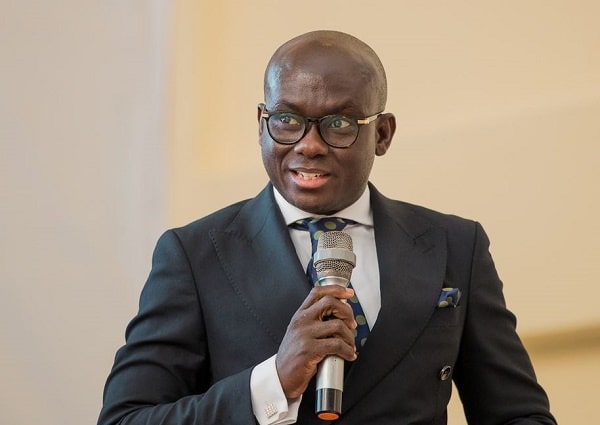
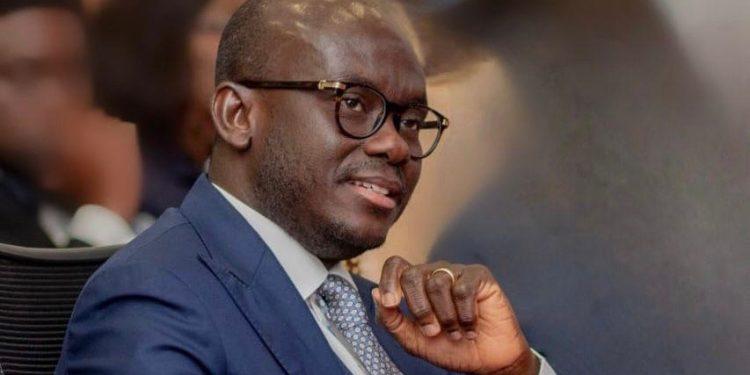
Attorney General Godfred Yeboah Dame has urged Ghanaians to adopt the spirit of peace and unity embodied by Christmas, calling on the public to consider the principles that bring the nation together.
During an interview with Joy FM, the Attorney General highlighted the critical role of peace, particularly in the wake of the 2024 General Election.
“At Christmas, it is my wish that the peace of Christ would indeed permeate every home and resonate in the minds and hearts of the people,” Mr Dame said.
He recognized the country’s advancement in upholding a stable democracy, pointing out that while elections have generally been peaceful, there have been sporadic instances of violence that have tarnished the process.
“We must recognise that what binds us as a people is greater than the few things that divide us,” he remarked.
The Attorney General encouraged Ghanaians to handle post-election issues with a strong respect for the rule of law and a dedication to maintaining peace.
“I pray that we, as a people, will once again demonstrate our tenacity and responsibility for peace by ensuring that all post-election matters are resolved on balance and in law,” he stated.
Mr. Dame expressed pride in Ghana’s democratic achievements, highlighting the significant progress the country has made over the years.
“Democracy is a gift that many nations are still struggling to achieve. It is a system we have embraced as a way of life, and we should take pride in what we have achieved,” he said.
He urged citizens to value the stability democracy offers, describing it as a vital legacy that should be safeguarded for the generations to come.
“We have determined for ourselves a leader for the next four years, and it is essential that we resolve any disputes peacefully to further consolidate our democracy,” he added.
As the Christmas season progresses, the Attorney General reminded Ghanaians of the importance of unity and peace in fostering national growth.
“Let us ensure that the spirit of Christmas—peace, love, and togetherness—guides our actions in the coming days and beyond,” he concluded.
The Attorney-General and Minister of Justice, Godfred Yeboah Dame, has expressed his resilience in the face of numerous criticisms aimed at him for his professional conduct.
Addressing the 2024/2025 Annual General Conference of the Ghana Bar Association, Mr. Yeboah Dame asserted that he is among the most effective Attorneys-General Ghana has ever had.
He highlighted his achievements over the past three years, stating that he has successfully led the Bar through significant developments.
“However, I have braved the challenges of the office and remained undaunted because I love the law and I love utilising the law as an instrument for the developing Ghanaian society. With courage and strength, I have taken the slings and arrows of critical free media even when they are unjustified or wrong.
“Whatever I have done since 2021, I have done it in the best interest of Ghana and state attorneys and staff at the Law Office.”
He emphasized that his actions since 2021 have always been in the best interests of Ghana and the staff at the Law Office, reinforcing his dedication to his role.
The Attorney-General, Godfred Yeboah Dame has expressed confidence in the future of Ghana’s legal profession, describing it as promising.
His confidence stems from the new Legal Profession Bill in the offing as part of measures to comprehensively, and in a more sustainable way, address among other things, issues relating to access to legal education, rules on call to the Bar and regulation of professional conduct.
“We believe in broadening access to legal education whilst preserving standards and quality, cherished values without which the legal profession will lose its relevance to society. With these giant strides, I am confident that the future of the legal profession is bigger, brighter and better,” Mr Dame stated during the 2024 annual conference of the Ghana Bar Association in Kumasi.
He noted that in the past four years, the NPP government has recorded the highest admission of persons to study law and the biggest call of persons to the Bar in the nation’s history.
Since 2021, more than 3,000 individuals have been called to the Bar. In 2022, over 1,000 lawyers were admitted, and in 2023, this figure was surpassed with 1,286 lawyers being called during both the Main Call and Mini Call ceremonies.
He reflected on the role he played in 2021 that ensured the admission of 499 students into the Ghana School of Law, after presenting a petition to the General Legal Council.
The A-G added, “It is correct to say that for many of the junior lawyers, your presence in this room has been made possible by the positive decisions to broaden access to the legal profession by the Akufo-Addo administration.”
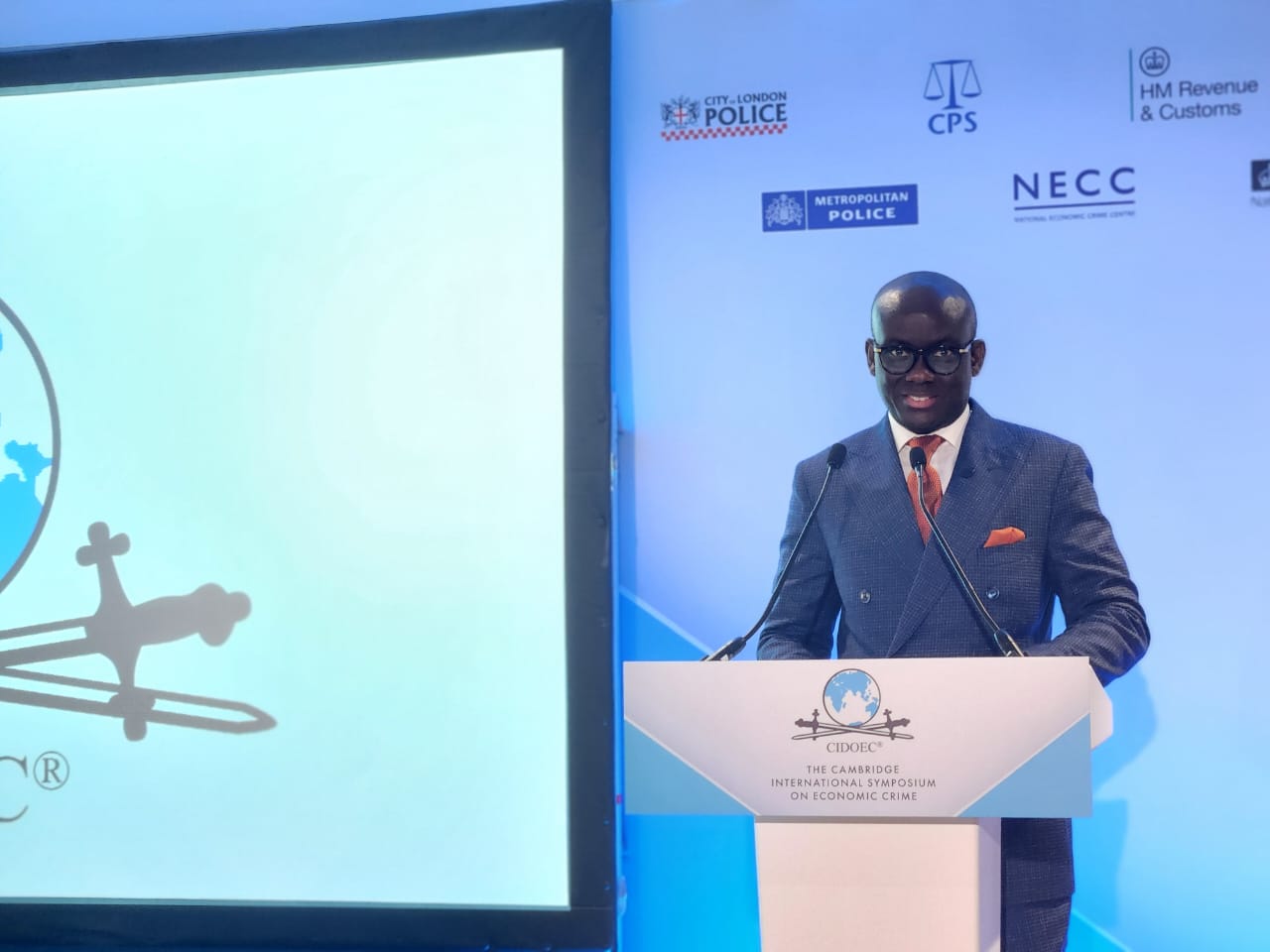
The Attorney General and Minister of Justice, Godfred Yeboah Dame, has asserted that plea bargaining should not be used as a tool to shield individuals from accountability.
He made this statement during his keynote address at the 41st Cambridge Economic Crime Conference, held at Jesus College, Cambridge University, from September 1st to 8th, 2024.
“Prosecutors are “motivated by the sole objective of recovering supposed proceeds of crime in a situation where the accused persons plainly refuse to admit responsibility for the commission of those crimes, is an unwanted paradox inimical to the rationale for the existence of criminal laws,” he told a distinguished audience that included Attorneys-General, senior judicial officers, heads of police and criminal investigative bodies, and other key figures in the fight against economic crime.
Mr. Dame called for enhanced global cooperation to combat the growing threat of cross-border financial crimes.
He emphasized that the ultimate goal of prosecuting such crimes is to trace and recover the assets obtained through illicit activities.
The A-G further highlighted the need for international collaboration, particularly in tracing assets that often cross multiple jurisdictions.
He pointed out the complexities unique to different regions, such as Africa, where initiatives like the African Continental Free Trade Area (AfCFTA) present both opportunities and challenges in the fight against financial crime.
Note that some of these deepfake videos does not always coem to threatens the election but dor comic relief like in the case of bawumia who was
The Attorney General Godfred Yeboah Dame has called for a united global effort to address economic and financial crimes that affect individuals and communities worldwide.
His call for international and domestic collaboration aims to strengthen justice systems worldwide and ensure effective asset recovery and economic stability.
He made this plea while addressing an international audience at the 41st Cambridge Economic Crime Conference on Monday, September 2.
Mr Dame’s keynote address focused on the growing challenge of organized financial crimes and the crucial role of international collaboration in asset tracing.
He stressed that the key to effective prosecution lies in identifying and disrupting the assets acquired through illicit activities.
According to Dame, fostering stronger global partnerships among justice systems is essential for addressing this global menace.
The conference brought together a broad spectrum of experts, including Attorneys-General, senior judicial figures, police leaders, and academics.
Mr Dame used the platform to address the specific challenges faced by different regions, noting that Africa, in particular, faces unique hurdles due to the Africa Continental Free Trade Area (AfCTA).
“Our survival as a global community depends on the efficiency of cooperation among us. The world can develop a proper response to the dangers posed by economic crime only through a coordinated effort based on mutual cooperation between criminal justice partners and the private sector globally,” the Attorney General added.
These challenges include corruption, money laundering, and environmental issues.
Highlighting the importance of international conventions such as the United Nations Convention Against Corruption (UNCAC) and the African Union Convention on Preventing and Combating Corruption, Dame called for their effective deployment to facilitate cross-border asset recovery.
He also underscored the need for international data sharing to combat economic crime more effectively.
Dame’s reflections on the conference theme, “Suspect Assets,” underscored the critical role of asset tracing in preventing economic crime.
He argued that recovering illicit wealth is not only essential for combating crime but also significantly contributes to national revenue, especially for countries like Ghana.
On the topic of plea bargaining, Dame expressed a balanced view, emphasizing that while it can be a useful tool, it must be approached with caution. He warned against compromising the integrity of the legal system and stressed that plea deals should be based on clear admissions of guilt for financial crimes.
Mr Dame also outlined Ghana’s domestic efforts to combat economic crime through key legislations: The Economic and Organised Crimes Office Act, 2011 (Act 804), The Office of the Special Prosecutor Act, 2017 (Act 959), and the Companies Act, 2019 (Act 992).
These laws are designed to enhance transparency, trace and recover assets, and bolster the fight against corruption.
Attorney General and Minister of Justice, Godfred Yeboah Dame, has explained that the Trafigura judgment debtissue is not new, emphasizing that no recent judgment has been made against Ghana by a U.S. court.
This statement was made in response to reports that a District of Columbia Court had ordered the Ghanaian government to pay over $111 million, along with post-judgment interest, following a Motion of Judgment in favor of the Ghana Power Generation Company (GPGC).
During an appearance on Citi FM on Wednesday, August 21, 2024, Mr Dame clarified that , “This award was given way back in 2021, and the government since then has had the obligation to pay, and indeed they have been making efforts to pay.
“It is the failure to exhaust payment which has led to the company seeking enforcement orders in other jurisdictions. It is not the case where there has been a new judgment or a fresh award given by any court or any tribunal anywhere.”
He further dispelled the notion that a new judgment debt had been issued, stating, “The impression that is sought to be created by the publication that I have seen today—another judgment debt, a new judgment debt, US Court awards, there is no US Court which is awarding judgment against the government of Ghana.
“It is only an enforcement order, and that enforcement order is on account of a failure to pay a judgment debt which accrued way back in January 2021 as a result of an award that was given that time.”
Meanwhile, a recent document from a U.S. District Court has uncovered a series of missteps by Ghana’s legal team, which ultimately prevented the country from contesting a $134 million judgment awarded to Trafigura by the English courts.
This case centers on a power purchase agreement between Trafigura’s subsidiary, GPGC, and the Ghanaian government. The agreement was unilaterally terminated by Ghana in 2018, prompting a legal dispute that led to a significant judgment against the country.
Despite a definitive ruling from a UK tribunal that ordered Ghana to pay $134,348,661, the government only made partial payments, leaving an outstanding balance of $111,493,828.92, with interest continuing to accrue.
Compounding the issue, Ghana failed to meet critical deadlines to appeal the UK judgment, further deepening the country’s financial obligations and complicating its legal standing in the matter.
State Attorney and Minister for JusticeGodfred Yeboah Dame has touted his achievement of successfully safeguarding the already strained national kitty from billions of dollars that would have otherwise been paid as judgment debts.
The young Attorney General, proud of his achievements, averred this feat when his was phoned into a radio interview to respond to claims by former Minister for Power and Member of Parliament for Pru East Kwabena Donkor, over the recent $111m judgement debt awarded against the government of Ghana.
In February 18, 2018, the government of Ghana terminated a power purchase deal with Ghana Power Generation Company (GPGC) which resulted in some $134 million award a UK tribunal found on January 26, 2021, against Ghana.
An Additional $111 million has been awarded against Ghana after GPGC filed a lawsuit on January 19, 2024, in the U.S.
District Court, claiming recovery of the mounting interest on principal debt under the Federal Arbitration Act’s Chapter 2 and the New York Convention.
But Kwabena Donkor, the former Power Minister who supervised the signing of the contract with in 2015 when the country was battling a cringing power crisis was quickly heaped blame on the current Attorney General when he was interviewed on Accra-based Joy FM.
Mr Donkor questioned and blamed the Attorney General and Energy Ministry for defaulting on the payment of the initial debt.
In his defence, Mr Dame rebuffed the claim arguing that he was not the Attorney General when the judgement debt was was awarded.
Indeed in January 2021, Mr. Dame was not public officer nor an appointed state attorney as the country had just come out from the 2020 general election.
He added that after the arbitration was concluded, the payment obligation was the solely responsibility of the Ministry of Finance and Ministry of Energy.
It the failure of the government of Ghana to pay this judgement entered in 2021 which has lead to the repeated applications in various by GPGC.
The government of indeed made some payment but the explanation of the default does not lie with the Attorney General but Finance ministry and Energy Ministry.
Mr Dame went on to tout his works maintaining a clean slate when it come judgement.
“The records will show that in my tenure as AG there’s not been a single judgement debt against Ghana and claims were in billions of dollars.” he added Background
A U.S. District Court document has revealed that Ghana’s legal team made critical errors that led to the country’s failure to challenge a $134 million judgment awarded to British energy firm Trafigura.
The judgment stems from a power purchase agreement between Trafigura’s subsidiary, the Ghana Power Generation Company (GPGC), and the Ghanaian government.
A UK tribunal ruled on January 26, 2021, that Ghana breached the contract by terminating it early in February 2018, ordering the government to pay GPGC $134 million plus arbitration costs.
Ghana made only partial payments and then missed the legal deadline to challenge the judgment in UK courts, leaving a significant debt outstanding.
The third accused in the ongoing Ambulance trial, Richard Jakpa, revealed in court that he initiated a conflict with Attorney General (AG) Godfred Yeboah Dame after the court instructed him to begin his defense.
Jakpa stated that he had been assured by the Attorney General that he would be acquitted in exchange for assisting in the prosecution of Dr. Ato Forson.
However, he felt betrayed when the court ruled that he must present his defense.
During cross-examination, Jakpa disclosed that he had a contentious meeting with Godfred Dame at the residence of his cousin, Justice Yonny Kulendi, following this ruling.
He recounted heated exchanges where strong words were exchanged.
Jakpa explained that it was during these interactions that he declared a personal conflict against Attorney General Godfred Dame, viewing him as unjustly attempting to deprive him of his freedom as an innocent citizen.
According to Jakpa, he accused Godfred Dame of damaging his business, international networks, and causing him considerable distress.
“I told him (Godfred Dame) that he is using his law, skills and knowledge to take my liberty away from me unjustly and I am going to use my underworld skills to pay him back,” Richard Jakpa said under cross-examination.
Regarding the recording of the Attorney General, which was mentioned in court, Jakpa clarified that he would not have recorded him if their interactions had been limited to the meeting at Justice Kulendi’s house.
The third accused in the ambulance case, Richard Jakpa, has testified in court that he had two meetings with Attorney General and Minister of Justice, Godfred Yeboah Dame, in 2022, both occurring at approximately 10:30 PM.
Jakpa disclosed this during his cross-examination on Thursday, June 13, by Dr. Cassiel Ato Forson’s legal team, the first accused in the case.
He emphasized that these late-night meetings suggested a sense of secrecy and urgency in their discussions, shaping his understanding of his role and the case’s direction.
During these encounters, Jakpa claimed that Godfred Dame assured him he was not the primary target of the prosecution, with the main focus being Dr. Cassiel Ato Forson.
Jakpa stated that this assurance influenced his decision to fully cooperate with the Attorney General’s office, including sharing crucial documents and information.
He asserted that he was led to believe he would be acquitted through a submission of no case, bolstering his cooperation.
Jakpa further testified that based on these assurances, he received the addendum to the main contract between the Ghanaian government and Big Sea even before the prosecution closed its case, a document pivotal to the trial proceedings.
His revelations during cross-examination have introduced a new perspective to the ongoing trial, shedding light on interactions between the accused and Attorney General Godfred Dame.
Deputy Attorney General Alfred Tuah-Yeboah is advocating for the ambulance trial to proceed on a daily basis.
This request follows recent allegations against Attorney-General Godfred Yeboah Dame, promptingDr. Cassiel Ato Forson, the main defendant in the case, to call on the Chief Justice to televise the remaining hearings.
While Tuah-Yeboah’s office has no objections to the proposal for live broadcasting, he suggests that incorporating daily hearings might expedite the trial process.
“In fact, the AG had indicated at a different forum that when it comes to public interest matters or matters where the public has that kind of interest, it will be in the interest of justice that such proceedings are broadcast live on television and radio, so we don’t have any objection to the request but as I said, the Chief Justice has the final say.
“Not only the broadcast, we are also looking at day-to-day hearing so that we can get to the end of this matter as soon as possible.
The broadcast, if possible, may have to go with day-to-day hearing so that we can get to the end of this matter.”
The Minister for Justice and Attorney General, Godfred Yeboah Dame, has emphasized the imperative of addressing corruption allegations, particularly those involving public officeholders, with objectivity and fairness.
His remarks follow widespread criticism regarding advice from the Attorney General’s Office to the Economic and Organised Crime Office (EOCO) to cease money laundering investigations into the activities of former Sanitation Minister, Cecilia Dapaah.
Representing the President at the 14th Commonwealth Regional Conference of Heads of Anti-Corruption Agencies in Africa, Mr. Dame underscores the importance of transparency in the anti-corruption endeavor.
He advocated for honesty and integrity in disclosing investigation outcomes, urging all stakeholders, including investigative bodies, civil society, and the public, to refrain from sensationalism.
Mr. Dame believes that fully sharing the results of corruption allegations against public officers, especially high-ranking government officials, whether refuted or unsubstantiated, is crucial for bolstering public confidence, reducing suspicion, distrust, and cynicism.
Additionally, Mr. Dame suggested that investigative bodies should transparently disclose the complete findings of investigations into corruption allegations against government members that are ultimately proven false.
He rejected the notion that every public officeholder is corrupt, urging investigative authorities to abandon the belief that perpetuating allegations, even if unfounded, is necessary to remain relevant.
In essence, Mr. Dame stressed the importance of fairness, transparency, and accountability in the fight against corruption, advocating for a balanced and objective approach devoid of sensationalism or prejudice.
“The fight against corruption also requires honesty and integrity in the disclosure of results. There must be an avoidance of sensationalism by all parties involved; investigative bodies, civil society and the public. It augers well for the fight if the results of corruption allegations against public officers, particularly senior members of government which are refuted and unsubstantiated, are fully put out by investigative bodies.
“Investigative bodies must be honest and bold enough to disclose to the public the full results of investigations into allegations of corruption against members of the government which turned out to be untrue.
“This is one sure way to boost the confidence of the public in their government, reduce their suspicion, distrust, and cynicism with which the public views officeholders.”
“There is a truism that not every public officeholder is corrupt and investigative authorities must discard the view that the only way to stay relevant is by keeping the flame of allegation of corruption against public officeholders burning, even if same to journalists are unfounded and without basis.”
Attorney-General and Minister of Justice Godfred Yeboah Dame has issued a directive to the Inspector-General of Police, Dr. George Akuffo Dampare, advising against the arrest of drivers for minor infractions.
The letter, dated February 9, 2024, stressed that actions such as running red lights or lacking a valid insurance certificate should not result in vehicle impoundment.
Mr. Dame, as the government’s principal legal adviser, emphasized the importance of fairness and reasonableness in applying road traffic regulations, particularly Regulation 158.
He argued that impounding vehicles for minor violations not only imposes a financial burden on the state but also poses risks such as vehicle deterioration and theft.
Mr. Dame warned of potential legal repercussions and judgement debts arising from unnecessary lawsuits if such practices continue.
“As the principal legal adviser to the Government, I advise that police officers should desist from impounding or prohibiting the use of motor vehicles for minor offences such as alleged violations of road rules contained in Regulation 106, including crossing red lights or driving without a valid insurance certificate,” wrote the Attorney-General.
The Attorney-General urged the police to exercise discretion judiciously, highlighting the need for fair and reasonable law enforcement practices to avoid legal action against the government.
Read the Attorney-General’s full letter below:
RE: IMPOUNDING OF OR PROHIBITION OF THE USE OF MOTOR VEHICLES FOR MINOR VIOLATIONS OF ROAD TRAFFIC REGULATIONS
The Office of the Attorney-General and Ministry of Justice has received incessant complaints from members of the public including lawyers and senior public officials about the tendency of officers of the Ghana Police Service to impound or prohibit the use of motor vehicles deemed to have violated provisions of the Road Traffic Regulations 2012 (L. I. 2180).
The provisions of L. I. 2180 under which police officers regularly exercise the discretion to impound vehicles, relate to alleged violations of the “Rules of the road” contained in Regulation 106. and other provisions pertaining to crossing the red light or driving a vehicle without a valid insurance certificate. A reason often advanced by police officers for impounding a vehicle is the necessity to “use the vehicle as an exhibit” in court proceedings. Whilst noting the mandate of personnel of the Ghana Police Service, we observe that relevant provisions of Regulation 158 of L. I. 2180 which govern the power to inspect, impound and prohibit the use of motor vehicles stipulate as follows:
“158(1) An examiner, an authorised vehicle inspector appointed by the Licensing Authority or a police officer may inspect a motor vehicle or a trailer to ascertain whether the provisions of the Act or a regulation made or permit issued under the Act are being complied with.
(2) In the event of non-compliance, an examiner authorised by the Licensing Authority or a police officer not below the rank of inspector may by order in writing prohibit the further use of the motor vehicle or the trailer until the provision has been complied with.
(5) Where a motor vehicle or trailer is found parked on a road, a police officer may impound the motor vehicle or trailer or cause it to be taken to a police station or place of safety and be detained there until the owner of the motor vehicle or trailer and the person driving the motor vehicle or responsible for the trailer can be identified and dealt with as provided for under these Regulations.
(7) A person who contravenes this regulation commits an offence and is liable on summary conviction to a fine of not less than twenty-five penalty units and not more than fifty penalty units or to a term of imprisonment of not more than three months or to both.”
A careful examination of L. I. 2180 will disclose that the violations, for which police officers regularly impound vehicles, including Regulation 106 (Rules of the road) and other provisions relating to ignoring red light and driving without a valid insurance, are misdemeanours. This is easily discernible from the prescribed punishment of a maximum of fifty penalty units, or a term of imprisonment of not more than three months or to both. By virtue of section 1 of the Criminal Offences Act, 1960 (Act 29). a “misdemeanour” is construed in accordance with section 296 of the Criminal and other Offences (Procedure) Act, 1960 (Act 30). Section 296(4) of Act 30 stipulates as follows:
“Where a criminal offence which is not an offence mentioned in subsection (5), is declared by an enactment to be a misdemeanour and the punishment for that offence is not specified, a person convicted of that offence is liable to a term of imprisonment not exceeding three years.” It is thus beyond doubt that the violations the subject matter of this letter are misdemeanours.
An application of the road traffic regulations, particularly Regulation 158 requires fairness, candour and reasonableness. The impounding of a vehicle is not necessary for proof of a violation of any of the rules contained in Regulation 158 or indeed, most of the provisions in L. I. 2180. Thus, a position that the vehicle is required to be “used as an exhibit” in court is untenable and unreasonable.
As Attorney-General and the principal legal adviser to the Government, I advise that police officers should desist from the impounding or prohibition of the use of a motor vehicle for minor offences such as an alleged violation of any of the rules of the road contained in Regulation 106, and other provisions pertaining to crossing the red light or driving a vehicle without a valid insurance certificate. etc.
An unreasonable exercise of discretion or a failure to adhere to the advice herein has the tendency to result in unnecessary suits against the Government, occasioning needless expense and potentially avoidable judgment debts. The Office of the Attorney-General is already inundated with many suits arising from wrongful exercise of discretion and negligence by police officers. Further, it ought to be noted that responsibility for maintaining the condition of an impounded vehicle shifts from the owner of the vehicle to the State. Impounded vehicles are exposed to the risks of deterioration and theft of essential parts.
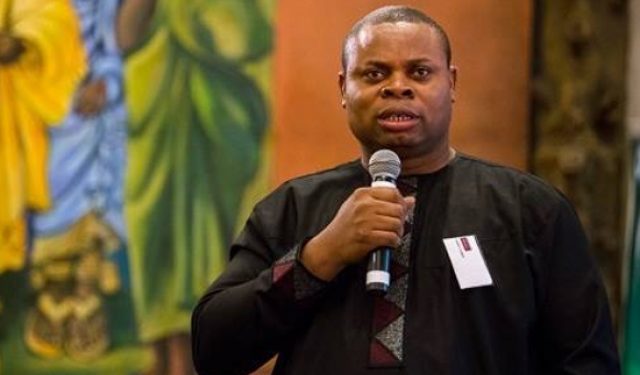
Founding President and CEO of the IMANI Centre for Policy and Education, Franklin Cudjoe has expressed strong criticism towards Attorney General Godfred Yeboah Dame, accusing him of displaying a consistent bias against autocratic executive leaders, which he considers deeply concerning.
In a series of tweets addressing the issue, Franklin accused the Attorney General of lacking objectivity in his role and instead using his position to pursue personal vendettas against political opponents.
Highlighting specific cases such as SALL, Domelevo, Charlotte Osei, James Quayson, and Martin Amidu, Franklin condemned what he perceived as a trend of illiberal and politically divisive advice being given by the Attorney General to support the actions of an autocratic executive.
“The Attorney-General has been legendary in giving the most illiberal & politically divisive advice to a willing autocratic executive as far as personnel liberties of persons they disrespect dislike is concerned – my SALL, Domelevo, Charlotte Osei, James Quayson, Martin Amidu. Sad,” Franklin Cudjoe stated.
See post below:
The Attorney-General has been legendary in giving the most illiberal & politically divisive advice to a willing autocratic executive as far as personnel liberties of persons they disrespect dislike is concerned- my SALL, Domelevo,Charlotte Osei, James Quayson, Martin Amidu. Sad.
The Attorney-General and Minister for Justice, Godfred Yeboah Dame, has clarified that his office has not received any prosecutable docket related to the murder of investigative journalist, Ahmed Suale.
Although investigations are ongoing, the Minister for justice revealed that four initial suspects were detained and later released on police enquiry bail due to a lack of eyewitness identification.
Ahmed Suale lost his life on January 16, 2019, in Madina, targeted by two unidentified assailants on a motorcycle with a concealed license plate as he returned from a family meeting.
During a recent parliamentary session, Minister Dame highlighted the murder of Ahmed Suale as one of several pending cases.
“A number of cases are pending in court and I will begin with the murder of Ahmed Suale. It is worthy to know that it is a matter being investigated by the criminal investigations department of the Ghana Police Service. No docket or document fit for prosecution has been built and presented to my office since the murder.
He informed the assembly that the criminal investigations department of the Ghana Police Service is actively handling the matter, but, as of now, no document suitable for prosecution has been submitted to his office.
Mr Dame mentioned a previous visit from the former inspector of police, James Oppong-Boanuh, expressing concern over the unresolved case and others, leading to an inquiry and a subsequent report request.
“On being appointed Attorney General, the former inspector of police [James] Oppong-Boanuh paid a courtesy call on me on March 29, 2021, for being concerned about the failure to resolve this case and other cases.
“I inquired about the state of investigations into the matter and demanded a report on the case and the director general of CID obliged.”
Attorney General (AG), Godfred Yeboah Dame, has initiated substantial measures to address the situation involving Joshua Amankwa, a 25-year-old who was taken into custody by Kasoa Walantu police for verbally abusing them during a standard search procedure.
With effective effort, the Attorney General managed to obtain bail for Joshua Amankwa, who had been found guilty of verbally attacking police officers during a search of him and fellow passengers in a taxi, despite no evidence of wrongdoing being discovered.
On July 30, 2023, the event transpired, leading to the subsequent presentation of Joshua Amankwa before the magistrate court in Akweley, Kasoa. He faced charges of Offensive Conduct under section 207 of the Criminal Offences Act, 1960 (Act 29), prompted by a formal complaint lodged by police officers affiliated with the divisional operation unit in Kasoa.
Surprisingly, Joshua Amankwa was convicted without any prior notice or consultation with the Attorney General’s department for advice. Upon learning of this conviction, Attorney General Godfred Yeboah Dame took swift action. The AG according to a report by Asaaseradio.com has instructed the Central Region office of the AG’s department to appeal against the conviction and secure bail for the convicted individual while the appeal process is underway.
As a result of these efforts, Joshua Amankwa has been granted bail. The Attorney General’s department is actively working to serve the court’s bail order to the police. Furthermore, the AG’s department intends to proceed with the appeal, seeking to overturn Joshua Amankwa’s conviction.
The incident leading to Joshua Amankwa’s arrest involved police officers stationed at the Divisional Operation unit in Kasoa conducting a routine stop and search on a taxi cab along the Kasoa-Nyanyano main road. Despite finding nothing incriminating on the passengers, including Joshua Amankwa, he reacted with aggression and hurled insults at the officers. He used derogatory language, including calling the officers “foolish people” and making threats related to their work.
Additionally, Joshua Amankwa’s response escalated to invoking deities and placing curses on the officers.
This led to his 12 months sentence by His Worship Stephen Ofori Akrasi, the presiding Magistrate
Since January 2022, a substantial number of criminal cases—119 in total—related to illegal mining (known as “galamsey“) have remained unresolved in the High Court and certain Circuit Courts throughout the nation.
These cases involve the prosecution of approximately 727 individuals.
The main regions where the legal proceedings against individuals involved in illegal mining are concentrated include the Eastern, Ashanti, Western, and Greater Accra Regions.
The Upper East and Northern Regions also have a smaller number of such cases.
Attorney-General and Minister for Justice, Godfred Yeboah Dame, presented this information to the media.
He highlighted that, on average, a typical galamsey case entails the apprehension and legal action against approximately six to seven individuals.
Consequently, the cumulative number of individuals facing trial across these 119 cases exceeds 727. The majority of these cases are prosecuted within the regions where the arrests initially occurred.
Mr. Dame conveyed that the ongoing trials encompass a variety of individuals, including Ghanaians, Chinese, Nigerians, Nigeriens, Burkinabes, and other West African nationals.
Out of the total, fifty (50) cases are pending in Koforidua in the Eastern Region, while thirty-three (33) are being prosecuted in Tarkwa and Sekondi within the Western Region. In the Ashanti Region, twenty-three (23) cases are spread across Obuasi and other locations, and an additional seven (7) are currently awaiting trial in the High Court in Accra.
Within the Upper East and Northern Regions, there are three (3) and one (1) pending cases in Bolgatanga and Tamale courts, respectively.
The accused individuals are facing charges related to operating mining activities without the required license, as well as engaging in the buying and selling of minerals without proper authorization under the Minerals and Mining (Amendment) Act, 2019 (Act 995).
Championed by the Akufo-Addo administration in 2019, the enactment of Act 995 brought about a significant strengthening of penalties for engaging in mineral trading or mining operations without the appropriate license.
For Ghanaian nationals, Act 995 now mandates a minimum imprisonment term of fifteen years and a maximum of twenty-five years, accompanied by a fine ranging from a minimum of ten thousand penalty units to a maximum of fifteen thousand penalty units.
Meanwhile, for non-Ghanaian individuals, the same Act has amplified the consequences for these violations to a minimum imprisonment term of twenty years and a maximum of twenty-five years, coupled with a fine ranging from a minimum of one hundred thousand penalty units to a maximum of three hundred and fifty thousand penalty units.
This new framework contrasts starkly with the regulations established under Act 703, which was passed in 2006. Under Act 703, the penalty for trading in minerals or engaging in mining activities without the appropriate license was either a minimum of three thousand penalty units or imprisonment for a duration of up to five years.
The Attorney-General highlighted several hurdles that have contributed to the relatively sluggish progress in prosecuting suspected illegal mining (galamsey) offenders.
He underscored that the issue of courts granting bail with lenient conditions has led to accused individuals easily meeting the terms and subsequently evading prosecution.
Across the country, numerous accused individuals who were granted bail have absconded, rendering the forfeiture of bail bonds ineffective as the sureties have also fled. Even in cases where they do not abscond, some offenders return to engage in illegal mining after being granted bail.
The Attorney-General emphasized the importance of the Judiciary’s cooperation in the fight against galamsey, urging cautious consideration when granting bail and the acceleration of legal proceedings to ensure prompt prosecution and penalties for offenders.
A lack of witness cooperation also poses a challenge. Securing testimonies from witnesses who initially provided statements during the investigative phase becomes difficult when they are required to appear in court. Witnesses in galamsey cases often reside in the same communities as the accused individuals, leaving them susceptible to threats and intimidation.
Mr. Dame further noted instances where investigators fail to seize the illegal mining equipment used in committing the crime, and even when such items are confiscated, they are not properly presented in court. This significantly hampers the prosecution’s case.
Additionally, arresting officers’ failure to apprehend suspects at the actual mining sites poses another obstacle, making it challenging to establish a direct link between the suspects and the offense.
The dearth of court interpreters proficient in the languages preferred by accused individuals has contributed to the deceleration of court proceedings, as exemplified in the trial of a Vietnamese national in Accra.
The Attorney-General (A-G) reassured the nation of his Office’s unwavering dedication to prosecuting and penalizing suspected offenders following thorough investigations.
Erroneous Sentencing by the Court
A significant challenge in prosecuting galamsey offenders arises from what the A-G characterized as a “peculiar and perplexing situation,” where some judges neglect to apply the new mandatory punishments for those found guilty, instead issuing fines exclusively.
For instance, a case involving the conviction of Chinese and Ghanaian nationals for galamsey in a Tarkwa Circuit Court in 2021 resulted in fines. Responding to this, the Western Region Office of the Attorney-General, in line with the A-G’s direction, pursued judicial review at the High Court to challenge the Circuit Court’s verdict. The High Court upheld the application, and the accused individuals were subsequently sentenced to the legally prescribed terms of fifteen and twenty years, now being served.
A similar circumstance emerged in the Upper East Region in 2022, where individuals prosecuted by the Police received only fines upon conviction. This came to the A-G’s attention, leading him to instruct the Upper East Regional Office of the Attorney-General to intervene by filing applications to annul the fines and enforce the mandatory minimum of fifteen years in prison.
Although Greater Accra is not a primary “galamsey region,” the High Court in Accra has become a focal point for prosecuting significant galamsey cases, particularly involving foreign nationals like the Chinese.
Notably, in September 2022, Attorney-General Godfred Dame revived the prosecution of the alleged prominent galamsey figure, En Huang, also known as Aisha Huang.
Her prosecution had been discontinued by the Republic in 2018, after which she was repatriated. The case against Aisha Huang is progressing steadily, with the prosecution expected to conclude its presentation by May 4th after summoning eleven witnesses.
Mr. Dame noted that many galamsey cases involving foreign nationals are often coupled with charges under Ghana’s immigration laws, due to these individuals frequently infringing upon those regulations.
However, most immigration offenses currently carry fines as penalties, which, according to the AG, has contributed to the persistent violations by foreign nationals. He stressed the necessity of fortifying Ghana’s immigration laws to impose stricter and more dissuasive penalties for violations.
Prosecution of Galamsey in the Eastern Region
Presently, fifty galamsey cases await resolution in the High Court and Circuit Courts of the Eastern Region. Roughly eight of these cases have concluded their prosecution phase, with the court determining a prima facie case for the accused individuals to begin their defense. As a result, the accused parties are presenting evidence in their favor.
Convictions in the Eastern Region
The Attorney-General lauded the exceptional contributions of the Eastern Regional Office of the Attorney-General for their commendable role in penalizing galamsey offenders.
In October 2022, the Attorney-General reported the conviction of 187 individuals, which included nationals from Niger, Nigeria, and China, for galamsey offenses between 2017 and October 2022. Many of the accused individuals were tried and sentenced under the previous section 99 of the Minerals and Mining Act, 2006 (Act 703), which allowed for penalties solely in the form of fines. This often led to defendants pleading guilty and receiving only fines.
The introduction of more stringent penalties for galamsey, including mandatory prison sentences of fifteen years for Ghanaians and twenty years for foreign nationals under Act 995, has prolonged trials as accused individuals resist pleading guilty and engage in various tactics to delay proceedings. Out of the 187 convicted individuals, thirty-three were tried and sentenced under Act 995 between August 2021 and September 2022, currently serving prison terms of fifteen to twenty years, alongside fines imposed by the court.
Galamsey Trials in the Western Region
As of now, twenty-three galamsey cases are pending, primarily in Tarkwa and Sekondi courts. This range of cases involves both foreign nationals and company officials who misused exploratory and prospecting licenses to unlawfully partake in mining activities.
Prosecution of Galamsey Offenses in the Ashanti Region
Since 2022, the Ashanti Region has recorded thirty-three ongoing galamsey cases. Historically, Ghana Police Service had exclusively handled these cases, a situation fraught with challenges. To address this, the A-G directed the Kumasi Office of the Attorney-General to consolidate and oversee the prosecution of all galamsey dockets, thereby enhancing the efficiency of the process in the Ashanti Region.
On Tuesday, August 1, 2023, Parliament unanimously endorsed the reappointment of Madam Cynthia Naa-Koshie Lamptey as Deputy Special Prosecutor for a second five-year term.
Madam Lamptey initially assumed the position in 2018 for a five-year term, as per Section 16(2) of the Office of the Special Prosecutor Act, 2017 (Act 959), with Parliament’s prior approval. Her first term expired in May 2023.
On July 6, 2023, the Attorney General and Minister of Justice, Mr. Godfred Yeboah Dame, informed Parliament via a letter that President Akufo-Addo had delegated his power to reappoint Madam Lamptey for another term in accordance with Article 195(2) of the 1992 Constitution and Section 16(3) of Act 959. The reappointment was subject to the approval of Parliament.
Following Standing Order 172 and in accordance with Standing Orders 6 and 17(2), and considering the Supreme Court’s decision in the case of Joseph Henry Mensah versus Attorney-General, which clarified the term “prior approval” as a term of art, the Appointments Committee varied its usual procedure and conducted the vetting of Madam Lamptey behind closed doors.
In the vetting process, Madam Lamptey assured the Committee of her unwavering belief in the independence of individuals appointed to the Office of the Special Prosecutor.
During the vetting, concerns were raised about the effects of publishing cases under investigation that reveal the identity of the persons involved before charges are filed.
In response, the nominee explained that the publication list, citing only the Attorney-General against the person under investigation, did not imply culpability from her perspective.
Mr. Alexander Kwamina Afenyo-Markin, the Deputy Majority Leader and New Patriotic Party (NPP) Member of Parliament (MP) for Efutu, moved the Motion for the House to adopt the report. He stated that Madam Lamptey had performed her duties without any adverse reports from her superiors or the public, making her worthy of consideration based on the Constitution.
Mr. Haruna Iddrisu, the National Democratic Congress (NDC) MP for Tamale South, called for the criminalization of unexplained wealth, with the burden of proof placed on the accused person.
Mr. Mohammed Mubarak Muntaka, NDC MP for Asawase, expressed concern about the precedent set by the in-camera vetting of Madam Lamptey. He emphasized that the Standing Orders of the Appointments Committee dictate that vetting should be held in public, and he worried that the practice of in-camera vetting could set a problematic precedent for future nominees.
In a voice vote, the House unanimously approved Madam Lamptey’s reappointment when the First Deputy Speaker, Mr. Joseph Osei Owusu, presiding, put the question forward.
His lawyers emphasised on this when they were called to move his application for the Judge, Justice Afia Serwah Asare-Botwe to recuse herself.
The former deputy finance minister who is accused of causing financial loss to the state filed the application following the grant of a witness summons he requested from the court. His lawyers had asked the court to issue witness summons for some of his witnesses including former health minister, Alex Segbefia, as they were facing difficulties in getting them to appear even though they had filed witness statements.
The judge, Justice Afia Serwah Asare-Botwe before allowing the motion to be moved, inquired why they resorted to a motion compelling the appearance of the witnesses while admonishing the lawyers of Dr. Ato Forson of the consequences of issuing an arrest warrant for the witnesses if they fail to appear.
His lawyers led by Dr. Bassit Bamba insisted that was the best option due to the difficulty in securing their appearance to testify.
But weeks after this request was granted, lawyers of Dr. Ato Forson applied to the court for the judge to recuse herself on grounds that the admonishment by the judge amounted to bias. According to the lawyers, the caution by the judge was not only bias but also portrayed their witnesses as criminals who will willfully disobey a court order.
However, when the case was penned down for determination on Thursday, Dr. Bassit Bamba argued that the Judge does not even have jurisdiction to hear the application on whether she ought to recuse herself for the alleged bias.
He argued that the Judge hearing the matter will amount to her being a judge in her own case.
“The course which we are referring to has to do with certain prejudicial utterances that your ladyship has made in the course of hearing this matter.
“In that regard, your ladyship has become the subject matter of this application, we pray that your ladyship should decline to hear this matter, for this court is differently constituted to hear this application,” Dr. Bassit Bamba advanced in court.
He further argued that there is precedence to show that when the allegations involved are of grave bias, it warrants a call for the sitting Judge not to hear the application. In his view, statements of the Judge including a point that his case will be deemed to have been closed if the summoned witnesses do not appear and he does not secure the attendance of any other witnesses is an infringement on his client’s right to fair trial under article 19.
The judge then inquired why the application was filed in the first place if the applicant considered her unfit to hear the application.
Dr. Ato Forson’s lawyers also clarified that in their application for witness summons they didn’t claim unwillingness on the part of the witnesses to testify but rather a difficulty in reaching out to the witnesses.
The Judge who disagreed on what the records of proceedings were queried if the witnesses were willing, why did Ato Forson apply for the witness summons.
Justice Afia Serwah Asare-Botwe further inquired if indeed the difficulty was just in reaching out to the witnesses, how was a witness summon going to help reach them.
Attorney General Godfred Yeboah Dame described the application as unmeritorious.
He argued that it is a settled position in law that a Judge whom bias has been alleged against has jurisdiction to hear the matter.
He further argued that the court has not in any way shown bias and all orders made are within the powers of the court.
Justice Afia Serwah Asare-Botwe has adjourned the case to October 12 to deliver her ruling on both the objection to her jurisdiction to hear the matter and the substantive application for her to recuse herself.
Meanwhile, an application by Dr. Ato Forson for his passport to be released to him was not heard as the Judge was of the view that her capacity to hear the application will be based on the ruling to be delivered in October.
Renowned economist Kwame Pianim has stated that Members of Parliament (MPs) should not receive their allowances if they choose to boycott their parliamentary duties as a form of protest against situations they are content with.
According to him, lawmakers have no justification for boycotting their responsibilities within the parliament.
“A parliamentarian has no business to boycott parliament. If they boycott parliament their allowances should be taken off,” he said.
“Parliament is young, there is a tendency now to put a lot of burden on the fledgling judiciary which is not fair,” he added.
In response to the Minority in Parliament’s decision to boycott parliamentary sessions as a means of protesting the trial of Assin North Member of Parliament James Gyakye Quayson, Mr Pianim voiced his strong disagreement.
The Minority justified their actions by claiming that they are reciprocating the government’s perceived “persecution” of Mr. Quayson.
However, Pianim maintains that MPs should not resort to such boycotts and instead should fulfill their parliamentary duties, regardless of their concerns or disagreements.
In a statement, the opposition lawmakers expressed their concerns regarding the trial of Hon. James Gyakye Quayson, the Assin North Member of Parliament.
The Attorney-General and Minister for Justice, Mr. Godfred Yeboah Dame, had requested that the trial proceed on a daily basis, even though there was an application for a stay of proceedings and a pending application before the Court of Appeal against the daily trial.
Despite these circumstances, the High Court ruled in favor of continuing the daily hearings. This decision by the court prompted the opposition lawmakers to react, with their statement highlighting their dissatisfaction with the perceived “persecution” and the subsequent boycott of parliamentary duties in protest.
“In essence, the rulings by the High Court put Hon. James Gyakye Quayson in the same position that he was placed in by the Supreme Court before the Assin North Constituency by-election
“If the Member of Parliament must appear in court every week day for trial, what time will he have to attend to Parliamentary business to represent the people of Assin North? We are therefore, at this point, including all options available to us to defend and protect our colleague. Hon. James Gyakye Quayson is the only person to have been elected twice within a Parliamentary term. He first won the 2020 Parliamentary election in Assin North Constituency, which was declared null and void by the Supreme Court after two and a half years. This triggered a by-election which he won again by an overwhelming 57.56% on 27th.”
On Tuesday, July 18, an Accra High Court rejected Mr. Quayson’s application for a stay of proceedings, which aimed to halt his criminal trial until the appeal process at the Court of Appeal and Supreme Court was concluded.
Consequently, the court permitted the cross-examination of the prosecution’s first witness to proceed.
However, Abraham Amaliba, one of Mr. Quayson’s lawyers, raised doubts about the credibility of the prosecution’s first witness in the ongoing criminal trial of Mr. Quayson.
“He swore an oath that his statement was written in English [but] it turned out that when he was shown his own statement he spoke in Twi and it was recorded, that goes to the credibility of the witness, that goes to his mindset.
“So clearly, you notice that the prosecution witness was not helpful to the prosecution at all,” he told journalists after the court hearing on Tuesday, July 18.
The Minority Caucus stated that it will explore all available options to defend their colleague, James Gyakye Quayson as well as protect his interests.
Quayson’s legal team had appealed the High Court’s decision for a daily trial.
However, the Court of Appeal dismissed the application on July 19, allowing the daily trial of the embattled MP to proceed.
The Minority Chief Whip, Kwame Governs Agbodza, expressed concerns about the consequences and implications of this decision on the MP’s ability to serve his constituents.
Below is the full statement from the Minority
The Minority in Parliament has decided to reciprocate its response to the government’s escalation of the ongoing persecution of the Member of Parliament for Assin North Constituency, Hon. James Gyakye Quayson.
Following a request by the Attorney-General and Minister for Justice, Mr. Godfred Yeboah Dame, that Hon. James Gyakye Quayson be tried on a daily basis, despite an application for stay of proceedings and a pending application before the Court of Appeal against the daily trial, the High Court has ruled that it will continue to hear the case daily.
In essence, the rulings by the High Court put Hon. James Gyakye Quayson in the same position that he was placed in by the Supreme Court before the Assin North Constituency by-election.
If the Member of Parliament must appear in court every week day for trial, what time will he have to attend to Parliamentary business to represent the people of Assin North? We are therefore, at this point, including all options available to us to defend and protect our colleague.
Hon. James Gyakye Quayson is the only person to have been elected twice within a Parliamentary term.
He first won the 2020 Parliamentary election in Assin North Constituency, which was declared null and void by the Supreme Court after two and a half years. This triggered a by-election which he won again by an overwhelming 57.56% on 27th June, 2023.
The Attorney-General, Godfred Yeboah Dame, is seeking an injunction at the Commercial Division of the High Court, Accra restraining Cassius Mining Limited, an Australian-owned mining company from instituting or pursuing any arbitration outside the jurisdiction of Ghana.
The A-G is also restraining the company from taking any step whatsoever in international arbitration proceedings against the Government of Ghana until the arbitration instituted by Cassius Mining Limited against the Government of Ghana at the Ghana Arbitration Centre in 2018 has been heard and determined.
It would be recalled that earlier in the year, Cassius Mining instituted international arbitration against the Government of Ghana at the Permanent Court of Arbitration claiming about US$300 Million, which was suspended following objections by the Attorney-General.
Notwithstanding this, the Australian-owned company has made attempts at resorting to other international arbitration forum to pursue its quest of instituting international arbitration against Ghana.
Backing his application with many voluminous documents, the Attorney-General states, on 12th October 2016, Cassius Mining Limited applied for a prospecting licence from the Government of Ghana covering 13.791 km2 of the Gbane/Datoko area in Talensi, Upper East Region of Ghana. This was granted by the Government of Ghana on 28th December 2016 for a term of two years expiring in December 2018.
The A-G contends that clause 21 of the Prospecting Licence Agreement specifically required any question or dispute that arises regarding the rights, powers, duties and liabilities of the parties thereto, to be referred to arbitration in accordance with the Alternative Dispute Resolution Act, 2010 (Act 798) of Ghana.
In this regard, following allegations by Cassius Mining of what it considered to be unlawful and arbitrary actions by the Government of Ghana, the company by a letter dated 14th June 2018, notified the A-G of its referral of the dispute between the parties to arbitration under the auspices of the Ghana Arbitration Centre in accordance with the Minerals and Mining Act, 2006 (Act 703) and clause 21 of the Agreement between the parties.
On 26th June, 2018, the Australian-owned company indeed, referred the dispute to arbitration at the Ghana Arbitration Centre pursuant to clause 21 of the Prospecting Licence Agreement and the Alternative Dispute Resolution Act, 2010 (Act 798). It proceeded to file a Statement of Claim at the Ghana Arbitration Centre claiming a number of reliefs.
The A-G stated that on 9th January 2019, Ghana filed an answer to Cassius Mining’s Arbitration at the Ghana Arbitration Centre.
Following this, a three-member arbitral tribunal comprising Mr. Emmanuel Amofa, Mr. Kizito Beyuo, and Professor Albert Fiadjoe was duly constituted for the hearing of Cassius Mining’s claim.
Mr Dame says that, in spite of the pendency of the arbitration proceedings at the Ghana Arbitration Centre and in the face of the clear provisions of the arbitration provisions under the Prospecting Licence Agreement and Ghana’s Alternative Dispute Resolution Act, Cassius Mining on 3rd February 2023, instituted international arbitration proceedings against the Government of Ghana in respect of the same subject matter, claiming total amounts of almost US$300 Million, under Article 3.1 of the UNCITRAL Arbitration Rules as adopted in 2021 (UNCITRAL Rules).
The A-G observes that quite curiously, Cassius Mining titled the originating process “IN THE MATTER OF AN ARBITRATION UNDER A PROSPECTING LICENCE AGREEMENT DATED 28 DECEMBER 2016”. Cassius Mining proposed in that Notice of Arbitration, that the Secretary-General of the Permanent Court of Arbitration at The Hague (PCA) serve as the appointing authority for the said arbitration and that, the arbitration be administered by the PCA.
The Attorney-General submits that Cassius Mining instituted the international arbitration proceedings even though the “UNICTRAL Rules” is not referred to in the Prospecting Licence Agreement. Further, Cassius Mining knew that the Permanent Court of Arbitration is not mentioned in the Prospecting Licence Agreement and that, the Ghana Arbitration Centre has been administering the arbitration between the parties regarding the same Prospecting Licence Agreement as far back as 2019.
The A-G states further that, in a Response to the notice of arbitration dated 17th March, 2023, the Government of Ghana raised objections to the institution of the international arbitration by the Australian-owned mining firm and requested the tribunal to declare the proceedings instituted by Cassius Mining “a legal nullity and the arbitration terminated”. The A-G herein further indicated that he will raise a preliminary objection to the jurisdiction of the PCA in a bifurcated phase of the Arbitration to avoid unnecessary expenditures of time and costs for the Parties and the Tribunal.
The Permanent Court of Arbitration (PCA) on 20th March, 2023, invited Ghana to confirm whether it agrees to the PCA administering this arbitration, as proposed by the Claimant, Cassius Mining.
The Attorney-General by a letter dated 27th March, 2023, raised vehement objections to the jurisdiction of the PCA and asked the PCA to determine as a preliminary matter, whether it has jurisdiction in the matter or any role to play in the dispute between the parties.
The A-G states that “the clear abuse of process and reprehensible attempt at forum shopping was not lost on the Secretary-General of the Permanent Court of Arbitration”, as, by a letter to the parties dated 30 March 2023, the PCA decided that “the PCA Secretary-General may act as appointing authority under the UNCITRAL Rules if all parties so agree. The PCA understands that no such agreement has been reached in this matter”.
The PCA further decided that there is no arbitral tribunal for the dispute constituted since the parties have not agreed.
The A-G asserts that the effect of the decision of the PCA is that the international arbitration commenced by Cassius Mining Limited under the UNCITRAL Rules could not proceed unless the parties including the Government of Ghana, had agreed for the Permanent Court of Arbitration to appoint a tribunal.
Given that the parties had not agreed (either in the Prospecting Licence Agreement or in any document) to submit the dispute between the parties to the jurisdiction of an international arbitration tribunal under the UNICTRAL Rules, it was clear that a dispute between the parties could never be submitted for determination by such a forum.
Faced with this legal stumbling block in the pursuit of international arbitration against Ghana, Cassius Mining instead of returning to Ghana to continue with the ongoing arbitration at the Ghana Arbitration Centre that the company itself had earlier instituted, instituted another international arbitration proceeding by purporting to file what it described as an “Amended Notice of Arbitration” this time entitled “IN THE MATTER OF AN ARBITRATION UNDER THE UNCITRAL ARBITRATION RULES (2021)”.
The A-G says that he has refused to respond to the Amended Notice of Arbitration as same is a nullity. Consequently, no arbitral tribunal has been constituted for the hearing of this new international arbitration.
The Attorney-General submits that the recourse by Cassius Mining to international arbitration is a gross abuse of process and most oppressive of the Government of Ghana as, in Clause 21 of the Prospecting Licence Agreement, the parties have agreed that their dispute “shall be referred to arbitration in accordance with the Alternative Dispute Resolution Act, 2010 (Act 798).” Nowhere have the parties agreed that their disputes would be resolved “UNDER THE UNCITRAL ARBITRATION RULES (2021)”.
The A-G observes that in both the original international Notice of Arbitration and Amended Notice of Arbitration, Cassius Mining has proposed that “the seat of arbitration be London”.
In the view of Mr. Dame, Cassius Mining clearly is keen on enabling the High Court of England & Wales to have supervisory jurisdiction over the arbitration instead of the courts of Ghana, as stated in Act 798 the agreement between the parties.
The A-G submits that, by Clause 21 of the Prospecting Licence Agreement entered into between Cassius Mining and the Government of Ghana, the arbitration law governing the resolution of disputes between the parties is the Alternative Dispute Resolution Act, 2010 (Act 798) which grants the High Court of Ghana the power to supervise the arbitral proceedings, and not the High Court of England and Wales.
The Attorney-General prays for an injunction to restrain the Australian-owned mining firm from pursuing any fresh international arbitration on the ground that this amounts to forum shopping. Mr. Dame submits that Cassius Mining’s forum shopping efforts also constitute an attempt to strip the High Court of Ghana of its statutory jurisdiction to supervise arbitration instituted domestically.
The A-G finally contends that unless restrained by the High Court of Ghana, the Australian-owned company will continue searching for an international forum that will support its breach of Clause 21 of the Prospecting Licence Agreement and undermine the domestic proceedings currently pending before the Ghana Arbitration Centre, which the company itself instituted way back in 2018.
The A-G contends that if the court does not restrain Cassius Mining, apart from condoning a blatant violation of the rights of the Republic of Ghana and a denial of the jurisdiction of the High Court of Ghana, the company’s forum-shopping activities will result in unnecessary cost and expense to the Government of Ghana.The application filed by the A-G has been fixed for hearing at the Commercial Division of the High Court on Wednesday, 12th July 2023.
It remains to be seen what Cassius Mining’s response or next move will be.
The Accra High Court has rejected the “submission of no case” filed by En Huang, also known as Aisha Huang, the alleged Chinese illegal mining kingpin, in a illegal mining (galamsey) case.
In a ruling today, the court, presided over by Justice Lydia Osei Marfo, held that the prosecution had established a prima facie case against Aisha Huang, reports Graphic Online’s Emmanuel Ebo Hawkson.
Consequently, the court directed the accused person to open her defence to answer to the charges leveled against her.
Not guilty
En Huang, a Chinese national has been accused of being in the thick of affairs of galamsey, especially in the Ashanti Region.
She was deported from Ghana in 2018, after the A-G decided to discontinue her trial in which she was accused of engaging in small-scale mining without licence.
However, she was said to have sneaked back into Ghana to allegedly engage in the same activities for which she was deported.
The Attorney-General (A-G), Godfred Yeboah Dame, then decided to prosecute her for the alleged crimes before her deportation and new ones committed since her entry back into the country.
It is the case of the prosecution that Aisha had an illegal mining concession at Bepotenten in the Amansie West District in the Ashanti Region and also operated a mining support services company.
She has pleaded not guilty to undertaking a mining operation without a licence, facilitating the participation of persons engaged in a mining operation, the illegal employment of foreigners and entering Ghana while prohibited from re-entry.
On Tuesday, March 21, Ghana’s attorney general and minister of justice, Godfred Yeboah Dame, met with the deputy prime minister of the United Kingdom and the Lord Chancellor, Dominic Raab.
The meeting at King Charles Street addressed a variety of subjects relating to the two countries’ judicial systems.
Mr Raab expressed his profound appreciation for Ghana’s strong support for the work of the International Criminal Court(ICC), evidenced through what he described as the “powerful statement” delivered by Ghana’s Attorney-General.
Mr Dame represented the African continent at the conference on Monday at Lancaster House, as well as unequivocal statements by the President of Ghana at various international fora.
In his view, Ghana was the beacon of hope and inspiration.
The UK Deputy Prime Minister, Lord Chancellor and Secretary of State for Justice noted the steps Ghana’s Attorney-General was making to bring reform into criminal justice delivery in Ghana and stated that same was in the right direction.
He further indicated that for the United Kingdom, similar issues relating to prison reform as well as constitutional changes, in order to make decisions from the UK domestic courts assume greater prominence following the exit of the UK from the European Union, were very pressing.
Mr Raab noted that the passage of the plea bargaining law by Ghana will tremendously ease congestion in the courts of Ghana and expressed the desire to assist Ghana in any way possible with a smooth implementation of that law, given the UK’s experience with same.
Mr Dame underscored the need to urgently reform the processes for justice delivery in criminal cases in Ghana to make it more efficient and serve the public interest.
He noted that delays in criminal justice delivery constituted the greatest problem in that regard.
He disclosed to the UK Deputy Prime Minister who is also the Secretary of State for Justice the imminence of a bill to scrap interlocutory appeals, reform the jury system in Ghana and introduce leave to appeal certain decisions into the justice system in Ghana.
Mr Dame further highlighted the steps his administration is taking to introduce an alternative sentencing regime.
In civil matters, he indicated that the capacity of the Office of the Attorney-General and Ministry of Justice of Ghana had to be boosted in order to be able to handle the litany of arbitration cases constantly filed against the Government of Ghana.
This was well received by Mr Dominic Raab, who affirmed the preparedness to facilitate any assistance from the UK’s Ministry of Justice as well as the Foreign and Commonwealth Office.
The UK Deputy Prime Minister and Ghana’s Attorney-General exchanged complimentary gifts for each other and pledged their support for a closer UK-Ghana cooperative alliance which would result in an exchange of technical and other related support to both countries.
In attendance at the meeting were top officials of the UK Ministry of Justice and Alfred Tuah Yeboah, Deputy Attorney-General and Deputy Minister for Justice, Helen A. A. Ziwu, the Solicitor-General and Yvonne Atakora Obuobisa, the Director of Public Prosecutions.
The day ended with a private dinner session hosted by Papa Owusu-Ankomah, Ghana’s High Commissioner to the United Kingdom at his residence in London.
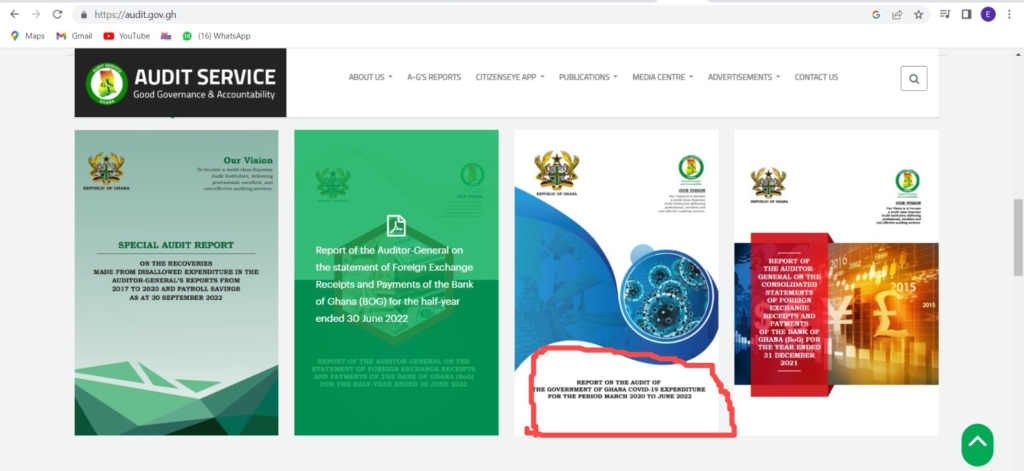
Attorney General, Godfred Yeboah Dame has refuted accusations that his counsel to the Auditor General interferes with the institution’s independence.
Mr Dame had earlier urged the Auditor General to unpublish his audit findings into the use of Covid-19 funds.
He pointed out the report ought not to be published till Parliament’s Public Accounts Committee probes the matter.
Pressure group Occupy Ghana, the think tank Centre for Democratic Development (CDD) Ghana and the opposition NDC have all questioned the AG’s concern, describing it as contrary to law.
Mr Dame argues his advice is consistent with law.
Read the full statement below;
RE: CDD-GHANA statement titled “The Akuffo Addo Government must cease its continuous assault on the Office of the Auditor-General”
The attention of the Office of the Attorney-General and Ministry of Justice has been drawn to a press statement issued by the Ghana Center for Democratic Development (CDD-Ghana) dated February 10, 2023, and entitled “The Akuffo Addo (sic) Government must cease its continuous assault on the Office of the Auditor-General”. In the said press statement, CDD-Ghana takes issue with an opinion by the Attorney-General and Minister for Justice regarding the publication on the website of the Auditor Service of an audit into the Government’s Covid-19 transactions before the said audit report has been debated by Parliament and referred to an appropriate committee of Parliament in accordance with article 187(6) of the Constitution.
In addition to various wrong propositions of law, CDD-Ghana characterises the opinion of the Attorney-General as part of “a domineering superior posture that the Akuffo-Addo (sic) administration has adopted in dealing with the constitutionally independent office of the Auditor-General”. CDD-Ghana perceives the Attorney-General’s letter as an effort to “undermine the independence of the office of the Auditor-General and other independent constitutional bodies”. Quite bizarrely and in tune with the fundamentally incorrect constitutional theories bandied about by CDD-Ghana, a Vice-chair of the Board of CDD-Ghana stated on a radio programme, “Newsfile” on Joy FM, that, the Auditor-General is not part of the Audit Service of Ghana but a separate creation.
The Attorney-General considers it imperative to correct the palpable errors contained in and implied by the press release of CDD-Ghana, as same distort the relationship between the Attorney-General and the Auditor-General in the constitutional architecture of the Republic and have far-reaching implications for Ghana’s record in rooting out corruption.
Contrary to the strange view of CDD-Ghana, the letter and spirit of laws governing the work of the Auditor-General make him part of the Audit Service of Ghana and, therefore, a regular member of the public services of Ghana to whom the Attorney-General can give advice pursuant to his mandate under article 88 of the Constitution. Article 189(2) of the Constitution provides a clue when it stipulates thus “The appointment of officers and other employees in the Audit Service, other than the Auditor-General, shall be made by the Audit Service Board, acting in consultation with the Public Services Commission”. This provision deals with the appointment of officers and all employees in the Audit Service, including the Auditor-General, and clearly provides that, with the exception of the Auditor-General, all have to be appointed by the Audit Service Board acting in consultation with the Public Services Commission. With the clear cue provided by Article 189(2), a contention that the Auditor-General is not part of the Audit Service or a member of the Public Services is pointless and absurd.
2. Section 2 of the Audit Service Act, 2000 (Act 584) lays the issue to rest when it lists the Auditor-General as the first member of the Audit Service in these terms: “The members of the Audit Service are (a) the Auditor-General, and (b) the other persons employed in the Service.”
It is thus clear that the propositions of CDD-Ghana and its board members can only result from an inadequate reading of the laws of Ghana, including the Constitution and the Audit Service Act.
Can the Attorney-General advise a member of the Public Services of Ghana, including the Auditor-General?
3. It is astonishing that CDD-Ghana disputes the propriety of the Attorney-General rendering legal advice to the Auditor-General, and construes same as “an interference with the independence of the Auditor-General”. A proper reading of the Constitution, especially the provisions on the Public Services of Ghana, leads to the inescapable conclusion that the Attorney-General is fully vested with the constitutional function of giving legal advice to all the Public Services specifically listed in article 190(1) of the Constitution, including the Audit Service, and such other public services as will be established by law. Article 295 indicates that the public services listed in article 190 and other public services established by Parliament pursuant to its legislative powers, are part of the civil offices of Government. In the face of the explicit constitutional mandate of the Attorney-General under article 88 of the Constitution as principal legal adviser to the Government, it is incomprehensible and rather illogical how an assertion may be made that the Attorney-General has no capacity to render legal advice to the Auditor-General. Such an assertion can only be as a result of a simplistic and limited view of relevant provisions of the Constitution of Ghana.
Does rendering legal advice amount to interference with the independence of the Auditor-General?
4. It ought to be pointed out that the functional independence of the Auditor-General under Article 187(7)(a) of the Constitution does not confer immunity from legal advice. Legal advice to a constitutional body cannot under any circumstance be construed to amount to interference with the performance of its constitutional functions. A view to the contrary implies that an “independent constitutional body” has absolute freedom to act in any manner it desires, except when a court of law has ordered, even when its legal adviser (whether public or private) is of the opinion that its actions are in conflict with the law. This sounds like absurdity and is the product of unbridled sensationalism.
5. The imputation conveyed by the third paragraph of CDD-Ghana’s press release that Parliament has no power to deliberate on findings contained in the Auditor-General’s reports and that such an effort “offends the general principle of auditing”, does violence to the letter and spirit of Article 187(6) of the Constitution, which provides that “Parliament shall debate the report of the Auditor-General and appoint where necessary, in the public interest, a committee to deal with any matters arising from it”. Implicit in the constitutional duty of Parliament to debate the Auditor-General’s reports and appoint a committee to deal with any matters arising from it is the duty to deliberate and probe the reports. This constitutional function of Parliament cannot be wished away by a narrow, simplistic and erroneous reading of the Constitution by CDD-Ghana or any civil society organisation.
6. The Office of the Attorney-General and Ministry of Justice implores civil society organisations to carefully examine the position of Ghana law on a relevant matter before raising unjustified public alarm over a violation by the Attorney-General or any public institution at all. The default in doing so affects the image of the nation in the eyes of the international community, particularly its anti-corruption ratings.
The Attorney-General and Minister of Justice, Godfred Yeboah Dame, is displeased with the COVID-19 special Audit report which was recently published.
He says the report is “premature” and has therefore asked the Auditor-General to unpublish it.
He has consequently asked the Auditor-General to unpublish the report, pending the fulfilment of constitutional injunctions leading to the ultimate publication, including submitting the report first to Parliament.
Publishing the report ahead of its scrutiny by Parliament or a committee of it, is unconstitutional, the A-G points out.
In a letter dated February 7, 2023 for the attention of the Auditor-General, Mr. Johnson Akuamoah-Asiedu, the Attorney-General referenced “various discussions between your good self and me regarding the effective implementation of reports of the Auditor-General on audits into the public accounts of Ghana, particularly with regard to the issuance of disallowances and surcharges,” and pointed out that “The matters discussed have become more pertinent in view of the intense controversy generated by the publication of the report on the special audit of Government of Ghana Covid-19 transactions for the period March 2020 to June 2022 on the website of the Ghana Audit Service.”
According to the Attorney-General, while Article 187(5) of the Constitution mandates the Auditor-General to submit his report to Parliament and in that report, draw attention to any irregularities in the accounts audited, Section 16 of the Audit Service Act, 2000 (Act 584) clearly indicates that reports on special audits and reviews, as the one conducted in respect of the COVID-19 transactions, are subject to the requirement for the Auditor-General to submit the reports to Parliament.
Again, “Article 187(6) of the Constitution requires Parliament to debate the report of the Auditor-General and appoint, where necessary and in the public interest, a committee to deal with any matters arising from it. This is repeated in section 21 of Act 584. Over the years, the Public Accounts Committee of Parliament (PAC) seems to be the committee designated by Parliament to interrogate issues arising out of the Auditor-General’s reports. It is only after satisfying the constitutional requirement of submitting the Auditor-General’s report to Parliament, the subsequent debate by Parliament thereon and conclusion of work by the appropriate committee of Parliament, that the report of the Auditor-General may be considered final and relevant action may be taken thereon”, the A-G argues.
“I observe that the report of the special audit on the Government’s COVID-19 transactions has been published on the website of the Audit Service. In light of the constitutional provisions pertaining to the duty of the Auditor-General after the preparation of audit reports, I consider a publication of the COVID-19 audit report or indeed any audit report particularly when same has not been either considered by Parliament or referred to a committee of Parliament, premature.”
The Attorney-General said while he is “mindful of the provision in section 23 of Act 584 which seems to mandate a publication of the reports as soon as they have been presented to the Speaker to be laid before Parliament,” “the laws governing the functions of the Auditor-General ought to be construed as a whole.”
Godfred Dame argues that the constitutional duty of the Auditor-General to submit his reports to Parliament and Parliament’s consequential obligation to debate and scrutinise same, will be grossly prejudiced by a prior publication of the report.
“The proceedings of the PAC provide an opportunity for irregularities raised by the Auditor-General to be interrogated and queried. Persons and institutions affected by the report receive a further hearing on the findings of the Auditor-General’s reports at the proceedings of the PAC in Parliament. A prior publication of the Auditor-General’s report completely undermines the purport and meaning of article 187(5) and (6) and should not be encouraged. Consequently, I advise a withdrawal of the report on the Government COVID-19 transactions from your website before same has been debated by Parliament and considered by the appropriate committee of Parliament,” said the A-G.
The Auditor-office General’s has been asked to remove the recently released audit report on the government’s COVID-19 expenditures by the Attorney General and Minister for Justice, Godfred Yeboah Dame.
In a letter addressed to Auditor-General Johnson Akuamoah Asiedu, Mr Dame raised issues of constitutionality about the processes leading to the publication of the report which uncovered various financial infractions.
“I advise a withdrawal of the report on the Government COVID-19 transactions from your website before same has been debated by Parliament and considered by the appropriate committee of Parliament,” the Attorney General said.
Grounding his request on Articles 187(5) and 187(6) of the 1992 Constitution, Mr Dame noted that the A-G’s office failed to submit the report to parliament for scrutiny as directed by the law.
“It is only after satisfying the constitutional requirement of submitting the auditor general’s report to Parliament, the subsequent debate by Parliament thereon and conclusion of work by the appropriate committee of Parliament, that the report of the Auditor-General may be considered final and relevant action may be taken thereon,” the Attorney General said.
“I observe that the report of the special audit on the Government’s COVID-19 transactions has been published on the website of the Audit Service. In light of the constitutional provisions pertaining to the duty of the Auditor-General after the preparation of audit reports, I consider a publication of the COVID-19 audit report or indeed any audit report particularly when same has not been either considered by Parliament or referred to a committee of Parliament, premature,” he added,
The report on Government of Ghana’s Covid-19 transactions for the period March 2020 to June 2022, uncovered several infractions relative to expenditures in the fight against the global pandemic.
The report published on the website of the Auditor General has generated controversy with calls being made for a full-scale parliamentary probe to be made into the uncovered infractions.
Read the full letter by the Attorney General below:
RE: AUDIT OF PUBLIC ACCOUNTS OF GHANA
I refer to various discussions between your good self and me regarding the effective implementation of reports of the Auditor-General on audits into the public accounts of Ghana, particularly with regard to the issuance of disallowances and surcharges.
The matters discussed have become more pertinent in view of the intense controversy generated by the publication of the report on the special audit of the Government of Ghana’s Covid-19 transactions for the period March 2020 to June 2022 on the website of the Ghana Audit Service http://www.audit.gov.gh. I find it compelling to lay out a few points which I hope will guide action to be taken after the preparation of your reports.
1. Article 187(5) of the Constitution mandates the Auditor-General to submit his report to Parliament and in that report, draw attention to any irregularities in the accounts audited. Section 16 of the Audit Service Act, 2000 (Act 584) clearly indicates that reports on special audits and reviews, as the one conducted in respect of the COVID-19 transactions, are subject to the requirement for the Auditor-General to submit the reports to Parliament.
2. Article 187(6) of the Constitution requires Parliament to debate the report of the Auditor-General and appoint, where necessary and in the public interest, a committee to deal with any matters arising from it. This is repeated in section 21 of Act 584. Over the years, the Public Accounts Committee of Parliament (PAC) seems to be the committee designated by Parliament to interrogate issues arising out of the Auditor-General’s reports. It is only after satisfying the constitutional requirement of submitting the auditor general’s report to Parliament, the subsequent debate by
Parliament thereon and conclusion of work by the appropriate committee of Parliament, that the report of the Auditor-General may be considered final and relevant action may be taken thereon.
3. I observe that the report of the special audit on the Government’s COVID-19 transactions has been published on the website of the Audit Service. In light of the constitutional provisions pertaining to the duty of the Auditor-General after the preparation of audit reports, I consider a publication of the COVID-19 audit report or indeed any audit report particularly when same has not been either considered by Parliament or referred to a committee of Parliament, premature.
4. I am mindful of the provision in section 23 of Act 584 which seems to mandate a publication of the reports as soon as they have been presented to the Speaker to be laid before Parliament. However, the laws governing the functions of the Auditor-General ought to be construed as a whole. The constitutional duty of the Auditor-General to submit his reports to Parliament and Parliament’s consequential obligation to debate and scrutinise same, will be grossly prejudiced by a prior publication of the report.
The proceedings of the PAC provide an opportunity for irregularities raised by the Auditor-General to be interrogated and queried. Persons and institutions affected by the report receive a further hearing on the findings of the Auditor-General’s reports at the proceedings of the PAC in Parliament. A prior publication of the Auditor-General’s report completely undermines the purport and meaning of article 187(5) and (6) and should not be encouraged. Consequently, I advise a withdrawal of the report on the Government COVID-19 transactions from your website before same has been debated by Parliament and considered by the appropriate committee of Parliament.
5. Further, as pointed out in previous letters by the Attorney-General to your office over the years, there has been a glaring omission to indicate in the notices served on the Office of the Attorney-General and Ministry of Justice, satisfaction by the Auditor-General of the mandatory procedure enjoined by section 17 of Act 584, in order to be able to execute a disallowance and surcharge.
6. As you would recall, I have, in previous communication with you, indicated that in accordance with section 17 of Act 584, certain steps ought to be complied with by the Audit Service after an audit report has been subjected to the scrutiny of the PAC. These steps border on the issuance of disallowances and surcharges by the Auditor-General.
i. the relevant head of department or institution to whom the amounts stated in the notice of surcharge or disallowance are due, must be notified of the surcharge or disallowance, the reasons for the surcharge or disallowance as well as when this was done. Please see section 17(1) of Act 584
(ii) notices served on the Attorney-General must indicate whether the affected individuals and institutions have been served with the notice of surcharge or disallowance and, if so, when this was done. Please see section 17(2) of Act 584.
iii. Information confirming compliance with the statutory steps and when same was done is crucial for the Attorney-General to institute legal action against specified defaulters.
7. By letters dated 21st December 2017, 14th December 2018 and 21st January 2019, the Attorney-General informed the then Auditor-General about lapses in the notices of disallowance and surcharge served on the Attorney-General in order for him to remedy same. Unfortunately, to date, some have not been remedied.
8. It is only through due process, particularly the observance of the processes stated above, that we can realise the true import and effect of article 187 of the Constitution. There ought to be enhanced cooperation between the Audit Service and the Office of the Attorney-General and the Ministry of Justice. These two institutions are at the forefront of the quest for public accountability, probity, the rule of law and the rooting out of corruption and malpractices in Ghana, and therefore are left with no option but to collaborate. In this regard, I have set up a special team in my Ministry, jointly headed by the Solicitor-General and the Director of Public Prosecutions, specifically charged with coordinating with your outfit in order to promptly act, in accordance with law, on established irregularities contained in the Auditor-General’s reports.
I would appreciate if you could set up a similar team to work with my office. Please accept the assurances of my highest consideration.
Attorney General and Minister of Justice, Godfred Yeboah Dame, has his stance on same-sex relationships, a subject that has recently gained attention.
Dame said based on his religious, moral and cultural viewpoints, he was totally against anything that promoted same-sex ideology.
“I am seriously anti-gay, that’s a point. 100%. I had the opportunity to express it in a programme that I did in 2006,” he told Paul Adom-Otchere on the January 17 edition of Good Evening Ghana programme.
“I think that it is abominable, that is my view, Christian, moral, cultural, however you want to term it,” he added.
Asked how he would handle a relation who subscribes to the ideology, he responded: “I will actually make a conscious effort to rid the person of such a situation.”
Dame was responding to questions on the anti-Lesbian, Gay, Bisexual, Transgender, Queer (LGBTQ+) bill, a private members’ initiative, that is currently before Parliament.
He is due to appear before the parliamentary committee sitting publicly to receive views on the bill which has split public opinion, between hardliners who are in full support of the bill and the human rights advocates who argue that the bill in its current form is repressive and dangerous.
Dame observed that the bill in its current form needed some amount of reworking in parts citing the fact that it imposes a financial burden on the state and also contains sections that are repetitions of existing laws.
The bill, officially known as ‘The Proper Human Sexual Rights and Ghanaian Family Values Bill’ was laid before the House last year and referred to the Committee for among others, public consultation.
It was sponsored by eight MPs, seven from the National Democratic Congress (NDC) and one from the New Patriotic Party (NPP).
The impacted bondholders may go ahead and submit a legal challenge to resolve the issue in court, according to the Bolga Central lawmaker, given the decision by finance minister Ken Ofori-Atta to disregard the attorney general’s legal counsel.
“Ken Ofori-Atta disregarded the express legal advice of the AG to illegally and unilaterally rip the debt exchange program’s contractual bond agreements into pieces, in violation of its terms of agreement.
Affected bondholders need to go to court, Mr. Adongo stated on social media.
Finance Minister Ken Ofori-Atta on Monday announced domestic bondholders with the exception of Treasury bill holders will be affected by the debt exchange program.
Per the arrangement, bondholders will get 0% interest in 2023, 5% in 2024 and 10% onwards. The bonds will also be redeemed in 3 installments within 10 years.
According to documents in possession of Starr News. the Attorney General advised against any unilateral variation of Collective Agreement Clauses (CAC). The AG in his legal advice to the finance minister asked for domestic bondholders to be engaged before any such move.
According to the A-G, the debt exchange programme can at best be voluntary given the legal ramifications.
“In the absence of an agreement with parties, it would be unlawful for the government to unilaterally introduce CACs into bond agreements and may constitute an event of default under clause 12 of terms and conditions of the bond issued under the programme” Mr. Dame stated in his advice.
“Voluntary engagement with parties to bond agreements would be able to produce the outcome of a voluntary modification and inclusion of CACs on bondholders” he added.
Finance Minister Ken Ofori-Atta on Monday announced domestic bondholders with the exception of Treasury bill holders will be affected by the debt exchange program.
Per the arrangement, bondholders will get 0% interest in 2023, 5% in 2024 and 10% onwards. The bonds will also be redeemed in 3 instalments within 10 years.
The Chamber of Corporate Trustees has already rejected the debt exchange program announced by the finance minister.
In a statement, the Pensions Chamber assured pensioners it has not agreed with government on the debt restructuring moves.
Finance Minister Ken Ofori-Atta on Monday announced domestic bondholders with the exception of Treasury bill holders will be affected by the debt exchange program.
Per the arrangement, bondholders will get 0% interest in 2023, 5% in 2024 and 10% onwards. The bonds will also be redeemed in 3 installments within 10 years.
According to documents in possession of Starr News the Attorney General advised against any unilateral variation of Collective Agreement Clauses (CAC). The AG in his legal advice to the finance minister asked for domestic bondholders to be engaged before any such move.
According to the AG, the debt exchange program can at best be voluntary given the legal ramifications.
“In the absence of an agreement with parties, it would be unlawful for the government to unilaterally introduce CACs into bond agreements and may constitute an event of default under clause 12 of terms and conditions of the bond issued under the programme” Mr. Dame stated in his advice
“Voluntary engagement with parties to bond agreements would be able to produce the outcome of a voluntary modification and inclusion of CACs on bondholders” he added
“Ken Ofori-Atta ignored the express legal opinion of the AG to illegally and unilaterally shred binding terms of the bond agreements in the debt exchange program. Affected bondholders must proceed to court” Mr. Adongo wrote on social media.
The Chamber of Corporate Trustees have already rejected the debt exchange program announced by the finance minister. In a statement the Pensions Chamber assured pensioners it has not agreed with government on the debt restructuring moves.
Find portions of the legal opinion of the AG on the debt exchange programme below:
GhanaWeb Business understands that the proceedings will also impact former officials of the Bank of Ghana.
The charge sheet filed at the Accra High Court on February 5, 2020, named as accused persons Dr. Johnson Asiama; a former 2nd Deputy Governor of BoG, Raymond Amanfu; a former Head of the Banking Supervision Division (BSD) of BoG, Catherine Johnson; Head of Treasury of the UT Bank.
Others are Mr. Prince Kofi Amoabeng, a former Chief Executive Officer of UT Bank, Robert Kwesi Armah; General Manager of Corporate Banking of UT Bank and UT Holdings; the parent company of UT Bank.
The trial judge is His Lordship Justice Bright Mensah, a Justice of the Court of Appeal sitting as an additional High Court judge.
Dr. Asiama and Mr. Amanfu have been charged with willfully causing financial loss to the state, while Mr. Kofi Amoabeng and the other accused persons have been charged with various offenses such as dishonest appropriation of US$7 million and other deposits of customers, fraudulent breach of trust among other charges.
Eric Nana Nipah who is the first Prosecution Witness in his testimony told the Court that various investments placed by various companies such as, SSNIT SOS Fund, Forestry Commission, ECG Staff Fund, WAICA-Re and the National Communications Authority with UT Bank were moved out to UT Holdings without proper authorization.
He also testified that UT Holdings is not licensed to engage in such investment activities. The total amounts invested with UT Bank but transferred to UT Holdings without proper authorization is said to be GH¢51,334,387.08 and USD$8,799,917.
The second Prosecution Witness, Mr. Stephen Afotey, testified that an amount of US$7 million was deposited with UT Bank on the instructions of the Court.
This amount, he explained could not be traced when UT Bank was taken over by GCB Bank.
In November 2022, the Court heard the testimony of the third Prosecution Witness, Mr. Stephen Antwi-Assimeng who was serving as Chief Executive Officer of UT Bank at the time bank’s license was revoked.
The former CEO testified that UT Bank was already on liquidity support from BoG at the time he joined the bank. He intimated that UT Bank relied heavily on borrowing from BoG to deal with its liquidity challenges.
In his testimony, Antwi-Assimeng further indicated that UT Bank established letters of credit in the total sum of GH¢141 million, for some customers of the bank and added that these letters of credit were maturing in May and July of 2016.
He further informed the Court that the customers did not provide funds for the Letters of Credit and neither did UT Bank have liquidity on maturity.
Testifying further, Mr. Antwi-Assimeng stated that they had situations where a number of international lenders were calling in their loans because UT Bank had defaulted while some of the loans had reached maturity levels.
He also told the Court that UT Bank was experiencing an average of GH¢40 million loss of customer deposits, one of the bank’s key sources of liquidity. This, according to him, resulted in an acute liquidity shortage with UT Bank forced to pay higher interest rates to attract new depositors.
Proceeding further, Mr. Antwi-Assimeng informed the Court that UT Bank, on application to BoG, received liquidity support of GH¢460 million with the instruction not to use any part of the additional liquidity support for unapproved purposes.
He also told the Court that UT bank applied to BoG for unsecured liquidity support of GH¢30 million due to a lack of adequate securities to provide collateral for this facility.
Meanwhile, the matter has been adjourned for further hearing in mid-December 2022.
The Attorney-General and Minister of Justice, Godfred Yeboah Dame, has been cleared of charges pressed against him by the sellers of a property identified by the Republic of Ghana for use as a chancery building in Oslo, Norway.
By a unanimous decision, the Oslo Court of Appeal, Norway composed of three Justices of Appeal (Pal Morten Andreassen, Irene Sogn and Rolf Ytrehus), has in a judgment dated Tuesday, November 22, 2022, dismissed an appeal filed by Messrs. Jongsbru AS, the sellers of a property identified by the Republic of Ghana for use as a chancery building in Oslo, Norway.
The Norway Court of Appeal considered an appeal by the appellant against the judgment of the Oslo District Court (High Court) in December 2021, dismissing its case and awarding damages and procedural costs in favour of Ghana.
After a retrial, the Oslo Appeal Court held Ghana to be “fully acquitted of all liability” and concluded that “a purchase agreement to which Ghana was a party could not be said to have been completed between the parties”. The Court awarded the sum of 1.5 million Norwegian Kroner (approximately 150 000 USD) payable by the appellant to Ghana as procedural costs incurred before the Court of Appeal. It further ordered the appellant to pay to Ghana 1 million Norwegian Kroner (approximately, 100 000 USD) as compensation for procedural costs at the High Court.
Facts of case
In 2018, Ghana decided to establish an embassy in Norway. The acquisition of a chancery building, either by purchase or by a lease, was deemed to be critical to the establishment of the embassy.
A delegation from Ghana identified a number of properties, including Sigyns Gate 3 at Frogner in Oslo, the property the subject matter of the litigation. On 22nd November 2018, Ghana received an offer from Jongsbru to buy the property for 100 million Norwegian Kronner. The offer had a deadline of seven days, i.e. by 29th November, 2018. On 29th November 2018, Ghana’s Charge d’Affaires, Regina Appiah-Sam, responded to Jongsrbu’s offer in these terms:
“On behalf of the Government of Ghana, Ministry of Foreign Affairs, we have the pleasure to accept the Offer with the following conditions:
1. … It is a condition for the acceptance of the Offer and the final contract, that the building is without significant defects and that the renovation work is completed and performed in a satisfactory manner.
2. Before take-over there is a final approval without conditions from relevant authorities for the use of the property as an Embassy.
3. Agreement on a final contract of sale. We accept that the contract shall be based on the Sem & Johnsen standard contract.”
Subsequent to due certification by Ghana’s appointed valuers that the building was without significant defects and that the renovation works on same had been completed and performed in a satisfactory manner, Ghana pulled out of the transaction on various grounds, including a failure on the part of the sellers to satisfy the condition of a final approval from the relevant Municipal authorities in Oslo for the use of the property as an Embassy.
The sellers of the property, Jongsbru AS, sued the Government of Ghana in the Oslo District Court claiming sums totalling about seventy-eight million Norwegian Kroner for breach of contract, loss of profits, interest and costs of litigation.
Original judgment of the District Court (High Court)
On 16th December 2021, the Oslo High Court upheld Ghana’s contention that on the issue of choice of law, the competence or legal capacity of Ghanaian officials to bind the Republic of Ghana must be decided according to Ghana law. Whereas the Government of Ghana had led evidence by the Director of the Legal Directorate of the Ministry of Finance to prove the content of Ghana’s financial and procurement laws, no attempt was made by the plaintiff to rebut same.
The Court found that Ghana’s Minister for Foreign Affairs, in accordance with section 20 of the State Property and Contracts Act of 1960, had the competence to bind Ghana in agreements involving her ministry.
This authority had not been exercised in the transaction in question. Neither the Charge d’Affaires of Ghana at the time, Mrs. Appiah-Sam nor Ghana’s lawyer, Mikkel Visllie had authority to enter into the agreement on behalf of Ghana. There was thus no valid or binding agreement between the sellers of the property and Ghana.
The Court further held that under Ghana law, the Public Procurement Authority must agree on the purchase of the property and the application of funds must also be approved by the Minister for Finance, before the Minister for Foreign Affairs must either personally execute the agreement for the purchase of the property or authorise another competent person by a power of attorney to execute the agreement. On the evidence provided by Ghana’s witnesses, this had not been done.
Regarding the claim against Ghana’s lawyer at the time of the purported sale, the Court found that the lawyer was fully responsible for the positive contractual interest in accordance with the Contracts Act of Norway. The Court was of the view that there is a particular reason for trusting lawyers who act on behalf of clients.
The Court found that the lawyer did not have any reasonable excuse for not ensuring that there was a power of attorney signed by Ghana before purporting to convey acceptance of the offer by Jongsbru. The Court thus ordered lawyer Mikkel Vislie who acted for Ghana and his insurance company, Tryg Forsikring to pay to Jongsbru the sum of thirty-seven million, seven hundred and twelve thousand, nine hundred and four Norwegian Kronner as compensation.
Appeal hearing
The Oslo Court of Appeal heard the appeal over four days – from 25th to 28th October, 2022, taking evidence from the witnesses of all the parties in the matter afresh. The hearing was observed by students of the Oslo Law School as part of their practical advocacy training.
Ghana’s Attorney-General, Mr. Godfred Yeboah Dame, led a team from Ghana for the hearing. Mrs. Jennifer Lartey, Ghana’s ambassador to Norway, Mrs Regina Appiah-Sam, Charge d’Affairs at the time the embassy was opened, Charles Osei-Marfo of the Oslo mission, Ms. Doris Brese, Ministry of Foreign Affairs and Mrs. Mangowa Ghanney, former Director, Legal at the Ministry of Foreign Affairs, testified as witnesses for Ghana.
Judgment of the Oslo Court of Appeal
The Oslo Court of Appeal dismissed the appellant’s case in its entirety as unfounded and ordered to pay to Ghana 1.5 Million Norwegian Kroner (approximately 150 000 USD) as compensation for procedural costs incurred before the Court of Appeal. It further ordered Jongsbru to pay to Ghana 1 Million Norwegian Kroner (approximately 100 000 USD) for procedural costs incurred before the Oslo District Court.
The Court of Appeal observed that a prerequisite for the appellant’s claim was that the company had incurred economic loss as a result of Ghana’s decision not to finalize the sale. The appellant did not incur any such economic loss. On a proper application of the principles of offer and acceptance, Ghana could have withdrawn from the agreement (even if it was binding), as all conditions necessary for the performance of the contract had not been satisfied.
Regarding Ghana’s defence about a lack of approval by the Oslo Municipal authorities for the building to be used for an embassy, the Appeal Court found that based on the evidence presented by Ghana concerning the appellant’s belated attempts to apply for the said permission and the municipality’s responses, it was clearly established that no such permission would have been received by the relevant date for the contract to take effect, and therefore Ghana could have withdrawn from the agreement. The purchase would in no case have materialised, and the appellant would not have received the purchase price from Ghana, for a claim of economic loss to be validly asserted.
The Oslo Appeal Court noted further, that, the condition regarding authorization by the municipal permission to use the property as chancery, was vital to the purchase, and that, only Jongsbru, not Ghana, had any control over whether the condition would be met or not. Further, the consequences of the condition not being met, was set out specifically in the agreement.
The Attorney-General and Minister for Justice expressed satisfaction with the outcome of the appeal and hoped that it would mark the end of the dispute. Mr. Dame explained that, under Norwegian civil procedure rules, any civil judgment of the Court of Appeal may be appealed to the Supreme Court but the hearing of the appeal is not as of right.
A panel of three Supreme Court judges must first determine whether to allow the appeal to be heard by the Norway Supreme Court and explicitly allow same to be heard, before the court will be required to consider or hear it and then proceed to give a judgment on it.
“If the panel does not allow the appeal to be heard, the appeal terminates without any further processes at the Supreme Court. The ground on which the Norwegian Supreme Court will hear an appeal is where a new and major issue of law is raised in the matter and the court feels obligated to give legal clarity on the position. The Norway Supreme Court does not hear an appeal on matters concerning the facts or evidence in a civil matter,” Dame concluded.
Mark Darlington Osae, the manager of Reggie ‘N’ Bollie and Skrewfaze has dragged the Food and Drugs Authority (FDA) and the Attorney General, Godfred Yeboah Dame to court over the ban on celebrities from advertising for alcoholic beverages.
The FDA’s directives bar the use of celebrities in plugging alcoholic beverages.
This according to the Authority is to protect minors from being influenced by celebrities into alcoholism.
Prior to this suit, a lot of stakeholders in the creative industry including, Wendy Shay, Shatta Wale, Brother Sammy, Kuami Eugene, and Camidoh, had spoken against the law and had called on powers that be to repeal it.
On November 11, 2022, the plaintiff, Mark Darlington Osae, also a music publisher at Perfect Note Publishing, issued a writ of summons, saying the FDA’s 2015 regulations are discriminatory against the creative arts industry.
Mark, who is the Chairman and Co-Founder of Ghana Music Alliance, says the FDA directive which ordered that, “no well-known personality or professional shall be used in alcoholic beverage advertising,” is inconsistent with and in contravention of articles 17(1) and 17 (2) of the 1992 Constitution.
Articles 17(1) and 17 (2) of the 1992 Constitution guarantee quality before the law and prohibit discrimination against persons on grounds of social or economic status, occupation, among others, and consequently null, void, and unenforceable.
In February 2017, Mark Darlington led his artistes, Reggie ‘N’ Bollie, to sue Fan Milk Ghana Limited for using their song titled ‘New Girl’ for commercial purposes without their consent.
Chinese National En Huang, popularly known in Ghana as Aisha Huang who is standing trial for engaging in galamsey, and her four accomplices will continue to be in custody after the trial judge, Her Ladyship Lydia Osei Marfo, refused a bail application made by the lawyers for the accused.
Aisha Huang, Gao Jin Cheng, Lu Qi Jun, Haibin Go and Zhang Zhipeng were remanded into the custody of the National Investigation Bureau pending the final determination of their case on November 24, 2022.
In court on Tuesday, October 11, 2022, when Aisha Huang’s lawyer who is also a one-time Presidential candidate for the governing NPP, Captain Nkrabea Effah Dartey, rose to move an application for bail, the trial judge quickly stopped him and indicated that she will still refuse the application for bail.
“My mind has not changed; you can make the application and I’ll still refuse you,” Her Ladyship Lydia Osei Marfo told Nkrabea Effah Dartey.
Also, the judge refused a similar application made on behalf of the four others who are now being represented by a former NPP National Chairman, Freddie Blay.
Lucy Ekeleba Blay, a private legal practitioner, said she was holding brief for Freddie Blay in the case of the four accomplices in the persons of Gao Jin Cheng, Lu Qi Jun, Haibin Go and Zhang Zhipeng.
“These people are foreigners, we do not have sufficient financial or social ties within the jurisdiction of this court and as we know, in this country people usually do not need any passport to exit if they are minded to leave and considering the severity of the punishment the accused persons will suffer if found guilty. I have a sufficient belief that when granted bail, they will not appear before the court to stand trial,” Her Ladyship Lydia Osei Marfo stressed.
The plea of three of the accused persons has been taken with that of the last deferred due to the unavailability of a Vietnamese translator.
Meanwhile, Godfred Yeboah Dame, the Attorney-General, indicated to the court the state’s readiness to expeditiously dispose off the case and will be willing to try the case on a day-after-day basis.
He observed that the judge superintending over the case has “also indicated his inclination to conduct the case in that manner.”
“In respect of Aisha Huang, we have filed most of the documents to be relied on, we have filed witness statements of four witnesses. We only need to fill about four more,” Dame added.
With family members of some injured persons in the Ejura shooting incidents agitating for compensation, it has emerged that the Attorney-General (A-G) gave a piece of legal advice in July this year for compensation to be paid.
In a letter cited by the Daily Graphic, the A-G, Godfred Yeboah Dame, advised the government to compensate three injured victims of the incident with about GH¢1.28 million.
The three injured persons captured in the A-G’s advice for compensation are Louis Ayipka, 30; Nazif Nuhu, 20, and Awal Mesbawu, 16.
Per the letter, the A-G advised that Ayikpa should be compensated with GH¢347,953, Nuhu should get GH¢192,425, and Mesbawu should be given GH¢678,519.
Apart from the compensation, the A-G also advised the government to implement a recommendation by a Medical Board for the victims to be given medical and psychosocial care.
The letter, dated July 12, this year was addressed to the Minister of Interior, Ambrose Dery.
Family agitates
Last Wednesday, the family of the three injured persons called on the government to pay them compensation as recommended by the Justice Koomson’s Committee.
At a press conference in Accra, the family further urged the A-G to expedite action on the prosecution of those suspected to have killed Yussif and Suraj.
According to the family, after submitting all the required medical documents needed to effect the payment, they had so far not received any acknowledgement indicating receipt of the documents.
Report
On June 29, last year, Abdul Nasir Yussif and Murtala Suraj Mohammed died from gunshots from joint police and military team during activities related to the burial of a social activist in the area, Ibrahim Muhammed, popularly known as Kaaka.
Three other persons — Ayikpa, Nuhu and Mesbawu — got injured in the incident.
A committee set up by the Minister for the Interior to investigate the matter submitted its report in September last year.
The committee, chaired by a Justice of the Court of Appeal, Justice Kingsley Koomson, in its report, recommended that the families of the two young men who lost their lives in the shooting incident must be compensated.
It further recommended that the three injured persons must also be compensated.
While the government had since compensated the families of the two young men who lost their lives in the shooting incident, the injured persons are yet to be compensated.
On what went into arriving at the compensation for each of the three persons, the A-G relied on certain factors used to award compensation in some case law.
These were permanent physical disability or impairment, disruption of education, pain and suffering, loss of enjoyment of life, ongoing medical care needs, loss of future earnings, reimbursement of the cost of medical treatments, increase in living expenses among others. The A-G also factored in the national minimum wage and transportation cost, among other factors.
Regarding the medical and psychosocial care, the A-G advised that all three should be given psychosocial support as recommended by the medical board.
“In the case of Awal Mesbawu, the appropriate functional prosthesis should be provided to him to assist in mobilisation as recommended by the medical board,” the A-G said.
Judges in the country have been admonished to guard against being corrupted by the power they wield.
According to the Most Reverend Dr Robert Allotey Okine, Archbishop Emeritus of the Church of Province of West Africa, judges must be guided by the aphorism “power tends to corrupt and absolute power corrupts absolutely“ in their dispensation of justice.
He was speaking at the special church service held last Saturday at the Cathedral Church of the Most Holy Trinity in Accra to open the new legal year which commenced yesterday.
“As representatives of the third arm of government, you wield tremendous power, power that can determine an individual or a family’s fate in life. Power that can build or destroy,” he said.
Quoting the late professor William Chadwick, a former professor of history at the Cambridge University, Rev Dr Okine added: “the possession of unlimited power corrupts the conscience, hardens the heart and confounds the understanding” contending that such a position ended in tyranny.
In contrast. he entreated them to be the salt and light of their practice to stay on the right path.
The annual service ushering in the 65th legal year was attended by judges, lawyers, traditional leaders, the clergy and other stakeholders in the justice system who gathered to seek God’s strength and guidance for the new legal year.
Chief Justice, Justice Anin Yeboah, Attorney-General Godfred Yeboah Dame, President of the Ghana Bar Association, Yaw Acheampong Boafo and Director at the Ghana School of law, Yaw Oppong were also accounted for.
Speaking on the theme “Improving Legal Access to Justice in a pandemic through the use of technology” the retired Bishop of the Koforidua Diocese of the Anglican Church, indicated that technology was one of the ways God wanted mankind to solve problems and this had been made manifest by the coronavirus pandemic.
He exhorted the judges on ten tenets to guide their practice which included admonition on not sacrificing integrity to expediency, being careful about people they associated with and being consistent in their utterances and actions.
In a message, the Chief Justice, Justice Anin Yeboah, revealed that training in ICT and other related programmes have been planned to make the justice system more robust, dependable and acceptable.
Prayers were also offered for departed judges and lawyers who passed on during the last legal year.
The Attorney General and Minister for Justice Godfred Yeboah Dame has urged state prosecutors to be coherent and show clarity of presentation as they appear in court to prosecute cases.
The AG said in filing their written submissions especially, the precision of the arguments is key to achieving convictions.
“In filing your submissions, whether at the submission of no case stage or upon the completion of evidence, the lucidity of the argument and the clarity of the presentation are very key and non-negotiable.
Indeed, I will say that it is same with every aspect of the advocate’s duty. There must be clarity and order of presentation. If there is a combination of clarity and order in a presentation, lucidity of legal arguments constitutes 80% of the work done.
Godfred Yeboah Dame made this call at the 2022 National State Prosecutors’ training ahead of the 2022/23 new legal year which begins today, Monday, October 3, 2022.
All nine applicants for Ghana Cards hadsubmitted applications, according to the NIA answer, however, none of the applicants picked up their printed cards from the locations where they were instructed to do so.
Nine Ghanaian persons who filed a lawsuit seeking an interlocutory injunction to stop the Attorney General (AG) and the National Communication Authority (NCA) from enforcing the 30 September 2022 deadline for SIM Card re-registration in Ghana have withdrawn their case.
The application was premised on the argument that they had applied for their Ghana cards at varying dates but were yet to receive the same. To that end, should the Court allow the State and the NCA to go ahead with the re-registration deadline, they risked losing their SIM cards through no fault of theirs.
NCA request letter
Their decision to discontinue the case followed the response of the National Identification Authority (NIA) to a search letter written to the NIA by the lawyer for the NCA, Gary Nimako Marfo, requesting the NIA to furnish the NCA with detailed information on the status of the Ghana Card application of all the nine applicants.
The NIA response to the NCA dated 28 September 2022 and signed by the Executive Director of the NIA, Professor Kenneth Agyemang Attafuah, and copied to the Attorney General and Minister of Justice, Godfred Yeboah Dame,revealed that all the nine applicants had indeed applied for their Ghana Cards, but all had however failed to pick up their cards which had been printed from the locations they had been asked to do so.
Page one of the NIA response to the NCA
NCA deposition
Following the NIA’s response to the letter of the NCA lawyer, an affidavit deposed to by one Kofi Ntim Yeboah-Kordieh, Principal Manager at the Regulatory Administration Division of the NCA, among others, is quoted as saying, “From the response given in Exhibit NCA 2 (NIA’s response), it is clear that the substantive action including the present application for an injunction is frivolous, bereft of merit and same is merely intended to vex the Respondents”.
“That again, it is clear that the Applicants have been indolent and have not taken any positive steps to collect their Ghana Cards from National Identification Authority. That this is a proper case where this Honourable Court ought to dismiss this application with punitive cost,” Mr Yeboah-Kordieh stated in his deposition.
Applicants’ reliefs sought
The applicants; Belynda Naa Odey Hammond, Jennifer Elorm Dzikunu, Charisty Mansah Afua N. Ackotia, Nsor Sabasi, Josephine Annor Prempeh, Vida Delacy Kemevor, Regina Elkplim Dagadu, Irene Ayariga, and Tracy Ashong, today 29 September 2022, told an Accra High Court (General Jurisdiction 10) that they do not intend to proceed any further with the case.
Page two of the NIA response to the NCA
The applicants were seeking seven reliefs in their application filed on 22 September 2022. First, a declaration that the impugned directive of the Respondents requiring the Applicants to re-register their Mobile Phone SIM with the Ghana Card as the only identity document at a time when the National Identification Authority has not been able to issue Ghana Cards to Applicants is in breach of articles 21, 23 and 296 of the 1992 Constitution of the Republic of Ghana, the National Communications Authority Act 2008 (Act 769), the Subscriber Identity Module Registration Regulation, 2011 (L.I 2006), and the National Identity Register Regulation, 2012 (L.I 2111) and to that extent, null and void.
Second, a declaration that the impugned directives of the Respondents imposing punitive measures/sanctions commencing from the 5th day of September 2022 on the use of the Applicants’ Mobile Phone SIM Cards and Network Services breach articles 21, 23, and 296 of the 1992 Constitution of the Republic of Ghana, the National Communications Authority Act 2008 (Act 769), the Subscriber Identity Module Registration Regulation, 2011(L.I 2006), and the National Identity Register Regulation, 2012 (L.I 2111) and to that extent, are null and void.
Third, a declaration that the impugned directives of the Respondents to Applicants’Mobile Telecommunication Companies to block, disconnect, deactivate, churn and/or in any other way or manner limit the use of the Applicants’ Mobile Phone SIM Cards and Network Services by 30th September 2022, at a time when there is no reasonable possibility of Applicants receiving their Ghana Cards from the National Identification Authority on or before 30th September 2022 for the purpose of using same to register their SIM Cards is unfair, unreasonable, contrary to law and to that extent, unenforceable.
Page three of the NIA response to the NCA
Fourth, an order of this Honourable Court in the nature of certiorari directed at Respondents to bring before this Honourable Court for the purpose of being quashed, any order, decision, policy, and/or directive issued to Mobile Telecommunication Companies operating in Ghana to block, disconnect, deactivate, restrict, and/or in any other way or manner limit the use of the Applicants’ Mobile Phone SIM Cards and Network Services unless Applicants register or re-register the said SIM Cards on or before 30th September 2022.
Fifth, an order of this Honourable Court in the nature of certiorari directed at Respondents to bring before this Honourable Court for the purpose of being quashed any order, decision, policy, and/or directive issued to Mobile Telecommunication Companies operating in Ghana to impose punitive measures/sanctions against Applicants’ Mobile Phone SIM Cards and Network Services during the period commencing from the 5th day of September 2022.
Sixth, an order of perpetual injunction restraining the Respondents herein, either acting by themselves, their agents, workmen, contractors and sub-contractors, associates, and any and all such person(S) claiming and/or deriving authority through and/or under any and/or all of the Respondents herein from imposing punitive measures/sanctions including blocking, deactivating, restricting, churning and/or in any other way or manner limiting the Applicants’ use of their Mobile Phone SIM Cards and Network Services until such timethat the National Identification Authority shall make available to Applicants their Ghana Cards, and lastly, any such further or other relief(s) as to this Honourable Court may seem just.
Following the decision to discontinue, the Court did not sit on the matter at all.
According to him, the motive for these prosecutions is to hold public officers to account.
“The Office of the Attorney-General is prosecuting other high-profile cases involving the offences of wilfully causing financial loss to the State, stealing, corruption, fraud, procurement breaches, and money laundering.â€
Attorney General, Godfred Yeboah Dame
“These cases have as their sole object, the principle of holding public officers to account and involve sums of over $850 million.â€
Mr. Dame made this known when he spoke on the financial sector crisis in Ghana at Cambridge University on Monday, September 5.
Godfred Yeboah Dame, Attorney General
At the same event, he disclosed that the dockets for the prosecution of the CEO of the defunct Menzgold, Nana Appiah Mensah is almost ready.
He said thorough investigations went into the building of the dockets.
“Painstaking investigations, dockets of the financial crime, are almost ready for the prosecution to commence in earnest.â€
It will be done by Attorney-General and Minister for Justice, Godfred Yeboah Dame.
The Office has been without a Board since the mandate of the previous one led by Linda Ofori-Kwarfo expired.
This is nine months after Kissi Agyebeng was officially sworn into office as the Special Prosecutor.
Civil Society Organisations in the country have since lamented the lack of a substantive Board and the impact on the operations of the Special Prosecutor.
However, a former Deputy Attorney-General, Joseph Dindiok Kpemka, assured that the Governing Board will be inaugurated soon.
According to sections 5 and 6 of the Office of Special Prosecutor Act 2017, Act 959, a Board is required to formulate policies for the objective of the Office, ensure proper and effective performance of the functions of the Office, advise the Special Prosecutor on the recruitment and selection of various staff among other duties.
The Board is also to consist of the Special Prosecutor, the Deputy Special Prosecutor, one representative each from the Audit Service, the Ghana Police Service, Economic and Organized Crime Office (EOCO), Financial Intelligence Centre, Commission on Human Rights and Administrative Justice (CHRAJ), a person nominated by the Minister for National Security, and one other person who is a female representing the Anti-Corruption Civil Society Organizations.
The previous Board included the then CID Boss, DCOP Maame Yaa Tiwaa Addo-Danquah; EOCO rep, Charles Nana Antwi; representatives from civil society, Linda Ofori Kwafo and Addai Wereko Tawiah; Kofi Wiredu Boakye, Charles Ayamadu and Kwaku Domfeh.