Tag: Google

  • Google, Huawei to train 200,000 Ghanaians under One Million Coders Programme – Communications Minister

    Google, Huawei to train 200,000 Ghanaians under One Million Coders Programme – Communications Minister

    Minister for Communications, Digital Technology, and Innovation Sam Nartey George has noted that the government of Ghana has signed strategic partnerships with technological giants Huawei and Google.

    Updating the members of the general public on the various initiatives taken by his ministry to develop the communication sector as part of the Government Accountability Series on Friday, August, he made this information known.

    “In the period under review, we have signed strategic partnerships with Huawei and Google. We entered into a formal partnership arrangement with these technology giants to drive deeper integration between policy research and practical innovation,” Sam Nartey George said.

    He noted that these partnerships will see both Google and Huawei train 100,000 beneficiaries each under the One Million Coders Programme. 

    “This represents a deliberate move to prepare students for the evolving demands of the digital technology economy under President John Dramani Mahama,” the Communications, Digital Technology, and Innovation Minister further remarked.

    Mr Sam Nartey George expressed gratitude to the two organisations and clarified that the programme will be both online and in person.

    “My gratitude goes to both technology giants, Huawei and Google for their belief in the John Dramani Mahama vision. This Google certificate and Huawei training programme are going to be a mix of in-person and online training programmes and so we will be rolling out the programme very soon in every constituency in the country to allow for people to take this training.”

    He added, “the beauty of the Google 100,000 training is Google already has its AI research lab in Ghana, and what we are trying to do is train the people using Google’s certification Programme and then, on the back of that, get them employed to work with Google or any of its partners and affiliates.

    In April this year, Mr Sam Nartey George revealed that the government was in talks with an American technology company, Google and an online marketplace, Amazon, over the implementation of the One Million Coders Programme in Ghana.

    Speaking to the media on Monday, April 14 he noted that both parties are almost at the final stage with rolling out the initiative.

    According to him, government has signed a Memorandum of Understanding (MoU) with MTN, under which the telecom giant will provide crucial support for the initiative.

    “We’re almost done with an agreement with Google to run their program. We’re also talking to Amazon about that. And so these are all specialized courses and verticals that are going to come on stream.

    “We have the conversation—we’ve signed an MOU with MTN where MTN is also going to be doing some critical support,” he added.

    Sam George highlighted Ghana’s commitment to a digital future, emphasizing the country’s dedication to fostering economic growth, innovation, and job creation. He also pointed out that MTN’s decision to establish its second AI lab in Africa plays a key role in this vision, with Ghana being selected as the hub.

    Sam George added that Ghana has been selected as the location for MTN’s second artificial intelligence (AI) lab in Africa. According to him, the decision to establish the second lab in Ghana underscores the nation’s growing influence in AI research and technological innovation.

    Sam George described the new lab as a “center of excellence,” aimed at driving advancements in AI, machine learning, and digital transformation. The opening of the AI lab is anticipated to foster collaboration among tech leaders, researchers, and innovators, further strengthening Ghana’s expanding digital ecosystem.

    One Million Coders Programme

    The Government of Ghana on April 16 officially launched the One Million Coders Programme at the Kofi Annan ICT Centre in a bid to position young Ghanaians for the digital economy through skills development in coding and digital technology.

    Interest in Ghana’s newly launched One Million Coders Programme surged beyond expectations, with over 91,000 applications received on that fateful day, far exceeding the initial target of 260 participants.

    Samuel Nartey George revealed the figures during the official launch of the programme.

    “We planned to do the pilot with 260 students but within the first four hours of announcing, we had over 4,000 applications. We decided to do a double track and do 520. As at this morning, the number of applications we have received is 91,847 applications,” he said.

    “This speaks to the visionary nature of your [President’s] plan and vision to transform our digital ecosystem,” the minister added, addressing the president at the event.

    The initiative began with a pilot phase across four regions—Greater Accra, Ashanti, Bono, and Upper East—bringing together over 500 participants from Accra, Kumasi, Sunyani, and Bolgatanga for the inaugural ceremony.

    The One Million Coders Programme is designed to train one million youth across the country in critical digital skills that will make them competitive in emerging sectors such as business process outsourcing (BPO) and knowledge process outsourcing (KPO).

    President John Dramani Mahama has encouraged young Ghanaians to take charge of the One Million Coders programme and use it as a stepping stone into the world of innovation, entrepreneurship, and digital opportunity.

    Speaking at the national launch of the initiative on April 16, Mr Mahama called on the youth to embrace the programme as their own, underscoring its potential to open doors in the fast-evolving global digital space.

    “To the youth of Ghana, I say this programme is for you. Take it and own it,” he urged. “Let this be your launchpad into innovation, entrepreneurship and global relevance. Let this be the bridge between your dreams and the opportunities of the digital age.”

    “You are not just participants in this initiative, you are the architects of Ghana’s digital future. In the next phase, we will activate training centres at community information centres across all metropolitan municipal and district assemblies,” he revealed.


  • Google’s prove of me as Ghana’s youngest artiste brings me great joy  – Fotocopy

    Google’s prove of me as Ghana’s youngest artiste brings me great joy – Fotocopy

    Ghanaian child star Fotocopy has expressed excitement over being recognized by Google as the youngest musician in the country.

    Speaking in an interview with DJ Slim on Daybreak Hitz, Fotocopy, born Kaline Nana Kwaakye, said he takes pride in his unique status in the music industry.

    “The excitement is when you Google who is the youngest musician in Ghana, and guess what? Google gets to tell you it’s Kaline Nana Kwaakye Fotocopy,” he said.

    As a young artiste with big dreams, Fotocopy shared his aspirations to perform on prestigious stages worldwide.

    “I’d like to perform at the Ghana Music Awards here in Ghana (TGMA), the Grammys, and the Oscars. Because I believe that very soon the name Fotocopy will become a household name, and that is why I believe I’ll perform on a big stage like that,” he stated confidently.

    He credited his dedicated team and social media fans for playing a crucial role in pushing his brand forward.

    “As for the problems, I don’t think I have one or any, because my team is going all out to put the name Fotocopy on the map, so problems are a big no for me.

    “They support me a lot on social media, especially on TikTok. You find a bunch of them liking, following, commenting, and sharing, and it makes me feel that my team is doing tremendously well,” he added.

    With six songs to his credit, Fotocopy revealed that his favorite track is “Friends Today, Enemies Tomorrow,” a song inspired by his observations on social media.

    “Friends Today, Enemies Tomorrow is basically a world anthem or a street anthem, and I got the inspiration from social media because I realized that almost all the best friends I knew today are friends, and tomorrow they are enemies. That is why I brought a song like this, and I believe everyone relates to it,” he said.

    “These are things that happen in people’s lives, and that is the type of song I’m trying to bring out—things that happen in reality,” he added.

    Fotocopy continues to build his music career and has recently released his latest single, “Friends Today, Enemies Tomorrow.”

  • Netizens blast Google over ‘hide-and-seek with lions’ post

    Netizens blast Google over ‘hide-and-seek with lions’ post

    Google issued an apology following widespread criticism for a controversial comment made on its Africa page on X.

    The post, intended to encourage interaction, asked followers to share their most memorable football stories, highlighting football as the continent’s most popular sport.

    Attempting a humorous tone, the post jokingly contrasted this with the suggestion that hide-and-seek with lions is not the common pastime.

    “Here’s Africa’s most common game. No, it’s not hide-and-seek with lions (although that sounds exciting). It’s football! Share your craziest football stories with us. We’re all about that kick it life,” the post stated.

    However, several users on the social media platform were quick to point out a racist undertone to the post, specifically the attempt to feed into a stereotype about Africa.

    “‘Google Africa’ being openly racist is wilder than wild,” @_FarouqOlami commented.

    “What’s with this stereotype of a whole continent, @googleafrica? Africa is diverse with rich cultures and modern cities. Why couldn’t you celebrate the sport without the ‘hide-and-seek with lions’ reference?” another user, @Uchedible, posted.

    In response to the backlash, Google removed the post and issued an apology, clarifying that it was intended to be humorous.

    “We sincerely apologize for our tweet today. Our intent was humor, but we missed the mark and offended many. We will strive to do better,” the company said.

  • 28 Google workers sacked after demonstrations against significant tech deal with Israel

    28 Google workers sacked after demonstrations against significant tech deal with Israel

    Google has let go of 28 workers after they protested against the technology Google is giving to the Israeli government during the Gaza war. This has made the situation even more tense around the controversial deal.

    The problem at Google is about a project called “Project Nimbus” which is a $1.2 billion contract signed in 2021 to provide cloud computing and artificial intelligence services to the Israeli government by Google and Amazon.

    The protests are mostly being arranged by a group called No Tech For Apartheid. Google says Nimbus is not being used in weapons or intelligence gathering.

    Google said they fired 28 people because their behavior was not acceptable, it stopped other people from doing their work and made the environment scary. The company in Mountain View, California, said it is still looking into what happened during the protests. This means that more employees might still lose their jobs.

    No Tech For Apartheid wrote in a blog that Google was lying about what happened during a “peaceful sit-in” in its offices. They said that many other workers who weren’t protesting supported the sit-in.

    No Tech For Apartheid says that Google values its $1.2 billion contract with the harmful Israeli government and military more than its own workers. This is a clear act of retaliation.

    Google CEO Sundar Pichai said in a blog post on Thursday that employees will have to be more careful as the company works harder to make its AI technology better. This is an important time for the industry and for people.

    “This is a place for work, not for causing trouble with coworkers or making them feel scared, trying to use the company for personal reasons, or arguing about things that cause problems or talking about politics,” Pichai wrote. “This is a very important moment for our company and we can’t afford to be distracted. ”

    Some Google workers are mad about a contract in the cloud computing division. It is managed by Thomas Kurian, a former Oracle executive.

    Kurian has been leading Google’s cloud computing team, which is now one of the company’s fastest growing. They made $33 billion in revenue last year, which is 26% more than in 2022. Many different companies and governments from all over the world use Google’s cloud computing services.

    Google employees have sometimes protested angrily about the other projects the company is doing and have also expressed worries about how they are making artificial intelligence.

    One group of Google workers protested and as a result, Google stopped working with the US military on a project called “Project Maven” in 2018. This project involved helping the military by analyzing videos.

    Despite some concerns from within the company, Google has continued to be successful and make money. It makes most of its money from ads on the internet. Its main search engine is a big part of this.

    Alphabet Inc, which is Google’s parent company, made a profit of $74 billion last year and now has 182,000 employees around the world. This is 83,000 more employees than in 2018 when it stopped working on Project Maven

  • We are not shutting down Gmail – Google

    We are not shutting down Gmail – Google

    Google has affirmed that Gmail is not shutting down, countering widespread hoaxes circulating on social media.

    A viral post, falsely asserting the closure of the email service in August and amassing over seven million views, was debunked by Google on the same platform.

    Experts highlight the risks of misinformation, using this incident as a notable example.

    Richard Bagnall from Carma underscores the necessity for improved tools to authenticate online facts.

    While misinformation is a challenge on all social media platforms, X, formerly known as Twitter, is particularly criticized.

    In 2023, the EU identified it as a major source of spreading falsehoods. Despite commitments to combat hate speech, X maintains a stance prioritizing free speech.

    The BBC has sought comments from X regarding the hoax, which seems to be based on a legitimate email sent by Google in 2023.

    The email notified users that Gmail would discontinue access to its most basic HTML view.

    The original HTML view, utilized at Gmail’s launch in 2004, would be unfamiliar to current users.

    The viral post reads, “we are reaching out to share an important update about Gmail,” the viral post reads, after years of connecting millions worldwide, enabling seamless communication, and fostering countless connections, the journey of Gmail is coming to a close” suggesting the closure of Gmail after years of global connectivity and seamless communication.

    Despite emphatically denying the false claims in the hoax message, Google has indeed terminated some services in recent years. In 2023, Google discontinued its Stadia gaming service and the YouTube Stories feature similar to Snapchat.

    Additionally, it initiated the closure of old and inactive Gmail accounts.

  • Google removes, prohibits 200 illicit Ghanaian loan applications from the Play Store

    Google removes, prohibits 200 illicit Ghanaian loan applications from the Play Store

    Despite the challenges encountered throughout the year, the Bank of Ghana affirms its commitment to the pursuit of financial inclusion as a policy objective.

    Recognizing its potential for widespread economic growth and poverty alleviation, the central bank asserts that it remained steadfast in using policy and regulatory tools to create a conducive regulatory environment for the promotion of digital financial services, benefitting all economic stakeholders.

    Governor Ernest Addison, speaking at the Chartered Institute of Bankers’ Governor’s Day, highlighted that there are currently 52 non-bank payment service providers offering various payment solutions to meet the growing expectations of consumers.

    In a bid to further advance fintech activities, he noted that the central bank successfully engaged market players, including banks, DEMIs, PSPs, and MTOs, in the inward remittance termination space.

    This engagement aimed to identify issues and implement policies and measures associated with inward remittance termination services, ensuring a level playing field for all market participants.

    Moreover, the central bank initiated the first cohort of its Regulatory Sandbox to support innovations in new digital business models. These models, not explicitly or implicitly covered under existing regulations, have the potential to address present financial inclusion challenges.

    Also, Dr Addison mentioned that “surveillance and investigations into activities of illegal lending applications have commenced with the identification of over 200 loan apps offering unapproved and unlicensed lending products to the Ghanaian consumer”.

    In response, he said that financial institutions were cautioned to use only digital credit products that have been approved by the Bank of Ghana in two distinct public notices that were published in August 2022 and July 2023.

    To this effect, he said the bank “continuously engaged Google’s Regulatory and Policy unit, which facilitated the removal and barring of 200 loan apps from the Google Play Store”. 

    Since then, Dr Addison said, “Google has reviewed their Personal Loan Policy to restrict these lending apps from accessing device information including SMS and contacts”.

    Furthermore, he declared that, in cooperation with the Economic Organised Crime Office (EOCO), Cyber Security Authority (CSA) Ghana, and the Ghana Police Service, the central bank conducted a sweep resulting in the apprehension of 420 individuals, including three foreigners, in July 2023.

  • Google Maps, Waze adjust routes to bypass Cape Town’s Nyanga township amid safety concerns

    Google Maps, Waze adjust routes to bypass Cape Town’s Nyanga township amid safety concerns

    In response to rising security concerns, Google’s navigation apps, Waze and Google Maps, will no longer guide road users through Cape Town’s Nyanga township and its surrounding areas. Alistair Mokoena, the company’s South Africa head, made this announcement on Monday.

    The decision comes after an American tourist was robbed and shot in the face in Nyanga last week when a navigation app directed him to drive through the township, considering it the most direct route from Cape Town International Airport to the city.

    This incident follows the tragic death of 40-year-old British surgeon Kar Hao Teoh, who was shot during a protest by taxi operators in the same township in September.

    Reports from local media indicate that several other individuals, primarily tourists, have been attacked or killed while driving through the township, with some following navigation app recommendations.

    After Mr Teoh’s killing, the British government warned citizens visiting South Africa to “be careful when following GPS navigation” and “avoid taking alternative routes away from main roads as this can often take you into less secure areas”.

    It added that “most violent crimes occur in townships on the outskirts of major cities or in isolated areas”.

  • Google ‘exposes’ Alan’s ‘plagiarised’ logo

    Google ‘exposes’ Alan’s ‘plagiarised’ logo

    Upon initial observation, Alan Kyerematen’s new political party logo closely resembles a real-life monarch butterfly, offering a nearly lifelike representation.

    While it may appear that minimal effort was made to tailor the Nymphalid butterfly to align with the conventions of a typical Ghanaian political party logo, closer scrutiny reveals that the Movement for Change emblem has, in fact, been adjusted to accurately portray the likeness of a genuine monarch butterfly, possibly through alterations inspired by images found on Google.

    Alan Kyerematen decided on the monarch butterfly as his political symbol after exiting the New Patriotic Party on September 25, 2023. For him, the monarch butterfly carries deep symbolism, representing transformation and change in the realm of Ghanaian politics.

    The monarch butterfly is known for its striking black and orange colors and is associated with transformation, rebirth, and renewal.

    Mr Kyerematen’s decision to run as an independent candidate marks a significant departure from his longstanding association with the NPP, and the monarch butterfly, he says symbolizes his quest for political change and growth.

    He notes that the monarch butterfly’s strength and endurance are parallel to his determination to uphold his convictions and principles.

    The choice of black and orange in the symbol carries significance for the former Trade Minister. Black represents mystery and power, which Mr Kyerematen says emphasizes the enigmatic nature of his departure from the NPP.

    However, it also hints at the mixed emotions and potential conflicts surrounding his decision. On the other hand, the vibrant orange symbolizes Kyerematen’s passion for change, creative approach to politics, and his goal to uplift the spirits of the Ghanaian people.

  • Burna Boy ridicules Google’s net worth ranking

    Burna Boy ridicules Google’s net worth ranking

    As the release of Grammy Award-winning singer Burna Boy’s upcoming album ‘I Told Them’ approaches, additional segments from his interview have continued to surface on social media.

    Responding to a Google search result that indicated his net worth at 22 million dollars (N17 billion), the Grammy Award winner’s reaction was captured in one of the videos circulating online.

    The video captured the instant when the interviewer informed Burna Boy about the Google search result displaying his net worth as 22 million dollars.

    Burna Boy responded with hearty laughter. However, he expressed his preference for others to perceive his value in that manner.

    While the singer acknowledged that the Google result is entirely inaccurate, he didn’t specify whether it was overestimating or underestimating his worth.

    Social media users pointed out that Burna Boy had reportedly earned a million dollars in just the previous year, leading them to question the accuracy of Google’s net worth estimation.

    See netizens reactions here:

    bush__dexter: “Oga Atlantic records unkor how una Dey do perce ?”

    miguel_ihekwoaba: “Na so google de write $42m for rick ross. But baba buy big house for 36m last two weeks. Believe google at ur own peril.”

    boss_baby619: “You for just telling me say you get money pass Drake make I rest one time na.”

    itzsoeclassiq: “He made 100 million dollars last year alone.”

  • Google announces Verve payment on Play Store

    Google announces Verve payment on Play Store

    In a significant collaboration, Google has joined forces with Verve, Africa’s largest domestic card scheme, to enhance the digital transaction experience on the Google Play Store for Nigerians.

    Effective immediately, Nigerians can utilize their Verve cards to conduct purchases on the Google Play Store, bolstering the digital ecosystem within the country.

    Under this newly established partnership, Google will process Verve transactions within Nigeria, using the local currency, Nigerian Naira (NG). Consequently, these transactions will be treated as local by the country’s banking institutions.

    This development ensures that any Nigerian with an Android device and a Verve card can now enjoy a seamless and streamlined method of making purchases on the Google Play Store.

    Anthea Crawford, Head of Retail and Payment Partnerships, Google Play, said, “We are thrilled to collaborate with Verve, expanding Google Play access for more Nigerians. The introduction of local payments with Verve cards is a significant milestone, enabling more Nigerians to participate in the app economy and access the apps they need.”

    Speaking about this partnership, Vincent Ogbunude, Managing Director Verve International, stated that “the integration with Google Play is a significant stride towards achieving Verve’s vision of promoting financial inclusion. We are excited to bring digital content and services closer to Verve cardholders, hence bridging the digital divide.”

    Verve’s growing recognition as Nigeria’s most popular payment card program fosters inclusion by bringing digital services to a wider range of the country’s citizens. Users may now add their Verve Cards to their Google Play Account and pay in Naira without hassle, maximizing this amazing prospect.

    How to use your Verve card on Google Play is as follows: Open the Play Store, select the app you want to purchase, click “add credit or debit card” and, when prompted, input your Verve card information. Additionally, you can visit pay.google.com, sign in with your Gmail account, select “Add a payment method,” enter your Verve card information, and then save. After that, make your purchase by going back to the Playstore.

    This new alliance helps create a more accessible digital environment for Nigerians while also streamlining the payment process for Google Play Store apps and services.

  • Swahili added to AI chat service by google

    Swahili added to AI chat service by google

    Google has made a noteworthy announcement regarding the expansion of its conversational AI service, Bard. The service will now be available in 40 additional languages, reaching out to 59 new countries and territories.

    One of the most significant achievements with this expansion is the inclusion of Swahili, making it the first African language to be incorporated into Bard.

    Bard, an experimental chat service developed by Google, operates in a similar manner to ChatGPT. However, Bard sets itself apart by its unique ability to directly gather information from the web.

    Just like other AI chatbots, Bard offers coding assistance, solves math problems, and provides support with writing and various related tasks.

    Moreover, this update brings along new features that enhance user customization options, promoting creativity and productivity.

    With this expansion, Bard is now available in most parts of the world, including countries within the European Union (EU).

    It supports major global languages such as Swahili, Chinese, German, Spanish, Arabic, and Hindi.

    Users can access Bard in their preferred language with text-to-speech functionality available in eight languages.

    Head of Communications and Public Affairs for SSA at Google, Dorothy Ooko, was ecstatic about this expansion, “We see this global availability as a great democratizer of knowledge. That’s why we created Bard – to help you explore your curiosity, to augment your imagination, and ultimately bring your ideas to life.”

    Swahili is among Unesco’s top 10 most widely spoken languages globally with over 200 million speakers.

    By incorporating more diverse languages and territories into Bard’s repertoire, the platform aims to become more inclusive while ensuring safety through feedback from an expanded user base.

    Languages manager at Google, Rachael Ndichu, highlighted the significance of launching Bard in Swahili, “This is a major milestone that allows even more people across Africa — where approximately 150 million individuals speak Swahili to benefit from using Bard.

    We believe it will serve as a powerful tool for creativity and learning. We are excited about witnessing how people in the region utilise Bard to explore their ideas and discover new things.”

    The latest updates accompanying this expansion include listen to responses which enables users to listen to Bard’s responses in more than 40 languages by selecting the sound icon.

    This feature proves especially helpful for hearing correct pronunciations, poems, or scripts. Users can also customize Bard’s responses by adjusting the tone and style to five different options including simple, long, short, professional or casual. Currently available in English, this customization functionality will expand to other languages soon.

    Google has introduced four additional features to enhance user productivity. Users can now pin and rename their conversations with Bard, making it easier to revisit discussions containing essential information or ideas. Exporting Python code is made simpler through the export code to more places, a feature which adds support for Replit alongside Google Colab.

    This enables users to easily share their code with others or utilize it in other projects. Users can also collaborate on projects or seek feedback on ideas by sharing Bard’s responses via shareable links. Finally, Bard now accepts image uploads with prompts.

    Bard aims to combine the vast knowledge of the world with Google’s powerful language models, intelligence and creativity. It derives its responses from web-based information.

    As an experimental technology, Bard may occasionally produce inaccurate statements when responding, and advises if users encounter any issues, inaccurate or unsafe responses or wish to provide feedback, a straightforward process is in place.

  • Google employee dies after jumping from the office

    Google employee dies after jumping from the office

    According to report, a Google software engineer died after collapsing at the internet company’s Manhattan offices.

    According to the New York Post, which cited police sources, a 31-year-old man died after falling to his death on Thursday night at approximately 11.30 p.m.

    According to reports, the individual was employed by the search engine at its Chelsea headquarters at 111 8th Avenue. He was discovered unresponsive on the street and rushed to Bellevue Hospital, where he was later declared dead.

    Handprints and footprints were reportedly found at an open-air terrace on the Google building’s 14th floor. The man left no note before the fatal fall.

    The New York Police Department (NYPD) was not able to confirm details of the incident yet.

    Metro.co.uk has also reached out to Google, who have not responded to any requests for comment.

    Thursday’s incident is the second reported death of a New York City Google employee in just over two months.

    On February 16, Jacob Pratt, a 33-year-old partnership leader at the company, was found dead in his apartment. His death was ruled a suicide.

    It’s also the second falling death in New York City this week. On Tuesday, a 20-year-old mother from Colorado fell to her death from a Times Square hotel.

    Dezirae Andersen was found dead after falling from the roof of the OYO Times Square hotel on West 47th Street. Police said that she got into a physical fight with her boyfriend, Tyler Griffin, just before the fatal plunge.

    Police were originally called to the hotel on reports of Griffin assaulting Andersen in her hotel room.

    Andersen then fell from the building’s 10th floor, and landed on scaffolding above the street.

    Police have since arrested Griffin, 24, and charged him with assault, reckless endangerment, and acting in a manner that could have harmed a baby.

  • Can’t remember that song? Find it by humming on this amazing feature!

    Can’t remember that song? Find it by humming on this amazing feature!

    Have you ever found yourself humming a catchy tune but just can’t seem to remember the name of the song or the artist who sang it? Well, meet “Hum to Search” then!

    You see, Google has got you covered with this feature.

    “Hum to Search” is a feature that allows you to search for a song by simply humming or singing a few lines of the melody. This is a game-changer for music lovers who have been frustrated by the inability to identify songs stuck in their heads.

    So, how does it work? According to Googles blog post, the “Hum to Search” feature uses machine learning algorithms to analyse your humming or singing and match it to the closest possible song. The feature works across different languages and can identify songs from a variety of genres and eras.

    To use the “Hum to Search” feature, simply:

    • Open the Google app or go to the Google search bar on your device.
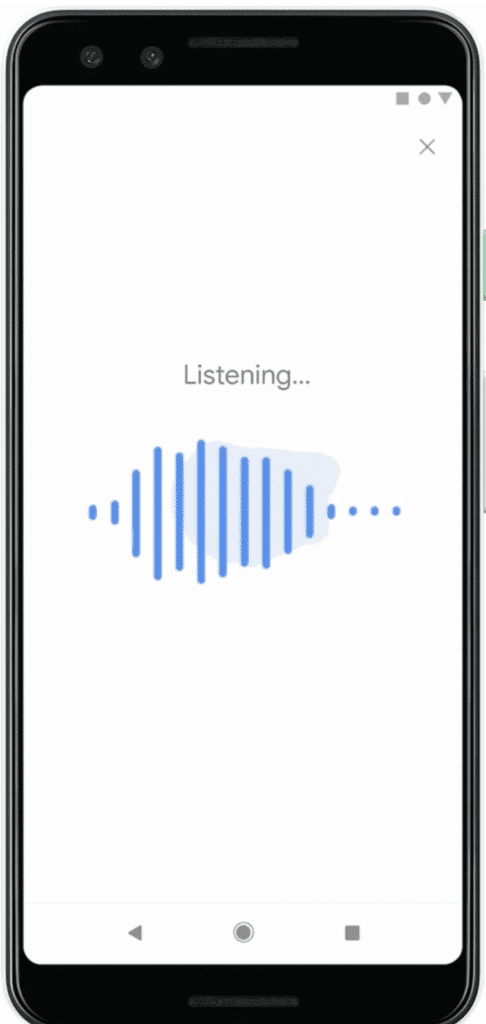
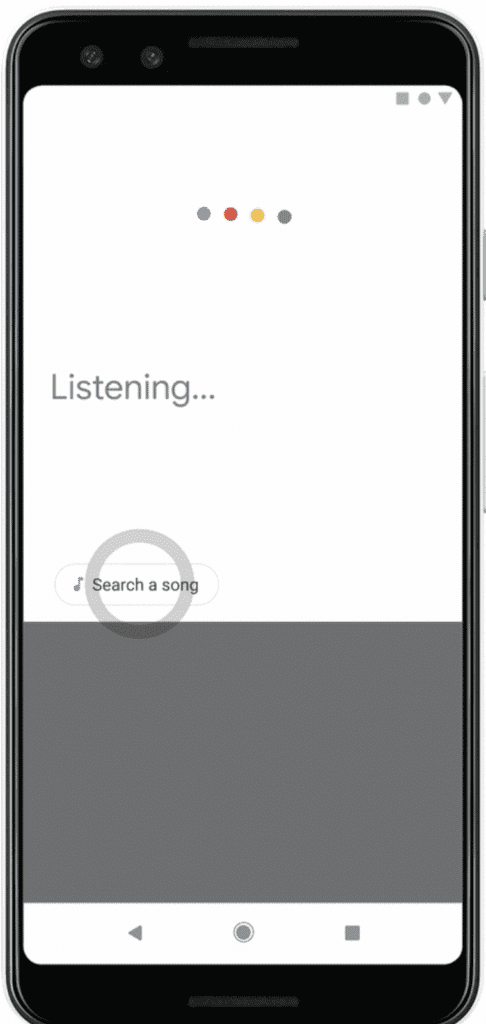
    • Tap the mic icon to activate voice search.
    Photo by Sanket Mishra | Pexels
    • Hum or sing a few lines of the melody of the song you’re trying to identify for about 10-15 seconds.
    Photo by EKATERINA BOLOVTSOVA: A young woman sitting on windowsill and using smartphone at home
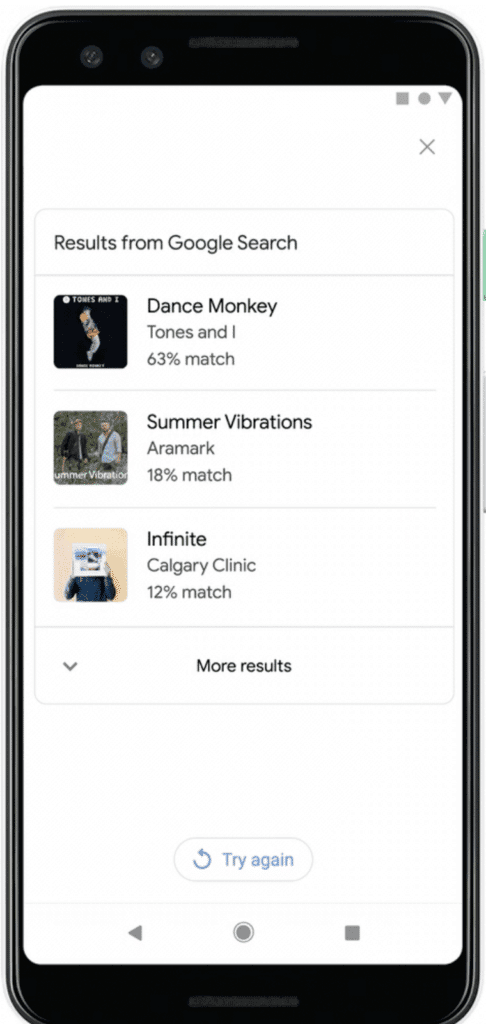
    • Google will analyse your humming or singing and provide you with a list of possible matches, along with the name of the artist and the song title.
    • Choose the song that matches the one you were humming or singing.
    • If you don’t find a match, try humming or singing the melody again.
    • If you’re using the Google app, you can also save the identified song to your music streaming service, such as Spotify or YouTube Music, to listen to it later.

    But wait, there’s more! The feature also allows you to search for songs by typing in the lyrics, even if you don’t know the name of the song or the artist. Simply type in a few words from the song lyrics, and Google will show you a list of possible matches.

    And there you have it – it’s that simple!

    The “Hum to Search” feature has received a lot of positive feedback since its launch, with many users praising its accuracy and convenience. It’s a fun and entertaining way to discover new music or rediscover old favourites that you may have forgotten about.

    So, next time you find yourself humming a tune and can’t remember the name of the song, give “Hum to Search” a try. You might just be pleasantly surprised at how well it works!

    In addition to its practical use for identifying songs, “Hum to Search” has also become a popular way for users to engage with the feature in a fun and creative way. Social media platforms such as TikTok and Instagram have seen a surge in videos of users humming or singing popular songs, and then revealing the song’s name and artist using the “Hum to Search” feature.

    Some users have even turned it into a game by challenging their friends to hum or sing a song and then see who can identify it using “Hum to Search” the fastest. It’s a great way to bond over music and discover new songs that you may not have heard before.

    While the feature has been praised for its accuracy, there are still some limitations. For example, if you’re humming a song with a unique melody or a lesser-known artist, the algorithm may not be able to identify it. Additionally, the feature may not work as well in noisy environments or if the user’s humming or singing is not clear enough.

    Despite these limitations, “Hum to Search” is still a valuable tool for music lovers and a testament to the power of machine learning and artificial intelligence. It’s also an example of how technology can be used to enhance our daily lives and make everyday tasks easier and more enjoyable.

    So if you’re someone who loves music and has ever struggled to identify a song stuck in your head, then “Hum to Search” is definitely worth checking!

    Source: The Independent Ghana

  • China tech giant Alibaba to roll out ChatGPT rival

    China tech giant Alibaba to roll out ChatGPT rival

    Chinese technology giant Alibaba has announced plans to roll out its own artificial intelligence (AI) ChatGPT-style product called Tongyi Qianwen.

    Its cloud computing unit says it will integrate the chatbot across Alibaba’s businesses in the “near future” but did not give details on its timeline.

    In recent months, technology companies around the world have unveiled their own so-called generative AI chatbots.

    Earlier this year, Alibaba revealed it was working on a rival to ChatGPT.

    Tongyi Qianwen roughly translates as “seeking an answer by asking a thousand questions”, although Alibaba has not given an English version of the name.

    “We are at a technological watershed moment driven by generative AI and cloud computing,” Alibaba’s chairman and chief executive Daniel Zhang said in as Tongyi Qianwen was launched.

    The company said Tongyi Qianwen, which is capable of working in English as well as Chinese, will initially be added to DingTalk, Alibaba’s workplace messaging app.

    It will perform a number of tasks including turning conversations in meetings into written notes, writing emails and drafting business proposals, the company said.

    Alibaba said it will also be integrated into Tmall Genie, which is similar to Amazon’s Alexa voice assistant smart speaker.

    Interest in generative AI has surged since the release of ChatGPT by Microsoft-backed OpenAI in November.

    Generative AI is capable of learning from past data to create content indistinguishable from human work.

    ChatGPT can answer questions using natural, human-like language and it can also mimic other writing styles, using the internet as it was in 2021 as its database.

    Microsoft has spent billions of dollars on the technology, which was added to its search engine Bing in February.

    The US software giant also said it will embed a version of ChatGPT in its Office apps, including Word, Excel, PowerPoint and Outlook.

    Alphabet’s Google and Chinese technology group Baidu have also announced their own AI models and released similar chatbots.

    On Tuesday, China’s cyberspace regulator unveiled draft measures for managing generative AI.

    Under the proposed rules, companies would be responsible for the legitimacy of data used to train the technology, the Cyberspace Administration of China said.

    The public has until 10 May to give feedback on the proposals.

    Last month, a group of high-profile figures in the technology industry called for training of powerful AI systems to be suspended amid fears of a threat to humanity.

    Twitter chief executive Elon Musk and Apple co-founder Steve Wozniak were among those who signed an open letter warning of potential risks, and said the race to develop AI systems is out of control.

    Meanwhile, a recent report by investment bank Goldman Sachs estimated that AI could replace the equivalent of 300 million full-time jobs.

    Earlier this month, Italy became the first Western nation to block ChatGPT, with the country’s data-protection authority citing privacy concerns.

  • New multi-billion advertising lawsuit hits Google

    New multi-billion advertising lawsuit hits Google

    Publishers have filed a lawsuit against Google to recover $4.2 billion ($3.4 billion) in lost revenue.

    Charles Arthur, a former technology editor for the Guardian, claims that Google illegally limited the amount of money publishers could make from internet advertisements by abusing its dominant position in the market.

    Google declared that it will vehemently oppose the “speculative and opportunistic” action.

    Following the filing of a related lawsuit in November, this is the second instance of its kind.

    Claudio Pollack, a former director of Ofcom, filed the lawsuit and is suing the Internet giant for up to £13.6 billion in damages.

    The cases concern advertising technology – adtech – that decides in a fraction of a second which online adverts consumers will see, how much they will cost, and how much publishers will earn.

    Online display advertising is the main source of income for many websites.

    The UK competition regulator, the Competition and Markets Authority (CMA), is also investigating Google’s dominance in advertising technology.

    In the lawsuit, which was filed on Thursday, Mr Arthur claims that because of Google’s abuse of its position, the prices of adtech services were inflated, and ad sales revenues of publishers were unlawfully reduced.

    “The CMA is currently investigating Google’s anti-competitive conduct in adtech, but they don’t have the power to make Google compensate those who have lost out. We can only right that wrong through the courts, which is why I am bringing this claim,” he wrote.

    On Tuesday, Google asked a court to dismiss the case – arguing that the US government had overstated its hold on the market.

    In 2021 the French competition regulator, Autorité de la concurrence, fined Google €220m for favouring its own services in the online advertising sector.

  • India tribunal sustains $160 fine on Google

    India tribunal sustains $160 fine on Google

    A $160 million fine issued on Google by the nation’s antitrust agency in a case involving Android’s monopoly on the market has been maintained by an appeals court in India.

    The Competition Commission of India (CCI) conclusions were accurate, according to the National Company Law Appellate Tribunal (NCLAT), and Google was responsible for paying the penalties.

    Nonetheless, it overturned four of the ten antitrust rules that the company was subject to.

    Android is the operating system used by more than 95% of smartphones in India.

    The CCI assessed the penalties for “unfair” business practices in October after accusing Google of abusing its dominating position.

    It also asked Google to make several changes to the Android ecosystem. This included not forcing manufacturers to pre-install the entire suite of Google apps and allowing users to choose their default search engine.

    The Android-related inquiry was started in 2019, following complaints by consumers of Android smartphones. The case was similar to the one Google faced in Europe, where regulators imposed a $5bn fine on the company, saying it used its Android operating system to gain unfair advantage in the market.

    Google challenged the fine and the directives in India’s Supreme Court, saying “no other jurisdiction has ever asked for such far-reaching changes”.

    It argued that the changes would force the company to alter arrangements with more than 1,100 device manufacturers and thousands of app developers.

    The top court, however, refused to block the CCI directives and said that a lower court could continue hearing the appeal.

    In January, Google agreed to co-operate with the watchdog and announced a series of changes to its Android system in India.

    But the ruling by NCLAT means that the tech giant can stop users from removing its pre-installed apps from their phones.

    Google can also continue to impose curbs on users downloading apps without using its app store and is free to block third-party app stores from its Play Store.

  • Google issues warning over ‘fake update’

    Google issues warning over ‘fake update’

    Google has issued a warning to its users over a fake update email.

    The email looks convincing enough but is actually part of a big scam that could take your details and even money.

    The tech giant has a webpage dedicated to the concerning scam.

    It states: “Many phishers actively target Gmail users and attempt to steal their credentials.

    “Phishers will often say that you need to update your Gmail account information or your account will be suspended.

    “The link provided in the email will appear to be https://accounts.google.com, but in reality, the link will take the user to a site controlled by the phisher.”

    Scammers rely on their emails blending in with legitimate update emails.

    Google added: “Beware of these types of emails, and always double check that the URL in the address is what you expect before entering personal information or passwords.”

    The scam link within the email could steal your login or may even ask for more compromising information like bank details.

    Delete the email or flag it to Google via the spam button in Gmail.

  • Donald Trump is back on YouTube full time

    Donald Trump is back on YouTube full time

    In the lead-up to the 2024 election, voters should be able to hear equally from candidates, according to the video streaming platform.

    More than two years after his supporters violently stormed the US Capitol, YouTube has lifted restrictions on Donald Trump’s channel, making it the newest social media platform to fully restore the former US president’s account.

    The choice was made on Friday as the race for the Republican presidential nomination in the 2024 election began to heat up with Trump, who has formally declared his candidature, frequently taking potshots at potential rivals.

    “We carefully evaluated the continued risk of real-world violence, while balancing the chance for voters to hear equally from major national candidates in the run up to an election,” YouTube, which is owned by Google, said in a tweet on Friday.

    After a right-wing mob attacked the US Capitol in Washington, DC on January 6, 2021, to prevent the certification of President Joe Biden’s victory, several social media networks restricted or banned Trump’s accounts.

    The president’s critics accuse him of inciting the violence, including via social media posts where he made false accusations of election fraud.

    In recent months, social media firms – including Twitter and Meta-owned Facebook and Instagram – have restored the former president’s accounts. But Trump has not returned to these websites. Instead, he has been communicating with supporters through his own platform, Truth Social.

    As president, Trump’s social media posts – especially on Twitter – constantly stirred controversy, and at times caused international diplomatic crises.

    Twitter “permanently suspended” Trump’s account after the January 6 riot, but the platform reversed the decision after it was acquired by billionaire Elon Musk.

    “I am staying on Truth. I like it better, I like the way it works, I like Elon, but I’m staying on Truth,” he told Fox News last year.

    The former president still maintains that the 2020 election was “stolen” – a claim that he regularly repeats on Truth Social.

    In December, a Democratic-led congressional panel that investigated the attack on the Capitol recommended criminal charges against the former president.

    A special Justice Department prosecutor is investigating Trump for his role in the riot and possible mishandling of classified information in a separate investigation.

    As he gears up for the 2024 primaries, Trump is also facing several state-led inquiries into his campaign conduct, efforts to overturn the 2024 elections and private business practices.

    Trump denies wrongdoing in all cases and accuses prosecutors of weaponising the justice system against him for political purposes.

    “THE FAKE INVESTIGATIONS BY RADICAL LEFT DEMOCRAT PROSECUTORS ARE NOTHING OTHER THAN ELECTION INTERFERENCE INTO THE POLITICS OF A FAILING NATION,” he wrote on Truth Social on Thursday.

  • Google reveals AI features in Gmail, Docs, and more to compete with Microsoft

    Google reveals AI features in Gmail, Docs, and more to compete with Microsoft

    A number of future generative AI features for Google’s Workspace apps, which include Google Docs, Gmail, Sheets, and Slides, have been unveiled.

    The features include new ways to generate, summarize, and brainstorm text with AI in Google Docs (similar to how many people use OpenAI’s ChatGPT), the option to generate full emails in Gmail based on users’ brief bullet points, and the ability to produce AI imagery, audio, and video to illustrate presentations in Slides (similar to features in both Microsoft Designer, powered by OpenAI’s DALL-E, and Canva, powered by Stable Diffusion).

    The announcement shows Google’s eagerness to catch up to competitors in the new AI race. Ever since the arrival of ChatGPT last year and Microsoft’s launch of its chatbot-enabled Bing this February, the search giant has been scrambling to launch similar AI features. The company reportedly declared a “code red” in December, with senior management telling staff to add AI tools to all its user products, which are used by billions of people, in a matter of months.

    But Google is definitely racing ahead of itself. Although the company has announced a raft of new features, only the first of these — AI writing tools in Docs and Gmail — will be made available to a group of US-based “trusted testers” this month. (This is also how Google announced availability for ChatGPT rival Bard.) Google says these and other features will then be made available to the public later in the year but didn’t specify when.

    You can see below the full list of AI-powered features Google says will be coming to Workspace apps in the future:

    • Draft, reply, summarize, and prioritize your Gmail
    • Brainstorm, proofread, write, and rewrite in Docs
    • Bring your creative vision to life with auto-generated images, audio, and video in Slides
    • Go from raw data to insights and analysis via auto-completion, formula generation, and contextual categorization in Sheets
    • Generate new backgrounds and capture notes in Meet
    • Enable workflows for getting things done in Chat
    A GIF showing an AI assistant generating a job description in Google Docs.

    An example of AI in Google Docs turning a prompt into a full job description. Image: Google

    Of all the new features, the AI writing and brainstorming tools in Docs and Gmail seem the most potentially useful. In a sample demo (GIF above), a user is shown the prompt “Help me write” and then enters a request: “Job post for a regional sales rep.” The AI system then completes the job spec for them in seconds, letting them edit and refine the text.

    Google expands on these potential functions in its press release: “Whether you’re a busy HR professional who needs to create customized job descriptions, or a parent drafting the invitation for your child’s pirate-themed birthday party, Workspace saves you the time and effort of writing that first version. Simply type a topic you’d like to write about, and a draft will instantly be generated for you. With your collaborative Al partner you can continue to refine and edit, getting more suggestions as needed.”

    A similar feature will let users rewrite text or expand it using AI tools. So, says Google, you might jot down a few bullet points about a work meeting. Google Docs can then expand this into a “more polished summary,” with users able to manually specify the tone (whether it should be “more whimsical” or “formal,” for example). In a video demo, Google shows AI being used to write personalized marketing messages for clients, turning bullet points into a full email, and summarizing the contents of a long email chain in Gmail. (Again, these are somewhat familiar features. Slack recently announced it will use ChatGPT to create similar summaries of discussions, for example.)

    One sample use case shows AI in Gmail turning bullet points into a full and formal email.

    A GIF showing Google’s AI tools in Gmail expanding on bullet points.

    It’s notable that Microsoft is rumored to be building similar features into its Office suite of apps, including Word, Teams, and Outlook. Microsoft famously unsettled Google this year with the launch of the new Bing. CEO Satya Nadella described AI-assisted search as a new paradigm that could unseat Google from its throne. But it seems the two companies will also be competing in the world of productivity software. Microsoft has scheduled an event where it will detail its plans for “the future of work with AI” later this week on March 16th.

    Of course, the rush to launch AI products has its dangers, too. AI text generating programs are notoriously unreliable, often “hallucinating” false information and presenting it with utter confidence. They’re also prone to regurgitating racial and gendered biases present in their training data.

    As Google integrates this technology into its enterprise software, these failings could cause major issues. What if Google’s AI summaries of your meetings misattribute quotations or ideas, for example? Or if your AI-generated marketing emails invent new clients or products? In its press release today, Google offered a standard disclaimer: “Sometimes the Al gets things wrong, sometimes it delights you with something offbeat, and oftentimes, it requires guidance.” But while users may see the funny side of Microsoft’s Bing chatbot going off the rails, they may take less kindly to an “offbeat” AI that costs them money.

  • Wode Maya’s YouTube account completely terminated by google

    Wode Maya’s YouTube account completely terminated by google

    Wode Maya, a well-known YouTube blogger from Ghana, lost his account after hackers broke into it. Berthold Kobby Winkler Ackon is also known as Wode Maya.

    Wode Maya has been identified as the Ghanaian content creator with the highest number of subscribers, boasting a staggering 1.2 million subscribers.

    Wode Maya, one of the best African digital content producers, is well known for using vlogging to promote the continent.

    By using malware known as “Microstrategy,” the 32-year-account old’s was first compromised, and all of his videos were deleted as of February 24, 2023.

    A recent check, however, shows that Google has completely deleted his page.

    However, Wode Maya, whose source of livelihood has crumbled before his eyes, is yet to comment on the issue.

    Earlier, in an interview with GhanaWeb TV’s Talkertainment, Wode Maya disclosed that one can make over 100,000 dollars monthly just by creating content on YouTube.

    “I always tell people to use social media wisely, very wisely because it is a place where you can make very good income. As a Youtuber, you can go from 10 to 100 thousand dollars,” he told Elsie Lamar.

    Wode Maya at the time listed some real estate projects he was able to pursue with YouTube proceeds.

    “For now, it’s more like YouTube full-time, not just in Ghana. I do stuff in different African countries. My project is Africa to the world, more like being a real estate developer, but not in Ghana,” he established.

  • Google loses $100bn off shares due to a mistake

    Google loses $100bn off shares due to a mistake

    On Wednesday, Google’s parent company, Alphabet’s shares fell more than 7%, reducing the company’s market worth by $100 billion (£82 billion).

    The bot Bard was asked in a Twitter promotion about what to say to a nine-year-old about discoveries from the James Webb Space Telescope. Bard was unveiled on Monday.

    It responded that the telescope was the first to capture images of a planet outside of our solar system, but the European Very Large Telescope actually achieved that feat in 2004. Astronomers soon caught this error on Twitter.

    “Why didn’t you factcheck this example before sharing it?” Chris Harrison, a fellow at Newcastle University, replied to the tweet.

    Investors were also underwhelmed by a presentation the company gave about its plans to deploy artificial intelligence in its products.

    Google is looking for strategies to reassure the public that it continues to be in the lead when it comes to the most cutting-edge AI.

    Furthermore, it appears that the internet behemoth is currently providing the incorrect solution.

    The new AI bot was displayed in an advertisement by improperly responding to a question.

    Since the release of new ChatGPT software by Microsoft-backed OpenAI in late 2017, Google has been under criticism. It immediately went viral for its aptitude for acing business school exams, writing song songs, and responding to other inquiries.

    This week, Microsoft said that an updated version of its Bing search engine, which has lagged behind Google for years, would make even more sophisticated use of the ChatGPT technology.

    Although investors have supported the development of artificial intelligence, critics have cautioned that releasing the technology too quickly increases the possibility of mistakes or other biased findings, as well as problems with plagiarism.

    A Google spokesperson said the error highlighted “the importance of a rigorous testing process, something that we’re kicking off this week with our Trusted Tester programme”.

    “We’ll combine external feedback with our own internal testing to make sure Bard’s responses meet a high bar for quality, safety and roundedness in real-world information,” they said.

    Last month, Google’s parent company Alphabet cut 12,000 jobs – about 6% of its workforce worldwide – amid layoffs at a number of leading tech giants.

  • Alphabet to cut 12, 000 jobs

    Alphabet to cut 12, 000 jobs

    The parent company of Google, Alphabet, will eliminate 12,000 positions, the most recent round of layoffs to affect the tech sector.

    In an internal email, Sundar Pichai, the CEO of Google and Alphabet, stated that he accepted “full responsibility” for the cuts.

    6% of Alphabet’s employees worldwide, including those in the engineering and recruitment teams, will be affected by the layoffs.

    This comes after Amazon cut 18,000 jobs and Microsoft cut 10,000 jobs, respectively, in recent weeks.

    Mr Pichai thanked staff for “working so hard” in their roles, adding that their “contributions have been invaluable”.

    He wrote: “While this transition won’t be easy, we’re going to support employees as they look for their next opportunity.

    “Until then, please take good care of yourselves as you absorb this difficult news. As part of that, if you are just starting your work day, please feel free to work from home today.”

    According to a recent filing with Companies House, Google has more than 5,500 staff in the UK. But it is unclear how many of these will be affected by the cuts.

    ‘Unsustainable’

    Mr Pichai announced severance packages for US employees, who will receive at least 16 weeks of salary, their 2022 bonus, paid vacations and six months of health coverage.

    He said he remained “optimistic about our ability to deliver on our mission, even on our toughest days”.

    Wall Street welcomed the cuts – Alphabet shares rose by 3.5% in electronic trading before the stock market opened.

    Analysts have said tech’s big guns had previously overspent, not seeing a slowdown on the horizon.

    Daniel Ives of Wedbush Securities said the layoffs highlight irresponsible spending across a sector basking in “hypergrowth”.

    “The reality is tech stalwarts over-hired at a pace that was unsustainable and now darker macro is forcing these layoffs across the tech space,” he said.

    According to tech site Layoffs.fyi, nearly 194,000 industry employees have lost their jobs in the US since the beginning of 2022, not including those announced by Alphabet on Friday.

    Hewlett Packard and cloud computing giant Salesforce also announced major cuts this month, as rampant inflation and rising interest rates have slowed growth.

    US tech giants have also been facing scrutiny in the European Union, which has started enforcing regulations to stop them avoiding tax, stifling competition, profiting from news content without paying and serving as platforms for disinformation and hate.

  • Google accuses India’s Competition Commission of copying EU order

    Google accuses India’s Competition Commission of copying EU order

    In its decision to fine Google, India’s competition watchdog “copied” parts of an EU ruling, Reuters reports.

    The tech giant said this in a filing to an Indian appeals tribunal, the report said.

    The tribunal will hear Google’s appeal against the penalty on Wednesday.

    In October, the Indian regulator fined Google 13bn rupees ($157m; £131m) for using its Android platform to dominate the market.

    The Competition Commission of India (CCI) had accused Google of entering into “one-sided agreements” with smartphone makers to ensure the dominance of its apps.

    Reuters reported that according to the filing made to the National Company Law Appellate Tribunal (NCLAT), Google said that the CCI’s investigations unit deployed “evidence from Europe that was not examined in India”. It has also said that there were “more than 50 instances of copy-pasting” from the European Commission’s ruling.

    Reuters said it had reviewed the filing, which has not been made public.

    The CCI did not respond to requests for comment from Reuters. The BBC has also contacted CCI representatives for a response.

    While announcing the fine on 20 October, the CCI had said that Google was “abusing” the licensing of its Android operating system for a range of smartphones, web searches, browsing and video hosting services.

    It said that Google was entering into forced agreements with players in the space to ensure that its bouquet of apps – such as Google Chrome, YouTube, Google Maps and others – were used. This, the CCI said, was stifling competition and gave Google continuous access to consumer data and lucrative advertising opportunities.

    Google is facing a series of anti-trust cases in India and authorities are also probing its conduct in the smart TV market and its in-app payments system.

    The Android-related inquiry was started in 2019, following complaints by consumers of Android smartphones.

    The case is similar to the one Google faced in Europe, where regulators in 2018 imposed a record fine on the company for using the Android platform to cement its search engine’s dominance. In September last year, Google lost an appeal it had filed in court against the order.

    Days after the 20 October order, the CCI imposed another fine on Google for anti-competitive practices. Google has appealed against this as well.

    Source: BBC.com
  • Internet in SA could soon be 20% cheaper – thanks to Google’s new undersea cable

    The Equiano subsea internet cable that landed ashore in Melkbosstrand outside Cape Town earlier this year could cut South Africa’s internet costs by around 20%, according to Google.

    Equiano arrived in South Africa in early August, its final destination after already having landed in Togo, Nigeria, and Namibia.

    The submarine internet cable, stretching 15,000km from Portugal to South Africa along the west coast of the continent, features 12 fibre pairs and a design capacity of 150Tbps. Equiano has 20 times more network capacity than the last cable built to serve this region, according to Nitin Gajria, the managing director of Google in Sub-Saharan Africa.

    “There’s a huge positive knock-on effect, in terms of digital economies, job generation… but, at the end of the day, for the end-user, the knock-on effect of this [Equiano] is faster internet and lower cost internet,” said Gajria on Wednesday at the AfricaTech festival held at the Cape Town International Convention Centre.

    “So, depending on which country you’re in, what geography you’re in, and the various partnerships along the way, this would be somewhere in the range of 20% cheaper internet locally.”

    Equiano will start feeding more network capacity through the west coast of Africa – and South Africa – in a phased approach, said Gajria, with the first phase expected to begin in December.

    “What the cable does is it brings in a lot more network capacity to the continent. What we’re now doing is working with partners to bring this capacity further afield. This involves us working with ISPs, telcos, other infrastructure players in the ecosystem to bring this capacity further afield,” said Gajria.

    “One of the objectives for us is to start driving more connectivity and getting more people online and getting faster, cheaper internet into more parts of Africa, including the rural areas.”

    Of the approximately 1.1 billion people living in Sub-Saharan Africa, only 300 million are online, added Gajria. “And even those 300 million people, they don’t really have the full internet experience that many of us do.”

    The problem in getting more people in Africa connected to the internet involves network availability, which is becoming less of an issue as telecommunication providers expand, said Gajria, access to an internet-enabled device, and access to fast, affordable data.

    “So, think of it [Equiano] as bringing in a lot more supply of network capacity into the continent. What that will do is make [internet] speeds faster and make data cheaper, so it works on both sides of the equation,” said Gajria.

    The landing of Equiano in South Africa coincides with the laying of the 2Africa cable, the longest subsea cable in the world, which recently touched down in Marseille, France. The 2Africa cable will connect 33 countries and the continents of Africa, Europe and Asia once live in 2023, further improving capacity in the regions it touches.

    Source: Business insider


  • Google: India orders Google to pay an additional $113 million fine

    Google has been fined 9 billion rupees ($113 million; £98 million) by India’s competition regulator for anti-competitive practises, the second such penalty in less than a week.

    Google was accused by the regulator of “abusing” its dominant position in the app store by forcing app developers to use its in-app payment system.

    It requested that the tech behemoth not prohibit app developers from using third-party billing or payment services.

    Google said it was reviewing the allegations.

    “By keeping costs low, our model has powered India’s digital transformation and expanded access for hundreds of millions of Indians,” a Google spokesperson told the BBC.

    “We remain committed to our users and developers and are reviewing the decision to evaluate the next steps,” the spokesperson added.

    In a 199-page order released on Tuesday, the Competition Commission of India (CCI)said that Google was implementing certain policies on its Play Store that required app developers to “exclusively” use its payments system for distributing or selling apps and in-app services.


    The regulator asked Google to adopt eight remedies or operations adjustments within three months, including not restricting “app developers from using any third-party billing/payment processing services, either for in-app purchases or for purchasing apps”, according to Reuters.

    “Google should ensure complete transparency in communicating with app developers and details about service fees charged,” the CCI added.

    The order is the latest setback for Google, which is facing a series of anti-trust allegations in India.

    Last week, the company was fined 13bn rupees ($161m; £144m) for using its Android platform to dominate the market.

    The CCI said the tech giant was entering into forced agreements with players in the space to ensure that its bouquet of apps – such as Google Chrome, YouTube, Google Maps and others – were used.

    The Android-related inquiry was started in 2019, following complaints by consumers of Android smartphones. The case is similar to the one Google faced in Europe, where regulators imposed a $5bn fine on the company for using its Android operating system to gain an unfair advantage in the market.

    Google had called CCI’s decision “a major setback for Indian consumers and businesses”, adding that it will review the order and decide on the next steps.

  • Google: India punishes a tech giant $161 million for unlawful business practices

    The Indian government fined Google 13 billion rupees ($161 million; £144 million) for dominating the market with its Android platform.

    The country’s competition regulator has accused Google of entering into “one-sided agreements” with smartphone manufacturers in order to keep the dominance of its apps.

    It has ordered Google to “cease and desist”  from such behaviour.

    Google has not responded to the fine or the accusations yet.

    The Competition Commission of India (CCI) said in a statement on Thursday that Google was “abusing” the licensing of its Android operating system for a range of smartphones, web searches, browsing, and video hosting services.

    It said that Google was entering into forced agreements with players in the space to ensure that its bouquet of apps – such as Google Chrome, YouTube, Google Maps and others – were used.

    The statement added that this practice was stifling competition and gave Google continuous access to consumer data and lucrative advertising opportunities.

    The CCI has also asked Google to not force device manufacturers to pre-install its apps and that it must allow manufacturers and users to install apps of their choice during the initial device setup.

    “Markets should be allowed to compete on merits and the onus is on the dominant players (in the present case, Google) that its conduct does not impinge this competition on merits,” the statement said.

    Google is facing a series of anti-trust cases in India and authorities are also probing Google’s conduct in the smart TV market and its in-app payments system.

    The Android-related inquiry was started in 2019, following complaints by consumers of Android smartphones.

    The case is similar to the one Google faced in Europe, where regulators imposed a $5bn fine on the company for using its Android operating system to gain an unfair advantage in the market.


  • Google change reduces airline emissions calculations

    The way Google calculates the climate impact of your flights has changed.

    Your flights now appear to have much less impact on the environment than they did before.

    That’s because the world’s biggest search engine has taken a key driver of global warming out of its online carbon flight calculator.

    “Google has airbrushed a huge chunk of the aviation industry’s climate impacts from its pages” says Dr Doug Parr, chief scientist of Greenpeace.

    With Google hosting nine out of every 10 online searches, this could have wide repercussions for people’s travel decisions.

    The company said it made the change following consultations with its “industry partners”.

    It affects the carbon calculator embedded in the company’s “Google Flights” search tool.

    If you have ever tried to find a flight on Google, you will have come across Google Flights.

    It appears towards the top of search results and allows you to scour the web for flights and fares.

    It also offers to calculate the emissions generated by your journey.

    Google says this feature is designed “to help you make more sustainable travel choices”.

    Yet in July, Google decided to exclude all the global warming impacts of flying except CO2.


    Some experts say Google’s calculations now represent just over half of the real impact on the climate of flights.

    “It now significantly understates the global impact of aviation on the climate”, says Professor David Lee of Manchester Metropolitan University, the author of the most comprehensive scientific assessment of the contribution of air travel to global warming.

    Flying affects the climate in lots of ways in addition to the CO2 produced by burning aviation fuel.

    These include the creation of long thin clouds high up in the atmosphere – known as contrails – which trap heat radiated by the Earth, leading to a net warming effect on our planet.

    These additional warming impacts mean that although aviation is only responsible for around 2% of global CO2 emissions, the sector is actually responsible for around 3.5% of the warming caused by human activity.

    And it is a sector that is only going to get bigger.

    Since 2000 emissions have risen by 50%, and the industry is expected to grow by more than 4% every year for the next two decades, according to the International Energy Agency (IEA).

    Google told the BBC it “strongly believes” that non-CO2 effects of aviation should be included in its calculations.

    It says it recognises that at the global scale they are a significant additional impact of flying.

    But it argues the company’s priority is the “accuracy of the individual flight estimates” it provides to its consumers.

    It says it is working with academics to better understand how contrails and other warming impacts affect specific flights.

    Source: BBC

  • Covid-19 dominates Google searches this year

    In a year dominated by the effects of the coronavirus pandemic, it’s not a surprise that the top searches on Google in Kenya, South Africa and Nigeria have been dominated, according to the company’s review, by inquiries about the virus.

    In South Africa, the hardest-hit country on the continent, people searched for details about the imposed lockdowns and news about cigarettes and alcohol which were banned from sale.

    In Kenya, some of the questions people searched for in relation to the pandemic included: how to make sanitisers and how to boost immunity.

    Searches about misleading content like the role 5G in the spread of coronavirus was among topics people looked for in South Africa.

    There was also interest in the US elections in the three countries with users searching for details about president-elect Joe Biden and the incoming vice-president Kamala Harris.

    Nigerians, just like users in the other two countries, searched for local celebrity news.

    News about the English Premier League was popular in Kenya.

    In Nigeria, Fem, a song by Afrobeats star Davido was the most searched.

    Recipes for porn star martini – a popular South African cocktail made with passion fruit – was also among the top searches in Nigeria.

    Source: bbc.com

  • Google and Facebook give unique insight into how US election is being fought online

    The US presidential election – more than any other before it – has established a battleground online.

    The role of social media companies in monitoring content has drawn controversy from both Republicans and Democrats, especially given the alleged foreign interference in the 2016 election.

    But data from global tech companies, such as Google or Facebook, has also provided a unique perspective on what subjects are most interesting to US citizens, and how candidates have invested in their online campaigns.

    What have voters been searching for on Google?
    In the United States, there was a 362% increase in users searching for the term “postal voting” compared to other election years, according to Google Trends.

    Meanwhile, there was a 366% increase in searches for “electoral fraud” and the phrase “fact check” had peaked in search interest long before November.

    The US President Donald Trump has repeatedly questioned mail-in ballots, tweeting in May they would lead to a “fraudulent” election.

    In a first, Twitter labelled the tweet and directed social media users to fact checks and news stories about Trump’s unsubstantiated claims.

    The tech giant said the tweets “contain potentially misleading information about voting processes and have been labelled to provide additional context around mail-in ballots”.

    Google Trends also showed that users have searched for “how to vote” and “early voting” more now than any other time on record.

    Meanwhile, other political search terms with especially high interest in the US in 2020 included “unemployment”, “vaccine” and “racism”.

    The US economy and growth experienced a historic drop in the second quarter of the year during the COVID-19 pandemic, while demonstrations against social injustice have raged across the country following the death of George Floyd on May 25.

    Who spent the most on online ads?
    Discussion about the availability of political ads presented a different headache for tech companies in the lead up to the election.

    Unlike rivals Twitter, Facebook decided to allow political ads on its platform and Instagram in the lead up to election day.

    However, CEO Mark Zuckerberg confirmed the social network would ban new political adverts in the week before November 3.

    Rob Leathern, director of product management at Facebook, added the company would also ban adverts that tried to delegitimise the outcome of the election, such as calling a method of voting fraudulent or corrupt.

    But aside from these exceptions, both Trump and Joe Biden have heavily invested in Facebook advertising, more than doubling ad spending on the social network compared with the presidential candidates in the 2016 race.

    Since January 1, Biden has narrowly outspent his Republican rival, investing $101 million (€86 million) on Facebook advertising on his dedicated campaign pages, compared to Trump’s $93.5 million (€80 million).

    In the last week of October, the difference was even more dramatic, with the Democrat candidate more than doubling the investment of Trump.

    From October 25 to October 31, Biden’s pages spent $9.01 million (€7,68 million) to Trump’s $4.50 million (€3.84 million).

    Meanwhile, campaign pages for Democrat vice-presidential candidate Kamala Harris have also outspent incumbent Vice-President Mike Pence on Facebook advertising in 2020.

    Google decided to limit the reach of political adverts on the search engine in November 2019, preventing campaigns from targeting ads based on users’ internet search preferences and viewing history on YouTube.

    On Google, it is Trump who has invested more in ads, while the two campaigns have spent a combined $215.5 million (€183.7 million) since May 2018.

    Where were these ads targeted?
    In the last month, both parties have heavily invested their campaign funds into online ads for specific US states, many of which are seen as crucial swing states.

    Trump and Biden have each spent more than $1.50 million (€1.28 million) on Facebook ads in Pennsylvania, Michigan, North Carolina, and Arizona since October 1.

    Unsurprisingly the most lucrative US state is Florida, where many critics are hinging the election result on, with just a few points predicted to separate the two candidates.

    In the last month, political ads on Facebook in Florida have cost Biden $6.0 million (€5.1 million) and Trump $4.8 million (€4.1 million) respectively.

    Euronews has found that many of these adverts are also individually focused on political issues that had been searched for on Google.

    Trump’s most interacted advert on Facebook – 15% of which was released in Florida – issued a clear message to encourage unity during the COVID-19 pandemic.

    The ad featured the US president speaking after he had left Walter Reed Hospital following his own treatment for COVID-19.

    Meanwhile, Biden’s campaign has run ads with pledges to tackle social injustice and unemployment, alongside a straightforward message that the Democrats “have to get this guy out of [the White House”.

    While these figures provide only an indication of the campaigns, experts agreed that Trump outperformed Democrat nominee Hillary Clinton online in 2016, and the online campaign has been a central focus for both parties in the race for the White House.

    Source: africanews.com

  • Ex-Google engineer sentenced for theft – Anthony Levandowski

    An ex-engineer for Google’s self-driving car unit has been sentenced to 18 months in prison for trade secret theft shortly before he joined Uber.

    US District Judge William Alsup in San Francisco said Anthony Levandowski had carried out the “biggest trade secret crime I have ever seen”.

    Levandowski loaded more than 14,000 Google files onto his laptop before leaving the firm in January 2016.

    He led Uber’s robocar project, only to be fired in 2017 over this case.

    Levandowski filed for bankruptcy in March this year because he owes $179m (£136m) to Google’s parent company, Alphabet, for his actions.

    Judge Alsup said “billions [of dollars] in the future were at play, and when those kind of financial incentives are there good people will do terrible things, and that’s what happened here”, reports Reuters news agency.

    Levandowski – who was a founding member of Google’s self-driving car project, Waymo – had been hoping for a sentence of 12 months’ confinement at his home in the San Francisco suburbs.

    He said he had pneumonia, and could die of coronavirus in prison.

    But Judge Alsup said a non-custodial sentence would amount to “a green light to every future brilliant engineer to steal trade secrets”.

    He ruled that Levandowski could begin his custodial sentence after the Covid-19 pandemic had peaked.

    Prosecutors had recommended a 27-month sentence.

    Levandowski, who now runs self-driving truck company Pronto, said in a statement: “Today marks the end of three-and-a-half long years and the beginning of another long road ahead.”

    Uber settled a lawsuit from Alphabet over the trade secrets theft, but the dispute between the companies continues.

    According to TechCrunch, Levandowski is suing Uber for $4.1bn, stemming from its acquisition of his previous self-driving truck start-up, Otto.

    Source: bbc.com

  • Ex-Googler becomes Chinas second-richest person

    A former Google employee was briefly ranked the second richest person in China, following a surge in sales at his e-commerce business, Pinduoduo.

    Colin Huang was valued at $45.4bn (£36.4bn) by Forbes, on Sunday, ahead of Alibaba’s Jack Ma but behind Tencent’s Pony Ma.

    Mr Huang was previously an intern at Microsoft and then spent three years as an engineer at Google.

    “These three years were incredibly valuable to me,” he blogged in 2016.

    “Google gave me far more than I contributed.”

    According to Forbes, a slip in Pinduoduo’s value has since given Mr Ma back the second spot.

    Shopping games

    Mr Huang founded Pinduoduo in 2015.

    And the company became particularly popular in China during the Covid-19 pandemic, with orders increasing from 50 million to nearly 65 million per day.

    Its novel features include team buying, where customers come together to purchase more units at a lower price.

    Customers can also play games on the site and are sometimes rewarded with free gifts.

    In his 2016 blog, Mr Huang said some early Google employees had been adversely affected by quickly becoming wealthy.

    “They suddenly got too much money, lost incentives to work and started to look for fun and new careers,” he wrote.

    “Many years passed and they wasted their most precious time, when they were most likely to have other outstanding achievements.”

    Mr Huang still has some way to go to catch up with the world’s richest technology billionaire, Jeff Bezos.

    Forbes currently estimates the Amazon founder is worth $162.2bn.

    Source: bbc.com

  • Facebook and Google allow work from home for rest of year

    Facebook and Google have announced plans to reopen their offices but say they will let employees continue working from home for the rest of the year.

    Google originally said it would keep its work-from-home policy until 1 June but is extending it for seven more months, while Facebook intends to reopen its offices on 6 July as lockdowns are gradually lifted.

    Google chief executive Sundar Pichai says employees who need to return to the office will be able to do so from July with enhanced safety measures in place, but those who can carry out their jobs from home can do so until the end of the year.

    The announcement coincides with Facebook’s, as more companies start rolling out their post-lockdown strategies.

    “Facebook has taken the next step in its return-to-work philosophy. Today, we announced anyone who can do their work remotely can choose to do so through the end of the year,” a spokesman said.

    Source: bbc.com

  • Coronavirus: Retail, recreational activities went down 55.6% during lockdown – Google data

    Google data between March 29 and April 11, 2020, shows that retail and recreational activities in Ghana went down by an average of 55.6%.

    This is compared to baseline levels measured in January and February.

    The data also showed a similar trend for travel to grocery and pharmacy stores and transit stations, which were down by an average of 33.9% and 50.3% respectively.

    According to the rating agency, Fitch, while there was a slight reversion towards normality post-lockdown, consumers are still below average on their travels for retail-related activities.

    “As a result of the COVID-19 pandemic in the country and the fall in the price of oil, we have revised down our real household spending outlook for 2020 to 4.3% year-on-year, from the 4.9% we predicted pre-COVID-19”, it said.

    This is significantly lower than the 11.9% it estimated for 2019.

    This revision was based on the fact that all non-essential retail was shuttered for three weeks, while retail that was allowed to operate, saw significantly less traffic.

    Supermarkets and grocery shops were classified as essential services, so they were allowed to operate during the three-week lockdown period.

    The rating agency said in the week prior to the lockdown, there was evidence of bulk and panic buying at the leading mass grocery retailers.

    Google mobility data shows that travel to grocery shops peaked at 14% above average on March 28, the day after lockdown.

    However, for the period after the lockdown (March 27 to April 26), travel to grocery shops was down by an average of 32.8%, compared to the baseline.

    “We believe that spending on alcoholic drinks will decline year-on-year. Social distancing and the closure of taverns, bars and restaurants meant that on-trade consumption would have dropped during the lockdown. These facilities remain closed.”

    Source: Class FM

  • Google blocking 18m coronavirus scam emails every day

    Scammers are sending 18 million hoax emails about Covid-19 to Gmail users every day, according to Google.

    The tech giant says the pandemic has led to an explosion of phishing attacks in which criminals try to trick users into revealing personal data.

    The company said it was blocking more than 100 million phishing emails a day. Over the past week, almost a fifth were scam emails related to coronavirus.

    The virus may now be the biggest phishing topic ever, tech firms say.

    Google’s Gmail is used by 1.5 billion people.

    A scam email impersonating the WHO. It encourages the recipient to "donate" money via Bitcoin.
    Image caption One of the scam emails impersonates the World Health Organization

    Individuals are being sent a huge variety of emails which impersonate authorities, such as the World Health Organization (WHO), in an effort to persuade victims to download software or donate to bogus causes.

    Cyber-criminals are also attempting to capitalise on government support packages by imitating public institutions.

    Google claims that its machine-learning tools are able to block more than 99.9% of emails from reaching its users.

    Another coronavirus scam email
    Image caption This scam email targeted businesses on Gmail

    The growth in coronavirus-themed phishing is being recorded by several cyber-security companies.

    Barracuda Networks said it had seen a 667% increase in malicious phishing emails during the pandemic.

    Scammers have been sending fake emails and text messages claiming to be from the UK government, the WHO, the Centre for Disease Control and Prevention and even individual US officials, including President Trump.

    “Phishing attacks always share the common trait of inciting or depending on an emotion that causes us to act more hastily or think less about our actions at that moment in time,” said independent security researcher Scott Helme.

    “The coronavirus pandemic is a highly emotional topic right now and cyber-criminals clearly know this. They’re hoping that the typical person might be more inclined to click through links or follow bad instructions if they use this lure.”

    ‘Exploitation’

    Researchers have also found malicious websites and smartphone applications based on genuine coronavirus resources.

    One malicious Android app claims to help track the spread of the virus, but instead infects the phone with ransomware and demands payment to restore the device.

    Last week, the National Cyber Security Centre and the US Department of Homeland Security issued a joint advisory.

    They said they had seen “an increasing number of malicious cyber-actors” that were “exploiting the current Covid-19 pandemic for their own objectives”.

    The NCSC has published advice on its website to help people avoid becoming the victim of a scam.

    Source: | bbc.com

  • Coronavirus: Apple and Google team up to contact trace

    Apple and Google are jointly developing technology to alert people if they have recently come into contact with others found to be infected with coronavirus.

    They hope to initially help third-party contact-tracing apps run efficiently.

    But ultimately, they aim to do away with the need to download dedicated apps, to encourage the practice.

    The two companies believe their approach – designed to keep users, whose participation would be voluntary, anonymous – addresses privacy concerns.

    Their contact-tracing method would work by using a smartphone’s Bluetooth signals to determine to whom the owner had recently been in proximity for long enough to have established contagion a risk.

    If one of those people later tested positive for the Covid-19 virus, a warning would be sent to the original handset owner.

    No GPS location data or personal information would be recorded.

    “Privacy, transparency and consent are of utmost importance in this effort and we look forward to building this functionality in consultation with interested stakeholders,” Apple and Google said in a joint statement.

    “We will openly publish information about our work for others to analyse.”

    President Trump said his administration needed time to consider the development.

    “It’s very interesting, but a lot of people worry about it in terms of a person’s freedom,” he said during a White House press conference.

    “We’re going to take… a very strong long at it, and we’ll let you know pretty soon.”

    The European Union’s Data Protection Supervisor sounded more positive, saying: “The initiative will require further assessment, however, after a quick look it seems to tick the right boxes as regards user choice, data protection by design and pan-European interoperability.”

    But others have noted that the success of the venture may depend on getting enough people tested.

    Apple is the developer of iOS. Google is the company behind Android. The two operating systems power the vast majority of smartphones in use.

    Some countries – including Singapore, Israel, South Korea and Poland – are already using people’s handsets to issue coronavirus contagion alerts.

    Other health authorities – including the UK, France and Germany – are working on initiatives of their own. And some municipal governments in the US are reportedly about to adopt a third-party app.

    The two technology giants aim to bring coherence to all this by allowing existing third-party apps to be retrofitted to include their solution.

    This would make the apps interoperable, so contact tracing would continue to work as people travelled overseas and came into contact with people using a different tool.

    Apple and Google have been working on the effort for about two weeks but have not externally revealed their plans until Friday.

    If successful, the scheme could help countries relax lockdowns and border restrictions.

    Phone-based matches

    The companies aim to release a software building-block – known as an API (application programming interface) – by mid-May.

    This would allow others’ apps to run on the same basis.

    Records of the digital IDs involved would be stored on remote computer servers but the companies say these could not be used to unmask a specific individual’s true identity.

    Furthermore, the contact-matching process would take place on the phones rather than centrally.

    This would make it possible for someone to be told they should go into quarantine, without anyone else being notified.

    Source: bbc.com

  • Google to publish user location data to help govts tackle virus

    Google will publish location data from its users around the world from Friday to allow governments to gauge the effectiveness of social distancing measures put in place to combat the COVID-19 pandemic, the tech giant said.

    The reports on users’ movements in 131 countries will be made available on a special website and will “chart movement trends over time by geography,” according to a post on one of the company’s blogs.

    Trends will display “a percentage point increase or decrease in visits” to locations like parks, shops, homes and places of work, not “the absolute number of visits,” said the post, signed by Jen Fitzpatrick, who leads Google Maps, and the company’s chief health officer Karen DeSalvo.

    “We hope these reports will help support decisions about how to manage the COVID-19 pandemic,” they said.

    “This information could help officials understand changes in essential trips that can shape recommendations on business hours or inform delivery service offerings.”

    Like the detection of traffic jams or the measurement of traffic on Google Maps, the new reports will use “aggregated, anonymised” data from users who have activated their location history.

    No “personally identifiable information,” such as a person’s location, contacts or movements, will be made available, the post said.

    The reports will also employ a statistical technique that adds “artificial noise” to raw data, making it harder for users to be identified.

    From China to Singapore to Israel, governments have ordered electronic monitoring of their citizens’ movements in an effort to limit the spread of the virus, which has infected more than a million people and killed over 50,000 worldwide.

    In Europe and the United States, technology firms have begun sharing “anonymised” smartphone data to better track the outbreak.

    Even privacy-loving Germany is considering using a smartphone app to help manage the spread of the disease.

    But activists say authoritarian regimes are using the coronavirus as a pretext to suppress independent speech and increase surveillance.

    And in liberal democracies, others fear widespread data harvesting and intrusion could bring lasting harm to privacy and digital rights.

    Source: France24

  • Google tells staff to work at home due to coronavirus

    Google’s parent company Alphabet has asked its North American staff to work from home to reduce the potential spread of the coronavirus.

    Last week the tech giant sent a memo to staff recommending that employees in Washington state work from home.

    It has now expanded that request to all of its almost 100,000 workers across 11 offices in the US and Canada.

    Alphabet is the latest company to make such an announcement as US coronavirus cases have risen to almost 1,000.

    “Out of an abundance of caution, and for the protection of Alphabet and the broader community, we now recommend you work from home if your role allows,” Chris Rackow, Google’s vice president of global security, wrote in an email to workers.

    Alphabet said its offices in North America will remain open for those whose jobs require them to come in.

    Last week, Google, along with many of the world’s other major tech companies, including Apple, Amazon, Microsoft and Facebook, began recommending that staff in Seattle should work from home as the coronavirus spreads in Washington state.

    The state had more than 160 cases as of Monday night. California and New York, where Alphabet has large offices, are also experiencing spikes in the number of cases.

    An employee at Amazon and an employee at Facebook have been diagnosed with the coronavirus.

    On Sunday, Apple chief executive Tim Cook asked employees at several of its global offices to work remotely this week “if your job allows”.

    Last week Twitter told its employees to work from home to help stop the spread of the virus. In a blog post, the social media giant said it was mandatory for staff in Hong Kong, Japan and South Korea to work remotely.

    Twitter also said it was “strongly encouraging” all of its 5,000 employees around the world to not to go into their offices.

    Source: bbc.com