Tag: Governors

  • Tell the US envoy Whitman to shut up and stay out of Kenyan matters – Raila commands

    Tell the US envoy Whitman to shut up and stay out of Kenyan matters – Raila commands

    The 8th Devolution Conference is currently taking place in Eldoret, and remarks made by US Ambassador to Kenya Meg Whitman have alarmed Azimio One Kenya Alliance. Senators and the leader of the opposition, Raila Odinga, have urged her to stay out of domestic affairs.

    Odinga, who was greeted at the conference location by Council of Governors (CoG) Chairperson Ms. Anne Waiguru and a number of governors, including Uasin Gishu Governor Jonathan Bii, started his remarks with the Swahili phrase: ‘nyani haoni kundule,’ translated to ‘the monkey does not see his ass,’ pointing at insincerity on Ruto’s government.

    A day after Whitman pledged her support for President William Ruto’s administration, recognizing his victory in last year’s presidential elections as legitimate and promising the current administration complete support and closer ties with the US government, Odinga reprimanded the ambassador on Thursday. Senators from the Azimio political party described the envoy’s remarks as insensitive to Kenyans in light of the current situation in the nation.

    “I want to tell the rogue ambassador, leave Kenyans alone,” Odinga said in his parting shot while delivering a keynote address at the Devolution conference on Thursday afternoon.

    “If ‘maandamano’ (demos) can lead to dialogue between Ichungwah and Kalonzo, then everything is good in ‘maandamano’ (demos),” he stated, cheering from a section of the delegates.

    “Tell the rogue ambassador, Kenya is neither the US nor is it a colony of the United States. Keep your mouth shut while you are here. Otherwise, we will call for your recall back to your country,” he added.

    The response from the opposition leader came shortly after his contingent of senators from the Azimio brigade criticized the US envoy’s statements during a press conference at the Devolution conference. In her comments at the conference, the US envoy openly endorsed President William Ruto’s election, a move that drew strong rebuke from the Azimio senators.

    The outcome of the 2022 General Election was fiercely disputed by the Azimio la Umoja – One Kenya coalition. The disagreement escalated to the Supreme Court, which ultimately upheld Ruto’s victory, much to the Opposition’s dissatisfaction.

    In her speech, while advocating for Kenya as a prime investment destination for the global community, Whitman did not shy away from expressing her optimism about the nation’s investment potential and climate. She noted that the Ruto administration had made significant advancements and was dedicated to cultivating a business-friendly atmosphere.

    Having assumed her role in Kenya in July 2023, just prior to the last general election, the US envoy indicated her focus on strengthening the US-Kenya trade relationship in conjunction with the government.

    “I arrived in Kenya days before the August 2022 General Election. What I witnessed was nothing short of remarkable. Kenya held what many analysts said was the freest, fairest, and most credible election in Kenyan history,” she stated.

    She continued, “The elections were observed by international organizations and upheld by the Supreme Court, and power was peacefully and normally transferred at that time.”

    These remarks struck a sensitive chord with the Azimio brigade of the opposition, as they had vehemently contested the 2022 General Election results. Azimio perceived the envoy’s comments as intrusive into Kenya’s internal affairs, and their discontent with her statements was palpable.

    On a separate note, Raila commended the governors for setting aside their differences “and taking a break from our divisive politics to chart a path forward for Kenya.”

    Prior to Raila’s attendance at the devolution forum, the Azimio senators had also convened a press conference to criticize Whitman’s comments. They described her remarks as unfortunate and expressed the hope that they reflected her personal stance rather than the official position of the American government.

  • Full text: Dr Opoku-Afari shares views on launch of memoir on Central Banking in Ghana

    Full text: Dr Opoku-Afari shares views on launch of memoir on Central Banking in Ghana

    Good evening. It is a great pleasure to be here and thank you very much for the kind invitation to join in the launch of this book titled “Central Banking in Ghana and the Governors (Institutional Growth and Economic Development)”.

    The Bank accepted to be part of this book launch because primarily it focuses on the central banking in Ghana, the key roles played by successive Governors towards the achievement of the Bank’s objects and long-term sustainability, and ultimately the economic development of Ghana.

    Mr. Chairman, Ladies and Gentlemen, let me commend the author, Mr. Ivor Agyeman-Duah, who has written extensively and contributed to several publications, and this time the focus is on the world of central banking in Ghana. The Bank is indeed supportive of the book’s publication due to its contribution to the literature on central banking in Ghana, with emphasis on monetary policy, and regulatory and supervisory operations of the Bank.

    We do acknowledge that books and articles written on the Bank of Ghana hardly touch on the individual governors who have led the institution and the philosophies that underpinned their economic and the monetary policy decisions.

    This book, however, does that and would therefore go a long way to fill the gap in the body of knowledge on the economic thinking of the various governors that have transitioned through the Bank.

    So, on behalf of Governor Ernest Addison, let me therefore take this opportunity to express the Bank’s appreciation to the author for the vision and efforts put in to publish this book.

    Undoubtedly, I believe this book will enhance public understanding on the workings of the central bank, particularly, the much-debated concept of the institutional operational independence and accountability of central banks.

    Mr. Chairman, distinguished Ladies and Gentlemen, although my task here precludes the review of this book, a task which will be performed by another speaker shortly, permit me to share a few thoughts on the evolution of monetary policy formulation and strategies mentioned in the book.

    I found the author’s exposition on the tools of monetary policy insightful, especially the direct control and inflation targeting, expansionary and contractionary monetary policy stance and contemporary monetary strategies. In all of these narratives, inflation targeting is deemed the most robust monetary policy formulation strategy that has impacted positively on the objectives of central banks, including the Bank of Ghana.

    Even though this book could be deemed as a mirror that reflects the work of all governors of the Bank since its establishment, but like the mirror, the reflection on the work of any of the governors may invariably differ depending on the reader’s economic philosophy or ideology.

    I am certain that the discussion on monetary policy and many other contents of the book will provide a good basis for constructive and intellectual public discourse on the author’s views and assertions. Similarly, I trust that the author, being a seasoned scholar and academic, will readily respond to any constructive critique and commentary that may arise from economists, academics and other reviewers of this book.

    This notwithstanding, this book will serve as a useful resource for central bankers, academics and students of economics in and outside Ghana. So, I highly recommend Central Banking in Ghana and the Governors (Institutional Growth and Economic Development) to everyone.

    On this note, Mr. Chairman, Distinguished Invited Guests, Ladies and Gentlemen, join me to congratulate the author, Mr. Ivor Agyeman-Duah for the successful publication and launch of the book.

    Thank you very much for your attention.

  • Inflation targeting framework considered most resilient and effective strategy for monetary policy – Dr Opoku-Afari

    Inflation targeting framework considered most resilient and effective strategy for monetary policy – Dr Opoku-Afari

    First Deputy Governor of the Central Bank, Dr Maxwell Opoku-Afari, has stated the inflation targeting framework has been universally recognized as the most durable strategy for formulating monetary policy.

    According to him, the framework has impacted positively on the objectives of central banks, including the Bank of Ghana.

    He made the remarks at the launch of a book titled “Central Banking in Ghana and the Governors (Institutional Growth and Economic Development)” which was authored by Ivor Agyeman-Duah.

    Dr Opoku-Afari further shared that all narratives contained in the book about direct control and inflation targeting, expansionary and contractionary monetary policy stance and contemporary monetary strategies have also been insightful.

    “Even though this book could be deemed as a mirror that reflects the work of all governors of the Bank since its establishment, but like the mirror, the reflection on the work of any of the governors may invariably differ depending on the reader’s economic philosophy or ideology,” he noted.

    “I am certain that the discussion on monetary policy and many other contents of the book will provide a good basis for constructive and intellectual public discourse on the author’s views and assertions.

    Similarly, I trust that the author, being a seasoned scholar and academic, will readily respond to any constructive critique and commentary that may arise from economists, academics and other reviewers of this book,” Dr Opoku-Afari added.

    He, however, commended the author for extensively writing the book as part of efforts to fill the gap in the body of knowledge on the economic thinking of the various governors that have transitioned through the Bank.

    “The Bank is indeed supportive of the book’s publication due to its contribution to the literature on central banking in Ghana, with emphasis on monetary policy, and regulatory and supervisory operations of the Bank.

    We do acknowledge that books and articles written on the Bank of Ghana hardly touch on the individual governors who have led the institution and the philosophies that underpinned their economic and the monetary policy decisions,” he concluded.

  • Mutiny damages Putin’s reputation

    Mutiny damages Putin’s reputation

    The unity and stability that Putin and his state media have been attempting to portray for years are called into question by Prigozhin’s uprising

    Some members of the political elites panicked. Flight radar services pinged dozens of private jets leaving Moscow.

    But it wasn’t a systemic crisis.

    Regional governors were quick and unanimous in pledging public allegiance to Moscow.

    These scenes were very different from 1991 – another attempted military coup. Back then, some of the regional leaders quickly aligned with the rebels. We saw nothing even close to that yesterday.

    At the same time, Putin’s image was clearly ruptured.

  • Election for state governors in Nigeria postponed

    Election for state governors in Nigeria postponed

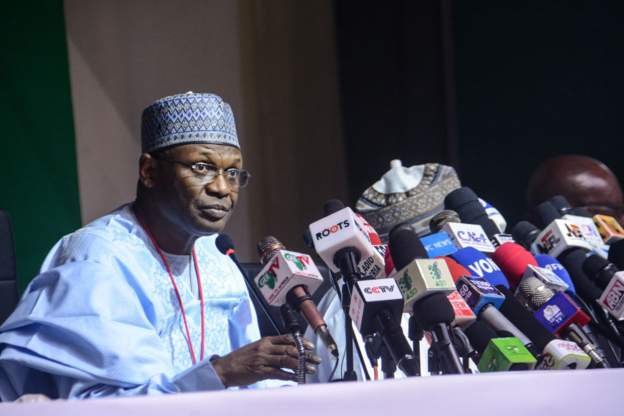
    Elections for local assemblies and state governors in Nigeria have been postponed by one week.

    The election was slated to happen on Saturday. They will now take place on March 18.

    The opposition in Nigeria requested a review of the computerized voting equipment. A judge dismissed their lawsuit. However, the electoral commission claimed that because of the legal challenge, preparations had been delayed and the machines would not be ready in time.

    Election postponements are frequent in this nation.

    In 2019 presidential and parliamentary elections were postponed for a week. The electoral body cited logistical issues.

    The opposition has disputed last month’s election victory by President- elect Bolu Tinubu.

    The Independent National Electoral Commission (Inec) introduced the Bimodal Voter Accreditation System (BVAS) for the first time as part of new technologies used in this year’s elections in a bid to improve transparency.

    But observer groups and opposition parties said huge delays in voting and failures in the system when uploading tallies allowed for ballot disparities during the presidential election.