Tag: GRA

  • Dr. Letsa announces certification of about 200 entrepreneurs in Volta Region for African Export

    Dr. Letsa announces certification of about 200 entrepreneurs in Volta Region for African Export

    Nearly 200 entrepreneurs and businesses in the Volta region have received certification to engage in exports to the African market under the African Continental Free Trade Area (AfCFTA) initiative.

    This effort was facilitated by the National AfCFTA Coordination Secretariat, the Customs Division of the Ghana Revenue Authority (GRA), and the Ghana National Chamber of Commerce and Industry, with support from the Ministry of Trade and Industry.

    The initiative aims to connect entrepreneurs and businesses, allowing them to trade among themselves on the continent.

    During a media soiree organized by the Regional Coordinating Council, Dr. Archibald Yao Letsa, the Volta Regional Minister, announced this significant development.

    He highlighted that the initiative provides businesses with the opportunity to export to the rest of the continent “quota-free and duty-free” in alignment with AfCFTA principles.

    The businesses involved, many led by young entrepreneurs and first-timers, aspire to create business empires, expand job opportunities, and enhance the local economy.

    Dr. Letsa emphasised the positive economic results and progress resulting from the Volta Fairs, noting that some entities are already exporting directly to the US and European markets.

    Notable success stories include Suncity Farms, supplying Monarch Spices to multinational supermarkets in the US, and Maphlix Trust Ghana Limited and Farms, a leading exporter of fresh produce. Other noteworthy participants include Kawa Moka, Leklebi and Ziavitutu, known for their production of organic coffee; Del Christ; and Volta Winery.

    The Regional Minister acknowledged that his administration’s commitment to positioning the region as a favourable tourism and economic destination is becoming a reality, with records indicating positive growth figures.

    Dr Letsa said, “Tourism numbers have gone up as well as revenue,” with the region turning out to be a popular meeting hub for corporate Ghana, an attestation that “we are doing something right.”

    Many organisations have resorted to Ho for their Annual General Meetings with offers on standby for 2024 already.

    He said, “We have won the best Regional Coordination Council in the country, back-to-back,” and he was not ready to relinquish that.

    The Minister said Volta remained the true microcosym of corporate Ghana, from the sea, landscape, forest, mountains, and rivers, and these would translate into creating jobs and industries at the back of the region’s tourism potential.

    He said the initiative “Visit Volta Region, Experience Ghana” is a reality and is urging investors to do business here.

    “I was in Kenya and the US to woo investors to the region, and it’s just a matter of time for the gains to flourish,” he said.

    Regarding the Ho Aerodrome, Dr. Letsa mentioned that PassionAir and AWA were compelled to discontinue services on the route due to challenges with breaking even, primarily caused by inadequate patronage.

    He disclosed that the government’s plan to activate all domestic airports nationwide is anticipated to revive air travel between Ho and other parts of the country in the coming year.

    Dr. Letsa emphasised that the region presents an attractive opportunity for investors seeking partnerships.


  • GRA reminds public of implementation of 10% tax on lotto winnings

    GRA reminds public of implementation of 10% tax on lotto winnings

    The Ghana Revenue Authority (GRA) has issued a reminder to the public that a 10% tax will be deducted from all gross winnings derived from lotteries, betting, gaming, and other games of chance, effective January 1st, 2024.

    This taxation measure applies to both the National Lottery Authority (NLA) and private lotto operators (PLOs).

    While the tax was initially introduced in August 2023, the NLA and PLOs were granted a six-month grace period for preparation.

    With the expiration of this grace period as of December 28th, 2023, the tax is now fully implemented from the start of the new year.

    Despite facing criticism from punters who argue that the tax diminishes their winnings, the GRA underscores the significance of this taxation for revenue generation and its contribution to national development.

    The authority stresses that compliance with the new tax is obligatory, and failure to withhold and remit the tax may result in penalties under Section 78 of the Revenue Administration Act, 2016 (Act 915).

  • GODU threatens nationwide protest over VIT

    GODU threatens nationwide protest over VIT

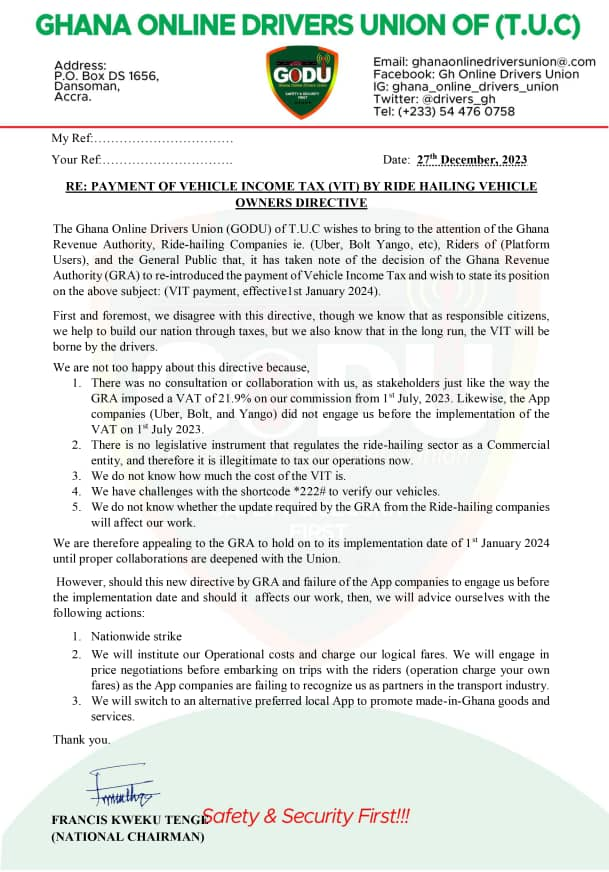
    The Ghana Online Drivers Union (GODU) has issued a stern ultimatum, threatening a nationwide strike unless the Ghana Revenue Authority (GRA) engages in discussions regarding the recent introduction of the Vehicle Income Tax (VIT) for ride-hailing drivers.

    The announcement of the new tax, slated to take effect from January 1, 2024, has sparked widespread outrage among GODU members.

    They argue that the decision was made unilaterally without any prior consultation with stakeholders, especially the drivers who will bear the direct impact of the tax.

    GODU emphasizes the absence of proper legislative regulations in the ride-hailing sector, raising doubts about whether drivers can accurately be classified as commercial vehicle owners subject to the VIT.

    In a strongly-worded statement, GODU urges the GRA to postpone the implementation of the VIT and instead initiate discussions with the union to address their legitimate concerns.

    They stressed the importance of a collaborative approach to develop a tax system that is both fair and sustainable for the ride-hailing sector.

    However, should the GRA fail to respond, GODU has warned of potential consequences, indicating the looming threat of a nationwide strike.

    Read the full statement below:

  • Online drivers threaten to set own fares over GRA’s VIT implementation

    Online drivers threaten to set own fares over GRA’s VIT implementation

    The Ghana Online Drivers Union (GODU) has issued a strong warning of a nationwide strike in response to the Ghana Revenue Authority’s (GRA) plan to implement the Vehicle Income Tax (VIT) for ride-hailing drivers starting January 1, 2024.

    Expressing their discontent, GODU members are outraged by the GRA’s decision, citing a lack of engagement with stakeholders, especially the drivers who will bear the direct impact of the new tax.

    Accusing the GRA of unilateral action, GODU emphasizes the absence of prior consultation, urging the authority to reconsider the implementation of VIT.

    The union asserts that the decision was made without due consideration for the concerns and perspectives of those directly affected.

    In a released statement, GODU’s National Chairman, Francis Kweku Tenge, highlighted the necessity of discussions between the GRA and the union to address their legitimate concerns.

    He conveyed a firm message that, if their grievances are ignored, members will reassess their operational costs and independently determine fare charges.

    Mr Tenge emphasized the need for price negotiations before embarking on trips, citing the failure of ride-hailing companies to recognize drivers as essential partners in the transport industry.

    Furthermore, he pointed out the absence of legislative instruments regulating the ride-hailing sector as a commercial entity, questioning the legitimacy of taxing their operations.

    GODU’s stance underscores the importance of collaborative decision-making and fair representation of drivers’ interests in the implementation of tax policies affecting the ride-hailing sector.

    The threat of a nationwide strike signals the union’s commitment to safeguarding the rights and concerns of its members in the face of regulatory changes.

  • GRA’s 10% levy on lotto and betting winnings to begin January

    GRA’s 10% levy on lotto and betting winnings to begin January

    The Ghana Revenue Authority (GRA) has officially communicated that, starting from January 1, 2023, the National Lottery Authority (NLA), Private Lotto Operators (PLOs), and other operators involved in games of chance will initiate the complete deduction of a 10% withholding tax on all gross winnings.

    This directive comes into effect following the conclusion of a six-month grace period granted to the NLA and PLOs for comprehensive preparations to implement the provisions of the Income Tax (Amendment) Act, 2023 (Act 1094).

    In a statement issued, the GRA underscored the significance of compliance with this new tax regulation. It explicitly warned that any failure on the part of these operators to adhere to the specified deduction would constitute an offense against the tax laws of Ghana.

    The GRA further highlighted that such offenses would be subject to sanctions in accordance with the provisions outlined in the Revenue Administration Act, 2016 (Act 915).

    This measure aligns with the broader strategy of the GRA to streamline and enhance the taxation framework related to gaming and lottery activities within the country.

    The withholding tax on gross winnings is seen as a crucial component in ensuring equitable tax contributions from entities engaged in the lucrative gaming and lottery sectors.

    The GRA expects strict adherence to these guidelines, emphasizing the legal consequences that may be imposed on those found in violation of the stipulated tax regulations.

    Read the full statement by GRA below:

  • Nationwide strike looms as ride-hailing drivers oppose VIT implementation

    The Ghana Online Drivers Union (GODU) is poised to stage a nationwide strike unless the Ghana Revenue Authority (GRA) engages in discussions with them regarding the recent introduction of the Vehicle Income Tax (VIT) for ride-hailing drivers.

    Outrage has swept through GODU members following the GRA’s announcement of the new tax, set to take effect on January 1, 2024.

    They argue that the decision was reached without prior consultation with key stakeholders, particularly the drivers who will bear the direct impact.

    Moreover, GODU highlights the absence of proper legislative regulations in the ride-hailing sector, raising questions about whether drivers can be accurately classified as commercial vehicle owners subject to the VIT.

    In an official statement, GODU strongly urges the GRA to postpone the VIT implementation and enter into discussions with the union to address their valid concerns.

    Emphasizing the importance of a collaborative approach, GODU seeks to work with the GRA to develop a tax system that is both fair and sustainable for the ride-hailing sector.

    However, in the event of continued non-responsiveness from the GRA, GODU issues a stark warning of potential consequences. They are prepared to initiate a nationwide strike, effectively bringing ride-hailing services to a halt across the country.

    Alternatively, they may consider implementing operational cost and logical charges, potentially passing the additional tax burden onto passengers.

  • We must deepen and widen the tax net – GRA defends Vehicle Income Tax

    We must deepen and widen the tax net – GRA defends Vehicle Income Tax

    The Commissioner General of the Ghana Revenue Authority (GRA), Rev. Dr. Ammishaddai Owusu-Amoah, has justified the decision to impose the Vehicle Income Tax (VIT) on owners of ride-hailing vehicles.

    He stated that this measure is intended to broaden the tax base, ensuring a more inclusive taxation system.

    “It’s important that we deepen and widen the tax net, and if there are businesses and industries not captured, everything must be done to bring them on board”, he said.

    Dr. Owusu-Amoah highlighted that the GRA has been adopting new strategies to incorporate businesses operating in the e-commerce sector into the tax framework.

    These efforts aim to ensure that businesses in the evolving digital landscape contribute to tax revenue. The Commissioner General shared these insights during an interview on PM EXPRESS BUSINESS EDITION, hosted by George Wiafe, scheduled to air on Thursday, December 28, 2023, at 9 pm on the Joy News Channel.

    The Ghana Revenue Authority (GRA) has introduced the Vehicle Income Tax (VIT) for owners of ride-hailing vehicles, effective January 1, 2024.

    According to a statement from GRA, the levy is in line with Section 22 of Regulations 2016, LI 2244, which stipulates that “any commercial vehicle owner that earns income from the operation of a commercial vehicle shall pay income tax quarterly.”

    Ride-hailing companies such as Uber, Yango, and Bolt have been urged to update their digital platforms to integrate the new tax requirements. The move is part of GRA’s efforts to expand the tax net and include businesses in the e-commerce sector.

    Dr. Owusu-Amoah stated that the GRA has to be innovative to collect the right taxes for development.

    “Most businesses and enterprises have been moving their services into the E-Commence space and we need to find innovative ways to capture their services for tax purposes”.

    “I think it’s not fair that, normal commercial vehicle operators are paying their Vehicle Income Tax on their operations, however owners of Ride-hailing Vehicles are not captured”.

  • Your contract with SML must be suspended – Parliament tells GRA

    Your contract with SML must be suspended – Parliament tells GRA

    The Finance Committee of Parliament has recommended the suspension of all payments related to the government’s contract with SML starting from the beginning of next year.

    This decision comes as part of a broader move to conduct a thorough parliamentary probe into the said contract.

    The committee asserts that, upon a comprehensive review of the contract, it has become apparent that parliamentary approval, in accordance with the Financial Management Act, is necessary.

    Consequently, the Ghana Revenue Authority (GRA) is expected to be duly notified about this statutory requirement.

    This development unfolded during the deliberations on the budget approval concerning various government obligations for the upcoming year, 2024.

    Speaking on behalf of the Minority, Dr. Cassiel Ato Forson addressed journalists regarding the contract, stating, “As part of the report, the Parliament of the Republic of Ghana has resolved that the Ghana Revenue Authority (GRA) must immediately stop all payments to SML beginning January 1, 2024.”

    He continued, “Again, parliament resolves that GRA must be aware that the contract that the Ministry of Finance has with SML constitutes a multi-year commitment and section 33 of the Public Financial Management Act is clear on the matter that all multi-year commitments must be presented to parliament for consideration and approval.”

    Highlighting the current status of the contract, Dr. Ato Forson emphasized, “So the contract in its current shape is not valid and must come to Parliament for approval. It is also important to note that the same Finance Committee working with Parliament has resolved to initiate a probe into the SML. I urge the Committee of Finance to conduct this probe diligently and in a manner that will show transparency.”

  • SML-Finance Ministry contract not valid, must obtain Parliamentary approval – Finance Committee

    SML-Finance Ministry contract not valid, must obtain Parliamentary approval – Finance Committee

    The Finance Committee of Parliament has proposed a suspension of all payments associated with the government’s contract with Strategic Mobilisation Ghana Ltd (SML) starting next year.

    This recommendation is based on the need for a parliamentary investigation into the said contract.

    According to the committee, after a thorough review of the contract, it was determined that Parliamentary approval is necessary in accordance with the Financial Management Act. Consequently, the committee deems it essential to notify the Ghana Revenue Authority (GRA) about this statutory requirement.

    This development came to light during a debate on the approval of the budget for other government obligations in the year 2024.

    Minority Leader, Dr Cassiel Ato Forson speaking to journalists on the deal said “As part of the report the parliament of the Republic of Ghana has resolved that the Ghana Revenue Authority (GRA) must immediately stop all payments to SML beginning January 1, 2024.

    “Again, parliament resolves that GRA must be aware that the contract that the Ministry of Finance has with SML constitutes a multi-year commitment and section 33 of the Public Financial Management Act is clear on the matter that all multi-year commitments must be presented to parliament for consideration and approval.”

    “So the contract in its current shape is not valid and must come to parliament for approval. It is also important to note that the same Finance Committee working with parliament has resolved to initiate a probe into the SML. I urge the Committee of Finance to conduct this probe diligently and in a manner that will show transparency.”

  • Promote our events, don’t just tax Us – GRA urged

    Promote our events, don’t just tax Us – GRA urged

    Ben Duker, a renowned Ghanaian Radio and TV producer, is advocating for a more diversified approach from the Ghana Revenue Authority (GRA).

    Instead of solely concentrating on event taxes, Duker suggests that GRA should also engage in promoting events through their social media platforms.

    Speaking on Angel 102.9 FM in Accra, Ben Duker noted that, despite monitoring the GRA’s activities over the years, he has not observed active promotion of artists’ events by the authority.

    While acknowledging the importance of tax payments as a form of responsible citizenship, he proposed that GRA could further contribute by supporting the events they tax.

    The experienced producer, known for his work with Adom FM and Kasapa FM before joining Angel FM, expressed concern about the substantial tax burdens faced by event organizers, especially when the financial returns are not evidently beneficial.

    “I have checked the social media handles of the Ghana Revenue Authority to see if they make efforts to promote any kind of event,” Ben Duker remarked.

    He pointed out the usual practice where the GRA establishes tables at events to gather taxes linked to ticket sales.

    While recognizing the significance of tax payment, Ben Duker urged the GRA to extend their role beyond mere collection. He emphasized the need for the GRA to actively support event organizers by utilizing their social media platforms to promote artists and programs.

    Duker proposed the posting of event flyers to boost program visibility, instilling confidence in potential attendees.

    Ben Duker pleaded with the GRA, stating, “I’m begging Ghana Revenue Authority, event organisers suffer before they are able to promote one event, including the money involved.”

    ” I’m begging you, this will take nothing from you. Just post the upcoming events like Black Sheriff and Stonebwoy’s programs on your page, and I believe it will spoil nothing so that when someone sees it, they will have faith in it with the reason that they have seen it on the GRA page,” he added.

    He clarified that the GRA’s promotion of events would help both the organizers and the general public, drawing more people to the events and ultimately increasing the authority’s tax income.

  • Manasseh provides more evidence in response to GRA’s rebuttal of ‘The GHC3 Billion Lie’ exposé”

    Manasseh provides more evidence in response to GRA’s rebuttal of ‘The GHC3 Billion Lie’ exposé”

    The Founding Editor-In-Chief of the Fourth Estate, Manasseh Azure Awuni, has raised questions about the value additions provided by Strategic Mobilization Ghana Limited (SML) to the upstream petroleum and gold production sectors.

    The Ghana Revenue Authority (GRA) in a statement that the consolidated contract gives SML more than $100 million a year noting that “By implication, if there is no value addition, SML is not paid.”

    However, Manasseh Azure Awuni countered this claim, asserting that, based on the contract extended by the Finance Ministry, SML is not remunerated for value addition.

    He clarified that SML is expected to be paid as long as production occurs, irrespective of any value addition to the petroleum upstream and gold sectors.

    In a Twitter post on December 20, Manasseh wrote: “The GRA has made a major false claim in its press statement. On the consolidated contract that gives SML more than 100 Million US Dollars a year, the GRA said: “By implication, if there is no value addition, SML is not paid.” In the contract, however, SML is not expected to add value to the upstream and gold sectors. It will be paid as long as production takes place, as evidenced in the attached contracts. SML will receive 0.75$ PER BARREL of the 160,000 barrels of oil Ghana produces a day. SML will also receive 0.75% of the total gold production.”

    The journalist further noted that using 2022 gold production figures, SML will be making about $50 million a year from the gold production alone.

    “The contract says the company should monitor, so what value addition is the GRA talking about?” he further quizzed.

    Meanwhile, GRA has refuted the claim that a 10-year contract has been awarded to SML. The GRA says the Finance Ministry signed a 5-year contract.

    In response, Manasseh said “Granted that this is true, SML will still be making more than $100 Million a year for the next 5 years, if you add its earnings in the downstream sector.”

    He added that the only time SML will not make money is when Ghana stops the production of oil or gold.

  • SML will be paid whether there is value addition or not – Manasseh Azure replies GRA

    SML will be paid whether there is value addition or not – Manasseh Azure replies GRA

    The Founding Editor-In-Chief of the Fourth Estate, Manasseh Azure Awuni, has raised questions about the value additions provided by Strategic Mobilization Ghana Limited (SML) to the upstream petroleum and gold production sectors.

    The Ghana Revenue Authority (GRA) in a statement that the consolidated contract gives SML more than $100 million a year noting that “By implication, if there is no value addition, SML is not paid.”

    However, Manasseh Azure Awuni countered this claim, asserting that, based on the contract extended by the Finance Ministry, SML is not remunerated for value addition.

    He clarified that SML is expected to be paid as long as production occurs, irrespective of any value addition to the petroleum upstream and gold sectors.

    In a Twitter post on December 20, Manasseh wrote: “The GRA has made a major false claim in its press statement. On the consolidated contract that gives SML more than 100 Million US Dollars a year, the GRA said: “By implication, if there is no value addition, SML is not paid.” In the contract, however, SML is not expected to add value to the upstream and gold sectors. It will be paid as long as production takes place, as evidenced in the attached contracts. SML will receive 0.75$ PER BARREL of the 160,000 barrels of oil Ghana produces a day. SML will also receive 0.75% of the total gold production.”

    The journalist further noted that using 2022 gold production figures, SML will be making about $50 million a year from the gold production alone.

    “The contract says the company should monitor, so what value addition is the GRA talking about?” he further quizzed.

    Meanwhile, GRA has refuted the claim that a 10-year contract has been awarded to SML. The GRA says the Finance Ministry signed a 5-year contract.

    In response, Manasseh said “Granted that this is true, SML will still be making more than $100 Million a year for the next 5 years, if you add its earnings in the downstream sector.”

    He added that the only time SML will not make money is when Ghana stops the production of oil or gold.

  • Uber, Bolt, Yango, other ride-hailing vehicle owners to pay Value Income Tax effective Jan. 1

    Uber, Bolt, Yango, other ride-hailing vehicle owners to pay Value Income Tax effective Jan. 1

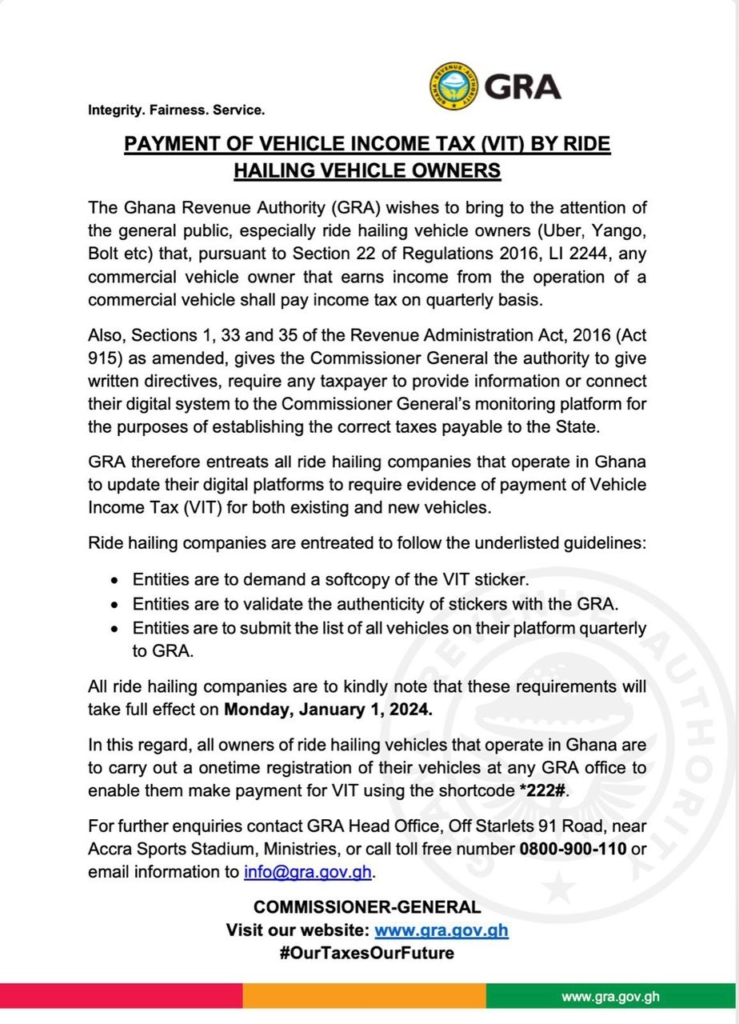
    The Ghana Revenue Authority (GRA) has informed owners of ride-hailing vehicles about the implementation of a new tax policy called the Value Income Tax (VIT), effective January 1.

    According to the Authority’s notice, this levy is in accordance with Section 22 of Regulations 2016, LI 2244. This Section indicates that “any commercial vehicle owner that earns income from the operation of a commercial vehicle shall pay income tax quarterly.”

    The Authority has urged ride-hailing companies, such as Uber, Yango, and Bolt, operating in Ghana to promptly update their digital platforms to accommodate the newly introduced Value Income Tax (VIT).

    The guidelines provided for these companies include the necessity for a softcopy of the VIT sticker, verification of sticker authenticity through the GRA, and the quarterly submission of the complete vehicle list on their platforms to the GRA.

    The GRA has underscored that these requirements will be enforced starting January 1, 2024. Additionally, the GRA has directed ride-hailing vehicle owners to register their vehicles at any GRA office to facilitate the payment of VIT using the shortcode *222#.

  • SML deal saved Ghana GHC3bn – GRA reacts to Fourth Estate documentary

    SML deal saved Ghana GHC3bn – GRA reacts to Fourth Estate documentary

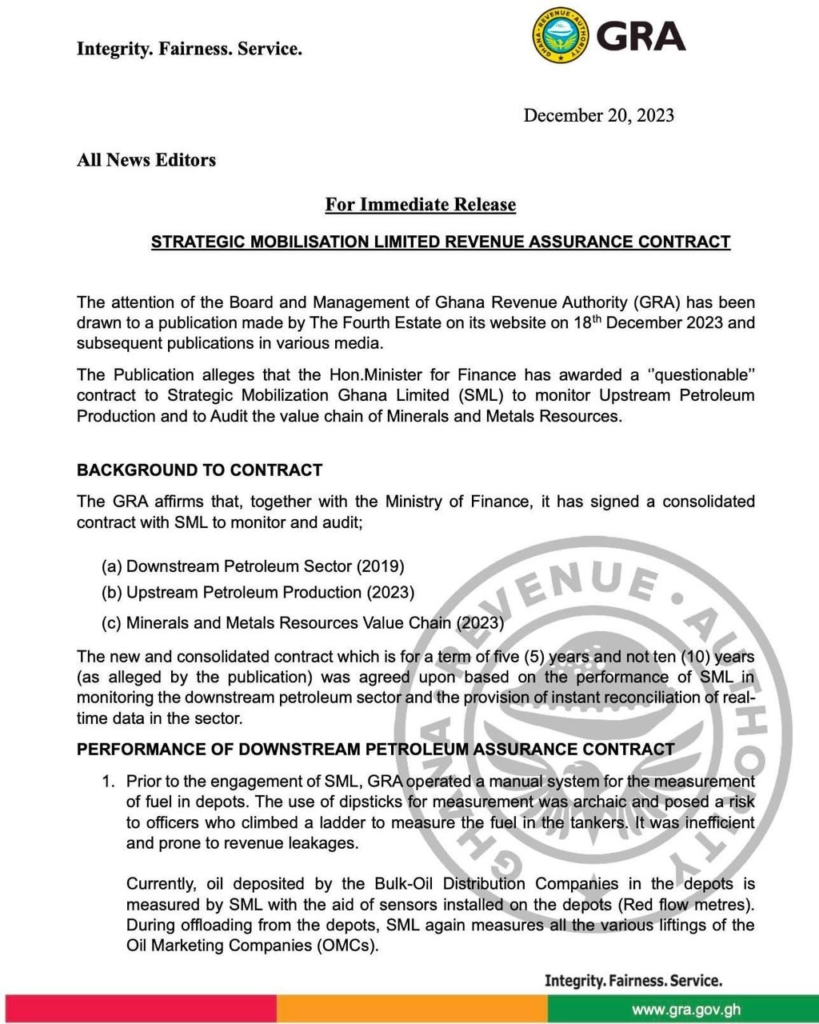
    The Ghana Revenue Authority (GRA) has refuted the claims made by ‘The Fourth Estate’ that it granted a ‘questionable’ contract to Strategic Mobilization Ghana Limited (SML) for monitoring Upstream Petroleum Production and auditing the value chain of Minerals and Metals Resources.

    In an official statement, the authority clarified that, in collaboration with the Ministry of Finance, it entered into a consolidated contract with SML to monitor and audit the Downstream Petroleum Sector in 2019, Upstream Petroleum Production in 2023, and the Minerals and Metals Resources Value Chain in 2023.

    Contrary to the ten years mentioned by ‘The Fourth Estate,’ the GRA emphasized that the contract is designed to operate for five years.

    “The new and consolidated contract which is for a term of five years and not ten years as alleged by the publication and was agreed upon based on the performance of SML in monitoring the downstream petroleum sector and the provision of instant reconciliation of real-time data in the sector”, the statement signed by the Communication And Public Affairs Department of the GRA said.

    Describing the Performance of the Downstream Petroleum sector under the Assurance Contract, the GRA noted that prior to engaging SML, the authority relied on a manual system for measuring fuel in depots.

    The GRA highlighted that using dipsticks for measurement was outdated and presented a risk to officers who had to climb a ladder to measure the fuel in the tankers.

    “It was inefficient and prone to revenue leakages. Currently, oil deposited by the Bulk-Oil Distribution Companies in the depots is measured by SML with the aid of sensors installed on the depots (Red flow metres). During offloading from the depots, SML again measures all the various liftings of the Oil Marketing Companies (OMCs)”.

    The GRA emphasized that all information is captured and reconciled with data from the Integrated Customs Management System (ICUMS) through the GRA petroleum unit.

    The statement clarified that if there are discrepancies, Customs informs the Oil Marketing Companies (OMC) to enter a post-entry to correct any differences.

    It highlighted that in the petroleum sector, SML provides additional independent data, apart from the Customs ICUMS data, capable of validating anomalies in quantities imported, discharged, and accounted for by way of taxes.

    The GRA further explained that the revenue assurance exercises conducted by EY Ghana and later by the Revenue Assurance and Compliance Enforcement (RACE) of the Ministry of Finance confirmed systemic deficiencies in the accounting and collection of petroleum taxes between 2015 and 2020.

  • GRA clamps down on companies breaching tax laws

    GRA clamps down on companies breaching tax laws

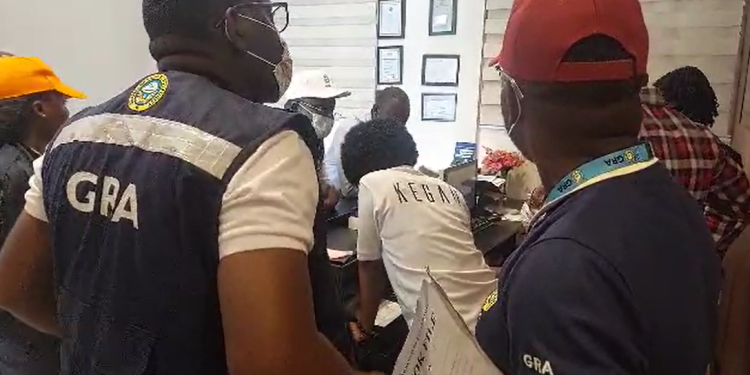
    The Accra South Compliance and Enforcement Team of the Ghana Revenue Authority (GRA) in collaboration with the police, conducted a swoop resulting in the arrest of a woman involved in operating a chain of supermarkets and a warehouse in the Teshie area. The arrest was made on grounds of Value Added Tax (VAT) infractions.

    This suggests that the woman and the business are suspected of violating VAT regulations, possibly by not complying with the required tax obligations. The enforcement action aims to address and penalize any alleged non-compliance with VAT rules within the mentioned business operations.

    The task forces have also summoned the owner of an iron rod company for a similar offence.

    The woman, whose identity has been withheld, was arrested on Wednesday, December 13, 2023, when the team visited three of her shops and later went to a warehouse of the company located at Teshie in the Ledzokuku-Krowor Municipal District in the Greater Accra Region.

    The Manager of a dealer in iron rods and other steel products at Spintex also in the Ledzokuku-Krowor Municipal District in the Greater Accra Region, was also invited to the head office of the GRA for allegedly not registering and failing to issue VAT to his patrons.

    The activities of the two companies were earlier identified by officials of the GRA in an undercover test purchasing exercise aimed at finding out the level of compliance by businesses.

    As required by law, all suppliers of taxable items, goods or services are to issue VAT invoices while patrons of such goods are also required to obtain VAT invoices for goods they buy.

    The computers, supplies invoices and records books of the companies were retrieved by the team for audit purposes while the shops were closed due to their nonconformity to issue the commissioner’s invoice.

    Test purchase

    Briefing journalists after the operation, the Head of Enforcement and Debt Management for the Accra South Area of the GRA, John Yaw Buabeng, said the authority would conduct pre-emptive assessments and take legal actions to prosecute the business owners if they were found culpable.

    He said the companies would be charged under section 58 of the VAT Act 870 for non-issuance of VAT invoices and “the appropriate sanctions will be applied.”

    The punishment for infractions such as non-issuance of VAT invoices as provided under the VAT Act included a fine of not more than one hundred penalty units or a term of imprisonment of not more than six months, or both, in addition to a payment of penalty of an amount of not more than GHC50,000 or three times the amount of tax involved.

    A penalty unit is GHC12.

    “When we did the text purchase from the businesses, they did not issue the commissioner’s VAT invoice.

    By the brisk nature of their business, they should have a computer-generated invoice.

    We found that they do highly selective issuance of invoices and even that they had to call for approval.”

  • Banking sector clean-up leaves thousands jobless and poor – Mahama

    Banking sector clean-up leaves thousands jobless and poor – Mahama

    Thousands of skilled financial sector workers are now unemployed and facing poverty due to the government’s banking sector clean-up, according to former President John Mahama.

    He made these remarks during the 9th Ghana CEO Network Business Cocktail on Thursday, December 7, 2023, emphasizing that the 24-hour economy is a crucial factor for the Ghanaian economy.

    According to him, experiences from Ghana defy all the models and theories taught in Business Schools – because “if you have survived this economy since 2018, then you are a successful global case study.”

    “Like my first participation, I have enjoyed your warm friendship and insightful conversations and shared great ideas with many of you here tonight. Of course, my determination to transform Ghana’s economy into a 24-hour working economy featured prominently in the conversations.

    “But I cannot help but repeat the point made by one of the CEOs, with deep regret written on his face, that “we want to pay every legitimate tax, BUT the needless harassment from GRA must stop. Back-dated tax audits, re-audits and assessments based on the whims of the taxman are killing businesses”, he lamented,” the former President narrated.

    Mr. Mahama claims that a lot of businesses are still negatively impacted by the current economic crisis.

    Contrary to the Finance Minister’s claim, he said, “we have not turned any corner, and 2024 will be a very challenging year.” This is why.

    “Many have shut down their businesses, and hundreds of thousands of laid-off workers are still at home. Businesses that moved headquarters from Ghana to our neighbouring countries have yet to return. The poorly thought-through banking sector clean-up has left thousands of skilled financial sector workers, jobless and impoverished.

    “As I speak, the second tranche of the IMF’s Extended Credit Facility, due on the first of November, has still not been received because of a delay by our external creditors to sign off on our debt restructuring programme. Of course, the consequences of our debt default have also started manifesting. For the first time in thirty years, Ghana struggled to assemble a cocoa-syndicated loan, which had almost become routine on our financial calendar. Major infrastructure projects have stopped because lenders have cut funding as a direct fallout from our debt default.”

  • Ghana Revenue Authority prevails in GHS39.7 m breach of agreement case

    Ghana Revenue Authority prevails in GHS39.7 m breach of agreement case

    An Accra High Court Commercial Division has dismissed a GH¢39.7 million claim made by Magnate Technology and Services against the Ghana Revenue Authority for breach of agreement.

    The amount, the company said, would have been revenue or fees that would have accrued to it over the remaining period or unexpired term of the Addendum based on the average of the historically verifiable figures between the parties.

    The court, in its ruling, held that it was unable to grant the reliefs being sought as there was not enough evidence from Plaintiff (Magnate Technology and Services) for it to accept the claim that was based on an illegal contract.

    It said there was no evidence before the court showing the investment made over the period, revenue recouped over the course of performance and the deficit suffered.

    “I am inclined to make an order for the Plaintiff to recoup its investment but as l have stated above, the paucity of evidence does not offer any guidance.There is not sufficient evidence on record for me to know the exact investment made by the Plaintif,” HIS Lordship Justice Constant K. Hometowu, said in his ruling.

    “Simply stating in letters that over USD7million dollars has been invested is not sufficient under the circumstances,” the court said.

    “The grant of this relief would be an enforcement of the contract I have established to be illegal. If I were to grant such relief, I would be condoning the statutory breach and granting immunity to the parties.

    “I am unable to make an order for the Plaintiff to recoup its investment because there is nothing to assist me determine the deficit (if any) based on the reconciliation of investment made and revenue so far made,” the court said.

    Consequently, Justice Hometowu declared in his ruling that the action is dismissed in its entirety, with no order as to costs.

    In its writ of summons, Magnate Technology and Services sought various reliefs, including a true interpretation of the Agreement, restoration to its previous position, a claim for breach of contract, special damages amounting to GHS39.7 million (representing the minimum revenue it would have earned if the Agreement were not wrongfully terminated), interest from June 1, 2020, to the date of payment, and legal costs of GHS3 million.

    The case originated from an Agreement entered into in September 2007 between Magnate Technology and Services and the Ghana Revenue Authority following an international bidding process. The Agreement, which involved providing a system for securing all bonded warehouses in the country, was initially set for a 10-year period. However, actual operations commenced in August 2010, three years after the Agreement’s execution, primarily due to administrative delays on the part of the beneficiary agency, the then Ghana Customs Excise and Preventive Service.

    Structured as a long-term public-private partnership, the Agreement placed the onus of funding exclusively on Magnate Technology and Services, granting the company exclusive rights to provide services in Ghana to recoup its investments.

    During the 10-year period, the fee structure was agreed upon as 95% for Magnate Technology and 5% for the GRA. Following claimed heavy investments exceeding USD 7 million by Magnate Technology, the GRA acknowledged the need for a revised fee structure. Consequently, an Addendum was executed for a further six-year term, with a new fee structure of 97% for Magnate Technology and 3% for the GRA.

    In its defence, the GRA contended that the Addendum did not constitute a renewal but rather a new contract, requiring approval from the Public Procurement Authority and the Ministry of Finance. The GRA asserted that the Addendum, executed after the Agreement’s purported expiration in August 2017, lacked legal basis, as the date of execution could not be ascertained. The GRA also emphasized that correspondence between the parties occurred after the Agreement’s expiration, and based on the original 10-year term, it expected Magnate Technology to have recouped its investment and made a reasonable profit.

    The GRA asserted that “the Addendum executed to the original Agreement is invalid and ill procured on the basis that the amendment or variation was not made during the subsistence of the initial Agreement.”

    The GRA asserted that the parties could not have executed an addendum to the expired contract, contending that the Addendum lacked crucial statutory approval, rendering it illegally procured and, therefore, void and unenforceable.

    In its ruling, the court emphasized that the uncontested evidence on record supported the existence of a Main Agreement executed by the parties in September 2007. However, the court determined that the execution of the Addendum violated ACT 663 as amended and ACT 921, both designed to safeguard the public purse by ensuring the prudent use of state resources. The court underscored the necessity for strict compliance with these statutes.

    Interestingly, despite the original Agreement being executed by the Ministry of Finance, the Addendum conspicuously lacked the signature of any representative from the Ministry of Finance. Neither party provided an explanation for the absence of the Ministry of Finance, a pivotal party to the original Agreement.

  • Stop being “lazy”, go after those evading tax payment – Bawumia slams GRA

    Stop being “lazy”, go after those evading tax payment – Bawumia slams GRA

    Vice President Dr. Mahamudu Bawumia has advised the Ghana Revenue Authority (GRA) to leverage the link between the Ghana Card and Tax Identification Number (TIN) to improve the identification and tax collection procedures for both individuals and businesses.

    Dr. Bawumia criticized the current GRA approach, which concentrates solely on existing taxpayers, labeling it as “lazy.”

    He underscored the importance of adopting a more proactive and efficient strategy that specifically targets individuals and businesses that are not yet tax-compliant.

    Addressing the 57th Congregation at KNUST on Friday, November 24, the Vice President stated that “By linking the Ghana Card number and the TIN number, GRA can tell who has filed and who has not filed their tax, and so it is rich data that is available to GRA, and I am asking GRA to use that data.”

    He continued, “It is a very lazy approach to go and keep looking for taxes from people who are paying taxes already when you could look at those who are not paying taxes, who are the vast majority. They should be the ones that GRA should focus on, and we would get more taxes from the vast majority.”

    In addition to his recommendations, Vice President Dr. Bawumia suggested that the GRA institute a bonus system tied to the recruitment of new taxpayers, providing incentives for GRA officers who bring in individuals and businesses previously outside the tax system.

    Furthermore, Dr. Bawumia announced a forthcoming initiative, starting in December 2023, wherein every child born in Ghana will be assigned a Ghana Card number.

    Looking ahead, the Vice President shared plans for the implementation of a credit scoring system in the coming year, linked to the Ghana Card. This system aims to reward individuals with a favorable credit history by offering lower interest rates and increased access to loans. This initiative is expected to incentivize responsible loan repayment behavior.

  • GRA bust illicit tobacco products smuggled through illegal boarders

    GRA bust illicit tobacco products smuggled through illegal boarders

    Customs Division of the Ghana Revenue Authority (GRA) has successfully seized a substantial quantity of illicit tobacco products that were unlawfully smuggled into Ghana through unapproved border routes.

    This action is a crucial step in our continued commitment to tackle the smuggling, importation, and sale of illicit tobacco products, which have been infiltrating the Ghanaian markets.

    All the confiscated products had been illicitly brought into Ghanaian territory. Contravening the Public Health Act, 2012, Act 851, and the Tobacco Control Regulations (TCR), 2016 (L.I. 2247). Section 16 of the TCR states that “a person shall not manufacture, import, export, supply, possess, or offer for sale an illicit tobacco or tobacco product.’”

    Furthermore, Section 15 of the Regulations stipulates that “a person shall not manufacture, import, or sell a tobacco or tobacco product unless the product is registered by the Authority,” in this case, the FDA.

    The following brands were among the seized products: Oris Double Apple, Business Royals, Gold Seal, Bon, Yes, and Business Kings. Regrettably, none of these brands meet the standard requirements mandated by the laws of Ghana, including graphic health warnings, the “For Sale in Ghana” inscription, and Ghana Tax Stamps.

    The investigations into this illicit trade are ongoing, and our commitment remains steadfast to identify and apprehend those responsible. Close collaboration with relevant government agencies will be maintained to ensure the arrest, prosecution, and appropriate sanctions for individuals involved.

    Furthermore, all seized products will undergo destruction following legal protocols.

    The street value of the confiscated items is Seven Million, Nine Hundred and Fifty-One Thousand, Two Hundred and Thirty-Eight Ghana Cedis, Thirty-Nine Pesewas (GH¢7,951,238.39).

    We urge the public to report any information regarding warehouses or locations used for hoarding illicit tobacco products.

    This collective effort will contribute to combating illegal trade, safeguarding the nation’s revenue, and protecting legitimate businesses.

  • GRA ready to dissolve tax-defaulting companies

    GRA ready to dissolve tax-defaulting companies

    The Commissioner General of the Ghana Revenue Authority (GRA), Rev. Ammishaddai Owusu-Amoah, has emphatically asserted that the authority will employ all legal avenues, including the liquidation of companies, to enforce tax compliance.

    He mentioned that the GRA possesses the authority to initiate proceedings for the liquidation of companies that are in default of tax payments and have been unable to settle their obligations for an extended period.

    “Whatever compliance measures available in the law, GRA is ready to implement it to the latter, but we also want Ghanaians to know that we’re not in to collapse their companies. However we will do whatever necessary. Nobody should think they’re too big or too small to comply,” he warned.

    Rev. Owusu-Amoah made these statements in an interview with Joy Business following the decision to liquidate United Steel Company as a means to settle the company’s outstanding tax obligations.

    United Steel Company faced financial distress amounting to ₵149 million and owed significant tax liabilities, totaling over ₵400 million along with penalties. The company was subsequently sold to B5Plus.

    Rev. Owusu-Amoah emphasized that no company, regardless of its size, is exempt from the possibility of liquidation if the situation demands it. He revealed that there are several other companies currently under consideration for liquidation.

    Furthermore, he advised companies that have been shuttered due to tax default to take the necessary measures to clear their tax arrears.

  • West Blue Ghana drags AG, GRA to court over GH¢289m contract termination

    West Blue Ghana drags AG, GRA to court over GH¢289m contract termination

    West Blue Ghana Limited has initiated legal action against the Attorney-General (AG) and the Ghana Revenue Authority (GRA) at the Commercial Division of the High Court in Accra, contesting the termination of the National Single Window and Integrated Risk Management System (NSW) contract, with a claimed value exceeding GH¢289 million.

    The contractual agreement, established on August 4, 2015, involved West Blue providing technical services to facilitate efficient cargo clearance through the sea and airports.

    Despite the ongoing delivery of services under the NSW, the GRA and the Ministry of Finance terminated the contract, leading West Blue to pursue legal recourse after unsuccessful attempts to recover outstanding debts.

    The lawsuit seeks to recover GH¢149,357,692.71 as unpaid fees for services rendered between September 2015 and September 2017.

    This amount is calculated at 0.35 percent of the final invoice value of import consignments entering Ghana through various borders.

    Additionally, West Blue aims to reclaim GH¢76,097,917.58 for services provided from October 2017 to December 31, 2018, and GH¢64,092,215.07 for services rendered from January 1, 2019, to May 2020.

    The company is also pursuing the recovery of equipment acquired for obligations under the NSW contract and additional services provided during the specified period.

    West Blue underscored in its statement of claim that the NSW contract was aligned with the government’s policy to implement a National Electronic Single Window, promoting efficiency and cost savings for traders involved in cross-border cargo movements with government authorities.

    The company was contractually obliged to deliver technical services and support activities to the GRA and associated agencies in line with the government program.

  • Tax-strained companies find relief as GRA extends support

    Tax-strained companies find relief as GRA extends support

    Ghana Revenue Authority (GRA) Commissioner-General Rev. Dr. Ammishaddai Owusu-Amoah has declared that the Authority will support financially troubled businesses in their efforts to recover.

    Despite the fact that the tax authority is ready to carry out the legal compliance measures, he stated that the main objective is to assist in the resuscitation of businesses and guarantee continuous production, particularly in light of the recent economic challenges.

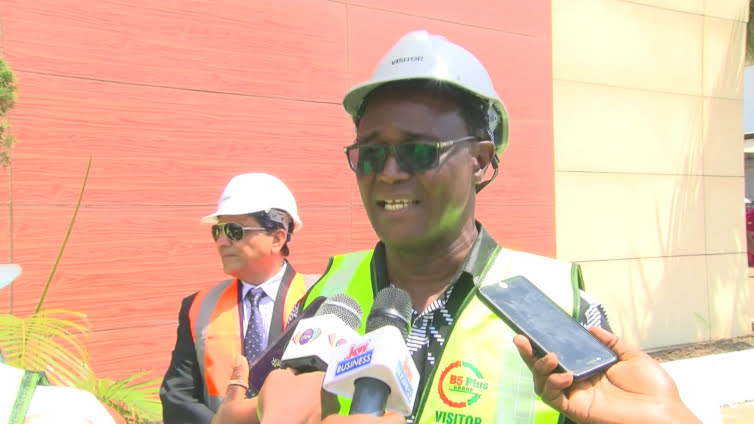
    “The fact is that whatever compliance measures are available in the law, GRA is ready to implement them to the letter. But while we are committed to enforcement, we also aim to revive companies and ensure continuous production,” the Commissioner-General stated during a working visit to B5 Plus Limited – a steel manufacturer located in Tema.

    He added: “Whether small or large, we are ready to ensure the collection of taxes in full. But at the same time, we are also concerned that production should continue and people not be laid off”.

    Sol Cement Shut Down by GRA for Unsettled Tax Debt Exceeding GH¢700 Million; VAT Violations Uncovered in 12 Accra Businesses in August.

    In August, the Ghana Revenue Authority (GRA) closed down Sol Cement for failing to meet tax obligations, revealing an outstanding tax debt of over GH¢700 million. Additionally, VAT infractions were identified in 12 businesses in Accra, ranging from failure to register for VAT to non-issuance of VAT documentation.

    Despite these actions, the GRA emphasized its focus on supporting struggling companies for a potential turnaround, considering closures as a last resort.

    The GRA has established a revenue target of GH¢106 billion, with the Customs Division aiming to collect GH¢28.5 billion in 2023. A total of 93 businesses in the capital have been identified for enforcement and compliance efforts this year.

    The United Steel Company story

    As of 2020, United Steel Company Limited carried an outstanding tax liability principal of approximately GH¢149 million, with accrued interest and penalties exceeding GH¢400 million dating back to 2018.

    The company also had outstanding debts to banks and other creditors.

    In collaboration with financial institutions, the Ghana Revenue Authority (GRA) engaged the services of an administrator to assume control of the factory.

    “We then placed the factory for sale and advertised it in the papers; we succeeded in getting B5 Plus to buy the company,” the GRA’s Commissioner-General recalled.

    “And after they bought the company, they paid the tax liabilities in full because the administrator had then applied for and took advantage of the waiver of interest and penalties. And so, the GH¢149million we had been chasing from 2020 was fully paid in 2023,” he added.

    Explaining further, he said: “The factory has also, as you saw today, been completely put back on its feet and is able to produce; and we’ll be getting over GH¢100million annually in terms of taxes. We are more interested in seeing companies grow to meet their tax obligations. So the mentality or sad notion that GRA is only interested in getting the money, and not so interested in whether the company will survive or not is not true”.

    US$35million invested to revamp the factory

    Mukesh Thakwani, Chief Executive Officer of B5 Plus Limited, commended the favorable domestic investment environment and emphasized the numerous opportunities available.

    He revealed that his company has already injected over US$35 million into the revitalization of the factory. Furthermore, he stated that with the planned expansion of the production line over the next two years, an additional investment of US$10 million is on the agenda.

    “It has been quite challenging for us. What we expected and what we found on the ground was quite different; but a lot of credit goes to the entire team for being positive and optimistic, and we are really looking forward to the future.

    “I think this is one of the reasons that though we are working 24 hours it has still taken six months – and it will take another one and a half months for us to start this plant. Our target is that before December we should at least be able to make some trials, so that from next year we are able to run this plant successfully and make everyone proud,” Mr. Thakwani said.

    The company presently employs 420 workers, but this number could soon increase to over 500 as additional product lines are introduced.

    “We are not only targetting Ghana and the West Africa sub-regional market, but the whole Africa; we want to take advantage of AfCFTA,” he added.

  • Sol Cement shut down by GRA over GHC700m tax default

    Sol Cement shut down by GRA over GHC700m tax default

    The Ghana Revenue Authority (GRA) has taken action against the Chinese cement manufacturing company, Sol Cement, due to its outstanding tax liabilities exceeding GH₵700 million.

    Located in the Tema Industrial Area, the company has been found in violation of Value Added Tax (VAT), Corporate Income Tax (CIT), and has incurred penalties, among other infractions, which have gone unpaid for a period exceeding two years.

    To address this issue, the Tax Enforcement Team of the GRA conducted a tax audit and subsequently locked down the company’s premises.

    Furthermore, a restraining order has been issued to prohibit owners and employees from accessing the facility. The closure will be in effect until further notice, at which point the necessary legal proceedings will be initiated.

    The GRA has been unsuccessful in its previous attempts to collect the outstanding taxes as the company’s management has not complied with tax clearance efforts.

  • Appropriate taxes must be paid before helicopters are handed over to KNUST – GRA

    Appropriate taxes must be paid before helicopters are handed over to KNUST – GRA

    The Ghana Revenue Authority (GRA) has responded to the controversy surrounding the donation of two helicopters by a mining company to the Kwame Nkrumah University of Science and Technology (KNUST).

    In a statement released on October 20, the GRA clarified that KNUST has not imported any equipment into the country, and is therefore not subject to import duties or taxes.

    The GRA further explained that the mining company had brought in the two helicopters in 2020 under the Temporary Admission Regime. This regime stipulates that the equipment should be re-exported after the agreed period.

    If the mining company intends to transfer ownership of the helicopters to a third party, such as the Kwame Nkrumah University of Science and Technology, it is obligated to settle the appropriate taxes and duties before transferring the helicopters to KNUST.

    “For the incident in question, the mining firm brought in the two helicopters in 2020 under the Temporary Admission Regime, which requires that they are re-exported after the agreed period. If the firm wishes to transfer the ownership of the helicopters to a third party (Kwame Nkrumah University of Science and Technology), they are required to pay the appropriate taxes and duties before handing them over to KNUST. This will prevent the possible abuse of the Temporary Admissions Regime by importers who apply for the waiver of duties but resort to donating the equipment as scrap as a way of evading payment of taxes.”

    “Furthermore, KNUST has not imported any equipment into the country and therefore is not liable for import duty or taxes”.

    The GRA entreated all importers to comply with the Tax Laws and procedures to ensure smooth trade facilitation and maximization of revenue for national development.

    “Management of GRA further uses this opportunity to entreat all importers and the general public to comply with the Tax Laws and procedures to ensure smooth trade facilitation and maximizing revenue for national development. GRA is also committed to supporting Government’s agenda of enhancing education at all levels and would do all it can within its mandate to support education,” the GRA said

  • GRA provides reasons for taxing mining company donating two helicopters to KNUST

    GRA provides reasons for taxing mining company donating two helicopters to KNUST

    The Ghana Revenue Authority has clarified its stance on imposing taxes for the mining company transferring ownership of two helicopters to the Kwame Nkrumah University of Science and Technology (KNUST).

    The authority’s rationale behind this decision is to prevent tax evasion and dissuade other organizations from pursuing similar practices.

    It was outlined that the helicopters were initially brought into the country under the Temporary Admission Regime, exempt from tax payments at the time. However, with the transfer of ownership to a new entity, in this instance, KNUST, the company is now liable for taxes.

    Read the full statement below

    For the incident in question, the mining firm brought in the two helicopters in 2020 under the Temporary Admission Regime, which requires that they be re-exported after the agreed period.

    If the firm wishes to transfer the ownership of the helicopters to a third party (Kwame Nkrumah University of Science and Technology), they are required to pay the appropriate taxes and duties before handing them over to KNUST.

    This will prevent the possible abuse of the Temporary Admissions Regime by importers who apply for the waiver of duties but resort to donating the equipment as scrap as a way of evading payment of taxes.

    The attention of Management of the Ghana Revenue Authority (GRA) has been drawn to an online publication on, “GRA halts two helicopter ‘gifts’ to KNUST over taxes”
    Management of GRA would like to use this opportunity to react as follows:

    1. Section 75 of the Customs Act 2015, (Act 891) refers to temporary admission, as a Customs procedure that allows goods to be temporarily brought into the country for a specific purpose without the payment of import duties or taxes. This procedure is designed to facilitate international trade, reduce cost, and promote temporary cross-border activities.

    2. Goods that are temporarily admitted into the country under this regime are expected to be re-exported within a certain timeframe, usually 90 days or a specific period for activities such as trade shows, exhibitions, repairs, or other temporary uses. Appropriate documentation, including a Customs declaration, is required to initiate the temporary admission process. These documents specify the intended use and the expected re-exportation date. Failure to meet this deadline will result in the payment of the “suspended” import duties and taxes.

    3. The Customs Division requires a guarantee / security such as an insurance bond or deposit, to ensure revenue is not lost if the goods or items in question are not re-exported.

    4. All countries including Ghana, impose restrictions on the types of goods that can be temporarily admitted and the purposes for which they can be used. As such, Customs procedures for temporary admission come with conditions that vary from country to country.
    Non-compliance with the terms of temporary admission can further result in sanctions, such as fines or forfeiture of the goods to the State.

    5. For the incident in question, the mining firm brought in the two helicopters in 2020 under the Temporary Admission Regime, which requires that they be re-exported after the agreed period. If the firm wishes to transfer the ownership of the helicopters to a third party (Kwame Nkrumah University of Science and Technology), they are required to pay the appropriate taxes and duties before handing them over to KNUST. This will prevent the possible abuse of the Temporary Admissions Regime by importers who apply for the waiver of duties but resort to donating the equipment as scrap as a way of evading payment of taxes.

    6. Furthermore, KNUST has not imported any equipment into the country and therefore is not liable for import duty or taxes.

    7. Management of GRA further uses this opportunity to entreat all importers and the general public to comply with the Tax Laws and procedures to ensure smooth trade facilitation and maximizing revenue for national development. GRA is also committed to supporting Government’s agenda of enhancing education at all levels and would do all it can within its mandate to support education.
    FLORENCE ASANTE (MRS.)
    ASSISTANT COMMISSIONER, COMMUNICATION & PUBLIC AFFAIRS

  • Public warned against paying for GRA services

    Public warned against paying for GRA services

    The general public has been advised not to pay any fees of any kind to any official by the Ghana Revenue Authority (GRA), with particular caution applied to enterprises and individuals who are registered for VAT.

    The Authority declared that all of its Domestic Tax Revenue Division (DTRD) and Customs offices nationwide do not collect fees or money for services provided, in accordance with its policies and procedures.

    A notice issued by the Authority on October 18, 2023 said: “Taxpayers are advised not to pay any money to a tax officer for rendering services. Services provided by the GRA are totally free.”

    It further stated that taxpayers only need to pay for value books, like VAT/NHIL invoice booklets, while making their purchases. This is however sold at GH¢1.50.

    Therefore, the public is urged to report any instances of extortion by GRA employees.

  • GRA allegedly impounds 2 helicopters gifted to KNUST over non-payment of tax

    GRA allegedly impounds 2 helicopters gifted to KNUST over non-payment of tax

    Reports indicate that the Ghana Revenue Authority (GRA) has allegedly confiscated two helicopters donated by PHI Century Limited to the Kwame Nkrumah University of Science and Technology (KNUST) over non-payment of taxes.

    This information was put out by @Voice_of_KNUST known to be the social media handle of the tertiary institution.

    According to the sources, “the GRA is demanding some thousands of Ghanaian cedis from KNUST before the helicopters are released”.

    These helicopters are to assist with aeronautical studies at the aerospace engineering unit of KNUST.

    Meanwhile, the management of KNUST and GRA are yet to officially comment on the matter.

  • Ghana Revenue Authority goes after businesses avoiding tax payment

    Ghana Revenue Authority goes after businesses avoiding tax payment

    Assistant Commissioner, who heads the Accra Central Enforcement Unit of the Ghana Revenue Authority (GRA), Joseph Annan, has identified a tax system loophole.

    Efforts are being made to address this issue, which has become evident during the ongoing Value Added Tax (VAT) enforcement operation in Accra.

    Annan noted that many businesses were found to be in violation of tax laws. Some registered entities either failed to issue VAT invoices or were selectively issuing them. In response, the revenue collection authority will conduct additional compliance checks to compel tax defaulters to settle their obligations and hold them accountable.

    Assistant Commissioner Joseph Annan shared these insights with journalists in Accra following one of the enforcement exercises.

    “What it means is that, we have to do a lot more compliance checks.

    “Businesses operating in the country that have failed to register with the authority or comply with tax laws will be compelled to do the right thing,” he stated.

    Since June of this year, the Ghana Revenue Authority has intensified its initiatives for tax compliance and enforcement with the aim of achieving its collection target of GH¢106 billion.

    This objective signifies a 40% year-on-year growth.

  • GHS15m generated from betting tax in a month – GRA

    GHS15m generated from betting tax in a month – GRA

    The Domestic Tax Revenue Division (DTRD) of the Ghana Revenue Authority (GRA) noted that it has generated GH¢15 million from the newly implemented betting tax within a one-month period.

    The tax collection agency is optimistic that this figure will increase to GH¢60 million by the conclusion of the football season (UEFA Champions League).

    The Commissioner responsible for the DTRD, Edward Gyambra, has conveyed his confidence in the Authority’s ability to surpass its revenue targets by the end of the year.

    “We have two streams of taxes: the gross revenue tax and the withholding tax,” he explained.

    “During the first month of implementation, we averaged GH¢20 million for the GGR. As for the withholding tax, we’ve just started the betting season, but during the lean season, we averaged GH¢15 million. We anticipate this to quadruple by May.”

    The Ghana Revenue Authority (GRA) has implemented a 10% withholding tax on betting, aiming to generate around GH¢400 million in additional government revenue.

    The tax measure took effect from August 15, 2023.

    This tax measure has received divided opinions from the public. While a section of the general public is against the tax, some government officials, such as the Suame MP, Osei Kyei-Mensah-Bonsu support the implementation of the tax.

  • E-commerce tax: If you sit behind your computer, create content and generate income, we will tax it – GRA to bloggers, others

    E-commerce tax: If you sit behind your computer, create content and generate income, we will tax it – GRA to bloggers, others

    The Ghana Revenue Authority (GRA) has come forward to justify its decision to levy taxes on individuals such as bloggers, brand influencers, and MCs who earn income in the digital space. Taxing earnings generated online has been a topic of global discussion, including in Ghana.

    While conventional sources of income are relatively straightforward to tax, digital earnings present unique challenges. The GRA’s move to consider taxing bloggers and similar entities has raised various concerns.

    However, Edward Gyambra, the Commissioner responsible for the domestic tax revenue division of the GRA, clarified in an interview with Citi News that this expansion of the tax base does not entail the creation of a new tax. Instead, he asserted that it is equitable for businesses generating income to contribute their fair share to the national revenue.

    He further elucidated that the GRA’s objective is to broaden the tax base to encompass all businesses, regardless of whether they operate in the digital realm or offline.

    “Some people doing business online is something that is on the blog globally and if you remember last year, we also launched our e-commerce taxation and as part of getting online people to pay taxes all these players will be brought to book to ensure that they also pay their bit of taxes to the country.”

    “We are expanding the tax net, and it doesn’t mean we are introducing a new tax. If you are generating income from any business, that income is taxable and so if you sit behind your computer and create content and generate income from that, we will tax that income,” he added.

  • GRA to broaden tax compliance procedures to generate essential income for development

    The Ghana Revenue Authority (GRA) has announced its intention to expand its tax compliance measures to generate the necessary revenue for development. To identify tax infractions by companies or customers, the GRA has utilized a test-purchase approach.

    Companies that fail to comply with these measures may be subject to a fine of GHC50,000 or face prosecution. In addition to these measures, the GRA will extend its tax operations to cover Personal Tax Income, Pay As You Earn (PAYE) tax, Tax Stamps, and Affixed Stamps on products.

    Customers are expected to adhere to Section 41 of the Value Added Tax (VAT) Act, which mandates them to issue tax invoices consistently.

    The GRA taskforce recently conducted an operation to enforce tax compliance, resulting in the invitation of eight shop operators and the arrest of two hotel managers. The establishments visited during the operation include Golden Key Hotel, Royal Cockpit Hotel, Kingsbridge Hotel, Floresent Boutique, Look & Pick Company Limited, Safcal Lodge, Adez Mart, Kidis B Mother Care, Mandamond, and Les Fam Company Limited, all located in the Ayawaso West Municipality.

    Some of these businesses were found to be non-compliant with the Commissioner’s tax invoice requirements, while others were not registered for VAT.

    Joseph Annan, Area Enforcement Manager of GRA in charge of Accra Central, emphasized that failing to issue VAT when registered with the Authority constitutes a violation of tax laws. The two individuals arrested during the operation will undergo assessment for a pre-emptive fine of GHC50,000 at the Customs Office Division of GRA in Accra, while eight shop owners were invited to the GRA head office.

    Annan noted that these shop owners had clearly violated VAT regulations, and the Authority had expanded its scope by including general tax compliance tests.

    “It looks like we have more grounds to cover beuacuse a lot more businesses are not registered and those who are registered are doing selective insurance of VAT invoice.”

    “What it means is that we have to do a lot more complaince checks,” he said.

    Mr Annan said to achieve the target of full compliance, all tax types would be checked depending on your business operations.

    “We may come to your shop on the strength of test purchase but we will look at other tax types that you are required to pay to ensure full compliance,” he added.

    He advised the public to demand VAT invoices while urging tax payers to comply with the law or face prosecution.

  • 12 businesses found guilty of VAT infractions by GRA

    Section 41 of the Value Added Tax Act stipulates that businesses must consistently issue VAT invoices, and failure to adhere to this requirement constitutes a violation of the law.

    However, some businesses in Ghana are flouting this law, either by not registering for VAT or by failing to provide VAT documentation to customers.

    During an operation in Accra, the Ghana Revenue Authority uncovered VAT violations in 12 businesses.

    These businesses were found to be in violation of various tax regulations, including failure to register for VAT and neglecting to issue VAT documentation.

    The affected businesses include New Horizon Coldstore, Glorious Shoppers Delight, Kriskay Kiddies, Uncle Sas Autoparts, and Sunset Glow, among others.

    Joseph Annan, the Assistant Commissioner at the Head-Accra Central Enforcement Unit of the Ghana Revenue Authority, stated in a press briefing after the operation that his team would continue to ensure that businesses comply with VAT and other tax obligations.

    “This time, our focus extends beyond VAT; we are now committed to ensuring complete tax compliance. Taxation encompasses more than just VAT, so our scrutiny will encompass all applicable taxes for any given taxpayer we visit. We are not limiting our search solely to VAT,” he said.

    He added that, “a comprehensive examination of the taxpayers we encounter in each area to identify their eligibility for various tax categories…this is how we intend to enhance our tax collection efforts. It’s not solely about VAT compliance; it’s about adhering to all tax categories”.

    It should be noted that the Bank of Ghana reported a 92.4 percent increase in domestic VAT collection in its May 2023 Monetary Sector Report.

    In the first quarter of this year, the increase was from GH649million to GH1.2billion.

  • Resist any form of harassment by GRA – GUTA charges members

    Resist any form of harassment by GRA – GUTA charges members

    The Ghana Union of Traders (GUTA) has called on its members to stand firm against any attempts at harassment or intimidation by Ghana Revenue Authority (GRA) officials.

    The union has alleged that the GRA has been seizing their shipments in transit from Accra to other regions on suspicions of goods underreporting.

    The President of GUTA, Dr. Joseph Obeng, voiced his concerns at a press conference, stating that the GRA has not provided any valid justification for these actions against traders.

    “A few days ago our Ashanti region branch issued a press conference on this constant harassment and intimidation of traders in the region by GRA officers after their cargoes had passed through the due clearing processes at the port of Tema and released them to them.

    “The GRA cannot assign any cogent reason for the harassment of the traders in the Ashanti region apart from their usual flimsy explanation that the Ashanti region only contributes only about 12% to the national revenue.

    “They also claim that they do not understand why goods in the Ashanti region are cheaper than those in the Greater Accra region; failing to recognize the simple fact that purchasing power and demand for goods and services in Accra are higher than any part of the country,” he said.

    During a subsequent radio interview on Joy FM’s Midday News, Dr. Joseph Obeng revealed that the Ghana Revenue Authority (GRA) officials and other relevant stakeholders have been informed about the harassment faced by traders.

    Despite these notifications, their concerns have yet to be adequately addressed.

    “Yes, we’ve done everything. We’re almost always in touch with GRA complaining about these issues. As a matter of fact, we made a whole seminar out of it, we went to Kumasi at the Golden Tulip, now Lancaster Hotel on the 8th of June and all the stakeholders were there, and we talked about this issue.

    “They said they’re going to stop and it’s still persisting. It means that they’re not taking it seriously and that we have to take our destiny into our hands,” he said.

    Furthermore, he emphasized that if the harassment and intimidation continue, traders have been advised to firmly resist such actions through any means available to them.

    “Pure resistance, simple resistance that you do not allow anybody to come and harass and intimidate you by telling you to come and bring your goods for further examination where you have paid the legitimate duty at the port and all that.

    “The Kumasi people have been told not to allow those things to happen to them again. And that if they do it to individuals, then collectively all of us will come on board and agitate and whatever resistance that we’ll put up will be for your imagination,” Dr Obeng said.

  • Asokwa: GRA addresses concerns of assembly members over property tax collection

    Asokwa: GRA addresses concerns of assembly members over property tax collection

    The Ghana Revenue Authority (GRA) has taken action in response to the concerns raised by assembly members within the Asokwa Municipal Assembly, who have threatened to assume direct responsibility for property tax collection.

    These assembly members assert that since an entity designated by the GRA took over property rate collection in 2023, the assembly has not been receiving its rightful share of revenue.

    In contrast, the GRA has insisted that it has executed all essential measures, and their records indicate that Municipal and Metropolitan District Assemblies (MMDAs) across the country have experienced increased property revenue since the implementation of the new collection system in April.

    The head of communications for the GRA’s property rate project, Ernest Adade, has advised assembly members nationwide to educate residents about the new collection method in order to boost revenue.

    Adade expressed, “All the assemblies need to do is inform their ratepayers that there is a new method for paying property rates. This new approach involves using your mobile phone to access portal.myassembly.gov.gh and make payments.

    If that is not feasible, we have established a dedicated call center to assist individuals in making property rate payments directly to the assemblies, without the need for human intervention.”

    Additionally, Adade disclosed that the GRA plans to hold meetings with assembly members to provide further clarification on the collections and address their concerns.

    “The only thing the assemblies need to do is tell their ratepayers that there is a new way to pay property rate and the new way is for you to take your mobile phone and dial portal.myassembly.gov.gh and pay. If you cannot do that, we have built a full call centre to help people pay their property rates direct to the assemblies with no human intervention.”

    Adade also revealed that the GRA will be meeting with the assembly members to educate them more on the collections and address their concerns.

    “We are going around all the assemblies trying to engage and improve the payment process,” Adade said. “What we realized is that most of the assemblies have folded their arms and sitting down that some money is coming from GRA for them and they are going to sit down and wait for that money.

    “But I keep saying that the GRA does not necessarily collect property rates. Now the new property rate regime does not allow anybody to go and collect property rates from anyone. Everybody is paying directly to the assemblies’ account.”

    ur attention that many assemblies have adopted a passive stance, expecting funds from the GRA, but it’s important to note that the GRA no longer collects property rates. Under the new property rate system, individuals are making direct payments to the assemblies’ accounts.”

  • Importers, shipping companies, and agents conspiring to avoid taxes – GRA

    Importers, shipping companies, and agents conspiring to avoid taxes – GRA

    The Ghana Revenue Authority (GRA) has observed an alarming increase in the fraudulent activity by importers, shipping companies, and agents conspiring to avoid taxes. The activity is said to be causing financial losses to the state.

    Consequently, the authority is collaborating with various agencies to ensure that those responsible for these crimes are identified and held accountable.

    The GRA has announced its intensified efforts to apprehend importers involved in the falsification of trade documents to evade taxes.

    This initiative follows an intelligence report from February 2023, which uncovered instances where two companies and importers had manipulated trade documents on their bills of lading while clearing goods at the Tema Port.

    Alhadji Seidu Idrisu Iddisa, the Commissioner of Customs at the GRA, expressed concern, stating, “The Ghana Revenue Authority has noted with great concern an emerging practice where some customs house agents and importers collude with certain shipping lines to falsify trade documents, particularly invoices, and misrepresent the nature of goods to expedite clearance and reduce duties payable to the state.”

    “We are currently conducting investigations into the activities of both the shipping lines and the agents and importers to ascertain the extent of their collaboration,” he added.

  • GRA Customs Division agents being probed for allegedly falsifying trade documents

    GRA Customs Division agents being probed for allegedly falsifying trade documents

    The Customs Division of the Ghana Revenue Authority (GRA) is currently conducting an investigation into the activities of two shipping companies and their agents. These entities are suspected of colluding to manipulate trade documents in order to pay reduced duties and taxes to the government.

    The fraudulent process involves providing false information about the goods to expedite customs clearance and evade the full tax obligations owed to the state.

    Commissioner of the Customs Division, Alhaji Seidu Iddrisu Iddisah, revealed in an interview that the division had received intelligence regarding these two companies and their importers.

    Upon further investigation, it was uncovered that these entities had altered the details on their bills of lading when clearing goods at the Tema Port.

    Subsequently, the goods were specifically targeted and subjected to physical examination, which revealed discrepancies between the descriptions of the goods on the Bill of Entry (BOE) and the actual physical contents within the containers.

    “The actual description of the consignments were footwear, bags, belts, underwear, galvanized pipes, etc. as against the entered description of Knapsack Sprayer,” he said.

    Alhaji Iddisah reported that following the discovery, the Customs Division’s Management took action by assigning both the Internal Audit and Post Clearance Audit (PCA) Department to carry out an audit on the implicated agents and importers. This audit was conducted in accordance with sections 7 and 9 of the Customs Act 2015 (Act 891) and aligned with the guidelines of the World Customs Organisation Revised Kyoto Convention.

    The audit investigation revealed that a total of 23 Bills of Entry (BOEs) were implicated, with 22 of them linked to a single shipping line. These entries had been manipulated, with the identified companies providing inaccurate descriptions, misclassifications, and undervaluations of their imported goods, all aimed at reducing their Customs duties and tax liabilities.

    Remarkably, the audit of just one of these Bills of Entry disclosed a staggering tax evasion amounting to 10.15 million cedis. Furthermore, the audit unveiled instances where certain agents had processed customs declarations containing incorrect information intentionally to lower Customs duties and taxes.

    Simultaneously, they provided cloned Customs declarations containing the actual details of the goods, the accurate Customs value, and duty rates, while collecting the reduced amount from the importers.

    “So, it means they’re cheating both the importers and the government. So, we went to the importers he will show you a customs declaration that they gave to him but that was not what he submitted to us,” he said.

    During the course of the investigation, Alhaji Iddisah disclosed that the two companies in question admitted that their personnel had indeed manipulated the accurate descriptions of the goods originally provided to them by the shipping company. He further noted that the ongoing investigation aims to determine the extent of involvement and collusion of the importers in these fraudulent activities.

    “We want all those involved and we want to give a warning to everybody that you cannot hide whatever happens it will come up and those who are into that practice can own up,” he added.

    Additionally, it came to light that both the Bills of Lading from the shipping lines and the invoices declared to Customs had been falsified by the local shipping company.

    Alhaji Iddisah explained that in light of these discrepancies, the Customs Division’s management made the decision to expand the scope of their investigation to cover the past six years, with the aim of identifying any other companies involved in such fraudulent practices.

    He also noted that while the involvement of customs officers had not been ruled out, investigations had not definitively established their complicity. Interestingly, the initial intelligence that prompted the investigation had come from customs officers themselves.

    Alhaji Iddisah stated that demand notices had been issued to recover the taxes and penalties that the state had lost, and the investigations were still ongoing, potentially leading to legal prosecution.

    In an effort to enhance monitoring and oversight, Alhaji Iddisah mentioned that the Customs Division was shifting its monitoring activities away from the ports to its headquarters, ensuring more effective supervision.

    While still aiming to facilitate efficient clearance through the green channel, Customs had also implemented a holding area to enable officers to thoroughly screen shipments and request re-examination if deemed necessary.

    “In fact, since we reintroduce it a lot of containers which are passed through the green channel have been reexamined at the port and the differences have been critical and we’ve given them penalties,” he added.

  • GRA turns over 10 shops to CID, warns over poor issuance of VAT invoices

    GRA turns over 10 shops to CID, warns over poor issuance of VAT invoices

    The Compliance and Enforcement Unit of the Ghana Revenue Authority (GRA) is stressing the importance of companies issuing Value Added Tax (VAT) invoices, emphasizing that failure to do so constitutes a criminal offense punishable by law.

    Joseph Annan, the Area Enforcement Manager of GRA responsible for Accra Central, has stated that the unit will enhance its enforcement efforts to crack down on businesses that either fail to issue tax invoices or provide invoices not authorized by the Commissioner-General.

    Annan further explained that some businesses were generating their own VAT invoices, while others were selectively issuing them.

    He highlighted that the VAT Act outlined penalties for such violations, which could include a fine of up to one hundred penalty units, a prison term of up to six months, or both.

    Additionally, offenders may be required to pay a penalty amounting to a maximum of GH¢50,000 or three times the tax amount involved.

    He added, “Customers who dodge the operation cannot run away from the law, because they will be caught unexpectedly.”

    During their recent operation, the GRA team conducted visits to several businesses located in the Ayawaso West Municipal District, including Hansen Decor City, Boost Electronics, De’lish Restaurant, Heiress Flair Boutique, Max pro-Auto Parts, Relay Express Laundry and Dry-Cleaning Services, Julie-Joan Enterprise, House of Fabrics, Dong Chebe Kretons, Fresh Angels, Gi-Fred Enterprise, Milans Star Fabrics, and About Office Ghana Limited.

    Out of these visited shops, ten were officially summoned to the Criminal Investigation Department (CID) Unit of the Ghana Police Service for further investigation. Additionally, two shop managers were arrested as a precautionary measure.

    According to the asaasenews.com report, these managers were subsequently taken to the customs office at the headquarters to provide their statements before being handed over to the CID.

  • GRA urges clients to voluntarily pay taxes, shuts down 4 shops

    GRA urges clients to voluntarily pay taxes, shuts down 4 shops

    The compliance and enforcement unit of the Ghana Revenue Authority (GRA) has taken action by shutting down four businesses for their failure to issue Value Added Tax (VAT) invoices as mandated by the Authority.

    The GRA requires all providers of taxable items, goods, or services to adhere to the legal obligation of issuing VAT invoices. Simultaneously, customers are obligated by law to obtain VAT invoices from business proprietors for their purchased goods.

    During its persistent drive to ensure compliance in the issuance of VAT invoices by companies, the GRA directed these shops to cease their operations.

    The closed establishments encompass Eve’s Panties Wholesale Store, Modern Floors Tiles Shop, Cup of Joy Ventures (Grocery Store), and Qingsong Trading Company Limited. These businesses are all situated within the Weija Gbawe Municipal District in the Greater Accra region.

    Mr. Joseph Annan, the Area Enforcement Manager of GRA overseeing Accra Central, informed the Ghana News Agency that the closure of these shops was prompted by the owners’ noncompliance with the requirement to issue VAT invoices.

    He conveyed that these operations form part of an ongoing nationwide VAT inspection initiative by the Authority, aimed at recovering outstanding taxes owed to the state.

    “It is as an offence not to issue VAT invoice and the law would take its own direction”.

    He noted that individuals violating the regulations could potentially face charges under sections 78 and 82 of the Revenue Administration Act, 2016 (Act 915), which specifically address noncompliance with tax laws and hindering tax administration, respectively.

    Mr. Annan emphasized that the GRA’s scrutiny would extend to all prior offenders starting from September 2022 to the present date, ensuring the continuation of compliance. He further remarked that business owners who failed to sustain compliance would be reported to the police.

    Highlighting the significance of timely tax payments, Mr. Annan underlined that it stood as the most effective and efficient means of showcasing one’s commitment to the nation’s development. This action illustrated that the citizens of the countries from which Ghana’s government borrowed funds were fulfilling their obligations.

    He called upon the public to fulfill their patriotic duty as citizens of Ghana by proactively issuing VAT invoices. Additionally, he encouraged both the public and taxpayers to promptly report any instances of tax violations to the GRA, thereby enabling necessary measures to be taken.

  • GRA goes hard on VAT non-compliant businesses

    GRA goes hard on VAT non-compliant businesses

    The Ghana Revenue Authority (GRA) has reaffirmed its dedication to cracking down on businesses resorting to questionable tactics to avoid paying taxes.

    The GRA intends to bolster its enforcement units, conducting routine ‘test purchase’ operations and closely monitoring businesses that submit tax declarations but neglect to fulfill their tax obligations.

    Joseph Annan, Assistant Commissioner and Head of the Accra Regional Enforcement Unit at GRA, stated in an interview with Joy Business following an operation that resulted in the apprehension of managers from hospitality centers and hardware stores that the Authority is committed to intensifying its endeavors to ensure tax compliance.

    “So this is to send a signal to the public that it is not a nine day wonder. We are on the field and we will continue to be on the field.”

    “For those we have not visited, do the right thing because we shall surely come to you” he opined.

    He urged businesses to corporate with the Authority by assisting visiting teams with evidence of payment to avoid arrests.

    “We want records that will assist us to assess you preemptively, but if you fail we will have to restrain you to provide the data we need.”

    Furthermore, he mentioned that the GRA’s e-commerce unit is diligently working to guarantee that online retail businesses also adhere to tax regulations.

    The revenue collection agency has already apprehended more than one hundred business proprietors and managers of various establishments. Additionally, approximately 93 individuals are currently undergoing legal proceedings with the Criminal Investigative Department of the Ghana Police due to their involvement in various tax-related infractions.

  • GHS400M targeted from GRA’s gaming tax

    GHS400M targeted from GRA’s gaming tax

    The Ghana Revenue Authority (GRA) is aiming to generate approximately GH¢400 million through the recently introduced gaming tax.

    This new tax imposes a 10 percent levy on winnings from bets and lotteries.

    Spio Abedu, a member of the Gaming Committee at the GRA, revealed that the taxes will be deducted directly from the source.

    He explained, “They are the withholding agent by law of the Commissioner General. So, they will withhold and pay same to the Commissioner General on the 15th of every month. The amount since 2021 was around 400, so it was suggested that it also includes the gross gaining revenues from the entities. We are looking at something that is close to more than 400 million.”

    Effective from August 15, 2023, the GRA will begin implementing a 10% withholding tax on all gross gaming winnings.

    This withholding tax will be applied to profits earned after each win, and the existing 15% Value Added Tax (VAT) on each stake will no longer be levied.

    The GRA’s decision aligns with an amendment to the Income Tax Act 2023 (No.2), Act 1094.

    Edward Gyamerah, the Commissioner for the Domestic Tax Revenue Division at the GRA, emphasized that gaming companies failing to comply with the new policy will face consequences, including the potential withdrawal of their licenses.

  • 3 hotel managers in GRA’s grip over failure to issue VAT invoices

    3 hotel managers in GRA’s grip over failure to issue VAT invoices

    The Ghana Revenue Authority has taken action by arresting the managers of three hotels located in Accra for their failure to issue Value Added Tax invoices in accordance with regulations.

    These three hotels are situated in the Dansoman and North Kaneshie areas within the Greater Accra region. Legacy Hotel, Kegali Hotel, Mascot Hotel, and Silver Clouds, a wholesale supermarket, have been identified as not complying with the requirement to issue VAT invoices.

    During the execution of the Authority’s ‘Test Purchase Exercise,’ officials from the Ghana Revenue Authority, in collaboration with the police, apprehended the managers of these establishments. As a result, these individuals are expected to appear in court to face legal consequences.

    Assistant Commissioner Joseph Annan, the Accra Regional Head of Enforcement at the GRA, explained that while these companies had indeed registered for VAT invoices, they were neglecting their responsibility to provide these invoices to their customers as stipulated by the law.

    “We went to Legacy Hotel at North Kaneshie but is not issuing the VAT invoice. So, we have picked one of the employees up including some documents so we can do an assessment that is linked to the infractions,” he told the media.

    He added that “The same can be said about Kegali around Sakaman Estate and Mascot Hotel at the Dansoman Exhibition area where the managers showed us the invoice. But they were also practicing the selective system and we have to pick one of the staff for questioning and some documents as well.”

    Joseph Annan also added that since the GRA’s enforcement exercise, the issuance of VAT had increased.

    “So, we want to resume again [distress action] with the media so that we can mobilize revenue for the state,” the GRA official disclosed.

  • 3 hotel managers grabbed by GRA over failure to issue VAT invoices

    3 hotel managers grabbed by GRA over failure to issue VAT invoices

    The Ghana Revenue Authority (GRA) has taken into custody the managers of three hotels in Accra for their failure to provide Value Added Tax (VAT) invoices as required by law.

    These three hotels are located in the Dansoman and North Kaneshie areas within the Greater Accra region. The establishments in question, namely Legacy Hotel, Kegali Hotel, Mascot Hotel, and the wholesale supermarket Silver Clouds, were identified as not complying with the VAT invoice issuance regulations.

    During an operation known as the Authority’s ‘Test Purchase Exercise,’ officials from the Ghana Revenue Authority, in collaboration with the police, apprehended the managers of these establishments.

    Subsequently, these individuals are anticipated to make a court appearance to answer for their actions in accordance with the law.

    Assistant Commissioner Joseph Annan, who serves as the Accra Regional Head of Enforcement at the GRA, clarified that while these companies had indeed registered for VAT invoices, they were neglecting to provide them to their customers as mandated by the law.

    “We went to Legacy Hotel at North Kaneshie but is not issuing the VAT invoice. So, we have picked one of the employees up including some documents so we can do an assessment that is linked to the infractions,” he told the media.

    He added that “The same can be said about Kegali around Sakaman Estate and Mascot Hotel at the Dansoman Exhibition area where the managers showed us the invoice. But they were also practicing the selective system and we have to pick one of the staff for questioning and some documents as well.”

    Joseph Annan further stated that following the GRA’s enforcement campaign, more VAT has been issued.

    “So, we want to resume again [distress action] with the media so that we can mobilize revenue for the state,” the GRA official disclosed.

  • Regal, Kegali Hotels’ managers picked up by GRA

    Regal, Kegali Hotels’ managers picked up by GRA

    The managers of Regal Hotel in North Kaneshie and Kegali Hotel in Dansoman, Accra, have been apprehended by the domestic tax revenue unit of the Ghana Revenue Authority (GRA).

    Their apprehension is a result of their failure to provide Value-Added Tax (VAT) invoices to their customers, a vital obligation according to tax regulations.

    This enforcement action is a pivotal element of a broader initiative aimed at improving VAT compliance, which has been put into effect by the GRA.

    In an interview with the media, the Accra Area Enforcement Manager, Joseph Annan, emphasized that the GRA is dedicated to bolstering tax compliance and revenue collection.

    The authority aims to ensure that businesses meet their responsibilities to the government while simultaneously contributing to the nation’s financial stability and growth.

  • Betting encouraging laziness amongst the youth – Majority Leader

    Betting encouraging laziness amongst the youth – Majority Leader

    The Majority Leader, Osei Kyei-Mensah-Bonsu, has provided a rationale for the recently introduced 10 percent withholding tax on betting and lottery winnings.

    During an interview with the media, the Suame MP passionately defended the decision made by the Ghana Revenue Authority (GRA) to impose a 10 percent withholding tax on earnings from bets and lottery games.

    He asserted that the proliferation of betting companies has contributed to a culture of idleness among the youth of the country.

    “I am not a proponent of betting. I don’t believe in luck. I believe in diligent work and effort to earn money. Let’s be earnest. Personally, I am against the introduction of betting in the country. I do not endorse it as it does not promote hard work.”

    “As an individual, I refrain from participating in the lottery because I do not subscribe to the notion of luck. Work diligently so that God may bestow blessings upon your endeavors.”

    The Ghana Revenue Authority (GRA) revealed on Monday, August 7, that it would commence the implementation of a 10% withholding tax on all gross gaming winnings starting from August 15, 2023.

    The GRA clarified that this withholding tax will be applied to profits gained following each victory, and the existing 15% Value Added Tax (VAT) rate on each stake will no longer be applicable.

    The GRA stated that this new policy aligns with an amendment to the Income Tax Act 2023 (No.2), Act 1094.

    Addressing the media during an engagement session, Edward Gyamerah, the Commissioner for the Domestic Tax Revenue Division at the GRA, warned that gaming companies failing to comply with the new policy will face penalties, including the revocation of their licenses.

    “Effective August 15, we anticipate that when you make payments, you will withhold 10 percent for the Ghana Revenue Authority (GRA). As designated withholding agents, the responsibility lies with you to execute the withholding. Should you fail to fulfill this, considering our discussions with you and with the support of the gaming commission, be prepared for the possibility of having your licenses revoked,” cautioned the Commissioner for the Domestic Tax Revenue Division at GRA.

  • GRA eyes a GH1.2 billion in first year of 10% tax deduction on lottery wins

    GRA eyes a GH1.2 billion in first year of 10% tax deduction on lottery wins

    Starting August 15 of this year, the Ghana Revenue Authority (GRA) will initiate a 10 percent withholding tax on the total winnings generated from betting, gaming, lotto, and various games of chance.

    The rationale behind this decision, as explained by the Authority, stems from the recent approval of the Income Tax (Amendment No. 2, Act 2023 (Act 1094)), which introduces tax deductions on earnings from sports betting and gaming activities.

    During an official press briefing held in Accra, Edward Gyambrah, the Commissioner of the Domestic Tax Revenue Division (DTRD), unveiled this development. The 10 percent tax deduction will be applicable across the spectrum, affecting private lotto operators, sports betting companies, casinos, route operators, remote interactive game operators, marketing promotions, and other similar games of chance.

    Furthermore, as part of the changes, all participants in the lottery sector will be required to remit a 20 percent tax on their gross gaming revenue (GGR) when submitting their monthly returns.

    It’s important to note that certain segments, like casinos, route operators, and marketing promotion enterprises, have already been adhering to this policy since June 1, 2023. The implementation of the tax policy for sports betting and private lotto operations is set to commence on August 15, 2023.

    According to Mr. Gyambrah, the GRA is hoping to raise about GH1.2 billion in the first year of implementing this policy, and in incremental amounts during the ensuing years.

    “We are widening the tax net to include everyone in this developmental agenda,” the Commissioner said, adding: “Failure of industry players to abide by these rules will lead to sanctions and the withdrawal of operational licences.”.

    The Ghana Revenue Authority (GRA) is actively pursuing various tax policy measures to enhance the generation of domestic revenue.

    Notable initiatives encompass the introduction of Electronic VAT, Electronic Tax Clearance certificates, upfront payment protocols for imported goods, and the enforcement of excise tax stamps, among other strategies.

    Additionally, the GRA is engaged in initiatives like the ongoing e-VAT monitoring initiative, along with activities such as test purchases and mystery shopping exercises, all designed to bolster and refine revenue mobilisation efforts.

    In the current fiscal year, the GRA has established a revenue goal of GH106 billion. Among these targets, the Customs Division is tasked with gathering approximately GH28.5 billion.

  • GRA to charge 10% tax on betting

    GRA to charge 10% tax on betting

    Beginning August 15, 2023, the Ghana Revenue Authority (GRA) will enforce a 10% withholding tax on total gaming winnings.

    The Authority explained that the fee will be levied on earnings gained after each win and that the previous 15% Value Added Tax (VAT) rate on each bet will not be charged.

    The new directive, it explained is associated with an amendment to the Income Tax Act 2023 (No.2), Act 1094.

    Addressing the media, Commissioner of the Domestic Tax Revenue Division at GRA, Edward Gyamerah, stated that non-compliant gaming firms could lose licenses due to the policy, hence urged them to adhere to the directive.

    “Come August 15, we expect that when you are making the payments, you will withhold 10 percent to the Ghana Revenue Authority (GRA). As you have been appointed as withholding agents, the obligation is on you to withhold. If you fail to do that, with the interactions we had with you and with the support of the gaming commission, you can be assured that your licenses will be withdrawn,” the Commissioner for the Domestic Tax Revenue Division at GRA, Edward cautioned.

    As part of amendments to the Income Tax Act, the GRA revealed the implementation of new excise duties on beverages.

    Head of the Compliance Excise Unit at GRA, Nelson Bright Atsu, indicated that fruit juices, grapes, and unfermented vegetable juices without added spirits or sugar will now carry a 20% excise duty.

    Additionally, the excise duty on other beverages will rise from 17.5% to 20%.

    Mr. Atsu further elaborated that beverage companies prioritizing local raw materials could qualify for excise duty payment rebates.

    These adjustments in the form of new withholding tax on gaming winnings and revised excise duties on beverages are integral to GRA’s strategies for enhancing revenue mobilization in Ghana.

  • GRA denies contract with Safaritech UK

    GRA denies contract with Safaritech UK

    The Ghana Revenue Authority (GRA) has refuted reports suggesting that it entered into a contract with Safaritech UK.

    In an official statement, the GRA clarified that it has no business dealings with the mentioned entity.

    The GRA emphasized that it follows due diligence procedures, especially when engaging third-party services to assist in revenue mobilization.

    Regarding Safaritech Ghana Limited (SGL), the GRA confirmed that it took reasonable and appropriate steps to comply with all legal requirements before procuring SGL’s services for forensic audits on telecommunication companies in Ghana, among other services.

    “GRA further sought the necessary buy-in and acceptance of its Top management and Board of directors before obtaining approval from the Public Procurement Authority (PPA) to use the single-source procurement method for the engagement of SGL in accordance with Section 40 (1) (a) of the Public Procurement Act 2003, (Act 663) as amended”, it explained.

    “Subsequently, a contract for the determination and assessment of tax revenue for telecommunication companies in Ghana was signed between GRA and SGL on 17th July, 2018 and not in 2020 as was reported by some sections of the media”, it added.

    The GRA highlighted that it obtained necessary approvals from its top management and Board of directors before securing approval from the Public Procurement Authority (PPA) to engage SGL through a single-source procurement method, as permitted by the Public Procurement Act 2003 (Act 663) and its amendments.

    The contract between GRA and SGL was signed on July 17, 2018, and not in 2020, as reported by some media outlets.

    The GRA expressed satisfaction with SGL’s performance in collaboration with GRA officials since the contract’s inception.

    The authority clarified that it has no contract with Safaritech UK and assured the public that it adheres to government procurement procedures and guidelines to ensure value for money in utilizing third-party services.

    “It must be noted that the Authority has not signed any contract with Safaritech UK, and has no business dealings with that entity”, it furthered.

    As a trusted public service institution, the GRA remains committed to transparency and accountability in its operations.

  • Ablakwa drops bombshell; claims Gabby Otchere-Darko masterminded transfer of Ministry of Finance Chief Director

    Ablakwa drops bombshell; claims Gabby Otchere-Darko masterminded transfer of Ministry of Finance Chief Director

    Member of Parliament for North Tongu, Samuel Okudzeto Ablakwa, has claimed that Gabby Asare Otchere-Darko, a lawyer and cousin of President Nana Addo Dankwa Akufo-Addo, is exerting influence on Ministry of Finance officials to release GHS 187.3 million to one of his clients.

    In his recent publication titled “Kitchen Scandal,” the lawmaker has revealed extensive information about the involvement of the president’s cousin in a scandal that could potentially result in a financial loss of GHS 187,356,969.55 to the state.

    Ablakwa asserts that Gabby is at the heart of the scandal, which he describes as a story involving betrayal, audacity, hypocrisy, leveraging of influence, deceit, avarice, cooperation, coercion, clear favoritism, and blatant misuse of public funds.

    In his pursuit of his objectives, the North Tongu MP claimed that Gabby has purportedly orchestrated the relocation of the Chief Director at the Ministry of Finance, leaving other officials intimidated or subdued.

    “Insiders say Ministry officials are terrified as the “Prime Minister’s” pressure mounts. Already, it is suspected in several quarters that the former Chief Director of the Ministry of Finance, Mr. Patrick Nomo was transferred because he wasn’t cooperating on this matter.

    “The new Chief Director and Ken Ofori-Atta staunch ally Eva Esselba Mends seems more amenable and is piling pressure on GRA to respond to Gabby’s 6-week ultimatum for payment to be effected,” he wrote in his publication published on Tuesday, August 1, 2023.

    Ablakwa alleges that Otchere-Darko has successfully convinced certain parts of the government, including the Attorney-General and certain individuals within the Finance Ministry, to approve the payment of the mentioned amount to his new client, despite there being no legitimate grounds for such action.

    “It is absolutely insane for Akufo-Addo’s “Kitchen Cabinet” to create this ginormous GHS187.3million liability for the Ghanaian taxpayer under this downgraded bankrupt IMF-bailout economy,” the MP lamented.

  • Vitus Azeem charges OSP, CHRAJ, GRA to probe $1m Cecilia Dapaah case

    Vitus Azeem charges OSP, CHRAJ, GRA to probe $1m Cecilia Dapaah case

    Former Executive Director of the Ghana Integrity Initiative (GII) Vitus Azeem, has urged three key state institutions to take an interest in a case involving Cecilia Dapaah, the Minister of Sanitation and Water Resources.

    The case, currently before an Accra Circuit Court, revolves around the theft of $1 million from the minister’s residence by two house helps identified only as Patience and Sarah.

    According to details shared by The Chronicle, the house helps stole various sums of money from the minister’s house in Abelemkpe, including $1 million, €300,000, and several million Ghana cedis.

    During a phone interview, Vitus Azeem, known for his anti-corruption efforts, stated that the Ghana Revenue Authority, the Commission on Human Rights and Administrative Justice, and the Office of the Special Prosecutor should show interest in the matter.

    He argued that the mandates of these institutions encompass the issues raised in the case, making it essential for their involvement.

    “There are three institutions that come to my mind. The Office of the Special Prosecutor has talked about having a lifestyle audit so, it’s one of the institutions that should be doing something about this.

    “Number two, the Ghana Revenue Authority should investigate it, if the person is doing business, or if some of the monies are gifts or disposal of assets, the GRA will need to find out if they paid tax on these things.

    “And number three is the Commission on Human Rights and Administrative Justice since the minister is a public officer, she is supposed to have declared her assets.

    “So, the Commission on Human Rights and Administrative Justice should call for the asset declaration of the minister to look at what was the last time this lady declared her assets and did that declaration include these monies and the other assets we are talking about. If not, then that gives a problem for her,” he explained.

    Also reacting to the news, former President John Dramani Mahama called into question the integrity of President Nana Addo Dankwa Akufo-Addo.

    He wondered if the president would ever set a good example with his appointees.

    “$1m + €300k and millions of GHS in a Ghanaian Minister’s home? Scandalous!! Even if genuinely acquired, why keep millions of hard currency at home? Will @NAkufoAddo ever set a good example for public office holders in his administration?” he tweeted.

  • GRA to explore mobile portal to check Transfer Pricing documentation submissions

    GRA to explore mobile portal to check Transfer Pricing documentation submissions

    The Ghana Revenue Authority (GRA) is actively considering the implementation of a mobile portal for taxpayers to submit their transfer pricing (TP) documentation using their mobile phones.

    This move, according to led by Moses Yidana, Head of Transfer Pricing Unit, comes after the GRA successfully introduced an online portal last year, allowing taxpayers to file transfer pricing returns from any location, streamlining the process and eliminating the need for manual submissions at GRA offices.

    During a webinar on “Taxing Multinational Enterprises (MNEs) Through Effective Transfer Pricing,” organized by the UK-Ghana Chamber of Commerce (UKGCC) and PwC Ghana, Mr. Yidana emphasized that these measures aim to alleviate the burden on taxpayers and support business growth.

    To further reduce the filing burden on taxpayers, the GRA has implemented additional measures, such as No Value-Added transactions. Under this approach, certain documents, such as local and master files, may not be required for submission if the mark-ups on charged fees are within 3 percent. Additionally, if transactional values fall below the Cedi equivalent of USD 200,000.00, local and master files need not be submitted.

    Mr. Yidana also disclosed during the webinar that Ghana is making significant progress in its efforts to join the Organisation for Economic Cooperation and Development (OECD) multilateral agreement platform for Country-By-Country Reporting (CBCR) data sharing.

    As per Kingsley Owusu-Ewli, a Partner in the Tax Line of Service at PwC Ghana and a speaker at the webinar, transfer pricing is not a tax in itself; rather, it serves to ensure a fair and equitable allocation of income to the country or jurisdiction where the economic activities occur.

    Each country holds territorial sovereignty and the authority to impose taxes within its territory. Thus, the Ghanaian government, through the GRA, possesses the right to levy taxes on these economic activities.

    Transfer pricing encompasses transactions involving the transfer of properties, as well as the provision of goods and services.

    “With Globalisation, companies or multinational enterprises trade across countries. Each country has different tax rates, so with these differences in tax rates and tax laws, there is that incentive or motivation to sometimes price arrangements in a way that may distort the true economic activities or contributions of one state or country versus the other. Hence, the introduction of transfer pricing is a means to ensure that whatever trading or dealings that occur between persons who are in controlled relationships, are done at a price using terms that will ordinarily prevail between independent parties.”

    Moses Yidana added that so far as Ghana’s transfer pricing regulation is concerned, the rules of transfer pricing is applicable to both cross border and domestic transactions.

    According to him, “if you have a Ghanaian company and you have different entities or businesses, once they begin to deal with each other, the requirement of the law is that such transactions ought to comply with the arm’s length principle”, which means pricing should be fair or at the market price.

    Complying with TP disclosures

    The speakers remarked that the law requires businesses engaged in controlled relationships to disclose to the GRA, the related parties they dealt with in their financial year. The document must also disclose the nature of transactions and the total amount, the pricing method used, and other documentations which include local and master files of transactions, and a country-by-country. 

    These documents must be submitted on or 4 months before the end of a business’ financial year.  In cases where the taxpayer is unable to file within the stipulated time, they are permitted to apply for an extension and if approved, can be given up to 60 days within which to comply.

    According to Mr. Yidana, impacts of non-compliance include huge penalties and reputational damage.

    For instance, failure to file transfer pricing returns, in general, attracts a GHC 500 penalty on the first day and GHC 10 daily afterwards, in line with the Revenue Administration Act (Act 915).

    “For failure to maintain documentations, you may be penalised, say 75 percent of the tax for that period, depending on the situation. Or, it may even go up to 200 percent depending on the circumstance,” under section 72 of the Revenue Administration Act, he added.

    Mr. Yidana lamented that documentation has been one of the GRA’s biggest challenges, as businesses usually wait till the last minute to compile their documents. He appealed to taxpayers to “try as much as possible to comply with the law”.

    “We are recommending that taxpayers should ensure that they maintain contemporaneous documentation such that when we come for an audit, we do not have a lot of issues.”

    He also urged taxpayers to consult tax experts to compile and submit TP documents, and write to the GRA Commissioner should they require clarity on TP-related issues.

    The webinar discussed more pertinent issues, such as the Arm’s Length Pricing standard, the transfer pricing methods acceptable to the GRA, how taxpayers can get guidance on transfer pricing, the data sources the GRA uses, and their preference, Thin Capitalisation as a pricing method, and double taxation treaties.

    Abeku Gyan-Quansah, a Partner at PwC Ghana, moderated the webinar, the second in UKGCC/PwC Ghana’s Quarterly Tax Dialogue Series 2023.