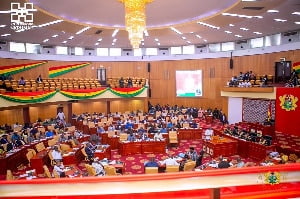
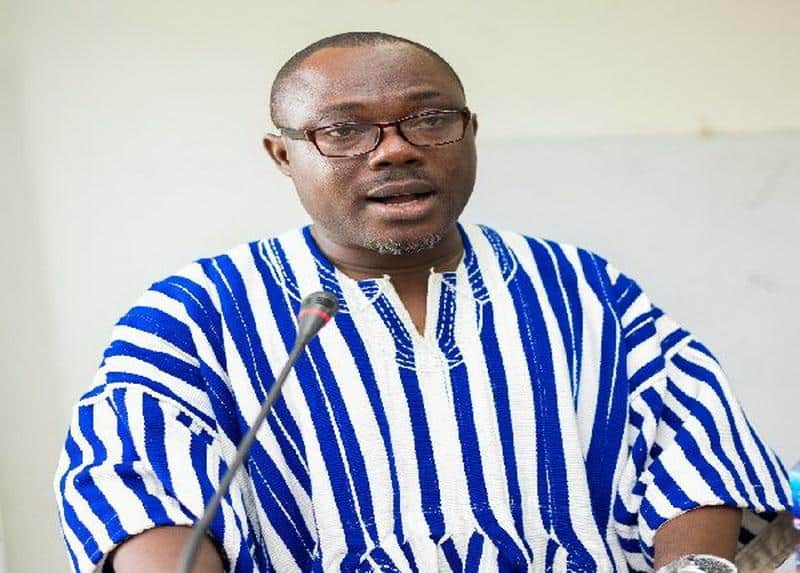
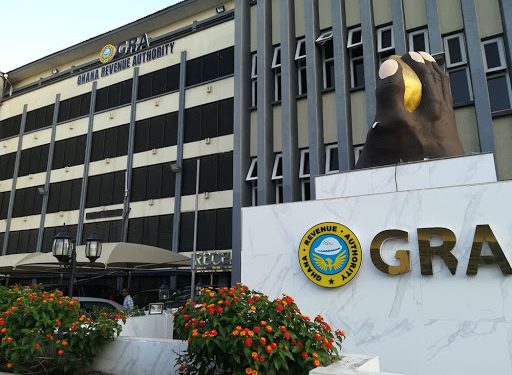
Chairman of the Public Accounts Committee (PAC), James Klutse Avedzi, has given the Ghana Revenue Authority (GRA) a two-week ultimatum to provide information on their contract with auditing firm Safaritech.
The demand comes after allegations were raised by Sam George, a committee member and Ningo-Prampram MP, regarding the legitimacy of Safaritech, including claims of its delisting and an office address linked to a barber shop.
The Commissioner-General of GRA, Rev. Ammishaddai Owusu-Amoah, failed to address these concerns during questioning by Sam George. In response, Chairman Avedzi has set the two-week deadline for GRA to furnish the committee with comprehensive details of the contract.
The contract in question has recently been the subject of a tax dispute between telecommunications company MTN and the GRA. During the committee session, Chairman Avedzi emphasized the need for the Commissioner-General to disclose the nature of the relationship between GRA and Safaritech Ghana Limited.
He also stated that the Commissioner-General may be called upon to provide further explanations if necessary.
“Mr. Commissioner General, you can provide the relationship you have with Safaritech Ghana Limited to the Chair through the Committee. If there is a need for us to call you for further explanation we will do so.”
The Ghana Revenue Authority(GRA), Excise Unit has confiscated cartons of malt, vodka, Coca-Cola, and carbonated beverages.
The GRA estimates that the market value of these drinks is hundreds of Ghana Cedis.
The products were found to be being sold in an open market without the necessary excise stamp, indicating an attempt to avoid tax.
Head of the GRA Excise Unit, Kwabena Apau, announced the seizure and lamented the outrageous rates at which people violate the country’s revenue collection regulations.
“We have intercepted bottled water, carbonated soft drinks, beer such as Heineken, cigarettes etc. and we expect that those products would have been fixed with stamps either manufactured locally or imported and we have noticed that most people are now flouting the law.”
Additionally, he stated that the GRA is committed to upholding the nation’s tax rules in order to stop the evasion of taxes.
The Ghana Revenue Authority (GRA) unit has detained four Accra-based business owners for failing to issue tax bills.
The companies are Buildmart Company Ghana in Adabraka, Bedarts Cold Supplies in Lashibi, Yat Ventures in Mamobi and Excellence Boutique at Spintex Road.
The managers were taken to the headquarters of the Customs Office for their statements before being handed over to the Criminal Investigation Department of the Police.
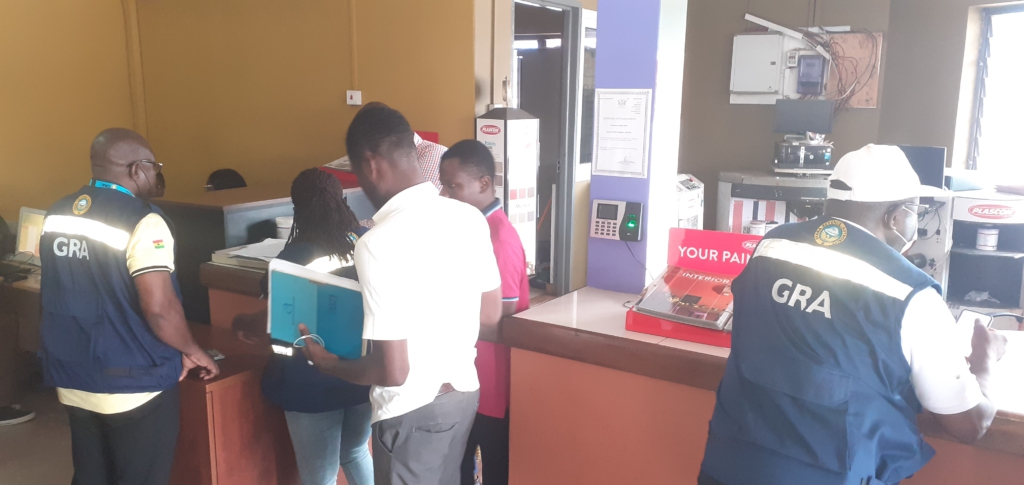
The Area Enforcement Manager of GRA in charge of Accra Central, Mr Joseph Annan said the companies had not complied with Section 41 of the VAT Act which mandated them to issue the tax invoice at all times.
He said the exercise was part of the Authority’s plans to ensure tax compliance and retrieve taxes due the state.
He said the Division had several options at its disposal to aid in revenue mobilisation, including already existing initiatives such as auditing and test purchasing, among others.
Mr Annan said the test purchases conducted on 115 taxpayers that were sampled for a week revealed that a total of 93 taxpayers were not issuing the VAT invoice.
The figure, he stressed translated into a non-compliance rate of 80.9 per cent and said it was an offence for a registered taxpayer to fail to issue a VAT invoice for purchases made.
He said the division would continue with the enforcement exercises with an eye on the implementation of the electronic invoicing system and other tax types.
The government has tasked the GRA with raising a revenue target of GH₵106 billion for the 2023 fiscal year.
Out of this figure, the Domestic Tax Revenue Division is expected to collect 70 per cent of the total revenue.
Mr Annan said the Authority would continue to embark on surprise exercises across the country to apprehend culprits evading tax.
He urged the public, especially customers who make taxable purchases, to always request and insist on their VAT invoices.
The Ghana Revenue Authority (GRA) is warned all importers who meet the requirement to register for Value Added Tax (VAT) but have refused to do so will pay 12.5% more on the customs value of taxable goods imported from June 6, 2023.
This follows the implementation of the Upfront Payment Policy.
According to the GRA, the upfront payment is charged at importation on taxable goods imported in commercial quantities with a value of ¢200,000 and above.
It explained that the Upfront Payment Policy is not a new tax, but a compliance tool to encourage persons required to register for VAT to register and file returns.
This is to help bring parity in the administration of VAT.
If continued that importers who make the upfront payment may be allowed to recover the amount when the register and file their VAT returns as stated in Act 1082.
It therefore entreated all importers who qualify to register for VAT to make arrangements to register at the nearest Taxpayer Service Center to avoid the upfront payment.
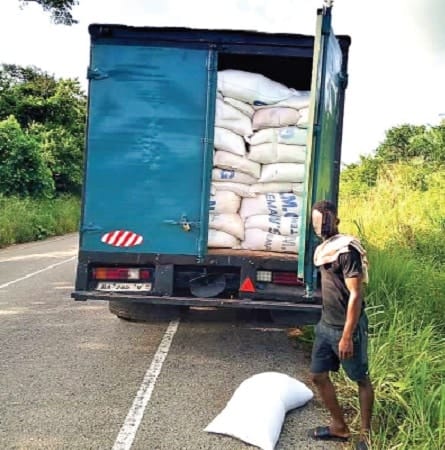
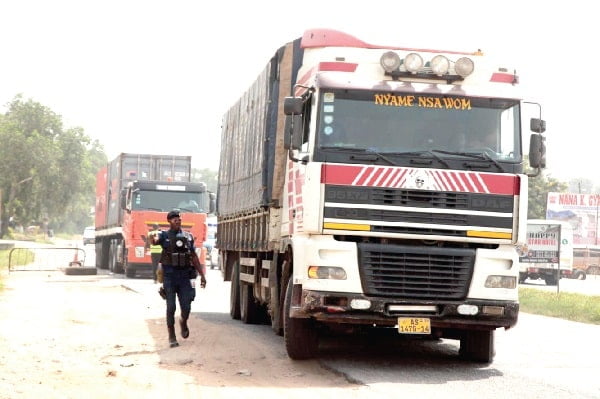
The Customs Division personnel at the Ghana Revenue Authority (GRA) has seized a heavy-duty vehicle carrying 200 maxi-backs of cocoa beans heading towards Togo at Taviefe, near Ho.
The Mercedes Benz truck, BA 265 V, was said to have travelled from Kede, through Accra, Sogakope and Ho before Customs officers caught up with it at Taviefe.
Subsequently, the driver, Felix Tetteh, 30, was arrested and handed over to the police in Ho while the truck was impounded.
Briefing the Daily Graphic soon after the operation, the Director of Special Services of COCOBOD, Charles Amenyaglo, said the operation followed a tip-off and intelligence gathering.
Concealment
According to him, the sacks of cocoa beans were sprinkled with fishmeal and covered with wheat bran to conceal the smell of the cocoa beans on board.
Mr Amenyaglo said initial investigations revealed that the same truck was involved in a cocoa smuggling case in March, this year.
Apart from that, he said, the colour of the truck was changed three times between March and May this year to avoid detection by the security agencies.
Further, Mr Amenyaglo said the truck, which earlier used the Accra- Ho-Hohoe route for cocoa smuggling, now operated through Sogakope to outwit the security agencies.
“We will get to the bottom of the matter as soon as possible and process the driver and all those involved for court,” he added.
The Director of Special Services ofCOCOBOD appealed to patriotic members of the public to readily volunteer information on the activities of cocoa smugglers in the communities to the security agencies and COCOBOD, in the national interest.
He said the driver of the impounded truck was now on police enquiry bail, assisting in investigations into the matter.
Uniformed men-related brutality has been a controversial issue that has been making headlines around the country for years now.
The use of excessive force by law enforcement officials has caused an outcry from citizens and civil organization groups who say that police brutality is a systemic issue that needs to be addressed as soon as possible.
A UTV video posted by a Twitter user with the handle @abochie captures a uniformed customs officer from the Ghana Revenue Authority, instructing a civilian to go and sit down.
“Go sit down, go sit down, you came we be what [gives the headbutt], Go sit down, foolish boy. Ah who taught you that,” the police officer was captured saying.
The headbutt was so severe that the camera captured the sound and its impact on the civilian could be imagined.
In the same video, officials with jackets from the Ghana Revenue Authority (GRA) could be seen moving to calm the situation while others in the background ask if a knife had been taken.
As the debate over police conduct rages on, civilians continue to question the role of police officers in ensuring public safety, and what steps can be taken to prevent incidents of police brutality.
Meanwhile, the Ghana Revenue has embarked on an Invoice Invigilation Exercise to ensure Value Added Tax (VAT) are rightly paid by VAT registered businesses across the country.
Managing partner of Deloitte Ghana, Daniel Kwadwo Owusu, has urged the Ghana Revenue Authority (GRA) to foster an atmosphere that makes it easy for both individuals and businesses to file their taxes.
He also entreated businesses and individuals to adopt the culture of filing their tax returns annually.
Speaking at the 7th CEO Summit held in Accra on Monday, May 22, 2023, Mr Owusu said for government to expand its tax net, it needs to increase the formalization of the local economy and be fully digitalized.
This, he said, will help boost the internal revenue of government.
It will also help prevent government from borrowing externally to fix the nation’s problems.
“We want the government to continue to expand the tax net by increasing formalization of the economy, digitization. This will help boost internal revenue generation and reduce large external borrowing,” the Country Managing Partner of Deloitte Ghana said.
He indicated that, “GRA should make it easy for everyone to file their tax returns, especially, individuals. Build that culture of annual filing of tax returns.”
The buying public has been advised by the Ghana Revenue Authority (GRA) to always seek VAT invoices from companies that are registered to pay taxes.
Head of Accra Central Enforcement Unit of GRA, Joseph Annan, gave the advice during a VAT enforcement and test-purchase exercise in Accra.
“Attention will soon be shifted to buyers who do not request VAT invoices after purchases. We want to ensure that businesses and customers collaborate to make tax collection easy,” he said.
The tax collector maintained that refusal of buyers to request for invoices from taxpaying businesses contravenes the VAT law.
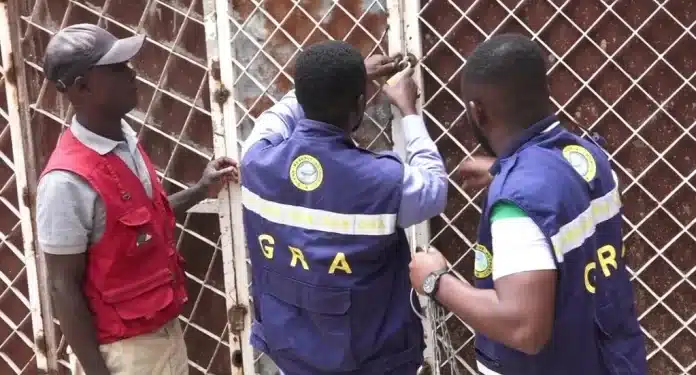
Eight businesses were clamped for the offence of selective and non-issuance of VAT invoices during the enforcement exercise at East Legon and Adenta.
The GRA, according to Mr. Annan, will conduct a pre-emptive assessment with full audit and make moves for court processes to prosecute the eight businesses if their case is brought to finality and they are found culpable.
“Section 41 of the VAT Act stipulates that businesses issue the VAT invoice at all times. Failure to do this, contravenes the law,” Mr. Annan explained.
The Authority said it has listed some 93 businesses across the capital as targets of enforcement and compliance this year.
This year, 2023, the GRA has set a revenue target of GH¢206billion – of which the Customs Division is expected to collect some GH¢28.5billion.
Importantly, the tax collector is seeking to leverage the e-VAT regime to better collections as the Authority currently rakes in some GH¢23.4billion from VAT, data from the Finance Ministry have shown.
The country’s VAT penetration and performance is regarded as inadequate among countries in the sub-region – positioned at about 17 percent compared to Benin which has a penetration of up to 40 percent; Cote d’ Ivoire, 32 percent; Niger, 29 percent; Senegal, 33 percent; Sierra Leone, 25 percent; and Togo, 43 percent.
TheGhana Revenue Authority (GRA) is currently investigating and prosecuting 93 businesses for a number of tax offenses.
The Accra Area Tax compliance coordinator, has emphasized that defiant non-taxpayers will face legal consequences to ensure compliance with the country’s tax laws.
Annan made this statement during a press briefing following a recent VAT compliance enforcement exercise.
“We have 93 on our list and there is another one that is being sieved through and once we are done, it will be added to the 93. We are going to go through all the 93 cases, and they are all going to follow the same process. There will be a recommendation for a full audit and there will process for court.”
Mr Annan added that very soon all taxpayers will use the electronic vat invoicing system which will make it difficult for business owners to evade taxes.
“The E-VAT will eventually cover all taxpayers but of course, it is a process. You don’t start a new thing en masse, you need to start gradually before you expand.”
The Ghana Revenue Authority (GRA) has responded to a question on the continuation of the COVID-19 Health Recovery Levy, sometimes known as the “Covid Tax,” shedding clarity on the grounds for the levy’s ongoing collection.
In a tweet, the Ghana Revenue Authority addressed the concerns raised by a user on Twitter, who asked, “Why are we still paying covid tax @GhanaRevenue?”
In their reply, the GRA emphasized their role as mandated by parliament to collect revenue from taxes and levies.
They further explained that the basis for revenue collection is the law enacted by parliament.
The GRA specifically referred to the COVID-19 Health Recovery Levy Act, 2021, Act 1068, which was implemented as a measure to address the economic challenges posed by the COVID-19 pandemic.
Notably, the GRA highlighted that this legislation did not specify an end date for the levy’s collection.
Quoting the GRA’s response, they stated, “The COVID-19 Health Recovery Levy Act, 2021, Act 1068, did not have an end date, and so the GRA must continue to collect until the law is amended or repealed.”
This clarification by the Ghana Revenue Authority highlights the legal framework under which they operate.
According to them, as long as the law remains in effect, the GRA is obliged to continue collecting the COVID-19 Health Recovery Levy from taxpayers.
We receive this question a lot on here. GRA's mandate is to collect revenue from taxes and levies as enacted by parliament. The basis of revenue collection is the law. The Covid-19 Health Recovery Levy Act, 2021, Act 1068, did not have an end date and so the GRA must continue to… https://t.co/xeBbxPkFnn
Two restaurant managers and employees of an Accra-based electrical cable company were detained by the Ghana Revenue Authority (GRA) team for failing to issue VAT tax bills.
The companies are Waves Lounge and Pub, Chez Amis Pub and Grill, and Grand Pacific Limited, dealers in general electrical cables.
The managers were taken to the Customs Office at the headquarters for their statements before being handed over to the Criminal Investigation Department of the Police.
Edward Appenteng Gyamerah, Commissioner, Domestic Tax Revenue Division, GRA, said the managers had refused to issue certified VAT invoices by the Commissioner-General at the point of purchase of goods at their outlets.
The initiative, he stated, was part of the Authority’s exercise to ensure tax compliance and retrieve taxes due the state.
He said the Division had several options at its disposal to aid in revenue mobilization, including already existing initiatives such as auditing and test purchasing, among others.
Gyamerah said the test purchases conducted on 115 taxpayers that were sampled for a week revealed that a total of 93 taxpayers were not issuing the VAT invoice.
The figure, he stressed translated into a non-compliance rate of 80.9 per cent and said it was an offense for a registered taxpayer to fail to issue a VAT invoice for purchases made.
He said the division would continue with the enforcement exercises with an eye on the implementation of the electronic invoicing system and other tax types.
The government has tasked the GRA with raising a revenue target of GHc 106 billion for the 2023 fiscal year.
Out of this figure, the Domestic Tax Revenue Division is expected to collect 70 per cent of the total revenue.
This year, President Nana Akufo-Addo assented to the three amendments passed by Parliament.
They are the Excise Duty (Amendment), Act 2023 (Act 1093), the Income Tax (Amendment), Act 2023 (Act 1094), and the Growth and Sustainability Levy Act 2023 (Act 1095).
These amendments were to complement efforts to ensure the Authority met its revenue target.
Joseph Annan, Area Enforcement Manager of GRA, in charge of Accra Central, said the Authority would continue to embark on surprise exercises across the country to apprehend culprits evading tax.
He urged the public, especially customers who make taxable purchases, to always request and insist on their VAT invoices.
Ninety-three (93) businesses are being dragged to court by the Ghana Revenue Authority (GRA), following their failure to issue Value Added Tax (VAT) invoices for goods sold.
This, according to the Authority, is in efforts to clamp down on businesses that are not paying the right taxes to the state as well as mobilise the expected revenue for the state.
The 93 businesses were detected after a test purchase was conducted on about 115 shops across the Greater Accra region.
As a result, the Enforcement Unit of the Ghana Revenue Authority (GRA) has indicated its readiness to prosecute the 93 shops and business owners.
The exercise is expected to help the GRA mobilise revenue for the state, as well as aid in meeting its revenue target.
These 93 businesses were identified after a test purchase was conducted on about 115 shops across the Greater Accra region.
Speaking to the media, the Commissioner in charge of Domestic Tax Division at the GRA, Edward Gyamerah, said the figure translates into a non-compliance rate of 80.9%.
“Test purchases conducted on 115 tax payers sampled for a week revealed a total number of 93 taxpayers not issuing the VAT invoice. This translates into a non-compliance rate of 80.9%”, he said.
Another challenge facing the Authority, he said, was refusal of some other businesses to register for tax payment even though they were obliged by law to do so.
“It is an offence for a registered taxpayer to fail to issue a VAT invoice for a purchase made therefore we shall make them face the law ” he said.
Managers of Chez Amis, Waves Lounge all at East Legon and Grand Pacific at the Dzorwulu Junction were picked up by the enforcement team during the operation Tuesday, May 17, 2023.
Meanwhile, the team was prevented from getting access to the Departure of the Airport terminal 3 to arrest about 10 business owners for failing to comply with the tax laws.
The Ghana Revenue Authority (GRA), Tema Sector Command, has increased its efforts to prevent the under-declaration and under-invoicing of imported goods.
The Customs division is warning importers, especially paper product importers, that it will go hard on anyone who attempts to short-change the state by deliberately under-declaring goods at the ports.
This came to light at a press briefing in Tema after Customs officials discovered a container of finished products such as photo-copy papers (A-4 sheets), which was declared by the clearing agent as stationery.
Head of Intelligence at the Ghana Revenue Authority, Assistant Commissioner Wisdom Xetor, lamented the manipulation of actual duty payment by some paper importers and clearing agents at the port.
He disclosed that investigations show that most paper importers are under-invoicing, giving wrong descriptions and under-valuing their imports in a bid to evade taxes.
Mr. Xetor said the GRA has introduced a new strategy of tracking some of these importers: “We just want to send a clear message to the importing public that they are under our radar; we are monitoring them so they should just do the right thing”.
Mr. Xetor therefore cautioned the importers that going forward culprits will be sanctioned severely, including having to pay a 300 percent penalty; and in cases where contents are banned goods, they will be seized.
Chief Revenue Officer, Public Education, Media Relations and Review, Dzinunya Mawuli, on his part said this exercise was previously carried out underground, but will now be done publicly as a way of warning others to desist from such acts.
“Today we were supposed to open one of the containers and re-examine the items in it, but unfortunately the importer and clearing agent are not available. The clearing agent entered 68 items, but our scan image is telling us that it is one item. They described it as stationery, but it is not stationery when we look at the scan image,” Ms. Mawuli said.
She noted that the container will be opened by next Wednesday, in order for them to carry out the necessary examination so they can establish its true content.
TheGhana Revenue Authority‘s (GRA) Intelligence Unit has warned cargo importers and declarants to refrain from under-declaring, mis-describing, depreciating weight, and under-invoicing cargo.
Mr Wisdom Xetor, Assistant Commissioner Intelligence, GRA, told Journalists that GRA had been doing some tracking and monitoring underground to uncover such operators and bring them to book.
Mr Xetor said when importers and their agents were found to have engaged in any of the illegal acts, the GRA, as part of sanctions, could impose a 300 percent duty penalty on them and seize the items.
He disclosed that currently, the GRA had intercepted at MPS Terminal Three, a container containing paper products after being monitored for two and a half months.
He said the importers and declarants were suspected of engaging in under-invoicing, mis-describing, and devaluing weight.
Mr. Xetor indicated that after taking statements from both the importer and agent and several meetings, they agreed to open the container on a certain date to physically examine the product, but the declarants did not show up.
He said they, however, showed up when they realised that the GRA had blocked them from the system, making it impossible for them to do business with the Authority until the issue was thoroughly investigated.
The Assistant Commissioner explained that even though they declared importing stationery, the scan picked the items as A4 papers, adding that they also entered about 68-line items, while it showed as one line item.
He explained that while stationery attracted a five percent duty rate, A4 paper, which is classified as a finished product, has a 20 percent duty on it; therefore, mis-describing meant paying lower rates during clearing.
He added that other importers also devalue the weight of their cargoes, stating, for instance, that instead of entering 18 metric tonnes, they would indicate eight.
“We are therefore sending a clear message to the importing public that we are monitoring them, so they should declare the correct thing, as we will deal with them according to the law,” he added.
The quest by the business community to ensure government withdraws the three new taxes that were approved recently is not over yet, despite ongoing implementation by the Ghana Revenue Authority.
The GRA has begun implementation of two of the new taxes this week after a series of engagements and agitations from sections of the public.
But speaking to Joy Business after the swearing-in of new executives of the Abbosey Okai Spare Parts Dealers Association, Clement Amoateng said GUTA will continue to engage the government in order to get these taxes reviewed during the 2023 Mid-year Budget Review.
“GUTA is still calling on the government to have an engagement so that we can offer some solutions that will raise more revenue than the taxes. But we are looking at the 2023 Mid-year Budget Review for the taxes to be reviewed”.
“It is not too late for us as a trading community and we will still be pushing. But in the meantime, we have to pass on the cost to consumers because this is a business and every businessman or woman will do that”, he added.
The three taxes – Growth and Sustainability Levy, Excise Duty Amendment Bill and Income Tax Amendment Act were introduced to replace some old taxes in the system.
Despite a series of agitations from the business community and some stakeholders, the levies have been approved and implementation begun by the Ghana Revenue Authority.
Meanwhile, the newly sworn-in Chairman of the Abossey Okai Spare Parts Dealers, Henry Okyere Jnr, has assured members it administration will offer the best for the association.
Top on the agenda for the newly elected executives will be the move to de-congest the area to ease traffic flow for customers.
Effective May 1, 2023, the Ghana Revenue Authority will start implementing the new and revised taxes announced in the 2023 Budget.
The implementation date was captured in a notice issued by the authority.
The new and revised taxes include three key tax measures – the Excise Amendment Act, 2023; Income Tax Amendment Act, 2023 and the Growth and Sustainability Levy Act, 2023.
The GRA noticed indicated that businesses have been given enough time to configure their systems for the taxes to be implemented since the law was passed.
Excise Duty Amendment Tax
On the Excise Duty Amendment Act, the authority added that the tax has been expanded to cover some items and commodities that was previously not captured.
The development may result in the prices of some processed fruit juice, cigar, mineral water, spirits and wines including sparkling wine, going up.
However, the Ghana Union of Traders Association, maintains that it will not hesitate to pass on the cost to consumers as it might be difficult for it members to absorb these taxes.
Income Amendment Tax
On the Income Tax Amendment Tax, the GRA said it will be charging a minimum of 5% on firms that will be declaring loses for 5 years.
However, income earned beyond ¢500 will attract some taxes.
Those earning an extra ¢100 will attract a tax rate of 5%, while ¢100 only will attract a rate of 10%.
Based on the schedule sighted by Joy Business, the more one earns the more one would be paying taxes to the state.
For persons in the game of betting, they will pay 10% of their earnings to the state, which will be deducted when monies are being paid them by the respective companies.
Firms that are into lottery and gaming will also pay 20% on their gross revenue.
Based on revised taxes, individuals who receive, gains from realization of investment assets or liabilities as well as other than gifts received in respect of business or employment may have to pay 25% of the value to the state.
Growth and Sustainability Levy
For banks, non-bank financial institutions, telecom companies and firms working in the oil sector will pay 5% of their profit before tax to the state.
Mining firms, oil and gas companies are however expected to pay 1.0% of their gross production, while all other firms will pay 2.5% of their profit before tax to the GRA.
The new and updated taxes that were announced in the 2023 Budget will go into effect on May 1, 2023, this is according to the Ghana Revenue Authority (GRA).
The implementation date was captured in a notice issued by the authority.
The new and revised taxes include three key tax measures – the Excise Amendment Act, 2023; Income Tax Amendment Act, 2023 and the Growth and Sustainability Levy Act, 2023.
The GRA noticed indicated that businesses have been given enough time to configure their systems for the taxes to be implemented since the law was passed.
Excise Duty Amendment Tax
On the Excise Duty Amendment Act, the authority added that the tax has been expanded to cover some items and commodities that was previously not captured.
The development may result in the prices of some processed fruit juice, cigar, mineral water, spirits and wines including sparkling wine, going up.
However, the Ghana Union of Traders Association, maintains that it will not hesitate to pass on the cost to consumers as it might be difficult for it members to absorb these taxes.
Income Amendment Tax
On the Income Tax Amendment Tax, the GRA said it will be charging a minimum of 5% on firms that will be declaring loses for 5 years.
However, income earned beyond ¢500 will attract some taxes.
Those earning an extra ¢100 will attract a tax rate of 5%, while ¢100 only will attract a rate of 10%.
Based on the schedule sighted by Joy Business, the more one earns the more one would be paying taxes to the state.
For persons in the game of betting, they will pay 10% of their earnings to the state, which will be deducted when monies are being paid them by the respective companies.
Firms that are into lottery and gaming will also pay 20% on their gross revenue.
Based on revised taxes, individuals who receive, gains from realization of investment assets or liabilities as well as other than gifts received in respect of business or employment may have to pay 25% of the value to the state.
Growth and Sustainability Levy
For banks, non-bank financial institutions, telecom companies and firms working in the oil sector will pay 5% of their profit before tax to the state.
Mining firms, oil and gas companies are however expected to pay 1.0% of their gross production, while all other firms will pay 2.5% of their profit before tax to the GRA.
On April 1, 2023, Ghanaians who use ride-hailing applications will have to pay more due to the introduction of the Digital Transport Fee (DTF).
According to a directive from the Driver Vehicle and Licensing Authority (DVLA), the fee has been pegged at GH¢1 per trip.
One of the ride-hailing companies, Uber, in an e-mail to its customer noted that a new fee will be applied and it will be set at GH¢1 per trip.
In addition to this, a booking fee of GH¢2 will also be applied for every trip ordered via the ride-hailing companies.
The DTF will be displayed as a separate line item on your receipt for transparency.
Last year, as part of measures put in place by the government to ensure that the country’s tax net is broadened, the Ghana Revenue Authority (GRA) announced that it was targeting the e-commerce, e-sports, and gaming sector.
According to the Chief Revenue Officer at the Investigative Unit of the GRA, Clement Amankwah-Bonsu, the revenue arm of the government is poised to leverage the e-commerce, sports, and gaming sector to generate revenue for the country.
Speaking at the Ghana Anti-Corruption Coalition dialogue on Tuesday, May 31, 2022, he stated categorically that it’s about time that people who trade on various digital platforms are taxed.
“We can say now there is e-commerce and gaming all over and so the GRA can tap or leverage on e-commerce and gaming and rake in more revenue for the country. So, we need to up our game here and ensure that all those activities that go on on the various digital platforms are also taxed,” Amankwah-Bonsu said.
However, in 2019, the Ghana Revenue Authority (GRA) announced plans to rope in Uber drivers to pay taxes to the state.
Although the Solution Developer at the GRA; Patrick Frimpong Danso noted that the module to use was still under preparation, the authority has announced it wanted the payment of Vehicle Income Tax (VIT), Personal Income Tax, and e-tax stamp via mobile phones in order to widen the tax net.
With the Uber driver’s tax payment plan, Mr. Danso stated operators of the service; Uber Ghana will retain a percentage of the earnings of the driver to honour his or her tax obligation.
The move also became necessary because other commercial drivers like taxi and ‘trotro’ drivers point out that while they are compelled to pay tax, their Uber counterparts work and earn money yet do not have tax obligations.
Over the first five months of operation, theGhana Revenue Authority (GRA) monitoring teams had recovered more than GH86 million for government.
The teams, which conduct market surveillance for compliance, comprise the Tema team, based at Tema Harbour; Eastern Frontier, based at Dabala in the Volta Region; Western Frontier in Kumasi, Ashanti Region, and the Vehicle Task Force whose operation is nationwide.
Their operation also led to the interception and detention of 273 uncustomed vehicles between the last quarter of 2022 and the end of February 2023.
Speaking to journalists about the initiative in Accra, the Commissioner of Customs of the GRA, Seidu Iddrisu Iddisah, said the recoveries made by the team would contribute to the revenue drive of the state and ensure that the security of the country was intact.
Background
The Customs Division of the GRA came up with the monitoring team initiative to ensure importers pay the right amounts of duty and also to serve as a tool to curtail smuggling across the country.
In October 2022, four monitoring teams were inaugurated to undertake risk-based and intelligence-driven operations across the country.
The teams also arrested some uncustomed goods and carried out other related assignments which involved the interception of substances suspected to be Indian hemp, among others.
According to the Customs Division of the GRA, an assessment of the operations of the teams between October, 2022 and February, 2023 indicated that the teams had significantly impacted on revenue mobilisation.
No compromise
Giving a breakdown of the amount recovered to the state, Mr Iddisah said the Tema team alone collected GH¢85 million while the Western Frontier team also recovered a total collection of GH₵1.46 million.
The Vehicle Task Force intercepted and detained 193 uncustomed vehicles in the last quarter of 2022 and 80 vehicles between January and February 2023.
Mr Iddisah explained that the monitoring teams served as another layer of security measures put in place by the Authority.
The Commissioner of Customs said the monitoring team was also one of the layers of enforcement as the monitoring teams operate at certain strategic areas to ensure that “if someone is able to dodge from the entry points, these teams will be able to apprehend them for the right amount of duties and customs processes to be done.”
He commended the teams for the successes chalked up, saying since they were “set up towards the latter part of last year to February, Tema team alone has collected over GH¢85 million and seized other goods that did not meet the standards required for the country”.
The Commissioner of Customs said in the operation of the teams there was no room for compromise and cautioned that the team would not compromise on any unethical exercise by any importer or trader against the country’s customs laws.
Harassment
On the concerns of some team members harassing innocent traders at some of the country’s borders, Mr Addisah admitted that such complaints had been made in the public domain but without any concrete evidence.
“We have always encouraged people to come out with evidence of our team members harassing individuals or any form of corruption so that we can investigate and deal with the officers involved.
He explained that the teams were guided by a code of ethics and conduct and when it was breached, the necessary sanctions were applied accordingly.
The Electronic Tax Clearance Certificate for the Ghana Revenue Authority (GRA) has been launched in Accra by Vice President Dr. Mahamudu Bawumia.
The Electronic Tax Clearance Certificate app is an integrated digital platform which enables taxpayers to do three key things at a go: access and generate their tax clearance certificate online, file their tax returns and also check their tax compliance status.
There are also three options for accessing the platform; either through a QR Code, the platform’s online portal or through a USSD short code *880#, with either a smart or a ‘yam’ phone.
Launching the platform, Vice President Dr. Mahamudu Bawumia, who has spearheaded government’s digital transformation, said the introduction of the Elctronic Tax Clearance Certificate by the GRA, further signifies government’s commitment to its digitalization agenda.
Dr. Bawumia lauded the GRA for taking advantage of government’s digitization drive and the transformation of delivery of services through technology, to introduce what he called, life-changing solutions, such as the Integrated Customs Management System (ICUMS) at the ports, amongst others.
“The introduction of the Electronic VAT platform-E VAT – has also signalled the beginning of an era of transparency and accountability in VAT. Over the years the contribution of VAT to Government revenue has gradually declined and Government had to find ways to remedy this situation,” Dr. Bawumia said.
He added, “furthermore, the introduction of the cashless mode of payment of taxes has enabled taxpayers to pay taxes conveniently through either mobile money, bank transfer or other cashless means. The introduction of the Ghana.gov platform has also enabled us pay for provision of government services digitally and conveniently”.
The Vice President expressed delight at “digital remedies”, which he said, have been introduced by the government, “to revolutionize the manual ways of providing services in the Public Service”.
Some of these initiatives, he noted, are the introduction of the Ghana Card as a unique identifier of individuals in Ghana.
“Apart from helping build on our national identification system by leveraging on technology, the Ghana Card helps to identify individuals for tax purposes,” the Vice President said.
Dr. Bawumia said, “your Ghana Card is also your Taxpayer Identification Number (TIN). In effect, your Ghana Card is your reference for registration, filing of returns, making payments of tax due and accessing other services provided by GRA.”
He stressed, “other areas of digitalization that have transformed lives and businesses are the Digital Addressing System which helps to identify and locate places, the National Electronic Pharmacy Platform (NEPP) which enables you to order lifesaving drugs; the Mobile Money Interoperability which lets you have a bank account in your pocket; medical drones which are helping to deliver medical supplies to inaccessible areas faster, thereby saving lives. These are but a few of the many initiatives of how technology has improved services for all of us”.
Before officially declaring the Electronic Tax Clearance Certificate launched, Dr. Bawumia touched on the significance of submitting and declaring tax returns to the development of a nation.
“Let me use this platform to urge all Ghanaians and indeed all who earn incomes in Ghana to faithfully submit their tax returns and to declare any taxes due”.
He reiterated, “taxes are the lifeblood of any country and are used to build nations. When we faithfully declare and pay our taxes we will be in a position to hold government accountable for what our tax money is being used for. Let us really join hands to develop the country”.
On his part, the Minister for Finance, Ken Ofori-Atta, said the introduction of the Electronic Tax Clearance Certificate will improve efficiency and also improve revenue mobilisation.
Other dignitaries present were the Commissioner General of the Ghana Revenue Authority, Dr. Ammishaddai Owusu-Amoah, GRA staff amongst others.
The Growth and Sustainability Levy Bill 2022, the Ghana Revenue Authority Bill 2022, and the Income Tax Amendment Bill 2022 have all been approved by the parliament.
The financial bills presented to Parliament by the government seeks to rake in about 4 billion Ghana Cedis annually as part of domestic revenue mobilisation.
The bills are also crucial to aid the government’s quest to facilitate the Board Approval for the $3 billion International Monetary Fund(IMF) Programme staff-level agreement.
The Minority in Parliament earlier communicated its opposition to the bills.
Cape Coast South lawmaker, George Ricketts-Hagan ahead of the votes expressed the Minority caucus’ commitment to resisting the bills as a bold statement to the government that it cannot be reckless with its expenditure and expect Ghanaians to pay the price.
As part of measures to meet the criteria set by the IMF to qualify for a bailout, the government has completed tariff adjustment by the Public Utilities Regulatory Commission (PURC), Publication of the Auditor-General’s Report on COVID-19 spending, and Onboarding of Ghana Education Trust Fund (GETFund), District Assemblies Common Fund (DACF) and Road Fund on Ghana integrated financial management information system (GIFMIS).
The international and domestic bond markets are shut for the financing of government programmes, forcing the government to rely on Treasury Bills and concessional loans as the primary sources of financing for the 2023 fiscal year.
Government in justifying the introduction of the taxes said they are critical for recovery from the current economic crisis.
As part of the company’s one-month statewide revenue mobilization exercise, the Electricity Company of Ghana(ECG) in the Volta Region has restored power to certain institutions that were disconnected on Monday after they paid their debt.
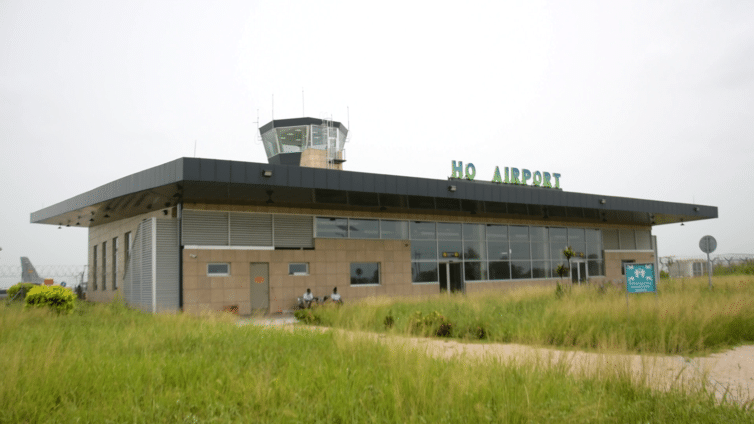
The company on Monday disconnected, Ho Airport, KFC, GRA and other institutions during the exercise.
In a media briefing, Benjamin Obeng Antwi, the Public Relations Officer of ECG in the Volta Region announced that some institutions have been reconnected after settling their arrears.
“The Ho Airport has made a payment of 100,000 Cedis which is more than what they owed us. KFC also made payment of 123,000 Cedis”.
The Ghana Revenue Authority, GRA, after crunch talks with the company has also settled all arrears for the GRA Regional Office in Ho and the Customs training school at Kpetoe.
We thank these companies for cooperating with this exercise by settling their arrears and also urge other debtors to emulate this patriotic act to enable the company achieve its target.
The company also commends companies like GCB and the National Communication Authority for not owing the company as at the time the revenue officers visited them.
The company has also visited the Ho teaching hospital and Ho municipal hospital who have not paid any bill for over two years. The company has appealed to both hospitals to pay their bills since it’s a sensitive area and carrying out a disconnection might affect a lot of people.
As a company we do not take delight in disconnecting customers as that is mostly the last resort in order to prevent the customer from accruing more debt and to enable the company gather more revenue to keep the electricity supply chain running.
ECG is appealing to all customers to settle their arrears.
A number of issues, according to former board chair of the Ghana Revenue Authority (GRA) Professor Stephen Adei, have contributed significantly to the current economic crisis.
According to Professor Adei, fundamental weaknesses in the economy include low productivity, systematic corruption, a lack of patriotism, a desire for foreign goods, and others.
“It is true that during the domestic debt exchange, those who were campaigning so that individuals do not accept it came out very strong on how expenditure can be reduced, and I agree with them. Government can manage the economy with less. We should be able to make our intentions so that we can avoid the lessons of the past.”
He maintains the blame game between the New Patriotic Party (NPP) and the National Democratic Congress (NDC) does not solve any problems.
“I do not want to make pronouncements as to whether Akufo-Addo government is worse or better than the Mahama government. I think that there is a situation that makes the comparison to apples and oranges because both of them took us to IMF.”
Earlier this week, Prof. Adei took a dig at the Akufo-Addo government for its excessive borrowing which he says is the cause of the country’s economic crisis.
According to the renowned economist, although the emergence of COVID-19 and the Russian-Ukraine war may have affected Ghana’s economy, the fundamental mistake government made was to have borrowed beyond its capacity.
He is thus calling on the government to accept responsibility and work to change the fortunes of the country.
Professor Adei said this when he addressed journalists on the sidelines of the Signature Market Pre-launch campaign at the Kwame Nkrumah University of Science and Technology, Kumasi.
“I think the biggest mistake they made is that they borrowed beyond our capacity to service it. If you are a country and you borrow beyond your capacity, you will be in trouble, of course, COVID-19 came in, and the Russia-Ukraine [war].
Professor Adei also wants Ghanaians to strictly hold government officials accountable to prevent a similar situation in future.
“We have to learn and not repeat our mistakes by going on a borrowing spree, we should become watchdogs. The leakages should be reduced, the level of corruption, the wastage from the government after government is high so we don’t get value for money,” he stated.
The Ho Airport, the Ho regional office of the Ghana Revenue Authority (GRA), Ho Technical University, KFC , among other notable institutions have been removed from the national debt over outstanding debts.
The aforementioned institutions are said to owe the Electricity Company of Ghana (ECG) over GH¢605,000.
The disconnection was conducted on the first day of the company’s nationwide revenue mobilization exercise in the eleven operational districts of ECG in the Volta and Oti Regions.
“The company has disconnected KFC for owing GH¢68,000, Ho Airport for owing GH¢63,000, GRA Office for owing GH¢55,000, CEPS training academy for owing GH¢80,000, and Ho Technical University for owing GH¢402,000.
However, Ho Technical University paid GH¢200,000 after crunch talks with the ECG and have been told to settle the arrears by the end of March”, stated in a press release signed by the Volta Regional Public Relations Officer, Benjamin Obeng Antwi.
The University of Health and Allied Sciences (UHAS) made an upfront payment of GH¢1 million out of GH¢1.400,000 and was given a week’s deadline to pay the remaining GH¢400,000
ECG hopes to retrieve about GH¢292 million in the Volta and Oti Regions, within the one-month revenue mobilization exercise, which will see it visit debtors such as the Ho Teaching Hospital, and the National Communications Authority among other state agencies and private institutions.
“We want customers to prioritize the payment of bills and this will enable us to collect more revenue to keep the power sector operating.
The company is appealing to all customers to make payment before the disconnection team visits their premises. Customers can make payments at any bank or through mobile money. Customers can also pay by dialing *226# or by downloading the ECG PowerApp”.
The Ghana Revenue Authority (GRA) has rejected claims made by the Member of Parliament for Assin Central, Kennedy Agyapong that the authority has sabotaged his businesses.
Allegations of an unauthorized audit of the MP’s companies’ financial records, according to the GRA, are untrue.
“The purpose of such audits is to measure and improve compliance while fine-tuning controls. The factory in question together with other companies were thus audited to check the value of goods imported and their intended use. We wish to disclose that in January and February 2023, about thirty (30) of such risk-based activities were carried out on a number of businesses”, it said in a release.
The MP who is also aNew Patriotic Party(NPP) flagbearer aspirant, recently alleged that his businesses are under attack as a result of his decision to run for president.
He claims that state institutions are frustrating and intimidating him in his quest to lead the NPP in the 2024 NPP elections.
But the Authority further explained in the statement that its officials have been carrying out their mandate in accordance with World Customs Organization guidelines, ensuring adherence to best practices.
“GRA wishes to categorically refute the specific allegation of harassment at a factory under construction owned by the MP. We wish to clarify that as part of GRA’s mandate and in line with World Customs Organization’s (WCO’s) guidelines in ensuring adherence to best practices; such exercises are regularly conducted.”
Here is the full statement
ALLEGED HARASSMENT OF HON. KENNEDY AGYAPONGBY GRA
Management of the Ghana Revenue Authority (GRA) has sighted a recording of a media interview by the Member of Parliament (MP) for Assin Central constituency, Honourable Kennedy Agyapong circulating on social media in which he accused GRA Officials of constant harassment through unwarranted audits of his companies.
GRA wishes to categorically refute the specific allegation of harassment at a factory under construction owned by the MP. We wish to clarify that as part of GRA’s mandate and in line with World Customs Organization’s (WCO’s) guidelines in ensuring adherence to best practices; such exercises are regularly conducted. The purpose of such audits, are to measure and improve compliance whiles fine tuning controls. The factory in question together with other companies were thus audited to check the value of goods imported and their intended use.
We wish to disclose that in January and February 2023, about thirty (30) of such risk-based activities were carried out on a number of businesses. Furthermore, in the area of enforcement and compliance, GRA carries out invoice invigilation exercises to ascertain Value Added Tax (VAT) paid by VAT registered businesses. These exercises entail stationing staff on the premises of VAT registered businesses such as shops, restaurants and manufacturing sites to check the issuance of VAT invoices.
In September 2022, invigilation exercises were intensified nationwide in order to enforce the issuance of VAT invoices and to encourage persons who buy goods and patronize services to demand for VAT invoices. This exercise was very successful and GRA intends to scale up the invoice invigilation exercise from April 2023 as part of its revenue mobilization efforts.
In carrying out all these enforcement and compliance activities, staff of GRA have been advised to remain professional and act at all times with integrity as required by the Authority’s Code of Ethics and Conduct. We therefore encourage any member of the public who has evidence of any alleged corrupt practice by an official of the Authority to report such criminal acts to the Management of GRA on 0800-900-110 for redress.
Management wishes to use this opportunity to assure Honourable Kennedy Agyapong and all taxpayers of our readiness to receive complaints and feedback on our work as we partner to mobilise revenue for national development. We also wish to state that GRA remains committed to carrying out its mandate of revenue mobilization with integrity, fairness and utmost professionalism. –End–
SIGNED FLORENCE ASANTE (MRS) COMMUNICATION AND PUBLIC AFFAIRS DEPARTMENT
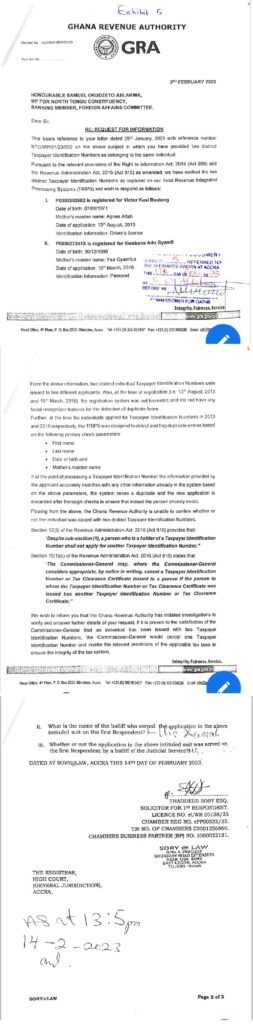
The Ghana Revenue Authority (GRA) has disclosed that its investigations into dual identity claims against an Executive Council Member of the National Cathedral reveals that Victor Kusi Boateng and Kwabena Adu Gyamfi could be two different individuals.
In a letter to the MP for North Tongu, Samuel Okudzeto Ablakwa, the GRA noted that the said individuals have two distinct Tax Identification Number (TIN) records.
At the time of the registration for Kusi Boateng (August 13, 2013) and Adu Gyamfi (March 15, 2016), “the registration system was not biometric and did not have any facial recognition features for the detection of duplicate faces,” the letter said.
It went further to explain that it had started investigations into the claim by Ablakwa that the two individuals were one and the same person, who was using the double identity for criminal reasons.
Ablakwa shared the GRA letter as part of his court papers opposing a contempt suit brought against him by Kwabena Adu Gyamfi, alias Victor Kusi Boateng, who happens to be the secretary to the Board of Trustees of the National Cathedral of Ghana.
In the document which was contained in an 85-page affidavit filed by Ablakwa’s lawyers to buttress his reasons that the plaintiff was engaged in a vexatious exercise with the contempt suit.
Ablakwa, was cited for contempt of court for his handling of a restraining order document barring him from publishing personal information and other documents of Rev. Kusi Boateng.
The motion for contempt, which was filed by Rev Kusi Boateng, indicated that the reasons Ablakwa gave for rejecting the document were not tangible.
A lecturer in political science at the University of Ghana, Professor Ransford Gyampo, has written to President Akufo-Addo to express his displeasure over what he claims are unauthorized contract extensions for influential members of the Ghana Revenue Authority (GRA), including the Commissioner General of GRA, Rev. Dr. Ammishaddai Owusu-Amoah.
Professor Gyampo in the letter to the President claimed that the illegal contract extension was creating tension at GRA and does not augur well for its proper functioning.
Professor Gyampo added that the contract extension was contrary to a great policy to suspend the granting of post-retirement contracts to people working in some state agencies where expertise isn’t scarce, as part of expenditure rationalization measures.
Prof. Gyampo stated that the policy had been used against Mr Kofi Nti, a former GRA Commissioner General who was appointed on a 4-year contract but was made to leave office halfway through his contract because he had reached the retirement age of 60 before the expiration of his contract.
“Even though the illegitimate contract extension of Amishaddai expired in 2021, he was made to remain at post without any official contract or official cover for another one (1) whole year ending the last year 2022.
“I am reliably informed that the board chairman of the GRA with support from Ken Ofori Attah is unilaterally and without recourse to his board members, seeking two more years of a post-retirement contract extension for the next Amishaddai. This has created deep-seated tension and anger among board members of the GRA in a manner that would not auger well for revenue generation and collection,” he revealed.
Below is the full letter to the President
A Letter to the President on Some Inconsistencies and Illegitimate Attempts at Contract Extension at the GRA
Your Excellency, 1. Your Government initiated a great policy to suspend the granting of post-retirement contracts to people working in some state agencies where labor and expertise aren’t scarce, as part of expenditure rationalization measures. In accordance with this many requests for post-retirement contracts have been turned down.
2. Kofi Nti, a former GRA Commissioner General who was appointed on a 4-year contract was made to leave office halfway through his contract after serving only two and half years because he reached the retirement age of 60 before the expiration of his contract. He was not given a contract extension.
3. Amishaddai Amoah took over from Kofi Nti and together with Col. Damoah and Juliana Essiam who worked in the same area of revenue generation, they all attained 60 years 2 years ago.
4. Col. Damoah was made to leave office because, among other controversial legal tussles, he had also attained the retirement age of 60 years. But Amishaddai was given a one-year contract extension upon attaining 60 years.
5. Even though the illegitimate contract extension of Amishaddai expired in 2021, he was made to remain at post without any official contract or official cover for another one (1) whole year ending last year 2022. I am reliably informed that, the board chairman of the GRA with support from Ken Ofori Attah is unilaterally and without recourse to his board members, seeking two more years of a post-retirement contract extension for the next Amishaddai. This has created deep-seated tension and anger among board members of the GRA in a manner that would not auger well for revenue generation and collection.
6. Mr President, what you seek in this current times of economic crisis, is better supervision of revenue generation and collection activities. You need not violate your own policy and unnecessarily discriminate against others by denying post-retirement contract to others and approving same for Amishaddai. More importantly, you must try and give opportunities to others to see how they embrace the challenge of revenue generation and collection to help your government navigate the whole country out of the current economic doldrums.
7. I write as a Citizen concerned about respect for rules, fairness, equity, and the need for us to give opportunities to others who can probably perform better in helping us raise the needed resources internally for development.
I thank you and look forward yo your action on this.
The Ghana Revenue Authority (GRA) has entreated multinational companies opposing the imposition of the ‘back tax’ penalties to do so through legal means.
The authority in recent exercise imposed ‘back tax’ penalties on MTN, Tullow, Goldfields and Kosmos Energy. The companies have all indicated their positions to contest the claims by the GRA.
But answering some questions sent to the GRA by Joy Business, the authority said the companies have the right under the GRA Law to object to the tax imposition, after which the GRA will determine the case in 30 days.
If not satisfied, the authority insists the companies can appeal to the Independent Tax Appeals Board after making 30 percent payment of the surcharged back tax.
“We at the GRA welcome the decisions by some of the multinational companies to contest the back-tax penalties imposed on them. The law allows such remedies through layers of appeal to the GRA”, a source at the GRA told Joy Business.
Per the law, companies that appeal to the Independent Tax Appeals Board are required to make 30 percent payment of the taxes imposed on them.
Background
The GRA in a special auditing exercise has asked some multinational companies to pay millions of dollars in back taxes.
Gold Fields Ltd., Kosmos Energy Ltd. Tullow Oil and MTN Group Ltd were directed to pay back taxes. MTN was asked to pay $773 million while Tullow as ordered to pay $300 million.
It is not clear the fines imposed on Gold Fields and Kosmos.
The largest wireless carrier in Africa, MTN Group Limited, according to Bloomberg has declared that a tax bill for GH8.2 billion ($672 million) it received from the Ghana Revenue Authority (GRA) has been cancelled.
According to a filing by MTN on Friday, the decision was reached following “extensive and productive discussions” over the course of a 21-day negotiation period between the revenue authority and the mobile phone provider (February 3, 2023).
The Ghana Revenue Authority surprised Ghana’s largest corporate taxpayer last month with an unexpected claim for the years 2014 to 2018. This led to the decision to drop the tax payment.
The potential fine represented about 5% of MTN’s market capitalisation and the government’s decision “removes a threat to this year’s shareholder returns,” Bloomberg Intelligence analyst John Davies said in a note.
Some of the biggest firms in the country have been under pressure from the Authority to pay millions in overdue taxes.
Similar bills were sent to Gold Fields Limited, Kosmos Energy Limited, and Tullow Oil Plc.
The businesses all refute the government’s assertions.
Ghana’s rising debt and high loan servicing costs prevented it from accessing foreign capital markets.
The government has been forced to allocate most of its revenue to service an estimated GH¢576 billion of public debt.
It is restructuring most of its obligations amid a slump in the cedi and is seeking a $3 billion loan from the International Monetary Fund (IMF).
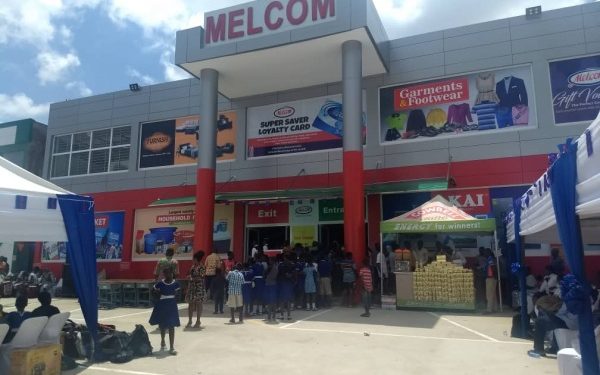
The Kasoa branch manager of popular retail shop, Melcom, has been arrested by the revenue protection taskforce from the Ghana Revenue Authority over failure to issue VAT invoices on some items sold to customers.
He was arrested on Wednesday, February 1. His arrest brings to eight, the number of shop managers arrested on the third day of the operation by the compliance unit of the Ghana Revenue Authority (GRA).
The GRA rolled out the Electronic VAT Invoicing system in 2022 in its quest to track taxes paid on goods purchased.
With the current Value Added Tax rate at about 25%, some shops have adopted schemes to bypass the system in order to keep a low price rate to attract customers.
According to the GRA, shop managers have found a smart way of directing purchases through other systems other than the customs-approved system.
The suspected shop managers will be arraigned according to the GRA after their statements are taken.
On Tuesday, the Managers of the East Legon branch of Max Mart shopping centre, Community 25 branch of Palace shopping mall, and Second Cup Coffee shop at Dzorwulu were arrested and detained by the Ghana Revenue Authority for non-compliance with tax laws and bypassing the Electronic VAT Invoicing system.
The three managers are made up of two foreigners and a Ghanaian.
According to GRA, the managers of the respective malls deliberately outsmarted the Electronic VAT Invoicing system by recording multiple sales of items under one unit.
A joint task force of police and Ghana Revenue Authority( GRA) employees has detained the manager of the Spintex China Mall for failing to pay taxes.
It is immediately not known how much tax the company owes the GRA but Citi News’ Kennedy Twumasi reported that the manager was picked up Monday morning by a taskforce from the country’s revenue authority.
The manager of Sneda Mall on the Spintex Road was also arrested by the taskforce for the non-payment of taxes.
In October 2022, the GRA shut down some branches of China Mall over non-compliance with Ghana’s electronic VAT system.
GRA has embarked on a special operation to clamp down on companies defaulting on their tax commitments.
According to the GRA, a number of taxpayers have failed to file their returns through the authority’s certified invoicing system thus dwindling the revenue collection for the state.
Speaking ahead of an exercise to arrest business owners who have defaulted in the payments of their VAT, the Commissioner of the Domestic Tax Revenue Division (DTRD) of the authority Edward Appenteng Gyamerah said they will continually embark on such swoops to ensure that companies do the needful.
The Member of Parliament (MP) of North Tongu has called out some state institutions for their silence over the issue of Rev Victor Kusi Boateng, the founder and leader of Power Chapel International, illegally having multiple statutory documents under different names.
Samuel Okudzeto Ablakwa said that the state agencies that Rev Kusi Boateng scammed to illegally acquire multiple documents including the Ghana Revenue Authority (GRA), Registrar Generals Department, Passport Office and the Driver and Vehicle Licensing Authority (DVLA), must explain to Ghanaians how the blunders happened.
In a Citi TV interview monitored by GhanaWeb, the MP posited that these agencies should be conducting internal investigations to find out how they issued the same person with multiple documents under different names.
“All these institutions should be issuing statements by now (and) carrying out investigations. How is it that they are (so quiet)? Is it that they are complicit?
“How did they take advantage of them so easily. GRA, Registrar General Department, Passport Office, DVLA. How did this happen?” he queried.
The MP in his latest corruption exposé on the National Cathedral made some allegations against Rev. Victor Kusi Boateng, who is the secretary to the Board of Trustees of the National Cathedral of Ghana.
In an earlier revelation about the National Cathedral, Okudzeto Ablakwa said that a whopping GH¢2.6 million was dished out to a company named JNS Talent Centre Limited.
In his latest exposé, Ablakwa said that further investigations into the alleged payment led to the discovery of one Kwabena Adu Gyamfi as a director of JNS Talent Centre.
Having confirmed the identities of two out of three directors of the centre, Ablakwa dug deeper in a bid to discover the identity of the third director, Kwabena Adu Gyamfi.
According to his findings, citing a number of statutory documents including passports, Tax Identification Numbers and driver’s licenses, Kwabena Adu Gyamfi was the same as Reverend Kusi Boateng, who has allegedly been operating under the pseudonym Kwabena Adu Gyamfi.
According to the Customs Division of the Ghana Revenue Authority (GRA), 80 million counterfeit notes bearing the CFA inscription have been intercepted.
Customs reports that the suspect, identified as Arimu Timothy Adipoe, was apprehended at one of the checkpoints along the Aflao border on a motorcycle with the assistance of other security services when he tried to enter the nation with the phony currency.
Addressing the press, the Commissioner in charge of customs division, Seidu Iddrisu Iddisah explained that “Yesterday [Tuesday] around 4pm, our officers on duty at the Anapro road, under the Aflao connection stopped an Okada rider with passenger carrying a backpack
He said such fake currencies contribute negatively to the economy and further depreciate the Ghana cedis when exchanged for genuine ones.
“He [suspect] will change the fake CFA into naira, get genuine currency and send it back, and we will be losing foreign exchange and will be circulating fake foreign currency in our system,” the Commissioner in charge of customs division stated.
Seidu Iddrisu said further investigation will establish the motive for importing fake currency into the country.
“Investigation is going on, we have cooperation with other agencies, so if it means contacting the Nigerian customs we will do it,” he indicated.
The Ghana Revenue Authority (GRA) finished 2022 by collecting more taxes than it had hoped to.
Rev. Dr. Ammishaddai Owusu-Amoah, Commissioner-General of the GRA, said that the GRA collected ¢3.6 billion more than the 2022 objective.
The nominal rise over the tax revenue gathered in the fiscal year 2021 for this is 31.5 percent.
The GRA was expected to earn $¢80.3 billion for the 2022 budget.
Finance Minister Ken Ofori-Atta, however, lowered the aim downward in the Mid-Year Budget Review to ¢71.94 billion, a decrease of ¢8.36 billion.
The GRA reported nominal growth of 28.9% and 38.4% for domestic tax collections and customs revenue, respectively.
In contrast to the target of ¢51.75 billion, the total tax revenue collected by the Domestic Tax Revenue Division in 2022 was ¢53.28 billion, a positive divergence of ¢1.53 billion (3%).
Whilst the Customs Division collected ¢22.26 billion as against a target of ¢20.20 billion also exceeding the target by ¢2.06 billion.
Providing some explanations, Rev. Owusu-Amoah said that the target was achieved mainly as a result of rigorous efforts made by the staff of the GRA as well as some new measures which brought about transparency and efficiency in tax administration.
He also linked the performance to enhance revenue mobilization efforts introduced by the GRA.
“The GRA rolled out some initiatives which included the implementation of the 2.5 percent increase in the Value Added Tax (VAT) rate, Reduction in the Electronic Transfer Levy (E-Levy) rate to 1% and resumption of collection of Vehicle Income Tax (VIT)”.
The rest are Resumption of collection of Tax Stamp, Complete reversal of the discount of import values of general goods & Home Delivery Values of vehicles and Partnering the MMDAs in the collection of property rates.
The Commissioner General said that these revenue measures will go a long way to complement the authority’s efforts in achieving the revenue target for 2023.
Two vehicles carrying 119 bags of suspected Indian hemp were stopped by the Customs Division of the Ghana Revenue Authority (GRA) at Dabala, in the South Tongu District of the Volta Region.
The compacted dry substance, packed in bags, was detained as it was being driven to a place close to the Togo border in a Ford passenger van.
The van carrying 26 bundles of Indian hemp was stopped at Wute, close to Akatchi, in the Volta Region by the division’s Eastern Corridor Monitoring Task Force.
The car was impounded after the driver was caught trying to flee.
Investigations revealed that a truck with a foreign registration was hauling some of the dried leaves that were damaged at Avadre, close to Ziope.
According to Alhaji Iddrisu Iddisah Seidu, the Eastern Corridor Monitoring Task Force of the Customs Division’s acting commissioner, the interception was the product of an intelligence-led operation.
“The interception of the van and the arrest made led to the discovery of another consignment kept in a thatch house as the truck transporting the items broke down,” the Customs boss explained.
He stated that additional group members who are now evading capture are being sought after by the police.
Along the border regions, which are frequently used as a route for drug trafficking, significant amounts of contraband are being found more frequently.
However, the Customs supervisor claimed that the interception demonstrated their expanding capacity to halt drug trafficking and aid in the prosecution of the traffickers.
“We are making drug trafficking unattractive and expensive to venture in. You will not succeed and the law will deal with you. I hope persons involved in the enterprise will desist and those considering to get involved will also think again,” Alhaji Iddrisu cautioned.
The Customs Division of the GRA handed over the suspected Indian hemp to the Narcotics Control Commission after a joint examination conducted in collaboration with the Bureau of National Investigation, National Security, Defence Intelligence and the Food and Drugs Authority.
The head of the Eastern Corridor Monitoring Task Force, Abdullah Dari appealed to the public to support the fight against drug trafficking through information sharing.
The Criminal Investigations Department (CID) of the Ghana Police Service is now setting up the docket to start the prosecution of all defaulting businesses charged for various Value Added Tax (VAT) breaches, according to a statement from the Ghana Revenue Authority (GRA).
This comes after hardship operations that were carried out throughout the holiday season to compel VAT compliance as part of initiatives to increase the state’s revenue collection.
According to Joseph Annan, the Head of Enforcement Unit at the GRA’s Accra Central, offenders will be sent to court to answer for their crimes.
He promised that the GRA and CID would collaborate closely to provide positive role models that would discourage business owners from engaging in tax evasion.
“Currently, the CID is putting together a docket and once that is done, it will be forwarded to our legal unit for possible prosecution”, he affirmed.
According to Mr. Annan, violators who responded to the GRA’s call after being invited do so in compliance with the law.
He insisted that the authority would uphold its obligations and implement the tax rules rigorously and fairly in order to collect the intended funds for national development.
He claimed that the GRA’s primary goal is to collect taxes rather than idly squander money and effort.
According to him, this is essential to how the GRA functions, which is why there are penalties in place to make sure that violators have a chance to mend their ways.
“Those that we invited to our offices are complying. We have raised our assessment and all of them have paid in accordance with the law”, he said.
The GRA, as part of its operations to improve revenue collection commenced a series of exercises that saw the authority visit quarry sites in the country to enforce the VAT laws.
The authority in December, 2022 during the festive season also embarked on an exercise in the tourism and hospitality enforce the E-VAT laws.
GRA to reverse benchmark discount policy on goods, vehicles from January 1, 2023
From January 2023, importers will no longer enjoy the 10% discount on vehicles and the 30% discount on goods shipped into the country.
This comes after the Ghana Revenue Authority (GRA), in a statement, announced its decision to reverse discount on the Free on Board (FOB) value on goods and Home Delivery Value (HDV) on vehicles.
Parts of the statement reads, “government’s policy on discounts on import values are as follows; vehicles- zero percent discount instead of the prevailing ten percent discount. All other goods – zero percent discount instead of the prevailing thirty percent discount.”
The authority in the statement further explained that the move is in line with the 2023 Budget statement and Economic Policy.
According to GRA, reversing the benchmark value will help government accrue more revenue for the State.
Meanwhile, GRA has disclosed that the policy change will not affect pre-arrival imports that have been processed and taxed.
Additionally, the authority stated that consignments released on December 31, 2022, will be given a storage-free term as a result of interim agreements.
GRA further encouraged all sector commanders under the Customs Division to enforce the directive and ensure that copies of the directive are made available to their officers and all other stakeholders.
Background
The Benchmark Value Discount Policy was introduced in April 2019 by government in an attempt to make the Ghanaian ports competitive, reduce smuggling and increase government’s revenue from the port.
The policy provided a discount of 50% on the delivery or benchmark values of imports with the exceptions of vehicles.
The delivery values for vehicles were reduced by 30%.
The Ghana Revenue Authority has retrieved over $93 million and ¢421 million from multinational and local companies operating in the country through its ‘Informants Reward Scheme’.
These were hitherto taxes that the country could have been lost as a result of the firms’ unwillingness to pay their taxes until the intervention of these informants, who used the Informant Application System to draw the attention of the GRA.
The respective informants have thus been rewarded handsomely for the initiative.
Speaking to Journalists on the revival campaign of the GRA ‘Informants Reward Scheme’, Acting Head of Intelligence at the GRA, Wisdom Xetor, said this is an indication that the ‘Informant Reward Scheme’ is effective and must be encouraged among citizens.
“We have recovered more than ¢421 million cedis as well as $93 million so far even before the year could end. So I think the scheme is yielding results and many are providing information that is leading to the recovery of these taxes that could have been lost if this avenue was not provided for them to get information to us about the improprieties relating to tax payments in the country” he said.
The Informant Award Scheme is a means of rewarding individuals, entities or organisations who offers information to the GRA on individuals or companies evading taxes. This information is relied upon to enforce compliance with the tax laws.
Explaining the terms and amounts paid to the informants, Mr. Xetor noted “informants whose information lead to recovery below ¢2.5 million would be paid 25% of interest or penalties capped at ¢25,000”.
Where the amount exceeds ¢2.5 million, they would receive one percent of total collections capped up to 250,000.
Also in the situation where the amount recovered exceeds ¢25 million, the top management in consultation with the board determines the amount to be paid.
But in the event where there are no penalties and interest and the amount recovered is less than ¢2.5 million, a flat payment of between ¢5,000 to ¢25,000 will be paid as Commissioner-General deems fit. Mr. Xetor added that the GRA treats the security of its informant very confidential.
The GRA is hopeful that this policy will motivate many volunteers to provide information that will lead to the recovery of more taxes for the state.
Through its informants’ reward program, the Ghana Revenue Authority(GRA) has been able to retrieve more than $93 million as well as an extra GH421 million from foreign and domestic corporations doing business in the country.
These were hitherto taxes that the State could have lost as a result of the firms’ unwillingness to pay until the intervention of these informants who used the Informant Application system to draw the attention of the Authority.
The Informant award scheme is a means of awarding individuals, entities or organizations who offer information to the GRA on persons who commit offences or companies under the tax laws of Ghana.
Acting Head of Intelligence at the Ghana Revenue Authority, Wisdom Xetor said the scheme has been helpful in retrieving monies that the state would have easily lost.
“It is a scheme that is yielding results and many are providing information that is leading to the recovery of monies that would have been lost if this avenue was not provided for them to provide information to us about impropriety relating to tax.”
Mr Xetor said the respective informants have been rewarded handsomely for their initiative.
The Informant Award Scheme is a means of rewarding individuals, entities or organisations which offer information to the GRA about persons or companies who attempt to evade taxes under the tax laws of Ghana.
This information is relied upon to enforce compliance with tax laws.
It is also often relied upon to determine whether a person is registered as a taxpayer, whether a taxpayer files his tax returns, or whether the correct amount of tax has been declared and paid, etc.
The Introduction of the Integrated Customs Management Systems at the country’s portsand other entry points has contributed to a significant improvement in revenue mobilization.
According to the Commissioner General of the Ghana Revenue Authority, Rev. Amisshadai Owusu Amoah, the new system has supported the authority to exceed its revenue target by about 30%.
Rev. Owusu-Amoah made this revelation in an engagement with the Customs Uni-pass Agency of Korea (CUPIA) officials when they paid a courtesy call on him as part of an enhanced collaboration between stakeholders and the managers of the ICUMS, Ghana Link.
ICUMs is an electronic customs management system introduced to coordinate cross border trade activities and increase government revenue from the ports.
The project is aimed at reducing delayed clearance of goods at the ports and what government termed as leakage in revenue mobilisation.
Rev. Owusu Amoah also hinted of the significant returns from auctions since the introduction of ICUMs into the e-auction process which is being piloted at some selected ports and centers of the Ghana Revenue Authority.
“Since we introduced the E-auction which is even on the pilot phase, we have seen significant improvement in the returns we get from the auction of cars and goods.
“The last two we did for the goods, we received more than the reserve price for the total cost of the goods that were auctioned and it was a significant deviation from the previous times since the E-auction was introduced,” he noted.
The Minister of Trade and Industry Alan Kyerematen added that plans are on course to ensure that the ICUMs is made robust so that it can withstand the dynamics of the market.
ICUMs has also been enhanced to take care of exports and imports under the African Continental Free Trade Agreement.
The Ghana Revenue Authority has taken to social mediato respond to Michael Blackson’s earlier rants about the excessive import duties on goods shipped to Ghana.
The Ghanaian-American actor, earlier on his Twitter page on Wednesday, December 7, 2022, shared a post cautioning Ghanaians residing in other countries hoping to ship goods to Ghana to prepare for more import duties as the system has currently changed.
Citing his ordeal with the GRA, Blackson recalled an instance where he paid $10,000 worth of duty for items which cost the same $10,000, price.
“I have cousins in Ghana with no jobs and no income. Because the country lacked jobs, they wanted to open a store if I could help. I purchased about $10k of items and when it arrived thru DHL, customs said they will need to pay $10k to retrieve. IT MAKES NO SENSE,” he earlier wrote on Twitter.
But the development has triggered several public responses as scores of netizens also shared similar experiences with the Authority.
This somewhat caught the attention of the GRA who also took to Twitter to respond to the many accusations.
Responding to Michael’s claim about exorbitant duties, GRA explained that: “Ghana currently uses the Harmonized System (HS) Customs Code to classify goods. Tariffs are based on value (ad valorem) or weight or volume (specific) and are subject to change. Most goods, unless they are totally exempt from customs duties, are subject to an import duty. Value Added Tax (VAT), and certain other fees and charges. The import duty is assessed on the Cost Insurance Freight (CIF) value of the good. The VAT and other fees and charges are assessed on CIF + duty”.
They noted further that duties imposed on imported goods are backed by law, adding that they are simply doing their job.
“Duty on imported goods is calculated based on what the Customs Law directs. We are only doing our job. If you have any evidence of extortion, report it anywhere you are comfortable.”
As part of efforts to increase revenue collection in the nation, the GRA officials were engaged in an exercise to enforce tax compliance.
The Chinese nationals released the canines as soon as they spotted them on the premises, according to Joseph Annan, Head of Enforcement at the GRA in charge of Accra Central, who was speaking to press.
“Today we had several unpleasant experiences. Dogs were released on us, but Mr. Annan gave credit to our security personnel and the preventative staff.
He said that the Attorney General’s Office will handle the case.
“The case will be investigated and then the docket will be completed and handed over to our legal unit for possible prosecution”, he stressed.
Giving more information, Mr. Annan claimed that because the Tax Enforcement Unit is a specific unit trained to deal with violent circumstances, the team was successful in calming the dogs.
“They were able to quell the situation. There are a lot of Chinese nationals operating here without paying the VAT, and when we come to enforce the law, they open their dogs. We will deal with them for trying to push us back”.
The quarry businesses that the team visited include Executive Quarry, Pilot Stone Quarry, Tonnisco Quarry, and Hao Xin Quarry.
“They are all Chinese companies operating in Ghana without paying the VAT”, Mr. Annan said.
The team conducted a previous operation in the Shai-Osudoku Municipality, where several quarry enterprises had been closed down for failing to pay taxes, prior to the exercise.
In order to guarantee that the proper taxes are paid throughout the holiday season, Mr. Annan indicated that the GRA will focus on business owners in the tourism and hospitality sectors.
Nearly 100 major events are scheduled for December, according to the GRA, and the authority will be closely watching them for tax compliance.
Some Chinese nationals working at quarry sites in Kasoa in the Central region on Thursday, December, 8, 2022 released dogs on the Tax Enforcement Unit of the Ghana Revenue Authority (GRA).
The GRA officials were on an exercise to enforce tax compliance as part of measures to improve revenue collection in the country.
Speaking to journalists, the Head of Enforcement at the GRA, in charge of Accra Central, Joseph Annan said the Chinese nationals released the dogs immediately they saw the Tax Enforcement Unit on the site.
“We experienced some nasty encounter today. Dogs were released on us but thanks to our security officers in the name of the preventive staff”, Mr. Annan said, adding that the case will be handed over to the Attorney General’s Department.
“The case will be investigated and then the docket will be completed and handed over to our legal unit for possible prosecution”, he stressed.
Providing some details, Mr. Annan said the Tax Enforcement Unit is a special group trained to handle hostile situations, hence the team was able to calm the dogs.
“They were able to quell the situation. There are a lot of Chinese nationals operating here without paying the VAT, and when we come to enforce the law, they open their dogs. We will deal with them for trying to push us back”.
The quarry companies visited by the team are Executive Quarry, Pilot Stone Quarry, Tonnisco Quarry and Hao Xin Quarry.
“They are all Chinese companies operating in Ghana without paying the VAT”, Mr. Annan said.
Before the exercise, the team undertook an earlier operation in the Shai-Osudoku Municipality where some quarry companies were shut down for not paying taxes.
The quarry companies included Top Stone Quarry, Uniafrika Quarry, Massaike and Sabbagh Ltd.
The rest are Derby Quarry, Orient Quarry, and Twin Rock Quarry.
Mr. Annan announced that the GRA will turn its attention to operators in the Tourism and Hospitality Industry to ensure that the right taxes are paid during the festive season.
According to the GRA, there are close to 100 grand events slated for December which will be keenly monitored by the authority for tax compliance.
A letter circulating on social media alleged that the Driver and Vehicle Licensing Authority (DVLA)had been authorised to collect an annual levy imposed on luxury vehicles with high engine capacities.
In response, the GRA has urged the public to disregard the claim, describing its contents as false and stating that no luxury vehicle charges have been authorised.
“The attention of the Ghana Revenue Authority (GRA) has been drawn to a purported letter from the authority being circulated on social media titled ‘Implementation of Luxury Vehicle Levy’.
.“GRA wishes to inform the general public that this publication was not issued by the authority and its contents are completely false No levies have been imposed on luxury vehicles and neither is the DVLA authorised to collect such levies”.
They further cautioned those spreading the false information to desist from doing so.
Meanwhile, investigations are currently being carried out into the source of this misleading information, and the GRA has assured that persons found to have deliberately fabricated and circulated this information “will be sanctioned appropriately.”
The Authority has advised customers and the public to verify information on taxes and levies or any information relating to the authority by contacting them on 0800-900-110, on info@gra.gov.gh, or by WhatsApp on 0552 990 000 and 0200 631 664.
The Ministry of Finance (MOF)stated in a public notice dated July 2018 and distributed by the Public Relations Unit that the Ghanaian Parliament passed a law on the luxury vehicle levy to impose an annual levy on vehicles with large engine capacities.
According to the notice, the law’s implementation began on Wednesday, August 1st, 2018.
Also, an official press release from the Ghana Revenue Authority dated December 1, 2022 noted that the Parliament of the Republic of Ghana has passed the Luxury Vehicle Levy to impose an annual levy on vehicles with high engine capacities and further said the implementation of the law takes effect from Friday, October 21, 2022.
A social media story that claimed the Ghana Revenue Authority (GRA) had levied fees on upscale vehicles has been denied by the Authority.
In a statement, the GRA asked the general public to ignore the aforementioned letter, claiming that its contents are entirely untrue and that neither the DVLA nor any charges on luxury vehicles have been authorized.
“The attention of the Ghana Revenue Authority (GRA) has been drawn to a purported letter from the authority being circulated on social media titled ‘Implementation of Luxury Vehicle Levy’. The said letter states that the Driver and Vehicle Licensing Authority (DVLA) has been authorised to collect an annual levy imposed on luxury vehicles with high engine capacities”.
“GRA wishes to inform the general public that this publication was not issued by the authority and its contents are completely false No levies have been imposed on luxury vehicles and neither is the DVLA authorized to collect such levies”.
It further cautioned those spreading the false information to desist from doing so, adding, “Investigations are currently being carried out into the source of this misleading information and persons found to have deliberately fabricated and circulated this information will be sanctioned appropriately”.
The GRA advised its customers and the general public to verify information on taxes and levies or any information relating to the authority by contacting them on 0800-900-110, on info@gra.gov.gh or by WhatsApp on 0552 990 000 and 0200 631 664.
A former Commissioner of Customs Division at the Ghana Revenue Authority, Colonel Kwadwo Damoah and a former Deputy Commissioner of the Division, Joseph Adu Kyei, have sued the Office of the Special Prosecutor (OSP) over the Labianca report.
They are seeking the court to dismiss the investigative report by the Special Prosecutor into the activities of Labianca Company Limited, a frozen foods company.
Col. Damoah was removed as the Commissioner of the Customs Division in the wake of the Labianca saga.
Earlier, when the Labianca report was released, he accused the OSP of targeting his person in an attempt to bring him down. In his view, the report is hollow and actuated by malice.
The OSP also called for wider investigations into the Customs Division of the GRA and demanded for a copy of Integrity plans to prevent corruption.
The suit by the former Commissioner and Deputy Commissioner has been filed at the High Court in Accra.
Col. Damoah was indicted in corruption-related acts involving Labianca.
A Council of State member, Eunice Jacqueline Buah Asomah-Hinneh, who owns Labianca Company and is a member of the Board of Directors of the Ghana Ports and Harbours Authority was accused of using her position to get a favourable decision from the Customs Division of the GRA, leading to a reduction in her company’s tax liabilities.
A Deputy Commissioner of Customs in charge of Operations, Joseph Adu Kyei, was cited for issuing unlawful customs advance rulings to Labianca, according to the Special Prosecutor’s report.
This led to the reduction of the values of intended imports between a range of 5 percent and 10 percent
below the benchmark values.
The ruling was said to have been approved by Col. Damoah.
Though Col. Damoah distanced himself from the wrongdoing, the Special Prosecutor found that he gave his “tacit approval”.
The Ghana Revenue Authority (GRA) has explained that customs valuation primarily relies on the first (1st) out of the six (6) methods of valuation provided under the WTO valuation methods, which is the Transactional value.
A statement issued by GRA, said, “Goods are benchmarked to the prevailing world prices as a risk management tool, to reflect the true market dynamics of those commodities”.
Below is a statement from GRA:
The Ghana Revenue Authority (GRA) wishes to clarify issues surrounding the application of benchmark values in determining Customs values for duty purposes.
Customs valuation is based on the General Agreement on Trade & Tariff (GATT), Article VII which is adhered to by all member countries of the World Trade Organization (WTO). This has been captured under Section 67 & 68 of the Customs Act 2015, Act (891).
Customs valuation primarily relies on the first (1st) out of the six (6) methods of valuation provided under the WTO valuation methods, which is the Transactional value.
However, where the Customs values cannot be determined under the first method of the WTO methods of valuation, some risk management tools allowed by the laws and procedures are used to determine the value under Methods 2 to 6 of the WTO methods. This includes the use of reference price list otherwise known as the Benchmark Values.
Goods are benchmarked to the prevailing world prices as a risk management tool, to reflect the true market dynamics of those commodities. The Benchmark Values are not meant to replace or substitute transactional values. They are only used when the conditions for the acceptance of the Transactional values are not met.
The GRA therefore wishes to inform the general public that, Customs valuation is based on international best practices, procedures and treaties that Ghana has acceded to and passed into the Customs Act.
We wish to inform members of the trading community that they have a right to appeal to the Commissioner-General for a possible review of any Customs valuation they deem unfair.
A now defunct consumer goods company, Hippo Limited, has refuted claims by the Ghana Revenue Authority (GRA), that it has defaulted in the payment of taxes to the tune of GHc 1,361,546,803.56.
The position of Hippo Limited was made known in a press release dated 31 October 2022, issued by the management of Hippo Limited, a defunct member of the Hippo Group of Companies, a wholly Ghanaian owned holdings company, formed in 2008 with Hippo Limited, the parent company, originally established in 1983.
GRA advert
“The attention of Hippo Limited has been drawn to a notice by the Ghana Revenue Authority published in the Business and Financial Times on 26th October 2022, alleging amongst others that, Hippo Limited has defaulted in the payment of taxes to the tune of GHS1,361,546,803.56.
“We wish to bring to the attention of the general public that not only is the said notice false, but it is also misleading and malicious. Contrary to the notice by GRA, Hippo Limited successfully contested the assessment in 2017 in the High Court, Accra,” the Hippo Limited statement read.
High Court decision
The press release further noted, “For the avoidance of doubt, Hippo Limited hereby publishes the conclusions of the High Court judgment dated 22nd May 2020 to enable the public appreciate the truth or otherwise of the status of the matter.”
The judgement was in respect of an application invoking the Judicial Review jurisdiction of the High Court in the case of Hippo Limited and the Commissioner General, Ghana Revenue Authority (GRA).
The Court held as follows; “Consequently, the Application for Judicial Review filed by the Applicant is hereby granted in part as is the request of the Respondent as contained in the paragraph 12 of its affidavit in response to the Application, and the Court hereby enters the following orders:
“It is hereby ordered that the tax assessment carried out by the Respondent entitling the Respondent to recover the sum of One billion, three hundred and sixty-two million four hundred and eight thousand, six hundred Ghana Cedis and ninety Pesewas (GHc1,362,408,600.90) as the tax liability of the Applicant dated 27th August 2018 is accordingly set aside, as well as all the execution processes founded thereon.
“It is further ordered that the Applicant make available to the Respondent, within thirty (30) days from the date of this order, all relevant documents Applicant seeks to rely on in proof of its objection to the assessed tax liability for the Respondent to carry out another assessment of the Applicant’s tax liability.
“Upon receipt of the documentation of the Applicant, the Respondent is to complete the reassessment of the tax liability of the Applicant within two (2) weeks therefrom and serve its decision on the Applicant.
“It is further ordered that should the Applicant fail to so comply with the Order to furnish its documentation to the Respondent and in the time frame therein specified, the Respondent is at liberty to carry out the reassessment without the input of the Applicant.
“It is ordered, finally, that as the Applicant is not in active operation, its warehouse remain closed for the period of this reassessment exercise,” the judgement of the court read.
In-action of GRA
Subsequent to the orders of the Court, Hippo Limited says it has submitted all the relevant documents, audited account statements among others to GRA.
However, to date, GRA has not done anything about the situation but continue to create the erroneous impressions that Hippo Limited owes taxes.
Be that as it may, Hippo Limited’s contention is that, it is impossible for the GRA to allege that they have failed to pay taxes when it operated under the bonded warehouse scheme which is managed and controlled by officers of GRA directly.
Bad faith
Hippo Limited therefore noted that in view of the court’s decision, it “wishes to put on record that GRA has not complied with the orders of the High Court and, therefore, its notice is not only unlawful but in clear breach of the orders of the Court.
“Hippo Limited is not indebted to GRA and the said notice should be discarded as same was published in bad faith to dent the hard-earned reputation of the Company and its named directors,” the management of Hippo Limited stated in their press release.
The Customs Division of the Ghana Revenue Authority (GRA) has said an estimated 1,200 ‘Togo cars’ have been intercepted, in the Greater Accra Region alone, within the last two years.
These cars initially entered the country legitimately but became illegal after exhausting their stay – falsifying documents to merit legal status and thereby evade import taxes.
Ag. Commissioner of Customs, Seidu Iddrisu Iddisah, told B&FT that the Division seizes an average 50 cars every month in hotspot regions – including the Greater Accra, Ashanti, Western and Northern Regions.
The scourge, accordingly, has resulted in an estimated US$30million revenue loss in the past two years since 2020.
The concept of ‘Togo cars’
Commissioner Iddisah, in demystifying the concept of ‘Togo cars’, explained that though the majority of these cars come from Togo, a chunk of them is also brought in from Ivory Coast and Burkina Faso, with Nigeria being the new hotspot for the vice.
He said the practice results from abuse of temporary legal importation of vehicles, captured under the ECOWAS protocols to allow easy movement of goods and people across member-states.
The treaty allows for a maximum 90-days for such cars to stay in the visiting country after a tangible reason is given. The conditions attached stipulate that the vehicle must belong to the driver; and he/she must be a citizen of the country of origin of the car, as well as having appropriate documents for evidence.
The age-old abuse/crime
Over the years, some Ghanaians have made it their trade – taking undue advantage of Togo’s free port and collaborating with Togolese nationals and people from various nationalities in the sub-region to bring these cars into the country through the ECOWAS protocol and illegally change the vehicles’ identity after arrival in Ghana.
“Though most of these foreign nationals are caught at the borders through the fake documents they present, some manage to drive these cars to their owners in Accra and Kumasi by using their identity cards as Togolese nationals who are in Ghana to visit friends and family or to do business,” Commissioner Iddisah disclosed.
These original Ghanaian owners of the said cars, according to Mr. Iddisah, later make fake documents of the ‘Togo car’ to match with similar cars that are already legally imported into the country – they tamper expertly with the chassis-number beyond recognition of the layman.
He said only a trained Customs officer can detect that the chassis-number has been altered or tampered with, as two cars cannot have the same chassis-number even if they were manufactured the same day and time by the same company.
Greed as a factor
Though the Division indicates that it is progressively tackling the menace, Commissioner Iddisah blames the greed of some Ghanaians as the fuelling factor of this illegality.
“A car that sells for GH¢70,000 should not be offered to anybody for GH¢30,000. Unfortunately, that is what excites most buyers. Worse case, they do not involve the services of Customs officials in the purchase of such cars. That is greed, to some extent,” he noted.
Punishment
The punishment for this offence, according to the Division, is an outright seizure of the vehicle; and in some cases prosecution after the original ‘importer’ of the vehicle is found. However, it is often difficult to trace the importer as more than 70 percent of buyers become the first and original victim. These vehicles usually have fake registration numbers and number plates, and do not go through the DVLA system.
The capacity to detect
The Customs Division, according to Commissioner Iddisah, has trained officers who have the capacity and expertise to detect such crimes.
“We have capable officers who have been clamping-down on these illegal cars. They can look at the chassis-number and within seconds tell you if it has been tampered with. Additionally, the Division deploys modern gadgets and technologies to check the legal status of any of these cars upon suspicion,” he said.
Remain vigilant
Commissioner Iddisah asked the general public to remain vigilant and visit the nearest GRA office to check the status of vehicles before purchase. The Division is also undertaking ongoing education about the public’s need to be cautious of where such vehicle purchases are made.
“You don’t buy a car and hide it in your room; you want to drive the car around and the Customs will occasionally stop you upon suspicions. It is therefore important to know the status of your car,” the Commissioner said.
Collaborations
Commissioner Iddisah, disclosed that the Division is finalising processes to begin collaboration with other Customs departments in Africa and the sub-region to track the smuggling of these cars and other applicable goods.
He condemned this approach and further described it as ‘irritating’.
He explained in an interview with TV3’s Paa Kwesi Asare on Wednesday October 26 that the decision came at a time Ghanaians were going through untold hardships.
He said “cut expenditure, not planting GRA officers in shops, people are suffering, when people are suffering that is not when you irritate them.
“Things are not going well and we are looking for the President to come up the way he did during Covid, we need a credible message from him that ‘I am going to cut expenditure to stabilize the economy’.”
The GRA recently positioned its officers at shops, restaurants, and other businesses in some parts of the country including the Ashanti region.
The officers were tasked to take details of sales for tax purposes.
This infuriated the shop owners leading to the shut down to protest against the GRA’s action.
This attracted flak from some quarters including a Deputy Communications of the governing New Patriotic Party (NPP) Ernest Owusu Bempah.
Mr Owusu Bempah called for the sacking of the GRA boss for what he believed was a poor approach to collecting taxes.
“What is his motivation for doing this in the Ashanti Region which is the stronghold of the NPP? Who is behind him?
“You don’t put system in place, no consultation done before you roll out this, the man should be sacked,” he said in a statement.