A man from Britain passed away in Greece after he was found unconscious in the sea near the vacation island of Zakynthos.
The 57-year-old person, whose name is unknown, was found unconscious on a beach in the village of Laganas. They were taken to a hospital on the island and were pronounced dead there.
According to local news, a lifeguard helped provide immediate medical care to him after he was rescued from the sea.
This happened just one day after a four-year-old boy from Poland was taken away by the sea in the same village.
A boy who was not named was wearing a life-jacket, but strong winds pulled him out to sea. The emergency services saved him.
In simpler terms, people are honoring a British man who died in a gliding accident in the lower parts of the Pyrenees mountain range last Saturday.
Mike Evans, who was 75 years old, passed away after his plane veered off the runway and crashed into some trees while coming in for a landing at the Santa Cilia aerodrome near the city of Jaca in northern Spain.
Emergency workers got a message at around 4pm saying that he was awake and saying his neck hurt.
Tag: Greek Island
-
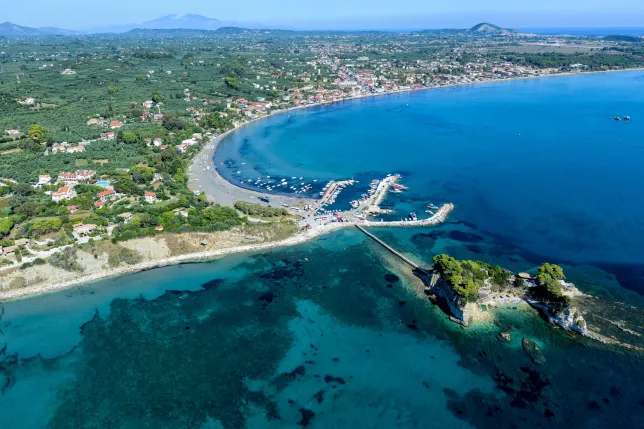
57-year-old British man dies after taken from water close to well-known Greek island
-

Stranded British citizens make appeal as Greek island gets severely flooded
People from Britain who were on vacation are stuck and desperate for assistance because a Greek island experienced heavy flooding.
The island of Skiathos, which is located east of Greece, experienced heavy rain that resulted in sudden flooding this week.
Emergency services are telling people to stay inside because some tourists are stuck in hotels without power and are having trouble reaching out for help, according to the MailOnline.
According to news sources, the mayor of the island has asked for a state of emergency to be declared.
People are really scared and think the situation is really bad. No planes have been able to come or go from the airport on the island.
Jet2 announced yesterday evening that it had to cancel all five flights scheduled to go to the island on Tuesday and Wednesday. They said that the situation was completely out of their control.
The pictures and videos are really scary. They show that the streets of Skiathos became like rivers, and the strong water washed away bins, tables, chairs, and cars.
A person from Britain on vacation said that they and their spouse were supposed to take a flight back home at 8pm on Wednesday, but the flight got cancelled. They haven’t gotten much information from TUI about when they can return to Manchester Airport.
Right now, they are stuck at their hotel with no electricity and they are running out of food.
The hotel is providing a place for local people to stay because their homes on the beach were destroyed by the floods.
He said: ‘We are running out of food at the hotel. ‘ We can’t bring any more things because the road near our hotel has fallen apart.
The rain has been really strong for about 36 hours. Our hotel is currently providing a place to stay for local families who no longer have a home near the beach.
Floods happen when there is very heavy rain in Greece, and the water flows fast down the streets.
Two women were saved from a road that was covered in water.
Videos shared by people who live there show water moving quickly through the streets of the town. The flooding happened just a few days after British people had finished their summer holidays.
Emma Taylor was in Skiathos to celebrate her daughter’s 22nd birthday. The hotel staff, who were scared, told guests to leave their rooms if they needed to go back home by plane.
She said that if their flights were cancelled, they could check in again.
She said: ‘This storm is very dangerous. ‘ There is water coming into our hotel corridors and ceilings, the electricity keeps going out, but luckily we are safe because we are on a higher floor at the Skiathos Palace in Koukounaries. Some people have been told to leave the rooms they are staying in.
She said the entire experience has been intense and worrying. She and her family have been unable to leave their hotel.
Visitors to the island have said they cannot leave because they are stuck at the airport.
The rough sea has made it unsafe for ferries to travel to and from the island. As a result, passengers are not sure if they can catch their flights back home in the coming days.
In the past few days, there have been flash floods in the Mediterranean. This happened after very hot weather and intense wildfires.
Many bridges in Spain got damaged because the rivers overflowed. Turkey and Bulgaria also experienced flooding, and there was significant damage in the Turkish capital city, Istanbul.
Emergency services used boats to rescue people from cars and buildings on flooded roads. -

Michael Gove to go on vacation on Greek island next week
The Housing Secretary has refuted claims that the government has been hesitant to act in regards to Greece by announcing that he will be vacationing on a Greek island next week.
Even though the opposition has urged the Foreign Office to issue a “do not travel” warning due to the ongoing wildfires, Michael Gove has refuted that claim.
He has argued that tourists can travel freely in the nation, and he has even declared his intention to travel to the Greek island of Evia the next week.
He said: ‘I’m due to go on holiday, God willing, to Greece in just over a week’s time, not to Rhodes but to another island and I’m looking forward to going.
‘Greece is a wonderful country, a wonderful place to holiday and we do need to support the Greek government in dealing with the situation in Rhodes.
‘My heart goes out to those who are affected but the advice is clear, if you follow the Foreign Office advice it is safe.’
Currently, the advice for Brit holidaymakers in Greece have been advised to check with their tour operator or airline before travelling.

Michael Gove is still planning to jet to Greece next week (Picture: PA) 
Firefighters have been trying to tackle the fires for days (Picture: REUTERS) Liberal Democrats foreign affairs spokesperson Layla Moran believes a ‘do not travel’ warning needs to be issued as soon as possible – particularly for the island of Rhodes, which is among the worst-affected areas.
She said: ‘As wildfires blaze and thousands are evacuated, it is staggering that the Foreign Office travel guidance for Rhodes does not advise against all but essential travel.
‘Thanks to Conservative ministers’ inaction, many families are unable to make a claim against their insurance, leaving them paying the penalty for deciding not to fly out to the island.
‘The government urgently needs to get a grip and help holiday makers who have been impacted by these terrible scenes.’
-
The Greek Island homes hidden from pirates
Faced with the threat of invaders, Ikaria residents adopted an audacious strategy: moving their homes into the mountains so that the island would appear abandoned from the sea.
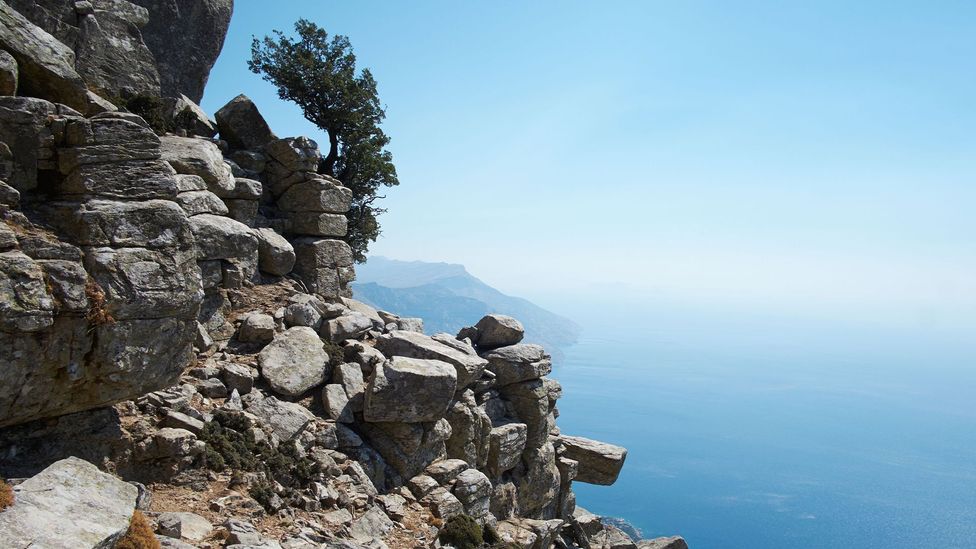
Sailing towards the North Aegean island of Ikaria around dusk, its craggy peaks rising steeply from the narrow strip of rocky shore, I noticed the twinkles of lights from houses were not primarily along the coast, as is the case with most Greek islands, but were predominantly scattered in the mountains behind. I wondered: why would inhabitants make life tougher for themselves by choosing to live up on the precipitous slopes, far from the more level ground near the sea?
I soon found out that the sea was both Ikaria’s blessing and curse. It allowed the island to spread its reputation for its excellent – and potent – Pramnian wine, and trade its prized product across ancient Greece, along with olives and honey. But the sea also brought pirates, lured by the island’s highly regarded produce and the prosperity it brought.
Ikaria was not unique within Greece in being beleaguered by pirates, but it suffered the additional complication of a revolving door of rulers. The Persian Empire, the Delian League association of Greek city states, the Romans, the Byzantine Empire, the Republic of Genoa and the Knights of St John all exercised varying degrees of influence over Ikaria between 500 BCE and 1521 CE, at which point Ikaria fell firmly into the Ottoman Empire, where it would remain for more than three centuries.
But due to its geography, the island was always an outpost of whichever territory it was within, and regular periods of instability, along with inadequately policed coastlines, allowed piracy to flourish.
While piracy was first reported on Ikaria in the 1st Century BCE, it became a more-or-less unchecked threat during Roman rule (late 3rd Century BCE to 5th Century CE) and Byzantine rule (5th to 12th Centuries CE). Then, after the arrival of the Genoese in the 14th Century, Ikarians resorted to destroying their own ports to deter invaders. Even this act was not enough.
Lacking resources to repel their aggressors, islanders decided to call their bluff. They withdrew deep into their mountainous interior, going to every possible length to convince anyone sailing past that Ikaria was deserted by building communities that were ostensibly invisible – at least, in the days before electricity. It was this elaborate and audacious disappearing act, pulled off by islanders for several centuries, that I’d come to learn more about.
I met Eleni Mazari in her office in the north coast port of Evdilos. Mazari runs a real estate business, but the wall inside the entranceway indicated her other long-standing passion: Ikaria history. Here, shelves were lined with models of the types of homes the retreating islanders decided to build, commonly known as “anti-pirate houses”.
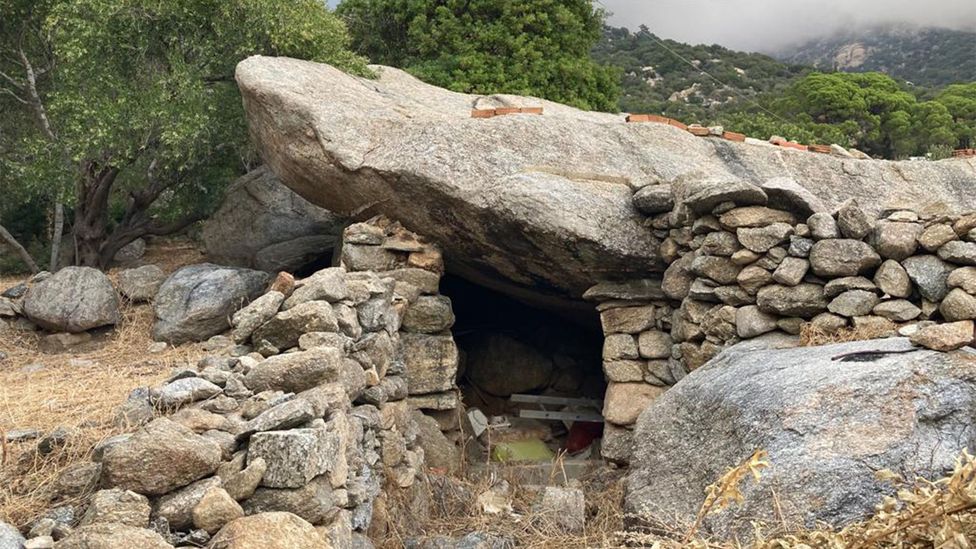
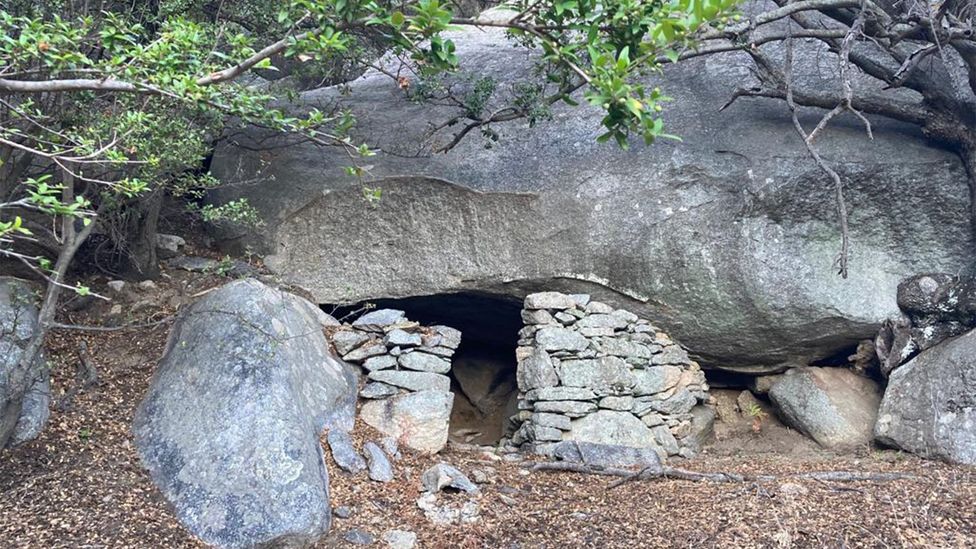
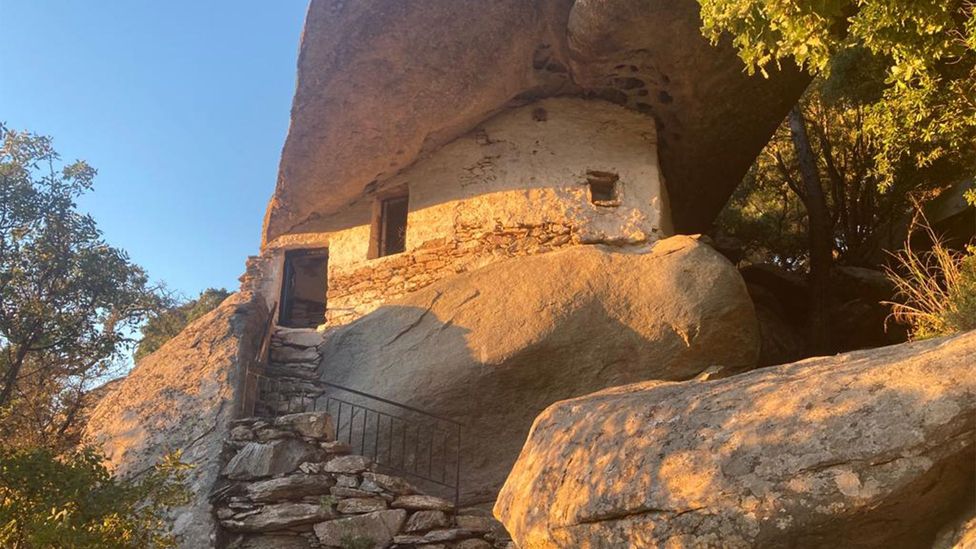
These squat, stone-built dwellings incorporated natural features of the landscape, such as rocks, cliff overhangs and thickets. Boulders, which were strewn over the high mountain slopes, often formed much of the walls and ceiling, while dry-stone walls made up the other walls. Living arrangements were simple – houses had little more than a door and a hearth, as islanders would spend the majority of their time outdoors.
“It was a total reversal of the sort of structure most people associate with Greece,” said Mazari, who has been fascinated by anti-pirate houses for years, photographing them and collecting all available literature on them. “The age of grand temples was over. Ikarians were building homes designed to be seen by no-one, and to do it they had to go high up into the wilderness where they could not be observed from sea. There would have been many occasions from Roman times onward when they would have temporarily hidden in the mountains from invaders, so the possibility of doing so was always in their minds, if it were needed.”
It was the incorporation of Ikaria into the Ottoman Empire that persuaded Ikarians to completely decamp from the coast to the crags. The Ottomans proceeded to rule Ikaria laxly, allowing buccaneering to run rife as a means of disrupting and discouraging sea trade from other states. The choices facing Ikarians under such threat were limited: fight, with scant means at their disposal, to their probable deaths; vacate the island for safer shores; or seek sanctuary in the safety of the mountains.
This time, however, it would be a long-term move. Islanders would conceal their society in the rocky upper reaches of Ikaria’s Aetheras range for the next 300 years. This period was dubbed the “piratiki epochi” (pirate era), with the early years tellingly known as the “century of obscurity”.
“It was a self-sustained society, down to the courthouse, the narrow terraces on which they grew wine, olives, reared goats, made honey,” explained Mazari. “Ikarians have always been used to creating something out of not very much. So, what to outsiders might seem like uninhabitable mountain land was not so to our ancestors. If people’s homes stayed invisible to pirates, it was worth resettling.”
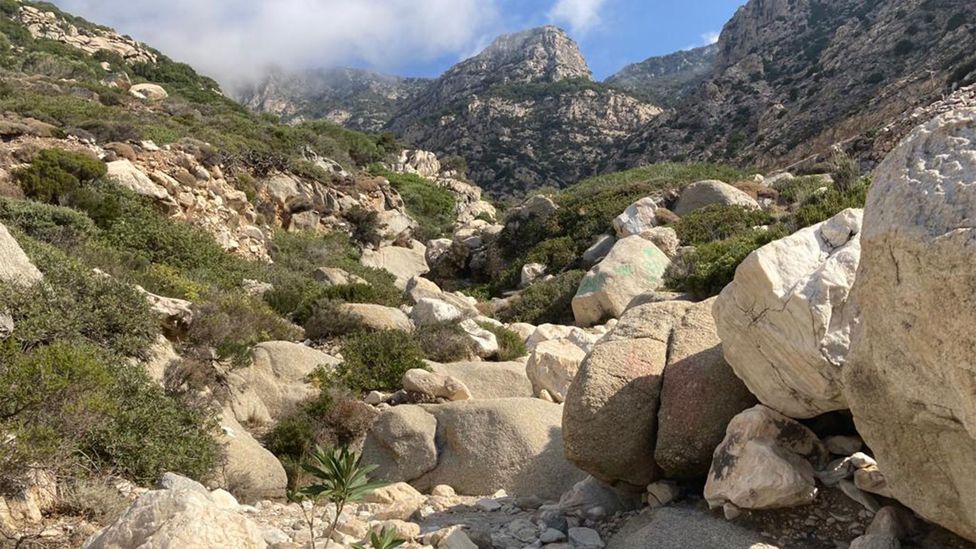
As I drove along the island’s north coast and looked up into what is affectionately known as Ikaria’s “wild west”, it seemed to me that the craggy island interior would be hard to inhabit even today. The terrain was arid, rocky and virtually deserted; mountainsides plummeted so sharply into the sea there was scarcely enough level ground to carve out a plot for a house or for a road to twist along its edge.
My destination was Lagkada, the place to which many Ikarians decided to retreat. This upland refuge holds a sacred spot in islanders’ hearts: without it, the population would likely have died out. The track to get there was too steep and rough for me to attempt driving, so I walked up a route that wound hair-raisingly around the rockface into a lush valley you never could have seen from below.
Here, still without any sign to indicate it, and further concealed behind olive groves and surreally shaped boulders, was the cradle of Ikaria’s anti-pirate civilisation.
Despite knowing there were numerous anti-pirate houses in the vicinity, I wandered up and down the valley for several hours and found none. It was only on a final scan of the valley from above that I caught sight of an aperture in a rock too angular to be naturally occurring. I had found the community’s old jail.
The effort I’d expended (there’s no information boards or options for a guided tour) made me appreciate how adept islanders were at constructing dwellings that completely merge into the landscape. Life must have been tough for them, constantly under the threat of pirate attack and knowing that camouflaging into this harsh landscape was their sole defence.
My next stop was further inland to the Afianes family winery. Besides being producers of some of Ikaria’s finest wine, owner Nikos and his daughter Eftychia are well-regarded experts on the island’s history. And they had agreed to show me the anti-pirate house on their property.
“On Ikaria we have no shortage of boulders,” smiled Eftychia, explaining that boulders determined the location and aspect of most anti-pirate houses. “The boulder formed as much of the house structure as its shape allowed, one or two walls and maybe, if the boulder had an overhang, the roof. If the land was too steep to make a flat plot, as it usually was, people would labour to dig the rocks out of the earth to create level terraces.”
She added that traditionally, you would always build back from the boulder on the landward side, so the structure could not be seen from the sea. “And because suitable boulders are naturally widely dispersed, so the communities became [too], which meant there was less chance of everyone being discovered if pirates did invade,” she said.
We stepped inside their anti-pirate house, now used for storing wine. The thick walls, Nikos explained, would have ensured it stayed cool during hot summers and retained heat in winter.
Locals went to additional efforts to make their settlements invisible to outsiders. “The structure would be low, one storey only, and lower than the maximum height of the boulder,” said Eftychia. In addition, houses were built without chimneys to avoid giveaway columns of smoke. Instead, one stone on each side of the mortar-less walls would be removed while the hearth was in use, allowing smoke to subtly dissipate. People would only interact at night. According to Mazari, in the pirate era, they would rarely even keep dogs for fear the sound would alert invaders.
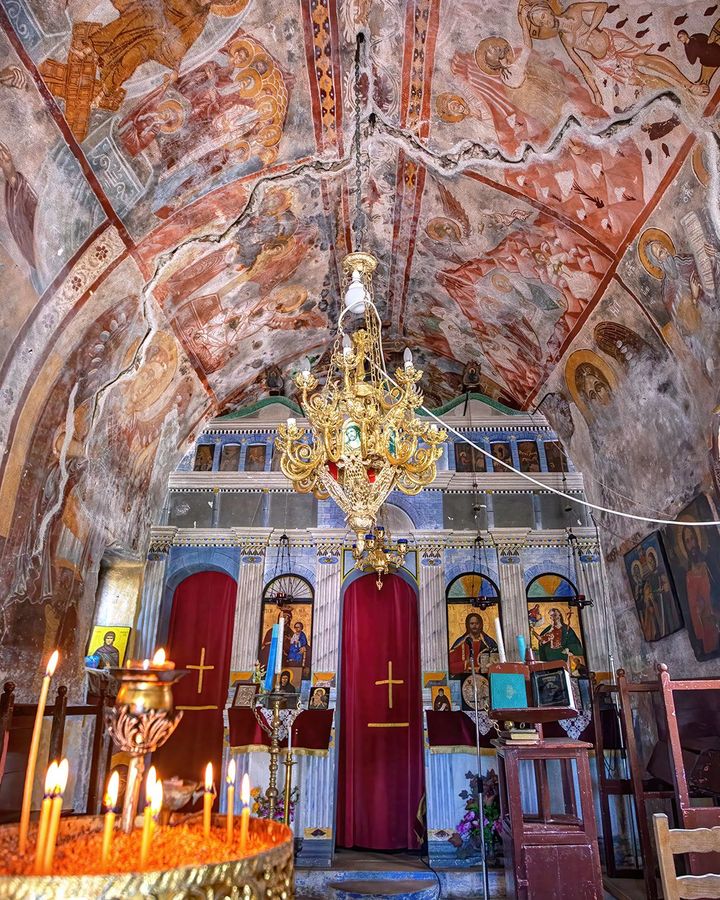
Anti-pirate houses may have been erected as emergency retreats, but they had a lasting effect on Ikarian society, long after warships dispatched by the US, Britain, France and Russia finally brought privateering in the Aegean to an end during the 1820s. The tendencies for villages to remain mountain-based and scattered, and for islanders to enjoy staying up late into the night, are both attributed to the pirate era. Even places of worship built in anti-pirate style survive, such as Theoskepasti Chapel thaat dramatically squeezes into a boulder overhang near Evdilos.
As for Lagkada, while it seemed to be that the one-time centre of pirate era life is now abandoned, that’s not quite true.
“There is still at least one man living there permanently,” Nikos said. “His family never moved away. Most of us see him only when we go to Lagkada’s panigýri [festival], which he organises. The rest of the year, he must be surrounded by ghosts.”
Heritage Architecture is a BBC Travel series that explores the world’s most interesting and unusual buildings that define a place through aesthetic beauty and inventive ways of adapting to local environments.