Tag: Guinea-Bissau

  • Military officers claim control of Guinea-Bissau amid President Embaló’s arrest

    Military officers claim control of Guinea-Bissau amid President Embaló’s arrest

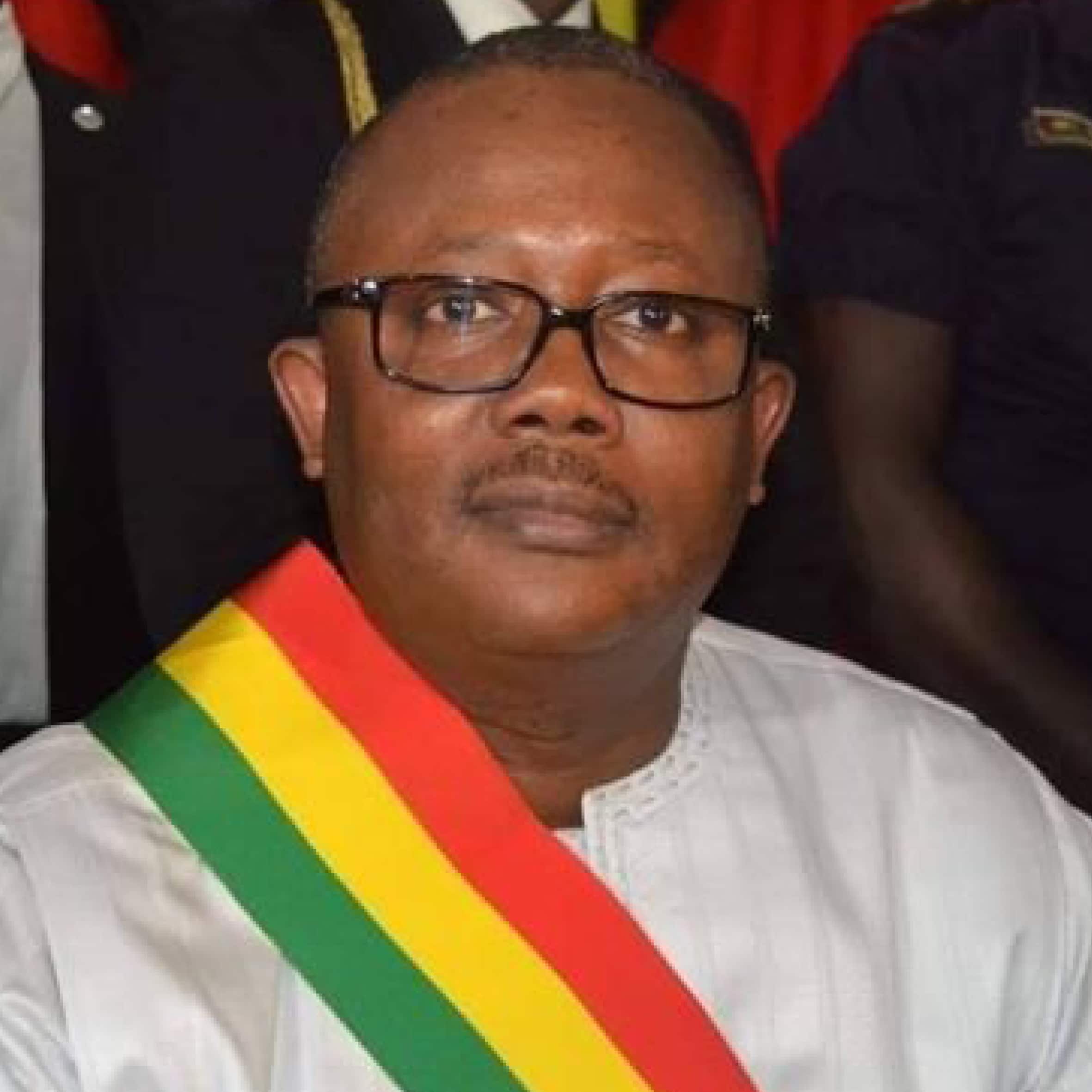
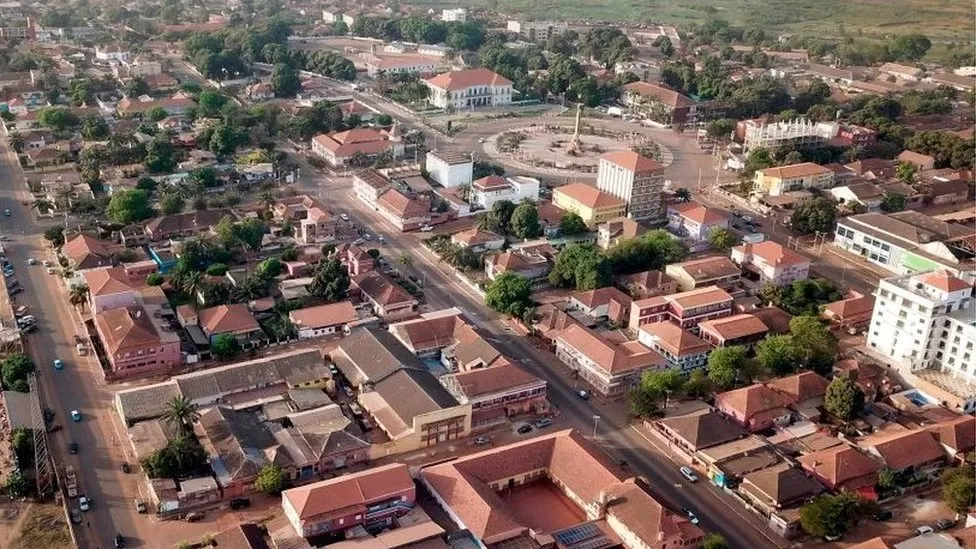
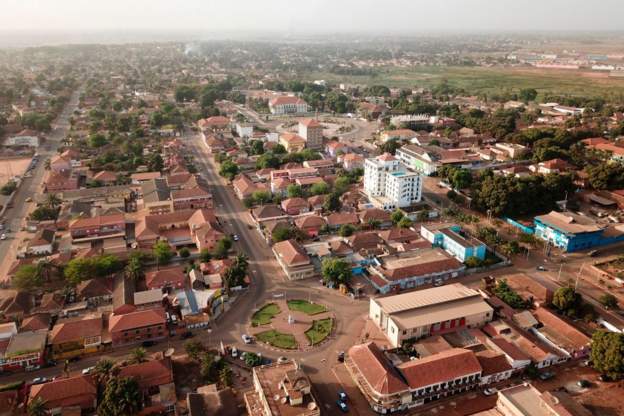
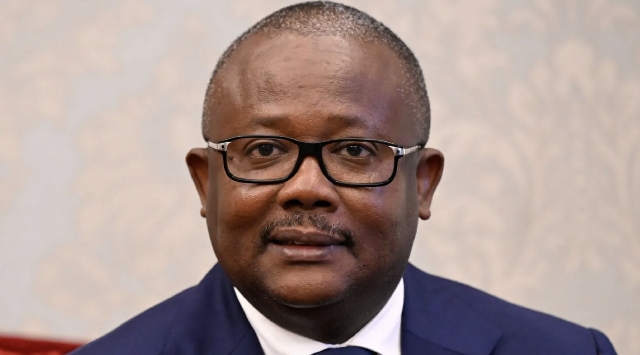
    Reports from Guinea-Bissau indicate a sudden and dramatic escalation of political tension as a group of military officers claim to have taken control of the country. This development comes amid unconfirmed reports that President Umaro Sissoco Embaló has been arrested following gunfire in the capital, Bissau.

    According to government sources who spoke to the BBC, Embaló was allegedly detained shortly after gunshots were heard in central Bissau on Friday afternoon. Witnesses reported a burst of gunfire around 13:00 GMT, prompting widespread panic as residents scrambled for safety. Although the exact source of the shooting remains unclear, the reports immediately fueled speculation of a coup attempt in the small West African nation.

    The alleged military takeover comes only three days after a controversial presidential election that was already mired in tension. The poll was overshadowed by the disqualification of the main opposition candidate, a move that drew criticism from civil society groups and international observers. The official results had not yet been released, but both Embaló and his closest challenger, Fernando Dias, had publicly claimed victory, raising fears of a constitutional crisis even before Friday’s events.

    Rising Tension After Disputed Election

    Political analysts say the nation’s fragile political climate made it particularly vulnerable to unrest. The disqualification of the major opposition candidate raised questions about transparency in the electoral process. Many voters expressed frustration that their preferred candidate had been blocked from contesting, heightening uncertainty about the credibility of the poll.

    Both major campaigns had spent the days following the vote preparing for what seemed to be inevitable disputes. The electoral commission had announced that it expected to publish the results on Thursday, but the delay created further anxiety, giving room for speculation, misinformation, and rising political tempers.

    Fernando Dias, who represents a coalition of smaller opposition parties, told local reporters earlier in the week that he had “confidence that the people’s voice would prevail,” even as he accused the ruling party of attempting to manipulate the process. Embaló, on the other hand, insisted he had secured a “clear and decisive victory.”

    The absence of official results, combined with these conflicting claims, created fertile ground for unrest.

    Gunfire Sparks Panic in the Capital

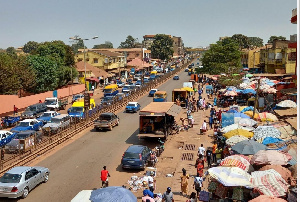
    Friday’s gunfire only intensified fears. AFP reported that hundreds of residents fled on foot and in vehicles as shots rang out in the capital’s central districts. Local businesses quickly closed, and some residents sheltered inside schools, shops, and places of worship until the shooting subsided.

    Videos shared on social media — which have not yet been independently verified — showed people running through market areas, shouting warnings about an attempted coup. Security forces were also seen moving through parts of the city, though their allegiance and objectives remain unclear.

    A resident of Bissau told a local radio station that the situation “felt like déjà vu,” referencing the country’s long history of political instability. “We just want peace. We are tired of coups, tired of guns, tired of uncertainty,” she said.

    A Nation with a Troubled Political History

    Guinea-Bissau, with a population of just under two million people, is one of the poorest countries in the world. Since gaining independence from Portugal in 1974, the nation has struggled to maintain long-term political stability. Its modern history has been marked by turbulence, including nine coups or attempted coups since 1980.

    Many of these coups have been linked to political rivalries within the military, economic struggles, and allegations of corruption among national leaders. International partners have repeatedly urged reforms within Guinea-Bissau’s security sector, noting that political interference within the military remains a persistent problem.

    President Embaló, who came to power in 2020, has himself survived two previous attempts to overthrow him, the most recent occurring in December 2023. That attempt, according to the government, was carried out by a group of soldiers who stormed key state institutions before being subdued by loyalist forces. Embaló has often described these repeated attacks as evidence of a “deep-rooted instability” within the country’s political structure.

    International Response Begins to Build

    As news of the latest alleged takeover spread, international organisations began monitoring the situation closely. The Economic Community of West African States (ECOWAS), which has been involved in peacekeeping and election observation in Guinea-Bissau in the past, is expected to issue a statement once more information becomes available.

    ECOWAS has often taken a strong stance against military seizures of power in the region and has imposed sanctions in similar situations, including in Mali, Burkina Faso, and Niger. Diplomats familiar with the region say any response will depend heavily on whether Embaló’s reported arrest can be confirmed and whether the military officers claiming control present a unified front.

    The African Union (AU) has also historically condemned unconstitutional changes of government and may call for a swift restoration of civilian rule if a coup is verified.

    Unanswered Questions and a Nation on Edge

    As of Friday evening, many key details remained unconfirmed. The identity of the military officers claiming power has not been publicly disclosed, and no official statement has been issued by the presidency or the army’s top command.

    The condition and location of President Embaló are also unknown. Government sources who spoke to the BBC provided no further details beyond stating that he had been detained. Officials close to the administration have remained silent, likely due to uncertainty about who currently holds power.

    The streets of Bissau, usually bustling on Friday afternoons, were reported to be largely deserted as residents stayed indoors awaiting updates. Some community leaders urged calm, while religious groups called for prayers and restraint to avoid further violence.

    A Crisis with Regional Implications

    Guinea-Bissau’s instability has long been a concern for West Africa, a region where several governments have collapsed in recent years due to military coups. Analysts warn that recurring instability in the region could undermine economic development, weaken democratic institutions, and disrupt regional trade.

    If the situation in Guinea-Bissau develops into a full military takeover, it may prompt stronger diplomatic interventions from ECOWAS, the AU, and possibly the United Nations.

    For now, the country remains in uncertainty, waiting for clarity on who holds power, what triggered the shooting, and whether the situation will escalate or stabilise in the coming days.
  • ESSMGB decorates Ghanaian, Nigerian and Senegalese contingents with medals

    ESSMGB decorates Ghanaian, Nigerian and Senegalese contingents with medals

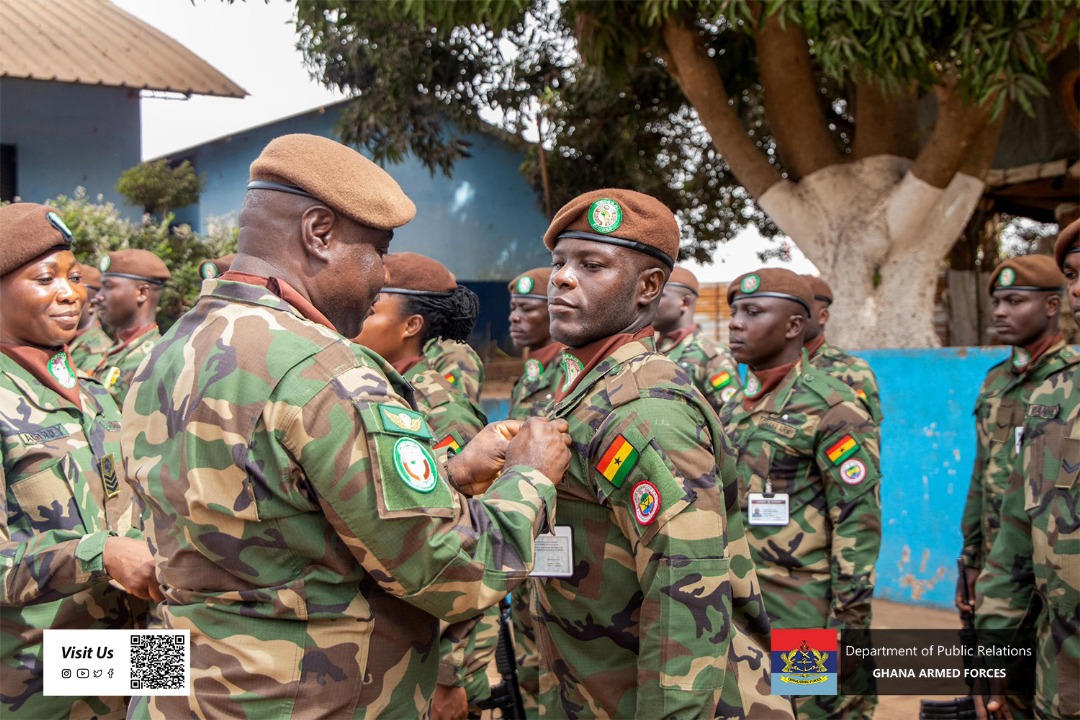
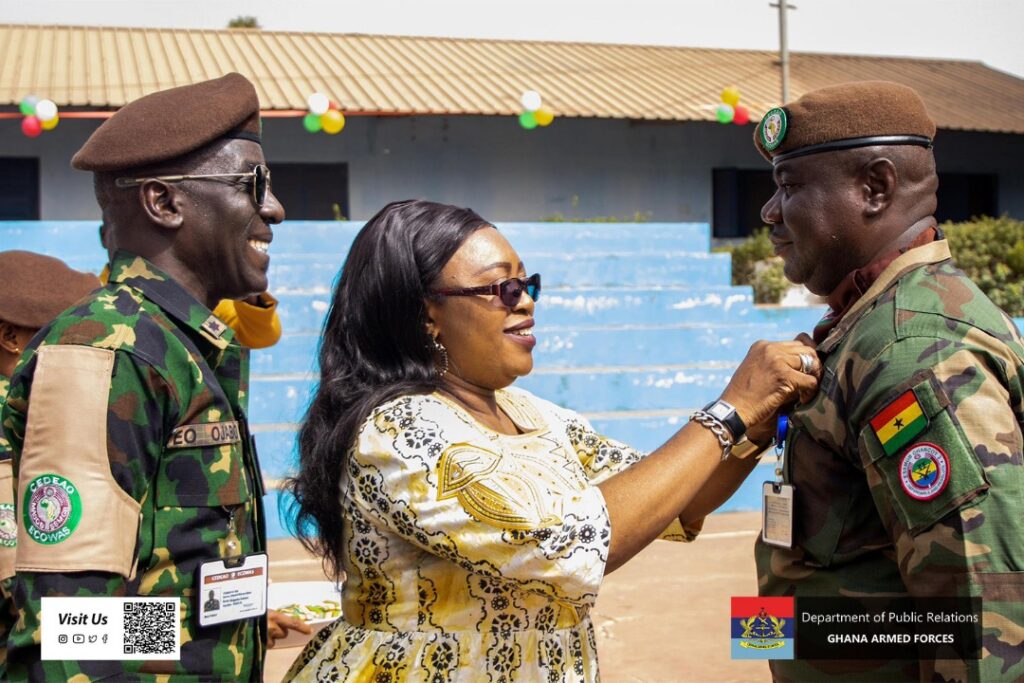
    The ECOWAS Stabilization Support Mission in Guinea-Bissau (ESSMGB) has honoured personnel from Ghana, Nigeria, and Senegal, along with Staff Officers, in a joint medal presentation ceremony held at the Nigerian Contingent Camp.

    The event, organized to commend the contingents for their dedication and efforts towards peacekeeping, celebrated the role of the troops in promoting stability and security in Guinea-Bissau.

    The Force Commander of ESSMGB, Brigadier General Edward Odinya Ojabo, emphasized the significance of the occasion, describing it as a longstanding military tradition to acknowledge the service and commitment of peace support personnel.

    Gracing the event as Special Guest of Honour, Her Excellency Dr Ngozi Ukaeje, Resident Representative of the ECOWAS Commission President, reaffirmed the mission’s continued partnership with Guinea-Bissau’s National Defence and Security Forces and other stakeholders to sustain peace efforts in the country.

  • President Embalo declares candidacy for second term

    President Embalo declares candidacy for second term

    President Umaro Sissoco Embalo of Guinea-Bissau has announced his candidacy for a second term in the upcoming November elections, despite ongoing disputes with the opposition, which refuses to acknowledge his presidency.

    At the same time, an ECOWAS delegation sent to mediate the country’s political crisis left on Monday, citing threats of expulsion from Embalo’s administration.

    After dissolving the opposition-controlled parliament in late 2023, Embalo confirmed his decision to run again while speaking to reporters at Bissau’s airport upon his return from diplomatic visits to Russia, Azerbaijan, and Hungary.

    “I will be a candidate for my own succession,” Embalo said.

    Embalo is pushing for re-election, arguing that he is eligible for a second five-year term under Guinea-Bissau’s constitution. However, his tenure remains a contentious issue, with the opposition insisting his mandate has already ended.

    The political dispute stems from the timeline of his presidency. Though elected on November 24, 2019, Embalo was only sworn in on February 27, 2020. Legal challenges delayed the Supreme Court’s confirmation of his victory until September 4 of that year. This has led to conflicting interpretations: while the opposition insists his term expired on February 27, 2024, the Supreme Court has ruled that it extends until September 4. With elections scheduled for November 30, Embalo insists he should remain in power until then, a stance the opposition rejects.

    Tensions have escalated, with opposition leaders threatening protests and strikes if ECOWAS mediation efforts fail. Embalo, who claims to have survived two coup attempts in the past three years, took decisive action after the most recent one in December 2023. Following violent clashes between security forces, he dissolved the opposition-controlled parliament, accusing lawmakers of inaction.

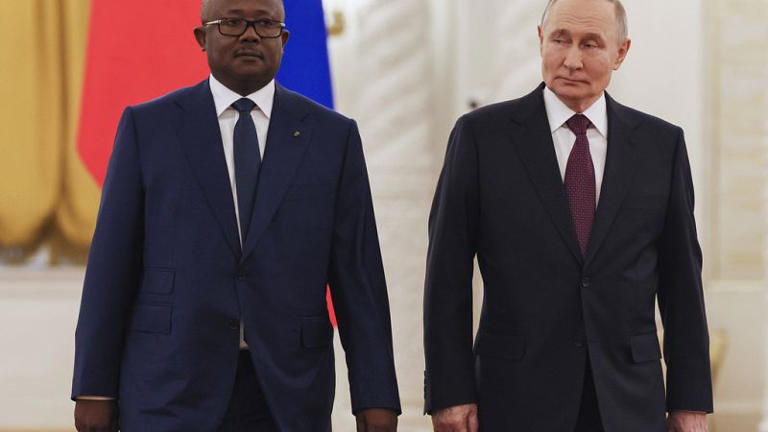
    Meanwhile, Embalo has been strengthening international ties, including a recent meeting with Russian President Vladimir Putin. As Russia expands its influence in Africa, displacing Western powers like France and the U.S., Guinea-Bissau is among the nations exploring closer economic and security cooperation with Moscow.

  • ECOWAS team departs Guinea-Bissau after President Umaro’s threats

    ECOWAS team departs Guinea-Bissau after President Umaro’s threats

    A delegation from the West African regional bloc, ECOWAS, has departed Guinea-Bissau, citing threats from President Umaro Sissoco Embalo to expel the mission.

    The team was deployed last month to facilitate a political agreement on organizing elections this year. It had drafted an electoral roadmap and begun consultations with key stakeholders.

    However, the delegation cut its stay short early Saturday after Embalo’s warning.

    The mission will now report to the ECOWAS leadership, including recommendations for a framework to ensure “Since (Donald) Trump became (US) president, now Kenyans have shifted all the blame on him. Workers are not getting paid and it is blamed on Trump. No medication in hospital – it’s Trump, now we have to pay for school fees and it’s Trump, everything is Trump. We are tired of Trump.”

    Embalo has yet to respond to the accusations.

    Tensions have escalated over the official end of his five-year mandate. While the opposition insists his term expired last week, the Supreme Court of Justice has ruled it will conclude on September 4.

    General elections, initially scheduled for last November, were postponed by Embalo, who has since announced a new date of November 30. The opposition has strongly opposed the delay.

    Guinea-Bissau has a long history of political instability, including multiple military coups since gaining independence in 1974.

    Embalo himself has faced two coup attempts, the most recent in December 2023, which led to his decision to dissolve the opposition-led parliament.

    Last Thursday, opposition groups called for a nationwide strike to mark what they claim was the official end of his presidency, prompting a heavy security presence across the capital.

    Meanwhile, Embalo traveled to Moscow a day earlier, where he met Russian President Vladimir Putin to discuss strengthening bilateral cooperation.


  • Power restored in the capital of Guinea-Bissau after two days power outage

    Power restored in the capital of Guinea-Bissau after two days power outage

    The Turkish company Karpowership has turned the power back on in Guinea-Bissau’s capital city. They had previously shut off the electricity because the country had not paid a bill of $15 million.

    The company started working again on Wednesday evening after getting a $6 million payment from the government.

    Bissau was in darkness for nearly two days. Hospitals were affected and radio stations were not broadcasting.

    This country is very poor and has had many problems since it became independent.

    In 2019, the government of the country made an agreement with Karpowership, a big company that operates floating power plants, to provide all the electricity needed.

    A company representative told the BBC that Karpowership is thankful for Guinea-Bissau‘s efforts to pay the bill, and this allowed them to start providing electricity again.

    “Our fuel suppliers had to stop working because they couldn’t handle the long time without getting paid,” the spokesperson explained.

    The Energy Minister, Isuf Baldé, said that $6 million out of the total bill of $15 million has been paid.

    He said that in a small and poor country like Guinea-Bissau, it takes time to complete a transfer operation of such a large amount, which is $10 million.

    He said that the agreement with Karpowership needed to be changed because the costs had increased by almost twice, making it too expensive to continue.

    Electricity was turned off in Bissau, a big city with over 400,000 people, early on Tuesday.

    According to local journalist Assana Sambu, a few public hospitals used generators during surgeries.

    However, they didn’t have running water because there wasn’t enough electricity. The hospital directors asked for electricity so they could cook food for their patients.

    Another journalist named Alberto Dabo said that he had to drink water from a well because the regular water supply had been turned off while the temperature was very hot, reaching 40 degrees Celsius.

    The power outage also impacted media organizations, including the state-run Rádio Nacional, which had to stop broadcasting.

    According to the African Development Bank, Guinea-Bissau has very few people who have access to electricity. They estimate that only 10% of the country’s population has electricity, and in the city of Bissau, it’s slightly higher at 20%.

    In the city of Bissau, there are often power outages. Some areas of the city have no electricity for more than four hours each day.

    The World Bank stated in 2020 that Guinea-Bissau’s electricity industry has been stuck in a bad situation for many years. This is because of problems like political instability, ineffective management, a lack of planning, and people in power prioritizing their own interests over the country’s needs.

    The Turkish company made an agreement with South Africa, promising to supply more than 5% of the country’s power requirements.

    However, it has adopted a strict stance towards not receiving payment. Last month, Freetown, the capital of Sierra Leone, had its power shut off because they didn’t pay a bill of $40 million.

    Access to electricity in sub-Saharan Africa has gotten better, but it’s still not very good. More than half of the people in the region don’t have electricity connected to a grid, according to the United Nations.

  • Unsettled electricity debt plunges Guinea-Bissau’s capital into darkness

    Unsettled electricity debt plunges Guinea-Bissau’s capital into darkness

    The capital of Guinea-Bissau, Bissau, is experiencing a power outage due to an outstanding electricity bill.

    The Turkish utility company, Karpowership, has disconnected the power supply, citing a debt of $17 million (£14 million) owed by the West African government.

    Economy Minister Suleimane Seidi has assured that a significant portion of the bill will be settled within two weeks.

    Karpowership, a major operator of floating power plants globally, holds a five-year contract to provide almost all of Guinea-Bissau’s electricity.

    In a similar move last month, the Turkish company suspended power to Sierra Leone’s capital due to a substantial unpaid debt.

  • Guinea-Bissau capital in darkness as Turkey’s Karpowership pulls the plug on power supply

    Guinea-Bissau capital in darkness as Turkey’s Karpowership pulls the plug on power supply

    An unpaid bill for electricity has caused the capital of Guinea-Bissau, Bissau, to be without lights.

    The Turkish energy company, Karpowership, decided to disconnect its services because the government of West Africa owes them $17m (£14m).

    The Economy Minister, Suleimane Seidi, said he will pay most of the bill in two weeks.

    Karpowership, which is a big floating power plant company, has a contract for five years to provide nearly all of Guinea-Bissau’s electricity.

    Last month, the Turkish company disconnected electricity to Sierra Leone’s capital because the country owed a lot of money and hadn’t paid it.

  • Presidents of Guinea-Bissau, Niger, and Benin are welcomed by Tinubu

    Presidents of Guinea-Bissau, Niger, and Benin are welcomed by Tinubu

    On Tuesday, the Presidents of Benin, Niger, and Guinea-Bissau paid a visit to their Nigerian counterpart, Bola Tinubu, at the Aso Rock Villa.

    President Patrice Talon of Benin, Mohamed Bazoum of Niger, and Umaro Embaló of Guinea-Bissau were warmly received by Tinubu at the forecourt of the Presidential Villa in Abuja.

    Shortly after, they were led by Tinubu into a private session at his office.

    While the specific agenda of the meeting has not been disclosed to the public, it takes place just nine days after President Tinubu assumed the Chairmanship of the Authority of Heads of State of the Economic Community of West African States (ECOWAS).

    The leaders are expected to engage in discussions regarding security and economic development within the sub-region.

    Given the recent occurrences of coups in the region, Tinubu is likely to reiterate his commitment to defending democracy in West Africa.

    Guinea-Bissau survived an attempted coup in February 2022, while Guinea, Mali, and Burkina Faso witnessed the toppling of civilian governments between 2019 and 2022.

  • Guinea vote: International envoys urge end to Diallo blockade

    International envoys mediating in the violence following Guinea’s disputed election have urged the government to lift a blockade of the home of opposition leader Cellou Dalein Diallo.

    Representatives from the United Nations, African Union and the 15-nation West African bloc ECOWAS said in a statement on Tuesday that “Guinean authorities (must) lift the barricade in the spirit of inclusive dialogue”.

    Police have barricaded Diallo inside his house for days, as post-election clashes between his supporters and security forces flared last week.

    President Alpha Conde, 82, won the October 18 election according to official preliminary results announced on Saturday, which would give him a controversial third term in office.

    He pushed through a new constitution in March which allowed him to bypass a two-term limit for presidents. The move sparked mass protests, which were met with deadly crackdowns by security forces.

    But Diallo disputes the results and claimed victory last week, citing data his activists gathered at individual polling stations.

    His self-proclaimed victory led to unrest.

    The government put the number of dead at 21, but the political opposition says 27 people died. AFP was unable to independently confirm the number of deaths.

    The international envoys – who include ECOWAS Commission President Jean-Claude Kassi Brou and the UN special representative to West Africa, Mohamed Ibn Chambas – landed in Guinea on Sunday to mediate.

    In a statement on Tuesday, the representatives said they had come to “lower sociopolitical tensions” after the election.

    They urged Guinea to investigate and bring the perpetrators to justice.

    Source: africanews.com

  • Guinea-Bissau leader sacks five key ministers

    Guinea-Bissau’s President Umaro Sissoco Embaló sacked the ministers for defence, interior, economy, agriculture and energy in a decree on Sunday.

    No explanation was given. Their dismissal comes ahead of a parliamentary session on the formation of a new government.

    The country has been gripped by political turmoil for many years, with Guinea-Bissau nine coups or attempted coups since 1980.

    President Embaló was announced as the winner of December’s election. However the long-time ruling party PAIGC said the elections were rigged, and its leader Domingos Simoes Pereira contested the result at the supreme court.

    The sacked ministers are all members of President Embalo’s Madem-15 party or parties loyal to the president, according to Reuters news agency.

    “It is a strategy for Umaro Sissoco Embaló to gain the majority at the parliament,” the agency quotes a website Ditadura de Consenso as saying.

    Mr Embaló, a former army general, has said he wants to resolve tensions and modernise Guinea-Bissau – one of the world’s poorest nations.

    Source:bbc.com

  • Guinea-Bissau PM tests positive for coronavirus

    Guinea-Bissau’s Prime Minister Nuno Gomes Nabiam has tested positive for coronavirus, the health ministry has said.

    Interior Minister Botche Cande and two other ministers also have Covid-19.

    Mr Nabiam said that several members of an interministerial coronavirus committee had the disease.

    Guinea-Bissau has a poor healthcare system due to mismanagement and a lack of resources.

    The country has so far confirmed 205 coronavirus cases and one death.

    Source: bbc.com

  • Guinea-Bissau president resigns after one day

    One of the two men who had been declared president of Guinea Bissau has resigned – after just one full day in office.

    Despite not being in the December ballot Cipriano Cassamá was appointed by parliament, the majority of whose deputies have refused to acknowledge the election victory of the former opposition leader, Umaro Sissoco Embalol.

    Mr Embalol was sworn in as head of state at a luxury hotel on Thursday after the electoral commission had again declared him the winner of December’s presidential vote.

    The ruling PAIGC party is contesting that result in the Supreme Court.

    Despite the resignation of one president, Guinea-Bissau still has two rival prime ministers.

    Source: bbc