Tag: Gustavo Petro

  • Son of Colombian president detained in money-laundering investigation

    Son of Colombian president detained in money-laundering investigation

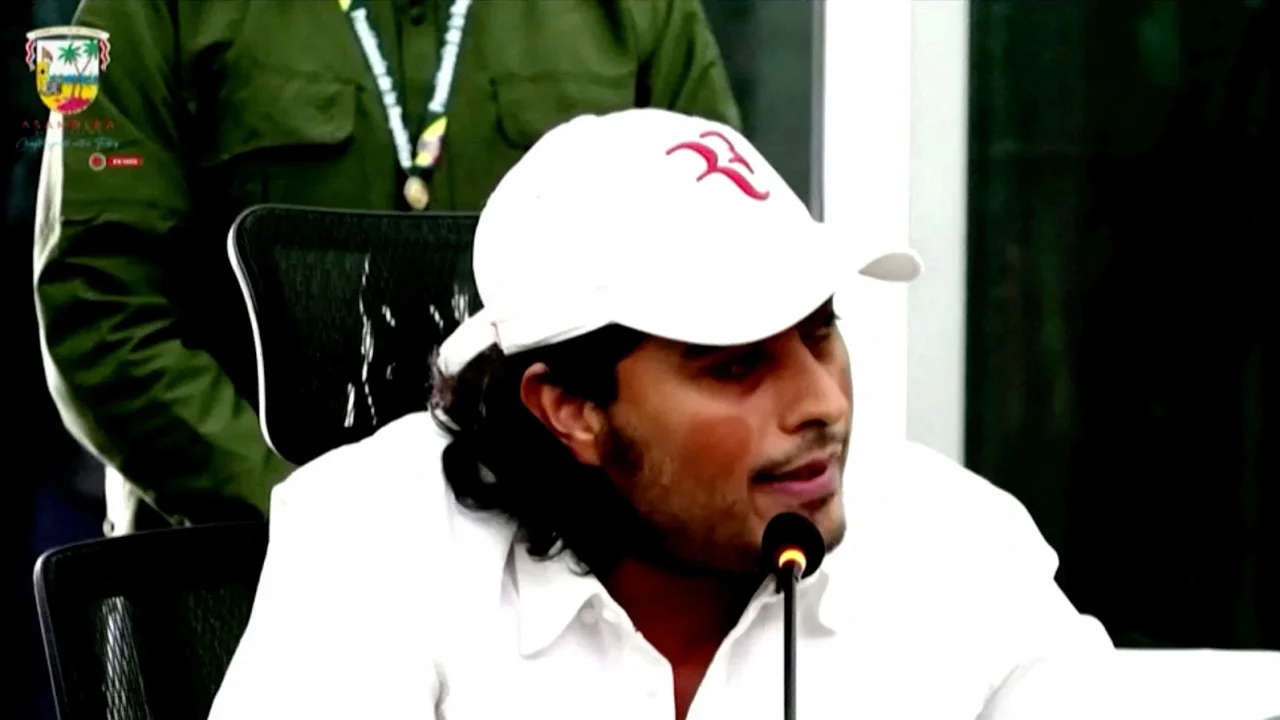
    The Colombian attorney general‘s office announced in a statement that the president of Colombia’s son has been detained as part of an investigation into money laundering and illegal enrichment.

    The attorney general’s office opened an investigation into Nicolas Petro, a congressman from the Atlantico province, in early March over claims that he had accepted money from drug traffickers in exchange for including them in his father’s efforts to mediate peace talks with criminal organisations in the Caribbean, according to CNN at the time.

    Petro previously refuted the allegations, calling them nothing more than political and personal attacks meant to discredit the achievements of his career, he said in a statement on March 2.

    President of Colombia Gustavo Petro expressed his “hurt” at hearing of his son’s detention but promised that the legal process will be followed in the prosecution of the case.

    “So much self-destruction and having one of my children go to prison hurts me deeply as a human and as a father. The prosecution has my full assurance that it may proceed legally, as President of the Republic, Petro said on Saturday in his official Twitter account.

    Petro continued by wishing his son “luck and strength” and reiterating his resolve to remain neutral and avoid interfering with the attorney general’s investigation.

    At the time, the president welcomed the inquiry and asked the attorney general to look into the claims made against his son.

    Daysuris del Carmen Vásquez Castro, Nicolas Petro’s ex-wife, also has a warrant out for her arrest “for the crimes of money laundering and violation of personal data for events that occurred from 2022 to date,” according to a statement released by the attorney general’s office on Saturday.

    “Those who have been apprehended will be given to a Municipal Criminal Judge with the Function of Guarantee Control, who will be asked to certify the legitimacy of the search, capture, and seizure procedures of significant pieces of evidence. Charges will be filed in the same manner for the aforementioned crimes, and a measure limiting freedom will be requested, according to the statement.

  • After 7 years Colombia and Venezuela reopen border crossing

    Colombia’s newly elected president, Gustavo Petro,  made the reopening a centrepiece of his campaign. Seven years had passed since the Simon Bolivar international bridge was closed.

    Colombia and Venezuela on Monday reopened their border after years of impasse.

    The reopening was a key campaign promise of left-wing Colombian president Gustavo Petro, who assumed office last month. The two countries subsequently re-established diplomatic relations.

    “This is a historic day for the country, for the region, and for the Americas in general,” Petro said.

    On foot, Petro crossed the Simon Bolivar international bridge, dividing the Venezuelan town of San Antonio from Colombia’s Cucuta and Villa del Rosario. Having crossed the border, he met with a Venezuelan delegation including Transport Minister Ramon Velasquez and Industry Minister Hipolito Abreu.

    Petro and the Venezuelan delegation accompanied the first cargo truck to cross the border after the reopening.

    “I want the first people who benefit to be those who live on either side of the border, those who risked (illegal crossings),” Petro said in later comments.

    “The result should be a qualitative jump in human rights all along the Colombian-Venezuelan border,” he said.

    Petro said that a second road bridge near Cucuta would open within weeks.

    The Simon Bolivar bridge had officially been closed to trade for nearly seven years. Venezuelan President Nicolas Maduro ordered border crossings closed in 2015 during what he described as a crackdown on smuggling.

    Cargo transport had previously only been allowed through one northern crossing.

    In 2019, tensions between the two countries rose after the Colombian government attempted to deliver truckloads of aid to the Venezuelan opposition.

    The border was then shut down for a year. It was then reopened to traffic by foot.