Tag: hair

  • Stella Gyimaah Larbi: Hair freedom must consider infrastructure, not just Ideals

    Stella Gyimaah Larbi: Hair freedom must consider infrastructure, not just Ideals

    The global movement for hair equality has rightly challenged discriminatory grooming policies targeting Black girls. In the UK, the Equality and Human Rights Commission (EHRC) now recognizes bans on Afro hairstyles, such as braids, locs, and natural curls, as racial discrimination under the Equality Act 2010 (EHRC, 2022).

    Scholars have highlighted how colonial legacies influence school rules that suppress identity and self-expression (Bhana & Rizvi, 2025). These are important victories, but they should be viewed within a broader context.


    In Ghana, with more than 70% of secondary students attending boarding schools (Essel, 2023), hair issues go beyond ideology; they are infrastructural. Unlike UK day schools, Ghanaian boarding schools often lack access to hair salons, stylists, and on-campus grooming support.

    The real question is not about girls’ right to wear long hair; it is whether the system can accommodate it without sacrificing dignity, hygiene, or fairness.


    Boarding Realities: Hygiene and Uniformity


    Boarding schools are shared spaces where students live together in dorms, sharing bathrooms and daily routines. In these environments, grooming rules should prioritise practicality. Long hair, particularly when braided or styled, needs regular maintenance.

    Without salons or trained personnel nearby, maintaining this becomes difficult. Girls might experience ridicule, scalp issues, or emotional upset when their hair is neglected, not due to a lack of pride, but because they lack adequate support (Caluza, 2025).

    Ghana’s overall best teacher 2022, Stella Gyimaah Larbi


    As Caluza (2025) reflects on her experience in South African schools, “teachers discouraged us from wearing our hair long, claiming that our hair did not look ‘clean, ’” often forcing girls to use chemical straighteners that caused scalp damage. This reveals a broader tension between identity and practicality in under-resourced environments.


    Choice and Privilege: Private Schools Offer Alternatives
    The case for hair freedom is valid, but it must be supported with adequate infrastructure. In Ghana, private day schools and some boarding institutions offer flexibility.

    They have access to stylists, grooming budgets, and parental oversight. Girls who wish to keep their hair long can choose these environments. However, public boarding schools, which serve the majority, must prioritize practicality over aspiration.


    Essel (2023) observes that grooming standards in Ghanaian Senior High Schools are often enforced “in the name of good grooming and hygiene,” prohibiting Afrocentric hairstyles without recognising cultural relevance or practical support.

    These policies, though problematic in origin, have become ingrained in systems that lack the resources to support alternatives.


    Saying “let girls wear their hair long” without addressing the systemic issues means providing freedom without support. It could turn a rights-based debate into a class division, where only the privileged can access dignity.


    Toward Contextual Reform


    This is not a call to reject hair equality; it is a call to localize it. Ghanaian educators, policymakers, and parents must ask: What reforms are possible within our infrastructure? Can we train staff in basic hair care?

    Can we budget for grooming support? Can we offer phased flexibility? Until then, short hair remains a practical safeguard, not a colonial relic.

    REFERENCES
    Bhana, D., & Rizvi, R. (2025). Gendered bodies and school discipline in South Africa. Journal of Gender Studies.
    Caluza, N. D. (2025). Hair discrimination and cultural bias in South Africa’s education sector. Worlds of Education. Retrieved from https://www.ei-ie.org/en/item/29609:hair-discrimination-and-cultural-bias-in-south-africas-education-sector
    Equality and Human Rights Commission. (2022). Guidance on school uniform policies and race discrimination. Equality and Human Rights Commission.


    Essel, O. Q. (2023). Conflicting tensions in decolonising proscribed Afrocentric hair beauty culture standards in Ghanaian senior high schools. Explore VC. Retrieved from https://www.explore-vc.org/en/objects/conflicting-tensions-in-decolonising-proscribed-afrocentric-hair-beauty-culture-standards-in-ghanaian-senior-high-schools.html

    About the writer

    Stella Gyimaah Larbi was adjudged winner of the Ghana Teacher Prize in 2022. She is also the founder of Out International and a researcher in Teacher Education and ESL Pedagogy.
  • A man without hair on his chest is not my type – Felia Osei


    Felicia Osei, a prominent figure on TikTok and in the media, recently shared her views on the type of man she would never consider dating, sparking concern among observers.

    During an episode of the “30 Questions” podcast hosted by veteran Hi-Life musician Okyeame Quofi, Felicia Osei expressed her firm stance against dating men with bare chests.

    She explained that she believes men with chest hair are more considerate when it comes to ending relationships, unlike those who are bare-chested.

    According to her observations, men with chest hair take certain factors into account before breaking up with someone.

    Felicia provided examples to support her argument, stating that men with chest hair understand the importance of timing when ending a relationship.

    For instance, they are less likely to break up with a woman on a weekday as it could potentially ruin her day, demonstrating their thoughtfulness in such situations.

  • 4 ways you damage your hair by applying styling gel

    4 ways you damage your hair by applying styling gel

    Using styling gel can be beneficial for achieving your desired look, but it’s important to exercise caution. Excessive or improper use of styling gel may result in potential damage to your hair.

    Here are four ways styling gel could harm your hair:

    1. Drying effect: Many styling gels contain alcohol, which can have a drying effect on your hair. Alcohol is used in gels to help them dry quickly and provide a firm hold.

    However, over time, this can strip the hair of its natural oils, leading to dryness and brittleness. Dry hair is more prone to breakage and split ends.

    2. Buildup and residue: Regular use of styling gel can result in product buildup on the hair and scalp. This residue can be difficult to remove with regular shampooing and may require the use of clarifying shampoos.

    The buildup can make hair look dull and lifeless, and it may also contribute to scalp issues such as dandruff.

    3. Weighing down hair: Some styling gels are heavy and can weigh down your hair, making it look flat and lacking in volume. This is particularly true if you use too much gel or if the product is not properly washed out.

    Over time, the weight of the product on the hair strands can lead to stress and breakage.

    4. Chemical ingredients: Some styling gels contain harsh chemicals, preservatives, and fragrances that may be irritating to the scalp and damaging to the hair.

    Ingredients like sulfates and parabens, commonly found in hair care products, can strip the hair of its natural oils and contribute to dryness and damage.

    To minimize the potential damage from styling gel, consider the following tips:

    Choose a quality product: Look for styling gels that are free from harsh chemicals and alcohol. Choose products that provide a strong hold without excessive drying.

    Limit usage: Avoid using styling gel every day to give your hair a break and prevent product buildup. When you do use it, try not to apply excessive amounts.

    Proper removal: Make sure to thoroughly wash out the styling gel from your hair. Use a gentle, sulfate-free shampoo and conditioner to cleanse and moisturize your hair.

    Regular hair care: Maintain a good hair care routine, including regular trims, deep conditioning treatments, and using products that promote hair health.

    Remember that everyone’s hair is different, so what works for one person may not work for another.

    Pay attention to how your hair responds to styling gel and adjust your usage accordingly. If you notice signs of damage, consider exploring alternative styling products or methods.

  • Here’s how to use coconut water for healthier hair

    Here’s how to use coconut water for healthier hair

    Coconut water is a natural ingredient that can help promote healthy hair due to its hydrating and nutrient-rich properties. Here’s how to use coconut water for healthier hair:

    1. Rinse Your Hair:
      • After shampooing your hair, use coconut water as a final rinse.
      • Pour the coconut water over your hair, ensuring that it covers all your strands.
      • Leave it on for a few minutes and then rinse it out with cool water.
      • This helps hydrate your hair and adds a natural shine.
    2. Hair Mask:
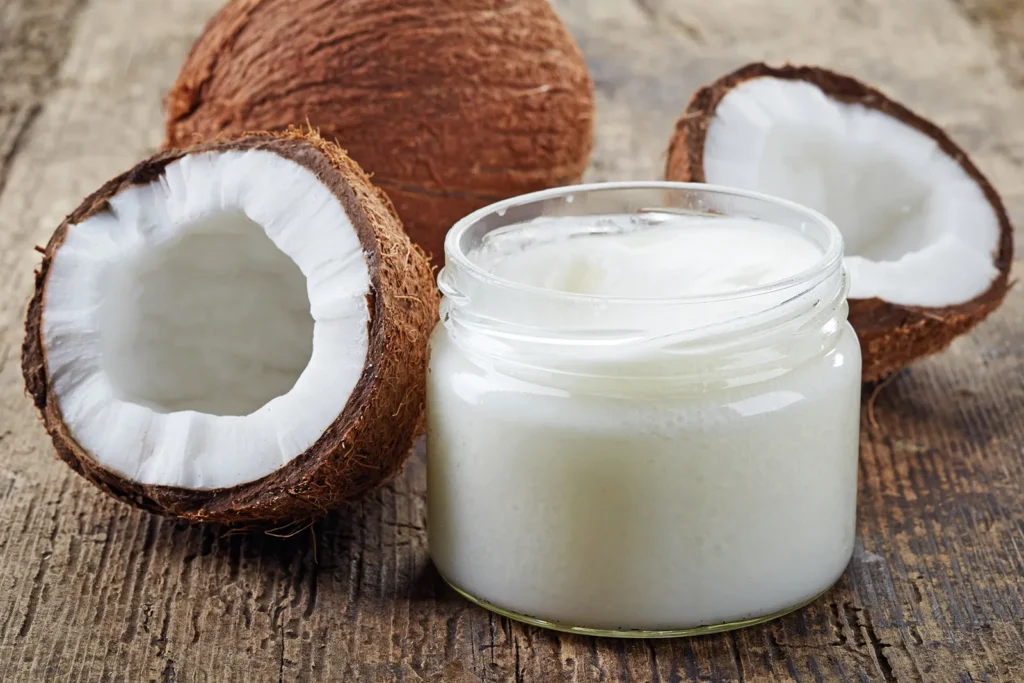
      • Mix coconut water with coconut oil to create a hair mask.
      • Apply the mixture to your hair and scalp.
      • Leave it on for at least 30 minutes or overnight for deep conditioning.
      • Rinse it out with a gentle shampoo and cool water.
      • This helps nourish and moisturize your hair, making it softer and more manageable.
    3. Hair Growth Tonic:
      • Combine coconut water with aloe vera gel and a few drops of essential oils like lavender or rosemary.
      • Apply this tonic to your scalp and massage it in.
      • Leave it on for about 30 minutes before rinsing with cool water.
      • This can help stimulate hair growth and improve scalp health.
    4. Detangling Spray:
      • Mix coconut water with aloe vera juice in a spray bottle.
      • Use this as a detangling spray when your hair is damp or dry.
      • It can help ease the detangling process and reduce breakage.
    5. Leave-In Conditioner:
      • Pour a small amount of coconut water into a spray bottle.
      • Spritz it onto your hair as a leave-in conditioner, focusing on the ends.
      • Style your hair as usual.
      • This provides extra moisture and can help reduce frizz.
    6. Scalp Treatment:
      • Mix coconut water with a few drops of tea tree oil.
      • Apply the mixture to your scalp and massage it in.
      • Leave it on for 15-20 minutes before washing your hair.
      • This can help soothe an itchy scalp and reduce dandruff.
      • Remember to use pure and fresh coconut water for these treatments. You can either buy it from the store or extract it from a fresh coconut. Incorporating coconut water into your hair care routine can contribute to healthier, more hydrated, and shinier hair naturally.
  • This is why you should wash your hair with warm water

    This is why you should wash your hair with warm water

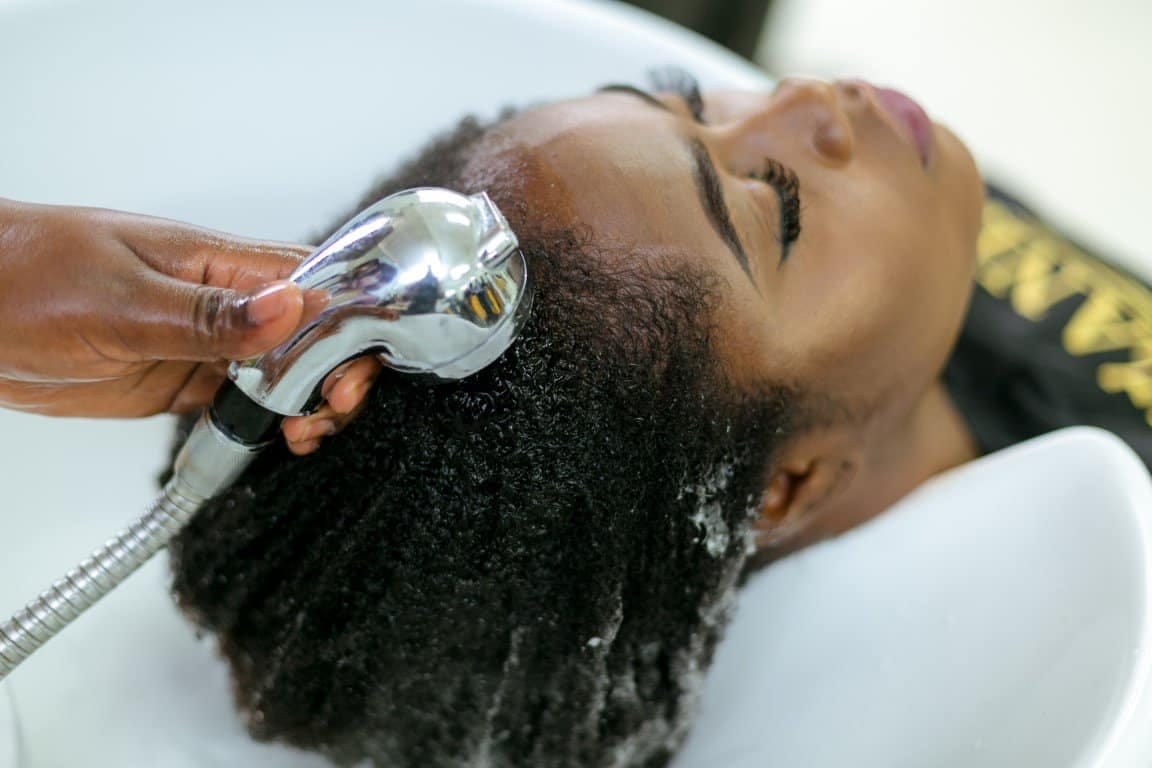
    Cosmetologist and hairstylist, Josephine Jackson has explained why it is important to constantly wash your hair with warm water.

    According to her, hair care is dependent on the type of hair. She asserts the different types of hair have different products on the market for them.

    Speaking with the media, she said, “Each strand of hair under the microscopic view appears the way a roofing sheet is lined up so, when washing your hair, you need warm water to open up that roof ( pores) so all the impurities can come out.”

    She revealed that the mistake most hairdressers make is to always use normal or cold water to shampoo which is the wrong way of washing hair.

    “The pores need to open to rid the hair of dirt and after the dirt is out, and it is still opened, then the conditioner is used to give the hair all the nutrients it lost while the hair was being washed with the shampoo,” she explained.

    She added that it is after all these that cold water is used to lock all the nutrients in the hair, hence cold water should only be used after using the conditioner.

    Per her observation, Ghanaians have little regard for hair dressing professionals which shouldn’t be.

    “Due to this, we don’t learn the ethics of the work well. These things are basic things that should be taught in various salons. We shouldn’t wait for it to be taught in beauty school because hairdressing goes beyond just knowing how to shampoo and style the hair,” she emphasized.

    Josephine believes that a lot more goes into hairdressing “and it is high time Ghanaians embraced cosmetology so we can understand what it entails that way, it becomes easier to know the products, hair and treatment needed for each type of hair.”

  • The truth about how often you should wash your hair

    A recent report about a cancer-causing chemical being detected in some dry shampoos may have you rethinking your hair care routine. But experts say there isn’t a one-size-fits-all answer to how often you should wash your hair — or what you can do to maintain it on the off days.

    “Some people just think that they have to wash their hair every day or they’re going to get very greasy hair,” said Dr. Anthony Rossi, an assistant attending dermatologist at Memorial Sloan Kettering Cancer Center in New York City and a fellow of the American Academy of Dermatology Association. “If they give themselves a chance, they may see that they don’t actually have that greasy scalp or hair. And on the other hand, they may not be able to tolerate going too long or too infrequently because they feel that their scalp becomes very greasy.”

    How frequently you should cleanse your locks depends on multiple factors, including hair type and style, how oily your scalp tends to get, and your activity levels.

    “It’s sort of a personal endeavor,” Rossi said. Washing too often can dry and dull hair, while the oil buildup from not washing enough can also lead to odor and flakes.

    Here’s how to figure out what works for you.

    Rossi generally tells his patients they should wash their hair once or twice per week. But if you’ve had chemical treatments that can make your hair drier — such as bleach, perms or relaxers — you might want to wash it less than once weekly to avoid breaking or brittle hair or split ends, he said.

    If your scalp is very oily, you might need to wash it as often as once per day, according to the American Academy of Dermatology Association’s website. Your age can play a role, too.

    “During puberty we have this surge in hormones, and so the oil glands can become enlarged. It’s a reason why people get teenage acne,” Rossi said. Kids might experience more oily scalps during pubescent years, so washing their hair more often could be helpful, he added.

    Our scalps produce less oil as we get older, according to the association.

    Your hair might be more prone to get dry or break if it’s curly or coily, the association says. Washing it too often can exacerbate this, so thick, curly hair generally doesn’t need to be washed daily or even weekly, according to the association.

    But you should wash it at least every two to three weeks to keep your scalp and hair clean and healthy.

    Hair and scalp care doesn’t only happen in the shower. In between washes, you can do certain things to maintain its cleanliness and appearance — and protect it from harm.

    “I do think it’s important to have scalp hygiene. Just like beard hygiene, you want to take care of the skin that’s underneath,” Rossi said. “Tend to it and comb (your hair). That loosens up the dead skin cells, the debris. You want to wet it if you can.

    “At least massaging your scalp skin will really help to also loosen up debris. So you don’t necessarily have to wash it with a shampoo itself, but keeping it clean is very helpful,” Rossi added. “You can also use things like leave-in conditioner or scalp oils that help nourish and moisturize the scalp.”

    If you regularly sweat from exercising, you don’t need to shampoo your hair every time unless there’s an overgrowth of bacteria or your hair or scalp starts to smell, Rossi said. You can rinse it with water if you want.

    Most dry shampoos have been considered safe for hair, but don’t rely on them often, Rossi said. “If you’re super oily, it’s good in a pinch. But you want to wash that out. You don’t want to build up that on the scalp as well.”

    If you notice excess oil just around your hairline, you could wipe it with cosmetic blotting papers, he added.

    If you swim in a pool with your hair exposed to the water, chlorine can make it dry and brittle. Protect your hair by wetting and conditioning it beforehand, wearing a snug swim cap and, immediately afterward, replacing any lost moisture by using a shampoo and deep conditioner specially formulated for swimmers, according to the American Academy of Dermatology Association.

    If you’re experiencing perpetual issues with your scalp or hair — such as dandruff, hair loss or brittle hair — you should see a board-certified dermatologist who treats conditions in these areas, Rossi said.

    Source: CNN

  • This is why you should wash your hair with cola

    Do you dream of having a head full beautiful hair but is the reality a little grimmer?

    If you have limp, dull hair, you might want to keep reading for this trick involving cola.

    You’re not alone; a lot of women have hair that lacks volume and shine.

    That’s not that strange if you think about what we collectively do to our hair: the frequent washing, dyeing, straightening and curling we do doesn’t do our hair any favours.

    Luckily, there’s a simple product that might just make all the difference, and you’re likely to have a bottle of it in your fridge already.

    Washing your hair with cola could make a big difference. We’re not sure if you’ll want to drink it after reading this, though…

    Cola

    Did you know cola is actually useful for a lot of different things? You can use it to descale your tea kettle or to clean the toilet, for example.

    Apparently, the popular beverage is so chemical that it can clean things. Who knew?

    You can also use it to remove chewing gum from your (or your children’s) hair. Fill a bowl with coke and put the piece of hair with the chewing gum in it. Let this sit for a while and you’ll see how easy it is to remove the gum.

    Go to the next page to read about how you can wash your hair with cola to make it healthier and watch the video!

    Disclaimer: There is no guarantee of specific results and each person’s results may vary.

    Source: tips-and-tricks.co

  • ‘I sold my hair for $2 to feed my children’

    The day Prema Selvam sold her hair for 150 rupees ($2; £1.50) in order to feed her young children was the worst of her life.

    The mother-of-three had already lost her husband after he had killed himself in a fit of desperation amid mounting debts and a failed dream.

    Even then, she still had hope.

    But after selling her hair, she was faced with the prospect of having nothing more of value, no way to pay the creditors demanding their money, and no food in the cupboard.

    What happened next has inspired people across India.

    Drowning in debt

    Before his death, Prema and her husband had worked in a brick kiln in the southern Indian state of Tamil Nadu, making just enough to scrape a living together for their young family. But they had hoped for more. Her husband took out a loan to start his own brick kiln, but the plans failed to take off. In a moment of desperation last year, he killed himself.

    The pressure fell solely on Prema to not only earn enough to feed, clothe and house herself and her three children, but also to pay back the money they owed for the failed business venture. And for a while she managed, taking her two youngest to work with her.

    “When I go to work I get 200 rupees ($2.80) per day, which is enough to run our family,” Prema explains to the BBC.

    But she became ill, which meant she couldn’t earn as much.

    “I couldn’t carry a heavy load of bricks. I stayed home for most of the time due to a fever.”

    She was sick for three months – by the end of which the bills had mounted, and the cupboards had run bare.

    “My seven-year-old son Kaliyappan came back from school and asked for food,” she recalls. “Then he started crying due to hunger.”

    Prema had no property, jewellery, valuables or kitchen utensils that could be exchanged for cash.

    “I didn’t even have a 10 rupee note [$0.14; £0.11] with me. I just had a few plastic buckets.”

    Then she realised she did have something she could sell after all.

    “I remembered a shop which used to buy hair,” Prema says, thinking immediately of her own hair. India is one of the world’s top exporters of human hair, which is sold around the globe to make extensions. Some Hindu devotees offer up their hair in temples when their prayers are answered.

    “I went there and sold my entire head of hair for 150 rupees ($2; £1.50).”

    It might not sound like a lot – the money she got might only have been able to buy a lunch at a restaurant in a large city – but in her village, Prema was able to buy much more.

    “I got three packs of cooked rice, each costing 20 rupees, for my three children,” she says.

    But the respite was only temporary: Prema knew she was out of options, and her thoughts began to turn towards more drastic measures.

    Desperation

    She went to a shop where she hoped to find something to end her life. But, seeing her state of distress and realising her plan, the shopkeeper refused to sell her anything. Prema went home and decided to find another way of taking her own life. She was saved by her sister, who lives in the neighbourhood and happened to come by in time to stop her.

    And then, just a few days later, the help she so desperately needed appeared out of the blue.

    Bala Murugan heard about Prema’s situation from a friend who owned a local brick kiln. It immediately struck a nerve: her struggle reminded him of his family’s darkest hour. Bala knows well how poverty can drive people to despair – at the age of 10, his family ran out of food. His mother sold their old books and newspapers by weight to buy rice.

    And then, in a state of utter despair, Bala’s mother decided to kill herself and her children. She changed her mind at the last moment: the family rushed their mother to a doctor, and she was saved.

    Bala now lives a life a world away from the situation he grew up in. After years of struggle, he has worked his way out of poverty and now owns a computer graphics centre.

    And now, he had a chance to pay his own good fortune forward: Bala told Prema about his journey and encouraged her to find hope. Along with his friend, Prabhu, he gave her some money to buy food. Then Bala wrote about the family on social media.

    “Within a day I got 120,000 rupees ($1,670). When I told Prema about it she was very happy and said that was enough to pay back most of her loan,” he tells the BBC.

    But at Prema’s request, the fundraising was stopped.

    “She said she would get back to her work and pay the rest,” Bala explains.

    She now has to pay back about 700 rupees a month – about $10 – to different creditors, while district officials have stepped in and promised to help her to set up a dealership selling milk.

    Prema is slowly getting back on her feet, but, sadly, her financial situation is far from unique. In spite of India’s economic growth, millions like her struggle to put food on the table.

    According to the World Bank, India is home to the second largest number of people living in extreme poverty – classified as those earning less than $1.90 per day.

    Prema has another obstacle in her way: she cannot read or write, like tens of millions of other Indians.

    As a result, she is unaware of government schemes which provide help to people like her. Meanwhile, the country’s formal banking system has complex rules that make it difficult for poor communities to access credit at low interest rates. Instead, Prema and her husband had borrowed from local money lenders and neighbours at higher rates – sending her spiralling further into debt.

    But thanks to her community’s generosity, she is able to see a way out of the cycle of poverty which has kept her trapped. Bala Murugan, meanwhile, has assured the family of his continued support.

    “Now I realise suicide was the wrong decision,” she says. “I am confident about paying back the rest of the loan.”

    Source: bbc.com