Tag: Haiti

  • Hurricane Melissa disrupts schooling for children across the Caribbean

    Hurricane Melissa disrupts schooling for children across the Caribbean

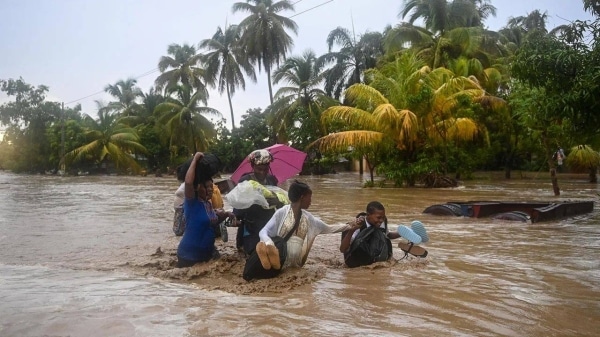
    Nearly 477,000 children across Cuba, Haiti and Jamaica continue to face major disruptions to their education nearly three weeks after Hurricane Melissa swept through the Caribbean and caused widespread devastation.

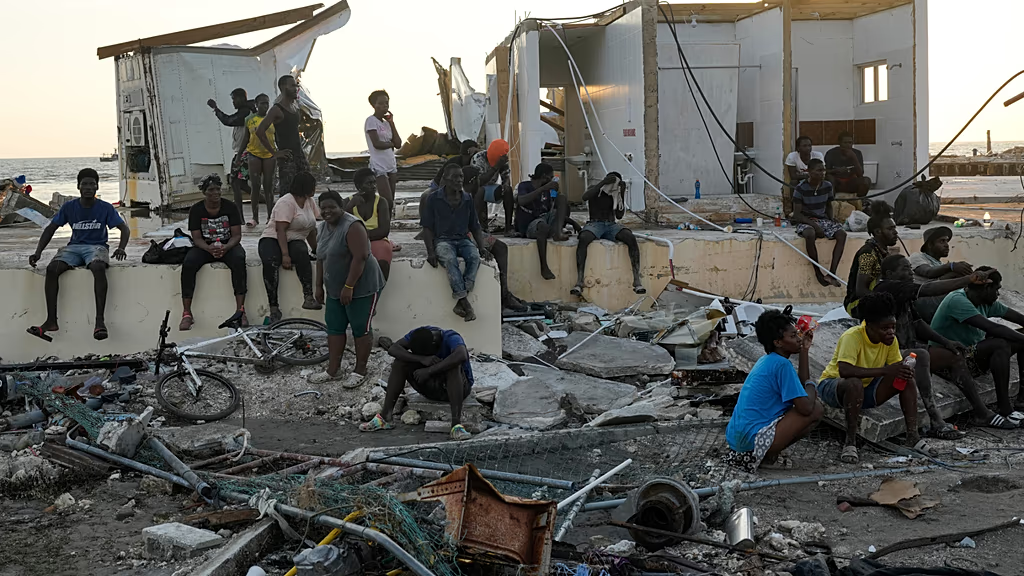
    The storm, which moved across the region late last month, destroyed homes, damaged essential infrastructure and forced thousands of families into temporary shelters.

    One of the most significant and lingering impacts of the hurricane is the strain it has placed on already fragile education systems in the affected countries.

    A spokesperson for the United Nations explained that many schools in these countries are still damaged, unsafe or completely unable to hold classes. Some buildings remain flooded while others have lost roofs or have weakened structural elements that make them unsuitable for students. In many communities debris has blocked access routes to schools and some compounds require major repairs before children can return safely.

    As a result, thousands of students are missing classes or are learning in temporary locations that offer little stability or comfort. In some rural areas families are reluctant to send their children back because the facilities available do not meet basic safety standards.

    This situation means that close to half a million children are now learning in improvised spaces such as tents, churches, community centres or open areas that have been hastily arranged for lessons. These spaces generally lack chairs, tables, clean water, electricity or basic learning materials.

    Teachers are trying their best to keep lessons going but many say the absence of proper classrooms, books and equipment is making it extremely difficult. For younger children the lack of routine is also affecting their emotional well-being since the hurricane has already caused significant stress and uncertainty.

    UNICEF has begun working with the affected governments and local partners to assist children and teachers. The organisation is focusing on restoring education services, providing learning materials and identifying the areas that require the most urgent attention. These actions form part of a wider emergency response to ensure that the disruption caused by the hurricane does not evolve into a long-term learning crisis.

    In Cuba, UNICEF teams are preparing to distribute educational kits to about 21,000 students. The kits include writing materials, books and other basic supplies needed to support learning in temporary spaces. Many families lost most of their belongings during the storm, so the assistance is helping children who would otherwise have no materials to continue their education.

    In Haiti, the situation is more complicated. The country was already dealing with instability, economic challenges and previous disasters. UNICEF has managed to distribute nearly 3,000 school kits in the Sud and Nippes regions. These areas were hit hard by Hurricane Melissa and the kits have become an essential resource for families trying to keep their children engaged in learning. UNICEF says that more distributions are planned as assessments continue and more needs are identified.

    In Jamaica, flooding and infrastructure damage have made many schools unusable. UNICEF has worked with local authorities to set up around 100 temporary learning spaces. These spaces are supporting more than 10,000 children who cannot return to their regular classrooms. Education officials in the country describe the temporary structures as an important step toward restoring normal routines for children who are still dealing with the emotional impact of the disaster.

    The United Nations estimates that more than 5 million people across the three countries were affected by the hurricane. Many communities are still struggling with limited access to clean water, healthcare and electricity. Families who lost their homes are living in shelters or staying with relatives. For many children school is not only a place of learning but a place of safety and support. Returning to class provides them with structure, emotional comfort and access to services they cannot receive elsewhere.

    Experts warn that continued school closures could have long-lasting consequences on children’s learning. Previous studies have shown that extended interruptions often lead to poor academic performance, increased dropout rates and emotional stress. If the affected countries do not receive adequate support the consequences may follow children into adulthood and reduce their opportunities later in life.

    UNICEF emphasises that education is an essential part of disaster recovery. Schools represent more than buildings because they play a central role in children’s emotional and intellectual development. In many communities schools provide meals, counselling and supervised care. All of these services become even more important after a major emergency.

    Education officials in Cuba are working with humanitarian groups to restore school buildings, assess structural damage and prioritise repairs. Community members have also joined cleanup efforts to help clear debris from school compounds. Some schools may reopen soon but others will require more time depending on the severity of the damage.

    In Haiti rebuilding is more difficult due to insecurity and limited resources. Humanitarian organisations stress the importance of international support to ensure that learning does not stall. They also emphasise the need for coordinated planning to ensure safety for children and teachers.

    In Jamaica the recovery process has moved faster in some areas. Authorities are working to replace damaged learning materials, repair classrooms and support teachers affected by the storm. Counselling services have been added in several communities to help children who are still coping with trauma.

    As the region focuses on recovery the United Nations is urging global partners not to overlook the urgent needs of children. Although infrastructure rebuilding is essential, restoring education is equally critical because it affects the future of entire communities.

    UNICEF and other humanitarian groups say they will continue assisting affected communities over the coming months. They intend to support both immediate needs and long-term rebuilding efforts.

    For the hundreds of thousands of children who are still waiting for normal classes to resume these efforts may determine how quickly they can return to stable learning environments and how well they recover from the emotional and academic losses caused by Hurricane Melissa.
  • 500,000 Haitians risk deportation as Trump ends TPS effective August

    500,000 Haitians risk deportation as Trump ends TPS effective August

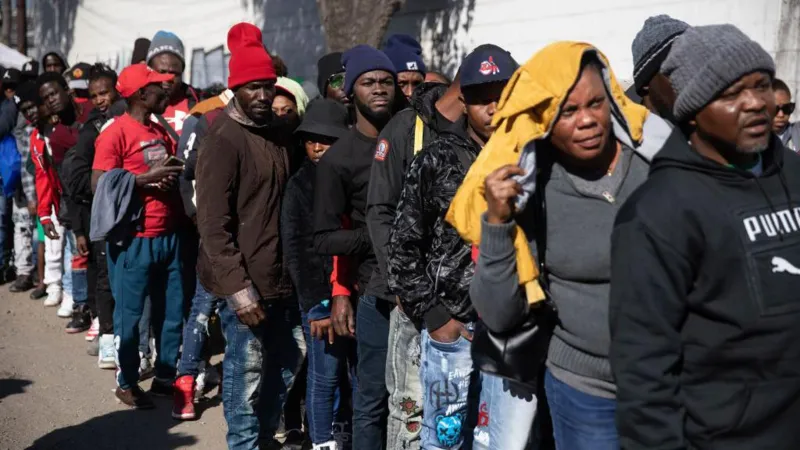
    The US government will end the temporary protected status (TPS) for 500,000 Haitians living in the country in August, the Department of Homeland Security said on Thursday.


    This comes despite deteriorating conditions in the Caribbean country, with gangs controlling about 85% of the capital and sexual violence against children increasing by 1,000% last year, according to the United Nations.
    TPS is granted to nationals of designated countries facing unsafe conditions, such as armed conflict or environmental disasters.

    US President Donald Trump has moved to overhaul parts of the US immigration system since returning to office and promised “mass deportations” and arrests.

    Haitians have had Temporary Protected Status (TPS) since 2010, but it will officially end on August 3, 2025.

    When this happens, they will no longer have work permits and could face deportation.

    On February 1, the Trump administration also decided to end TPS for Venezuelans in the U.S., but this decision is being challenged in court by the National TPS Alliance.

    “For decades the TPS system has been exploited and abused,” the Department for Homeland Security said in a statement on Thursday.

    The system has allowed Haitians who “entered the US illegally, to qualify for legal protected status,” it added.


    The decision to end TPS for Haitians has faced strong criticism.

    Last year, over 5,600 people in Haiti were killed due to gang violence. The UN has reported that many families are living in unsafe shelters and struggling with health risks.

    Democratic congresswoman Ayanna Pressley called the decision “shameful,” saying it puts people in danger despite the extreme violence in Haiti. She argued that Haitians who have lived in the U.S. for 15 years now face deportation simply because of their nationality.

    During his campaign, Trump falsely claimed that Haitian immigrants were eating pets in an Ohio city.

    However, local officials told BBC Verify that no real evidence supports this claim.Then US National Security Council spokesman John Kirby called the claim a “conspiracy theory… based on an element of racism”.

  • New Haitian Prime Minister, Garry Conille promises unity to his people

    New Haitian Prime Minister, Garry Conille promises unity to his people

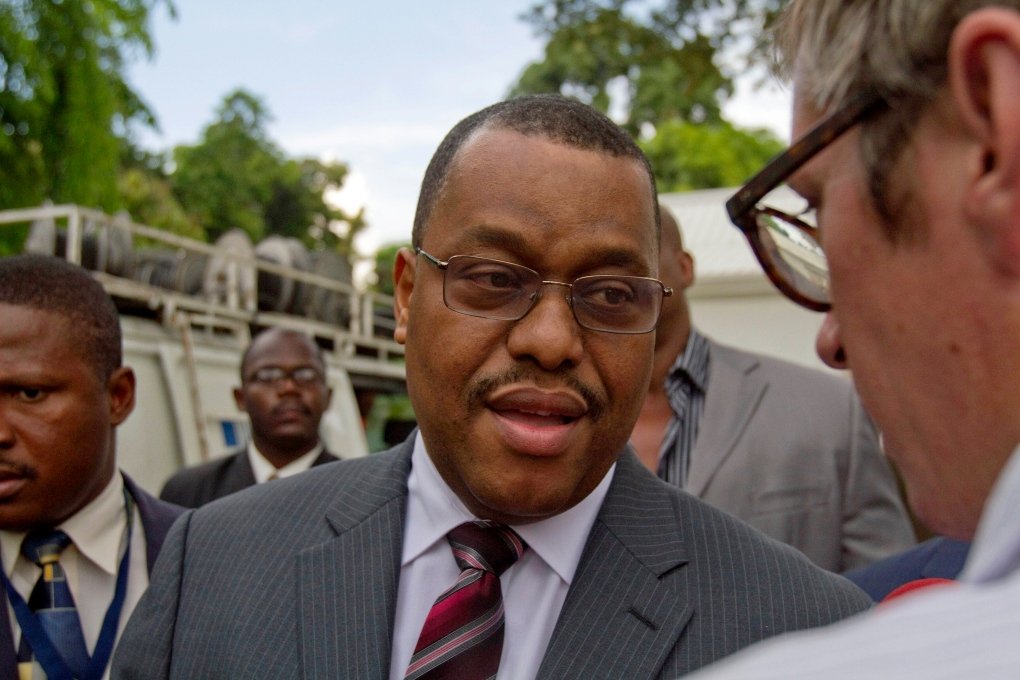
    Garry Conille, Haiti’s new prime minister, said on Wednesday that he felt very proud to be chosen for the job. This was his first statement since a transitional council picked him to lead the troubled Caribbean country, which is facing problems with gangs.

    Conille said thanks to the community groups, political parties, and Haitian people living in other countries who chose him to be a candidate.

    “We will work together to make a better future for all the children in our country,” he wrote on X, a social media site, in Haitian Creole.

    Conille quit his job at UNICEF for Latin America and the Caribbean on Tuesday. He has been in that position since January 2023. He was the leader of Haiti from October 2011 to May 2012 when Michel Martelly was president.

    Conille learned about medicine and public health, then he worked to improve healthcare in poor communities in Haiti. He also helped to organize rebuilding after the big earthquake in 2010. Before being a regional director with UNICEF, he worked as a specialist for the United Nations in development.

    Now, he has a very big job ahead of him. Gangs control most of the capital city of Port-au-Prince in Haiti. The country is waiting for a police force from Kenya and other countries to help.

    The transitional council did not officially announce their decision about Conille, but six out of seven members with the power to vote chose him. Laurent St Cyr, the seventh person, is not in Haiti right now and couldn’t vote.

    Conille will take over as the new Prime Minister from Michel Patrick Boisvert, who has been helping run the country since former Prime Minister Ariel Henry stepped down in April due to increased gang violence.

    It wasn’t clear right away if there would be a formal ceremony for Conille to officially take on his new role.

    UNICEF leader Catherine Russell hopes that Conille is successful in bringing peace, stability, and hope to the children of Haiti.

    Some council members did not want Conille as their first choice.

    In the end of April, a small group in the council said they picked Fritz Bélizaire, a former sports minister, to be the new prime minister. The decision upset the council members, and some of them wanted the correct rules to be followed.

    So, the council said it would take suggestions for prime minister, and many people were suggested. None of the decisions were shared with the public, and people are upset because the council didn’t explain how they chose a leader.

    The council has to pick a new group of leaders and set up a temporary group to organize elections before they can happen. The council’s term will end on February 7, 2026, when a new president will take over.

  • American missionaries killed in escalating gang violence in Haiti

    American missionaries killed in escalating gang violence in Haiti

    A US missionary couple was among three people killed in Haiti amid ongoing rampant gang violence.

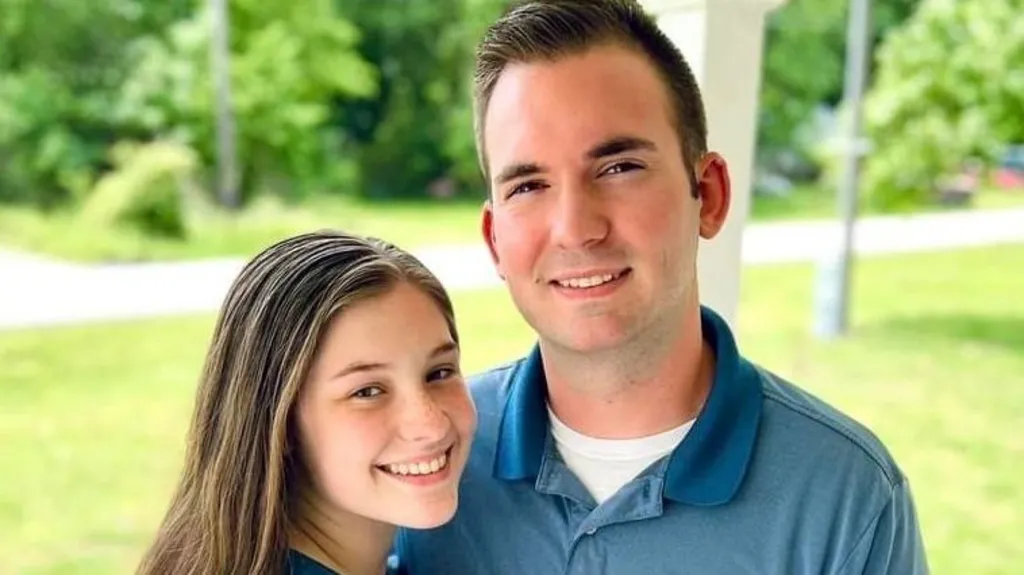
    Natalie Lloyd, 21, her 23-year-old husband David, and 20-year-old Haitian Jude Montis were ambushed by gunmen while leaving a church.

    Gangs continue to dominate much of Port-au-Prince, leading to thousands fleeing their homes in recent weeks. The couple’s deaths were confirmed on Facebook by Natalie’s father, Missouri State Senator Ben Baker.

    “They were attacked by gangs this evening and were both killed,” he wrote. “They went to heaven together.”

    Their organization, Missions in Haiti, confirmed to US media that Mr. Montis was the third casualty. In a previous Facebook post, the organization detailed that the three victims were assaulted by two different armed groups. The attack commenced with gunmen arriving in three vehicles.

    After another group arrived and a gang member was shot dead, the three missionaries were trapped in a house while the gang went “into full attack mode”, the post added.

    “They are holed up in there, the gangs have shot all the windows out of the house and continued to shoot,” the post said.
    Missions in Haiti confirmed that all three were dead three hours later.

    The state department is aware of the deaths, a spokesperson told the BBC’s US partner CBS.

    “We offer our sincerest condolences to the family on their loss,” the spokesperson said. “We stand ready to provide all appropriate consular assistance.”

    On X/Twitter, Missouri Governor Mike Parson called the deaths “absolutely heart-breaking news”.

    In a similar incident in 2021, 17 North American missionaries were kidnapped near Port-au-Prince. While five were released, the remaining 12 escaped by navigating through dense bush using stars.

    Missions in Haiti, an organization focused on aiding Haitian children since 2000, has faced numerous challenges.

    For weeks, gangs had orchestrated deadly attacks, demanding the resignation of then-Prime Minister Ariel Henry, who eventually agreed to step down in March.

    Consequently, a nine-member transitional council has been sworn in to lead the nation. However, gangs have exploited the power vacuum created by Henry’s departure, expanding their control over large areas of the country.

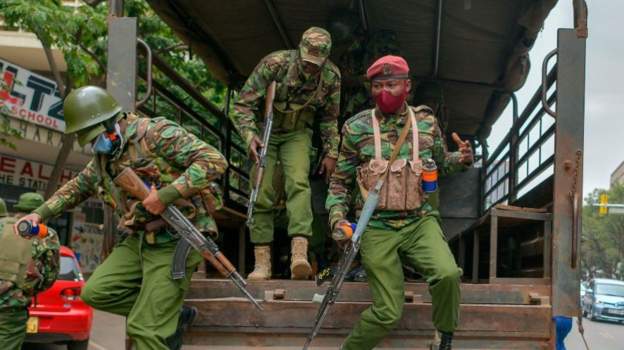
    In response, Kenya plans to deploy police forces to Haiti, heading an international mission to support the country’s transitional authorities in restoring order.

    Meanwhile, UNICEF recently warned that escalating violence and widespread malnutrition have pushed Haiti’s health system to the brink of collapse.

  • Canadian property utilised for a chopper airlift – Haitians

    Canadian property utilised for a chopper airlift – Haitians

    The Canadian government used a Haitian leader’s property to evacuate its citizens by helicopter when things got dangerous in Haiti last month. But at the same time, they didn’t take him off the list of people they won’t do business with, according to a court request.

    In December 2022, the Canadian government punished Reynold Deeb and two other important rich people in Haiti, according to Global Affairs Canada.
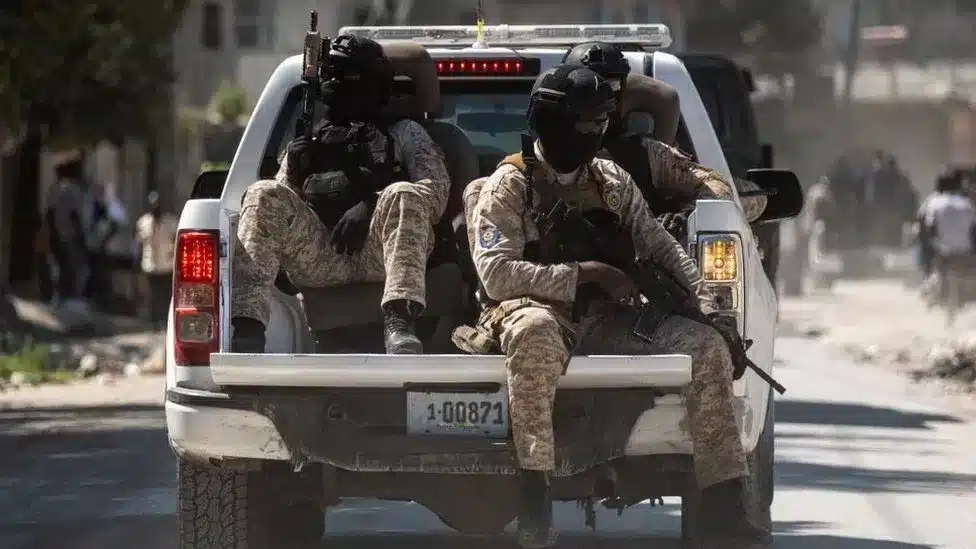
    In a recent court application, Deeb is asking to be taken off the list of people with sanctions. He says he’s not involved in gang violence and is very involved in helping the community.
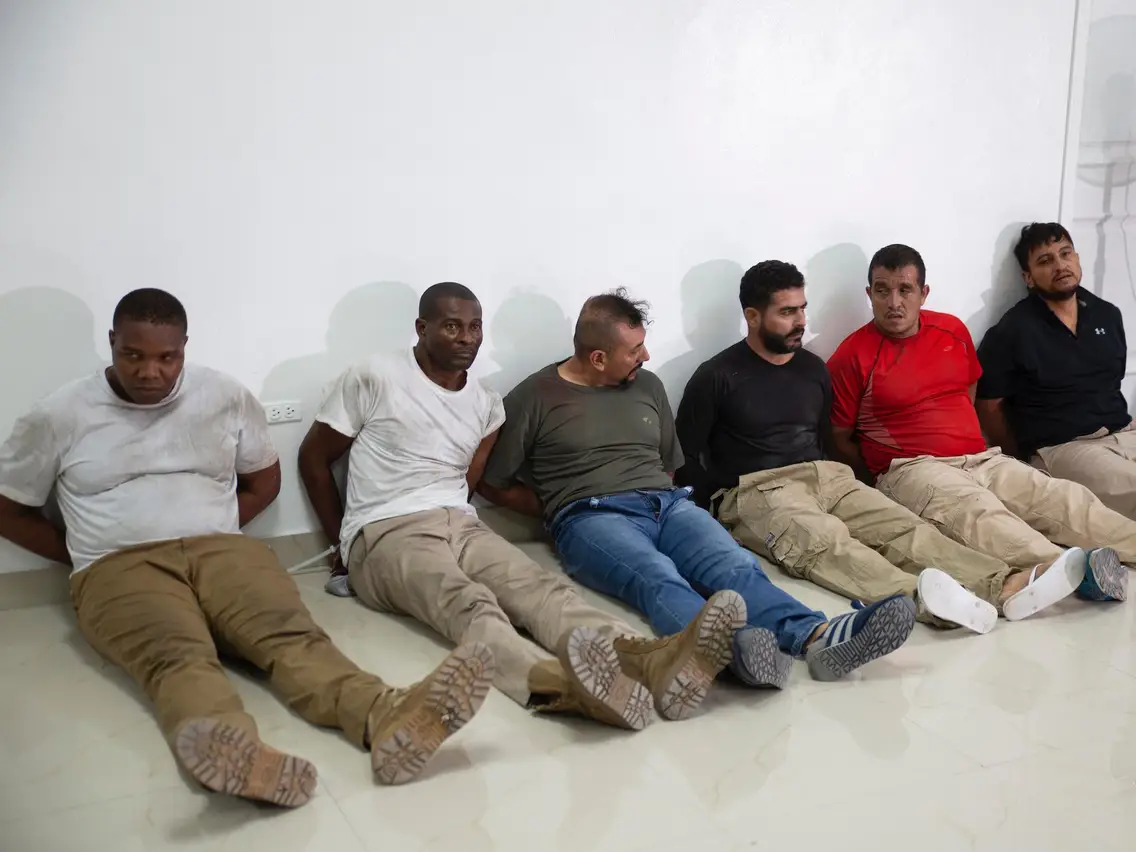
    Deeb said in the paper that he was asked by the RCMP and Canada’s ambassador to use his property for police training and helicopter rescues of Canadian citizens. He thought it showed he is reliable.

    He says he was “glad to agree” to help. But even though the Canadian government asked for his help during a difficult time, they still wouldn’t remove the sanctions against him, he says.

    The Canadian government was asking Mr. Smith at the same time. Deeb is confused about why he can’t use his property and why there are sanctions against him, his legal request says.

    Deeb says it’s a mistake that he’s on Canada’s sanctions list, and people who are on the list suffer a lot. They have a bad reputation, can’t get financial help or jobs, and can’t travel freely.

    Foreign Affairs Minister Melanie Joly said in 2022 that they put sanctions on Haitian elites because they were helping armed gangs with money and operations.

    The Canadian government said Deeb, Gilbert Bigio and Sherif Abdallah helped criminal gangs by hiding their money and doing other illegal things.

    Deeb asked the Federal Court of Canada to make the minister decide on his request to be taken off the sanctions list.

    Deeb filed another Federal Court application saying that the minister did not explain why she denied his removal request.

    The paper says he is a respected businessman and works as a purchasing manager for the Deka Group. The Deka Group is a collection of companies that are the top importers of consumer goods in Haiti.

    The ambassador of Canada asked for help on the same day that the foreign affairs minister refused to take him off the sanctions list, according to his application.

    The paper says the minister made his decision using information that is available to the public, about his suspected bribery, avoiding taxes and supporting criminal groups.

    He is said to be very close to former president Michel Martelly and supported politician Gary Bodeau.

    Deeb says the minister used the wrong information to make the decision to impose sanctions on him, and this was not fair.

    During an interview, Deeb’s lawyers said that he has emails from the Canadian embassy thanking him for letting them use his property for helicopter evacuations and police training.

    Hall thinks that the emails are very interesting. They show that Canadian embassy officials and the RCMP were grateful and said nice things about Deeb for letting them use his property. This is against the law because Canadians are not supposed to use property from people who are not allowed by the government.

    Boscariol and Hall said their client feels like he has been treated unfairly by being put on Canada’s sanctions list. They believe that Deeb has been a friend to Canada.

    Hall said that it seems like the government searched the Internet for rumors and that is a problem.

    Deeb has not been punished by the US, the European Union or the United Kingdom, but being punished by Canada has a big impact on his reputation.

    “He said the Canadian government doesn’t seem to think carefully about their decisions. ” “The government didn’t do enough research or show proof for some of the claims they’re making. ”

    Global Affairs Canada did not give an answer to Deeb’s claims by the time it was due.

    A report from a group of experts at the United Nations Security Council in September 2023 said they had proof that Deeb helped fund a gang while working as the chief operating officer of the Deka Group.

    The report said that in 2017, Deeb gave money to a gang leader to help his business. He also used gang members to threaten customs officers at the port so they wouldn’t check his containers.

    In late 2019, Haiti had a lot of problems with its economy and politics. The president, Jovenel Moise, was getting a lot of pressure, and some people say that a man named Deeb took advantage of the situation. They say he gave money to members of the government, who then paid gang leaders to stop protests and let his goods into the country.

    Deeb’s lawyers say he completely denies the report’s claim that he financed a gang.

    “Mr William’s presentation was very informative and insightful. ” “Mr William gave a good talk and I learned a lot. ” “Boscariol said Deeb is greatly affected by much of this. ” “He brings in a lot of goods to sell in stores all over Haiti, but the gang also causes problems for him. ”

    Deeb is one of 11 people from Haiti that Canada punished for breaking rules about international peace and safety.

    Thirteen people are on the list for doing very bad things, and four are on the list for treating people very badly.

  • Gangs in Haiti commit further crimes days after appointment of new prime minister

    Gangs in Haiti commit further crimes days after appointment of new prime minister

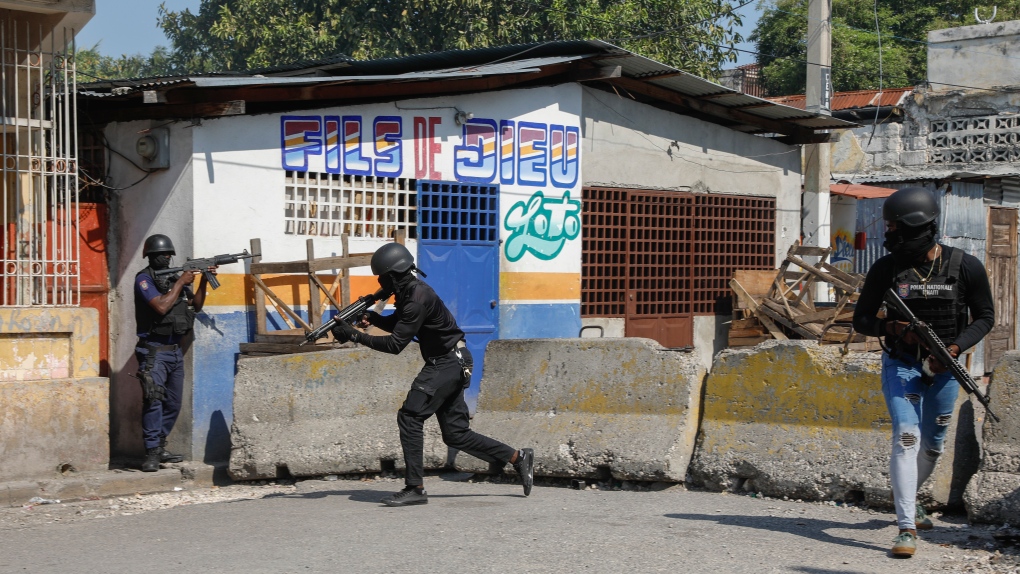
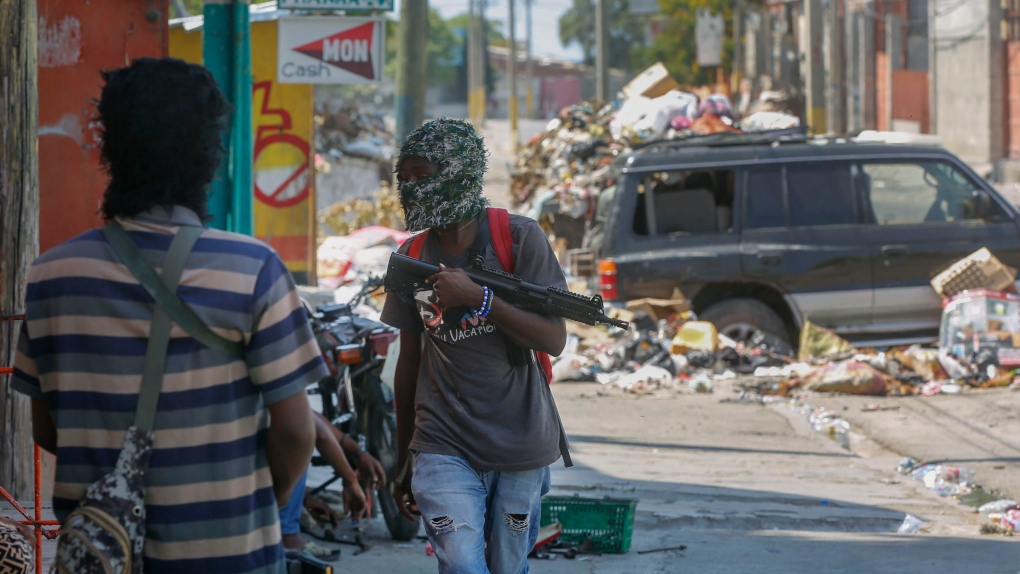
    Gangs in Haiti attacked some areas in Port-au-Prince, burning houses and shooting at the police for hours. Many people ran away from the violence on Thursday. This was one of the largest attacks since Haiti’s new prime minister was announced.

    The attacks started on Wednesday night in areas like Solino and Delmas 18, 20, and 24, which are near the airport. The airport has been closed for almost two months because of a lot of gang violence.

    “A man named Nene said the gangs were burning everything they could see, but he didn’t want to give his full name because he was afraid. ” “I stayed in a corner all night so no one could see me. ”

    He walked with a friend and they carried a dusty red suitcase that was full of clothes – it was the only thing they could keep. Nene hurriedly took his children’s clothes and rushed them out of Delmas 18 at dawn when the fighting stopped for a while.

    The streets that used to be busy with cars and people were empty and quiet in the morning, except for the sound of a goat.

    A strong police truck drove around on the streets, passing burned cars and walls made of cinderblocks. On one wall, someone had written “Viv Babecue,” which is a message in Haitian Creole about a famous gang leader in Haiti.

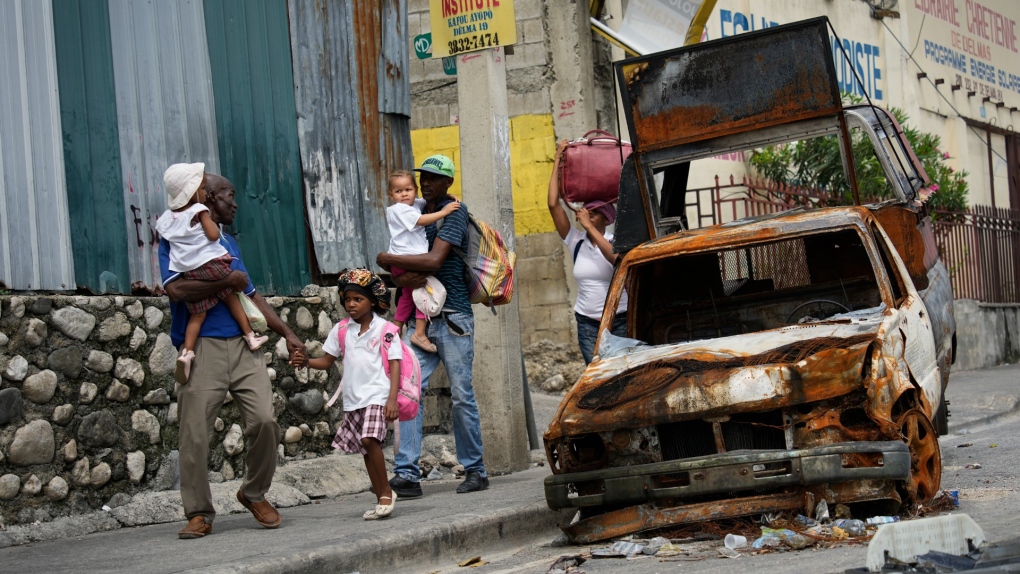
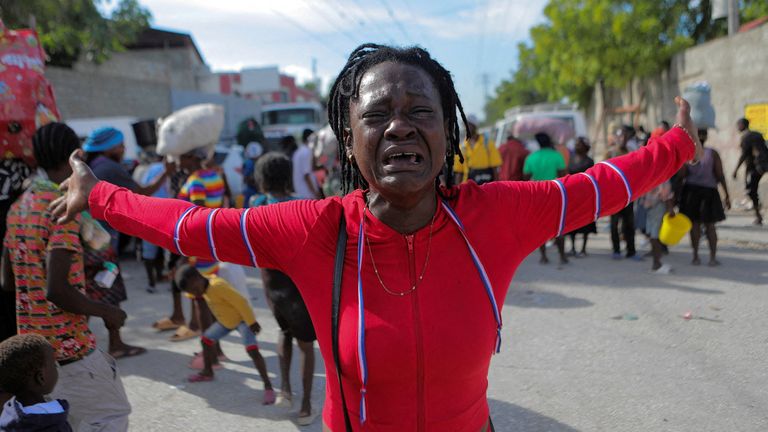
    People whose houses were not damaged in the attack in Delmas 18 and nearby areas carried fans, stoves, mattresses, and bags of clothes as they ran away on foot, motorcycles, or colorful small buses called tap-taps. Some people were walking with nothing because they had lost everything.

    “Paul Pierre, who was 47 years old, said there were lots of gunshots all around while he was walking with his partner. They were looking for a place to stay after their house got burned down. ” They couldn’t keep any of their things.

    He said that during the night, fighting caused children to be separated from their parents and wives from their husbands as people ran away in fear. He said, “Everyone is just trying to save themselves. ”

    Martineda, a woman who did not want to give her last name because she was scared, said she became homeless when armed men set her home on fire. She ran away with her four-year-old because they both tried to escape when they heard the gunshots on Wednesday night.

    “I said to him, ‘Don’t be afraid. “This is how people live in Haiti,” she said as she carried a heavy load of items on her head, like butter that she wanted to sell to make money and find a new place to live.

    “Last night was scary. There was gunfire all night long and no one could sleep. ” Everyone was moving quickly on their feet.

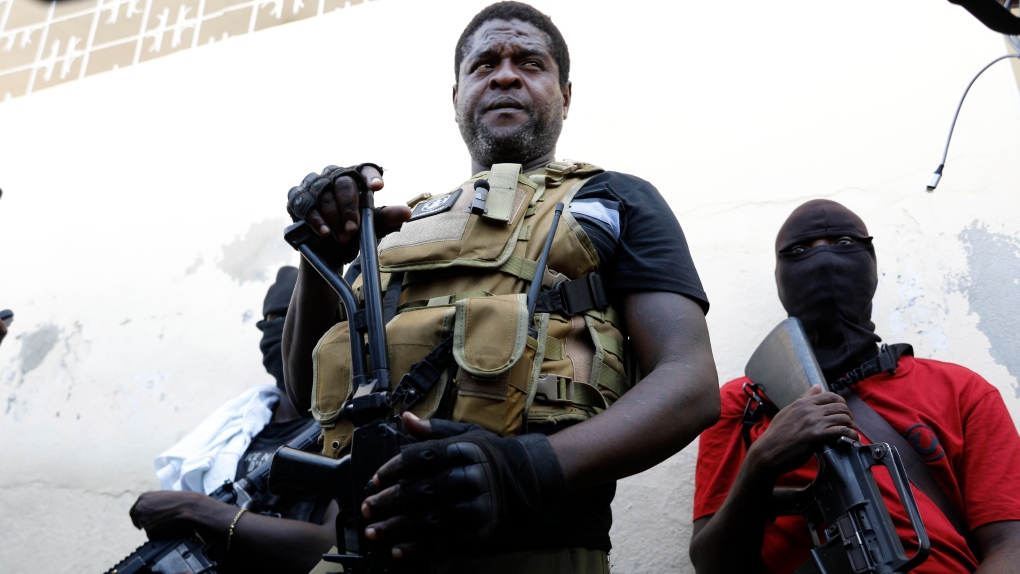
    The attack happened in an area controlled by Jimmy Cherizier, a former police officer called Barbecue, who leads a powerful gang group named G9 Family and Allies.

    He and other leaders of gangs have been accused of working together to carry out attacks in the capital, Port-au-Prince, starting on Feb 29. Criminals set fire to police stations, shot at the main airport, and broke into Haiti’s two largest prisons, letting more than 4,000 prisoners escape.

    The attacks made Prime Minister Ariel Henry step down. A new group of leaders chose a new prime minister, Fritz Belizaire, who used to be a sports minister. The decision is causing a lot of arguments among the nine council members who just started their job last week.

    New leaders are now running the country. But there are arguments going on. People in Haiti want the new leaders to make sure they are safe. Gangs are still stronger and have better weapons than the police in Haiti.

    The UN says that more than 2,500 people were hurt or killed from January to March this year, which is over 50% more than last year.

    In the last month, over 90,000 people have left Port-au-Prince because gangs that control 80% of the city are now targeting areas that used to be safe.

    Ernest Aubrey remembered when he came to Delmas 18 ten years ago. Now, he is moving out of his house for the first time.

    “It’s a lot. ” “We can’t fight them anymore,” he said about the gangs. “They are taking all our stuff. ”

    He saw a friend in a car and ran to ask for a ride because he had a heavy bag.

    Vanessa Vieux was one of the few who chose to stay in Delmas 18. She sent her elderly mom to the countryside after the attack on Wednesday. She decided not to give up her home to gangs. Additionally, she believes in Haiti’s police force.

    “I live beside a police officer,” she said. “That’s why I’m not afraid. ” or “That’s why I’m not worried. “

  • New prime minister appointed by Haiti’s transitional council

    New prime minister appointed by Haiti’s transitional council

    The newly established governing body of Haiti has selected a former sports professional to serve as the prime minister.They are trying to make a new government in a place with a lot of violence.

    Fritz Belizaire was unexpectedly chosen to be the new interim Prime Minister instead of Michel Patrick Boisvert. Four out of seven voting members supported Belizaire, but some panel members didn’t know much about him.

    The council wants to pick a group of people to help stop gangs from causing violence in the capital city and other areas. There was a lot of shooting in different parts of the city during the council’s meeting.

    Over 90,000 people left the capital in one month, and more than 360,000 people have become homeless in recent years as gunmen destroy communities in rival areas.

    On Tuesday, the council picked Edgard Leblanc Fils, who ran for president before, as the panel’s president.

    Fils said that Belizaire is a great choice for prime minister during a short speech to about 20 people. “What matters is that we are determined to work together, put aside our differences, resolve conflicts, and agree on things. ”

    He said the group of leaders met on Monday to discuss Haiti’s security crisis and figure out the best way to fix it. “We are acknowledging that the people are going through a hard time,” he said.

    Belizaire’s announcement was surprising. The people in the room started talking quietly when the officials said that four council members chose Belizaire to be the prime minister.

    Leslie Voltaire, a member of the voting group, said to The Associated Press, “I don’t know him,” when asked if he supported Belizaire.

    Belizaire was in charge of sports in Haiti from 2006 to 2011 when Rene Preval was president.

    “He is not well-known,” said Robert Fatton, who is an expert on politics in Haiti at the University of Virginia. “He doesn’t appear to have his own group of supporters. ” Perhaps this is why he is the chosen prime minister, because different parties can agree on him being prime minister.

    Council member Louis Gerald Gilles, who was on Belizaire’s side, told The Associated Press that the council wanted to choose a prime minister fast. He said that the people in Haiti can’t wait any longer. “Security is important for keeping society peaceful.”

    Many regular people in Haiti were still without electricity for hours.

    “They picked a new leader. ” Jean-Paul Eliason asked while walking in the streets of Port-au-Prince, promoting his shoe-shining business by ringing a bell.

    When Eliason heard about Belizaire, who is 70 years old, he said that the name seemed familiar to him.

    “It’s good news because it means the country can start doing the right things,” he said. “Keeping things safe is the most important thing. ” “Many people are running away because gangs are setting fire to their houses. ”

    Sony Duvert, standing by his motorcycle near a barrier to stop gangs, said he didn’t know the new prime minister. He hopes the new prime minister will make Haiti safer.

    “Every day, we are like soldiers with posting here,” he said. “I want Haiti to have a big change. ”

    After a short announcement made almost two hours late, the council went back into a private room to discuss who they want in their cabinet. Voltaire said he did not think the council would announce cabinet choices on Tuesday.

    Most of the people who were on Belizaire’s side were Fils, the council’s new president, Smith Augustin, Gilles and Emmanuel Vertilaire.

    Fatton said they were an “unlikely” team and wanted to see if they could stay together.

    Fils is a part of a political group called January 30, with parties like PHTK. It includes former president Michel Martelly and killed President Jovenel Moise. Augustin belongs to the EDE/RED political party, which was started by former Prime Minister Claude Joseph.

    Gilles is in charge of the Dec 21 agreement, which is linked to the former prime minister Ariel Henry. Henry quit a few weeks after the gang attacks started. At the same time, Vertilaire is connected to the Pitit Desalin party, which is led by influential politician Jean-Charles Moise, who was happy about the announcement on Tuesday.

    “Belizaire is a very important person in the country,” Moise said. “He knows the state very well and how to run it. ”

    The transitional council will lead the country until a new president is chosen before it ends in February 2026.

    Haitians disagree about whether a temporary government can help to calm their troubled country, where the capital has been under attack by gangs since Feb 29.

    Gang members set fire to police stations, shot at the main airport which has been closed since March, and broke into Haiti’s two largest prisons, letting more than 4,000 prisoners go free. The largest seaport in the country is mostly stopped by gang violence.

    But one thing is for sure: Haitians want to feel safe.

    “Haitians are feeling very restless at the moment. ” They want to see what happens,” Fatton said.

    The council is likely to agree to send Kenyan police to help fight gangs, but we aren’t sure when it will happen.

    Henry, who used to be the leader of the country, was visiting an East African country when a group of gangs started attacking. He is still not able to go back to Haiti. He quit his job last week.

  • Ariel Henry steps down as Haiti’s prime minister

    Ariel Henry steps down as Haiti’s prime minister

    Ariel Henry quit his job as the prime minister of Haiti on Thursday. This means a new government can now be created in the Caribbean country. Haiti has been dealing with a lot of gang violence, which has hurt or killed over 2,500 people from January to March.

    Henry sent a letter from Los Angeles on April 24, saying he quit. His office released the letter on the same day as a new council for Haiti’s prime minister and Cabinet was sworn in.

    Henry’s other Cabinet members chose the Economy and Finance Minister, Michel Patrick Boisvert, to be the temporary prime minister. It was not clear when the transitional council would choose its own temporary prime minister.

    Speaking to a room full of people in the prime minister’s office, Boisvert said that Haiti’s crisis had been going on for too long and that the country was now at a very important decision point. The people in charge of the transitional council supported him, and so did the top police and military leaders in the country.

    After talking and arguing for two months. “Boisvert said they found a way to fix the problem. ” “Today is a big day for our country. ”

    He said the transitional council is a good solution for Haiti and wished them success. He believes they are determined to do a good job.

    After the talks, people clinked their glasses and said “To Haiti” as they drank champagne.

    The council was set up on Thursday, more than a month after Caribbean leaders said they would create it at a meeting to deal with Haiti’s worsening crisis. Shots were heard when the new council was being sworn in at the National Palace, causing people to look worried.

    The group of nine people, with seven who can vote, is also supposed to help decide the plans for a new government team. It will choose a temporary election group and make a national security council. This needs to happen before the elections can happen.

    The council’s term will end in February and cannot be renewed. On January 20, 2026, a new president will be sworn in.

    Smith Augustin, a council member who can vote, said it is not clear if the council will keep Boisvert as the temporary prime minister or pick someone else. He said they will talk about it soon. “He said the problem cannot continue. ”

    Regine Abraham, who is not allowed to vote on the council, remembered when President Jovenel Moise was killed in July 2021. She said that the violence had a really bad effect.

    Abraham said that gangs are in charge of most of Port-au-Prince. Many people in the city had to leave their homes because of violence. Also, over 900 schools in the city had to shut down because of the violence.

    “She said the people in Port-au-Prince are basically being controlled and held against their will. ”

    Gangs started working together to attack at the beginning of February. 29 in the main city, Port-au-Prince, and nearby areas. They set fire to police stations and hospitals, shot at the main international airport which has been closed since March, and broke into the two largest prisons in Haiti, letting more than 4,000 prisoners escape. Gangs have also cut off access to the largest port in Haiti.

    The attack started when Prime Minister Henry was in Kenya for an official visit to ask for a UN-supported police force from East Africa. He still can’t get into Haiti.

    Catherine Russell, who works for UNICEF, said earlier this week that Port-au-Prince is almost completely closed off from the air, sea, and land.

    The world has asked the council to focus on making Haiti safer because there is a lot of crime there. Even before the attacks started, most of Port-au-Prince was already controlled by gangs. More people died in early 2024 compared to the same time last year, according to a new report from the UN.

    “It’s really bad how gangs are getting more active in Port-au-Prince and other areas, and things are getting worse for people’s rights and the crisis is getting worse,” said Maria Isabel Salvador, a special representative from the UN for Haiti, during a meeting with the UN Security Council on Monday.

    Dennis Haskins, the new US ambassador, also came to see Boisvert get sworn in on Thursday. He said that what happened on Thursday was a big leap forward for Haiti.

    “In difficult times, Haitians can accomplish great things, so we’re here to support them,” Haskins stated. “We might not solve the problem, but we want to be part of helping others find the solution. ”

    He said the US government is trying to stop weapons from being sent to Haiti, because they are causing more violence there.

    Haskins said it’s clear that a lot of the weapons that arrive here are from the United States and that has a direct effect. “We know it causes problems and makes things unstable. ”

    Almost 100,000 people left the capital to find safer places in other cities and towns because of the attacks. Many people lost their homes when gangs set them on fire. Now they live in temporary shelters in Port-au-Prince with very few toilets for many people.

    The United Nations Deputy Executive Director for the World Food Program, Carl Skau, said on Thursday that Haiti is facing a crisis in security, politics, and humanitarian issues. This is causing a lot of people in Haiti to not have enough food to eat, around 5 million people, which is about half of the population in Haiti. The UN says that not having enough food to eat can put someone’s life or job in danger.

    “The situation is very serious,” Skau told reporters. “A very bad situation in Haiti, with a big effect on people. It’s the worst it’s been since the 2010 earthquake. ”

    Rachel Pierre is a 39-year-old mom with four kids who lives in a temporary shelter in the city. She says, “Even though I’m feeling. “

  • Haitian healthcare system on the verge of collapse due to shortage of medication

    Haitian healthcare system on the verge of collapse due to shortage of medication

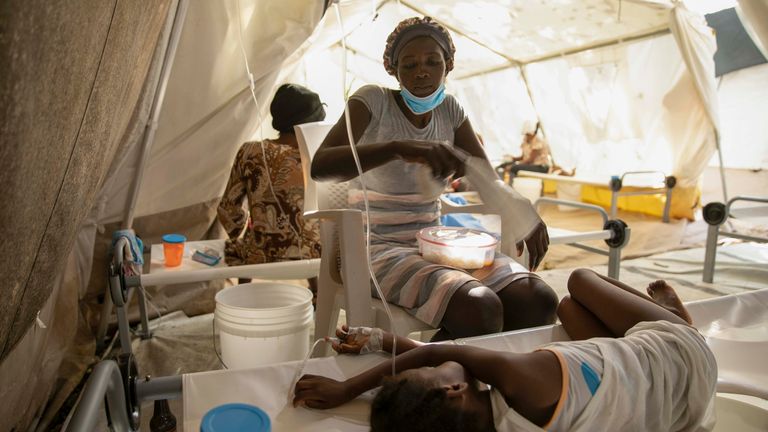
    In a hospital located in a perilous part of Haiti’s capital, a woman began to tremble and subsequently lost consciousness one morning.A doctor and two nurses rushed to help her.

    They put electrodes on her chest and turned on a machine to help her breathe, while watching a computer screen that showed her oxygen level was very low at 84%.

    Even more concerning, the hospital in the Cite Soleil slum didn’t have enough medicine to treat convulsions.

    “The medicine she really needs, we hardly have,” said the doctor. Rachel Lavigne is a doctor who works with a group that helps people with medical needs.

    Every day in hospitals and clinics in Port-au-Prince, there is a shortage of important medication and equipment because violent gangs are taking control of the city and surrounding areas. They stopped people from using the roads, made the main airport close in March, and stopped the country’s biggest seaport from working properly, so important supplies are stuck in containers.

    “Everything is falling apart,” Lavigne said.

    Haiti’s health system has always been weak, but now it’s almost falling apart after gangs attacked together in February. 29, attacking important buildings and services in the main city and nearby areas.

    The violence has made many hospitals and dialysis centers shut down, even the biggest hospital in Haiti. The State University of Haiti Hospital in downtown Port-au-Prince was supposed to open on April 1 after closing due to an attack, but gangs have gotten in and it’s not able to reopen.

    One of the few places still open is Peace University Hospital, which is located to the south of the closed airport. Starting in February. From March 29 to April 15, the hospital helped around 200 people who were shot, and all the beds are still occupied.

    “We really need fuel right away because we use generators. ” “Otherwise, we might have to shut down our hospital,” said Dr. [Director’s Name]Paul Junior Fontilus mentioned in a message.

    Between January and March, over 2,500 people were hurt or killed in Haiti. This is more than 50% higher than last year, according to a new report from the UN.

    Sometimes, even when a hospital is open, there are not enough doctors and nurses because gang violence in Port-au-Prince makes it unsafe for them to go to work.

    More and more sick people with cancer, AIDS, and other serious illnesses can’t get the help they need because of the chaos. Gangs are also stealing from and burning down pharmacies in the city’s downtown area.

    Doctors Without Borders has run out of medications for diabetes, high blood pressure, and asthma inhalers that help prevent deadly attacks are not available in the capital.

    Doctors at the hospital tried to help a boy with a bad asthma attack by giving him oxygen. That didn’t help, and another kind of medicine didn’t help either. In the end, they gave him a shot of adrenaline, which is used in emergencies to treat severe allergic reactions.

    “We make things up and try our hardest for the people here,” Lavigne said.

    People are getting sicker because they can’t get the medicine they need for their long-term health problems, said Jacob Burns, who helps lead Doctors Without Borders.

    “It gets very bad and they don’t have any other choices,” he said. “Some people don’t have many choices at the moment. ”

    The hospital in Cite Soleil had to reduce the number of patients it can help each day from 150 to 50, but they still make sure to take care of people who need immediate help.

    Many people wait outside the hospital every day. They might get shot by gangs who control the area while they wait for medical help.

    Anyone can go to the hospital, but doctors will decide who gets treated first by setting up a special area called triage. “People who don’t need help right away should come back another day,” Burns said.

    On Friday morning, 51-year-old Jean Marc Baptiste walked slowly into the hospital’s emergency room with a bandage on his right hand that was bleeding. He said that the police in a strong vehicle shot him yesterday while he was gathering wood to sell in an area where gangs are in charge.

    When they got inside, the nurses took off the bandage and saw a big cut on his thumb. He cried because it hurt. Lavigne told him he should see a plastic surgeon, but the hospital doesn’t have one. She also ordered X-rays to check for any broken bones.

    The Cite Soleil hospital usually helps three injured people every day, but sometimes it can be as many as 14, the staff said.

    Five people who were shot arrived at the hospital after being stuck on a bus all night because of a lot of shooting.

    “He said Cite Soleil was a place where a lot of violence happened for a long time. ” “Now there is a lot of violence everywhere and it’s causing problems for everyone. “

  • 58,000 children face malnutrition after Haiti’s capital blocked by gangs – UN

    58,000 children face malnutrition after Haiti’s capital blocked by gangs – UN

    The capital of Haiti is mostly blocked off by gangs, making it hard for aid to reach 58,000 children with the most severe malnutrition. This is causing a big problem.

    The leader of UNICEF, Catherine Russell, said that most of the kids in Haiti need help. Also, women and girls are facing a lot of violence based on their gender, and many armed groups have children in them.

    Russell said the situation in Haiti is really bad and it’s getting worse every day, when speaking to the UN Security Council. “Port-au-Prince is now almost completely closed off because of blockades in the air, sea, and land. ”

    Haiti is getting ready for a new nine-member council to replace Prime Minister Ariel Henry. He promised to step down on March 11 while he was outside the country and under pressure from the United States.

    Haiti’s gangs, who have joined forces in an alliance called “Viv Ansanm” (Living Together), have been trying to remove Henry from power by attacking the capital. Despite Henry’s announcement, the attacks have not stopped.

    Gangs and police fought near the National Palace on Monday, according to local media. The new council is going to start working in the palace, but we don’t know the exact date yet.

    “Since March 8, almost 100,000 people from Port-au-Prince in Haiti have moved to other areas to get away from gang violence and find safety,” the UN special envoy on Haiti Maria Isabel Salvador said to the Security Council. Many people in the country don’t have enough food to eat, and the United Nations asked for $674 million in funding for 2024, but they only got 8% of it so far.

    ‘Running low on gas’

    Armed men stopped the fuel import terminal in Haiti on Monday. They took control of the trucks and asked for the port to be closed.

    Groups of people with weapons stopped the Varreux terminal from working for almost a month in October 2021, and then again for more than a month a year later. This stopped most businesses from happening and made the government ask for help from other countries.

    “They don’t have much fuel left,” said Carl Skau, Deputy Executive Director of the World Food Programme, who visited Haiti last weekend. He told Reuters this on Monday. “A ship is on its way. ” If the ships can park and unload their goods, then they are safe. But we’re worried about how many days it will take until they have no more supplies.

    Many businesses rely on diesel generators for power. During the past blockades, hospitals had to close, radio stations stopped working, mobile antennas ran out of fuel, and transportation stopped.

    In October 2023, the Security Council gave permission for a security mission from another country to go to Haiti. But Kenya has not yet started the mission because of legal and funding problems. Kenya has taken the lead in this mission but it has not started yet.

    Russell said that if security forces go to crowded cities, the safety of the people there is the most important thing.

    She said we should try not to use force in places where people live, and our mission should only use the least harmful methods needed to enforce the law.

  • Canada to add Haiti evacuation flight in response to last-minute requests

    Canada to add Haiti evacuation flight in response to last-minute requests

    Canada plans to assist more individuals in departing Haiti as a result of a surge in last-minute requests for aid.

    Foreign Affairs Minister Melanie Joly said in a message on X that officials received many extra requests before the last planned government flight out of the country.

    “As we were finishing helping people leave Haiti, we started getting a lot of last-minute requests for assistance,” she posted on social media on Sunday. “If you missed today’s flight, don’t worry. We will have another flight next week. “

    The government arranged a flight on Sunday, which was likely the last one, to bring Canadians home from Haiti. This is because Haiti is dealing with a lot of gang violence and doesn’t have enough food and medicine.

    “The situation in Haiti is really tough. That’s why Canada has been helping the Haitian national police and working with other countries to bring stability to Haiti. We also help Canadians who are in Haiti and need support,” said Prime Minister Justin Trudeau during a per-budget announcement in Montreal.

    “Webegan moving people to safety several weeks ago and we will keep helping them as much as we can. “

    During the Montreal news conference, Joly said the extra flight would make everyone happy.

    Joly said on Friday that her department has been keeping a close eye on requests for help and has decided that no more flights are necessary.

    Last week, she said that Canada will use helicopters to take Canadians from Port-au-Prince to a secret place, and then fly them to Montreal on a special plane.

    One flight leaves on Wednesday, then another on Friday, and finally one on Sunday.

    Canada was using helicopters to bring people to the Dominican Republic, but only people with Canadian passports could go. People who were allowed to stay in a place for a longtime were not allowed to be part of something.

    People going to Montreal pay for their own plane ticket, just like they would for a regular flight. But Canadians who were in the Dominican Republic had to pay for their own place to stay and their flight back home. The government helped them if they needed it.

    Earlier this week, Global Affairs Canada said it helped over 250 Canadians and their close family members leave Haiti.

  • Haitians run from chaos caused by gangs as their neighbours boost military power

    Haitians run from chaos caused by gangs as their neighbours boost military power

    Many Haitians are trying to leave the country because there is still no plan for a new government or international troops to help restore order.

    Dangerous gangs now control most of the city, causing a lot of deaths and leaving many people without enough food to eat.

    “Pierre Joseph, a 34-year-old Save the Children worker, said that every day is very important and can be life or death,” the charity stated. It said he had to leave two different homes with his wife and six-month-old baby, and was having a hard time finding things they needed.

    “He said that the government is not working for the first time and things like food and power are no longer available. ” “Everyone is scared and going to another country. ”

    The airport and seaports in Port-au-Prince have been closed for a month because of gangs, but the airport in Cap-Haitien started flights to Miami last week. This has made many people want to leave if they can.

    Other countries near Haiti are making their borders stronger. The Dominican Republic, the only country that shares a land border with Haiti, is not allowing refugee camps and has sent many people back to Haiti.

    The Dominican government said that the Foreign Minister, Roberto Alvarez, told the media that they had sent 10,000 soldiers to their 250-mile border. This is costing a lot of money and causing problems for trade between the two countries.

    Haiti doesn’t have any leaders that were chosen by the people, and the capital city is controlled mostly by gangs, leading to chaos and lawlessness.

    Haiti’s Prime Minister Ariel Henry said he’s quitting on March 11 because of the growing violence and he can’t come back from another country. A new group of leaders from the region will choose the next prime minister.

    In 2022, Henry asked for help from other countries to make the police keep things calm, but it’s taking a long time and is being stopped until a new group takes over.

    Soldiers from the Bahamas and Belize went to Jamaica last month for training by a Canadian group to help Caribbean troops go to Haiti.

    Jamaican Defense Force Lieutenant Colonel Kevron Henry said in an interview that this is another step to make sure that regional forces are well-trained, work together, and prepared for any unexpected situations in the area.

    Alvarez said that the military intelligence showed that a lot of people join gangs because they feel like they have no other choice due to their financial situation and because they are scared of violence.

    The new temporary council will need to find actual money to pay for police intelligence and equipment in Haiti, he said.

    “I didn’t say it would be easy, but I think it can still be done. The national police is still around,” he said.

    Even though many countries promised to give a lot of money to the U.N, only a little has actually been given. The security mission trust fund is committed to keeping things safe. Gangs make money by threatening people and getting paid to release them. They also get support from powerful people, which helps them collect weapons.

  • 53,000 people have left capital of Haiti due to increase in gang violence

    53,000 people have left capital of Haiti due to increase in gang violence

    Over 53,000 people left the capital of Haiti in less than three weeks to get away from continuous gang violence, as stated in a United Nations report on Tuesday.

    Over 60 percent of people are going to the countryside in southern Haiti, and this is causing concern for UN officials.

    “Our friends who help people in need said that these places don’t have enough buildings and the people who live there don’t have enough money to help all the people leaving Port-au-Prince,” said UN spokesman Stephane Dujarric.

    The lower part of the country now has more than 116,000 Haitians who left the capital city, Port-au-Prince, according to the UN’s International Organization for Migration report.

    A lot of people started leaving the capital city, which has about 3 million people, after dangerous gangs attacked government buildings in late February. Criminals set fire to police stations and shot at the main airport in Haiti. They also broke into the largest prisons and let over 4,000 prisoners out.

    The UN says more than 1,500 people have died and 17,000 are homeless by March 22.

    Marjorie Michelle-Jean, a 42-year-old street seller, and her two children, ages 4 and 7, were some of the few people traveling north from the capital instead of south.

    “I want them to stay alive,” she said, because bullets from the street keep hitting our home’s roof. They tried two times last week to go to her hometown in Mirebalais, Haiti, but they couldn’t because of roadblocks.

    She said she will try again for sure. “Port-au-Prince is not safe at all. ”

    The UN found that 70% of the 53,125 people who left Port-au-Prince from March 8-27 had already been forced to leave their homes and were living with family or in crowded and dirty makeshift shelters in the city.

    Over 90% of people leaving the capital of Haiti are taking crowded buses, even though it is dangerous because gangs control the areas they have to travel through. There have been reports of gang rapes and shootings on public transport.


    The fighting made Prime Minister Ariel Henry say last month that he will quit when a new temporary president council is made. Henry went to Kenya to try to get the UN to send East African police to Haiti. But then the attacks started, and now he can’t go to Haiti.

    The group that will pick a new leader and government hasn’t been officially set up yet.

    At the same time, many people are expected to keep leaving Port-au-Prince and moving to other places.

    Gary Dorval, 29, is at a protest and wants to stay until a new government is in charge because he wants to help make things better.

  • Team to select Haiti’s future leader as gang violence envelops Caribbean nation

    Team to select Haiti’s future leader as gang violence envelops Caribbean nation

    Caribbean leaders have announced on Tuesday that almost all groups and political parties have put forward people to be part of a temporary council to choose a new prime minister for Haiti. The country is still dealing with a lot of gang violence.

    The first nine-member council now has only eight members because the Pitit Desalin party, led by Jean-Charles Moïse, who used to be a senator and ran for president, chose not to take a seat last week. Moise is working with Guy Philippe, a former police officer and rebel leader who went to prison in the US for admitting to moving illegally obtained money.

    The December21 group, who supports Prime Minister Ariel Henry, was one of the last to send a name to the Caricom group on Monday. The nomination was delayed because the group leaders argued about who should be chosen.

    Henry cannot go back to Haiti because there is too much fighting. He said he will quit when a new council is made. He went to Kenya for work. He wanted the UN to send Kenyan police to help fight gangs in Haiti. But then, armed men attacked in February. In the city capital, Port-au-Prince, there are still problems that are happening. The sending out of something has been postponed.

    UN deputy spokesman Farhan Haq said on Tuesday that Kenya is worried about how the government is organized in the region.

    “We really hope they can start working as soon as they can,” he said. “But they are worried. ” We want to make sure that the new government plans can be put into action.

    Criminal groups burned police buildings, shot at the main airport and broke into Haiti’s two largest prisons, letting more than 4,000 prisoners escape. On Monday, they broke into and stole things from houses in two wealthy neighborhoods that had been calm before, and they killed at least twelve people during the attack.

    The UN says things in Port-au-Prince are still not good. Schools, hospitals, and government buildings are being attacked. Many of them are not working like they should.

    He said that the health sector is still having a hard time because there are not enough medical supplies, healthcare workers, and blood.

    Many people died in the attacks, and about 17,000 people have no home. Most of them went to the calmer southern part of Haiti. The UN Office for the Coordination of Humanitarian Affairs reported this.

    “We are very worried about the fighting,” said President Irfaan Ali of Guyana, who is also the leader of Caricom.

    He said to the news reporters on Monday night that time was important because of the situation. He also said that officials are still hopeful for progress.

    “We’ve been having lots of meetings every night because the Haitians need to set up the presidential council,” he said. We have made progress.

    The council will choose a temporary prime minister and also pick ministers, a temporary electoral council, and a national security council. All members of the council need to support the use of a foreign armed force.

    The EDE/RED party, led by former prime minister Claude Joseph, the Montana Accord, which includes civil society leaders and political parties, Fanmi Lavalas, the party of former president Jean-Bertrand Aristide, and the Jan party have all been given spots on the council. The 30 Collective represents groups that include former President Michel Martelly’s party and businesses.

    One person from Haiti’s civil society and another person from its religious sector will get the remaining two nonvoting positions.

    Caribbean officials have not shared all the names nominated for the council.

  • Trudeau discusses problem with Haiti’s departing prime minister

    Trudeau discusses problem with Haiti’s departing prime minister

    Prime Minister Justin Trudeau talked with Haiti’s Prime Minister about the problems the country is facing with safety, politics, and helping people.

    The PMO said Trudeau talked to Ariel Henry about the bad situation in Haiti and said that Canada has been supporting Haitian solutions for a long time.

    Henry said on Tuesday that he will quit his job when a new group to run the country is set up.

    Henry cannot go back to his own country because it is not safe. There are a lot of criminal gangs causing trouble and the main airports are closed in Haiti’s capital.

    Representative and some humanitarian organizations took place to discuss the current situation in the Caribbean. Ambassador and the United States secretary of state met in Jamaica on Monday to figure out how to help Haiti during the crisis. Henry stayed in Puerto Rico for the meeting, as reported by the U. SThe state department was helping the person go back to Haiti when it’s possible.

    Trudeau talked to Henry about how important it is for all the important people in Haiti to agree on a plan for fair elections and bringing back democracy.

    Prime Minister Trudeau and Prime Minister Henry confirmed the strong connection between Canada and Haiti, according to a statement from the Prime Minister’s Office.

    Quebec has a lot of people from Haiti, about 140,000 of them.

    Many people from Haiti who live in Montreal are concerned about their family and friends because of the violent attacks in Haiti’s capital. Wedne Colin’s family had to leave their homes multiple times to find a safe place away from armed gangs who have taken over Port-au-Prince.

    The United States. Secretary of State Antony Blinken said on Monday that the United States will give another $100 million to help send a group of countries’ soldiers to Haiti.

    In the past, the US has asked Canada to lead a military mission, but Trudeau said it’s not certain it would make the country more stable.

    Blinken said the US will give $33 million to help and support the people in Haiti, and also revealed a plan that Caribbean leaders and all parties involved in Haiti’s politics have agreed to, in order to make the change in leadership happen faster. They want to create a group to choose the new president.

  • US promises extra $100 million for multinational force to be deployed to Haiti

    US promises extra $100 million for multinational force to be deployed to Haiti

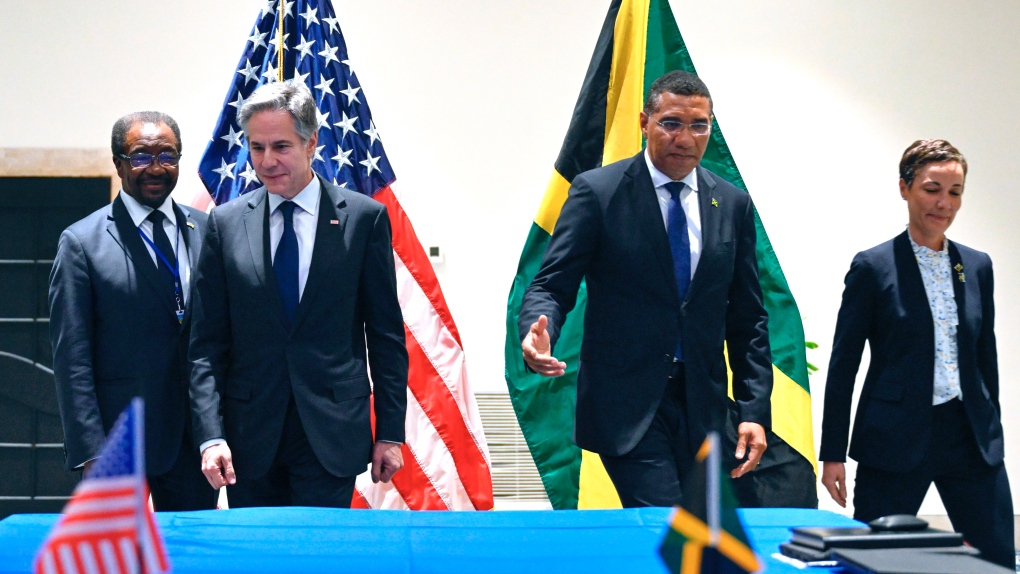
    US Secretary of State Antony Blinken said on Monday that the US will give an extra $100 million to help send a group of forces from different countries to Haiti. This comes after a meeting with leaders from Caribbean countries in Jamaica to deal with the serious problems happening in Haiti.

    Blinken also said the US will give another $33 million in help and agreed to make a plan, together with Caribbean leaders and Haitian people, to speed up the creation of a “presidential college. ”

    He said the college will take specific actions to help the Haitian people and support the multinational force led by Kenya.

    Members of Caricom, a group of countries that trade together, support the proposal made at Monday’s important meeting.

    Guyanese President Irfaan Ali said that Haiti is very close to a disaster. “We need to act fast and make clear decisions. ”

    He said he is very sure that we have found things in common to support a solution that is led and owned by people from Haiti.

    At the same time, Jamaican Prime Minister Andrew Holness said the meeting was still being worked on.

    “He said that Haiti is at a crucial moment. ” “We are very sad that too many people have been hurt by criminal gangs and it is too late to help them. ”

    The Prime Minister, Ariel Henry, who is having a tough time and is being asked to step down or agree to a temporary council, did not go to the meeting. He was not allowed to go back to his country because there is a lot of violence and crime by gangs in Haiti’s capital and the main airports are closed.

    Henry stayed in Puerto Rico and was trying to go back to Haiti when it was possible, according to a short message from the Department of State in Puerto Rico.

    While the leaders had a private meeting, Jimmy Chérizier, who is considered the most powerful gang leader in Haiti, told the reporters that if the international community keeps going in the same direction, it will make Haiti even more chaotic.

    “We Haitians need to choose our leader and decide what kind of government we want,” said Chérizier, a former police officer known as Barbecue, who leads a group called G9 Family and Allies. “We will also find a way to help improve Haiti’s current difficult situation. ”

    The people in the group called Caricom organized a meeting in Jamaica. They have been asking for a new government in Haiti for a while now, while there have been protests asking the current leader, Henry, to step down.

    “The world needs to help Haiti transition to a peaceful new government,” said US Assistant Secretary for Western Hemisphere Affairs Brian Nichols on X, on Twitter. Nichols will go to the meeting.

    There are worries that a solution we have been looking for may still be hard to find. Caricom said in a statement on Friday that they are holding an urgent meeting in Jamaica because they are not making enough progress yet.

    Mia Mottley, the leader of Barbados, said that almost all the ideas that Haitian leaders have suggested are the same. This means there is a strong need to make a council to choose a new prime minister and form a government.

    Caricom accidentally showed her comments for a short time and then stopped showing them suddenly.

    The meeting took place while strong gangs kept attacking important government locations in Port-au-Prince, Haiti’s capital.

  • Haiti extends curfew at night and state of emergency

    Haiti extends curfew at night and state of emergency

    Haiti’s leaders said they will continue to have a state of emergency and a curfew at night to stop violent gang attacks in Port-au-Prince. This is part of a fight for political control.

    A curfew was supposed to last for three days, but gangs are still attacking police stations and other government buildings at night. The police in Haiti are having a hard time stopping the violence because they don’t have enough people and resources.

    “The people with the guns basically control Haitian politics,” explained Robert Fatton, who is an expert in Haitian politics at the University of Virginia. “The gangs are winning the fight for now. ”

    The attacks started one week ago, after Prime Minister Ariel Henry said he would have elections in mid-2025, while at a meeting with leaders from the Caribbean in Guyana. Gangs have set fire to police stations, fired guns at the main airport, and broke into Haiti’s two largest prisons, letting more than 4,000 prisoners go free.

    At that time, Henry went to Kenya to ask for a UN-supported police force from the East African country to go to Haiti and help stop gangs. In January, a court decided that sending the troops was not allowed. It’s not certain if the troops will still go to Haiti because the situation there is getting worse.

    Henry is now in Puerto Rico because armed groups stopped him from returning home on Tuesday. They made it impossible for him to land at the airport.

    Many people have been killed in recent gang attacks in Haiti, including some police officers. The fighting has made over 15,000 people have no place to live, and also 300,000 people lost their homes because of gang fights.

    Also, there were reports that on Thursday gangs stole food from shipping containers at the main port in Port-au-Prince. This raised worries that the food supply in the capital and other areas would run out fast.

    Laurent Uwumuremyi, the director of Mercy Corps in Haiti, said that if we cannot get to those containers, people in Haiti will run out of food soon.

    The port operator, Caribbean Port Services SA, announced on Thursday that it is stopping all activities due to harmful acts of damage and destruction.

    The UN spokesperson, Stephane Dujarric, said that because of the danger, the World Food Program had to stop using boats to take food and medicine from Port-au-Prince to other places in the country. Twenty-four trucks with equipment, medical supplies, and food are unable to move from the port in Port-au-Prince.

    He also said that the UN special representative for Haiti, Maria Isabel Salvador, wants the UN to send a group of soldiers right away to stop the country from falling into more chaos because gang violence in Haiti is at an all-time high.

    Salvador is talking a lot with the prime minister, the government, and other political groups to help Haitians solve their problems peacefully.

    Meanwhile, an American A Marine Corps security team called FAST is going to Haiti to keep the U. SsafeAn embassy is like a home for ambassadors from one country in another country. It’s a place where they work and represent their country’s interests. The official talked, but didn’t want to say their name because they weren’t allowed to talk about the deployment. A final choice about where to send something has not been made yet.

    “The country is in trouble and everyone sees it,” said Fatton, who had negative things to say about the U. SThe government didn’t do anything for over two years and now Haiti is in a bad situation. “I am really surprised. ” I thought I had seen it all.

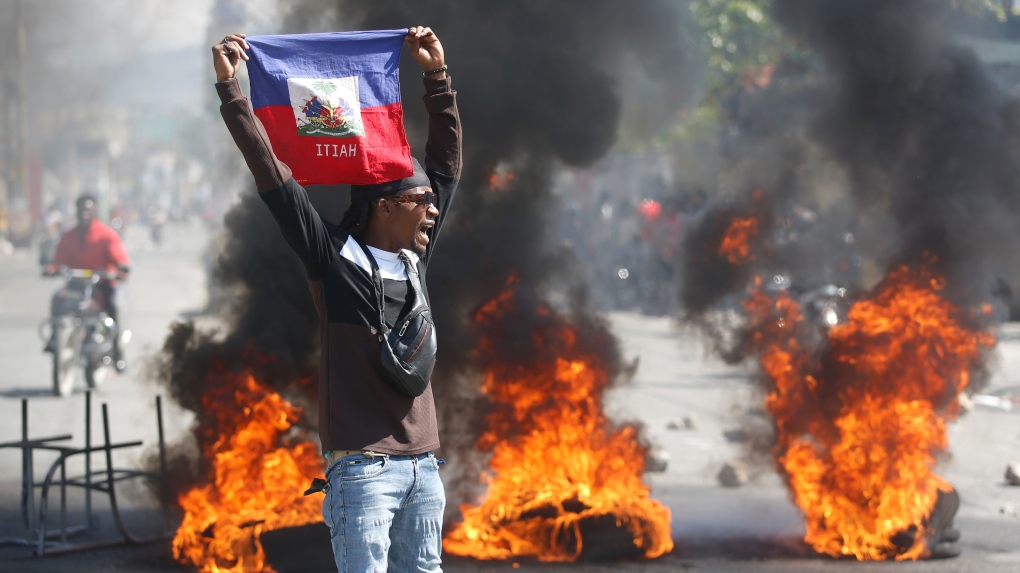
    Gunshots could still be heard in parts of Port-au-Prince on Thursday. People were blocking roads with burning tires and calling for new leaders for the country, which has been through a lot. Schools and businesses stayed closed, but some neighborhoods saw a few stores and banks open for limited hours.

    Germain André, a 40-year-old shop owner, has been having a hard time finding food to sell in Port-au-Prince because there is not enough food available due to people moving around in fear. He sells things like rice, oil, beans, and milk in his store.

    “He said that traveling is really frightening because armed groups have been stopping cars. ” No one is safe. Everyone is afraid of one another. We are not sure if they are part of a gang.

    The Royal Bahamas Police Force set up a blockade in the southeast of the Bahamas because of the worsening situation in Haiti. This was because there were two jail breaks and a lot of Haitians were forced to leave their homes because of the violence. Haitians like to go to the Bahamas, which is about 530 miles north, to escape their country.

    ambassador to the United Nations, addressed the Security Council on the ongoing crisis in Yemen.

  • Haiti imposes nightly curfew to settle things down after violent jail break

    Haiti imposes nightly curfew to settle things down after violent jail break

    In order to ensure the safety of the streets in Haiti, the government has implemented a curfew requiring people to remain indoors at night. This occurred due to the extensive violence, as gang gunmen seized control of the two primary prisons and set the prisoners loose.

    A 3-day state of emergency started on Sunday night. The government said they will search for the people who escaped from prison and committed crimes like killing and kidnapping.

    “The police were told to use all the right ways they have to make sure people follow the curfew and catch anyone who breaks the rules,” said a statement from Finance Minister Patrick Boivert, who is now the acting prime minister.

    Last week, Prime Minister Ariel Henry went to other countries to get support for bringing in a UN security force to help make Haiti safer and more stable in the face of rising crime.

    A new law was made after a very violent weekend in Haiti. Since Thursday, at least nine people have been killed in Port-au-Prince, including four police officers. Gangs have been attacking government buildings and important places like the airport and soccer stadium.

    The attack on the National Penitentiary on Saturday was a big surprise for Haitians, even though they are used to the constant threat of violence.

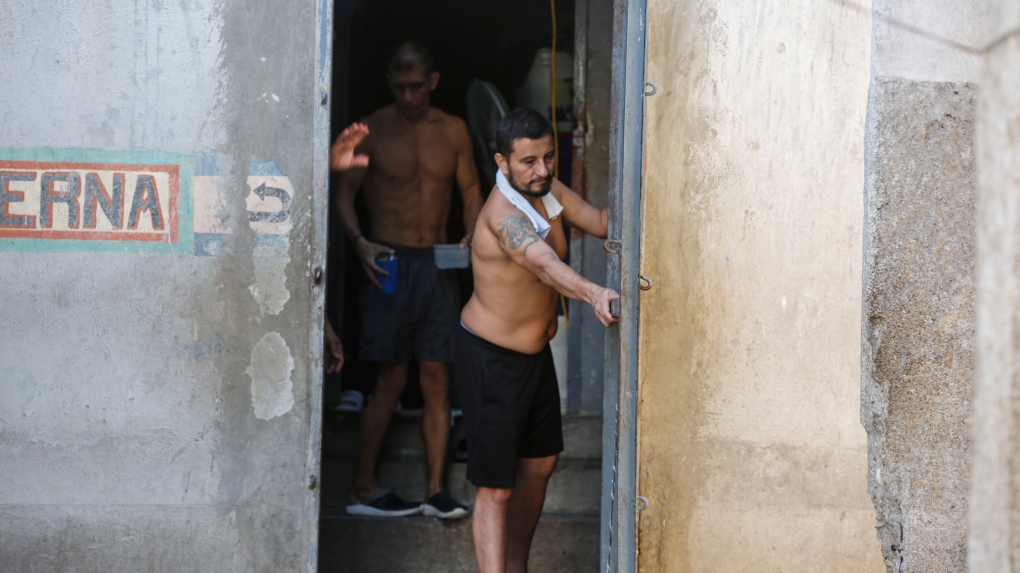
    Almost all of the around 4,000 prisoners got away, so the prison was strangely empty on Sunday. There were no guards around and there was a mess of sandals, clothes, and furniture outside. Three people were shot and are lying at the entrance of the prison.

    In a different area, two men were found dead with their hands tied behind their backs, lying on the ground. People had to walk around roadblocks made of burning tires to get by.

    18 ex-Colombian soldiers stayed in prison for being accused of working as mercenaries in the murder of Haitian President Jovenel Moise in July 2021. During the fighting on Saturday night, some of the Colombians recorded a video asking for their lives to be spared.

    “Please, please give us help,” Francisco Uribe, one of the men, said in a message that many people have shared on social media. “They are killing people without caring who they are inside the cells. ”

    On Sunday, Uribe told reporters that came into the usually well-protected place, “I didn’t run away because I’m innocent. ”

    Colombia’s government asked Haiti to take extra care of the men.

    Another prison in Port-au-Prince, with about 1,400 prisoners, was also taken over.

    Group of armed men took over the country’s main soccer stadium and caused damage. They also kept one worker there against their will for a long time, according to Haiti’s soccer federation.

    Shots were heard in many parts of the city. Many people in Haiti lost their internet connection because the main mobile network said that a fiber optic cable was cut during a violent attack.

    In less than two weeks, gangs have been attacking state institutions more often. They are working together more and targeting places like the Central Bank, which they wouldn’t have attacked before. Gangs worked together to attack and kill four police officers on Thursday.

    Last week, gangs shot at Haiti’s airport and the U. SThe Embassy announced that they are stopping all work trips to the country and they are asking all American citizens to leave as soon as they can. The embassy said it will cancel all consular appointments until Thursday.

    The Biden administration is very worried about the danger in another country. They won’t send soldiers, but they will give money and help with planning.

    There have been more attacks after violent protests became even more deadly. The prime minister went to Kenya to talk about a plan for a security mission in Haiti.

    Henry became the prime minister after Moise was killed. He keeps delaying the elections for both the parliament and the president, which haven’t happened for almost 10 years.

    Haiti’s National Police has about 9,000 officers to keep over 11 million people safe, as reported by the United Nations. They often can’t keep up with gangs, who are believed to control most of Port-au-Prince.

    Jimmy Cherizier, a former police officer called Barbecue, now leads a gang group and admitted to causing the increase in attacks. He wants to catch Haiti’s police chief and government ministers and stop Henry from coming back.

    The prime minister, who is a brain surgeon, ignored requests for him to quit and didn’t say anything when asked if he thought it was okay to go back home.

  • Gangs raid Haiti’s biggest jail, forcing hundreds of convicts to escape

    Gangs raid Haiti’s biggest jail, forcing hundreds of convicts to escape

    Many prisoners escaped from Haiti’s main prison after armed gangs attacked the facility during a violent night in the city. At least five people died on Sunday.

    The jailbreak made Haiti’s violence worse. Violent groups are increasing their attacks in Port-au-Prince while the Prime Minister Ariel Henry is away trying to get support for a UN-backed security force to make the country more stable.

    Three people were shot and were lying at the prison entrance. The entrance was wide open and there were no guards around. On Sunday, empty concrete patios were covered in plastic sandals, clothes, and electric fans. Normally, they are crowded with people. In a different area, two men were found dead with their hands tied behind their backs. People walked by the roadblocks set up with burning tires.

    Haiti’s government asked people to stay peaceful while it tries to catch the people who committed crimes and got away when violence broke out.

    The police are trying their best to catch the prisoners who escaped and the people who helped them. They want to bring back the peace and order in the country.

    Arnel Remy, a lawyer who helps people in prison, said that less than 100 out of almost 4,000 inmates are still in jail. 18 ex-Colombian soldiers accused of being hired to help kill the Haitian President Jovenel Moise decided to remain in Haiti. On Saturday night, some Colombians posted a video asking to be saved.

    “Please, we need your help,” said Francisco Uribe in a message that was shared a lot on social media. “They are killing people inside the cells without choosing who to target. ”

    On Sunday, Uribe told reporters that he didn’t run away because he is innocent.

    Colombia’s foreign ministry asked Haiti to give extra protection to the men.

    When there was no news from the prison, families went there to see if their loved ones were okay.

    Alexandre Jean said she doesn’t know if her son is alive. She looked around the cells to see if she could find him. “I am unsure of what to do. ”

    There was a lot of violence on Saturday night, with many different areas saying they heard gunshots.

    There were reports that about 1,400 prisoners escaped from a prison in Port-au-Prince. Gangs with weapons took control of the country’s main soccer stadium and caused damage. They also held one worker captive for several hours, according to the soccer federation. Many people in Haiti couldn’t use the internet because the main mobile network’s connection got cut.

    In less than two weeks, gangs have attacked several state buildings, working together more and targeting places like the Central Bank that they usually would not have. Gangs attacked and killed four police officers on Thursday.

    The US is taking steps to help keep the airport safe in Haiti after gangs shot guns there. The embassy stopped all its official trips to the country and told American citizens to leave as quickly as they can. The embassy said it will cancel all consular appointments until Thursday.

    The Biden administration is watching the worsening security situation very closely. They are not sending troops but are providing money and help with organizing things.

    An official from the National Security Council said that violence only makes it harder to have a democratic change and hurts many people’s lives. A person in charge, who didn’t want to be named, repeated what the United States said. helping with voting, fair government, and bringing back democracy.

    The main place where the violence happened on Saturday night was the National Penitentiary in Haiti. Some gang leaders are being held there. During the shooting, police asked for help.

    “The police union said on social media that they need help and used the “SOS” emoji eight times. ” “Let’s get the army and the police to stop the bad guys from getting into the prison. ”

    Fights happened after a lot of angry protests that got worse in the last few days. The prime minister went to Kenya to try to save a plan for the U. Nto send a security mission to Haiti, led by Kenya. Henry became the prime minister after Moise was killed. He has been delaying the elections for both the parliament and president, which didn’t happen for almost ten years.

    Haiti’s National Police has about 9,000 officers to keep more than 11 million people safe, according to the U. NThey are often outnumbered and overpowered by gangs, who are believed to have control over most of Port-au-Prince, up to 80 per cent.

    Former high-ranking police officer Jimmy Cherizier, also known as Barbecue, is now in charge of a group of gangs and says he is the one behind the recent increase in violent attacks. He said they wanted to catch the leader of Haiti’s police and government officials to stop Henry from coming back.

    The prime minister, who is a brain surgeon, has ignored demands for him to quit and didn’t say anything when asked if he thought it was okay to return home.

  • UN requests US$674 million as sexual and murderous gang violence in Haiti increases

    UN requests US$674 million as sexual and murderous gang violence in Haiti increases

    Violence in Haiti is getting worse, especially in the capital city and nearby areas. Armed gangs are killing people and committing sexual violence. The United Nations is worried about the situation.

    Ulrika Richardson said to UN reporters in an online meeting from Port-au-Prince, Haiti, that the amount of violence people experience is like being treated in a cruel and unfair way.

    During her time at the United Nations, Richardson said she saw things that were worse than anything she had ever seen before.

    She said that men, women, and children are going through a lot of pain and suffering. She pointed out that sexual violence increased by 50% between 2022 and 2023 and 314,000 Haitians have left their homes to escape the violence. Many of them are now living on the streets and in schools, and they need help.

    Richardson stated that 5. 5 million people in Haiti need help, with 4. 4 million – about 40% of the population – having a big problem getting enough food.

    The UN just asked for money to help people in need. They want $674 million, and half of it will be used to buy food.

    Even though the needs are greater this year, Richardson said the request for help is smaller than the US$720 million request for 2023, which only received 34 percent of the funding.

    She said that the UN is trying harder to work with local groups in Haiti and is finding that it is working well. They are now figuring out how to work even better with these groups.

    Since the assassination of Haitian President Jovenel Moïse in 2021, Armed gangs have become stronger and there is more trouble with the government. Before he was killed, people were protesting and calling for him to step down because of corruption and because they said his time as president was finished.

    In 2023, over 8,400 people were reported killed, injured or kidnapped, which is more than twice the number reported in 2022. The gangs keep on fighting for control of the area and are thought to have control of about 80 percent of Port-au-Prince.

    Kenya said they would lead a big group of police to help make Haiti peaceful again. This was approved by the UN in October. It’s not clear when or if the soldiers will be sent because a court in Kenya said in January that it’s not allowed. The government of the East African country is asking for another decision to be made.

    On Monday, the United States said it will give money, equipment, and logistical support to help bring peace to Haiti. They are still not sure when a multinational force will be sent there.

    When she was asked if Haitians want help from a multinational force, she said, “If you ask people on the street if they want help dealing with gang violence, they will say yes. “

  • Haitian President’s wife charged in his assassination

    Haitian President’s wife charged in his assassination

    The murder of President Jovenel Moise in 2021 is being examined by a judge in Haiti. The judge has accused his wife, the former prime minister, and a former police chief of being involved in the murder.

    A 122-page document was leaked and published by a local media outlet. It says that the president’s widow, Martine Moise, and a former Prime Minister named Claude Joseph planned to kill the president so that she could take his place.

    Judge Walther Wesser Voltaire said to arrest and put on trial about 50 people for shooting Moise at his home in July 2021. A group of around 20 attackers, many of them hired from Colombia, were there.

    All the people accused were sent to the criminal court to be judged for crimes like planning together to commit a crime, stealing using weapons, causing fear in people, killing, and helping someone else to kill.

    The document said that the former first lady’s statements about the attack were full of contradictions and couldn’t be trusted.

    Joseph and the ex-leader of the national police, Leon Charles, were also found to have been involved in the killing. AyiboPost said that the document didn’t clearly show who was behind the assassination or who paid for it.

    Moise has spoken out against unfair arrests on social media. Joseph told the Miami Herald that the Prime Minister was using the Haitian justice system to go after his enemies in a classic coup.

    A person from Henry’s office said the judge can make decisions on his own according to the law and what he thinks is right.
    Miami court case

    A different trial for Moise’s murder is happening in Miami.

    The United States decided it had the right to handle the case because part of the assassination plan was made in South Florida. 11 people are being charged with being involved in a murder.

    We tell important stories about US politics, Canada’s diverse culture, and South America’s growing influence.

    Six out of 11 people admitted to being part of a plan to send Colombian soldiers to capture Moise, but they later decided to change the plan and kill him instead.

    The people who were planning secretly wanted to take out Moise and put Christian Emmanuel Sanon in charge instead, according to the US.

    Since Moise’s death, Haiti has become even more chaotic. There hasn’t been an election and Moise is still the president.

    Henry, who is the head of a group that disagrees with the current leaders, has postponed the elections for an unknown amount of time. He said it’s because there was a really bad earthquake and the criminal groups with lots of weapons are getting stronger. He asked for help from other countries.

    Gangs are becoming a big problem in many parts of the country. They now control most of the capital city and the number of murders has more than doubled in the past year to almost 4,800, according to a report from the United Nations.

    Kenya is getting ready to lead a team approved by the UN to help the police in Haiti. But other countries are cautious about helping because they are worried about past mistreatment by foreign missions and accusations against Haiti’s government.

  • Head of Haiti calls for calm as violent protests grow

    Head of Haiti calls for calm as violent protests grow

    Haiti’s leader, Prime Minister Ariel Henry, went on the radio on Thursday to ask Haitians to come together to help the country.

    Mr Henry spoke to the whole country because lots of people were protesting and asking him to leave his job.

    Haiti has had a lot of problems with gangs fighting for a long time.

    In the latest event, police shot and killed five armed members of a group that was supposed to be protecting the environment. Some people think the group has turned into a military-like group.

    Tensions were increasing in Haiti before 7 February, the day when new presidents usually take office.

    Haiti does not have a president since Jovenel Moïse was killed by Colombian soldiers in July 2021.

    Mr Henry became Mr. Moïse’s prime minister only one day before the former president was killed by gunfire. He took office two weeks after Mr Moïse was killed.

    He has been in charge of the country for a while and keeps saying he will finally hold the elections that have been postponed for a long time.

    In December 2022, he made an agreement with political parties and community groups to have elections in 2023. The new government would then be ready to start on 7 February 2024.

    But in 2023, there were no elections because Mr. Henry said that the increasing gang violence made it difficult to have a fair election.

    Haiti has not had any elected government officials since January 2023 because they have failed to hold presidential and legislative elections.

    People are upset about the lack of leadership in politics and the high levels of violence. This has caused protests because almost 314,000 people have been forced to leave their homes.

    Gangs are controlling the country. We are not able to eat. One person told the news that they can’t send their kids to school.

    Another person protesting said to AFP, “this Wednesday is a very important day”. “Today is the day that Ariel Henry has to go away from his job. ”

    The situation got worse when Guy Philippe, a former police chief who helped remove President Bertrand Aristide 20 years ago, came back.

    Philippe was sent back to Haiti in November from the United States. He had been in prison there because he admitted to taking bribes to guard drug shipments.

    Ever since he came back, he has been making videos on social media asking people to fight against Mr Henry.

    On Tuesday, Philippe was seen in the main city, Port-au-Prince, greeting his fans. Later, he talked on a live radio show and told listeners that the fight is just starting.

    The situation got worse as police faced armed members of Haiti’s Security Brigade for Protected Areas and shot five of them dead.

    Some people say that some members of BSAP are friends with Philippe and the group has been accused of becoming more like a military group than a group that protects the environment.

    Mr Henry tried to control the brigade’s power by firing the department head in charge of the group, but that just made the members even angrier.

    He asked the United Nations to send soldiers to Haiti to stop the gangs that control a big part of the country. Only Kenya has said they will send officers so far.

    Kenya’s assistance is uncertain because a court stopped the deployment.

  • Kenya’s Ruto confirms mission to Haiti will take place despite court ruling

    Kenya’s Ruto confirms mission to Haiti will take place despite court ruling

    A leader in Kenya’s opposition has said that President William Ruto is planning to ignore a court decision that says police should not be sent to Haiti.

    Ekuru Aukot was able to successfully stop the army from being sent out by taking the case to court. He believes that only the president has the power to send out the army, not the police.

    The court said that the mission was not allowed by law.

    MrRuto said on Tuesday that the mission could happen “as soon as next week” if all the necessary paperwork is completed to meet the court’s requirements.

    In November, Kenya’s government approved sending 1,000 officers to lead a group of countries’ force in Haiti. This is because gangs in Haiti are trying to take over more areas.

    Last week, a judge said that the National Security Council in Kenya, which is led by the president, cannot send regular police to other countries.

    It said that the council can only send soldiers, not police, to keep peace in places like Haiti.

    The court said both countries need to agree before the soldiers can go there.

    Justice Chacha Mwita said Kenya’s plan to send police to Haiti is a good idea, but it must follow the law.

    Mr Ruto said at a meeting in Rome that he thinks a request will come soon to meet the Kenyan court’s demands.

    “The mission is going as planned. ” He said the mission is a big job for all people.

    When they asked if Haiti is trying to get what it needs, Mr. Ruto said “Yes, definitely. ”

    “Haiti wrote this formally, not recently, but several months ago,” he said.

    Korir Sing’oei, a high-ranking official in Kenya’s foreign ministry, said on X that sending police to another country would not break the law if it follows a mutual agreement between the two countries.

    ButAukot believes that the deployment needs more than just the agreement between two countries.

    Understand Justice Mwita’s thoughts on the differences between ‘service’ and ‘force’. According to the law and the constitution, you can’t send the police to work in another country, Mr. Aukot said on X. He accused the foreign affairs official of giving the president incorrect information.

    During the interview on Tuesday, Mr. Ruto emphasized that it was carried out by the police instead of the military.

    The Kenyan government said it would ask for another decision in court.

    Last week, the US said it backs Kenya’s plan to challenge the court’s decision.

    The Kenyan opposition told the US to stay out of Kenya’s business.

    It is not clear when the Kenyan government will go to court and if other countries who promised to send small forces to support the multinational mission will do it on their own.

    Some countries including the Bahamas and Antigua and Barbuda will send their military forces, and the US will give $200 million to help with the mission.

    An official from the United Nations said last week that the violence caused by gangs in Haiti has become very serious, with almost 5,000 deaths reported last year.

  • Kenyan court refuses to send police to Haiti

    Kenyan court refuses to send police to Haiti

    The Kenyan High Court stopped the government from sending police officers to help fight gangs in Haiti.

    The judge said it would be against the law to send police officers out of Kenya because the National Security Council doesn’t have the power to do so.

    He said that the council can only send soldiers to keep peace in places like Haiti.

    Last year, Kenya agreed to lead a group of countries’ security force in Haiti to stop gangs from fighting.

    Last year, Haitian Prime Minister Ariel Henry requested the UN to quickly send a group of soldiers from different countries to help.

    He said gangs control 80% of the capital, Port-au-Prince, and his government can’t handle it.

    The UN Security Council supported Kenya‘s offer to lead the force and Kenyan lawmakers then approved the deployment.

    Ekuru Aukot, a leader from the opposing side, said that this was a victory for Kenya. He added that the country cannot afford to send officers elsewhere before dealing with its security issues.

    Mr Aukot said that President William Ruto was using the deployment to improve his image and get support from Western countries like the US.

    President Ruto said Kenya has done a great job in helping keep peace in other countries.

    He said that sending officers there would help them get better at keeping things safe.

    Before the decision was made, a police officer told the media without giving their name that they had received two months of very focused training.

    He said that the classes included learning how to use weapons, studying international laws, and understanding the land of Haiti.

  • Rural Haiti seeing an increase in gang violence – UN report

    Rural Haiti seeing an increase in gang violence – UN report

    Finland is going to close the last open border point with Russia on Thursday. This means that the border between Finland and Russia will be completely closed for two weeks.

    The Prime Minister of Finland, Petteri Orpo, said that Russia is helping people to come to the Finnish border, even in very cold winter weather. Finland is sure they will stop this from happening.

    The final checkpoint at the eastern border will close at midnight on November 30th and will not reopen until December 13th, according to Finland’s Ministry of Internal Affairs.

    Helsinki is trying to stop people from crossing over from Russia more and more. This has been happening a lot since Russia invaded Ukraine last year and Finland joined NATO this year.

    Finland’s Interior Minister Mari Rantanen said we need to close the whole eastern border with Russia to protect Finland’s national security from Russian activity.

    The Finnish Border Guard wants to stop people from entering Finland illegally from Russia.

    Finland makes sure its borders are safe and the Finnish Border Guard is ready to act fast on the Government’s new decisions.

    Finland has a 830-mile-long border with Russia. The crossing was one of the only places where Russians could enter after many countries in the West closed their airspace and borders to Russian planes because of the Ukraine invasion.

    Russian Deputy Foreign Minister Alexander Grushko said Tuesday that Finland’s choice to shut down all border checkpoints with Russia will hurt Finnish citizens. He also called it “unreasonable. ”

    “They closed the border, what should we do. Finnish people will be in trouble,” Grushko said at a meeting in Moscow.

    We can talk about smart choices and then try to find a reason behind them. “But sometimes people make irrational decisions,” he said. He also mentioned that only around 700 migrants tried to cross the border between Russia and Finland during this time.

    The Finnish government said that it will close four border points with Russia to stop people from crossing the border illegally. This will happen from this week until February 2024.

    On Tuesday, the interior ministry of Finland said that people are still entering the country from the eastern border even though there are restrictions.

    “Since the start of August, almost 1,000 people from other countries came to Finland without a visa at the eastern border checkpoints. ” Many of them have asked for protection in Finland, the government said.

    “In very special situations, the government is closing the eastern border completely for a short time. This is needed to stop something bad from happening and to keep the country safe. ” The ministry said in a press release on Tuesday.

    NATO leader Jens Stoltenberg said Russia is using migrants to put pressure on Finland at their border.

    “We have seen them using power, cyber attacks, and secret operations to try to weaken our democracies. ” Stoltenberg said Russia is using migration to put pressure on neighboring countries.

    NATO has not been asked by Finland for help with guarding its borders. Stoltenberg said he believes Finland can handle the issue on its own.

    He liked that the European Union’s border agency, Frontex, was going to send 50 guards to the Finnish border.

    Helsinki stopped people from entering at the end of September 2022 because many Russians were trying to escape President Vladimir Putin’s call for hundreds of thousands of citizens to join the war. Over 8,500 people from Russia came across the border in just one day.

    Earlier this year, the Finnish Border Guard started building a fence along the eastern border as a test.

  • Kenyan parliament supports Haiti mission in spite of legal dispute

    Kenyan parliament supports Haiti mission in spite of legal dispute

    Kenya’s government wants to send 1,000 police officers to Haiti to help stop the fighting between gangs. Kenya’s parliament has agreed to this plan.

    This is happening even though a court said they can’t do it until they finish looking into the plan.

    Lawmakers who disagreed with the government’s decision spoke out against the vote, but the ruling party, which has the most members, supported the government after a heated discussion.

    Haiti asked other countries for help to deal with increasing crime.

    Kenya’s proposal was accepted by the UN Security Council last month, but the main opposition party is against it.

    About 300 groups of people who work together to do illegal things are causing problems in Haiti. Almost all of the main city, Port-au-Prince, is being controlled by these groups.

    These groups have gained more power in the city since the president of Haiti was killed in 2021 and the country became chaotic politically.

    At the vote on Thursday in Kenya’s parliament, lawmakers who supported the motion said that the country is part of the world and should not ignore the calls for help from other countries.

    They also said that the East African country has a history of helping keep peace in places like Somalia, the Democratic Republic of Congo and Sierra Leone.

    Parliament agreed to the plan by vote just before the High Court was set to start hearing the case about the deployment.

    The Thirdway Alliance party is against the plan because they think it breaks the rules. They believe only the military should be sent to other countries.

    The government said no to the argument and is standing up for itself in court.

    The court said again that the soldiers couldn’t go until the case was finished.

    The judge will make his decision in January.

    Charles Midega, who is the legal spokesperson for Thirdway Alliance, said to the BBC that it was bold for parliament to talk about sending troops even though there was a court order against it.

    In the parliament, lawmakers who are not in the ruling party said that they shouldn’t vote on something that is currently being decided by the courts.

    However, lawmakers from the ruling party said that parliament can debate the issue as long as they focus on the main points of the case.

    Kenya’s top opposition leader, Raila Odinga, has spoken out against the planned deployment before.

    “Before you go to Africa, Haiti is really close to the United States, which is the strongest country in the world. ” Why did Kenya get picked to lead the multinational force in Haiti.

    Kenya’s President Willim Ruto supports the plan because he thinks Africa wants to help Haiti be free and safe.

    The US has promised to give $100 million to help with the mission, and Canada will also provide money.

    During a trip to Kenya in September, the US Defense Secretary, Lloyd Austin, signed a five-year security agreement. He also thanked Kenya for its leadership in dealing with security issues in the region and worldwide.

    Some people in Kenya think that Mr. Ruto and his government should focus on solving security problems in the country.

    Rights organizations, like Amnesty International, are worried about the Kenyan police using too much force in the past few months.

    The man known as the father of Kenyan literature, Ngũgĩ wa Thiong’o, has criticized the planned deployment. Last month he said tearfully, “If you know the history of Haiti, any black person would not do that. ”

    Haiti was the first country with a black leader in 1804, when Gen Toussaint Louverture led enslaved people in a rebellion.

    This made France very angry because they made a lot of money from Haiti’s plantations. They made Haiti pay a lot of money to the people who used to own slaves for over 122 years.

    The US took control of Haiti from 1915 to 1934, by sending in soldiers and government officials.

    In 1994 and 2004, the US military got involved in other countries to protect democracy and bring back stability.

  • Kenya’s intention to send troops to Haiti criticised by Ngugi Wa Thiong’o

    Kenya’s intention to send troops to Haiti criticised by Ngugi Wa Thiong’o

    A video is circulating online that shows Ngũgĩ wa Thiong’o, a famous Kenyan writer,appearing up set as he criticizes the government’s decision to send police officers to Haiti.

    Kenya is planning to send 1,000 officers to lead a team from different countries to stop gang violence in Haiti.

    But in the video, Prof Thiong’o is upset that the Kenyan government made such a decision – “this current government in Kenya is really unbelievable”.

    They have said yes to bring 1,000 police officers to Haiti. Do you know about Haiti’s past. If you know any history of Haiti, any black person would not behave that way,” he says.

    I am crying. I cannot believe Kenya is doing this. He said that the current government has a leader with a problem in their mind.

    It is uncertain where or in what situation Prof Thiong’o was speaking in the video. The video was first posted on Monday and has been shared on different social media platforms since then.

    “[President William Ruto] is acting like a people-pleaser,even though there are more important issues to address. Haiti shouldn’t be a priority,” a person on X (formerly Twitter) commented.

    We should respect the wisdom of Ngũgĩ wa Thiong’o. The British people started the police force in Kenya. “Kenya and other African countries have really bad cases of harsh treatment by the police,”someone else said.

  • Police in Haiti detain key suspect in President Jovenel Moise’s slaying

    Police in Haiti detain key suspect in President Jovenel Moise’s slaying

    Haitian police caught and arrested a former official from the justice ministry. They believe this person is responsible for planning and commanding the killing of President Jovenel Moise.

    Joseph Felix Badio was caught while leaving a supermarket parking lot in the main city, Port-au-Prince.

    In 2021, Mr. Moise was killed in his bedroom by hired attackers from Colombia. Many of them have been caught or died.

    When he died, Haiti faced a long political problem and lots of crime happened, which it had never experienced before.

    In just a few months, bad guys took control of the city, including important things like its buildings and a place where fuel is stored.

    Mr Badio is being accused of telling people to hurt someone. He is being accused of killing someone, trying to kill someone and stealing with a weapon.

    According to the local news, Mr. Badio was fired from his job in the justice ministry a few months before the assassination because it was believed that he took a bribe to set a prisoner free.

    Some of the hired killers who were arrested a few hours after the murder claimed that Mr. Badio, who is 60 years old, had instructed them to carry out the crime.

    Other people involved in the case have been found guilty in the United States. Some of the people involved are John Joel Joseph, who used to be a senator in Haiti, and Rodolphe Jaar, a businessman from Haiti and Chile.

    The US has also blamed Antonio Intriago, a Venezuelan-American man who runs a security company in Florida called CTU Security, for hiring the assassins. He is accused of planning to either kill or kidnap someone.

    Haiti’s government, which was not elected, has been facing difficulties in providing essential services ever since Mr. Moise passed away.

    According to a recent report from the United Nations, gangs have gained power over a large portion of the capital city. They are in charge of schools and clinics, but they also scare and harm the people living there and engage in conflicts over territory.

    Many Haitians have left their homes in Port-au-Prince because there is a lot of violence. Many people have died this year already.

    The UN recently approved sending a group of international troops to help the police in Haiti. However, not many countries have sent their own soldiers yet, and the plan has not happened yet.

    Kenya was given approval this month to lead a team of many countries to help bring back order.

  • Kenya to send officials to Haiti for risk assessment before police deployment

    Kenya to send officials to Haiti for risk assessment before police deployment

    Kenya’s minister in charge of internal affairs stated that they will first send groups of officials to evaluate the situation in Haiti before sending police officers to deal with gang violence.

    Interior Minister Kithure Kindiki said that before our officers go to Haiti, other people will visit there for their mission.

    In August, Kenya sent a group of people to go to Haiti and gather facts.

    Mr Kindiki also said that the police officers are prepared to tackle the gangs in Haiti because they have experience in dealing with similar situations in other countries like Namibia, Cambodia, the former Yugoslavia, Bosnia and Herzegovina, Croatia, and Sierra Leone.

    He said that Kenyan police are currently in Congo, Somalia, and South Sudan as part of the security forces there.

    However, he said that the deployment will happen after meeting all the necessary legal rules, such as getting approval from both the parliament and the senate.

    Last week, the United Nations (UN) agreed to send Kenyan police officers to Haiti. However, on Monday, a court temporarily halted this action until a decision can be made on whether it is allowed by the country’s constitution.

  • Kenyan court temporarily halts deployment of police officers to Haiti

    Kenyan court temporarily halts deployment of police officers to Haiti

    A Kenyan high court has issued an interim order blocking the government’s plans to deploy police officers to Haiti or any other country while awaiting the hearing of a petition.

    The judge has considered the issues raised in the application as being of national importance and public interest.

    One of the petitioners, former presidential candidate Ekuru Aukot, argued that the proposed deployment was unconstitutional.

    Questions were raised regarding whether regular police officers could be deployed for international assignments.

    Mr. Aukot also emphasized that the country could not afford to send 1,000 officers abroad while facing ongoing security challenges at home, including recent ethnic clashes in western Kenya that resulted in seven fatalities.

    The coastal region of Lamu has also experienced attacks from the Somalia-based al-Shabab militant group, leading to the imposition of a curfew.

    The Interior Minister assured that the deployment would not compromise the nation’s safety and security. Further directions from the court on this matter are expected at the end of October.

  • ‘We won’t let people of Haiti down’ – Kenya’s president

    Kenya’s President William Ruto is happy that the UN Security Council has agreed to send a group of Kenyan police to help in Haiti.

    He said they promised to help the people of Haiti and added that the mission was very important and urgent for Kenya.

    On Monday, the UN agreed to a plan that allows them to help the police in Haiti fight against dangerous gangs. These gangs have taken over many areas of the country and are causing fear among the people living there. They have also caused the deaths of many people.

    Mr Ruto believes that the situation in Haiti needs to be addressed with compassion and cooperation from everyone.

    During our difficult times, we did not have many powerful allies, but we did have friends who were true, loyal, and determined. The people of Haiti, who are our close friends, currently require assistance. We have a basic moral duty to truly be their friend and support them,” he said.

    However, some people who disagree or have negative thoughts have spoken out against the mission and the capability of Kenyan police to fight against Haiti’s gangs.

    The former chief justice of Kenya, Willy Mutunga, said on a BBC radio show that it was against the law to send officers without asking the Kenyan people first about an important issue.

    Amnesty International wants a careful review of the human rights and humanitarian consequences of the mission before it is sent.

  • Foreign forces authorised to enter Haiti by UN Security Council

    The United Nations Security Council has approved sending a group of international forces with weapons to Haiti. This is because Haiti is dealing with a lot of gang violence and a situation where the government cannot make decisions.

    The Prime Minister of Haiti, Ariel Henry, has repeatedly asked for military help, and now a decision has been made to provide this assistance. The United Nations leader and the United States both strongly ask the global community for support with this mission.

    Thirteen people in the council voted “yes” to the resolution, but Russia and China didn’t vote either way.

    Even though the strong UN Security Council approved it, the force would not officially be controlled by the UN. Kenya has promised to contribute 1000 police officers to lead the mission. Some of the countries near Haiti, like Antigua and Barbuda, the Bahamas, and Jamaica, have also agreed to help with the mission.

    The “multinational security support” force will stay in Haiti for one year. We don’t know when it will arrive yet and more countries have been asked to join. The resolution also asks for a worldwide halt in selling weapons to Haiti, except for specific security reasons that are approved.

    An advisor to the Haitian Prime Minister, Jean-Junior Joseph, said to CNN that the government is happy about the vote. He also mentioned that they are eager for the mission to fight against overall insecurity.

    Fighting gangs are in charge of a big part of Port-au-Prince, which is the main city and port of Haiti. This is causing problems because they are blocking important ways to bring supplies to the rest of the country. Gang members have made the people in the city very scared. This has caused about 200,000 people to leave their homes because of the bad things the gang members are doing, like killing, kidnapping, setting things on fire, and hurting people.

    The mission is expected to make local security stronger and help the Haitian National Police fight against the gangs. Haiti’s security forces get help from other countries, but they don’t have enough staff or weapons to effectively do their job.

    Addressing the gathering of leaders from countries around the world at the United Nations General Assembly in New York on September Prime Minister Henry told other countries that it was really important that the Security Council gives approval for a military mission to bring back calm and order. Henry said that violence has made the situation worse in the country. He also mentioned that inflation is very high, with prices going up by more than 50%. As a result, 4. 9 million Haitians are finding it difficult to afford food, which is a new and disappointing record for the country.

    In a statement on the same day, US Secretary of State Antony Blinken asked for help from other countries to support the plan and provide assistance. He said that the US is willing to give strong financial and logistical support.

    The Security Council has been stuck in a situation where no decisions can be made because of growing disagreements between different countries. The US ambassador to the UN, Linda Thomas-Greenfield, said that the decision on Haiti made on Monday was very important and showed that the UN can bring people together to take action.

    China’s UN ambassador Zhang Jun said that China has a careful and responsible approach when it comes to using force. In the case of Haiti, China’s decision to abstain from the vote on authorizing the use of force is seen as a positive and helpful stance.

    Russia’s representative to the UN, Vassily Nebenzia, criticized the decision to send another country’s armed forces to a different country, even if it is requested by that country. He said this is a serious action that needs to be carefully considered. However, he also mentioned that there are some good parts to the approved resolution.

    Both Russia and China said they are okay with the resolution’s ban on weapons.

    People that disagree with the mission have said that bad things have happened before with UN peacekeeping missions in Haiti. There were accusations that some peacekeepers did bad things and that they brought a sickness called cholera that killed a lot of people. Some Haitians are unsure about Prime Minister Henry, who became the leader of the country when President Jovenel Moise was killed in 2021.

    Henry stated that Haiti cannot hold elections until the country becomes more secure.

    The United Nations’ representative in Haiti, Maria Isabel Salvador, said that her office will help with the mission, as long as it follows the rules. She also made it clear that this mission is different from other missions in Haiti and is not run by the UN.

  • Kenya anticipate an end to gang war in Haiti by it security force

    Kenya says it is confident the deployment of hundreds of its police to Haiti by January will end gang warfare there.

    Last year Haiti’s government appealed for help because of the spiralling gang violence.

    Gangs have largely overpowered the police and now control more than three-quarters of the capital.

    Initially Kenyan officials spoke of around 1,000 officers going to Haiti to train local police and help protect key installations there.

    But Kenya’s Foreign Minister Alfred Mutua says it will be an intervention force to disarm what he called the ‘thugs and the gangs’.

    In a BBC interview Alfred Mutua said the Kenyan police would free Haitians who had been kidnapped and free women who were being raped.

    He said he did not expect there to be much violence.

    Some have expressed scepticism about sending officers 12,000km (7,500 miles) away to Haiti.

    Especially as there are lots of law and order challenges in Kenya and rights groups have long accused the police of atrocities including killings and torture.

  • Haiti and Kenya build diplomatic relations

    Haiti and Kenya build diplomatic relations

    The countries Haiti and Kenya have made an agreement to become friends and work together. This was announced in a statement that they both released together.

    The paper signed by both Haiti and Kenya’s government officials states that they will send ambassadors to each other’s countries.

    Kenya wants to send 1,000 police officers to Haiti to help with international support.

    The government of Haiti asked for assistance from other countries last year to deal with a lot of gang violence happening.

    The United States is leading the United Nations in arranging a mission to rescue people.

    A proposal is being written.

  • Seven people killed as gang in Haiti fires on demonstrators

    Seven people killed as gang in Haiti fires on demonstrators

    A group of people in Haiti shot and killed at least seven individuals who were participating in a large protest organized by a church leader.

    Many people from the church, some carrying large knives, walked together through a neighborhood near the main city, Port-au-Prince, trying to remove gangs from the area.

    The group is said to have shot at them with powerful guns.

    There has been a big increase in gang violence in Haiti, and more than 2,400 people have been killed just in 2023.

    People are worried that more people could die from the shooting that happened on Saturday. Some people were hurt and others were taken away.

    According to Reuters news agency, videos on social media show people getting shot on the street, dead bodies on the ground, and hostages who were unaware that the protest was turning violent against the gang.

    The protest occurred in the outskirts of Canaan, a place that was built by people who had survived a very destructive earthquake in 2010.

    The area called Canaan is ruled by a gang led by a man named “Jeff”, who is believed to be working with another gang called the 5 Seconds gang.

    Gédéon Jean, who runs the Center for Analysis and Research in Human Rights in Haiti, said he saw the event happen on the internet and wants the Ministry of Justice to look into it.

    He blamed the pastor who planned the march for not being responsible because he got a group of people involved and put them in a bad situation.

    Mr Jean said that the police should have prevented them from going. “It’s really bad for the government to allow something like this to happen. “

    For many years, Haiti has experienced a lot of problems. This includes a lack of stability, frequent disasters, and struggling economy. As a result, Haiti is now one of the world’s most impoverished and violent nations.

    Since the killing of President Jovenel Moïse in 2021, gang violence has greatly increased in Haiti. As a result, a large portion (around 80%) of the capital city is now under the control of these gangs.

    Violent conflicts over land have caused more people to become refugees, shortages of food have become very serious, and there have been many killings, kidnappings, and sexual violence.

    According to the spokesperson of the UN rights office, Ravina Shamdasani, from January to August 15th, at least 2,439 people from Haiti were killed, 902 were injured, and 951 were kidnapped.

    In the middle of the increasing violence, Haitians have formed a group called “bwa kale” that is engaging in violent activities against people they believe are in gangs. According to the United Nations, more than 350 people have died since the uprising started in April.

  • Massive demonstration erupt in Haiti due to worsening security conditions

    Massive demonstration erupt in Haiti due to worsening security conditions

    On Monday, a multitude of individuals, a significant number of whom had veiled their faces to obscure their identities, paraded through the capital of Haiti. They were fervently calling for safeguarding against aggressive gangs that have been ransacking neighborhoods not only in the capital city of Port-au-Prince but also in surrounding areas.

    “We want security!” the crowd chanted as it marched for two hours from the troubled community of Carrefour-Feuilles to Champ de Mars in the downtown area and then to the prime minister’s official residence, where police broke up the demonstration with tear gas.

    In response, demonstrators took action by igniting tires and a vehicle owned by the state.

    Since the assassination of President Jovenel Moise in 2021, analysts have noted that gangs have managed to take control over as much as 80% of Port-au-Prince. In these areas, they have been committing acts of violence, including killings and sexual assaults, while spreading fear among communities that are already grappling with severe poverty.

    Between January and March, the latest U.N. report indicates that over 1,600 individuals have been reported as either killed, injured, or abducted. This marks an almost 30% surge when compared to the final three months of 2022.

    Last October, the prime minister of Haiti, along with other high-ranking officials, urgently requested the deployment of an international force to help suppress the surge in gang-related violence.

    Towards the end of July, Kenya offered to contribute to a multinational police force, though a resolution to authorize a non-U.N. multinational mission is yet to be voted upon by the U.N. Security Council.

  • Nurse and a child from America kidnapped in Haiti

    Nurse and a child from America kidnapped in Haiti

    El Roi Haiti, the Christian humanitarian relief organisation for which the nurse works, reports that an American nurse and her child have been kidnapped in Haiti.

    A posting on El Roi Haiti’s website claims that Sandro Dorsainvil’s wife Alix and their young child were kidnapped on Thursday morning.

    According to the post, the two were photographed as they participated in their community mission on the campus of El Roi Haiti close to Port-au-Prince.

    The Haitian people are Alix’s friends and family, and she considers Haiti to be her home. Alix is a genuinely caring and kind person. The statement read, “Alix has worked tirelessly as our school and community nurse to alleviate the suffering of those who are in need because she loves and serves the people of Haiti in the name of Jesus.

    According to a video on the organization’s website, Dorsainvil, a former nurse from New Hampshire, relocated to Haiti when her husband asked her to help out at a school there.

    According to a statement made to CNN by a State Department official, US authorities are aware of the kidnappings and are cooperating with Haitian authorities and U.S. government interagency partners.

    The spokeswoman stated that the safety and security of American people abroad is of the utmost importance to the U.S. Department of State and our embassies and consulates worldwide.

  • 42 dead, thousands displaced in Haiti flooding

    42 dead, thousands displaced in Haiti flooding

    Based on a statement issued by the nation’s Civil Protection Agency on Monday, severe rains over the weekend caused thousands of homes in Haiti to flood, resulting in at least 42 fatalities and 85 injuries.

    Following the United Nations assessment, the heavy rains forced many rivers in Haiti to overflow, which in turn triggered flash floods, flooding, rockslides, and landslides.

    In five of Haiti’s ten departments—the West, Nippes, South-East, North-West, and the Center—more than 13,300 people have been displaced, and at least 11 more have been reported missing.

    “My government, in concert with national and international institutions, is taking urgent measures in order to meet the demands of the hour,” Haitian Prime Minister Ariel Henry tweeted.

    The death toll climbed steadily on Monday as persistent heavy rains continued to pelt down.

    Emergency response teams and aid organizations have been mobilized in order to tend to those impacted by the floods.

    “We’ll start providing hot meals to displaced people in the coming hours & are mobilizing ready-to-eat rations & dry food,” the World Food Programme said in a tweet.

    The floods are the latest calamity to strike a country with already weak infrastructure, which has been repeatedly wracked with criminal violence, political turmoil and natural disasters in recent years.

    The Caribbean nation depends heavily on humanitarian assistance.

    The UN Office for Coordination of Humanitarian Affairs warned on Monday that flooding could resume with more rain in coming days.

    “In the event of another heavy rainfall, the waterlogged soils will be unable to prevent further flooding, rockslides and landslides, and the provisional death toll could rise even higher,” it said.

    The danger is expected to continue through hurricane season, which began on June 1.

  • Over a dozen alleged gang members killed by unknown group in Haiti

    Over a dozen alleged gang members killed by unknown group in Haiti

    According to authorities, a crowd murdered more than a dozen persons on Monday in Port-au-Prince, Haiti, who were allegedly gang members.

    Crowds were assembling nearby as victims were seen on video from Reuters and AFP with tires encircling them and in flames. According to locals who spoke to Reuters and AFP on video, the victims were members of gangs.

    “It was 3:00am in the morning. Gangs broke into our area. Numerous gunshots were heard. All of the locals in the vicinity are calm citizens, and this neighborhood is no exception, a local told AFP.

    Before the killing, Haitian National Police had stopped and searched the victims in a minibus in the neighborhood of Canape-Vert, seizing weapons and other equipment, according to a statement from the Haitian National Police.

    “More than a dozen individuals riding on board this vehicle were unfortunately lynched by members of the population,” the statement said.

    “If the gangs come to invade us, we will defend ourselves, we have our own weapons, we have our machetes, we will take their weapons, we will not run away,” a 15-year-old Haitian resident told AFP.

    “We don’t ask for a lot. The gang members have invaded the area. We want the police to go ahead and confront them. We’re on our own. We have nothing,” said another. The resident added that suspected gangmembers had “invaded” the neighborhood early Monday morning around 2am.

    In a tweet, Haiti’s Prime Minister Ariel Henry applauded the Haitian police on Monday for recent operations toward restoring “order and peace in our cities and neighborhoods.”

    “Together, we will solve the problems related to security to move forward,” Henry wrote

    Gangs control wide swathes of Port-Au-Prince, plaguing residents with extreme violence as Haitians also grapple with extreme poverty and a humanitarian crisis.

  • Haiti to receive warships from Canada amid ongoing violence

    Haiti to receive warships from Canada amid ongoing violence

    Since President Jovenel Moise was assassinated, Haiti gangs abduct three churchgoers after Mass, demand hefty ransom

    As the Caribbean country of Haiti continues to suffer from economic and political unrest as well as violence, much of it fueled by organised criminal groups, Canada will send navy vessels there to gather intelligence.

    At a gathering of Caribbean leaders on Thursday in the Bahamas, Canadian Prime Minister Justin Trudeau made the decision public. One of the subjects they discussed was the powerful armed gangs operating in the nation, which have generated numerous reports of murder, kidnapping, and sexual violence.

    “Right now, Haiti is confronted with unrelenting gang violence, political turmoil and corruption,” Trudeau said. “Now is the moment to come together to confront the severity of this situation.”

    The Canadian leader did not specify how many ships would take part in the effort or the duration of their mission. The announcement came during a meeting for CARICOM, the 15-member Caribbean trade bloc.

    Haitian leaders including Prime Minister Ariel Henry have previously requested military assistance from the international community to help curb the escalating violence.

    But some Haitians have pushed back against those calls, citing Haiti’s long and troubled history with foreign intervention.

    Last Friday, United Nations human rights chief Volker Turk also called for an international force to help end the island’s “living nightmare”.

    Haiti’s gangs have seen their power grow since the assassination of former Haitian President Jovenel Moise in July 2021. The UN estimated in December that 60 percent of the capital city of Port-au-Prince was under gang control.

    For more than a month, starting last September, a powerful gang alliance known as the G9 Family and Allies also blockaded a key fuel terminal in the capital, effectively shutting down commerce for much of the city and sparking a humanitarian crisis.

    With rubbish piling up and clean water growing scarce during the blockade, Haiti documented its first case of cholera in nearly three years. Since then, infections have shot up.

    For many Haitians, the conditions amid the violence have become unbearable, with many seeking refuge abroad.

    In January, the United States unveiled new rules that would allow up to 30,000 people a month to arrive from Nicaragua, Haiti, Venezuela and Cuba so long as they meet a strict set of requirements, including extensive vetting. But under the new programme, Haitians who try to cross into the US from Mexico would be turned away.

    The UN has urged countries not to deport refugees and migrants back to Haiti, citing the dangerous conditions there.

    Speaking at CARICOM on Thursday, Trudeau explained that Haiti’s plight “weighs heavily” on him. He also pledged $9.1m in humanitarian assistance, as well as $7.4m to help protect Haitian women and children along the country’s border with the Dominican Republic.

    Tens of thousands of Haitians and people of Haitian descent have been deported from the Dominican Republic over the past year, despite international criticism against the removals.

    Both Canada and the US have previously sent military hardware to the Haitian government and imposed sanctions on individuals accused of corruption or criminal ties in Haiti.

    That tactic continued on Thursday, as US Secretary of State Antony Blinken announced further sanctions against “five individuals and seven family members” with links to criminal groups that “have threatened the livelihoods of the Haitian people and are blocking life-saving humanitarian support”.

    Haiti’s Prime Minister Henry even suggested the US and Canada could lead the proposed foreign intervention. But neither country has offered to head such a force.

  • Four detained in Florida for an alleged involvement in the murder of the president of Haiti

    Four detained in Florida for an alleged involvement in the murder of the president of Haiti

    Federal officials in Miami-Dade said on Tuesday that four persons have been detained and accused in Florida in relation to the murder of Haitian President Jovenel Mose in 2021.

    According to a press release, the four individuals detained on Tuesday include US citizens Frederick Bergmann, Walter Veintemilla, and Antonio Intriago as well as Colombian national Arcangel Pretel Ortiz, who lives in Miami.

    According to federal authorities, Intriago, Ortiz, and Veintemilla were accused of aiding a plot to kidnap or kill the president of Haiti.

    Bergmann has been charged with conspiracy to commit export violations for conspiring to smuggle 20 ballistic vests from South Florida to Haiti for ex-soldiers allegedly tasked with killing Moise, said Markenzy Lapointe, US Attorney for the Southern District of Florida.

    The four hoped to secure construction contracts in return for the assassination, authorities alleged.

    CNN has reached out to Joseph Tesmond, Intriago’s lawyer, for comment. It’s not clear if the other suspects have retained an attorney.

    Dozens of people are believed to have been involved in the death of Moïse, who was shot around a dozen times and killed in his home in Haiti’s capital, Port-au-Prince. His wife, Martine Moïse, was also shot but survived.

    Moïse’s death has been followed by a rise in extreme violence in Haiti by gangs seeking to fill the power vacuum.

    “The charging documents also allege that by June 2021 the plot progressed from forcibly removing Moïse from power….to assassinating him, said Lapointe.

    As of Tuesday, a total of 11 defendants have so far “been charged and are in US custody,” said Matthew Olsen, Assistant Attorney General for National Security.

    Ortiz and Intriago allegedly hired more than 20 former soldiers from Colombia for the plot, according to Lapointe.

    He said that Intriago’s company, the Miami-based Counter Terrorist Unit Security (CTU), retained a group of about 20 Colombian nationals with military training.

    CTU has not responded to CNN’s prior requests for comment and it’s unclear if the company even still exists.

    Several former Colombian soldiers associated with CTU were imprisoned in Haiti in the immediate aftermath of the assassination. In an interview in 2021, five of them told CNN that they had lived and worked together in a compound in the capital city Port-au-Prince, not that far from where then-President Moise lived.

    They insisted they were not responsible for the president’s death but declined to answer further questions or go into details about that fatal morning for two common reasons, saying they had no legal representation and feared for their lives.

    “We were told that we were going to provide security for a Haiti presidential candidate,” said one of the men at the time. “We had no idea what was going to happen.”

  • Haiti gangs abduct three churchgoers after Mass, demand hefty ransom

    Haiti gangs abduct three churchgoers after Mass, demand hefty ransom

    Three worshippers have been abducted by gang members in Port-au-Prince, the country’s capital, as they were leaving a church after attending Sunday Mass.


    According to local media, the kidnappers are demanding a hefty ransom.

    In Haiti, kidnappings for ransom have increased dramatically in recent years, and places of worship and the clergy are increasingly being targeted.

    The situation has been called “a living nightmare” by the UN High Commissioner for Human Rights.

    Witnesses reported that on Sunday morning local time, gang members kidnapped a couple and another person who regularly attend services at the First Baptist Church in the city’s centre.

    Their kidnapping came just five days after a priest was seized on his way to his missionary community, located 27 kilometres (17 miles) north of the capital.

    Father Antoine Macaire Christian Noah, who is from Cameroon, had been working as a parish priest in the mountainous village of Casale, north of the capital, for a year before he was snatched.

    The Claretian Missionaries, the religious congregation he belongs to, said it had been contacted by the gang with a ransom demand.

    In 2022, there were more than 1,200 reported kidnappings in Haiti, double that of the previous year.

    But kidnapping is not the only crime that has been on the rise in Haiti.

    A new UN report released last week highlights how gang violence has sharply increased in Brooklyn, a neighbourhood on the outskirts of Port-au-Prince.

    It describes how one gang uses snipers to kill anyone entering its territory and how women are gang raped in front of their families to spread terror in gang-controlled areas.

    UN High Commissioners for Human Rights Volker Türk described the findings as “horrifying”.

    “It paints a picture of how people are being harassed and terrorised by criminal gangs for months without the state being able to stop it,” Mr Türk said.

    Haiti was plunged into lawlessness following the assassination of President Jovenel Moïse in July 2021.

    The country has been led by Prime Minister Ariel Henry since then, but he has failed to rein in the gangs which now control an estimated 60% of the capital.

    Mr Henry has repeatedly called for the deployment of an international force to help police in their fight against the criminal gangs.

    So far, no country has offered to lead such a force, but Mr Henry says it is key to providing security so that long-postponed elections can be held.

  • Alleged assassins of Haiti’s Jovenel Moise sent to US

    Alleged assassins of Haiti’s Jovenel Moise sent to US

    Four men have been sent to the United States to face charges after they allegedly being  involved in the murder of the president of Haiti, Jovenel Moise.

    On July 7, 2021, President Moise was assassinated at his home in the capital of Haiti by what the police described as a hit squad made up primarily of foreign mercenaries.

    One of the suspects is Colombian, and three of the suspects are dual US-Haitian citizens.

    Later on Wednesday, they are scheduled to appear in a Miami federal court.

    The investigation being conducted into President Moise’s assassination in Haiti has stalled, with investigators and judges receiving death threats. But as the plan to kill Mr Moise was allegedly hatched by Haitian-Americans in Florida, investigations are proceeding in the US.

    The transfer of the four men from Haiti to Florida has brought the total number of suspects in US custody to seven.

    Three of those who moved to the US have been charged with conspiracy to murder President Moise. The fourth, Christian Sanon, was charged with smuggling bullet-proof vests to Haiti for use in the plot.

    Those charged with conspiracy to commit murder are:

    Prosecutors allege that James Solages and Christian Sanon met in Florida in April 2021 to discuss “regime change” in Haiti.

    According to police in Haiti, Mr Sanon, a Haitian-American doctor and pastor, had “political objectives” to replace Mr Moise as president.

    Haiti’s police chief at the time of President Moise’s killing also said that Mr Sanon was the first person one of the assailants called as police surrounded them after the murder.

    In a statement, the US Department of Justice (DoJ) said that while Mr Sanon had not been charged with conspiracy to murder, he “participated in crimes that culminated in the assassination of the Haitian president”.

    According to the DoJ, James Solages, Joseph Vincent and Germán Rivera had originally planned to kidnap President Moise and take him to an unknown location while a new president was installed in his stead.

    But when they failed to get a plane to take the Mr Moise away, they allegedly changed their plan.

    “It is alleged that on July 6, 2021, Solages, Vincent, Rivera and others met at a house near President Moise’s residence, where firearms and equipment was distributed and Solages announced that the mission was to kill President Moise,” the DoJ statement said.

    The other man, German Alejandro Rivera, is suspected of having recruited the Colombian mercenaries who made up the hit squad hired for the purpose.

    All four men were arrested in Haiti shortly after President Moise’s assassination and been held in the Caribbean nation until their transfer on Tuesday.

    If found guilty, Mr Sanon could face up to 20 years in jail while the three other suspect could be sentenced to life in prison.

    The political void left by the killings has led to a surge in violence and lawlessness across Haiti.

  • Rebels fight in Haiti: Canada to deploy armoured vehicles to Haitian government

    Rebels fight in Haiti: Canada to deploy armoured vehicles to Haitian government

    The vehicles turn up as Haiti grapples with rising gang violence, particularly in the capital, Port-au-Prince.

    According to the Canadian Foreign Ministry, Canada has delivered armoured vehicles to Haiti to aid in the fight against criminal gangs as the Caribbean country faces a humanitarian crisis.

    According to the report, the Canadian military aircraft were delivered to the Haitian National Police in the capital city of Port-au-Prince on Wednesday.

    Since the assassination of President Jovenel Moise in 2021, Haitian gangs have taken control of much of the country, resulting in routine gun battles with police.

    Hundreds died in turf battles last year and, in September, Haitian gangs blocked a fuel terminal for nearly six weeks, halting most economic activity.

    Canada and the United States provided tactical and armoured vehicles, as well as other supplies, in October after Haiti urged the international community to send in a “specialised armed force”. Ottawa has also sanctioned Haitians accused of gang ties, including a former president, two ex-prime ministers and three high-profile entrepreneurs.

    Canadian Prime Minister Justin Trudeau told reporters in Mexico City on Wednesday that the sanctions and aid were “making a difference”.

    “We’re all very aware that things could get worse in Haiti and that’s why Canada and partners, including the United States, are preparing various scenarios if it does start to get worse,” he said.

    Canada will continue to provide support, Trudeau said, but he emphasised the Haitian crisis must be resolved domestically. Trudeau’s comments came as he attended the North American Leaders’ Summit along with US President Joe Biden and Mexican President Andres Manuel Lopez Obrador.

    “What is particularly important in this situation is that the Haitian people themselves be at the centre of the support, the building of stability and the resolution of the crisis in Haiti right now,” Trudeau said.

    Source: Aljazeera.com

  • Haiti’s political turmoil intensifies as Senate terms expire

    Haiti’s political turmoil intensifies as Senate terms expire

    The remaining ten senators’ terms have expired, so the Caribbean country is now devoid of all democratically elected institutions.

    As the only remaining senators in Haiti saw their terms expire over night, the country’s escalating political crisis has once again come into focus. This is a worrying development in a nation where gang violence and instability are on the rise.

    Although it had been reduced to just 10 members after Haiti failed to hold legislative elections in 2019 to fill open seats, the Senate was still the last democratically elected institution in the country. Ten senators were elected to represent a nation of almost 12 million people.

    But since their terms in the House and Senate expired overnight on Tuesday, the Caribbean nation is now without a single lawmaker.

    “It’s a very grim situation,” Alex Dupuy, a Haitian-born sociologist at Wesleyan University in the United States, told The Associated Press news agency. “One of the worst crises that Haiti has had since the Duvalier dictatorship.”

    The bloody regime of Jean-Claude “Baby Doc” Duvalier, who fled the country in 1986 after succeeding his father, Francois “Papa Doc” Duvalier, marked the last time Haiti lacked elected officials.

    Gang violence has been on the rise in Haiti in recent months, particularly after the power vacuum created by the July 2021 assassination of President Jovenel Moise, who had been ruling by decree.

    The country’s de facto leader, interim Prime Minister Ariel Henry, whom Moise chose for the post just days before he was killed, has faced a crisis of legitimacy, with some Haitian civil society leaders urging him to hand power over to an inclusive, transitional government.

    Henry has rejected that demand, saying Haiti needs new elections to chart a path out of the overlapping crises it faces.

    But rights groups have questioned how to vote can be organised when instability appears to be worsening and most Haitians are living in fear of deadly violence on the streets, especially in and around the capital Port-au-Prince.

    On January 1, Henry said that the Supreme Court would be restored and a provisional electoral council would be tasked with setting a reasonable date for elections, but he did not offer a specific timeline.

    Translation: “In this year 2023, we need to learn to trust each other. And I am asking you to take me at my word when I speak of my government’s desire to do everything possible to reconstitute our democratic institutions.”

    In a series of posts on Twitter, Henry asked Haitians to trust each other, as well as to trust that his government wants to do all it can to rebuild Haiti’s democratic institutions.

    Dupuy, the professor, said there currently are no checks and balances on Henry’s power, however. “As long as that situation continues, Henry is going to be behaving like a dictator,” he said.

    A spokesperson for the prime minister declined to comment to The Associated Press.

    The United Nations resident and humanitarian coordinator in Haiti warned in November that armed groups were “terrorising” residents of Port-au-Prince, with nearly 200 murders and more than 100 kidnappings reported during the previous month.

    Haitian gang members also have used sexual violence, including rape, “to instill fear” in communities, Ulrika Richardson said at that time.

    “We are scared to step out of our houses,” said Daniel Jean, 25, who sells phone chargers and other equipment in the capital. “We are cornered: kidnapping, extortions. Gangs are killing people because we don’t have ransom.”

    Haitians have lost all trust in the democratic process, Jean told AP, adding that he will not vote if the same politicians and parties appear on the ballot: “They have more influence than the gangs. They control all the gangs.”

    In October, Henry appealed for an international armed force to be deployed to Haiti to restore order and secure a humanitarian corridor to allow fuel and water deliveries in the capital.

    The demand enjoyed the backing of the UN and the US, but it also set off new protests, with many Haitians, including civil society leaders, rejecting the prospect of foreign intervention.

    Washington-led efforts to mount “a non-UN mission led by a partner country” to Haiti have stalled since then, as President Joe Biden’s administration so far has failed to get another nation to agree to lead such a force, US media outlets have reported.

    The issue was expected to come up in discussions on Tuesday between Biden and Canadian Prime Minister Justin Trudeau, who are meeting in Mexico City for a “Three Amigos” summit hosted by Mexican President Andres Manuel Lopez Obrador.

    Source: Aljazeera.com

  • Haiti: Gangs control more than half of the capital, 20000 people face catastrophic famine-like conditions reports UN

    Haiti’s UN humanitarian coordinator has revealed that , cholera has already claimed the lives of 283 people in the Caribbean country and more than 14,000 suspected cases have been reported. Due to the insecurity, about 155,000 people have been internally displaced.

    As nearly 20,000 people in Port-au-Prince experience “catastrophic famine-like conditions” due to a cholera outbreak, gangs who control nearly 60% of the city’s population are tearing apart society, a senior UN official has warned.

    Ulrika Richardson, the nation’s UN humanitarian coordinator, said at a news conference that the gangs are using “terrifying levels” of sexual violence “as a weapon” to control populations, instil fear, and punish them.

    The fight for territory has “a human cost” and what people are facing on an everyday basis is “enormous”, she added, warning that if the issue is not addressed now, it will be “very difficult in terms of social cohesion and reconciliation”.

    She said all but 1,000 of the 20,000 Haitians facing starvation are in the capital, Port-au-Prince, mainly in the Cite Soleil slum controlled by the gangs.

    A woman with her daughter who is stricken with cholera at a clinic in Port-au-Prince. Pic: AP
    Image: A woman with her daughter who is stricken with cholera at a clinic in Port-au-Prince. Pic: AP

    This comes as the cholera outbreak in the Caribbean nation “continues to be a worry”.

    The illness has caused at least 283 deaths so far and close to 12,000 people have been treated in hospital since 2 October.

    There are more than 14,000 suspected cases throughout the country, and infections have been confirmed in eight of Haiti’s 10 regions.

    An emergency appeal aimed at raising more than $145m (£118m) to contain the spread of cholera in the nation was launched in November. Around $23.5m (£19.2m) has been donated so far, said Ms Richardson.

    She added that this needs to “increase” and that the UN is already preparing their 2023 humanitarian response for Haiti, appealing for $719m (£587m).

    Rose Delpe cries as people displaced by gang war violence in Cite Soleil walk on the streets of Delmas neighborhood after leaving Hugo Chaves square in Port-au-Prince, Haiti November 19, 2022. REUTERS/Ralph Tedy Erol TPX IMAGES OF THE DAY
    Image:Rose Delpe cries as people are displaced by gang war violence in Haiti

    ‘Massive displacement’

    Political instability has simmered since the unsolved assassination last year of President Jovenal Moise, who had faced protests calling for his resignation over corruption charges.

    Insecurity in the country has led to the “massive” internal displacement of 155,000 people fleeing their homes – a 77% increase since August.

    Many are the “most vulnerable”, such as women and families, who are in temporary sites or being hosted in communities.

    Ulrika Richardson
    Image: Ulrika Richardson

    Ms Richardson said they are working with institutions to figure out how to address the issue since those hosting the displaced have “meagre” resources.

    School closures have affected around four million children, many of whom have not received proper education since the start of the COVID-19 pandemic, according to the humanitarian chief.

    In a more positive development, more than half of schools have now opened, said Ms Richardson. Although, there is “disparity” in that most of them are in the south.

    “We have logistical challenges, you can imagine, and the security challenge, but we are able to be present and we are able to help people,” she said.

    “We are obviously focusing on the most vulnerable, but we also try not to lose focus on the real structural root causes.

    “So, we have corruption, we have impunity, we have governance, and all of that needs to really be at the centre also of our thinking as we go forward.”


  • Cholera: Death toll rise in Haiti, with the outbreak becoming ‘worse and worse every day’

    Haiti’s health ministry has announced that, a deadly resurgence of cholera has claimed 136 lives so far.

    According to the Haitian Health Ministry’s statement, 89 of those infected died in hospitals or cholera treatment centres, while 47 died at home.

    To address the crisis, the Haitian government is collaborating with international health organisations.

    “We have been receiving 250 people a day lately. There’s a surge in cases in most parts of the metropolitan area. This is very concerning for us as we have a limited capacity with around 350 beds in our cholera treatment centers,” said Alexandre Marcou, a communications officer for medical NGO Médecins Sans Frontières, speaking to CNN on Wednesday.

    A worker disinfects around a clinic run by Doctors Without Borders in Cité Soleil, Port-au-Prince, Haiti, October 7, 2022.
    A worker disinfects around a clinic run by Doctors Without Borders in Cité Soleil, Port-au-Prince, Haiti, October 7, 2022. Richard Pierrin/AFP/Getty Images

    People who live in areas with shortages of safe drinking water or inadequate sanitation are vulnerable to cholera, which can result from consuming bacteria-contaminated food or water.

    Although vaccines exist and symptoms can be “easily treated,” according to the World Health Organization, cholera remains an insidious killer through dehydration in the developing world.

    Just one month ago, the Health Ministry had documented only eight cholera deaths, all in the densely populated capital Port-au-Prince.

    Now, according to Marcou, the virus is spreading in remote areas of the country, which health services struggle to access and monitor.

    “These places are harder to know what is going on there in real time due to the current crisis. It is clear the situation is getting worse and worse every day,” he said.

    Until this year, the disease appeared to have been largely stamped out of the country, after a nationwide public health effort.

    The last outbreak began in 2010, when cholera spread from a camp of United Nations peacekeepers into the population.

    That outbreak ultimately reached 800,000 cases and claimed at least 10,000 lives. Though the UN has acknowledged its involvement in the outbreak, it has not accepted legal responsibility. Rights organizations have not stopped calling for financial compensation for victims.

  • Prominent Haitian journalist has escaped an assassination attempt

    Roberson Alphonse, a journalist for the daily newspaper Le Nouvelliste and the radio station Magik9, is recovering in a Port-au-Prince hospital.

    Officials said a well-known Haitian journalist survived an assassination attempt in which he was shot in his car while on his way to work in the capital Port-au-Prince on Tuesday.

    According to Frantz Duval, chief editor of both the daily newspaper Le Nouvelliste and the radio station Magik9, Roberson Alphonse has undergone two operations and is currently hospitalized and expected to recover.

    The incident highlights the deteriorating security situation in a country racked by gang violence.

    Haiti’s Ministry of Culture and Communication said it learned “with horror the news of the assassination attempt” that occurred in the Delmas neighbourhood.

    “His rigour, his effort to be impartial, and his sense of perfection make him a model for the profession,” the ministry said in a statement.

    Haiti
    Motorcycle drivers pass through a burning roadblock as anger mounted over fuel shortages that have intensified as a result of gang violence, in Port-au-Prince, Haiti [File: Ralph Tedy Erol/Reuters]

    Many colleagues echoed the sentiment, including Widlore Mérancourt of the online news site AyiboPost.

    “My friend, Roberson Alphonse could be anything he wants anywhere in the world. He picked Haiti. He also could’ve (made) millions selling his platforms. He opted for integrity and independence. I love him and I wish him well,” he wrote.

    Duval thanked an unidentified person he said rescued Alphonse and applied a tourniquet to stop the bleeding before medical help arrived. He noted the car had more than 10 bullet holes.

    Body of another journalist found

    The attack on Alphonse comes just weeks after Haitian leaders requested the immediate deployment of foreign security forces as the country faces an unprecedented crisis.

    Also on Tuesday, authorities found the body of another journalist who had been missing for several days.

    Garry Tess used to host a political talk show in the southern city of Les Cayes, according to the government’s Office of Citizen Protection, which said it was extremely worried about the security of journalists in Haiti and urged they be protected.

    No one has been arrested in either case, although journalists in Haiti have long been the target of warring gangs who have grown more powerful since the July 2021 assassination of President Jovenel Moise.


    Meanwhile, the president of Haiti’s Senate, Joseph Lambert, demanded a judicial investigation.

    The attacks come more than a month after two other journalists identified as Tayson Latigue and Frantzsen Charles were fatally shot and their bodies set on fire while reporting in a slum controlled by gangs.

    In January, gang members killed two other journalists who were reporting in Laboule, a community south of Port-au-Prince.

    The Miami-based Inter-American Press Association says this year has been one of the most violent for the press since record-keeping began in 1987.

    Journalists also are still seeking justice in the March 2018 disappearance of freelance photographer Vladjimir Legagneur, who was last seen in Port-au-Prince’s Grand Ravine, one of its poorest and most dangerous areas.

    Foreign troops

    The government’s decision to seek international security assistance has triggered anger and protests, with Haitians shouting against “foreign occupation” and demanding the resignation of Prime Minister Ariel Henry, who had asked international partners for “the immediate deployment of a specialised armed force, in sufficient quantity” to stop the “criminal actions” of armed gangs across the country.

    One of Haiti’s most powerful gangs surrounded the main fuel terminal more than a month ago, demanding Henry’s resignation as they prevented the distribution of petroleum.

    Gas stations have shut down, banks and grocery stores are operating on limited hours and potable water is becoming scarce as the country battles a cholera breakout that has killed at least 40 people, with more than 1,750 suspected cases so far.

    UNICEF warned on Monday that the actual number of cholera cases is likely much higher, given under-reporting. The agency noted that it has only been able to find a third of the 318,000 litres (70,000 gallons) of fuel needed to serve more than half of 16 cholera treatment centres in Port-au-Prince.

    On Tuesday, the European Union said it was extremely concerned about the deterioration of Haiti’s situation, adding that it has reached unsustainable levels.

    “The EU regrets that as a humanitarian catastrophe unfolds and protests have been co-opted by gangs, escalating into violence, looting and territorial gains for armed gangs, political actors have so far failed to find a political solution to the crisis,” it said.

    “The EU, therefore, urges all political actors to …engage in constructive negotiations to overcome the current political crisis and its security and humanitarian consequences


  • Haiti: People will die as the country nears rock bottom – UN

    The United Nations has issued warning that hunger has reached catastrophic levels in one of Haiti’s largest slums, as gang violence and economic crises push the country to the “breaking point.”
    According to the UN, about 20,000 people in the capital’s poor Cité Soleil neighbourhood have severely limited access to food and may face hunger.

    Across Haiti, almost five million are struggling with malnutrition.

    “Haiti is facing a humanitarian catastrophe,” a top UN official said.

    “The severity and the extent of food insecurity in Haiti are getting worse,” Jean-Martin Bauer, the Haiti country director for the UN’s World Food Programme added.

    The poorest nation in the Americas is suffering acute political, economic, health and security crises which have fuelled a rise in violence and paralyzed the country.

    Powerful gangs have blocked Haiti’s main fuel terminal, crippling its basic water and food supplies.

    In the Cité Soleil neighbourhood, the UN said levels of food insecurity had reached the highest level on its classification system – Phase 5 – meaning residents have dangerously little access to food and could be facing starvation.

    Mr Bauer said Haitians “have gone through the gauntlet”.

    Anger at the government’s handling of the country’s multiple crises has boiled over into anti-government protests. These have escalated to looting with at least one woman reportedly killed in clashes.

    On Tuesday, the World Health Organisation said there had been 16 cholera deaths and 32 confirmed cases, three years after an epidemic of the water-borne disease killed 100,000 people.

    Another UN official said 100,000 children under the age of five were severely malnourished and are especially vulnerable to cholera.

    Prime Minister Ariel Henry has asked for foreign military help, but the call has been criticised by some Haitians who see it as foreign interference.

    The UN has since called for the immediate deployment of a special international armed force to Haiti, but it is not yet clear which countries would provide the members of such a force and what its task would be.

    Gangs have taken control of key highways and Varreux, Haiti’s largest fuel terminal. With food and fuel deliveries suspended as a result, more and more Haitians are going hungry.

    Several warehouses run by aid organisations have also been looted, resulting in the most vulnerable going without food and drinking water.

    Haiti is one of the poorest countries in the world and has suffered a number of recent crises, most notably the assassination of its president, Jovenel Moïse, in July 2021 and a massive earthquake that left more than 2,200 people dead just a month later.


  • Haiti asks world for military help to curb chaos

    Haiti has asked for foreign military support to curb its gang violence crisis which has paralysed the country.

    The Haitian government authorised Prime Minister Ariel Henry to request armed help due to “the risk of a major humanitarian crisis”.

    The US meanwhile urged its citizens in Haiti to leave due to the insecurity.

    A group of powerful gangs have blocked the country’s main fuel terminal since September, crippling its basic supplies like water and food.

    It is not clear to whom the request for intervention has been sent to, and in what form the help would be given.

    The UN said it had not received an official request from Haiti’s government.

    “That being said, we remain extremely concerned about the security situation in Haiti, the impact its having on the Haitian people, on our ability to do our work, especially in the humanitarian sphere,” said UN spokesperson, Stephane Dujarric.

    The US is also considering a request for a humanitarian corridor to restore fuel distribution within Haiti, according to state department spokesperson Vedant Patel.

    Mr Patel did not say where the troops to support this would come from.

    Varreux fuel terminal has been controlled and blockaded by a coalition of powerful gangs since last month, which has ground the whole country to a halt. Some hospitals have shut, while businesses and transport services stopped working in protest of destitution.

    Civil unrest escalated since Mr Henry announced an end to government fuel subsidies on 11 September, which sent petrol and diesel prices skyrocketing.

    Since then, protests and looting have intensified, with the capital, Port-au-Prince, at the heart of it. Food aid warehouses have been targeted, with an estimated $5m (£4.6m) worth of food aid lost in repeated attacks, according to Haiti’s UN envoy.

    It is unclear whether the Haitian government request for foreign military intervention would mean the return of UN peacekeeping troops, after leaving five years ago.

    The UN’s presence has left a mixed legacy in Haiti: its peacekeepers accepted partial responsibility for sparking a cholera epidemic more than a decade ago which killed about 10,000 people.

    Haiti’s government said eight people had died on Sunday from cholera, for the first time in three years – raising concerns over the potential for a health crisis too.

    Of the many supplies that have been blocked by the country’s gangs, clean water is a vital one – especially as cholera is spread via contaminated water.

    Haiti is one of the poorest countries in the world and has suffered a number of recent crises, most notably the assassination of its president, Jovenel Moïse, in July 2021 and a massive earthquake that left more than 2,200 people dead just a month later.

    Deaths are frequent, with more than 200 people killed in gang violence in Port-au-Prince in the space of just 10 days in July, according to figures from the UN.

    Source: BBC