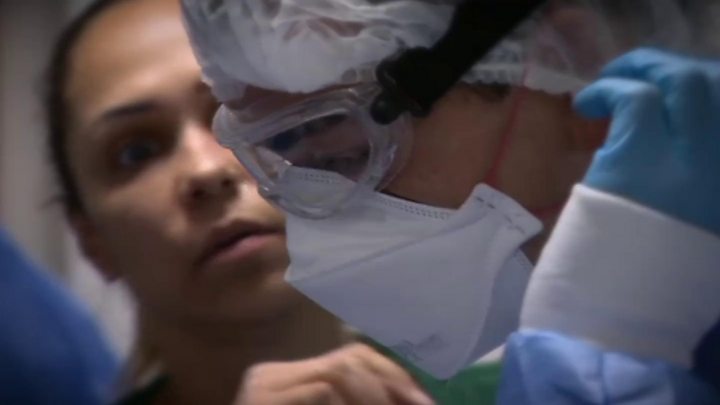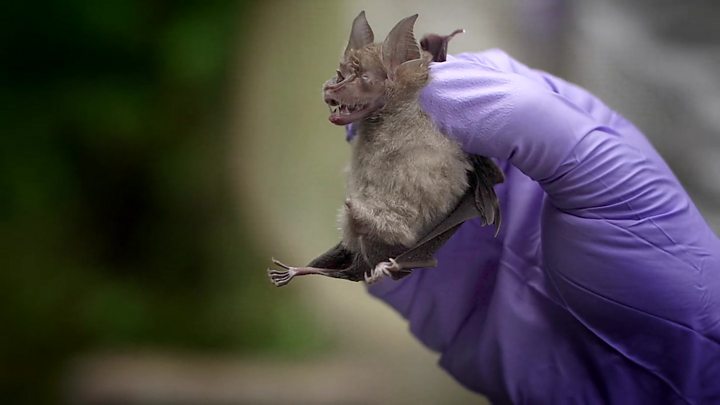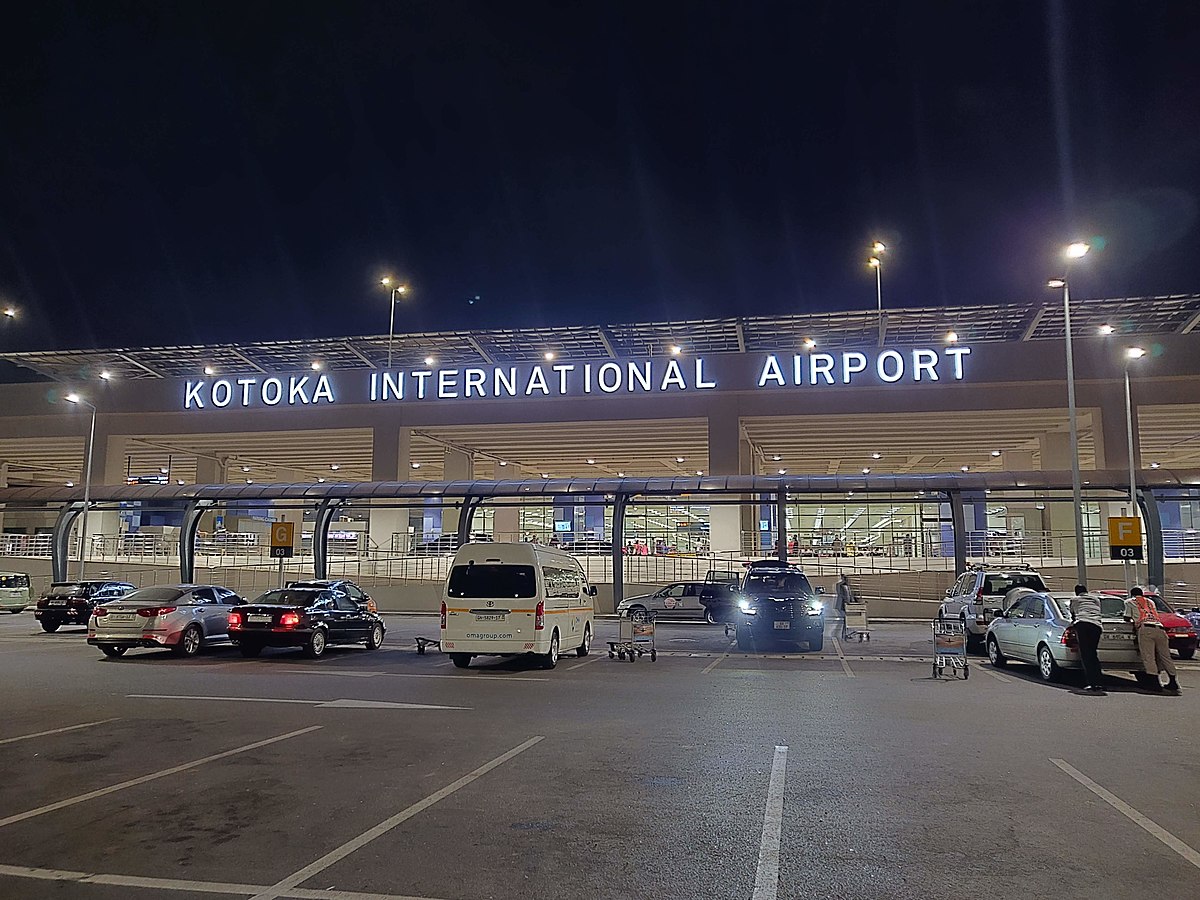
The Ghana Health Service (GHS) says it has put measures in place to prevent Hantavirus from entering the country and to ensure a swift response if any cases occur.
The assurance follows reports of Hantavirus infections on a cruise ship currently docked in Cape Verde. The cruise ship is reported to have carried crew members mainly from the Philippines, with passengers from the United States, Europe, South America, Australia, and parts of Asia.
In a press statement issued by the GHS noted that eight suspected cases, five confirmed infections, and three deaths have been recorded on the vessel as of May 7.
Meanwhile, the World Health Organization (WHO) and the U.S. Centers for Disease Control and Prevention (CDC) have urged calm worldwide, stating that the risk assessment remains low.
Although the virus is yet to be detected in Ghana , the GHS has noted that its Port Health Division and other public health structures have been activated to reduce the risk of importation as part of its precautionary measures.
Enhanced surveillance has been deployed at all ports of entry, including airports and seaports. Health facilities nationwide on the other hand, have been directed by the Service to intensify monitoring and reporting of unusual respiratory illnesses.
The public have also been advised to maintain proper hygiene, keep their surroundings clean, store food safely, dispose of waste properly, and avoid contact with rodents and their droppings.
In a separate development, the government’s flagship Free Primary Health Care Programme was launched on Wednesday, April 15, by President John Dramani Mahama at Dodowa in the Greater Accra Region.
The Free Primary Healthcare Policy is Ghana’s bold initiative to ensure that every resident, especially vulnerable populations, can access essential health services without paying out-of-pocket at the point of care.
The government is poised to officially roll out the Free Primary Healthcare (FPHC) initiative on September 1, 2025. This forms part of the key steps adopted towards achieving Universal Health Coverage (UHC) by 2030.
Over 24,534 pieces of medical equipment have been received by the government ahead of its Free Primary Healthcare policy rollout. Speaking at the Government Accountability Series, Health Minister Kwabena Mintah Akandoh stated, “In preparation for implementation, we have procured and are ready to deploy 24,534 pieces of essential medical equipment across the country. This is intended to ensure our facilities and health workers are equipped and ready.”
The National Health Insurance Authority (NHIA) has disbursed over GH¢392 million in vetted claims to healthcare providers across Ghana between December 2025 and January 2026.
The payments cover services provided under the National Health Insurance Scheme (NHIS).
According to the Finance Directorate of the NHIA, the funds were released following an extensive vetting and approval process of claims submitted by health facilities. In December 2025, the Authority paid GH¢301,658,338.13, while in January 2026, healthcare providers received GH¢90,373,513.13.
The NHIA in early July 205 disbursed an amount of GH¢267.67 million as claims to health facilities across the country. The disbursement became possible following approval by Chief Executive Dr. Victor Asare-Bampoe. The total payments made by the NHIA in the past seven months stand at over GH¢1.5 billion.
Out of the total amount, public health facilities received GH¢120,700,932.62, which constitutes 45 percent of the total.
Private health facilities have been paid GH¢100,210,906.44, representing 37 percent of the total amount, while mission health facilities have been allotted GH¢446,761,808.96, which makes up 17 percent of the total funds.
One of the ways the National Health Insurance Authority (NHIA) seeks to ease the financial burden on citizens, ensure equal access to healthcare, and reduce illegal fees is by proposing a 120 per cent increase in service tariffs, pending approval from its Board and the Minister of Health.
This was revealed by the Chief Executive Officer of the NHIA, Dr. Victor Asare Bampoe, during an appearance on Channel One TV’s The Point of View on Wednesday, November 26. According to Dr. Bampoe, the proposed tariff increase, if approved, would help reduce the extra charges patients pay at hospitals for medical care and services.
He explained that the proposed increase was planned in consultation with a group of independent experts mandated to review tariffs under Sections 33 and 34 of the National Health Insurance Act, which require annual revisions of both medicines and service tariffs.
“Regarding the 120% tariff increase: this is proposed after comprehensive work by a group of experts. The law requires an annual review of service and medicine tariffs (Sections 33 and 34). Although the review was delayed, the proposal is now ready and will go to our board and the Minister of Health for approval. Once approved, it will be implemented. This is partly to address the problem of illegal fees at hospitals, ensuring health providers are paid realistic tariffs so patients no longer have to pay out-of-pocket,” he said.
As the “cash manager” of Ghana’s health insurance system, Dr. Bampoe explained that the NHIA is mandated to collect funds, set tariffs, and pay hospitals, clinics, and pharmacies for services provided to insured patients.
However, he noted that the Authority plans to move beyond this traditional role and become more of a “strategic health purchasing provider.”
“But the NHS is more like a spending entity; we do not generate money on our own. So, we are a spending entity. One of the things we’re trying to do is move away from being a claims payment mechanism to a strategic health purchasing provider, which means that we are able to dictate health outcomes because of the financial muscle that the government provides us with.
We’re able to determine the prices of medicines, the prices of services, and even go on the global stage and provide a platform to discuss what kind of health outcomes we want, as you saw with the ACRA Health Sovereignty Summit that happened on August 5. So it’s an interesting time, and His Excellency the President, the Minister of Finance, and the Minister of Health have given us the tools to be able to deliver on this mandate,” he said, citing the government’s commitment to ensuring that his outfit can deliver on its mandate.
As part of its vision to move from just paying claims to becoming a “strategic health purchasing provider,” Dr. Bampoe highlighted that the NHIA also seeks to provide Universal Health Coverage (UHC) under three distinct pillars. Lauding the NHIA for its success in granting health coverage, he revealed that out of over 35 million Ghanaians, the Authority has provided coverage for about 20 million.“
So essentially, the health insurance scheme was set up in 2003 (Act 650) and amended in 2012 (Act 852), and its primary purpose was to pay claims. But now what we are looking at is getting universal health coverage for all Ghanaians. Universal health coverage has three pillars: population coverage, service coverage, and financial protection. I am proud to say that we are at 20 million in population coverage, which is unprecedented.”
He noted that while the medicines tariff review has already been completed, the service tariff review, initiated in 2022, took longer due to its comprehensive nature.
“There are two types of reviews that we need to do, but this was a really comprehensive one, so I think they could not finish on time, and so it is now that they have finished,” he explained.
Dr. Bampoe stressed that implementation now depends solely on statutory approvals. “Now it has to go to the Board for them to look at it and give their view on it. It has to go to the Minister of Health to give his assent, and then we will implement it if they all think it is okay,” he stated.
The NHIA CEO applauded the government for removing the cap on NHIA funds.“Regarding funding, we are dependent on the importance the government places on healthcare. I’m proud of His Excellency the President, the Finance Minister, and the Minister of Health because the capping act (Act 947 of 2019) has put a limit on funds coming to the NHIA.
The President removed that cap, giving us an extra 3.4–3.5 billion cedis for healthcare.“We are trying to do three things; shift mindsets in government and across the country to see healthcare as important for development. Healthy people are more productive. Focus on areas where we get the best results, such as Mahama Cares and Free Primary Healthcare. If 40%+ of people are affected by non-communicable diseases, it makes sense to prevent them.
“Preventive actions include health promotion and screenings. For example, catching prostate cancer early with a PSA test is more cost-effective than treating stage 4 disease. Shift realities. At the Global Fund and UN, programs were comprehensive but expensive. We now aim for solutions that fit our reality, whether that’s a Rolls-Royce, a Toyota VIT, or even a motorbike; the key is to deliver,” he detailed.