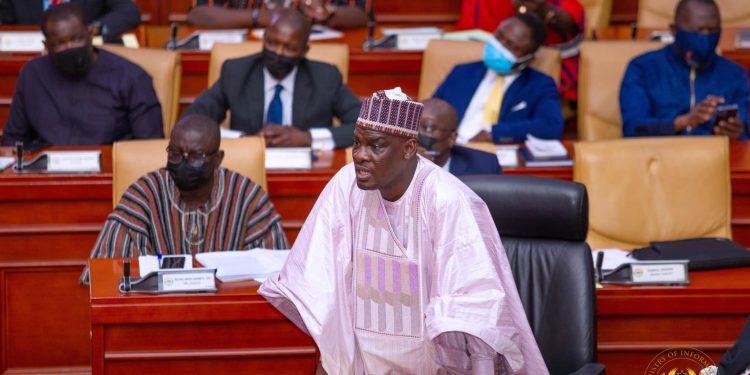
Tag: Haruna Iddrisu

  • BECE paper distribution needs immediate reforms – Haruna Iddrisu

    BECE paper distribution needs immediate reforms – Haruna Iddrisu

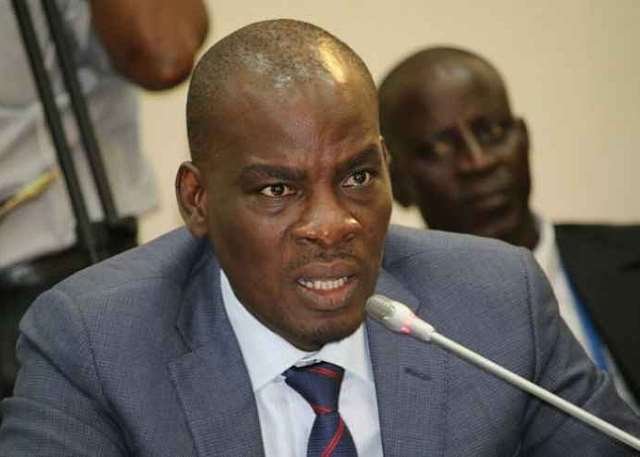
    The Ghana Education Service (GES) has been directed by the Education Minister, Haruna Iddrisu, to immediately reform the transportation system for Basic Education Certificate Examination (BECE) question papers. 

    The directive follows a visit by the Minister, which revealed that some 2026 BECE question papers arrived late. The delay affected a total of 273 candidates from nine schools, while other centres had already begun the examination.

    Reacting to the incident, the Minister described the situation as unacceptable and stressed the need for urgent reforms to prevent a recurrence. He assured that measures would be put in place to ensure timely distribution of examination materials across all centres

    He added, “Ordinarily, candidates are supposed to be seated 15 minutes before the examination. However, I see answer sheets here without question papers.

    “They are now on their way. We must therefore review the process of transporting examination questions to centres. Director-General, you sit on the WAEC Council, so we need immediate reforms”.

    The 2026 Basic Education Certificate Examination (BECE) is set to begin today, Monday, May 4, with a total of 619,985 candidates nationwide expected to sit the examination. The exams will run from Monday, May 4, to Monday, May 11, with two papers scheduled daily at 9:00 a.m. and 1:00 p.m.

    At the regional level, a total of 58,412 candidates are expected to sit the exams in the Bono, Bono East, and Ahafo Regions. The Bono Region recorded the highest number with 24,983 candidates, followed by Bono East with 20,865, and Ahafo with 12,564.

    Beyond these three regions, the Northern Region has 37,111 candidates, while the Western Region registered 45,116 candidates. Altogether, the Ghana Education Service confirmed a national total of 620,141 candidates, comprising 304,349 boys and 315,792 girls.

    The West African Examinations Council (WAEC) has issued a stern warning to candidates and stakeholders ahead of the 2026 BECE, declaring that any form of malpractice will attract severe consequences.

    According to WAEC, protecting the credibility of the examination remains the Council’s top priority.

    “Examination malpractice not only undermines academic integrity but also constitutes a direct violation of WAEC’s legal and regulatory framework,” Bono, Ahafo, and Bono East Regional Controller of WAEC, Daniel Nii Dodoo, told GBC News in an interview.

    Addressing longstanding concerns about irregularities in the former Brong Ahafo enclave, Mr. Dodoo declared an end to the era of “show and pour,” where candidates relied on external assistance during examinations. “We have moved away from the old days when someone could assist you with answers. This time, it will be your competence on the paper, not anybody else’s,” he said.

    He appealed directly to teachers and parents to uphold ethical standards, warning that paying money to facilitate cheating is unacceptable. WAEC confirmed that candidates found guilty of malpractice risk having their results cancelled, with serious offences potentially leading to legal action.

    As the examination begins, WAEC’s message is clear: success in the 2026 BECE must be earned through honesty, discipline, and individual merit.

    The Minister for Education, Haruna Iddrisu, has announced that, in the coming days, the BECE will be restricted to learners who have progressed to Junior High School (JHS) Form 3.

    Addressing the media on Thursday, April 2, he said the government’s intention is to overhaul the country’s basic education system and improve learning outcomes.

    The Minister explained that some non–JHS 3 students are insufficiently prepared for the demands of the examination, resulting in poor performance. He added, “We have also made a determination that there are students who leap early—not yet in JHS 3 but who attempt to write BECE. That is unacceptable per the GES and WAEC guidelines.”

    According to him, the West African Examinations Council (WAEC) and the Ghana Education Service (GES) frown upon allowing non–JHS 3 learners to sit for the final-year examination.

    “That is why we are seeing a reflection of poor quality, because the student is not up to the task but forces himself to write BECE even when he is in Primary Six or JHS 1 or 2,” he noted.

    Meanwhile, 483,800 candidates have been placed into various Senior High Schools across the country out of the 590,000 candidates.

    On Monday, September 1, 2025, the school placement portal was opened for new entrants to verify their school choices, biodata, and other relevant information ahead of final placement. The deadline for the fact-checking exercise closed on Monday, September 8.

    Of this figure, 248,038 are females (51.4%), while 234,783 are males (48.6%). However, 107,509 candidates (18.2%) could not be matched with their initial school choices due to high demand for certain Category A schools.

  • Only final-year JHS students to sit for BECE under new plan – Haruna Iddrisu announces

    Only final-year JHS students to sit for BECE under new plan – Haruna Iddrisu announces

    The Minister for Education, Haruna Iddrisu, has announced that, in the coming days, the Basic Education Certificate Examination (BECE) will be restricted only to learners who have not progressed to Junior High School (JHS) Form 3.

    Addressing the media on Thursday, April 2, the government’s intention is aimed at overhauling the country’s basic education system and improving learning outcomes.

    The Minister explained that some non–JHS 3 students are insufficiently prepared for the demands of the examination, resulting in poor performance.

    He added, “We have also made a determination that, there students who leap early, not yet in JHS 3 but ought to write BECE, that is unacceptable per the GES guideline and the WAEC guidelines”.

    According to him, the West African Examinations Council (WAEC) and the Ghana Education Service (GES) frown on allowing non-JHS 3 leavers to sit for the final year examination.

    “That is why we are seeing a reflection of poor quality because the student is not up to the task but forces himself to write BECE even when he is in primary six or JHS 1 or 2,” he noted.

    Meanwhile, 483,800 have been placed into various Senior High Schools across the country out of the 590,000 candidates.

    On Monday September 1, 2025, the school placement portal was opened for new entrants students to verify their school choices, biodata, and other relevant information ahead of the final placement. The deadline for the fact-checking exercise was brought to a close on Monday, September 8.

    Of this figure,248,038 are females (51.4%), and 234,783 are males (48.6%). However, 107,509 candidates (18.2%) could not be matched with their initial school choices due to high demand for certain Category A schools.

    Meanwhile,Private Senior High Schools categorized under the Free Senior High School programme have so far admitted 25,000 first year students, as disclosed by the Ghana National Council of Private Schools (GNACOPS).

    Speaking to the media on Thursday, October 16, the Executive Director of GNACOPS, Obenfo Nana Kwasi Gyetuah, indicated that “We have integrated 70 private schools across the 16 regions in Ghana, and in totality, the vacancy that has been declared is 44,000.

    “But as we speak now, the government has been able to place 25,000 students in these schools. We are yet to complete the other schools for them to have the vacancies that they have declared”.

    As part of this initiative, the government has allocated GH₵994 annually for each student enrolled in these private schools. This allocation covers tuition for day students, while parents of boarders will be required to pay the additional costs associated with boarding.

    Over seventy (70) private schools have been featured under the Free Senior High School policy. Junior High School (JHS) graduates will be admitted into these private schools that fall in category E in the school selection process.

    These schools will be accepting applications starting from the 2025/2026 academic year. The new development aligns with the government’s efforts in easing congestion in public SHSs as well as promoting quality education across the country.

    In a press release issued on Sunday, July 20, by the Ghana National Council of Private Schools (GNACOPS) and signed by its National Executive Director, Oberto Nana Kwasi Gyetuah, the council has described the initiative as a historic and progressive move.

    “This progressive move marks a significant milestone in Ghana’s educational transformation journey. It underscores the Government’s commitment to inclusive, collaborative education delivery and reaffirms the important role of private schools in advancing national development goals,” part of the release read.

    The council further called on other private schools that are yet to be listed to remain patient, prepared, and compliant with regulatory standards. In May, Deputy Minister of Education Dr. Clement Apaak announced that the inclusion forms part of a broader plan to scale up capacity and gradually end the double-track system.

    “As part of our campaign promise, we have been working diligently to bring on board private senior high schools in the delivery of the Free SHS programme. Meetings have been held, engagements have been done, and we are very certain that with the diligence we expect from our side…” he noted.

    The double-track system was introduced in 2018 by the erstwhile government to accommodate the surge in student enrollment due to the Free SHS policy, addressing overcrowding in public schools.

    Under this system, students were divided into two groups Green Track and Gold Track attending school in shifts, with one track in session while the other was on break.

    The anticipated extension of the Free SHS policy, according to the Education Minister, Haruna Iddrisu, is a fulfillment of the government’s manifesto promise, adding that it is a step to ensure eligible students gain admission without delays.

    “We believe strongly that in fulfilling this manifesto campaign promise, this is going to serve as an artery in helping us bring an end to the double-track system,” the deputy minister said.

    According to him, the Education Ministry has received encouraging feedback from private schools, many of which have expressed readiness to meet the standards and requirements of the Free SHS framework.

    “… and the eagerness of the private schools to participate, the private schools will deliver in their participation,” he assured.

    He added that this collaboration would not only help expand capacity but also ensure a more equitable distribution of educational opportunities across the country.

    The Free Senior High School policy was introduced in 2017 by the Akufo-Addo-led government to make secondary education accessible to all eligible students without financial barriers.

    The policy was aimed at helping students who struggled to pay tuition, boarding, and other school-related expenses. However, the policy came with its challenges, such as overcrowding and congestion in schools, pressure on infrastructure and facilities, and increased pressure on teachers.

    This increased the number of enrollments in the senior high schools that were listed under the Free SHS policy. About 3.5 million students have benefited from the Free Senior High School (Free SHS) program since its launch.

    The immediate-past government revealed that it had spent over GH¢12 billion on the implementation of the Free SHS policy since its inception.

    Meanwhile, Asantehene Otumfuo Osei Tutu II has urged a reassessment of Ghana’s Free SHS initiative, recommending that households with sufficient means contribute financially so that government support can be directed toward students in real need.

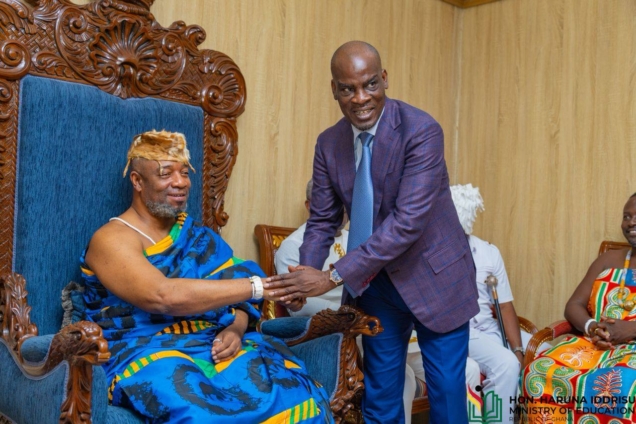
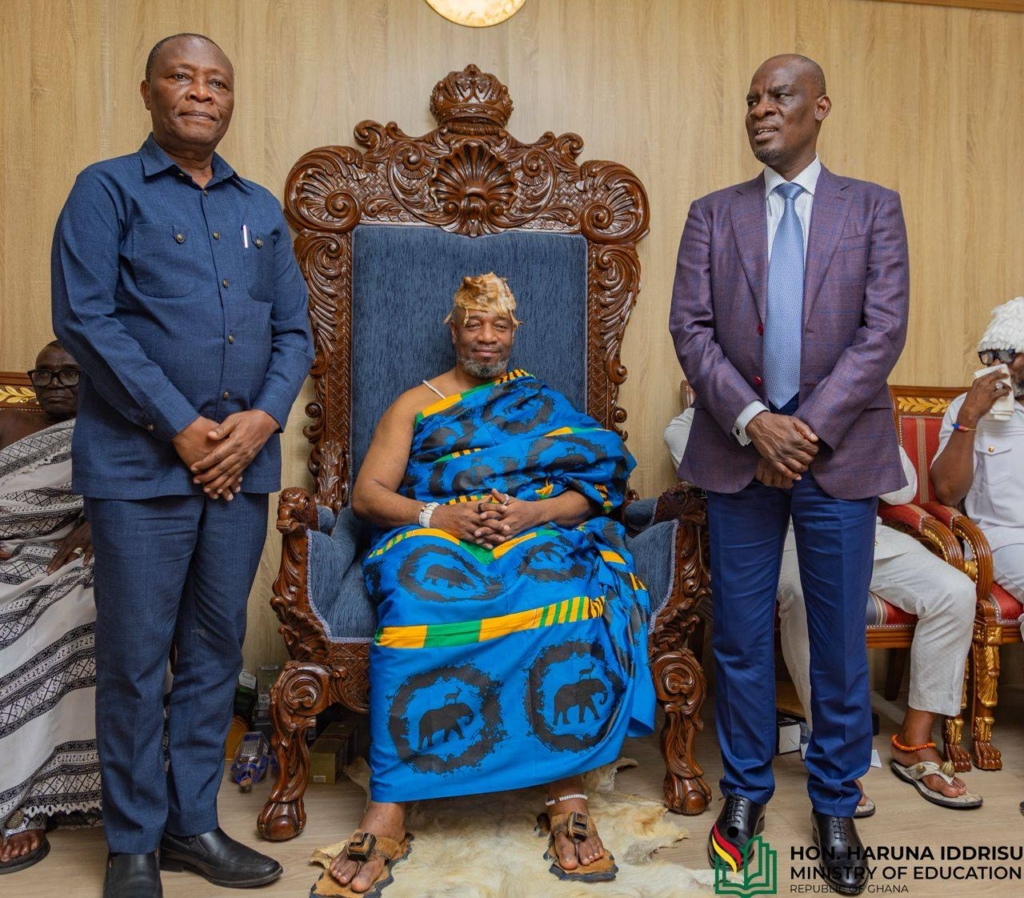
    During a meeting with Education Minister Haruna Iddrisu, the Asantehene suggested a shared funding model, akin to previous arrangements where financial aid was granted to bright but disadvantaged students, while those with the ability to pay covered their own expenses.

    “Those who can afford to pay, let’s have a second look at the policy. If someone can afford it, let’s allow them to pay. In the old times, when you passed, the bursary would look for good but needy students and award them scholarships, and those who could afford to pay did so.”

    Otumfuo Osei Tutu II has recognized the positive impact of the Free SHS policy but stressed the importance of a national discussion to tackle its shortcomings and secure its future.

    “This Free SHS we are talking about, although we have implemented it, if we have a dialogue and find out that it will result in students coming home every now and then because there is no food, then it is not fit for purpose.”

    He also pointed out several pressing concerns affecting secondary schools, including overcrowded dormitories, a lack of well-equipped science and ICT laboratories, irregular food supplies, and insufficient school buses.

    “Our dormitories are overcrowded and lack science and ICT labs. Sometimes PTA makes contributions to support. The lack of school buses and the shortage of food should all be looked at. Let us implement it well so that students will stay in school and have enough to eat.”


  • Accident on Peki Tsame road kills one

    Accident on Peki Tsame road kills one

    A road accident at Peki Tsame, near Mawutor Inn on the Peki–Asikuma Highway, has claimed one life, with sixteen others sustaining injuries on Friday, February 13.

    The injured passengers comprise eight males, seven females, and one child. According to reports, the accident occurred after a Toyota Hiace bus with registration number GT 7012-24 suffered a tyre burst, causing the vehicle to somersault.

    This update comes a day after the Minister for Education, Haruna Iddrisu, and the Deputy Minister for Communications and Digital Technology, Mohammed Adams Sukparu, involved in a road traffic accident on the Bolgatanga–Tumu road.

    However, a statement issued by the Ministry of Education has confirmed that both ministers are in stable condition following the incident, which occurred in the early hours of Thursday, February 12.

    “All members of the convoy are currently in stable condition and receiving the necessary medical attention. The Office expresses its appreciation to emergency responders, health professionals, and members of the public for their swift assistance and concern. Further updates will be communicated, as necessary,” part of the statement read.

    The ministers and their respective teams were en route to official engagements marking the 40th anniversary celebrations of Tumu College of Education and Jahan College of Education in the Upper West Region when the accident happened.

    Article image 1

    Ghana has reported a surge in the number of fatalities resulting from road crashes this year. The National Road Safety Authority (NRSA) recorded one thousand five hundred and four (1,504) deaths, compared to one thousand two hundred and thirty-seven (1,237) fatalities reported in the same period in 2024, representing a 21.58 percent increase in the first half of 2025.

    According to provisional data released by the National Road Safety Authority in collaboration with the Police Motor Traffic and Transport Department (MTTD), a total of 7,289 road crashes were recorded between January and June this year. Per the data, a total of twelve thousand three hundred and fifty-four (12,354) vehicles were involved in these crashes.

    Article image 2

    As a result of these incidents, eight thousand three hundred (8,300) individuals sustained injuries. Additionally, one thousand three hundred and one (1,301) pedestrians were knocked down across the country.

    According to recent data provided by the National Road Safety Authority, on average, eight (8) lives are lost every day due to road crashes. Each day, forty (40) road crashes are recorded, and forty-six (46) individuals sustain injuries. Daily, sixty-nine (69) vehicles and motorcycles are involved in road crashes.

    To help combat the rising number of road crashes, the National Road Safety Authority has called for stricter enforcement of traffic regulations and increased public education.

    The NRSA has emphasized the need for stronger enforcement to curb the alarming trend. The Road Traffic Act 2004, an Act to consolidate and revise the Road Traffic Ordinance, 1952 (No. 55), provides for more comprehensive regulation of road traffic and road use to ensure safety on the roads and to address related matters.

    A person who drives a motor vehicle dangerously on a road commits an offence and is liable on summary conviction:

    (a) where (i) a bodily injury does not occur, or (ii) a minor bodily injury occurs to a person other than the driver, to a fine of not less than one hundred penalty units and not exceeding two hundred penalty units, or to a term of imprisonment not exceeding nine months, or to both;

    (b) where bodily injury of an aggravated nature occurs to a person other than the driver, to a minimum fine of two hundred penalty units and not exceeding five hundred penalty units, or to a term of imprisonment of not less than twelve months and not exceeding two years, or to both;(c) where death occurs, to a term of imprisonment of not less than three years;

    (d) where there is damage to state property, to a fine of not less than one hundred penalty units and payment for the damage caused in an amount determined by the Court.

    The Court may, upon conviction of a person under subsection (1), (a) order the payment of appropriate compensation to an injured person or to the estate of that person, or (b) order the withdrawal of the driver’s license for a period of not less than three years and not more than five years.

    A person who drives a motor vehicle on a road without due care and attention, or without reasonable consideration for other persons using the road, commits an offence and is liable on summary conviction to a fine not exceeding two thousand penalty units or to a term of imprisonment not exceeding five years, or to both.

    A person commits an offence if, without lawful authority or reasonable excuse, that person:

    (a) causes anything to be on or over a road;(b) interferes with a motor vehicle, trailer, or cycle; or(c) interferes, directly or indirectly, with traffic equipment, where it would be obvious to a reasonable person that doing so would be dangerous.

    A person who commits an offence under subsection (1) is liable on summary conviction to a fine not exceeding two hundred and fifty penalty units or to a term of imprisonment not exceeding twelve months, or to both.

    Meanwhile, over one-third of emergency cases at the Komfo Anokye Teaching Hospital (KATH) have been linked to road crashes, according to statistics from the facility.

    Speaking to the media, Deputy Medical Director of KATH, Dr. Yaw Opare Larbi, noted that road crash victims brought to the emergency unit often do not survive because their injuries are very severe.

    “A little over 30 per cent of the cases that come to this facility, this Accident and Emergency Unit, are due to accidents, and most of the accidents, a few are domestic, but the majority of them are road traffic accidents.

    “Now in Ghana, we know that our statistics, a lot of our road accidents are from errors, driver errors, pedestrian errors. And then we know that we have some percentage that is attributable to maybe things like faulty vehicles or maybe road conditions, but a lot of the accidents are preventable,” he stated.

  • Haruna Iddrisu, Dep Minister for Communications involved in car crash

    Haruna Iddrisu, Dep Minister for Communications involved in car crash

    The Minister for Education, Haruna Iddrisu, and the Deputy Minister for Communications and Digital Technology, Mohammed Adams Sukparu, have been involved in a road traffic accident on the Bolgatanga–Tumu road.

    However, a statement issued by the Ministry of Education has confirmed that both ministers are in stable condition following the incident, which occurred in the early hours of Thursday, February 12.

    “All members of the convoy are currently in stable condition and receiving the necessary medical attention. The Office expresses its appreciation to emergency responders, health professionals, and members of the public for their swift assistance and concern. Further updates will be communicated, as necessary,” part of the statement read.

    The ministers and their respective teams were en route to official engagements marking the 40th anniversary celebrations of Tumu College of Education and Jahan College of Education in the Upper West Region when the accident happened.

    Ghana has reported a surge in the number of fatalities resulting from road crashes this year. The National Road Safety Authority (NRSA) recorded one thousand five hundred and four (1,504) deaths, compared to one thousand two hundred and thirty-seven (1,237) fatalities reported in the same period in 2024, representing a 21.58 percent increase in the first half of 2025.

    According to provisional data released by the National Road Safety Authority in collaboration with the Police Motor Traffic and Transport Department (MTTD), a total of 7,289 road crashes were recorded between January and June this year. Per the data, a total of twelve thousand three hundred and fifty-four (12,354) vehicles were involved in these crashes.

    As a result of these incidents, eight thousand three hundred (8,300) individuals sustained injuries. Additionally, one thousand three hundred and one (1,301) pedestrians were knocked down across the country.

    According to recent data provided by the National Road Safety Authority, on average, eight (8) lives are lost every day due to road crashes. Each day, forty (40) road crashes are recorded, and forty-six (46) individuals sustain injuries. Daily, sixty-nine (69) vehicles and motorcycles are involved in road crashes.

    To help combat the rising number of road crashes, the National Road Safety Authority has called for stricter enforcement of traffic regulations and increased public education.

    The NRSA has emphasized the need for stronger enforcement to curb the alarming trend. The Road Traffic Act 2004, an Act to consolidate and revise the Road Traffic Ordinance, 1952 (No. 55), provides for more comprehensive regulation of road traffic and road use to ensure safety on the roads and to address related matters.

    A person who drives a motor vehicle dangerously on a road commits an offence and is liable on summary conviction:

    (a) where (i) a bodily injury does not occur, or (ii) a minor bodily injury occurs to a person other than the driver, to a fine of not less than one hundred penalty units and not exceeding two hundred penalty units, or to a term of imprisonment not exceeding nine months, or to both;

    (b) where bodily injury of an aggravated nature occurs to a person other than the driver, to a minimum fine of two hundred penalty units and not exceeding five hundred penalty units, or to a term of imprisonment of not less than twelve months and not exceeding two years, or to both;(c) where death occurs, to a term of imprisonment of not less than three years;

    (d) where there is damage to state property, to a fine of not less than one hundred penalty units and payment for the damage caused in an amount determined by the Court.

    The Court may, upon conviction of a person under subsection (1), (a) order the payment of appropriate compensation to an injured person or to the estate of that person, or (b) order the withdrawal of the driver’s license for a period of not less than three years and not more than five years.

    A person who drives a motor vehicle on a road without due care and attention, or without reasonable consideration for other persons using the road, commits an offence and is liable on summary conviction to a fine not exceeding two thousand penalty units or to a term of imprisonment not exceeding five years, or to both.

    A person commits an offence if, without lawful authority or reasonable excuse, that person:

    (a) causes anything to be on or over a road;(b) interferes with a motor vehicle, trailer, or cycle; or(c) interferes, directly or indirectly, with traffic equipment, where it would be obvious to a reasonable person that doing so would be dangerous.

    A person who commits an offence under subsection (1) is liable on summary conviction to a fine not exceeding two hundred and fifty penalty units or to a term of imprisonment not exceeding twelve months, or to both.

    Meanwhile, over one-third of emergency cases at the Komfo Anokye Teaching Hospital (KATH) have been linked to road crashes, according to statistics from the facility.

    Speaking to the media, Deputy Medical Director of KATH, Dr. Yaw Opare Larbi, noted that road crash victims brought to the emergency unit often do not survive because their injuries are very severe.

    “A little over 30 per cent of the cases that come to this facility, this Accident and Emergency Unit, are due to accidents, and most of the accidents, a few are domestic, but the majority of them are road traffic accidents.

    “Now in Ghana, we know that our statistics, a lot of our road accidents are from errors, driver errors, pedestrian errors. And then we know that we have some percentage that is attributable to maybe things like faulty vehicles or maybe road conditions, but a lot of the accidents are preventable,” he stated.

  • I cannot lead an education system that ignores our identity – Haruna Iddrisu

    I cannot lead an education system that ignores our identity – Haruna Iddrisu

    The Minister for Education, Haruna Iddrisu, has reiterated the government’s dedication to incorporating Ghana’s indigenous languages into the national curriculum, emphasizing their role in preserving the country’s culture, identity, and heritage.

    “It would be unthinkable for me, as Minister for Education, to preside over an education system that does not reflect the culture, identity and heritage of our people,” he said, stressing that language lies at the heart of every culture.

    Iddrisu assured that under his leadership, the promotion and use of Ghanaian languages in schools would remain a priority, noting that children deserve to learn in ways that affirm their identity and heritage.

    In a related development, the Education Minister held discussions with the Khaya AI team, led by Dr Paul Azunre, to explore a partnership with Google. The collaboration aims to integrate all 12 approved Ghanaian languages into the Gemini AI education tool.

    “This initiative represents a major step in ensuring that technology-driven learning is inclusive, accessible and culturally relevant for every Ghanaian learner,” Iddrisu said.

    He added that these engagements demonstrate the government’s commitment to building an education system that honours Ghana’s cultural roots while equipping young people for the future.

    The Bureau of Ghana Languages (BGL) wants fluency in at least one indigenous languages to be made a requirement for gaining admission to tertiary schools in the country.

    The Bureau has therefore entreated the Ghana Education Service (GES) to include an indigenous language as an entry requirement into tertiary education.

    This, according to them will rekindle the desire for the study of Ghanaian languages.

    “As a means of rejuvenating public interest and appreciation for indigenous languages in Ghana, we wish to recommend that entry requirements into tertiary institutions should be opened up to include one indigenous language,” the Bureau said.

    The BGL made this recommendation at the 24th Edition of the UNESCO International Mother Language Day Celebration under the theme; “Multilingualism – A Necessity to Transform Education” in Accra on Tuesday.

    The Bureau explained that should one language be made a requirement, it would renew the desire to study native languages.

    “This would eventually awaken or rekindle the desire to study examinable indigenous languages,” the institute said.

    The BGL pointed out that although there have been complaints about a lack of teaching and learning materials, it is best that the GES makes an attempt to preserve the language rather than allow them to fade into oblivion.

    The Institute further said the GES has undertaken steps to ensure the continuity of languages by instructing pupils from Upper Primary to JHS to study by compulsion, the dominant language of the community they find themselves.

    However, it acknowledged there have been countless limitations.

    Highlighting these limitations, the Bureau said, “the barriers once again include; insufficient teachers who are resourceful in those indigenous languages at various locations where they are posted to teach.

    “Lack of resourceful indigenous language teachers, lack of indigenous language textbooks, heterogeneous mix of students and pupils from all regions of Ghana.”

    However, the institute stressed that multilingual education could be an asset if it can be encouraged amongst the various ethnic compositions of Ghana and within schools and colleges.

    Weeks ago, the Bureau of Ghana Languages officially endorsed the Ahanta Language Orthography for use in educational institutions across Ahanta land, following a thorough review of the Ahanta Language Project Committee’s (ALPC) work.

    According to a statement shared by the Acting Executive Director of the Bureau, Mr. Ebenezer Ahiiator, a three-member team, alongside the Basic Schools’ Coordinator of the Ahanta West Municipal Education Office and the Coordinator of the Pilot Project on Ahanta language teaching, visited schools participating in the pilot programme.

    During the visits, they engaged teachers, learners, parents, traditional authorities, church leaders, and community elders to assess the implementation of the orthography.

    Mr Ahiiator explained that the team discovered that, the Orthography met the required standards, yielded positive results, teachers, learners, and parents are enthusiastic about formal indigenous language learning and traditional leaders are eager for Ahanta language instruction across Ahanta land.”

    In the light of these findings, “we officially endorse the use of the Ahanta Language Orthography in schools on Ahanta land and for the development of learning materials.”

    Mr. Ahiiator said this while congratulating all stakeholders involved in the project.

    This endorsement, he indicated, is a crucial step towards making Ahanta language examinable at Basic Education and Senior High School levels.

  • Govt will resolve your concerns within two weeks – Education Minister to CETAG

    Govt will resolve your concerns within two weeks – Education Minister to CETAG

    The Education Minister, Haruna Iddrisu, has urged the Colleges of Education Teachers Association of Ghana (CETAG) to give the government fourteen days to address their grievances.


    In an interaction with the media on Tuesday, November 25, the Minister indicated that the government has already begun processes to resolve some of these issues, which trace back to 2022.

    “We are negotiating. There were issues that the National Labour Commission made a declaration and award to CETAG that have not been respected by government since 2022. We are seeing how we can remedy the situation.We have also requested that they consider calling off the strike, and we have requested for two weeks to see what the state can do. But we will fix it within the two weeks,” he assured.


    Currently, CETAG has laid down its tools nationwide over the government’s failure to fully implement the National Labour Commission’s (NLC) arbitral award issued on May 2, 2023. All 46 Colleges of Education across the country have been affected by the strike.


    In June, Finance Minister Dr Cassiel Ato Forson assured CETAG andother two unions in Ghana’s tertiary education sector of receiving their allowances on time.


    He made this known to the unions on Tuesday, June 10, when they met to discuss the disbursement of the Book and Research Allowance.


    The meeting, which was prompted by a request from the University Teachers Association of Ghana (UTAG), the Technical University Teachers Association of Ghana (TUTAG), and the Colleges of Education Teachers Association of Ghana (CETAG), aimed to address concerns over the payment of the allowance.


    Dr Forson assured the union leaders that the allowance had been fully captured in the 2025 budget and that he had initiated the necessary processes to ensure its release.


    “I assured them that the allowance has been fully captured in the 2025 Budget, and I have since initiated the necessary processes in close collaboration with the Ministry of Education to ensure its release,” the sector minister shared on his X page.


    He also commended the unions for their constructive proposal to establish a dedicated Labour Relations Desk within the Ministry of Finance, which would strengthen coordination and enhance dialogue between the ministry and labour stakeholders.


    During the meeting, Dr Forson said he updated the union leaders on ongoing payroll reforms, particularly the audit being conducted by the Auditor-General.


    He added that preliminary findings indicate a significant presence of ghost names on the payroll, which, if addressed, could yield substantial savings for the public purse.


    Dr Forson urged the union leaders to lend their support to this important national exercise, emphasising that cleaning the payroll was not only about fiscal prudence but also about restoring integrity and fairness in public sector compensation.


    In September, Deputy Finance Minister Thomas Nyarko Ampem has urged the coalition of unpaid teachers to exercise patience, assuring that the government has taken steps to address their grievances.


    Addressing the aggrieved Newly Posted Teachers group on Tuesday, September 30, the Deputy Finance Minister disclosed that the government will include funds to settle their 13-month salary arrears in next year’s budget.


    “I was a teacher, and I was posted to teach, and I was not paid for 8 months. I can relate perfectly well with all of you. The Finance Minister [Dr Ato Forson] says he sympathises with you, and he has briefed President John Dramani Mahama, and he has been given the green light to make sure he fixes your problem.


    He added, “The Finance Minister will present the next budget, and he will make provision for all of you to be catered for; you should be very happy that your problem will be fixed; that is the good news. You will be paid.”


    On Tuesday, September 30, the group, comprising graduates from Colleges of Education and universities, submitted a petition to the Finance Ministry calling on the government to clear debts owed to them.


    The group had initially declared its intention to hit the streets over unpaid salaries on Tuesday, September 23. However, speaking to Citi News, the group’s Lead Convener, Simon Kofi Nartey, noted that the Ministry of Education and other relevant authorities had yet to respond to their earlier petitions, prompting them to reschedule the protest to September 30.


    Simon Kofi Nartey called on the government to settle its 12-month and 8-month arrears within the given ultimatum. According to him, the group will have no option but to take to the streets if the government does not treat their demands with urgency.


    “It is rather unfortunate that, as we speak, nothing has been done about the concerns we raised at our press conference. We have no option but to take to the streets to let Ghanaians know what is happening. We have already met with the Greater Accra Regional Police Command and agreed on September 30 for the demonstration,” he said.

  • Govt did not snub Free SHS in budget allocation; programme to be funded through GETFund – Education Minister

    Govt did not snub Free SHS in budget allocation; programme to be funded through GETFund – Education Minister

    Education Minister  Haruna Iddrisu has rebuffed claims that the government did not allocate a budget for the Free Senior High School (SHS) programme. 

    During the Finance Minister’s budget presentation on the floor of Parliament on Thursday, November 13, he mentioned that the Free SHS will be funded through GetFund as about a billion cedis has been allocated to the Education support fund.

    Mr Iddrisu, on Wednesday, November 19, at a press conference held in Accra, where the Minister provided clarity on the education sector allocations in the 2026 Budget, explained that the misconceptions surrounding the Free SHS allocation are practically impossible.

    “The Ghana Education Fund has been allocated 9.9 billion, including 4.2 billion earmarked for Free Senior High School and free TVET infrastructure and services. I’ve heard commentaries suggesting that there is no allocation for Free SHS. That is not practically possible,” he explained.

    There were claims from the Minority in Parliament and some civil society groups that the government did not make a direct budgetary allocation for the Free SHS programme in the 2026 Budget. The Minority Caucus argued that while the government highlighted GSLIP and infrastructure expansion, it failed to earmark explicit funds for Free SHS in 2026. They claimed this omission suggested the government was outsourcing Free SHS financing to donor support rather than sustaining it with domestic resources.

    The Minister said, “The budget is always done for and on behalf of the President of the Republic, which was his first budget. When the GETFund formula gets to Parliament, you will see the actual numbers,” the Minister added.

    He stated that President John Mahama, in the 2025 Budget Statement, outlined a significant policy shift, moving the financing of Free SHS from petroleum revenue to GETFund.

    “From 2018 to 2024, Free SHS was largely financed from the country’s petroleum revenue. The shift now is that GETFund will provide the financing. When the GETFund formula gets to Parliament, you will see the actual numbers,” he said.

    The Minister added that the allocation will also cover student feeding and support the rollout of free tertiary education for persons with disability.

    He noted that the Student Loan Trust Fund and the soon-to-be-established Ghana Scholarship Authority will collaborate on disbursement processes to ensure the initiative is effectively implemented.

    The Free Senior High School policy was introduced in 2017 by the Akufo-Addo-led government to make secondary education accessible to all eligible students without financial barriers.

    The policy was aimed at helping students who struggled to pay tuition, boarding, and other school-related expenses. However, the policy came with its challenges, such as overcrowding and congestion in schools, pressure on infrastructure and facilities, and increased pressure on teachers.

    This increased the number of enrollments in the senior high schools that were listed under the Free SHS policy. About 3.5 million students have benefited from the Free Senior High School (Free SHS) program since its launch.

    The immediate-past government revealed that it had spent over GH¢12 billion on the implementation of the Free SHS policy since its inception. Meanwhile, Asantehene Otumfuo Osei Tutu II has urged a reassessment of Ghana’s Free SHS initiative, recommending that households with sufficient means contribute financially so that government support can be directed toward students in real need.

    During a meeting with Education Minister Haruna Iddrisu, the Asantehene suggested a shared funding model, akin to previous arrangements where financial aid was granted to bright but disadvantaged students, while those with the ability to pay covered their own expenses.

    “Those who can afford to pay, let’s have a second look at the policy. If someone can afford it, let’s allow them to pay. In the old times, when you passed, the bursary would look for good but needy students and award them scholarships, and those who could afford to pay did so.”

    Otumfuo Osei Tutu II has recognised the positive impact of the Free SHS policy but stressed the importance of a national discussion to tackle its shortcomings and secure its future.

    “This Free SHS we are talking about, although we have implemented it, if we have a dialogue and find out that it will result in students coming home now and then because there is no food, then it is not fit for purpose.”

    He also pointed out several pressing concerns affecting secondary schools, including overcrowded dormitories, a lack of well-equipped science and ICT laboratories, irregular food supplies, and insufficient school buses.

    “Our dormitories are overcrowded and lack science and ICT labs. Sometimes, PTA makes contributions to support. The lack of school buses and the shortage of food should all be looked at. Let us implement it well so that students will stay in school and have enough to eat.”

  • SHS is not a place for beauty contest – Haruna Iddrisu justifies no-long-hair rule

    SHS is not a place for beauty contest – Haruna Iddrisu justifies no-long-hair rule

    The Minister of Education, Haruna Iddrisu, has shut down calls for female Senior High School (SHS) students to be allowed to wear their natural long hair on campus.

    Speaking at the 75th anniversary celebration of Mawuli Senior High School in the Volta Region on Saturday, October 25, he emphasized that the secondary school environment was not a place for beauty contests to entertain such practices.

    “There is an ongoing debate about hair cuts, and size and length of hair in secondary schools.We will not tolerate it today or we will not tolerate it tomorrow, in so long as molding character.

    “If we give in to hair today, tomorrow it will be shoes, and the next day it will be the way they [students] dress.Therefore, as part of our disciplinary measures, headmasters and GES, you are accordingly empowered to take full control of how students behave on your campuses.”

    “So anybody who thinks that your child will walk into any institution of learning, as if that child, forgive my words, was to attend a beauty contest, the school environment will not for that purpose and not cut for that purpose and we will not tolerate that as an institution,” the minister stated.

    A recent video circulating on social media shows a first-year female student looking unhappy while having her hair cut in a barbershop as part of preparations to begin school. Dressed in a Yaa Asantewaa Girls’ Senior High School uniform, she appeared visibly displeased as her long hair was trimmed. 

    Following the video, scores of Ghanaians have called on the government to scrap what they describe as a “barbaric” act, arguing that a student’s hair length does not determine academic success. Others, however, believe that allowing students to wear long hair to school could distract them from their studies.

    Meanwhile, the Minister of Education has instructed the Ghana Education Service (GES) to fully implement the use of mother tongue as a medium of communication in Ghanaian schools.

    The Minister mentioned that the directive constitutes efforts to reform the education sector, while championing the use of local languages in teaching and learning.

    Speaking at the launch of the Free Tertiary Education Programme for Persons Living with Disabilities, Mr. Iddrisu stressed that the directive will enhance comprehension and learning outcomes in basic schools.

    “I am directing the DG of the GES and the GES that from today, teacher use of mother tongue instruction is now compulsory in all Ghanaian schools. The GES is to ensure strict enforcement of this…This is part of President Mahama’s reset agenda,” the Minister firmly stated.

    In 2023, Ghanaian historian, Nana Osei-Bonsu Sarfo-Kantanka called on managers of educational institutions across the country to desist from punishing students who speak local languages while in school.

    He said they should be encouraged to speak the local languages to better understand the culture and heritage of the country.

    The historian attributed his point to the fact that some foreign countries prioritise their local languages, thereby requiring that a person upon arrival in the country speak and understand the language.

    Speaking to KMJ on Prime Morning, he said, “If you go to school, it is written ‘Speak English.’ If you spoke the local dialect, you would be spanked. All these things must be removed.”

    “If you go to India, you have to learn Hindi to be able to study at the university. Why can’t we learn from them?” He quizzed.

    Despite the fact that English is an international language that cannot be abolished, Nana Osei-Bonsu opined that it could be blended with the local languages so as to activate the country’s heritage.

    He also believes that the Ghanaian languages are likely to fade out as generations pass, if parents do not insist on speaking the local dialects with their children.

    Nana Osei-Bonsu encouraged people to make efforts and speak their local languages at all levels to maintain the cultural heritage of the country and its relevance.

    “Even if just twenty people are speaking the language, it should be encouraged at all levels. If we’re able to do that, gradually ours will take over the so-called international language.” In our houses, parents should be serious and speak our local languages with their children,” he entreated.

    The country celebrates Ghana throughout the month of March every year to commemorate her Independence. The historian thinks that people’s enthusiasm for the celebration is depleting as the years evolve.

    He believes people’s interest is dwindling because most designers in recent times are adding foreign products to their designs.

    The historian also indicated that opinion leaders can be blamed for the low interest of the people as they have failed to insist on the involvement of local languages in the school curricula.

    As to whether the late Osagyefo Dr. Kwame Nkrumah would have maintained the country’s heritage if he were alive, Nana Osei-Bonsu said, “Who knows that he would have kept doing what he was doing because politicians are dictated to.”

    However, Ghanaians are encouraged to project the culture globally by wearing locally made designs, eating Ghanaian food, and speaking the local languages among others, throughout the month of March.

    Earlier this year, Member of Parliament for Atwima Nwabiagya North, Frank Yeboah, urged Ghanaians to protect and preserve their indigenous languages.

    According to him, the country’s indigenous languages play a crucial role in national identity and cultural heritage.

    He made this statement on during the commemoration of the International Day of Mother Language in February.

    Addressing Parliament, he urged all citizens to recognise the value of their native tongues and take proactive steps to safeguard them.

    Mr Yeboah highlighted the importance of community-driven efforts in language preservation, stressing that initiatives such as storytelling, oral history documentation, and intergenerational language transmission programmes must be actively promoted.

    He encouraged schools, traditional authorities, and cultural institutions to collaborate in ensuring that local languages remain relevant in contemporary Ghanaian society.

    “Mr Speaker, we cannot afford to lose our indigenous languages, for in them lies the heart and soul of our identity as Ghanaians,” he stated.

    “Let us act now to protect and promote them, ensuring that future generations inherit not just the words, but the history, values, and wisdom they carry.”

    He further called on policymakers to incorporate indigenous language education into the national curriculum and promote its usage in public and private sectors.

    The MP also emphasised the need for media platforms to dedicate more airtime to local languages, ensuring that they remain widely spoken and appreciated.

    He concluded by urging all Ghanaians to take pride in their linguistic heritage, noting that preserving mother languages is not merely about communication but about protecting a rich legacy of knowledge and identity.

  • Use of mother tongue now compulsory in basic schools

    Use of mother tongue now compulsory in basic schools

    Minister of Education, Haruna Iddrisu, has instructed the Ghana Education Service (GES) to fully implement the use of mother tongue as a medium of communication in Ghanaian schools.

    The Minister mentioned that the directive constitutes efforts to reform the education sector, while championing the use of local languages in teaching and learning.

    Speaking at the launch of the Free Tertiary Education Programme for Persons Living with Disabilities, Mr. Iddrisu stressed that the directive will enhance comprehension and learning outcomes in basic schools.

    “I am directing the DG of the GES and the GES that from today, teacher use of mother tongue instruction is now compulsory in all Ghanaian schools. The GES is to ensure strict enforcement of this…This is part of President Mahama’s reset agenda,” the Minister firmly stated.

    In 2023, Ghanaian historian, Nana Osei-Bonsu Sarfo-Kantanka called on managers of educational institutions across the country to desist from punishing students who speak local languages while in school.

    He said they should be encouraged to speak the local languages to better understand the culture and heritage of the country.

    The historian attributed his point to the fact that some foreign countries prioritise their local languages, thereby requiring that a person upon arrival in the country speak and understand the language.

    Speaking to KMJ on Prime Morning, he said, “If you go to school, it is written ‘Speak English.’ If you spoke the local dialect, you would be spanked. All these things must be removed.”

    “If you go to India, you have to learn Hindi to be able to study at the university. Why can’t we learn from them?” He quizzed.

    Despite the fact that English is an international language that cannot be abolished, Nana Osei-Bonsu opined that it could be blended with the local languages so as to activate the country’s heritage.

    He also believes that the Ghanaian languages are likely to fade out as generations pass, if parents do not insist on speaking the local dialects with their children.

    Nana Osei-Bonsu encouraged people to make efforts and speak their local languages at all levels to maintain the cultural heritage of the country and its relevance.

    “Even if just twenty people are speaking the language, it should be encouraged at all levels. If we’re able to do that, gradually ours will take over the so-called international language.” In our houses, parents should be serious and speak our local languages with their children,” he entreated.

    The country celebrates Ghana throughout the month of March every year to commemorate her Independence. The historian thinks that people’s enthusiasm for the celebration is depleting as the years evolve.

    He believes people’s interest is dwindling because most designers in recent times are adding foreign products to their designs.

    The historian also indicated that opinion leaders can be blamed for the low interest of the people as they have failed to insist on the involvement of local languages in the school curricula.

    As to whether the late Osagyefo Dr. Kwame Nkrumah would have maintained the country’s heritage if he were alive, Nana Osei-Bonsu said, “Who knows that he would have kept doing what he was doing because politicians are dictated to.”

    However, Ghanaians are encouraged to project the culture globally by wearing locally made designs, eating Ghanaian food, and speaking the local languages among others, throughout the month of March.

    Earlier this year, Member of Parliament for Atwima Nwabiagya North, Frank Yeboah, urged Ghanaians to protect and preserve their indigenous languages.

    According to him, the country’s indigenous languages play a crucial role in national identity and cultural heritage.

    He made this statement on during the commemoration of the International Day of Mother Language in February.

    Addressing Parliament, he urged all citizens to recognise the value of their native tongues and take proactive steps to safeguard them.

    Mr Yeboah highlighted the importance of community-driven efforts in language preservation, stressing that initiatives such as storytelling, oral history documentation, and intergenerational language transmission programmes must be actively promoted.

    He encouraged schools, traditional authorities, and cultural institutions to collaborate in ensuring that local languages remain relevant in contemporary Ghanaian society.

    “Mr Speaker, we cannot afford to lose our indigenous languages, for in them lies the heart and soul of our identity as Ghanaians,” he stated.

    “Let us act now to protect and promote them, ensuring that future generations inherit not just the words, but the history, values, and wisdom they carry.”

    He further called on policymakers to incorporate indigenous language education into the national curriculum and promote its usage in public and private sectors.

    The MP also emphasised the need for media platforms to dedicate more airtime to local languages, ensuring that they remain widely spoken and appreciated.

    He concluded by urging all Ghanaians to take pride in their linguistic heritage, noting that preserving mother languages is not merely about communication but about protecting a rich legacy of knowledge and identity.

  • Govt to absorb 6,200 teachers, settle all arrears owed them – Education Minister 

    Govt to absorb 6,200 teachers, settle all arrears owed them – Education Minister 

    Education Minister has announced that, government will absorb six thousand two hundred teachers into the education system and settle all arrears owed them.

    This announcement comes after a group of concerned and aggrieved teachers who have worked for months without salary petitioned the officeof the Education Minister, he said.

    Addressing the petition, Education Minister Haruna Iddrisu, during a pre-event briefing and regional stakeholder meeting on October 13 ahead of the ADEA Triennale 2025 launch later this month, revealed that the government has earmarked about one million cedis for the payment of teachers’ salaries. He also urged them to give their best to promote academic excellence across the country’s educational institutions.

    “A few weeks ago, my Chief Director and I received a petition from some teachers who were unhappy with the government over their delayed salaries. They have worked for several months without pay. I’m happy to announce that the Cabinet has given approval for the 6,200 teachers to be absorbed, and the process will begin in due course. They will receive their staff IDs, and as I assured them, they will also get their back pay.

    “But having demonstrated goodwill by doing this, we expect something in return, that they remain committed and dedicated to academic work,” the Minister highlighted.

    According to him, the government has approved one million dollars to absorb the teachers and a category of health workers.

    So, those 6,200 teachers, I think I can speak for both ministries in this matter, the Cabinet has given the Minister of Finance approval to vary the budget and spend about GH₵1.1 billion to absorb a category of health workers and teachers”, the Minister noted.

    The Tamale South Constituency MP also revealed steps the government is taking to deal with the confusion that comes with the school placement system. Three hundred and ninety-three thousand (393,000) candidates passed their Basic Education Certificate Examination (BECE) in 2025, making them eligible to enter Senior High School as the country’s education system demands.

    Due to the long-standing prestige attached to fewer than 100 top-tier Category A and B schools, the 76,000 vacancies available in these institutions cannot accommodate the large number of students who prefer them, creating intense pressure on the Computerised School Selection and Placement System (CSSPS).

    Consequently, Haruna Iddrisu, announced plans to promote fairness and improve access for all qualified candidates starting next year, 2026, by re-categorising some second-cycle schools, a move which has received the President’s approval. 

    “When it comes to Category A, B, and C schools, every parent understandably wants their child in a Category A school. But in the past month, we haven’t expanded infrastructure in any Category A school to make that possible. My thinking, to ensure equity, is that from 2026 onwards, after consultations and discussions with the President, and with his support and blessing, we will convert at least 10 Category C schools to Category B schools, and 10 Category B schools to Category A schools”, the Minister said.

    The re-categorisation will, however, be backed by improved infrastructure facilities in the respective schools to promote a serene academic atmosphere.

    “This will be backed by infrastructure improvements, additional classroom blocks, dormitories for students, and quality enhancements through better teaching and learning materials and aids”, Mr Haruna continued.

    The Education Ministry has announced a transition from prepaid to postpaid meters across all government senior high schools nationwide.

    This was announced by the Education Minister, Haruna Iddrisu, during a speech at the 63rd Conference of Heads of Assisted Secondary Schools (CHASS) in Sunyani, held on Wednesday, October 8

    The move comes following complaints from headteachers over the unreliability of prepaid meters and the challenges that disrupted power flow causes to academic work.

    Ahead of the Minister’s announcement, CHASS National President, Alhaji Yakub A.B. Abubakar, highlighted some of the challenges faced by these headteachers, citing electricity supply disruptions due to prepaid meters.

    In response, the Minister said “….And I’m happy to announce that, first January 2026, all CHASS schools will be on post-paid meters. My colleague Hon Jinapor asked me to convey to you that it is possible and that all CHASS schools will be moved to postpaid so that you will not continue to endure the embarrassment of lights being off”, the minister disclosed.

    Over the years, the government-assisted Senior High Schools (SHS) have complained about the interruptions in power supply due to the use of pre-paid meters in the respective schools. Prepaid electricity meters work on a “pay-as-you-go” system, where users buy power in advance and consume only what they’ve paid for.

    Consequently, schools had to buy electricity upfront and later seek reimbursement from the Ministry of Education, and this created cash flow problems, especially when government funds were delayed.

    Headmasters emphasised that power interruptions affected students’ ability to study, especially during exam preparation periods.

    Schools like Mawuli SHS and Presec-Legon reported frequent blackouts when prepaid units ran out, disrupting evening studies and essential services. Mawuli SHS noted that “each time the units run out, we’re plunged into darkness,” which directly undermines academic performance.

    The Minister also disclosed that the Education Ministry has cleared the outstanding arrears owed to Primetime Limited, organisers of the National Science and Mathematics Quiz (NSMQ), from 2023 to date.

    The Ministry confirmed the disbursement in a statement released on Wednesday, October 8, issued by its Press Secretary, Hashim Haruna.

    The Ministry reaffirmed its commitment to promoting science and mathematics education through consistent financial support and broader participation.

    “The Ministry of Education has released an amount of GH¢9.5 million to Primetime Company to clear all the arrears owed to the organisers of the National Science and Mathematics Quiz competition,” the statement read.

    The Ministry also announced that the competition will now include more schools.

    “The number of schools in the competition has now been expanded to 177, up from 124 this year,” the statement added.

    The organisers of NSMQ released the timetable for the competition on October 1, which included the launch and balloting set for October 7, as well as the preliminaries slated for October 13 to 17.

    Two days later, the one-eighth stage will kick off from October 19 to 21, followed by the quarter-finals from October 23 to 25. The semi-finals will take place on October 27, and the grand finale, where the champions will be announced, is scheduled for three days later.

    However, CHASS initially announced its intention to boycott this year’s competition, citing financial constraints. In a statement dated October 3 and signed by CHASS National Secretary Baro Primus, the organisation informed the quiz organisers that Ghanaian senior high schools would not participate in the balloting or subsequent stages of the 2025 NSMQ.

  • All govt SHSs to change meters to postpaid effective Jan 2026 – Edu Minister

    All govt SHSs to change meters to postpaid effective Jan 2026 – Edu Minister

     The Education Ministry has announced a transition from prepaid to postpaid meters across all government senior high schools nationwide.

    This was announced by the Education Minister, Haruna Iddrisu, during a speech at the 63rd Conference of Heads of Assisted Secondary Schools (CHASS) in Sunyani, held on Wednesday, October 8

    The move comes following complaints from headteachers over the unreliability of prepaid meters and the challenges that disrupted power flow causes to academic work.

    Ahead of the Minister’s announcement, CHASS National President, Alhaji Yakub A.B. Abubakar, highlighted some of the challenges faced by these headteachers, citing electricity supply disruptions due to prepaid meters.

    In response, the Minister said “….And I’m happy to announce that, first January 2026, all CHASS schools will be on post-paid meters. My colleague Hon Jinapor asked me to convey to you that it is possible and that all CHASS schools will be moved to postpaid in order that you will not continue to endure the embarrassment of lights being off”, the minister disclosed.

    Over the years, the government-assisted Senior High Schools (SHS) have complained about the interruptions in power supply due to the use of pre-paid meters in the respective schools. Prepaid electricity meters work on a “pay-as-you-go” system, where users buy power in advance and consume only what they’ve paid for.

    Consequently, schools had to buy electricity upfront and later seek reimbursement from the Ministry of Education, and this created cash flow problems, especially when government funds were delayed.

    Headmasters emphasised that power interruptions affected students’ ability to study, especially during exam preparation periods.

    Schools like Mawuli SHS and Presec-Legon reported frequent blackouts when prepaid units ran out, disrupting evening studies and essential services. Mawuli SHS noted that “each time the units run out, we’re plunged into darkness,” which directly undermines academic performance.

    The Minister also disclosed that the Education Ministry has cleared the outstanding arrears owed to Primetime Limited, organisers of the National Science and Mathematics Quiz (NSMQ), from 2023 to date.

    The Ministry confirmed the disbursement in a statement released on Wednesday, October 8, issued by its Press Secretary, Hashim Haruna.

    The Ministry reaffirmed its commitment to promoting science and mathematics education through consistent financial support and broader participation.

    “The Ministry of Education has released an amount of GH¢9.5 million to Primetime Company to clear all the arrears owed to the organisers of the National Science and Mathematics Quiz competition,” the statement read.

    The Ministry also announced that the competition will now include more schools.

    “The number of schools in the competition has now been expanded to 177, up from 124 this year,” the statement added.

    The organisers of NSMQ released the timetable for the competition on October 1, which included the launch and balloting set for October 7, as well as the preliminaries slated for October 13 to 17.

    Two days later, the one-eighth stage will kick off from October 19 to 21, followed by the quarter-finals from October 23 to 25. The semi-finals will take place on October 27, and the grand finale, where the champions will be announced, is scheduled for three days later.

    However, CHASS initially announced its intention to boycott this year’s competition, citing financial constraints. In a statement dated October 3 and signed by CHASS National Secretary Baro Primus, the organisation informed the quiz organisers that Ghanaian senior high schools would not participate in the balloting or subsequent stages of the 2025 NSMQ.

    They explained that many schools were unable to mobilise resources and prepare students, noting that government funds intended for such activities had not been released.

    “We regret to inform you that schools will not be able to participate in the balloting and subsequently the quiz competition due to non-availability of funds,” the letter read.

    The association highlighted its willingness to rescind this decision should the government release the requisite funds and pledged to inform organisers accordingly. CHASS also apologised for any inconvenience this decision may have caused.

    The National Science and Maths Quiz (NSMQ) is an annual national competition for senior high schools in Ghana, focusing on science and mathematics topics.

    Since its inception in 1993, NSMQ has grown from featuring 32 schools regionally to a nationwide competition with broad participation.

    The competition is produced by Primetime Limited and is one of Ghana’s most celebrated academic programmes, promoting STEM education and academic excellence.

    Past challenges have included funding lapses and interruptions. Between 2010 and 2011, the programme paused operations due to a lack of sponsorship.

    In a thrilling showdown at the grand finale of the 2024 NSMQ, Mfantsipim School emerged victorious, narrowly edging out St. Augustine’s College by a single point to claim the prestigious trophy.

    With a final score of 47 points to St. Augustine’s 46 points, Mfantsipim’s win marks their third NSMQ championship title, having previously lifted the trophy in 1999 and 2014.

    The competition, held in Cape Coast, saw Mfantsipim School, St. Augustine’s College, and Keta Senior High Technical School (SHTS) go head-to-head in a tense five-round contest. Each round was filled with suspense as the three schools showcased their knowledge, agility, and composure under pressure.

    The opening rounds established Mfantsipim and St. Augustine’s as front-runners, with both schools tied at 24 points in Round 1. In Round 2, Mfantsipim began to inch ahead, scoring 31 points compared to St. Augustine’s 34 points and Keta SHTS’s 12 points. By Round 3, the “Problem of the Day,” St. Augustine’s led with 5 out of 10 points, while Keta SHTS and Mfantsipim followed with 4 and 3 points, respectively.

    The gap between the top two contenders remained razor-thin through Round 4, where St. Augustine’s held a slight edge at 46 points to Mfantsipim’s 44 points, while Keta SHTS scored 26 points. Entering the final round, the stakes were high, and Mfantsipim managed to outscore St. Augustine’s by two points to secure the ultimate victory at 47 points.

    Keta SHTS, despite a strong showing, concluded the contest with 32 points. The impressive performances from each school kept the audience on the edge of their seats throughout, culminating in Mfantsipim’s historic win by a single point.

    As champions of the 2024 NSMQ, Mfantsipim School celebrates not only their intellectual prowess but also the resilien


  • Govt settles NSMQ arrears, includes 53 more schools in competion

    Govt settles NSMQ arrears, includes 53 more schools in competion

    The Education Ministry has cleared the outstanding arrears owed to Primetime Limited, organisers of the National Science and Mathematics Quiz (NSMQ), from 2023 to date.

    This was announced by the Education Minister, Haruna Iddrisu, during a speech at the Conference of Heads of Assisted Secondary Schools (CHASS). The Ministry confirmed the disbursement in a statement released on Wednesday, October 8, issued by its Press Secretary, Hashim Haruna. 

     The Ministry reaffirmed its commitment to promoting science and mathematics education through consistent financial support and broader participation.

    “The Ministry of Education has released an amount of GH¢9.5 million to Primetime Company to clear all the arrears owed to the organisers of the National Science and Mathematics Quiz competition,” the statement read.

    The Ministry also announced that the competition will now include more schools.

    “The number of schools in the competition has now been expanded to 177, up from 124 this year,” the statement added.

    Background

    The organisers of NSMQ on October 1 released the timetable for the competition, which included the launch and balloting set for  October 7, as well as the preliminaries slated for October 13to 17.

    Two days later, the one-eighth stage will kick off on October 19 to 21, and the quarter-finals will follow from October 23 to 25. The semi-finals will take off on October 27, and three days after, the crowning, that is the grand finale, where the champions will be announced, will follow.

    However, CHASS, in response, announced its intention to boycott this year’s competition, citing financial constraints. In a statement dated October 3 and signed by CHASS National Secretary Baro Primus, the organisation informed the quiz organisers that Ghanaian senior high schools will not participate in the balloting or subsequent stages of the 2025 National Science & Maths Quiz (NSMQ).

    They said that many schools are unable to mobilise resources and prepare students. CHASS stated that the government funds meant for such activities have not been released.

    “We regret to inform you that schools will not be able to participate in the balloting and subsequently the quiz competition due to non-availability of funds,” the letter read.

    The association highlighted their willingness to rescind its decision should the government release the requisite funds and pledged to inform organisers accordingly. CHASS also apologised for any inconvenience this decision may cause.

    The National Science & Maths Quiz (NSMQ) is an annual national quiz competition for senior high schools in Ghana, focusing on science and mathematics topics.

    Since its inception in 1993, the NSMQ has grown from featuring 32 schools divided regionally into a nationwide competition with broad participation.

    The competition is produced by Primetime Limited and is one of Ghana’s most celebrated academic programmes, promoting STEM education and academic excellence.

    Past challenges have included funding lapses and interruptions. Between 2010 and 2011, the programme paused operations due to a lack of sponsorship.

    In a thrilling showdown at the grand finale of the 2024 National Science and Maths Quiz (NSMQ), Mfantsipim School emerged victorious, narrowly edging out St. Augustine’s College by a single point to claim the prestigious trophy.

    With a final score of 47 points to St. Augustine’s 46 points, Mfantsipim’s win marks their third NSMQ championship title, having previously lifted the trophy in 1999 and 2014.

    The competition, held in Cape Coast, saw Mfantsipim School, St. Augustine’s College, and Keta Senior High Technical School (SHTS) go head-to-head in a tense five-round contest. Each round was filled with suspense as the three schools showcased their knowledge, agility, and composure under pressure.

    The opening rounds established Mfantsipim and St. Augustine’s as front-runners, with both schools ending Round 1 tied at 24 points. However, Mfantsipim began to inch ahead in Round 2, scoring 31 points compared to St. Augustine’s 34 points and Keta SHTS’s 12 points. By Round 3, the “Problem of the Day,” St. Augustine’s led with 5 out of 10 points, while Keta SHTS and Mfantsipim followed with 4 and 3 points, respectively.

    The gap between the top two contenders remained razor-thin through Round 4, where St. Augustine’s held a slight edge at 46 points to Mfantsipim’s 44 points, while Keta SHTS scored 26 points. Entering the final round, the stakes were high, and Mfantsipim managed to outscore St. Augustine’s by two points to secure the ultimate victory at 47 points.

    Keta SHTS, despite a strong showing, concluded the contest with 32 points. The impressive performances from each school kept the audience on the edge of their seats throughout, culminating in Mfantsipim’s historic win by a single point.

    As the champions of the 2024 NSMQ, Mfantsipim School celebrates not only their intellectual prowess but also the resilience and determination that led them to claim their third NSMQ title. This remarkable victory adds another chapter to the school’s legacy in science and mathematics excellence, and they now proudly stand as three-time NSMQ champions.

  • Ghanaians want Haruna Iddrisu over Asiedu Nketia, Ato Forson as NDC flagbearer – Global InfoAnalytics

    Ghanaians want Haruna Iddrisu over Asiedu Nketia, Ato Forson as NDC flagbearer – Global InfoAnalytics

    The Member of Parliament (MP) for Tamale South, Haruna Iddrisu, has led a poll conducted by Global InfoAnalytics on who should represent the National Democratic Congress (NDC) in the 2028 general elections. Haruna Iddrisu performed better than 10 other top officials within the NDC who were also included.

    30% of respondents support Haruna Iddrisu, while 24% back National Chairman Johnson Asiedu Nketia and 18% chose Finance Minister Ato Forson. 10% for Chief of Staff Julius Debrah and North Tongu MP Samuel Okudzeto Ablakwa secured 8%. While the Member of Parliament for Ablekuma South, Alfred Okoe Vanderpuije, gained no response, Minister of Food and Agriculture, Eric Opoku, a leading member of the NDC, Joshua Alabi, Lands Minister, Armah-Kofi Buah, and a leading member, Kwame Awuah-Darko, each polled 2%, with former Minister of Education Dr. Ekwow Spio-Garbrah at 1%.

    Even in a three-way contest, Asiedu Nketia and Julius Debrah lost to the MP for Tamale South, who doubles as the Education Minister, Haruna Iddrisu.  Haruna Iddrisu garnered 45% with Asiedu Nketia 37% and Julius Debrah’s 18%. Meanwhile majority of the respondents showed interest in Asiedu Nketia if Haruna Iddrisu decides not to contest in the NDC’s flagbearer race.

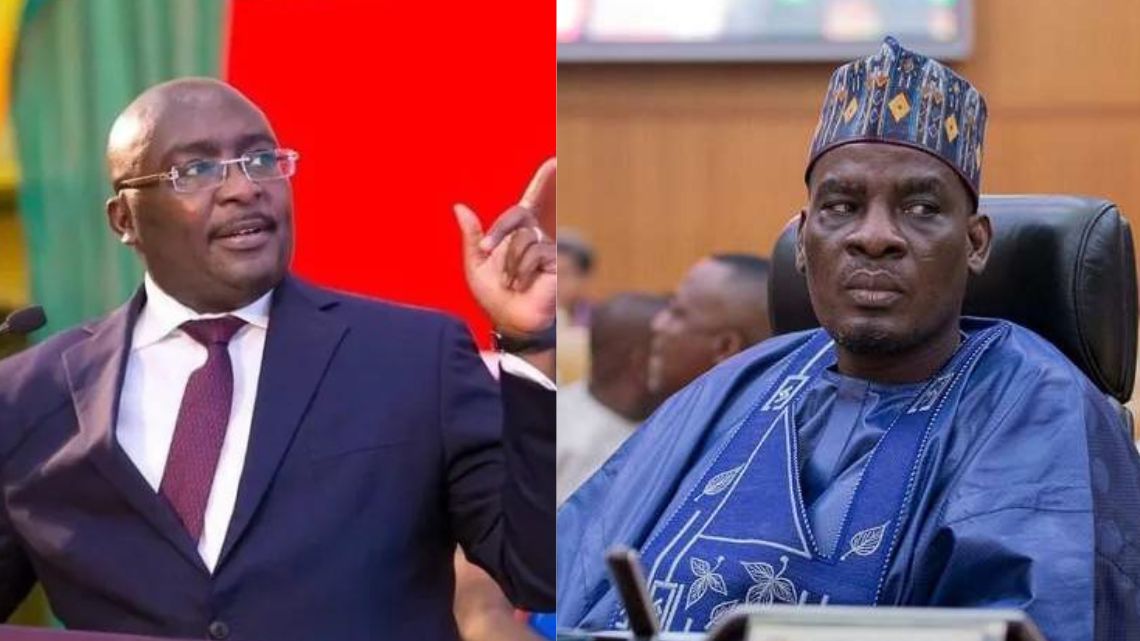
    In the case of the New Patriotic Party (NPP), former Vice President Dr Mahamudu Bawumia was selected as the preferred candidate to lead the New Patriotic Party (NPP) into the 2028 general election against his closest contender, former Member of Parliament (MP) for Assin Central, Kennedy Ohene Agyapong.

    The poll suggests that 57% of voters prefer Dr Bawumia as the party’s presidential candidate, while 29% picked Kennedy Ohene Agyapong.

    The other contenders, i.e., former Minister of Education, Dr Yaw Osei Adutwum, secured 6%, Minister of Food and Agriculture, Dr Bryan Acheampong, polled 5%, while former NPP General Secretary, Kwabena Agyapong, registered 3%.

    In the critical swing regions of Greater Accra, Central, and Western, Dr Bawumia also leads decisively with 57%, followed by Kennedy Agyapong at 32%. Dr Adutwum and Dr Acheampong each secured 4%, while Kwabena Agyapong obtained 3%.

    The survey further indicates that in a potential runoff between Dr Bawumia and Kennedy Agyapong, Dr. Bawumia would extend his lead with 62% against Agyapong’s 38%.

    Among NPP delegates, Dr Bawumia remains firmly ahead with 47%, while Kennedy Agyapong trails with 17%. Dr Acheampong and Dr Adutwum received 3% and 1% respectively, with Kwabena Agyapong also at 1%. However, 27% of delegates remain undecided, and 4% declined to disclose their preference.

    In a runoff scenario within the delegates’ poll, Dr Bawumia commands 49%, compared to Kennedy Agyapong’s 19%, with 27% undecided and 5% declining to disclose.

    The NPP has already demonstrated its readiness to battle for Ghana’s top seat in the 2028 elections. The vetting committee of the New Patriotic Party on Tuesday, September 23, assessed the former Vice-President Dr Mahamudu Bawumia and four other persons contesting to lead the party into the 2028 elections.

    The four others who have expressed interest in contesting include Dr. Yaw Osei Adutwum (former Education Minister and Member of Parliament for Bosomtwe), Bryan Acheampong (Member of Parliament for Abetifi), former party General Secretary Kwabena Agyepong, and former Assin Central MP Kennedy Ohene Agyapong.

    On Tuesday, July 29, the NPP opened nominations for its 2028 flagbearer position. Dr. Mahamudu Bawumia, the party’s 2024 flagbearer and former Vice President, Kennedy Agyapong, Kwabena Agyepong, and Dr. Osei Adutwum have all picked up nomination forms.

    Former General Secretary of the NPP, Kwabena Agyei Agyepong, officially filed his nomination forms on Tuesday, August 26. Party executives received the nomination forms from former Assin Central MP and presidential hopeful Kennedy Ohene Agyapong on Wednesday, August 27.

    Dr Yaw Osei Adutwum filed his nomination forms for the NPP flagbearer race on Thursday, August 28, 2025.

    In the meantime, Dr. Mahamudu Bawumia has received strong backing from 268 former Metropolitan, Municipal, and District Chief Executives (MMDCEs), who paid him a visit in June to pledge their support.Former Energy Minister and running mate of the New Patriotic Party’s (NPP) 2024 presidential candidate, Dr Matthew Opoku Prempeh, has decided to throw his weight behind Dr Mahamudu Bawumia ahead of the party’s presidential primaries in 2026.

    In an interview on Asempa FM on August 26, the former minister noted that he remains grateful to the former Vice President who decided to make him his running mate despite the many individuals who advised him to do otherwise. According to Dr Opoku Prempeh, popularly known as Napo, Dr Bawumia was engaged countless times by some bigwigs in the party to pick someone else to be his running mate.

    “I am not ungrateful. Look at this big party and all the people who were praying for the running mate slot; he ignored all of them and made me his running mate.

    “I know it was a difficult situation, but a lot of people don’t know. Some bigwigs in the party went to Dr Bawumia to tell him not to make me the running mate, but he ignored them. There are some names that, if I mentioned them, you would be shocked. Some even took him to offices to advise him against me, but still he chose me,” he remarked.

    He thus said, “So, I cannot be ungrateful to him… For those who stood in the flagbearership contest, everyone knows Kennedy Agyapong is my friend, but I am still for Bawumia”.

    The New Patriotic Party (NPP) has made room for new additions to its already approximately 220,000 delegates who are eligible to vote in its presidential primaries slated for Saturday, January 31, next year.

    In a statement dated August 26, signed and shared by the Secretary of the Presidential Elections Committee, Williams Yamoah, the party announced that registration has been opened for an additional 60,000 new delegates, which include nineteen new categories of people. This directive follows reforms adopted at the party’s National Annual Delegates Conference held in Accra on Saturday, July 19.

    The statement explained: “In accordance with Article 13(1)(11) of the Constitution of the New Patriotic Party (NPP), and pursuant to the motion on transitional provisions adopted at the National Annual Delegates Conference held in Accra on Saturday, July 19, 2025, the following new categories of Party officials and dignitaries have been included in the upcoming Presidential Primary voter register.”

    The updated voter register, also known as the party album, will now include several new categories of officials and dignitaries. These are: all former regional and constituency executives, members of the National Council of Elders, 30 members of the National Council of Patrons, all past national officers, former party-card-bearing MPs and parliamentary candidates, as well as former party-card-bearing ministers and deputy ministers.

    Other groups added to the list are external branch executives, former external branch executives, and key members of the Tertiary Students Confederacy (TESCON), including presidents of recognised institutions, the National TESCON Coordinator, regional coordinators, and one TESCON patron from each institution.

    Additionally, 10 members from each Regional Council of Elders, 10 patrons from each region, and five members and patrons from each constituency have also been included.

    The statement directed that “all officers that fall under the categories above are requested to register their names with their respective organisational structures, including the National Secretariat, Regions, Constituencies and External Branches, as applicable, with immediate effect.

    ”To make the registration process easier, the statement clarified that a digital link would be circulated to External Branch Executives for online registration. All other qualified members were advised to liaise with their respective regions and constituencies to register.

    However, the forms are to be accessed via the party’s official website. “The registration form may be downloaded from the Party’s official website. For ease of reference, a sample copy is hereby attached,” excerpts of the statement read. The statement further warned that the registration was strictly for the aforementioned categories of people, with a deadline set for Friday, September 19.

  • Education Ministry enforces new PTA rules across all schools

    Education Ministry enforces new PTA rules across all schools

    A new framework aimed at strengthening collaboration between schools and families has been rolled out nationwide by the Education Ministry.

    This information was made known after the National Curriculum Review Committee paid a visit to the Education Minister, Haruna Iddrisu to submit final policy guidelines on the operationalisation of PTAs.

    According to the Minister admonished parents and teachers to adhere to the laid down guidelines. “PTAs are back. Now there is an established norm with guidelines to facilitate and support their work. Socialisation is a shared responsibility, particularly for young learners. While the child spends time at home, significant hours are spent in school, making both parents and teachers equally responsible for shaping the child. Ghana’s concept of socialisation must be shared,” he said.

    In July, a directive from President John Dramani Mahama has necessitated the reinstatement of Parent-Teacher Associations (PTAs) in pre-tertiary schools across the country. This was disclosed by the Head of Public Relations at Ghana Education Service (GES), Daniel Fenyi, on Thursday, July 17.


    The move, he explained, will ensure effective collaboration between parents and teachers for quality education for students. “All heads of public senior high schools, technical, and STEM schools are to operationalise the reinstatement with immediate effect.

    This move is aimed at strengthening the collaboration and involvement of parents, communities and teachers in the delivery of quality education to Ghanaian learners,” parts of the statement added.

    Under the Akufo-Addo-led administration, public second-cycle institutions observed a limited influence of PTAs in school management, particularly regarding financial assistance to augment the government’s efforts under the Free Senior High School (SHS) policy.


    In 2019, the GES ordered the suspension of PTA levies after reports emerged that some school heads were abusing the collection of dues and levies, undermining the administration’s objective of eliminating cost as a barrier to secondary education in Ghana.

    Consequently, teachers were exempted from the Parent-Teacher Association, and the organization was rebranded as the Parent Association (PA).


    According to the GES, the decision to rename PTA as PA aimed to create a more welcoming and inclusive environment for parents and guardians. This change, however, limited teachers’ roles in school management, as the PA lacked the level of engagement and decision-making authority that PTAs traditionally held.


    The decision to scrap PTAs faced criticism from various education stakeholders, with many citing reduced teacher involvement and a weakened support system for students. Although the GES clarified that teachers had not been excluded from Parent Associations, many argued that the shift rendered the association ineffective.

    In May, the Ministry of Education granted school heads at Senior High Schools (SHS) across the country the mandate to conduct searches on students. This was revealed by the Deputy Minister for Education, Clement Apaak on Saturday, May 24.

    Speaking to Citi News, Clement Apaak, noted that the action is a part of the government’s series of strategies to eradicate indiscipline in schools, specifically SHSs.

    The new development was ruled out under the previous New Patriotic Party (NPP)government.

    The instruction comes after the National Association of Graduate Teachers (NAGRAT) threatened to take matters in their hands should the GES fail to introduce drastic measures against notorious SHS students.

    NAGRAT, however, issued a May 31 deadline ultimatum emphasizing its decision to introduce tough disciplinary measures to protect teachers.

    In response, the Ministry of Education has directed the Ghana Education Service (GES) to implement a lasting solution in response to the rising cases of indiscipline in Senior High Schools (SHS).

    The Deputy Minister has also indicated that Parent Teachers Association (PTA) meetings will be reinstated to ensure teachers and parents collaborate as well as share concerns.

    He added that “The minister has directed the director general of education to work with the current Education Service council to provide immediate additional interventions towards addressing this canker which clearly doesn’t order well for teaching and learning even as we look forward to implementing recommendations as captured in the here yet to be published report of the national education forum”.

    However, the Deputy Minister explained that the decision to include corporal punishment would be made once the discussions with the stakeholders of education are finalized.

    “So we would not make an immediate pronouncement as to whether oral punishment should be one of the interventions until we see what is going to come out of the interaction between the director general and the council,” he added.

    Violence in SHSs has become a trend in the country. Between January and February this year, Ghana recorded five violent clashes in SHSs.

    These incidents have witnessed students possessing weapons, destroying properties and others engaging in brutal confrontations.

    Stakeholders on the other hand, have bemoaned the growing indiscipline and insecurity on school campuses, prompting calls for an immediate intervention.

    Recently, authorities at Sokode Senior High Technical School temporarily shut down the premises over a violent misunderstanding between students.

    Kinbu Secondary Technical and Accra Technical Centre School earlier this year were involved in a heated altercation.

    Away from Accra, Kumasi Technical Institute (KTI) and Kumasi Anglican Senior High School clashed after returning from an inter-school competition.

    One student sustained severe injuries as a result of the event; school properties and private cars belonging to teachers were also damaged.

    Salaga Senior High School in the Savannah Region, observed the most violent clashes.

    The confrontation left a student with multiple stab wounds with the police retrieving locally-produced pistol and ammunition from the scene.

    Students of Islamic Senior High School (ISSEC)also faced off with local youth, causing injuries and damages to multiple vehicles.

  • Surging violent incidents compel Education Ministry to review security measures in SHSs

    Surging violent incidents compel Education Ministry to review security measures in SHSs

    A comprehensive review of security arrangements in schools nationwide has been ordered by the Ministry of Education. The call is a response to recurring violent incidents specifically in the Senior High Schools (SHSs) that have claimed the lives of students.

    The Education Minister, Haruna Iddrisu, who was addressing the media on Thursday, August 7, 2025 fumed about the chaos in SHSs describing them as “deeply troubling and unacceptable.”

    “We must work more closely with our security agencies and law enforcement to ensure our schools remain safe spaces for learning. Even our concept of a ‘watchman’ in educational institutions needs to be revisited.

    “Do we just pick anyone and label them school security? With no training in policing or even basic security practices?.We need to review this so we can foster a safer school environment for both students and teachers,” he added.

    His comments follow the death of a 15-year-old student of Kinbu Senior High School (SHS), which occurred on July 31. Addib Alhassan was fatally stabbed during an altercation allegedly sparked by a heated argument.

    The exact cause of the confrontation remains unclear. After sustaining injuries, Alhassan was initially rushed to the Adabraka Polyclinic and later transferred to the Ridge Hospital due to the severity of his injuries. He was later pronounced dead.

    In reaction to the unfortunate incident, the Member of Parliament for Klottey-Korle, Dr. Zanetor Agyeman-Rawlings, strongly condemned the murder, describing it as both tragic and senseless.

    She expressed deep shock and sorrow over the stabbing in a statement she released on Friday, July 31, 2025. “I strongly condemn this act of violence, and I will collaborate with the Ghana Police Service and other relevant authorities to ensure that thorough investigations are swiftly done and that justice is served,” she said.

    The Member of Parliament stressed that schools must remain a safe haven for studies and personal development. She encouraged a joint effort from education and security authorities to ensure stronger safety measures are in place across all institutions.

    “This tragedy must be a wake-up call for all stakeholders in the education and security sectors to prevent such incidents from recurring,” she stated. Dr. Agyeman-Rawlings offered her condolences to the bereaved family and the Kinbu SHS community, including students and staff.

    She made a commitment to partner with the Ghana Education Service (GES), school leadership, and security agencies to strengthen safety and mental health support structures in schools across her constituency.

    Earlier this year, Kinbu Secondary Technical and Accra Technical Centre School were involved in a heated altercation, adding to the number of melees recorded this year.

    Violence in SHSs has become a trend in the country. Seven months into the year, Ghana has recorded over five violent clashes in SHSs. These incidents have witnessed students possessing weapons, destroying property, and others engaging in brutal confrontations.

    Stakeholders have bemoaned the growing indiscipline and insecurity on school campuses, prompting calls for an immediate intervention. Recently, authorities at Sokode Senior High Technical School temporarily shut down the premises over a violent misunderstanding between students.

    Kumasi Technical Institute (KTI) and Kumasi Anglican Senior High School clashed after returning from an inter-school competition. One student sustained severe injuries as a result of the event; school properties and private cars belonging to teachers were also damaged.

    Salaga Senior High School in the Savannah Region observed the most violent clashes. The confrontation left a student with multiple stab wounds, with the police retrieving locally-produced pistol and ammunition from the scene. Students of Islamic Senior High School (ISSEC) also faced off with local youth, causing injuries and damages to multiple vehicles.

    Months ago, a 16-year-old form two student of Osei Kyeretwie Senior High School (OKESS) was arrested by the Tafo Pankrono Divisional Police Command for illegally possessing a locally manufactured firearm.

    The police arrested the suspect following a routine dormitory search by school authorities on Wednesday, May 14. According to the accused, the weapon belonged to his stepfather, Mr. Daniel Owusu Baafi, who has been apprehended.

    This was disclosed by the Deputy Superintendent of Police Godwin Ahianyo, Head of Public Affairs for the Ashanti Regional Police Command, on Sunday, May 18. Following their arrest, both individuals were granted bail and are to report to the police on Monday, May 19, as investigations continue.

    A fisticuff between two final-year students of Wa T.I. Ahmadiyya Senior High School (Wa Amass) has left one hospitalised and in critical condition, according to reports. It is reported that Iddrisu Ibrahim, also known as Lincoln—an agricultural science student—and his colleague Hafis, who is also known as Baayaawa—a general arts student—engaged in an argument over a video that was recorded.

    It is said that Lincoln filmed Hafis without his consent—an action that left the latter displeased. He requested Lincoln to delete the said video, but Lincoln reportedly refused. When matters escalated, Hafis pulled out a knife and stabbed his colleague in the stomach and ribs.

    Amid the many violent clashes, the Ministry of Education has granted school heads at Senior High Schools (SHS) across the country the mandate to conduct searches on students.

    Deputy Minister for Education Clement Apaak in May noted that the action is a part of the government’s series of strategies to eradicate indiscipline in schools, specifically SHSs.

    The Deputy Minister has also indicated that Parent-Teacher Association (PTA) meetings will be reinstated to ensure teachers and parents collaborate and share concerns. This was realised last month.

    A directive from President John Dramani Mahama has necessitated the reinstatement of Parent-Teacher Associations (PTAs) in primary and secondary schools across the country. This was disclosed by Daniel Fenyi, the Head of Public Relations at the Ghana Education Service (GES), on Thursday, July 17.

    The move, he explained, will ensure effective collaboration between parents and teachers for quality education for students.

    “All heads of public senior high schools, technical, and STEM schools are to operationalise the reinstatement with immediate effect. This move is aimed at strengthening the collaboration and involvement of parents, communities, and teachers in the delivery of quality education to Ghanaian learners,” parts of the statement added.

  • Govt to establish University of Agriculture and Life Sciences in Kintampo – Education Minister

    Govt to establish University of Agriculture and Life Sciences in Kintampo – Education Minister

    Minister of Education, Haruna Iddrisu, has announced plans by the government to set up a new tertiary institution, the University of Agriculture and Life Sciences, in Kintampo in the Bono East Region.

    According to the minister, the institution will support agricultural modernization and provide higher opportunities in education for the region.

    Speaking at the official inauguration of the Governing Council of the Simon Diedong Dombo University of Business and Integrated Development Studies on May 12, the sector minister explained that the bill to establish the university will be laid before parliament once it reconvenes.

    The move, he said, forms part of the government’s broader effort to expand tertiary education and ensure that every region in the country has at least one public university.

    “It is the desire of the government that every region of Ghana will be host to one higher education institution of learning. It is the dream and desire of President Mahama that in each region there will be an established university,” he indicated..

    Ghana’s agriculture sector, though vital to the economy, has faced slow progress in modernisation, with limited investment in research and innovation. This, experts argue, continues to impact food security and national productivity.

    The planned university is expected to respond to these challenges by focusing on specialised training, cutting-edge research, and innovation in agricultural science and life sciences. It will also equip the youth with practical skills to thrive in the evolving agricultural landscape.

    Mr. Iddrisu also touched on infrastructure challenges facing existing institutions. He noted that the Simon Diedong Dombo University of Business and Integrated Development Studies had not seen any major support since its establishment.

    “SD Dombo has not seen any significant support, in terms of infrastructure. I am happy to announce that this year, the government through the GETFund will make available some seed money for SD Dombo University as part of President Mahama’s quest to support the institution to grow,” he said.

    Chairman of the newly inaugurated Governing Council, Dr. Benjamin Kumbour, described the announcement as timely and pledged to engage private stakeholders and the local community to contribute to the university’s development.

    “We on our part will also try private initiatives and see how the local community of the region will also be encouraged to bring their contributions to develop the university,” he assured.

    The government says it remains committed to creating more educational opportunities, especially in underrepresented regions, to empower the next generation of professionals and innovators.

    Meanwhile, President Mahama is preparing to introduce a new bill in Parliament to rename the C.K. Tedam University of Technology and Applied Sciences (CKT-UTAS) and several other public universities across the country.

    The Minister for Education made the announcement during the swearing-in ceremony of the Governing Council of CKT-UTAS in Accra. The university’s name has drawn mixed reactions from the public, with some stakeholders opposing it from the beginning.

    This move forms part of a broader initiative to review and potentially rename several public universities established or renamed during the tenure of former President Nana Akufo-Addo.

    “We have had extensive consultations with the academic community, traditional rulers, alumni associations, students, and civil society. As a result, the name C.K. Tedam University of Technology and Applied Sciences is likely to change—possibly reverting to the original vision.

    “There will be a general bill to consider the renaming of several public universities that were renamed or established during former President Akufo-Addo’s administration,” Mr Haruna stated.

  • Give us nothing but a win – Haruna Iddrisu tells Black Stars ahead of Chad clash

    Give us nothing but a win – Haruna Iddrisu tells Black Stars ahead of Chad clash

    Education Minister Haruna Iddrisu has urged the Black Stars to secure all three points when they face Chad on Friday, March 21.

    Ghana will take on Chad in their fifth match of the 2026 FIFA World Cup Qualifiers at the Accra Sports Stadium, hoping to start the year with a victory.

    The Black Stars have not won any of their last six games and recently disappointed fans by failing to qualify for the 2025 Africa Cup of Nations (AFCON) in Morocco.

    “We need nothing but a win (against Chad). It is disappointing that the Black Stars couldn’t qualify for the 2025 AFCON. The Black Stars have failed to win in their last six matches,” the Member of Parliament for Tamale South said.

    “That is not the Black Stars of Ghana. There is something fundamentally wrong.”

    He also urged the Minister of Sports and Recreation, Kofi Adams, to limit the interference from the Ghana Football Association (GFA).

    “Minister, [with regards to] interference with Association Football, there will be limitations, but you have to be firm. You have to be very firm in your dealings with it,” he added.

    The Black Stars will play against Chad at the Accra Sports Stadium on Friday, March 21, before taking on Madagascar in Morocco three days later.

    Ghana currently shares the top spot in the 2026 World Cup qualifiers with Comoros, as both teams have nine points.

  • Govt to reinstate PTAs in public schools

    Govt to reinstate PTAs in public schools

    The Education Minister, Haruna Iddrisu, has indicated that Parent-Teacher Associations (PTAs) will be reintegrated into the management structure of public schools.

    This move is aimed at strengthening the partnership between parents and teachers, with the objective of improving educational outcomes for students.

    During a public event, the minister emphasized the crucial role PTAs play in enhancing community involvement in the educational system.

    I am particularly happy to announce that PTAs will be introduced back into the management of education under the presidency of His Excellency John Dramani Mahama, to work for parents and teachers to work together to improve learning outcomes in our educational institutions. And for PTAs to support our educational institutions to produce quality human capital for the country,” he stated.

    The revival of PTAs is set to offer vital support to public schools, aiming to tackle challenges like infrastructure improvement, student conduct, and academic achievements. While PTAs once played a significant role in influencing school-level policies, their impact has diminished in recent years.

    This new policy is designed to promote a more collaborative education system, encouraging a partnership between parents, teachers, and school leaders to enhance the quality of education for all learners.

    In the coming months, schools are expected to formally reinstate PTAs into their organizational frameworks as part of this strategic shift.

  • No more free meals for teacher trainees – Haruna Iddrisu

    No more free meals for teacher trainees – Haruna Iddrisu

    Education Minister, Haruna Iddrisu has revealed the government’s decision to halt feeding allowances for teacher trainees in colleges of education nationwide.

    During a meeting with college principals in Accra, he stated that the policy was financially unviable and inconsistent with international higher education standards.

    He emphasized that funding meals for tertiary students should not be a government responsibility, as it is not a sustainable long-term measure.

    To replace the feeding program, the government intends to introduce an improved student loan scheme, enabling trainees to cover their own living costs, including meals.

    The Minister described this transition as essential for ensuring fiscal sustainability in the education sector while promoting self-sufficiency among teacher trainees.

    “There is no way you should be feeding a student at the tertiary level so we have to work out a transition from the allowance into an enhanced student loan for them to feed themselves.

    “But in the interim, they will still get the allowances. I cannot conceive of a student in a higher education institution being fed.”

  • Prioritise access, relevance, and quality in higher education – Education Minister charges stakeholders

    Prioritise access, relevance, and quality in higher education – Education Minister charges stakeholders

    Minister of Education, Haruna Iddrisu, has called on stakeholders to prioritise enhancing access, relevance, and quality within Ghana’s higher education system to promote inclusivity and equitable opportunities for all.

    He underscored the importance of collective efforts to dismantle systemic barriers that hinder marginalised groups, including girls, children, and persons with disabilities, from accessing quality education.

    Speaking on the government’s commitment to transforming education, the Minister described it as a powerful tool for personal and national development. He stressed the need to address historical inequalities within the system to ensure no group is left behind.

    “Education is the cornerstone of national development and personal empowerment. To achieve meaningful progress, we must eliminate barriers that restrict access for the most vulnerable groups in our society,” Mr. Iddrisu said.

    The Minister highlighted Ghana’s alignment with global frameworks, citing the 1989 Convention on the Rights of the Child, which mandates nations to make education universally accessible. He reiterated Ghana’s dedication to improving access and quality in education while adhering to international standards.

    “The Convention on the Rights of the Child clearly stipulates that higher education must be accessible to all. In Ghana, we prioritise access, relevance, and quality in higher education. Agenda 2030 further recognises education as a cornerstone for the success of all Sustainable Development Goals (SDGs),” he stated.

    Mr. Iddrisu also emphasised the critical role of education in achieving the SDGs, noting that sustainable development hinges on a strong educational foundation. He called for collaborative action involving the government, private sector, international organisations, and local communities to address the challenges facing the sector.

    “Only through strong partnerships can we address these challenges and create a truly inclusive educational system,” he emphasised.

    His comments come in the wake of the 2024 Global Youth Development Index Update Report by the Commonwealth Secretariat, which ranked Ghana’s education system 125th out of 183 countries. 

    The report highlighted significant challenges, including infrastructural deficiencies, teacher shortages, and inadequate funding, which continue to hinder progress in the sector.

  • My data shows less than 3.9m students benefited from Free SHS – Haruna Iddrisu

    My data shows less than 3.9m students benefited from Free SHS – Haruna Iddrisu

    Minister of Education, Haruna Iddrisu, has challenged the widely reported figures on the number of beneficiaries of Ghana’s Free Senior High School (Free SHS) programme, calling for a comprehensive validation of the data.

    Speaking during his maiden visit to the Ministry of Education on Wednesday, January 22, 2025, following his swearing-in by President John Dramani Mahama, the Minister expressed skepticism over claims that 5.1 million students have benefited from the programme.

    “One of the very first major issues the country must interrogate is the statistical validity of how many Ghanaians have benefited from Free Senior High School,” he remarked.

    Haruna Iddrisu revealed that his independent analysis of data from 2017 to 2023 indicates that approximately 3.9 million students have benefited from the initiative, a figure significantly lower than the 5.1 million stated in public records, including parliamentary reports.

    “I am not saying mine is right, but 5.1 million was misleading because I have looked at the numbers from 2017 to 2023, and I am convinced that the number of students who have benefited from the Free SHS policy stands at not more than 3.9 million. But I need a validation of that data to begin with,” he explained.

    He emphasized that the objective is not to discredit existing reports but to establish accurate figures that can guide future educational policies and reforms.

    The Minister announced plans to convene a National Education Conference to examine the state of Ghana’s education system and formulate evidence-based reforms. He highlighted that verifying the Free SHS data will serve as a crucial foundation for these discussions.

  • 5.1M beneficiaries of Free SHS misleading – Haruna Iddrisu orders for audit

    5.1M beneficiaries of Free SHS misleading – Haruna Iddrisu orders for audit

    The Minister of Education, Haruna Iddrisu, has advocated for a detailed examination of the records of Free Senior High School (Free SHS) beneficiaries.

    He stressed that precise and comprehensive data is essential for guiding policy discussions and ensuring the successful execution of reforms.

    The Tamale South MP shared these sentiments during his first official visit to the Ministry on Wednesday.

    “One of the foremost issues requiring scrutiny is the statistical accuracy of how many Ghanaians have benefited from the Free SHS programme,” he said.

    He noted variations in the reported numbers, referencing his analysis, which places the beneficiary count at 3.9 million, contrary to the 5.1 million recorded in official public and parliamentary documents.

    “I am not claiming that my figures are definitive, but the reported figure of 5.1 million appears misleading. My analysis of the data from 2017 to 2023 suggests that the actual number of beneficiaries does not exceed 3.9 million,” he noted.

    The Minister also revealed intentions to organize a National Education Summit aimed at assessing the current state of the education sector and formulating practical reforms.

    He emphasized that verifying the Free SHS statistics would be a key aspect of the summit, providing a solid foundation for tackling broader educational issues and planning the next steps.

  • Haruna Iddrisu, Agbodza and Eric Opoku approved by Parliament

    Haruna Iddrisu, Agbodza and Eric Opoku approved by Parliament

    Parliament has approved another set of three ministerial nominees appointed by President John Mahama following a debate on Tuesday, January 21.

    A motion to approve the appointees, Kwame Governs Agbodza, Minister-Designate for Roads and Highways, and Eric Opoku, Minister-Designate for Food and Agriculture, and the Minister-Designate for Education, Haruna Iddrisu, was approved by the House in a sitting spearheaded by Second Deputy Speaker Andrew Asiamah Amoako to become substantive ministers.

    The three nominees faced the Appointments Committee on Monday, January 20. During vetting, Haruna Iddrisu announced plans to uncap the Ghana Education Trust Fund (GETFund) as a matter of urgency to bolster infrastructural development in the education sector.

    Governs Agbodza, on his part, announced the reintroduction of road tolls using advanced technological platforms to streamline collection and ease traffic. Mr Eric Opoku noted that there will be a setup of farms in Senior High Schools (SHSs) all across the country to harness the country’s abundant land resources and contribute to the growth of the agricultural sector.

    Earlier, Parliament approved the ministerial nominations of President John Mahama’s first three appointees.

    Dr. Cassiel Ato Baah Forson, Minister-designate for the Ministry of Finance; John Abdulai Jinapor, Minister-designate for the Ministry of Energy; and Dr. Dominic Akuritinga Ayine, Minister-designate for the Ministry of Justice and Attorney General, will become substantive ministers after being sworn in by the president.

    Speaking on the floor of Parliament, Minority Leader Alexander Afenyo-Markin and other legislators expressed confidence in the appointees and urged them to carry out their task with diligence and always act in the interest of the general public.

    “They should not disappoint us. We wish them all the best,” other legislators stated.

    These three personalities faced Parliament’s Appointments Committee on January 13. Engaging the committee, Dr Ato Forson pledged to improve tax compliance to increase Ghana’s tax revenue to 16% of GDP without raising taxes.

    At enhancing efficiency and improving power distribution in the country, John Abdulai Jinapor has set a target to establish a comprehensive framework for private sector participation in the operations of the Electricity Company of Ghana (ECG) before the end of 2025.

    Dr. Dominic Ayine, on the other hand, has pledged to protect citizens’ rights with the reintroduction of a revamped public tribunal system.

  • We expect everyone to respect the Ghanaian values – Haruna Iddrisu on LGBTQ matters

    We expect everyone to respect the Ghanaian values – Haruna Iddrisu on LGBTQ matters

    Education Minister-Designate, Haruna Iddrisu, has reiterated his firm opposition to LGBTQ+ practices, underscoring the need to uphold Ghana’s cultural and moral values.

    He stressed the importance of respecting the country’s traditions and ethics in addressing the LGBTQ+ debate.

    Speaking before the Appointments Committee of Parliament on January 20, 2025, Haruna Iddrisu articulated his position on the matter, referencing his religious beliefs and cultural upbringing. “It’s a cultural wrong, with my religion as a Muslim, you know where I stand on this matter. It is repugnant to my Muslim values and ethics,” he stated.

    He further noted, “I do not want to believe that many a Ghanaian parent would want their children trained in a way which is not consistent with the way I and you were brought up as Ghanaians. That a man can relate to a man and a woman can relate to a woman.”

    During his remarks, Haruna Iddrisu emphasized the importance of preserving Ghana’s identity. “We’re a country and we define our values both social and cultural, and we should expect all other persons to respect those values,” he added.
    The debate surrounding LGBTQ+ practices in Ghana has sparked significant public and political discourse in recent years. On January 14, 2025, former President John Dramani Mahama addressed the issue during a meeting with the Catholic Bishops’ Conference in Accra. He proposed a shift in strategy for advancing the Anti-LGBTQ+ bill, suggesting that it be introduced as a government-sponsored initiative rather than a private member’s bill.

    According to President Mahama, government sponsorship would grant the bill more legitimacy and enhance its prospects of passing through Parliament.

    Ghana has been working towards criminalizing LGBTQ+ activities for over two years. An Anti-LGBTQ+ bill was introduced during the tenure of the 8th Parliament and passed by the House. However, it failed to receive presidential assent before the dissolution of Parliament on January 6, 2025, effectively rendering it null.

    Despite the legislative hurdles, Haruna Iddrisu reaffirmed the country’s commitment to preserving its values, stating, “We’re a country, we have our own values, and we have a duty to preserve those values within the ambit of the constitution.”

  • Free tertiary admission policy will require GHS345m – Haruna Iddrisu

    Free tertiary admission policy will require GHS345m – Haruna Iddrisu

    The Education Minister-designate, Haruna Iddrisu, has disclosed that approximately GH₵345 million will be required to fully roll out the government’s free tuition initiative for first-year tertiary students.

    During his appearance before Parliament’s Appointments Committee on January 20, 2025, the Tamale South MP emphasized that the initiative is designed to enhance access to higher education for students nationwide.

    He indicated that the funds would be allocated to cover the tuition costs for newly enrolled students, ensuring that higher education is accessible to all.

    Haruna Iddrisu also revealed that the funds will be distributed directly to the participating institutions.

    Furthermore, he assured that students who have already made tuition payments will receive reimbursements, ensuring the initiative remains equitable for everyone.

    “The country will require about ₵345 million for the population of students who enter tertiary institutions, that is what the state will be required to do. We intend to provide that money to the affected universities, at least, to make refunds to those who have already paid fees,” he stated.

    He additionally underscored that the new policy will offer greater flexibility to parents, giving those who prefer to pay fees the option to do so within the framework set forth by the National Democratic Congress (NDC).

    “The beauty of this is that parents who are willing to pay can do so under this policy that has been introduced by the NDC,” he stated.

    The announcement follows the NDC’s commitment during their 2024 campaign to introduce the free tertiary tuition policy, which seeks to alleviate the financial strain on students and their families while expanding access to higher education.

    In his remarks, the minister-designate vowed to fully support the policy and ensure its successful execution.

  • 1st-year tertiary students who have already paid their admission fees will get a refund – Haruna Iddrisu

    1st-year tertiary students who have already paid their admission fees will get a refund – Haruna Iddrisu

    Education Minister-designate Haruna Iddrisu has announced that first-year students at public tertiary institutions will receive a refund for their admission fees.

    He emphasized that this measure is part of President John Mahama’s broader strategy to enhance access to higher education for all.

    Speaking during his vetting before Parliament’s Appointments Committee on Monday, the Tamale South MP disclosed that the government will allocate GH¢345 million to cover the admission fees for students enrolled in general academic programs at tertiary institutions, excluding specialized courses such as medicine.

    “On the authority of President Mahama, and with the approval of the Minister of Finance-designate, Hon. Ato Forson, this provision will be included in the government’s Reset Budget. The funds will ensure that students undertaking courses in the general subject areas have their admission fees refunded,” Haruna Iddrisu said.

    The Minister-designate assured that students who have already settled their admission fees will also benefit from the refund.

    He added, “And for President Mahama, this is a model to experiment. We will look at it. How do we fare as a country? If it’s possible for expansion, then he will expand it. And he’s not asked that if you are able, you should not.”

    The policy honors a commitment made by the National Democratic Congress (NDC) in their 2024 election campaign.

    It forms a key part of a broader reform initiative aimed at expanding access to higher education, with a particular focus on supporting students from financially challenged backgrounds.

  • I will solve Northern Ghana’s education challenges – Haruna Iddrisu

    I will solve Northern Ghana’s education challenges – Haruna Iddrisu

    Education Minister-designate, Haruna Iddrisu, has vowed to address the gaps in educational opportunities and infrastructure between northern and southern Ghana.

    The Tamale South MP emphasized the importance of ensuring fairness, quality, and broad inclusion within the country’s education system.

    He made these comments during his vetting before Parliament’s Appointments Committee on Monday, January 20, 2025.

    “It’s important to recognize that as a country, there is a north-south divide when it comes to access to education,” Haruna Iddrisu noted.

    “The first school was established in the south in 1876, but in the north, we only got ours around 1951. This historical gap has created a deficit that must be addressed.”

    He noted the rise in participation rates in the north due to the Free Senior High School policy, attributing it to poverty as a major hindrance to obtaining quality education.

    “So you can imagine the gap and the deficit even Achimota School around 1924 at the time that Tamale Secondary School, which became the first in the north. We will work to close that gap. Indeed, even for the implementation of the Free Senior High School, it is noted that the participation rate is very high in Northern Ghana,” he added.

    “It explains that poverty likely hindered many from accessing education. The focus now should be on quality, equality, and equity,” he said.

    The Minister-designate shared troubling statistics about the infrastructure shortages in northern Ghana, as well as in the Oti and Western North regions. He emphasized a gap of about 5,000 facilities across basic, junior high, and senior high schools in these regions.

    With the president’s confidence in his leadership, Haruna Iddrisu committed to taking decisive action to rectify these inequalities.

  • See what Haruna Iddrisu had to say about Free SHS program

    See what Haruna Iddrisu had to say about Free SHS program

    Minister-designate for Education, Haruna Iddrisu, has stated that the government plans to thoroughly review the Free Senior High School (SHS) program to make it more sustainable and reliable.

    Speaking at his vetting before Parliament’s Appointments Committee on Monday, January 20, 2025, he stressed the need to secure stable and sufficient funding for the program.

    “With emphasis on the future of the Free Senior High School in particular, how to assure it of adequate, reliable, sustainable financing, we will undertake a stakeholder forum which will involve donors and partners, involve academia, parents and students, to review the Free Senior High School (SHS) program.

    I should acknowledge that it remains one of the boldest steps in wanting to transform education.

    “It was a matter of debate between free, universal education, absorbing all the costs, and progressively free, starting with infrastructure. But President Mahama intends to undertake a comprehensive review of it to make it sustainable,” he noted.

    The Free SHS program, launched by former President Nana Addo Dankwa Akufo-Addo in 2017, was designed to make senior high school education more accessible to students across the country.

    Although the policy has led to a rise in enrollment, there are ongoing issues with feeding, education quality, and funding.

    During the 2024 election campaign, President John Dramani Mahama pledged to continue supporting the program, promising that it would undergo necessary reforms to tackle these challenges.

  • Haruna Iddrisu says 1st year tertiary students’ admission fees will be refunded

    Haruna Iddrisu says 1st year tertiary students’ admission fees will be refunded

    Education Minister-designate, Haruna Iddrisu, has confirmed that first-year public university students will have their admission fees refunded.

    He explained that this initiative is part of President John Mahama’s effort to make higher education more affordable.

    During his vetting with Parliament’s Appointments Committee on Monday, the Tamale South MP shared that the government plans to allocate GH¢345 million to cover the admission costs for students in general academic programs at public universities, excluding professional courses such as medicine.

    “On the authority of President Mahama, and with the approval of the Minister of Finance-designate, Hon. Ato Forson, this provision will be included in the government’s Reset Budget.

    The funds will ensure that students undertaking courses in the general subject areas have their admission fees refunded,” Haruna Iddrisu said.

    The Minister-designate assured that students who have already paid their admission fees will not be left out.

    He added, “And for President Mahama, this is a model to experiment. We will look at it. How do we fare as a country? If it’s possible for expansion, then he will expand it. And he’s not asked that if you are able, you should not.”

    The policy is a fulfillment of the National Democratic Congress (NDC) manifesto promise during the 2024 election campaign.

    It is part of a broader set of reforms aimed at making tertiary education more accessible, particularly for students from economically disadvantaged backgrounds.

  • Fees paid under Free Level 100 Policy to be refunded to to first-year students – Haruna Iddrisu

    Fees paid under Free Level 100 Policy to be refunded to to first-year students – Haruna Iddrisu

    Haruna Iddrisu, the Minister-designate for Education, has revealed that first-year students who paid tuition fees will be reimbursed under the National Democratic Congress (NDC)’s Free Level 100 policy.

    During his vetting with the Appointments Committee today, Iddrisu emphasized the party’s commitment to ensuring that students undertaking normal programs in public universities receive free tuition.

    He explained, “President Mahama and the NDC promised free tuition for students from Level 100, who would undertake normal programmes in the various public universities of our country.”

    The policy, he continued, will require the state to allocate approximately GHC345 million to cater for the student population entering tertiary institutions.

    “That is what the state will be required to do. We intend to provide that money to the affected universities. At least, to make refunds to all those who have paid those fees,” he said.

    Additionally, Iddrisu noted that the policy would also allow parents who still wish to pay tuition fees to do so, “under this principle that has been introduced by the NDC.”

    The Free Level 100 education policy was first announced by John Mahama, the NDC’s presidential candidate, during the launch of the party’s youth manifesto in Accra.

    https://twitter.com/JoyNewsOnTV/status/1881379716948750488

  • LIVESTREAMING: Appointments Committee vets Governs Agbodza, 2 others

    LIVESTREAMING: Appointments Committee vets Governs Agbodza, 2 others

    Haruna Iddrisu, Minister-Designate for Education, is among three nominees set to appear before Parliament’s Appointments Committee today, January 20.

    Alongside him are Kwame Governs Agbodza, Minister-Designate for Roads and Highways, and Eric Opoku, Minister-Designate for Food and Agriculture.

    The vetting process will evaluate the nominees’ qualifications, experience, and readiness to lead their respective ministries. Haruna Iddrisu’s nomination for the Education Ministry has generated significant interest, given his track record in leadership and policymaking.

  • Haruna Iddrisu, 2 others to face Appointments Committee today

    Haruna Iddrisu, 2 others to face Appointments Committee today

    Haruna Iddrisu, Minister-Designate for Education, is among three nominees set to appear before Parliament’s Appointments Committee today, January 20.

    Alongside him are Kwame Governs Agbodza, Minister-Designate for Roads and Highways, and Eric Opoku, Minister-Designate for Food and Agriculture.

    The vetting process will evaluate the nominees’ qualifications, experience, and readiness to lead their respective ministries. Haruna Iddrisu’s nomination for the Education Ministry has generated significant interest, given his track record in leadership and policymaking.

    The Committee will continue its vetting sessions throughout the week, with six nominees scheduled for Tuesday, January 21, 2025:

    • Ahmed Ibrahim, Minister-Designate for Local Government, Chieftaincy, and Religious Affairs
    • Agnes Naa Momo Lartey, Minister-Designate for Gender, Children, and Social Protection
    • Elizabeth Ofosu-Adjare, Minister-Designate for Trade, Agribusiness, and Industry

    Wednesday, January 22, 2025

    • Abla Dzifa Gomashie – Minister-Designate for Tourism, Culture, and Creative Arts
    • Emelia Arthur – Minister-Designate for Fisheries and Aquaculture
    • George Opare-Addo – Minister-Designate for Youth Development and Empowerment

    Thursday, January 23, 2025

    • Ali Adolf G. John – Minister-Designate, Northern Region
    • John Kwadwo Gyapong – Minister-Designate, Oti Region
    • James Gunu – Minister-Designate, Volta Region
    • Mrs. Rita Akosua Awatey – Minister-Designate, Eastern Region

    Friday, January 24, 2025

    • Ibrahim Tia – Minister-Designate, North East Region
    • Dr. Frank Amoakohene – Minister-Designate, Ashanti Region
    • Akamugri Atanga Donatus – Minister-Designate, Upper East Region

    Monday, January 27, 2025

    • Charity Gardiner – Minister-Designate, Ahafo Region
    • Salisu Be-Awuribe Issifu, Esq. – Minister-Designate, Savannah Region
    • Linda Obenewaa Akweley Ocloo – Minister-Designate, Greater Accra Region
  • Kwasi Kwarteng tips Haruna Iddrisu will do well as Education Minister

    Kwasi Kwarteng tips Haruna Iddrisu will do well as Education Minister

    Former spokesperson for the Ministry of Education, Kwasi Kwarteng has congratulated Haruna Iddrisu on his nomination as Minister of Education. He also noted the high expectations Ghanaians have for him in this role.

    Speaking to JoyNews, Mr Kwarteng said, “I wish Haruna Iddrisu the best as he embarks on this important new role. I genuinely expect him to do well, he said.

    “While I’m not here to offer premature praise, I believe that during our time at the Ministry, we worked hard to serve the nation to the best of our abilities, and I trust Haruna will do the same.”

    He continued, “Expectations are always high in such positions, no matter where one stands. Ghanaians, in particular, have a strong interest in the education sector, and I am confident that Haruna will not only meet these expectations but will exceed them.”

    Mr Kwarteng also highlighted that Haruna’s personal ambitions would be a key driving force in his success.

    “I understand that he has significant aspirations for the future, and this will undoubtedly motivate him to give his best. It is in his own interest to perform well, as the impact of his work will extend far beyond his tenure,” he explained.

    He further emphasised the vital role of the education sector, noting its far-reaching influence on society. “Education touches everyone in some way. Nearly every Ghanaian has been shaped by the education system, and people naturally care deeply about how it is managed. As a result, scrutiny is inevitable, but that comes with the role,” Mr Kwarteng said

    Despite the challenges ahead, Mr Kwarteng remains optimistic about Haruna’s potential. “Public figures in education will always face intense scrutiny, but that’s part of the responsibility. I have no doubt that Haruna Iddrisu will rise to the occasion, and all that I can say is that I wish him every success as he takes on this important responsibility,” he concluded.

  • Haruna Iddrisu appointed Education Minister, NDC’s Pablo to head Ministry of Youth Development

    Haruna Iddrisu appointed Education Minister, NDC’s Pablo to head Ministry of Youth Development

    President John Dramani Mahama has announced a new set of ministerial nominees, including prominent figures to lead key government sectors. Haruna Iddrisu, a former Minority Leader in Parliament and seasoned politician, has been appointed as Minister for Education, tasked with advancing educational reforms and improving access to quality education.

    A new Ministry for Youth Development and Empowerment has also been created, with George Opare Addo, popularly known as Pablo, nominated as its inaugural head. His mandate will focus on youth-centered policies aimed at addressing unemployment and fostering innovation among Ghana’s young population.

    Governs Kwame Agbodza has been nominated as Minister for Roads and Highways, a sector crucial for national infrastructure development. His leadership is expected to focus on improving road networks and enhancing national connectivity.

    In the agricultural sector, Eric Opoku has been named Minister-designate for Food and Agriculture. Known for his expertise in rural development, he is expected to prioritize food security and champion policies that support farmers across the country.

    Elizabeth Ofosu Agyare has been selected to lead the Ministry for Trade and Agribusiness, where she will focus on strengthening Ghana’s trade relations and promoting agribusiness as a pillar of economic growth.

    Ahmed Ibrahim has been nominated to head the Ministry of Local Government, Chieftaincy, and Religious Affairs, while Emelia Arthur has been designated for the Ministry of Fisheries and Aquaculture.

    So far, President Mahama has submitted a list of 13 regional ministerial nominees. The most recent additions include Wilbert Petty Brentum for Western North Region, Eduamoah Ekow Panyin Okyere for Central Region, and Joseph Nelson for Western Region.

    This follows the initial submission of 10 nominees for various regional portfolios, including Ali Adolf John for the Northern Region, John Kwadwo Gyapong for Oti Region, James Gunu for Volta Region, Mrs. Rita Akosua Adjei Awatey for Eastern Region, Ibrahim Tia for North-East Region, Dr. Frank Amoakohene for Ashanti Region, Akamugri Donatus Atanga for Upper East Region, Charity Gardiner for Ahafo Region, Salisu Be-Awuribe for Savannah Region, and Linda Ocloo, MP for Greater Accra Region.

    Earlier, President Mahama had announced three key ministerial nominees, including Dr. Cassiel Ato Forson as Minister-designate for Finance, John Abdulai Jinapor for the Ministry of Energy, and Dr. Dominic Akuritinga Ayine for the Ministry of Justice and Attorney General. These three have already undergone vetting by the Appointments Committee of Parliament.

  • I will submit recommendations on anti-LGBTQ Bill to Mahama – Haruna Iddrisu

    I will submit recommendations on anti-LGBTQ Bill to Mahama – Haruna Iddrisu

    Tamale South Member of Parliament, Haruna Iddrisu, has announced his intention to submit recommendations regarding the controversial anti-LGBTQ Bill to President John Mahama.

    Though he withheld specifics of his proposed suggestions, the legislator expressed confidence that his recommendations would align with national interests and help shape the bill appropriately.

    Speaking ahead of the National Muslim Prayer and Thanksgiving event at the National Mosque on Friday, January 10, 2025, Haruna Iddrisu said:

    “I have some ideas on the LGBTQ but I am yet to share them with the president as to how he can re-own the bill, get national consensus around it and be consistent with the laws of Ghana and the constitution.

    “There is a way to deal with it. Commenting here will mean that I am reducing it to a religious matter, but indeed it is a social problem of our country that collectively we have to deal with and solve,” he stated.

    The controversial Human Sexual Rights and Family Values Bill seeks to criminalize activities related to lesbian, gay, bisexual, transgender, queer, and intersex (LGBTQI) advocacy. If passed, it would impose penalties on individuals promoting or funding LGBTQI-related activities, including indirect support.

    Proponents of the bill argue that it is essential to safeguard Ghanaian cultural and family values from foreign influences, while critics, including human rights groups, contend that the bill violates fundamental rights such as freedom of expression, association, and equality under the law.

    The bill faced legal challenges at the Supreme Court from journalist Richard Dela Sky and Dr. Amanda Odoi, who argued that it failed to meet constitutional quorum requirements under Articles 102 and 104 during its legislative process, rendering its passage unconstitutional.

    However, the Supreme Court dismissed the petitions, stating that the bill had not yet become law. Justice Lovelace Johnson emphasized that a bill must receive presidential assent before it can be subjected to constitutional review.

    Prior to being declared president, Mahama indicated that his decision to assent to the “Human Sexual Rights and Family Values Bill,” commonly known as the Anti-LGBTQI+ Bill, would depend on a thorough review to ensure its provisions do not violate the Constitution.

    In an interview with BBC Africa on Wednesday, December 4, Mahama clarified: “It is not an anti-LGBTQI Bill; it is a Family Values Bill. It was approved unanimously by our Parliament. [LGBTQI] is against our African culture, it is against our religious faith, but I think we must look at the Bill, and the president must indicate what he finds wrong with that bill and send it back to Parliament or alternatively he must send it to the Council of State and get the Council of State’s advice.”

    When asked if he would sign the bill into law if elected president, Mahama responded: “It depends on what is in the Bill.” He emphasized that if he had been president at the time the bill was passed, he would have ensured a detailed examination of its provisions and consulted relevant advisory bodies.

    “That is what I would have done,” he affirmed.

    Meanwhile, Member of Parliament for Ningo-Prampram, Sam Nartey George, has strongly stated that John Dramani Mahama, the National Democratic Congress (NDC) Presidential Candidate, will have no choice but to sign the controversial anti-LGBTQI bill if he becomes president.

    “That is a misconception that has been put out. I listened to that interview. President Mahama has been clear that he will sign that bill and he has no option than to sign that bill,” Sam George said while speaking to the media.

  • Sacking Jean Mensa isn’t a part of Mahama’s priorities – Haruna Iddrisu

    Sacking Jean Mensa isn’t a part of Mahama’s priorities – Haruna Iddrisu

    Former Majority Leader and MP for Tamale South, Haruna Iddrisu, has made it clear that President-elect John Mahama is not focused on removing Jean Mensa, the Chairperson of the Electoral Commission (EC).

    Iddrisu, a lawyer and experienced politician, emphasised that Mahama’s priorities lie in addressing more urgent issues, particularly the country’s struggling economy, rather than any changes to the leadership of the EC.

    “Why would you change the Electoral Commission Chairperson? These are not matters of primary concern to President John Mahama. I am begging you… where Jean Mensa is… she doesn’t determine who rules Ghana. Ghanaians determine who rules them,” Haruna Iddrisu stated in an interview on TV3.

    His comments follow calls by Joyce Bawah Mogtari, the special aide to President-elect John Dramani Mahama, for the resignation of the EC Chairperson due to concerns about the Commission’s handling of the 2024 elections.

    The EC faced numerous challenges during the election, including issues with biometric verification devices and the recall and reprinting of ballot papers due to a leak of the original ballots. These problems eroded public trust in the Commission, with many describing its performance as incompetent.

    In an interview on GHOne TV, Mrs. Mogtari expressed surprise that Jean Mensa had not resigned after the election declaration, given the series of issues that plagued the Commission.

    She argued that the EC’s performance had damaged its credibility, making it necessary to take steps to restore public confidence in future elections.

    She stated, “I would have thought that she [Jean Mensa] would resign after the declaration. I don’t understand. But genuinely, considering the performance of the current Electoral Commission, what do you expect? From a very professional standpoint, if we genuinely want to move forward and start a new chapter with an independent EC, as the Constitution intended, let’s advertise the position, vet the candidates, and have Parliament handle the process. This will help remove the partisan outlook of the EC.”

  • Your motion for removal of MPs running independent waste of time – Ras Mubarak to Haruna Iddrisu

    Your motion for removal of MPs running independent waste of time – Ras Mubarak to Haruna Iddrisu

    Former Kumbungu MP, Ras Mubarak, has called on former Minority Leader Haruna Iddrisu and the entire Minority caucus to focus on holding the Electoral Commission (EC) accountable ahead of the December elections, rather than engaging in what he termed as distractions.

    Mubarak’s comments come in response to a motion filed by Haruna Iddrisu, seeking to declare the seats of four MPs running as independent candidates vacant.

    In a sharply critical article published on Tuesday, Mubarak described the motion as a diversion from more pressing matters that demand attention.

    He argued that the priority should be on ensuring that the EC delivers a free and fair election, especially considering past controversies surrounding the commission’s operations.

    Mr Mubarak emphasized the need to address what he called the EC’s “intransigence” and push for transparency in the electoral process.

    “Under the watch of the former Minority Leader, the NDC had a chance to cause of the removal of some MPs who’d violated the constitution, and cause a by-election. This was in 2022 when the following MPs – Hon. Sarah Adwoa Safo, Hon. Kennedy Agyapong, Hon. Henry Quartey and Hon. Kojo Kum, absented themselves from Parliament without leave of the Speaker.

    He pointed out that under Haruna Iddrisu’s leadership, the National Democratic Congress (NDC) missed an opportunity in 2022 to address constitutional violations by certain MPs, including Sarah Adwoa Safo, Kennedy Agyapong, Henry Quartey, and Kojo Kum, who had absented themselves from Parliament without the Speaker’s leave.

    “Never once during this egregious violation of the constitution did we hear the mover of today’s motion talk about defending the constitution. It took my petition to Parliament, which the Minority even attempted to shoot down, for the matter to be heard and brought before the Privileges Committee.”

    Mr Mubarak further criticized Haruna for failing to uphold the constitution when it mattered most, accusing him of allowing the issue to be swept under the rug.

    As the NDC prepares for a challenging election, Mubarak urged the party to focus on the more critical issue of ensuring a fair election process.

    “At a time when it mattered most, the former Minority Leader abandoned his duty to defend and uphold the constitution. And alas, the issue has been conveniently swept under the rug. We in the NDC are hungry for political power. We are going into a very difficult election, where the referee (EC) is clearly biased against us. The sooner we kept our eyes on the most important things, the better for us.”

    “We can’t afford to take our eyes off the ball. Parliament is clothed with all the powers to put the Electoral Commissioner in check. And I hope we make that a priority than this injury time gymnastics that are a waste of everyone’s time.

    “The life of this parliament is less than three months from coming to an end. There’s little or no political capital from removing the MPs going Independent,” he stated.

    Mr Mubarak concluded by warning against wasting time on “injury time gymnastics,” calling for Parliament to use its authority to keep the EC in check.

    He also noted that with less than three months remaining in the life of the current Parliament, there is little political capital to be gained from removing MPs running as independents.

  • ‘Winner-takes-all’ political system undermines democracy – Haruna Iddrisu

    ‘Winner-takes-all’ political system undermines democracy – Haruna Iddrisu

    The former Minority Leader, Haruna Iddrisu, is advocating for the elimination of Ghana’s “winner-takes-all” political system.

    His call for reform emerged during a stakeholder workshop organized by the Ministry of Parliamentary Affairs to consider potential constitutional changes.

    According to the Tamale South MP, the current framework centralizes political power in the winning party, marginalizing alternative political voices and compromising the integrity of an inclusive democracy.

    “Winner takes away all, we must do away with that in any future constitution of Ghana so that the country can have a proportional representative government like what pertains in South Africa.

    “It would have also watered down the powers of the president and we must do a cross-jurisdictional study. Kenya has amended to decouple the minister from the MP.

    “What they have observed is that those ministers who are not MPs don’t care more about constituents than those who are MPs who will perform in order to keep their seat.”

  • Politicians aren’t held in high regard anymore – Haruna Iddrisu

    Politicians aren’t held in high regard anymore – Haruna Iddrisu

    The Member of Parliament for Tamale South, Haruna Iddrisu, has voiced his disappointment regarding the negative perceptions of politicians in Ghana, attributing this shift to failures in governance.

    During an appearance on TV3’s Hot Issues on September 22, 2024, Iddrisu lamented that the political profession has lost its honor and status, a stark contrast to earlier times when politicians were held in high esteem.

    He pointed to the poor governance of the current administration led by President Akufo-Addo and Vice President Dr. Bawumia as the primary reason for the growing disdain and lack of respect for politicians among the populace.

    “…With the unprecedented hardship and suffering Nana Addo Dankwa and Dr. Bawumia have unleashed on every Ghanaian, I think that they should admit that it’s a failed government. Failed in the sense that there is no honor or respect even in being an elite at the political level with Ghanaians saying that ‘you politicians have no honor’,” he said.

    Haruna Iddrisu, the former minority leader, continued his critique of the government, stating that its actions have significantly worsened the economic situation, pushing many Ghanaians into poverty.

    He pointed to the ongoing cost-of-living crisis and the depreciation of the cedi as key factors making it increasingly difficult for citizens to sustain themselves.

    Iddrisu emphasized that the prevailing hardships are clear evidence of the ruling government’s failed governance and leadership.

    “Today you have the cedi which was at 4 cedis now at 16 cedis. What that means for the cost of doing business, what that means for the cost of living is one of a rejection of a failed government. The cost of living has ballooned and many Ghanaians are struggling to make a living, businesses are struggling with high cost of doing business,” he added.
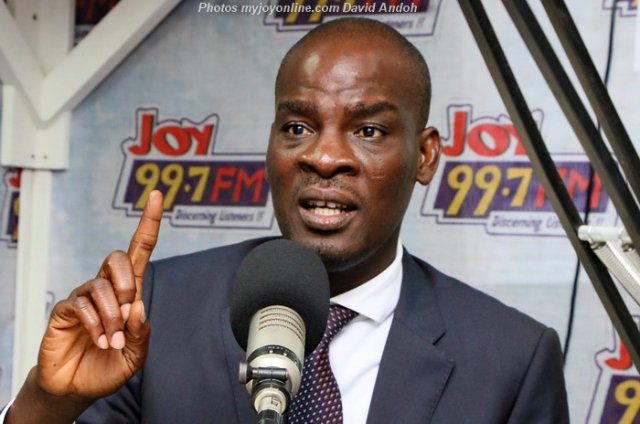
  • Only Akufo-Addo can be blamed for galamsey – Haruna Iddrisu

    Only Akufo-Addo can be blamed for galamsey – Haruna Iddrisu

    Former Minority Leader and Member of Parliament for Tamale South, Haruna Iddrisu, has dismissed attempts to hold former President John Dramani Mahama accountable for the ongoing galamsey (illegal mining) crisis in Ghana, arguing that the responsibility lies solely with the current president, Nana Akufo-Addo.

    Speaking at the National Democratic Congress (NDC) campaign launch in Hamile, Lambusie constituency, Mr. Iddrisu emphasized that under the Constitution, all mineral resources in the country are vested in the sitting president.

    He expressed surprise that some individuals would attempt to shift the blame to former President Mahama, who has not held executive power since 2017.

    “When people talk about galamsey, they forget one important thing,” Mr. Iddrisu pointed out. “They should read Article 268 of the Constitution: all mineral resources in Ghana are vested in the president. That president is Nana Akufo-Addo, not John Mahama. If it is not being managed well, if it is being handled in a way that destroys our livelihoods, we will hold Nana Addo solely responsible.”

    He urged those attempting to associate John Mahama with the illegal mining issue to reconsider, as the responsibility for managing the country’s mineral resources lies exclusively with the sitting government.

    “So, they should stop dragging John Mahama’s name into it,” Iddrisu added. “We did not give John Mahama the power, authority, or mandate today to oversee the proper management of our mineral resources. That responsibility lies with Nana Akufo-Addo.”

    Galamsey, an illegal mining activity that has been blamed for widespread environmental degradation, remains a contentious issue in Ghana.

    The Akufo-Addo government has faced criticism for its handling of the problem, despite efforts to curtail illegal mining through various initiatives and military interventions.

  • Bagbin is number 3; he must be entitled to a motorcade  or police siren – Haruna Iddrisu

    Bagbin is number 3; he must be entitled to a motorcade or police siren – Haruna Iddrisu

    Tamale South Member of Parliament and former Minority Leader Haruna Iddrisu has strongly criticized the exclusion of the Speaker of Parliament, Alban Bagbin, from the list of high-ranking public officials permitted to use a motorcade or police siren.

    His remarks came after a new road traffic Legislative Instrument (L.I.) was laid before Parliament, which notably omits the Speaker and the Chief Justice from these privileges.

    Expressing his dissatisfaction, Iddrisu underscored the importance of the Speaker’s role within Ghana’s governance framework. He argued that it is inappropriate for the Speaker, who holds the third-highest position in the country, to be excluded from the use of a motorcade or police siren.

    “Without personalizing it, it is not Alban Sumana Bagbin. It is the Speaker of Ghana’s Parliament, and he is not entitled to a motorcade or a police siren? In my view, Mr. Speaker, it is wrong for the number three to be out of this privilege,” Iddrisu stated.

    Mr Iddrisu further highlighted that the Chief Justice, another key figure in the Republic, is also excluded from the Motor Traffic Regulation.

    He emphasized that the governance of Ghana relies on the leadership of four principal personalities: the President, the Vice President, the Speaker, and the Chief Justice. Excluding any of these figures from such privileges undermines their role and significance.

    The Legislative Instrument had been previously withdrawn following public backlash over a proposal to grant Members of Parliament (MPs) similar privileges. However, the issue has resurfaced with the new L.I., leading to further debate.

    Majority Leader Alexander Afenyo-Markin echoed concerns about the exclusion, suggesting that it could hinder MPs and other officials in carrying out their duties effectively.

    “Politicians are always in a rush to save their heads when there is a crisis, but sometimes we can have a collective fall. We know the challenges we face coming from home and going to our constituencies,” he noted.

    Afenyo-Markin also criticized the tendency of some MPs to shy away from defending their privileges and responsibilities, urging them to take a more assertive stance.

    “We belittle ourselves. You are a politician, and you cannot take public bashing and go and explain to the public? Even you have MPs criticizing Article 71 benefits that they have benefited from, and we hear them on radio, and they continue to benefit? We have to take our democracy a little more seriously,” he argued.

    In response to the ongoing debate, Speaker Bagbin encouraged MPs to stand firm and defend their positions when necessary. He emphasized the importance of leadership, reminding them that they are elected to serve and improve the lives of the people they represent.

    “Today, when you are talking about a major democracy and spineless Parliament, leadership matters. You must be prepared to take responsibility and defend your positions. If the people knew like you, they will not elect you to lead them, and so they expect you to lead them and be able to persuade them that you are doing so in their interest,” Bagbin stated.

    Bagbin also highlighted the significant role of MPs and the President, pointing out that they are the only two individuals directly elected by the people every election year.

    “There are only two people elected on December 7 every election year, and they are the President and the MP, and the two of you are to lead the people to make their condition better,” he concluded.

  • Haruna Iddrisu promises to ask Bawumia 200 questions before Dec. 7 polls

    Haruna Iddrisu promises to ask Bawumia 200 questions before Dec. 7 polls

    Tamale South Member of Parliament, Haruna Iddrisu, has vowed to hold Vice President and New Patriotic Party (NPP) flagbearer, Dr. Mahamudu Bawumia, accountable by posing 200 critical questions to him before the December 7 polls.

    This challenge is in response to the 170 questions Bawumia famously directed at the late former Vice President, Paa Kwesi Amissah-Arthur, in September 2016.

    During the recent campaign and manifesto launch of the Ketu North Constituency in Dzodze on September 1, Iddrisu announced his intention to begin the questioning process, with 20 questions being posed at each campaign event where he is scheduled to speak.

    “I will start asking Bawumia 200 questions, beginning with 20 today, and continue with 20 at every campaign platform I speak at,” Iddrisu declared.

    The former Minority Leader questioned whether the promises and statements Bawumia made during the 2016 campaign were made on his own behalf, on behalf of the NPP, or another entity.

    “The promises you made in 2016, including the 170 questions you asked the late Vice President—were they made on your behalf, on behalf of the NPP, or who?” Iddrisu asked.

    He further accused Bawumia of attempting to distance himself from the economic challenges and mismanagement under the NPP government while simultaneously seeking the mandate to become president.

    “Today, he is trying to run away from his responsibilities, asking us to detach him from the mess of the NPP. But we will not detach him—today, tomorrow, or ever. We will vote them out to bring President Mahama back,” he asserted.

    Iddrisu also contrasted former President John Mahama’s promise to “reset Ghana” with Bawumia’s recent rhetoric about “upgrading” the nation, questioning the logic of upgrading amid widespread hardship and corruption.

    “When President Mahama says he will reset Ghana, it simply means he is coming to correct the mess of the NPP—the mess in economic management, governance, corruption, and lack of accountability. He is coming to reset and make our public institutions more accountable to the taxpayers of Ghana,” Mr Iddrisu stated.

    During his speech, Iddrisu commended Dr. James Klutse Avedzi, the current MP for Ketu North, for his contributions to the constituency. He urged constituents to support Eric Edem Agbana, the National Democratic Congress (NDC)’s parliamentary candidate for Ketu North, describing him as the future of both the constituency and the party.

    Iddrisu also promised that an NDC government would prioritize the construction of an ultramodern domestic market in Dzodze with funding from the Ghana Exim Bank, benefiting the people of Ketu North and the Republic of Togo. Additionally, he assured the gathering that the road from Aflao to Ho via Dzodze would be upgraded to a first-class standard as a reward for the constituency’s unwavering loyalty to the NDC.

    The campaign launch was attended by several high-profile guests, including Samuel Okudzeto Ablakwa, MP for North Tongu; Bernard Ahiafor, MP for Akatsi South; John Dumelo, the parliamentary candidate for Ayawaso West Wuogon; Shamima Muslim, a broadcaster; Obuobia Darko-Opoku, former NDC parliamentary candidate for Weija Gbawe; the Regional Chairman of the NDC, Mawutor Agbavitor; and other party leaders from the national, regional, and constituency levels. Chiefs, queen mothers, elders, party supporters, and other notable individuals from the Ketu North Constituency also graced the event.

  • What you couldn’t do in 8years, you can’t promise in 100 days – Haruna Iddrisu tells Bawumia

    What you couldn’t do in 8years, you can’t promise in 100 days – Haruna Iddrisu tells Bawumia

    Former Minority Leader Haruna Iddrisu has criticized the NPP and Dr. Bawumia, arguing that they cannot credibly promise to resolve issues in 100 days when they have already failed to address these problems over the past 8 years.

    Mr Iddrisu emphasized that Ghanaians deserve a fresh start, as proposed by the National Democratic Congress (NDC) flagbearer John Mahama, rather than continuing to endure ongoing hardships.

    During a time of engagement with the JoyNews’ The Pulse on Wednesday, August 28, the NPP cannot expect another opportunity to ruin the economy going forward.

    “For the NPP and Bawumia, it’s a lost opportunity. What you cannot do in eight years, you are now promising it in 100 days and promising it into the future, no. Ghanaians gave you a mandate and that mandate was for eight years … even in their manifesto for 2016 – the agenda for jobs, transforming Ghana from production to taxation said they will end the suffering of Ghanaians. Have they ended the suffering of Ghanaians?

    “It is not for them to say that President Mahama should not say reset. They even say upgrade – you cannot come and upgrade hardship, inflation which is already high, poor performance of economy, unsustainable debt,” he said.

    His remark comes in response to Dr. Bawumia’s dismissal of Mr. Mahama’s proposal to reset Ghana, with Bawumia arguing that the country needs an upgrade rather than a reset.

    Iddrisu contended that the NPP is aware of the mess they have created and is now waiting for the NDC to come in and address and rectify the situation.

    He indicated that the NPP had no reason to fail Ghanaians and to plunge the nation into crises noting that the “NPP got over GH500 billion additional money, the Bank of Ghana GH50 plus billion added to it, growth in revenue, you inherited ESLA which is generating billions of cedis.”

  • NDC was never against Free SHS – Haruna Iddrisu

    NDC was never against Free SHS – Haruna Iddrisu

    Member of Parliament (MP) for Tamale South, Haruna Iddrisu, has said that the National Democratic Congress (NDC) never opposed the Free Senior High School (SHS) policy.

    Rather, the opposition was concerned about how it was going put beneficiaries in an uncomfortable environment as well as burden taxpayers.

    Mr Haruna’s explanation was a response to how academic fees for level 100 students was at variance with current Free SHS policy even though the new policy will also be introduced at a time when the economy was down on its knees in debt.

    During an appearance on JoyNews’ The Pulse on August 28, he stated that the party has evaluated the current economic conditions and aims to do its part in easing the burden on citizens.

    “Remember the argument was just between progressive Free Senior High School and Free Senior High School. The NDC never said no to Free Senior High School, get the words right.

    “President Mahama and even the NPP used the word that we promised progressive free senior high school,” he said.

    Meanwhile, the former Minority leader has assured that the NDC government would review the free SHS policy to serve the nation better.

    “The free senior high school policy will be reviewed in other to serve us better, serve parents better and serve students better under president Mahama,” he added.
  • Ambulance case: Swallow your pride and don’t appeal ruling – Haruna Iddrisu tells AG

    Ambulance case: Swallow your pride and don’t appeal ruling – Haruna Iddrisu tells AG

    Former Minority Leader, Haruna Iddrisu has advised Attorney General, Godfred Yeboah Dame against contesting the Court of Appeal’s recent verdict that acquitted and cleared Minority Leader, Dr. Cassiel Ato Forson.

    Iddrisu, MP for Tamale South, warned that pursuing an appeal could lead to further embarrassment for the Attorney General.

    The Court of Appeal reversed a previous trial court’s decision requiring Dr. Forson to present his defense in the ongoing ambulance case.

    While marking Dr. Forson’s legal success in Parliament, Iddrisu suggested that the Attorney General should accept the court’s ruling instead of initiating additional legal proceedings.

    “I hear the Attorney General even instead of swallowing his humble pride, is saying that he wants to litigate on this matter.

    “Mr Speaker, we assure him that he will be further disgraced because this matter if you want to try people try them on matters which are legally meritorious,” he stated.

  • 2024 Mid-Year Budget: “A house built with saliva will easily be destroyed by dew”- Haruna Iddrisu

    2024 Mid-Year Budget: “A house built with saliva will easily be destroyed by dew”- Haruna Iddrisu

    Tamale South Member of Parliament Haruna Iddrisu has strongly criticized the 2024 Mid-Year Budget, arguing that it shows no signs of economic recovery.

    He believes that Ghanaians should prepare for significant hardship because the budget fails to address the country’s challenges effectively.

    In an interview with Onua TV, Iddrisu likened the 2024 Mid-Year Budget to a fragile artifact, suggesting that it is as flimsy as a house built with saliva that could be easily destroyed by morning dew.

    “The Mid-Year budget is like a house built with saliva which can easily be destroyed by morning dew.”

    The Minister of Finance, Dr. Mohammed Amin Adam, presented the 2024 Mid-Year Budget Review to Parliament on Tuesday, July 23, 2024.

    This is in accordance with Section 28 of the Public Financial Management Act, 2016 (Act 921) which requires the minister to provide the mid-year fiscal policy review of the Budget Statement and Economic Policy of the government.

    The minister touched on a number of issues including economic and fiscal performance for the first half of the year, growth measures, revenue, expenditure performance, financing, and debt sustainability.

    This presentation was also crucial as the country heads to the polls on December 7, 2024, with the government expected to spend within its budget.

    Watch video below:

  • Voting is the most effective way to bring about change – Haruna Iddrisu advises

    Voting is the most effective way to bring about change – Haruna Iddrisu advises

    Former Minority Leader and Tamale South MP, Haruna Iddrisu, has emphasized the importance of youth involvement in the upcoming December elections.

    At a forum in Kumasi, Iddrisu highlighted that voting is the most powerful tool for instigating change.

    Despite recognizing the widespread disillusionment among the youth, he encouraged young Ghanaians to fulfill their civic responsibilities by voting, suggesting that a new leadership could address their concerns.

    “Ghana is going through crucial presidential and parliamentary elections, as young people, dedicate yourselves to exercising your civic constitutional duty in a manner that is responsible and in a manner that guarantees peace, and in a manner that guarantees the existence of our country.

    “Ghana is all we have. Therefore, all of you must dedicate a commitment to preserving the peace and tranquillity of our community,” Haruna Iddrisu urged.

  • Haruna Iddrisu’s club makes€7.9 million from Issahaku’s permanent move to Leicester City

    Haruna Iddrisu’s club makes€7.9 million from Issahaku’s permanent move to Leicester City

    Ghanaian politician Haruna Iddrisu’s club, Steadfast FC, is set to receive €7.9 million following Abdul Fatawu Issahaku’s permanent transfer to Leicester City.

    The Foxes have triggered the €17 million (£14 million) release clause for the winger, who featured in 60% of the games during their promotion campaign.

    Sporting Lisbon initially acquired Issahaku in 2022 for €1.2 million. The net value from the transfer, after deducting the initial amount, is €15.8 million, which will be divided between Steadfast and the Portuguese club.

    Issahaku, who significantly boosts the attack, recorded seven goals and 13 assists last season.

    His performance improved as the season progressed, culminating in a standout hat-trick during a 5-0 victory over Southampton, highlighting his individual contribution to City’s title success.

    Born in Tamale, Ghana, Issahaku began his senior career at Steadfast FC. His impressive form led to a loan to Ghanaian Premier Division side Dreams FC in October 2021.

    Recognized as one of Ghana’s top prospects, he maintained his excellent form, leading to his transfer to Sporting Lisbon in April 2022.

    He debuted for Sporting Lisbon’s senior team against Rio Ave in August 2022 and participated in their UEFA Champions League campaign that season.

    Internationally, Issahaku achieved success in March 2021 by helping Ghana’s Under-20 team win the Africa Under-20 Cup of Nations, earning the player of the tournament title.

    At the senior level, he has earned 19 caps for Ghana, playing in the 2022 FIFA World Cup in Qatar and the Africa Cup of Nations.

    Issahaku will join his Leicester City teammates as they gear up for the Premier League opener against Tottenham Hotspur on Monday, August 19, 2024.

  • Affirmative Action Bill in its current form and character is a bad law – Haruna Iddrisu

    Affirmative Action Bill in its current form and character is a bad law – Haruna Iddrisu

    The Member of Parliament for Tamale South, Haruna Iddrisu, has voiced strong criticisms against the current version of the Affirmative Action Bill before Ghana’s parliament.

    Speaking at the 15th MTN Pulse Africa Transform Summit in Kumasi, Mr. Iddrisu expressed dissatisfaction with how the bill’s provisions seemed to prioritize models from other countries rather than addressing Ghana’s unique challenges and context.

    In his remarks, Mr. Iddrisu highlighted what he perceives as the bill’s shortcomings, arguing that it does not adequately reflect Ghanaian realities.

    “I have seen Ghana struggle to pass an affirmative action bill. I told the minister the other time that the bill in its form and character is a bad law. Bad law,” he stated emphatically.

    The MP emphasized that while Ghana certainly needs an affirmative action law to promote gender equality and women’s participation in governance, the current bill falls short in its approach.

    He criticized the comparison of Ghana to countries like Rwanda, Uganda, and Eritrea, where different constitutional frameworks and laws have been implemented to enhance women’s representation.

    “In Rwanda and in Uganda, there is representation of women based on appointment. In Ghana, you say competitive election. The women are too shy to do competitive elections. They don’t have the money,” Mr. Iddrisu noted, underscoring the practical challenges faced by Ghanaian women in participating effectively in electoral politics.

    Moreover, Mr. Iddrisu lamented the state of democracy in Ghana, describing it as a “monecracy” where financial resources often determine electoral success. He candidly admitted his own involvement in this system and urged the youth to speak out against such practices.

    “We have reduced our democracy to monocracy. Here it is now about who pays more and who is the highest bidder. That is wrong and young people you must speak about it even though I am an actor of it,” he urged, reflecting on the evolving dynamics of Ghanaian politics.

    Mr. Iddrisu, drawing from his own political journey, highlighted the changes in campaign dynamics over the years.

    “When my generation started, it was not about how much money you brought to a polling station and how much you paid. Today I am not sure a candidate on a motorbike will be accepted,” he observed, pointing to the evolving financial demands of modern-day electoral campaigns.

    In conclusion, Mr. Iddrisu called for a reconsideration of the Affirmative Action Bill to better align with Ghana’s socio-political realities and empower women in meaningful ways within the political landscape.

  • Ghana is now working under ‘moneycracy’, not democracy – Haruna Iddrisu

    Ghana is now working under ‘moneycracy’, not democracy – Haruna Iddrisu

    The Member of Parliament for Tamale South, Haruna Iddrisu, has raised serious concerns about the increasing monetization of politics in Ghana.

    He describes the current state of democracy as being driven by money rather than merit.

    Speaking at the 15th MTN Pulse Africa Transform Summit in Kumasi, the National Democratic Congress (NDC) MP expressed his worries about the transformation of Ghanaian politics into what he termed “moneycracy.”

    He pointed out that governance has increasingly become the domain of the highest bidder, rather than individuals with genuine competence and vision.

    “We have reduced our democracy to moneycracy. Here it is now about who pays more and who is the highest bidder. That is wrong and as young people, you must speak about it even though I am an actor of it,” Iddrisu stated.

    Reflecting on the past, Mr Iddrisu noted a significant shift from the days when politics was about contributing personal resources for the nation’s benefit.

    He recalled his early days in politics when dedication and resourcefulness mattered more than wealth.

    “When my generation started, it was not about how much money you brought to a polling station and how much you paid. In fact, I used to borrow a motorbike to campaign,” he reminisced. “Today I am not sure a candidate on a motorbike will be accepted. So, speak out and speak out for the good of the country.”