Tag: Harvard university

  • Africa’s prosperity and job creation depend on digital economy – Bawumia

    Africa’s prosperity and job creation depend on digital economy – Bawumia

    Former Vice President of Ghana, Dr. Mahamudu Bawumia, has underscored the crucial role of the digital economy in Africa’s development, emphasizing that technological innovation is the key to unlocking prosperity and employment opportunities across the continent.

    Speaking at Harvard University on Saturday, February 15, Dr. Bawumia stated that digitalisation is no longer an option but a necessity for Africa’s economic transformation. He stressed that the continent must embrace the digital revolution to avoid being left behind in the Fourth Industrial Revolution, as was the case with previous industrial advancements.

    “We are in the midst of a global digital revolution,” he asserted. “Artificial intelligence, big data, cloud computing, and the Internet of Things are not just buzzwords; they are reshaping our world.”

    Dr. Bawumia highlighted Ghana’s digital transformation over the past eight years, citing significant progress in financial inclusion, healthcare, agriculture, and public service delivery. According to him, digitalisation is essential for addressing long-standing structural challenges and enhancing efficiency in governance.

    “Our focus is on digital technology that can solve our problems,” he explained. “We are not looking to have driverless cars or humanoid robots at this stage. We want technology that can improve access to credit, enhance public service efficiency, and boost economic opportunities.”

    One of Ghana’s major digital achievements, he noted, is financial inclusion through mobile money interoperability.

    “When we assumed office in 2017, 70% of Ghanaians had no bank accounts,” he revealed. “However, with mobile money interoperability, we have extended financial services to over 90% of adults, making Ghana the only country in Africa with 100% access to financial inclusion.”

    This, he explained, has enabled businesses to grow without relying on physical infrastructure, creating a more inclusive and transparent financial ecosystem.

    Beyond financial services, Dr. Bawumia pointed to the transformative impact of digitalisation on governance, agriculture, and healthcare. The introduction of the Citizens App and the integration of government databases, he said, have significantly improved public service efficiency. In agriculture, the digitisation of farms and farmer databases has enhanced productivity and ensured better traceability of produce.

    “Ghana is the only cocoa-producing country in the world with a fully digitised cocoa management system,” he noted.

    He also highlighted Ghana’s leadership in medical innovation, stating that the country operates the largest medical drone delivery service globally, ensuring access to essential healthcare supplies in remote areas.

    Concluding his address, Dr. Bawumia called for greater investment and collaboration among governments, businesses, and educational institutions to build a strong digital economy for Africa.

    “The digital economy holds the key to unlocking Africa’s vast potential and creating jobs for the youth,” he said. “By working together, we can build a future where every African has the opportunity to thrive and contribute to a brighter tomorrow.”

    He urged African leaders to act boldly and strategically in leveraging digital technology to drive economic growth and social development.

  • Harvard president’s position safe despite her appearance in Congress

    Harvard president’s position safe despite her appearance in Congress

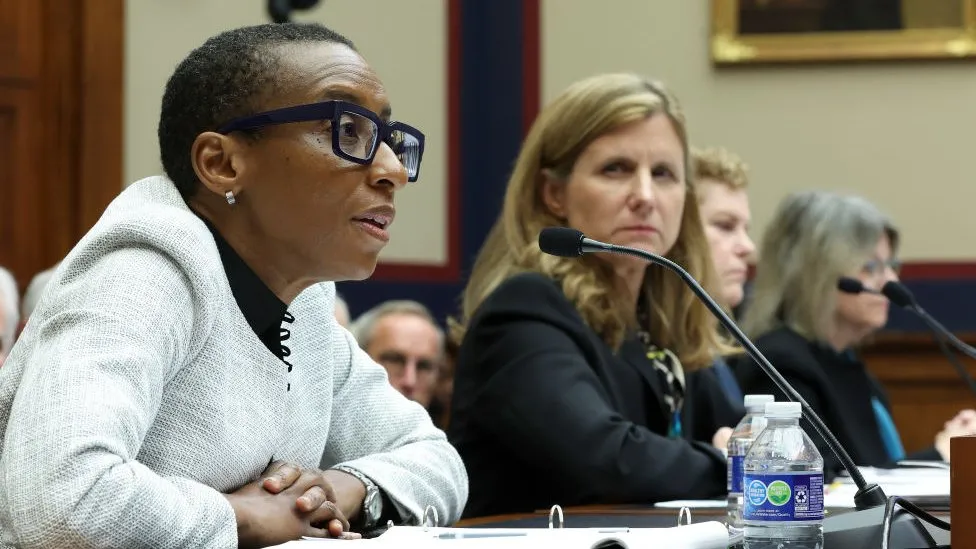
    Harvard University’s president, Claudine Gay, will continue to stay in her job even though there has been a lot of talk about her recent appearance in front of Congress.

    Dr Gay was being asked to leave her job because she didn’t say whether students who wanted to hurt Jewish people would get in trouble.

    However, in a letter over the weekend, almost 700 staff members showed their support for her.

    On Tuesday, the school’s board said they still support her as the leader.

    The group in charge at Harvard University thinks President Gay is the best leader to help our community recover and deal with the big issues we are facing.

    “At this hard time, we all support President Gay,” said the 13-member board.

    Just a few days ago, it was announced that Dr. Gay will continue to be the president, after the University of Pennsylvania’s head, Elizabeth Magill, said she would quit because people were upset about what she said in Congress.

    Last week, Dr. Gay spoke with Ms. Magill and the president of MIT, Sally Kornbluth, at a meeting in the House of Representatives about antisemitism.

    When Republican Congresswoman Elise Stefanik asked Dr. Gay some tough questions, Dr. Gay said she thinks it’s terrible for people to call for the killing of Jews. But she also said whether it breaks Harvard’s rules about bullying and harassment depends on the situation.

    She said sorry in a interview with Harvard’s school newspaper, the Crimson, soon after.

    She said that when words make the distress and pain worse, she doesn’t understand how you could feel anything other than regret.

    The Harvard Corporation said that calls for genocide are terrible and that Dr. Gay should have quickly and clearly condemned them.

    However, the school found out that the president of Harvard University said sorry for how she acted when she spoke to Congress.

    The board said that Harvard’s goal is to learn more, do research, and make new discoveries that will help solve big problems in society. They believe that President Gay will lead Harvard in this important work.

    Almost 700 teachers at Harvard signed a letter asking the university to protect academic freedom and keep Dr. Gay as president, despite political pressure.

    At the same time, over 70 lawmakers, mostly from the Republican party, asked Dr. Gay to quit her job, saying her responses at the meeting were terrible.

    She became the first black president of the university in July, making history after 368 years.

  • Harvard University under fire for enabling privileged to skip queue

    Harvard University under fire for enabling privileged to skip queue

    Harvard University is confronting an emergency after a milestone legal dispute uncovered how it gives the family members of graduated class an advantage. Its alleged heritage confirmations strategy is currently targeted of legislators who say it propagates disparity.

    For quite a long time, the roads of Harvard’s red-bricked grounds have borne the impact points of America’s future chiefs, from Teddy Roosevelt to Check Zuckerberg. The capacity of the most seasoned college in the US to move understudies into the more elite classes of legislative issues, business and tech has made confirmation exceptionally desired. However, the manner in which it picks who gets the brilliant ticket is overall firmly examined.

    Recently, a milestone High Court choice destroyed governmental policy regarding minorities in society, making it unlawful for Harvard and different colleges to give confirmation inclination to under-addressed minorities.

    Harvard said the change would make it harder for it to select a different understudy body. In any case, the court procedures likewise blew open what many had long thought – that the school gives inclination to the offspring of graduated class.

    The strategy, known as heritage affirmations, is drilled by many world class American colleges, remembering the eight schools for the Elite level, as well as numerous other private and tip top state funded colleges. It implies in the event that a direct relation went to that college, you may be liked to a candidate of comparable strength whose guardians didn’t.

    While most class honors in US society are offered with a wink and a gesture – everything no doubt revolves around who you know, what you wear, how you sound – the legal dispute uncovered how organizations use heritage status to allow a few candidates to skirt the line. What’s more, that has driven many, from state officials to Harvard understudies themselves, to require the approach to end.

    At the point when Allison Tracker originally figured out she got into Harvard College, she didn’t exactly trust it.

    “I could never have imagined it would have been a that thing in the course of my life, I would have had the option to achieve,” she said.

    In any case, a tutor persuaded her to apply, and presently she is the primary individual from her Atlanta secondary school to go to the blessed organization.

    “You need to consider yourself skilled,” she reflected.

    For a really long time, the school had significantly amped up its endeavors at consideration. In 2023, the school charged $54,269 a year in educational cost, however it is free to understudies whose families procure beneath $65,000, and families procuring up to $150,000 pay something like 10% of their pay every year. The school has additionally expanded the non-white and Hispanic understudies from 17% to more than half of the understudy body throughout recent many years.

    Donyae Jenkins, one more Harvard understudy, expressed that after the High Court running the show, “a ton of dark and earthy colored understudies might feel that this is some place they don’t merit being”.

    Both Allison and Donyae can’t help contradicting governmental policy regarding minorities in society being struck down, particularly when heritage affirmations live on in light of the fact that the strategy will in general lean toward understudies who are wealthy and white. Reports documented in the High Legal dispute uncovered that Harvard gives focuses to “ALDC” competitors, who are heritage candidates, competitors, family members of contributors, and offspring of workforce or staff. While just 5% of utilizations come from ALDC understudies, they make up about 33% of acknowledgments. Around 70% of those candidates were white.

    “They [the offspring of alumni] are likewise getting what some might call extraordinary entrance into the school,” Donyae said.

    That extraordinary benefit, information shows, is a rocketship into the stratosphere of America’s tip top.

    A new paper distributed by Opportunity Experiences, an exploration bunch based out of Harvard University and Earthy colored College (two Elite levels who themselves practice heritage confirmations), observed that inheritance candidates were four-times as probable as non-heritage candidates with a similar grades to be conceded.

    The review checked out at 15 years of confirmations information at 12 private “Ivy-In addition to” schools (the eight schools in the Elite level, in addition to the University of Chicago, Duke, MIT, and Stanford).

    At the point when these equivalent inheritance understudies applied to other top colleges where they didn’t have heritage status, that benefit vanished, the review found.

    Understudies who joined in “Ivy In addition to” schools were 60% bound to acquire in the top 1% and multiple times bound to work at lofty bosses in medication, research, regulation, finance, and different fields contrasted and understudies who went to what they called “lead” state funded colleges.

    “Understudies on these grounds today will be the pioneers across many fields in the public eye tomorrow,” said John Friedman, a teacher at Earthy colored University (likewise part of the Ivy) who co-wrote the exploration.

    “Assuming that we believe kids from all foundations should feel like they have a shot at a direction to get to those administrative roles, we want these colleges to concede understudies such that upholds more extensive balance of chance.”

    Their discoveries are upheld by others. A recent report by the Public Department of Monetary Exploration saw that as 75% of white understudies who were selected to Harvard as ALDCs “would have been dismissed” in the event that they had been treated as white understudies without those associations.

    Numerous researchers have followed the foundations of heritage admissions to the start of the twentieth Century when colleges needed to keep their organizations past the range of the nation’s developing settler populace. While circumstances are different, and the school has committed to more noteworthy variety and value, heritage confirmations remain.

    In protecting the training, Harvard said it “assists with serious areas of strength for solidifying between the college and its graduated class” that endure forever.

    It likewise noticed the “liberal help” that graduated class give which helps make monetary guide conceivable to expand variety and greatness, the school wrote in a report delivered in 2018.

    “Despite the fact that graduated class support Harvard for some reasons, the board is worried that wiping out any thought of whether a candidate’s parent went to Harvard or Radcliffe would lessen this indispensable feeling of commitment and backing.”

    That cash is no little change. With an enrichment of $50bn, Harvard has the biggest college blessing on the planet. Oxford and Cambridge, which don’t rehearse inheritance confirmations, have enrichments of about $7bn, separately.

    Harvard’s abundant resources have assisted it with delegated the nation’s world class, yet some blame it for utilizing this power not to make a superior society, yet to keep up with the norm. Also, they say inheritance affirmations must go.

    Boston’s state council is thinking about a bill that would require an expense against the school and different schools that award inheritance confirmations benefits.

    “Something that ties Americans together, whether you’re from Maine, Massachusetts, California, or Texas, is this thought of meritocracy,” says the bill’s co-support, state Representative Pavel Payano, who was brought into the world in the Dominican Republic.

    “These tip top colleges are basically centered around having people that don’t appear as though me, people that are not average individuals go to their school, and I don’t believe truth be told.”

  • Over 5,000 sign petition to ‘force’ Harvard to revoke eviction of Ghanaian student over pro-Palestine stance

    Over 5,000 sign petition to ‘force’ Harvard to revoke eviction of Ghanaian student over pro-Palestine stance

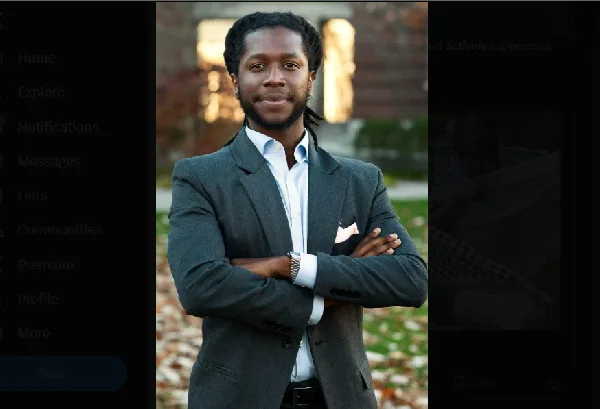
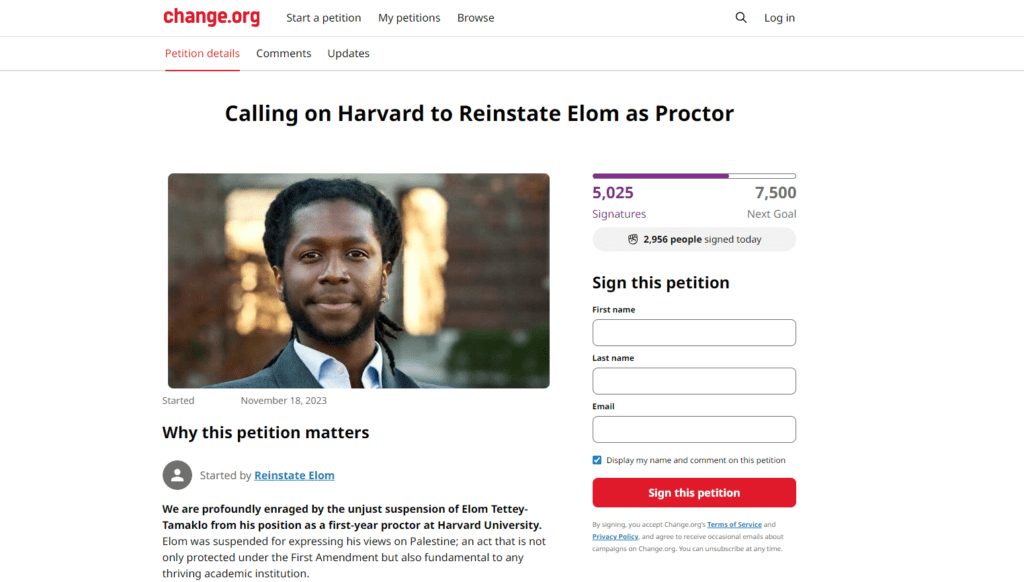
    An online petition seeking the reinstatement of Ghanaian student Elom Tettey-Tamaklo at Harvard University has garnered over 5,000 signatures.

    The petition emerged following reports that Tettey-Tamaklo was allegedly expelled for expressing views on the Israel-Hamas conflict, particularly in support of Palestine.

    Harvard PSC (Palestine Solidarity Committee) asserts that he has been suspended as a residential advisor and is facing disciplinary actions for speaking out about the situation in Gaza.

    “Harvard is evicting a Black man, Elom Tettey-Tamaklo, for speaking out about Palestine. His crime? Protecting students from an instigator who tried to dox them. A senior university leader called Elom a ‘gang’ member and pointed to his residence in Harvard Yard.

    “The university then suspended him as a residential advisor, citing ‘student discomfort’ and promoting racial stereotypes about violent and unsafe Black men. This is a blatant lie, as none of his students have raised any concerns. Harvard is setting a dangerous, ugly precedent: free speech ends when Palestine begins,” parts of the post reads.

    Now, the online petition titled ‘Calling on Harvard to Reinstate Elom as Proctor’ has gained traction on change.org, amassing over 5,000 signatures since its creation on November 18, 2023. It has a target of 7,000 signatures.

    The petition expresses public outrage over the perceived unjust suspension of Elom Tettey-Tamaklo, a Ghanaian student at Harvard, and criticizes the school administration for allegedly providing a misleading description of the suspended student’s character.

  • Claims that Adwoa Safo spent US$30K on Harvard conference debunked by board member

    Claims that Adwoa Safo spent US$30K on Harvard conference debunked by board member

    A member of the Board of Overseers at Harvard University, Sangu Delle, has refuted the claim that a conference at the prestigious American Ivy League institution costs as much as US$30,000.

    His response was prompted by a 2020 report from the Auditor-General regarding GETFund scholarships.

    According to this report, a sitting Member of Parliament, Sarah Adwoa Safo, had received a scholarship valued at US$30,000, supposedly for attendance at a Harvard conference.

    At the time, Sarah Adwoa Safo held the position of Deputy Majority Leader in Parliament and was among several politicians, including Energy and Employment and Labour Relations ministers, who benefited from these scholarships. However, the official report specified that the total cost of Sarah Adwoa Safo’s conference at Harvard was US$29,804, which covered both tuition and living allowances.

    “I’m on the Board of Overseers at Harvard University and I can tell you for a FACT that there’s no conference at Harvard that costs $30,000 for attendees. “Hon” Adwoa Safo & the others need to be in jail for such reckless abuse of public funds,” he tweeted over the weekend.

    Delle was one of the many diasporans who participated in the online #OccupyJulorbiHouse protest against the government.

    He made a number of promises, including that he would cover the expense of some individuals’ medical care who had been subjected to police brutality after being wrongfully detained on September 21, the first day of the three-day protest.

  • Harvard to use AI instructor next semester to lecture students

    Harvard to use AI instructor next semester to lecture students


    Next year, students at Harvard University, one of America’s most expensive colleges, will have the opportunity to be taught by an artificial intelligence (AI) system.

    The instructors of the university’s popular introductory coding course, which typically enrolls around 1000 students each semester, are currently ‘experimenting’ with a teaching assistant powered by AI model ChatGPT.

    This AI-powered teaching assistant aims to enhance the learning experience for students in the coding course, providing additional support and guidance.

    It reflects an innovative approach by Harvard to incorporate AI technology into the classroom setting, allowing students to interact with an AI system for educational purposes.

    Professor David Malan, who runs the course, justified plans for the introduction of the ‘CS50 bot’ by noting that the course has often deployed new software in its syllabus. 

    A ChatGPT AI teacher, he said, was simply an ‘evolution of that tradition’, he said in a statement. 

    ‘Our own hope is that, through AI, we can eventually approximate a 1:1 teacher:student ratio for every student in CS50… providing them with software-based tools that, 24/7, can support their learning at a pace and in a style that works best for them individually.’

    In his statement to the Crimson, Harvard’s newspaper, Professor Malan specified that he and the course’s staff were ‘currently experimenting with both GPT-3.5 and GPT-4 models.’

    Outside of the Ivy League, however, developers and software engineers have struggled to incorporate maker OpenAI’s new ChatGPT-4 into their workflow, calling into question their new algorithmic co-worker’s ability to code.

    ‘Is it just me or GPT-4’s quality has significantly deteriorated lately?’ asked one user of the Silicon Valley start-up incubator Y-combinator’s Hacker News forum.

    ‘It generates more buggy code,’ the user wrote, ‘and overall it feels much worse than before.’

    Others in the community described the AI’s software skills as  ‘significantly worse’ than past versions of ChatGPT, prone to ‘superficial responses’ and nearly ‘lobotomized’ in its answers to coding prompts.

    With the full cost of a four-year degree from Harvard hovering somewhere $334,000, based on rates for the 2022-23 school year, paying students will likely want and expect that the CS50’s staff’s ‘experimenting’ with ChatGPT will have fully worked out the kinks by September.

    CS50, according to the Crimson, is one of Harvard’s most popular offerings on the online learning platform edX, which the school launched in collaboration with MIT in 2012.

    The two universities sold off edX to educational technology company 2U for $800 million in 2021 — with the stipulation that the platform be run as a public benefit entity that also offers its courses as ‘free to audit.’

    While Prof. Malan did acknowledge that ‘early incarnations’ of AI programs like ChatGPT have been likely to ‘occasionally underperform or even err,’ he nevertheless voiced his belief that his own AI teaching assistant will cut down on busy work. 

    ‘[A]ssessing, more qualitatively, the design of students’ code has remained human-intensive,’ Malan said. 

    ‘Through AI, we hope to reduce that time spent, so as to reallocate [teaching fellows’] time toward more meaningful, interpersonal time with their students, akin to an apprenticeship model.’

    College, as the saying goes, is not about teaching students what to think, but how to think — and Malan’s parting comments on the new CS50 bot echoed this teaching philosophy.

    ‘We’ll make clear to students that they should always think critically when taking in information as input,’ Malan said, ‘be it from humans or software.’


  • Bawumia calls for support from NPP MPs ahead of elections

    Bawumia calls for support from NPP MPs ahead of elections

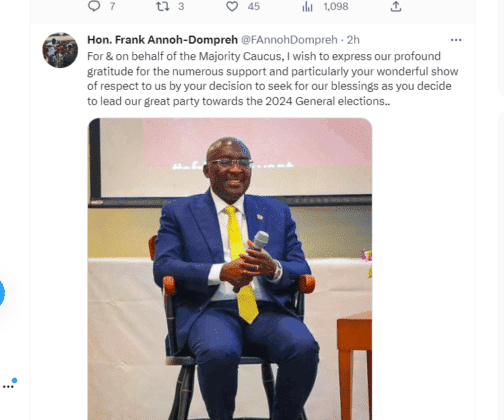
    The majority chief whip, Frank Annoh-Dompreh has stated that the vice president Dr Mahamadu Bawumia has called for support from the New Patriotic Party (NPP) members of parliament (MPs) ahead of elections.

    Mr Annoh-Dompreh described the action of the vice president as a respect for the NPP lawmakers.

    He expressed the appreciation on behalf of the Majority to Dr Bawumia.

    For & on behalf of the Majority Caucus, I wish to express our profound gratitude for the numerous support and particularly your wonderful show of respect to us by your decision to seek for our blessings as you decide to lead our great party towards the 2024 General elections.. pic.twitter.com/FgRWoku6f0
    
    — Hon. Frank Annoh-Dompreh (@FAnnohDompreh) May 3, 2023

    In a tweet, the Nsawam Adoagyiri Lawmaker said “For and on behalf of the Majority Caucus, I wish to express our profound gratitude for the numerous support and particularly your wonderful show of respect to us by your decision to seek for our blessings as you decide to lead our great party towards the 2024 General elections.”

    Mr Annoh-Dompreh earlier said that Dr Bawumia was the man for the job.

    In a tweet ahead of the Dr Bawumia’s address at the Harvard University, he said “(He) is the man for the job.”

  • Jacinda Ardern, a former New Zealand premier, to attend Harvard

    Jacinda Ardern, a former New Zealand premier, to attend Harvard

    Jacinda Ardern, who left her position as prime minister of New Zealand earlier this year, has said she is forgoing the rigors of politics for a period of quiet meditation in academia abroad. She will be attending Harvard University this autumn on the basis of two fellowships.

    According to a press statement from Harvard, she was selected to dual fellowships at the university’s school of public policy and government, the Harvard Kennedy School.

    She will work as the Hauser Leader in the School’s Center for Public Leadership, a program where leaders from various sectors assist students and faculty in developing their leadership skills, and the Angelopoulos Global Public Leaders Fellow, a program designed for prominent leaders transitioning from public service roles.

    “Jacinda Ardern showed the world strong and empathetic political leadership,” said Kennedy School Dean Douglas Elmendorf in the news release. “She earned respect far beyond the shores of her country, and she will bring important insights for our students and will generate vital conversations about the public policy choices facing leaders at all levels.”

    “I am incredibly humbled to be joining Harvard University as a fellow – not only will it give me the opportunity to share my experience with others, it will give me a chance to learn,” Ardern said in the release. “As leaders, there’s often very little time for reflection, but reflection is critical if we are to properly support the next generation of leaders.”

    At the same time, Ardern will be completing a separate fellowship at the Harvard Law School’s Berkman Klein Center for Internet and Society, where she will be studying ways to contain extremist content online.

    In an Instagram post on Wednesday, Arden said she would be doing “some speaking, teaching, and learning.”

    She added that Harvard had been an important partner in her work for Christchurch Call – an initiative she helped launch in 2019 to counter terrorist and violent extremist content online, two months after the Christchurch terrorist attack that killed 51 people in two mosques. The attacker had livestreamed the incident and published a manifesto online beforehand.

    Ardern said she would be gone for a semester, missing out on the New Zealand general election, but would return at the end of the fellowships. “After all, New Zealand is home!” she wrote.

    When Ardern became the country’s prime minister in 2017 at the age of 37, she was New Zealand’s third female leader and one of the youngest leaders in the world. Within a year, she had become only the second world leader to give birth in office.

    Her time in power was defined by multiple crises, including the Christchurch attack, a deadly volcanic explosion, and a global pandemic.

    She quickly became a progressive global icon, remembered for her empathy while steering New Zealand through these crises and for taking her baby daughter to the United Nations General Assembly.

    However, at home her popularity ebbed amid the rising cost of living, housing shortages and economic anxiety. And she faced violent anti-lockdown protests in the capital Wellington, with threats made against her.

    Ardern announced her shock resignation in January, saying she no longer had enough fuel in the tank to contest an election.

    She bid her final farewell earlier this month with an emotional speech in parliament, affirming to all the nerds, criers, huggers, mothers and ex-Mormons of the world: “You can be all of these things. And not only can you be here; you can lead. Just like me.”

  • Bawumia urges Africans to stop depending on  basic necessities

    Bawumia urges Africans to stop depending on basic necessities

    Dr. Mahamudu Bawumia, vice president, claims that Africa’s continued reliance on basic commodities is hindering its economic development.

    Dr. Bawumia says the situation is forcing many African governments to manage crises due to external shocks.

    Speaking at the Harvard University’s Africa Development Conference in the United States over the weekend, Dr. Bawumia said African countries must shift from raw material production to value addition.

    “The reliance on primary commodities has made African countries vulnerable to external shocks. As a result, the focus of economic management by successive African governments since independence has been crisis management as a result of factors such as an increase in oil prices, collapse in commodity prices, debt unsustainability, macro-instability and so on.

    “Governments have by and large not focused on the underlying system that underpins economic activities and economic growth. Our focus has always been on managing crisis of one nature or the other,” the Vice President said.

    Dr. Bawumia further urged, “Our generation needs to break the shackles of the impossibility mindset and embrace the mindset of possibility! It is time for us to figure out the best ways to be masters of our destiny, to chart our own path and develop on our own terms. It is possible!”

  • Africans need to break the shackles of impossibility mindset – Bawumia

    Africans need to break the shackles of impossibility mindset – Bawumia

    Africans, according to Vice President, Dr. Mahamudu Bawumia, have long been stuck in an aura of impossibility.

    This, he said, was probably the result of the experience of years of slavery and colonialism.

    “We don’t believe in ourselves. However, for us to realize our full potential and set ourselves apart, we need to break the shackles of impossibility mindset and embrace the mindset of possibility.

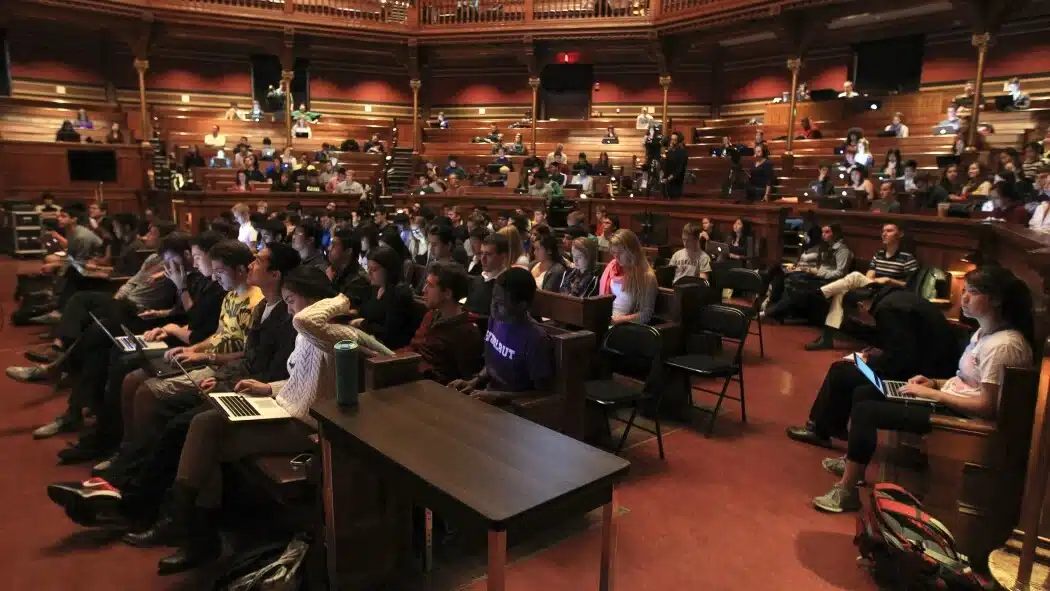
    “African countries can do what the Advanced countries have done and more. It is possible,” he said on Saturday April 15 while speaking as the guest speaker at a gathering of students, academics and the business community at Harvard university during the African Development Conference at the Harvard Law School on the theme “reimagining Africa’s growth on our terms.”

    He indicated that at the heart of this vision is the transformative power of technology.

    “In my view, the greatest bane to the development of Africa is our inability to solve the basic problems of the absence of unique identity for our population, functioning property address systems, financial inclusion, payment systems, efficient public service delivery, etc. that underpin our economic activities.

    “For many years after independence we have been trying to transform our economies without data and transparent systems. Without data and systems African countries cannot participate in the fourth Industrial Revolution,” he said.