Tag: Health Minister

  • Postings to rural areas not a punishment but a call to duty – Health Minister tells doctors

    Postings to rural areas not a punishment but a call to duty – Health Minister tells doctors

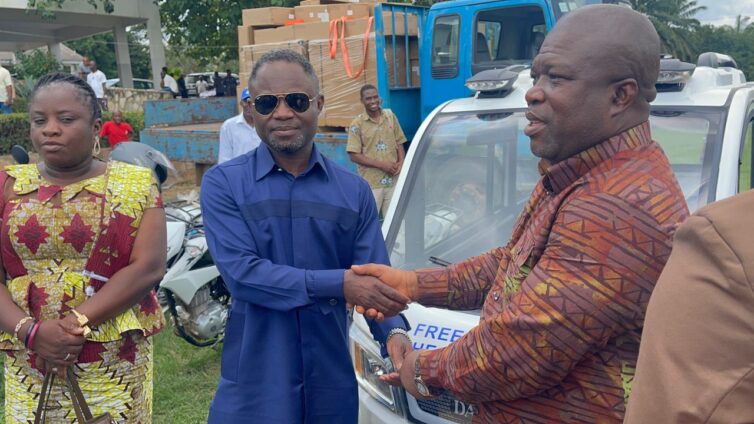
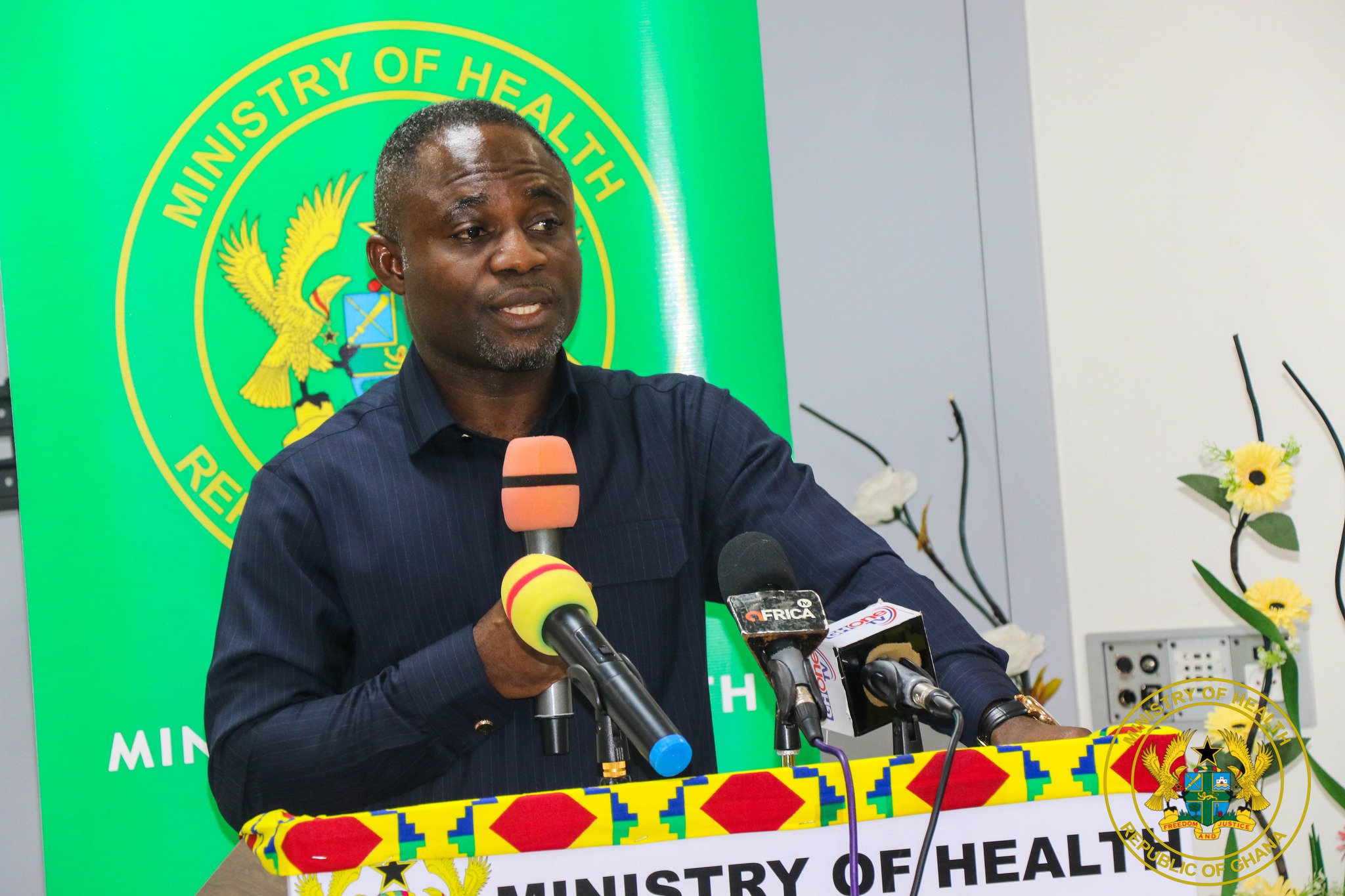
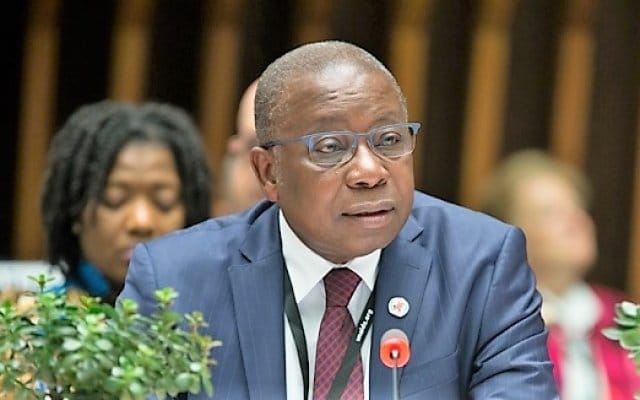
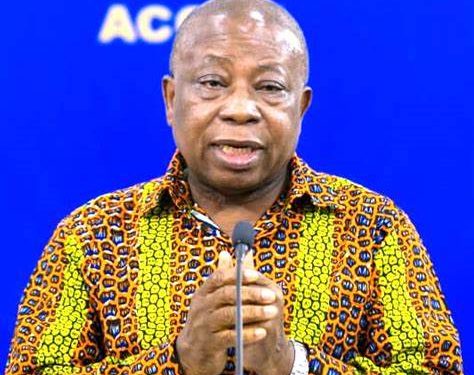
    The Minister of Health, Kwabena Mintah Akandoh, has rejected claims that newly deployed doctors are being punished through postings to rural districts.

    He explains that such deployments are necessary to ensure equitable access to healthcare across the country.

    “Since I took office as Minister responsible for the health sector, I have indicated that no health professional should see going to serve in rural areas as a punishment. For me, in my humble opinion, it’s a call to duty,” he said, during a working visit to the Oti Region.

    The minister revealed during the visit that although 25 medical doctors were posted to Oti in 2025, only two have so far reported for duty.

    Nonetheless, the Health Minister has emphasized that, the Ministry of Health will not change postings outside the approved process, stressing that doctors must serve where vacancies exist.

    “We are not going to change anybody’s posting. If you have been posted to Oti, you will go to Oti. That is where the government has a vacancy, and that is where you will go,” Mr Akandoh stated. Mr Akandoh also raised concerns about health data from the region, noting that Oti remains one of the most deprived areas in terms of key health indicators.

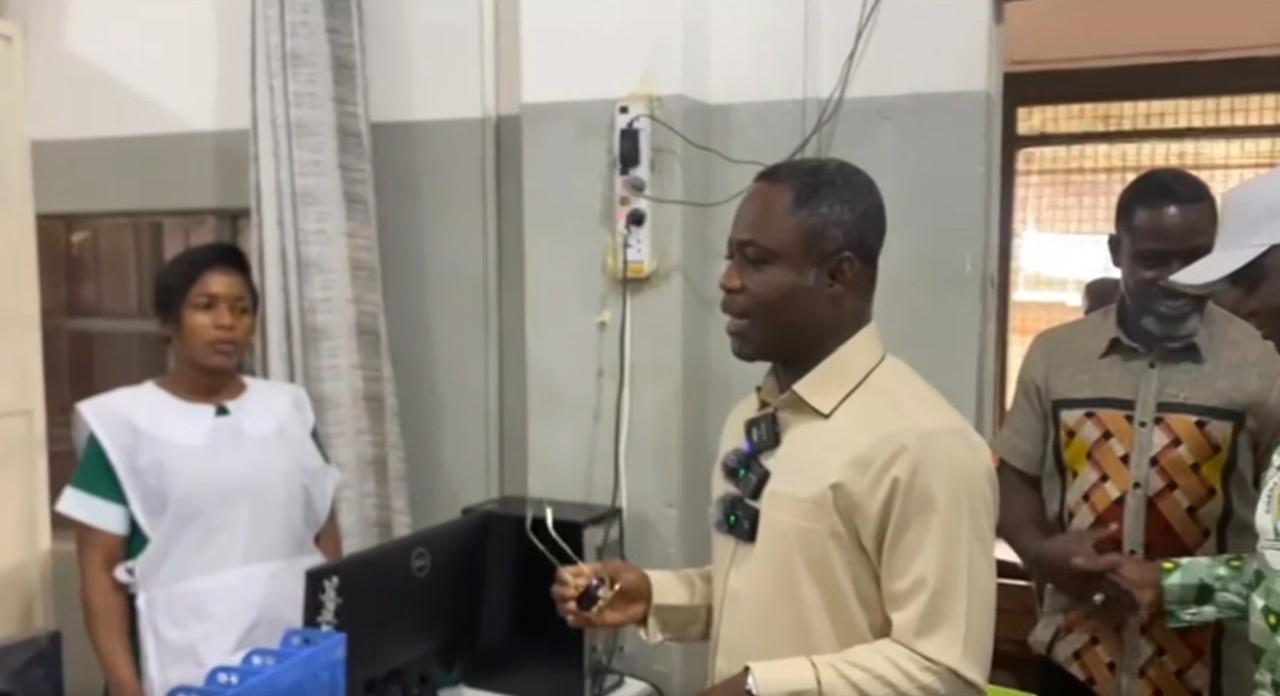
    During the visit, he inspected the proposed site for the construction of the Oti Regional Hospital and disclosed that the government has made budgetary provision for the construction of three new regional hospitals in 2026.

    “In the 2026 budget, the government has made provision for the construction of three regional hospitals, Oti Region, Savannah Region, and Western North Region,” he said.

    According to the minister, Oti is among the first regions where construction will commence, subject to the completion of all land documentation and the resolution of any litigation issues.

    “The processes will start when we have full documentation on the land, devoid of litigation. If you bring your documents tomorrow, you start your processes the next day. If you delay it, it’s your own issue,” he added.

    Mr Andoh has therefore called on Stakeholders, “A Member of Parliament, a Regional Minister, whoever you are, we must all put our heads together to find the solution.” 

    In early November 2025, the Health Ministry announced the allocation of doctors nationwide, with about 80% earmarked for district health facilities.

    Fast forward to November 5, Health Minister Kwabena Mintah Akandoh revealed that his outfit was processing about 700 junior medical doctors for posting.

    According to the statutes of the Ghana Health Service (GHS), newly posted medical officers are generally expected to report to their assigned health facility within two weeks of receiving their posting letter.

    However, a recent report dated November 28 released by the health authority shows that about 70% of the newly posted doctors have yet to report to their new posts.

    An overwhelming 305 doctors, or 66%, have still not shown up. This means that 7 out of 10 doctors failed to report to their assigned regions.

    Article image 1

    According to the data, urban facilities in Greater Accra and Kumasi, as well as the Eastern region, are recording the highest turnout, with many doctors reporting to their posts, representing over 60% of the total turnout, to the neglect of rural centres. Several health centres in rural areas still wait in hopes of the appearance of medical officers deployed to their districts.

    Article image 2

    Out of the 20 medical officers allocated to Greater Accra, 16 have reported, with only 4 left to show up. representing an 80 percent turnout. In the Ashanti Region, there were 33 allocations, and so far, 25 have reported, representing a 76 percent turnout. Also, the 36 allocations to the Eastern Region had 23, representing a 64 percent turnout.

    Article image 3

    On the other hand, regions in the North have recorded an abysmal turnout. North East so far has recorded a zero turnout after a 19 medical officers’ allocation. The Upper West Region also had no reporting despite an allocation of 32. Oti, with 21 allocations, saw only one officer reporting (4.8%), Western North recorded two out of 31, representing a 6.5% turnout, and Savannah had seven officers reporting out of 19 allocated, representing a 36.8%. In the other low-performing regions, Upper East recorded seven reports out of 35 allocations, representing a 20% turnout, while the Northern Region saw seven out of 32 officers reporting, representing 21.9% percent.

    Following this, GHS have encouraged Regions to intensify engagements with the medical officers to improve the current numbers.

    The low turnout recorded in Ghana’s rural centres, particularly in the |Northern sectors, is nothing new as it is a long-standing challenge in Ghana’s health sector. Over the years, doctors have refused or delayed postings to rural and deprived areas, mainly due to poor infrastructure, lack of accommodation, and limited career opportunities.

    Consequently, President John Dramani Mahama announced in his healthcare manifesto and policy statements, some reforms his government intends to make in the health sector to make postings to these rural areas attractive. Part of these include providing affordable accommodation at health facilities, offering home ownership schemes, and introducing risk exposure insurance for health workers.

    The doctor–patient ratio in Ghana is about 1:10,450, with most doctors concentrated in Accra, Kumasi, and other urban centres, while areas like the Upper West and Northern regions have historically faced severe shortages, leaving rural populations underserved.

    The posting of these doctors came about a month after the President of the Ghana Medical Association (GMA), Dr Frank Serebour, disclosed that approximately 800 doctors are jobless because they are waiting to be posted to various institutions to commence work.

    Dr Frank Serebour, told Channel One TV in an interview sighted by GhanaWeb on Friday, October 3, 2025, that failure to resolve the situation could compel these yet to be posted doctors to seek opportunities abroad.

    “We still have about 800 doctors who are also at home who need to be posted, because if we don’t post them, this is the avenue we create, and then people begin to look for other areas to go.

    “If we are not careful before we want to employ them, we won’t find them. So, I think it’s also a call for these doctors to be posted,” he said.

    The GMA president appealed to the government to process the salaries of newly posted doctors promptly, emphasising that further delays could worsen their discontent.

    “Once you finish school and you start work, everybody knows that you are supposed to be on a salary. So, I believe we will be able to resolve this matter amicably without the nuances of the strike action kicking off,” he added.

    Meanwhile, a nationwide withdrawal of services by the Junior Doctors’ Association of Ghana (JDA-GH) was declared on Tuesday, October 7, 2025, over unpaid salaries and stalled postings.

    A statement signed by its President, Dr Louisa Afia Nkrumah, and General Secretary, Dr Rhoda Wun-Nam Amadu, disclosed that on Friday, October 10, emergency services will be withdrawn until further notice. It noted that all patients who are currently in the hospital will continue to receive treatment until they are discharged.

    Explaining further, the statement said over 200 junior doctors have been left unpaid for 10 to 14 months. The statement added that some medical officers have been suspended without explanation, although they were previously on the government payroll.

    “Despite goodwill shown towards the government, no solutions have been offered. The continued exploitation of junior doctors will no longer be tolerated,” the statement read.

  • Unfortunately we cannot make any changes – Health Minister on doctors postings

    Unfortunately we cannot make any changes – Health Minister on doctors postings

    It’s been nearly a month since the deployment of medical officers to health facilities nationwide. The Health Minister, Mintah Akandoh, on November 3, announced that about 80% of the newly deployed doctors were earmarked for districts.

    However, a report released by the Ghana Health Service on November 28 showed a low to zero turnout, particularly in the Northern, Upper East and Upper West regions, raising concerns of a looming healthcare staffing crisis and further strain on already underserved facilities.

    The report shows that an overwhelming 305 doctors, or 66%, have still not shown up. This means that 7 out of 10 doctors failed to report to their assigned regions.

    Reacting to this, Health Minister Mintah Akandoh, in a press briefing on Tuesday, December 2, explained that most often, it is reported that medical officers posted to rural centres appeal to be reassigned to the cities due to the lack of adequate infrastructure, medical facilities, and equipment, among other challenges that make postings to these areas unattractive to them.

    Addressing that, the Minister explicitly stated that this time, no changes will be made to any posting. He said, “After which, we will do what we call validation. Unfortunately, there is no way we can do anything here, unfortunately”.

    He continued that discussions are already underway with the respective authorities in their districts to ensure their smooth stay to help them offer excellent medical services to the people.

    “And so we will give them 1 more week to report while we are also engaging the stakeholders in their respective districts, DCE, Regional ministers, Chiefs, Members of Parliament (MP), to facilitate their stay in their district to be able to give their best. We’ve started that by engaging them myself. Govt will also look at how we can incentivise them to help them give their best. I believe our doctors will respond to this call”, he mentioned.

    Also, he announced a week’s ultimatum for all medical officers who have yet to report to their respective posts to report. According to GHS regulations, newly posted medical officers are required to report to their designated health facilities within two weeks of receiving their posting letters, where failure to do so is considered a breach of regulations subject to penalties.

    “The update on the posting of new medical officers across the country is not encouraging. However, I wish to emphasise that the government’s policy of sending officers to the districts should not be misconstrued or perceived as punishment. But it should be seen as an equitable distribution of our health workforce, and we are reporting the medical doctors where they are needed most, and therefore, I’m confident that these newly posted medical doctors will respond to our call to save and serve mother Ghana.

    I have seen from the update that regions Upper West and East were recording zero, and have recorded 0 turnout. We will give them an additional week to appeal to them to report to their various facilities where they have been posted”, the Minister noted.

    GHS data on the medical officers’ turnout nationwide

    Meanwhile, according to the GES data, urban facilities in Greater Accra and Kumasi, as well as the Eastern region, are recording the highest turnout, with many doctors reporting to their posts, representing over 60% of the total turnout, to the neglect of rural centres. Several health centres in rural areas still wait in hopes of the appearance of medical officers deployed to their districts.

    Out of the 20 medical officers allocated to Greater Accra, 16 have reported, with only 4 left to show up. representing an 80 percent turnout. In the Ashanti Region, there were 33 allocations, and so far, 25 have reported, representing a 76 percent turnout. Also, the 36 allocations to the Eastern Region had 23, representing a 64 percent turnout.

    On the other hand, regions in the North have recorded an abysmal turnout. North East so far has recorded a zero turnout after a 19 medical officers’ allocation. The Upper West Region also had no reporting despite an allocation of 32. Oti, with 21 allocations, saw only one officer reporting (4.8%), Western North recorded two out of 31, representing a 6.5% turnout, and Savannah had seven officers reporting out of 19 allocated, representing a 36.8%. In the other low-performing regions, Upper East recorded seven reports out of 35 allocations, representing a 20% turnout, while the Northern Region saw seven out of 32 officers reporting, representing 21.9% percent.

    Following this, GHS encouraged Regions to intensify engagements with the medical officers to improve the current numbers. The low turnout recorded in Ghana’s rural centres, particularly in the |Northern sectors, is nothing new as it is a long-standing challenge in Ghana’s health sector. Over the years, doctors have refused or delayed postings to rural and deprived areas, mainly due to poor infrastructure, lack of accommodation, and limited career opportunities.

    Consequently, President John Dramani Mahama announced in his healthcare manifesto and policy statements, some reforms his government intends to make in the health sector to make postings to these rural areas attractive. Part of these include providing affordable accommodation at health facilities, offering home ownership schemes, and introducing risk exposure insurance for health workers.

    The doctor–patient ratio in Ghana is about 1:10,450, with most doctors concentrated in Accra, Kumasi, and other urban centres, while areas like the Upper West and Northern regions have historically faced severe shortages, leaving rural populations underserved.

    The posting of these doctors came about a month after the President of the Ghana Medical Association (GMA), Dr Frank Serebour, disclosed that approximately 800 doctors are jobless because they are waiting to be posted to various institutions to commence work.

  • Ridge Hospital assault report to be presented to Health Ministry today

    Ridge Hospital assault report to be presented to Health Ministry today

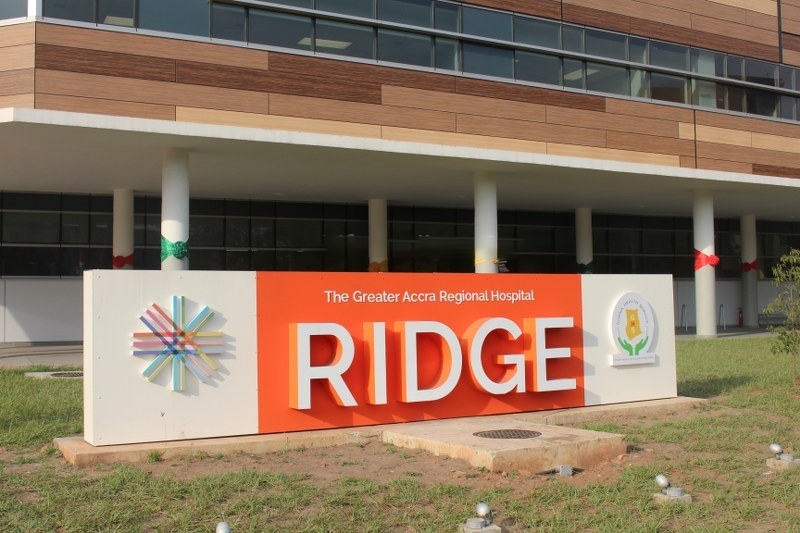
    The Ministry of Health will today, Monday, August 25, receive the report on the alleged assault on health workers at the Greater Accra Regional Hospital (Ridge).

    The Head of Communications at the Ministry, Tony Goodman, revealed this while speaking on The Big Issue on Saturday, August 23.

    “We have spoken to those around, including the nurse who was in charge, and we have come to some conclusions. I am sure by Monday, that will be given to the Minister,” Mr. Goodman said.

    On August 20, a group of men, including a member of the pressure group Democracy Hub, Mr. Ralph Afful Williams, allegedly stormed the Ridge facility, demanding immediate treatment for an injured finger while medical staff were attending to critically ill patients, including one with an open fracture.

    Hospital management was forced to call in the Ghana Police Service after the situation escalated into the assault of a nurse. Following the incident, several groups and individuals have demanded the arrest of Ralph Williams, describing his actions as unlawful.

    Meanwhile, the nurse at Greater Accra Regional Hospital who was attacked, Rejoice Tsotsoo Bortei, has dragged her alleged abuser, activist Ralph Saint Williams, to court for physical assault and defamation.

    The plaintiff is seeking GH¢5 million in damages for battery and GH¢2 million for defamation, arguing that the defendant’s words have “cast the Plaintiff as a liar, a non-trustworthy person, and a crook”.

    When staff requested he obtain a hospital card, the defendant reportedly became aggressive and began recording patients and staff without consent. The plaintiff indicates that despite providing him with initial first aid, the defendant later returned with a group of men and physically assaulted her.

    “The Defendant, without provocation, struck the Plaintiff’s left hand with a clenched fist and a metallic cellphone,” the writ states.

    Following the incident, the defandant during a live video accused Rejoice of being a liar.

    “Liar, Wo se wo nsam abu. Duab0 bebam. You say you have suffered an injured hand and a dislocated shoulder. This is cooked up to cover the nonsense going on at the hospital,” he said.

    Additional reliefs sought include a court order for a full public apology and retraction, a perpetual injunction against further defamatory publications, a restraining order preventing the defendant from coming within 50 meters of the plaintiff, and legal costs.

    The defendant has eight days to enter an appearance upon being served with the writ, or risk a default judgment.

    Just days earlier, the Health Minister confirmed that the Ridge Hospital incident that saw the assault of health practitioners had led to several arrests by the Ghana Police Service.

    “The law has so far dealt with all those who did something wrong, and we are also investigating as a ministry. Anyone who comes to tell you that no arrest has been made in this matter is probably someone who is not ready to contribute to the resolution of this matter,” the Minister told Asempa FM on August 19, without disclosing the names of the suspects.

    The arrests stemmed from an incident involving a member of the pressure group Democracy Hub, Mr. Ralph Afful Williams, popularly known as “Fellow Ghanaians.” He reportedly stormed the hospital with about eight men, protesting what he described as delays in treating a critically injured patient on August 17.

    Hospital management was forced to call in the Ghana Police Service after the situation escalated into the assault of a nurse. Following the incident, several groups and individuals demanded the arrest of Ralph Williams, describing his actions as unlawful.

    In response, the Ghana Registered Nurses and Midwives Association (GRNMA) issued a 48-hour ultimatum to the government to arrest Ralph and his accomplices. The association warned that it would be compelled to “advise itself” if immediate action was not taken.

    According to the GRNMA’s General Secretary, Dr. David Tenkorang Twum, the nurse who was attacked sustained injuries and is currently receiving treatment at the hospital. He described the assault as unacceptable and stressed that health workers cannot operate in an unsafe environment.

    “If anybody can just walk into a facility, like Ridge Hospital, and throw his weight about and beat like a midwife, and you have other party apparatchiks telling them to egg him on, that is unfortunate. We are not happy at all. Our people are traumatized,” he stated.

    He continued, “We are very civilized people. We are professionals. And we are asking the government to arrest the guy immediately and the eight accomplices; we were told there were about 50 guys that day. But those who laid their hands on the lady—there were about eight, including Ralph himself. And therefore, if he’s not arrested within 48 hours, we shall advise ourselves.”

    Dr. Tenkorang also referenced Section 119 of Ghana’s Labour Act, which empowers workers to withdraw their services if their health and safety are at risk.

    “And we are all guided by law. In that, if you read section 119, subsection 1, it is stated that if you are a worker and you think that your safety is not guaranteed, your life and your health are not guaranteed, and you have every right under the law to remove yourself from that danger. And our people have told us this morning, after interacting with them, that they are not safe. They feel that their safety has been breached,” he said.

    The association insists that both Ralph Williams and the eight identified accomplices must be arrested immediately to restore confidence and ensure justice for the victim. Their demand follows the circulation of a viral video showing a violent altercation between some patient relatives and medical staff at the hospital’s emergency department.

    The Minority in Parliament has also intensified calls for Ralph’s arrest. In a statement dated Tuesday, August 19, and signed by the Ranking Member on the Health Committee, Dr. Nana Ayew Afriye, the group condemned the actions of Ralph and his team.

    They described the conduct as “unlawful, reckless, and deeply inconsiderate,” stressing that hospitals are places of care and confidentiality, not “arenas for political theatrics.” The Minority urged the Ghana Police Service to fully investigate the matter and called on the Health Minister to set up a joint parliamentary inquiry to prevent similar occurrences in the future.

    “The sanctity of our health facilities must be preserved at all times,” the statement concluded, urging political actors to refrain from compromising patient care for partisan ends.

    In response, the Ministry of Health has announced measures to beef up security at the Greater Accra Regional Hospital. The Ministry said this will ensure the safety of staff, patients, and the general public, while also addressing any gaps that may have contributed to the reported delay in treatment.

    Reiterating its commitment to protecting healthcare workers, the Ministry confirmed that Health Minister Hon. Kwabena Mintah Akandoh has already visited the facility to receive firsthand information. He assured hospital management and staff of the Ministry’s full support and protection.

    “We call on the public to exercise patience, cooperation, and mutual respect at all times to enable healthcare workers to provide effective and timely care,” the Ministry of Health added in a statement.

    Meanwhile, a 24-hour call centre for handling patient complaints across hospitals in the country has been introduced by the Health Minister, Mr. Kwabena Mintah Akandoh.

    The minister made this known at a press briefing in Accra on Thursday, August 21, explaining that the initiative will provide the public with a direct channel to report their displeasure regarding healthcare services. “The best you can do is lodge a complaint. And that brings me to the client service. So this is what we are doing. We have some numbers available where if people feel dissatisfied, you can then call,” he said.

    He assured that complaints to the hotline will be managed fairly, but emphasized that this does not automatically mean all complaints will be considered right. “The fact that you have called to lodge a complaint doesn’t mean that you are right. We will look into the matter and then appropriately deal with it,” he stated.

    He added that hospitals have been instructed to display the hotline numbers boldly at facilities to make them easily accessible to patients nationwide. “We have communicated directly to all the health facilities in the country, to the Director-General and the teaching hospitals, that they must make these suggestion boxes and numbers conspicuously posted at all health facilities. So it is something I am pursuing aggressively,” he said.

    Mr. Akandoh noted that the measure seeks to promote accountability and raise the standard of service delivery in the health sector.

  • Some suspects arrested as police probe assault of nurse at Ridge Hospital – Health Minister

    Some suspects arrested as police probe assault of nurse at Ridge Hospital – Health Minister

    Minister for Health Honourable Kwabena Mintah Akandoh has confirmed that the Ridge Hospital incident that saw the assault of health practitioners has led to several arrests by the Ghana Police Service.

    “The law has so far dealt with all those who did something wrong, and we are also investigating as a ministry. Anyone who comes to tell you that no arrest has been made in this matter is probably someone who is not ready to contribute to the resolution of this matter,” the Minister told Asempa FM on August 19, without disclosing the names of the suspects.

    The arrests stem from an incident involving a member of the pressure group Democracy Hub, Mr. Ralph Afful Williams, popularly known as “Fellow Ghanaians.” He reportedly stormed the hospital with about eight men, protesting what he described as delays in treating a critically injured patient.

    Hospital management was forced to call in the Ghana Police Service after the situation escalated into the assault of a nurse. Following the incident, several groups and individuals have demanded the arrest of Ralph Williams, describing his actions as unlawful.

    Nonetheless, the Ghana Registered Nurses and Midwives Association (GRNMA) has issued a 48-hour ultimatum to the government to arrest Ralph and his accomplices. The association has warned that it will be compelled to “advise itself” if immediate action is not taken.

    According to the GRNMA’s General Secretary, Dr. David Tenkorang Twum, the nurse who was attacked sustained injuries and is currently receiving treatment at the hospital. He described the assault as unacceptable and stressed that health workers cannot operate in an unsafe environment.

    “If anybody can just walk into a facility, like Ridge Hospital, and throw his weight about and beat like a midwife, and you have other party apparatchiks telling them to egg him on, that is unfortunate. We are not happy at all. Our people are traumatized,” he stated.

    He continued, “We are very civilized people. We are professionals. And we are asking the government to arrest the guy immediately and the eight accomplices; we were told there were about 50 guys that day. But those who laid their hands on the lady—there were about eight, including Ralph himself. And therefore, if he’s not arrested within 48 hours, we shall advise ourselves.”

    Dr. Tenkorang also referenced Section 119 of Ghana’s Labour Act, which empowers workers to withdraw their services if their health and safety are at risk.

    “And we are all guided by law. In that, if you read section 119, subsection 1, it is stated that if you are a worker and you think that your safety is not guaranteed, your life and your health are not guaranteed, and you have every right under the law to remove yourself from that danger. And our people have told us this morning, after interacting with them, that they are not safe. They feel that their safety has been breached,” he said.

    The association insists that both Ralph Williams and the eight identified accomplices must be arrested immediately to restore confidence and ensure justice for the victim. Their demand follows the circulation of a viral video showing a violent altercation between some patient relatives and medical staff at the hospital’s emergency department.

    The Minority in Parliament has also intensified calls for Ralph’s arrest. In a statement dated Tuesday, August 19, and signed by the Ranking Member on the Health Committee, Dr. Nana Ayew Afriye, the group condemned the actions of Ralph and his team.

    They described the conduct as “unlawful, reckless, and deeply inconsiderate,” stressing that hospitals are places of care and confidentiality, not “arenas for political theatrics.” The Minority urged the Ghana Police Service to fully investigate the matter and called on the Health Minister to set up a joint parliamentary inquiry to prevent similar occurrences in the future.

    “The sanctity of our health facilities must be preserved at all times,” the statement concluded, urging political actors to refrain from compromising patient care for partisan ends.

    In response, the Ministry of Health has announced measures to beef up security at the Greater Accra Regional Hospital. The Ministry said this will ensure the safety of staff, patients, and the general public, while also addressing any gaps that may have contributed to the reported delay in treatment.

    Reiterating its commitment to protecting healthcare workers, the Ministry confirmed that Health Minister Hon. Kwabena Mintah Akandoh has already visited the facility to receive firsthand information. He assured hospital management and staff of the Ministry’s full support and protection.

    “We call on the public to exercise patience, cooperation, and mutual respect at all times to enable healthcare workers to provide effective and timely care,” the Ministry of Health added in a statement.

  • Over 13 countries interested in recruiting Ghanaian health workers – Health Minister

    Over 13 countries interested in recruiting Ghanaian health workers – Health Minister

    Reports by the Health Minister, Kwabena Mintah Akandoh, have it that over 13 countries have signaled official intent to employ Ghanaian healthcare workers.

    Mr Mintah Akandoh says the government is developing a policy framework to moderate the increasing international demand while safeguarding the country’s health sector.

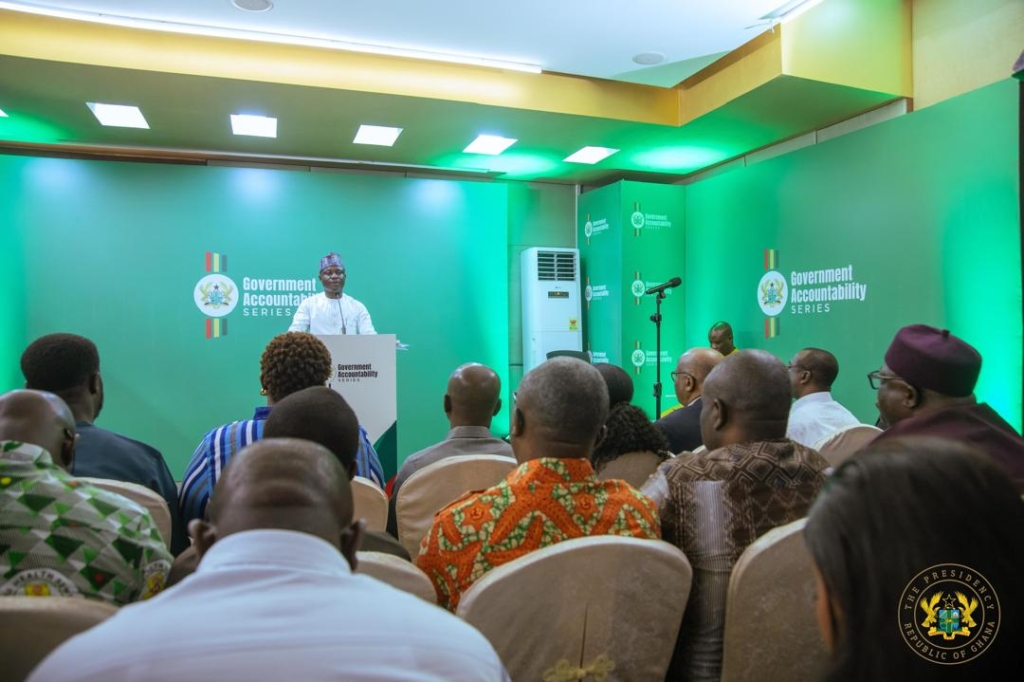
    During the Government Accountability Series at the Jubilee House on Friday, July 18, Mr Akandoh labeled the move as a “managed migration opportunity” and stressed that Ghana’s approach will ensure that any overseas recruitment directly benefits both the national health system and the professionals involved.

    “We are formulating policies to ensure these benefits are fairly distributed to both our health system and our professionals,” the minister said.

    The sector minister mentioned that while there is increased demand for Ghanaian health workers abroad, the government is at the same time prioritizing skills enhancement and well-being locally.

    He highlighted a number of domestic measures aimed at empowering Ghana’s health workforce, which involve paying off salary arrears for 321 pharmacist house officers who completed training in 2024, as well as focusing on the recruitment of 1,621 qualified pharmacists currently awaiting permanent employment.

    “This is just one example of our broader commitment to clearing the backlog across all health worker cadres,” he said.

    “We want every qualified professional to have the chance to serve and strengthen Ghana’s health system.”

    In line with broader reforms, the minister disclosed that the government has finalized conditions of service agreements with health unions and is updating training curricula to reflect the country’s health needs.

    He added that specialist nursing courses are being scaled up, while general nursing schools are being transformed into centers for specialised instruction.

    “These steps are crucial to ensuring a motivated and skilled workforce capable of meeting the changing health needs of our population,” Mr Akandoh added.

  • Ghana to locally produce 60% of drugs, vaccines by 2030 – Health Minister

    Ghana to locally produce 60% of drugs, vaccines by 2030 – Health Minister

    Health Minister, Hon. Kwabena Mintah Akandoh, engaged with senior management from the World Bank on Tuesday, April 7, to discuss the government’s strategic priorities in the healthcare sector.

    During the meeting, the Minister outlined key health goals, including the local production of 60% of drugs and vaccines by 2030.

    This ambitious initiative aims to reduce Ghana’s dependency on imported pharmaceutical products, lower healthcare costs, and boost the country’s capacity to meet its own health needs.

    Hon. Akandoh highlighted the government’s efforts to improve healthcare infrastructure, expand access to essential services, and address financial barriers to healthcare.

    He emphasized the importance of long-term sustainability in the health sector, with a focus on ensuring that all Ghanaians can access affordable healthcare.

    The Minister also outlined plans for the introduction of the Ghana Medical Trust Fund, which will provide coverage for the treatment of chronic diseases not currently included in the National Health Insurance Scheme (NHIS).

    Hon. Akandoh also addressed concerns regarding vaccine shortages. With vaccine stocks set to run out in the next three months, he revealed that the National Health Insurance Authority has allocated 5 million U.S. dollars to fund the procurement of new vaccines.

    “When I took over office, I realized that the level of the stocks we have for vaccines are very low and we will be running out of stock very soon. So, we have instructed the National Health Insurance to release an amount of about 5 million U.S dollars so that we can start the processes of purchasing new ones so that we don’t completely run out of stock in the country,” said the Minister.

    He emphasized the government’s long-term goal of financing its own vaccine needs by 2030. “By 2030, we will have to take up the full responsibility, so we are taking steps to be able to sustain the supply of these vaccines in the system without the assistance of Gavi or any foreign partner,” he stated.

    The Minister also underscored the role of local vaccine production in achieving this objective, noting that the country is already advancing in this direction with the establishment of the National Vaccines Institute and partnerships with local pharmaceutical companies.

    “So, one of the steps we have taken is to make sure that at least the ones we can manufacture locally we do that. Now, we have the National Vaccines Institute in place and we have other local pharmaceutical players who have also come on board and so we are at the very advanced stage and I think that when we collaborate with them, we may be able to produce some of these vaccines locally,” he added.

    Aichatou Cisse, Senior Country Manager for GAVI, The Vaccine Alliance, reaffirmed the organization’s commitment to supporting Ghana’s vaccine efforts.

    “We are partners, and we can support if we get offers that we need to do so. But it’s the decision of the government and they can come to us for support. Gavi has longer experience in vaccine procurement and working with vaccine manufacturers so we can build a partnership on this, but we will just follow the lead of Ghana,” she said.

    Since 2001, GAVI has played a crucial role in improving immunization access in Ghana, strengthening vaccination programs and enhancing child health outcomes.

    Hon. Akandoh also acknowledged the importance of continued international collaboration, emphasizing that partnerships with organizations like GAVI and the World Bank are essential to achieving Ghana’s health goals.

    He reiterated the need for innovative solutions and resources to meet the country’s evolving healthcare needs, ensuring that all citizens can access quality healthcare services.

  • Over 20,000 TB cases recorded in 2024 – Health Minister

    Over 20,000 TB cases recorded in 2024 – Health Minister

    Ghana recorded over 20,000 tuberculosis (TB) cases in 2024, highlighting progress in disease detection, but still falling short of the World Health Organization’s (WHO) estimated target of 44,000 cases per year.

    TB is an airborne disease, that is caused by the bacterium Mycobacterium tuberculosis and spreads when an infected person coughs, sneezes, or talks, releasing bacteria into the air and it primarily affects the lungs but can also spread to other parts of the body, such as the kidneys, spine, and brain

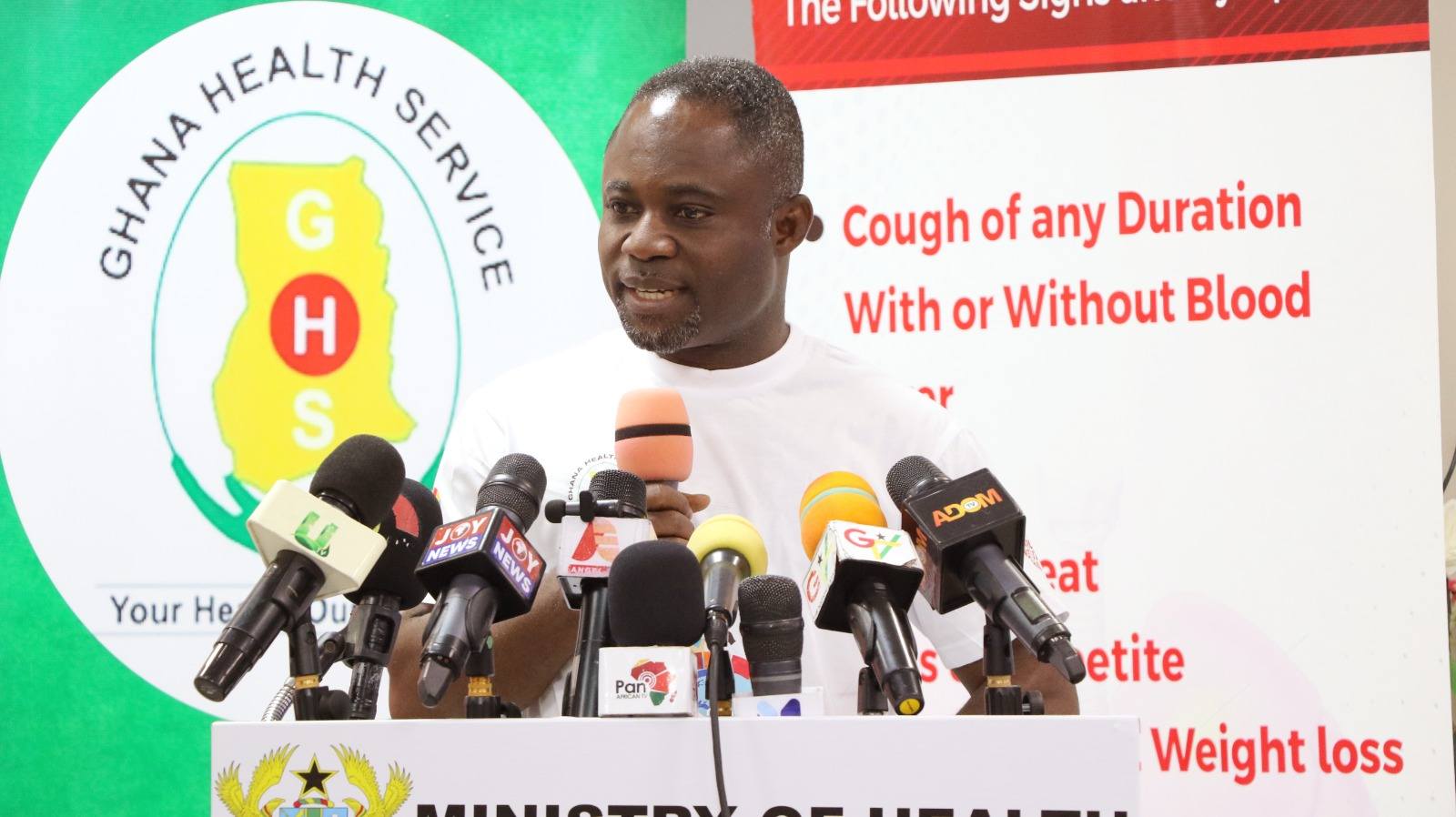
    The Ministry of Health, in collaboration with the Ghana Health Service, marked the 2025 World TB Day with a call for increased efforts to eliminate the disease. This year’s theme, “Yes, We Can End TB! Commit, Invest, Deliver,” emphasizes the need for strong commitment, strategic investments, and effective execution of interventions.

    At the event, stakeholders identified major challenges hampering TB control in Ghana, including limited access to diagnostic tools, inadequate funding, and persistent stigma surrounding the disease.

    The Health Minister, Kwabena Mintah Akandoh, noted that while Ghana has made strides in identifying cases, there remains a significant gap that must be addressed. To strengthen TB control efforts, the government has committed to increasing funding for essential medical supplies, expanding diagnostic capabilities with GeneXpert machines and digital X-rays, and improving healthcare infrastructure to ensure that every TB patient receives treatment.

    The Director-General of the Ghana Health Service, Prof. Samuel Kaba Akoriyea, emphasized that achieving TB elimination requires consistent investment and strengthened healthcare delivery systems. The National TB Control Program has also updated its guidelines to align with WHO’s latest recommendations, aiming to enhance early detection and treatment.

    Additionally, Prof. Dorothy Yeboah-Manu, Chairperson of the Advisory Board for the National TB Control Program, highlighted the importance of research in identifying undiagnosed TB cases. She called for increased collaboration among stakeholders to accelerate progress in combating the disease.

    As part of efforts to increase public engagement, the Ministry of Health is encouraging Ghanaians to raise awareness, support TB patients, and promote early testing. Authorities believe that with sustained commitment, Ghana can move closer to achieving global TB elimination targets.

    The general symptoms of active tuberculosis (TB) include unexplained weight loss, loss of appetite, night sweats, fever and chills, fatigue, and weakness. TB is treatable with a combination of antibiotics.

  • Ridge Hospital to be upgraded into a Teaching Hospital – Health Minister

    Ridge Hospital to be upgraded into a Teaching Hospital – Health Minister

    The Minister of Health, Kwabena Mintah Akandoh, has revealed plans to elevate the Greater Accra Regional Hospital, also known as Ridge Hospital, into a Teaching Hospital.

    He highlighted this move as part of a broader initiative aimed at strengthening Ghana’s healthcare sector and expanding medical training opportunities.

    Speaking on JoyNews TV, Mr. Akandoh reiterated the government’s dedication to establishing a regional hospital in each of the country’s sixteen regions.

    He also emphasized the need to renovate and upgrade existing healthcare facilities to improve efficiency and maintain high standards in medical service delivery.

    “We are also looking at upgrading some of the already existing health facilities,” he stated. “You don’t build new ones and leave already existing ones to deteriorate. So we are looking at improving Komfo Anokye Teaching Hospital and upgrading Korle Bu Teaching Hospital.”

    The Minister provided further details on the planned upgrade of Ridge Hospital,“We are considering upgrading the Greater Accra Regional Hospital into a Teaching Hospital. We are also exploring ways to increase the number of CHPS compounds in the country and integrate healthcare facilities to enhance efficiency.”

    The planned upgrade of Ridge Hospital aims to strengthen medical education, enhance healthcare services, and improve Ghana’s medical infrastructure, ensuring citizens have better access to quality care.

  • Health Minister visits Agenda 111 sites in Ashanti Region

    Health Minister visits Agenda 111 sites in Ashanti Region

    Minister for Health, Kwabena Mintah Akandoh, has toured several Agenda 111 project sites in the Ashanti Region to evaluate progress and identify challenges affecting the initiative.

    Speaking during his visit, Mr. Akandoh noted that the oversight of the project, which was initially managed under the Office of the President, has now been transferred to the Ministry of Health. He emphasized that this shift is expected to improve coordination and accelerate completion efforts.

    Providing updates on the status of the project, the minister revealed that none of the hospitals have been fully completed, as indicated in reports from project consultants. However, he reaffirmed the government’s commitment to ensuring timely completion to enhance healthcare access across the country.

    To address financial constraints and construction delays, Mr. Akandoh disclosed that the government is exploring private sector partnerships to facilitate funding and expedite the execution of the hospitals.

    The Agenda 111 initiative was introduced to fill critical gaps in Ghana’s healthcare infrastructure, especially in underserved regions. The project includes the construction of 101 district hospitals, six regional hospitals for the newly created regions, an additional regional hospital for the Western Region, two psychiatric hospitals in Kumasi and Tamale, rehabilitation of the Effia Nkwanta Regional Hospital, and the redevelopment of the Accra Psychiatric Hospital. Each facility is expected to be equipped with modern medical infrastructure and staff accommodation.

    Once completed, the initiative will represent the most significant healthcare infrastructure investment in Ghana’s history, ensuring that quality medical services are accessible to communities nationwide.

  • No nurse or midwife recruited last year would be dismissed – Health Minister

    No nurse or midwife recruited last year would be dismissed – Health Minister

    Minister for Health, Kwabena Mintah Akandoh, has assured healthcare professionals that no nurse or midwife recruited in the previous year will face dismissal.

    His reassurance comes amid rising concerns over job security within Ghana’s healthcare sector.

    Chief of Staff Julius Debrah has announced the revocation of all public service appointments and recruitments made after December 7, 2024, following the general elections. The directive is expected to impact individuals appointed to various public sector roles during that period.

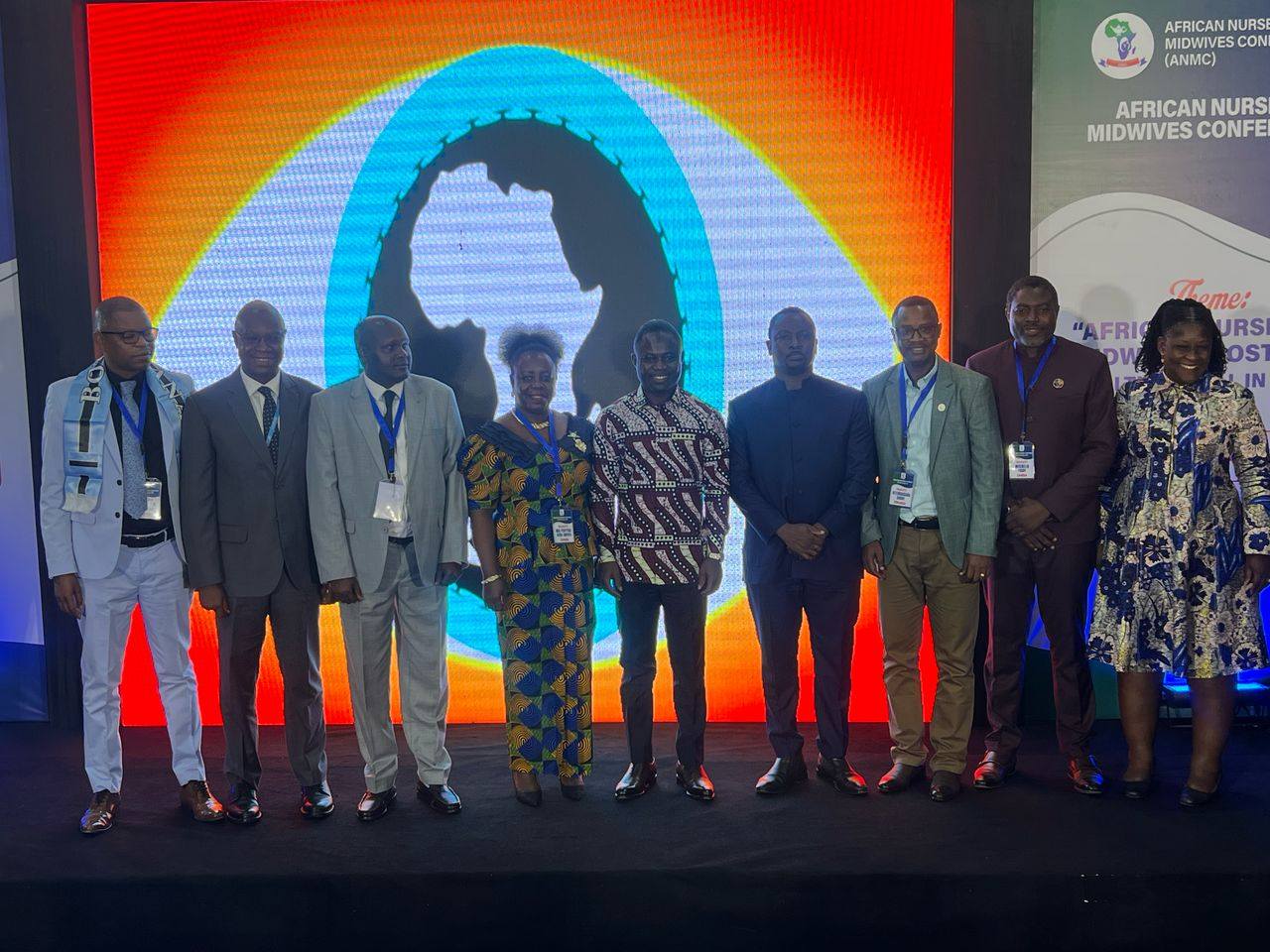
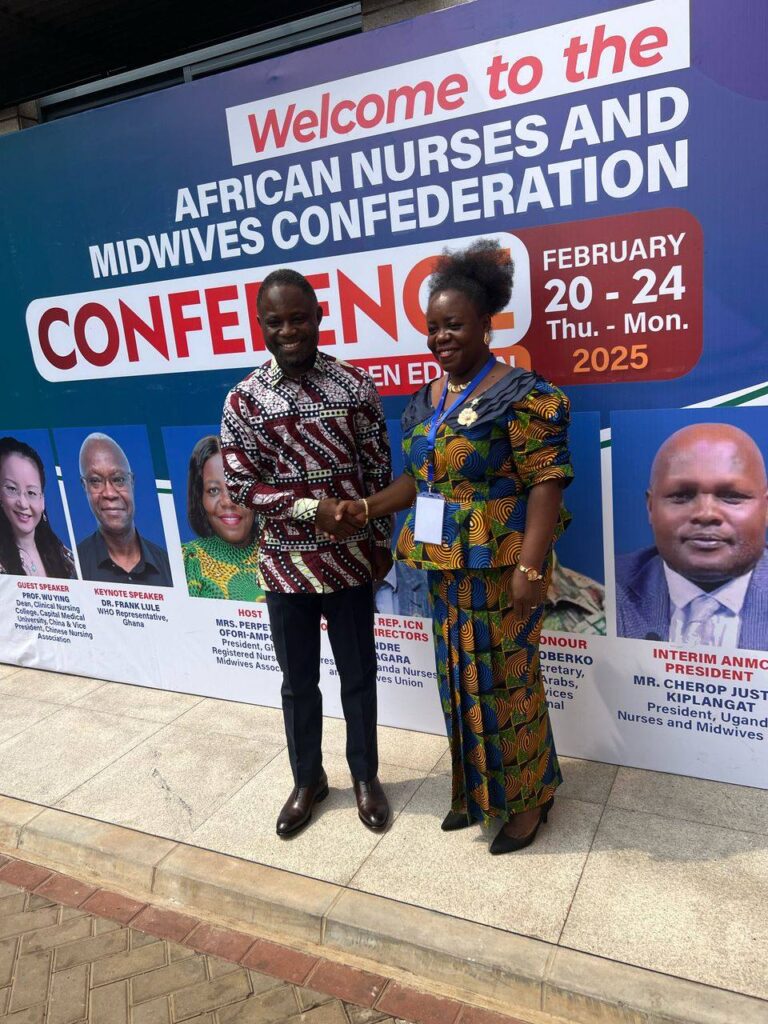
    Speaking at the inaugural African Nurses and Midwives Confederation conference in Accra, themed “African Nurses and Midwives, Fostering Health for All in Africa,” the minister reaffirmed the government’s dedication to strengthening the nursing and midwifery workforce, acknowledging their pivotal role in delivering quality healthcare services.

    The conference aimed to enhance leadership skills among African nursing leaders while fostering collaboration to share best practices and elevate healthcare standards across the continent.

    Amid growing health challenges—including outbreaks of Cerebrospinal Meningitis in the northern belt and Cholera cases in parts of the Central Region—Mr. Akandoh emphasized the need for a well-equipped and well-supported health workforce.

    He also highlighted the upcoming State of the World’s Nursing Report by the World Health Organization, scheduled for release on May 12, 2025. The report is expected to offer valuable insights into the global nursing workforce, covering areas such as education, employment, migration, and leadership to help shape informed healthcare policies.

    Addressing the growing trend of Ghanaian nurses migrating to countries in the Global North, the minister outlined measures to curb the exodus. These include efforts to stabilize the economy, improve employment opportunities, and offer better incentives for healthcare professionals, especially in underserved regions.

    Additionally, Ghana is negotiating bilateral agreements with nations such as the UK, USA, Barbados, and Kuwait to manage migration effectively while safeguarding the country’s healthcare capacity.

    The minister reiterated the government’s commitment to expanding the healthcare workforce to meet Universal Health Coverage (UHC) goals and achieve the Sustainable Development Goals (SDGs).

    International participants at the conference were encouraged to immerse themselves in Ghana’s rich cultural heritage while engaging in meaningful discussions aimed at shaping the future of healthcare across Africa.

  • World Bank official engages Health Minister on reform to sustain physician assistants at health centres

    World Bank official engages Health Minister on reform to sustain physician assistants at health centres

    Michelle Keane, the World Bank’s Operations Manager for Ghana, Liberia, and Sierra Leone, has led a delegation on a courtesy visit to Ghana’s Minister of Health, Kwabena Mintah Akandoh, to strengthen collaboration and discuss ongoing health sector initiatives.

    The meeting focused on enhancing existing partnerships and identifying new areas of cooperation to improve healthcare delivery across the country.

    During the engagement, Michelle Keane highlighted the need for reforms aimed at retaining physician assistants who have been temporarily engaged to provide essential healthcare services at various health centres.

    In response, Hon. Akandoh outlined the government’s key health priorities, including the establishment of a Medical Trust Fund, the provision of free primary healthcare, the construction of regional hospitals, and the upgrade of the Greater Accra Regional Hospital into a fully functioning teaching hospital under its second phase of development.

    The Minister also expressed optimism about future support from the World Bank, particularly in strengthening Ghana’s disease surveillance systems.

    Reassuring the delegation of the government’s commitment to collaboration, Hon. Akandoh pledged his full support for World Bank projects, assuring that his office would remain open and attentive to the Bank’s initiatives.

    He further emphasized the importance of fortifying the health sector, noting its direct impact on national productivity and economic stability

  • Ramp up public education to stop the spread of cholera – Health Minister to health workers, media

    Ramp up public education to stop the spread of cholera – Health Minister to health workers, media

    Minister for Health, Kwabena Mintah Akandoh, has urged health professionals, religious leaders, media organizations, and local authorities to intensify public education on cholera prevention as Ghana continues efforts to contain the recent outbreak.

    During a working visit to the Winneba and Swedru municipal hospitals in the Central Region, the Minister observed a decline in cholera cases and expressed satisfaction with the establishment of isolation centers for affected patients.

    He noted that there have been no cholera-related deaths in the past three weeks, indicating that the measures in place are proving effective.

    Addressing residents of Winneba, he emphasized the importance of basic hygiene practices such as drinking clean water, eating hot meals, and washing hands frequently to curb the spread of the disease.

    He also announced the rollout of a free oral cholera vaccination program in high-risk areas, including Ablekuma, Awutu, and Cape Coast. To assure the public of its safety, he took his dose publicly in Ablekuma and encouraged citizens to visit designated health centers for their vaccinations.

    The Minister called on radio stations, religious organizations, local government bodies, and the Environmental Protection Agency (EPA) to actively support awareness campaigns on cholera prevention. He also highlighted the role of Community Health Planning and Services (CHPS) workers in educating market traders and community members on maintaining hygiene standards.

    Reassuring Ghanaians that the outbreak is under control, he cautioned against open defecation and indiscriminate waste disposal, warning that such practices contribute significantly to the spread of cholera.

    Accompanying the Minister on the visit were the acting Director-General of the Ghana Health Service, the WHO country representative, regional health directors, health workers, and the media, all of whom reaffirmed their commitment to supporting the nationwide cholera response.

  • Health Minister arrives in Wa to provide support in fight against meningitis

    Health Minister arrives in Wa to provide support in fight against meningitis

    The Minister of Health, Kwabena Mintah Akandoh, and the Acting Director-General of the Ghana Health Service, Prof. Samuel Kaba Akoriyea, have arrived in Wa, Upper West Region, to support efforts in controlling the meningitis outbreak.

    As part of their visit, they will meet with key leaders, including the Regional Minister and the Wa Naa, the traditional ruler of the area.

    The minister will also travel to the Nadowli Kaleo District to speak with the District Coordinating Director.

    He is expected to visit the district hospital, where meningitis patients are being treated, interact with the hospital staff, and hand over essential medicines to aid in managing the disease.

    Speaking to the media on February 12, 2025, in Wa, Akandoh stated: “I am excited about the enthusiasm of the health professionals on the ground. I think that if we encourage them, they will do a better job. Sometimes, in situations like this, by the time you get to the ground, the health professionals are already exhausted. But I’m happy about their energy and enthusiasm.”

    The health officials are in the region to check the situation themselves, improve how they respond, and find better ways to stop meningitis from spreading.

    By Sunday, February 9, 2025, there were 23 suspected meningitis cases in the Upper West Region, and four people had died.

    Three districts, Nadowli, Nandom and Jirapa were already on high alert during the week.

    Wa West and Sissala East also reported new cases, increasing the number of affected districts to eight.

    Meningitis is a serious disease that affects the brain and spinal cord. It is a major health concern worldwide and spreads more during the dry season, especially in northern Ghana.

    Cerebrospinal Meningitis (CSM) continues to be a big health issue in Ghana, with up to 10 out of every 100 confirmed cases resulting in death each year.

    Northern Ghana is part of an area known as the “meningitis belt,” where outbreaks happen more often.

    Health officials are advising people to go to the hospital as soon as they notice symptoms since early treatment can save lives.

  • Health Minister ordered to appear in parliament amid cholera, meningitis fears

    Health Minister ordered to appear in parliament amid cholera, meningitis fears

    The Minister of Health, Kwabena Mintah Akandoh, has been called to appear before Parliament within a week to update the House on the ongoing cholera and cerebrospinal meningitis outbreaks.

    This follows a request by Minority Leader and Member of Parliament for Effutu, Alexander Afenyo-Markin, urging the Minister to brief Parliament on the government’s efforts to control the diseases.

    Afenyo-Markin highlighted that over 400 cholera cases have been reported in his constituency, while 14 deaths have occurred due to cerebrospinal meningitis in the Upper West Region.

    In response, the First Deputy Speaker, Bernard Ahiafor, instructed the Health Minister to appear before the House within one week.

    “We need the Minister of Health to appear before the House within one week to brief the House on all the health issues raised on the floor,” he stated.

    Afenyo-Markin also appealed to the Ministry to send additional medical staff to the Winneba Health Facility to help manage the outbreak and protect lives in his constituency.

    “Mr Speaker, it has been reported that 412 cases of cholera in Effutu Municipality have claimed three lives. Currently, the affected are being treated at the Winneba Municipal Hospital, the UEW Clinic, and the Winneba Health Centre. Mr Speaker, these facilities are overwhelmed. Most of these cases are coming from the shelves. The central government must intervene immediately to save lives.

    We also need additional staff to be deployed to Winneba, and the Minister of Health should direct other health professionals to help contain the outbreak.”

  • Health Minister reports $312m paid for Agenda 111 projects

    The Health Minister, Dr. Bernard Oko Boye, has informed Parliament that $312 million has been disbursed to contractors for the construction of the Agenda 111 hospital projects nationwide.

    While no projects have been completed yet, Dr. Oko Boye noted that the initiative has been expanded to include two psychiatric hospitals and one national psychiatric hospital, increasing the total number of facilities to 114.

    Dr. Oko Boye shared these details during his appearance before the Assurances Committee of Parliament.

    The estimated total cost for the Agenda 111 projects is $1.756 billion.

    He reported that the managing group, Hospital Infrastructure, has made varying degrees of progress on the projects, with completion ranging from 5% to over 80%.

    Despite challenges like land acquisition, architectural designs, and project locations, the Minister assured that over 28 facilities are expected to be operational by the end of 2024, though specifics may vary.

    The completed projects are anticipated to create employment for over 60,000 people.

    Dr. Oko Boye reassured Parliament that the projects will be completed as planned to benefit the public.

    The Committee has requested the Minister to provide architectural plans and cost details, which are not immediately available.

  • Gov’t hasn’t paid $34.9m for ambulance spare parts deal signed in 2020 – Health Ministry

    Gov’t hasn’t paid $34.9m for ambulance spare parts deal signed in 2020 – Health Ministry

    The Ministry of Health has issued a response to accusations made by Samuel Okudzeto Ablakwa, the Member of Parliament for North Tongu, concerning a $34.9 million contract for ambulance spare parts.

    In a statement dated Thursday, July 25, the Ministry clarified that the contract in question was initially signed by the now-defunct Ministry of Special Development Initiatives with Service Auto Group Ghana Limited.

    This contract, established for the after-sales service and maintenance of 307 Mercedes Benz Sprinter 315 CDI ambulances procured by the government in 2019, has come under scrutiny following Ablakwa’s allegations of potential corruption. Ablakwa has since taken the matter to the Office of the Special Prosecutor.

    The former Deputy Education Minister accused the Finance Minister of hastily approving the deal just five days before his removal from office, claiming that $10 million had already been paid to Service Auto Group Ghana Limited.

    Ablakwa’s actions aim to safeguard the remaining funds, questioning the legitimacy of the company, which was incorporated on April 24, 2020, a year after the ambulances were commissioned.

    Ablakwa expressed concerns about the company’s capacity to service the ambulances and highlighted troubling findings by the Auditor-General regarding the company’s credibility. He also alleged a connection between President Akufo-Addo’s daughters and the company, suggesting that one of the directors is a close business associate of the President’s daughters.

    In its statement, the Ministry of Health did not directly address the corruption allegations but clarified that the Finance Minister acted on the Health Ministry’s request after the dissolution of the Ministry of Special Development Initiatives.

    The Ministry emphasized that no $34.9 million payment had been made to Ghana Auto Group Limited as reported.

    “The Ministry of Health would like to clarify that the Service Provider, Ghana Auto Group Limited, has not been paid an amount of $34.9 million as widely reported,” the statement read.
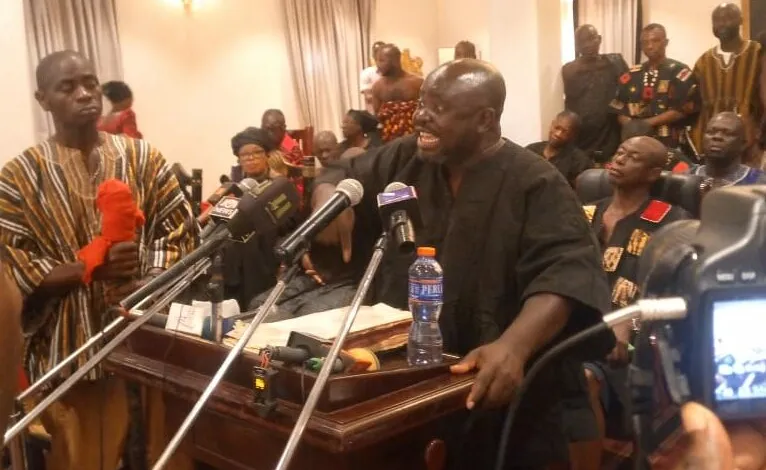
    The Ministry reaffirmed its commitment to maintaining a sustainable service regime for the National Ambulance Service to ensure efficient and safe emergency medical services. Additionally, it expressed readiness to support any efforts aimed at bringing further clarity to the issue in the public interest.

  • Be quick in completing stalled hospital projects – Asantehene tells Health Minister

    Be quick in completing stalled hospital projects – Asantehene tells Health Minister

    The Asantehene, Otumfuo Osei Tutu II, has voiced concerns over the slow progress of several hospital projects in Ghana, particularly those in the Ashanti Region.

    He has urged for expedited efforts to complete these projects to ensure the health and well-being of the people.

    During a meeting with a delegation from the Ministry of Health, led by the sector Minister, Dr. Bernard Okoe-Boye, at the Manhyia Palace in Kumasi, the Asantehene stressed the importance of prioritizing health infrastructure.

    He emphasized that although funds may be limited, the government must strive to do its best to ensure that health facilities are completed and operational to serve the needs of the population.

    The Asantehene acknowledged recent improvements in the financial sector and recommended that the Ministry of Health collaborate with the Ministry of Finance to secure funding for completing hospital projects across the country, specifically those under the Agenda 111 initiative.

    He pointed out that securing the necessary funds and completing these projects on schedule is crucial for enhancing healthcare delivery and ensuring the health and well-being of the people.

    Particular concern was expressed over the stalled Sewua Hospital project. The Asantehene noted that despite significant investments in hospital equipment, the facility remains non-operational due to issues such as inadequate power supply and poor road infrastructure.

    He warned that if these issues are not addressed promptly, the equipment will become obsolete and wasted.
    Highlighting the potential benefits of operationalizing the Sewua Hospital, the Asantehene mentioned that it could alleviate the patient load on the Komfo Anokye Teaching Hospital (KATH), aiding the smooth implementation of the ‘Heal the KATH’ project.

    He also called for the expedited completion of the KNUST Teaching Hospital and emphasized the importance of ongoing projects at Trede.

    In response, Dr. Okoe-Boye praised the Asantehene for his ‘Heal KATH’ initiative, which aims to enhance healthcare delivery. He assured that the government is committed to completing all ongoing health projects in the region.

    The Minister also visited KATH to inspect the ongoing construction of the Maternity and Children’s block. To further decongest KATH, Dr. Okoe-Boye suggested that the Ghana Health Service could sign a memorandum of understanding with the Teaching Hospital.

    This agreement could include modalities for directing certain care services to facilities like Sewua Hospital, thereby easing the pressure on KATH.

  • Strengthen healthcare access by serving in rural areas – Health Minister to newly trained pharmacists

    Strengthen healthcare access by serving in rural areas – Health Minister to newly trained pharmacists

    Newly qualified pharmacists are being encouraged to embrace postings in rural and underserved areas, alongside integrating digital technology to enhance access to quality pharmaceutical care.

    This advice was imparted by the Minister of Health, Dr. Bernard Okoe-Boye, during a speech delivered by Deputy Minister Alexander Akwasi Acquah at the induction ceremony for 364 recently qualified and registered pharmacists in Accra.

    The minister highlighted the significance of this approach in bolstering the healthcare system and ensuring accessibility for all Ghanaians.

    The event, organized by the Pharmacy Council, saw participants from various institutions including Kwame Nkrumah University of Technology (KNUST), University of Ghana, Central University College, and University of Health and Allied Sciences, among others.

    Under the theme ‘Universal Health Coverage: Embracing the Digital Frontiers to Leverage Access to Quality Healthcare,’ the ceremony underscored the pivotal role of technology in healthcare advancement.

    Dr. Okoe-Boye addressed the common inclination among professionals to seek opportunities abroad, stressing the importance of retaining talent within Ghana, especially in underserved regions.

    He emphasized that while digital technology enhances their services, it should complement rather than replace professional care.

    “Dear inductees, the future is bright if you maintain focus and resist the temptation to overindulge in the social aspects of digitalization at the expense of your patients and profession. Embrace the positives and mitigate the negatives of digital technology in the performance of your professional duties to ensure the nation benefits maximally from your services,” the minister added.

    Assuring the pharmacists of ministry support, Dr. Okoe-Boye urged them to uphold high standards of care and continually develop their skills to enhance operational efficiency.

    Mr. Thomas Boateng Appiagyei, former President of the Pharmaceutical Society of Ghana, emphasized the need for innovative thinking in embracing digital solutions. He urged pharmacists to employ critical and creative approaches to address challenges in their practice.

    Dr. Daniel Amaning Danquah, Acting Registrar of the Pharmacy Council, congratulated the pharmacists and reminded them to uphold the Apothecary’s Oath, ensuring professionalism, ethics, and patient-centered care.

    The induction ceremony also recognized outstanding contributions, with Dr. Kate Coleman-Sarfo honored as the Preceptor of the Year, Dr. Nana Yaw Wireko-Ampong receiving the Law, Ethics, and Policies Award, and Dr. Michael Opoku Fordjour earning the Pharmacy Practice Award and the prestigious John Ocran Award for overall excellence.

  • I will address the basic things affecting Ghanaians in the health sector – Okoe Boye

    I will address the basic things affecting Ghanaians in the health sector – Okoe Boye

    Health Minister-designate, Dr. Bernard Okoe Boye, has expressed his commitment to continuing projects initiated by his predecessor, Kwaku Agyeman Manu.

    Despite having his own priorities, Dr. Okoe Boye sees this approach as crucial for ensuring a smooth transition, especially considering the limited time left for the Akufo-Addo administration.

    Following President Akufo-Addo’s reshuffle on February 14, 2024, Dr. Okoe Boye was nominated to replace Kwaku Agyeman Manu. Pending approval by Parliament’s vetting committee, Dr. Okoe Boye, who previously served as Deputy Health Minister from 2020 to 2021, is poised to return to the health sector.

    Despite public dissatisfaction with the reshuffle, Dr. Okoe Boye, in an interview with Bernard Avle on the Citi Breakfast Show, emphasized his intention to build on the positive initiatives of his predecessor.

    He stated, “But sometimes it is not the programmes you introduce into a sector that makes people happy or improve the state of mind, it is the relationship and addressing basic things which do not require resources necessarily but require attention and offering protocols and this is going to be my major priority.”

    Acknowledging that meaningful changes often require addressing fundamental issues and building relationships, Dr. Okoe Boye emphasized the importance of engaging stakeholders in the health sector.

    Despite not yet receiving Parliament’s approval, he revealed that he had already initiated discussions with key players, including those at Korle Bu and the Ghana Medical Association.

    “When I went to Korle Bu, what I did was that I sat with those who have been there for a long time and most of them have a fair idea what the problems are, what it ought to be done and what to put in. As I speak to you, I’ve spoken to the Ghana Medical Association President and some of the Executives.

    “I’ve not gone for the vetting but informally, I’m like guys, let’s sit down, what do you want, where do we get to? What must be done? The first approach is to talk to the people in the field.”

    Addressing concerns about the limited timeframe, Dr. Okoe Boye acknowledged the challenge of implementing significant infrastructure changes in a short period. However, he pledged to focus on streamlining processes, ensuring adequate funding, and leveraging his experience to elevate the health sector during his tenure.

  • Health Minister and his deputies absent themselves  from PAC meeting

    Health Minister and his deputies absent themselves from PAC meeting

    A disgruntled member of the Public Accounts Committee (PAC) has voiced his disappointment over the absence of Health Minister Kweku Agyemang Manu and his two deputies at the committee meeting on Tuesday, January 30, 2024.

    The situation escalated when the Ministry’s Director of Policy Planning, Monitoring, and Evaluation, Emma Ofori Agyemang, informed the committee that she was standing in for the Chief Director and the Ministers, who had not yet arrived.

    She continued, “My minister too is not back from the constituency, as well as the other two deputy ministers. So I’ll be leading the discussion on behalf of the Chief Director.”

    Unhappy with the information, a visibly upset Member of Parliament for Bole Bamboi, Hon. Yusif Sulemana retorted, “Mr Chairman, I’m not convinced with the reason why the minister and two deputies are not here.”

    “We have colleagues who have contested in the elections and are here. If they’ve lost, there are people who have lost and are here. If two of the deputies lost, that’s fine. But that doesn’t mean they shouldn’t work.”

    He further queried, “Are they resigning? If they are not, they should be here. The worst of it is that the Chief Director is also not here. They are not taking us seriously.”

    Another contentious situation arose when the leadership of the Reconstructive Plastic Surgery and Burns Centre at the Korle-bu Teaching Hospital was noticeably absent.

    This irked the committee members, who sought additional answers in the absence of the responsible officials.

    A member of the Committee, Samuel Atta Mills said “This is really serious.”

    “Ministry of Health, Ministers is not here, two deputies are not here. And now when we call the departments, they are not here. What is happening at the Ministry of Health, what’s going on?” the Komenda Edina Eguafo Abrem MP quizzed further.

    Madam Emma Ofori Agyemang, in response, asserted that the absence of the Health Minister, his deputies, and the leadership of the Reconstructive Plastic Surgery and Burns Centre was not intentional.

    “Nothing untoward is happening. We asked all the heads to be here. Why they are not here, I cannot tell. I believe they probably are late or something like that, but it ought not to have been so,” she explained.

    Committee Chairman James Klutse Avedzi urged the delegation to investigate and ascertain the whereabouts of the absent heads to ensure the smooth continuation of the hearing.

    “Detail someone to get in touch with them and let them come,” he directed.

  • Health Ministry issued 5-day ultimatum to complete infrastructural design for La General Hospital

    Health Ministry issued 5-day ultimatum to complete infrastructural design for La General Hospital

    Finance Minister Ken Ofori-Atta has given the Ministry of Health a five-day deadline to complete the infrastructural design for the reconstruction of La General Hospital.

    The directive follows Mr Ofori-Atta’s site visit. The Finance Ministry has secured €50 million in domestic funding for the project’s reconstruction, which has stalled for 3 years.

    In July 2020, the La General Hospital was demolished due to severe structural issues. Subsequently, President Akufo-Addo initiated the La General Hospital Redevelopment Project with a groundbreaking ceremony on August 10, 2020.

    Majority Leader in Parliament, Osei Kyei-Mensah-Bonsu, has blamed the delay in the reconstruction of the La General Hospital in Accra on the withholding of funds by the sponsors of the facility.

    The stalled work has gotten residents living in La furious. They have threatened to take matters into their own hands if government fails to reconstruct the hospital.

  • Demolition of some health facilities urgently needed,” says Health Minister in Parliamentary Address

    Health Minister Agyemang Manu has advocated for the demolition of multiple health facilities lacking structural integrity, citing a potential risk to lives.

    During his appearance before Parliament on Tuesday, November 14, to address questions concerning the delayed works on the La General Hospital, the Minister expressed the necessity for the demolition of several hospitals in the country due to insufficient funds for reconstruction.

    Mr. Agyemang Manu highlighted specific facilities such as the Elmina Polyclinic, the Korle-Bu surgical block, and the Akyem Oda Government Hospital that require leveling and subsequent reconstruction.

    He acknowledged the financial constraints hindering immediate action, stating, “When you don’t have adequate funding, you can’t do everything at a go. Salt pond, Elmina, Oda, Korle Bu (surgical block), we need to pull down all these facilities and rebuild them.”

    Updating the Parliament on various projects, the Minister disclosed the suspension of work on the Komfo Anokye Maternity block due to insufficient funds. He emphasized that the La General Hospital is not the sole facility facing demolition, mentioning the already-demolished Komfo Anokye Maternity Block.

    Regarding the stalled work on the La General Hospital, demolished in July 2020, Minister Agyemang Manu assured the government’s commitment to its reconstruction. He acknowledged the funding challenges, explaining the suspension of work on the Korle Bu Maternity block in light of the La General Hospital situation.

    In response to concerns about the La General Hospital’s delayed reconstruction, Majority Leader Osei Kyei-Mensah-Bonsu attributed the delay to funds being withheld by the sponsors following Ghana’s engagement with the International Monetary Fund (IMF).

    He mentioned that until Ghana receives a clean bill of health from the IMF, funding will likely remain withheld, leading to a potential downsizing of the project within the context of Agenda 111.

    Chairman of the Greater Accra caucus of the Minority, Nii Lante Vanderpuye, threatened a demonstration if funding for the La General Hospital was not included in the 2024 budget. In a subsequent update, Minister Agyemang Manu disclosed that the Finance Ministry had secured €50 million in local funding for the reconstruction.

    However, Member of Parliament for Asawase, Muntaka Mubarak, questioned the Minister’s transparency, asking for the source of the funding. He also raised concerns about the contractors’ confidence, highlighting that their request for funds before returning to the site indicates a lack of trust in the government’s assurances.

    Muntaka expressed doubt about the government’s intention to reconstruct the La General Hospital, suggesting it was demolished for political reasons, specifically to win the 2020 general election. He criticized the Minister for the delayed value-for-money audit and questioned the lack of due diligence on the banks involved in the funding syndicate.

    Concluding his submission, Muntaka urged the Health Minister to be transparent about the challenges faced, cautioning against raising false hopes without certainty.

  • More hospitals need to be demolished – Health Minister tells Parliament

    More hospitals need to be demolished – Health Minister tells Parliament

    Minister for Health, Agyemang Manu, has expressed the need for several health facilities that lack structural integrity to be pulled down.

    He made this known when he appeared before Parliament on Tuesday, November 14, to answer questions on the stalled works with regards to the La General Hospital.

    According to Mr Agyemang Manu, there is the need to demolish several hospitals in the country just like the La General Hospital to prevent the loss of lives in the future, but due to lack of funds, government is unable to do so.

    He noted facilities such as the Elmina Polyclinic, the Korle-Bu surgical block, Akyem Oda Government Hospital, among others, need to be levelled for reconstruction.

    “It is true, there are several hospitals in this country that need to be pulled down tomorrow morning. But you know, when you don’t have adequate funding, you can’t do everything at a go. Salt pond, Elmina, Oda, Korle Bu (surgical block), we need to pull down all these facilities and rebuild them,” he said.

    The Minister took the opportunity to inform the House that work on the Komfo Anokye Maternity block has been suspended after its demolition due to lack of funds.

    “La General Hospital is not the only hospital that has been pulled down, and we are not working on it. We have pulled down Komfo Anokye Maternity Block. It was there for nearly 44 years,” he said.

    He also noted that there were plans to raze down the Korle Bu Maternity block for reconstruction, but due to the current La General Hospital situation, there has been a u-turn.

    “We started working on the Korle Bu maternity block. Parliament approved funding, signed agreement, loan was procured, but as I speak, we have suspended work in that place because of the experience with La.

    “We just haven’t been able to pull down the maternity block and it is a very dangerous thing for us as I speak. We are using an adjourning land in Korle Bu unlike La, because we have lot of space to do the work,” he said.

    Touching on the stalled work on the La General Hospital, which has garnered the wrath of many residents and a section of the public, the Health Minister assured that government “wants to see that hospital back.”

    In July 2020, the La General Hospital was demolished due to severe structural issues. Subsequently, President Akufo-Addo initiated the La General Hospital Redevelopment Project with a groundbreaking ceremony on August 10, 2020. However, construction has not commenced as of now.

    Majority Leader in Parliament, Osei Kyei-Mensah-Bonsu, has blamed the delay in the reconstruction of the La General Hospital in Accra on the withholding of funds by the sponsors of the facility.

    Reacting to a statement made by the Member of Parliament for La Dade-Kotopon, Rita Odoley Sowah, Kyei-Mensah-Bonsu said that the sponsors withheld the funds after Ghana entered into an engagement with the International Monetary Fund (IMF).

    “Mr. Speaker, what has happened is that after the engagement with the IMF, funding from those sources that Parliament approved of, the funding has been withheld by the sponsors,” Kyei-Mensah-Bonsu said.

    “Mr. Speaker, until the nation is given a clean bill of health by the IMF, it is going to be difficult for the funding to be released. This is why the government now wants to situate it within the context of Agenda 111, and that will mean that the facility will have to be scaled down a bit.”

    Following this, the Chairman of the Greater Accra caucus of the Minority, Nii Lante Vanderpuye, has threatened that the group, along with residents of La and Ga Mashie, will stage a demonstration if the government fails to include funding for the La General Hospital in the 2024 budget.

    But in his update in Parliament today, Mr Agyemang Manu noted that the Finance Ministry has secured €50 million in local funding for the reconstruction of the La General Hospital

    “At the 37th session of the cabinet, the president directed the Ministers of Trade and Industry, Health and Finance to find alternative sources of funding to recommence the project. Through the efforts of the three-man committee, the Minister of Finance has now identified funds locally to continue the project with the same simple work scope but a reviewed price of 50 million Euro,” he said.

    He noted that borrowing from a syndicated group to undertake the construction of the La General Hospital has checked the cost implications for financing.

    In response to this information, the Member of Parliament for Asawase, Muntaka Mubarak, faulted the Minister for failing to disclose the source of funding.

    “Is it Rawlings Park or Kejetia Market or where, you want us to believe that sincerely you have found money and you are going to deal with it.”

    Per the minister’s briefing, the contractors have pledged to return to site when they receive the money in their account.

    For Mr Muntaka, this does not indicate the contractor’s confidence in the government’s ability to provide the funds.

    “You know that when there is confidence and the contractor knows proper documentation has been done, he will not ask you that give me money before I go to the site. He will go to the site, work and raise certificate for you to pay. Why is the contractor telling you that let the money hit my account first? It shows that everyone around the project does not trust what the government is saying.”

    Meanwhile, Mr Muntaka is of the assertion that the government never intended to reconstruct the La General Hospital. According to Mr Muntaka, government should have ensured funding would not be a challenge before it brought down the structure.

    “The Minister being a chartered accountant and all that will know that you will not dare step forward to commence a project when you are not certain, ensure of the readiness of funds. The first thing any reasonable person would have done will be first, get a makeshift structure that you can move almost all the facilities so the hospital will still be running,” the Asawase MP said.

    He made reference to the Minister’s submission provided to the House, which in part says “submission of proposal for value for money was done in May 2020.”

    He also indicated that, per the Health Minister’s submission, “completion of value-for-money audit following the issuance of insurance coverage by Synosure was done in March 2022.”

    “Two solid years to do value for money. Mr Speaker it clearly shows that there was no commitment,” Mr Muntaka added.

    He also cited Page 3 of the Minister’s response which reads “following the submission of the advance payment request by the Ministry of Finance to be paid by Stanchart, the lead arranger, it came to light that one of the creditors, as part of the syndicate had gone under liquidation.”

    Mr Muntaka questioned the Health Minister for failing to do the necessary checks on the banks to ensure they were capable of providing the funds.

    “Mr Speaker you are entering into an agreement with banks and other institutions. What checks did you do on those banks? How sure are you that they were capable of financing it. If it was a syndicate and one has gone into liquidation, what happened to the rest?” he quizzed.

    Mr Muntaka therefore came to the conclusion that the La General Hospital was demolished to enable the government win the 2020 general election.

    He based this assertion on aspects of the Health Minister’s chronology of event show that signing of final contract for the reconstruction of the La General Hospital took place in July 2020; demolition of structure to make way for the new facility also in July; sod-cutting ceremony on 11th August, 2020 and commencement of preparatory work, including geotechnical studies, soil testing, and size setup for the office – September 2020.

    He noted that after September 2020, “the only time they (government) started doing anything about it was in 2022.”

    “I don’t anyone to tell me that all this was done because an election was pending. All it meant was to deceive the people of La,” Mr Muntaka therefore said.

    Ending his submission, Mr Muntaka entreated the Health Minister to be sincere with the public and inform them of the challenges being faced.

    “Don’t raise hope when you are not sure,” he said.

  • Health Minister names more hospitals that are to be demolished

    Health Minister names more hospitals that are to be demolished

    Minister for Health, Agyemang Manu, has expressed the need for several health facilities that lack structural integrity to be pulled down.

    He made this known when he appeared before Parliament on Tuesday, November 14, to answer questions on the stalled works with regards to the La General Hospital.

    According to Mr Agyemang Manu, there is a need to demolish several hospitals in the country, just like the La General Hospital, to prevent the loss of lives in the future, but due to lack of funds, government is unable to do so.

    He noted facilities such as the Elmina Polyclinic, the Korle-Bu surgical block, Akyem Oda Government Hospital, among others, need to be levelled for reconstruction.

    “It is true, there are several hospitals in this country that need to be pulled down tomorrow morning. But you know, when you don’t have adequate funding, you can’t do everything at a go. Salt pond, Elmina, Oda, Korle Bu (surgical block), we need to pull down all these facilities and rebuild them,” he said.

    The Minister took the opportunity to inform the House that work on the Komfo Anokye Maternity block has been suspended after its demolition due to lack of funds.

    La General Hospital is not the only hospital that has been pulled down, and we are not working on it. We have pulled down Komfo Anokye Maternity Block. It was there for nearly 44 years,” he said.

    He also noted that there were plans to raze down the Korle Bu Maternity block for reconstruction, but due to the current La General Hospital situation, there has been a u-turn.

    “We started working on the Korle Bu maternity block. Parliament approved funding, signed agreement, loan was procured, but as I speak, we have suspended work in that place because of the experience with La.

    “We just haven’t been able to pull down the maternity block and it is a very dangerous thing for us as I speak. We are using an adjourning land in Korle Bu unlike La, because we have lot of space to do the work,” he said.

    Touching on the stalled work on the La General Hospital, which has garnered the wrath of many residents and a section of the public, the Health Minister assured that government “wants to see that hospital back.”

    In July 2020, the La General Hospital was demolished due to severe structural issues. Subsequently, President Akufo-Addo initiated the La General Hospital Redevelopment Project with a groundbreaking ceremony on August 10, 2020. However, construction has not commenced as of now.

    Majority Leader in Parliament, Osei Kyei-Mensah-Bonsu, has blamed the delay in the reconstruction of the La General Hospital in Accra on the withholding of funds by the sponsors of the facility.

    Reacting to a statement made by the Member of Parliament for La Dade-Kotopon, Rita Odoley Sowah, Kyei-Mensah-Bonsu said that the sponsors withheld the funds after Ghana entered into an engagement with the International Monetary Fund (IMF).

    “Mr. Speaker, what has happened is that after the engagement with the IMF, funding from those sources that Parliament approved of, the funding has been withheld by the sponsors,” Kyei-Mensah-Bonsu said.

    “Mr. Speaker, until the nation is given a clean bill of health by the IMF, it is going to be difficult for the funding to be released. This is why the government now wants to situate it within the context of Agenda 111, and that will mean that the facility will have to be scaled down a bit.”

    But in his update in Parliament today, Mr Agyemang Manu noted that the Finance Ministry has secured €50 million in local funding for the reconstruction of the La General Hospital

    “At the 37th session of the cabinet, the president directed the Ministers of Trade and Industry, Health and Finance to find alternative sources of funding to recommence the project. Through the efforts of the three-man committee, the Minister of Finance has now identified funds locally to continue the project with the same simple work scope but a reviewed price of 50 million Euro,” he said.

    He noted that borrowing from a syndicated group to undertake the construction of the La General Hospital has checked the cost implications for financing.

  • Cost of dialysis treatment: We are looking at subsidy or NHIS cover – Health Minister

    Cost of dialysis treatment: We are looking at subsidy or NHIS cover – Health Minister

    Health Minister, Kwaku Agyeman-Manu, has disclosed that the government is exploring the possibility of subsidizing the expenses associated with dialysis treatment for individuals afflicted by kidney diseases.

    He says the possibility of the National Health Insurance Scheme (NHIS) covering the treatment is also being considered.

    This announcement follows grievances raised by the Renal Patients Association of Ghana concerning the high costs of dialysis and treatment at the Korle Bu Teaching Hospital (KBTH) and other public healthcare facilities.

    Mr Agyeman-Manu, speaking at the 50th anniversary and Annual Congress of Medical Laboratory Scientists, stated that comprehensive consultations are underway to address the challenges surrounding dialysis treatment.

    “I have reported to cabinet and cabinet is expecting a proposal from me. This morning as I came to this function, I met with the Kidney Association of Ghana and we are all talking and we are working on certain things.”

    He added: “Yesterday, I met with some parliamentarians and we are soliciting views. We will either put it on the health insurance or government finds subsidy to bring it down, and we are probably even looking at health insurance nomenclature to see how best we can solve that.”

    Regarding the recent scarcity of anti-retroviral drugs for HIV/AIDS patients, the Health Minister assured that such a situation will not happen again. He indicated that a committee would be established to investigate the factors contributing to the shortage of anti-retroviral drugs.

    In the meantime, the Ghana Association of Medical Laboratory Scientists is advocating for the enactment of legislation to establish a Medical Laboratory Science Council tasked with regulating the profession of medical laboratory scientists throughout the country.

    The group also seeks the creation of a dedicated directorate within the Ministry of Health, operating at national, regional, and district levels, with responsibilities for overseeing Medical Laboratory services.

  • Govt has a new strategy to address exodus of health workers – Health Minister

    Govt has a new strategy to address exodus of health workers – Health Minister

    The Ministry of Health (MoH) is taking proactive steps to mitigate the mass emigration of healthcare professionals to other countries and its impact on Ghana, according to the Minister of Health, Kwaku Agyeman-Manu.

    He acknowledged that the migration of health workers was a global issue but highlighted that the MoH’s Human Resource Policy Direction aimed to bolster mechanisms for the training, deployment, retention, and reintegration of healthcare personnel to meet both local and global demands.

    Kwaku Agyeman-Manu made these remarks during his participation in the Meet-the-Press series in Accra, where he provided an overview of the Ministry’s progress in delivering quality healthcare services.

    It’s worth noting that the General Secretary of the Ghana Registered Nurses and Midwives Association (GRNMA), Dr. David Tenkorang-Twum, had revealed that a significant number of nurses were seeking approval from the GRNMA Secretariat to seek better opportunities abroad.

    In response to this, Minister Agyeman-Manu explained that the Ministry was actively engaging with local and international frameworks for healthcare workforce deployment and reintegration. Additionally, they were collaborating closely with the Ministry of Employment and Labour Relations to streamline migration policies, addressing present and future challenges.

    These efforts, the minister emphasized, would enable Ghana to reap both financial and intellectual benefits from the international deployment of healthcare workers through mutually advantageous bilateral agreements.

    “Government started managing migration in small quantities from Ghana to Barbados. So the new strategy is that, we will engage those who need some of our nurs­es to see how best we would allow them go and work,” he said.

    Speaking on some achievements chalked by the ministry, he said the establishment of a Vaccine Institute in Ghana, represented a significant advancement in regional healthcare, “This initiative stands out as the second institute in West Africa and the sixth across the entire African continent”.

    “In August 2023 the Food and Drugs Authority (FDA) was designated as a Regional Centre of Regulatory Excellence in Vaccines Regulatory Oversight in Africa by African Union Development Agency — New Partnership for Africa’s Development,” he said.

    The Food and Drug Authority (FDA) has achieved the designation of a World Health Organization (WHO) Prequalified Quality Control Laboratory. According to the Minister of Health, Kwaku Agyeman-Manu, this designation highlights the FDA’s commitment to enhancing vaccine regulatory capabilities in African regulatory bodies. He emphasized that this achievement aligns with the President’s vision to position Ghana as a vaccine manufacturing hub for the continent.

    Minister Agyeman-Manu revealed that the FDA’s Drugs Laboratory, part of the Centre for Laboratory Services and Research, has become the first in the ECOWAS region to attain this status. With this recognition, test results issued by this laboratory will be globally acknowledged, opening doors for locally produced medicines to access international markets and supporting the facilitation of the African Continental Free Trade Area.

    Discussing Ghana’s roadmap to achieving universal health coverage by 2030, Minister Agyeman-Manu stressed the government’s focus on improving access to high-quality healthcare services and reducing preventable maternal, adolescent, child mortality, and disabilities.

    He also outlined the Ministry’s mandate to enhance the health status of all residents in Ghana through effective policy formulation, resource mobilization, and monitoring and evaluation. The vision of the health sector, he noted, is to have a healthy population that contributes to national development and the growth of a local health industry. This vision can be realized by promoting health and well-being and ensuring access to quality healthcare for all Ghanaian residents.

    Regarding the National Health Insurance Scheme (NHIS), Minister Agyeman-Manu mentioned that the total enrollment has reached 17.2 million annual active members, representing 54.5% coverage of the population, just below the 57% target.

  • Increase duties on alcohol, tobacco to fund treatment of non-communicable diseases – Health Minister

    Increase duties on alcohol, tobacco to fund treatment of non-communicable diseases – Health Minister

    Minister of Health, Kwaku Agyeman-Manu, has called for an increase in excise duties on three unhealthy consumables namely tobacco, alcohol and sugar-sweetened beverages.

    The revision is expected to rake an additional GH¢3.5 billion which the Ministry urges to be channelled into the management of non-communicable diseases (NCDs) such as hypertension, stroke, diabetes and cancers, causing 17,000 deaths annually.

    The Minister of Health made this known in Accra on Monday, July 10 at a meeting to disseminate a study by the World Health Organisation (WHO) on how such health taxes could improve health outcomes in managing NCDs.

    The proposal put forth calls for the implementation of a specific excise tax that would raise the retail price of cigarettes by GHS6 and alcoholic beverages by 20%, as well as the introduction of a specific excise tax that would raise taxes on beverages with added sugar by 20%.

    “The ad valorem tax should be maintained while introducing a uniform specific excise tax on tobacco products, introducing a specific excise tax on alcoholic beverages (based on ethanol content) and introducing a specific excise tax on sugar-sweetened beverages (based on sugar content),” Mr Agyeman-Manu suggested.

    “It presents a good opportunity to expand fiscal space to support government priorities which include health-related interventions focusing on NCD prevention, early detection and treatment to mitigate a huge financial burden on individuals and the state in future,” he stated.

    Mr Agyeman-Manu added that the increase in the taxes on these products may reduce their consumption, thereby averting some 34,600 deaths.

    According to the Health Minister, the concept of health tax is a powerful tool for revenue generation which has been successfully implemented in many countries.

    Mr Agyeman-Manu described the NCD burden as an alarming situation that requires the immediate provision of quality preventive, promotion, diagnostic, curative, rehabilitative and palliative care services for these diseases.

     “The financing of NCDs, therefore, requires additional resources beyond the traditional annual government budget and this calls for exploring innovative financing to increase domestic resources,” he stressed.

  • Stop charging for NHIS-covered services – Health Minister to service providers

    Stop charging for NHIS-covered services – Health Minister to service providers

    To restore public trust regarding the National Health Insurance Scheme (NHIS), the ministry of health has cautioned health service providers not to charge patients for services already covered by the scheme.

    The sector Minister, Kwaku Agyeman-Manu, said co-payment — a separate charge imposed by service providers for conditions already covered by the scheme — had become a major challenge for the scheme, and called on service providers, particularly, the Ghana Health Service (GHS), to help address the situation.

    “Co-payments have been banned.

    The President hates to see poor patients being charged out of pockets for healthcare services,” he said.

    “Maternal services such as deliveries are supposed to be free, but some facilities are charging patients as high as a GH¢1,000 for the service, and that is unacceptable.

    When it happens that way, to the end-user it will look as if the scheme is not working,” he added.

    Speaking to the Daily Graphic in Accra, the sector minister said co-payments created a barrier to access, and so the ministry was working to end the illegality through meaningful engagements.

    “Fortunately, the government has, in recent times, been doing well with timely payments.

    We have been doing frequent monthly payments in bits to ensure service providers get monies frequently.’’

    “The arrears gap have been bridged over time.

    Service providers are owed about four or five months as compared to the situation that persisted some years back when they were owed 12 months and beyond.

    “Service providers have, therefore, no justification to indulge in co-payments.

    The act amounts to extortion, and that is illegal,” he said.

    The minister said the NHIS was still effective and continued to provide unfettered access to healthcare delivery.

    He said the government would continue to invest in the scheme, and added that the scheme had not shown any signs of crumbling.
    Call on GHS

    Mr Agyeman-Manu urged managers of the GHS, who constitute about 70 per cent of healthcare provider agencies under the ministry, to combat the canker that could make the NHIS unattractive.

    “From the end-users’ point of view, it looks like the scheme is not working as a result of the extortions.

    This statement is not meant to insinuate that health insurance is not working, but is an admonition to the managers of the Ghana Health Service to help end this criminality by every means possible,” he said.

    The minister said the government was investing to strengthen the scheme, especially to deliver on the universal health coverage, a policy that seeks to ensure that there were no barriers to accessing health care.

    “With huge investments and efforts being made, there is no way I would, in any way, suggest that the scheme is ineffective as being speculated,” he said.

    NHIA caution

    In January this year, the Chief Executive Officer (CEO) of the National Health Insurance Authority (NHIA), Dr Bernard Okoe-Boye, cautioned facilities against co-payment arrangement or risk losing their accreditation.

    “I am announcing confidently that very soon the accreditation of health facilities which additionally charge active NHIS patients with impunity will be revoked.

    “The NHIA annually injects GH¢120 million into the health sector, an average of GH¢1.5 million is paid to each health facility every month across the nation.

    “So we are pumping so much into the health sector on a monthly basis, and, therefore, we demand that patients who visit the hospitals should be taken care of and not be made to pay for services covered by the NHIS,” he said.

    Admitting that there were often delays in the payment of claims, Dr Okoe Boye, however, attributed the delay in the payment of claims partly to the fact that “some of the tariffs are high and unrealistic.”

    In February this year, the MoH and the National Health Insurance Authority (NHIA) reviewed upward the prices of medicines and services paid to the service providers and suppliers on the health insurance scheme to prevent them from making losses or refusing to offer services.

    He said that the reviews were in accordance with the National Health Insurance Act, 2012 (Act 852), explaining that they were necessary to enhance service delivery for subscribers and give providers value for money to avoid certain gaps in accessing medications and services under the scheme.

  • ‘I have done what any Health Minister would have done’ – Agyemang Manu to critics over ‘dying’ NHIS

    ‘I have done what any Health Minister would have done’ – Agyemang Manu to critics over ‘dying’ NHIS

    Health Minister Kwaku Agyemang Manu has rubbished calls for his resignation over the poor state of the National Health Insurance Scheme (NHIS).

    Former President John Mahama has asked the Health Minister to resign after admitting that the National Health Insurance Scheme (NHIS) is on the verge of collapse.

    “He (Health Minister) has admitted that he has failed. He has not been able to grow the NHIS, and he says it has failed… he has no business being the minister for health. He should resign”.

    Reacting to his request, Mr Agyemang Manu accused the former statesman of employing propaganda tactics.

    He noted that he has done his best as Health Minister just as anyone in his position would have done.

    “An elderly respectable statesman like former President John Dramani goes on this lane into the gutter, in the gallery, doing propaganda that the health minister should resign.”

    “I came to work for the nation, and I have done what any Health Minister would have done,” he added.

    The Health Minister’s comments go to communicate that he would not be resigning as asked.

    According to the Health Minister, he no longer uses the NHIS and instead prefers to pay for his medical care.

    He complained vehemently that people who are unable to pay are being denied access to medical treatments, claiming that the treatment given to NHIS card holders at the various clinics is subpar.

    This is not the first time the Health Minister has been asked to step down. He was asked to leave his position over the procurement of some COVID-19 vaccines executed by the Ministry of Health.

    Source: The Independent Ghana

  • Govt has not paid health facilities for providing services under NHIS – Mahama

    Govt has not paid health facilities for providing services under NHIS – Mahama

    Former President John Dramani Mahama has said some health facilities are yet to receive money from the government for services provided that were catered for by the National Health Insurance Scheme (NHIS).

    At a meeting with branch and constituency executives of his party, the National Democratic Congress (NDC) in Sefwi Adobokrom, in the Bia East Constituency, Mr. Mahama said holders of the NHIS card are being turned away from most health facilities because government is not paying their claims.

    “Health facilities have not been paid since last year for services provided to card holders. How do you expect them to continue treating them”, he asked.

    Meanwhile, the former statesman has advised the Minister of Health, Kwaku Agyemang Manu to step aside from his role over his failure to ensure the sustainability of the National Health Insurance Scheme (NHIS).

    Mr Agyemang Manu has said that the Scheme is no longer effective, confessing that he no longer uses the programme and instead prefers to pay for his medical care.

    He complained vehemently that people who are unable to pay are being denied access to medical treatments, claiming that the treatment given to NHIS card holders at the various clinics is subpar.

    Reacting to the comments, the former President said “He (Health Minister) has admitted that he has failed. He has not been able to grow the NHIS, and he says it has failed… he has no business being the minister for health. He should resign”.

    Government is able to subside medical bills of citizens through the enforcement of the National Health Insurance Levy (NHIL), which is 2.5% levy on goods and services collected under the Value Added Tax (VAT).

    Also, government generates funds from “2.5 percentage points of Social Security and National Insurance Trust (SSNIT) contributions per month; return on National Health Insurance Fund (NHIF) investments and premium paid by informal sector subscribers.”

    Source: The Independent Ghana

  • FDA cautions Ghanaians against unregistered oxytocin on market

    FDA cautions Ghanaians against unregistered oxytocin on market

    Unregistered oxytocin is being sold on the Ghanaian market, this according to the Food and Drugs Authority (FDA).

    In a statement issued on Friday (21 April 2023), the FDA said “the pharmaceutical products are not registered with the FDA and therefore their quality, safety and efficacy cannot be ascertained”.

    “The FDA is therefore informing all health facilities and medical stores of the above-mentioned products to stop using them immediately and return them to the nearest FDA offices throughout the country. Meanwhile, the FDA is liaising with importers to ensure that the market is rid of these unregistered pharmaceutical products,” the statement said.

    “In this regard, the Authority is taking the necessary regulatory actions to prevent any such future occurrence,” the statement added.

    However, the FDA has assured the public that it is taking all the necessary precautions to ensure that medical products on the Ghanaian market are safe, efficacious and of the right quality.

  • Private Health Facilities Association accuse health minister as  cause of NHIS challenges

    Private Health Facilities Association accuse health minister as cause of NHIS challenges

    The Private Health Facilities Association of Ghana (PHFAoG) has called out health minister, Mr. Kwaku Agyeman-Manu, as the cause of the National Health Insurance plan (NHIS) issue that has forced them to charge their patients money even though they are covered by the plan.

    The association says its members were expecting the minister to praise them for surviving to date despite the government’s inability to pay their accrued claims after providing healthcare to the Ghanaian patients.

    Hon Kwaku Agyeman-Manu at a stakeholder conference in Kumasi while addressing the Ghana Health Insurance Service Senior Managers and other stakeholders, accused health facilities of extorting money from patients though they are subscribers of the scheme

    He revealed that he has also been a victim at the Ridge Hospital and the University of Ghana Medical Centre where he was asked to pay money for receiving medical care.

    “From the end-user point of view, it looks like the health insurance is not working. I am a patient and I know what it is,” Mr. Kwaku Agyeman Manu said.

    However, responding to Mr. Kwaku Agyeman-Manu on Angel FM in Kumasi the Private Health Facilities Association of Ghana rejected claims by the minister saying he is the cause of the problem and asked the minister to praise them instead.

    “The issue is very funny and interesting. He should have rather praised all of us for surviving till this date when people are able to access health care so that we will all come together and think of how we are going to put a stop to the top-ups and other things. Most of the problems come from his side not us. What measure has he as the Health Minister put in place to make sure we stop these activities,” Mr. Samuel Donkor, Vice President of the Private Health Facilities Association of Ghana (PHFAoG) has said.

    The association argued that, since the government is not paying them the required services and prices of drugs, they have no option but to charge an extra amount from their patients because they cannot run their facilities at a loss.

  • The NHIS is not working, I now pay cash – Health Minister

    The NHIS is not working, I now pay cash – Health Minister

    Health Minister Kwaku Agyemang Manu has confirmed the failure of the National Health Insurance Scheme (NHIS), a social intervention programme introduced by government to provide financial access to quality health care for residents.

    Speaking to the media, the minister noted that the NHIS is no longer able to subsidize the cost of medical care of some illnesses as expected due to extortion by some healthcare providers.

    “From the end-user point of view, it looks like the health insurance is not working. I am a patient and I know what it is,” Mr Agyemang Many said on Tuesday.

    “The complaints that are coming about how those who are subscribed to health insurance are treated in almost all our facilities. So why should we shouldn’t use the harsh word… extorting from the poor patients,” he added.

    http://backend.theindependentghana.com/ho-teaching-hospital-urges-govt-to-include-key-treatment-under-nhis/

    According to the minister, he has been a victim of health institutions charging unapproved prices and now resorts to paying cash to get quality treatment,

    “I pay when I go to Ridge Hospital. I pay when I go to UGMC. I don’t even present my insurance card….,” he recounted.

    Government is able to subside medical bills of citizens through the enforcement of the National Health Insurance Levy (NHIL), which is 2.5% levy on goods and services collected under the Value Added Tax (VAT).

    Also, government generates funds from “2.5 percentage points of Social Security and National Insurance Trust (SSNIT) contributions per month; return on National Health Insurance Fund (NHIF) investments and premium paid by informal sector subscribers.”

    http://backend.theindependentghana.com/nhis-paid-ghs1-014bn-claims-in-2022-akufo-addo/

    Source: The Independent Ghana

  • Doctors, other medical staff get sued every week in Ghana

    Doctors, other medical staff get sued every week in Ghana

    Health Minister Kwaku Agyemang-Manu has criticized the frequency with which the general public sues medical personnel for alleged subpar care and malpractice at specific hospitals in the nation.

    At a meeting in Kumasi, Mr. Agyemang-Manu addressed senior Ghana Health Service management and mentioned that his office had just received letters from the Attorney General’s office from people suing medical professionals for some services they provided.

    The concerned minister claimed that such incidents were increasing in frequency.

    http://backend.theindependentghana.com/vaccines-shortage-government-paid-unicef-6-4m-for-supply-of-vaccines-health-minister/

    “What I’m seeing in the Ministry are issues of litigations. For the past few weeks, almost every week, at least we get one letter from the Attorney General’s office. Somebody has sued a staff or doctor with problems with care or service delivery, and they want us to come out with information to go to court. Earlier on, when I came, the issues were not that much, but it’s becoming very common”.

    He therefore pondered if it was a case of lack of professionalism or negligence on the part of healthcare providers.

    “So what is it? Deliberate efforts to try to go to court? Or for us to go to court? Have we forgotten how we were trained to be professionals? Negligence or what’s happening? Since you are senior managers of care of what we do in health, discuss how these court matters can be resolved”.

    http://backend.theindependentghana.com/no-death-recorded-from-spike-in-measles-cases-health-minister/

    He also tasked the health care providers to ensure the National Health Insurance Policy achieves the purpose for which it was initiated.

    “The poor woman in the rural areas who do not have money to pay for service, please begin to think of them as well. My plea is that NHIS delays, but why do we extort monies from the poor patients? You understand what catastrophic expenditures are,” the Health Minister complained. 

  • We will utilize law in resolving Nsawam Adoagyiri chieftaincy conflict – Akyem Abuakwa traditional council

    We will utilize law in resolving Nsawam Adoagyiri chieftaincy conflict – Akyem Abuakwa traditional council

    In the most recent chieftaincy conflict between the two sides, the Akyem Abuakwa traditional council has given notice to the residents of Nsawam Adoagyiri that it will not transfer any of its land to them.

    Addressing at a news conference in Kyebi, in the Eastern Region, Akyem Abuakwa’s state secretary, D. M. Ofori-Atta, informed the Akyem Kotoku people that they are unwilling to make a concession in the dispute.

    Ofori-Atta said the Abuakwa state has maintained a healthy and cordial relations with the Akyem Kotoku people and will strive to keep that relationship going forward.

    He said at the appropriate time a new chief will be installed at Nsawam Adoagyiri.

    “The actions of a few persons with parochial monetary interest to present George Twum as chief of Adoagyiri threaten the public peace and communal solidarity in these areas,” Ofori-Atta said.

    “The appropriate law enforcement measures shall be taken if the situation persists,” he added.

    The Adoagyiri stool has been vacant since the death of its chief Barima Adu Korkor in 2007.


  • Every child who missed a scheduled vaccination is still qualified – GHS

    Every child who missed a scheduled vaccination is still qualified – GHS

    The Ghana Health Service (GHS) has indicated that all kids who didn’t have their regular vaccinations are still entitled to get them when the vaccines arrive.

    “We want to take this opportunity to advise the public against buying of these vaccines.

    “The vaccines are free and can be obtained in designated health facilities and all Child Welfare Clinics across the country,” a statement issued by the Director-General of the Service, Dr Patrick Kuma-Aboagye, said.

    The Ministry of Health and the Ghana Health Service took delivery of the first consignment of vaccines for Bacillus Calmette–Guérin (BCG), Measles-Rubella (MR), and Oral Polio Vaccine (OPV) on Saturday, March 11.

    This comes days after the sector minister, Kwaku Agyemang-Manu, assured the nation on the floor of Parliament about shipment of the vaccines.

    “Mr Speaker, it is a very serious public interest issue, the assurance I will give and I can give for the first time in the chamber here is that this will not happen again,” the Dormaa Central Member said on Friday, March 10.

    “I will advise that you will help me in my advocacy to get adequate funding for vaccines, even the health insurance budget. So when we meet with committees, they have always been talking about it, and even in the chamber, it has come up that if Parliament approves adequately for us and we always have our budget well we will be able to supply. I assure you that whatever challenges happened I don’t think we are going to face these challenges any longer.

    “I can stand here and assure the House that within two weeks or three weeks we will get vaccines, even probably before that. I can’t get my hands on a specific date but probably even before that, we may get the vaccines that we are talking about. Throughout the period we have made 6.4million dollars equivalent to UNICEF who supplies us the vaccines.”

    On Saturday, March 11, the Director-General of the Service, Dr Patrick Kuma-Aboagye, was on the tarmac of the Kotoka International Airport (KIA), leading the delegation to welcome in the consignment.

    “Distribution to various regions and facilities [are] underway,” a post on the Ministry of Information Facebook page said.

    “More vaccines expected in Ghana in the coming weeks from multiple sources.”

  • GHS addresses press on vaccine shortage

    The Ghana Health Service, on behalf of the Health Minister, Kwaku Agyemang-Manu, on Tuesday addressed the press regarding measures taken to address the shortage of vaccines in the country.

    The minister was expected to show up in Parliament today, Tuesday, March 7 as well as Tuesday, February 28 but failed to show up.

    The Minority in Parliament have described his absence as unacceptable as the health of Ghanaian children is compromised.

  • Parliament excuses Health Minister over vaccine shortage

    Parliament excuses Health Minister over vaccine shortage

    The Health Minister, Kwaku Agyemang-Manu, has been excused from Parliament due to the measures being taken to solve the nation’s scarcity of pediatric immunizations.

     the Health Minister who was scheduled to appear before Parliament on Tuesday, March 7 to provide answers for the vaccine shortages was excused by the Speaker.

    This is the second time the Health Minister, Kwaku Agyemang-Manu failed to appear before the House as he was unable to honour a February 28 scheduled appearance.

    Notwithstanding reports by the National Health Insurance Authority that more than GH70 million had been authorized for the purchase of the vaccines, certain regions of the country have been affected by a lack of vaccines in recent months.

    The Head of the Health Committee of Parliament, Nana Ayew Afriyie, became concerned about the precarious situation and and requested that the Minister of Health and other agency heads be present at an urgent meeting on Tuesday, February 28.

    Meanwhile, the Paediatric Society of Ghana has revealed that over 500 cases of measles have so far been recorded in the country due to the unavailability of essential vaccines.

    Dr Hilda Boye, the newly elected President of the Paediatric Society of Ghana said the situation is quite worrying because the delay in the arrival of the vaccines can potentially escalate the disease.

    “As we speak, we are looking at about 500 suspected cases of measles. So we are worried because we are just sitting and watching, and it is getting worse by the day and that is expected also because it is an infectious disease, and we really shouldn’t have come to this place in the first place.

    “We know how bad these illnesses are, and we know that there is a solution and everybody had to sit up so that we don’t get to this point,” Dr Boye said on the Citi Breakfast Show on Tuesday, March 7.

  • Vaccines shortage: Health Minister must come up with a plan – Thomas Anaba

    Vaccines shortage: Health Minister must come up with a plan – Thomas Anaba

    The Health Minister needs to find ways to raise money to address the country’s lack of child immunization vaccines, according to the Executive Director of the Africa Centre for Health and Research Analysis, Thomas Anaba.

    Dr. Thomas Anaba asserts that it is the responsibility of Kwaku Agyemang-Manu and his Ministry to make sure that the nation’s supply of vaccines does not run out.

    He clarified that the collection of data on the number of births that take place each year, which is then used by the ministry to determine the number of vaccines to be purchased, is one of the few duties of the Health Ministry.

    Therefore, he criticised Mr. Agyeman-Manu for allowing a statewide scarcity of vaccines, stating that the Minister and his team could tell when the Ministry was running short on vaccine supplies based on the aforementioned facts.

    Speaking on JoyNews’ The Probe, Dr Anaba said, “I think the duty lies on the Minister, to know that this [shortage in vaccine] is happening. They have storage facilities that stock all these vaccines.

    “Once you give the last dose or the minimum level has reached its point, you have to trigger the process of already getting the goods and coming into the country.

    He added that, “You don’t wait to for it to get to the red line before you import. You don’t also wait to for vaccines to get short before you start complaining.

    “So, I think that procurement is basically the duty of the Ministe…Agyemang Manu must make sure he gets the money. Wherever he’ll get it, he should.”

    Dr Anaba’s comment comes on the back of reports that have indicated that the country has been hit with a shortage in some childhood vaccines.

    The Ministry of Health failed to secure a procurement of these essential vaccines since the beginning of the year 2023.

    The vaccines in question that have been scarce nationwide are BCG, which is needed to primarily prevent the occurrence of tuberculosis in babies, and OPV, which is to prevent polio infections.

    Other vaccines to prevent diseases such as whooping cough and measles are also out of supply.

    Speaking before parliament’s committee on health, officials of the Health Ministry and the Ghana Health Service blamed this shortage on various factors, which included the recent rapid cedi depreciation.

    Some Members of Parliament such as the Ranking Member on the Health Committee of Parliament, Kwabena Mintah Akandoh have contended that the justifications proffered by the Ministry of Health and the Ghana Health Service for the scarcity of child vaccination nationwide were untenable.

    Dr Anaba also said on The Probe that he found it difficult to comprehend that Ghana’s failure to implement a globally recognised, elaborate vaccination program, which was followed by every nation, was due to financial challenges.

    He questioned where the nation’s money had gone and highlighted that, Ghana was fond of making mistakes when it came to procurement at the Ministry of Health, particularly for vaccines.

    Dr Anaba told the host, Blessed Sogah, “We made those mistakes when it came to procurement of Corona Virus medication, now we are making the same mistake for a programme vaccination that is world-wide understood that if you have these vaccines, these illnesses will not be manifested in your country.”

  • Vaccine shortage: Health Minister ordered to appear before Parliament in the next 2 hours

    The Select Committee on Health of Parliament has given the Minister of Health, Kwaku Agyeman Manu, two hours to come before it and inform lawmakers of the lack of necessary vaccines.

    This morning, the committee was scheduled to meet with the Minister and representatives from the Health Ministry.

    But, despite sitting and waiting for hours, none of the invited officials appeared.

    Mohamed Muntaka Mubarak, a committee member, said the Minister’s actions were regrettable and insulting.

    Hospitals have had a hard time getting measles, polio, and tuberculosis vaccines.

    The situation has not improved despite the Ghana Health Service’s pledges that it will make every attempt to supply immunizations.

    Furthermore anticipated attendees include representatives from the Ghana Health Service, the Vaccine Control Programme, the Ministry of Finance, the National Health Insurance Authority, and the Global Fund.

    There has been a shortage of vaccines in the Northern Region and other areas of the nation for a number of months, and a solution has not been found.

    Experts have cautioned that if quick action is not done to obtain vaccinations for child immunization, Ghana risked seeing an outbreak of pediatric diseases.

    The Paediatric Society of Ghana for example added to this caution on the back of reports of vaccine shortages nationwide.

    According to the Paediatric Society of Ghana, the reports are just the tip of the iceberg since more facilities are recording an outbreak of measles.

    120 cases of measles were recorded in the Northern Region by end of December 2022 due to the shortage of essential vaccines.

    The Ghana Health Service (GHS) has acknowledged the vaccine shortages and attributed the situation to the free fall of the cedi against major trading currencies, especially the dollar.

    Source: The Independent Ghana

  • COVID-19: Vulnerable populations face higher burden of morbidity and mortality – Health Minister

    The effect of the Covid-19 pandemic has worsened inequitable access to health care systems in Africa and the world, Health Minister, Kwaku Agyeman-Manu, has said.

    He said the vulnerable populations continued to face higher burden of morbidity and mortality.

    The Minister was speaking at the opening of the 3rd African Medicine Regulatory Harmonization (AMRH) Week in Accra, on the theme: “The African Medicine Regulatory Harmonization – A foundation for the African Medicines Agency”.

    According to him, this situation was due to limited access to affordable, effective and good quality essential health care products and services in the African continent.

    This he said could only be addressed through efficient and well coordinated efforts to harmonize regulatory processes and initiatives that would enhance collaboration among regional communities.

    He said: “Many African governments have realised and agree that there is an urgent need to strengthen manufacturing capacities on the continent for vaccines and other medical products as part of building strengthened health systems after the Covid-19 pandemic and in preparation for future pandemics should they occur”.

    Dr. David Mukanga, Deputy Director, Africa Regulatory Systems, expressed commitment to support the vision of the AMRH in addressing the challenges to achieve its objectives, adding that there was the need to move quickly due to Africa’s many challenges.

    “We need to move beyond plans and ideas to executing, and we are here to work with the African continent to make sure that people of the continent, mothers, children and the men on the street have access to quality medicines,” he said.

    Mrs Delese Mimi Darko, Chief Executive Officer, Food and Drugs Authority (FDA), said Ghana, Egypt, Tanzania, South Africa and Nigeria were the African countries with strong regulatory systems.

    She disclosed that the Authority had trained more than 52 African regulators in clinical trial oversight, pharmacovigilance, and marketing authorisation.

    She said: “Since 2020, we have been designated as a Maturity Level 3 agency based on the World Health Organization’s Global Benchmarking Tool and we are working assiduously to achieve ML4”.

    Mrs Darko noted that the momentum for joint learning and mentorship was rife and keen to grow along with many National Regulatory Authorities ( NRAs) to achieve the vision of a robust medicine regulatory regime in Africa.

    The AMRH week is an event convened every two years by the AMRH joint secretariat which comprises the African Union Development Agency-NEPAD (AUDA-NEPAD) and the World Health Organisation (WHO) with support from the African Union Commission (AUC).

    The ‘week’ brings together high-level African leaders and policy makers , members of the AMRH steering committee, Regional Economic Communities (REC) and other partners and stakeholders to showcase and celebrate the successes of AMRH as well as to reflect on progress, challenges and identify opportunities for continued improvement.

    The NRAs across the globe, especially in Africa and other low and middle-income countries faced many challenges in ensuring access to quality medical devices , in-vitro diagnosis, personal protective equipment  and other health products to control  the COVID-19 pandemic.

    In response to these challenges, AMRH steering committee is expected to provide accelerated technical support and assistance to address some of the challenges highlighted.

    The 3rd AMRH week celebration which was hosted for the first time in Ghana would present an opportunity to share experiences, good practices and innovative responses to the pandemic by the NRAs.

    The vision of the AMRH would ensure that countries work together under the AMRH, pull talents from across the continent, ensure best practices in regulatory processes while ensuring that medical products that are either produced locally or imported would be safe and of good quality for the citizenry.


  • Sunyani Regional Hospital to be revamped into a teaching hospital

    Health Minister, Kwaku Agyemang-Manu, says the Sunyani Regional Hospital will soon be upgraded to a teaching hospital.

    This, according to him, is in efforts to provide quality health service to the people of the area. 

    The Minister emphasized that improving the hospital will benefit the populace because they currently have to travel great distances in ambulances to receive referrals from Dormaa-Ahenkro to the Komfo Anokye Teaching Hospital in Kumasi.

    The project is expected to be completed by the end of the first quarter of 2023.

    Mr Agyemang Manu also hinted that other health establishments including the Dormaa-Akwamu Hospital and the Wamfie District Hospital would also be given face lifts to become 60-bed capacity health facilities.  

    The thanksgiving service was graced by some traditional rulers including Osagyefo Oseadeeyo Agyemang Badu II, the Paramount Chief of Dormaa Traditional Area and President of the Bono Regional House of Chiefs as well as the wife and family members of Mr Ntim.  

    Also in attendance were other high-ranking members of government and the NPP such as Madam Justina Owusu-Banahene, the Bono Regional Minister, Mr Emmanuel Kofi Agyemang, the District Chief Executive for Dormaa East, Mr Paul Apraku Twum, the Member of Parliament (MP) for Dormaa East, regional and constituency executives of the Party, former MPs, religious leaders, and some members of the public.  

    The occasion was characterised by singing worship and praise songs. All attendees were also clad in white. They thanked God for Mr Ntim’s victory and expressed commitment and willingness to support the NPP to win the three constituencies in the Dormaa enclave.  

    On how to build a stronger party, Mr. Agyemang-Manu suggested to party members to eschew divisive tendencies, bitterness and rancour and give unflinching support to the national chairperson in the interest of the NPP. 

     “We must stop trading insults at each other and be united for the Party’s progress. It will be an embarrassment if we fail to secure 12 seats in Bono,” he added. 

    Source: The Independent Ghana

  • Ghana to ‘trade’ nurses for cash with UK, State to earn £1,000 per nurse

    Ghana and the British government are poised to sign a nurse-for-cash contract.

    Health Minister Kweku Agyeman-Manu stated on the floor of parliament on Monday, 5 December 2022 during a discussion of the 2023 budget that each nurse Ghana sends to the UK will likely cost the West African nation £1,000 once the arrangement is finalized.

    In accordance with a previous agreement reached between the two nations, nurses from Ghana are already being dispatched to Barbados.

    “Mr. Speaker, as you are aware, we have begun sending our nurses abroad on a bilateral basis, and the second cohort of nurses has been dispatched to Barbados as a result of the agreement we struck with that country.
    Why would they come for both, Mr. Speaker?
    Now that we’re hearing about it in Barbados, patients are asking for Ghanaian nurses to be by their bedsides, and I think that’s good news for us,” said Mr. Agyeman-Manu.

    He informed the parliament, “We are talking to the British government, and we are ready to sign a memorandum of understanding following Cabinet permission to start sending nurses, even certificate nurses, to go for training, work there, and return after three years.

    “And, out of these nurses, Ghana is going to benefit from some little monies that the UK government will pass on”, he noted, explaining: “For every single nurse that goes away – when we finish the agreement – it’s likely we’ll get a £1,000 to come back to support our health system”.

    Ninety-five Ghanaian nurses (49 women and 46 men) on Thursday, 30 July 2020 arrived in Barbados on an Azores Airlines chartered flight for a two-year contract.

    They were to help the Caribbean country’s healthcare system.

    In March 2022, the Prime Minister of the Island nation, Mia Motley, said during Ghana’s 65th independence anniversary in the Central Region, at which she was the special guest of honour, that: “I stand here on your Independence Day to thank the people of Ghana for being able to support us in our need for nurses, with the first 95 nurses having gone to Barbados in July 2020.”

    “We thank you, the government of the people of Ghana, for that most generous gesture, and we are heartened that they have made a huge difference to our public healthcare system; so much so that we have completed an interview for another 200 nurses to come to Barbados in the near future,” she added.

    In November 2019, the Foreign Ministers of Ghana and Barbados, on behalf of the governments and peoples of their respective countries, signed an agreement for the recruitment of a total of 120 nurses from Ghana to complement the staffing needs of the island nation.

    The agreement was signed on Friday, 15 November 2019 at Ghana’s Jubilee House, when the Prime Minister of Barbados, Mia Mottley, paid a courtesy call on the President of the Republic of Ghana, Nana Addo Dankwa Akufo-Addo, as part of her official visit.

    The objective of the agreement is to provide the framework for the provision of nurses by the Republic of Ghana to Barbados, taking cognisance of the existing commitment of Barbados to accepted international workforce policies and practices, as well as the International Council of Nurses (ICN) Code of Ethics for nurses.

    The scope of services and responsibilities include Ghana providing registered nurses to Barbados with a level of expertise as agreed to by both countries, with Barbados providing Ghanaian nurses safe and secure working conditions for professional practice, and medical treatment where needed.

    Remuneration is commensurate with the terms and conditions of Barbadian local registered nurses. Barbados is also to provide professional support to Ghanaian nurses to comply with the guidelines and rules of the Nursing Council of Barbados.

    A total of 150 short-listed candidates underwent interviews, out of which 120 were to have been chosen.

    The qualified nurses possess a minimum of three years of experience, with specialities in the following areas: critical care, cardiac catheterisation, emergency room, operating theatre, and ophthalmology.

    It will be recalled that on 15 June 2019, during an official visit to Barbados, as part of activities to promote the declaration of 2019 as the Year of Return, President Akufo-Addo, in principle, agreed to a request by Prime Minister Mottley to send some nurses to work in a number of medical facilities in Barbados.

    Addressing a press conference in the aftermath of the bilateral discussions, and with Barbados facing an acute nursing shortage, the Barbadian Prime Minister stated that “we have indicated that we are searching for just under 400 nurses, so it is not a small number, and we really do believe that this is a wonderful opportunity of co-operation between our two countries.”

    In addition, she noted that there was also an initial promise to secure the nurses and provide joint education programmes going forward, all in an attempt to secure Barbados’ healthcare sector.

    For his part, President Akufo-Addo indicated that “we have a surplus of nurses in Ghana, and placing them all in our public health system is one of my headaches. There have been a lot (of nurses) produced, which, for several years, we have not been able to do anything with.”

    He continued, “So, I am going back. I will be back in Accra on Monday, and, the week after, the Prime Minister will hear from me on this matter of nurses.”

  • Zambia ex-health minister charged with corruption

    The authorities in Zambia have charged a former health minister with corruption.

    Chitalu Chilufya is accused of conspiracy to defraud the state $17m (£15m) over the supply of health kits when he served as minister in the last administration, according to a statement by the anti-corruption commission.

    He was charged alongside former permanent secretary Mulalelo Kakulubelwa and three directors of a local pharmacy.

    They all denied the charge and were released on bond.

    They were among prominent personalities arrested on Wednesday over various alleged offenses.

    Opposition politician Kelvin Bwalya Fube was arrested by the Drug Enforcement Commission (DEC) for alleged failure to report a suspicious transaction, contrary to money-laundering laws.

    Journalist Margaret Musonda was arrested for being in possession of property worth over $1.1m suspected of being proceeds of crime.

    They have not pleaded to the charges and were released on bond.

    Source: BBC

  • Theres no evidence Ato Forson authorised payment of ambulances Agyeman Manu

    The Minister for Health Kweku Agyeman Manu has told the High Court in Accra that he has not seen any documents that Dr Cassiel Ato Forson authorised payments of purchase of ambulances.

    The Minister who was facing cross-examination from defence lawyers made this known on his final day of scrutiny by defence lawyers.

    Dr Abdul Basit Aziz Bamba, counsel for Ato Forson, had asked if the minister had sighted any documents at his ministry which indicated that the first accused authorised the payments of the contract sum of the ambulances.

    The Minister who is the 3rd Prosecution Witness in the ongoing trial answered in the negative.

    It was the case of counsel for Ato Forson, that, after the LCs (Letter of Credit) was established on August 18, 2014, he had not sighted any documents that indicated that A1 (Dr Ato Forson) authorised payments to be made under the LC.

    Mr. Agyeman Manu, who is the 3rd witness agreed with him, saying “I have not sighted any documents to show that A1 authorised payments for Ambulances.”

    In the last day of his scrutiny, the Minister also admitted that government failed to send its officials to inspect ambulances it was procuring before they were shipped to Ghana, contrary to the clear terms of the contract.

    Under further cross examination from lawyers for Dr Forson led by Dr Abdul Aziz Bamba on September 1, the defence confronted him with some exhibits, some of which he indicated he had not see before.

    Government failure on obligation

    Kweku Agyeman also admitted that government did not perform one of its obligations under the contract.

    “In my mind, I will say no. But my lady let me draw your attention to another fact. In that same bullet point, LCs on the sight of goods shall be established upon the signing of the contract for every 50 ambulances.

    “My lady, Exhibit V that I have, speaks about purchasing brand new 200 medical ambulances. And so my lady, the contract for every 50 ambulances that clause 4.2 talks about, was never done. And therefore, the LCs should not have been established at all,” he told the court.

    Asked again by Counsel Dr Bamba if he “will you agree with me that by the government of Ghana not complying with clause 4.2.1 in terms of the time frame for setting up the LC, the government of Ghana breached Exhibit V.“

    The Health Minister said, “That is correct.”

    Counsel again put to him that, to the best of his knowledge, did the government of Ghana conduct a pre-shipment inspection before the ambulances were shipped to Ghana, the Health Minister answered in the negative.

    He subsequently admitted that the Health Ministry reached an agreement with the supplier on a plan for rectifying the defects in the ambulances.

    He added that, some medical equipment for the vehicles shipped have never cleared from the ports.

    Asked by Dr Bamba why the equipment was not cleared, the Minister said, the Ministry did not have the funds to do so and that, he had urged the supplier to clear the items which counsel stated that, it was the obligation of the Ministry of Health to clear the items.

    Source: Starfmonline


  • Senegal minister fired after babies die in fire

    Senegal President Macky Sall has sacked his Health Minister, Abdoulaye Diouf Sarr, after 11 babies were killed by a fire in a hospital on Wednesday.

    Mr Sarr will be replaced by Marie Khemesse Ngom Ndiaye, the ministry’s director general, following the tragedy in Tivaouane city.

    The blaze, which rapidly engulfed the newborn unit at the Tivaouane hospital, is being blamed on an electrical short circuit.

    President Sall declared three days of national mourning. He also ordered an investigation into the tragedy.

    He is expected to visit Tivaouane on Saturday to meet the babies’ relatives.

    Many observers say that Senegal’s health system is beset by staffing, infrastructure, equipment and funding problems.

    A series of other deaths also have raised concerns about maternal and infant health in the West African nation known for having some of the best hospitals in the region.

    Source: BBC

  • Ghanas Health Minister decries rising cases of non-communicable diseases

    The Minister of Health, Kwaku Agyeman-Manu, has expressed concern over the rising number of Non-communicable Diseases (NCDs) related deaths in the country.

    According to him, Non-Communicable Diseases (NCDs) such as hypertension, diabetes, cancers among others are killing more people compared to malaria and HIV/AIDS.

    He was speaking in an interview on the sidelines of the International Strategic Dialogue on Non-communicable Diseases (NCDs)on April 12, 2022, in Accra.

    Ghana’s Health Minister decries rising cases of Non-Communicable Diseases
    First Lady Mrs. Rebecca Akufo-Addo who has been working towards the fight against child cancers, noted with concern the high number of non-communicable diseases among children. She has therefore stressed the need for the training of more health workers in handling of NCDs.

    The Presidential Advisor on Health, Dr. Anthony Nsiah Asare noted that many people are dying of NCDs. He called on world leaders to work restlessly to reverse the trend.

    Dr. Nsiah Asare outlined some efforts being made by the government of Ghana and launched the Global Non-communicable Diseases (NCD) Compact 2020-2030 which aims to save by 2030, the lives of 50 million people from dying prematurely.

    Other world leaders who joined the dialogue virtually and in person stated their resolve to help reduce non-communicable diseases (NCD) in their respective countries, as it is estimated that some 41 million people die of NCDs each year.

    Source: gbcghanonline.com

  • Health Minister tests negative for coronavirus

    The Minister of Health, Kwaku Agyeman-Manu, is recovering from the Covid-19 infection which has kept him out of work for almost three weeks.

    According to the Minister of Information, Kojo Oppong-Nkrumah, the Health Minister has tested negative for the infection and is set to get back to work shortly.

    “I am sure that this will be some sort of good news in addition to the over 10,000 recoveries,” he said during the Covid-19 press briefing in Accra.

    Mr. Agyeman-Manu tested positive for Covid-19 during a routine test at the University of Ghana Medical Centre (UGMC) and was admitted for some days before being discharged for supportive homecare.

    The minister, who doubles as the Dormaa Central Member of Parliament (MP), was said to be “in stable condition.”

    President Akufo-Addo, in his Covid-19 address, confirmed the status of the health minister, saying he contracted the infection in the line of duty. Besides, he wished him speedy recovery while commiserating with the families that had lost members to Covid-19.

    Other top government officials have since tested positive for Covid-19, including the Chief Executive Officer (CEO) of National Health Insurance Authority, Dr. Lydia Dsane Selby, and the CEO of the Korle Bu Teaching Hospital, Dr. Daniel Asare; both are receiving treatment.

    Education Minister Matthew Opoku Prempeh has also been admitted to the UGMC for symptoms similar to that of Covid-19 as he awaits his test results.

    New Cases

    A total of 361 new confirmed cases of Covid-19 were recorded according the GHS yesterday, bringing the total confirmed cases to 15,834.

    Active cases in Ghana as of yesterday were 3,976, with recoveries moving to 11,755.

    Besides, deaths have risen from 95 to 103, according to the GHS.

    Source: Daily Guide Network

  • Pray for Health Minister to recover speedily Dr DaCosta

    Dr. Dacosta Aboagye, Chairman of the Risk Communication and Social Mobilisation Committee for Ghana’s COVID-19 Response team, has advised critics who have accused the Health Minister of deceit to rather pray for him to recover speedily.

    The Health Minister Mr Kwaku Agyeman Manu courted controversy when news broke that he had been infected with COVID-19, which he reportedly denied.

    The President in his 11th update to the nation, however, confirmed the report and wished him speedy recovery.

    The Health Minister according to critics should have known better than to play hide and seek with his status.

    Dr. Dacosta Aboagye in an interview with the Ghana News Agency said Ghanaians should pray for him to recover quickly, instead of faulting him of deceit.

    COVID-19, he said, was no respecter of persons.

    Ghana’s total confirmed cases of COVID-19 are 12,929, with 4,468 recoveries and 66 deaths.

    Source: GNA

  • It is insensitive to criticize the Health Minister Dr Aboagye Dacosta

    Chairman of Risk Communication and social mobilisation committee for Ghana’s COVID-19 Response team, Dr Dacosta Aboagye has chastised critics who have accused the Health Minister of deceit.

    The Health Minister courted controversy when news broke that he has been infected with COVID-19 and he reportedly denied it.

    The President in his 11th update to the nation however confirmed the report and wished him speedy recovery.

    The Health Minister according to critics should have known better than to play hide and seek with his status.

    Dr Dacosta Aboagye in an interview on Neat FM said it is insensitive to criticse the Minsiter and that Ghanaians should rather pray for him to get better.

    Listen to him in the video below:

    Source: Peace FM